


Nijo Castle Complete Guide
Where the Tokugawa Shogunate Began — and Ended
From a shogun's investiture to the return of power to the Emperor, Nijo Castle is the ground on which Japanese history pivoted. This guide covers all nine areas — from the outer walls and Ninomaru Palace to Seiryu-en Garden — based on a first-hand visit and on-site photography.
Essential Information
| Admission (grounds only) | Adults ¥800 / Junior & senior high school students ¥400 / Elementary students ¥300 |
|---|---|
| Admission (grounds + Ninomaru Palace) | Adults ¥1,300 / Junior & senior high school students ¥400 / Elementary students ¥300 (for students, the Ninomaru Palace viewing fee is included in the admission price) |
| Admission (Honmaru Palace) | Adults ¥1,000 (charged separately from grounds admission; advance reservation via web ticket required) |
| Hours | 8:45 a.m.–5:00 p.m. (last entry to the grounds 4:00 p.m.; last entry to Ninomaru Palace 4:10 p.m.) |
| Closed | December 29–31 |
| Access | 1-minute walk from Nijojo-mae Station (Kyoto Municipal Subway Tozai Line); about 20 minutes from JR Kyoto Station including the transfer |
| Address | 541 Nijojo-cho, Nakagyo-ku, Kyoto |
| Official website | nijo-jocastle.city.kyoto.lg.jp |
The History of Nijo Castle — Where the Shogunate Began and Ended
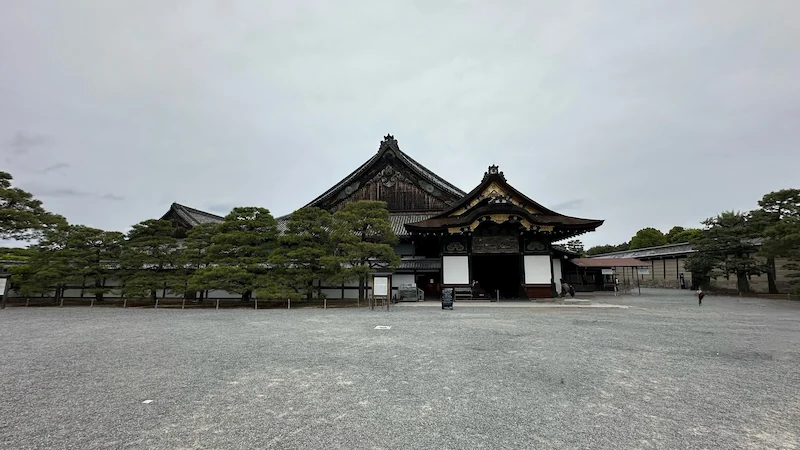
Oda Nobunaga, Ashikaga Yoshiaki and the Old Nijo Castle
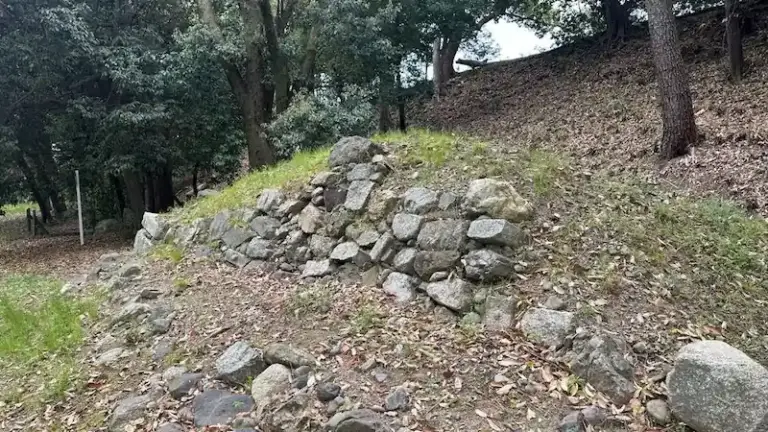
Before the present castle stood here, this ground held the "Old Nijo Castle," which Oda Nobunaga built for Ashikaga Yoshiaki, the last shogun of the Muromachi shogunate (Japan's medieval military government, based in Kyoto). Under his banner of "Tenka Fubu" — "rule the realm by force" — Nobunaga backed the shogun's authority in the capital while steadily taking real power for himself. The alliance eventually broke down, and the Old Nijo Castle disappeared from history. Part of its stone wall is said to have been relocated to the west side of the present castle, where it can still be seen today.
Tokugawa Ieyasu's Castle and the Proclamation of Shogun (1603)
After taking control of Japan at the Battle of Sekigahara, Tokugawa Ieyasu completed the present Nijo Castle in 1603. That same year, he received the title of Seii Taishogun ("great general who subdues the barbarians," the formal title of Japan's supreme military ruler) here at the castle, publicly announcing the start of the Edo shogunate. Nijo Castle went on to serve as the Kyoto residence for shoguns visiting the imperial capital, doubling as a ceremonial space in which the military government maintained a formal relationship with the Imperial Court.
Emperor Go-Mizunoo's Imperial Visit (1626)
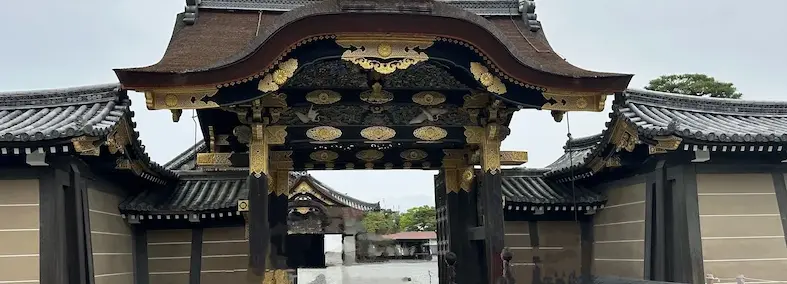
In 1626, Emperor Go-Mizunoo paid an imperial visit (gyoko) to Nijo Castle — an extraordinary event by the standards of the time. In preparation, the shogunate lavishly outfitted the castle, including the ornate Karamon Gate of Ninomaru Palace, which still stands today. Staging a visit by the Emperor to the shogun's own castle was a carefully choreographed display of Tokugawa authority at its height.

The Taisei Hokan (1867) — Where the Shogunate Ended
No account of Nijo Castle is complete without the Taisei Hokan of 1867 (Keio 3) — the return of governing power to the Emperor. The 15th and final Tokugawa shogun, Yoshinobu, gathered senior retainers from domains across Japan in the Ohiroma (Great Hall) of Ninomaru Palace and announced his decision to hand political authority back to the Imperial Court. With that declaration, 261 years of Tokugawa rule came to an end, and Japan turned toward the Meiji Restoration. Nijo Castle is therefore both the place where Tokugawa rule began and the place where it ended — a rare vantage point on the full arc of the shogunate, and one of the castle's most compelling draws.
From the Meiji Era to World Heritage Status (1994)
After the shogunate's end, Nijo Castle passed into Imperial ownership and became known as the "Former Imperial Villa Nijo Castle." After the Second World War it was transferred to the City of Kyoto, which carried out preservation and restoration work, and in 1994 the castle was inscribed as part of the UNESCO World Heritage Site "Historic Monuments of Ancient Kyoto." Home to numerous National Treasures and Important Cultural Properties, it remains one of Kyoto's leading historical attractions, drawing visitors from Japan and abroad.
In spring, night illuminations light up the cherry blossoms; in autumn, the gardens turn crimson. Nijo Castle is not only a place to encounter history but also a destination for seasonal beauty.
Access
From JR Kyoto Station, take the Kyoto Municipal Subway Karasuma Line to Karasuma Oike Station, transfer to the Tozai Line, and ride to Nijojo-mae Station — about 20 minutes in total. The Higashi-Otemon (East Main Gate) is right outside the exit. During the cherry blossom and autumn foliage seasons the area around the castle gets very crowded, so public transport is strongly recommended over driving.
Complete Area Guide
Perimeter & Entrance Area
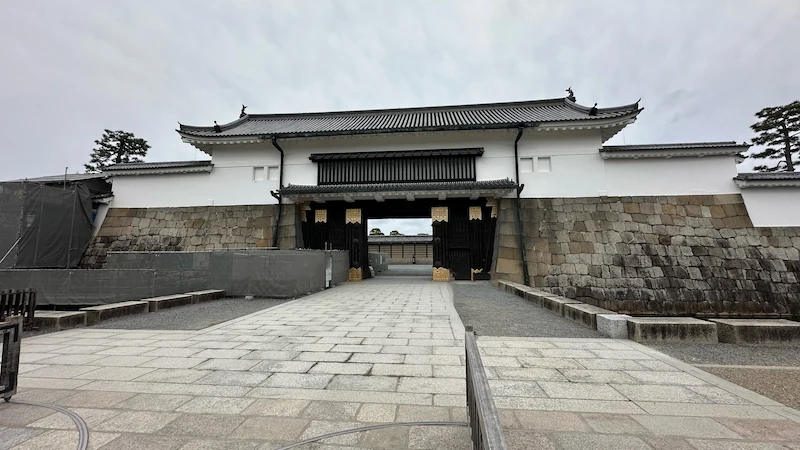
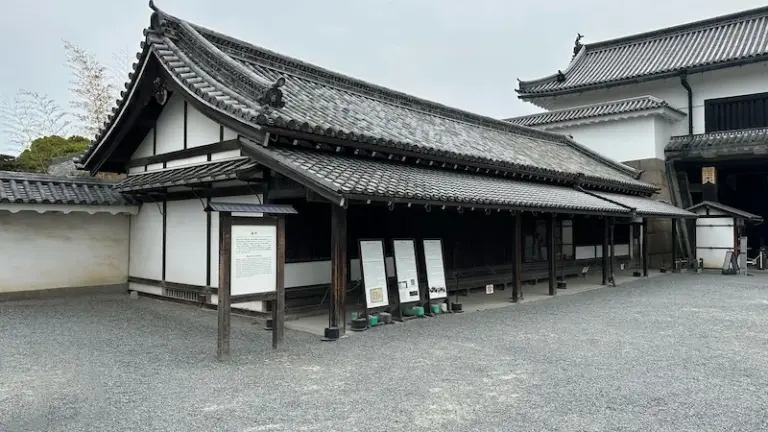
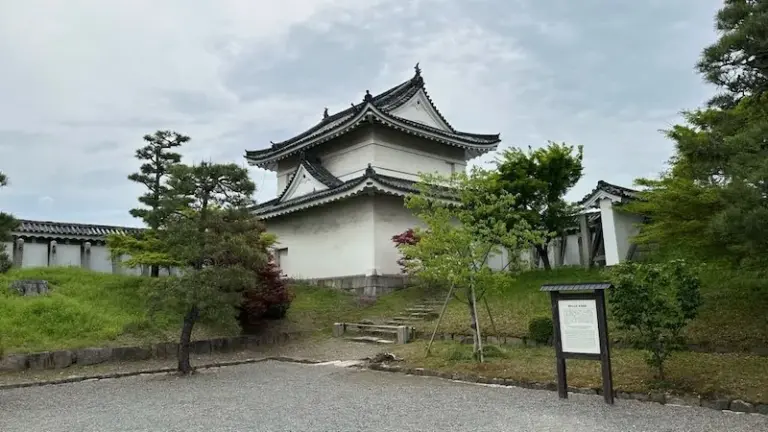
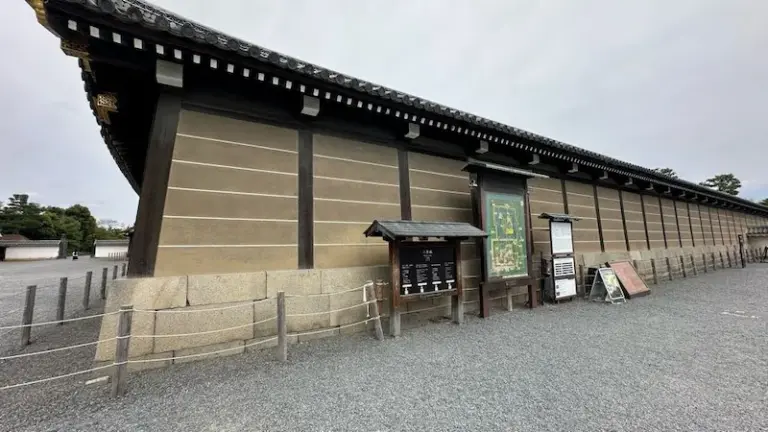
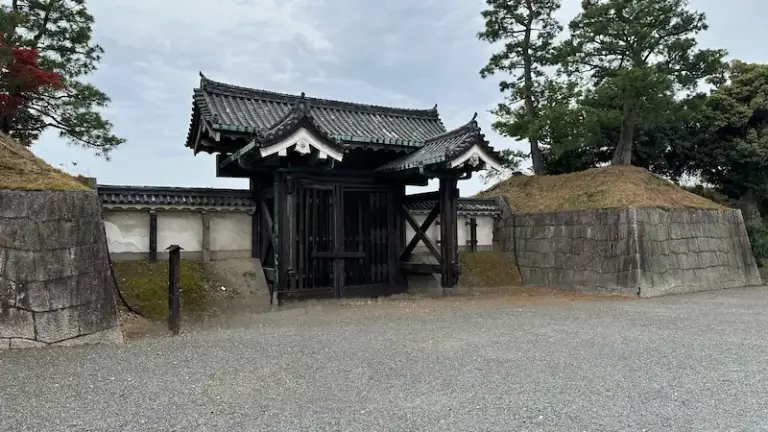
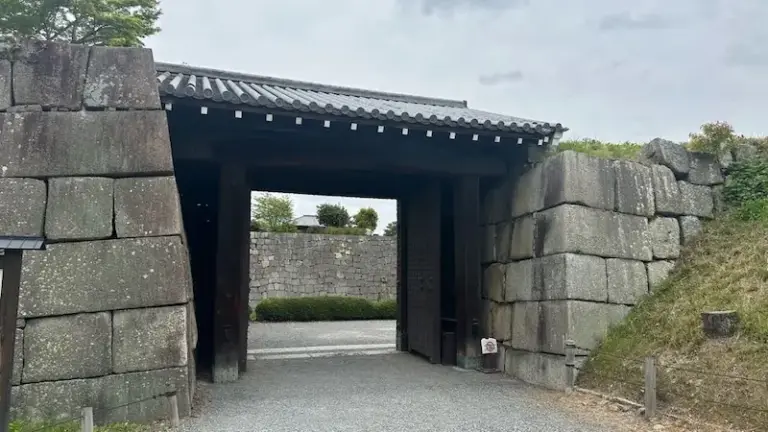
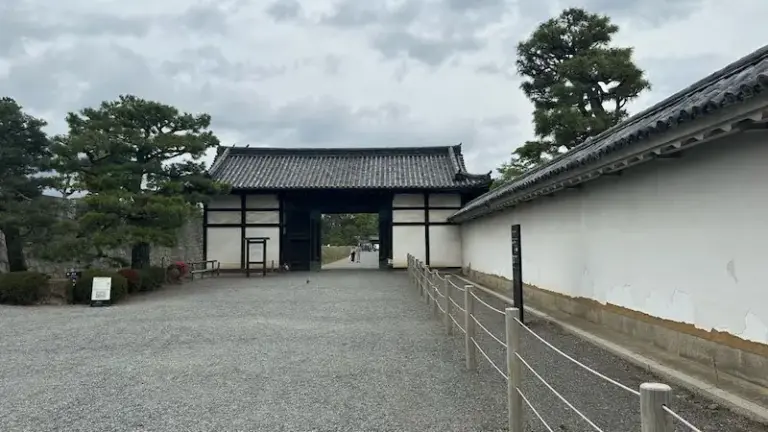
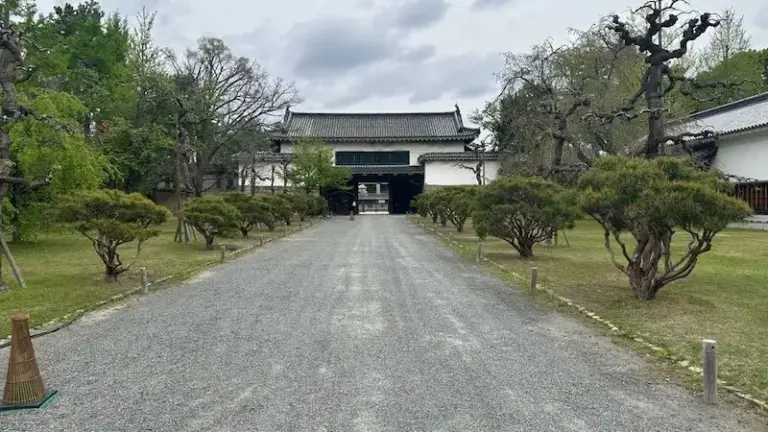
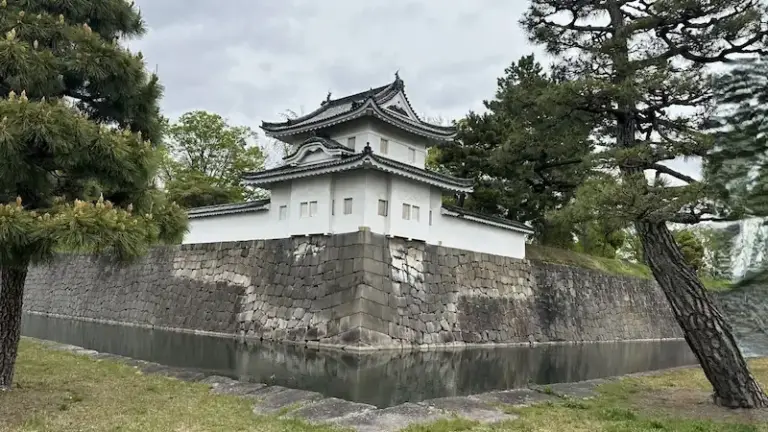
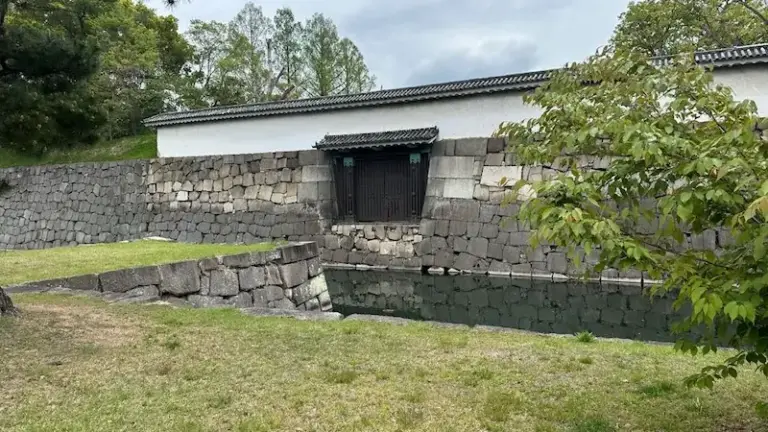
The first sight to catch your eye is the imposing Higashi-Otemon (East Main Gate). Its heavy, fortress-like form makes it hard to see what lies beyond from outside — a deliberate design that builds a sense of anticipation before you even step through. That "you can't see what's coming" quality is part of the effect. Pass through the gate and you'll find the Bansho (Guardhouse) and the Southeast Corner Turret, both essentially unchanged since the Edo period (1603–1868, the roughly 260 years of Tokugawa rule).
The Higashi-Otemon is a huge gate unlike anything at other Japanese castles, and you genuinely can't tell what's on the other side until you're through it. The Bansho and Southeast Corner Turret are Edo-period buildings, yet they're in remarkably good condition — good enough that we wondered how they'd been kept up. There were plenty of other visitors, and it's a shame there's no tenshu (main keep) to climb, but that was outweighed by how much original Edo-period fabric has survived intact.
Ninomaru Palace Area
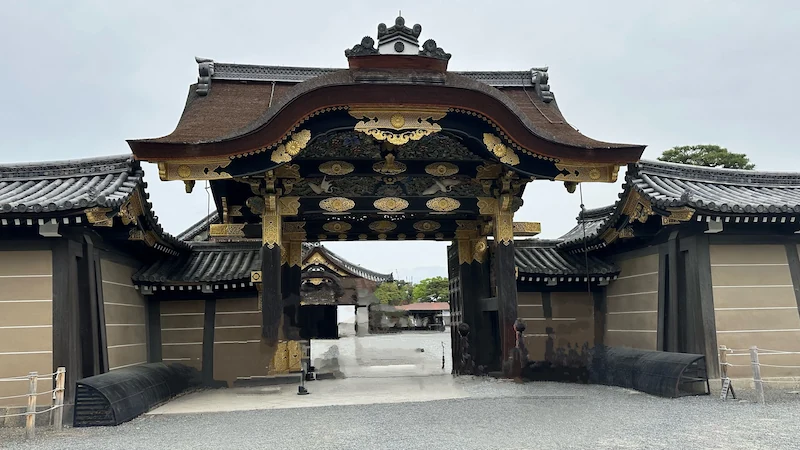
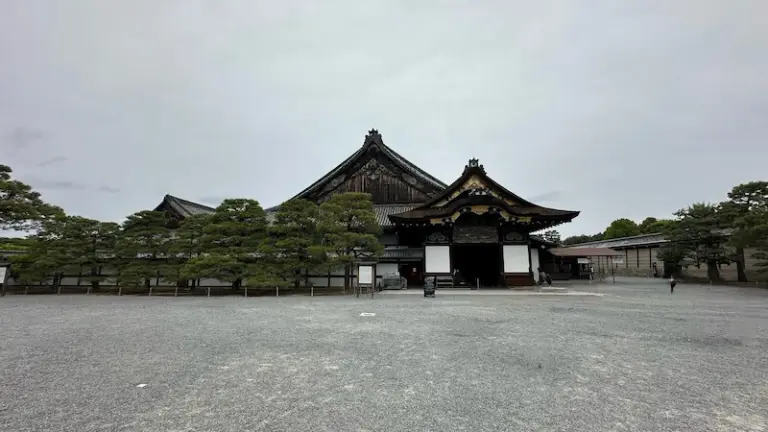
The highlight of Nijo Castle is the National Treasure Ninomaru Palace. The carvings on the Karamon Gate are lavish and finely worked — decorative artistry so dense it recalls Nikko Toshogu Shrine, the mausoleum of Tokugawa Ieyasu, which many visitors associate with that same Momoyama-period exuberance. Inside, the palace interior survives largely as it was in the Edo period, giving you a spatial experience unlike anything in a modern Japanese building. You can walk into the very Ohiroma (Great Hall) where the Taisei Hokan was declared, and standing in that room brings the historic decision of 1867 into sharp, physical focus. Photography is not allowed inside Ninomaru Palace or Honmaru Palace, but the Karamon Gate and the exteriors of the buildings can be freely photographed.
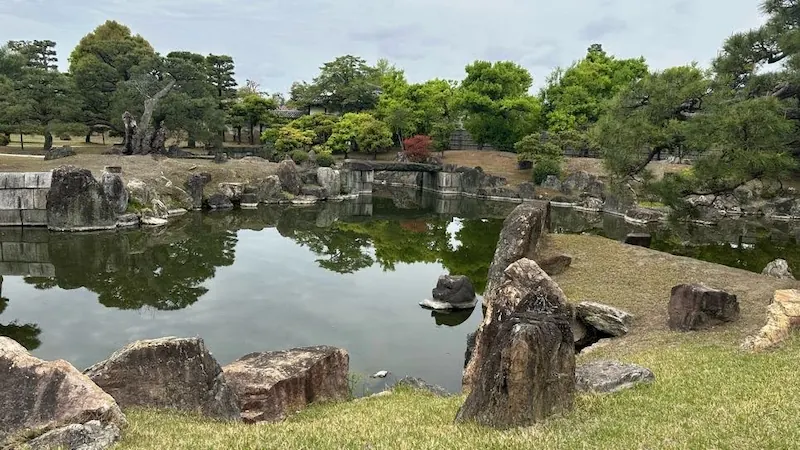
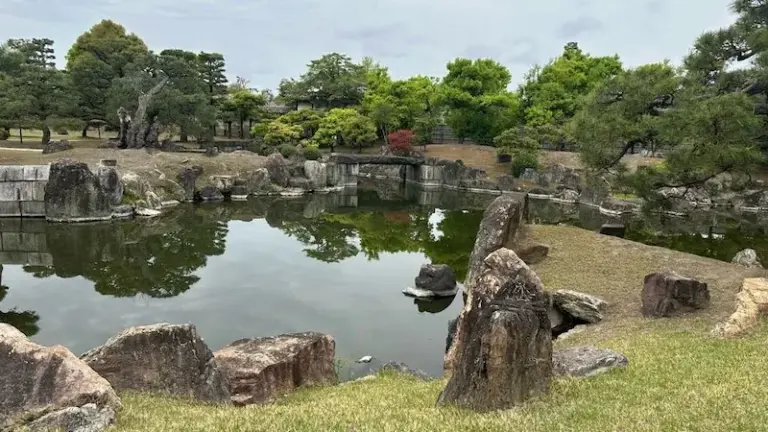
The garden here, Ninomaru Garden, is a pond-strolling garden (kaiyu-shiki, designed to be viewed while walking around a central pond). Its islet and stone bridge compose a classic Japanese garden scene — the kind of landscape that has no real equivalent outside Japan, which is part of why we think it lands especially well with visitors from abroad.
The Karamon Gate carvings are lavish and delicate, evocative of the Momoyama period — they reminded us of Nikko Toshogu. It's genuinely surprising that a palace interior in this condition, from this era, is open to the public; nothing in a present-day Japanese building looks like this. Ninomaru Garden, with its pond, is exactly the kind of Japanese garden scenery that simply doesn't exist elsewhere in the world, which is why we'd point international visitors here in particular.
Honmaru Area
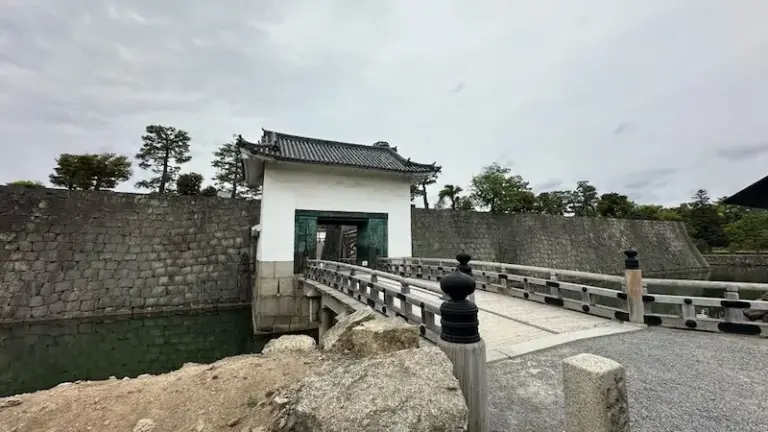
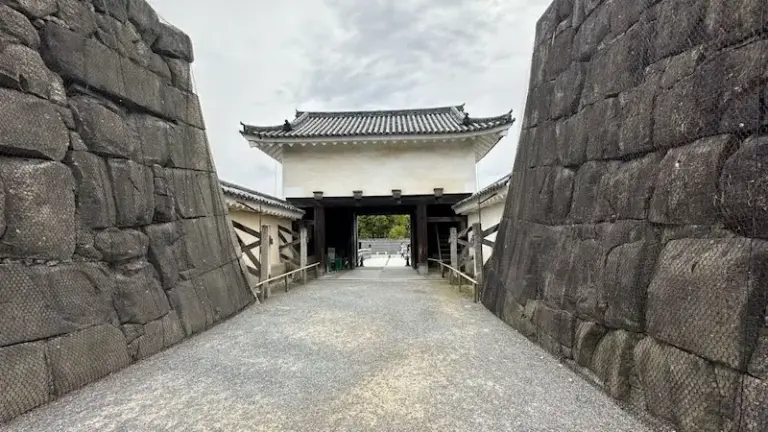
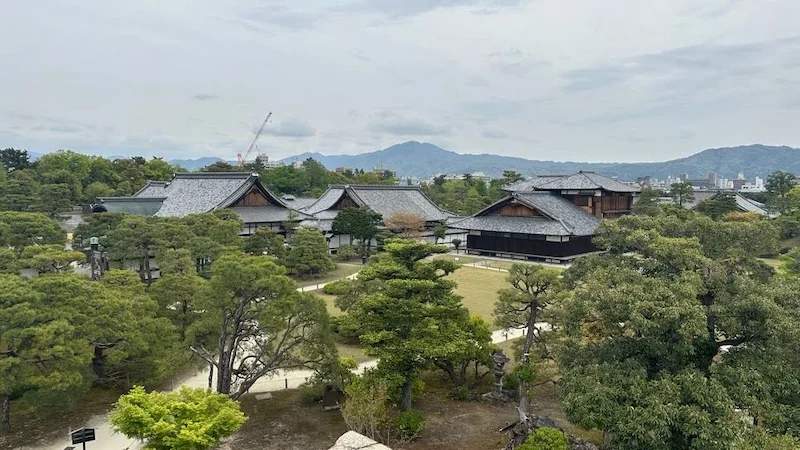
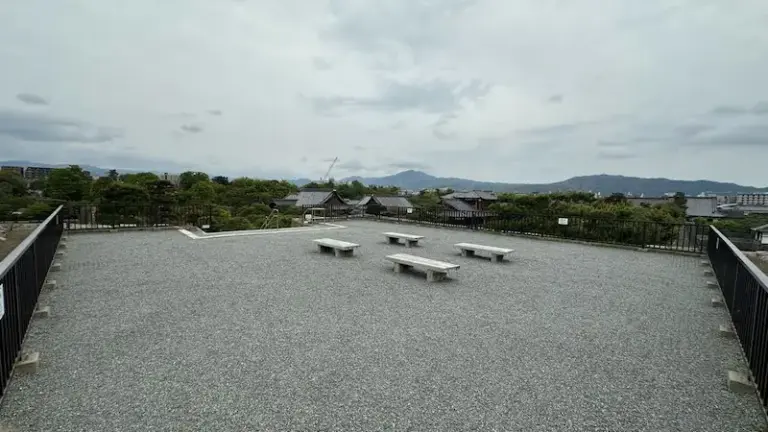
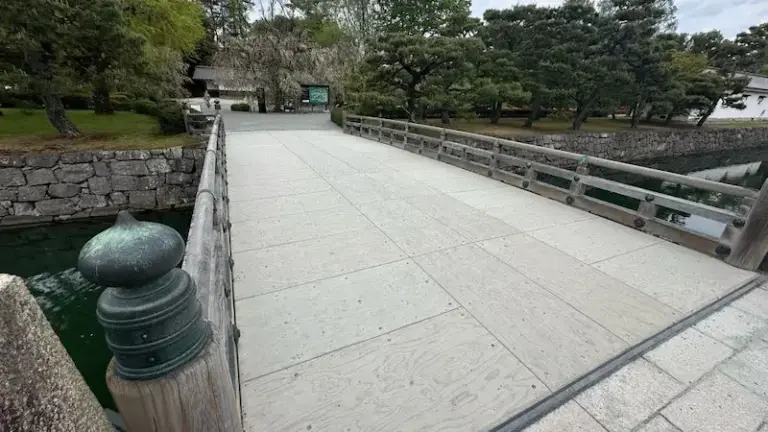
Beyond Ninomaru Palace lie the Honmaru Palace and the Tenshukaku (main keep) ruins. The tenshu itself was lost to a lightning-strike fire in 1750, but you can climb the surviving stone base for a sweeping view over the castle's buildings and gardens. Visiting the interior of Honmaru Palace requires an advance reservation, and a separate Honmaru Palace ticket is needed in addition to grounds admission. The palace open to visitors today is not the original early-Edo-period building; it's easier to understand once you know it as an early-modern imperial residence, built when part of the Katsura-no-miya princely residence was relocated and reassembled here during the Meiji era. If you arrive expecting a Sengoku- or early-Edo-period atmosphere the impression may differ from what you expect, but knowing its actual history as a modern imperial villa adds its own interest. Photography is not permitted inside Honmaru Palace either.
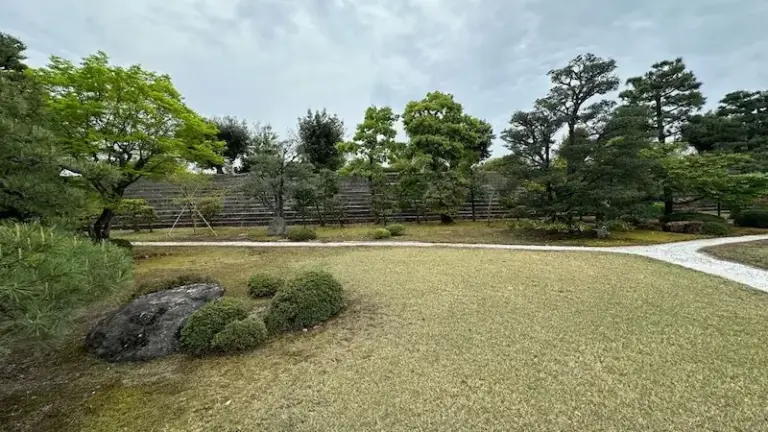
The Honmaru Garden, with its pond and low hills, has a quiet, understated character — a contrast to the brilliance of Ninomaru, and one that seems to echo the closing chapter of the shogunate.
We were glad the Tenshukaku ruins are open to climb — the view takes in the castle's buildings and gardens well. Compared to castles built around an actual keep, though, it left us with the impression that Nijo Castle may not have been quite as central to Tokugawa identity as, say, Edo Castle. We were able to go inside Honmaru Palace, but since it dates from the Meiji era and was built for the Emperor, it doesn't match a Sengoku-period mood — worth knowing before you go in with different expectations. The layout of the Honmaru area, surrounded by its own moat inside the outer moat, makes its extra layer of defense obvious just from walking it.


West & South Areas
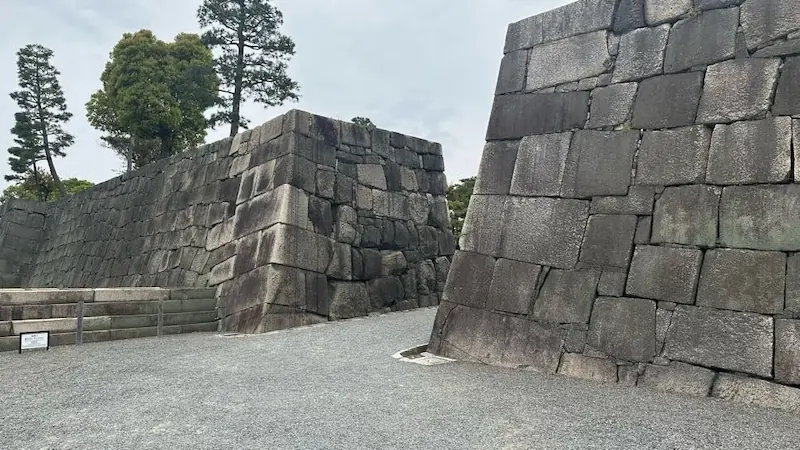
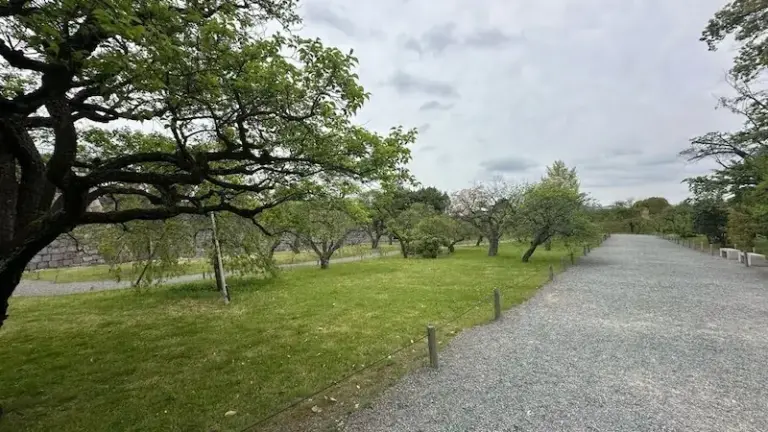
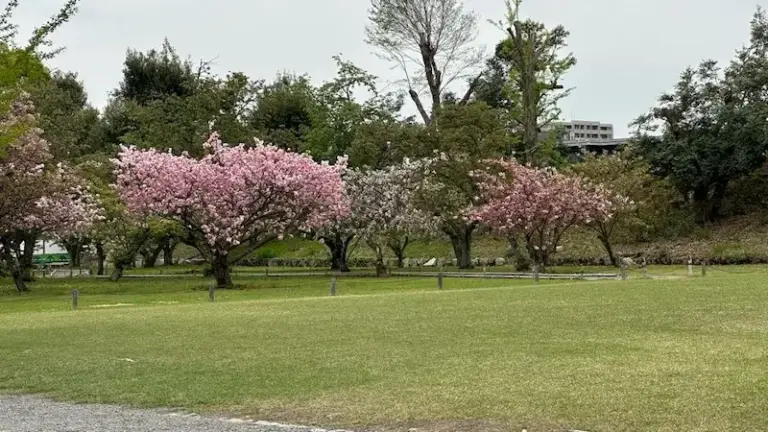
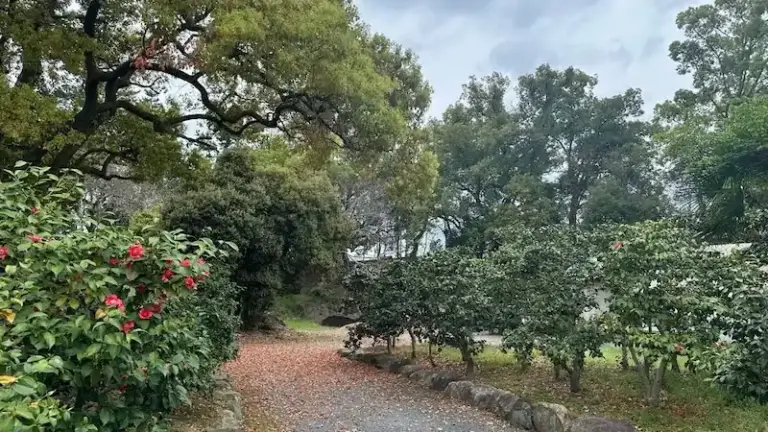
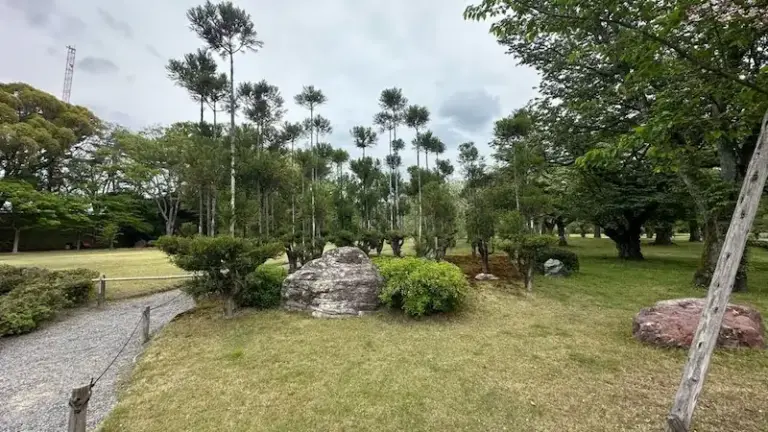
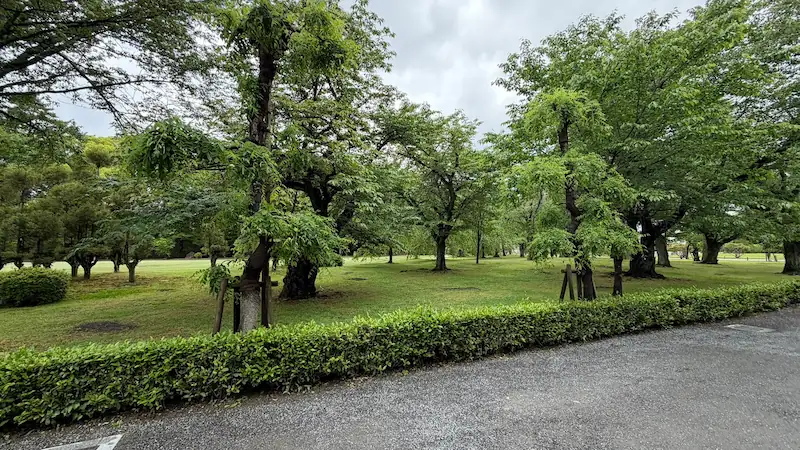
On the west side, stonework said to have been relocated from the Old Nijo Castle survives here. It's a must-see for fans of Oda Nobunaga and the Sengoku period, but it's easy to walk right past it if you're not deliberately looking for it — worth checking a map before you head into this area. In spring, a plum grove (February–March) and a Cherry Orchard (March–early April) add color. This area sits off the main tourist route, so it tends to be quiet — a good place to slow down and take in the castle's atmosphere.
The stonework from the Old Nijo Castle is a genuinely valuable spot for Nobunaga and Sengoku-period fans, but it's easy to miss if you're not specifically looking for it. On our April 2025 visit the cherry blossoms weren't in full bloom yet. The west and south areas see fewer visitors and have fewer buildings, so the mood is more relaxed — being off the main tourist route actually worked in this area's favor.

Seiryu-en Garden & North Areas
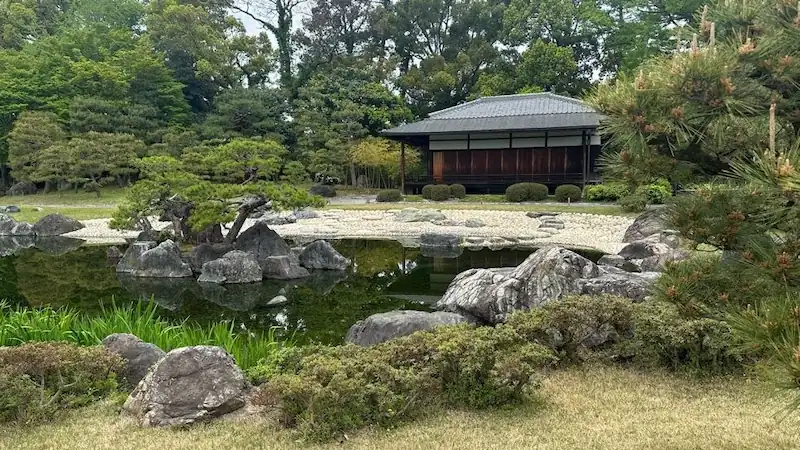
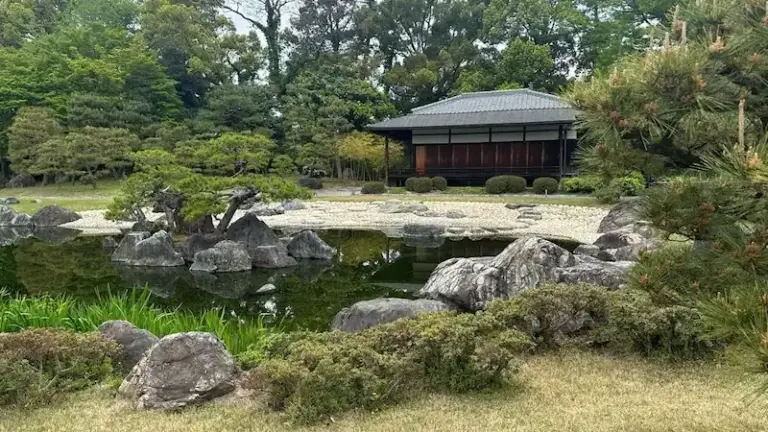
To the north, Seiryu-en Garden is a beautifully maintained Japanese garden with a very different character from the Honmaru area. Many visitors miss it, but it's well worth the detour. Inside the garden, the pavilion Kōuntei is normally closed to the public, so viewing it from the outside is the usual experience; depending on the season, limited-time tea or dining service is sometimes offered there, so if that interests you it's worth checking ahead. It's a fair walk from Seiryu-en Garden to the North Otemon Gate, but the scenery keeps changing along the way, so the walk itself doesn't get dull.
Seiryu-en Garden has a different feel from Honmaru — a beautifully maintained Japanese garden that's easy to skip but not worth skipping. Kōuntei has the quiet atmosphere of a teahouse, but it was closed to the public on our visit, so we could only view it from outside. Whether tea or food service is available changes by season, so check ahead if that's something you want to do.



Outside the Castle Walls
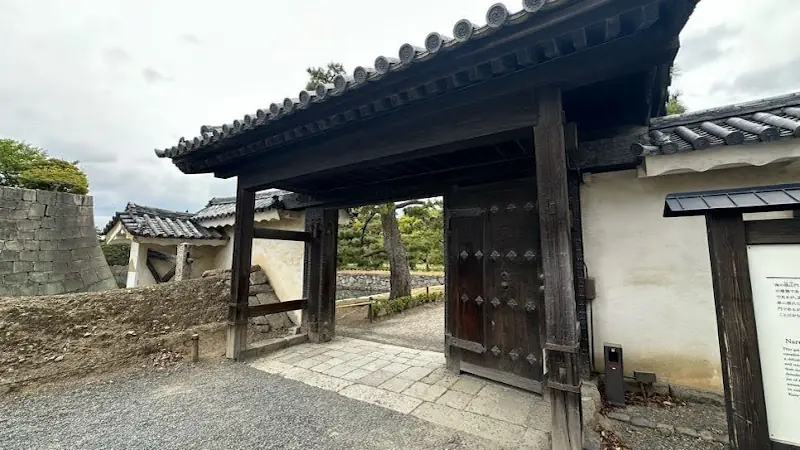
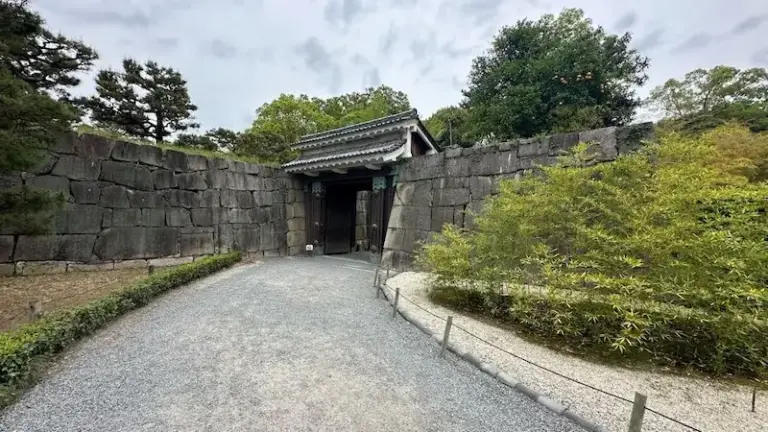
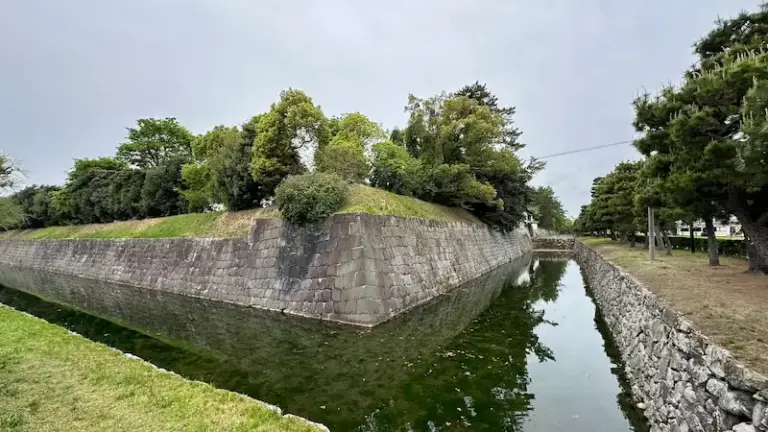
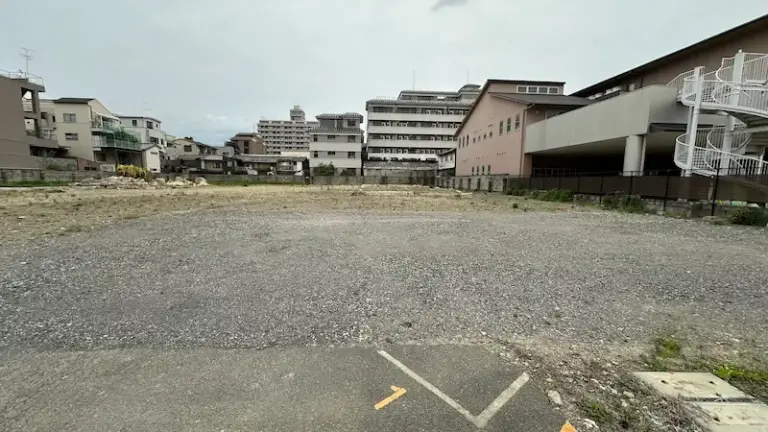
Step outside the enceinte and you'll find scattered remains such as the site of the Northeast Corner Turret, the Southwest Corner Turret, and the West Otemon Gate. Walking a full loop around the moat gives you a different vantage point on the castle's scale than you get from inside. Almost no other tourists take this route — it's mostly local residents going about their day, with the castle simply part of the everyday scenery — which makes for a quiet, pleasant walk along the moat.
Ringed by its moat, the castle reads as a proper fortress even from outside. Walking the full loop shows you Nijo Castle from angles you simply can't see from within the grounds. It felt less like a route other tourists take and more like a path used by locals going about their day — not heavily trafficked, but a genuinely nice walk alongside the moat.
Seasonal Highlights
The castle's Cherry Orchard holds around 300 cherry trees across several varieties — Somei-yoshino, weeping cherries, and double-flowered cherries among them — so the bloom unfolds in stages. During the season, special night openings with illuminations transform the atmosphere completely after dark.
Crowds peak on the first weekend after full bloom. Weekday mornings, right after the gates open (around 8:45–9:30 a.m.), tend to be quieter. Bloom timing shifts year to year, so it's worth checking the official website for current bloom status before you go.
In November, Ninomaru Garden and Seiryu-en Garden turn brilliant shades of red, and the whole castle takes on an autumn palette. Some years include special night openings, and the combination of illuminated foliage with the palace buildings is striking.
Nijo Castle's autumn foliage is less famous than its cherry blossoms, so crowds tend to be lighter here than at other well-known Kyoto foliage spots — a good option if you want autumn color without the crowds.
Outside the cherry blossom and foliage seasons, visitor numbers drop considerably, making for a much more relaxed visit. Weekday winter mornings in particular see fewer domestic and international visitors, so you can take your time inside Ninomaru Palace.
Ninomaru Palace is closed on Tuesdays in January, July, August and December; Honmaru Palace is closed on the third Monday of each month and the following day. If you plan to visit either palace interior, check the official website for current closure dates before you go.
Suggested Routes & Time Needed
1 Hour — Highlights Only
Higashi-Otemon → Bansho (Guardhouse) → Karamon Gate & Ninomaru Palace (exterior only) → Ninomaru Garden → exit via Higashi-Otemon
Best for: visitors short on time, or those content to view Ninomaru Palace from outside. Does not include the palace interior.
2–3 Hours — All Areas, Standard Pace
Higashi-Otemon → Bansho & Southeast Corner Turret → Karamon Gate → Ninomaru Palace interior (about 30 minutes) → Ninomaru Garden → Honmaru (Tenshukaku ruins) → West & South Areas (stonework, Cherry Orchard) → Seiryu-en Garden & Kōuntei → North Otemon Gate
Best for: a standard visit that covers nearly every highlight described in this guide.
Half a Day — Exterior Ruins & Full History Walk
Add a full loop around the exterior area (Northeast Corner Turret site, Southwest Corner Turret, West Otemon Gate) to the 2–3 hour route above, walking the moat's perimeter on foot for a fuller sense of the castle's scale.
Best for: history and castle enthusiasts who want to cover every corner.
Nijo Castle Goshuin (Admission Commemorative Seal) Collection
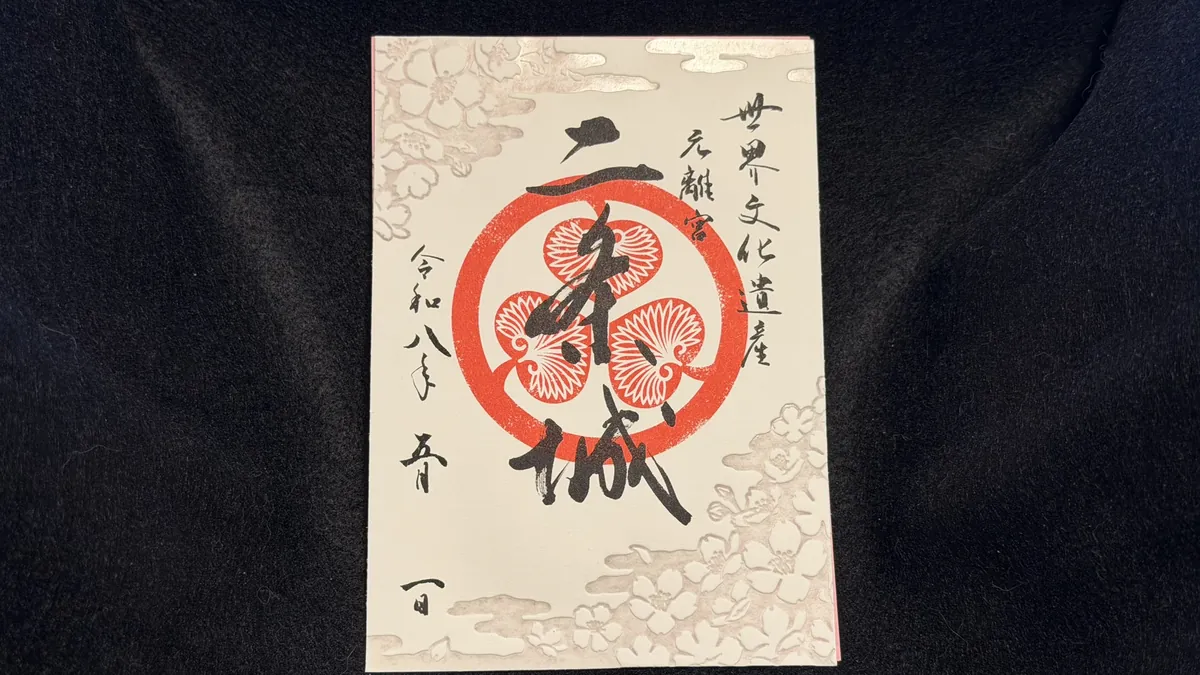
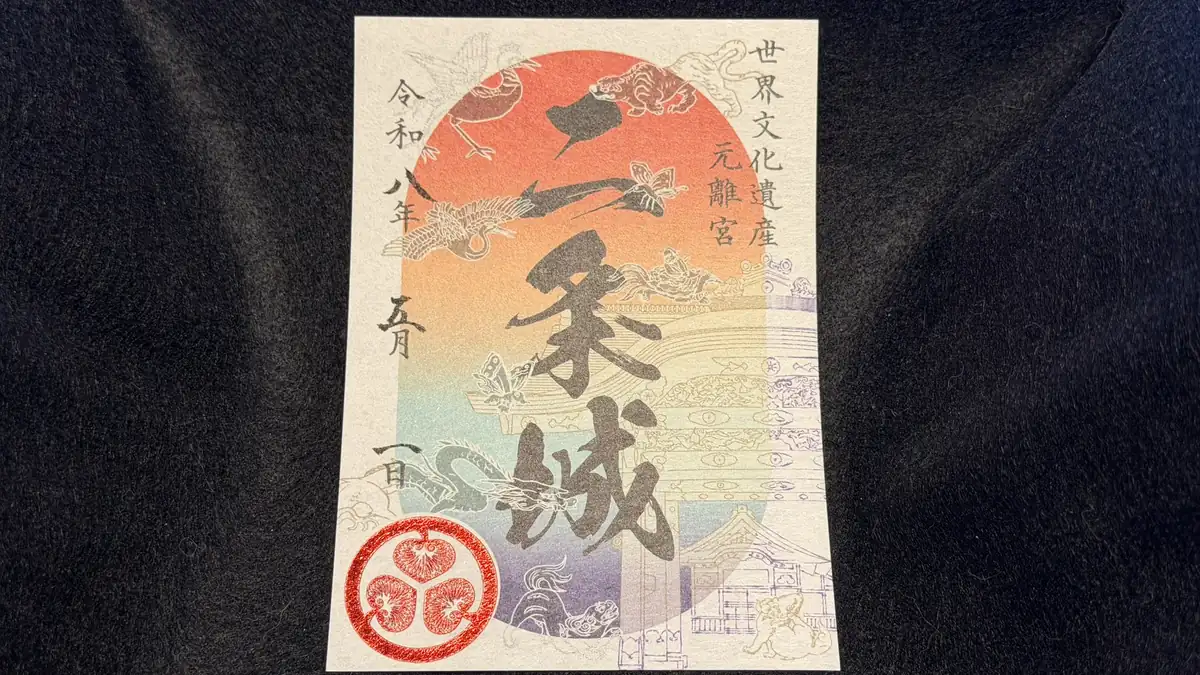
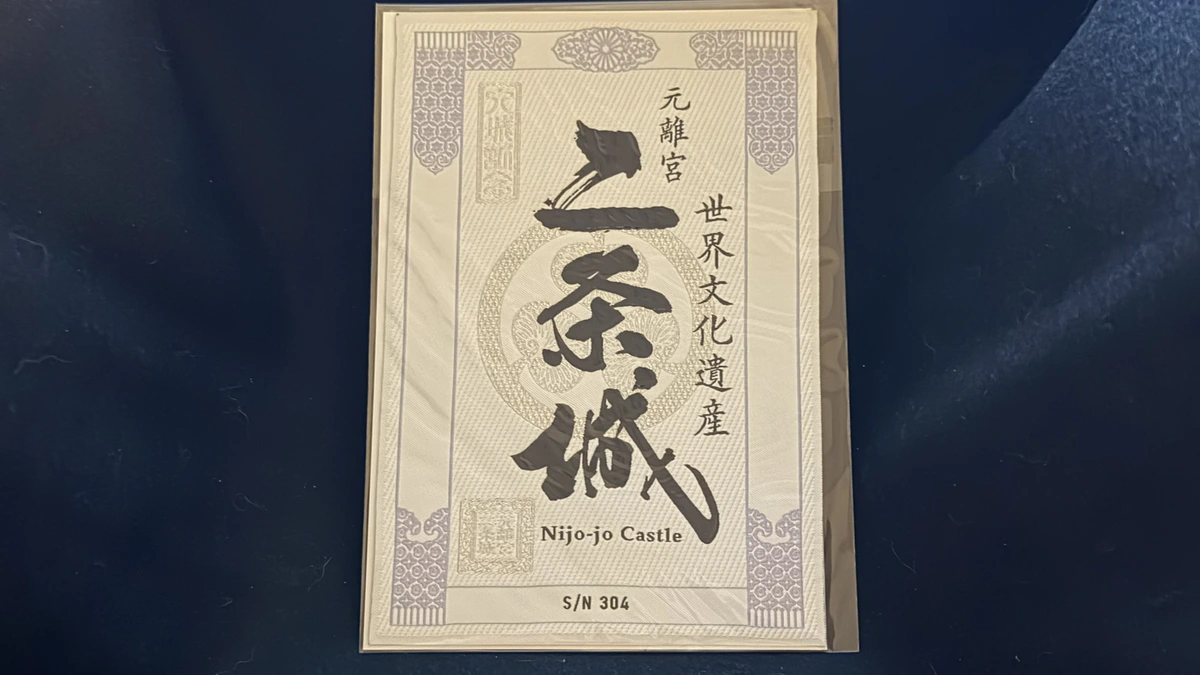
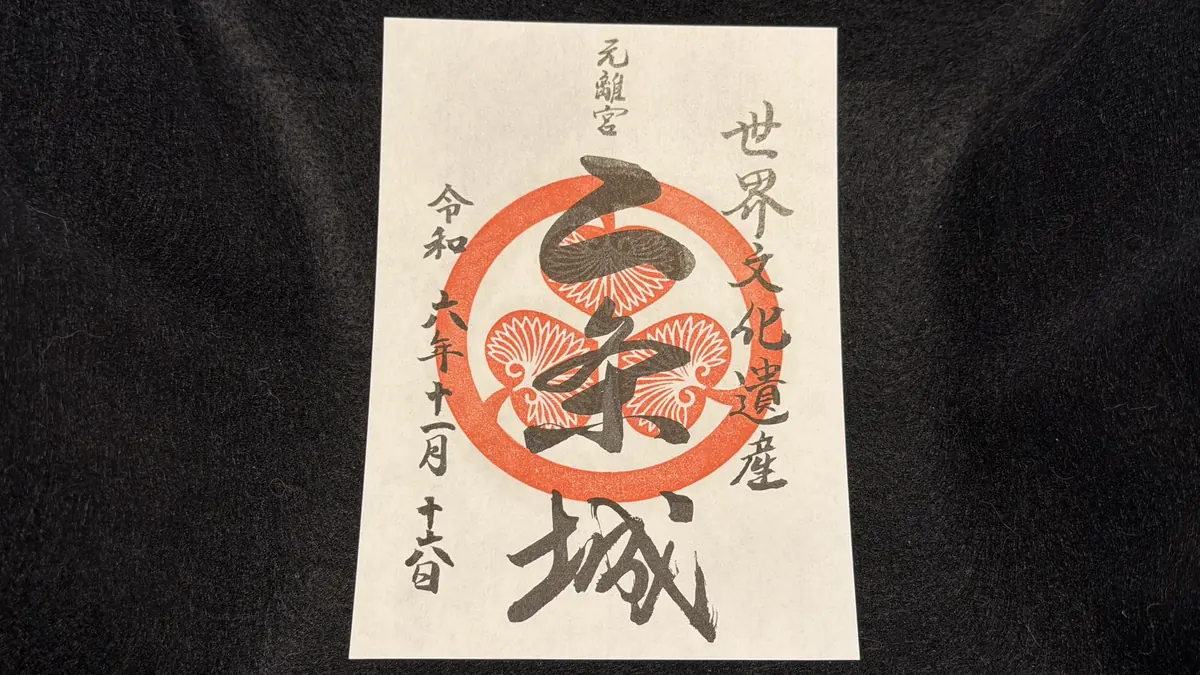
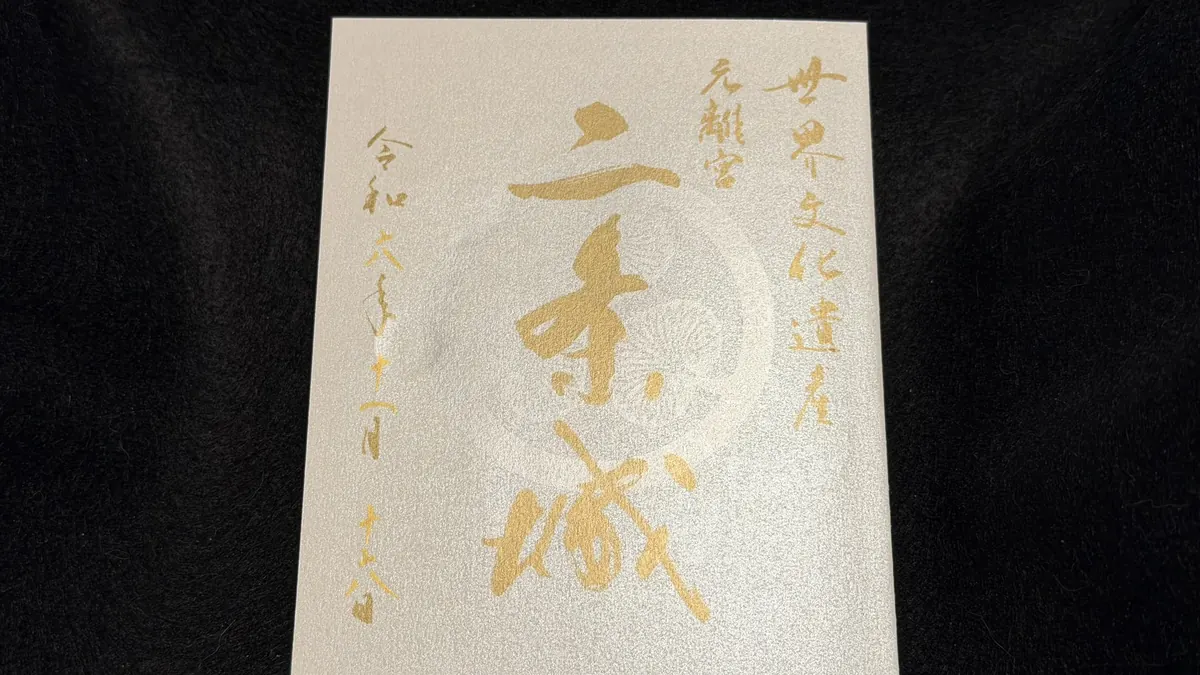
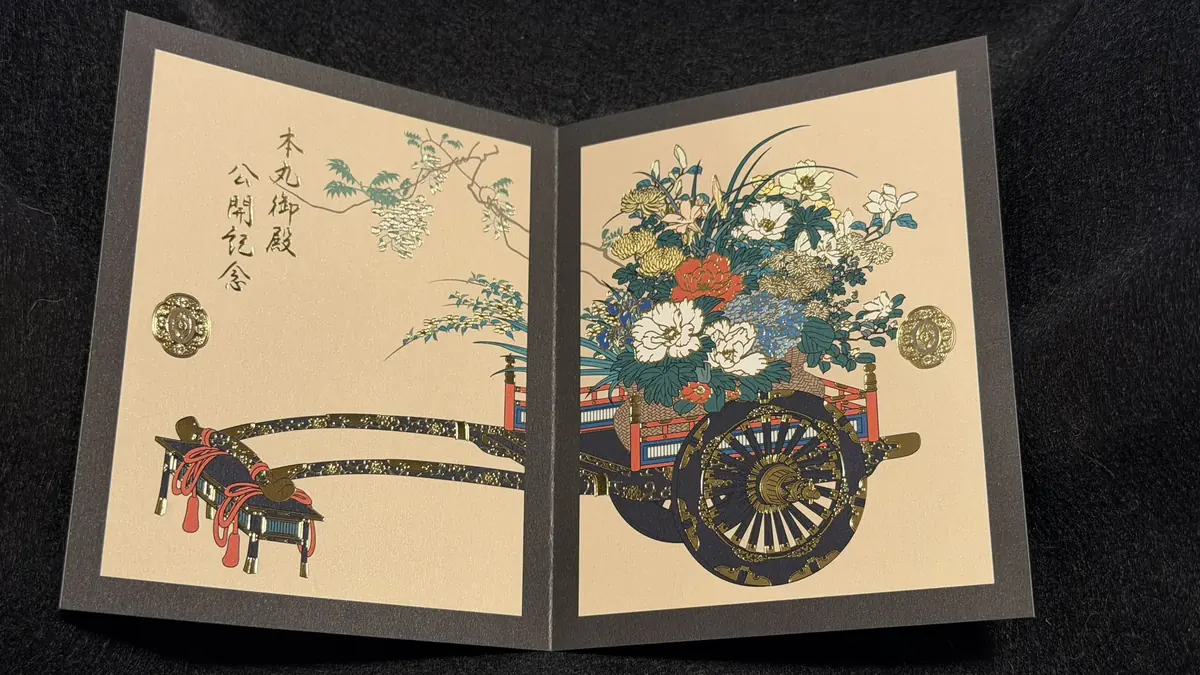
Nijo Castle issues a goshuin-style admission seal called the "nyujo kinenfu" (entry commemorative seal). Beyond the standard design, limited editions have been released to mark occasions such as the cherry blossom festival and the reopening of Honmaru Palace. The craftsmanship — paper stock, weave, gold foil — is part of the appeal in its own right.
Tap to enlarge
About Each Design
| Limited cherry-blossom design (Spring 2026) | Printed on "pachika," a specialty paper embossed with a cherry-blossom pattern; heat-treated sections turn translucent, letting the pink paper behind show through in the shape of the blossoms. A triple-hollyhock (Tokugawa) crest and the characters for "Nijo Castle" appear at center. Sold in limited quantity from March 19, 2026. |
|---|---|
| Sakura Matsuri 2026 limited edition | Motifs of cranes and tigers taken from the carvings on the Karamon Gate of the National Treasure Ninomaru Palace, rendered in fine linework over a background that shifts from red to blue-violet. Sold in a limited run of 7,000 from March 19, 2026. |
| Rapier-woven textile edition | Woven on a jacquard loom rather than printed on paper. Traditional motifs echoing the Karamon Gate's pillars and metal fittings are woven into the fabric, with English text and an individual serial number along the bottom (the example we photographed is serial no. 304). |
| Chrysanthemum & hollyhock crest limited edition | Layers the triple-hollyhock crest of the Tokugawa shogun's family with the chrysanthemum crest that marked the castle's era as an Imperial villa after the Meiji era. The design was inspired by the discovery of a hollyhock-crest fitting beneath a chrysanthemum-crest fitting during repairs to the Karamon Gate — a physical trace of the castle's transfer from the Tokugawa family to the Imperial family. |
| Honmaru Palace reopening commemorative "Flower Cart" (front) | Gold lettering reading "World Cultural Heritage," "Former Imperial Villa" and "Nijo Castle" on silvery-white paper, a design built around the interplay of text and material sheen that evokes the prestige of the 1994 World Heritage inscription. |
| Honmaru Palace reopening commemorative "Flower Cart" (back) | A special fold-out edition marking the September 2024 reopening of Honmaru Palace to the public, based on the "Flower Cart" sugido (sliding door) painting in the corridor outside the Kokyo-no-ma room of Honmaru Palace. Opened up, it reveals an ox-drawn cart and seasonal flowers spread across the full spread, finished with gold-leaf accents. Released September 1, 2024; no longer sold. |
Frequently Asked Questions
No, Nijo Castle charges admission. As of 2026, grounds-only admission is ¥800 for adults, ¥400 for junior/senior high school students, and ¥300 for elementary students; grounds plus Ninomaru Palace is ¥1,300 for adults (the student prices already include Ninomaru Palace viewing). Admission is free for visitors with a disability certificate, plus one accompanying companion.
Walking every area, from the perimeter and entrance to Seiryu-en Garden, takes about 2–3 hours at an unhurried pace. Routes that include the Ninomaru Palace interior (about 30 minutes) can run over 3 hours. If you focus only on the main highlights, 1 to 1.5 hours is enough.
From JR Kyoto Station, take the Kyoto Municipal Subway Karasuma Line to Karasuma Oike Station, transfer to the Tozai Line, and ride to Nijojo-mae Station — about 20 minutes total. The Higashi-Otemon (East Main Gate) is right outside the station exit.
Yes. Nijo Castle was inscribed in 1994 as part of the UNESCO World Heritage Site "Historic Monuments of Ancient Kyoto." As the Former Imperial Villa Nijo Castle, it holds numerous National Treasures and Important Cultural Properties.
In 1867 (Keio 3), the 15th shogun Tokugawa Yoshinobu announced the Taisei Hokan — the return of governing power to the Emperor — in the Ohiroma (Great Hall) of Ninomaru Palace at Nijo Castle. He gathered senior retainers from domains across the country for the announcement, making this room the stage on which the Edo shogunate came to an end.
The castle grounds are closed at year-end, December 29–31. In addition, Ninomaru Palace is separately closed on Tuesdays in January, July, August and December, and Honmaru Palace is closed on the third Monday of each month and the following day, among other dates. If you plan to visit either palace interior, check the official website for the latest opening and closure dates before your trip.
Yes. In spring, the Cherry Orchard is a popular spot for flower viewing, and special night illuminations are held. In autumn, the gardens turn crimson, with night openings held some years. Each season has its own distinct character.
Nijo Castle's official paid parking lot is on the north side of the castle and accommodates passenger cars, large vehicles and motorcycles. During cherry blossom and autumn foliage season the area gets extremely congested, so we strongly recommend public transport — the subway's Nijojo-mae Station — instead of driving.
Photography is not permitted inside Ninomaru Palace or Honmaru Palace. Outdoor areas — the gardens, the castle exterior, the Tenshukaku ruins — can be photographed freely, and so can the outside of buildings such as the Karamon Gate.
The present Nijo Castle was built by Tokugawa Ieyasu in 1603, but this same area once held an earlier "Old Nijo Castle," which Oda Nobunaga built for the shogun Ashikaga Yoshiaki. Stonework said to have been relocated from that earlier castle survives on the west side of the present grounds — a must-see for Nobunaga and Sengoku-period fans, though it's easy to walk past unless you're deliberately looking for it.
Honmaru Palace requires an advance reservation (web ticket), which opens 30 days before your visit date. Groups are limited to about 15 people at a time, and admission is ¥1,000 for adults, charged separately from grounds admission. It's closed on the third Monday of each month and the following day, so check the official website for current booking availability before you go.
Yes. Nijo Castle issues a goshuin-style admission seal called the "nyujo kinenfu." Beyond the standard design, limited-run designs have been released for occasions such as the cherry blossom festival and the Honmaru Palace reopening, including both paper and woven-textile (rapier-woven) versions. Limited editions have fixed sales periods and print runs, so check the official website for current availability before your visit if you want one.
Related Historic Sites
Back to the Tokugawa Ieyasu Page
Back to the Kyoto/Osaka Area Page
Back to the Main Page

☕ Support This Site
Following the Shogun is built on original fieldwork and on-site research.
If you found this guide useful, your support helps keep it going.

You can also support via QR code


comment