


Nijo Castle: Seiryu-en Garden & North Area #3
Seiryu-en Garden, the Weeping Pagoda Tree & North Otemon Gate
Seiryu-en Garden, where the teahouse Kōuntei quietly rests; the rare Weeping Pagoda Tree with its gracefully drooping branches; and the North Otemon Gate, once passed through by shoguns and daimyo. Where elegance and utility meet, these spots embody Nijo Castle's "beauty of stillness" — where history and nature intertwine.
In contrast to the castle's splendid palaces, Nijo Castle also unfolds spaces steeped in quiet and poise.
Seiryu-en Garden, where the teahouse Kōuntei quietly rests; the rare Weeping Pagoda Tree with its gracefully drooping branches; and the North Otemon Gate, once passed through by shoguns and daimyo. Where elegance and utility meet, these spots embody Nijo Castle's "beauty of stillness" — where history and nature intertwine.
The 3 Spots of Seiryu-en Garden & North Area #3
Seiryu-en Garden
A hybrid garden pairing a traditional Japanese pond garden with a Western-style lawn
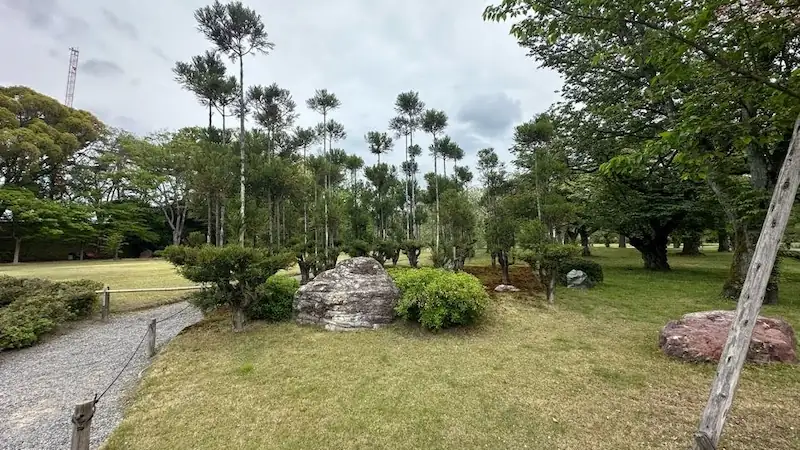
Seiryu-en is a relatively new garden space on the north side of Nijo Castle. Its hallmark is a Japanese–Western hybrid design that juxtaposes a traditional pond-strolling garden with a Western-style lawn. Although created in the Showa era and not a direct site of shogunal events, its grounds overlap areas that once supported Tokugawa operations within the castle, so the garden still ties into the broader narrative of the shogunate here.
Historical Data
| Year Built | 1965 (Showa 40) |
|---|---|
| Builder | City of Kyoto (landscape design by Kinsaku Nakane, et al.) |
| Structure & Features | A Japanese pond garden paired with a Western-style lawn. |
| Repairs & Restoration | No major post-construction changes noted. |
| Current Status | Excellent condition; open to the public. |
| Loss/Damage | None. |
| Cultural Property Status | No individual designation; the overall Nijo Castle site is a UNESCO World Heritage property. |
| Notes | Includes the study building Kōuntei and the tearoom Waraku-an. Uses components relocated from the former residence of merchant Sumino-kura Ryōi. |
Access
Suggested Visit Time
Quick highlights: about 20–30 minutes / Leisurely visit: about 1 hour (to sit and take in the view, including tearoom use)
Highlights
- Kōuntei (Study/Reception Hall): A relocated study building from the former residence of Sumino-kura Ryōi. Interior usually closed.
- Waraku-an (Tearoom): A tea space where visitors can enjoy matcha and sweets.
- Pond, Islets, Stepping Stones & Rockwork: On the west side, streams, stepping stones, and artful stone groupings emulate natural scenery.
- Lawn (Western Garden) Zone: The eastern lawn creates a Western-style vista — a deliberate contrast with the Japanese garden.
- Seasonal Planting & Cherries: Spring blossoms and autumn foliage color the garden, highlighting the passage of the seasons.
Weeping Pagoda Tree (Shidare Enju)
A rare weeping tree nationwide, symbolizing longevity
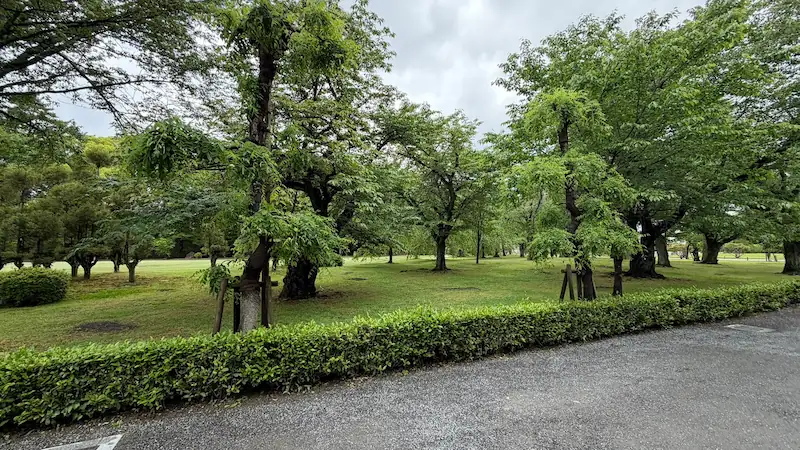
The Weeping Pagoda Tree within Nijo Castle is prized for its elegant, pendulous branching. The pagoda tree (enju) — Styphnolobium japonicum, a leguminous deciduous tree — originated in China and has long been planted in Japanese temple and garden settings. The weeping cultivar is rare nationwide and especially eye-catching here.
In Nijo Castle's tranquil setting, the tree offers a sense of calm to all who pass by. Its appearance shifts with the seasons, rewarding repeat visits with new moods throughout the year.
Historical Data
| Year Built | Unknown (planting date not recorded) |
|---|---|
| Builder | Unknown (likely planted by Nijo Castle administrators) |
| Structure & Features | Deciduous tree in the pea family, with a distinct weeping habit. Pale yellowish-white flowers bloom in July–August, producing pod-like fruit. Associated with longevity through the Japanese wordplay on "enju" (延寿, "prolonged life"). |
| Repairs & Restoration | Unspecified; routine pruning and supplemental planting maintain the tree's vigor. |
| Current Status | Extant; can be viewed on the grounds, around Seiryu-en and nearby areas. |
| Loss/Damage | No known record of loss or severe damage. |
| Cultural Property Status | Not designated; preserved as an ornamental tree. |
| Notes | This rare weeping form is a visitor favorite; its summer flowers accent Seiryu-en's vistas. |
Access
Suggested Visit Time
Quick highlights: about 10 minutes / Leisurely visit: about 20 minutes (to study the tree and surrounding views)
Highlights
- Distinct Silhouette: The defining feature is its sweeping, drooping canopy — instantly recognizable and unlike most trees on the grounds.
- Seasonal Interest: Fresh spring greens, deep summer foliage, golden autumn leaves, and an elegant winter tracery — seasonality is the whole point here.
- Cultural Associations: Historically revered as a "tree of learning," the pagoda tree symbolizes scholarship and knowledge — fitting for Nijo Castle's cultural side.
North Otemon Gate
A secondary gate supporting the East Otemon, and a liaison route to the Kyoto Shoshidai residence
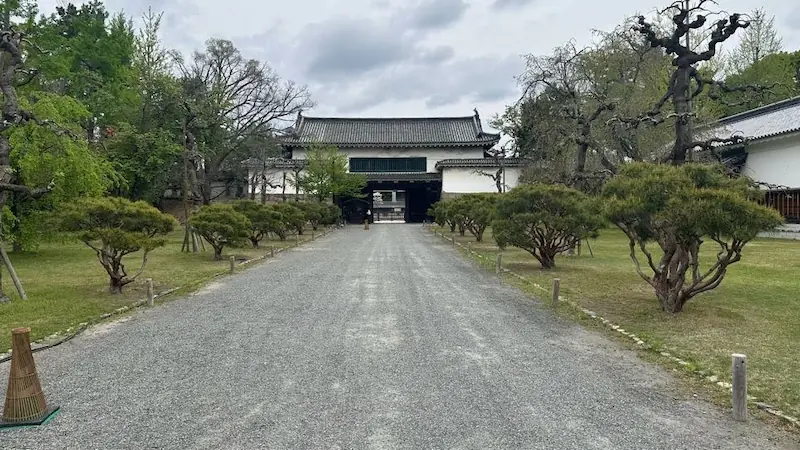
The North Otemon is a key gate on the castle's north side, serving as a secondary counterpart to the main East Otemon Gate. A gate has stood here since the original construction in 1603 (Keicho 8), but whether the present structure dates from then or from rebuilding around Emperor Go-Mizunoo's 1626 (Kanei 3) procession remains uncertain.
Because the Kyoto Shoshidai (the shogunate's regional governor) maintained a residence across the road, the gate likely functioned as a liaison route between the two compounds.
Historical Data
| Year Built | 1625–1626 (Kanei era) |
|---|---|
| Builder | Attributed to works during the Tokugawa Iemitsu period |
| Structure & Features | Turret-gate form; hip-and-gabled, tiled roof. Located on the north side; functioned as a supporting gate to the East Otemon. Faced the Kyoto Shoshidai residence across the road; likely used for official transit. |
| Repairs & Restoration | Maintained repeatedly since construction; detailed restoration records are limited. |
| Current Status | Extant; designated an Important Cultural Property of Japan. |
| Loss/Damage | No clear record of catastrophic loss or burning. |
| Cultural Property Status | Important Cultural Property of Japan. |
| Notes | A gate existed here from the Keicho-period founding; whether this is that original or a Kanei-period rebuild is unclear. Served as a major northern entrance, second only to the East Otemon in scale and presence. |
Access
Suggested Visit Time
Quick highlights: about 10 minutes / Leisurely visit: about 20 minutes (to study the gate and surrounding defenses in detail)
Highlights
- Gate Architecture: A turret-gate with a hip-and-gabled, tiled roof, thick timber doors, and flanking stone walls — speaking to both authority and defense.
- Defensive Context: Former turrets and earthen walls once stood around the gate, forming part of the broader security system; some elements are now lost, but the layout rewards informed imagination.
- Historical Role: Due to its position opposite the Kyoto Shoshidai residence, the gate likely functioned as an official corridor between the castle and government offices.
Next Area

Previous Area

Back to the Complete Guide

Back to the Main Page

☕ Support This Site
Following the Shogun is built on original fieldwork and on-site research.
If you found this guide useful, your support helps keep it going.

You can also support via QR code


comment