


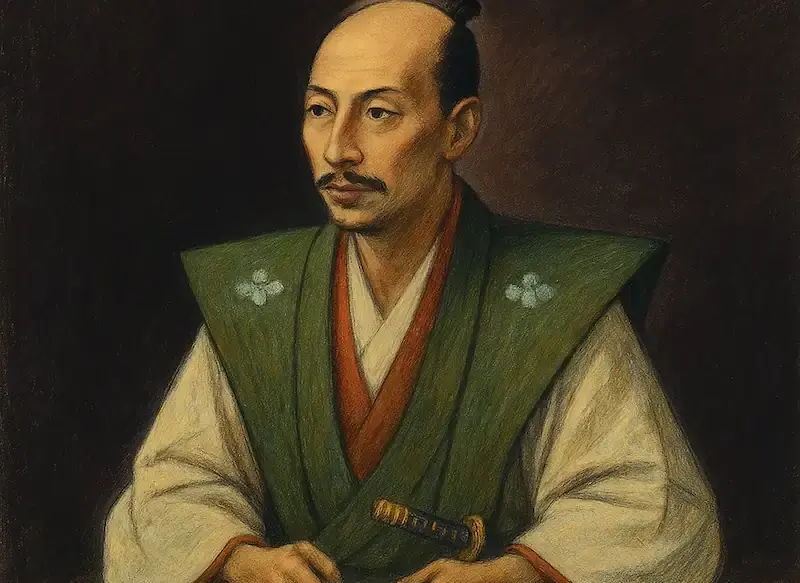
Oda Nobunaga: Who He Was, and the Sites You Can Still Visit
Oda Nobunaga came closer than anyone to unifying Japan, then died at Honnō-ji in 1582. His castles no longer stand — but the ruins, battlefields, and stone foundations are still there, and this guide covers what survives at each one.
Oda Nobunaga (1534–1582) was the Sengoku warlord who came closer than anyone to unifying Japan, and who died at Honnō-ji Temple in Kyoto in 1582, betrayed by his own general Akechi Mitsuhide. He is counted as the first of Japan's Three Unifiers, ahead of Toyotomi Hideyoshi and Tokugawa Ieyasu. This page is the field-guide hub for the essential Oda Nobunaga sites and what he physically left behind: which castles, ruins, battlefields and temples you can visit, what actually survives at each one, and how to reach them from Nagoya or Kyoto.
None of his castles stand today, but what remains is more specific than that sounds: the stone foundations and approach path on Mt. Azuchi, the slope where Okehazama was fought, reconstructed keeps at Gifu and Kiyosu, and the temples caught up in his campaigns. Every guide linked below is based on a visit in person, with access information, 360° panorama photos, and a plain statement of what is original, what is rebuilt, and what is only an estimated location. For his life story — early years, the battles, the Honnō-ji Incident — read the full Oda Nobunaga biography. If you arrived from SHŌGUN or Assassin's Creed Shadows, both connections are covered further down this page.
| Warlord | Oda Nobunaga (1534–1582) |
|---|---|
| Era | Sengoku period (Warring States) |
| Role in history | First of Japan's Three Unifiers |
| Site types covered | Castle ruins, reconstructed castles, battlefields, temples, shrines, former castle sites |
| Regions covered | Aichi, Gifu, Shiga, Kyoto, Nara |
| Recommended base cities | Nagoya (for Aichi/Gifu sites) · Kyoto/Osaka (for Shiga/Kyoto sites) |
| SHŌGUN connection | Kuroda Nobuhisa (fictional) is directly inspired by Nobunaga |
| Assassin's Creed Shadows | Set during the late Sengoku period; Nobunaga's era forms the historical backdrop |
| Goshuin / Castle stamps | Collected on our visits at Komakiyama, Inuyama, Kiyosu, Gifu Castle, Odani, Azuchi, Enryakuji, Sōken-ji, Honnō-ji and others. Availability, designs and issuing hours change — confirm on site |
| Best season | Late March–early May and late October–November. Mt. Hiei is difficult in winter |
| Suggested trip length | 1 day for Azuchi alone · 3 days for the full Owari-to-Kyoto arc |
| Best for | Sengoku history lovers · Japan castle visitors · SHŌGUN viewers · battlefield researchers · AC Shadows players |
Who Was Oda Nobunaga?
Oda Nobunaga was born in 1534 in Owari Province — modern Aichi Prefecture, where this guide starts — and died on 21 June 1582 at Honnō-ji Temple in Kyoto, where it ends. In the years between he made firearms central to how his campaigns were fought, fought and broke the armed Buddhist institutions that had held political and military power, and built Azuchi Castle on Lake Biwa. Almost every site on this page is a place he took, built, burned, or died in.
That is as much biography as this page carries, deliberately. The full account — his early years, Okehazama, Nagashino, how he died at Honnō-ji, his recorded last words, and a complete 1534–1582 timeline — is on the biography page:
Everything below is about the places: what is left of them, where they are, and how to fit them into a trip.
The Real History Behind SHŌGUN's Kuroda Nobuhisa
In the FX/Hulu drama SHŌGUN, the shadow ruler whose death sets the entire story in motion is Kuroda Nobuhisa — a fictional character, but one drawn directly from the life and legacy of Oda Nobunaga. Nobuhisa does not appear in the action directly; he exists through portraits, references, and the political vacuum his death created. That structure mirrors Nobunaga's actual historical role: a figure whose absence shaped everything that followed.
The parallels are specific. Kuroda's sudden assassination by a trusted general (Akechi Jinsai in the drama) echoes the Honnō-ji Incident of 1582, when Nobunaga was betrayed by Akechi Mitsuhide, and the political scramble that follows — who controls the heir, who inherits the power — reflects what actually happened after Nobunaga's death. Lady Ochiba's position as heir to a vanished ruler's authority echoes Yodo-dono (Chacha), who was Nobunaga's niece in real history rather than his daughter.
Note: In real history, Lady Ochiba (Yodo-dono / Chacha) was the niece of Oda Nobunaga. The series adjusts this relationship to a father-daughter dynamic to sharpen her political standing in the story.
For the full breakdown of SHŌGUN's characters and their historical counterparts:

Honnō-ji itself was rebuilt on a different site in Kyoto and can be visited today — see the Kyoto section below.
What Remains of Nobunaga's Japan Today
No castle directly associated with Oda Nobunaga survives in its original form. What visitors find are ruins, archaeological sites, reconstructed keeps, and former sites where the history is carried by the landscape and the stones that remain.
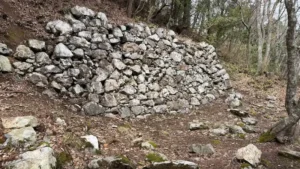
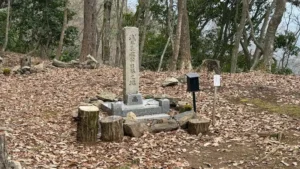
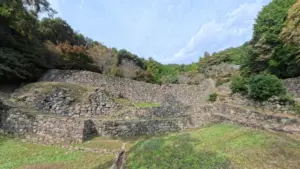
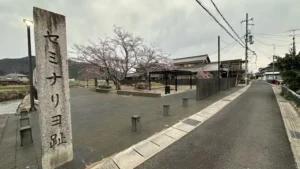
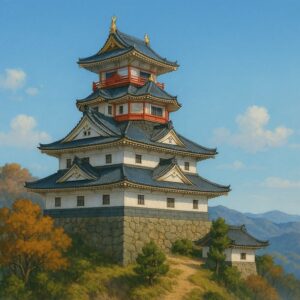
Azuchi Castle (Shiga Prefecture) is the most significant Nobunaga site for visitors. The stone foundations of the main keep, the approach path lined with original stone, and the grave of Oda Nobunaga's father survive on Mt. Azuchi. A museum at the base provides historical context. Access is about a 20-minute walk from JR Azuchi Station (安土駅) on the JR Biwako Line, roughly 45–50 minutes from Kyoto Station — a comfortable day trip from Kyoto or Osaka.
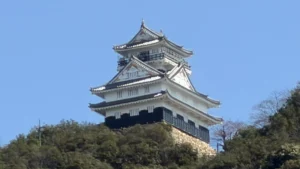
Gifu Castle has a modern reconstruction on the summit of Mt. Kinka, built in 1956. The original castle associated with Nobunaga no longer exists. The mountain itself still explains why the position mattered — it commands the Nōbi Plain and the Nagara River — though the plain below is now a modern city. Accessible by ropeway from central Gifu, under an hour from Nagoya by train. Note that the keep is closed for a long renovation until late 2027 — see the current conditions below before planning a visit.
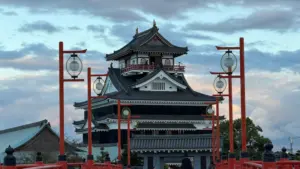
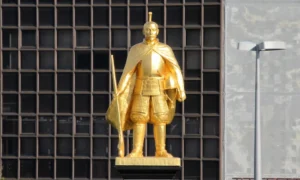
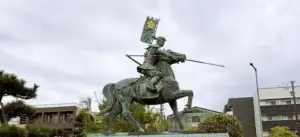
Kiyosu Castle (Aichi Prefecture), one of Nobunaga's early bases, has a reconstructed keep built in 1989 on the opposite bank of the Gojō River from the historic castle grounds. The original site is preserved as Kiyosu Furushiro-ato Park and, to the south, Kiyosu Park — reached across the red Ōte Bridge. A section of castle stone wall uncovered during river works in 1996 has been relocated and rebuilt there, and the well-known bronze statue of Nobunaga stands in Kiyosu Park. The reconstruction houses a museum on Nobunaga's early career. Reachable by local train from Nagoya in about 20 minutes.
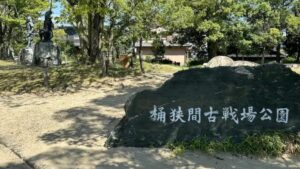
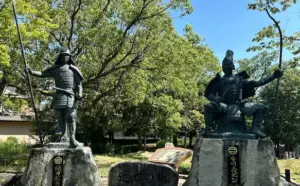
Okehazama Battlefield (Aichi Prefecture) is where Nobunaga defeated the vastly superior forces of Imagawa Yoshimoto in 1560 — the battle that made his reputation. The battlefield area is now divided between two competing memorial sites in neighboring municipalities. Access by bus and train from Nagoya.
Individual guide pages detail the current condition of each site, what is original, what is reconstructed, and what is an estimated former location. The table below is the short version — enough to decide what goes into your trip before you read any of them.
| Azuchi Castle Ruins Shiga |
What survives: original stone foundations of the keep, the stone approach path, and the grave of Nobunaga's father. Special Historic Site. Access: JR Azuchi Station (Biwako Line), ~45–50 min from Kyoto, then ~20 min on foot. Time: 1.5–2 hours for the grounds; half to a full day with the surrounding sites. Verdict: the one we would prioritise if you visit only one. |
|---|---|
| Gifu Castle Gifu |
What survives: the mountain and the view; the keep is a 1956 reconstruction. Access: ropeway from central Gifu, under 1 hour from Nagoya. Time: half day, pairs well with the Inaba-jinja area. Note (10 Sep 2026): the keep and museum are closed for renovation until late October 2027; the ropeway and summit facilities still run. |
| Kiyosu Castle Aichi |
What survives: the 1989 keep is a reconstruction on the far bank of the river; the historic grounds are preserved opposite as Kiyosu Furushiro-ato Park, with a relocated section of excavated stone wall and the Nobunaga statue in adjoining Kiyosu Park. Access: ~20 min by local train from Nagoya. Time: 2–3 hours. Verdict: pair it with the Gifu direction, not with Okehazama — the two sit on opposite sides of Nagoya and combining them wastes a morning. |
| Okehazama Battlefield Aichi |
What survives: the terrain, and two memorial parks in neighbouring municipalities that each claim the battle site. Access: train and bus from Nagoya. Time: half day to see both. Verdict: for people who want the ground, not a building. It is a residential area now, but the rise and fall of the land still reads clearly. Enthusiast territory rather than a first stop. |
| Atsuta Shrine Aichi |
What survives: the Nobunaga-bei — a heavy tiled mud wall, layered with roof tiles and bound with lime and oil, dedicated by Nobunaga in thanks after Okehazama. The shrine also enshrines the Kusanagi sword, one of the three imperial regalia. Access: minutes from central Nagoya; JR Atsuta and Meitetsu Jingūmae both sit beside the precinct. Time: about an hour, longer if you walk the wooded grounds. Verdict: the wall is one of the very few things Nobunaga personally commissioned that you can still stand in front of. Everywhere else on this list, you are looking at foundations or reconstructions. |
| Honnō-ji Kyoto |
What survives: the temple was rebuilt on a different site after 1582; the original ground is marked separately nearby. Access: subway or bus from Kyoto Station, then a short walk; it sits in the Kawaramachi area. Time: about 1 hour, or 2 if you also walk to the former site. Verdict: among the easiest of all the Nobunaga sites to reach. |
| Enryaku-ji, Mt. Hiei Shiga / Kyoto |
What survives: a rebuilt complex — Nobunaga burned it in 1571 — spread across several precincts on the mountain. Access: cable car or bus from Kyoto or Sakamoto. Winter services are limited. Time: full day. Verdict: visit in the warmer months. |
| Inuyama Castle Aichi |
What survives: an original keep — one of only twelve left in Japan, and one of five designated National Treasures. The castle was founded in 1537 by Oda Nobuyasu, Nobunaga's uncle; the dating of the surviving keep itself is debated among historians. Access: Meitetsu line from Nagoya. Time: half day. Verdict: the only site on this page where you climb the wooden interior of an original keep rather than a reconstruction — though other original keeps survive elsewhere in Japan. Note that this is not one of Nobunaga's own castles; the connection runs through his family, not through him. |
Explore Nobunaga Sites by Prefecture
Each guide below includes access information, historical context, 360° panorama photos where available, and candid notes on what you will actually find on the ground. Sites are grouped by prefecture to make trip planning easier — most can be combined as day trips from Nagoya (Aichi/Gifu) or from Kyoto and Osaka (Shiga/Kyoto).
Aichi Prefecture
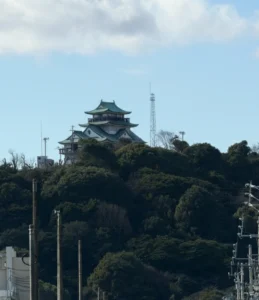
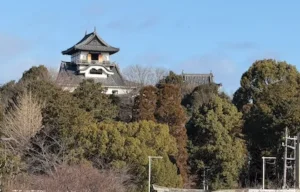
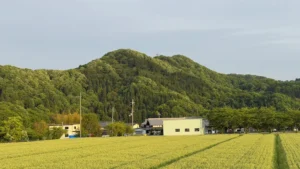
Nobunaga's home province. Aichi holds the sites of his early career: Kiyosu Castle (his first major base), Nagoya Castle (where he grew up — current scholarship favours Shōbata Castle in Inazawa as his birthplace, and the castle standing today is Tokugawa-era), and Okehazama Battlefield, where the 1560 victory against Imagawa Yoshimoto made his name. All are practical day trips from Nagoya by train.

Gifu Prefecture
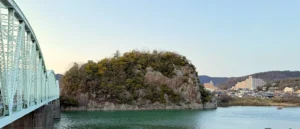
After taking Inabayama Castle in 1567, Nobunaga renamed it Gifu — giving both the city and the castle their modern names. Gifu Castle's current keep is a 1956 reconstruction on the summit of Mt. Kinka. The topography is what survives from Nobunaga's time — the mountain still commands the Nōbi Plain and the Nagara River, which is why the position mattered — although the landscape below it is now a modern city. Accessible by ropeway from central Gifu, under an hour from Nagoya.
Shiga Prefecture
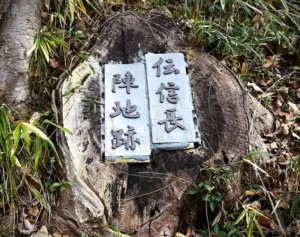
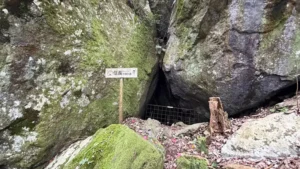
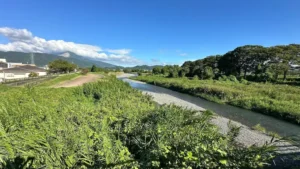
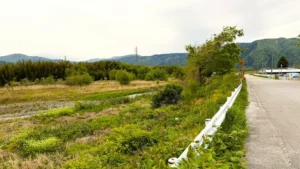
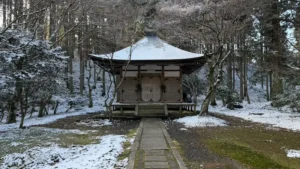
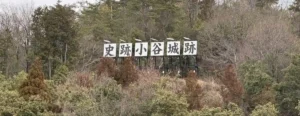
Shiga holds Nobunaga's most significant and most visited site: the Azuchi Castle ruins on Mt. Azuchi, designated a Special Historic Site. The stone foundations of the main keep, the approach path, and the grave of Nobunaga's father survive on the mountain. Anegawa Battlefield in the north of the prefecture, where Nobunaga defeated the Azai and Asakura clans in 1570, is also covered here. Both are reachable by JR Biwako Line from Kyoto or Osaka; Azuchi Station is roughly 45–50 minutes from Kyoto.

Kyoto
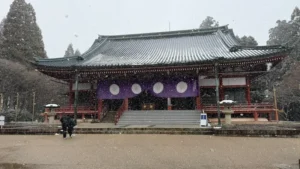
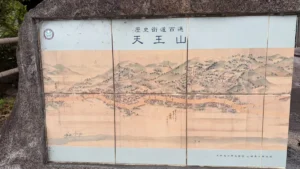
Kyoto is where Nobunaga's story ended. Honnō-ji Temple — the site of his death in 1582 — was relocated and rebuilt after the fire; the current temple stands a short walk from Kyoto's Kawaramachi area. Several other temples and shrines in Kyoto are connected to Nobunaga's campaigns, his political dealings with the Imperial Court, and the aftermath of his death.
Nara Prefecture
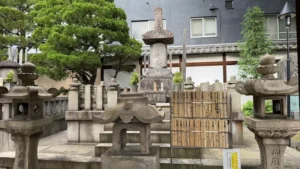
Nara Prefecture contains several sites connected to Nobunaga's campaigns in the Kinai region, including locations associated with his conflicts with the Miyoshi clan and the religious institutions of the area. Fewer sites in Nara are directly linked to Nobunaga compared to Aichi or Shiga, but they fill in an important part of his campaigns toward the capital.

How to Plan Your Route
Most Nobunaga-related sites fall into two regional clusters. The first is the Nagoya–Gifu corridor (Aichi and Gifu prefectures): Kiyosu Castle, Komakiyama Castle, Gifu Castle, Okehazama Battlefield, and several smaller sites are all reachable by rail or car from Nagoya, making them practical half-day or full-day trips. The second cluster is the Lake Biwa region (Shiga Prefecture): the Azuchi Castle ruins are best accessed from Kyoto or Osaka via the JR Biwako Line (roughly 45–50 minutes from Kyoto Station to JR Azuchi Station, then about 20 minutes on foot). Anegawa Battlefield in northern Shiga and several Nobunaga-linked sites in Kyoto complete the route. Individual access guides, maps, and travel times are in each child page below.
Four Itineraries That Work
These are built from actual visits, not from a map — every site below has been walked, and the timings are what the walking actually took. Travel times assume trains, not a rental car.
Take an early train on the JR Biwako Line (~45–50 min from Kyoto). Being at Azuchi Station by around 9am is the difference between a good day and a rushed one. It is a 20-minute walk to the ruins, then the climb up the stone approach to the keep foundation, Sōken-ji, and the museums at the base.
Allow until 2 or 3pm. Half a day is not enough for Azuchi if you want to see it properly — the ruins, the surrounding sites and the museums together need the extra hours, and the site rewards them.
Best for: anyone visiting exactly one Nobunaga site. This is the one.
The obvious plan is Kiyosu plus Okehazama, and as general sightseeing it is the wrong one. They sit on opposite sides of Nagoya, so doing both means crossing the city mid-day and losing most of a morning to transit. Unless you are deliberately following the march — see the next route — pair them by direction instead.
North-west — Kiyosu with the Gifu direction. Both lie on the line running out of Nagoya toward Gifu, so they connect without backtracking. Kiyosu in the morning, where Nobunaga's career began and where his successors argued over the succession after his death; the Gifu sites in the afternoon. (As of 10 September 2026, Gifu Castle's keep is closed for renovation until late 2027 — but the mountain, the ropeway and the Nobunaga sites around Gifu station are all open.)
South — Okehazama with Atsuta Shrine. The battlefield in the morning, then Atsuta on the way back into the city — the same order Nobunaga travelled in reverse.
Best for: understanding how he started, rather than how he finished.
The exception to the rule above. On the morning of the battle in 1560, Nobunaga rode out of Kiyosu not knowing whether he would win or die, and the road he took is still traceable across modern Nagoya — nine stops, start to finish, and the inefficiency of crossing the city is exactly the point.
Kiyosu Castle (the start) → Enoki-Hakusan Shrine, a small shrine on the old Mino road where he is said to have prayed for victory → Hioki Shrine, where tradition holds he prayed and danced on the morning of the battle → Hōji-ji, beside the tomb-mound of Yamato Takeru → Atsuta Shrine, where he settled his mind before committing → Narumi Castle site, the Imagawa stronghold he could not leave alone → Zenshō-ji fort, where he arrived around 10am and grew a force of a few hundred into a few thousand → Nakajima fort, the low, exposed forward position his retainers begged him not to take → Okehazama.
Most of these are small shrines, parks and stone markers rather than sights. That is what makes the route work: strung together, they turn Okehazama from a lucky ambush into a sequence of decisions.
Best for: your second Nobunaga trip, not your first. Allow a full day and expect to be walking between local stations.
Day 1, Nagoya base — south. Okehazama in the morning, Atsuta Shrine on the way back. If you would rather walk the whole march route above, this is the day to spend on it.
Day 2, Nagoya base — north-west. Kiyosu in the morning, then either Gifu or Inuyama in the afternoon. Narrow your list before you go. Gifu on its own will absorb a full day if you stop at everything around the station, the park and the mountain; it fits into half a day only if you decide in advance what you are skipping.
Day 3, move to Kyoto via Azuchi. This is a change of trains rather than a straight Shinkansen run — you go via Maibara and onto the Biwako Line — so build in the connection time. On our visits there were coin lockers at the tourist information office by Azuchi Station — leave your bags there and climb unencumbered, which matters more than it sounds on a stone approach. Facilities like this can change, so check locally before relying on it. Then Honnō-ji in central Kyoto in the late afternoon. You end the trip where he did.
Best for: a first Sengoku-focused trip. If you skip Azuchi on the last day, Nagoya to Kyoto is under an hour on the Shinkansen and the base change costs you almost nothing.
When to Go, and What to Watch For
| Best overall | Late March to early May, and late October to November. Azuchi's stone terraces under cherry blossom, and Inuyama and Gifu in autumn colour, are the two peaks of the year. |
|---|---|
| The one to avoid | Mid-winter on Mt. Hiei. Enryaku-ji's shuttle services thin out and the mountain becomes awkward to cover in a day. It is the one seasonal obstacle we have actually run into on this route. |
| Summer, honestly | Less of an obstacle than it sounds. Azuchi is hot and the climb is exposed, but in our experience it is entirely doable if you go in expecting that. Mt. Kinka is manageable in summer because of the ropeway — it is the walking routes up the mountain, not the castle itself, that demand real commitment in the heat. |
| Rain | On our visits, rain took nothing away from these places — wet stone at Azuchi has a quality of its own. What rain removes is the blue sky, so plan around it only if you are going for photographs. For a practical indoor fallback, Kiyosu's museum is the one that still works; Gifu's is closed for renovation until late 2027 (checked 10 September 2026). |
| Check before you travel | Gifu Castle's keep and museum are closed for renovation until late October 2027 (checked 10 September 2026); the ropeway and summit facilities are unaffected. Opening hours and fares at every site change seasonally, and the individual guides carry the date on which each was last checked. |
Nobunaga's Era in Assassin's Creed Shadows
Assassin's Creed Shadows (2025) is set in late Sengoku Japan — Nobunaga's Japan. The game's historical backdrop is the period of his rise to dominance, and several locations in the game correspond to real sites covered on this site: the castle towns, the approaches to Kyoto, and the landscape of the Biwa region.
Nobunaga himself appears in the game as a historical character, giving players a version of the man that draws on his reputation for ruthlessness and military innovation. The real Nobunaga was both of those things — and also a patron of the arts, a trade reformer, and someone who engaged seriously with the Jesuit missionaries who arrived in Japan during his lifetime. The site guides here are built on primary sources and on-the-ground visits, so if you want to cross-reference what the game shows with what the history actually records, these pages are a useful starting point.
Frequently Asked Questions
Oda Nobunaga (1534–1582) was a warlord of Japan's Sengoku period and the first of the country's Three Unifiers. He built Azuchi Castle, widely described as Japan's first full-scale early-modern castle keep; he made extensive use of firearms in his campaigns, coordinated with his other troops; and he fought the powerful armed Buddhist institutions of his day, Enryaku-ji and Ishiyama Hongan-ji above all. He died at Honnō-ji in 1582, aged 47, after being trapped there by his own general Akechi Mitsuhide. This page covers the sites connected to him; the full life story is on the Oda Nobunaga biography page.
Castle ruins, reconstructed keeps, battlefields, temples and shrines across five areas. Aichi holds Kiyosu Castle, Nagoya Castle, Okehazama Battlefield, Komakiyama and Inuyama. Gifu has Gifu Castle on Mt. Kinka. Shiga has the Azuchi Castle ruins, Anegawa Battlefield and Enryakuji on Mt. Hiei. Kyoto has Honnō-ji and related temples, and Nara holds sites linked to his campaigns toward the capital. Each has an individual guide with access details.
None of Nobunaga's castles survive in original form. Azuchi Castle — his greatest project — exists as nationally designated special historic ruins on Mt. Azuchi in Shiga Prefecture: the stone foundations, the approach path and the grave of his father remain. Gifu Castle has a 1956 reconstruction on the summit of Mt. Kinka. Kiyosu Castle has a reconstructed tower built in a relocated position. Many associated sites are former locations or archaeological remains. Each guide page states what physically survives at that specific location.
For visitors with an interest in Sengoku history, yes — with some expectation management. There is no standing castle: what you visit are the mountain, the stone foundations and the approach path, designated a Special Historic Site. The climb through forested stone terraces to the main keep foundation is the reason to go, and a museum at the base provides reconstruction models and historical context. Allow 1.5–2 hours for the grounds, or half a day with the surrounding sites. It is about a 20-minute walk from JR Azuchi Station on the JR Biwako Line, roughly 45–50 minutes from Kyoto.
If you have time for only one, make it the Azuchi Castle ruins in Shiga — the most significant surviving site directly associated with Nobunaga, and roughly 45–50 minutes from Kyoto on the JR Biwako Line, plus about 20 minutes on foot. If you are based in Nagoya instead, Gifu Castle gives you the mountain setting and the views over the Nōbi Plain in under an hour of travel, and Kiyosu Castle is about 20 minutes away by local train.
Most of them, yes. From Nagoya: Kiyosu Castle in about 20 minutes by local train, Gifu Castle in under an hour, Okehazama Battlefield by train and bus. From Kyoto or Osaka: the Azuchi Castle ruins via the JR Biwako Line, roughly 45–50 minutes from Kyoto to JR Azuchi Station, plus Enryakuji on Mt. Hiei and the Kyoto temples. More remote battlefield sites such as Anegawa need more planning. Travel times are given in each guide page.
It varies. Allow about half a day for the Azuchi Castle ruins and the museum at the base, or a full day if you want to explore the surrounding area at a relaxed pace. Gifu Castle on Mt. Kinka is a half-day trip and pairs well with the Inabajinja Shrine area for a full day out of Nagoya. Inuyama Castle is usually half a day. Enryakuji on Mt. Hiei needs a full day and is easier in summer, as winter shuttle bus services are limited.
At many of them. Goshuin or castle stamps are available at Komakiyama, Inuyama, Kiyosu, Gifu Castle, Odani, Azuchi, Enryakuji, Sōken-ji and Honnō-ji, among others. Individual guide pages note what is available at each site.
In four places, in order. Kiyosu in Aichi was his first major base, from 1555. Komakiyama in Aichi followed in 1563. Gifu — which he renamed after taking Inabayama Castle in 1567 — was his seat for nearly a decade. Azuchi on Lake Biwa, from 1579, was the last and the grandest, and he lived in it for only three years. All four are covered on this page, and all four can be visited, though no Nobunaga-era castle buildings survive at any of them. Azuchi is the only one that retains substantial original stonework.
Yes, though not the original building. Honnō-ji burned down around him in 1582 and was later rebuilt on a different site in central Kyoto, a short walk from Kawaramachi. The ground where the temple actually stood in 1582 is marked separately, a little to the south-west. Both are in the Kyoto section below, and the guide covers how to walk between them. For what happened there, see the Honnō-ji Incident on the biography page.
No confirmed burial place is known. His body was never recovered from the fire at Honnō-ji, and several temples and sites preserve graves or cenotaphs associated with him: a grave marker at Honnō-ji in Kyoto, Sōken-ji at Azuchi (the temple Nobunaga himself founded), Sōken-in at Daitoku-ji in Kyoto, built for the funeral Hideyoshi held in 1582, Amida-ji in Kyoto — which holds that a priest recovered and interred his remains, a claim that has never been confirmed — and a memorial on Mount Kōya. Honnō-ji and the Azuchi area are covered by this site's own fieldwork and linked below; the others are listed from published temple information and have not been visited in person.
Late March to early May, or late October through November. Most of these sites are outdoors and involve a climb — Azuchi's stone terraces and Gifu's Mt. Kinka in particular — so spring and autumn are both more comfortable and more photogenic. Avoid Mt. Hiei in midwinter, when Enryaku-ji's shuttle services are reduced and covering the precincts in one day becomes difficult. Midsummer is manageable but hot on every uphill approach.
Train is fine for the main sites. Azuchi, Gifu, Kiyosu, Inuyama and Honnō-ji are all reachable on scheduled rail, and the itineraries on this page assume trains only. A car does help for the smaller Shiga and Nara sites, where buses are infrequent. The Kiyosu-to-Okehazama march route is the opposite case — it is a train-and-walking route by design. Okehazama is the interesting exception. Getting between its two memorial areas on public transport is genuinely awkward, and a car solves that — but it also costs you the thing you went for. The battlefield runs across rising and falling ground in what is now a residential district, and walking it is how you feel the distances and the slopes that decided the engagement. Parking is awkward too. On our visits we walked it, and we would again. If you are basing yourself in Nagoya and Kyoto, you do not need a car.
Yes. Kuroda Nobuhisa is a fictional character in the FX/Hulu drama SHŌGUN, but he is directly modelled on Oda Nobunaga — including his sudden death at the hands of a trusted general, the political vacuum that followed, and the shadow his legacy casts over the surviving characters. Kuroda is dead before the main storyline opens, so his weight in the series comes through the consequences of that death rather than through his presence in the ongoing action.
Yes. Oda Nobunaga appears as a historical character in Assassin's Creed Shadows (2025). The game is set during the late Sengoku period — the era Nobunaga dominated — and several of its regions, including the Kinai area and the country around Lake Biwa, correspond to real places covered on this site.
Nobunaga's sites are closely linked to Toyotomi Hideyoshi, who continued his campaigns after his death, Tokugawa Ieyasu, his ally and eventual successor to power, Akechi Mitsuhide, who betrayed him, and Maeda Toshiie, a loyal general. The battlefields covered here also involve the forces he fought — the Asakura, Azai and Takeda clans. Individual guide pages note which figures are connected to each site.
Related Field Notes
Field notes and travel records from visits to Nobunaga-related sites — including conditions on the ground, what to look for, and observations from attending related historical events.



☕ Support This Site
Following the Shogun is built on original fieldwork and on-site research.
If you found this guide useful, your support helps keep it going.

You can also support via QR code

