


Nijo Castle: Seiryu-en Garden & North Area #2
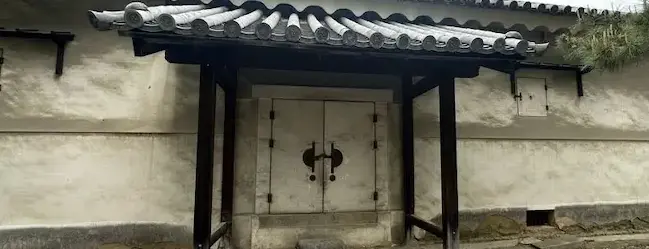
Northwest Earthen Storehouse (Rice Storehouse) & Kōuntei
The Northwest Earthen Storehouse (Rice Storehouse), its heavy tiled roof and thick earthen walls speaking to centuries past, and Kōuntei, a sukiya-style teahouse set gracefully within the Seiryu-en Garden. Every visit here reveals something new, wrapped in a timeless atmosphere — a must for history lovers.
Nijo Castle's quiet allure isn't limited to its dazzling palaces and grand gates.
The Northwest Earthen Storehouse (Rice Storehouse), its heavy tiled roof and thick earthen walls speaking to centuries past, and Kōuntei, a sukiya-style teahouse set gracefully within the Seiryu-en Garden. Every visit here reveals something new, wrapped in a timeless atmosphere — a must for history lovers.
The 2 Spots of Seiryu-en Garden & North Area #2
Northwest Earthen Storehouse (Rice Storehouse)
One of only 3 surviving storehouses, built for fire and moisture resistance

Located in the northwest sector of Nijo Castle, the Northwest Earthen Storehouse (Rice Storehouse) dates to around 1626 (Kanei 3). In the Edo period, there were ten such storehouses within the castle; today only three survive. While built primarily to store grain and weapons, Nijo Castle's storehouses were especially effective against fire and humidity and even contributed to the castle's defensive resilience.
This northwest storehouse formed a pair with the southwest storehouse across the Honmaru West Bridge and functioned as a key logistics hub. Edo-period maps from the Kanei era depict two storehouses for saltpeter (used in matchlocks) and one for slow match, indicating that powder and weapons were also stored here. Those specific buildings no longer exist, but the Northwest Earthen Storehouse remains a rare survivor that preserves the look and feel of the time.
Historical Data
| Year Built | Circa 1626 (Kanei 3), during Honmaru improvements under Tokugawa Iemitsu |
|---|---|
| Builder | Tokugawa Shogunate (Edo bakufu works) |
| Structure & Features | Traditional earthen storehouse construction; single story; five bays wide by three bays deep; tiled roof. Near the northwest corner turret site; used chiefly to store rice and provisions. Thick earthen walls with fireproofing; white plaster exterior. |
| Repairs & Restoration | Maintained since the Edo period; repaired again in the Meiji and Showa eras. Documented roof-tile and plaster-wall repairs. |
| Current Status | Extant. Stands in the castle's northwest; exterior preserved, interior not open to the public. A representative example of fire-resistant storehouse architecture. |
| Loss/Damage | No record of loss to great fires or wartime damage; remains standing. |
| Cultural Property Status | Important Cultural Property of Japan (designated October 28, 1939) |
| Notes | Positioned at the Honmaru's northwest; combined storage and defensive resilience. Other similar storehouses once stood here; this is the only one of its exact type still extant. Its thick earthen walls and plaster finish preserve the period appearance. |
Access
Suggested Visit Time
Quick highlights: about 10 minutes / Leisurely visit: about 20 minutes (to study the storehouse construction and surrounding defenses in detail)
Highlights
- Earthen Storehouse Construction: Single-story, hip-and-gabled, tile-roofed earthen construction with thick walls and a heavy roof — excellent for fire and moisture control, ideal for safeguarding valuable provisions.
- Defensive Role: More than a warehouse, the robust walls and structure also contributed to the castle's defensive network, mitigating fire risk and resisting intrusion.
- Historical Context: A rare, well-preserved example of Edo-period castle logistics. As one of only three storehouses surviving within Nijo Castle, it's invaluable for understanding supply management and defense.
Kōuntei
A sukiya-style teahouse relocated from the Sumino-kura Ryōi residence, set within Seiryu-en Garden
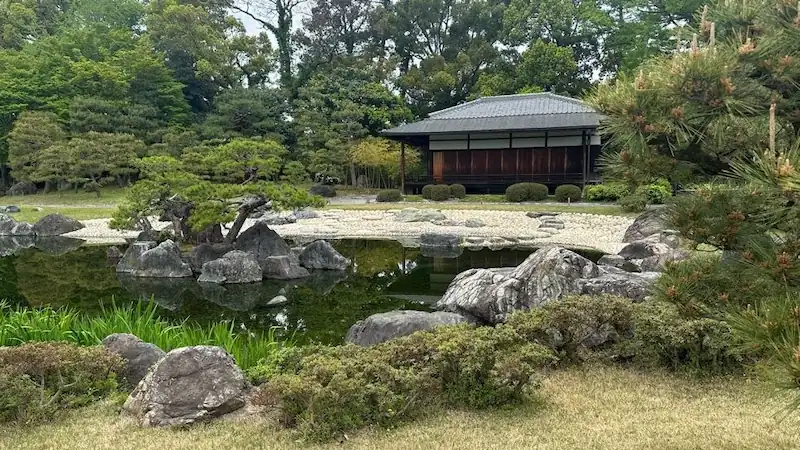
Kōuntei is a sukiya-style teahouse set within Nijo Castle's Seiryu-en Garden. It was relocated from the residence of Sumino-kura Ryōi, a prominent early Edo-period merchant. When Seiryu-en was created in 1965 (Showa 40), parts of the Sumino-kura residence and roughly 800 garden stones were donated, and about 300 celebrated stones were gathered from across Japan to complete the garden. Kōuntei is usually closed, but its interior opens during special events.
As a functioning tearoom, Kōuntei features snow-viewing shoji and a tokonoma alcove. From the veranda you can gaze over Seiryu-en's refined landscape — a space that offers calm and quiet to those who pause here.
Historical Data
| Year Built | Relocated in 1965 (Showa 40) in tandem with the creation of Seiryu-en |
|---|---|
| Builder | Relocated from the former residence of Sumino-kura Ryōi (as part of a Kyoto City garden project) |
| Structure & Features | Sukiya-inspired shoin-style architecture. Single-story wooden building; hip-and-gabled roof; clay tiles. Set on the west edge of Seiryu-en, serving as a tea and banquet venue overlooking a pond garden. Repaired during relocation and refined to harmonize with the garden scenery. |
| Repairs & Restoration | Post-1965 repairs to the roof and interiors in the 1970s and 1990s. Ongoing conservation today. |
| Current Status | Extant; generally exterior viewing only. Opened for limited periods as a special exhibition space or reserved dining venue. |
| Loss/Damage | No confirmed record of major damage or fire. |
| Cultural Property Status | No individual designation for Kōuntei; preserved as part of the Nijo Castle complex. |
| Notes | Relocated from the Sumino-kura residence in 1965 and arranged alongside Seiryu-en's creation. Seiryu-en is a modern strolling garden with a central pond; Kōuntei anchors the garden's composition. Managed by the City of Kyoto; sometimes used for special viewings and tea gatherings. |
Access
Suggested Visit Time
Quick highlights: about 10 minutes (exterior only) / Leisurely visit: about 30 minutes (including the interior during special openings)
Highlights
- Sukiya-Style Architecture: Kōuntei is a sukiya-style teahouse with snow-viewing shoji and a tokonoma. From the veranda, the Seiryu-en Garden unfolds in front of you — an oasis of quiet and calm.
- Harmony with Seiryu-en: Set within the strolling pond garden of Seiryu-en, Kōuntei's architecture and the garden's composition are intentionally in dialogue. Buildings and stones relocated from the Sumino-kura estate, along with notable stones gathered nationwide, create a deeply historical ambiance.
- Special Openings: Though normally closed, Kōuntei occasionally opens for special events. At times, limited-run breakfast or lunch services are offered by reservation.
Next Area

Previous Area
Back to the Complete Guide
Back to the Main Page

☕ Support This Site
Following the Shogun is built on original fieldwork and on-site research.
If you found this guide useful, your support helps keep it going.

You can also support via QR code


comment