


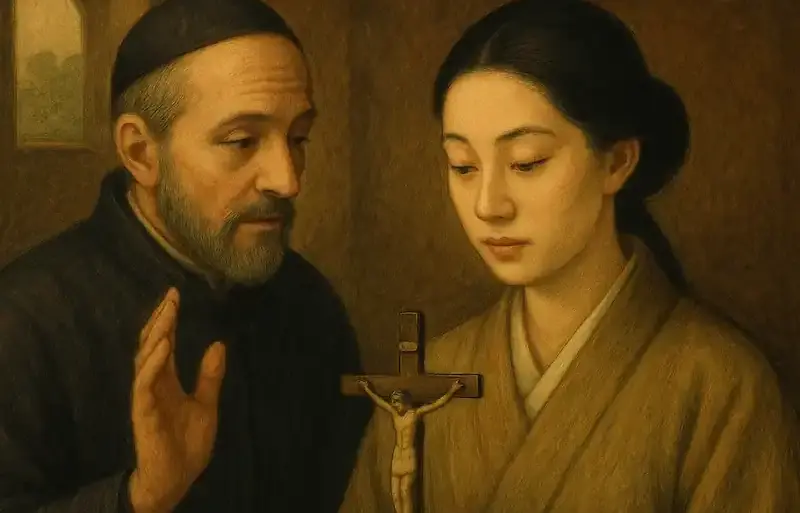
Hosokawa Gracia: Visit Her Real Sites
The real woman behind Lady Mariko in SHŌGUN. Four verified sites in Kyoto and Osaka, researched on location from 2023 to 2026.
Who Was Hosokawa Gracia?
| Site | What it is | Access / Notes |
|---|---|---|
| Etchū-no-I | Memorial well near Osaka Castle associated with the former Hosokawa residence and Gracia's final days. | Central Osaka. Nearest major station: Morinomiya. Short walk — confirm direction toward Morinomiya-Chūō before starting. |
| Sōzen-ji Temple | Temple widely introduced as a site connected to Gracia's grave. Well-maintained and accessible. | Walk from Shin-Osaka Station. Best first stop for visitors short on time. Goshuin availability varies — check on site. |
| Shōryūji Castle Park | Castle park in Nagaokakyō connected to the Hosokawa family. Restored buildings, Japanese garden, on-site museum. | Approx. 10 min walk from JR Nagaokakyō Station; 20 min from Hankyu Nagaoka-Tenjin Station. Nearby: Yamazaki battlefield, Tennozan. |
| Midono (Kyotango) | Rural mountain location long associated with Gracia's period of confinement. Stone marker only. | Kyotango City. Separate trip required — car recommended. Some access notes cite approx. 50 min by car from Amino Station. |
On-Location Photos
Osaka — Etchū-no-I and Sōzen-ji
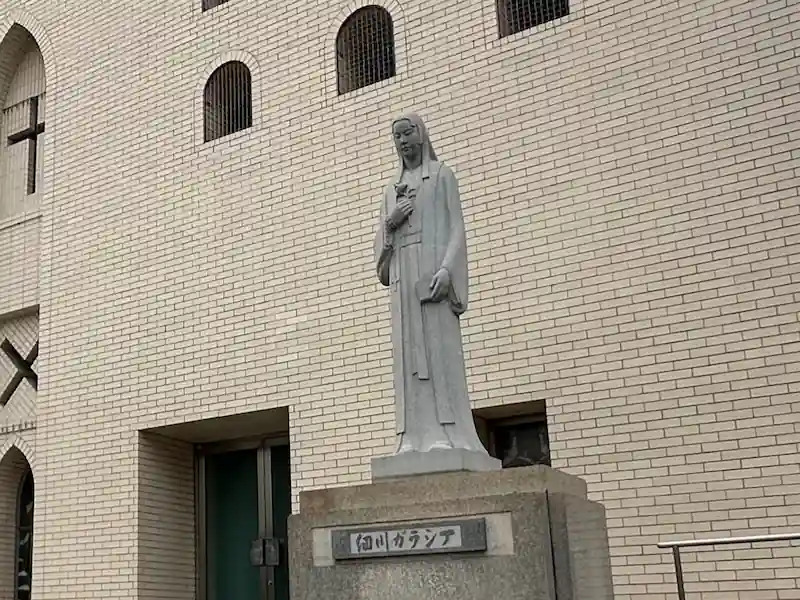
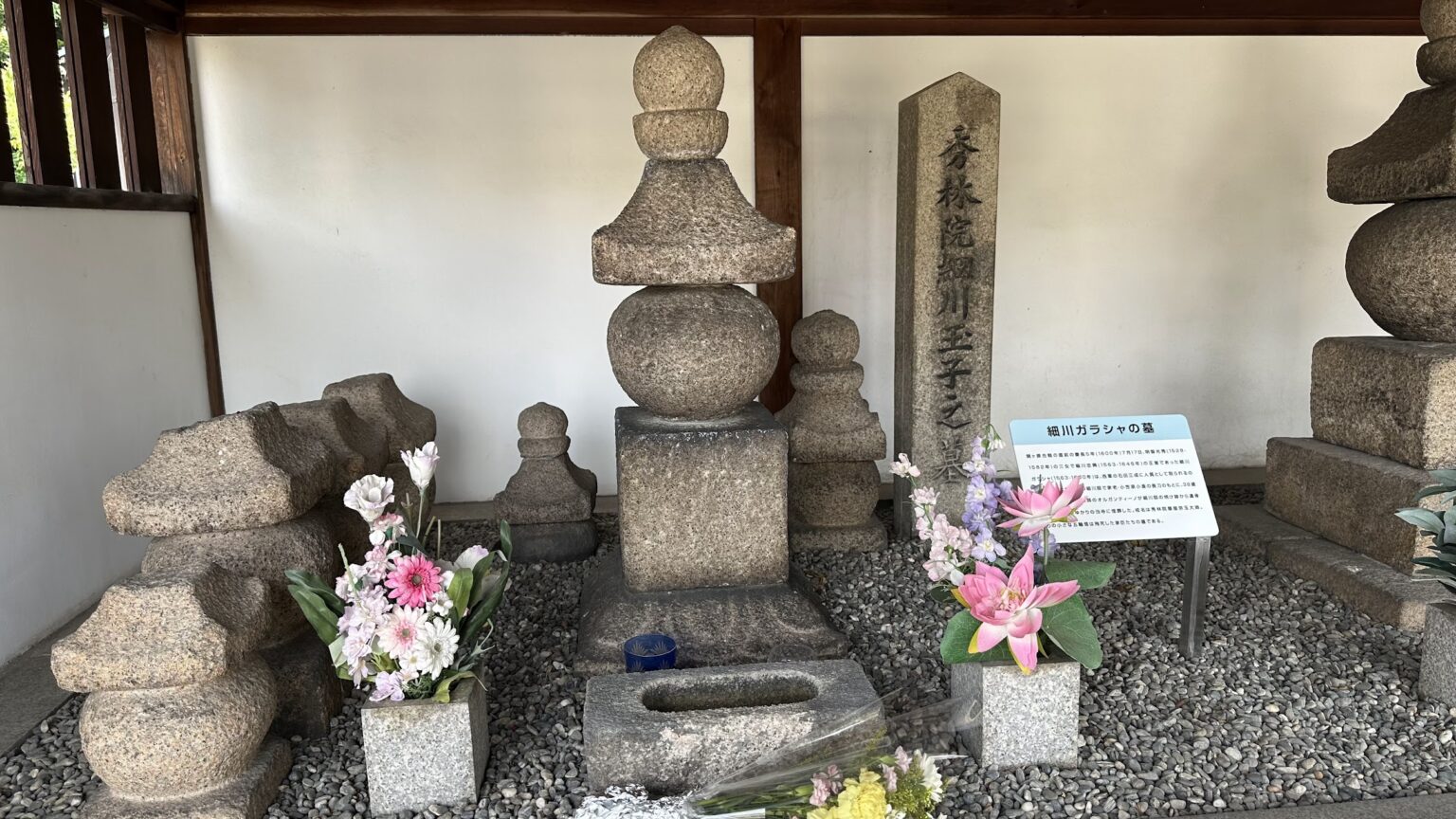
Tap a photo to enlarge it. Use the arrows to move between the Osaka photographs.
Kyoto Prefecture — Nagaokakyō, Kyotango, and Tanabe
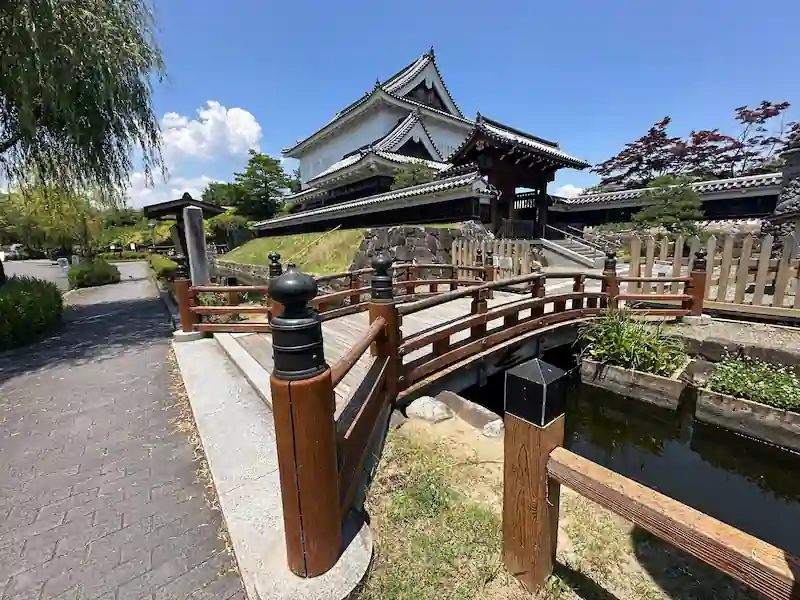
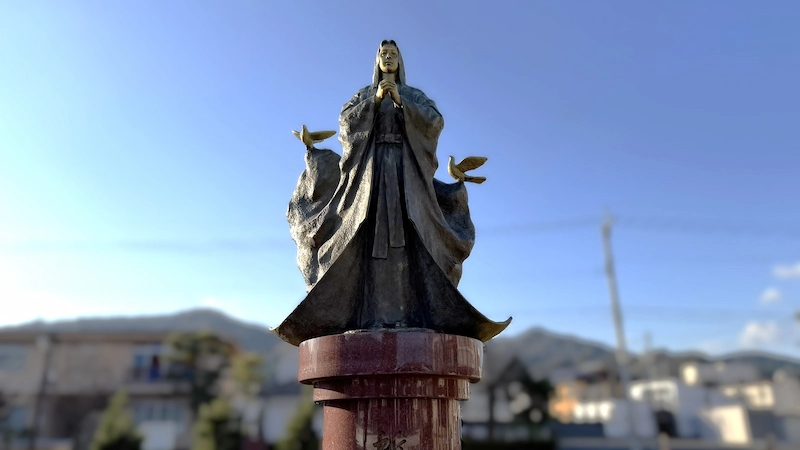
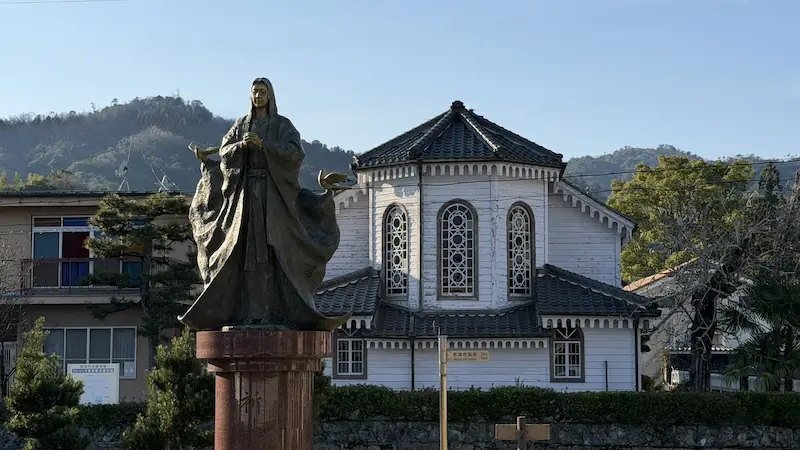
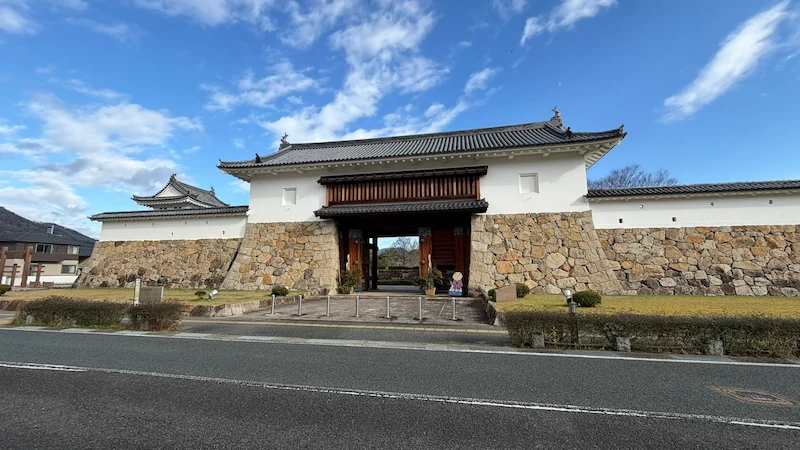
Tap a photo to enlarge it. Use the arrows to move between the Kyoto Prefecture photographs.
If SHŌGUN drew you in through Lady Mariko — or if you encountered Hosokawa Tama in Assassin's Creed Shadows — the historical woman behind both portrayals is Hosokawa Gracia (1563–1600), also known as Garasha (細川ガラシャ) and Akechi Tama (明智玉).
Her story is remembered for a rare kind of strength: faith and dignity held intact under the pressure of hostage politics on the eve of Sekigahara. She was the daughter of Akechi Mitsuhide (the man who killed Oda Nobunaga), the wife of Hosokawa Tadaoki, and one of the most prominent Christian converts of the Sengoku period. In 1600, rather than be taken hostage by Ishida Mitsunari's forces, she died at the hands of a household retainer — an act that would later be compared to martyrdom by contemporary Jesuit missionaries.
Also known as: Akechi Tama (明智玉). Lived: 1563–1600. Best base cities for visiting her sites: Kyoto and Osaka.
In the drama, Lady Mariko's power is moral rather than political — steadfast, inward, and uncorrupted by the era's brutality. The historical Gracia is similar in spirit, though her story differs in detail. For the full biography and a side-by-side comparison of how SHŌGUN and Assassin's Creed Shadows each adapted her life, see the dedicated profile page: Who Was Hosokawa Gracia? Lady Mariko's Real Story Explained.
Here, the focus is on what travelers can verify and visit today: a memorial site in central Osaka, a temple where her grave is traditionally visited, a castle park connected to the Hosokawa story in the Kyoto area, and a rural Kyotango location long associated with her years in hiding.
Travel Guide
Kyotango ~Where Hosokawa Gracia Lived in Hiding and Confinement~

Etchū-no-I (Etchū Well): The Final Moments of Hosokawa Gracia
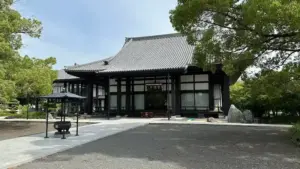
Sōzen-ji Temple: The Resting Place of Hosokawa Gracia

The Historic Stage of Lady Gracia’s Newlywed Life
Recommended Routes
Both sites are in Osaka and can be combined into a half-day route. Start at Etchū-no-I near Osaka Castle (nearest major station: Morinomiya), then continue to Sōzen-ji. Sōzen-ji is walkable from Shin-Osaka Station, making it easy to slot around train connections.
Extend the Osaka half-day into a full day by adding Shōryūji Castle Park in Nagaokakyō. About 10 minutes on foot from JR Nagaokakyō Station, or 20 minutes from Hankyu Nagaoka-Tenjin. The surrounding area also includes the Yamazaki battlefield (where Akechi Mitsuhide was defeated) and Tennozan — useful context for Gracia's story.
Midono is a rural, mountainous area and is best treated as a dedicated side trip rather than part of the Osaka-Kyoto day. Car access is recommended; some local notes describe the site as approximately 50 minutes by car from Amino Station. Combine with Amanohashidate if travelling to Kyotango.
SHŌGUN, Assassin's Creed Shadows, and the Real Hosokawa Gracia
Hosokawa Gracia is one of the few Sengoku-era women to appear in multiple major modern works of fiction. SHŌGUN (FX, 2024) adapts her as Lady Mariko. Assassin's Creed Shadows (Ubisoft, 2025) uses her real name — Hosokawa Tama — as a character called "The Silver Queen." Both draw on real elements of her life, then reshape them for different kinds of stories.
If you arrived here through either of those works, here is the short version of where fiction and history meet — and where they part.
What SHŌGUN Gets Right — and What It Changes
Accurate to history: a Christian noblewoman, daughter of a man who committed treason, caught in Osaka's hostage politics on the eve of a decisive battle, refusing capture and dying as a result. The political situation maps closely onto real events.
Changed for drama: Lady Mariko (Toda Mariko) is a fictional character with a fictional name. Her romantic relationship with the English pilot John Blackthorne has no equivalent in Gracia's historical record — the real Hosokawa Gracia had no documented connection to William Adams, the English sailor the character is based on. The manner of her death also differs: Mariko dies in an explosion; Gracia was killed by a household retainer, with the residence set ablaze afterward.
What Assassin's Creed Shadows Gets Right — and What It Invents
Grounded in history: her name (Hosokawa Tama / Akechi Tama), her father (Akechi Mitsuhide), her husband (Hosokawa Tadaoki), and her politically vulnerable position after 1582 are all real. The game's internal database entry even summarizes her actual biography with reasonable accuracy.
Invented for the game: the Templar Order storyline is entirely fictional. The real Gracia was not a Templar agent, did not manage silver mines, and was not coerced by a Portuguese secret-society leader. The game uses her name and circumstances as a starting point, then places her inside a narrative that has no basis in the historical record. Her Christian faith — which was central to her identity and her decision in 1600 — appears only as background detail in the game, while the fiction focuses on the Templar plot.
Continue Exploring Hosokawa Gracia and SHŌGUN
FAQ
The nearest major station is Morinomiya. It's a short walk, but the area has multiple lines and exits, so confirm your direction toward Morinomiya-Chūō before you start walking.
Sōzen-ji in Osaka is widely introduced as a place where visitors can find Gracia's grave area on the temple grounds.
Many travelers can fit Etchū-no-I and Sōzen-ji into a half day. The exact time depends on transit, time spent on site, and temple visiting conditions.
Yes. From JR Nagaokakyō Station it's about a 10-minute walk; from Hankyu Nagaoka-Tenjin Station it's about a 20-minute walk.
Midono is a rural, mountainous area, and many local access notes are written with "by car" in mind. Some spots are described as roughly 50 minutes by car from Amino Station.
Goshuin availability and hours can change depending on the day and temple operations. If this matters to your trip, treat it as variable and follow posted guidance on site.
Lady Mariko is fictional, but she is widely associated with Hosokawa Gracia. The drama preserves the core situation — Christian faith, Osaka hostage crisis, death rather than capture — while changing names, relationships, and the manner of death. For a full comparison, see the biography page.
Yes — "Hosokawa Tama" is one of Gracia's real historical names. The game uses her real name and family background but places her inside a fictional Templar storyline. The silver mining and Templar connection have no historical basis.
Profile
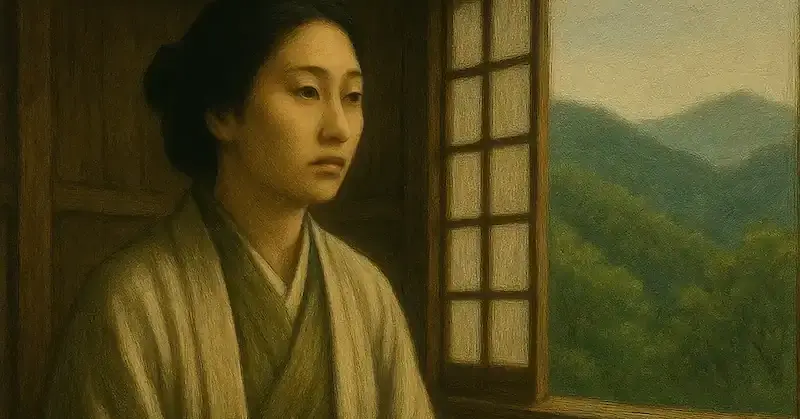
From History to Screen: Meet Toda Mariko

☕ Support This Site
Following the Shogun is built on original fieldwork and on-site research.
If you found this guide useful, your support helps keep it going.

You can also support via QR code

