


Four goshuin are available across the Nikko World Heritage area — three inside Nikko Toshogu and one at Taiyuin. This page shows exactly where each counter is, what I paid on February 22, 2026, and photographs of the actual seals, including how the Toshogu design has changed since 2016.
Nikko Toshogu Guide — Related Pages
This page covers goshuin only. For planning the visit itself, start with the Essential guide.
- This Page: Goshuin — locations, fees, and photographs of the seals
- Essential: Tickets, access, time required, and the best route
- Story: What Nikko Toshogu's design is trying to make you believe
- Complete: Every spot — gates, sculptures, shrine buildings & Inner Sanctuary
- Archive: Taiyuin, Treasure Museum & hidden spots
Locations and offering fees on this page were confirmed in person on that date, with additional seal photographs from visits in August 2024 and January 2016. Goshuin designs, fees, and availability change over time — treat everything here as a record of specific dates rather than a permanent guarantee.
- The three goshuin counters inside Nikko Toshogu, plus Taiyuin, and where each one sits on your walking route
- Offering fees confirmed on February 22, 2026, and why you need cash
- Photographs of the actual seals received at Toshogu, the Inner Sanctuary, and Taiyuin
- How the Toshogu seal design changed between January 2016 and August 2024
- Goshuincho stamp books previously sold at Toshogu, shown as a design record
- Etiquette notes for first-time visitors from outside Japan
- What a Goshuin Is (and What It Isn't)
- Where to Get Goshuin in Nikko
- What the Seals Actually Look Like (August 2024)
- How the Design Has Changed Since 2016
- Goshuincho Stamp Books at Toshogu
- Amulets at the Same Counters
- Practical Notes for First-Time Visitors
- Frequently Asked Questions
- Related Pages
- Return to the Tokugawa Ieyasu Page
What a Goshuin Is (and What It Isn't)
A goshuin is a seal and calligraphic inscription given at a shrine or temple as a record of worship. It is not a tourist stamp, and it is not a collectible in the ordinary sense. The distinction matters in practice: you are expected to have visited and paid respects, and the fee you hand over is an offering rather than a purchase price.
Two formats exist. A hand-written goshuin is brushed directly into your goshuincho (stamp book) while you wait. A pre-written one — kakioki — is prepared in advance on a separate sheet that you paste into your book later. Many shrines shifted toward pre-written seals in recent years, and every goshuin I received at Nikko on February 22, 2026 was pre-written. That has a practical upside: there is no waiting for the calligraphy, so the queue moves quickly.
If you only take one thing from this page: bring coins and small notes. Goshuin counters at Nikko took cash on my visit, and the offering fees are small amounts that are awkward to break. Sort out cash before you go through the ticket gate, not at the counter.
Where to Get Goshuin in Nikko
Three counters sit inside the Nikko Toshogu paid precinct, and a fourth is at Taiyuin, which is a separate site with its own admission. Because all three Toshogu counters are inside the ticketed area, they are only reachable during shrine opening hours, and admission closes 30 minutes before the shrine does — plan the goshuin stops into your route rather than leaving them until the end.
| Location | Which goshuin | Offering fee (2026/2/22) | Where it falls on your route |
|---|---|---|---|
| Main Shrine / Worship Hall (Honsha, Haiden), interior | Toshogu | 500 yen, pre-written | Central precinct, after Yomeimon Gate. Goshuincho stamp books and amulets were also sold here |
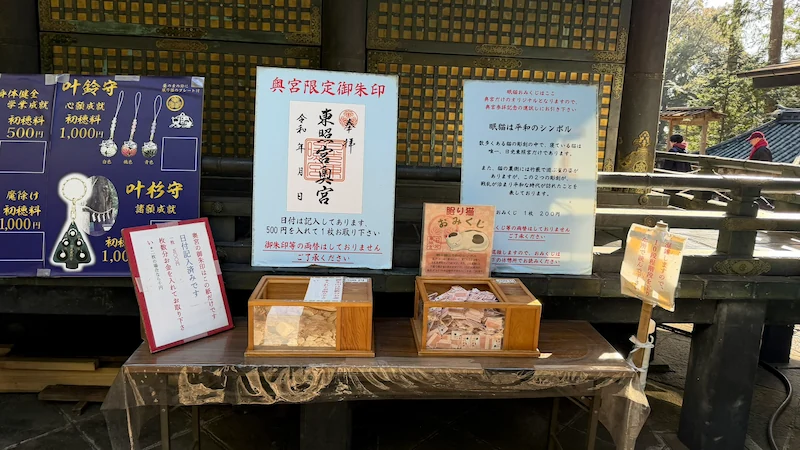
| In front of the Inner Sanctuary Worship Hall (Okumiya) | Okumiya (Inner Sanctuary) | 500 yen, pre-written | At the top of the 207 stone steps. If you skip the climb, you skip this one |
| Honjido (Crying Dragon Hall) | Crying Dragon | 500 yen standard / 1,000 yen limited version, both pre-written | Separate hall in the central precinct, entered with the same Toshogu ticket |
| Taiyuin (Rinnoji) | Taiyuin | Not confirmed on this visit — check on site | Roughly 10 minutes on foot from Toshogu, separate 550 yen admission |
What the Seals Actually Look Like (August 2024)
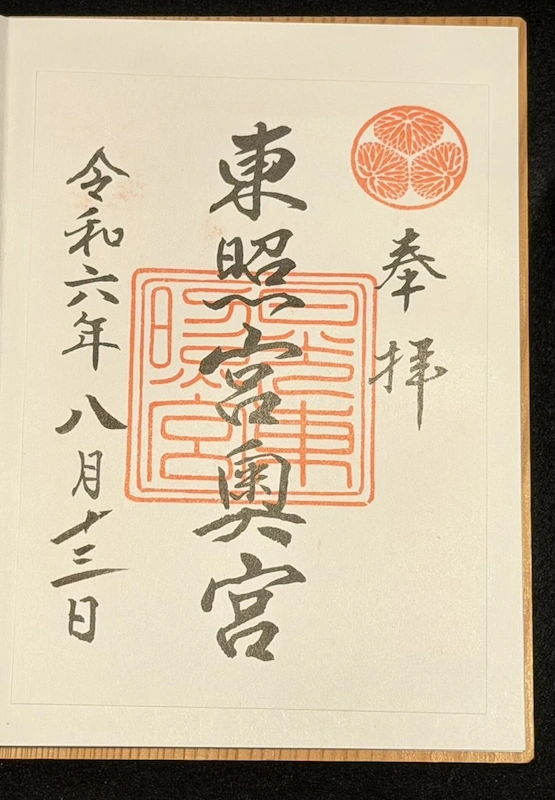
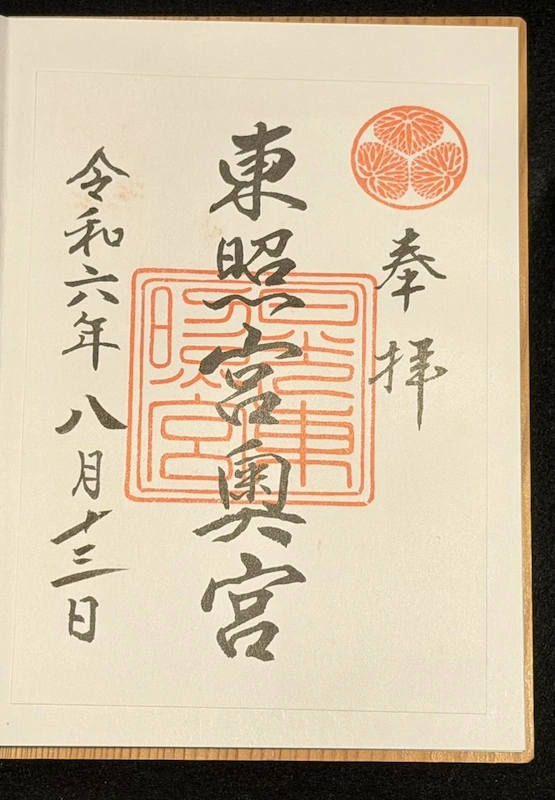
These are goshuin I received in August 2024 at Toshogu, the Inner Sanctuary, and Taiyuin. Tap any image to enlarge it — the vermilion seals and brushwork are worth looking at closely, and the three are visibly different in character. Pre-written designs can vary by season and period, so treat these as a record of that visit rather than a guarantee of what you will receive.
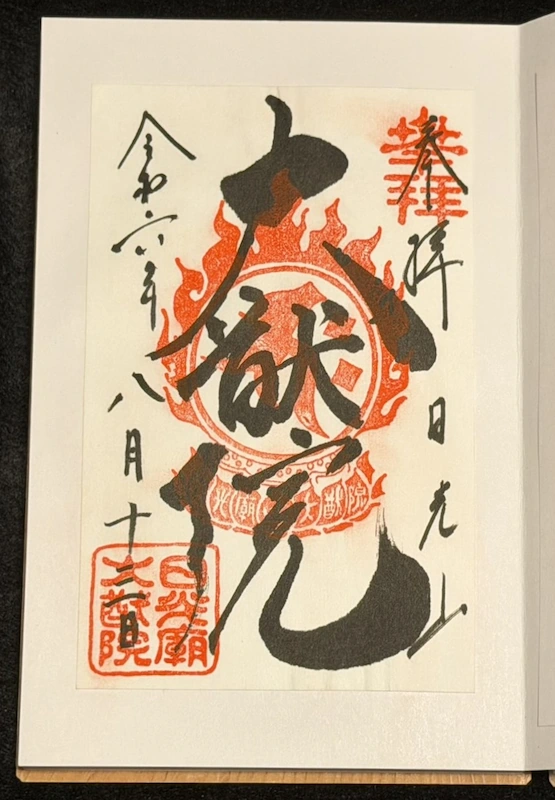
The Taiyuin seal is the outlier of the three. Where the Toshogu and Okumiya seals are formal and restrained, the Taiyuin design is surrounded by flames — a visual match for the mausoleum itself, which trades Toshogu's gold and colour for something darker and heavier. If you are deciding whether Taiyuin is worth the extra walk, this is a small argument in its favour.
How the Design Has Changed Since 2016
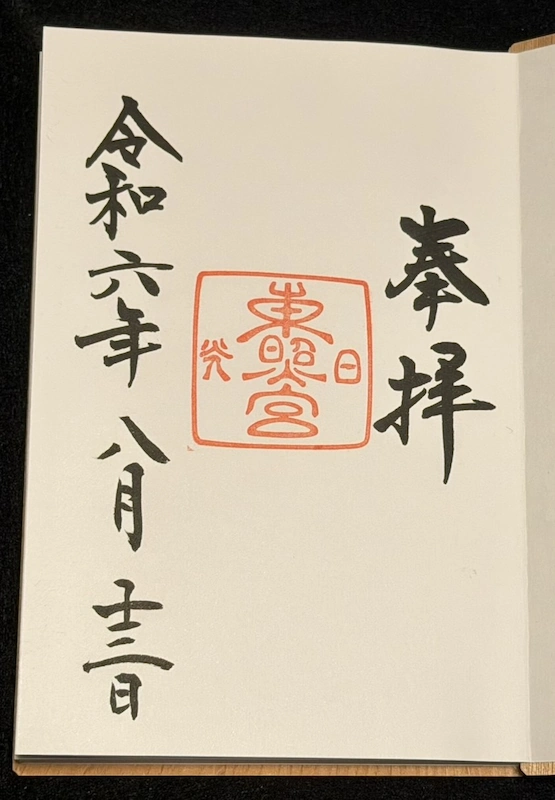
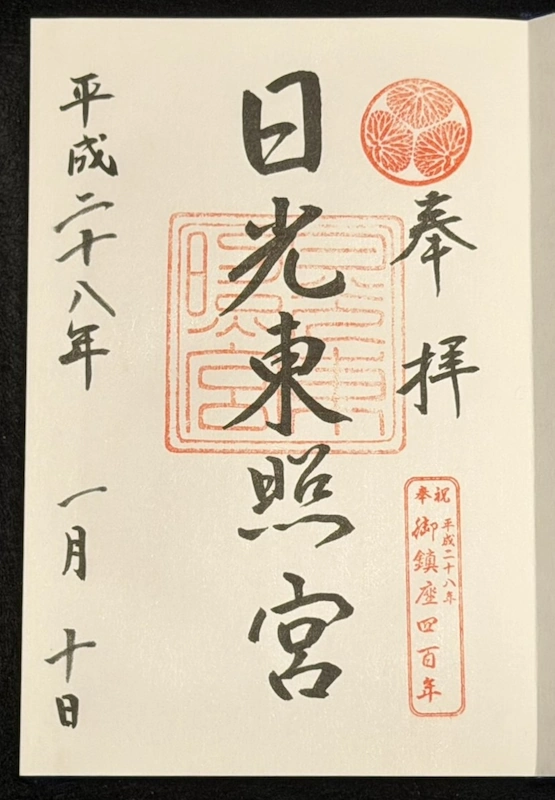
Goshuin designs are not fixed. The seal below is from January 2016, during the 400th anniversary of Ieyasu's enshrinement, and it carries a commemorative vermilion seal whose shape differs noticeably from what I received in 2024. This is the practical reason people return: the same shrine, visited in different years, does not necessarily give you the same thing.
Goshuincho Stamp Books at Toshogu
You need a goshuincho to collect goshuin properly, and if you are starting in Nikko you can buy one on site — goshuincho were being sold inside the Main Shrine / Worship Hall on February 22, 2026, alongside the goshuin and amulets. I did not record which designs were in stock that day, so check at the counter.
Two books I bought at Toshogu in earlier years are shown below. Neither is sold any more. They are included as a record of what the shrine has produced, and as a useful illustration of how much these items change.
Wooden Goshuincho (Nikko Cedar Avenue Wood, Limited Edition)
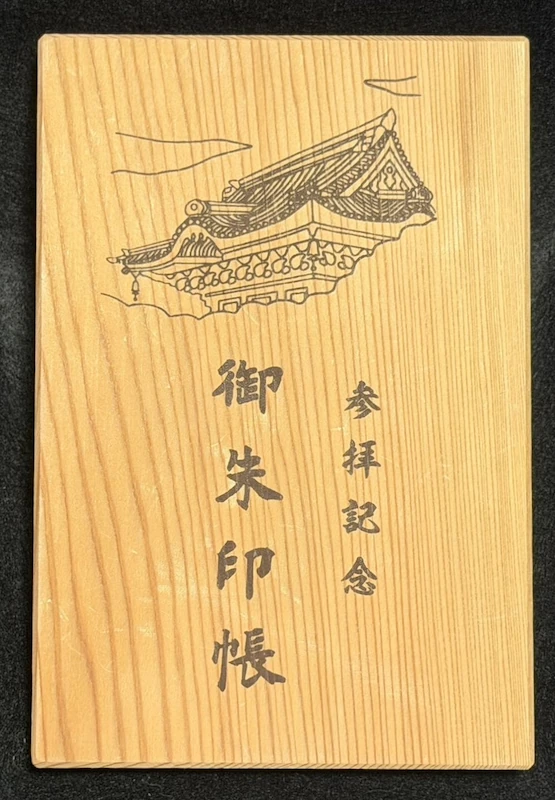
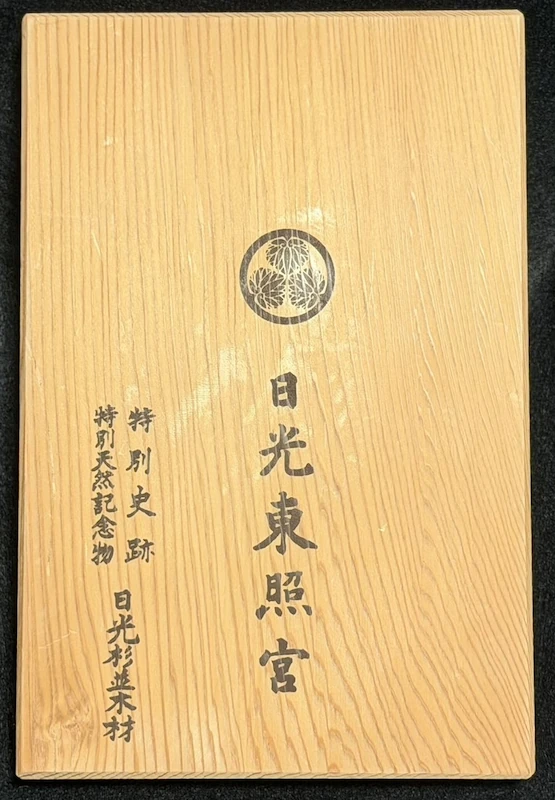
This book was made from wood sourced from Nikko Cedar Avenue. The front cover carries carvings from Yomeimon Gate; the back has the three-leaf hollyhock crest of the Tokugawa and an engraving reading "Special Historic Site and Special Natural Monument: Nikko Cedar Avenue Wood." It was a limited edition and is no longer available.
Blue Fabric Goshuincho (Purchased January 2016)
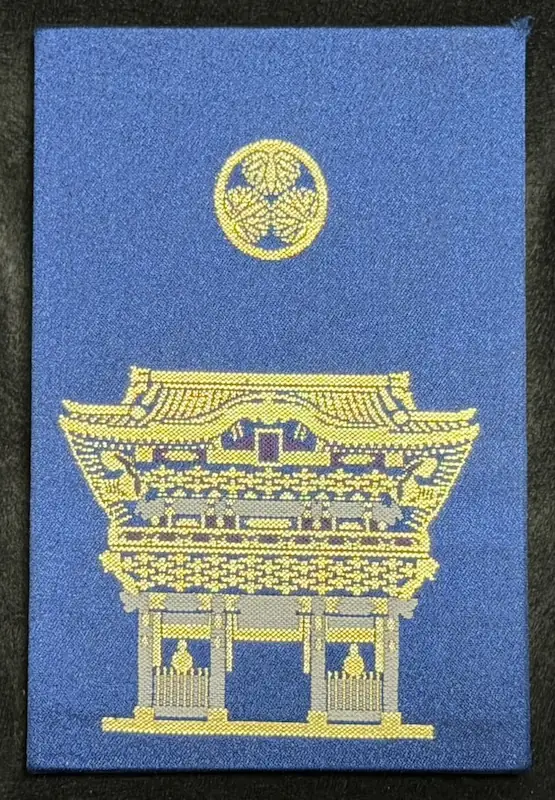
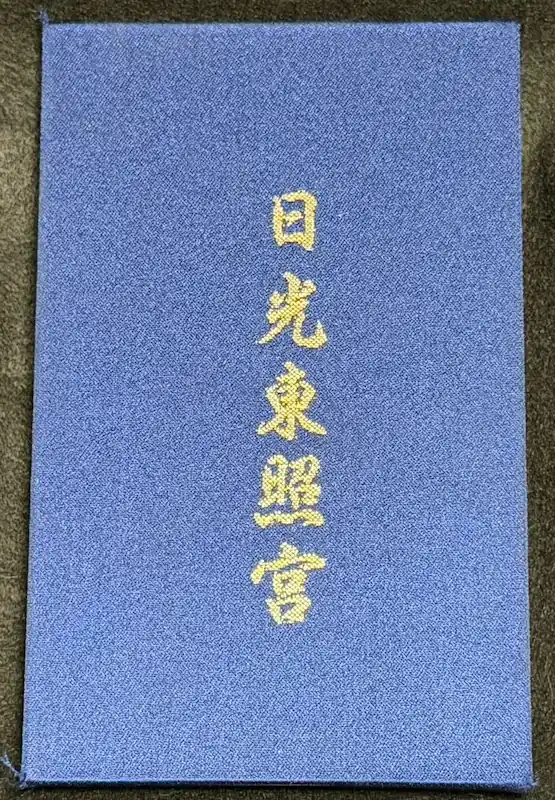
Purchased in January 2016: a blue cloth cover with a gold three-leaf hollyhock crest and a Yomeimon Gate design. This design is no longer available either.
Amulets at the Same Counters
Amulets are sold at several points and the selection is not identical at each. On February 22, 2026 I confirmed them at the Main Shrine / Worship Hall interior, in front of the Inner Sanctuary Worship Hall, at Honjido, and at the Uchibansho next to the Three Wise Monkeys.
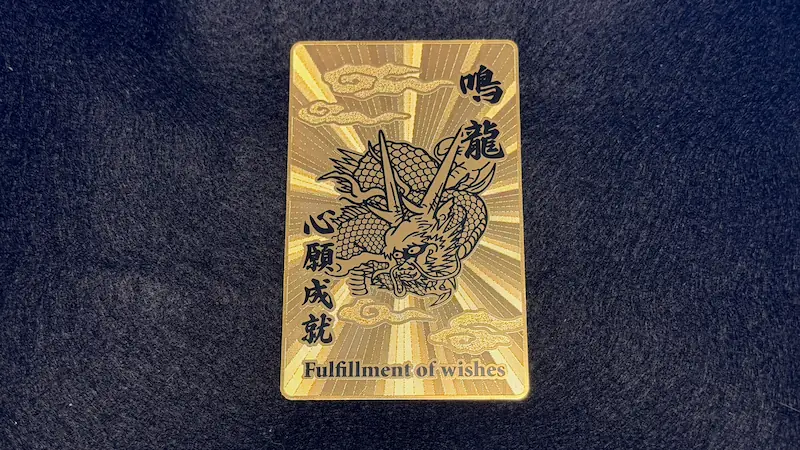
The card-style amulet at Honjido is a limited item, and I bought one when I passed through. Limited items sell out, so the same advice applies as with the Okumiya goshuin: take it when you are standing there, not on a planned return trip.
Practical Notes for First-Time Visitors
- Pay respects first. The goshuin is a record of worship, so visit the hall before joining the goshuin queue. Nobody will stop you if you do it the other way round, but the order is the point of the thing
- Bring cash. All the goshuin I received at Nikko were paid for in cash. Payment methods can change, but cash is the safe assumption
- Hand over the book open at the page you want used, if a hand-written seal is offered. With pre-written sheets this does not apply — you receive a loose sheet and paste it in yourself later
- Don't photograph the writing process or the counter interior unless it is clearly permitted. Photography of the seal you received, afterwards, is a different matter and is generally fine
- Time it with the route. Toshogu's three counters are spread across the central precinct, the Inner Sanctuary, and Honjido. Collecting them as you go costs almost nothing; collecting them at the end can mean re-walking the whole site, including the 207 steps
For the walking order these counters fit into, along with tickets, bus stops, and realistic timings, see the Nikko Toshogu visitor guide. Taiyuin is covered in more detail in the Taiyuin and Treasure Museum archive.
Frequently Asked Questions
Three inside Toshogu itself — Toshogu, the Inner Sanctuary (Okumiya), and the Crying Dragon at Honjido — all reachable on the standard 1,600 yen admission. Honjido also offered a limited 1,000 yen version alongside its 500 yen standard one on February 22, 2026. A fourth is available at Taiyuin, which needs its own 550 yen admission.
No. Goshuincho stamp books were on sale inside the Main Shrine / Worship Hall on February 22, 2026, so you can start your collection at Nikko. That said, every goshuin I received that day was pre-written on a loose sheet, which you paste into a book later — so you are not blocked from receiving them even if you arrive without a book.
All of them were pre-written (kakioki) when I visited on February 22, 2026. Practically, that means no waiting for calligraphy and a fast-moving queue, but also that you receive a sheet rather than having your book brushed in front of you. This can change, so it is worth asking at the counter.
Very little, if you collect them as you pass each hall — pre-written sheets are handed over quickly. The cost is in backtracking, not queueing. The one exception is the Inner Sanctuary counter at the top of 207 stone steps: if you had not planned to make that climb, budget roughly 30 minutes for the round trip.
I paid cash at every counter on my visit, and cash is the assumption you should travel with. Payment methods across Nikko do change over time, so treat cash as insurance rather than a permanent rule.
If you like the seals themselves, yes — the Taiyuin design is the most visually distinctive of the four, surrounded by flames rather than following the formal Toshogu style. Taiyuin is about 10 minutes on foot from Toshogu, admission is 550 yen, it opens at 8:00 a.m. (an hour before Toshogu), and my time on site was around 50 minutes. I did not record the goshuin fee there, so check on arrival.
Not necessarily. Compare the January 2016 Toshogu seal on this page with the August 2024 one and the difference is obvious — the 2016 version carries a 400th anniversary commemorative seal. Designs also vary by season and by limited-run period. Everything here is a record of specific visits, not a catalogue of what is currently issued.
Related Pages
Return to the Tokugawa Ieyasu Page


comment