


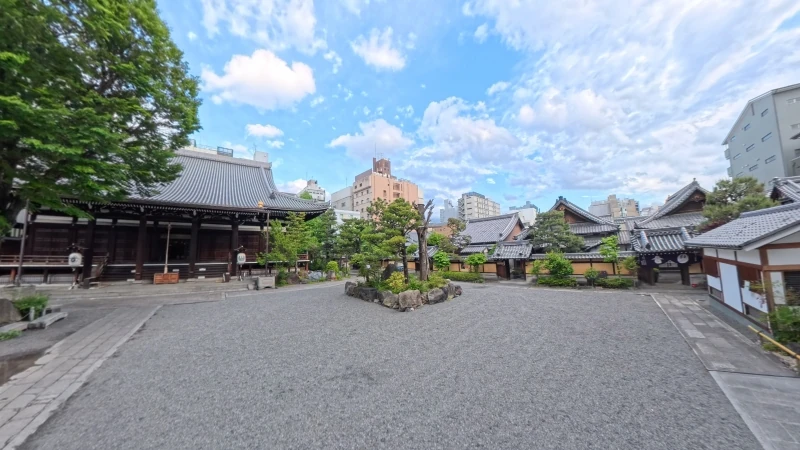
Honno-ji Temple, Former Honnoji Site & Nanbanji: Nobunaga Kyoto Guide
The current Honno-ji Temple is not where Oda Nobunaga died in 1582 — it was relocated and rebuilt in 1592. This guide covers all three connected locations so you can visit each one knowing exactly what to expect.
On This Page
The Current Temple Isn't the 1582 Incident Site
If you are visiting Kyoto to see the place where Oda Nobunaga died in 1582, there is one thing worth knowing before you go: the current Honno-ji Temple is not the same location as the original incident site.
The current Honno-ji Temple, located near Kyoto Shiyakusho-mae Station in central Kyoto, was relocated and rebuilt in 1592 — a decade after the famous 1582 incident. The original Honno-ji, where Nobunaga was attacked by the forces of his own general, Akechi Mitsuhide, stood near Horikawa-Shijo, some distance away. That former site can still be visited today. And nearby, a marker indicates the presumed location of the Nanbanji — a Christian church from Nobunaga's era that no longer stands.
This guide covers all three locations so you can understand each one clearly before you visit.
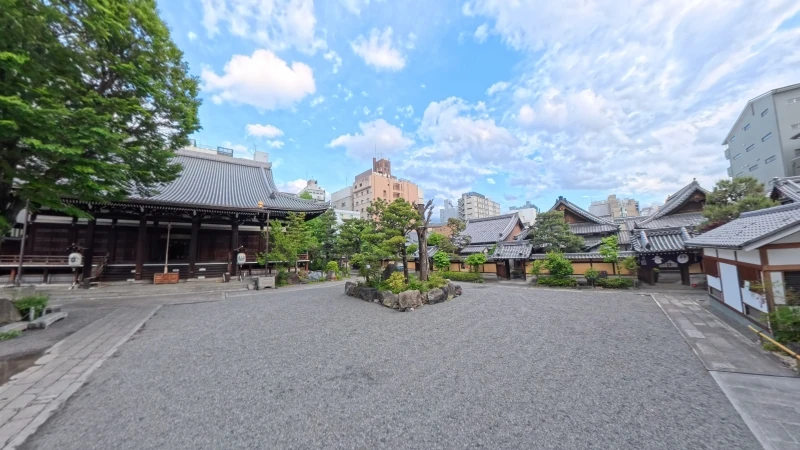
Three Locations — How They Relate
What You'll Learn in This Guide
- The current Honno-ji Temple (near Kyoto Shiyakusho-mae) was rebuilt in 1592 and is not the exact 1582 incident site
- The former Honno-ji site, near Horikawa-Shijo, is where the 1582 incident actually took place
- At the current temple, visitors can see the main hall, a memorial to Nobunaga, the Daihoden Museum, and receive Nobunaga-related goshuin
- The former site and the Nanbanji marker are stone-marker stops — no large ruins or reconstructed buildings
- Visiting all three gives a clear picture of Nobunaga-era Kyoto history and geography
- For visitors collecting Nobunaga-related goshuin, the current temple is one of the few dedicated stops
| Location | What It Is | What You Can See | Visit Priority |
|---|---|---|---|
| Current Honno-ji Temple | Rebuilt temple site (1592) | Main hall, Nobunaga memorial, museum, goshuin | High |
| Former Honno-ji Site | Incident-era site (1582) | Stone marker, site indication | Medium |
| Nanbanji Marker | Presumed Nanbanji site | Stone marker, display | Low–Medium |
Is Honno-ji Worth Visiting?
For travelers interested in Oda Nobunaga, the current Honno-ji Temple is one of the few places in Japan where you can feel genuinely close to his legacy. Among the three "great unifiers" of Japan, Nobunaga has fewer dedicated memorial sites than Toyotomi Hideyoshi or Tokugawa Ieyasu, which makes Honno-ji especially meaningful for those who want to connect with his history.
At the current temple, the memorial to Nobunaga and the Daihoden Museum offer tangible connections to him. Nobunaga-related goshuin can also be received here.
The memorial is set back toward the rear of the grounds, so it is easy for a first-time visitor to miss if they only stop at the main hall. The Daihoden Museum charges admission, but for visitors with a genuine interest in Nobunaga, it is worth the entry fee — exhibition content can change, so check the official website in advance.
The former Honno-ji site and the Nanbanji marker are best suited for visitors who want to understand the real historical geography of 1582. Both are stone-marker stops: there are no large ruins, no reconstructed buildings, and no exhibits explaining the incident on site. Going in with this expectation will make the visit worthwhile — review the photos on this page and decide whether visiting in person is right for you.
Current Honno-ji (temple grounds only): about 20 minutes / With Daihoden Museum: add 20–30 minutes / Former Honno-ji site and Nanbanji marker: short visits each
Travelers with a strong interest in Oda Nobunaga / Visitors who want to see where the 1582 incident actually took place / Those collecting Nobunaga-related goshuin / History travelers exploring Sengoku-era Kyoto
Getting There
Current Honno-ji Temple
Current Honno-ji Temple — Access Information
| Address | 522 Shimo-Honno-ji-mae-cho, Teramachi-dori Oike-sagaru, Nakagyo-ku, Kyoto |
|---|---|
| Nearest station | Kyoto Municipal Subway Tozai Line, Kyoto Shiyakusho-mae Station (T12) — right outside the exit |
| Also accessible | About 5 min on foot west from Keihan Sanjo Station / about 10 min on foot north from Hankyu Kyoto-Kawaramachi Station / City bus or Kyoto Bus to the Kawaramachi-Sanjo stop |
| From Kyoto Station | Subway Karasuma Line to Karasuma-Oike, then transfer to the Tozai Line to Kyoto Shiyakusho-mae — about 15 minutes total including the transfer (confirm current times before traveling) |
| From Osaka | About 14 minutes by Shinkansen from Shin-Osaka to Kyoto Station, or roughly 30 minutes by direct Hankyu or Keihan train to central Kyoto — then continue as above |
| From Tokyo | About 2 hr 15 min by Nozomi Shinkansen from Tokyo Station to Kyoto Station, then continue as above |
| Temple grounds | 6:00–17:00, free admission |
| Daihoden Museum | 9:00–17:00 (last entry 16:30). Adults ¥700, junior/senior high school students ¥500, elementary school students ¥300, school trip students ¥300, visitors with disabilities ¥300, groups of 30+ ¥600, Hotel Honnoji guests ¥500. Closed year-end/New Year holidays and during exhibition changeovers (subject to change) |
| Parking | No parking for visitors at the temple. Please use a nearby paid parking lot (per the official Honno-ji website; confirm before visiting) |
| Contact | Honno-ji temple office, +81 75-231-5335 / Official website: kyoto-honnouji.jp (per the official Honno-ji website; confirm before visiting) |
The current Honno-ji is easy to reach from central Kyoto. Google Maps is reliable for navigation, and the approach passes through the Teramachi covered shopping arcade. The former site and Nanbanji marker are in different parts of the neighborhood, closer to Shijo-Karasuma than to Kyoto Shiyakusho-mae — pin each location before you go.
Former Honno-ji Site
Former Honno-ji Site — Access Information
| Address | Honno-ji-cho, Ogawa-dori Takoyakushi, Nakagyo-ku, Kyoto |
|---|---|
| Access | City bus to the Horikawa-Takoyakushi stop is closest. The Shijo-Nishinotoin stop is also within walking distance. Stone markers stand near Honno-ji Elementary School (本能小学校), which occupies the center of the former temple grounds today. |
| Note | The markers are at street level and easy to miss. Check the exact location on a map before arriving. |
Nanbanji Marker
Nanbanji Marker — Access Information
| Location | North side of Takoyakushi-dori Muromachi nishi-iru, Nakagyo-ku, Kyoto (in front of the Takika Corporation building) |
|---|---|
| Access | Kyoto city bus to Shijo-Karasuma / Hankyu Karasuma Station (HK85) / Kyoto Municipal Subway Shijo Station (K09) |
| Note | A small display in front of a commercial building — very easy to walk past. Pin the exact location in a map app before visiting. |
Access Map for All Three Locations
The three locations are spread across central Kyoto. Using a map is strongly recommended, as the former site and Nanbanji marker are easy to miss if you are unfamiliar with the area.
Historical Background
The Honnoji Incident (1582)
On the morning of June 2, 1582 (Tensho 10), Oda Nobunaga was staying at Honno-ji Temple in Kyoto when his own general, Akechi Mitsuhide, launched a sudden attack with a large force. Vastly outnumbered and with no route of escape, Nobunaga died in the incident. The temple itself burned down in the attack, an event now known as the Honnoji Incident (本能寺の変, Honno-ji no Hen).
At the time of the incident, Honno-ji stood near present-day Horikawa-Shijo, not in its current location near Teramachi-Oike. The temple was relocated and rebuilt at its current site in 1592. The present main hall dates only to 1928, when it was rebuilt again after the original post-1592 structure was lost.
Nobunaga's Son and the Second Tragedy
On the same day as the Honnoji Incident, Nobunaga's eldest son and designated heir, Oda Nobutada, was staying nearby at Myokaku-ji Temple. After learning of his father's death, he moved to Nijo Gosanjo (the Nijo Imperial Residence) in central Kyoto, engaged the Akechi forces there, and was also killed. The Nijo Gosanjo site is a separate location from both Honno-ji sites and will be covered in a future guide.
The Nanbanji and Christian Culture in Nobunaga's Kyoto
Nobunaga was notably open to foreign trade and Western culture, and his attitude toward Christianity was tolerant compared to the rulers who followed him. He allowed Jesuit missionaries to preach, provided them with protection, and permitted the construction of churches in Kyoto. His reasons were partly political — Christianity served as a counterweight to the powerful Buddhist institutions he was trying to subdue — but his genuine curiosity about foreign culture also played a role.
Under his patronage, the Jesuit missionary Gnecchi-Soldo Organtino and local Christian supporters built the Nanbanji — the Church of Santa Maria — in Kyoto, completed around 1576. It became a center of Nanban (literally "Southern Barbarian," referring to European) culture and Christianity in the city.
After Nobunaga's death, Toyotomi Hideyoshi reversed course, issuing edicts that expelled missionaries and suppressed Christianity in the late 1580s. The Nanbanji was subsequently torn down. The current Nanbanji marker indicates the presumed location of this lost church.
What Remains Today
Current Honno-ji Temple 🎥 360°
Relocated and rebuilt in 1592. An active Buddhist temple — not the original 1582 site.
The current Honno-ji Temple is an active head temple of the Hokke (Lotus) sect of Buddhism. The grounds are open free of charge, and the main features — the main hall, the memorial to Nobunaga, and the Daihoden Museum — are all accessible to visitors.
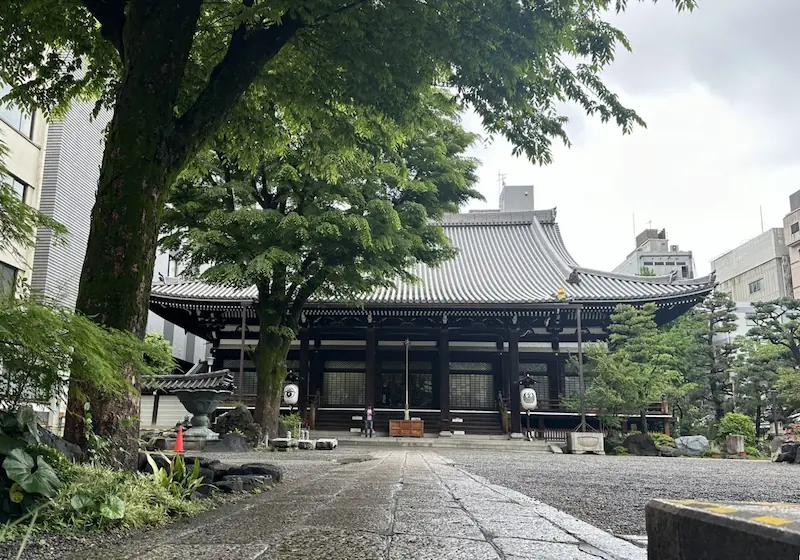
Main Hall
Central structure of the temple grounds, rebuilt in 1928
The current main hall was rebuilt in 1928. It serves as the central structure of the temple grounds and the main focus of a typical visit.
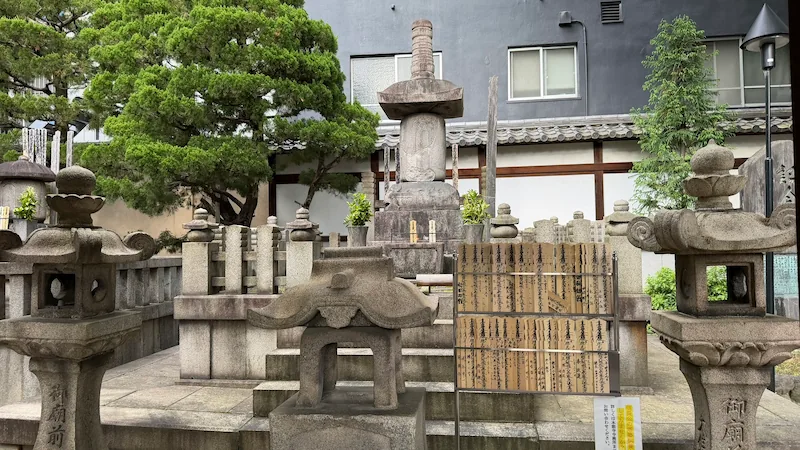
Nobunaga Memorial
A memorial dedicated to Oda Nobunaga — the core Nobunaga-related highlight of the visit
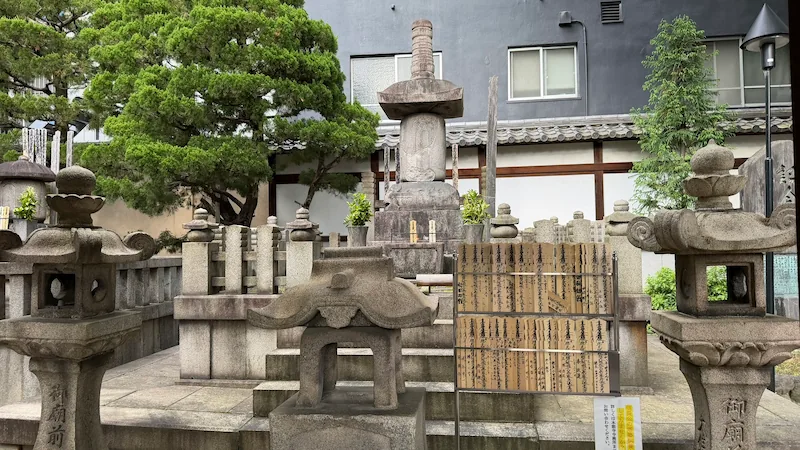
A memorial dedicated to Oda Nobunaga stands within the temple grounds, reportedly established by Nobunaga's third son, Oda Nobutaka, after the incident. It is located toward the back of the grounds — first-time visitors should take care not to miss it. This is described as a memorial or mausoleum; it is not a grave in the conventional sense.
The worship hall (haiden) in front of the memorial, built in the early Showa era, was registered as a national Registered Tangible Cultural Property on December 24, 2013 (source: Agency for Cultural Affairs, Cultural Heritage Online database).
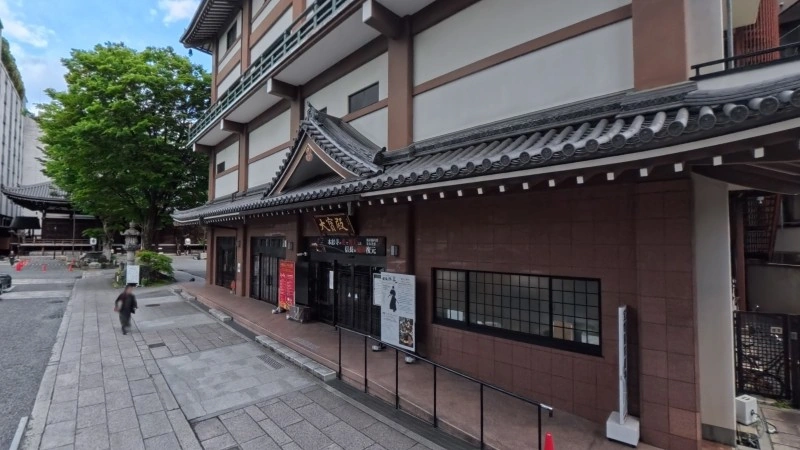
Daihoden Museum
Museum housing items related to Honno-ji Temple and Oda Nobunaga
The Daihoden Museum houses items related to Honno-ji Temple and Oda Nobunaga. For visitors with a genuine interest in Nobunaga, it is worth the admission fee.
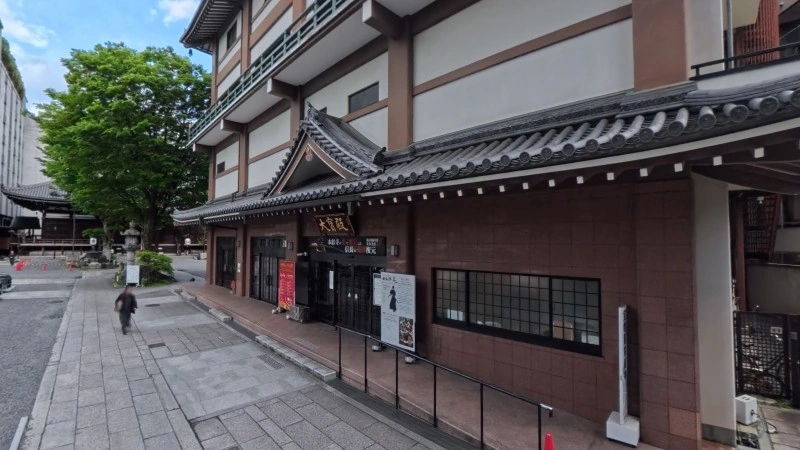
Daihoden Museum Details
- Hours: 9:00–17:00 (last entry 16:30)
- Admission: Adults ¥700, junior/senior high school students ¥500, elementary school students ¥300, school trip students ¥300, visitors with disabilities ¥300, groups of 30+ ¥600, Hotel Honnoji guests ¥500
- Closed: Year-end/New Year holidays and during exhibition changeovers (subject to change)
Exhibition content may vary. Check the official website before visiting.
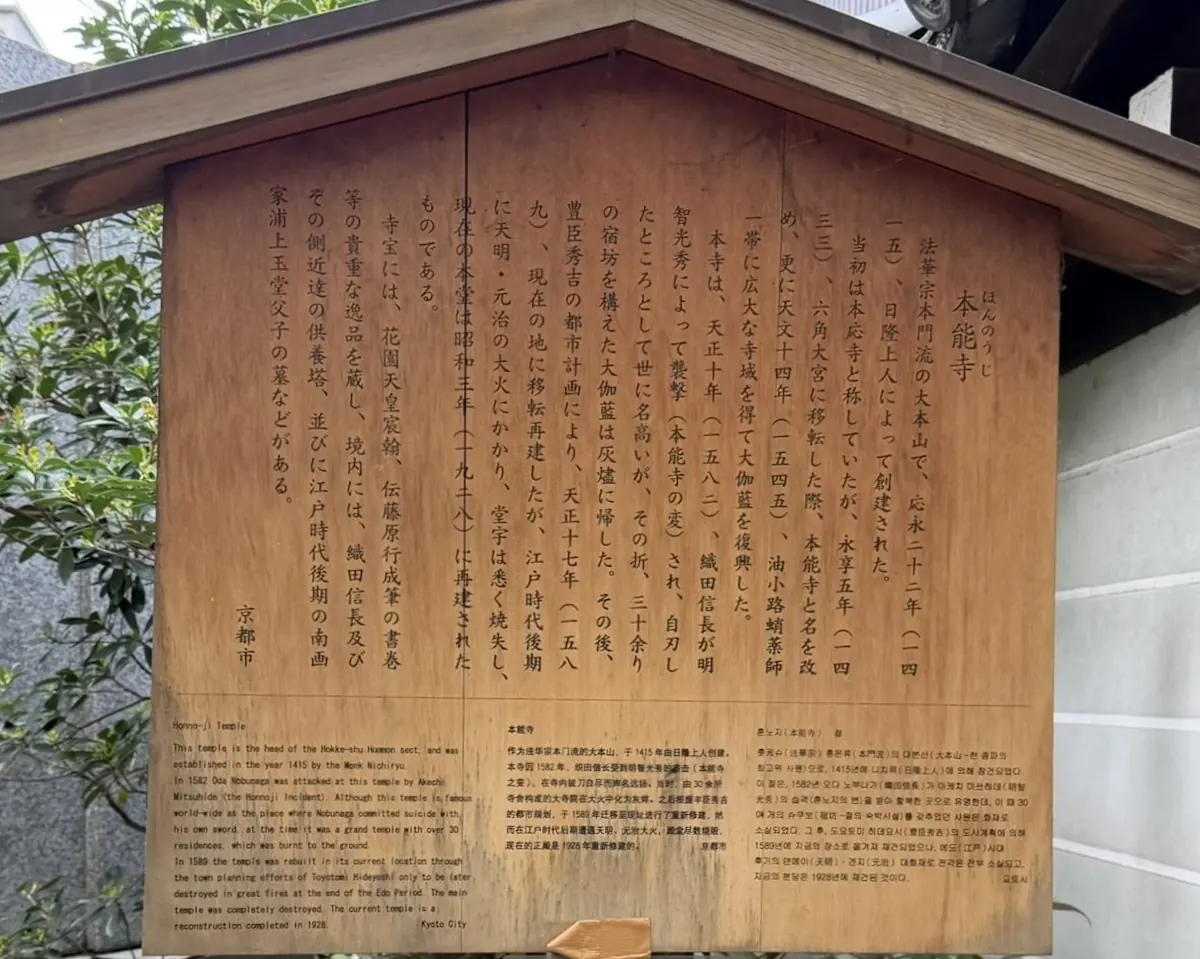
Former Honno-ji Site 🎥 360°
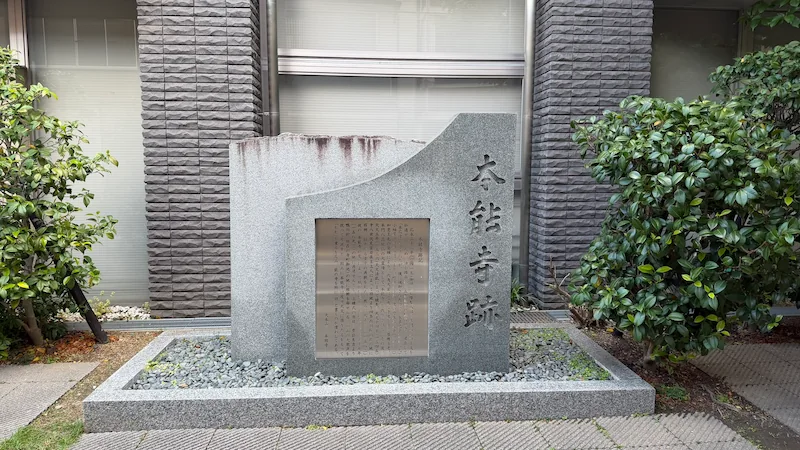
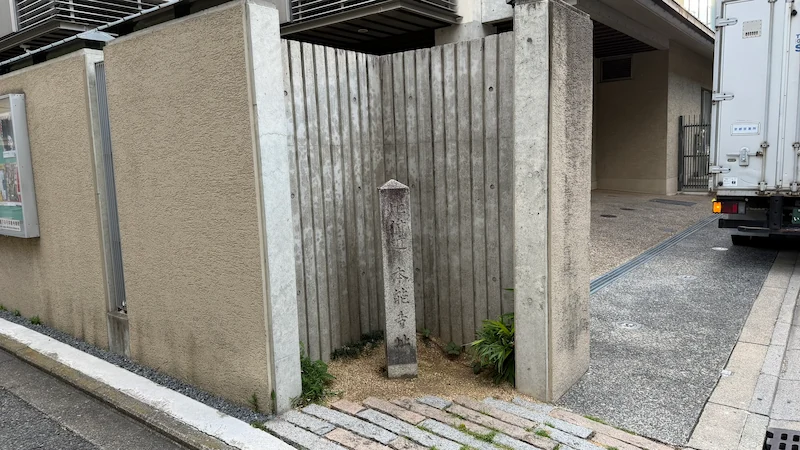
Where the original Honno-ji Temple stood in 1582. Stone marker only — no ruins or reconstructed buildings.
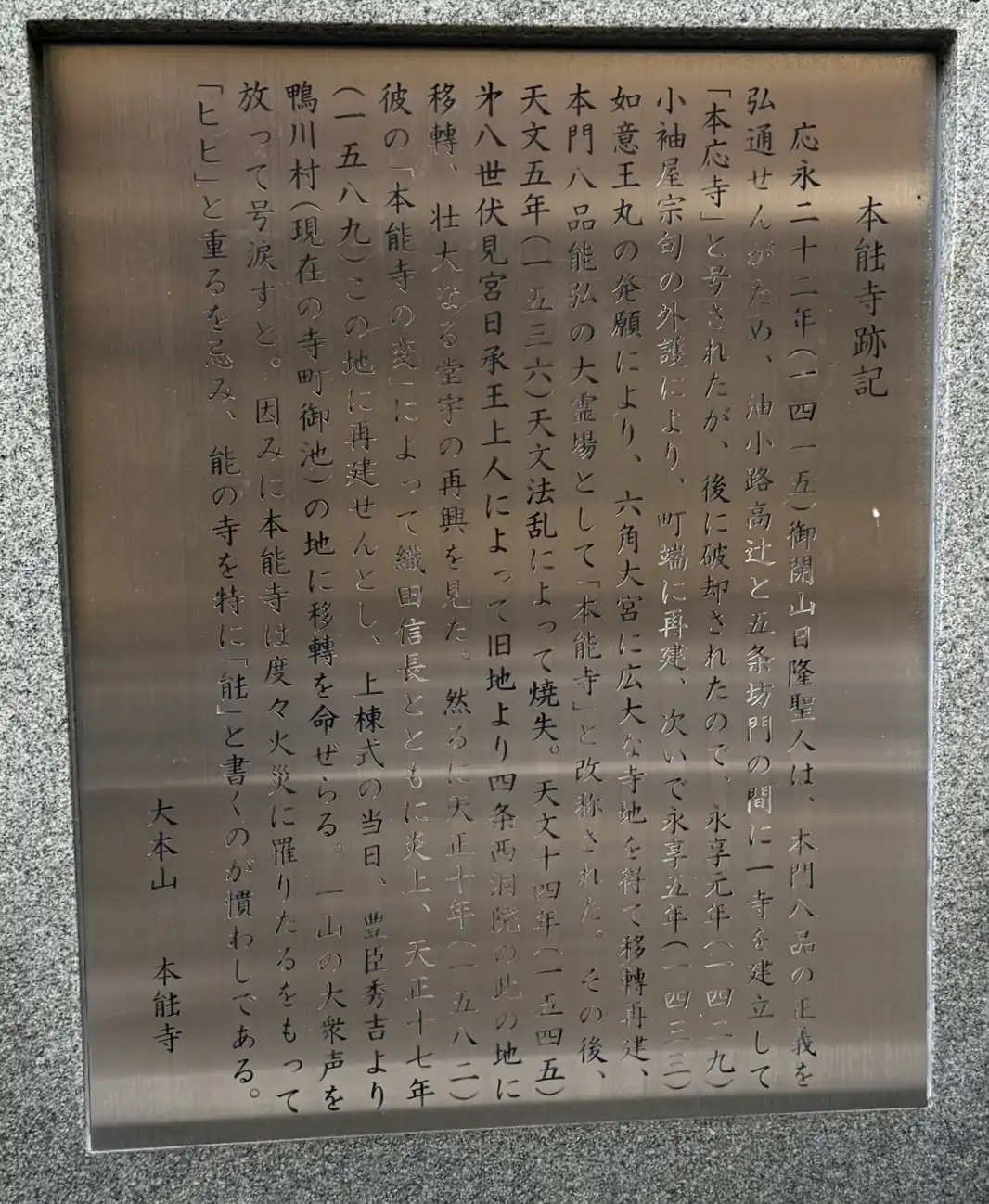
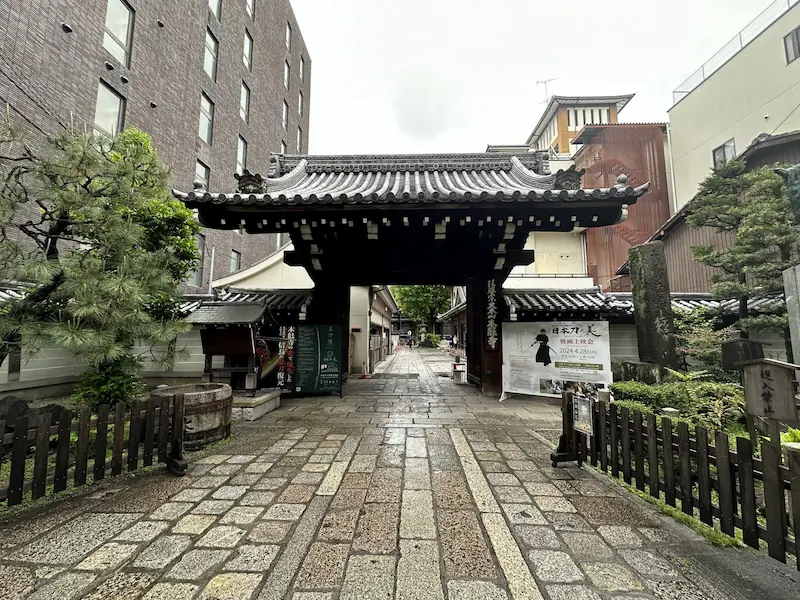
This is the area where the original Honno-ji Temple stood at the time of the 1582 incident, near Horikawa-Shijo in Nakagyo Ward. The area around Honno-ji Elementary School is considered the center of the former temple grounds, which are said to have covered roughly 150 meters east-to-west and 300 meters north-to-south (per the City of Kyoto).
What visitors can see today is primarily a stone marker and a site indication. There are no large ruins, no reconstructed buildings, and no exhibits about the incident on site. This is a place to confirm the historical geography with your own eyes.
Tap a photo to enlarge
Nanbanji Marker
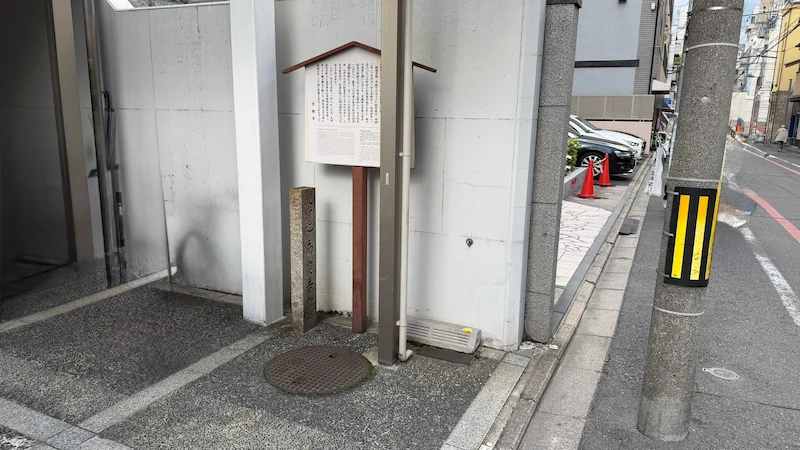
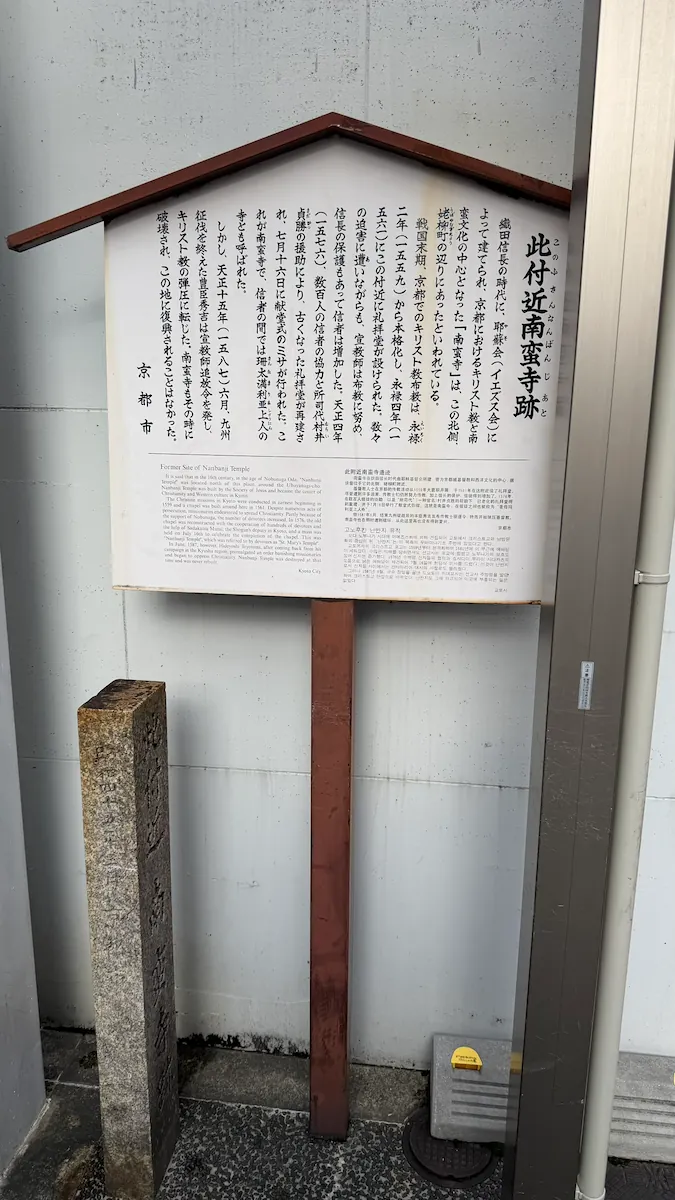
Marker indicating the presumed location of the Nanbanji (Church of Santa Maria). The church no longer exists.
A marker reading "This vicinity — Former Nanbanji Site" stands in front of a commercial building on Takoyakushi-dori in Nakagyo Ward. It indicates the presumed location of the Nanbanji church, believed to have stood in the nearby Ubayanagi-cho area.
The Nanbanji no longer exists. The marker is a small display and easy to miss without a map — checking the exact location before you go is strongly recommended. Once you find it, the connection to Nobunaga's era and the history of Christianity in Kyoto becomes tangible in a way that no exhibit can quite replicate.
Based on multiple site visits — this is the author's personal ranking, not an official recommendation from Honno-ji.
The most to see — main hall, Nobunaga memorial, Daihoden Museum, and goshuin — and the best place to feel a real connection to Nobunaga.
Where the 1582 incident actually happened. Only a stone marker remains, but it carries the most historical weight of the three.
Just a marker indicating a presumed site — the church itself no longer exists. It's easy to miss in front of a commercial building, so skipping it if you're pressed for time won't cost you much.
Visitor Tips for Each Location
At the Current Honno-ji Temple: Don't Miss the Nobunaga Memorial
The Nobunaga memorial is located toward the back of the grounds. Visitors who only see the main hall and leave often miss it. Follow the grounds carefully and look for signage pointing toward the memorial.
Nobunaga-related goshuin are available at the temple office. For visitors collecting goshuin connected to the Sengoku period, Honno-ji is one of the rare dedicated stops for Nobunaga.
The Daihoden Museum charges admission, but for visitors with a genuine interest in Nobunaga, it is worth the entry fee. Exhibition content can change, so check the official website in advance.
Before Visiting the Former Honno-ji Site
The former site is a place to confirm historical geography — not a site with exhibits or preserved ruins. The former temple grounds are believed to have extended across the area now occupied by Honno-ji Elementary School and the surrounding blocks. Only stone markers remain. Knowing this before you arrive will make the visit feel purposeful rather than disappointing.
Before Visiting the Nanbanji Marker
The Nanbanji marker is a small display in front of a commercial building and is genuinely easy to overlook. Pin the exact location in a map app before you go. Once you find it, the visit itself takes only a few minutes.
Legends, Traditions, and Deeper Notes
The Writing of "Honno-ji"
The "Fire-Warding Ginkgo"
The Nanbanji: A Lost Church in Nobunaga's Kyoto
The Nanbanji is believed to have been completed around 1576, making it one of the earliest Christian churches in Kyoto. After Toyotomi Hideyoshi's edicts targeting missionaries in the late 1580s, the church was torn down. The exact year of its destruction varies slightly across sources; the consistent fact is that it did not survive Hideyoshi's suppression of Christianity.
Nobutada and the Nijo Gosanjo Incident
On the same day as the Honnoji Incident, Nobunaga's heir Oda Nobutada was at Nijo Gosanjo and died fighting Akechi's forces there. The Nijo Gosanjo site is a separate location in central Kyoto, distinct from both the current and former Honno-ji sites. A future guide will cover this in detail.
📜 Timeline of Key Events
| c. 1576 | The Nanbanji (Church of Santa Maria) is completed in Kyoto by Jesuit missionaries, under Nobunaga's patronage |
|---|---|
| June 2, 1582 | The Honnoji Incident — Oda Nobunaga is killed at Honno-ji during Akechi Mitsuhide's attack |
| 1582 | Honno-ji burns down during the incident |
| 1592 | Honno-ji is relocated and rebuilt at its current site (Teramachi-Oike) |
| c. 1587–1588 | Toyotomi Hideyoshi issues anti-Christian edicts; the Nanbanji is subsequently torn down |
| 1928 | The current main hall of Honno-ji is rebuilt |
🏯 Oda Nobutada and the Nijo Gosanjo Site
On the same day as the Honnoji Incident, Nobunaga's designated heir Oda Nobutada was staying at Myokaku-ji Temple nearby. After learning of his father's fate, Nobutada moved to Nijo Gosanjo, where he engaged Akechi's forces and died. The Nijo Gosanjo site is a separate location in central Kyoto. A future article will cover this in detail.
Suggested Walking Route
The current Honno-ji Temple closes at 17:00, but the stone markers at the former site and Nanbanji can be visited at any time.
Former Honno-ji Site → Nanbanji Marker → Current Honno-ji Temple
Starting with the two stone-marker stops helps you understand the historical geography before arriving at the rebuilt temple with its many sights. Ending at the current Honno-ji gives you the most to see at the close of the visit.
Current Honno-ji Temple → Former Honno-ji Site → Nanbanji Marker
Go to the current temple first while it is open. The stone markers at the former site and Nanbanji can be visited at any time, including after the temple closes.
Frequently Asked Questions
No. The current Honno-ji is the rebuilt temple, relocated to its present site in 1592. The original Honno-ji, where the 1582 incident took place, was near Horikawa-Shijo. If you want to visit the actual incident site, head to the former Honno-ji site near Honno-ji Elementary School.
Mainly a stone marker and site indication. Visitors should not expect large ruins, reconstructed buildings, or on-site exhibits. It is a place to confirm the historical geography.
It is a marker indicating the presumed location of the Nanbanji, a church established in Kyoto during Nobunaga's era. The church no longer exists. The marker stands in front of a commercial building and is easy to miss without a map.
The main hall, the Nobunaga memorial, and the Daihoden Museum. The Nobunaga memorial is toward the back of the grounds, so take care not to miss it. Nobunaga-related goshuin are also available.
Yes, especially for travelers interested in Oda Nobunaga. The current temple offers a Nobunaga memorial, a museum, and Nobunaga-related goshuin. Nobunaga has fewer dedicated memorial sites than the other two unifiers, which makes Honno-ji a rare and meaningful stop.
About 20 minutes for the current temple grounds alone. Add 20–30 minutes if visiting the Daihoden Museum. The former site and Nanbanji marker are short stops of just a few minutes each.
No. There is no visitor parking on the temple grounds. Use a nearby paid coin parking lot instead (per the official Honno-ji website; confirm current availability before you go).
Take the subway Karasuma Line from Kyoto Station to Karasuma-Oike, then transfer to the Tozai Line and get off at Kyoto Shiyakusho-mae — about 15 minutes total including the transfer. City bus and Kyoto Bus routes to the Kawaramachi-Sanjo stop are also an option (per the official Honno-ji website; times and routes can vary, so confirm before you travel).
Related Guides
A future guide will cover the former Nijo Gosanjo site, where Nobunaga's son Nobutada died on the same day as the Honnoji Incident. For Nobunaga's full life story, see our complete Oda Nobunaga biography. And for the battle that followed just days after the incident, see our guide to Mount Tenōzan and the Yamazaki battlefield, where Akechi Mitsuhide was defeated by Hashiba (later Toyotomi) Hideyoshi. For a wider Nobunaga itinerary in Kyoto, the area around Kenkun Shrine and Daitoku-ji can be combined with these three locations on the same day.
☕ Support This Site
Following the Shogun is built on original fieldwork and on-site research.
If you found this guide useful, your support helps keep it going.

You can also support via QR code


comment