


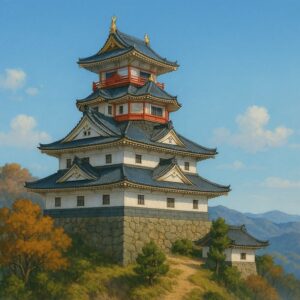
Azuchi Castle Ruins Visitor Guide 2026 | Access, Routes and What to See
This is a complete guide to Azuchi Castle Ruins (安土城跡), the mountaintop stronghold that the 16th-century warlord Oda Nobunaga built as his seat of power. Based on at least five visits, including trips in April 2024 and April 2025, this guide covers admission fees, measured visiting times, highlights organized by area, and practical tips from walking the grounds.
Once you pass through the entrance, the roughly 6-meter-wide Otemichi path runs in a straight line up the mountain. Most castles bend their approach paths for defensive purposes, so this open, direct layout is unusual. It suggests Azuchi wasn't built only to fight — it was also a stage for Nobunaga to display his power to anyone who visited.
Detailed area-by-area guides and 360° panoramic photos are available on their own dedicated pages, linked throughout this guide. This page covers visit planning and how to get around the site.
- Essential Information: Admission, Hours & Access
- What You Can See at Azuchi Castle Ruins — Main Sights at a Glance
- Recommended Visiting Routes
- Area Guides — Full Spot Details & 360° Panoramas
- Goshuin & Gojōin (Temple Seals & Commemorative Stamps)
- Walk the Site in Advance with 360° Panoramas
- Full Site Map of Azuchi Castle Ruins
- Azuchi Castle History — A 3-Minute Timeline
- Practical Advice From 5+ Visits
- Tips From an On-Site Visitor
- Frequently Asked Questions
- Sites Connected to Toyotomi Kyodai! ("Toyotomi Brothers!")
- Sites Connected to Oda Nobunaga
- Historical Sites in the Kyoto/Osaka Area
Essential Information: Admission, Hours & Access
(last entry at 4:00 p.m.; hours may vary seasonally)
High school age and under: ¥200
Including outer sites: half a day to a full day
on foot about 20 min / by bicycle about 10 min / by car about 7 min
Azuchi Station is roughly 45–50 minutes from Kyoto Station by direct or connecting trains (fares and schedules change — check current times before you travel).
Google Maps →
Bicycle parking available
Across multiple visits, I've never had trouble finding a space, but arrive early during cherry blossom season or long holiday weekends.
There are no restrooms within the castle grounds — use the rest area next to the parking lot before you enter. The Three-Story Pagoda and Nio Gate in Sōkenji Temple's former precincts are included in regular admission. Special viewings of the temporary main hall, held on an irregular schedule, cost an additional ¥500 and include tea and a sweet. Pets are not permitted.
What to Expect at the Entrance
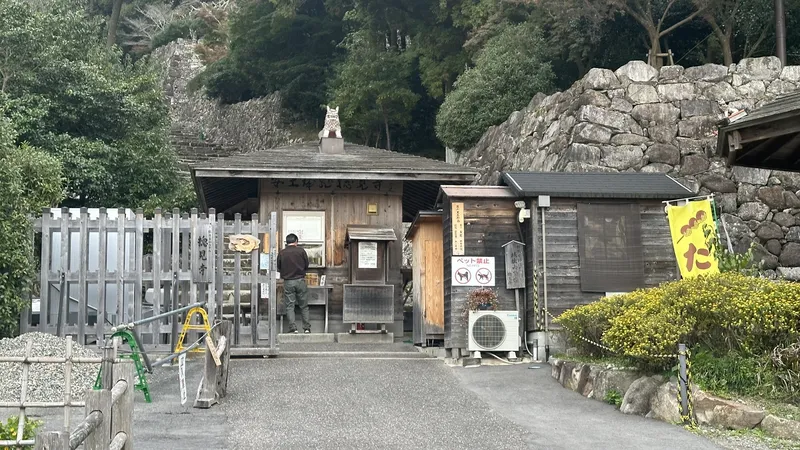
After paying admission, you'll pass through a reception area enclosed by tall stone walls, and the stone steps of Otemichi appear almost immediately. The reception counter also issues goshuin (temple seal stamps) — more on that below in the "Goshuin & Gojōin" section.
Tap to enlarge
What You Can See at Azuchi Castle Ruins — Main Sights at a Glance
This guide groups the sights into three areas within the castle grounds—the Otemichi approach, the inner compound, and Sōkenji Temple—and two groups outside them: surrounding sites and temples with castle remains. Use the quick-reference list below to get the full picture before you plan your route.
Inside the Castle Grounds (admission: adults ¥700; high school age and under ¥200)
- Otemichi (Main Approach) — 6m-wide, 180m-long straight stone staircase
- Site said to be Maeda Toshiie's Residence
- Site said to be Hashiba (Toyotomi) Hideyoshi's Residence
- Sōkenji Temple (Mt. Enkei)
- Takei Sekian's Residence Ruins
- Tokutomi Sohō Poem Monument
- Obake Tōrō (Ghost Lantern)
- Site said to be Oda Nobutada's Residence
- Site said to be Mori Ranmaru's Residence
- Kurogane-mon (Kurogane Gate) Ruins — gold-leaf roof tiles found here, not to miss
- Bussokuseki (Buddha's Footprint Stone)
- Nobunaga's Mausoleum
- Ninomaru (Second Enclosure) Ruins
- Honmaru (Main Enclosure) Ruins — the "thousand-mat" hall site with 119 foundation stones
- Tenshudai (Main Tower Platform) Ruins — a must-see, the heart of the inner compound with its foundation stones still in place
- Three-Story Pagoda (Important Cultural Property)
- Nio Gate (Important Cultural Property)
- Kamado (Hearth) Ruins
Outside the Castle Grounds (some facilities charge separate admission)
Recommended Visiting Routes
Short Course (About 85–100 Minutes)
Expect steep stone steps throughout. Wear non-slip athletic shoes or hiking shoes. Free walking sticks are available for loan at the entrance counter.
Full Course (About 3–4 Hours)
Including the outer sites, plan for half a day to a full day. A rental bicycle makes getting around much easier.
Area Guides — Full Spot Details & 360° Panoramas
Detailed spot-by-spot guides for each area — with photos, 360° panoramas, and expandable detail sections — are available on their own dedicated pages.
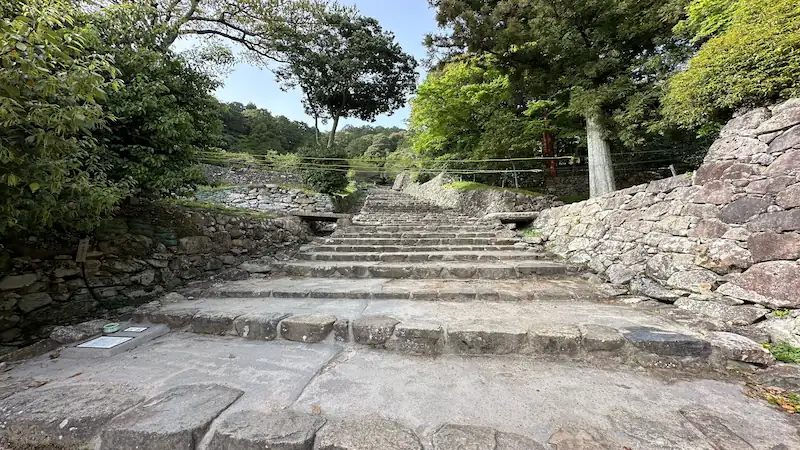
Otemichi Area
Otemichi, sites said to be the residences of Maeda Toshiie and Hashiba Hideyoshi, Sōkenji Temple, Takei Sekian's Residence Site & more
Full Otemichi Area Guide (with 360°)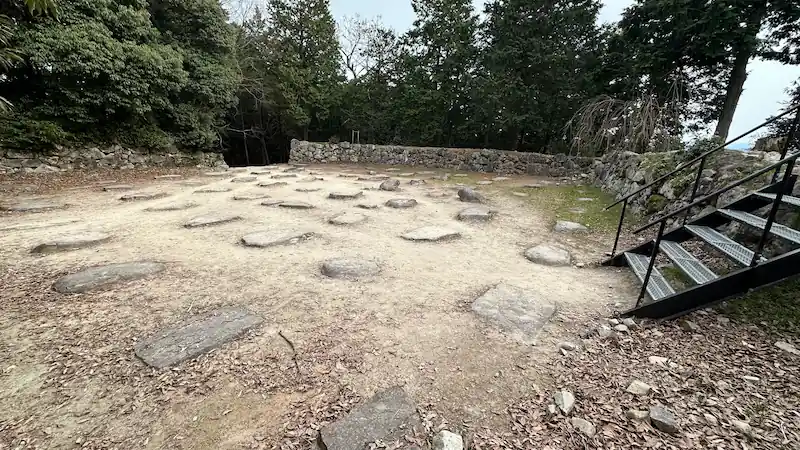
Inner Compound Area
Kurogane-mon Ruins, Bussokuseki, Nobunaga's Mausoleum, Honmaru Ruins, Tenshudai Ruins & more
Full Inner Compound Area Guide (with 360°)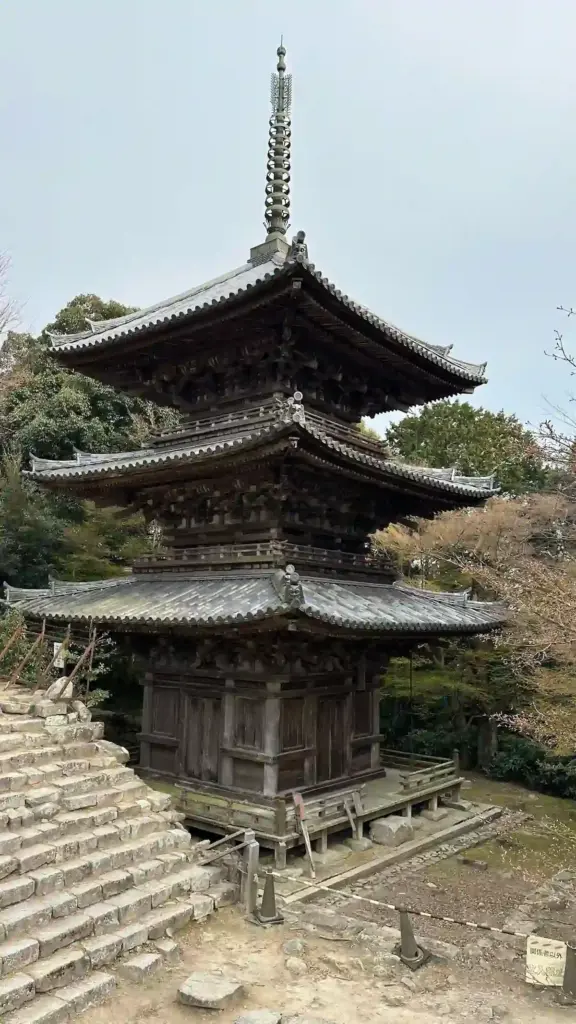
Sōkenji Temple Area
Three-Story Pagoda (Important Cultural Property), Nio Gate (Important Cultural Property), Kamado Ruins
Full Sōkenji Temple Area Guide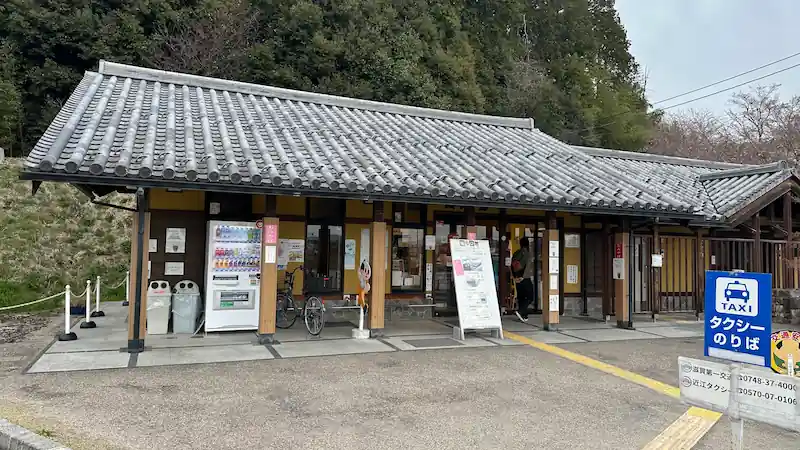
18 Spots Outside the Castle Grounds
Jonavikan Visitor Center, Dodobashi Entrance, Seminario Ruins, the archaeological museum, Nobunaga no Yakata Museum & more
Full Guide to the 18 Outer Spots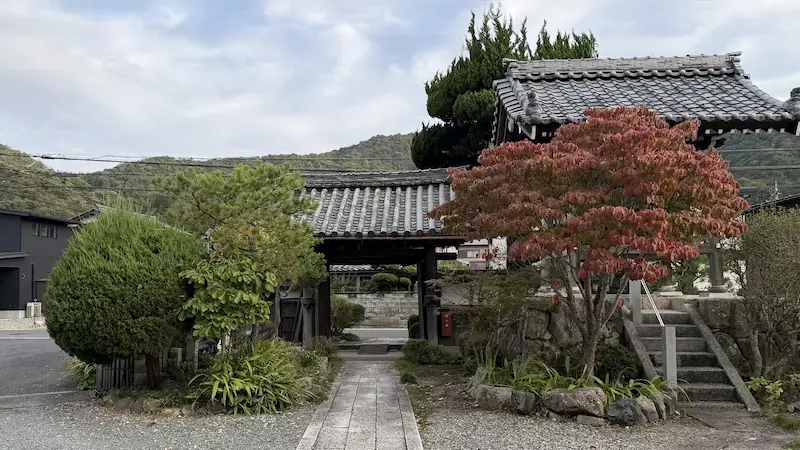
3 Temples with Surviving Castle Remains
Chōkō-ji (Sōkenji Temple's former back gate), Saikō-ji (Nobunaga memorial monument), Kōtaku-ji
Guide to the Temples with Castle RemainsGoshuin & Gojōin (Temple Seals & Commemorative Stamps)
You can pick up two different kinds of visit mementos at Azuchi Castle Ruins: a goshuin, a hand-brushed and stamped inscription traditionally collected in a dedicated book (goshuinchō) at temples and shrines, and a gojōin, a printed commemorative stamp sheet specific to a castle. Goshuin books are available at the castle entrance (Sōkenji Temple), while gojōin are sold at Azuchi Jōkaku Shiryōkan (安土城郭資料館), the museum near JR Azuchi Station.
Sōkenji Temple's Goshuin Book (at the Castle Entrance)
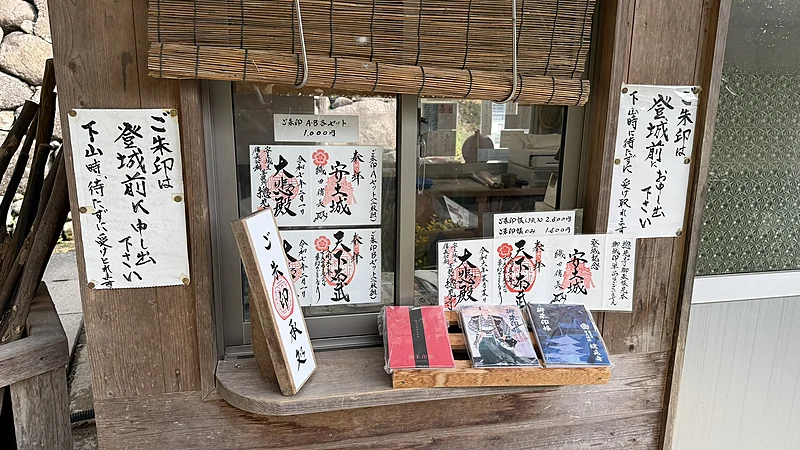
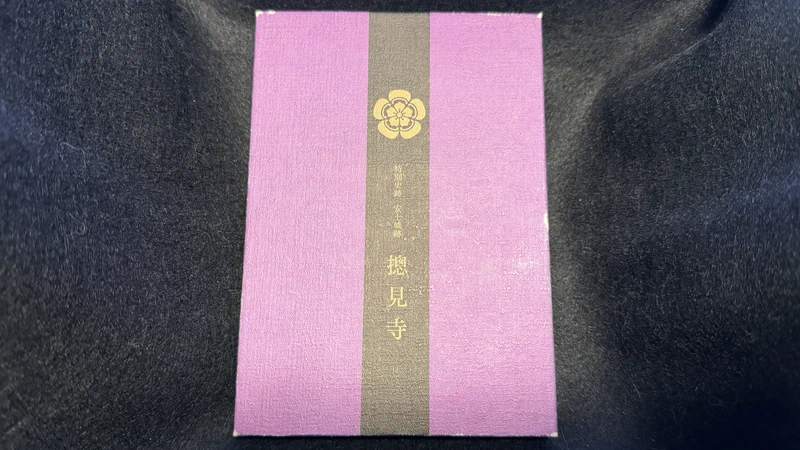
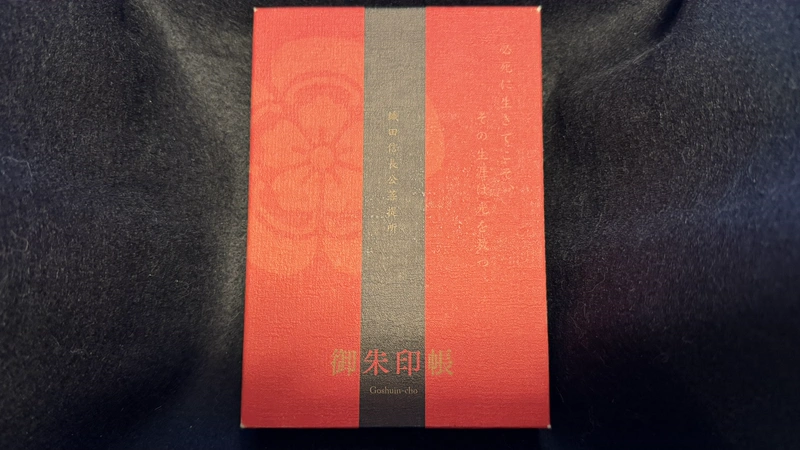
At the entrance reception, you can purchase an original Sōkenji Temple goshuin book. Designs vary — one option is purple and black with the Oda clan's mokkō crest and the words "Special Historic Site: Azuchi Castle Ruins, Sōkenji Temple," and another is red and black with "Bodaisho of Lord Oda Nobunaga" (meaning the temple that holds his memorial services) in gold lettering. The process works like this: you hand over the book at the entrance when you go in, and collect it filled in when you come back down. Sōkenji Temple doesn't offer single-page inscriptions or write directly into a book you already own — buying their original goshuin book is required. Reported prices range from around ¥2,000 to ¥2,600 depending on the source, so confirm the current price at the reception counter.
Tap to enlarge
An Example of the Finished Goshuin
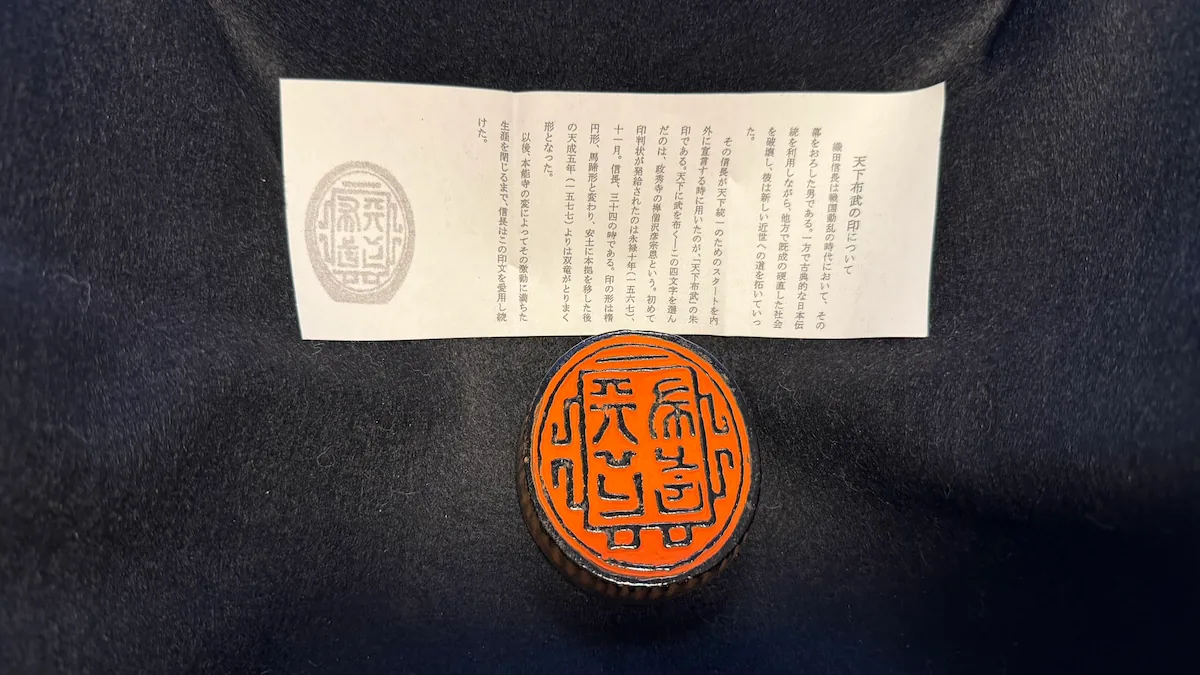
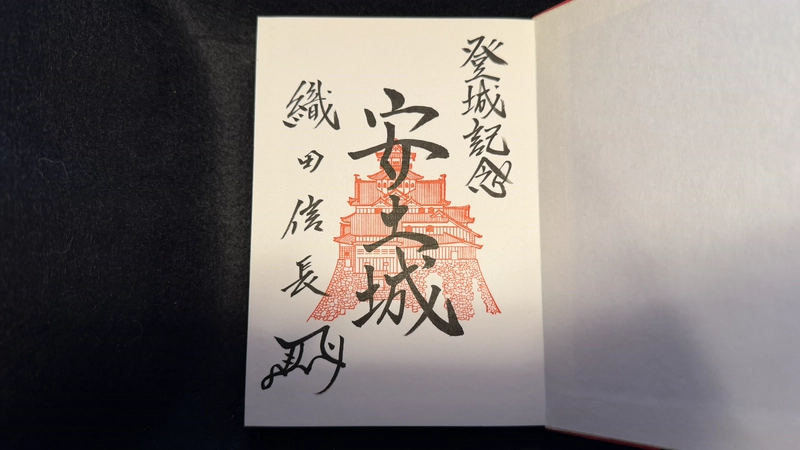
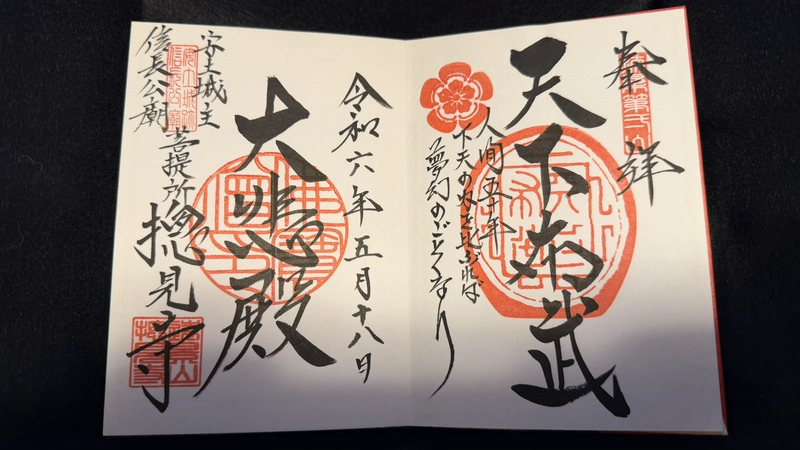
The book I received when I came back down contained an inscription with a red illustration of Azuchi Castle, large brushed characters reading "Azuchi Castle," and Oda Nobunaga's name alongside it, as well as inscriptions with the Oda clan's mokkō crest and the brushed phrases "Tenka Fubu" (Nobunaga's personal motto, roughly "rule the realm by force") and "Daihiden," layered with several red seal stamps.
Tap to enlarge
The Gojōin at Azuchi Jōkaku Shiryōkan
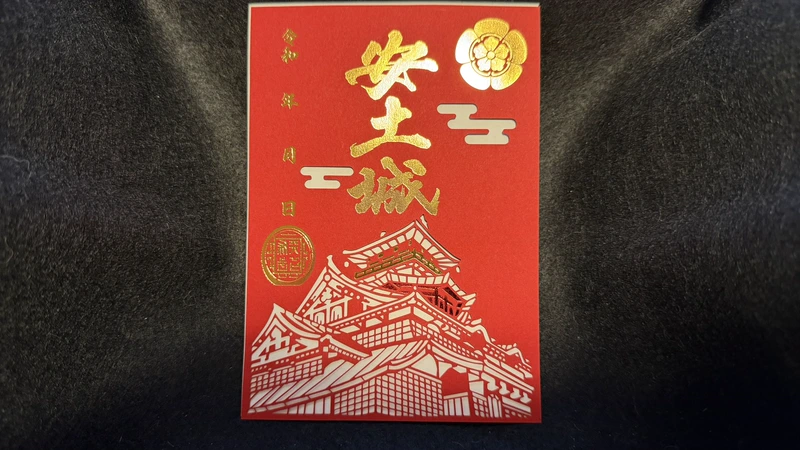
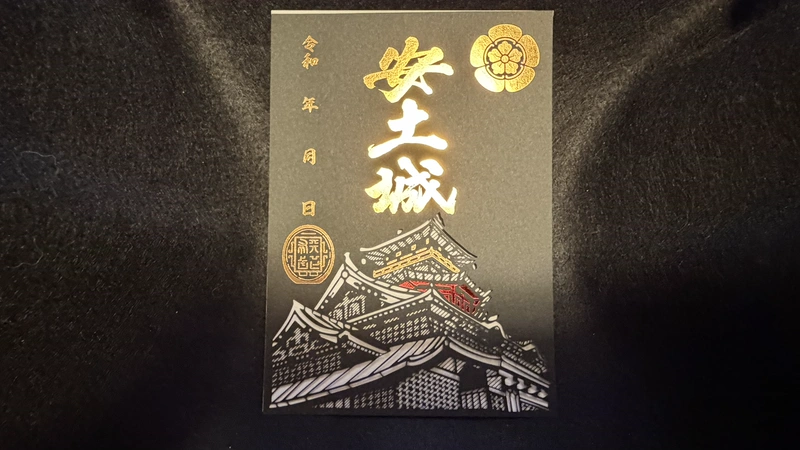
Azuchi Jōkaku Shiryōkan, just steps from JR Azuchi Station, sells its own gojōin for "Azuchi Castle." Two designs are available: one on red card stock with gold lettering, the Oda mokkō crest, and an illustration of the castle, and another on black card stock rendering the castle in gold, white, and red. Both leave space on the left to write the date of your visit. When I bought mine in 2025, the price was ¥1,500. Designs, prices, and availability can change, so confirm the latest details on-site. Since this is sold at a different location from the castle entrance, it's worth stopping by before or after your climb to pick one up.
Tap to enlarge
Walk the Site in Advance with 360° Panoramas
This site publishes 360° panoramic photos of Azuchi Castle Ruins' major spots. Drag or swipe the image to look around the space as if you were standing there. Use them to scout the site before your visit or revisit it afterward.
Otemichi — experience the 6m-wide, 180m-long straight stone staircase in 360°
Tenshudai Ruins — explore the main tower platform in 360°
- 360° Virtual Climb — Otemichi Chapter
- 360° Virtual Climb — Retainers' Residences Chapter
- 360° Virtual Climb — Nio Gate & Bussokuseki Chapter
- 360° Virtual Climb — Inner Compound Chapter
Full Site Map of Azuchi Castle Ruins
Azuchi Castle History — A 3-Minute Timeline
- Tenshō 4 (1576): Oda Nobunaga begins construction
- Niwa Nagahide appointed chief construction magistrate
- Tenshō 7 (1579): The tenshu (main tower) is completed and Nobunaga moves in
- Large palace-style halls are built at locations including the presumed Honmaru site to project Nobunaga's authority
- Tenshō 10 (1582): The Honnō-ji Incident — Nobunaga dies
- The tenshu and Honmaru burn down
- The castle becomes a legend after standing for only about three years
- The exact cause of the fire remains unresolved, with several competing theories
- Taishō 15 (1926): Designated a National Historic Site
- Shōwa 27 (1952): Upgraded to a National Special Historic Site — one of Japan's highest tiers of protected heritage sites, held by fewer than about 65 locations nationwide
- From Heisei 1 (1989), roughly 20 years of excavation and site development
- Gold-leaf roof tiles, foundation stones, and stone walls preserve traces of the castle's former grandeur
Practical Advice From 5+ Visits
These practical tips are based on my visits to the site.
Tips From an On-Site Visitor
- Budget more time than the official estimate. The official visiting guide estimates about 45 to 90 minutes. When I walked the site myself, taking photos around the Tenshudai and the Sōkenji Temple ruins, it took roughly 1.5 to 2 hours. If you want to take your time examining the stone walls and information panels, plan for around 2 hours.
- The Otemichi steps are steeper than they look. The stretch right before the Tenshudai has especially high steps, and climbing in heels or sandals is genuinely dangerous. Non-slip athletic shoes or hiking shoes are recommended, and I'd strongly recommend taking advantage of the free walking sticks available at the entrance counter.
- There are no restrooms anywhere within the castle grounds. The rest area next to the parking lot in front of the entrance is your only option. If you realize you need a restroom after reaching the summit, the descent takes over 20 minutes — so use the facilities before you go in.
- Look for repurposed stones as you climb. A close look at the Otemichi steps reveals stones that were clearly once gravestones or Buddhist statues, reused in construction. Watching for carved marks or unusually shaped stones adds a whole new layer of interest to the climb.
- Obake Tōrō (the "Ghost Lantern") is easy to miss. This roughly 3-meter-tall Edo-period stone lantern stands partway up Otemichi. If you're focused on your footing, it's easy to walk right past — check the side path on the right near the top of the main staircase.
- About the view from the Tenshudai. In Nobunaga's time, the area around Mt. Azuchi was surrounded by inner lakes and waterways. Today this has become farmland through land reclamation, but you can still picture Azuchi Castle back when it was ringed by water, overlooking lake transport routes.
- Parking is free. The lot in front of the entrance holds around 20 cars. Across at least five visits, I've never had trouble finding a space — but arrive early during cherry blossom season, holiday weekends, or whenever an NHK historical drama boosts the site's popularity. There's also bicycle parking, so it's a safe bet if you're arriving by rental bicycle from Azuchi Station.
- The base of Otemichi gets strong direct sun — summer visits are especially tough. The first stretch of the climb has few trees and almost no shade. On an August visit, it felt brutally hot, and I saw other visitors sitting down on the steps partway up just to rest. In hot weather, it's a good idea to bring water, a hat, and sunscreen.
- The steps are uneven in height, and it's easy to trip. The Otemichi path has been restored and maintained based on the route and stone steps confirmed through archaeological excavation, and some sections have uneven step heights — letting you get a physical sense of how the original approach climbed the mountainside. Some steps are noticeably taller than others, so climb slowly and place each step deliberately. (See Shiga Prefecture's official preservation plan (Japanese, PDF) for details.)
- Use rainwear rather than an umbrella if it's raining. Holding an umbrella on the stone steps ties up one hand and increases the risk of losing your balance. On rainy days, wear rainwear instead and keep both hands free while climbing.
- Older visitors or anyone unsure of their stamina should allow extra time. On my visits, I repeatedly saw older visitors clearly struggling with the climb. Don't push yourself — go at a slow pace and take breaks. If you're carrying a child while climbing, it takes more stamina than you might expect — build in time for rest breaks and plan with some flexibility.
- 2026 may be busier than usual. Visitor numbers may increase due to the NHK Taiga drama and events related to the 450th anniversary of Azuchi Castle's construction. During cherry blossom season, holiday weekends, and event days, it's a good idea to arrive earlier than usual.
Frequently Asked Questions
Yes, the site is open every day of the year. Visiting hours are 8:30 a.m. to 5:00 p.m. (last entry at 4:00 p.m.; hours may vary seasonally). There are no restrooms within the castle grounds, so use the rest area next to the parking lot before you start climbing.
Admission is ¥700 for adults and ¥200 for visitors of high school age and younger. Sōkenji Temple's special viewing (held on an irregular schedule) costs an additional ¥500 and includes tea and a sweet.
The official visiting guide estimates about 45 to 90 minutes. When I walked the site myself, taking photos around the Tenshudai and the Sōkenji Temple ruins, it took roughly 1.5 to 2 hours. If you want to take your time examining the stone walls and information panels, plan for around 2 hours. If you also visit sites outside the castle grounds, such as the archaeological museum and the Nobunaga no Yakata museum, plan for half a day to a full day.
From JR Azuchi Station (安土駅) on the JR Biwako Line, it's about a 20-minute walk, a 10-minute ride by rental bicycle, or a 7-minute taxi ride. Free parking is available on-site. Several bicycle rental shops operate near the station's north exit.
Yes, there's a free parking lot at the base of the site. Across at least five visits, I've never had trouble finding a space, but arrive early during cherry blossom season, holiday weekends, or whenever the site draws extra attention from a related NHK historical drama. There's also bicycle parking, so it's easy to arrive by rental bicycle from Azuchi Station.
Otemichi is a straight run of stone steps 6 meters wide. The stretch just before the Tenshudai is especially steep. Based on at least five visits, I strongly recommend sneakers or hiking shoes — sandals or heels are genuinely dangerous here. Free walking sticks are available for loan next to the entrance counter.
There are no restrooms within the castle grounds. Be sure to use the restroom at the rest area next to the parking lot in front of the entrance before you start climbing. Descending from the Tenshudai just to use a restroom is physically demanding.
After Oda Nobunaga was killed in the Honnō-ji Incident of 1582, the tenshu (main tower) and Honmaru of Azuchi Castle burned down. The exact cause is still debated: theories include arson by Akechi Mitsuhide's forces and a fire set later by Nobunaga's son, Oda Nobukatsu. The castle stood for only about three years after its completion.
On visits before the NHK historical drama aired, some spots were empty enough that I couldn't see another visitor. In 2026, visitor numbers may increase due to the NHK Taiga drama and events related to the 450th anniversary of Azuchi Castle's construction. During cherry blossom season, holiday weekends, and event days, it's a good idea to arrive earlier than usual.
Since the path involves a lot of stone steps, non-slip athletic shoes or hiking shoes are recommended. In hot weather, it's a good idea to bring water, a hat, and sunscreen as well. If it rains, rainwear is safer than an umbrella, which ties up one of your hands. Take advantage of the free walking sticks available at the entrance counter.
On my visits, I've repeatedly seen older visitors clearly struggling with the climb. If you're not confident in your stamina, allow extra time and climb at a slow pace with rest breaks. If you're carrying a child while climbing, it takes more stamina than you might expect — build in time for rest breaks and plan with some flexibility. The climb is difficult with a wheelchair or stroller. The Jonavikan Visitor Center and outer moat deck are flat areas outside the castle grounds.
The Tenshudai is a must-see, but it's far from the only highlight. Sōkenji Temple is especially worth seeking out — the three-story pagoda and Nio Gate in its former precincts can be visited with regular Azuchi Castle Ruins admission, and the temporary main hall along the Otemichi path occasionally holds special viewings for an additional fee. The Three-Story Pagoda and Nio Gate were actually built before Azuchi Castle and relocated into the castle grounds during Nobunaga's time — now that most of the castle interior consists only of stone walls and foundation stones, they're valuable as genuine wooden structures that still convey the atmosphere of that period.
Yes — this site, Following the Shogun, publishes 360° panoramic photos of major spots including Otemichi, the Tenshudai, the retainers' residence sites, and Nio Gate. Use them to preview the site before your visit or to look back on it afterward.
Visiting in the rain is possible, but the stone steps become very slippery. From experience, I strongly recommend waterproof shoes and a walking stick even in light rain. In heavy rain, it's safer to reschedule for another day.
Unfortunately, the continuous stone steps of Otemichi make it difficult to climb with a wheelchair or stroller. Outside the castle grounds, the Jonavikan Visitor Center and outer moat deck are flat areas to consider visiting.
Prices and hours on this page are confirmed as of August 1, 2026. For the latest hours and fees, please check the official visiting guide. Please do not reproduce the photos or 360° panoramic images on this page without permission.
Sites Connected to Toyotomi Kyodai! ("Toyotomi Brothers!")

Sites Connected to Oda Nobunaga

Historical Sites in the Kyoto/Osaka Area

Back to the Main Page

☕ Support This Site
Following the Shogun is based on first-hand, on-site research.
If this guide has been useful to you, your support would mean a lot.

You can also support the site by scanning the QR code.


comment