


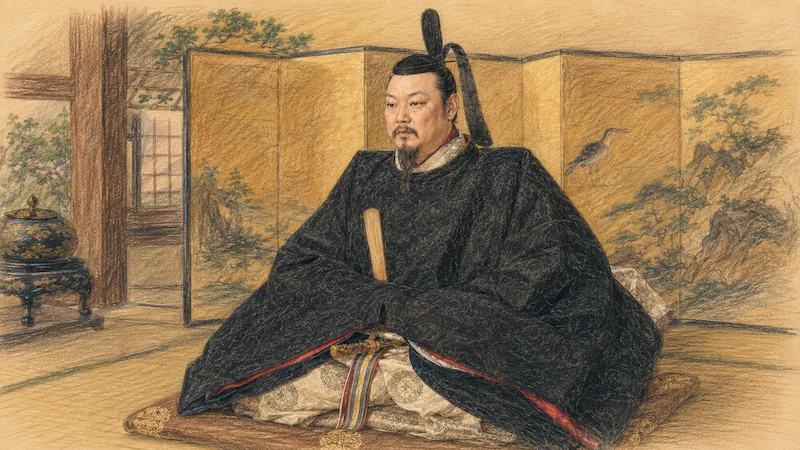
Toyotomi Hidenaga: Hideyoshi's Right Hand & Historic Sites
A guide to Toyotomi Hidenaga — Hideyoshi's younger brother and trusted right hand — covering his role in the Toyotomi regime, a castle chronology across Japan, and visitor guides for the historic sites connected to his life.
Quick answer: Toyotomi Hidenaga was the younger brother and trusted right hand of Toyotomi Hideyoshi, the ruler who unified Japan after Oda Nobunaga. While Hideyoshi became one of the most famous figures of the Sengoku period, Hidenaga worked behind the scenes as a military commander, administrator, negotiator, and stabilizing force within the Toyotomi regime.
For many readers, Hidenaga is the missing piece in the Toyotomi story. He helped support Hideyoshi's rise, governed major territories, developed Yamato Koriyama as a key base, and became one of the people most trusted to turn Hideyoshi's ambitions into workable rule. His early death in 1591 also left a gap that the Toyotomi family never fully replaced.
Start here: This page is a guide to Toyotomi Hidenaga as both a historical figure and a travel theme. It explains who he was, why he mattered to Hideyoshi's success, and where you can still visit places connected to his life today.
On this page, you'll find:
- a clear introduction to Toyotomi Hidenaga's role in Sengoku history;
- why he is often described as Hideyoshi's indispensable right hand;
- a castle chronology showing his connections to major sites across Japan;
- visitor guides and on-location reports for places connected to him;
- context for the 2026 NHK Taiga Drama Toyotomi Brothers!
Best starting point for travelers: Yamato Koriyama Castle, Hidenaga's most important base, is the clearest place to understand his political and administrative role on the ground.
- About the Man
- 2026 NHK Taiga Drama Toyotomi Brothers! and Historic Sites
- Toyotomi (Hashiba) Hidenaga — Castle Chronology: Summary & Details
- Tokyo
- Aichi
- NHK Taiga Drama Exhibition “Toyotomi Brothers!” Nagoya Venue — A First-Hand Report
- Toyotomi Brothers! Taiga Drama Museum & Related Exhibitions: Complete Venue Guide [2026]
- Toyotomi Museum in Nagoya Nakamura | Step Behind the Scenes of the Taiga Drama Toyotomi Brothers!
- “Toyotomi Brothers!” Drama Locations: Nagoya Nakamura Walking Guide
- Shigae
- Shizugatake Sengoku Station: The Complete Guide
- Yokoyama Castle Ruins Guide: Access, History & Hiking Routes
- Toyotomi Brothers! Taiga Drama Museum & Related Exhibitions: Complete Venue Guide [2026]
- Shiga / Nagahama | Toyotomi Brothers! Kita-Ōmi Nagahama Taiga Drama Museum — Another Way to Experience the Drama in Nagahama’s Castle Town
- Toyotomi Brothers! Nagahama Guide — The Drama Museum and Every Site Worth Seeing
- Nara
- Toyotomi Brothers! Taiga Drama Museum & Related Exhibitions: Complete Venue Guide [2026]
- Inside a Castle Turret You Can’t Normally Enter: 300+ Artifacts at the ‘Hidenaga and the History of Koriyama’ Exhibition
- Yamato Koriyama & Hidenaga — The Complete Walking Guide for Fans of Toyotomi Brothers!
- Yamato Koriyama Castle Ruins | Walking Hidenaga’s Castle in the World of Toyotomi Brothers!
- The Lion and the Peony: A Complete Guide to the Yamato Koriyama Taiga Drama Museum
- Wakayama
About the Man

2026 NHK Taiga Drama Toyotomi Brothers! and Historic Sites
The 2026 NHK Taiga Drama Toyotomi Brothers! places Toyotomi Hidenaga at the centre of the story — a rare spotlight for the man who kept things running behind the scenes. Visiting the castles and sites connected to him alongside the drama gives the historical backdrop a tangible shape.
Location: DMG MORI Yamato Koriyama Castle Hall, 1F
Access: Kintetsu Koriyama Station, approx. 10 min walk
Highlight: Adjacent to Hidenaga's primary base, Yamato Koriyama Castle ruins
Visit report
Location: Nagahama Castle History Museum area
Access: JR Nagahama Station, walking distance
Highlight: Connected to the brothers' early careers under Nobunaga
Visit report
Location: Nakamura district, Nagoya
Access: Subway Nakamura Koen Station, walking distance
Highlight: Birthplace area of both Hideyoshi and Hidenaga
Visit report
Key sites tied to the drama's story:
- Yamato Koriyama Castle (Nara) — Hidenaga's primary base after entering the domain in 1585; the centre of his rule over Yamato, Kii, and Izumi
- Takeda Castle (Hyogo, Asago) — a mountain castle where Hidenaga is recorded as having served as administrator around 1580; the dramatic stone wall ruins seen today date from a later period
- Himeji Castle (Hyogo, Himeji) — Hidenaga held the position of castle lord here for a period after Hideyoshi moved to Osaka
- Wakayama Castle (Wakayama) — the key administrative point for Kii Province; Todo Takatora, one of Hidenaga's subordinates, served as construction overseer
Toyotomi (Hashiba) Hidenaga — Castle Chronology: Summary & Details
This table summarizes Hidenaga's connections to various castles — as castle administrator, lord, domain headquarters, or battlefield position — based on generally accessible historical sources.
Estimated ages are approximate figures calculated from a birth year of Tenbun 9 (1540); note that alternative birth years have been proposed, so treat these as rough guides.
Confidence ratings (High / Mid) indicate how readily each entry can be verified through official signage, municipal cultural heritage pages, or similar public-facing sources.
| Period (approx.) | Estimated Age (approx.) | Castle / Field Fortification | Present Location | Nature of Involvement | Notes |
|---|---|---|---|---|---|
| c. 1573–1576 | approx. 33–36 | Nagahama Castle | Nagahama City, Shiga Prefecture | Mid Castle administration / caretaker |
Hidenaga is said to have managed castle affairs and coordinated activity in the Nagahama area while Hideyoshi was away on campaign.
More detailHidenaga is frequently described as the brother who handled practical affairs and kept things running while Hideyoshi led from the front. Nagahama was Hideyoshi's early base of operations, and understanding the castle town's dynamics helps clarify Hidenaga's role during this period. |
| c. 1580– | approx. 40– | Takeda Castle | Asago City, Hyogo Prefecture | High Castle administrator (later passed to subordinates) |
A mountain castle known as a strategic strongpoint in the Tajima region, where Hidenaga is recorded as having served as castle administrator for a period.
More detailAsago City's official interpretation references "Hashiba Hidenaga (castle administrator)" in connection with the period following the castle's fall. The stone wall structures visible today may have been built or expanded during a later period of lordship — something worth keeping in mind when visiting. |
| 1581 | approx. 41 | Tottori Castle Ruins / Taikō-ga-Hira | Tottori City, Tottori Prefecture | High Combat participation (field fortification) |
During the siege of Tottori Castle, Taikō-ga-Hira served as the main encampment of the besieging force, with extensive defensive earthworks still surviving in the surrounding area.
More detailTottori City's heritage interpretation identifies Taikō-ga-Hira as Hashiba Hideyoshi's main camp, noting that the inner compound, earthen ramparts, dry moats, and vertical ditches were constructed on a large scale. |
| 1582 | approx. 42 | Bitchu Takamatsu Castle (siege / flood attack) | Okayama City, Okayama Prefecture | High Combat participation (siege operations) |
Hidenaga is recorded as having taken part in the siege — famous for its use of flooding — as a member of Hideyoshi's forces.
More detailOkayama City's cultural heritage interpretation identifies this as the main battlefield of Tensho 10 (1582), noting its fame as the site of the flood attack strategy, with remains of the embankment included within the designated historic site. |
| 1582 (post-Honnō-ji) | approx. 42 | Fukuchiyama Castle | Fukuchiyama City, Kyoto Prefecture | High Temporary administration |
Following the destruction of the Akechi clan, Hidenaga is said to have taken temporary control of Fukuchiyama Castle. (Note: The Honnō-ji Incident of 1582 — in which the warlord Oda Nobunaga was killed by his general Akechi Mitsuhide — triggered a rapid power struggle that Hideyoshi moved quickly to resolve, with Hidenaga playing a key supporting role.)
More detailFukuchiyama City's interpretive materials describe how, following Akechi Mitsuhide's defeat, Hidenaga temporarily administered the castle before lordship passed to a series of successors. |
| c. 1583–1585 | approx. 43–45 | Himeji Castle | Himeji City, Hyogo Prefecture | High Castle lord (for a period) |
When Hideyoshi relocated to Osaka, Hidenaga is recorded as having assumed the position of lord of Himeji Castle.
More detailHyogo Prefecture's castle chronology records that in Tensho 11 (1583), "Hashiba Hidenaga became lord of Himeji Castle." |
| 1585–1591 | approx. 45–51 | Yamato Koriyama Castle | Yamato Koriyama City, Nara Prefecture | High Primary base (construction and castle town development) |
Hidenaga entered the domain in Tensho 13 (1585), and systematic development of the castle and surrounding castle town is recorded from this point.
More detailNara Prefecture's heritage interpretation notes that following Hidenaga's arrival, construction began on "a castle befitting the lord of 1,000,000 koku of Yamato" (a koku being the unit used to measure domain productivity, equivalent to roughly the rice needed to feed one person for a year). Stone Buddhist figures and foundation stones were repurposed as castle wall material. Yamato Koriyama City's cultural heritage pages also explain the prevalence of repurposed materials in Koriyama Castle's stone walls. |
| c. 1585– (development period) | approx. 45– | Wakayama Castle | Wakayama City, Wakayama Prefecture | High Key point in domain administration |
The castle was built and developed as the base for Kii Province, with Kuwayama Shigeharu named as castle administrator.
More detailWakayama City's cultural heritage site notes that Todo Takatora and others served as construction supervisors, and that because Hidenaga resided at Koriyama Castle, Kuwayama Shigeharu served as his administrator in Wakayama. |
| 1589 (representative year of renovation) | approx. 49 | Takatori Castle | Takatori Town, Nara Prefecture | High Major renovation by a subordinate |
In Tensho 17 (1589), a major renovation is recorded as having been carried out by Honda Toshihisa.
More detailNara Prefecture's castle chronology notes that Honda Toshihisa undertook a large-scale renovation in Tensho 17 (1589). |
| 1588 | approx. 48 | Akagi Castle | Kumano City (Kiwa), Mie Prefecture | High Construction by a subordinate (Todo Takatora) |
The castle is documented as having been built by Todo Takatora — one of Hidenaga's subordinates — in Tensho 16 (1588).
More detailThe Cultural Heritage Online database explains that Akagi Castle was built by Takatora, situating it within the broader campaign to pacify the Kitayama region (the Kitayama-iri offensive). |
| Entry | Overview | How to Read It |
|---|---|---|
| Kamihira-ji Castle | Sometimes discussed in connection with Hidenaga. | Safest to introduce only where primary sources or official interpretive materials can be confirmed, and to note any uncertainty explicitly. |
| Izushi Castle (Ariko-yama Castle) | Hidenaga's involvement is sometimes mentioned in the context of Tajima domain administration. | Rather than presenting this as his "castle of residence," it's more accurate to describe it as a castle sometimes associated with his administration of Tajima during the relevant period. |
| Kishiwada Castle | Known as a castle that was developed during the reorganization of Kii and Izumi provinces. | Kishiwada City's interpretation notes that Koide Hidemas directed castle development in Tensho 13 (1585). It's more accurate to understand this as part of the broader regional reorganization of the period rather than as directly under Hidenaga's control. |
References (Official Sources, Japanese Only)
- History of Nagahama Castle (Nagahama Castle History Museum)
- History of Takeda Castle (Asago City — Takeda Castle Ruins Official Site)
- Nationally Designated Historic Site: Tottori Castle Ruins and Taikō-ga-Hira (Tottori City)
- Takamatsu Castle Ruins and Flood Attack Embankment Remains (Okayama City)
- Fukuchiyama Castle (Fukuchiyama City — interpretive PDF)
- Himeji Castle Chronology (Hyogo History Station / Hyogo Prefectural Board of Education)
- Koriyama Castle (Nara Prefecture — "Ikasu Nara")
- Koriyama Castle Walls and Repurposed Stone Materials (Yamato Koriyama City)
- Wakayama Castle (Wakayama City Cultural Heritage Information)
- Takatori Castle (Nara Prefecture — "Ikasu Nara")
- Akagi Castle Ruins and Tabirako Pass Execution Site (Cultural Heritage Online)
- Kishiwada Castle (Kishiwada City)
Visitor Guides
Tokyo
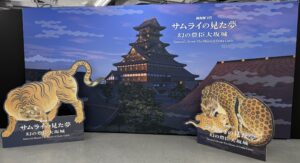
NHK VR Toyotomi Osaka Castle: Experience Report & Guide | Shibuya, Tokyo
Aichi
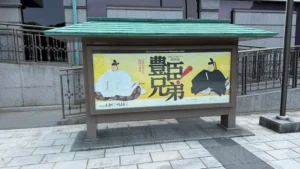
NHK Taiga Drama Exhibition “Toyotomi Brothers!” Nagoya Venue — A First-Hand Report
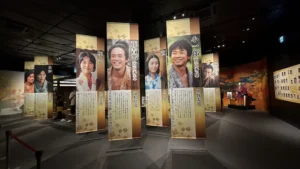
Toyotomi Brothers! Taiga Drama Museum & Related Exhibitions: Complete Venue Guide [2026]
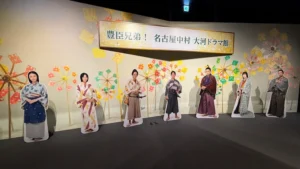
Toyotomi Museum in Nagoya Nakamura | Step Behind the Scenes of the Taiga Drama Toyotomi Brothers!
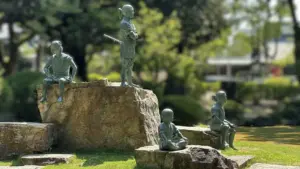
“Toyotomi Brothers!” Drama Locations: Nagoya Nakamura Walking Guide
Shigae
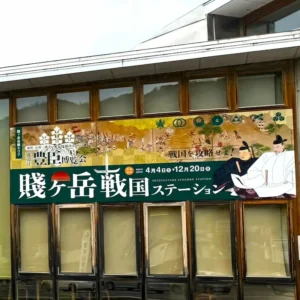
Shizugatake Sengoku Station: The Complete Guide
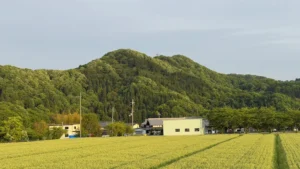
Yokoyama Castle Ruins Guide: Access, History & Hiking Routes
Toyotomi Brothers! Taiga Drama Museum & Related Exhibitions: Complete Venue Guide [2026]
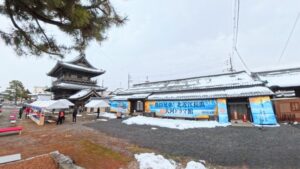
Shiga / Nagahama | Toyotomi Brothers! Kita-Ōmi Nagahama Taiga Drama Museum — Another Way to Experience the Drama in Nagahama’s Castle Town
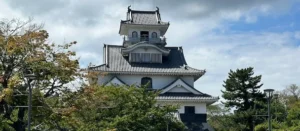
Toyotomi Brothers! Nagahama Guide — The Drama Museum and Every Site Worth Seeing
Nara
Toyotomi Brothers! Taiga Drama Museum & Related Exhibitions: Complete Venue Guide [2026]
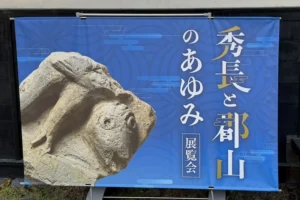
Inside a Castle Turret You Can’t Normally Enter: 300+ Artifacts at the ‘Hidenaga and the History of Koriyama’ Exhibition
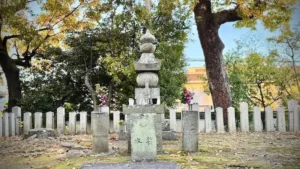
Yamato Koriyama & Hidenaga — The Complete Walking Guide for Fans of Toyotomi Brothers!
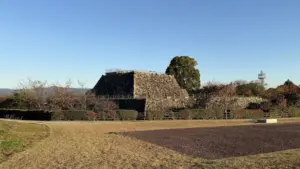
Yamato Koriyama Castle Ruins | Walking Hidenaga’s Castle in the World of Toyotomi Brothers!
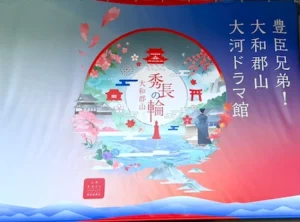
The Lion and the Peony: A Complete Guide to the Yamato Koriyama Taiga Drama Museum
FAQ: Frequently Asked Questions about Toyotomi Hidenaga
Toyotomi Hidenaga was the younger brother and trusted right hand of Toyotomi Hideyoshi. He served as a commander, administrator, and stabilizing figure in the Toyotomi regime during the late Sengoku period. While Hideyoshi became one of Japan's most famous historical figures, Hidenaga worked behind the scenes to turn military success into durable rule — managing territories, overseeing castles, and handling the practical business of governance.
Hidenaga was Hideyoshi's younger brother. While Hideyoshi became the famous unifier, Hidenaga supported him as a practical administrator, military commander, and trusted family ally. Many historians note that the Toyotomi regime remained more stable during Hidenaga's lifetime, and that his death in 1591 left a gap the family never fully filled.
Hidenaga was important because he helped turn Hideyoshi's military success into stable rule. He governed major territories, supported campaigns, managed castles, and acted as one of the Toyotomi regime's most reliable senior figures. He is sometimes described as the one who kept internal conflict in check — a role that became painfully visible after his early death.
Yamato Koriyama Castle is one of the most important places connected to Hidenaga. It served as his primary base from 1585 until his death in 1591, the centre of his administration over Yamato, Kii, and Izumi provinces. The castle ruins in present-day Yamato Koriyama City, Nara, are a key site for understanding his administrative role on the ground.
Major sites connected to Hidenaga include Yamato Koriyama Castle (Nara), Himeji Castle (Hyogo), Wakayama Castle (Wakayama), Takeda Castle (Hyogo), Bitchu Takamatsu Castle (Okayama), and Fukuchiyama Castle (Kyoto). The castle chronology on this page covers these and more, with notes on how each site relates to Hidenaga's life. Visitor guides for specific locations are listed in the sections above.
The 2026 NHK Taiga Drama Toyotomi Brothers! has renewed interest in Hidenaga because it places him at the centre of the Toyotomi story rather than in Hideyoshi's shadow. The drama focuses on the relationship between the two brothers, making Hidenaga's role as administrator and stabilizing force much more visible than it typically is in popular history. Visiting the sites connected to him alongside the drama gives the historical backdrop a tangible shape.
Three main venues are open in 2026. In Nara, the Toyotomi Brothers! Yamato Koriyama Taiga Drama Hall is located at DMG MORI Yamato Koriyama Castle Hall (1F), about ten minutes' walk from Kintetsu Koriyama Station — right next to Hidenaga's castle ruins. In Shiga, the Kitanagahama Taiga Drama Hall is near Nagahama Castle, connected to the brothers' early careers. In Aichi, the Toyotomi Museum in Nagoya's Nakamura district covers the birthplace area of both brothers.
Hidenaga's mausoleum is at Shungaku-in (春岳院) temple in Yamato Koriyama City, Nara. Within the castle ruins, there is also a memorial mound known as the Dainagon-zuka. Both are within easy walking distance of Kintetsu Koriyama Station and can be visited alongside the castle ruins and the Taiga Drama Hall.
In 1586 (Tensho 14), Hidenaga was appointed to the court rank of Junior Second Rank and the office of Gon Dainagon (acting major counsellor). Because his base was Yamato Province (present-day Nara), he became known by the honorific Yamato Dainagon — the Major Counsellor of Yamato. The title captures both his court position and his regional authority in a single phrase that has stuck in the historical record.
Yamato Koriyama Castle ruins alone takes one to two hours to explore comfortably. Adding Shungaku-in, the Dainagon-zuka memorial mound, and the Taiga Drama Hall makes a comfortable half-day. Himeji Castle and Wakayama Castle each take around two to three hours. Takeda Castle, including the approach from the valley, requires roughly half a day. Combining multiple prefectures realistically needs two or more days; if you include Takeda Castle and the Tottori area, three days or more is sensible.
Back to the Main Page

☕ Support This Site
Following the Shogun is built on original fieldwork and on-site research.
If you found this guide useful, your support helps keep it going.

You can also support via QR code

