




Kitanosho Castle Ruins ─ Where Shibata Katsuie and Lady Oichi Made Their Last Stand
Fukui sits on the Sea of Japan coast of central Japan, about three hours from Tokyo by bullet train and under two hours from Kyoto. Five minutes on foot from Fukui Station, a handful of stone foundations and the statues in Shibata Park mark where Shibata Katsuie and Lady Oichi made their final stand. Kitanosho Castle Ruins and the nearby Fukui Castle share a confusingly similar name, but they are two different castles from two different eras.
Shibata Katsuie was one of the senior generals of Oda Nobunaga, the warlord who came closest to unifying Japan in the sixteenth century. His wife, Lady Oichi, was Nobunaga’s younger sister. Katsuie built Kitanosho Castle (北ノ庄城) here in 1575; it burned down in 1583, and the couple died with it. Decades later a completely different castle, Fukui Castle (福井城), was raised on the same ground by a different family — which is why most of the imposing stone walls and moats on the site today have nothing to do with Katsuie. This guide, based on an on-site visit in October 2025, sorts out what survives from which castle, and how to reach Saikoji Temple, where Katsuie and Oichi are buried.
- What this guide covers
- Is it worth visiting?
- History
- Kitanosho Castle vs. Fukui Castle: what’s the difference?
- What remains today
- Shibata Park / 柴田公園 (Kitanosho Castle Ruins)🎥 360°
- Kitanosho Castle Ruins Museum / 北の庄城址資料館
- Shibata Shrine / 柴田神社 and Sanshimai Shrine / 三姉妹神社
- Saikoji Temple / 西光寺 ─ Where Katsuie and Oichi Are Buried
- Fukui Castle / 福井城址: keep foundation, moat and Goroka Bridge🎥 360°
- Toneri Gate / 舎人門, the City History Museum & Yokokan Garden / 養浩館庭園🎥 360°
- Connection to the NHK drama “Toyotomi Kyodai!”
- Frequently asked questions
- Related reading
What this guide covers
- What remains at Kitanosho Castle, and how it differs from Fukui Castle
- How to get there from Fukui Station, with realistic visit times
- How to reach Saikoji Temple, the grave of Shibata Katsuie and Lady Oichi
- Where to get a castle stamp (goshuin) at Shibata Shrine
- How the site connects to the 2026 NHK historical drama “Toyotomi Kyodai!”
Is it worth visiting?
Part of the original stone foundations have been excavated and left on display, so you can stand where the castle actually stood. What you will not find is a tenshu — the tall main tower most people picture when they think of a Japanese castle. Nothing of the kind has been rebuilt here; the site is stone foundations, statues and markers. The one thing that trips visitors up is telling Katsuie’s castle apart from the later Fukui Castle, and that is much easier if you sort it out before you arrive.
Plan around 15 minutes for the on-site museum, and another 20 minutes for Shibata Park, Shibata Shrine, and the adjacent Sanshimai Shrine. Add Fukui Castle and Saikoji Temple and the visit becomes a half-day itinerary.

| Nearest station | JR Fukui Station / 福井駅 (about a 5-minute walk from the north exit) |
|---|---|
| Railway lines | Hokuriku Shinkansen (JR West); Hapi-Line Fukui, Echizen Railway and Fukui Railway are separate local operators, not JR |
| Station numbering | Not yet confirmed |
| Practical Shinkansen gateway | Fukui Station (Hokuriku Shinkansen) |
| From Tokyo (approx.) | About 3 hours via the Kagayaki Shinkansen (varies by train) |
| From Kyoto (approx.) | Around 1 hour 50 minutes via limited express + Shinkansen (typically 1 transfer) |
| From Osaka (approx.) | Around 2 hours via limited express + Shinkansen (typically 1 transfer) |
| From Nagoya (approx.) | Around 2 hours 20 minutes via Shinkansen + limited express (typically 1-2 transfers) |
| Parking | Small tourist parking area (8 spaces for regular cars, free, 9:30am-5:30pm) |
| Getting around locally | Flat city streets, easy to explore on foot |
| Notes | The parking area is small, so arriving early is a good idea if driving |
From Tokyo, the Kagayaki Shinkansen takes roughly 3 hours to Fukui Station, and if the timing works out, some Kagayaki services run the whole way without a transfer. Arriving around 10am makes it possible to see Kitanosho Castle Ruins, Shibata Shrine, and the museum, then continue on to Fukui Castle, and still return to Tokyo the same day. Many of the historical sites and museums close by around 6pm, so it’s worth planning to finish sightseeing by early evening. The last Shinkansen back to Tokyo runs around 8:20pm, leaving time for dinner after sightseeing. From Osaka or Kyoto, the standard route is the Thunderbird limited express to Tsuruga, then a transfer to the Hokuriku Shinkansen (Kagayaki or Tsurugi) on to Fukui. From Nagoya, it’s the Shirasagi limited express to Tsuruga, followed by the same Kagayaki-or-Tsurugi connection. Both transfers happen on the same platform at Tsuruga Station (敦賀駅), though depending on the time of day a different combination of trains can be quicker — check a route-planning app before you set off. Travel time and the number of transfers vary by service, so treat the figures above as a general guide.
One thing to know about Fukui Station: four railway companies meet here, and only the Shinkansen is run by JR. When the Hokuriku Shinkansen was extended to Tsuruga in March 2024, the old JR local line through Fukui Prefecture was handed over to Hapi-Line Fukui, a third-sector company owned partly by the prefecture and the city. The Echizen Railway and the Fukui Railway tram line are separate private operators again. None of this affects the walk to Kitanosho Castle Ruins — everything in this guide is reachable on foot from the station — but it does mean tickets and passes that cover JR lines do not automatically cover the local lines here.
Map of the area around Kitanosho Castle Ruins and Shibata Park
History
Shibata Katsuie built Kitanosho Castle in 1575, after Nobunaga put him in charge of holding the Hokuriku region — the stretch of coast along the Sea of Japan north of Kyoto, far from the centre of power. The Portuguese Jesuit missionary Luís Fróis, who spent decades in Japan and left one of the most detailed foreign accounts of the period, recorded that the castle was being enlarged around 1581. The on-site museum notes that Fróis came to Kitanosho before the Honno-ji Incident of 1582, the coup in Kyoto in which Nobunaga was killed by his own general Akechi Mitsuhide. If a missionary was willing to travel this far north, the castle must have been a place of some standing.
Nobunaga’s death left his generals fighting over the succession. In 1583 Katsuie lost that fight at the Battle of Shizugatake, on the shore of Lake Biwa, to Toyotomi Hideyoshi — still known as Hashiba Hideyoshi at the time — who went on to rule the country. Katsuie retreated to Kitanosho Castle, and he and Oichi took their own lives in the burning keep. The castle was never rebuilt, and years later Yuki Hideyasu raised an entirely new one, Fukui Castle, on the same site.
Katsuie’s command post during that final campaign still exists, about an hour south of Fukui on the border with Shiga Prefecture: Genbao Castle, an earthwork mountain fortress whose ditches and ramparts survive almost untouched. Visiting both sites traces the last year of his life from the battlefield to the place where it ended.
Local accounts describe the keep as having had nine stories, a detail said to come from a letter written by Hideyoshi’s side, though the actual number of stories is debated among historians. Nobody really knows for sure, but it’s fun to imagine just how large the keep must have looked at the time.
Kitanosho Castle vs. Fukui Castle: what’s the difference?
Walking the site makes the difference obvious. Around Shibata Park (柴田公園) and Shibata Shrine, a protected section of excavated stone foundations shows a small, concentrated trace of Katsuie’s castle. A ten-minute walk away, Fukui Castle (福井城址) has a far larger stretch of moat and high stone walls, plus the reconstructed Goroka Bridge (御廊下橋) — a roofed bridge that once let the lord cross the moat between his residence and the main compound without being seen.
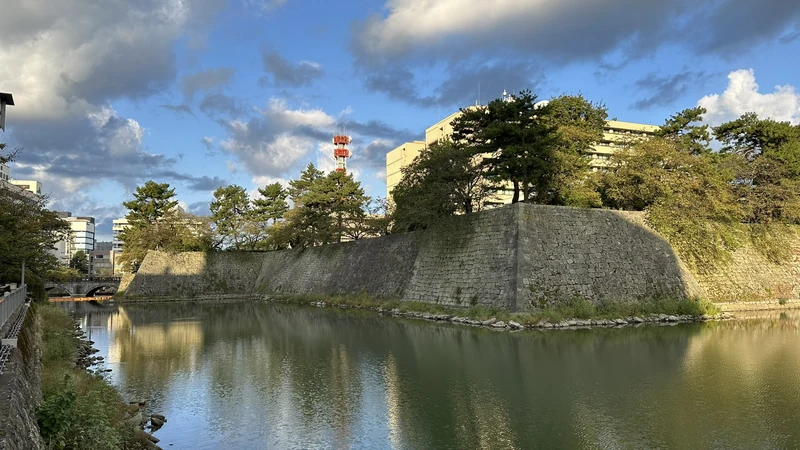
Fukui Castle was begun in 1601 by Yuki Hideyasu, the second son of Tokugawa Ieyasu — the warlord who won the country in 1600 and founded the shogunate that ruled Japan for the next 260 years. That makes it an early Edo-period castle, built two decades after Katsuie died, by the winning side. Its stone walls look grand enough to be mistaken for the older castle, but none of them are his. The keep burned down in 1669 and was never rebuilt, leaving the walls and moat as the main remains. The Goroka Bridge across the inner moat was reconstructed in March 2008, and the Yamazatoguchi Gate (山里口御門) in 2018.

Kitanosho Castle Ruins, Fukui Castle and Saikoji Temple sit a short distance apart from one another. All three are walkable, but they are separate stops rather than one compact site, so give each its own slot in the day rather than trusting how close they look on a map.
What remains today
Shibata Park / 柴田公園 (Kitanosho Castle Ruins)🎥 360°

Statues of Shibata Katsuie, Lady Oichi, and their three daughters stand in the park, alongside a stone monument reading “Kitanosho Castle Ruins” and a marker indicating the excavated stone foundations. The park was selected as one of Japan’s “100 Historical Parks” in 2007. (Ruins / Former site)


Tap an image to enlarge it.
Kitanosho Castle Ruins Museum / 北の庄城址資料館


The museum displays portrait panels of Katsuie and Oichi, a roof tile and pottery fragments excavated from the castle site, and a section showing the excavated stone foundations and moat. A timeline traces the castle’s history from its construction to its fall.


Tap an image to enlarge it.
Shibata Shrine / 柴田神社 and Sanshimai Shrine / 三姉妹神社

Shibata Shrine, next to the park, is dedicated to Katsuie and Oichi. In the same grounds stands Sanshimai Shrine — “Three Sisters Shrine” — for Chacha, Ohatsu and Ogo. The three were Oichi’s daughters by her first husband, Azai Nagamasa, and grew up at Odani Castle in what is now Shiga Prefecture. They survived the fall of Kitanosho and went on to remarkable lives: Chacha became Lady Yodo, Hideyoshi’s consort and mother of his heir, and died at Osaka Castle in 1615; Ogo married the second Tokugawa shogun. Knowing where the sisters went next gives this small shrine considerably more weight. A castle stamp, or goshuin — a hand-brushed seal collected as a souvenir of a visit — is available at Shibata Shrine, and one was obtained during this visit. Designs and reception hours change from time to time, so check before you go.


Tap an image to enlarge it.
Saikoji Temple / 西光寺 ─ Where Katsuie and Oichi Are Buried

About a 17-minute walk from Fukui Station, Saikoji Temple holds the graves of Katsuie and Oichi. They stand beneath tall trees inside the temple grounds, alongside a sign explaining the site’s history. Fukui has several other places tied to Katsuie, from temples that keep his memory to shrines carrying the Tokugawa crest — four centuries on, he is clearly still someone the city claims as its own.
Not the same Saikoji. The name 西光寺 is common in Japan, and there is another Saikoji among the temples connected to Azuchi Castle in Shiga Prefecture. If you are searching on a map, look for the one in Fukui City.
Visiting hours are 12pm to 4pm, by advance arrangement. The admission fee is 300 yen, and there is no dedicated parking — double-check both before you go. The temple is a fair walk from Kitanosho Castle Ruins, so allow extra time.
Map of the area around Saikoji Temple (grave of Shibata Katsuie and Lady Oichi)


Tap an image to enlarge it. A small memorial museum, the Shibata Katsuie Memorial Museum, stands within the temple grounds, with an altar dedicated to Katsuie and Oichi and displays including warrior-face carvings.
Fukui Castle / 福井城址: keep foundation, moat and Goroka Bridge🎥 360°
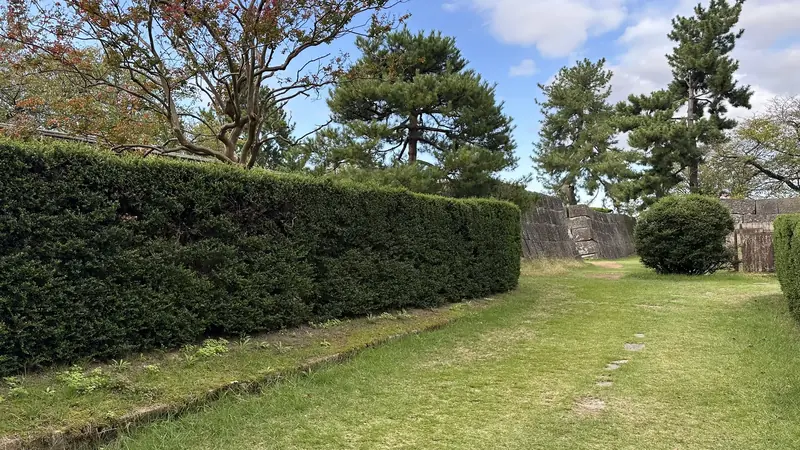
What survives at Fukui Castle is the raised stone platform the keep once stood on, the inner moat, and the reconstructed Goroka Bridge. The keep was never rebuilt after the 1669 fire, so the walls and water are the main event. Reconstruction is underway on the Hitsujisaru Turret at the southwest corner; as of June 2026 the work was focused on reinforcing the surrounding stone walls, with completion expected around 2029. The prefectural government offices now occupy the honmaru, the castle’s main enclosure — an unusual sight, and a reminder that this was the administrative heart of the domain.




Tap an image to enlarge it.
Toneri Gate / 舎人門, the City History Museum & Yokokan Garden / 養浩館庭園🎥 360°

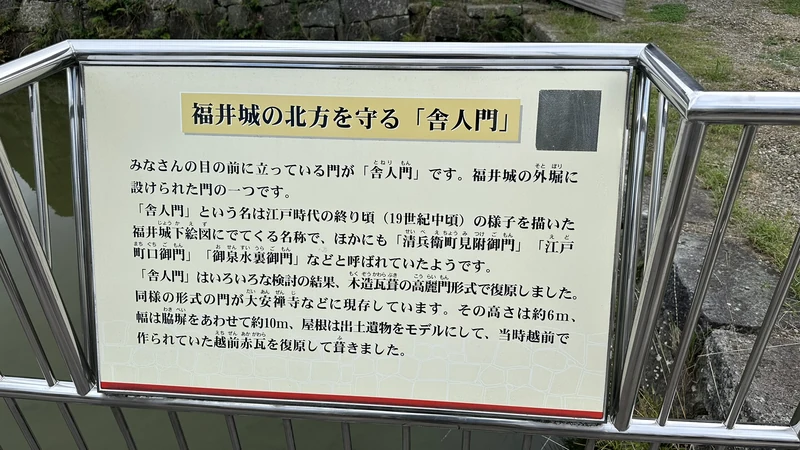
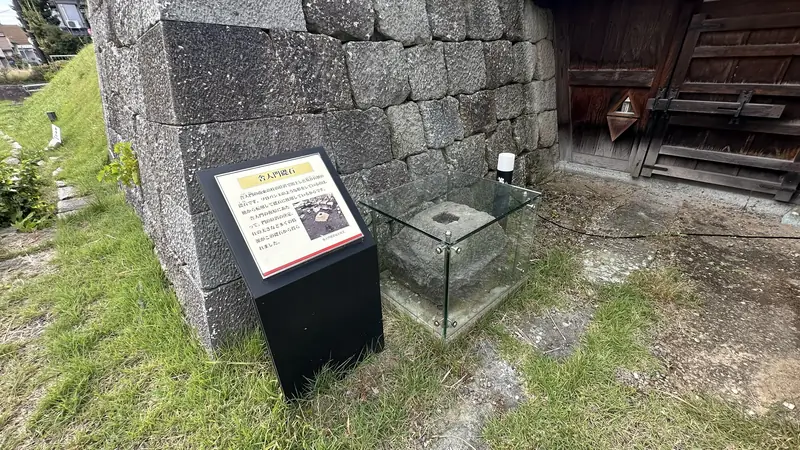
North of Fukui Castle stands the reconstructed Toneri Gate, rebuilt from archaeological evidence. A short walk on is the Fukui City Museum of Local History, covering the castle town and holding material connected to Katsuie, and beyond that lies Yokokan Garden — formerly the Goshimizu Yashiki, a villa and strolling garden used by the Matsudaira lords of the Fukui domain during the Edo period, and designated a national Place of Scenic Beauty in 1982. Stone walls and moats only tell you so much about a castle town. These three stops fill in the rest.
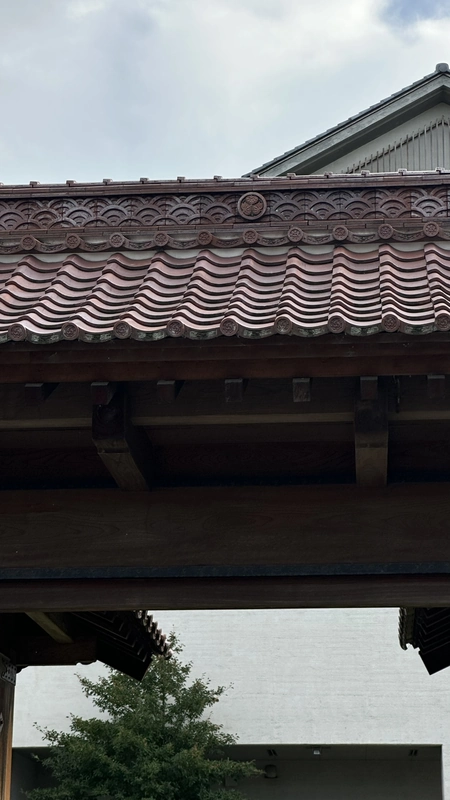
This site marks the gate that once guarded the northern approach to Fukui Castle. A gate roughly 6 metres high and 10 metres wide has been rebuilt on the excavated foundation stones, roofed with Echizen red tiles — a regional ceramic tile from this part of the country, which was known as Echizen Province before the prefectures were drawn. Note that the gate is a modern reconstruction based on archaeological findings, not the original.


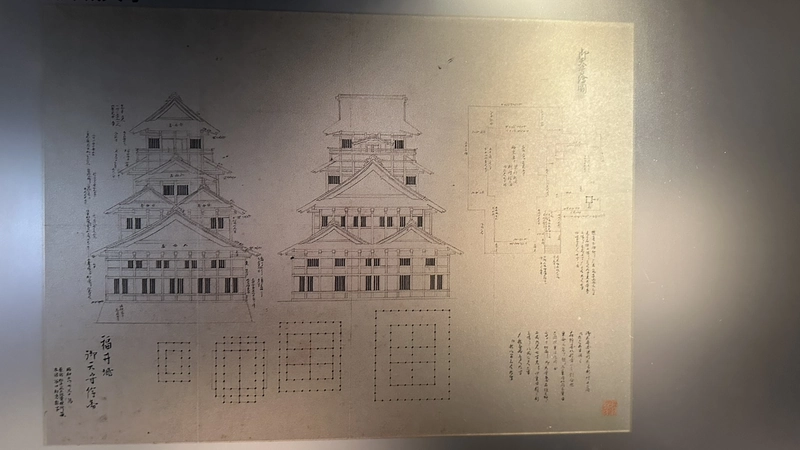
The museum covers the history of the Fukui Castle area and displays material connected to Katsuie, along with a scale model reconstructing the castle’s main enclosure. The seated figure outside is Matsudaira Shungaku, the reforming lord of Fukui in the last decades of the shogunate. It’s open 9am to 7pm (5pm from November 6 to the end of February; last entry 30 minutes before closing), with no regular closing day, closed only over the New Year holiday and during exhibition changeovers. Admission is 220 yen (a combined ticket with Yokokan Garden is 350 yen), free for middle-school-age visitors and younger, those 70 and older, and holders of a disability certificate. It’s about a 15-minute walk from Fukui Station, with free parking available.



A strolling pond garden built as a retreat for the Matsudaira lords of the Fukui domain in the Edo period, designated a national Place of Scenic Beauty in 1982 for how well it preserves its original form. It’s open 9am to 7pm from March 1 to November 5, and 9am to 5pm from November 6 to the end of February (last entry 30 minutes before closing); it closes only over the New Year holiday (December 28-January 4). Admission is 220 yen (a combined ticket with the museum is 350 yen).


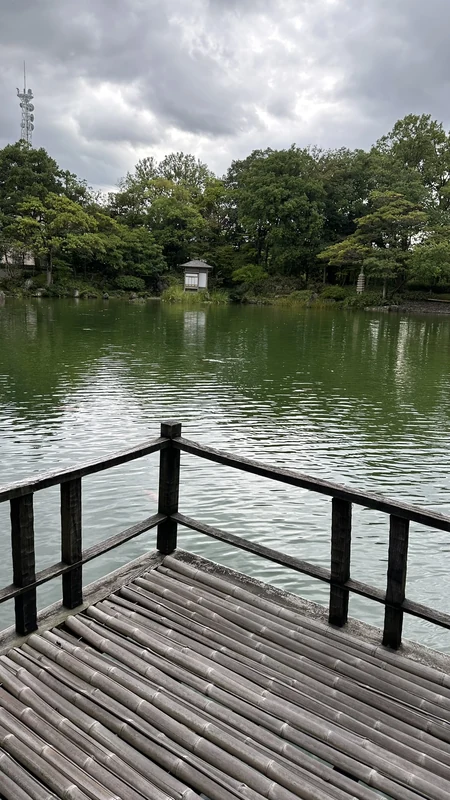
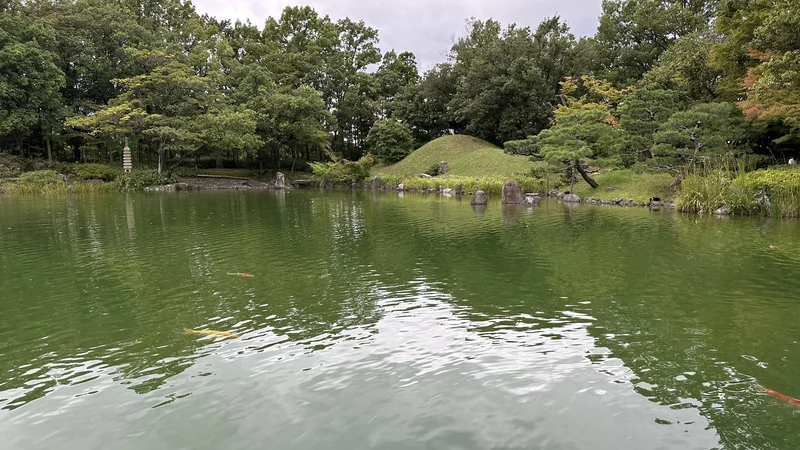


Tap an image to enlarge it. Hours, closures, and admission fees can change, so it’s worth checking the official sites before you go.
Connection to the NHK drama “Toyotomi Kyodai!”
Every year NHK, Japan’s public broadcaster, produces a year-long historical drama known as a Taiga drama; the 2026 series is “Toyotomi Kyodai!” (“Toyotomi Brothers!”). It reaches the Battle of Shizugatake and the fall of Kitanosho Castle in episodes 32 and 33, the latter subtitled “Farewell at Kitanosho Castle” — which makes these ruins the place where that thread of the story ends. If you want the battlefield itself, it is over the mountains in Shiga Prefecture, where the Shizugatake Sengoku Station and the free exhibitions at Kinomoto cover the campaign. Drama and history do not always agree, so treat what stands on site as the historical record rather than a set from the series.
Based on an on-site visit in October 2025. This is the author’s personal ranking, not an official recommended order from Kitanosho Castle Ruins, Fukui Castle, or Saikoji Temple.
A roughly 5-minute walk from Fukui Station’s north exit. The statues, stone monument, and excavated-foundation marker can be seen in just a few minutes, making this the most efficient starting point.
Free admission, about 15 minutes, with a wall timeline laying out Kitanosho Castle’s history and how it differs from Fukui Castle. Come here first and everything you see afterwards makes more sense.
Right next to Shibata Park, so it costs you almost no extra walking. This is also where you collect the goshuin castle stamp.
The stone walls, moat and reconstructed Goroka Bridge make this the most substantial castle site of the group, though it is a walk from Kitanosho Castle Ruins. The Hitsujisaru Turret corner is still under reconstruction (expected around 2029), so that section is mostly a view over scaffolding and stone.
Visiting hours are 12pm-4pm by advance arrangement, and it is about a 17-minute walk from Fukui Station, further out than everything else here. This is where Katsuie and Oichi actually lie, so make the detour if the day allows it — but between the narrow window and the phone call you have to make first, it is the one stop to drop if time is genuinely short.
Frequently asked questions
No. Kitanosho Castle was built by Shibata Katsuie in 1575 and burned down in 1583. The Fukui Castle visitors see today is a different castle, built on the same site from 1601 onward by Yuki Hideyasu.
It’s about a 5-minute walk from the north exit of JR Fukui Station.
Part of the excavated stone foundations, statues of Shibata Katsuie, Lady Oichi, and their three daughters, museum displays, and Shibata Shrine and Sanshimai Shrine. A short distance away, Fukui Castle’s stone walls, moat, and reconstructed Goroka Bridge, and Saikoji Temple, where Katsuie and Oichi are buried, are also worth seeing.
At Saikoji Temple, about a 17-minute walk from Fukui Station. Visiting hours are 12pm-4pm by advance arrangement, with a 300 yen admission fee (worth confirming the fee before you visit).
Yes, at Shibata Shrine. Designs and reception hours can change, so it’s worth checking before you visit.
Yes, episodes 32-33 of the 2026 series depict the Battle of Shizugatake and the fall of Kitanosho Castle.
Related reading
If this guide helped you plan a trip to Fukui, a small contribution helps keep these guides going.
Buy me a coffee


comment