


3 Temples Linked to Nobunaga and Azuchi Castle | Chokoji, Saikoji and Kotakuji
Azuchi Castle, the "phantom castle" that burned down in 1582, survives today mostly as foundation stones. Some of the buildings that once stood on Mt. Azuchi were relocated outside the castle and have been preserved ever since. Chokoji Temple retains a front gate confirmed to be Sokenji Temple's former back gate, now a Shiga Prefecture Tangible Cultural Property.
Azuchi Castle, Oda Nobunaga's fortress in Omi Province (roughly present-day Shiga Prefecture, between Kyoto and Nagoya), burned down in 1582 and today survives mainly as a hillside of foundation stones. Some of the buildings that once stood on Mt. Azuchi, however, were relocated outside the castle after the fire and have been preserved ever since. Chokoji Temple retains a front gate confirmed to be the former back gate of Sokenji Temple, the temple Nobunaga built inside Azuchi Castle itself, now a Shiga Prefecture Tangible Cultural Property; Saikoji Temple preserves the history of Nobunaga and the Azuchi Shūron religious debate; and Kotakuji Temple holds a tradition that its gate was moved from Sokenji Temple. Several other temples scattered around the wider region also carry a deep connection to Nobunaga's history, even though they lie well outside Azuchi Castle's grounds.
This page introduces three temples outside Azuchi's town center that are tied to Azuchi Castle's history, with photos, maps, and firsthand visit notes. These are places where the castle's history quietly continues on — something the ruins themselves, with only their foundation stones left, can no longer show.
Temples Connected to Nobunaga (Beyond Azuchi Town)
① Chokoji Temple (超光寺)
A Jodo Shinshu temple with the relocated rear gate of Sokenji, Nobunaga's family temple
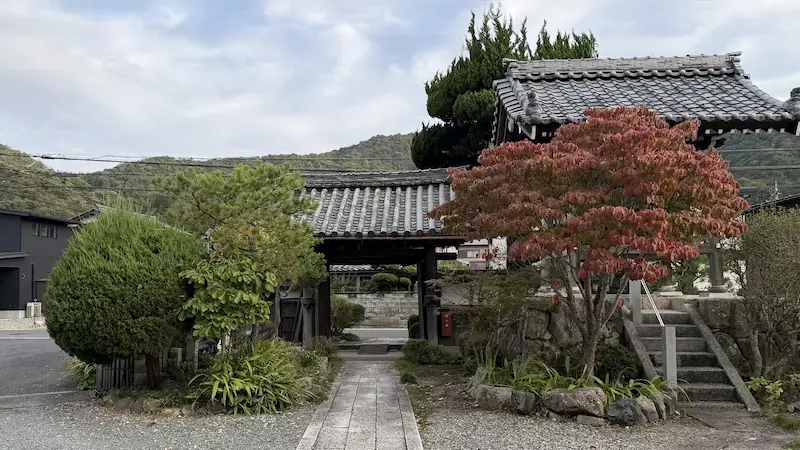
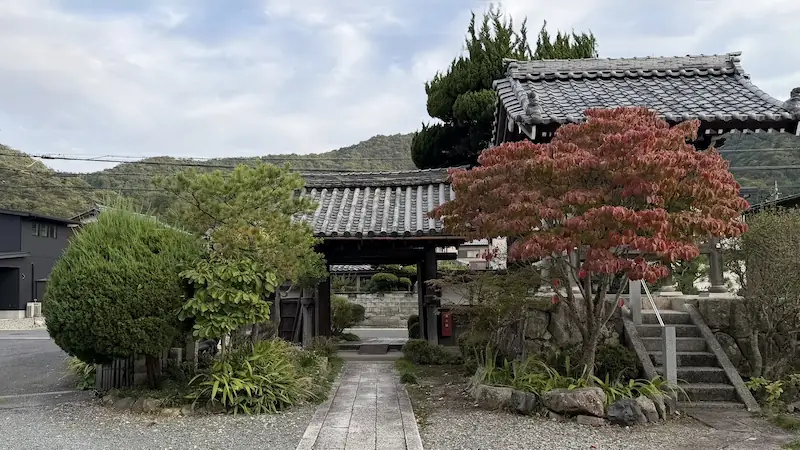
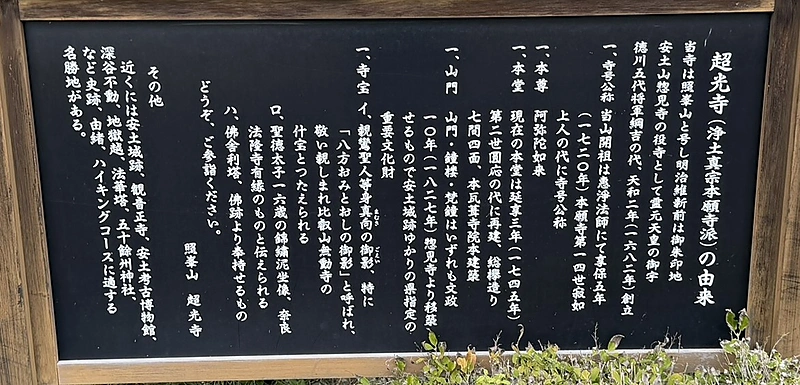
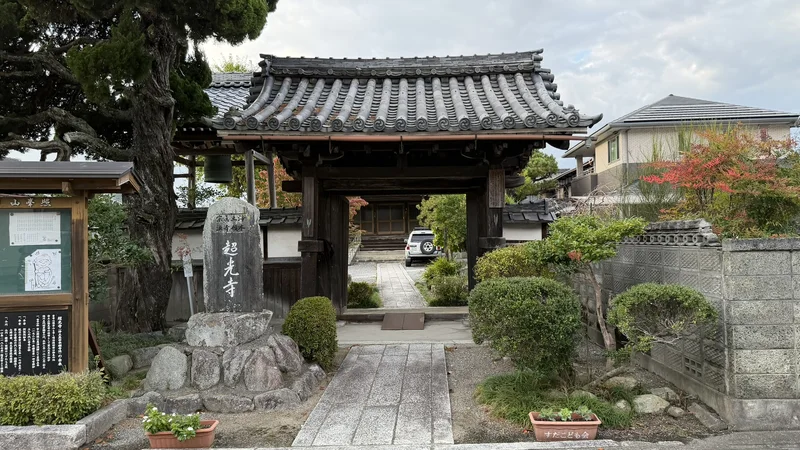
Chokoji Temple (超光寺, Chōkō-ji) is a Jodo Shinshu Honganji-ha temple in Higashiomi City, Shiga Prefecture. Its front gate is confirmed to be the former back gate — sometimes called the "kitchen gate" — of Sokenji Temple, the temple complex Nobunaga built inside Azuchi Castle. Sokenji Temple's back gate was relocated to Chokoji Temple in the early Meiji era and now serves as its front gate. It's a rare case of a building from Sokenji Temple's former temple complex surviving intact, keeping Oda Nobunaga's history alive today. Like the surviving three-story pagoda and Niō Gate of Sokenji Temple still standing within the Azuchi Castle ruins, this gate was once part of a building on Mt. Azuchi — making it the best-documented example of a building from Sokenji Temple's former temple complex surviving outside the castle grounds.
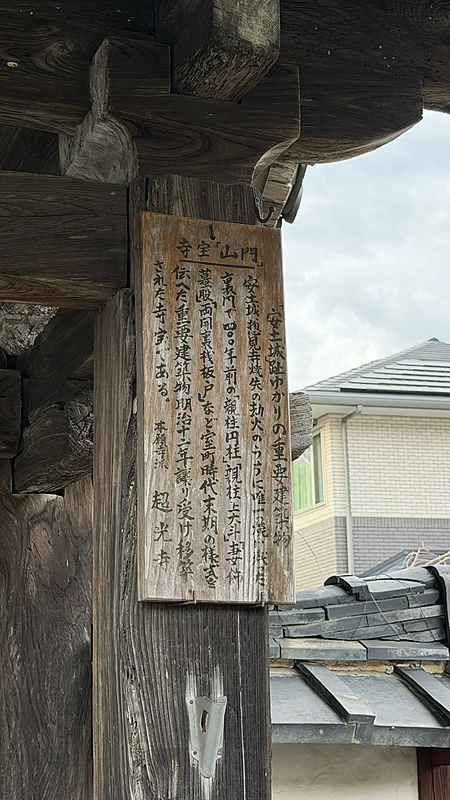
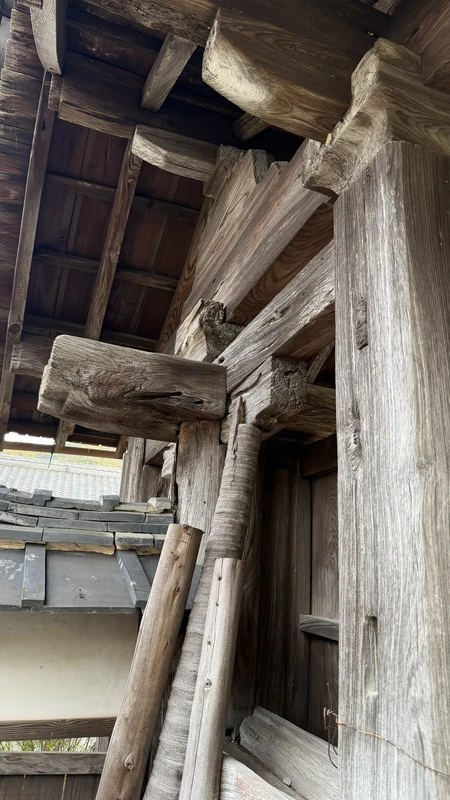
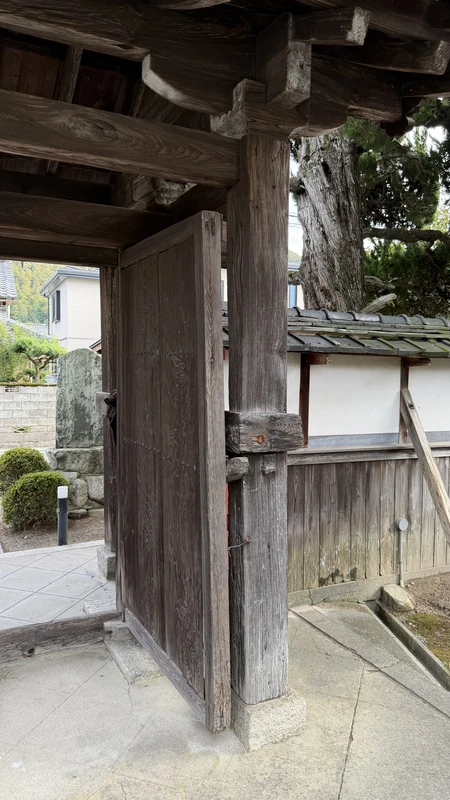
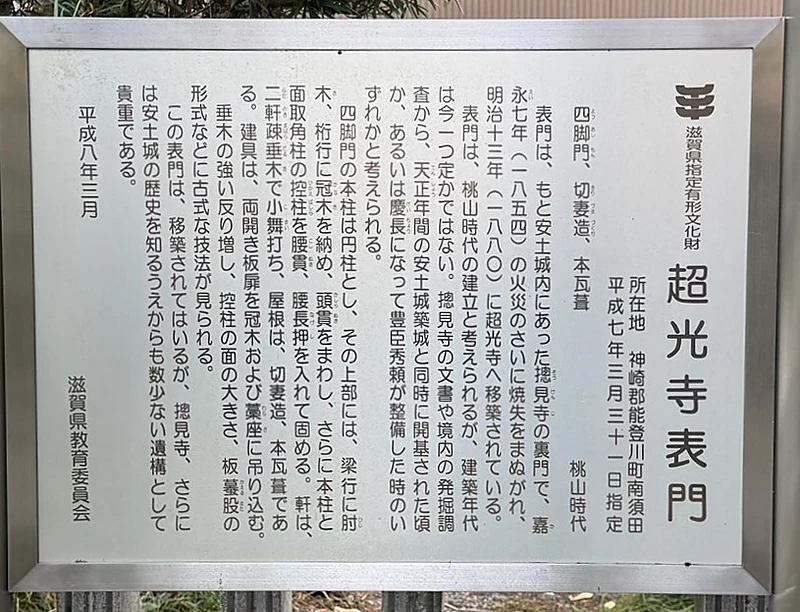
Tap any photo to enlarge
- The main gate (former Sokenji rear gate): This gate is confirmed to be Sokenji Temple's former back gate. As for when it was built, some believe it dates to Nobunaga's time, while others believe it was built later, when Toyotomi Hideyori restored the temple complex. Records such as ridge-beam inscriptions (munafuda) confirm the relocation, and the gate is designated a Shiga Prefecture Tangible Cultural Property.
- The Ibuki juniper tree: An estimated 200-year-old tree standing beside the gate, adding to the sense of history.
- Momoyama-era craftsmanship: The old roof tiles and timber joinery offer a rare, close-up look at the carpentry skills of Nobunaga's era, the Momoyama period (late 16th century).
Quick visit: about 15 minutes / Unhurried visit: about 30 minutes
🗺 Address: 343 Minamisuda-cho, Higashiomi City, Shiga Prefecture (滋賀県東近江市南須田町343)
🚶 Access: 40-minute walk (2.8 km) from Azuchi Station, or about 16 minutes on foot from Ōmi Railway's Aichigawa Station (愛知川駅) — a car is recommended
Recommendation: Historical Value ★★★ / Visual Appeal ★★ / Experience Value ★★
| Relocated | Early Meiji era |
|---|---|
| Origin | Sokenji Temple's back gate ("kitchen gate"), once part of a building on Mt. Azuchi |
| Cultural Property Status | Shiga Prefecture Tangible Cultural Property |
| Sect | Jodo Shinshu Honganji-ha |
| Location | 343 Minamisuda-cho, Higashiomi City, Shiga Prefecture |
Azuchi Castle ruins guide materials / Shiga Prefecture cultural property designation records
- The only surviving gate: Sokenji Temple's main hall was destroyed by fire in 1854, and only the rear gate — because it had already been relocated — survived. Together with the temple's three-story pagoda and Niō Gate, it's one of the few architectural remnants directly tied to Azuchi Castle.
- Far from the castle site: It's extremely rare for a building from Sokenji Temple's former temple complex to survive intact this far from the original site.
- Nobunaga's family temple: Sokenji Temple was founded by Nobunaga himself as his own funerary temple, so this gate is a physical link to his era.
② Saikoji Temple (西光寺)
A Jodo-shu temple granted to the monk who won the Azuchi Shūron debate — still home to Nobunaga's memorial monument
Saikoji Temple (西光寺, Saikō-ji) traces its origin to land Oda Nobunaga granted to the priest Jōan (貞安上人), leader of the winning side in the Azuchi Shūron — a public religious debate Nobunaga arranged in 1579 (Tenshō 7) between the Jōdo (Pure Land) and Nichiren sects. Accounts like the Shinchō-kōki chronicle describe the Pure Land (Jōdo) sect as the winning side; this debate is said to be the reason Priest Jōan was later granted land for a temple. Toyotomi Hidetsugu, Hideyoshi's nephew and adopted heir, later moved the temple to its present site in Omihachiman City when he laid out the castle town below Hachimanyama Castle, making it a temple of prayer for his clan. The temple holds an unusually rich collection of cultural properties, including a memorial monument to Nobunaga, a painting attributed to the renowned Edo-period painter Maruyama Ōkyo, "Reeds and Carp" (Ashigoi-zu, a City Designated Cultural Property), and a stone lantern traditionally attributed to the tea master and garden designer Kobori Enshū. Since viewing availability for these temple treasures varies by season, check in advance if you'd like to see the interior.
- Nobunaga's memorial monument: A memorial stone dedicated to Oda Nobunaga, where many visitors still stop to pay their respects.
- "Reeds and Carp" (Ashigoi-zu), a painting attributed to Maruyama Ōkyo: A City Designated Cultural Property, painted with remarkably delicate brushwork. Viewing availability varies by season, so check in advance.
- Garden and temple halls: The main hall, abbot's quarters, and bell tower form a well-ordered complex with seasonal scenery year-round.
Quick visit: about 30 minutes / Unhurried visit: about 1–1.5 hours
🗺 Address: 726 Nakamura-cho, Omihachiman City, Shiga Prefecture (滋賀県近江八幡市中村町726)
🚶 Access: About a 23-minute walk (1.7 km) from Omihachiman Station
Recommendation: Historical Value ★★★ / Visual Appeal ★★ / Experience Value ★★
| Founded | 1579 (Tenshō 7) |
|---|---|
| Founder | Priest Jōan, leading monk on the winning, Jodo-shu side of the Azuchi Shūron |
| Relocated | Moved to Omihachiman by Toyotomi Hidetsugu |
| Sect | Jodo-shu (Pure Land) |
| Cultural Property Status | Multiple national and city designated cultural properties |
| Location | 726 Nakamura-cho, Omihachiman City, Shiga Prefecture |
Azuchi Castle ruins guide materials / sources on the Azuchi Shūron debate
- What was the Azuchi Shūron? In 1579, Nobunaga presided over a formal debate between Jōdo-shu (Pure Land) and Nichiren-shu (Hokke) Buddhist priests. Accounts like the Shinchō-kōki chronicle describe the Jōdo side as the winning side. This debate is said to be the reason Nobunaga rewarded the leading monk, Priest Jōan, with land for a temple.
- The inscription on the monument: It bears a line believed to reflect Nobunaga's favorite verse — "Fifty years under heaven is but a fleeting dream" (人間五十年 下天の内をくらぶれば 夢幻のごとくなり), from a passage on the shortness of life.
- Hidetsugu's patronage: When Hidetsugu developed the castle town below Hachimanyama Castle, he relocated the temple to its present site and made it a temple of prayer for his family, helping it flourish.
③ Daihizan Kotakuji (大悲山光澤寺)
A quiet mountain-village temple with a local tradition that its gate was moved from Sokenji Temple
Daihizan Kotakuji (大悲山光澤寺, Kōtaku-ji) is a Shinshu Otani-ha temple in Nagano, Aisho Town, Echi District, Shiga Prefecture. Documentary evidence confirming the gate's relocation is limited, but local tradition holds that it was moved from Sokenji Temple inside Azuchi Castle. This is a good spot for those who want to trace not just confirmed physical remains, but the memories of Azuchi Castle passed down through local storytelling.
- The main gate (relocation tradition): Said to have been moved here from Sokenji Temple inside the castle. While unconfirmed, it's an intriguing gate given its claimed connection to the castle's history.
- A quiet temple ground and main hall: A calm space well suited to quiet reflection.
- Seasonal charm: Fresh green leaves in spring and autumn foliage add extra atmosphere to this mountain-village setting.
Quick visit: about 5 minutes / Unhurried visit: about 20 minutes
🗺 Address: 786 Nagano, Aisho Town, Echi District, Shiga Prefecture (滋賀県愛知郡愛荘町長野786)
🚶 Access: About a 16-minute walk (1.1 km) from Ōmi Railway's Aichigawa Station (愛知川駅)
Recommendation: Historical Value ★ / Visual Appeal ★ / Experience Value ★
| Built | Unknown (pre-modern era) |
|---|---|
| Sect | Shinshu Otani-ha |
| Tradition | The main gate is said to have been relocated from Sokenji Temple inside Azuchi Castle |
| Documentation | Tradition-level only (unlike Chokoji Temple, no cultural property designation) |
| Location | 786 Nagano, Aisho Town, Echi District, Shiga Prefecture |
Azuchi Castle ruins guide materials (recorded as local tradition)
- The relocation tradition: The gate is said to have been moved from Sokenji Temple within Azuchi Castle, but detailed supporting documentation is limited.
- An off-the-beaten-path spot: Small in scale and rarely visited — a good stop if you're looking for a quiet moment along your route.
Frequently Asked Questions
Yes. All three temples are outside Azuchi's town center. Chokoji Temple is a 40-minute walk (2.8 km, car recommended) from Azuchi Station in Higashiomi City; Saikoji Temple is a 23-minute walk from Omihachiman Station in Omihachiman City; and Kotakuji Temple is a 16-minute walk from Ōmi Railway's Aichigawa Station in Aisho Town. A rental car or bus is the most practical way to reach them.
Yes. This gate is confirmed to be Sokenji Temple's former back gate, relocated from inside Azuchi Castle to Chokoji Temple in the early Meiji era, and it is designated a Shiga Prefecture Tangible Cultural Property. As for when it was built, some believe it dates to Nobunaga's time, while others believe it was built later, when Toyotomi Hideyori restored the temple complex. Records such as ridge-beam inscriptions confirm the relocation, making it one of the most reliably documented buildings from Azuchi Castle's era to survive outside the castle grounds.
Yes, the temple grounds are open to visitors free of charge. Along with Nobunaga's memorial monument, Saikoji Temple is also home to cultural properties such as a painting attributed to Maruyama Ōkyo, "Reeds and Carp" (Ashigoi-zu, a City Designated Cultural Property), and a stone lantern traditionally attributed to Kobori Enshū. Since viewing availability for these temple treasures varies by season, check in advance if you'd like to see the interior.
The Azuchi Shūron was a religious debate between the Jōdo-shu (Pure Land) and Nichiren-shu (Hokke) sects of Buddhism, held in 1579 (Tenshō 7) at Nobunaga's direction. It took place at Jōgon-in Temple (near Azuchi Station). Accounts like the Shinchō-kōki chronicle describe the Jōdo side as the winner. This debate is said to be the reason Saikoji Temple was founded, when Nobunaga granted temple land to Priest Jōan, the leading monk on the winning side.
For Kotakuji Temple, the relocation is only "said to have happened," at the level of local tradition. Unlike Chokoji Temple, there is limited detailed documentation to back it up, and the on-site information board itself presents it as tradition rather than confirmed fact. It's a worthwhile destination for dedicated history enthusiasts, but if you want a confirmed architectural remnant, Chokoji Temple should be your priority.
Chokoji Temple is about a 15–20 minute bicycle ride from the Azuchi Castle ruins, making it the most realistic option to pair with a same-day visit. Saikoji Temple (in Omihachiman City) and Kotakuji Temple (in Aisho Town) are farther from the castle ruins, so we'd recommend visiting them on a separate day or with a rental car.
More Sites Beyond Azuchi Castle's Walls
▶ Sokenji Temple's Three-Story Pagoda & Niō Gate: Walking Azuchi Castle's Two Surviving Important Cultural Properties — see the original Sokenji Temple grounds where the gates now standing at Chokoji and Kotakuji temples once came from
Back to the Complete Azuchi Castle Guide
☕ Support This Site
Following the Shogun is built on firsthand, on-the-ground research.
If this article was helpful, your support means a lot.

You can also support via the QR code
Information on this page is current as of March 2026. Please confirm visiting details directly with each temple before your visit. Photos on this page may not be reused without permission.
Back to the Homepage



comment