


Anegawa Battlefield—Free Admission, Cycling Highlights, and Complete Access Guide
The Anegawa Battlefield in Nagahama, Shiga Prefecture, is where the allied forces of Oda Nobunaga and Tokugawa Ieyasu clashed with the allied forces of Azai Nagamasa and Asakura Yoshikage on June 28, 1570. Today, the area is a quiet landscape of fields and riverbanks, yet fifteen numbered explanatory signboards are installed throughout the district. Highlights include Nobunaga’s Jinkui no Yanagi and the 1,300-year-old giant cedar at Nagareoka Shrine. Admission is free, and parking is available. Based on an actual visit, this guide explains how to get there, what to see, and how best to explore the battlefield.
For details on all fifteen on-site signboards, see A Complete Field Record of the Anegawa Battlefield Signboards (Nos. 1–15, with panoramic photos).
| Location | Nomura-cho, Higashikozaka-cho, and surrounding areas of Nagahama City, Shiga Prefecture, across the Anegawa River basin |
|---|---|
| Access | About 20–30 minutes by rental bicycle from JR Nagahama Station (recommended). By car, about 15 minutes from Nagahama IC on the Hokuriku Expressway. |
| Parking | Visitor parking is available near Chihara Park in Mita-cho. A small parking space is also available near the main monument by the north end of Nomura Bridge. *Vehicle traffic on Nomura Bridge is restricted due to aging infrastructure. |
| Time Needed | About 1 hour by bicycle for the main spots; 2–3 hours if you read all explanatory boards carefully |
| Admission | Free |
| Restrooms | No dedicated restrooms inside the battlefield area. Use facilities around Nagahama Station or a roadside station before visiting. |
| Best Season | Spring for cherry blossoms; autumn for views of rice fields and Mount Ibuki. In summer, the sunlight is strong, so bring a hat and drinks. |
What Is the Anegawa Battlefield?—The 1570 Showdown Between Nobunaga and the Azai–Asakura Alliance
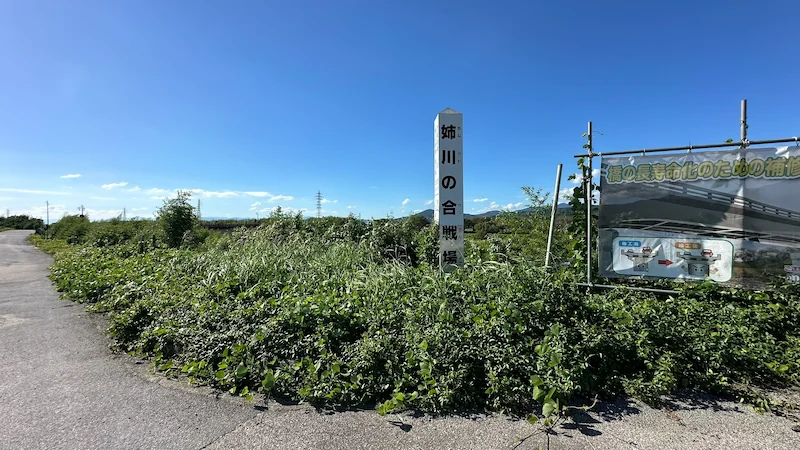
Beside the Anegawa River in Nagahama, Shiga Prefecture, rice fields spread wide beneath an open sky, with the gentle ridgeline of Mount Ibuki in the distance. Until you stand there in person, it can be hard to believe that this quiet, beautiful place was once one of the largest open-field battle sites of Japan’s Sengoku period.
Stone monuments, numbered explanatory boards, and the 1,300-year-old giant cedar at Nagareoka Shrine all remain within the open rural landscape. The memories of the Sengoku era are carved quietly into the land.
The Battle of Anegawa—How the Fighting Unfolded and Where the Armies Took Position
The Battle of Anegawa was an open-field battle fought on June 28, 1570, according to the old lunar calendar, when the allied forces of Oda Nobunaga and Tokugawa Ieyasu clashed with the allied forces of Azai Nagamasa and Asakura Yoshikage across the Anegawa River.
The previous year, Nobunaga had been placed in grave danger when Azai Nagamasa—his ally and the husband of his younger sister, Oichi—suddenly turned against him, cutting off his retreat during the campaign against the Asakura clan. This episode is known as the Retreat from Kanegasaki. Seeking both revenge and the chance to strike the Azai–Asakura forces decisively, Nobunaga joined forces with Tokugawa Ieyasu and advanced into northern Omi, taking position on the south bank of the Anegawa River.
Facing them, the Azai–Asakura allied army deployed on the north bank. The Asakura army held the right wing, while the Azai army held the left. The Azai forces collided fiercely with Ieyasu’s Tokugawa troops. At first, the Azai army pressed Ieyasu hard, and it is said that the Tokugawa forces were pushed back so severely that even their thirteen defensive lines were broken. But as Nobunaga’s main force advanced and mobile units on the Oda side struck from the flank, the tide turned. The Azai–Asakura alliance was routed, and later tradition says that the waters of the Anegawa ran red with blood.
After this defeat, Azai Nagamasa withdrew to Odani Castle. He continued his struggle against Nobunaga, but in 1573, when Odani Castle fell, Nagamasa took his own life.
The Three Azai Sisters Afterward—How the Battle Changed Their Fate
The defeat at the Battle of Anegawa dramatically changed the lives of Azai Nagamasa’s daughters—Chacha, Hatsu, and Go, known collectively as the Three Azai Sisters. After their father Nagamasa died by suicide at Odani Castle, the three sisters and their mother, Oichi, were taken in by the Oda side.
She became a consort of Toyotomi Hideyoshi and gave birth to Toyotomi Hideyori. She died by suicide with Hideyori during the Summer Siege of Osaka in 1615, carrying the final fate of the Toyotomi family.
She married Kyogoku Takatsugu. Around the time of Sekigahara, she served as a mediator, and during the Siege of Osaka she worked tirelessly in peace negotiations. She lived into the early Edo period.
She became the lawful wife of Tokugawa Hidetada and bore many children, including Iemitsu, the third Tokugawa shogun. From behind the scenes, she helped support the power base of the Edo shogunate.
If the Azai clan had not been defeated at Anegawa, the lives of the three sisters—and by extension, the rise of the Toyotomi regime and the birth of the Edo shogunate—might have unfolded very differently. Imagining those historical “what ifs” is one of the great rewards of standing on this battlefield.
Highlights—Eight Key Spots to Explore by Bicycle
① Historic Site “Anegawa Battlefield” Main Marker and Parking Area
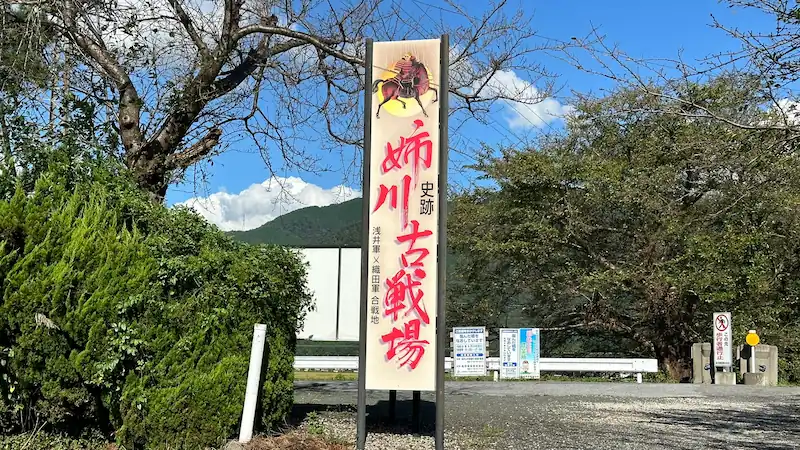
North end of Nomura Bridge—the signboards and information panels that mark the start of the battlefield route
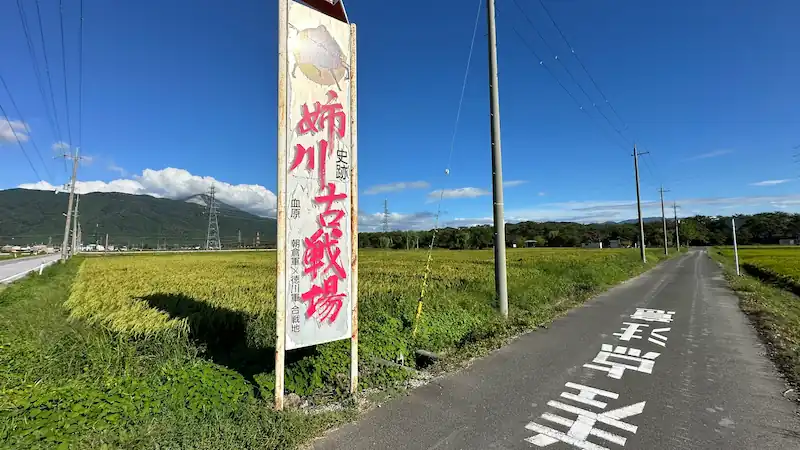
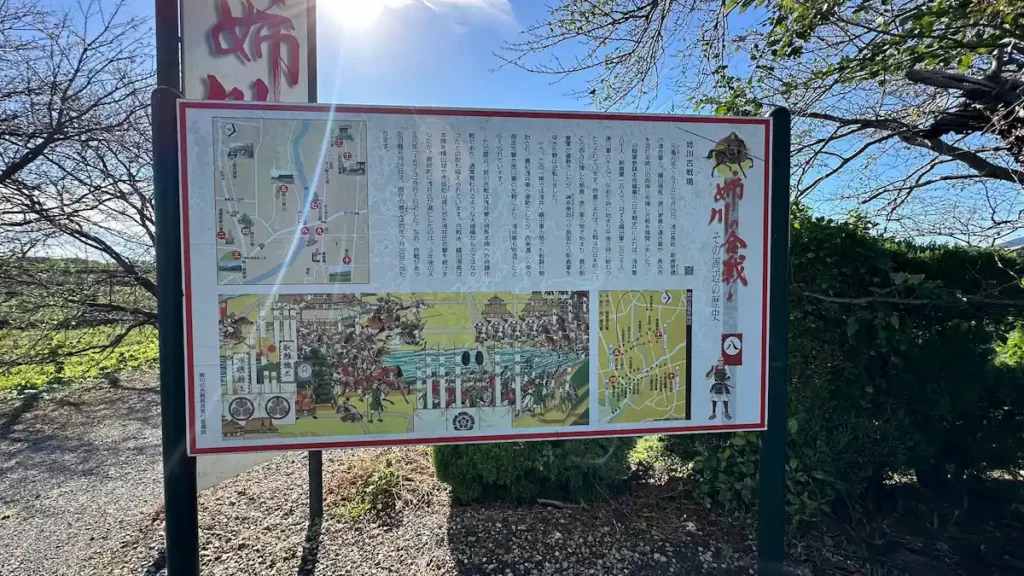
The large vertical sign reading “Historic Site: Anegawa Battlefield, Azai vs. Oda Army Battle Site” is the main landmark. This is where the battlefield walk begins. Several information panels titled “The Battle of Anegawa and the History of the Surrounding Area” stand nearby, explaining the course of the battle, troop formations, and historical illustrations.
There is also a small parking area here, making it a convenient base if you arrive by car. Because cyclists also pass along the nearby farm roads, please park with care and be mindful of the surroundings.
② Nobunaga’s Jinkui no Yanagi (Higashikozaka-cho)
The willow traditionally said to have been driven into the ground by Nobunaga as a camp stake
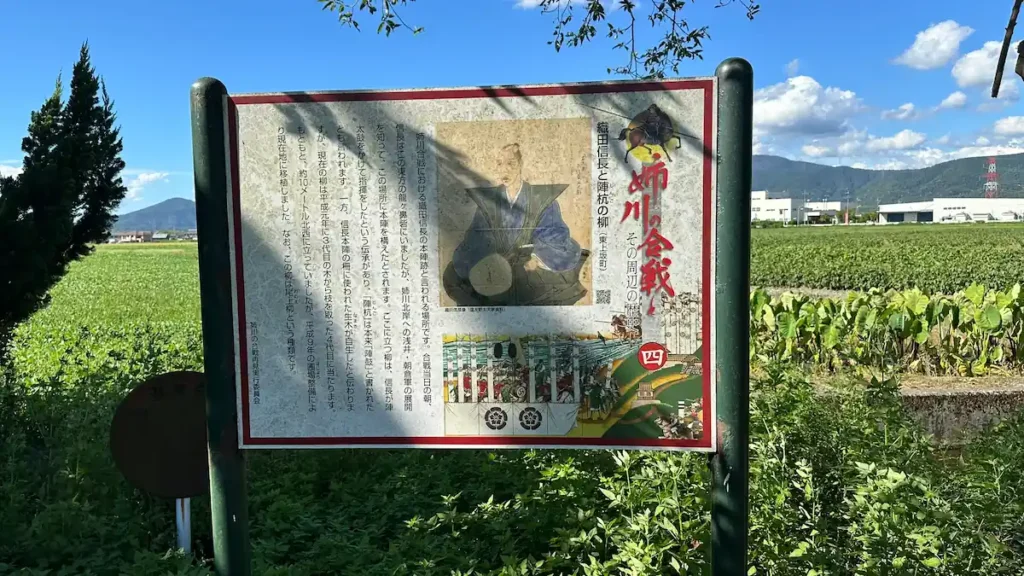
According to Explanatory Board ④, a willow tree stands near the shallows of the Anegawa River where Nobunaga is said to have driven in a camp stake. The present willow is several generations removed from the original, but it still grows on the site. The board includes a portrait of Nobunaga and an explanation of events on the morning of the battle.
Panoramic photo: Tap the image to experience the atmosphere on site.
Jinkui no Yanagi is tied to the tradition that a willow branch Nobunaga drove into the ground as a marker for his headquarters when crossing to the north bank of the Anegawa took root there. The current willow has been passed down through successive generations, making the site fascinating as a place where local memory itself has been preserved. The explanatory board also records the tradition that Nobunaga hung his war drum from the willow, offering a small glimpse of how he commanded at Anegawa.
This area is also regarded as one of the former shallow crossing points of the Anegawa during the battle, placing it among the hard-fought zones where the two armies crossed the river and collided.
③ Tokugawa Ieyasu and Okayama (Higashikozaka-cho)
Okayama, or “Katsuyama,” where Ieyasu established his camp, and the gilt lantern of Nagareoka Shrine
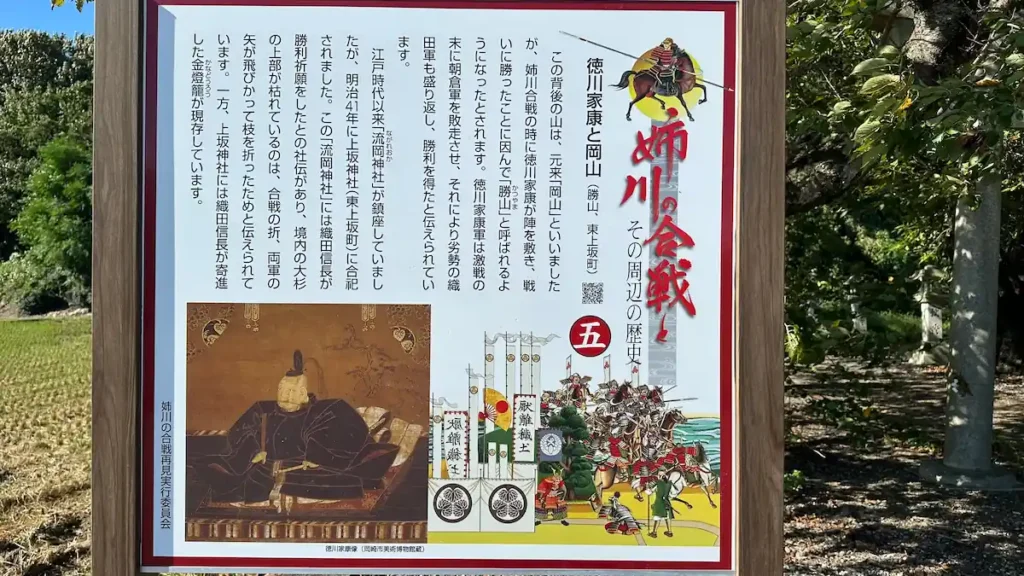
Explanatory Board ⑤ describes Okayama, where Tokugawa Ieyasu placed his camp during the battle. In the Edo period, the site also came to be called Katsuyama, or “Victory Mountain.” The board also explains Nagareoka Shrine, whose grounds are said to preserve a gilt lantern dedicated by Oda Nobunaga in gratitude for victory.
Panoramic photo: Tap the image to experience the atmosphere on site.
At the Battle of Anegawa, the army led by Tokugawa Ieyasu faced the large force commanded by Asakura Kagetake. At first, the numerically superior Asakura army held the advantage and pushed the Tokugawa forces back. Ieyasu, however, adopted a mobile tactic, ordering commanders such as Sakakibara Yasumasa to strike the Asakura flank. This reversed the situation and ultimately drove the Asakura army into retreat.
The place-name “Katsuyama,” or “Victory Mountain,” is said to have been bestowed by Ieyasu in later commemoration of his hard-won victory. The gilt lantern at Nagareoka Shrine is traditionally said to have been dedicated by Nobunaga in gratitude for the victory.
④ Nagareoka Shrine and the 1,300-Year-Old Giant Cedar
A life far older than the Sengoku age—a giant tree with a trunk circumference of 5.7 meters
Nagareoka Shrine stands quietly beside a farm road. After passing through the torii gate, you are greeted by a towering cedar about 30 meters tall, 5.7 meters in trunk circumference, and approximately 1,300 years old. The tree is designated as a preserved tree by Nagahama City, and according to the information board, the Oda–Tokugawa allied forces formed ranks here during the Battle of Anegawa.
Standing before the tree in person, I found its presence overwhelming. Even during the Sengoku period, it would already have been nearly 700 years old. The torii appears suddenly just after you turn off the farm road, and beyond it lies a still, sacred space dominated by this ancient cedar—one of the true highlights of the area.
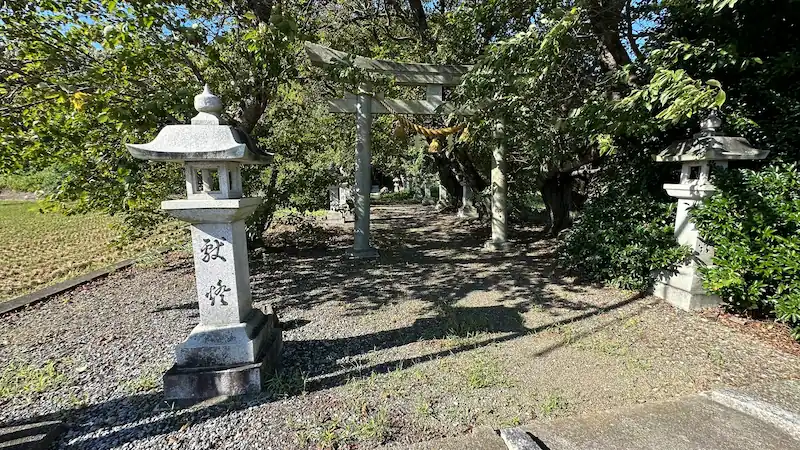
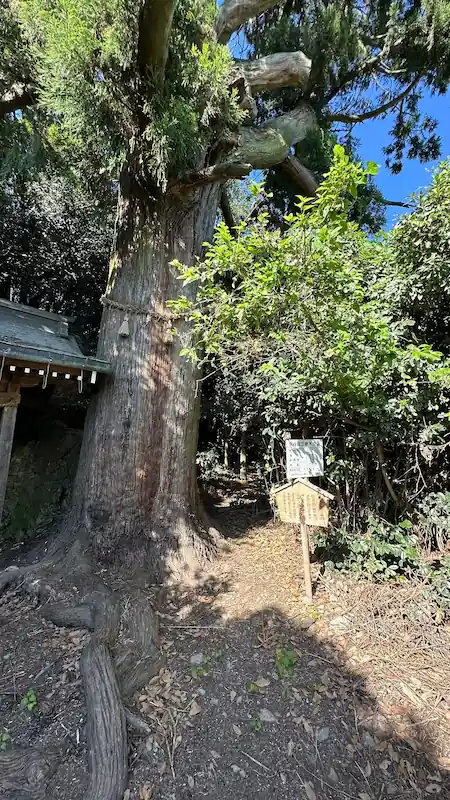
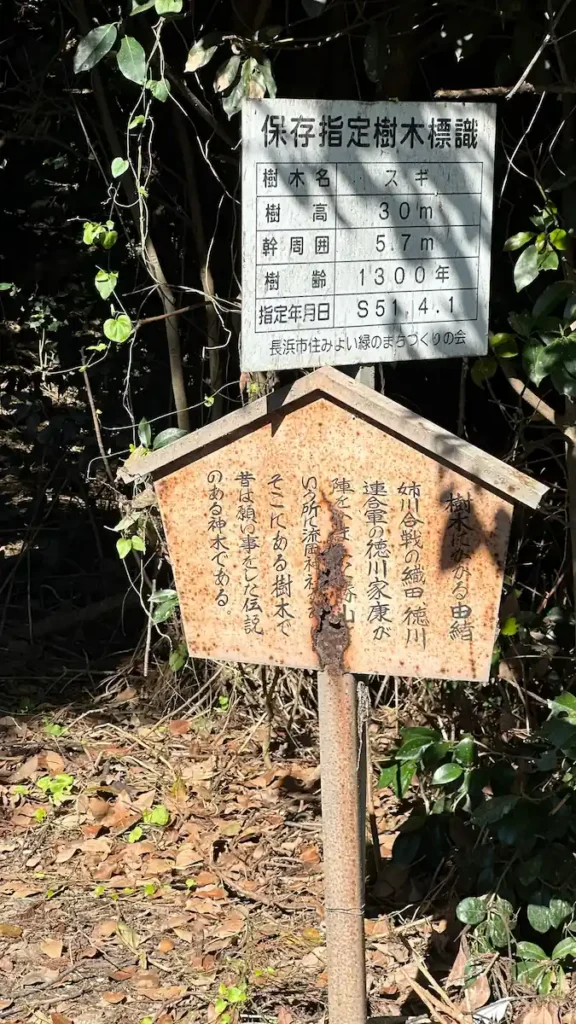
The cedar is believed to be about 1,300 years old, meaning it may have been planted around the Nara period in the 700s. By 1570, when the Battle of Anegawa was fought, it was already an ancient tree of roughly 870 years. In the age of Nobunaga, Ieyasu, and Azai Nagamasa, this cedar already stood in the same place with commanding presence.
Designated as a preserved tree by Nagahama City, it is accompanied by an on-site board explaining its measurements and preservation history. When paired with the tradition that the Oda–Tokugawa allied forces formed ranks here during the battle, the tree feels like a living witness to history.
⑤ Chihara Area and Explanatory Board (Nomura-cho)
“Chihara” and “Chigawa Bridge”—battle memories carved into local place-names
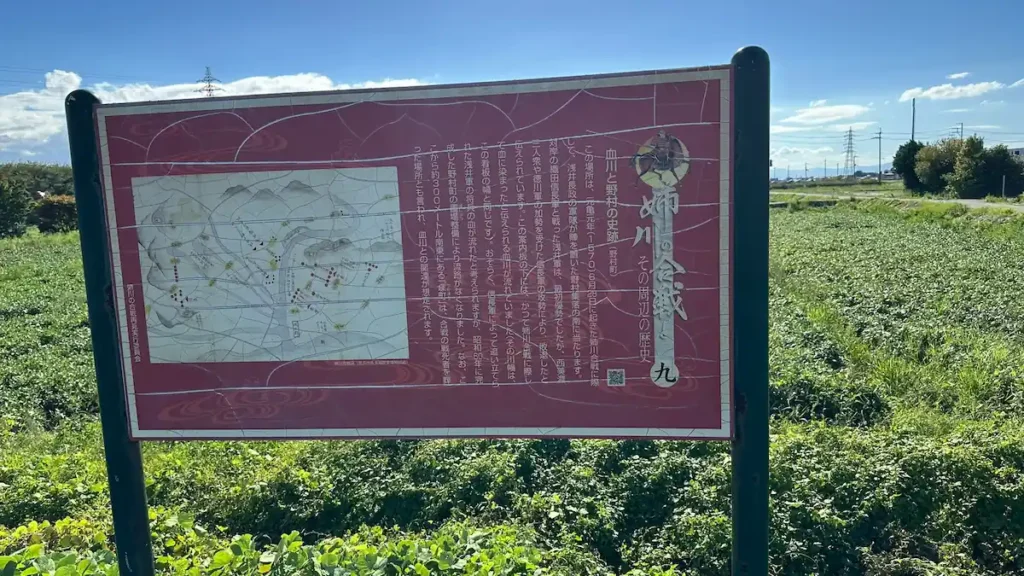
The explanatory board titled “Chigawa and the Historic Sites of Nomura: Chihara” stands amid the farmland of Nomura-cho. It describes the former course of the Anegawa River and the tradition that, after the battle, the riverbed was stained with blood. The local place-name Chihara, or “Field of Blood,” is said to preserve that memory. The surrounding area is open fields, with the board standing alone as a quiet trace of history.
This board stands along a farm road and rarely appears clearly in map apps. Rather than relying only on navigation, exploring slowly by bicycle and searching the farm roads is part of the on-site discovery.
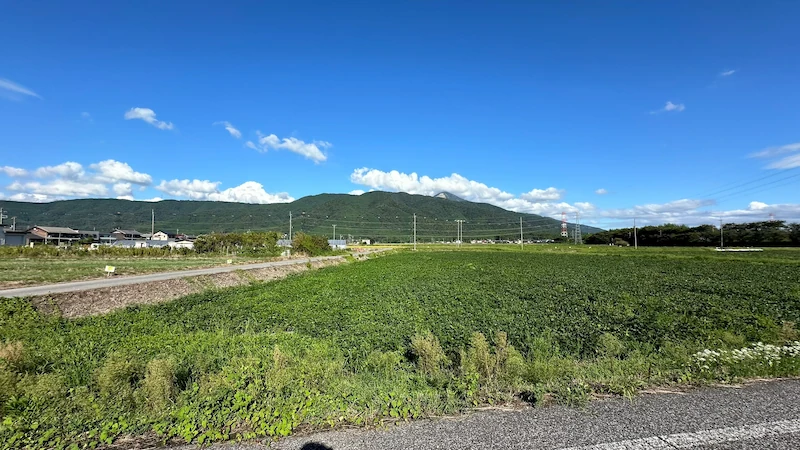
⑥ Anegawa River: Views from the River and Bridge
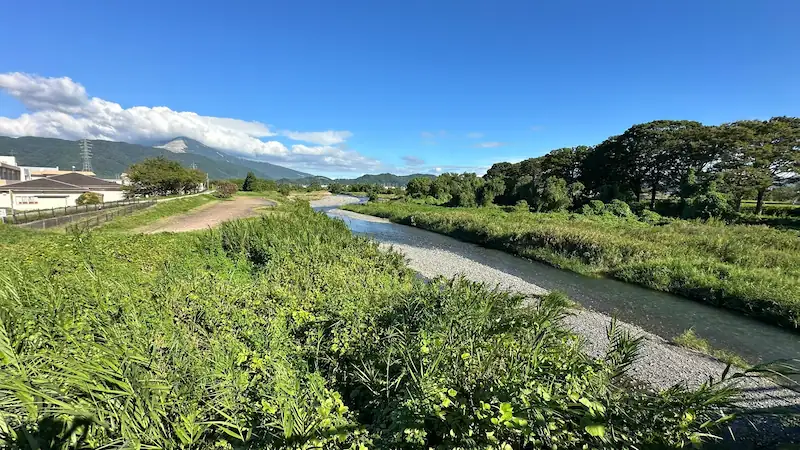
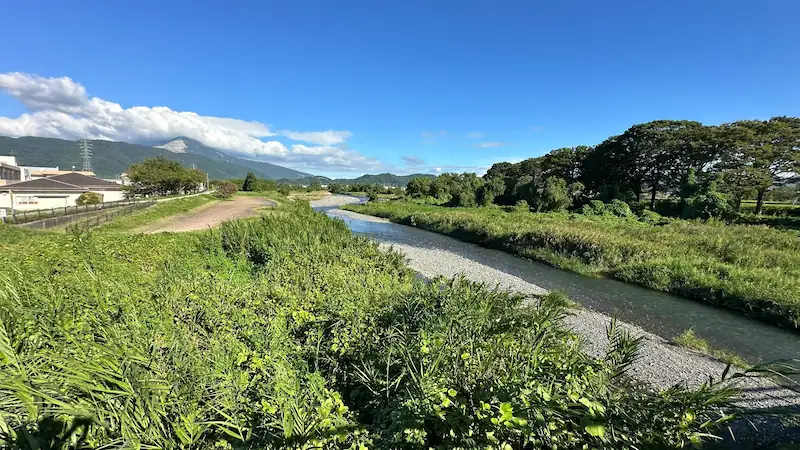
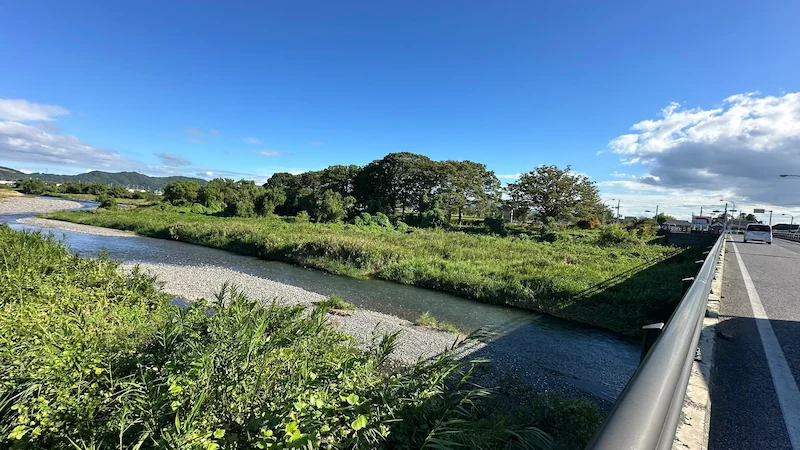
Looking toward Mount Ibuki and Mount Odani across the flow where the two armies once faced each other
The Anegawa River today is a calm stream lined by a maintained riverbed and gravel banks. From the bridge, you can see Mount Ibuki to the north and the ridgeline of Mount Odani to the south. Knowing that the two armies once faced each other across this river gives the peaceful rural scenery a different meaning.
If you visit in autumn, especially from September to October, the combination of golden rice fields and Mount Ibuki makes this one of the most photogenic viewpoints in the area.
⑦ Anegawa Battlefield Stone Monuments (Chihara / Azai-cho Side)
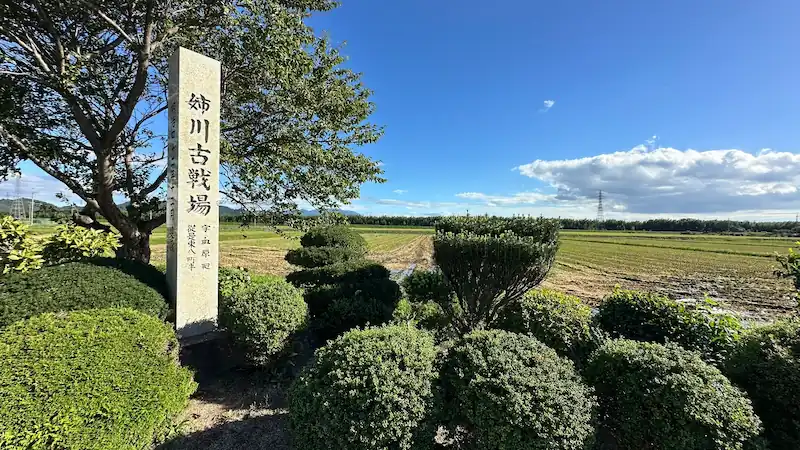
Quiet memorial and commemorative stones standing among the rice fields
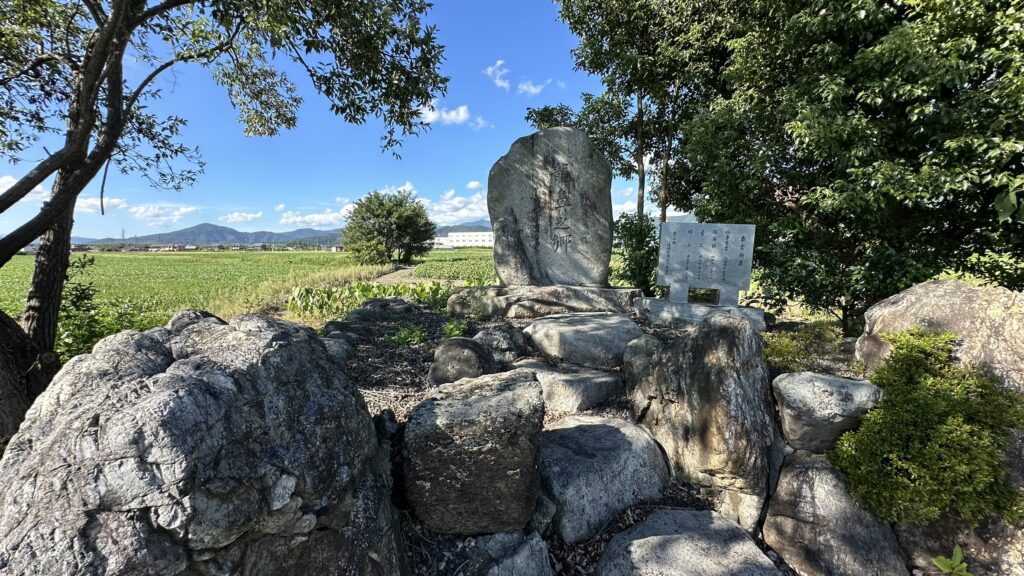
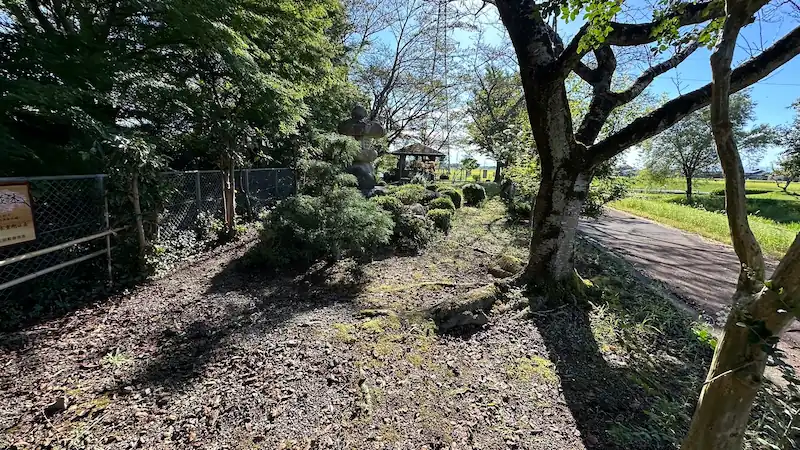
Several stone monuments inscribed “Anegawa Battlefield” stand in a small, maintained space beside the fields. An explanatory board installed by the former Azai Town Board of Education describes the outline of the battle and the extent of the battlefield. Against the backdrop of harvested rice fields, the orderly line of stones creates the atmosphere of a quiet place of remembrance.
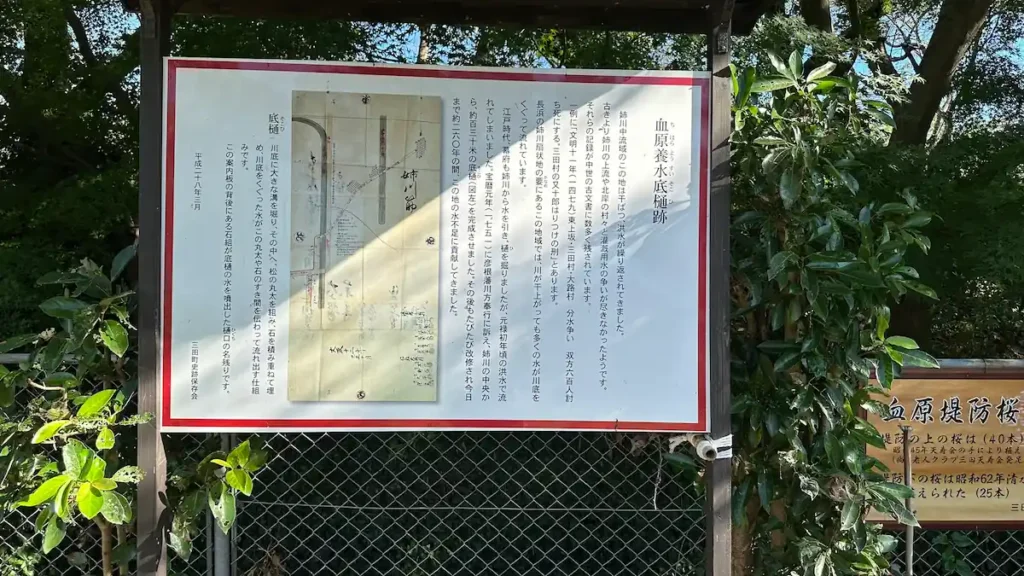
⑧ Chihara Irrigation Bottom Culvert Site
From battlefield to farmland—the history of irrigation water that supported the region from the Edo period onward
Apart from the history of the battle itself, the Anegawa basin also preserves traces of local flood control and irrigation. The explanatory board at the Chihara Irrigation Bottom Culvert Site describes the system of irrigation water and its development from the Edo period. It shows how this battlefield later became part of a water-management landscape that supported fertile farmland.
How to Tour the Anegawa Battlefield—Access and Cycling Route Guide
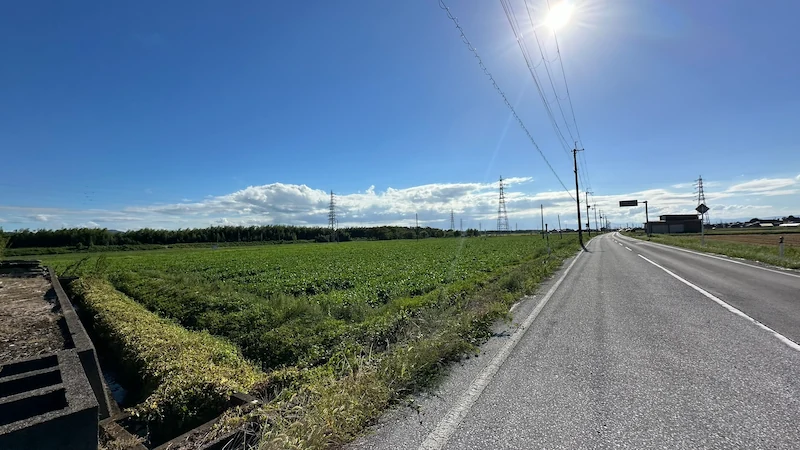
The Anegawa Battlefield is not a single concentrated site. Instead, explanatory boards, stone monuments, shrines, and other traces are scattered across a broad stretch of the Anegawa River basin. Fifteen numbered explanatory boards are installed, but many stand along farm roads or amid rice fields, so finding all of them is not easy.
🚲 Rental bicycles are the best option—farm roads that are difficult to enter by car are easy to explore by bicycle, and the act of riding slowly through the wide rural landscape while connecting each spot is itself a way to feel the scale and terrain of the battlefield. Plan on about one hour for the main spots.
Several rental bicycle options are available around Nagahama Station. The venues of the Northern Omi Toyotomi Expo are also within cycling distance, making it efficient to combine them into a broader Nagahama itinerary.
Recommended Route and Estimated Time
By bicycle, the most efficient route is to start at Nagahama Station, then visit the main monument near the north end of Nomura Bridge, Jinkui no Yanagi, the giant cedar at Nagareoka Shrine, Chihara, and the stone monument area. Riding along the ridges of the rice fields while searching for the explanatory boards lets you physically experience the breadth of the terrain.
- Main five spots (main monument, willow, shrine, Chihara, stone monument area): about 1 hour by bicycle
- All 15 explanatory boards, read carefully: about 2–3 hours by bicycle
- Total including the round trip from Nagahama Station: allow about 2.5–3 hours for a comfortable visit
Parking and Restroom Information
Parking: Visitor parking is available near Chihara Park in Mita-cho. A small space is also available near the main monument by the north end of Nomura Bridge. Because vehicle traffic on Nomura Bridge is restricted due to aging infrastructure, please follow the local signs.
Restrooms: There are no dedicated restroom facilities inside the battlefield area. It is strongly recommended to use facilities around Nagahama Station, the Nagahama Castle History Museum, or the Kohoku Mizudori Station roadside station before heading out. In summer, the farmland offers little shade, so bring extra drinks.
Toyotomi Brothers! and the Battle of Anegawa—Where Taiga Drama and History Intersect
The 2026 NHK Taiga drama Toyotomi Brothers! centers on the story of Hideyoshi and his younger brother Hidenaga. In 1570, when the Battle of Anegawa took place, Hideyoshi—then known as Kinoshita Tokichiro—was already emerging as one of Nobunaga’s trusted retainers. In the drama as well, the conflict with the Azai clan and the fate of the Three Azai Sisters are important narrative threads.
If the Azai clan had not been defeated at Anegawa, the lives of Chacha, later known as Yodo-dono, Hatsu, and Go might have unfolded very differently—as might the rise of the Toyotomi government and the birth of the Tokugawa shogunate. The Anegawa Battlefield is one of the historical backbones behind the drama’s world.
Recommended Nearby Spots
A separate detailed guide is available for all 15 numbered signboards installed on site, each personally verified, with historical data, 360-degree panoramic photos, and maps for every location.
A Complete Field Record of the Anegawa Battlefield Signboards (Nos. 1–15, with panoramic photos) →Frequently Asked Questions
Historic sites are scattered across the Anegawa River basin, including Nomura-cho, Higashikozaka-cho, and Mita-cho in Nagahama City, Shiga Prefecture. The most recommended option is to rent a bicycle from JR Nagahama Station and ride for about 20–30 minutes. By car, it is about 15 minutes from Nagahama IC on the Hokuriku Expressway. Visitor parking is available near Chihara Park in Mita-cho.
Admission is free. You can visit all spots, including stone monuments, explanatory boards, and Nagareoka Shrine, without paying an entry fee.
By bicycle, the main spots—the central monument, Jinkui no Yanagi, Nagareoka Shrine, Chihara, and the stone monument area—take about one hour. Fifteen numbered explanatory boards are installed across the area, and reading them all carefully takes about 2 to 3 hours. Including the round trip from Nagahama Station, it is best to allow 2.5 to 3 hours.
Visitor parking is available south of Chihara Park in Mita-cho. A small parking space is also available near the main monument by the north end of Nomura Bridge. Please note that vehicle traffic on Nomura Bridge is restricted due to aging infrastructure.
Spring, especially April, is beautiful for cherry blossoms along the Anegawa embankment. Autumn, from September to October, offers spectacular views of rice fields and Mount Ibuki. In summer, the open farmland receives strong sunlight, so a hat and drinks are essential.
It stands within Nagareoka Shrine in Higashikozaka-cho, Nagahama City, Shiga Prefecture. The tree is about 30 meters tall, 5.7 meters in trunk circumference, and approximately 1,300 years old. It is designated as a preserved tree by Nagahama City and is only a few minutes by bicycle from the main monument area.
There are no dedicated restroom facilities at the individual battlefield spots. It is recommended to use restrooms around Nagahama Station, the Nagahama Castle History Museum, or a roadside station before heading out. Because the sites are spread among farm roads and rice fields, bringing drinks is also essential.
Yes. They can be combined in a single-day itinerary. Odani Castle Ruins in Ibe, Kohoku-cho, Nagahama City, are about 20 to 30 minutes by car from the Anegawa Battlefield. Because Odani Castle requires a mountain hike, the recommended route is to tour Anegawa by bicycle first, then move to Odani Castle by car. Combining the route with Gi to Kizuna-kan and the Northern Omi Toyotomi Expo also makes it easier to explore sites connected with the Azai clan.
Toyotomi Brothers!, the 2026 NHK Taiga drama, tells the story of Hideyoshi and his younger brother Hidenaga. The conflict with the Azai clan, the Battle of Anegawa, and the fate of the three Azai sisters—Chacha, Hatsu, and Go—form an important historical thread. In 1570, the year of the Battle of Anegawa, Hideyoshi was already active as a key retainer of Nobunaga. Many visitors are expected to come to the battlefield because of the drama, and related facilities including a Taiga drama museum have been established in Nagahama City.
On the Oda–Tokugawa side, Oda Nobunaga, Tokugawa Ieyasu, Sakakibara Yasumasa, and Kinoshita Tokichiro, later Toyotomi Hideyoshi, took part. On the Azai–Asakura side, Azai Nagamasa, Asakura Kagetake, and Isono Kazumasa fought fiercely. Records say that Tokugawa Ieyasu’s forces struggled under the intense Azai assault and that their thirteen defensive lines were broken.


comment