


Numata Castle Ruins (Numata Park), Gunma: The Sanada Castle Today, the Original Bell, the Old Ubukata House and Access from Tokyo
Numata Castle stood in Numata, a small city in Gunma Prefecture north of Tokyo, and was the seat of Sanada Nobuyuki, of the Sanada clan, one of the best-known samurai families of the late 16th century. No tower or palace survives: in today's Numata Park you can see what is left of the main moat, an excavated stone wall and a reconstructed bell tower. The park also holds the Old Ubukata House, a relocated 17th-century merchant house, and the castle's original bell is in the city history museum nearby. I visited by car on November 14, 2026.
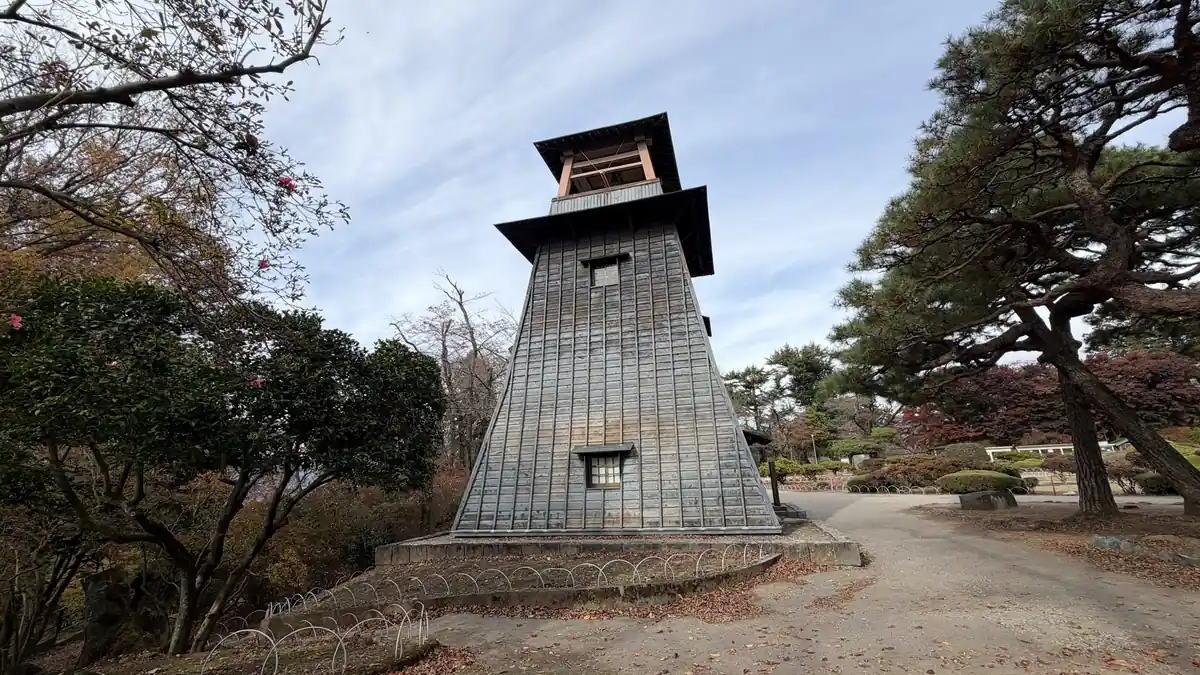
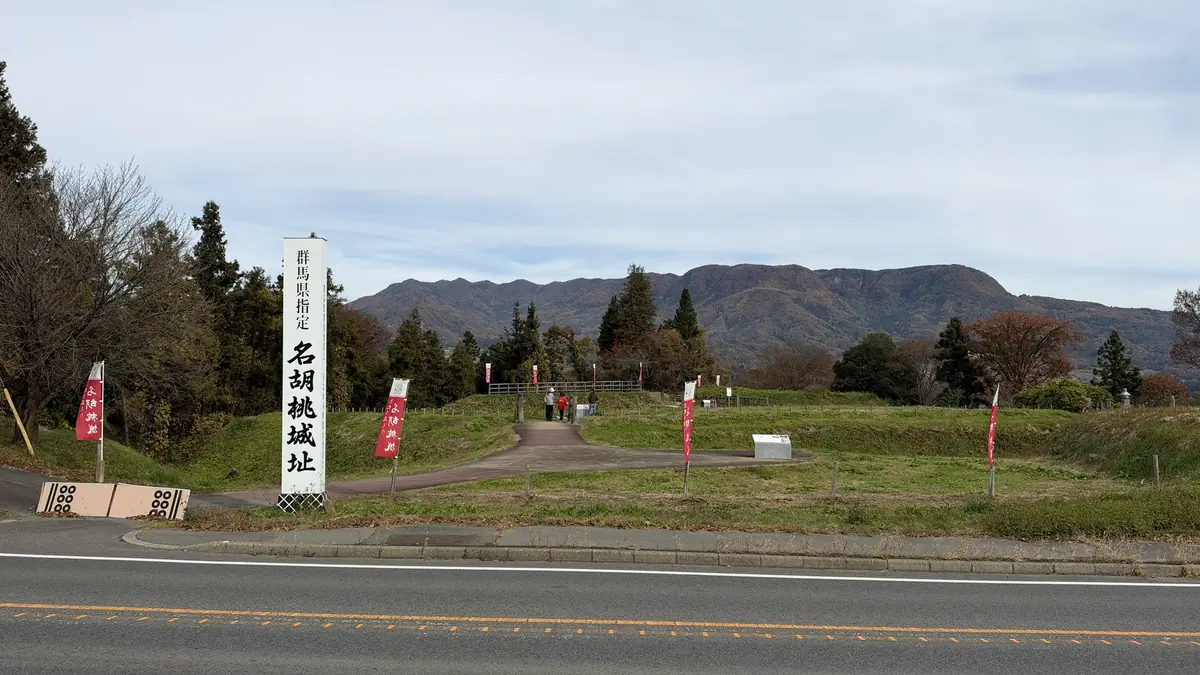
Numata Castle has no tower or palace left. From the castle era you can see the stone wall and steps of the west turret platform and part of the main-enclosure moat. The bell tower in the park is a 1983 reconstruction of one that stood at the old town hall, and the bell hanging in it is a copy; the original bell is in the history museum.
Honestly, little of the castle itself survives: two stretches of stone wall and the reconstructed bell tower. The Old Ubukata House, a merchant house from the Edo period (1603–1868) moved into the park, is not a castle building, but I found it well worth the visit.
In this guide
What remains at Numata Castle: the moat, the west turret's stone wall and the bell tower
Numata Castle was built on a plateau above cliffs. According to the Numata tourism association, the Numata clan built the first castle around 1532, and after the Hojo clan fell in 1590 it became the castle of Sanada Nobuyuki. In the Keicho era (1596–1615) Nobuyuki made it a full early-modern castle, with a five-story tower, turrets and gates. When the Sanada lost the domain in 1681, the castle was demolished the following year, and the tower was never rebuilt.
The main enclosure and parts of the second and third enclosures are now Numata Park; other parts of the castle grounds are now school grounds.
| From the castle era | The stone wall and steps of the west turret platform (confirmed by excavation) and part of the main-enclosure moat (now a pond) |
|---|---|
| Reconstructed | The bell tower (1983). The bell in it is a copy; the original is in the history museum |
| Relocated | The Old Ubukata House, a merchant house from around the late 17th century, moved into the park in 1973. Not a castle building |
| Added later | Statues of Sanada Nobuyuki and Komatsuhime, information boards |
| Not there | The castle tower and palace |
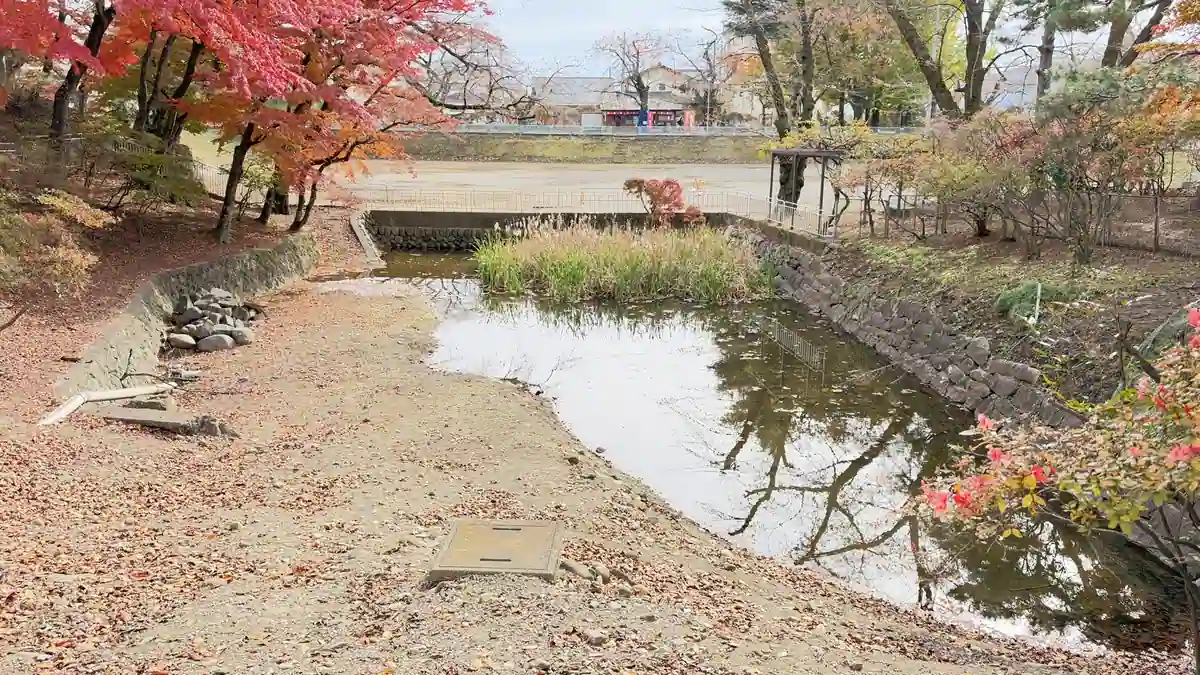
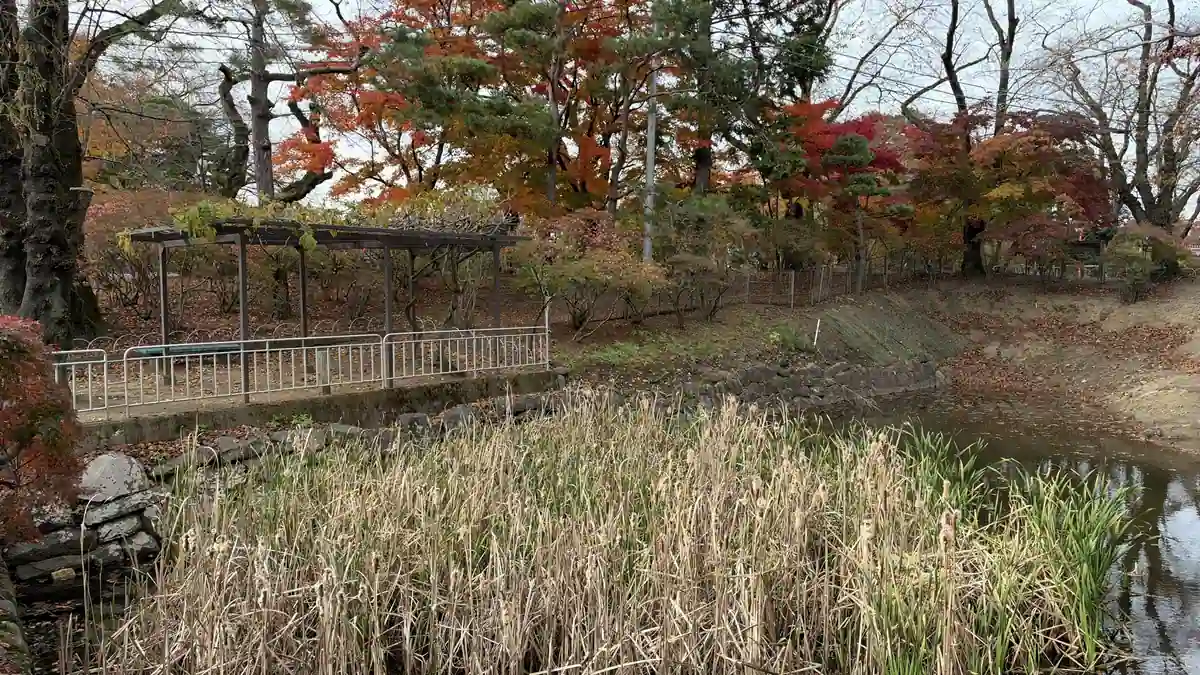
The main-enclosure moat: now a pond
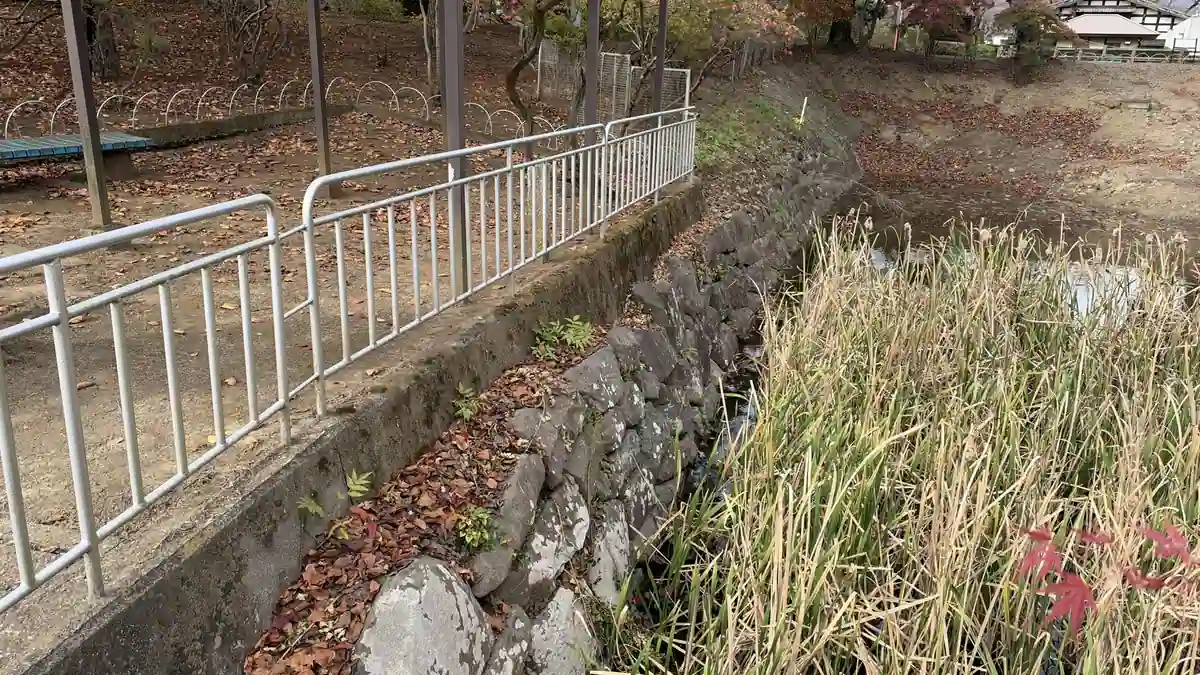
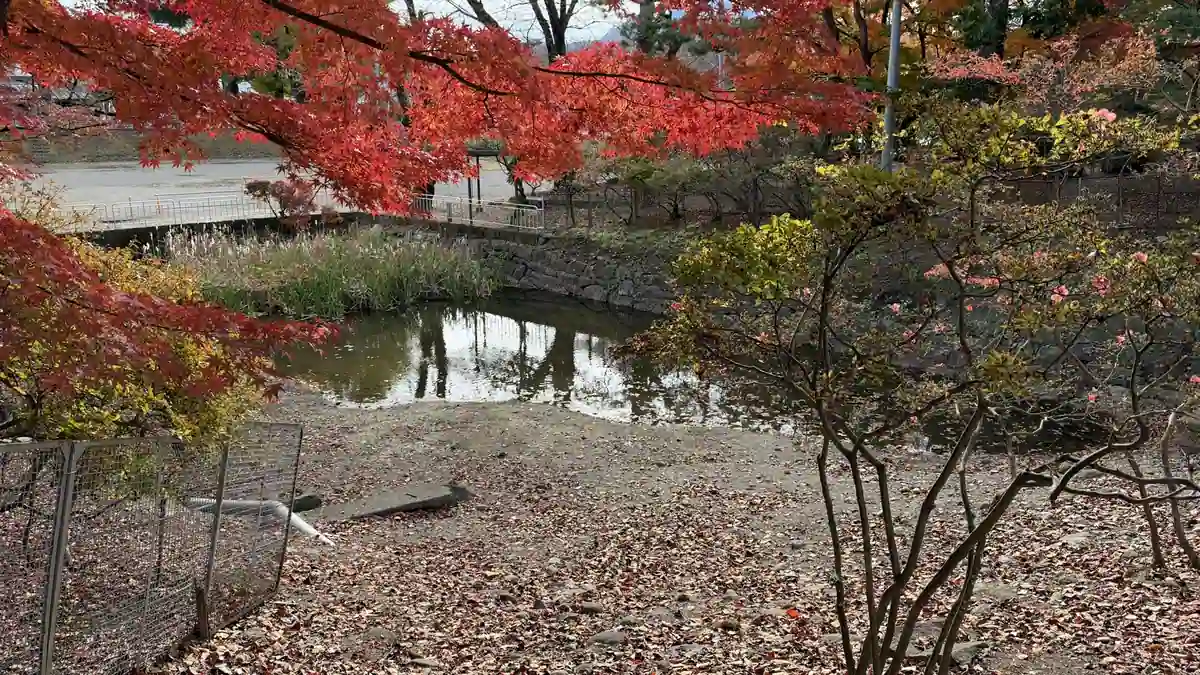
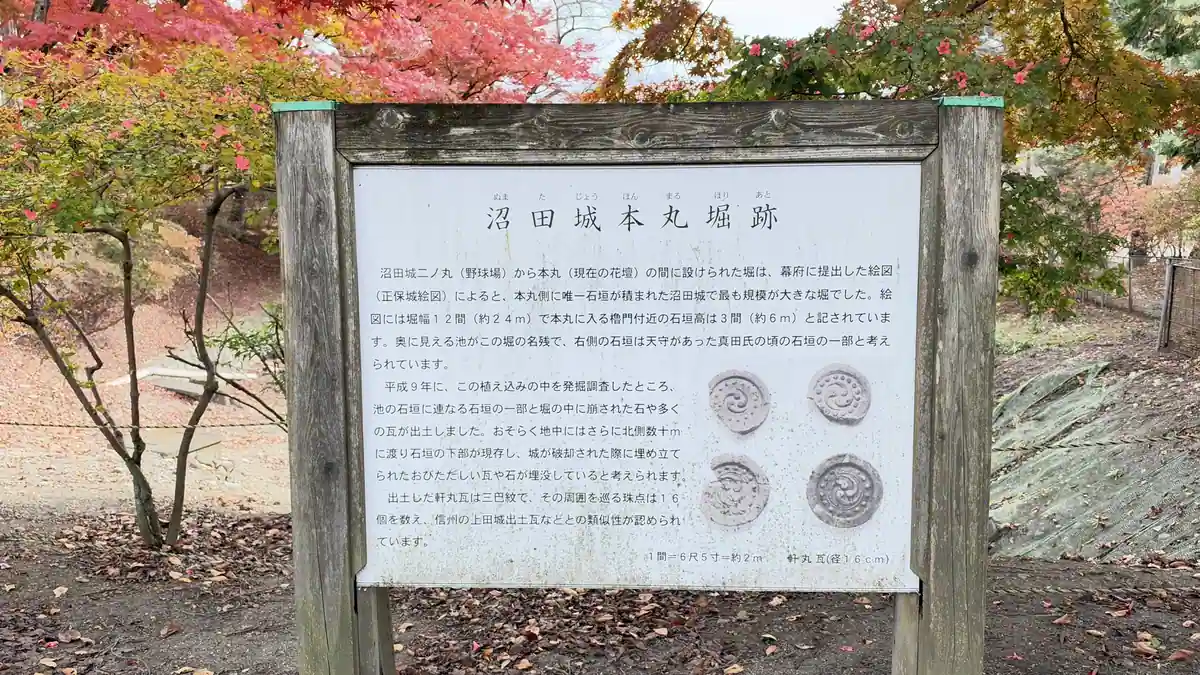
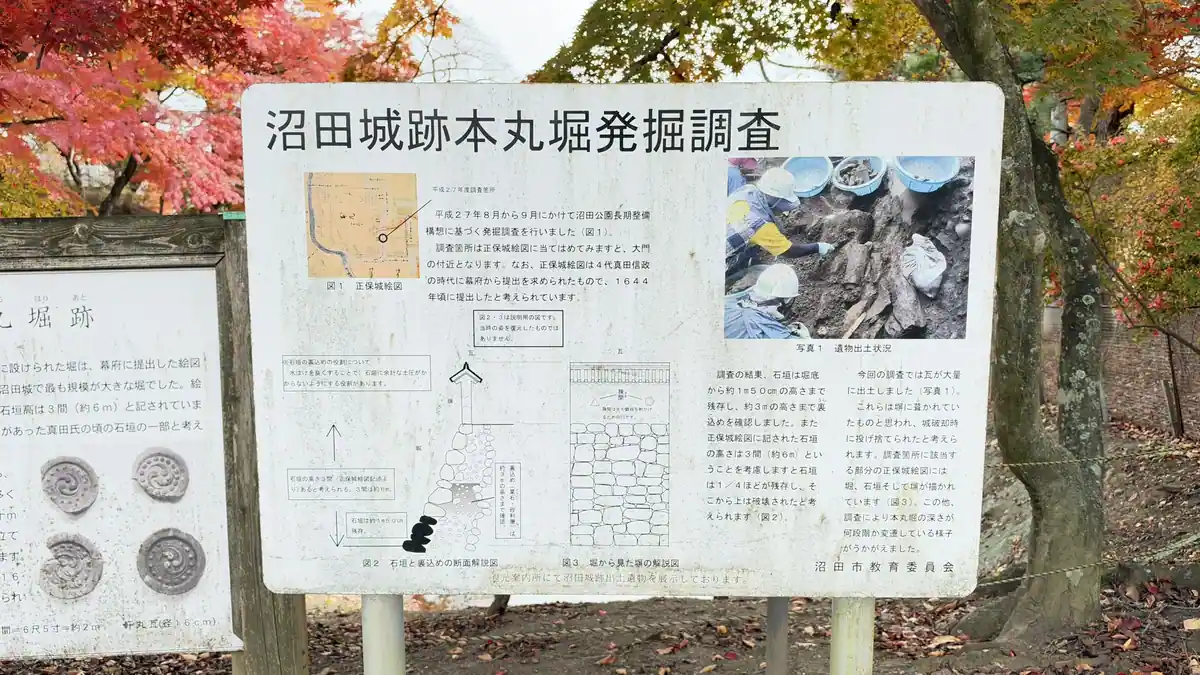
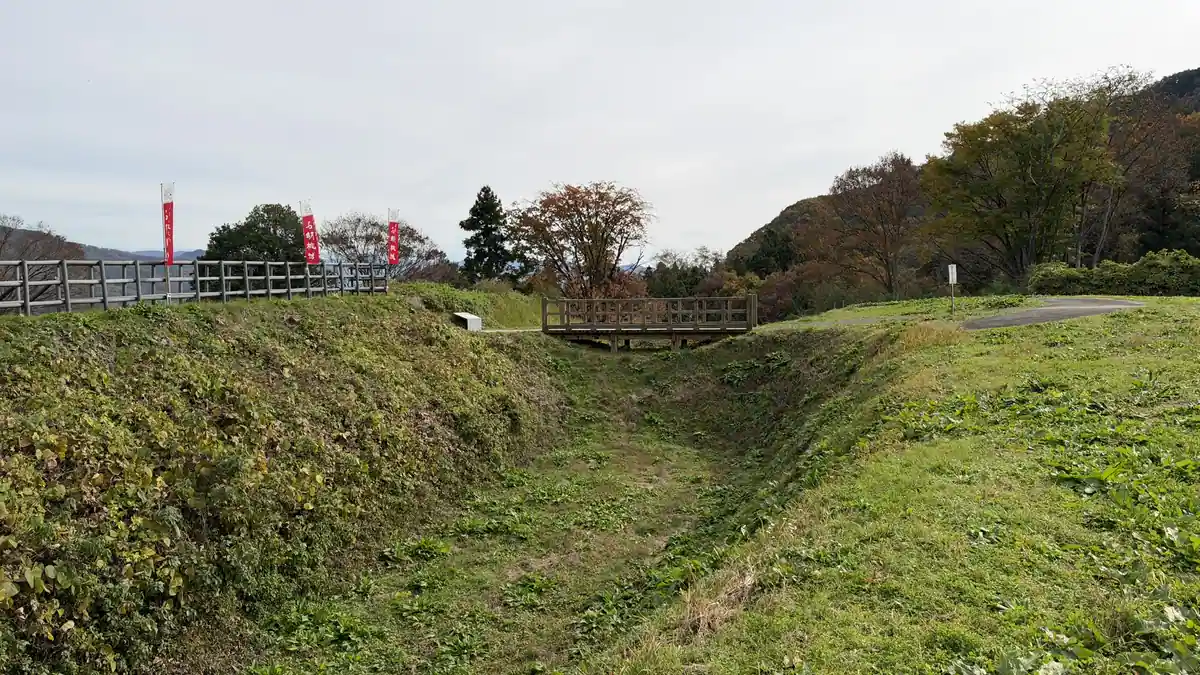
The pond in the park is what remains of the moat between the second enclosure (now a baseball ground) and the main enclosure (now flower beds). The board says the moat was about 24 m wide, with stone walls only on the main-enclosure side, and was the largest moat of Numata Castle. The stonework on the right bank is thought to be part of the wall from the Sanada era, when the tower stood. Excavations in 1997 and 2015 found part of the wall and stones and roof tiles that had been pushed into the moat.
Tap a photo to enlarge
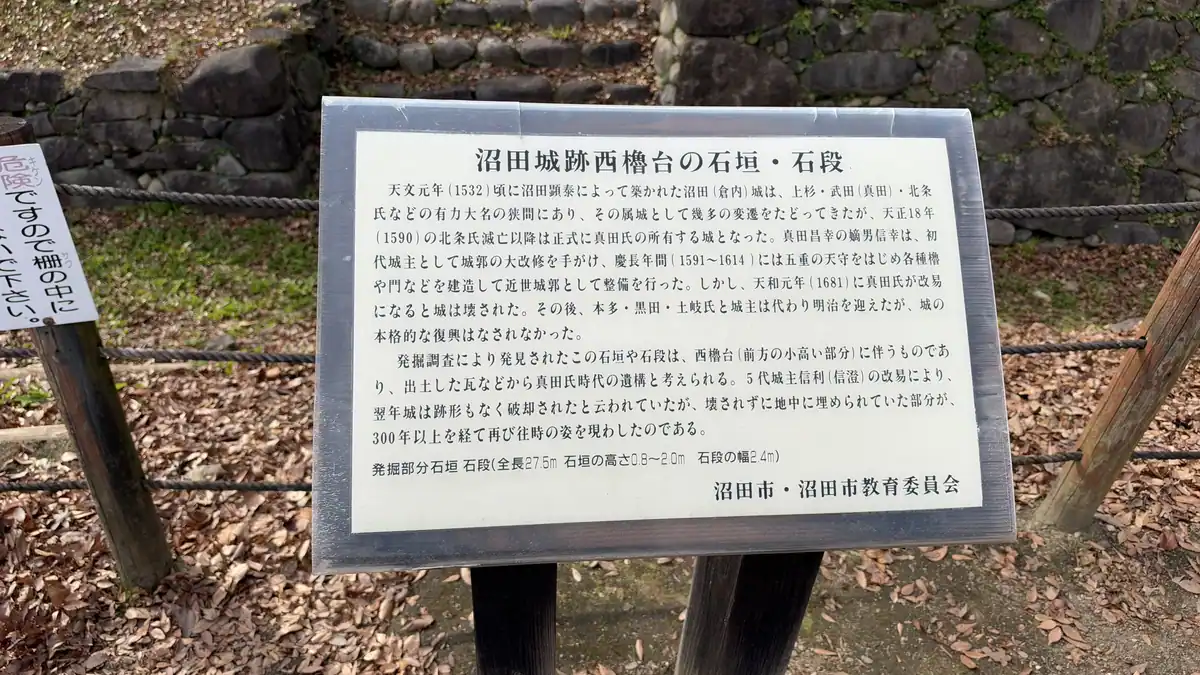
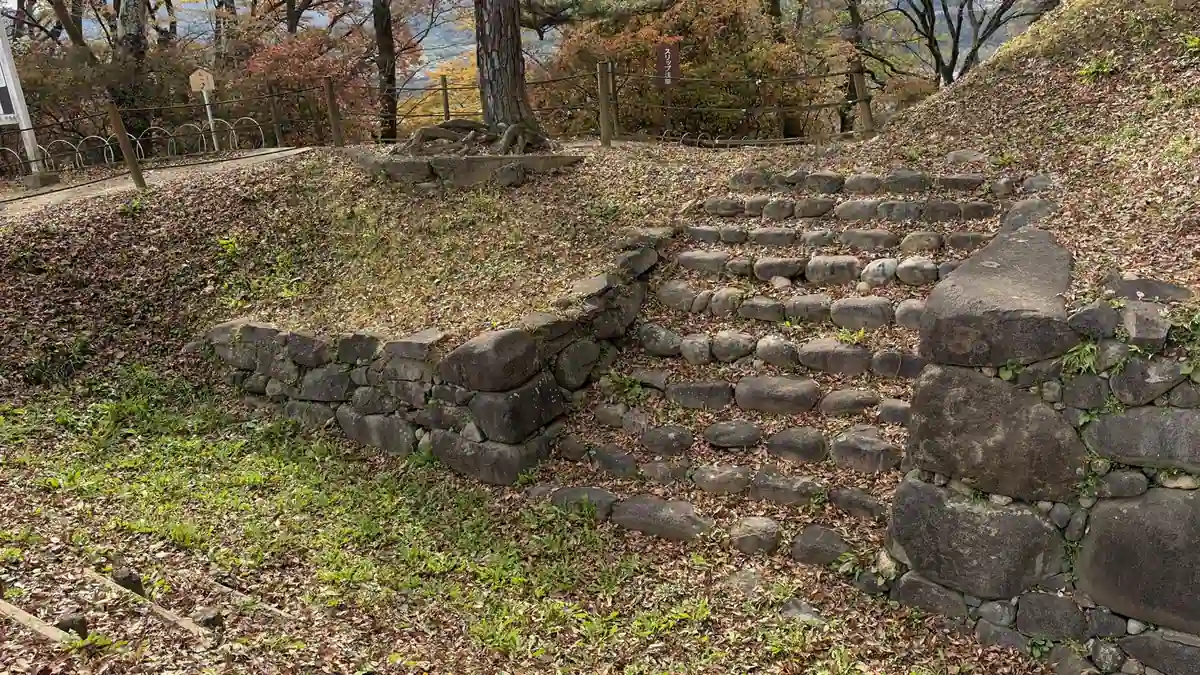
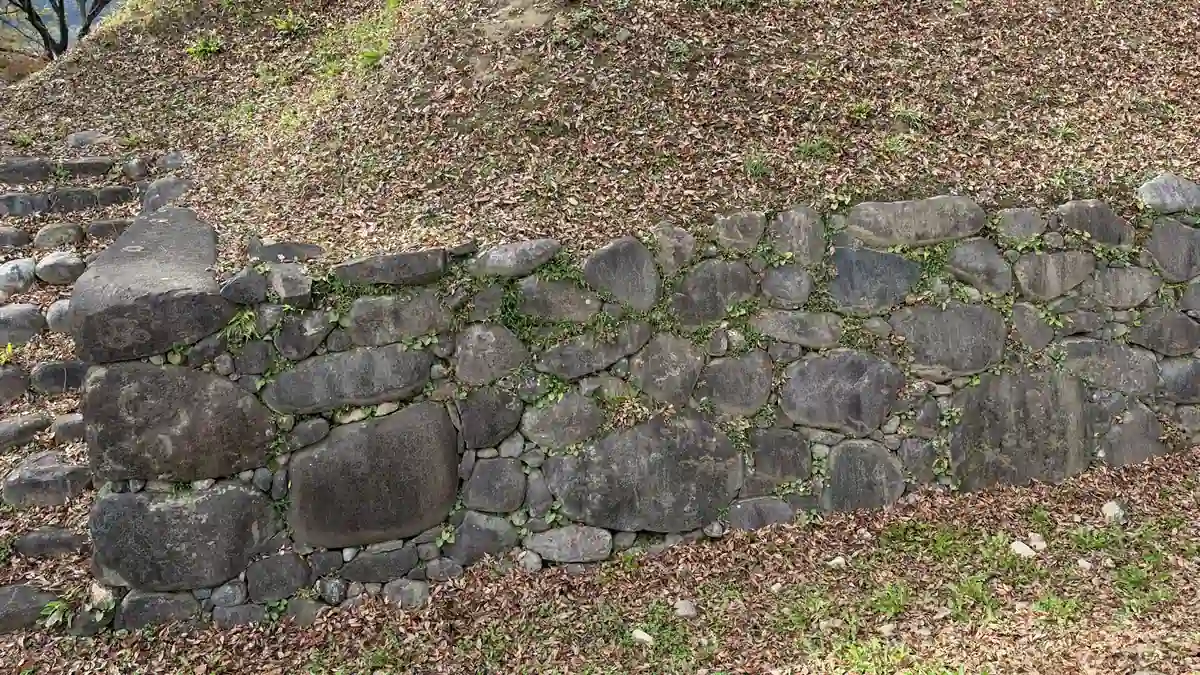
The west turret platform: stone wall and steps found by excavation
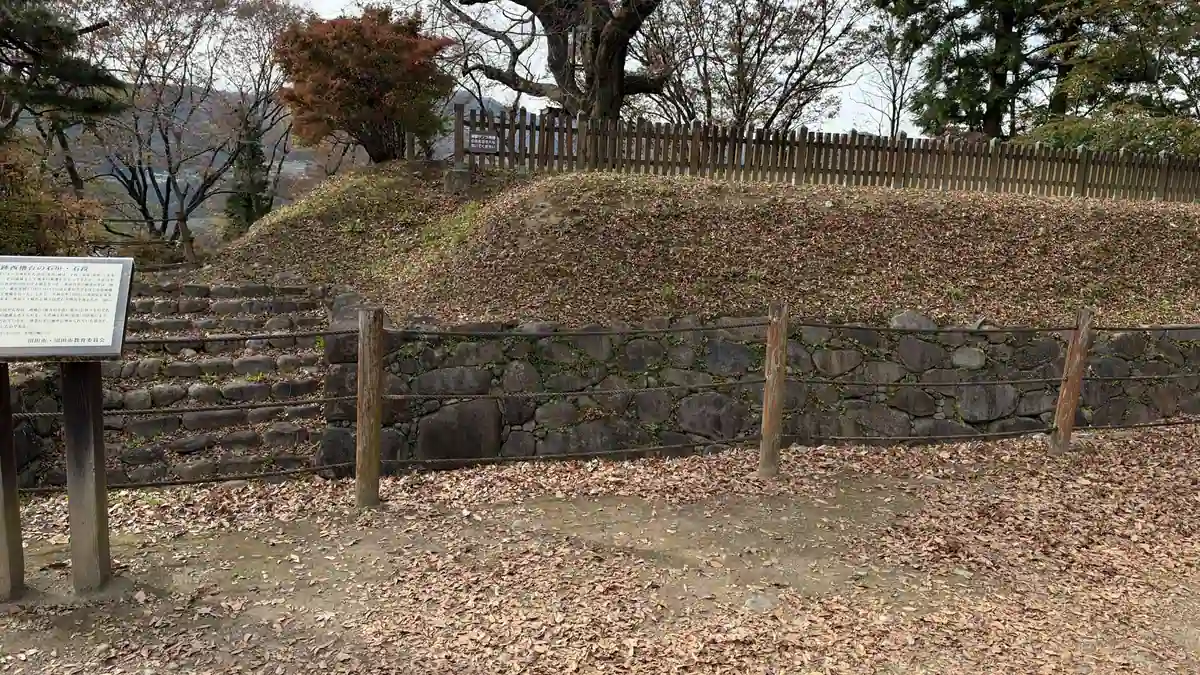
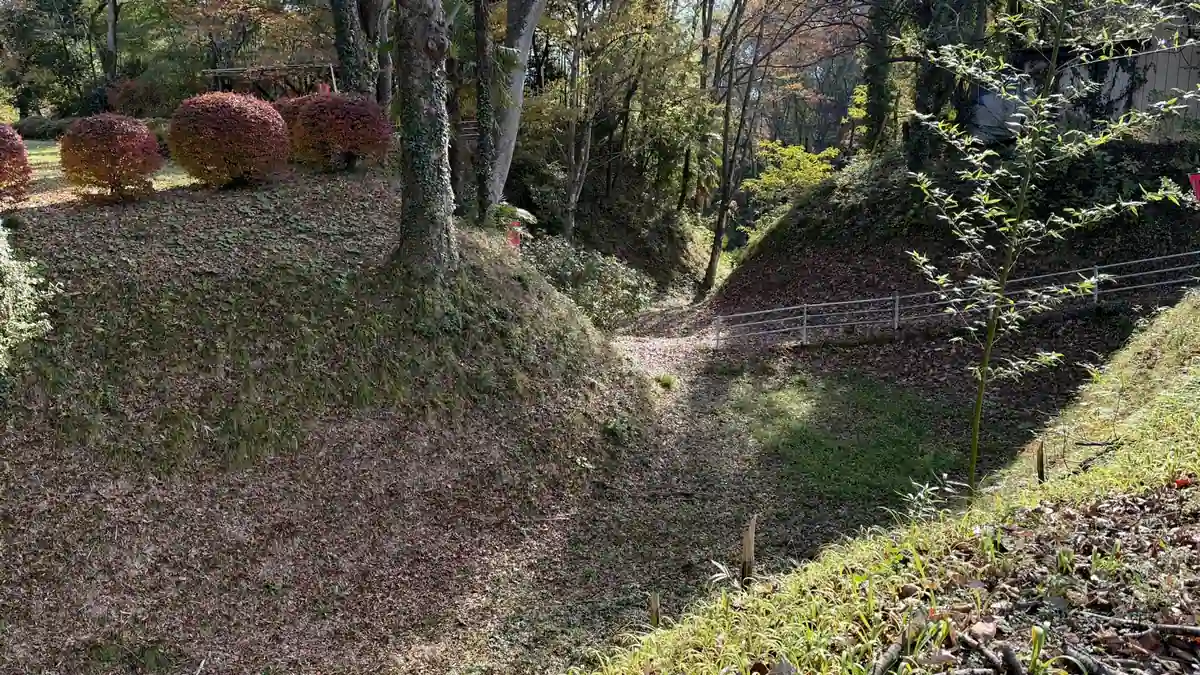
At the west turret platform, excavation uncovered a stone wall and stone steps. A mound of earth remains on top of the wall, and you view it from behind a low fence; the steps climb between the walls. An old cherry tree known as Goten-zakura spreads its branches over the wall. The sign beside it puts its age at more than 400 years and calls it a living keepsake of Numata Castle.
Tap a photo to enlarge
The reconstructed bell tower: the bell is a copy
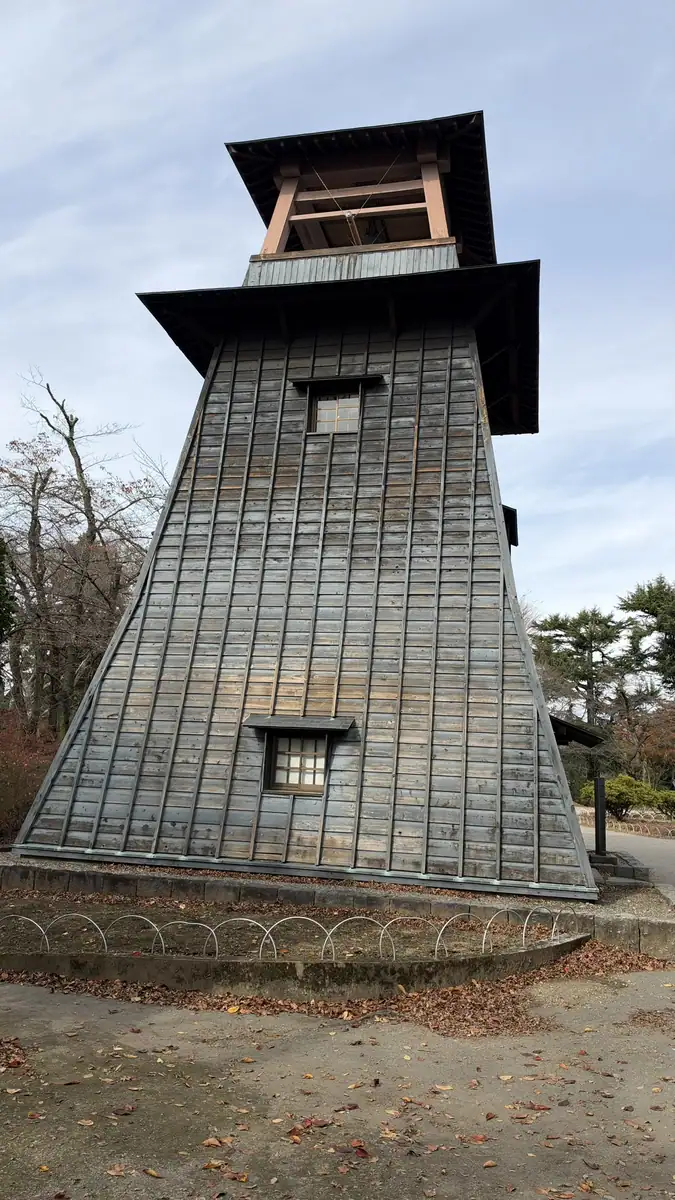
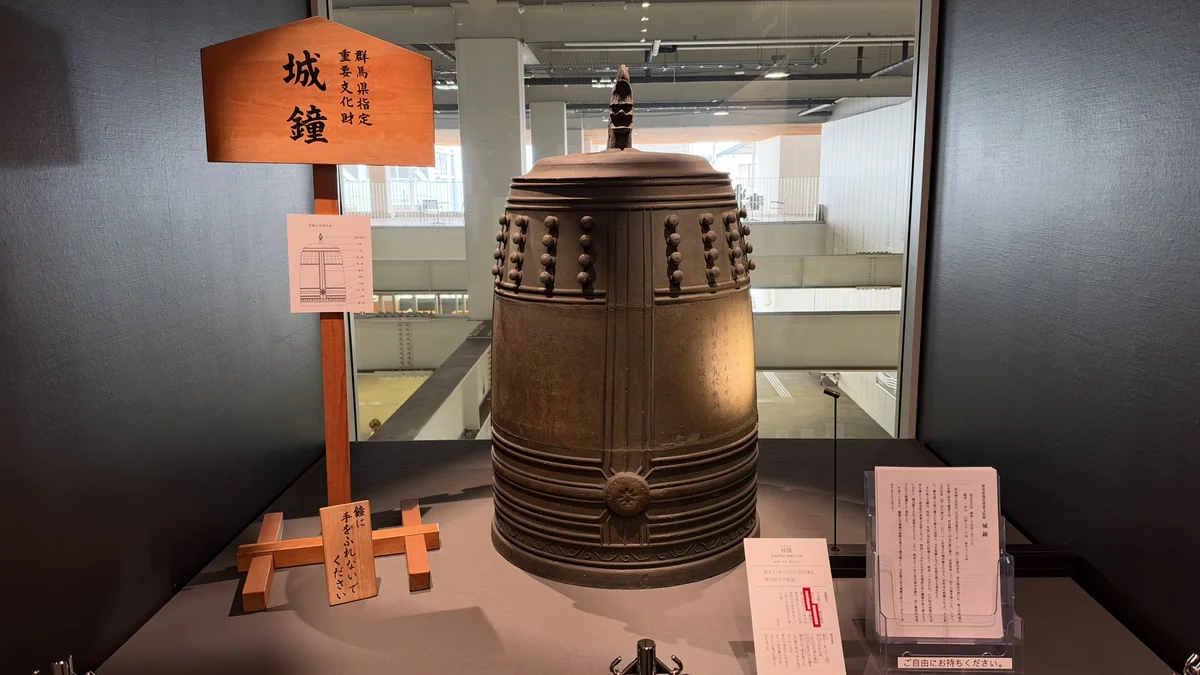
The bell tower in the park reconstructs one built in 1899 at the old Numata town hall; it was moved into the park in 1983. The bell hanging in it is a copy, and the original castle bell is on display at the history museum. That bell was cast in 1634 on the orders of Sanada Nobuyoshi, lord of Numata.
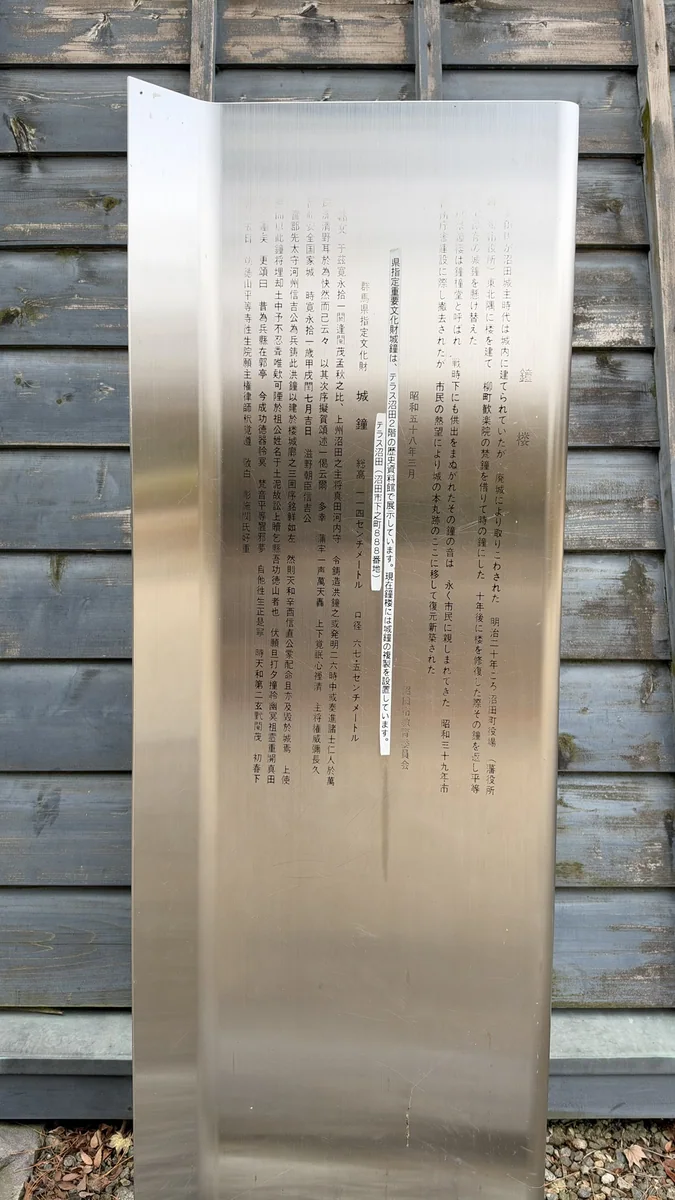
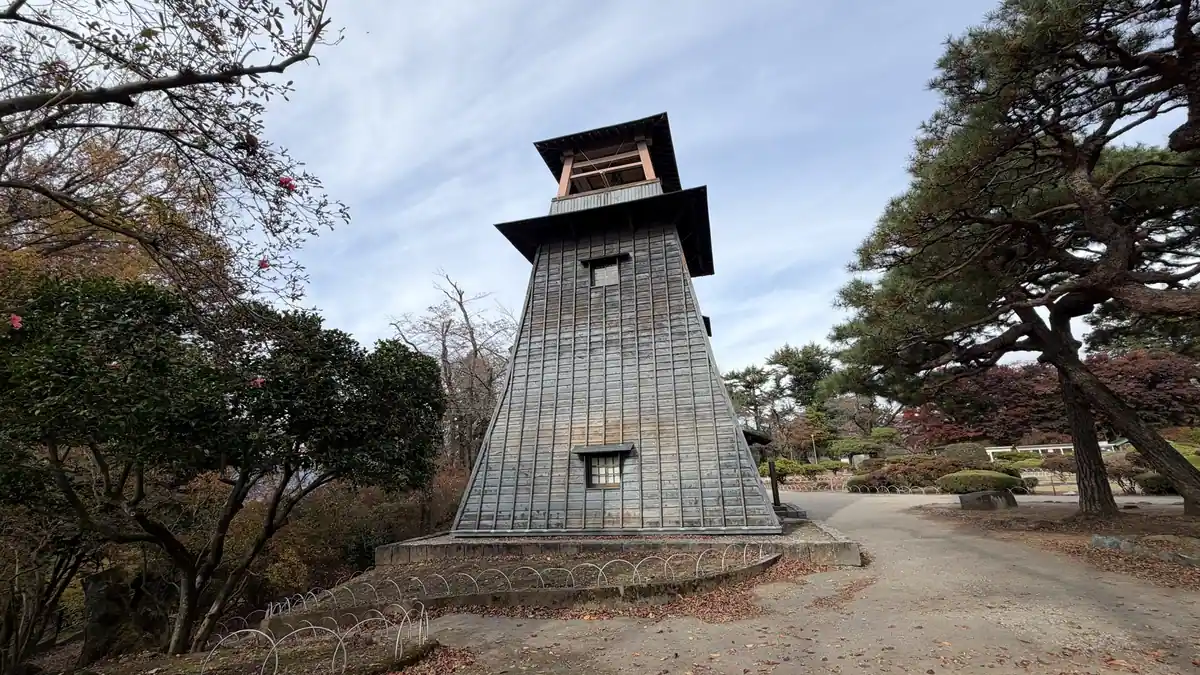
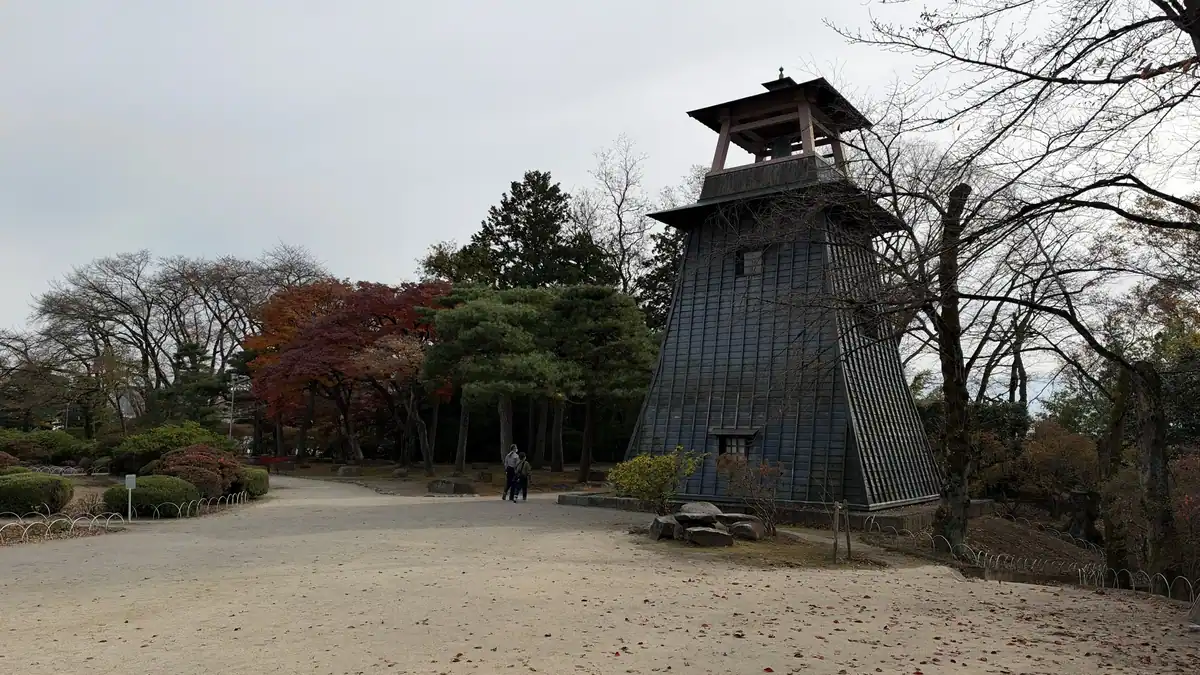
Tap a photo to enlarge
The statues, the Heihachi stone and the viewpoint
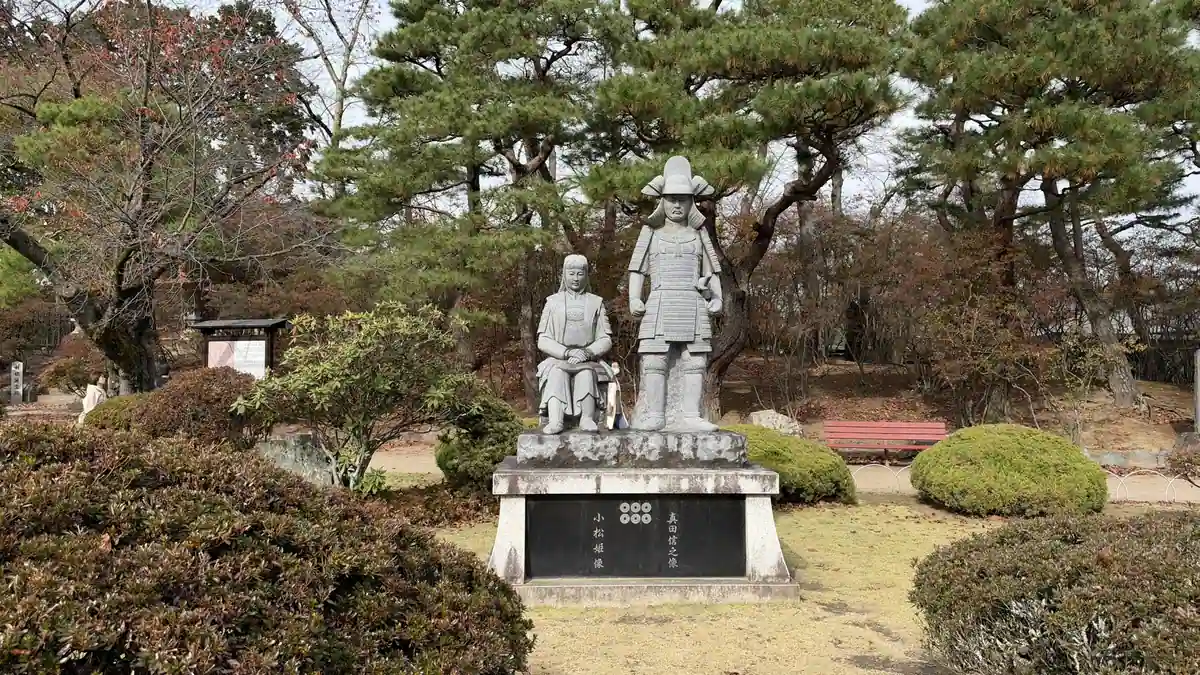
The park has stone statues of Sanada Nobuyuki and his wife Komatsuhime. There is also the Heihachi stone, linked to Numata Heihachiro Kageyoshi; its board says his severed head was placed on it. At a viewpoint on the edge of the park, a board shows the directions of Nagurumi Castle, Ogawa Castle, Meitokuji Castle and other places.
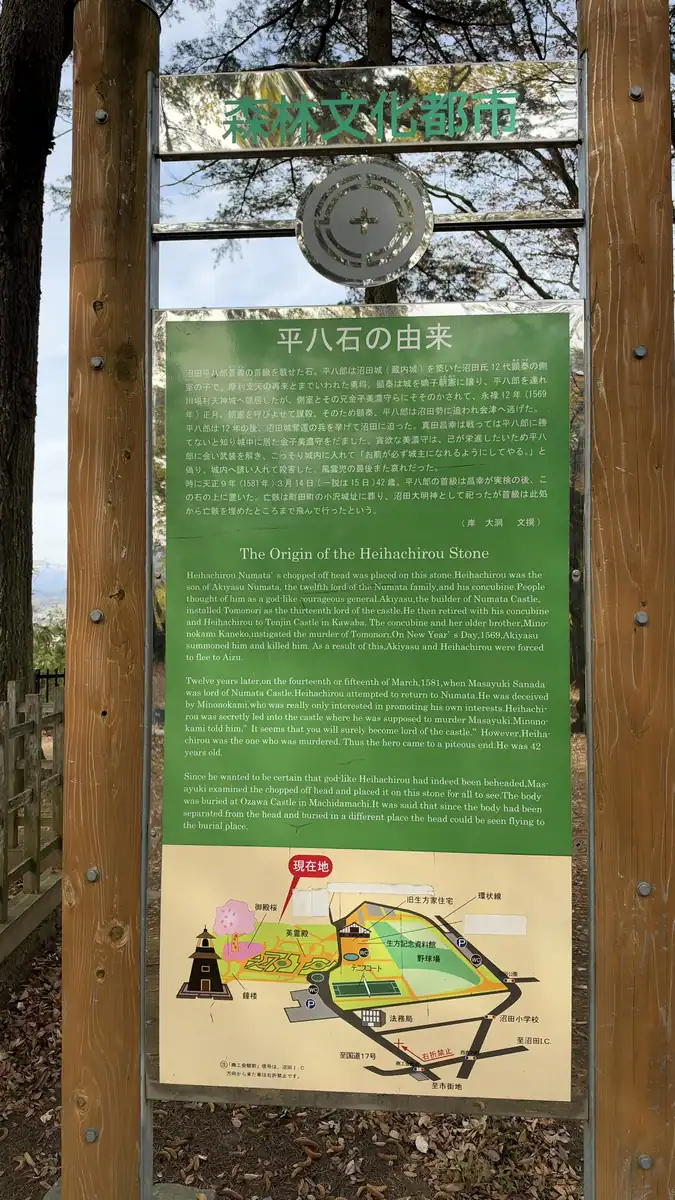
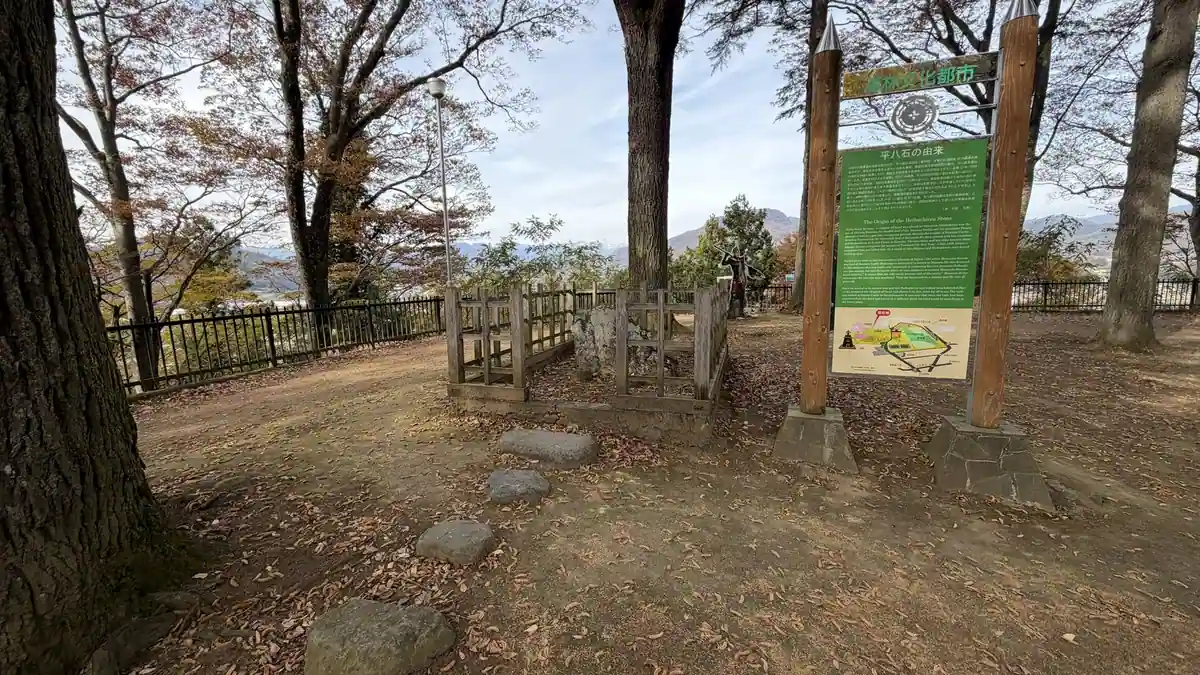
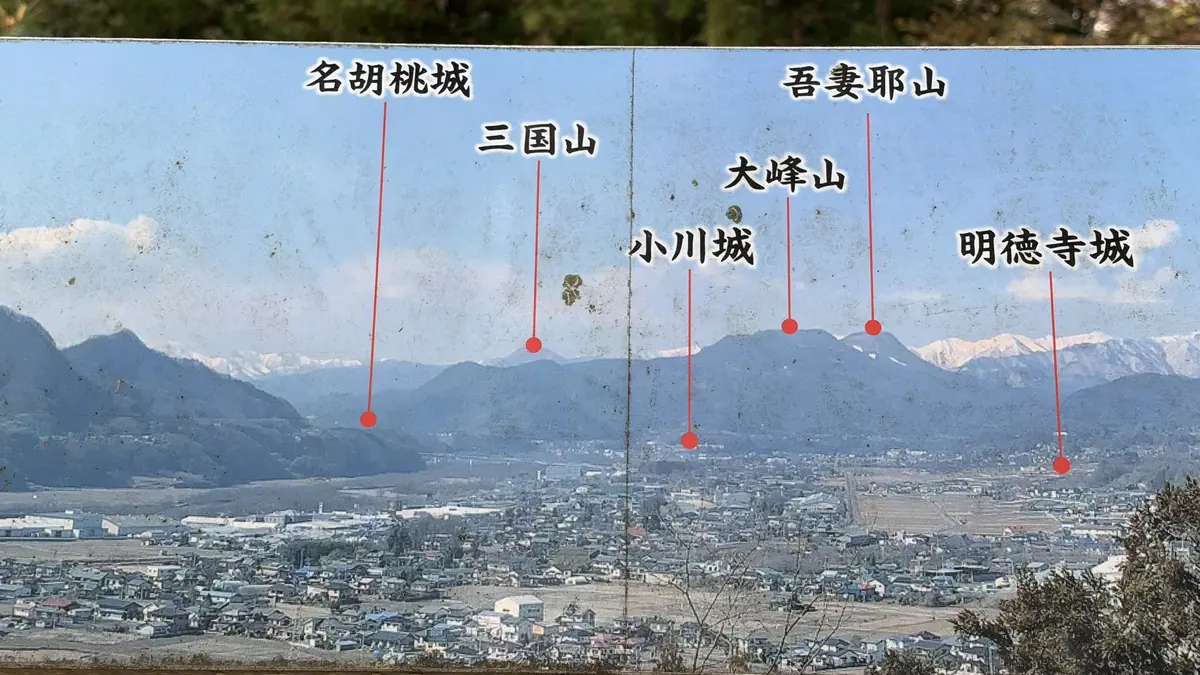
Tap a photo to enlarge
Numata City History Museum: the original castle bell and the Sanada displays
Numata City History Museum, 2nd floor of Terrace Numata
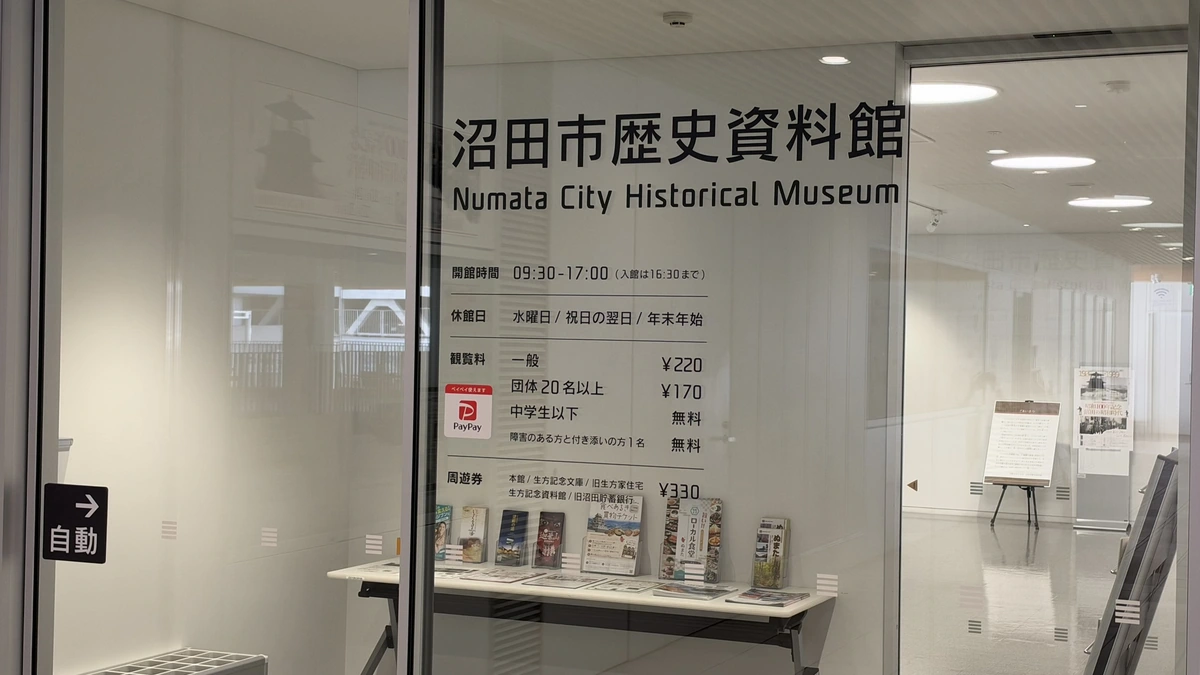
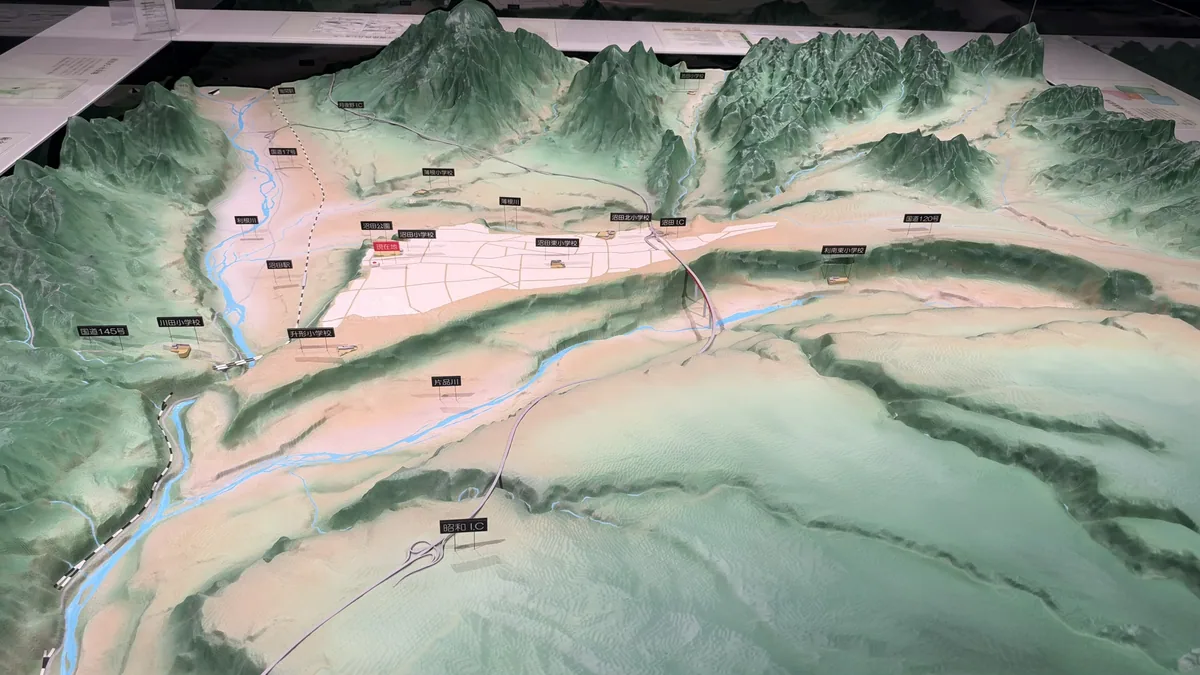
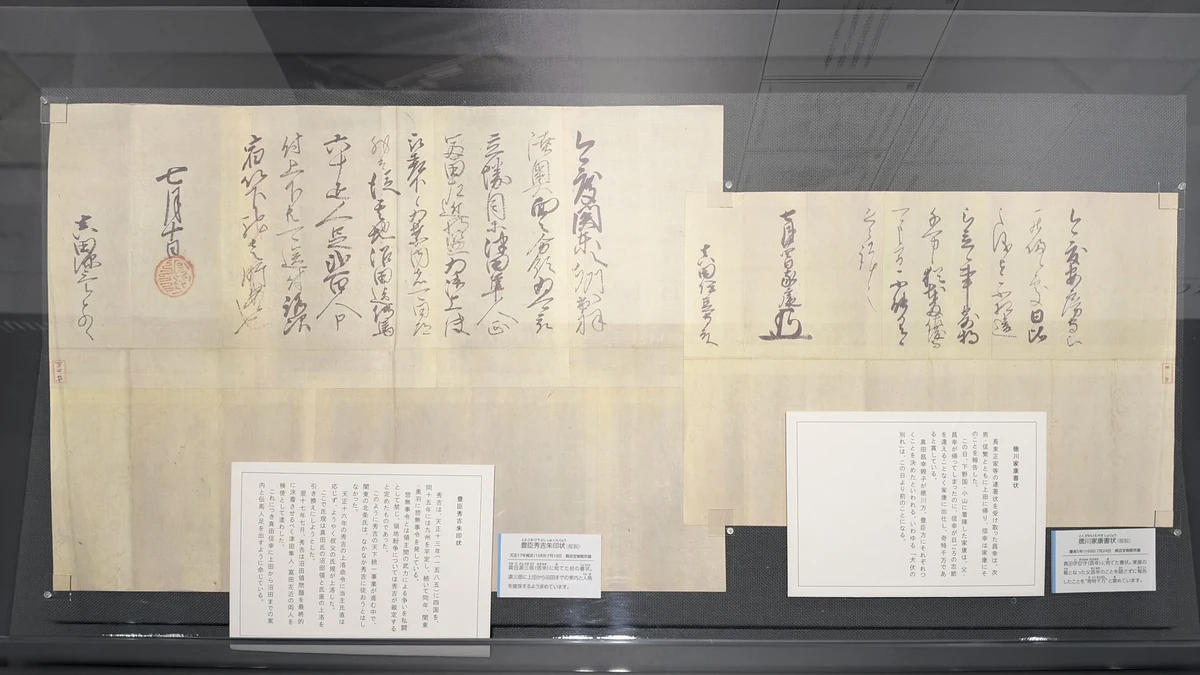
The history museum is on the second floor of Terrace Numata, a civic building in the town center. It is not in the park: it is about 500 m from the park's parking lot. The museum shows the original castle bell (an Important Cultural Property of Gunma Prefecture), along with displays on the Sengoku-period fight over Numata Castle, the Nagurumi incident, Sanada rule and the end of it, and the lords who came after. Many of the documents and portraits are marked as copies, and the labels are in Japanese.
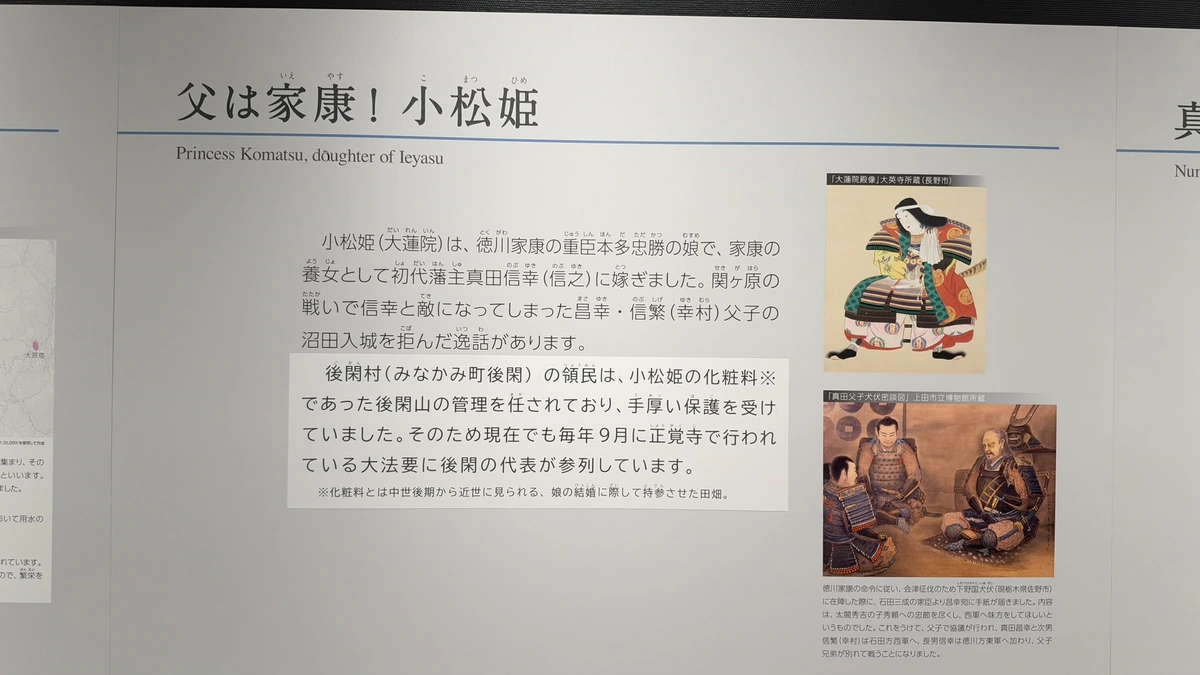
What stayed with me was the Komatsuhime display: a panel of stories about her and copies of a document box with the Tokugawa hollyhock crest, a food container with the Honda family's hollyhock crest and a hot-water pail with a hollyhock crest; the originals belong to Shogakuji. The panel is headed “Her father was Ieyasu!”, but the text explains that she was the daughter of Honda Tadakatsu, one of Tokugawa Ieyasu's leading generals, and married into the Sanada as Ieyasu's adopted daughter.
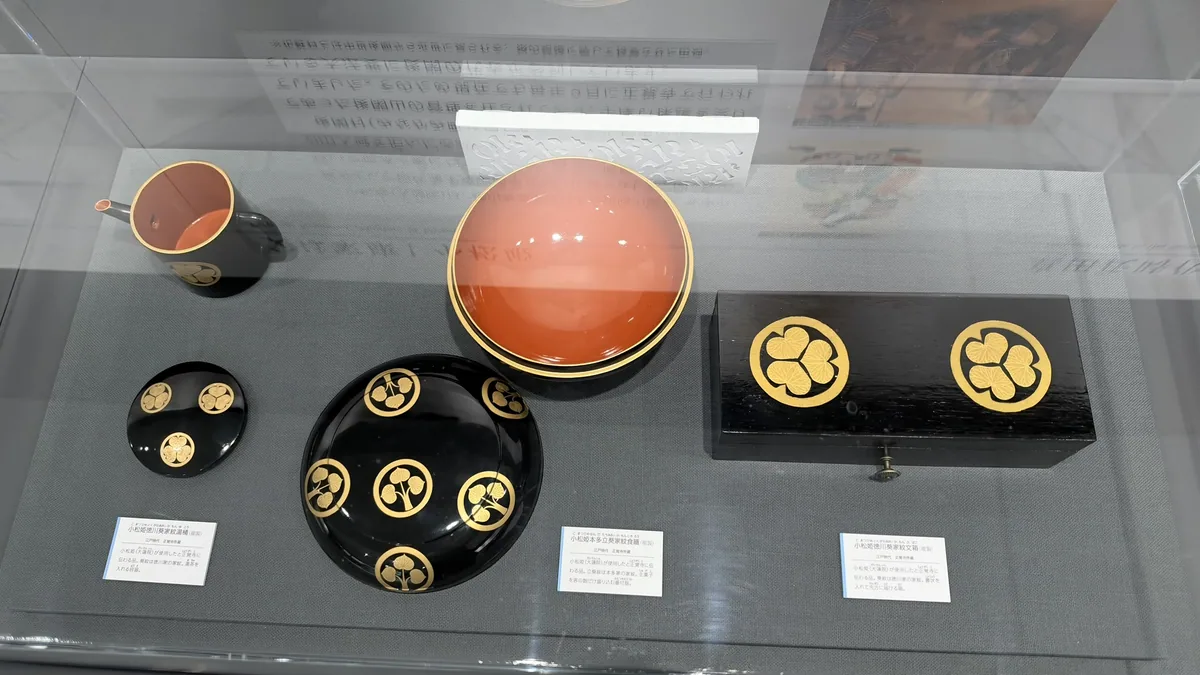
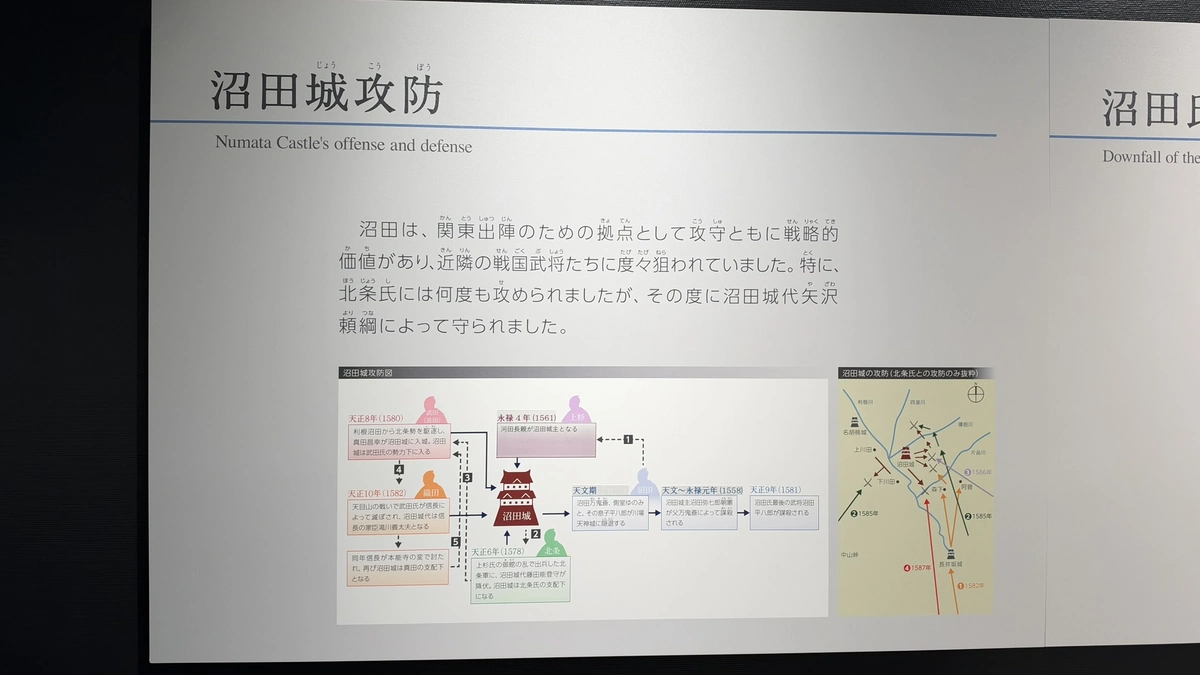
Tap a photo to enlarge
The Old Ubukata House: an Edo-period merchant house in the park
Old Ubukata House (Important Cultural Property of Japan)
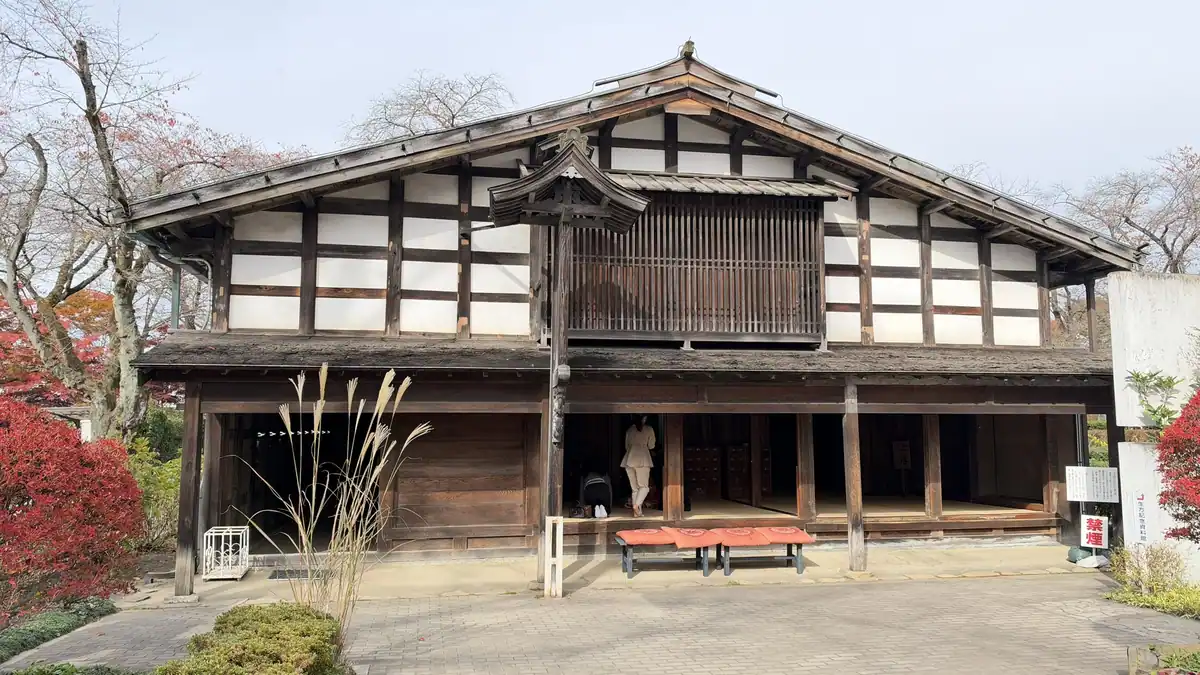
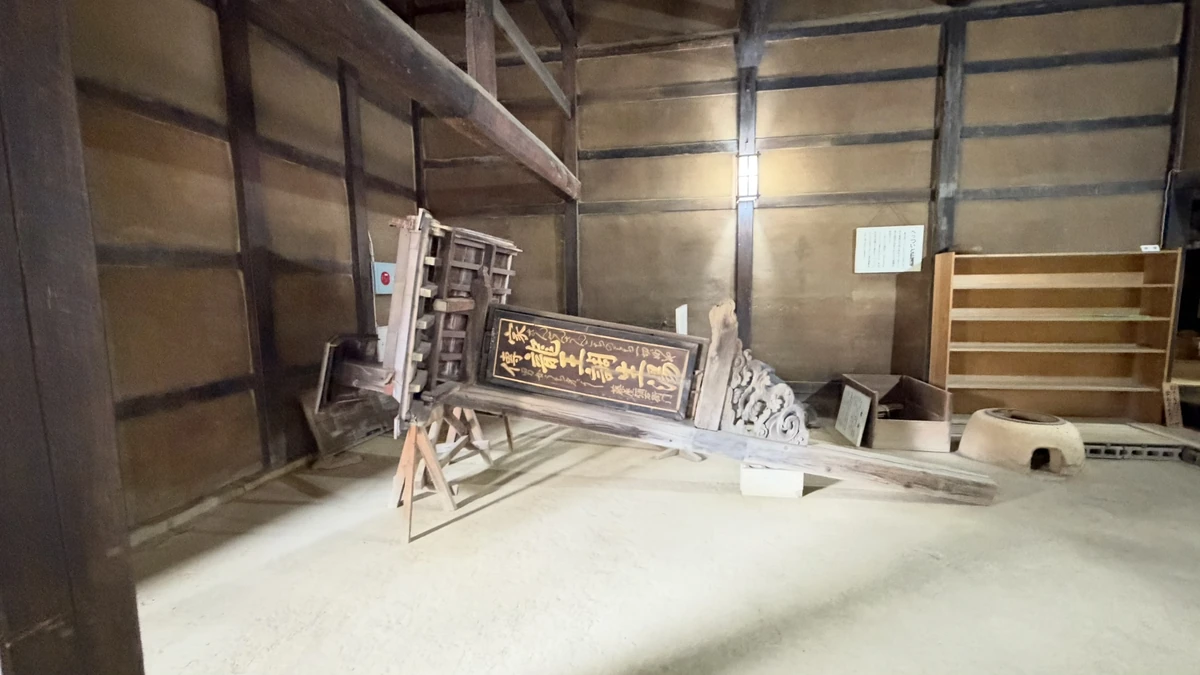
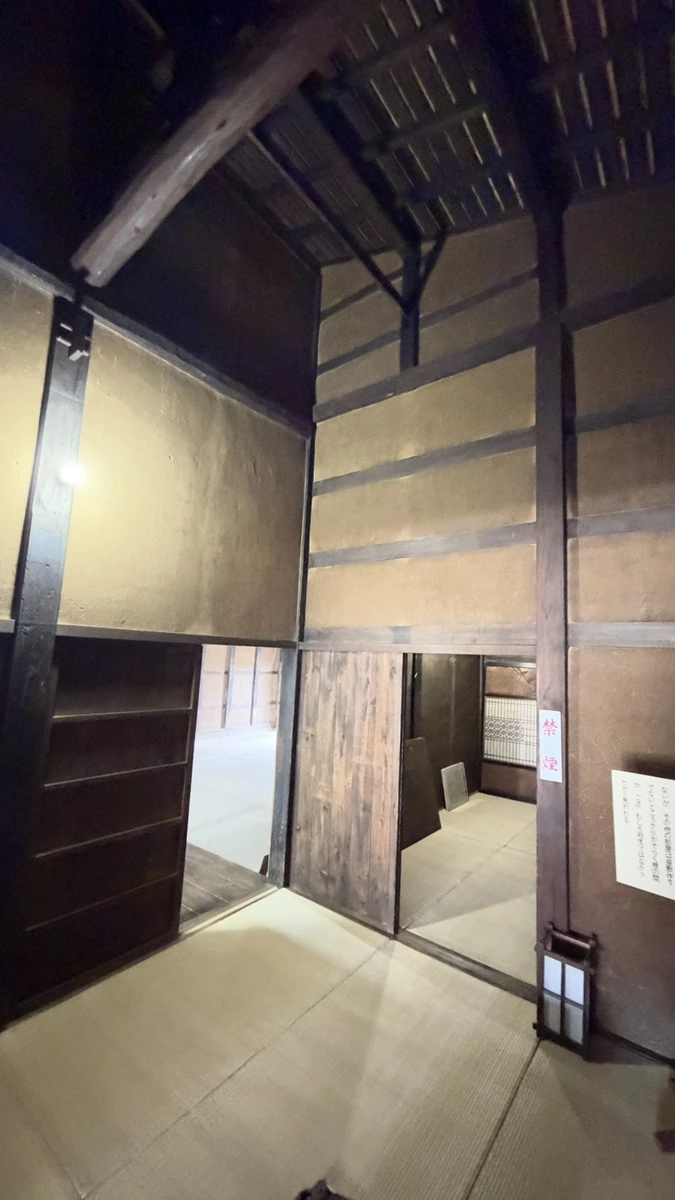
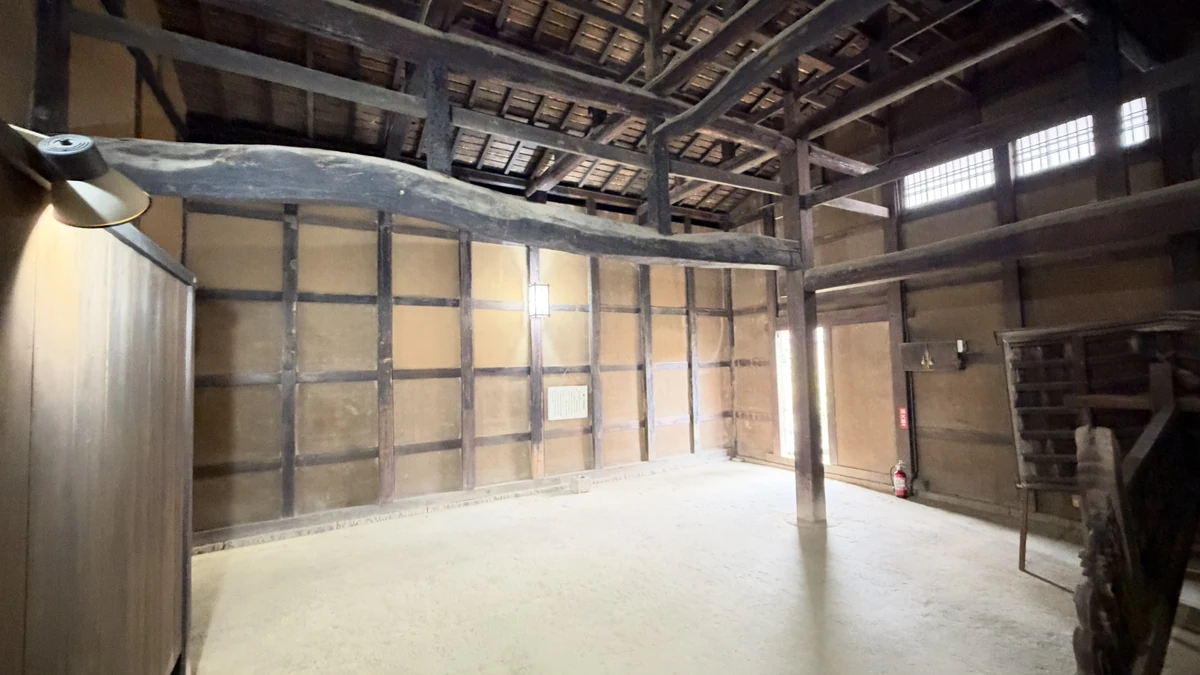
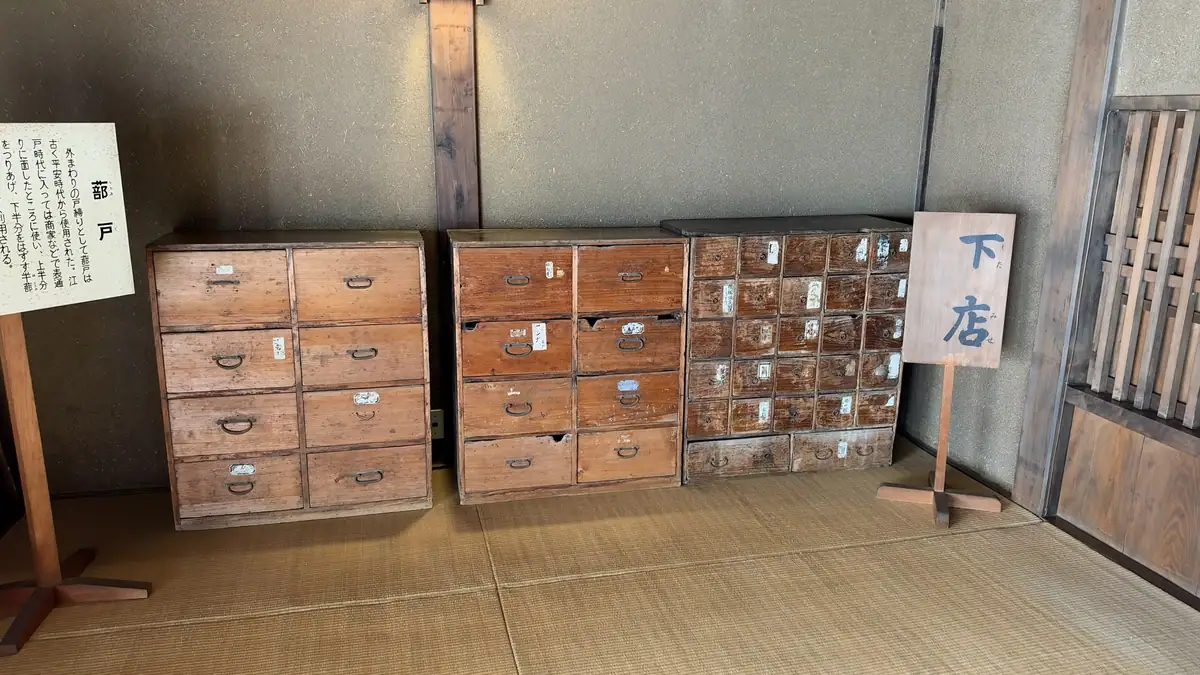
The Old Ubukata House is a merchant house moved to the site of the second enclosure. It is a nationally designated Important Cultural Property, thought from its style and techniques to date from the late 17th century. It originally stood in the middle of Numata's main shopping street and was moved to the park in 1973. It is not a castle palace but a townsperson's house of the Edo period.
You can go inside. The ceilings are high, and you get a sense of how people lived. It is not from the Sengoku period, but I recommend it. Entry is 110 yen for adults. The Ubukata Memorial Museum next to it is a separate facility.
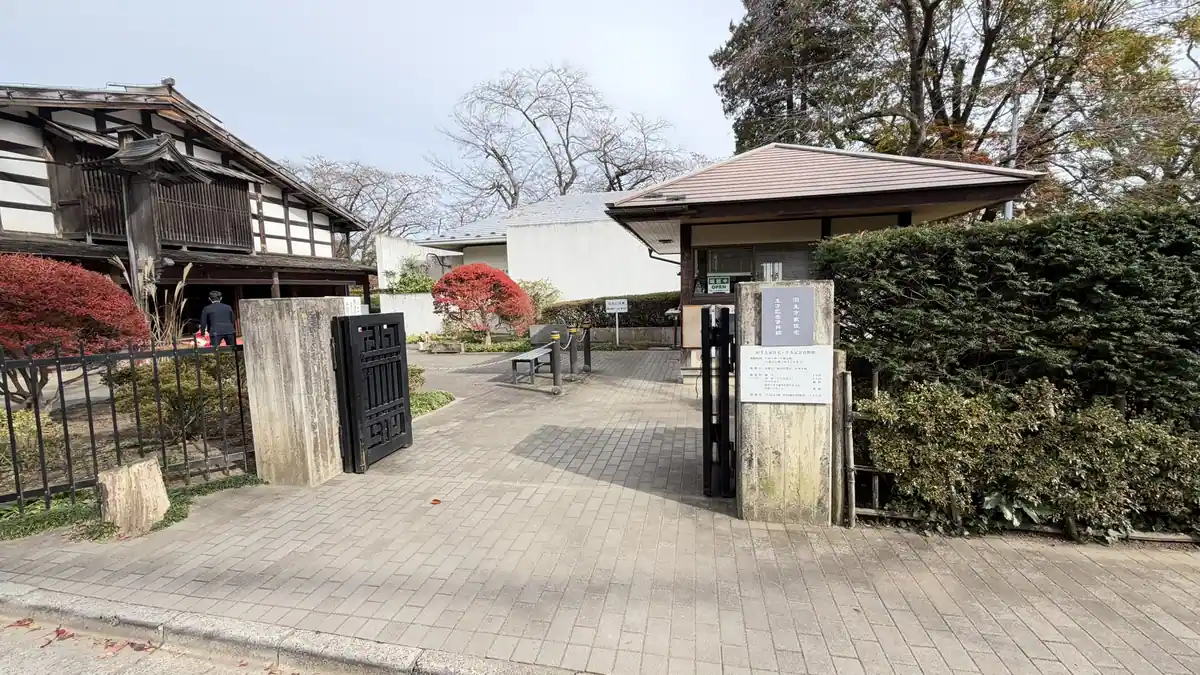
Tap a photo to enlarge
Time needed and the route
I spent about 30 minutes in the history museum (from about 11:25 to 11:57), then drove to Numata Park and saw the castle site and the Old Ubukata House from about 12:07 to 13:15; I did not time the two separately.
In the park I went from the moat to the Old Ubukata House, the tourist information center, the bell tower, the west turret platform, and the Heihachi stone and viewpoint. On November 14, 2026, the autumn leaves in the park were beautiful.
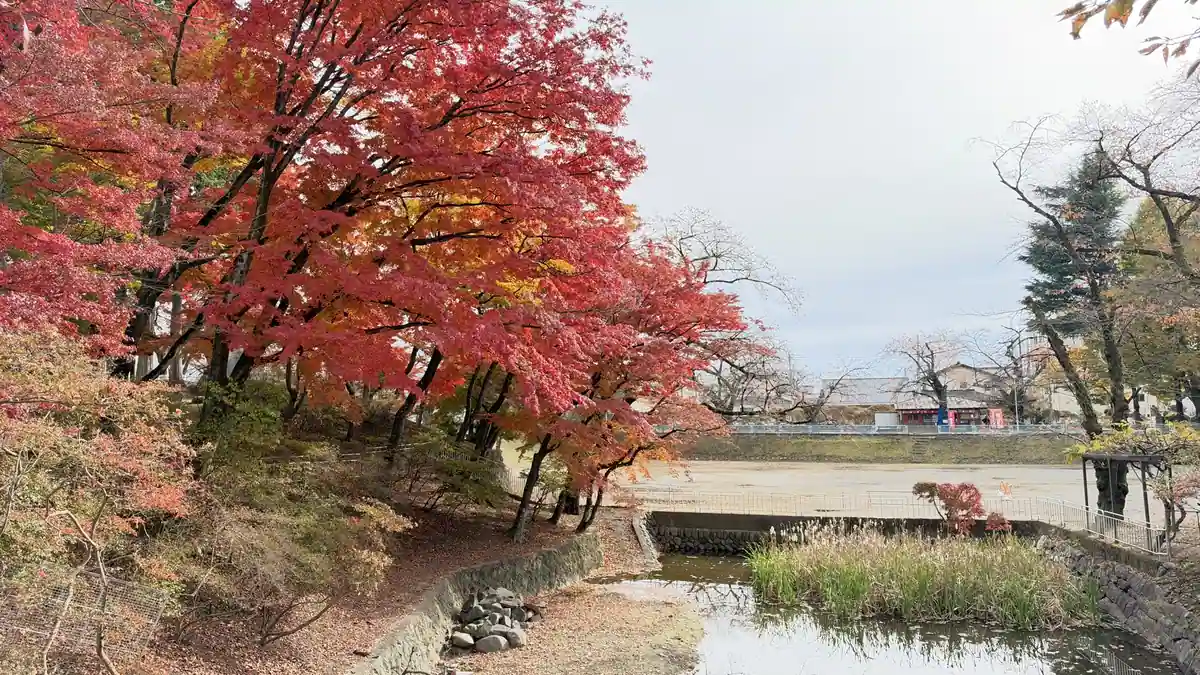
Opening hours differ by facility. Last entry to the Old Ubukata House is 15:30, earlier than the history museum's 16:30, so if you arrive in the late afternoon, see the house first.
Fees and the multi-site pass
| Numata Park (castle site) | Free. Open at all times |
|---|---|
| History museum | 220 yen (170 yen for groups of 20 or more). 9:30–17:00, last entry 16:30. Closed Wednesdays (open if a public holiday), the day after public holidays and over New Year. Free for junior high school students and younger |
| Old Ubukata House | 110 yen for adults (60 yen for groups of 20 or more). 9:00–16:00, last entry 15:30. Closed Wednesdays (Thursday if Wednesday is a holiday), the day after public holidays and December 29–January 3. Free for junior high school students and younger |
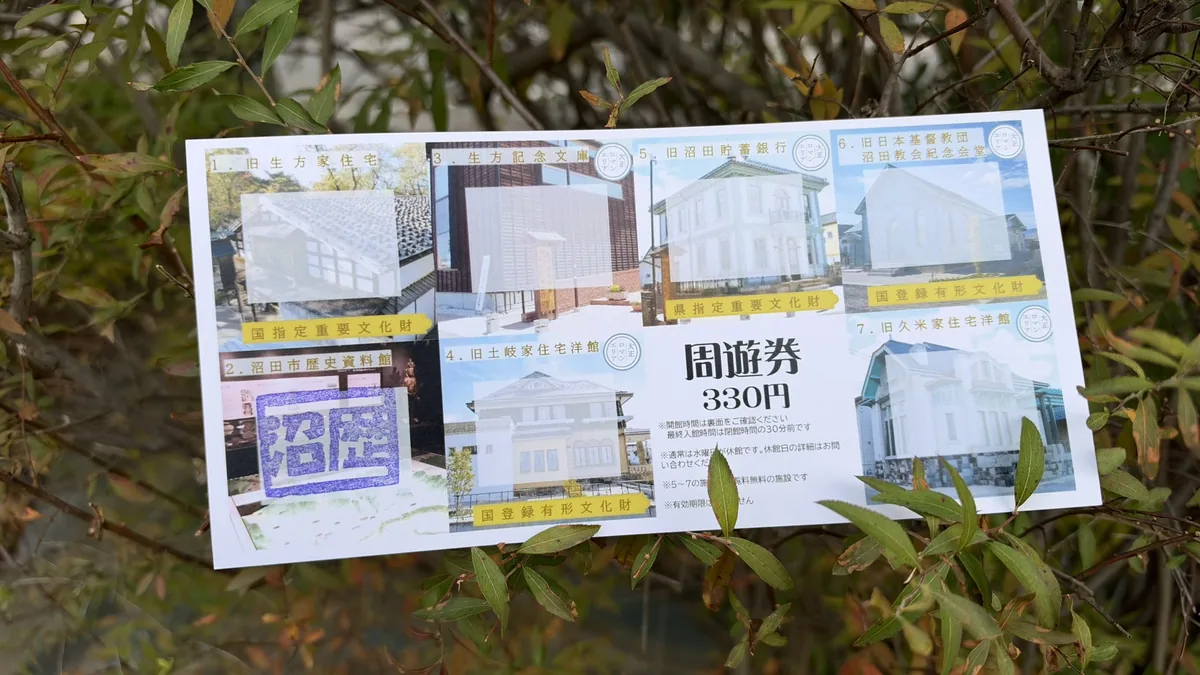
| Multi-site pass | 330 yen. One entry each to the history museum, Ubukata Memorial Library, Old Toki House Western Building, Old Ubukata House and Ubukata Memorial Museum |
| Annual pass | 1,100 yen. Unlimited entry to the same facilities for one year from the date of issue |
If you only visit the history museum and the Old Ubukata House, the single tickets add up to the same 330 yen as the pass. The pass saves money only if you also visit the Ubukata Memorial Library, the Old Toki House Western Building or the Ubukata Memorial Museum. I bought the pass but visited only the museum and the house.
The pass notice in the park also lists three buildings, including the old Numata Savings Bank, as free (November 14, 2026). Holders of Japanese disability certificates may be admitted free; check the conditions on each facility's city page.
Getting there from Tokyo: Numata Station is not on the shinkansen
| Option 1: Train to Numata | Travel to Takasaki (shinkansen or JR Takasaki Line) and change to the JR Joetsu Line for Numata Station. From the station, walk uphill about 23 minutes to the park or 15 minutes to the museum, or take a bus (about 5 minutes) to Terrace Numata / City Hall |
|---|---|
| Option 2: Shinkansen to Jomo-Kogen + bus | Joetsu Shinkansen to Jomo-Kogen Station (62 minutes from Tokyo at the fastest, Minakami Tourism Association), then a bus to central Numata, about 40 minutes plus waiting time |
| Option 3: Car | Rent a car at Jomo-Kogen Station and drive. Parking is available at both the museum and the park |
Numata Station is on the slower JR Joetsu Line, and the shinkansen does not stop there. The town center sits on a river terrace about 80 m above the station, so the walk from the station is uphill. Both routes use JR trains, and Japan-Guide lists the shinkansen to Jomo-Kogen as covered by the Japan Rail Pass; the local buses are not JR services. On the Joetsu Shinkansen, not every train called Toki stops at Jomo-Kogen; some pass straight through. I only noticed from an announcement on board, and it was in Japanese, so check that your train stops at Jomo-Kogen before you get on (the Tanigawa trains normally stop there).
I went by car. At the museum, I got lost looking for the car park on Google Maps; there is a multi-story car park across the road from the museum, free for the first two hours. At the park I ended up parking far away; the car park on the tourist-information-center side is the one to use.
Getting to Numata Castle and the history museum
| Address | Numata Park (castle site): 594 Nishikurauchi-machi, Numata. History museum: 2nd floor, Terrace Numata (888 Shimonomachi) |
|---|---|
| From Numata Station | About 23 minutes on foot to the park (the tourism association says about 15 minutes, 1.2 km) and about 15 minutes to the museum. Bus about 5 minutes |
| From Jomo-Kogen Station | About 40 minutes by bus to the town center |
| Car park (museum) | Shimonomachi car park (397 multi-story, 32 surface spaces). First 2 hours free, then 100 yen per hour up to 11 hours, and 1,000 yen for 11–24 hours. Get your ticket stamped at the museum for 4 hours free in total. A skywalk from the 3rd floor leads to the 3rd floor of Terrace Numata |
| Car park (park) | Main car park (tourist information side): 45 cars, 3 buses. East car park (ground side): 23 cars, 3 buses. About 500 m from the museum |
| Tourist information (in the park) | 9:00–17:00 from March to November, 9:00–16:00 from December to February. Closed Wednesdays (open during Golden Week, the mid-August Obon holidays and public holidays) and December 29–January 3. +81-278-25-8555 |
| Closed days | Museum: Wednesdays (open if a holiday), the day after holidays, New Year. Old Ubukata House: Wednesdays (Thursday if Wednesday is a holiday), the day after holidays, December 29–January 3 |
Driving in Japan with a foreign license
| What you need | An International Driving Permit issued under the 1949 Geneva Convention, plus your home license and passport. Permits issued under other conventions, such as the 1968 Vienna Convention, are not accepted. Licenses from Switzerland, Germany, France, Belgium, Monaco and Taiwan need an official Japanese translation instead (JAF, Eki Rent-A-Car) |
|---|---|
| Time limit | Up to one year from your entry into Japan (JAF) |
| Rental at Jomo-Kogen | Eki Rent-A-Car's Jomo-Kogen office is in the parking area under the elevated tracks in front of the station, open 8:00–19:00 (checked November 15, 2026). Eki Rent-A-Car has an English booking site |
| Car sharing | I used a Times Car car-share car from Jomo-Kogen Station. Times Car does not accept foreign or international driving licenses for membership, so visitors from abroad should book a rental car instead |
| Other rentals | You can also search rental cars on Rakuten Travel (Rakuten Travel car rental, PR; Japanese-language site) |
| On the road | Japan drives on the left |
Shimonomachi car park (museum side)
Numata Park car park (tourist information side)
Maps: Google Maps. The first shows the multi-story car park by the museum, the second the park's car park.
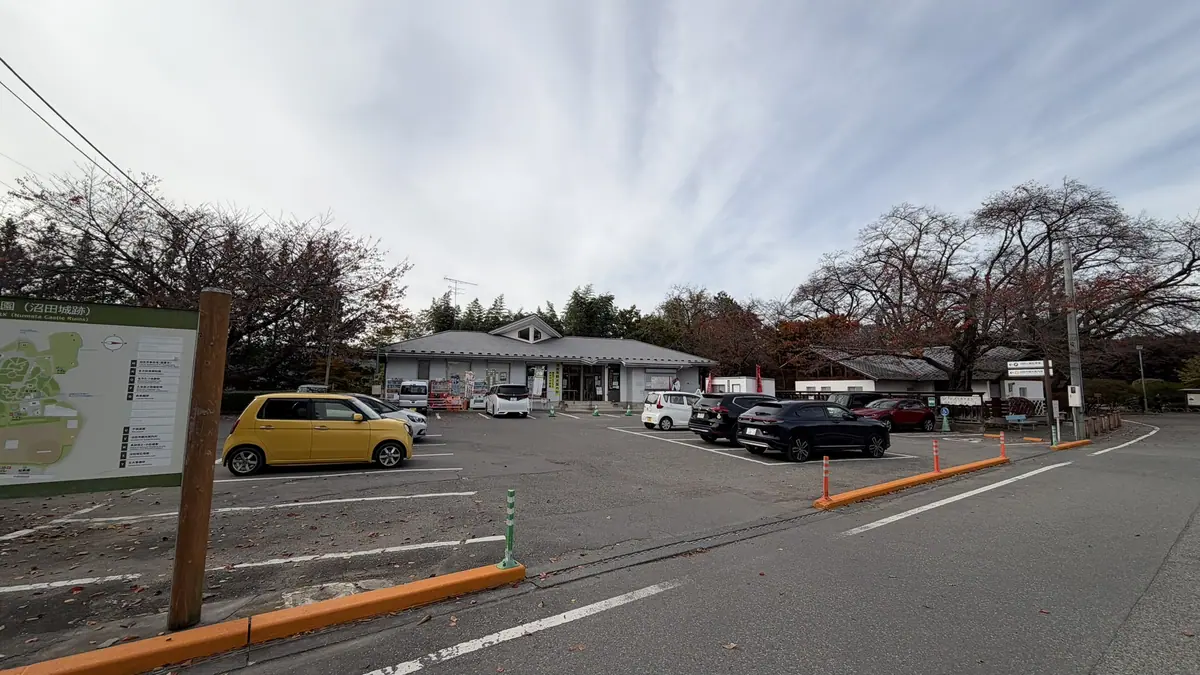
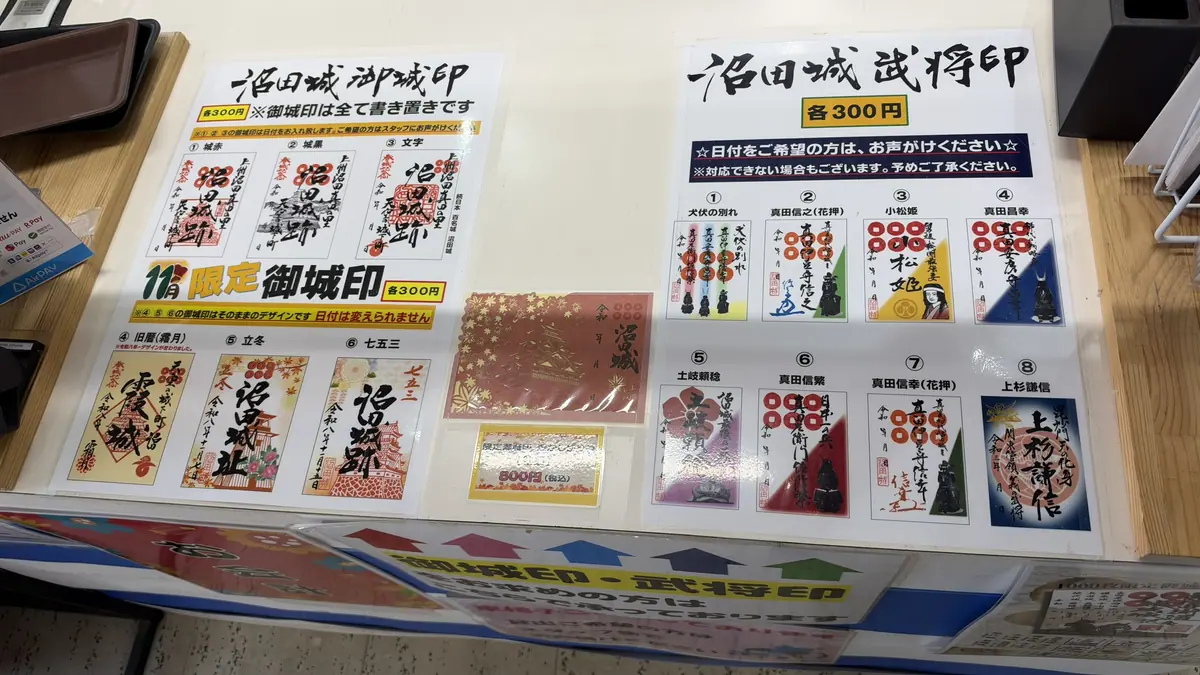
The tourist information center in the park keeps the stamp for the Continued Top 100 Japanese Castles stamp rally (run by the Japan Castle Foundation); on days when the center is closed, the tourism section of the city office (5th floor of Terrace Numata) handles it. The center also had castle stamps (gojoin, pre-written paper cards that castle visitors collect) and warrior stamps (bushoin, the same idea for famous samurai) on sale (November 14, 2026): 300 yen each, with November-only designs at 300 yen and a limited edition at 800 yen. Limited designs change through the year, so check prices and stock with the center.
The Sanada, Komatsuhime and the Sanada Maru connection
In 1580, Sanada Masayuki, then a general serving Takeda Katsuyori, took Numata Castle. In 1589 a ruling by Toyotomi Hideyoshi, who was unifying Japan, gave the castle to the Hojo clan. That autumn the Hojo commander of Numata Castle seized nearby Nagurumi Castle from the Sanada, which led to Hideyoshi's attack on the Hojo at Odawara in 1590. After the Hojo fell, Numata Castle was given to Masayuki's eldest son, Nobuyuki. The Odawara campaign is covered in our Odawara Castle guide.
Nobuyuki's wife, Komatsuhime, was the daughter of Honda Tadakatsu, one of Tokugawa Ieyasu's leading generals, and married into the Sanada as Ieyasu's adopted daughter. At the time of the Battle of Sekigahara in 1600, Masayuki and his younger son Nobushige (better known as Yukimura) sided against Ieyasu while Nobuyuki stayed with him. A well-known story says that when Masayuki and Nobushige tried to enter Numata Castle, Komatsuhime refused them. Episode 36 of NHK's 2016 historical drama Sanada Maru shows her turning them away from above the gate; that is the drama's version, not a record of exactly what happened. The Numata tourism association also tells the story on its Numata Park page. For more on the Sanada family, see our guide to the Sanada Maru taiga drama.
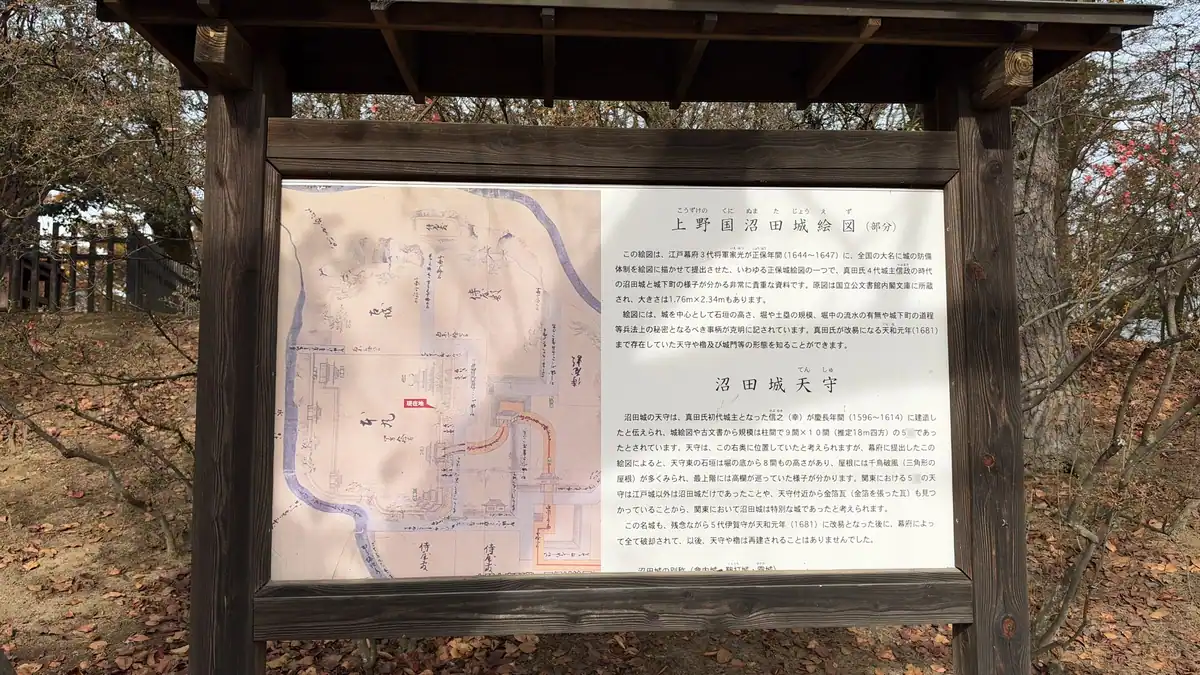
In 1681, the lord Sanada Nobutoshi was removed from his domain, and in 1682 the castle was demolished on the shogunate's orders and its moats filled in. The “Map of Numata Castle in Kozuke Province” on the park's board is one of the Shoho castle maps that domains drew up for the shogunate; the city's timeline says it was submitted around 1645. It shows the castle and castle town in the time of Nobumasa, the fourth Sanada lord.
Combining Numata with Nagurumi and Ogawa Castles
Numata Castle is No. 116 on the Continued Top 100 Japanese Castles list; No. 115 is Nagurumi Castle in Minakami, and No. 117 is Iwabitsu Castle in Higashiagatsuma (Japan Castle Foundation). Nagurumi was built as a forward base for attacking Numata, and the viewpoint board in the park points toward both Nagurumi and Ogawa Castles.
Nagurumi Castle and Ogawa Castle are both in Minakami; allow time for the drive between the castles. In central Numata there are also Shogakuji temple, with Komatsuhime's grave, and Haruna Shrine, linked to Sanada Nobuyuki (our Shogakuji and Haruna Shrine guide).
Guides to the Numata and Minakami sites
The other places I visited on the same day, November 14, 2026, each have their own guide.
 Day-trip routeA day by car around Numata and Minakami8 stops from Jomo-Kogen Station: the order, the timings, and the train and car costsSee the route →
 Castle ruins | MinakamiOgawa Castle RuinsThe dry moat, the main enclosure and how to get thereSee the guide →
 Castle ruins | MinakamiNagurumi Castle RuinsEnclosures, dry moat and wooden bridge. The free guide and the castle stampsSee the guide →
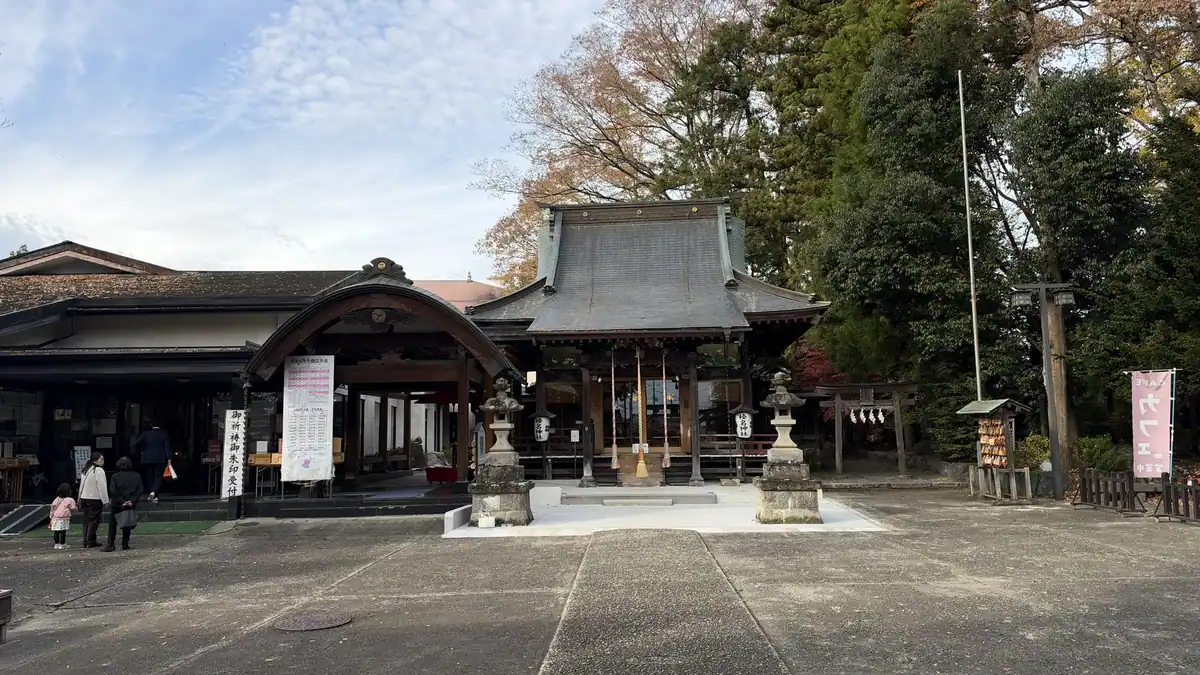 Temple and shrine | NumataShogakuji Temple and Haruna ShrineKomatsuhime's grave, a shrine tied to Sanada Nobuyuki, and goshuinSee the guide →
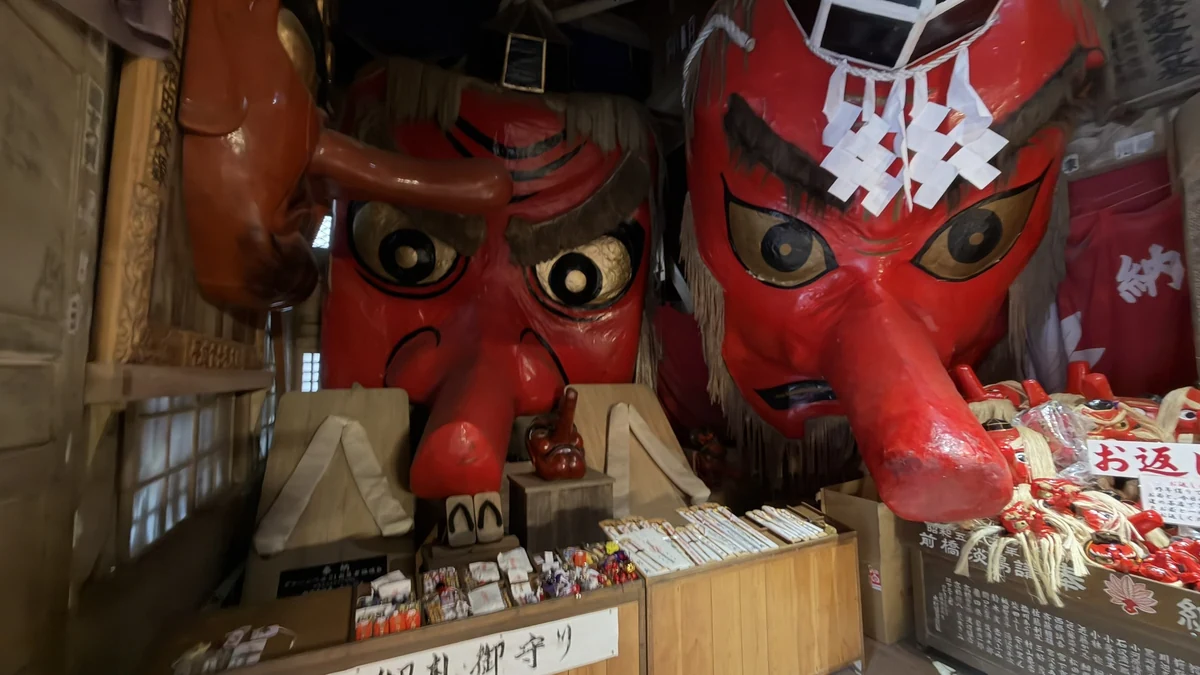 Temple | NumataKashozan Mirokuji TempleThe giant tengu masks, and the hollyhock and paulownia crests on the main hall. Notes on the mountain road and busesSee the guide →
Tours and activities around Numata
PRThis section contains affiliate links to KKday. If you book through them, this site earns a commission.
KKday lists tours and activities in and around Numata. Check the details, prices and dates on the KKday page.
KKday
Numata travel guide
KKday's page for Numata, Gunma, in English, where you can browse tours and activities.
See on KKdayWhere to stay before or after Numata Castle
PRThis section contains affiliate links to Agoda, Jalan, Rakuten Travel and Yahoo! Travel Japan. If you book through them, this site earns a commission.
If you want to keep sightseeing in Numata the next day, stay in town; for a hot-spring night, Oigami Onsen is the base. Prices and availability differ between booking sites, so check them for your dates.
Search Numata
Hotels in Numata
Central Numata
For travelers who want to see the park and the museum again the next day. Numata Station is about 80 m below the town center, so the walk from the station depends on where your hotel is.
Agoda searches Numata; Jalan and Rakuten Travel search "Numata"; Yahoo! Travel covers the Minakami, Oze and Numata area. Not every property is close to the castle. Jalan, Rakuten Travel and Yahoo! Travel are Japanese-language sites; your browser's translation feature can help.
Browse Numata hotels on AgodaBrowse Numata hotels on JalanBrowse Numata hotels on Rakuten TravelBrowse Minakami, Oze & Numata hotels on Yahoo! Travel JapanNear the park
Hotel Route-Inn Numata
Nishikurauchi-machi, Numata. About 10 minutes on foot to Numata Castle Park (hotel information)
According to the hotel, it is 3 minutes by car or 10 minutes on foot to the park, about 18 minutes on foot (5 by car) to Numata Station, and about 8 minutes by car to Numata IC. It has a large bath, and breakfast is a free buffet (Jalan listing).
Check the hotel's location and the route to the station and the park on a map. Jalan, Rakuten Travel and Yahoo! Travel are Japanese-language sites; your browser's translation feature can help.
Check rates on AgodaCheck rates on JalanCheck rates on Rakuten TravelCheck rates on Yahoo! Travel JapanHot-spring inn
Ginshotei Awashima (Oigami Onsen)
603 Oigami, Tone-machi, Numata. About 20 minutes by car from Numata IC
A traditional Japanese inn (ryokan) at Oigami Onsen. It runs a free shuttle (reservation required) from Jomo-Kogen and Numata stations.
Reserve the shuttle by 16:00 the day before. Pickups leave Jomo-Kogen Station at 14:00 and Numata Station at 14:20; drop-offs leave Oigami Onsen at 10:00 and Numata Station at 10:40, and reach Jomo-Kogen Station at 11:00 (inn website). Plan your sightseeing around the shuttle times. Jalan, Rakuten Travel and Yahoo! Travel are Japanese-language sites; your browser's translation feature can help.
Check rates on AgodaCheck rates on JalanCheck rates on Rakuten TravelCheck rates on Yahoo! Travel JapanBefore booking, check the dates, number of guests, total price and cancellation terms.
FAQ
No. The castle was demolished in 1682 and the tower was never rebuilt. What you can see is the remains of the main-enclosure moat, the stone wall and steps of the west turret platform, and a reconstructed bell tower.
I spent about 30 minutes in the history museum and about 70 minutes in Numata Park for the castle site and the Old Ubukata House (from about 12:07 to 13:15), without timing the two separately.
No. It is on the second floor of Terrace Numata in the town center, about 500 m from the park's car park. It is also separate from the Ubukata Memorial Museum in the park.
No, it is a copy. The tower reconstructs one built at the old Numata town hall in 1899 and was moved into the park in 1983. The original castle bell, cast in 1634 on the orders of Sanada Nobuyoshi, is on display at the history museum.
No. It is a merchant house from around the late 17th century, moved to the site of the second enclosure in 1973. It is an Important Cultural Property of Japan. Entry is 110 yen for adults, last entry 15:30.
For the history museum and the Old Ubukata House alone, it costs the same as two single tickets (330 yen). It saves money only if you also visit the Ubukata Memorial Library, the Old Toki House Western Building or the Ubukata Memorial Museum.
Numata Station is on the JR Joetsu Line, not the shinkansen: change at Takasaki. From the station it is about 23 minutes uphill on foot to the park (the town center is about 80 m higher) or about 5 minutes by bus. Alternatively, take the Joetsu Shinkansen to Jomo-Kogen and a bus to the town center (about 40 minutes).
You need an International Driving Permit issued under the 1949 Geneva Convention, with your home license and passport; licenses from Switzerland, Germany, France, Belgium, Monaco and Taiwan need an official Japanese translation instead (JAF). Times Car car-sharing does not accept foreign licenses, so book a rental car, for example at Eki Rent-A-Car's Jomo-Kogen office (8:00–19:00).
The museum has the Shimonomachi car park, free for the first two hours (four hours in total if you get your ticket stamped at the museum). Numata Park has a main car park on the tourist-information side (45 cars) and an east car park (23 cars).
The tourist information center in the park sells castle stamps (gojoin) and warrior stamps (bushoin) and keeps the Continued Top 100 Japanese Castles stamp. When the center is closed, the stamp is handled by the city's tourism section on the 5th floor of Terrace Numata. Ask the center about current designs and stock.
Sources
The facts on this page were checked on the pages below on November 15–16, 2026, and the driving-license rules on November 16, 2026. Hours and fees can change, so check them before you go.
- Numata City: Numata City History Museum (Japanese)
- Numata City: Old Ubukata House (Japanese)
- Numata City: cultural facilities pass (Japanese)
- Numata City: cultural property pages (Japanese)
- Numata City: Sanada-related sites, Numata Castle (Japanese)
- Numata City: tourist information center (Japanese)
- Numata City: city timeline (Japanese)
- Numata tourism association: Numata Park (Japanese)
- Numata tourism association: Numata Castle site (Japanese)
- Japan Castle Foundation: Continued Top 100 Japanese Castles (Japanese)
- Hotel Route-Inn Numata: around the hotel (Japanese)
- Ginshotei Awashima: Access (Japanese)
- Minakami Tourism Association: access (Japanese)
- Japan-Guide: Getting to Minakami
- JAF: Driving in Japan with a foreign license
- Eki Rent-A-Car: Driver's license (English)
- Eki Rent-A-Car: Jomo-Kogen office (Japanese)
- Times Car: Membership (Japanese)


comment