

Kashozan Mirokuji Temple: The Giant Tengu Masks of Numata, Gunma — Getting There, Hours and What to See
Kashozan Mirokuji (Kashozan Ryugein Mirokuji) is a Soto Zen temple in the mountains of Numata, a small city in Gunma Prefecture, north of Tokyo. Inside its Chuhodo Hall are two enormous red tengu masks, the long-nosed mountain figures of Japanese folklore. I drove up on November 14, 2026, and spent about 35 minutes there, including about 17 minutes on the mountain trail behind the temple. This guide covers the temple grounds; the trail to the Oshodai rock and the summit of Mt. Kasho is a separate hike.
In this guide
Kashozan at a glance: giant tengu masks in the mountains of Gunma
Gunma Prefecture lies north of Tokyo. The Joetsu Shinkansen reaches Jomo-Kogen Station, the bullet-train stop for the Minakami and Numata area, in as little as 62 minutes from Tokyo (Minakami Town Tourism Association). Kashozan Mirokuji sits further north, in the mountains above Numata, and is easiest to reach by car.
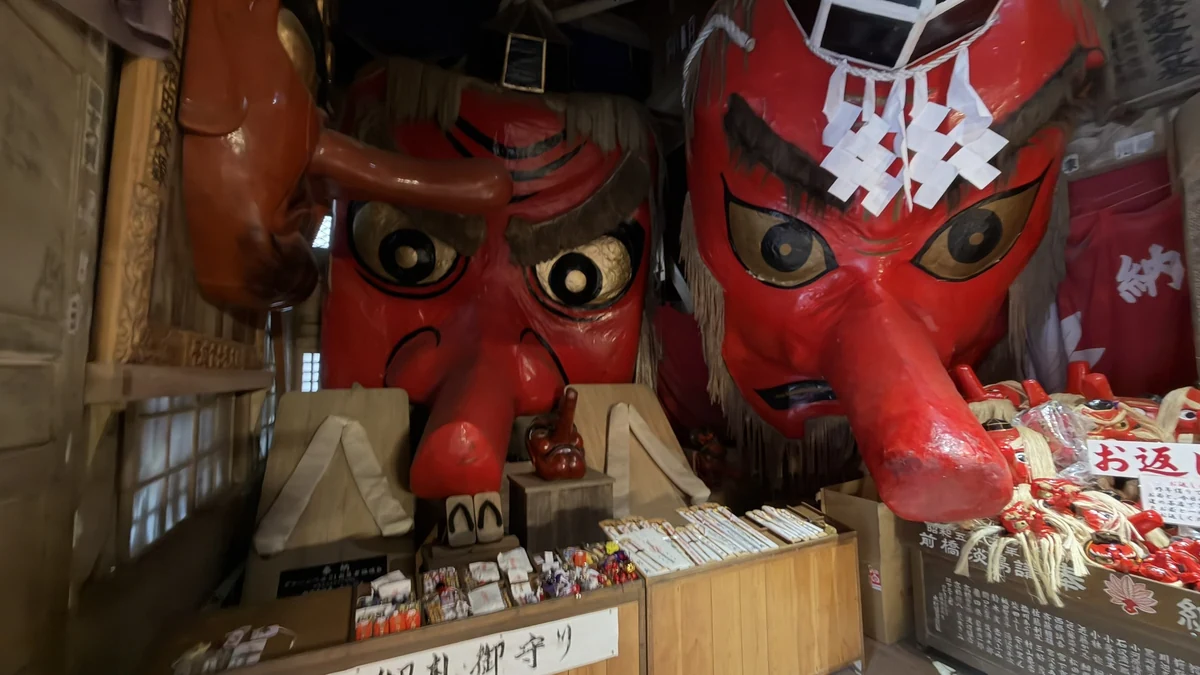
Tengu are long-nosed, red-faced figures from Japanese folklore, often linked with mountains. At Kashozan they are treated as guardians of the temple, and the masks are objects of worship rather than decorations. The largest mask was donated in 1939 and measures about 6.5 meters (about 21 feet) from top to bottom; the temple calls it Japan's largest tengu. I had never seen a tengu mask anywhere near that size, and it is what stayed with me most.
Note that "Kashozan" is also the name of the mountain (Mt. Kasho). You do not need to hike to see the masks: they are inside the temple grounds, up a flight of stone steps from the parking lot. The trail to the Oshodai rock and the summit starts behind the temple and is a different outing.
| The temple | Soto Zen. Founded in 848, Soto Zen since 1456. Giant tengu masks in Chuhodo Hall, crests on the main hall, Kashodo Hall across a bridge. Free entry |
|---|---|
| Getting there | By car, about 25 minutes from Numata IC. By bus only on weekends, holidays and Dec 29–Jan 3, then a 45-minute walk. No daytime buses toward the temple on weekdays |
| Time | Open 6:00–17:00 in summer, 6:30–16:30 in winter. I spent about 35 minutes, including 17 minutes on the trail |
| Good to know | Signs and boards are in Japanese, and so are the official websites. A camera-translation app helps |
Getting there from Tokyo: rental car or weekend bus
There are two practical ways to reach the temple. Most visitors will find a car far easier, because the Kashozan Line, a Numata city bus (not a temple shuttle), has daytime buses toward the temple only on weekends and holidays, and the stop is a 45-minute walk from the temple.
| Option 1: Shinkansen + car | Take the Joetsu Shinkansen from Tokyo to Jomo-Kogen Station (fastest 62 minutes). Rent a car at the station and drive via Numata; from Numata IC on the Kan-Etsu Expressway it is about 25 minutes (13 km) to the temple. Free parking for 60 cars |
|---|---|
| Option 2: Train + bus + walk | Go to JR Numata Station on the JR Joetsu Line (change at Takasaki). On weekends, holidays and Dec 29–Jan 3, take the E Kashozan Line bus from stop 3 to the Kashozan stop, then walk about 45 minutes (3.7 km) uphill to the temple |
Jomo-Kogen and Numata are two different stations. Jomo-Kogen is the Shinkansen station, in the town of Minakami; Numata Station is on the slower JR Joetsu Line, and the shinkansen does not stop there. Buses from Jomo-Kogen to central Numata take about 40 minutes (Numata City).
Rail passes: the Joetsu Shinkansen and the Joetsu Line are JR lines, and Japan-Guide lists the shinkansen to Jomo-Kogen as covered by the Japan Rail Pass. The Kashozan bus is a local bus, not a JR service, so a JR pass does not cover it.
Driving in Japan with a foreign license
| What you need | An International Driving Permit issued under the 1949 Geneva Convention, plus your home license and passport. Permits issued under other conventions, such as the 1968 Vienna Convention, are not accepted. Licenses from Switzerland, Germany, France, Belgium, Monaco and Taiwan need an official Japanese translation instead (JAF, Eki Rent-A-Car) |
|---|---|
| Time limit | Up to one year from your entry into Japan (JAF) |
| Rental at Jomo-Kogen | Eki Rent-A-Car's Jomo-Kogen office is in the parking area under the elevated tracks in front of the station, open 8:00–19:00 (checked November 15, 2026). Eki Rent-A-Car has an English booking site |
| Car sharing | I used a Times Car car-share car from Jomo-Kogen Station. Times Car does not accept foreign or international driving licenses for membership, so visitors from abroad should book a rental car instead |
| Other rentals | You can also search rental cars on Rakuten Travel (Rakuten Travel car rental, PR; Japanese-language site) |
| On the road | Japan drives on the left. The road up to the temple climbs and winds; take extra care in snow or after dark |
Where Kashozan Mirokuji is
Map: Google Maps. The Kashozan bus stop is not at the temple; it is a 45-minute walk (3.7 km) away.
Driving up, the mountain road climbs in tight curves. Soon after you turn in, a large gate appears on your right. I planned to look at it on the way back, but the way up and the way down are partly separate roads, and the downhill road did not pass it. If you want to see everything, look at the gate on the way up. Follow the signs on site for which way to drive, and do not assume there will be no oncoming cars.
Bus times on weekends and holidays (Numata City timetable, revised July 1, 2026; the same timetable runs from December 29 to January 3): from Numata Station at 9:20 (arriving 9:56), 12:26 (13:02) and 15:28 (16:04); back from Kashozan at 10:52 (arriving at Numata Station 11:30), 14:15 (14:53) and 17:02 (17:40). There are no daytime buses toward the Kashozan stop on weekdays.
Here is a sample plan based on the timetable and the walking time (I went by car). Taking the 9:20 bus, you arrive at 9:56 and reach the temple around 10:41 if the walk takes 45 minutes. To catch the 14:15 bus back, leave the temple around 13:15, which gives you a 15-minute margin. The tourism association's hiking page gives the walk as one hour (2.5 km), so allow more time if you are not a fast walker. The 12:26 bus gets you to the temple around 13:47, too late for the 14:15 bus, so you would return on the last bus at 17:02. The 15:28 bus does not work for a round trip on foot, because you could not walk to the temple and back in time for the last bus.
Admission, opening hours and prayer services
Entry to the temple is free (Numata City). The grounds are open 6:00–17:00 in summer and 6:30–16:30 in winter (Numata tourism association). From December to March there is snow, and the temple asks visitors to call before coming (+81-278-23-9500; phone hours 9:00–17:00 in summer and 9:00–16:30 in winter).
Prayer services (kito) are held year-round at 10:30, 11:30 and 13:30, according to the temple. They last 20–30 minutes and you register beforehand; times may change at New Year and during Golden Week (early May). The tourism association also lists a 6:00 service, so confirm the time with the temple if you want to attend. Zazen meditation, sutra copying and overnight training are arranged with the temple directly.
For goshuin (the hand-written temple seals that many visitors collect in a special book) and other temple items, ask at the temple. Kashozan also has a mask-borrowing custom: on your first visit you borrow a tengu mask from Chuhodo Hall and take it home. On your next visit you return it, dedicate a new mask to the temple, and borrow another (temple website). The tourism association says new masks are sold at shops near the temple gate. Ask the temple about the current procedure and costs.
What to see: the masks, the main hall and the bridge to Kashodo
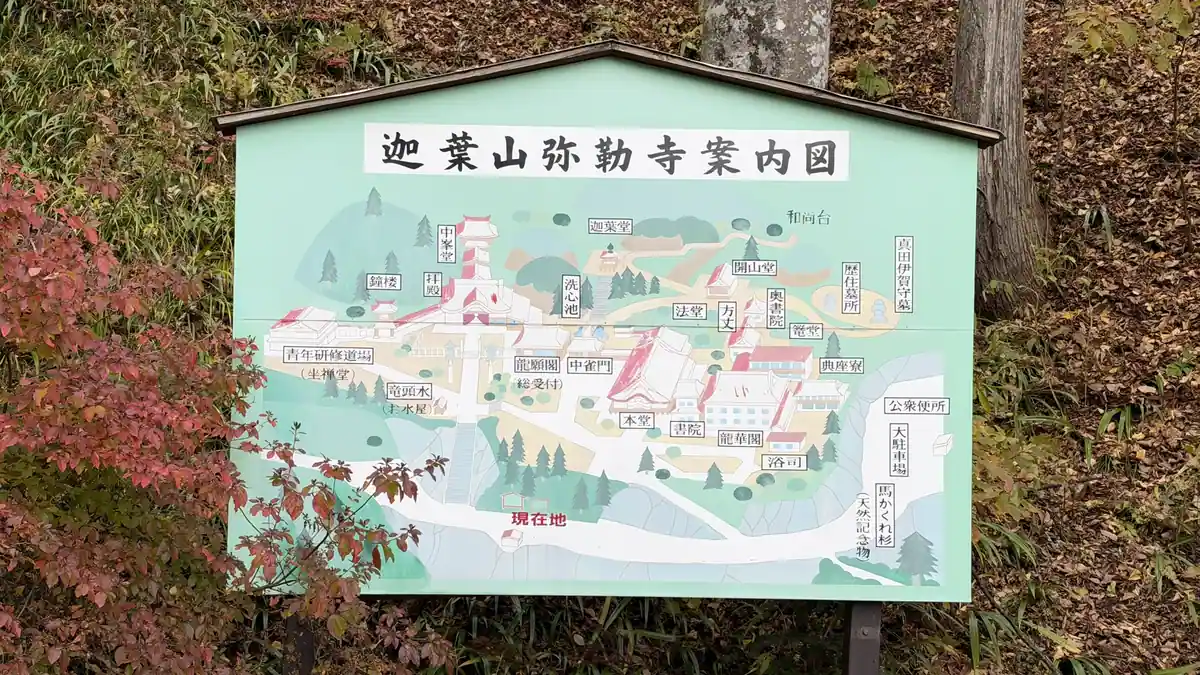
An illustrated map at the entrance shows Chuhodo Hall, the main hall, Kashodo Hall, the Founder's Hall and the Oshodai rock. It is in Japanese, so a quick photo of it can help you find your way.
The entrance steps
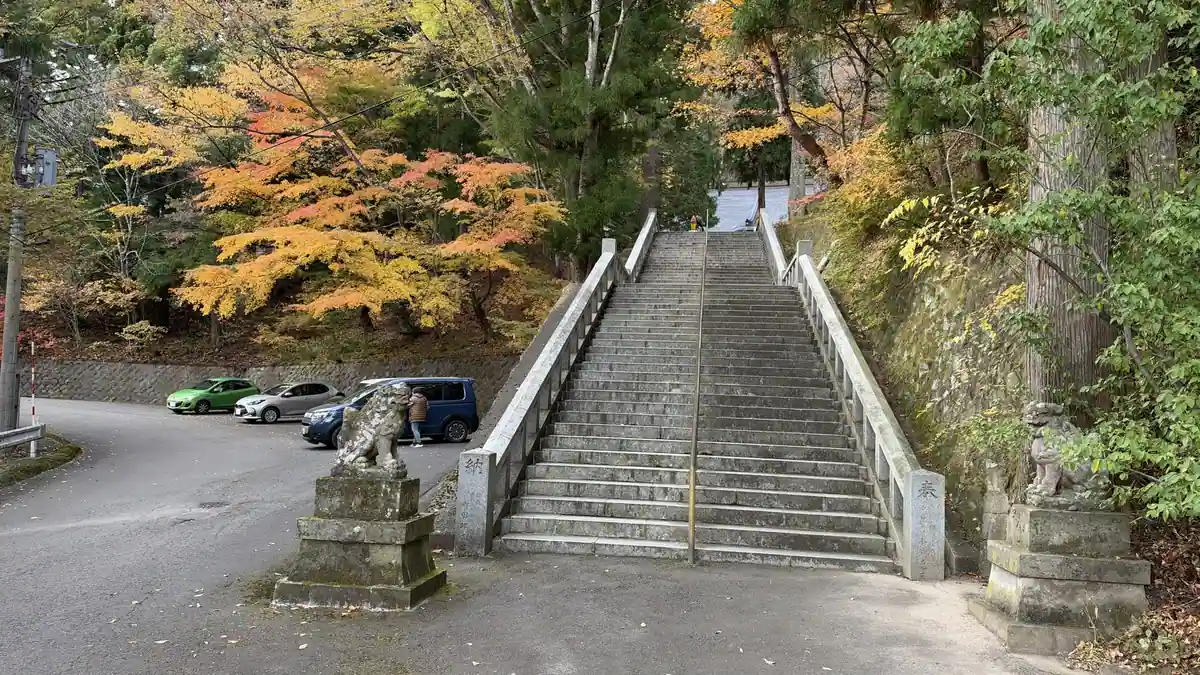
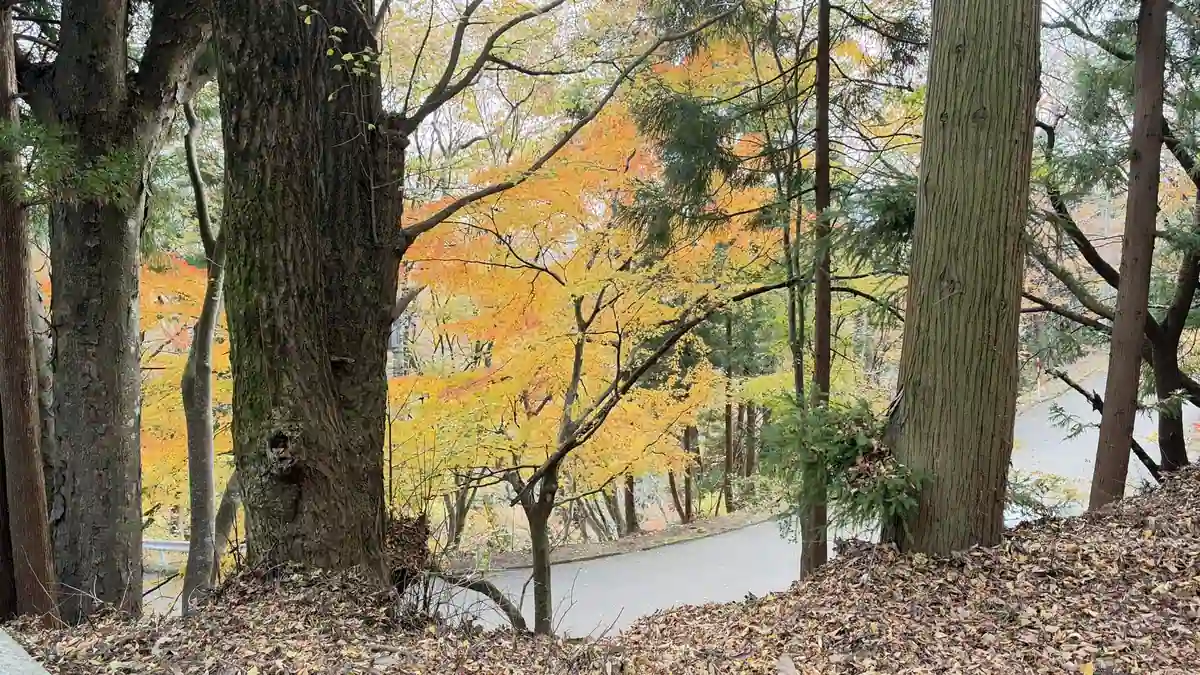
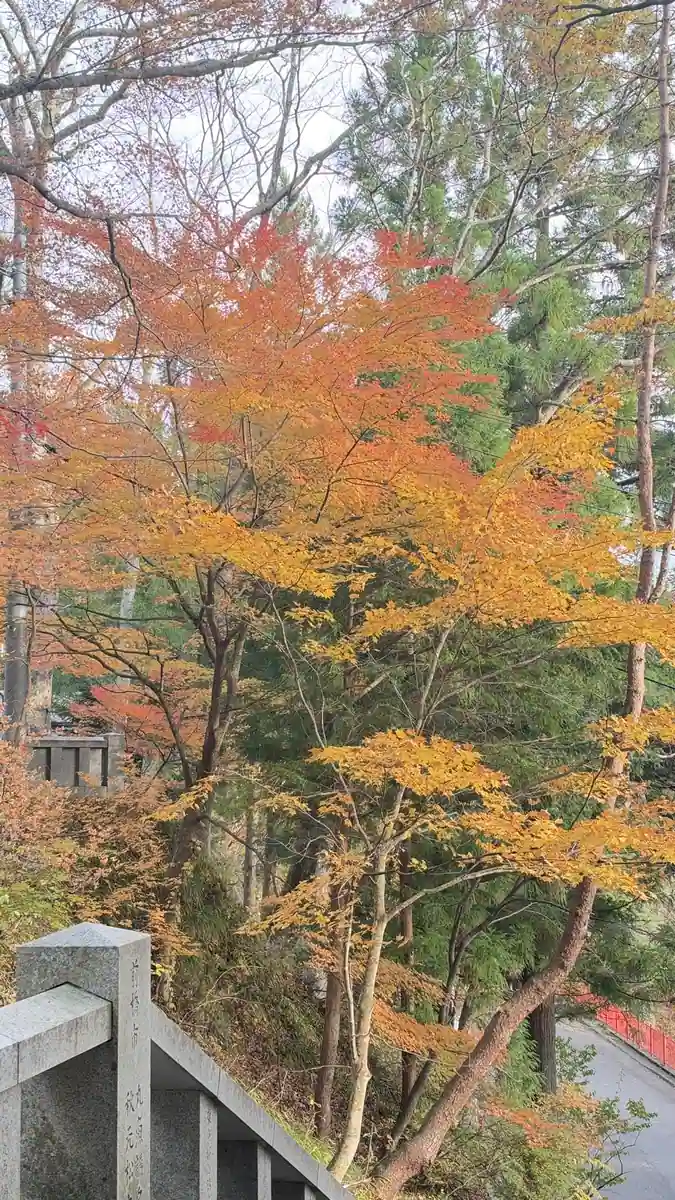
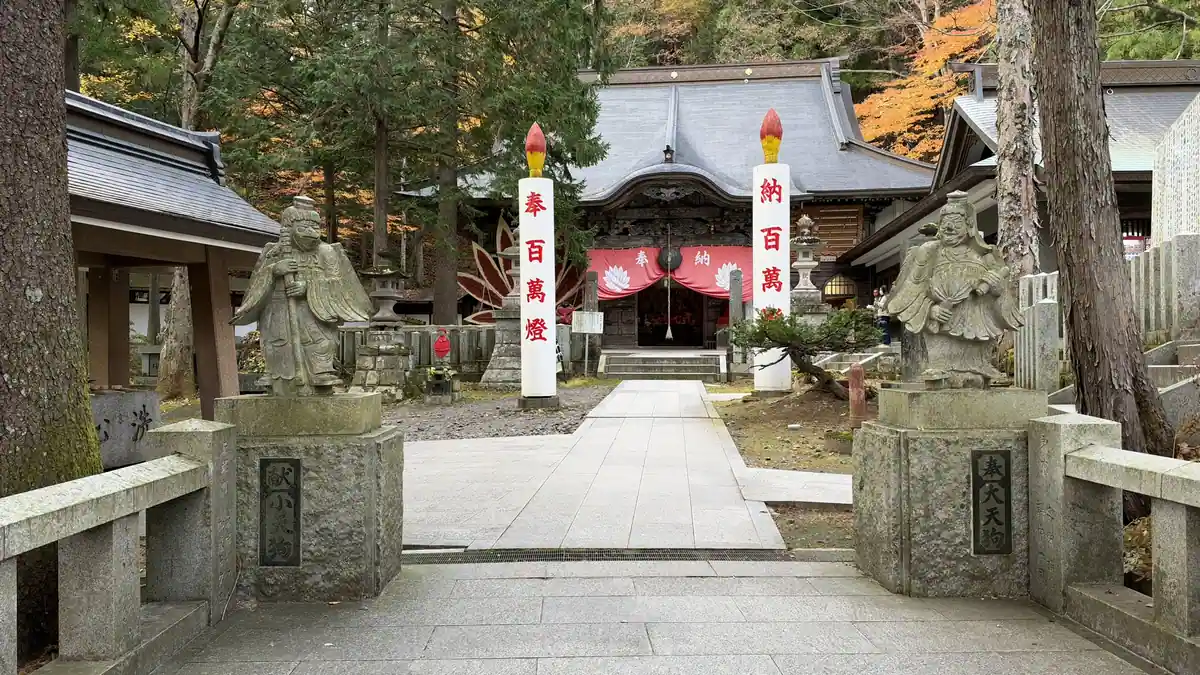
From the parking side, a long flight of stone steps leads up into the temple, with handrails on both sides and a pair of guardian lion-dogs. The trees were in autumn colors when I visited.
Tap a photo to enlarge
Chuhodo Hall: the giant tengu masks
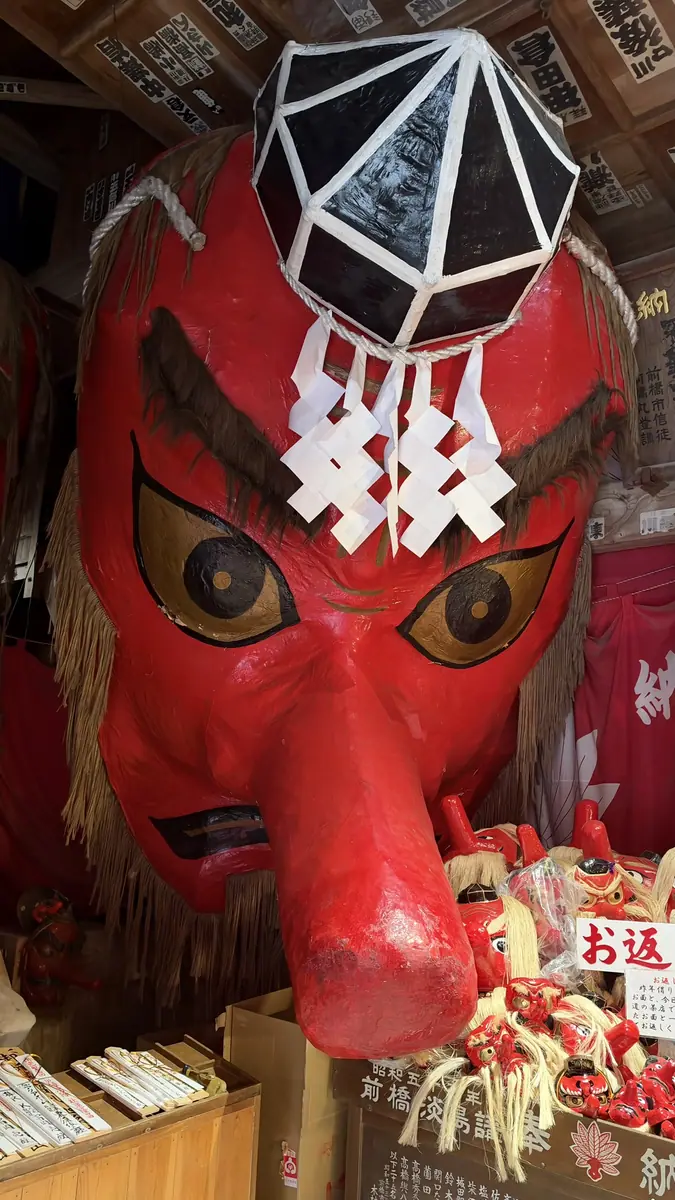
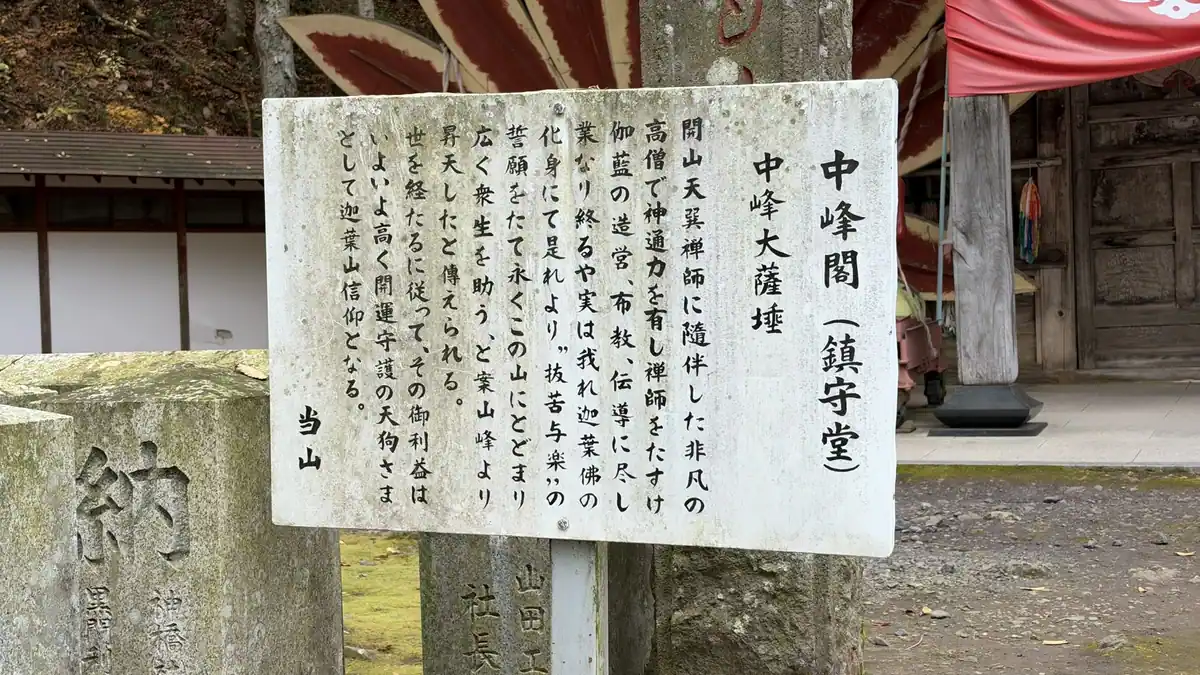
Chuhodo Hall stands beyond the Chujakumon Gate. The sign on site calls it Chuhokaku, the temple's guardian hall; the temple website calls it Chuhodo, and they are the same building. Inside, huge red-faced masks with long noses look out over the hall. I had never seen tengu masks this big.
According to the temple, the giant mask in Chuhodo was donated in 1939 and its face is about 6.5 meters tall (some say 6.7 meters). The temple's website introduces giant masks donated in 1939, 1970 and 1983. A Japan Tourism Agency text adds that the 1939 mask was dedicated to pray for men sent to war, and that a slightly smaller mask was given later to pray for traffic safety; it dates that one to 1971, a year off from the temple's list. I could not confirm which mask in my photos was donated in which year.
Tap a photo to enlarge
The main hall: hollyhock and paulownia crests
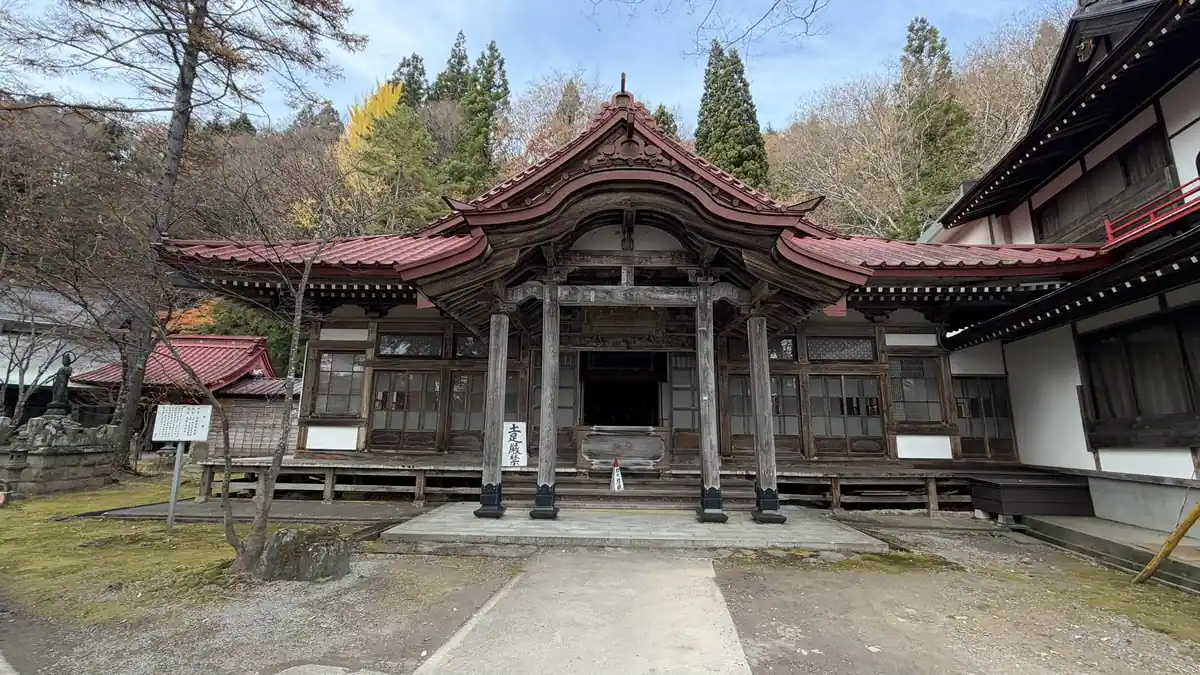
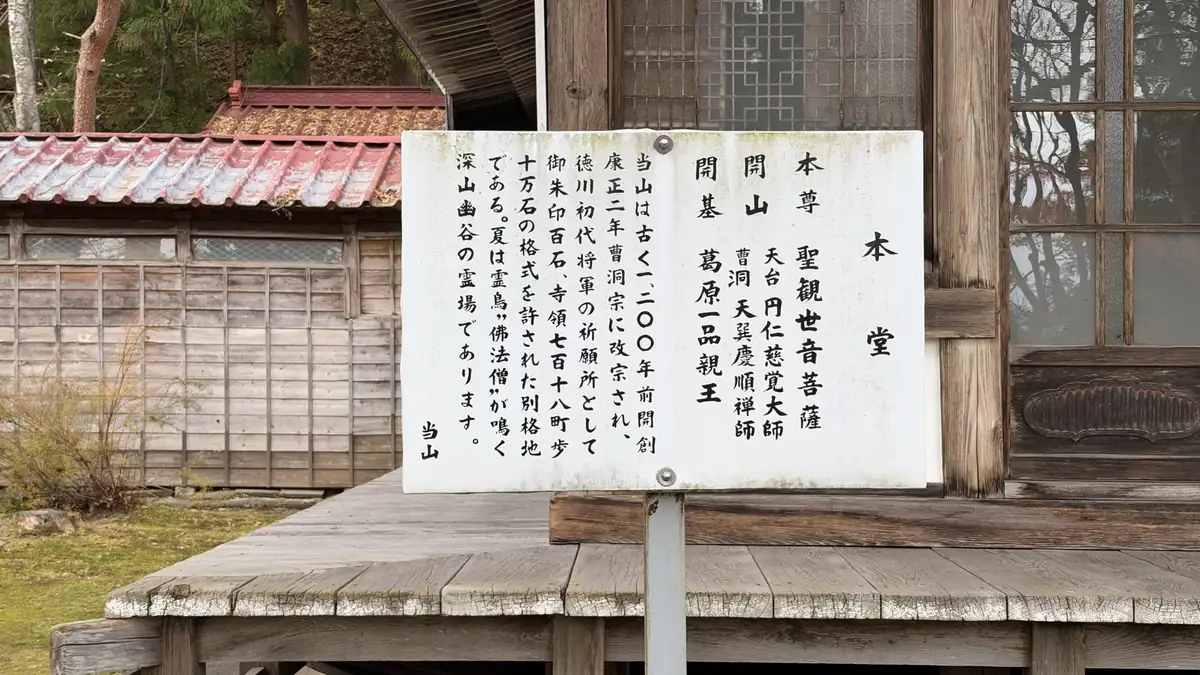
The sign at the main hall (Hondo) names its main image as Sho-Kannon Bosatsu, the Tendai founder as Jikaku Daishi Ennin, and the Soto Zen founder as the Zen master Tenson Keijun. Look up at the ends of the roof: one carries the hollyhock (aoi) crest, the family crest of the Tokugawa shoguns. The temple says it served as the prayer temple of Tokugawa Ieyasu, the first Tokugawa shogun.
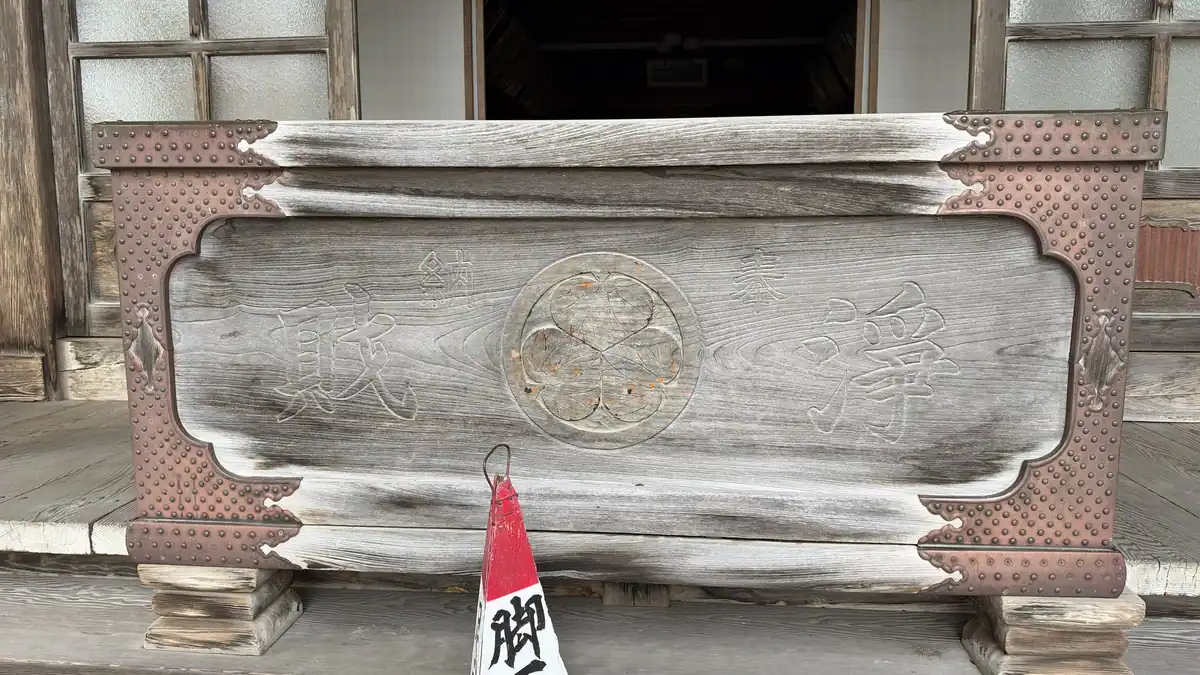
Another roof end carries a different crest, the paulownia (kiri). There is also a wooden box in front of the hall with a round crest in the center. You can enlarge each in the photos below. I could not find out when, or by whom, the crests were added.
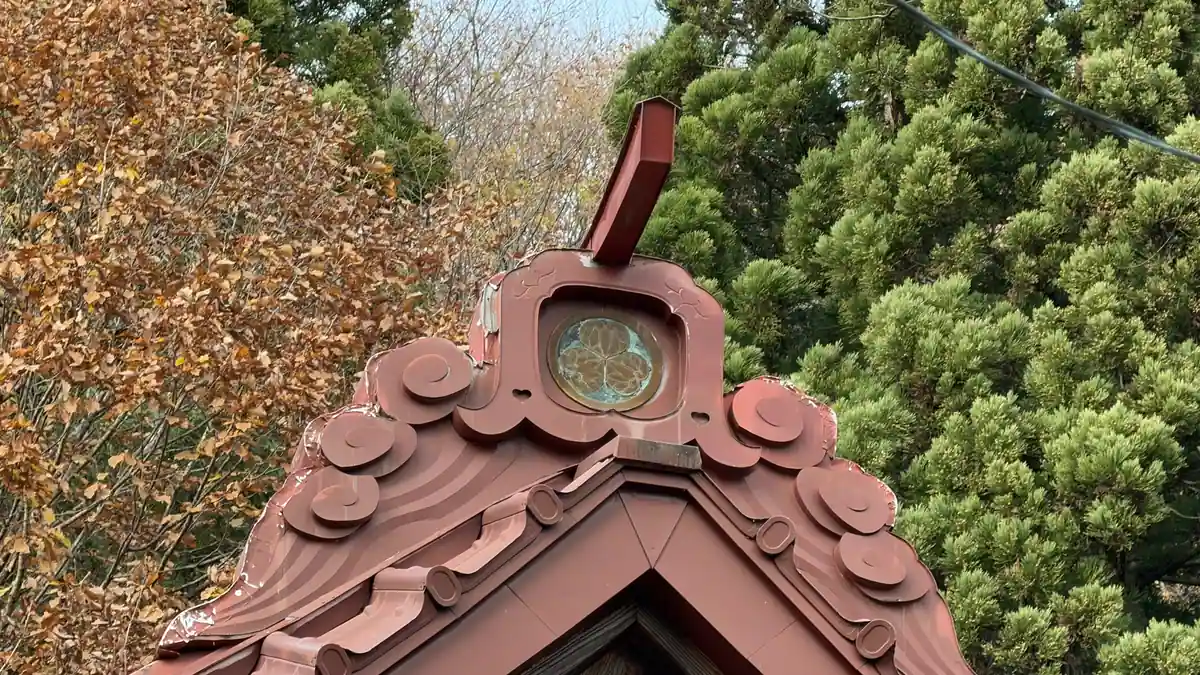
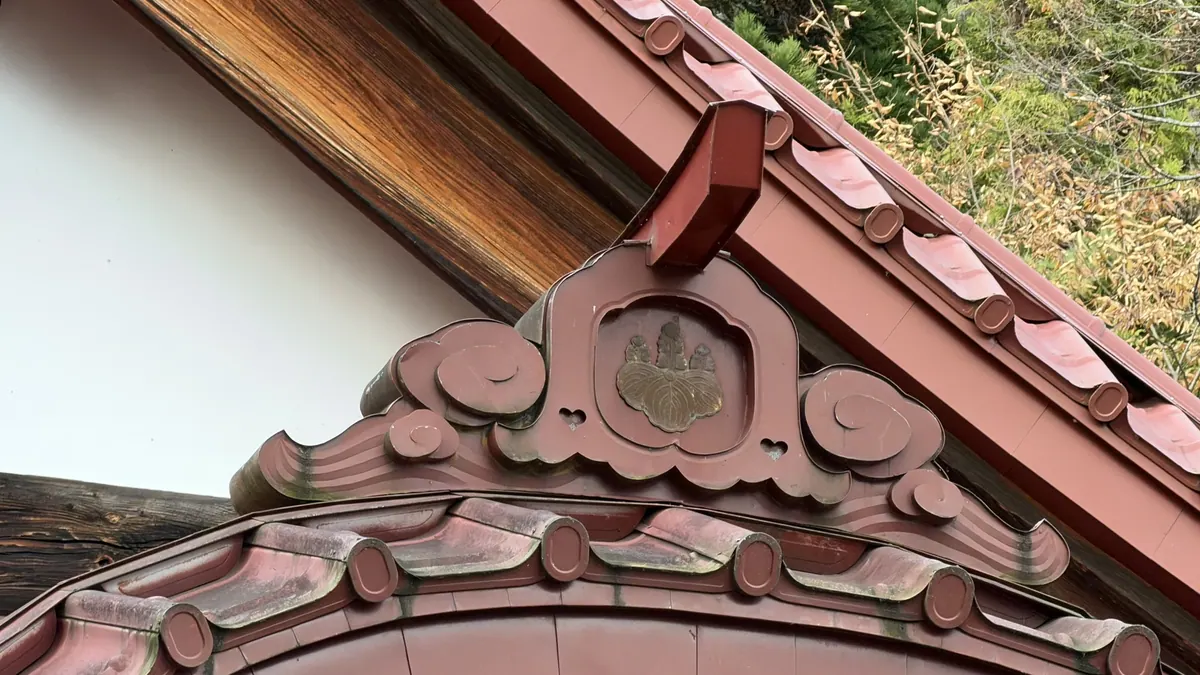
Tap a photo to enlarge
The arched bridge, Kashodo Hall and the Founder's Hall
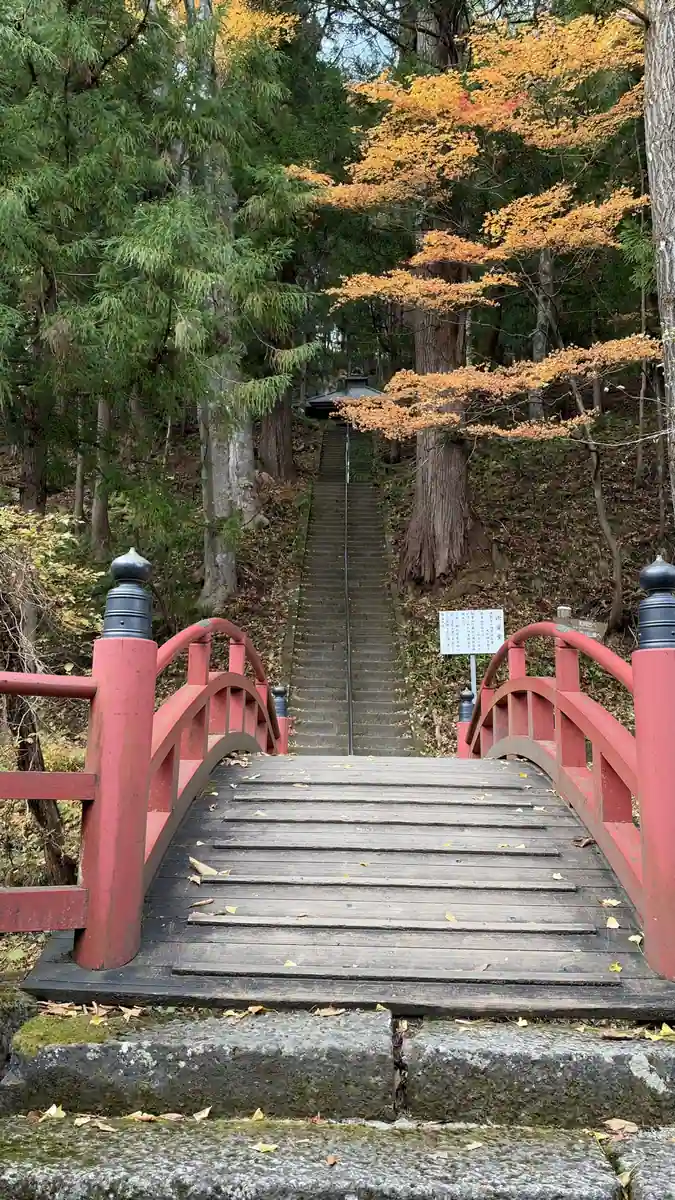
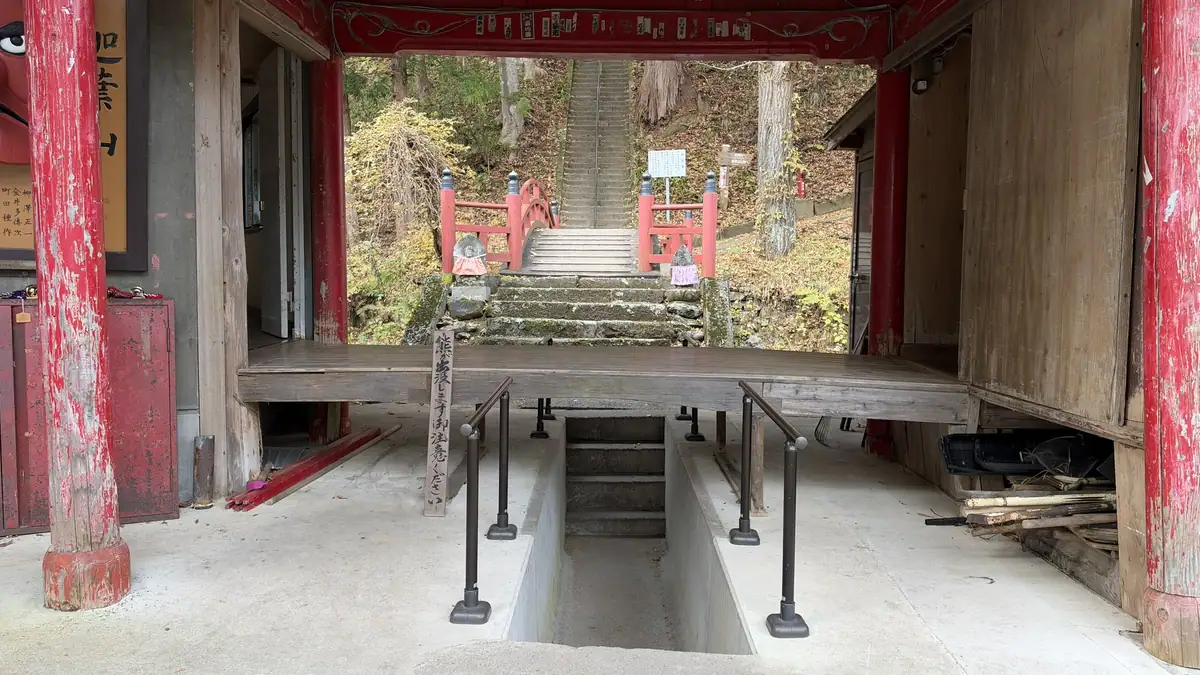
Under the covered corridor that links Chuhodo and the main hall, a passage leads down a short flight of steps and then back up. Beyond it is an arched bridge with red railings, and across the bridge a staircase climbs to Kashodo Hall.
Kashodo enshrines Mahakasyapa (Kasho in Japanese), one of the Buddha's leading disciples; the sign says the mountain's name comes from him. The steps to Kashodo climb beside a huge old tree. The Founder's Hall (Kaisando) is a separate small hall, with a sign naming both Ennin, the temple's Tendai founder, and Tenson Keijun, its Soto Zen founder.
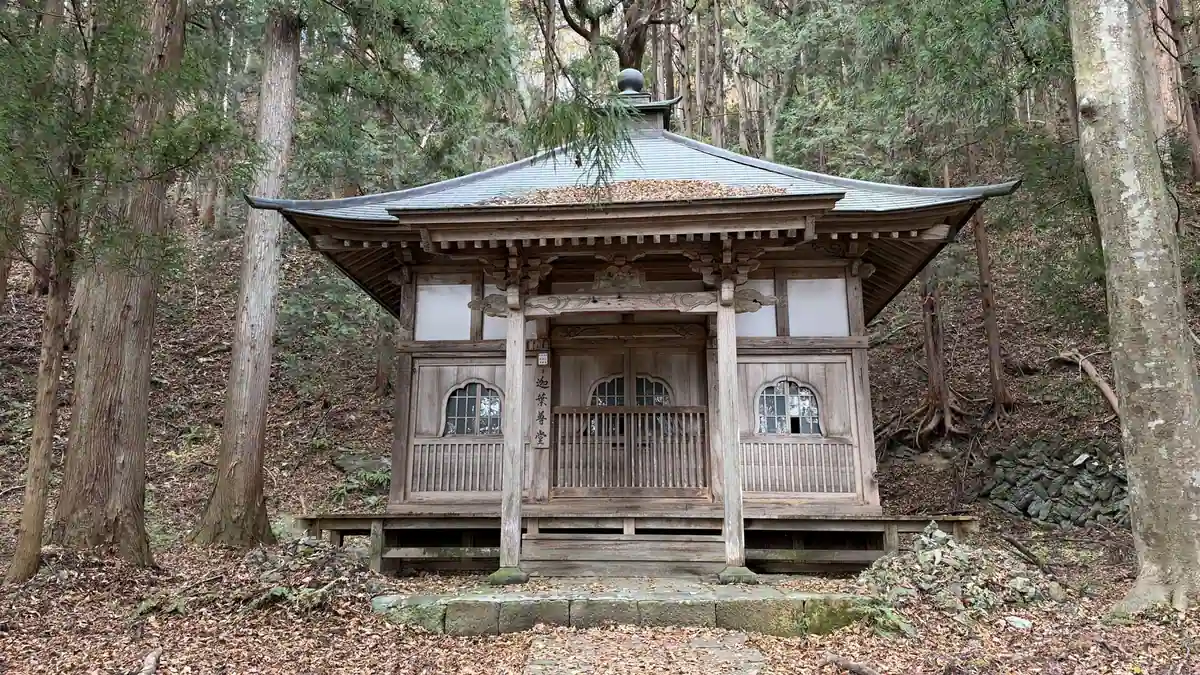
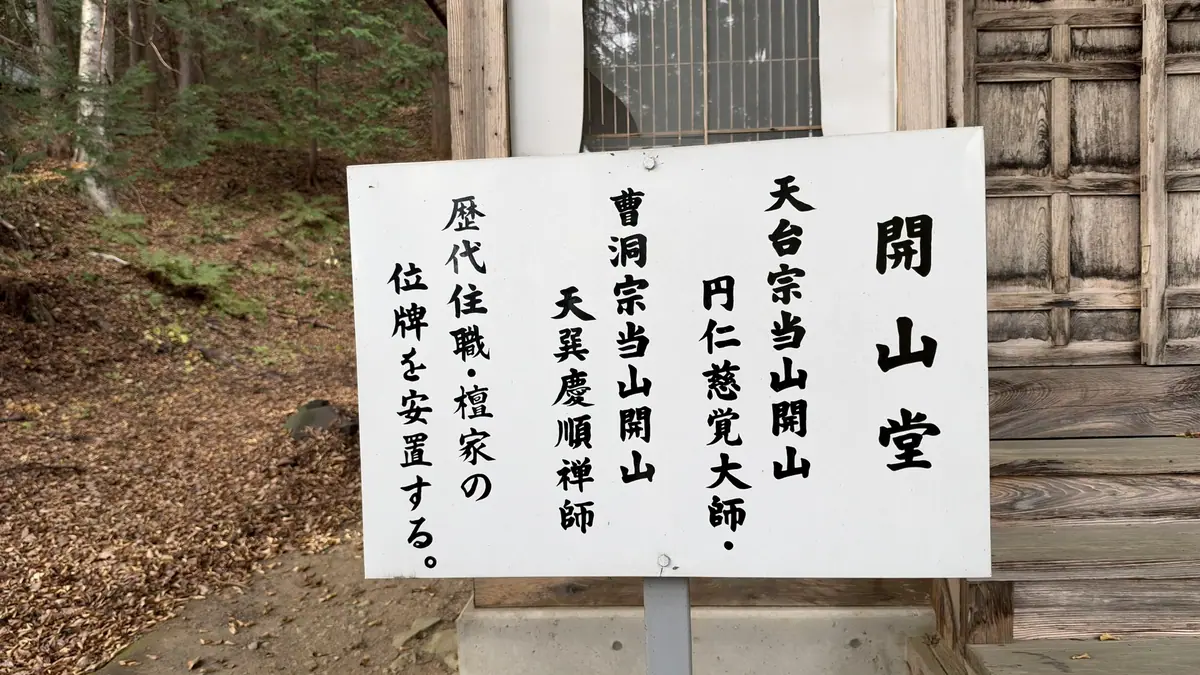
Tap a photo to enlarge
The trail to Oshodai: how far I went
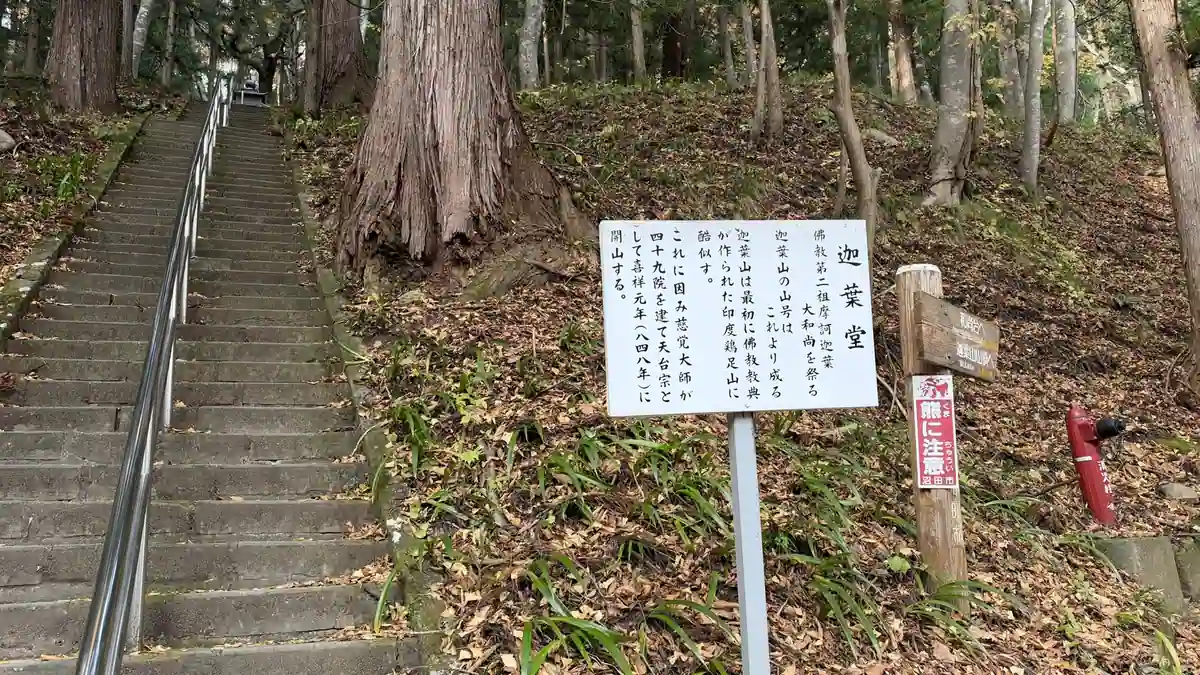
To the right of the steps up to Kashodo, a mountain trail leads to the Oshodai rock and on to the summit of Mt. Kasho. Signs at the bottom of the steps read "To Oshodai" and "To the summit of Kashozan", along with a "Beware of bears" warning (Numata City); black bears live in Japan's mountains.
I walked partway up, from about 14:55 to 15:12. I turned back at a large fallen tree: Google Maps showed I was only about halfway to Oshodai, and I did not want to be caught on the trail after dark. I did not reach Oshodai or the summit, so this guide only describes the part I walked.
That part was quite steep, with muddy patches. Hiking boots are a good idea, trekking poles help on the mud, and since a sign warns of bears, a bear bell is worth carrying. The tourism association's hiking page gives about one hour (about 2 km) from the temple to the summit, which stands at 1,322.4 meters. Check the signs on site before you set off.
Tokugawa links and the tengu tradition
According to the temple, Kashozan was founded in 848 by the monk Jikaku Daishi Ennin at the wish of Prince Kazurahara, a son of Emperor Kanmu. It began as a temple of the Tendai school and became Soto Zen in 1456 under the Zen master Tenson Keijun (Numata City). The history board in the grounds says it later became the prayer temple of the first Tokugawa shogun, Ieyasu, and was granted temple lands worth 100 koku and the standing of a 100,000-koku domain. (A koku was a measure of rice used to rank lands and lords.) For more on Ieyasu himself, see the life of Tokugawa Ieyasu and Tokugawa Ieyasu sites in Japan.
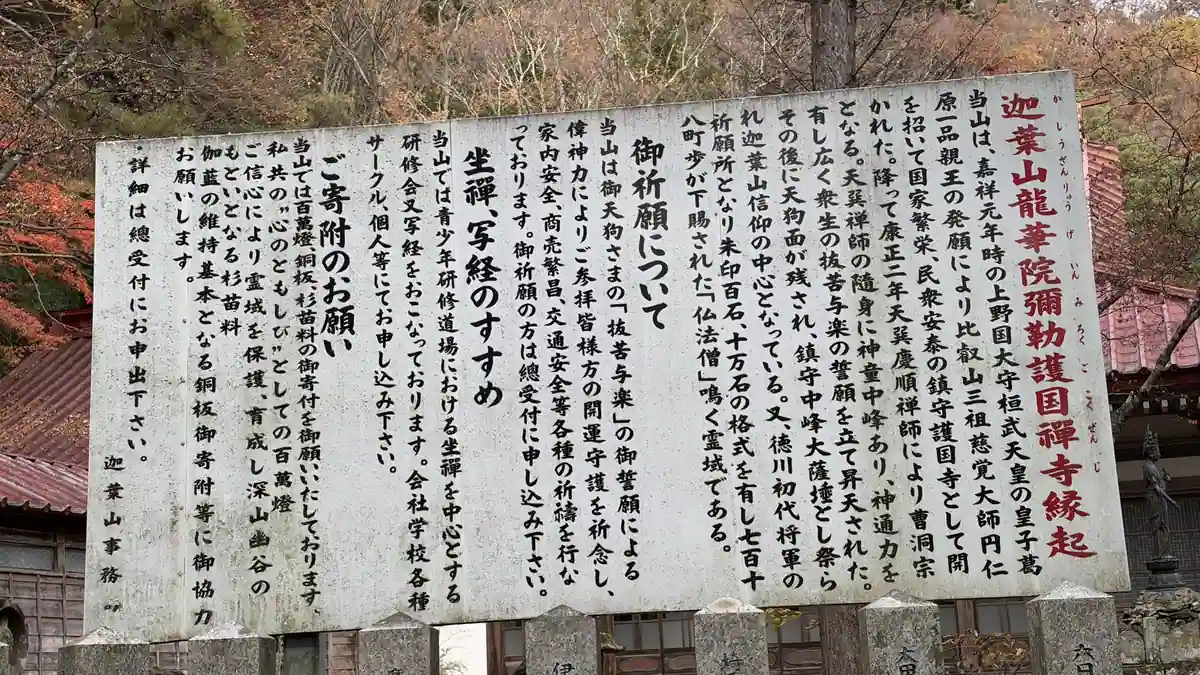
The temple's own story of the masks goes like this. According to the sign at Chuhodo, a learned monk named Chuho, who followed Tenson, worked hard to build the temple and spread its teaching. He revealed that he was an incarnation of Kasho Buddha and ascended into the sky from the mountain. The temple's history board adds that a tengu mask was left behind and is worshipped as the guardian Chuho Daisatta, the heart of the Kashozan faith.
The Japan Tourism Agency's text on Kashozan adds the local background. From the mid-19th to the early 20th century, when silk farming was a major industry here, farmers believed tengu protected their silkworms and hung masks in the rooms where the worms were raised. The custom of borrowing a mask is thought to date from the late 19th century.
The Tokugawa link survives as a tradition told on the history board and the temple website. The giant masks on display were all donated in the 20th century, long after Ieyasu's time, and I could not find out who added the hollyhock and paulownia crests to the roof, or when.
The map at the entrance also marks the grave of "Sanada Iga-no-kami". Numata City lists a grave said to be that of Sanada Nobutoshi, the last Sanada lord of Numata, at this temple. I could not confirm that the two refer to the same grave, and it does not appear in my photos.
Autumn colors and the special opening
The tourism association gives late October to mid-November as the usual peak for autumn colors. On November 14, 2026, trees beside the steps and on the slopes of the grounds were bright yellow and orange. Timing varies from year to year.
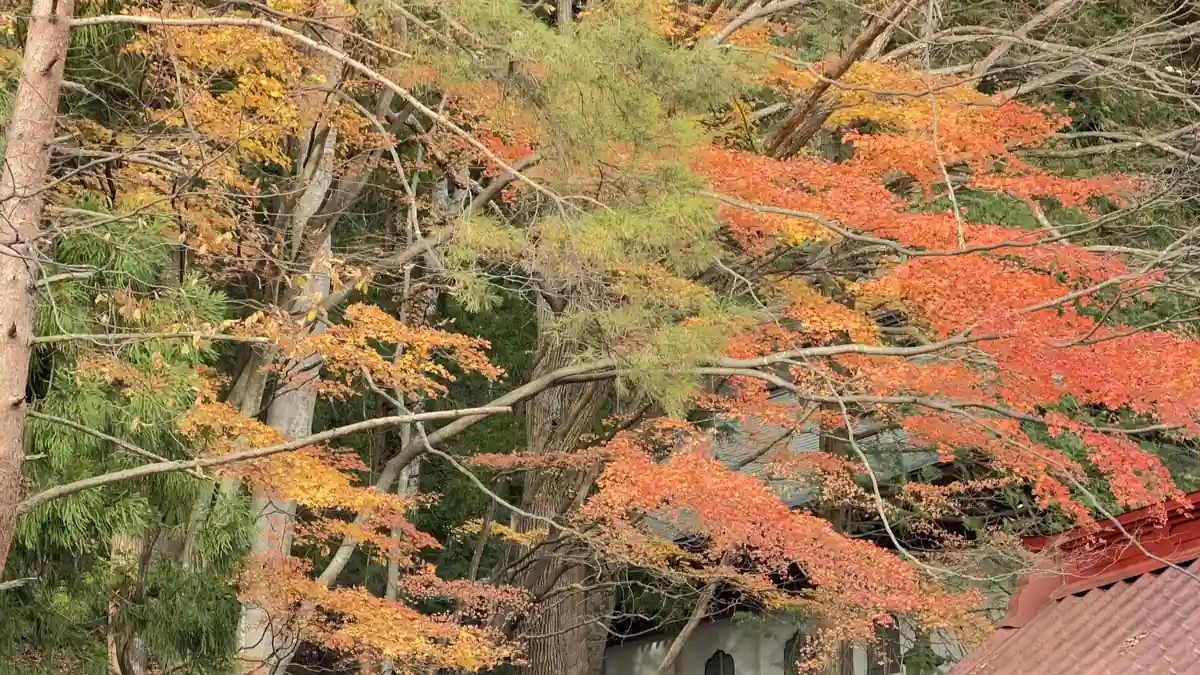
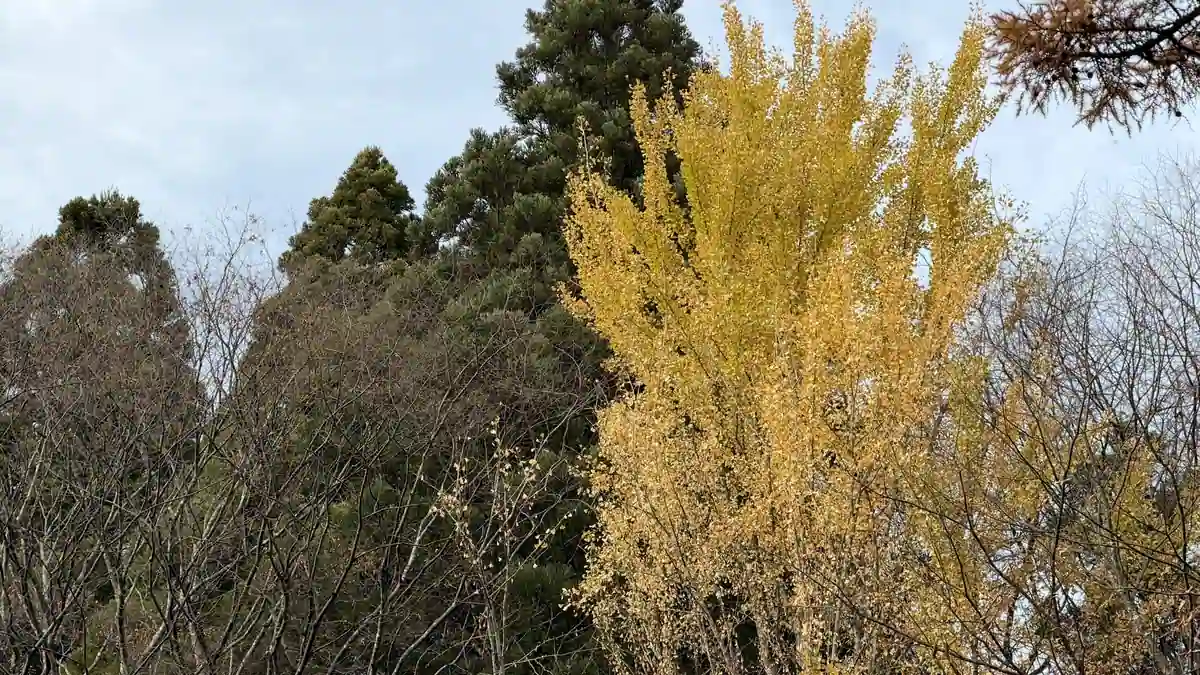
Tap a photo to enlarge
Once every ten years, the temple holds a Daikaicho, a special opening of the shrine cabinet in the inner sanctuary of Chuhodo. The last one ran from April 21 to May 28, 2025 (tourism association); the next is planned for April 28 to May 28, 2035 (temple website). It is not being held in 2026.
Combining Kashozan with Numata
The temple is in the mountains, away from central Numata: about 25 minutes by car from Numata IC, or a bus ride plus a 45-minute walk on weekends. If you also want to see the castle ruins and temples in the city, plan the trip up to Kashozan as its own block of time. With a car, it fits into a day of Numata sightseeing; by bus, the walk from the stop and back takes up much of the day.
Guides to the Numata and Minakami sites
The other places I visited on the same day, November 14, 2026, each have their own guide.
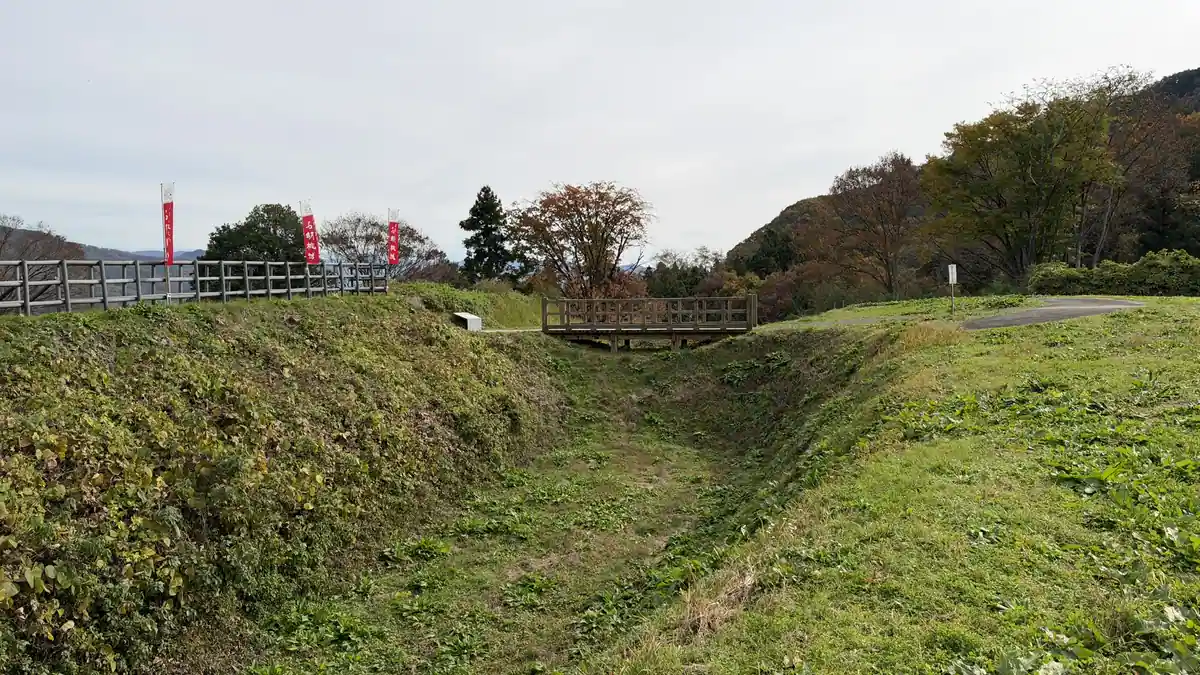 Day-trip routeA day by car around Numata and Minakami8 stops from Jomo-Kogen Station: the order, the timings, and the train and car costsSee the route →
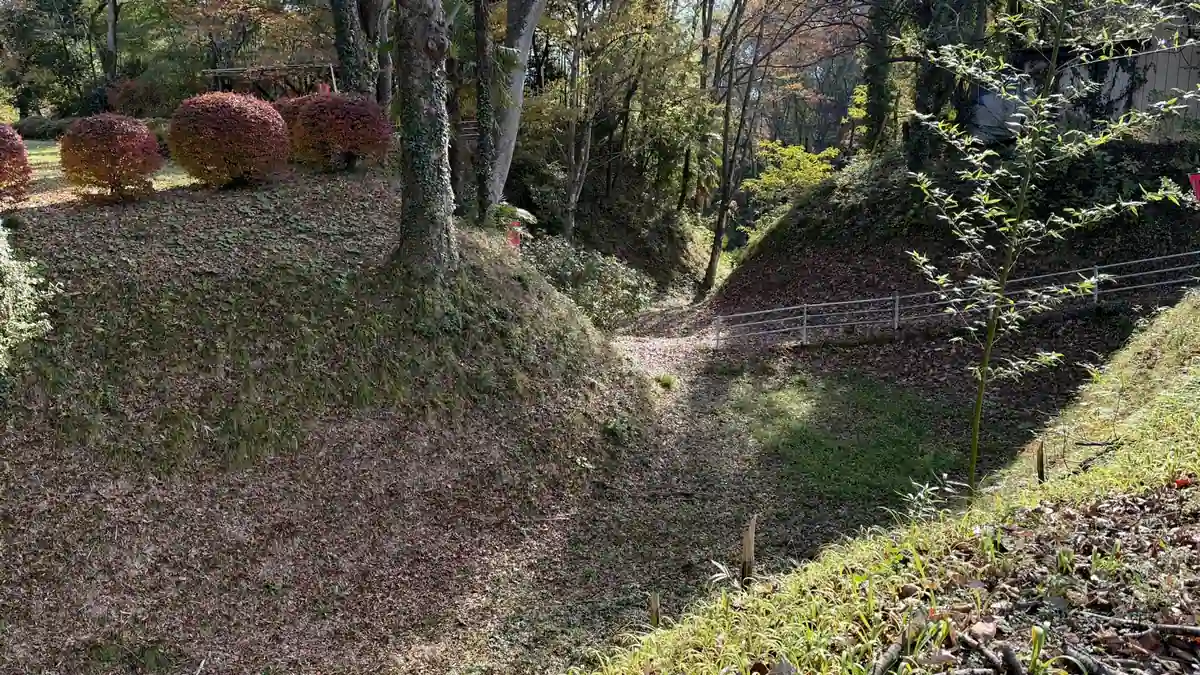 Castle ruins | MinakamiOgawa Castle RuinsThe dry moat, the main enclosure and how to get thereSee the guide →
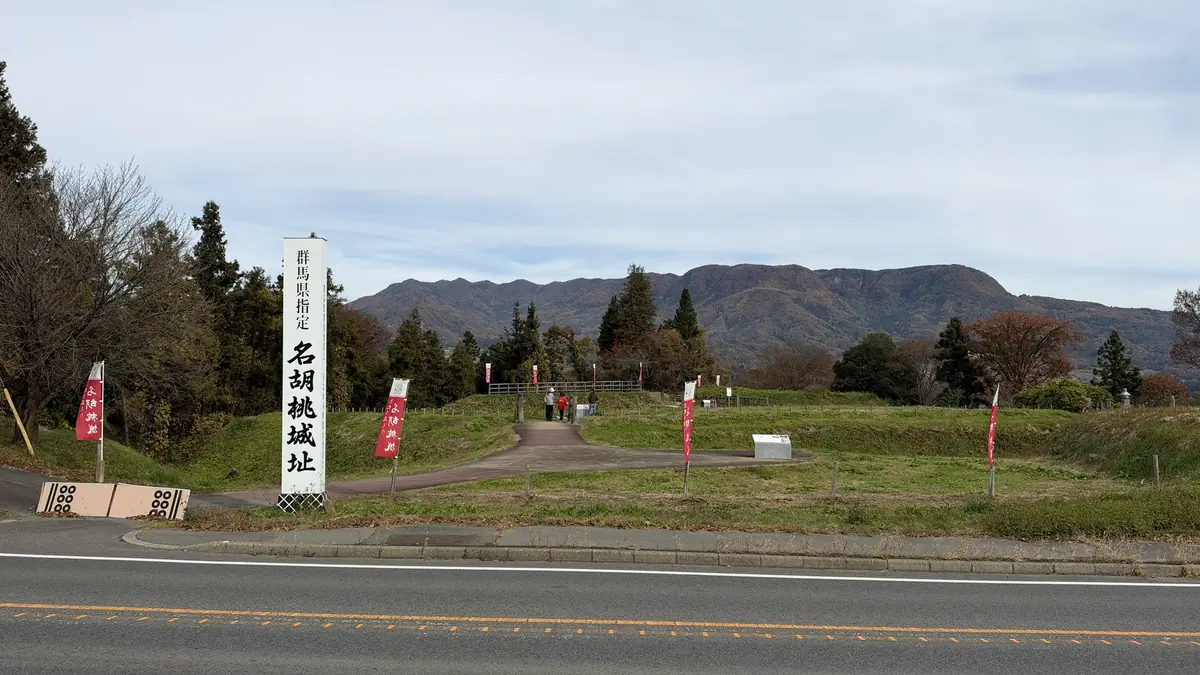 Castle ruins | MinakamiNagurumi Castle RuinsEnclosures, dry moat and wooden bridge. The free guide and the castle stampsSee the guide →
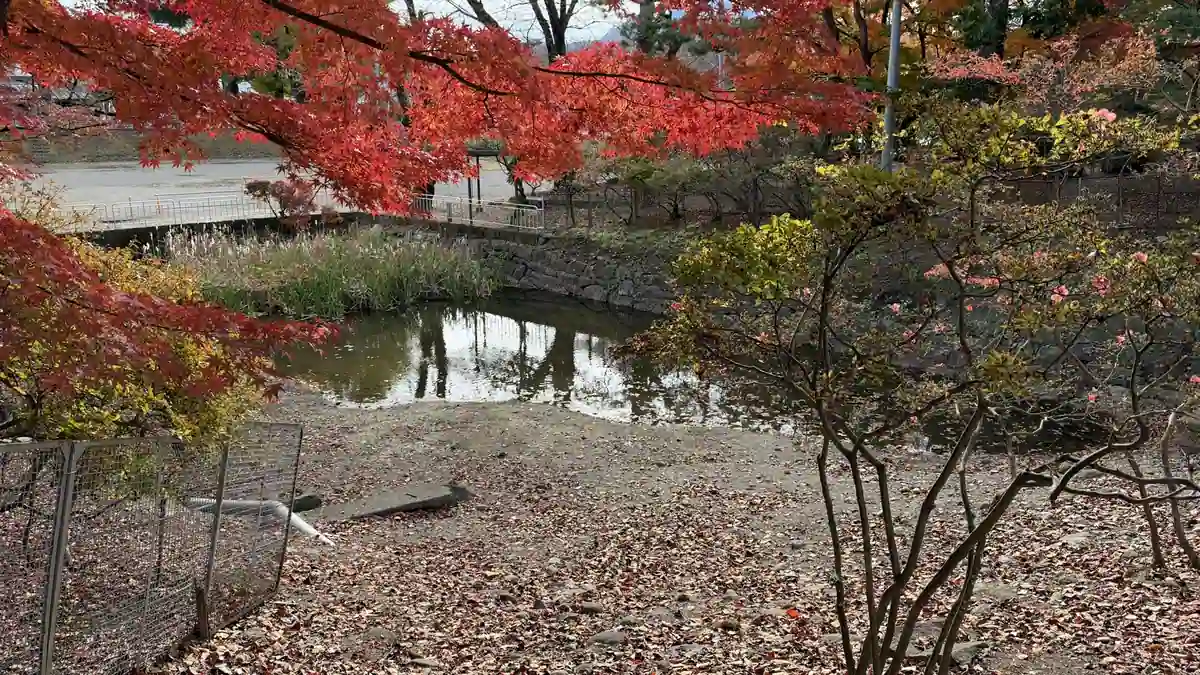 Castle ruins | NumataNumata Castle Ruins (Numata Park)The main-enclosure moat, the west turret's stone wall and the rebuilt bell tower. The history museum and the multi-site passSee the guide →
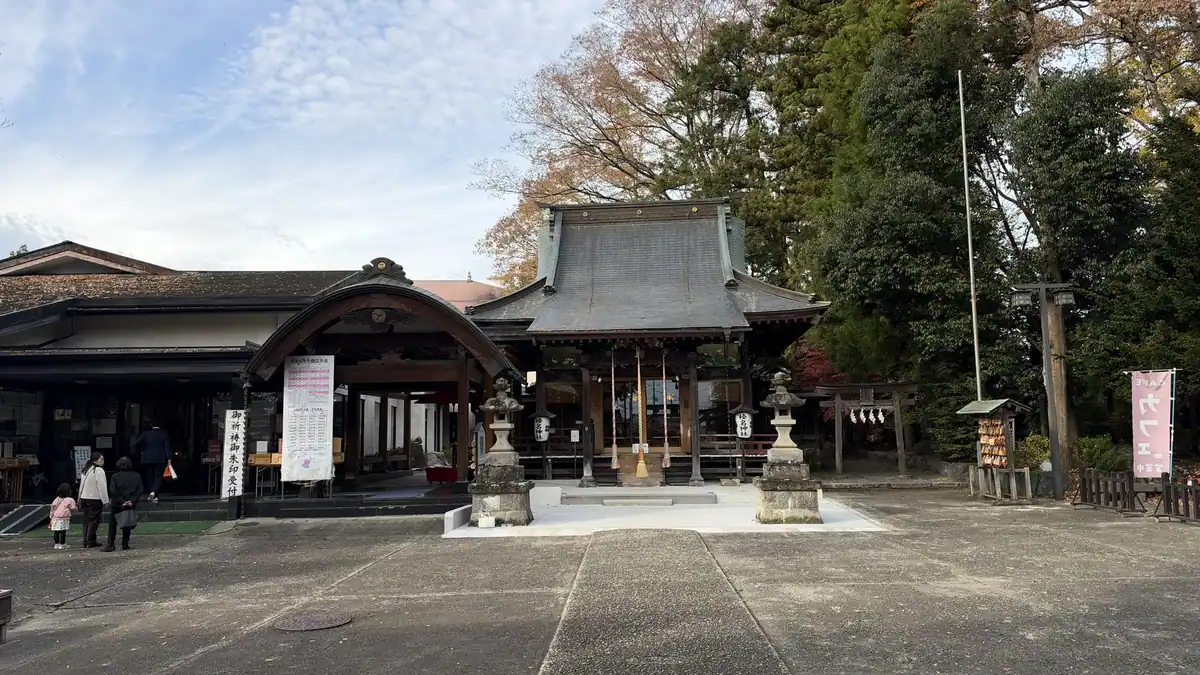 Temple and shrine | NumataShogakuji Temple and Haruna ShrineKomatsuhime's grave, a shrine tied to Sanada Nobuyuki, and goshuinSee the guide →
Tours and activities around Numata
PRThis section contains an affiliate link to KKday. If you book through it, this site earns a commission.
KKday lists tours and activities in and around Numata. Check the details, prices and dates on the KKday page.
Where to stay before or after Kashozan
PRThis section contains affiliate links to Agoda, Jalan, Rakuten Travel and Yahoo! Travel Japan. If you book through them, this site earns a commission.
Kashozan works as a day trip. If you want to keep sightseeing in Numata the next day, stay in town; if you are driving and want a hot-spring night, Oigami Onsen is the base. Check prices and availability for your dates on each site.
Stay in Numata
Hotels in Numata
Central Numata
For travelers who want to see Numata's historic sites the next day. Even from central Numata, you will still need transport up to the temple.
Agoda searches Numata; Jalan and Rakuten Travel search "Numata"; Yahoo! Travel covers the Minakami, Oze and Numata area. Not every property is close to Numata Station or the temple. Jalan, Rakuten Travel and Yahoo! Travel are Japanese-language sites; your browser's translation feature can help.
Browse Numata hotels on AgodaBrowse Numata hotels on JalanBrowse Numata hotels on Rakuten TravelBrowse Minakami, Oze & Numata hotels on Yahoo! Travel JapanHotel in town
Hotel Route-Inn Numata
Nishikurauchi-machi, Numata
According to the hotel, it is about 18 minutes on foot (5 minutes by car) from Numata Station and about 8 minutes by car from Numata IC. It has a large public bath, and breakfast and parking are free (hotel website).
Check the route to the temple on a map. Jalan, Rakuten Travel and Yahoo! Travel are Japanese-language sites; your browser's translation feature can help.
Check rates on AgodaCheck rates on JalanCheck rates on Rakuten TravelCheck rates on Yahoo! Travel JapanHot-spring inn
Ginshotei Awashima (Oigami Onsen)
603 Oigami, Tone-machi, Numata. About 20 minutes by car from Numata IC
A traditional Japanese inn (ryokan) at Oigami Onsen, mainly for travelers who drive up to the temple and want to spend the night at a hot spring. The inn runs a free shuttle (reservation required) from Jomo-Kogen and Numata stations.
Reserve the shuttle by 16:00 the day before. Pickups leave Jomo-Kogen Station at 14:00 and Numata Station at 14:20; drop-offs leave Oigami Onsen at 10:00 and Numata Station at 10:40, and reach Jomo-Kogen Station at 11:00 (inn website). The shuttle runs between the stations and the inn, not to the temple. If you visit the temple by the weekend bus, the 14:15 bus from Kashozan reaches Numata Station at 14:53, too late for the 14:20 pickup. Jalan, Rakuten Travel and Yahoo! Travel are Japanese-language sites; your browser's translation feature can help.
Check rates on AgodaCheck rates on JalanCheck rates on Rakuten TravelCheck rates on Yahoo! Travel JapanBefore booking, check the dates, number of guests, total price and cancellation terms.
FAQ
No. The giant tengu masks are in Chuhodo Hall, inside the temple grounds, up a flight of stone steps from the parking lot. The trail to the Oshodai rock and the summit of Mt. Kasho is a separate hike that starts behind the temple.
The easiest way is to take the Joetsu Shinkansen to Jomo-Kogen Station (fastest 62 minutes from Tokyo), rent a car there, and drive via Numata; from Numata IC it is about 25 minutes (13 km), with free parking. Without a car, take the JR Joetsu Line to Numata Station and, on weekends, holidays and December 29 to January 3, the Kashozan bus, followed by a 45-minute walk.
Not easily. There are no daytime buses from Numata Station toward the Kashozan stop on weekdays (Numata City timetable). On weekends and holidays, buses leave Numata Station at 9:20, 12:26 and 15:28 and return from Kashozan at 10:52, 14:15 and 17:02, and the stop is still a 45-minute walk (3.7 km) from the temple.
You need an International Driving Permit issued under the 1949 Geneva Convention (permits under the 1968 Vienna Convention are not accepted), together with your home license and passport. Licenses from Switzerland, Germany, France, Belgium, Monaco and Taiwan need an official Japanese translation instead. You can drive on these for up to one year after entering Japan (JAF). Times Car car-sharing does not accept foreign or international licenses, so book a rental car, for example at Eki Rent-A-Car's Jomo-Kogen office.
Entry is free (Numata City). The grounds are open 6:00–17:00 in summer and 6:30–16:30 in winter (Numata tourism association). From December to March there is snow, and the temple asks visitors to call first (+81-278-23-9500).
I arrived around 14:45 on November 14, 2026, and stayed until about 15:20, around 35 minutes. About 17 minutes of that, from 14:55 to 15:12, was on the mountain trail. If you come by bus, add about 45 minutes each way for the walk between the bus stop and the temple.
On your first visit, you borrow a tengu mask from Chuhodo Hall and take it home. On your next visit, you return it, dedicate a new mask to the temple, and borrow another (temple website). New masks are sold at shops near the temple gate (Numata tourism association). Ask the temple about the current procedure and costs.
I did not reach the Oshodai rock or the summit. I turned back at a large fallen tree, about halfway to Oshodai according to Google Maps, because I did not want to be on the trail after dark. The trail was steep and muddy in places, and there was a "Beware of bears" sign. The tourism association gives about one hour (about 2 km) from the temple to the summit.
Autumn colors usually peak from late October to mid-November (Numata tourism association). The special opening held once every ten years last took place from April 21 to May 28, 2025; the next is planned for April 28 to May 28, 2035.
That is not known. The temple says it was the prayer temple of Tokugawa Ieyasu, but I could not find out when, or by whom, the hollyhock crest on the main hall roof was added. The crest alone does not show that Ieyasu built, funded or visited the hall.
Sources
Hours, fees, access and bus times were checked on the pages below on November 15, 2026, and the driving-license rules on November 16, 2026. The time I spent, my impressions and the state of the grounds are from my visit on November 14, 2026. Times and fees can change, so please check before you go.
- Kashozan Mirokuji (official): Guide (Japanese)
- Kashozan Mirokuji (official): Access (Japanese)
- Kashozan Mirokuji (official): Events, prayers and training (Japanese)
- Numata tourism association: Kashozan Mirokuji (Japanese)
- Numata tourism association: Mt. Kasho hiking (Japanese)
- Numata City: Kashozan Mirokuji (Japanese)
- Numata City: Sightseeing facilities, hours and admission (Japanese)
- Numata City: Getting to the cultural facilities, bus from Jomo-Kogen (Japanese)
- Numata City: Bus timetable, E Kashozan Line (Japanese)
- Numata City: Sanada-related historic sites (Japanese)
- Japan Tourism Agency multilingual database: Tengu and Kashozan Mirokuji Temple
- Minakami Town Tourism Association: Access (Japanese)
- Japan-Guide: Getting to Minakami
- JAF: Driving in Japan with a foreign license
- Eki Rent-A-Car: Driver's license (English)
- Eki Rent-A-Car: Jomo-Kogen office (Japanese)
- Times Car: Membership (Japanese)
- Hotel Route-Inn Numata (official, Japanese)
- Ginshotei Awashima: Access (official, Japanese)


comment