


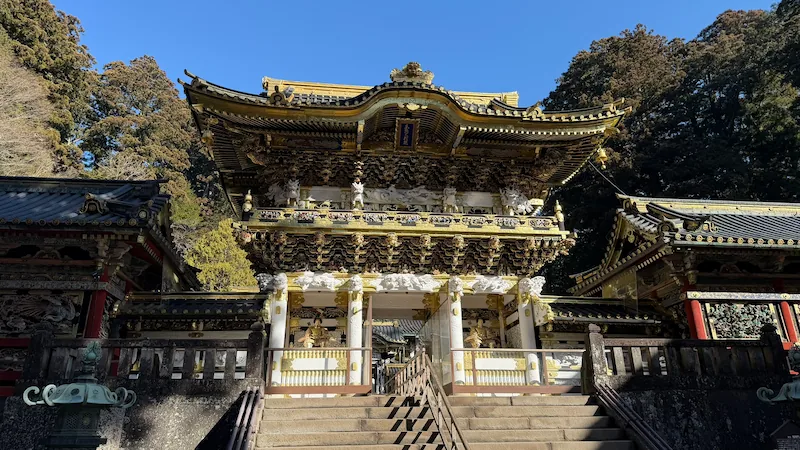
Nikko Toshogu is a UNESCO World Heritage shrine in Nikko, Tochigi Prefecture, dedicated to Tokugawa Ieyasu, the founder of the Edo shogunate. It's roughly 2 hours from Tokyo by Tobu limited express — close enough for a day trip, substantial enough to deserve a plan. This page covers the practical side: tickets, getting there, how long to allow, and how to move through the grounds without wasted time.
Nikko Toshogu Guide — 5-Page Structure
This guide is split across four pages. Start here for practical visit planning, then choose the page that matches your interest.
- This Page (Essential): Tickets, access, time required, and the best route ← Start here for your first visit
- Story: What Nikko Toshogu's Design Is Trying to Make You Believe
- Complete: Every Spot — Gates, Sculptures, Shrine Buildings & Inner Sanctuary
- Archive: Taiyuin, Treasure Museum & Hidden Spots
- Goshuin Guide: locations, offering fees, and photos of the actual seals
I walked through Toshogu, Taiyuin, and the Treasure Museum on this date. Everything in this guide is based on that visit and official visitor information available at the time. Fees, reception hours, transportation schedules, and ticket procedures may change — check the latest official sources before you go.
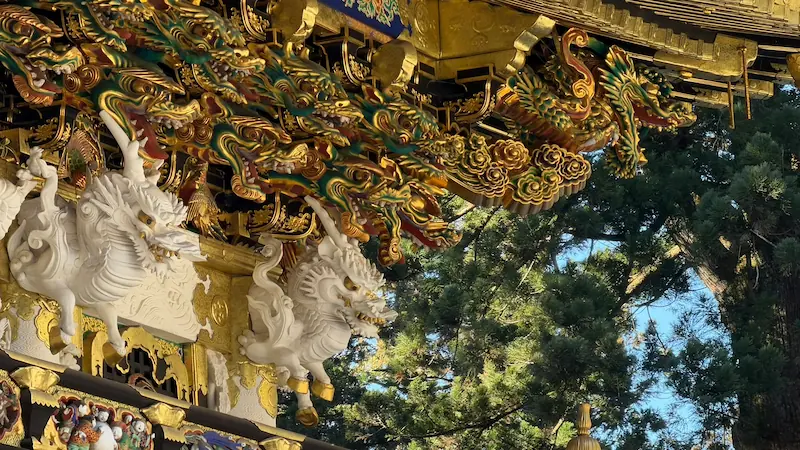
- What it is: A largely intact 17th-century shrine complex, carefully preserved and restored over time, enshrining the first Tokugawa shogun. Eight structures are designated National Treasures. UNESCO World Heritage Site since 1999.
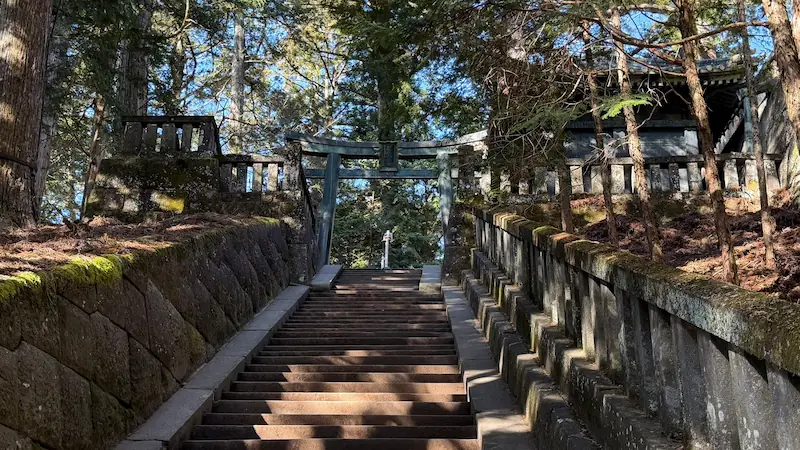
- What you'll see: Yomeimon Gate (intricate gilded carvings), the Three Wise Monkeys, the Sleeping Cat, and the Inner Sanctuary reached by 207 stone steps through cedar forest.
- Best for: Visitors interested in Japanese history and the Edo period, World Heritage sites, shrine architecture, and samurai-era political history.
- How long: 60–90 minutes for highlights only; 100–130 minutes including the Inner Sanctuary; half a day (4–5 hours) if you add the Treasure Museum and Taiyuin.
- From Tokyo: About 2 hours by Tobu limited express from Asakusa. A straightforward day trip.
Everything here is based on my visit on February 22, 2026. I cover ticket choices, how to get from the station to the shrine, a walking route that avoids backtracking, and realistic time estimates.
Three things tend to trip up first-time visitors: ① which bus stop to use — several stop names sound similar; ② whether to buy tickets in advance — the morning queue difference can exceed 30 people; and ③ when to tackle the Inner Sanctuary — early is almost always better. Get these right and the rest of the day falls into place.
At a glance: allow 60–90 minutes for Toshogu highlights only, 100–130 minutes if you include the Inner Sanctuary, and half a day — around 4–5 hours — if you're also adding the Treasure Museum and Taiyuin.
What this article covers
- Same-day vs. advance tickets, with a focus on cutting waiting time
- Getting from Tobu-nikko Station (TN-25) / JR Nikko Station to Toshogu, including the Yasukawacho bus stop route walked on February 22, 2026
- A walking order through the grounds: outer approach → central precinct → Inner Sanctuary → return route
- Three visit lengths based on actual timing: shortest, standard, and half-day
- Where to find goshuin, limited amulets, and the special Gundam model kit, with prices confirmed as of 2026/2/22
- What to watch for on the day: stone steps, shoe-removal spots, and photography rules
- Is Nikko Toshogu Worth Visiting? What You Actually See
- Nikko Toshogu Tickets: Where to Buy, Online Advance Purchase & Same-Day Entry
- How to Get to Nikko Toshogu from Tokyo: Trains, Buses and the Stop to Use
- How to Visit Nikko Toshogu: A Walking Route That Avoids Backtracking
- How Long Do You Need at Nikko Toshogu? 60–130 Minutes, Timed on Site
- Nikko Toshogu Admission Fees and Opening Hours (2026)
- Goshuin, Omamori Amulets and the Limited Gundam Kit at Nikko Toshogu
- Before You Visit: Shoes, the 207 Steps, Photography and Cash
- Frequently Asked Questions
- Related Pages
- Return to the Tokugawa Ieyasu Page
- Return to the Main Page
Is Nikko Toshogu Worth Visiting? What You Actually See
Nikko Toshogu is the shrine dedicated to Tokugawa Ieyasu, the first shogun of the Edo shogunate, and the central site within the UNESCO World Heritage area known as the Shrines and Temples of Nikko. It's famous for its ornate buildings and lavish carvings, but walking the grounds reveals something more deliberate: the layout encodes the transition from Japan's warring-states era to the stability of Edo rule.
This page covers the practical side of a visit. For the historical background and the larger meaning of the site, see the separate Story page: Nikkō Tōshōgū: What the Shrine's Design Is Trying to Make You Believe.
Scope of This Page: Visit Date, Areas Confirmed, and Information That May Change
- Visit date: February 22, 2026, in the morning
- Areas confirmed: Toshogu and Taiyuin were walked in person; signboards were photographed and noted; the Treasure Museum was no-photo, so records are based mainly on written notes
- Purpose of this page: practical information for the day of your visit — access, crowds, and route
- Information subject to change: ticket prices, discounts, crowd levels by season / weather / day of week / tour groups, transportation schedules, bus stop guidance, limited amulets, and limited-edition merchandise
Updated: September 4, 2026
Visit: February 22, 2026
Official information rechecked: admission hours and fees, Tobu Bus service information, and current sales notices
Nikko Toshogu and Taiyuin: The Essential Relationship
- Nikko Toshogu: the shrine dedicated to Tokugawa Ieyasu, the first shogun of the Edo shogunate, and the central site of Ieyasu's deification
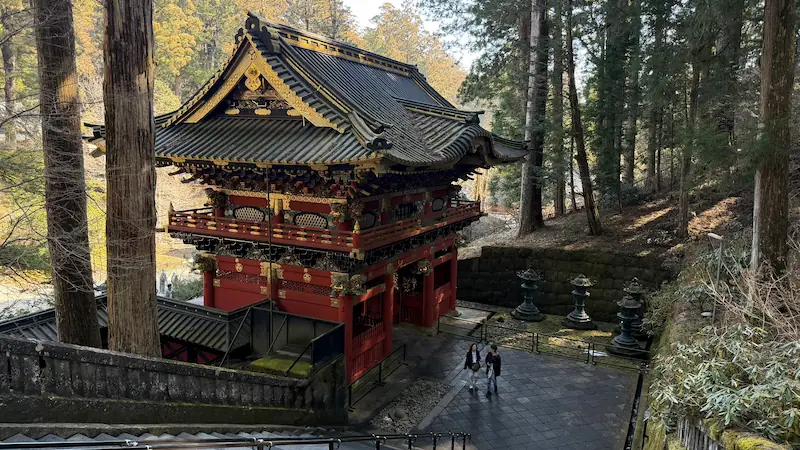
- Taiyuin: the mausoleum of Tokugawa Iemitsu, the third shogun and Ieyasu's grandson. It stands next to Toshogu and is worth visiting on the same trip
- Seeing the two together sharpens the contrast: Toshogu establishes Ieyasu's authority as a divine presence; Taiyuin shows how that authority was inherited — the continuity of Tokugawa rule embodied in stone
This guide assumes many visitors will want to see both, so time planning and walking routes are given with Toshogu and Taiyuin in mind.
Nikko Toshogu Tickets: Where to Buy, Online Advance Purchase & Same-Day Entry
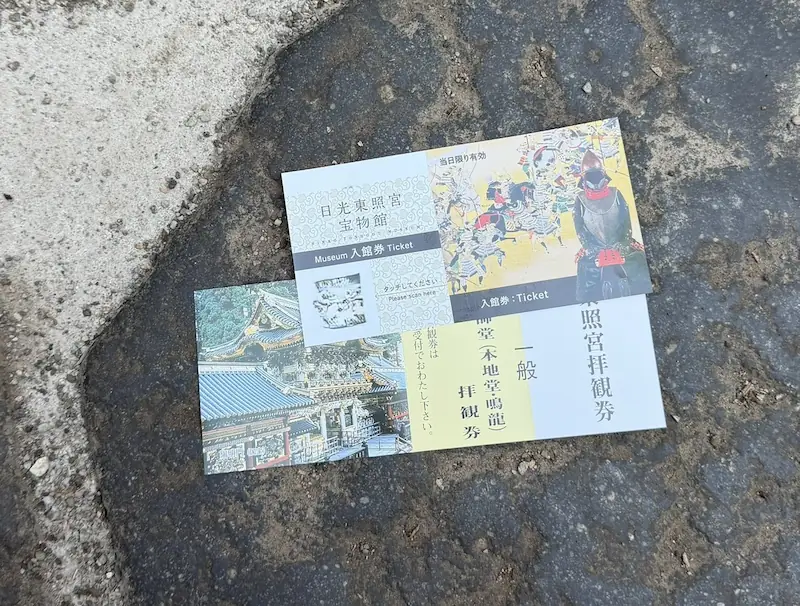
If you want to cut waiting time, buying in advance is worth it. The gap between the same-day ticket line and the advance exchange counter is most obvious right at opening — and every minute in line is a minute not spent inside. The observations below are from the morning of February 22, 2026.
Where to Buy Nikko Toshogu Tickets Online (Official Advance Purchase)
There are two ways in.
- Same-day tickets are bought from the ticket machines at the entrance to the grounds. They were operating when I visited on February 22, 2026, with a queue building from early morning.
- Advance purchase online: Nikko Toshogu's own website carries an advance-ticket banner on its admission page, linking to an external booking site (KKday) that sells the same admission ticket and operates in multiple languages (checked September 29, 2026). Travel platforms such as Agoda also sell it.
An advance ticket is not scanned at the gate. You exchange it for an admission ticket at a counter first, and on the day I visited that counter was on the group ticket side of the entrance. Signage and procedures change, so confirm the current arrangement on the official admission page before you travel.
Can You Buy Nikko Toshogu Tickets on the Day? The Morning Queue, Counted
I arrived near the entrance around 8:40 a.m., aiming for the 9:00 a.m. opening. About 40 people were already lined up at the on-site ticket machines. The advance online ticket exchange counter had fewer than 10 people waiting, and those visitors entered without delay.
If you're planning to cover the Inner Sanctuary and Taiyuin — or simply want to make the most of the morning — advance purchase is the smarter call.
The Mid-Morning Queue
Later in my visit, I saw a long same-day ticket line near the exit area. The advance exchange window had almost no one waiting. Crowd levels vary by day, but the contrast during my visit was clear.
The point is simple: get your ticket before the crowds arrive. That means as early as possible in the morning, but it applies any time of day.
Are There Discounts on Nikko Toshogu Tickets? (Confirmed February 22, 2026)
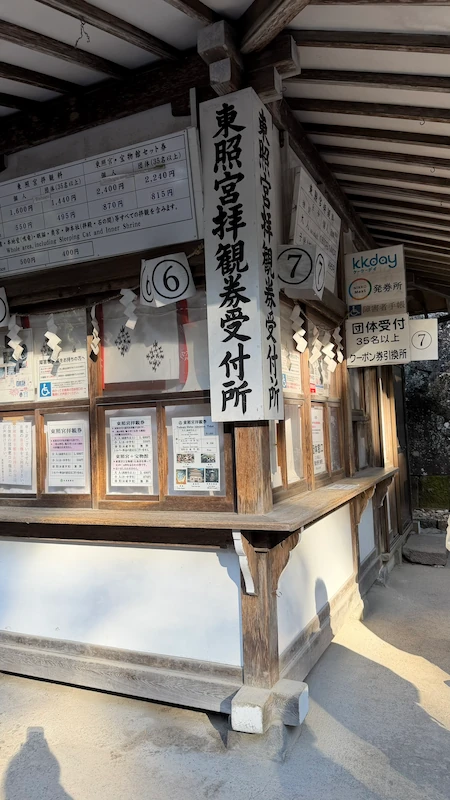
Discount displays, service fees, and exchange methods can vary depending on where you purchase. On my visit, the advance ticket exchange counter was on the group admission ticket side, with guidance near the same-day ticket machines on the right. Counter locations and procedures may change.
I bought my advance ticket through Agoda, which let me bypass the same-day line entirely. At the time, the displayed price appeared to be about 13% cheaper than the gate price, but this varies by campaign and conditions. Treat it as a rough reference and check the current price before deciding.
Payment note: If you plan to buy your ticket at the shrine, bring enough cash to be safe. Accepted payment methods can change, so check the official admission page before departure.
How to Get to Nikko Toshogu from Tokyo: Trains, Buses and the Stop to Use
Think of the journey in two legs: Tokyo → Tobu-nikko Station (TN-25) / JR Nikko Station, then the station → Toshogu. The first leg is straightforward — the Tobu limited express from Asakusa takes about 1 hour 50 minutes to 2 hours. The second leg is where visitors most often go wrong, thanks to the number of bus stops in the area. Getting that part right saves real time.
Main Routes from Tokyo
There are three main patterns for getting from Tokyo to Nikko. Choose based on travel time, number of transfers, and your starting point in the city.
- Tobu Railway from Asakusa, limited express (Spacia series and others): about 1 hour 50 minutes to 2 hours; the most direct route for most international visitors, arriving at Tobu-nikko Station (TN-25)
- Direct limited express from Shinjuku / Ikebukuro, via JR / Tobu connection: useful if you're starting from western Tokyo and want to avoid transferring in the city
- JR route from the Tokyo Station area, often via Shinkansen to Utsunomiya then a local line: fast in segments, but usually involves at least one transfer
For limited express schedules from Asakusa and Shinjuku, check Tobu Railway's official timetable.
https://www.tobu.co.jp/en/
Note: highway bus routes and schedules vary by season and may be harder to find. If you're considering a highway bus, check current availability for your departure point and travel date.
From JR Nikko Station / Tobu-nikko Station (TN-25) to Toshogu
From the stations to Toshogu, the main options are:
- Walking: about 35 minutes; the route isn't complicated, but the distance from the station to the World Heritage precinct is longer than it looks on a map. Budget extra time beyond your map app estimate for photos, traffic lights, and the uphill grade
- Local bus: about 10 minutes; a significant time saver, but choosing the right stop matters. Check timetables in advance, as they change by season
https://www.tobu.co.jp/en/access/nikko/bus_nikko.html - Taxi: a good option for short stays, families, or anyone who'd rather save their legs for the shrine itself
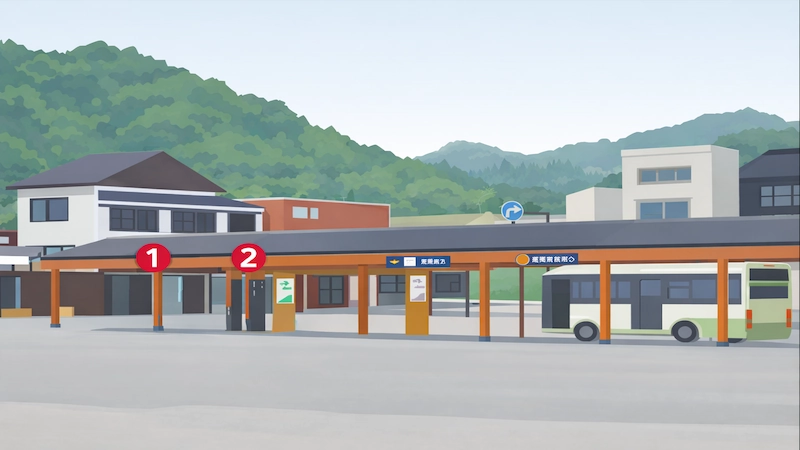
The bus stop layout around the station can be confusing. Platform 1 for Chuzenji Onsen and platform 2 for the World Heritage loop can both take you toward the Toshogu area, depending on route and stop. Always check the destination display and stop list before boarding.
The "Too Many Bus Stops" Problem: How to Choose Where to Get Off
Because the bus routes cover the broader World Heritage zone, there are several stops that could plausibly be your destination. Choosing the wrong one can add unnecessary slopes, detours, or confusion about where the entrance actually is.
Keep three things in mind:
- Go by the official stop names. On the regular World Heritage Loop Bus, Omotesando and Toshogu Higashi-Sando Iriguchi / Hotel Seikoen-mae are the official stops for the Toshogu area. Yasukawacho, described below, is the stop I used on February 22, 2026 and found easy to walk from — but not every service stops there, and a modified route runs on selected dates between April 1 and November 30, 2026, so check the operating information for your travel date
- Bus route maps also list stops such as Nishi-Sando Iriguchi, Toshogu Higashi-Sando Iriguchi, and Taiyuin / Futarasan-jinja-mae — always confirm the stop name on the in-bus display before getting off
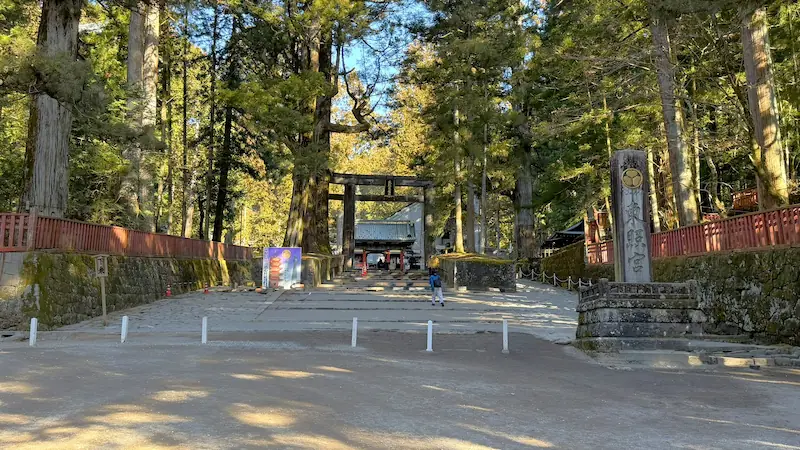
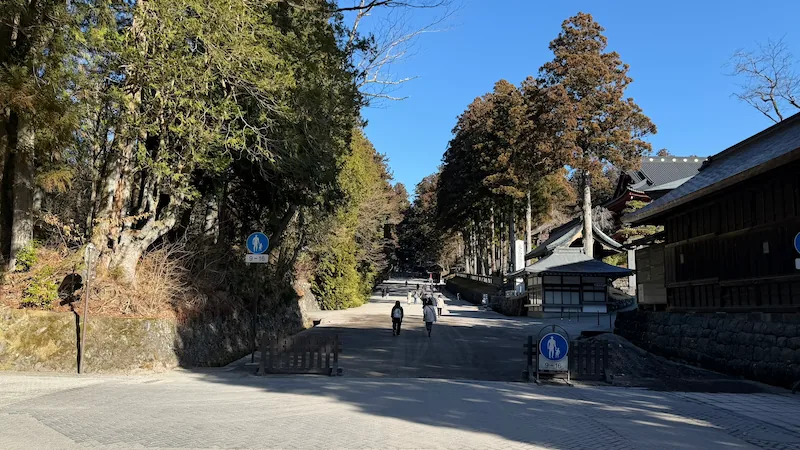
- Once off the bus, don't navigate toward "Toshogu" in the abstract — aim specifically for the First Torii Gate
Recommended Route: Yasukawacho Bus Stop to Toshogu
On February 22, 2026, Google Maps wasn't wrong, but in terms of ease and how the route felt on foot, a slightly different approach worked better.
My recommended route (includes stairs):
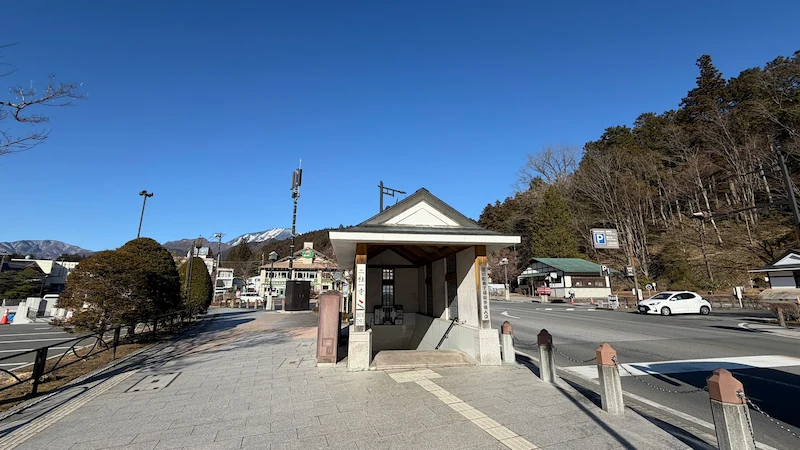
- Exit Tobu-nikko Station (TN-25) and check the platform number, destination display, and stop list at the bus terminal. In Tobu Bus Nikko's April–November 2026 guidance, buses on the Tobu-nikko Station side are shown as departing from platform 2. On my visit, I took a Kiyotaki-bound bus to Yasukawacho, but confirm on the day that your bus stops at Yasukawacho
- Get off at Yasukawacho. On the bus I used, the stop request button was on the ceiling
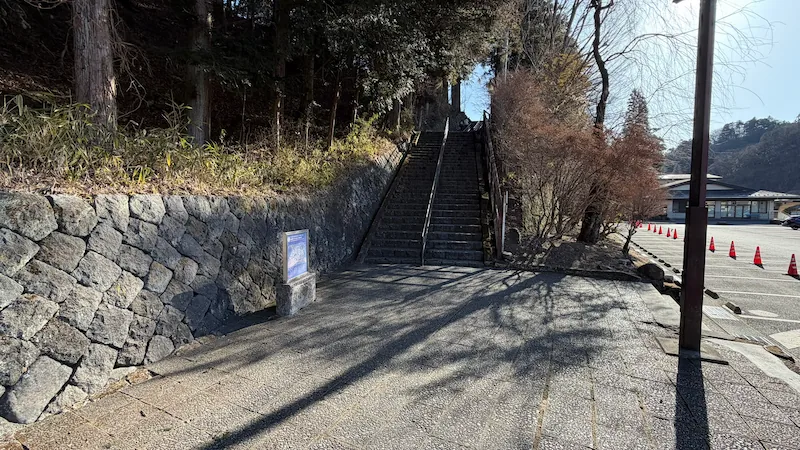
- Walk in the direction the bus was traveling, then use the underpass to cross to the other side
- Climb the stairs on the mountain side to reach the approach path, then continue straight toward the Toshogu entrance
Easy-to-Miss Turns and How to Avoid Them
- Follow the flow of people, especially in the morning when the direction is easy to read
- Set your first destination as the First Torii Gate, not a vague idea of "Toshogu"
- At corners, pause and check your direction using signboards, gates, or visible landmarks
Crowds, Slopes, and Realistic Time Estimates
- The continuous uphill grade is more tiring than the distance alone suggests
- When the area is crowded, traffic lights and sidewalk congestion add time
- Even if the morning feels calm, the return direction can become congested quickly from late morning onward
Budget an extra 15–30 minutes beyond whatever your map app shows, especially if you're planning to include the Inner Sanctuary or Taiyuin.
How to Visit Nikko Toshogu: A Walking Route That Avoids Backtracking
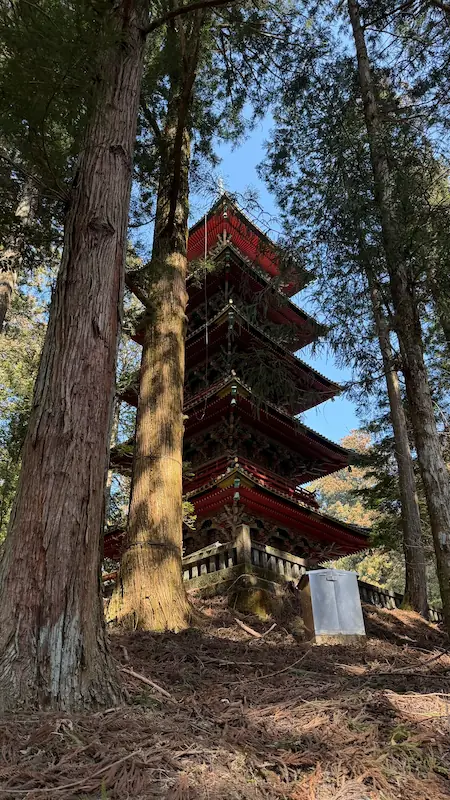
Nikko Toshogu has so much to take in that first-time visitors without a plan can easily backtrack, miss things, or tire out before reaching the highlights. Based on my morning visit on February 22, 2026, this is a route that flows naturally and covers the ground well. The key is to move from the outer area inward, then climb to the Inner Sanctuary while you still have energy, and return through the central precinct.
Nikko Toshogu route map (the 100–130 minute version)
The order I actually walked on February 22, 2026. Going up to the Inner Sanctuary first, then working back down through the Main Shrine and Honjido, cuts out most of the backtracking.
- 1First Torii Gate → Five-Story PagodaOutside the ticketed area — you can walk this stretch without a ticketNo ticket needed
- 2Enter at Omotemon GateBuy at the machines, or exchange an advance ticket at the counterTickets
- 3Three Wise Monkeys (Sacred Stable) → Bronze ToriiPeople slow down here for photos; several more monkey panels beyond the famous three
- 4Yomeimon GateGets crowded — better to pass through earlyCrowds
- 5Sleeping Cat → Sakashita GateThe entrance to the Inner Sanctuary route
- 6Inner Sanctuary (207 stone steps)Do this while you still have energy. Round trip timed at about 30 minutes~30 min returnStone steps
- 7Back down to the Main Shrine / Worship HallShoes come off here. No photography insideShoes offGoshuin
- 8Karamon GateFacing the Worship Hall
- 9Honjido (the Crying Dragon)Shoes off again. A queue had formed here by around 10:00Shoes offCrowdsGoshuin
Nikko Toshogu Walking Route: Outer Approach → Central Precinct → Inner Sanctuary
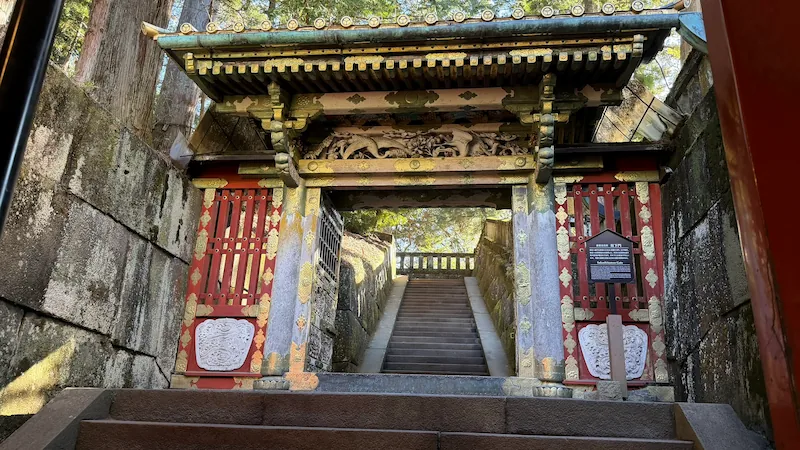
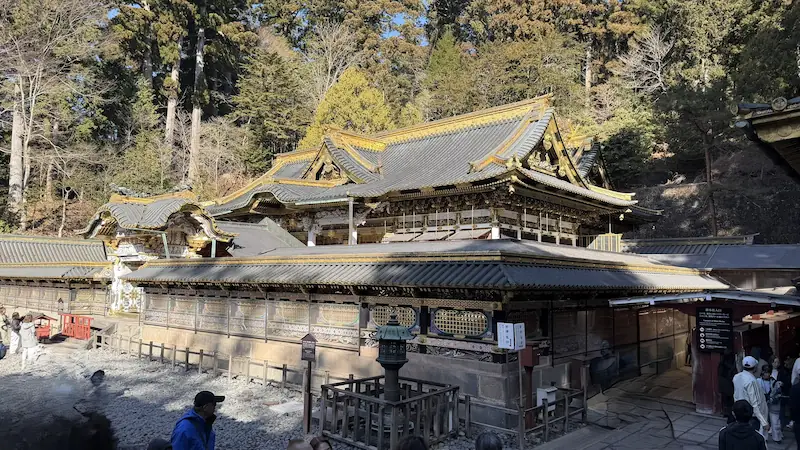
Suggested order from the entrance:
- ① First Torii Gate → Five-Story Pagoda → ticket check → Omotemon Gate
- ② Three Wise Monkeys at the Sacred Stable → Bronze Torii Gate (a natural photo stop)
- ③ Yomeimon Gate → Sleeping Cat → Sakashita Gate; move through early, as this area fills up quickly
- ④ Inner Sanctuary, including the 207 stone steps — go while you still have energy
- ⑤ Return to the central precinct → Main Shrine / Worship Hall → Karamon Gate → Honjido (Crying Dragon Hall)
Best Order If You Continue to Taiyuin
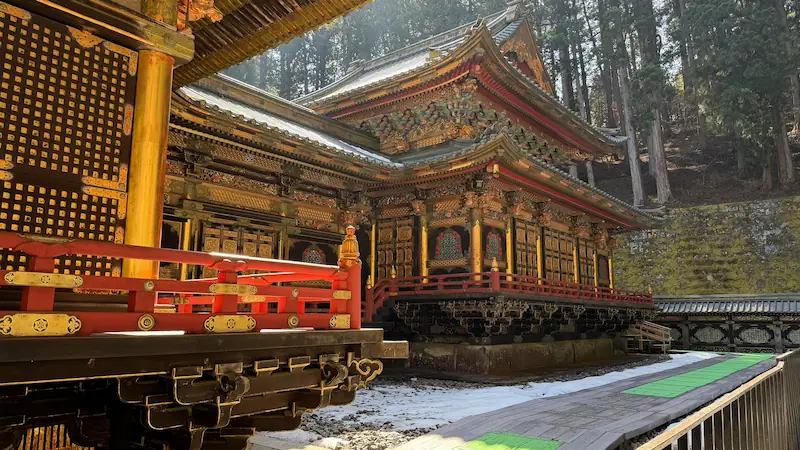
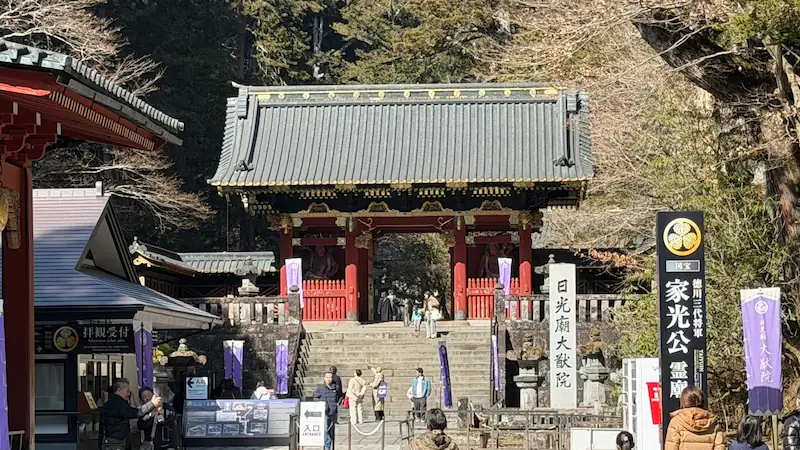
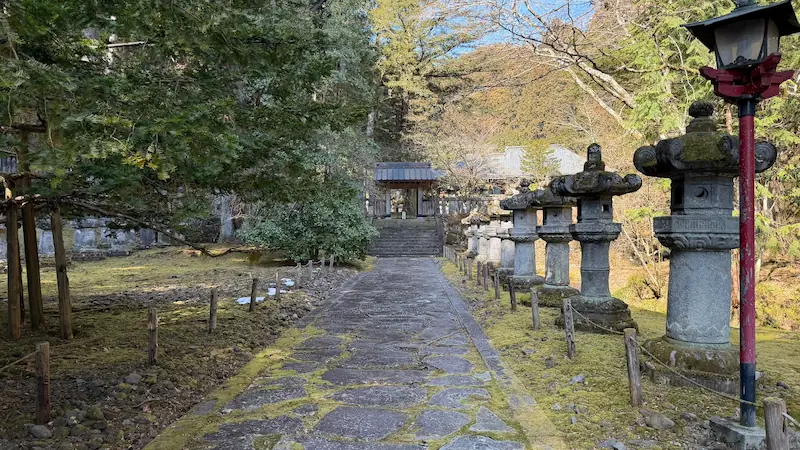
For most visitors, Taiyuin works best after Toshogu. Seeing Toshogu's vivid, layered visual world first makes Taiyuin's quieter atmosphere easier to read — and more striking by contrast. However, Taiyuin opens at 8:00 a.m., one hour before Toshogu. If you can start during the 8 o'clock hour, visiting Taiyuin first and then moving to Toshogu for its 9:00 a.m. opening is also a practical option.
- Complete Toshogu first: outer approach → central precinct → Inner Sanctuary → return
- Then move on to Taiyuin
- Actual time at Taiyuin: about 50 minutes
For Deeper Detail, See the Complete Guides
This Essential page is intentionally focused on practical navigation. For interpretation and full spot-by-spot coverage, the related pages below are the better reference.
- Story: Why Was Ieyasu Enshrined in Nikko? A Field-Based Reading of Yomeimon, the Three Wise Monkeys, and the Inner Sanctuary
- Complete Guide: Gates, Sculptures, Shrine Buildings, the Inner Sanctuary, and 360-Degree Reference Links
- Archive: Taiyuin, the Treasure Museum, and Hidden Spots Around Nikko Toshogu
The Treasure Museum is separate from the main Toshogu admission route — it sits slightly apart from the shrine precinct and has its own entrance and ticket. A combination ticket is also sold (adults / high school students: Toshogu alone 1,600 yen, Treasure Museum alone 1,000 yen, combination 2,400 yen). I recommend adding it after Toshogu if time allows.
Goshuin and Amulets: Find Them as You Go
Goshuin, amulets, and the limited model kit are spread across multiple locations inside the grounds. If you try to find everything at the end, you'll likely have to backtrack. The locations, prices, and notes are in the next section — check what you want before you walk past it.
How Long Do You Need at Nikko Toshogu? 60–130 Minutes, Timed on Site
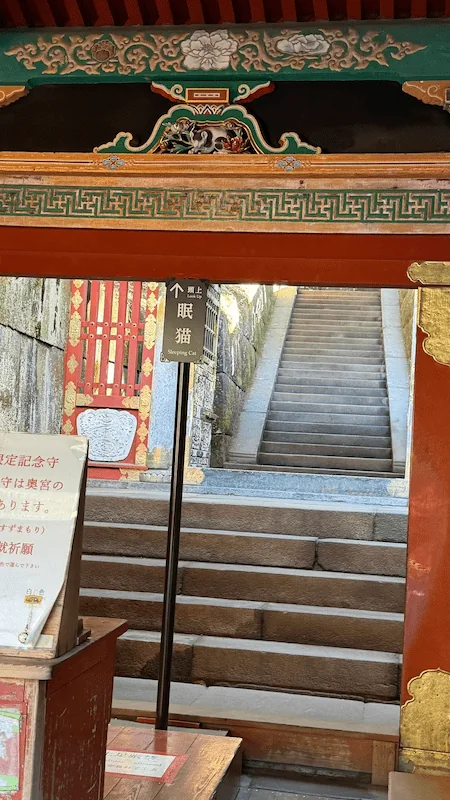
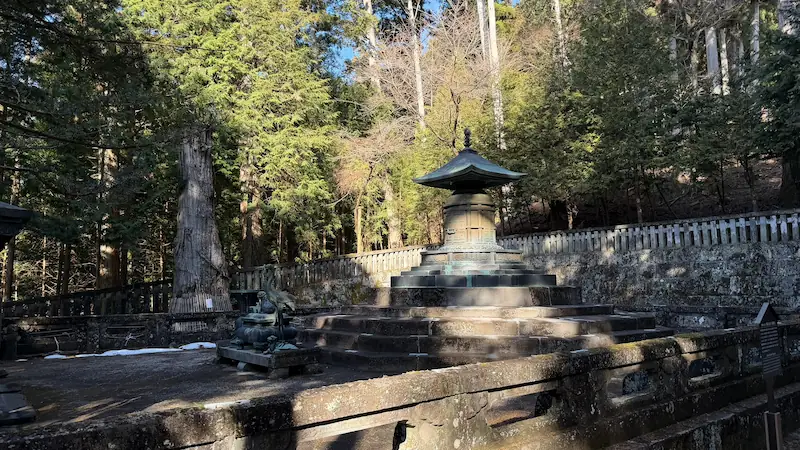
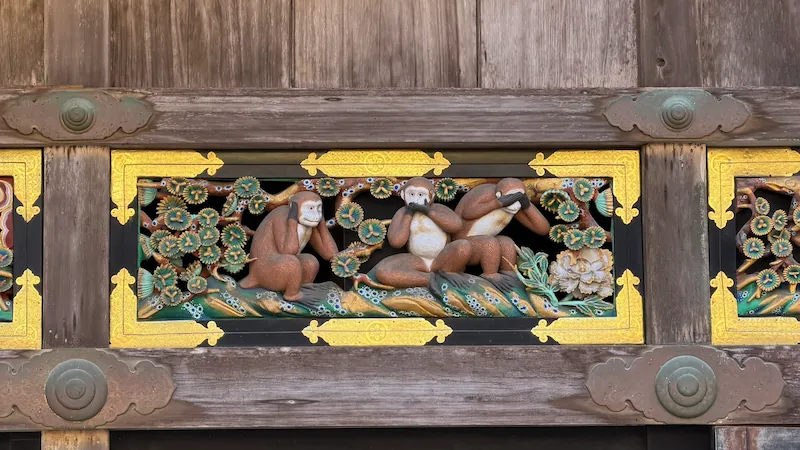
How long you spend at Nikko Toshogu depends significantly on how far you go: whether you climb to the Inner Sanctuary, enter the Treasure Museum, or continue to Taiyuin. Based on my actual timing on the morning of February 22, 2026, here are three visit models.
Model 1: Short Visit — Highlights Only, About 60–90 Minutes
For visitors with limited time, or those visiting on a crowded day and keeping things minimal.
- Focus on the major sights in the central precinct
- Linger at carvings that catch your eye, move past the rest
- Skip the Inner Sanctuary and its 207 steps, or go only partway
- No Treasure Museum or Taiyuin
Model 2: Standard Visit — Highlights + Inner Sanctuary, About 100–130 Minutes
The recommended approach for a first visit.
- See the main sights of Toshogu in one complete circuit
- Climb to the Inner Sanctuary, including the 207 stone steps
- Add extra time if you're stopping frequently for photos or want to look closely at details
Model 3: Full Visit — Inner Sanctuary + Treasure Museum + Taiyuin, About 4–5 Hours
For visitors who want to see Toshogu thoroughly, spend time in the Treasure Museum, and continue to Taiyuin.
- Toshogu, including main sights and the Inner Sanctuary: actual time 1 hour 50 minutes
- Treasure Museum: actual time about 30 minutes; no photography means you look more carefully, so time can stretch
- Taiyuin: actual time about 50 minutes; official guidance generally suggests 30 minutes to 1 hour
Measured total: about 3 hours 10 minutes (1:50 + 0:30 + 0:50). Add walking between sites, breaks, and possible ticket lines, and this becomes a half-day plan.
Things that can add significant time: entry ticket queue (+10–40 min); Crying Dragon line after 10:00 a.m. (+10–30 min); slick steps after rain or snow (+10–20 min); goshuin or amulet queues (+10 min or more).
Quick time guide
- Toshogu only: 60–90 minutes (highlights); 100–130 minutes (with Inner Sanctuary)
- Add the Treasure Museum: about +30 minutes
- Add Taiyuin: about +50 minutes, plus walking and crowd margin
- Full day trip from Tokyo: allow about 8–10 hours door to door, including transit, local buses, walking, meals, and any ticket queues
Nikko Toshogu Admission Fees and Opening Hours (2026)
Hours and fees may change by season or event. The following is a general guide based on information confirmed on 2026/2/22 — check the official sites before you go.
Official sources to check before visiting
- Nikko Toshogu — admission hours and fees (Japanese only)
- Taiyuin / Rinnoji — admission hours and fees
Nikko Toshogu Entrance Fee: Shrine, Treasure Museum and Combination Ticket
- Nikko Toshogu single admission: adults / high school students 1,600 yen; elementary / junior high school students 550 yen
- Treasure Museum single admission: adults / high school students 1,000 yen; elementary / junior high school students 400 yen
- Toshogu + Treasure Museum combination ticket: adults / high school students 2,400 yen; elementary / junior high school students 870 yen
- Taiyuin single admission: adults 550 yen; elementary / junior high school students 250 yen
- Nikko Toshogu Art Museum admission: adults / high school students 800 yen; elementary / junior high school students 400 yen (a separate building from the Treasure Museum)
Buying the shrine (1,600 yen) and the Treasure Museum (1,000 yen) separately comes to 2,600 yen, against 2,400 yen for the combination ticket — a saving of 200 yen. The money is not really the deciding factor; the time is. Fees were re-checked against the official site on September 29, 2026, and are subject to change.
Nikko Toshogu Opening Hours by Season
Nikko Toshogu
- April 1–October 31: 9:00 a.m.–5:00 p.m.
- November 1–March 31: 9:00 a.m.–4:00 p.m.; last admission 30 minutes before closing
Taiyuin, Rinnoji
- April 1–October 31: 8:00 a.m.–5:00 p.m.
- November 1–March 31: 8:00 a.m.–4:00 p.m.; last admission 30 minutes before closing
Tip: Within the same World Heritage area, Toshogu opens at 9:00 a.m. while Taiyuin opens at 8:00 a.m. — one hour earlier. That difference can affect how you plan your morning.
Last Admission Times
- Last admission is generally 30 minutes before closing at both Toshogu and Taiyuin
- Some dates may have restricted admission due to ceremonies or special events
- Toshogu has multiple ticket categories — the one you need depends on how far into the site you plan to go
Goshuin, Omamori Amulets and the Limited Gundam Kit at Nikko Toshogu
Goshuin and amulet counters are spread across several locations at Nikko Toshogu. If you save everything for the end, you may find yourself walking back through crowded areas. Based on my on-site visit on the morning of February 22, 2026, here's how to think about the locations and when to stop.
Goshuin Locations, Timing, and Etiquette
A goshuin is not a souvenir stamp. It's given as a record of worship. On crowded days there may be a wait, so if you know which goshuin you want, it's usually easier to receive it when you pass the relevant location rather than doubling back.
Goshuin Locations Confirmed on 2026/2/22
- Inside the Main Shrine / Worship Hall: Toshogu goshuin, goshuin books, and amulets
- In front of the Inner Sanctuary Worship Hall: Inner Sanctuary goshuin and amulets
- Honjido (Crying Dragon Hall): Crying Dragon goshuin and amulets
Offering Fees as of 2026/2/22
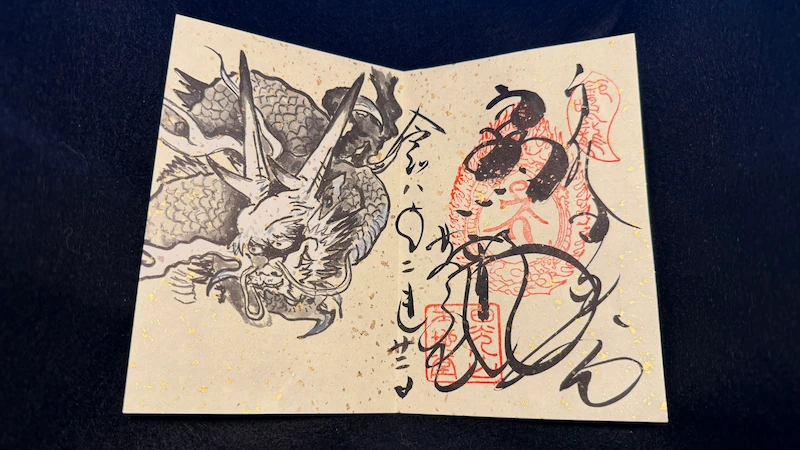
- Toshogu, inside the Worship Hall: 500 yen, pre-written
- Inner Sanctuary: 500 yen, pre-written
- Crying Dragon / Honjido: standard version 500 yen; limited version 1,000 yen — both pre-written
Where to Buy Omamori Amulets at Nikko Toshogu (Confirmed 2026/2/22)
Amulets are available at several locations and aren't necessarily the same at each. The main spots I confirmed:
- In front of the Inner Sanctuary Worship Hall: amulets, along with the Inner Sanctuary goshuin
- Uchibansho next to the Three Wise Monkeys: amulets
- Inside the Main Shrine / Worship Hall: amulets, Toshogu goshuin, and goshuin books
- Honjido (Crying Dragon Hall): amulets and Crying Dragon goshuin
Limited Card-Style Amulet at Honjido (Crying Dragon Hall)
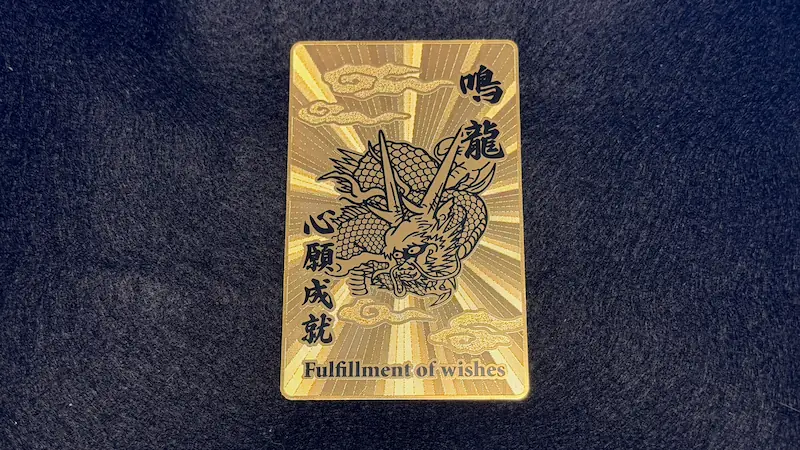
I confirmed and purchased a limited card-style amulet at Honjido. Limited items can sell out, so check when you pass through rather than assuming you can return later.
Want to see the actual seals? Photographs of the goshuin received at Toshogu, the Inner Sanctuary and Taiyuin, how the Toshogu design changed between 2016 and 2024, and the goshuincho stamp books the shrine used to sell are all collected on the dedicated Nikko goshuin guide.
Where to Buy the Limited Gundam Model Kit
I confirmed two sales locations for the limited Gundam model kit during my visit.
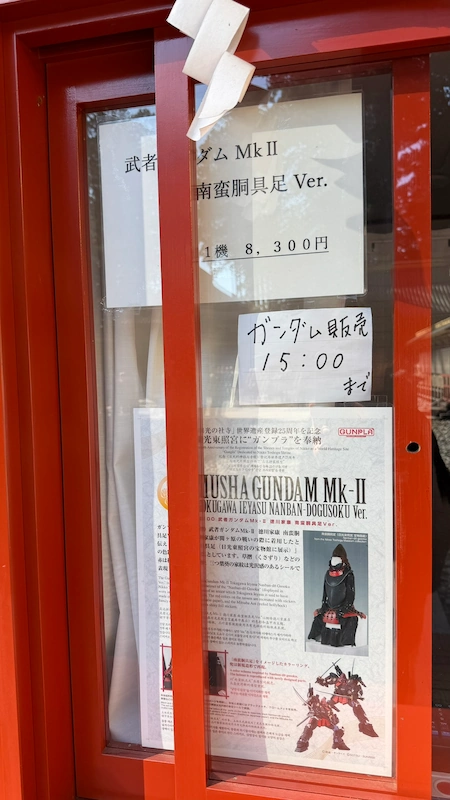
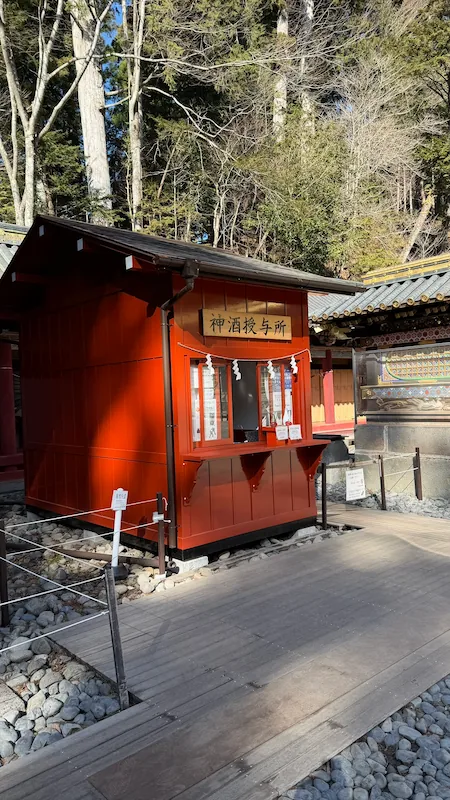
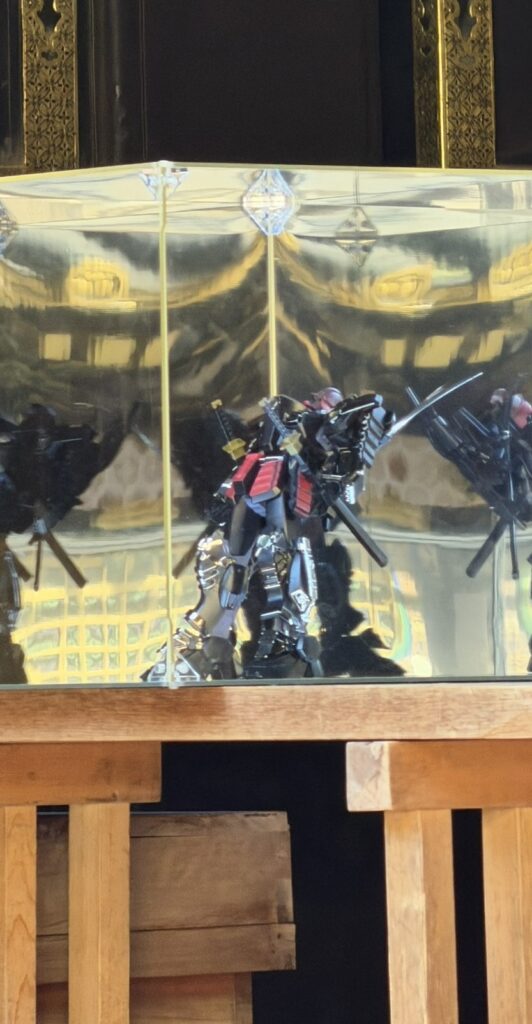
Sales Locations, Display, and Price as of 2026/2/22
- Official notice — sales location: the West Corridor window (on your left after passing through Yomeimon Gate), 9:00 a.m.–12:00 p.m. and 1:00 p.m.–4:00 p.m.
- Confirmed on site, February 22, 2026: sold at the sacred sake offering counter (signage indicated sales until 3:00 p.m.) and at the Treasure Museum souvenir shop (no museum ticket required to enter the shop). This differs from the official notice, so confirm the location, price, and stock on the day
- Completed model on display: Shinyosha (portable shrine hall) and the Treasure Museum souvenir shop
- Concept: a limited model based on the Gundam Mk-II, inspired by the Nanban-style armor said to have been worn by Tokugawa Ieyasu at the Battle of Sekigahara
- Price: 8,300 yen as of 2026/2/22 (confirm current availability and pricing before visiting)
Before You Visit: Shoes, the 207 Steps, Photography and Cash
A few things at Toshogu are much easier if you know them ahead of time. These are the ones first-time visitors most often encounter unexpectedly, based on my morning visit on February 22, 2026.
Is There an English Audio Guide?
Yes, and it is easy to miss. The official site lists an audio guide covering 29 structures within the grounds, available in English, Chinese and Japanese (with separate adult and child versions in Japanese). Rental is 500 yen per day and the counter is straight ahead after you pass through Omotemon Gate. Hours are 9:00–16:00 from April to October and 9:00–15:00 from November to March. Individual visitors do not need to reserve (confirmed on the official site, September 29, 2026).
Worth considering if you do not read Japanese. Much of what makes the carvings interesting is not obvious from looking at them, and the audio guide is the most direct way to get that detail on site.
You Remove Your Shoes Twice — Choose Footwear Carefully
There are two places where shoes must be removed: ① when entering the Main Shrine / Worship Hall, and ② when entering Honjido (Crying Dragon Hall). Photography is prohibited inside the Main Shrine / Worship Hall. Slip-on shoes, or anything easy to remove quickly, are the practical choice here.
The 207 Stone Steps to the Inner Sanctuary
Reaching the Inner Sanctuary means climbing 207 stone steps. The round trip took about 30 minutes during my visit, with almost no other visitors around. The climb can be taxing if you're not sure about your stamina — but it also warms you up, so even in winter you may find yourself shedding a layer partway up. Take it at your own pace.
Photography Rules: No Photos in the Treasure Museum or Main Shrine Interior
The Treasure Museum did not allow photography during my visit. No photos means you look more closely — allow around 30 minutes if you plan to go in. The interior of the Main Shrine / Worship Hall was also no-photo. Outdoor areas generally allow photography, but follow the signs on site for building interiors.
Why Carrying Cash Helps
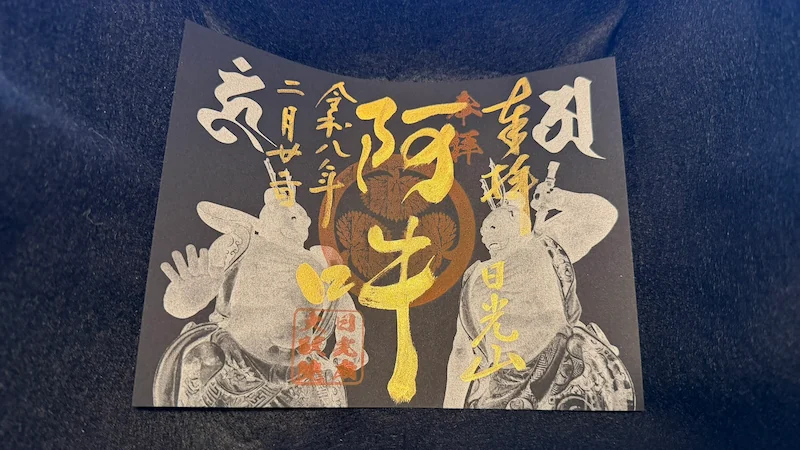
Payment methods for goshuin and amulets vary by location. During my visit, all goshuin were pre-written and I paid cash at each counter. Some locations may be cash only, so carry enough to cover what you want.
Clothing and Crowd Reality: Even the Morning Gets Busy
In late February, how cold it feels varies by person. Shaded areas and stone steps may be slippery from snow or moisture, so shoes with good grip matter. Don't push the pace on the Inner Sanctuary steps.
On crowds: even right at opening, numbers built steadily throughout my visit.
- Around 10:00 a.m., lines were forming at Honjido (Crying Dragon Hall)
- After 11:00 a.m., the ticket purchase line exceeded 100 meters
For a quieter visit, go early and prioritize the three spots that fill fastest: Yomeimon Gate, the Inner Sanctuary, and the Crying Dragon.
Frequently Asked Questions
The most popular route is the Tobu Railway limited express from Asakusa Station to Tobu-nikko Station (TN-25), taking about 1 hour 50 minutes to 2 hours. From the station, take a local bus (about 10 minutes) or walk (about 35 minutes) to the Toshogu area. Check the latest timetable at tobu.co.jp before departure.
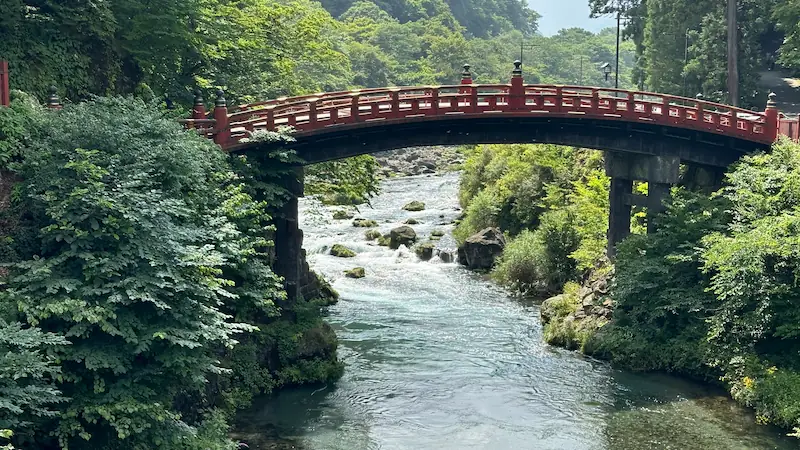
The trickiest part is the bus system in front of the station. Decide on your stop name in advance and confirm it on the in-bus display before getting off. Omotesando and Toshogu Higashi-Sando Iriguchi / Hotel Seikoen-mae are the official Toshogu-area stops on the World Heritage Loop Bus. I used Yasukawacho, then crossed through the underpass and climbed the stairs on the mountain side to reach the approach — check on the day that your bus stops there. If walking from the station, use Shinkyo Bridge as a landmark to keep your bearings.
It works as a day trip if you accept that the day is mostly Toshogu. Roughly 4 hours go to travel alone (about 2 hours each way from Asakusa), which leaves 5–6 usable hours on a normal schedule. That is comfortable for Toshogu plus Taiyuin, or Toshogu plus the Treasure Museum — but not for Toshogu and Lake Chuzenji and Kegon Falls in the same day. If Chuzenji is your priority, stay overnight. On February 22, 2026 I covered Toshogu, the Treasure Museum, and Taiyuin in about 4–5 hours on the ground and it did not feel rushed.
Toshogu, for a first visit. It has Yomeimon Gate, the Three Wise Monkeys, the Sleeping Cat, and the Inner Sanctuary, and it is what most people come to Nikko for. Taiyuin is the quieter, darker, more restrained counterpart — and it is a genuinely better experience if you dislike crowds. Admission is 550 yen against Toshogu's 1,600 yen, it opens an hour earlier at 8:00 a.m., and my time on site was about 50 minutes. If you have two hours and hate queues, Taiyuin first at 8:00 a.m. is an underrated way to start.
It saves 200 yen (2,400 yen combined against 1,600 + 1,000 bought separately), so the money is not the deciding factor — the time is. The Treasure Museum is a separate building away from the main precinct, photography is not permitted inside, and it realistically adds about 30 minutes. Buy the combination ticket if you are already planning a half-day visit. If you are on the 60–90 minute highlights plan, skip it and buy Toshogu alone.
Leaving Asakusa on an early limited express puts you at Tobu-nikko Station roughly two hours later, plus about 10 minutes by bus to the Toshogu area. In practice, arriving before the 9:00 a.m. opening means an early start from Tokyo, and it is the single biggest difference-maker for the day: at 8:40 a.m. on February 22, 2026 there were already about 40 people at the on-site ticket machines, and by 11:00 a.m. the ticket line exceeded 100 meters. If an early departure is not possible, staying in Nikko the night before is the reliable alternative. Check current timetables before you travel.
For the highlights only, allow 60–90 minutes. Include the Inner Sanctuary and plan for 100–130 minutes. My actual time on 2026/2/22 was 1 hour 50 minutes. Add the Treasure Museum and Taiyuin and you're looking at half a day — around 4–5 hours.
Arriving at the 9:00 a.m. opening is the quietest option. During my visit, lines were forming at the Crying Dragon around 10:00 a.m., and after 11:00 a.m. the ticket purchase line exceeded 100 meters. Prioritize Yomeimon Gate, the Inner Sanctuary, and the Crying Dragon early in the day.
It's especially worth it in the morning. When I arrived at 8:40 a.m., about 40 people were already in line at the on-site ticket machines, while the advance ticket exchange counter had fewer than 10. If you want to cut waiting time, buy in advance.
As of February 22, 2026: Toshogu single admission was 1,600 yen for adults and 550 yen for elementary / junior high school students. The Treasure Museum single admission was 1,000 yen for adults. The Toshogu + Treasure Museum combination ticket was 2,400 yen for adults. Taiyuin single admission was 550 yen for adults. Fees can change — confirm on the official sites before departure.
Yes, but most of the visit is outdoors, and stone steps and paths can become slippery. On wet days, don't push too hard on the stairs, and consider focusing on the central area.
On February 22, 2026, I confirmed goshuin at three locations: the Main Shrine / Worship Hall, near the Inner Sanctuary Worship Hall, and Honjido (Crying Dragon Hall). All were pre-written — 500 yen each, with the limited Crying Dragon version at 1,000 yen. Carry cash to be safe.
On the regular World Heritage Loop Bus, Omotesando and Toshogu Higashi-Sando Iriguchi / Hotel Seikoen-mae are the official stops for the Toshogu area. Yasukawacho is the stop I used on February 22, 2026 — some services do not stop there, and a modified route runs on selected dates between April 1 and November 30, 2026. Confirm the destination display and stop list on the day.
See Toshogu's central precinct and Inner Sanctuary first, then continue to Taiyuin. Having seen Toshogu's vivid, layered visual world, you'll find Taiyuin's quieter atmosphere more striking by contrast. My actual time at Taiyuin was about 50 minutes.
There are steps and uneven surfaces throughout. The 207 steps to the Inner Sanctuary can be demanding, and turning back partway is a reasonable option depending on stamina. In rain or snowmelt conditions, shoes with good grip are strongly recommended.
Closing time changes by season, and admission ends 30 minutes before closing. April through October: closes at 5:00 p.m., last admission 4:30 p.m. November through March: closes at 4:00 p.m., last admission 3:30 p.m. Confirm the latest information on the official sites before you go.
Related Pages
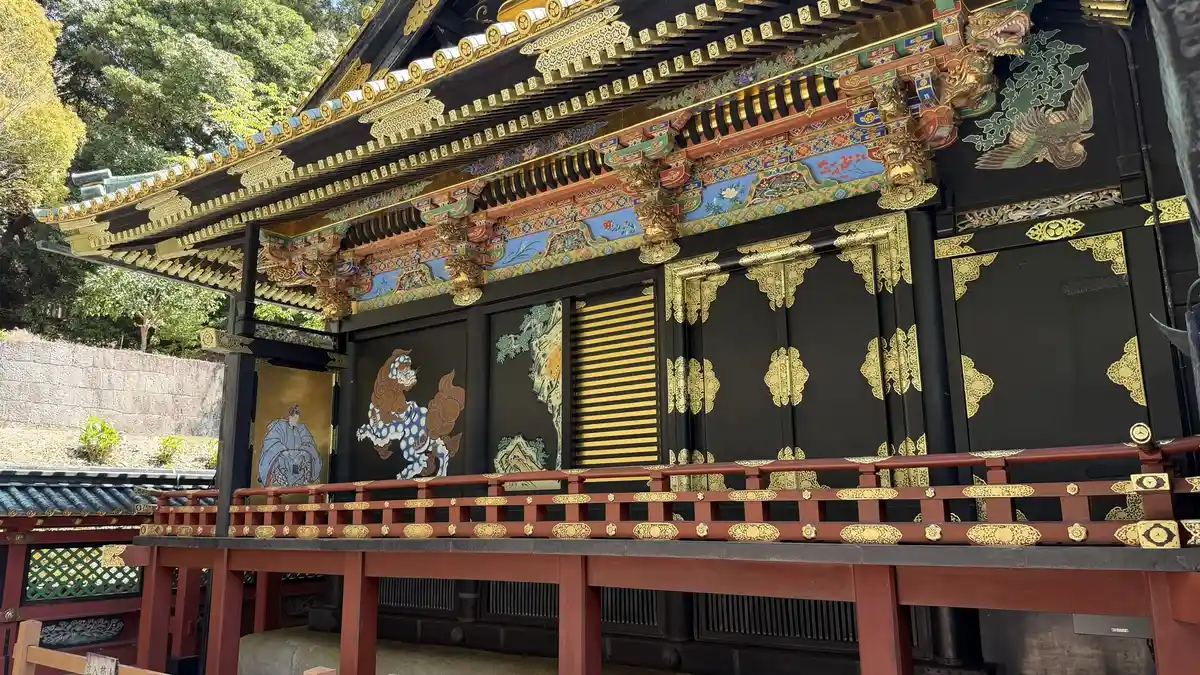 Related site — Kunozan, Shizuoka
Kunozan Toshogu: Where Ieyasu Was Buried First
The Shizuoka shrine where Ieyasu was buried first: Kunozan in 1616 by his own instruction, then Nikko the following year. Covers the National Treasure shrine and his tomb, whether to take the ropeway or the 1,159 steps, fares, how long to allow, and the museum's no-photography rule.
See how to visit Kunozan →
Related site — Kunozan, Shizuoka
Kunozan Toshogu: Where Ieyasu Was Buried First
The Shizuoka shrine where Ieyasu was buried first: Kunozan in 1616 by his own instruction, then Nikko the following year. Covers the National Treasure shrine and his tomb, whether to take the ropeway or the 1,159 steps, fares, how long to allow, and the museum's no-photography rule.
See how to visit Kunozan →
Return to the Tokugawa Ieyasu Page
Return to the Main Page

☕ Support This Site
Following the Shogun is built on original fieldwork and on-site research.
If you found this guide useful, your support helps keep it going.

You can also support via QR code


comment