

Ogawa Castle Ruins in Minakami: Moat, Main Enclosure and Access from Jomo-Kogen
Ogawa Castle Ruins is a town-designated historic site in Tsukiyono, Minakami, a mountain town in Gunma Prefecture north of Tokyo. What remains is a main enclosure and a deep dry moat beside it, both made of earth; I saw no castle buildings. I visited on the morning of November 14, 2026, driving from Jomo-Kogen Station, and spent about 15 minutes there. It fits well into a day that also takes in Nagurumi Castle and Numata Castle.
Ogawa Castle was a Sengoku-period earthwork castle: a stronghold built by shaping the ground into flat enclosures, banks and moats, rather than a stone castle with a tower. Walk down into the moat from the roadside entrance and up into the enclosure, and you can see how far the bank drops to the moat floor.
Minakami is the mountain area north of Tokyo known for hot springs and outdoor sports. The ruins are in Tsukiyono, the part of town around Jomo-Kogen Station, the Joetsu Shinkansen stop for the area. Minakami Station and Gokan Station, on the slower JR Joetsu Line, are different stations; Ogawa Castle is near Jomo-Kogen.
In this guide
What remains at Ogawa Castle Ruins in Minakami
Minakami Town lists the site as a town-designated historic site (designated April 1, 1970) and says the dry moat survives relatively well. The Minakami Tourism Association describes a layout that used two streams, from the east and the west, as natural defenses, and says part of an earthen wall in the main enclosure and the site of a watchtower platform to the southwest remain.
What stayed with me most were the moat near the entrance and the steep slope at the back of the site.
| What remains | A dry moat and the flat main enclosure. The tourism association also lists part of an earthen wall and a watchtower platform site |
|---|---|
| Added later | The Ogawa Castle monument, a gazebo, information boards and signs. None of these are Sengoku-period structures |
| Not seen on my visit | Any tower, gate or other castle building |
The entrance: marker post and red banners
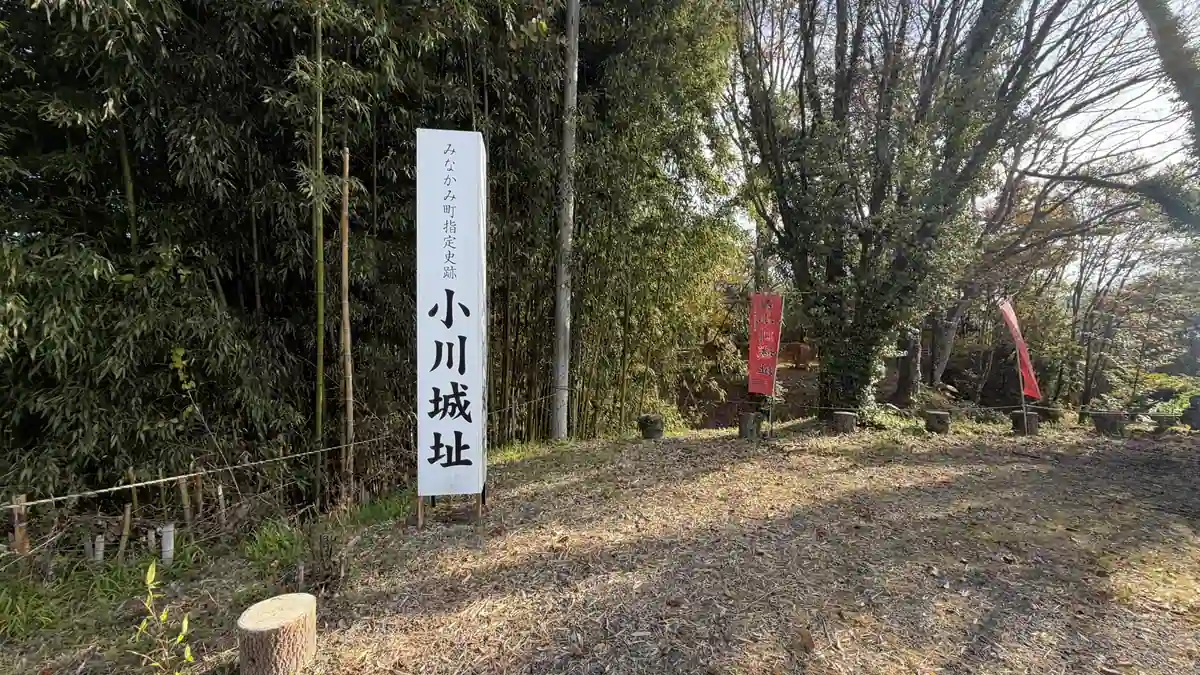
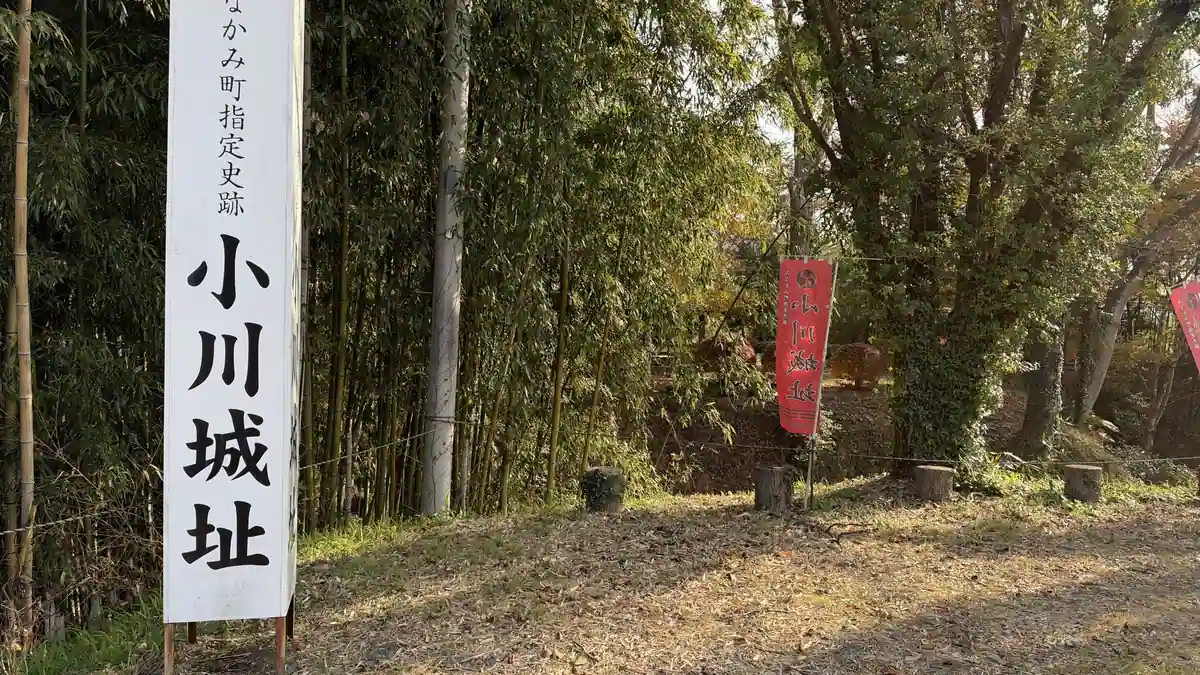
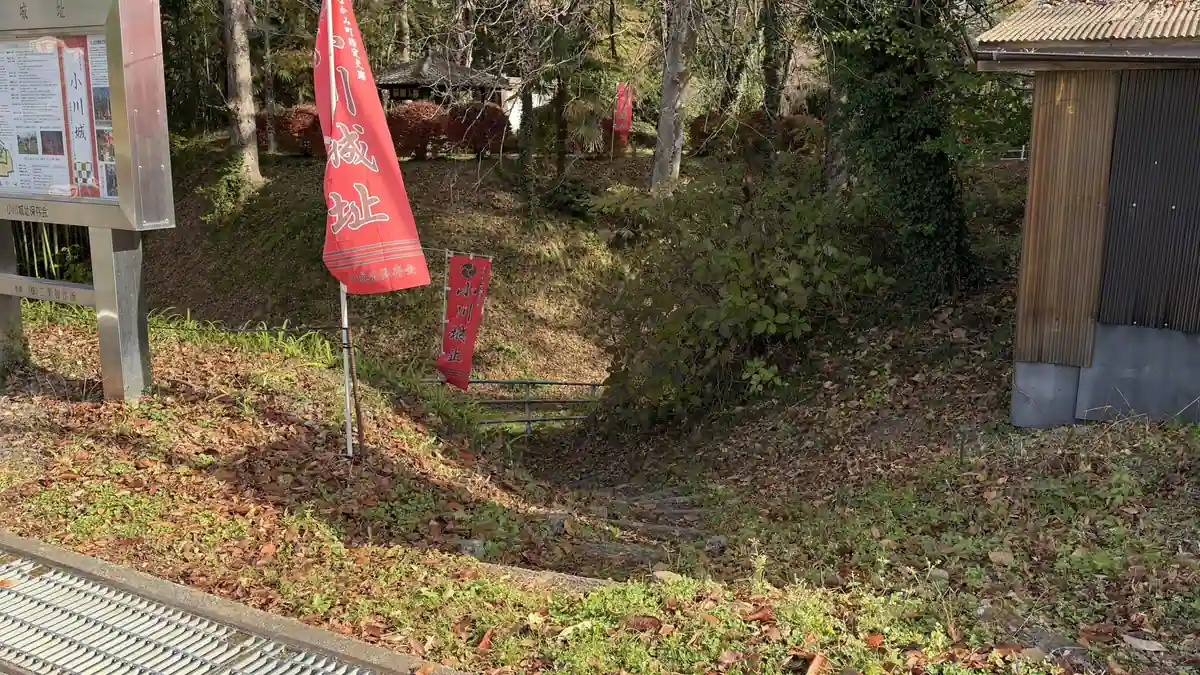
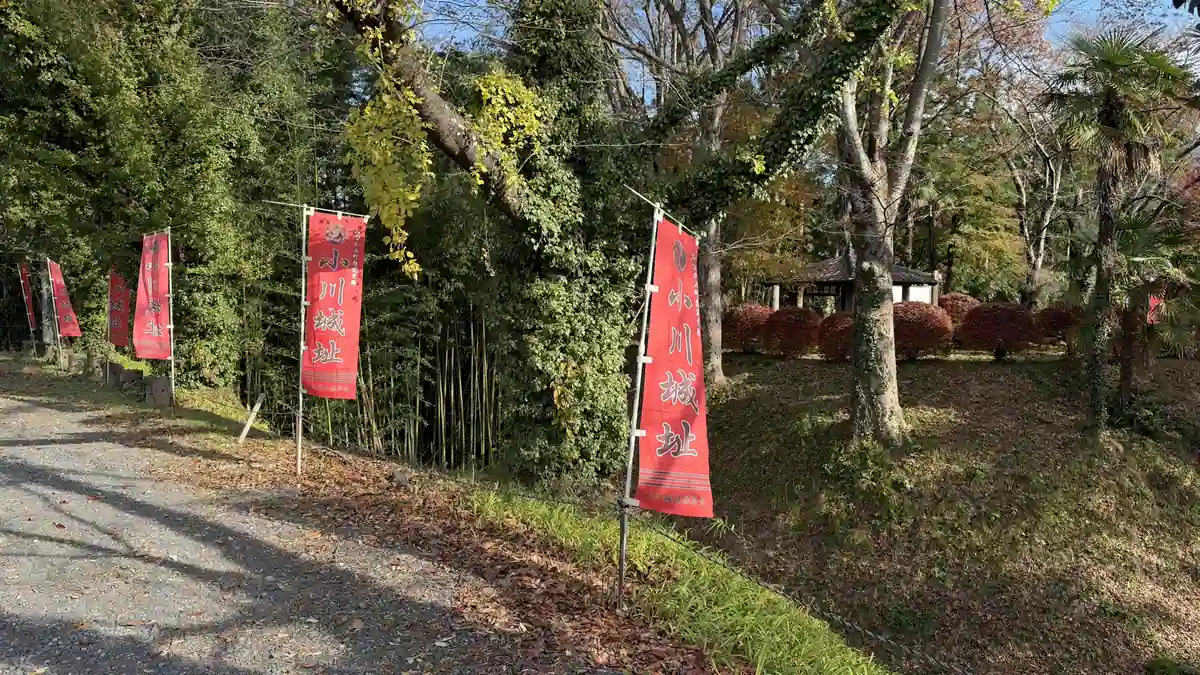
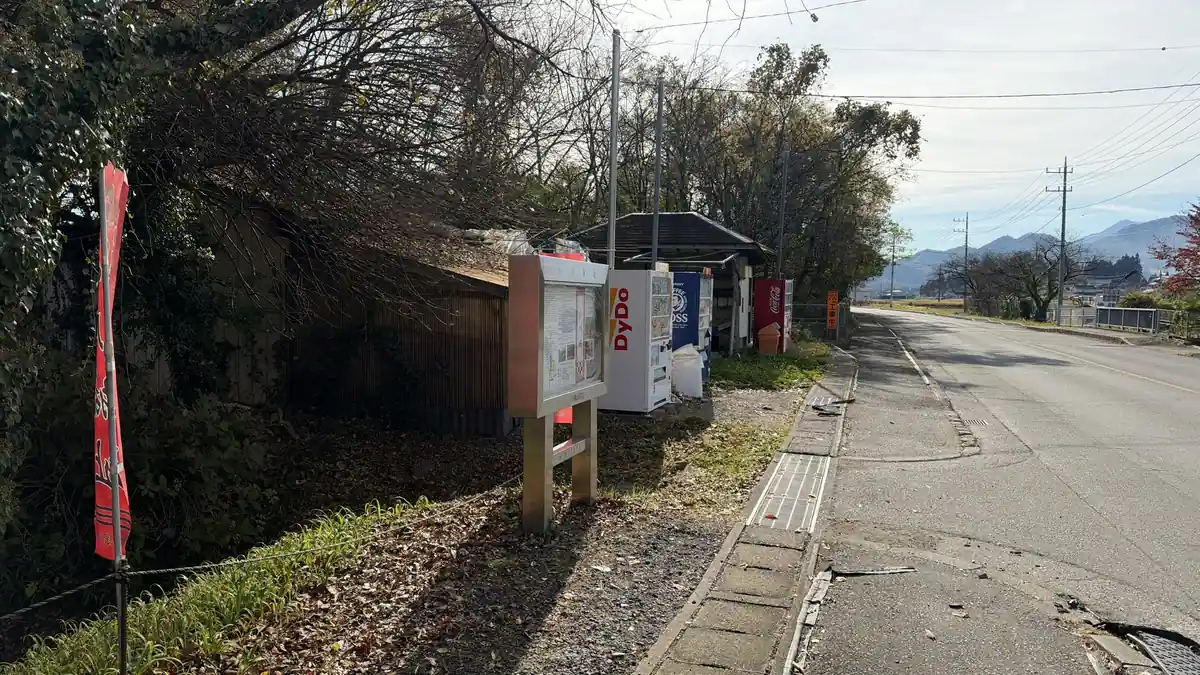
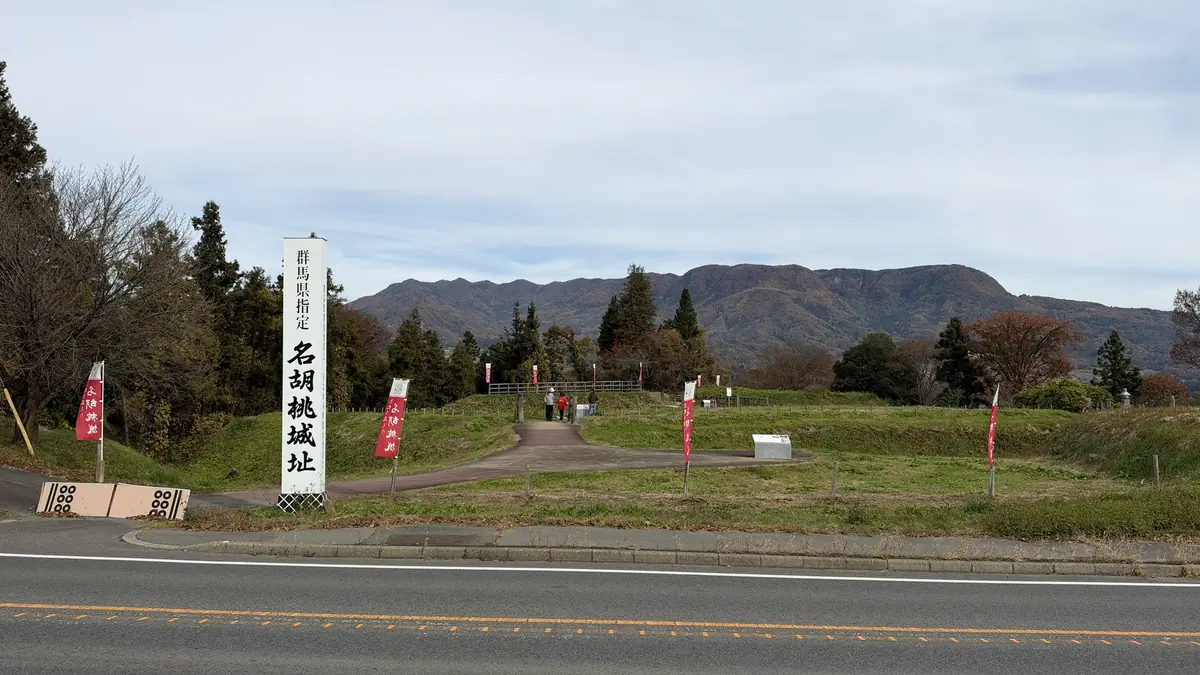
The entrance faces the road. A white marker post reading “Ogawa Castle Site” (in Japanese) and red banners mark it, and an information board stands beside it with a moat dropping away behind.
Tap a photo to enlarge
The dry moat beside the main enclosure
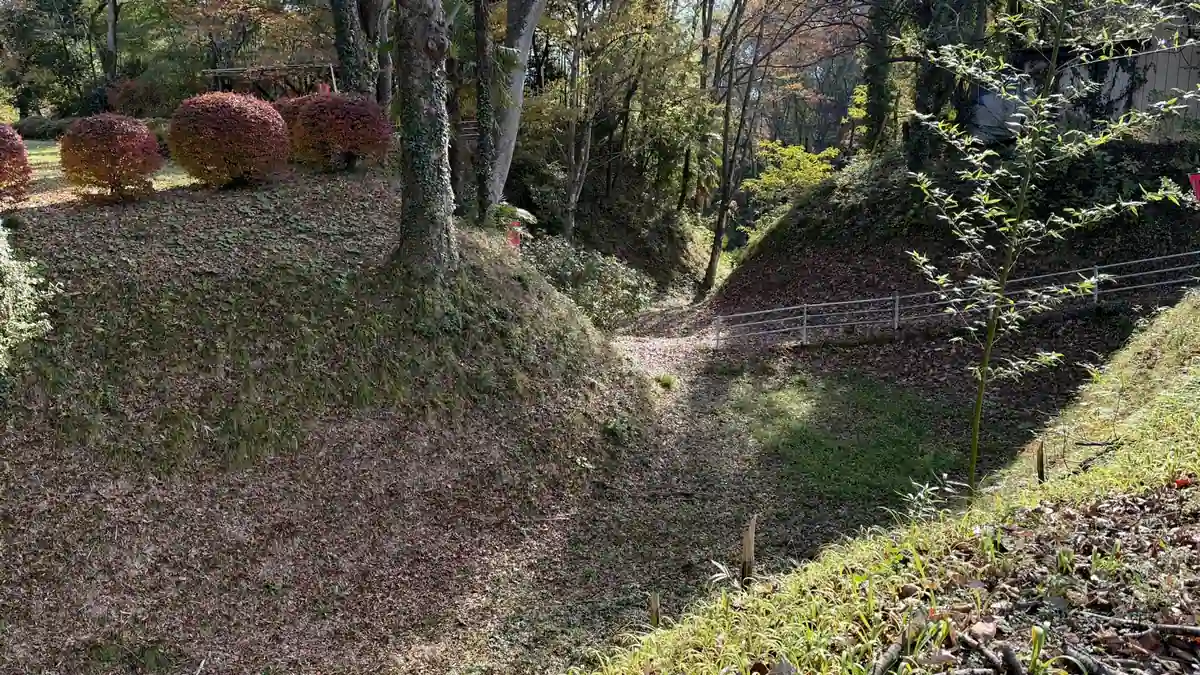
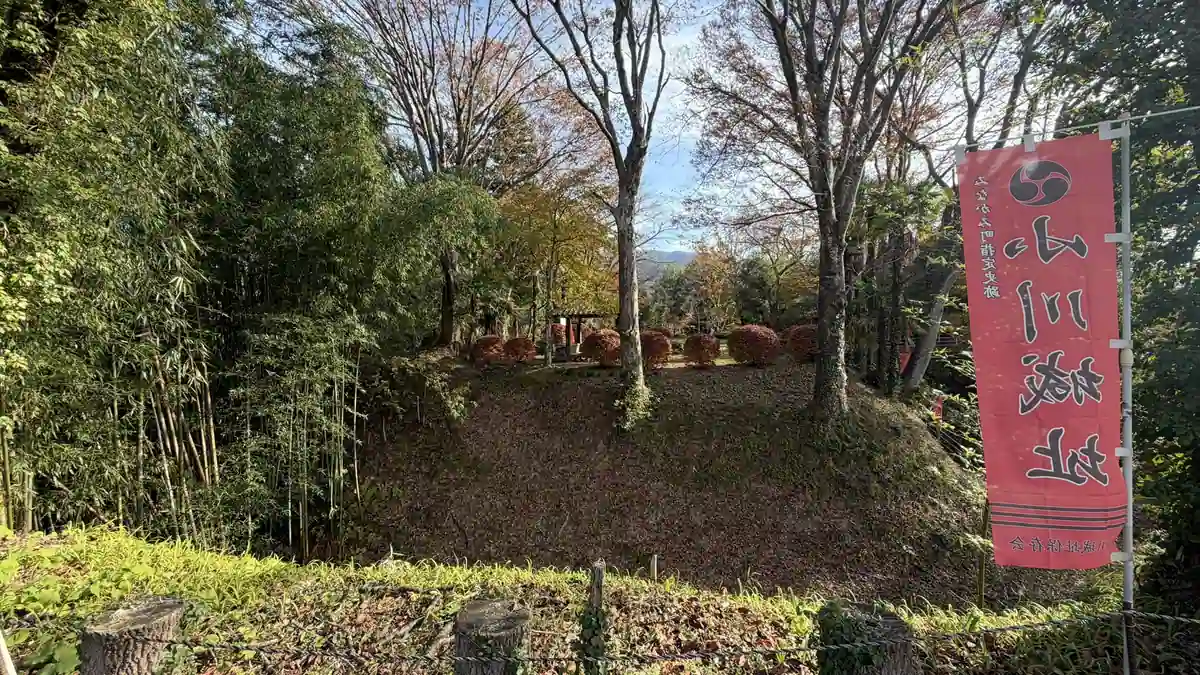
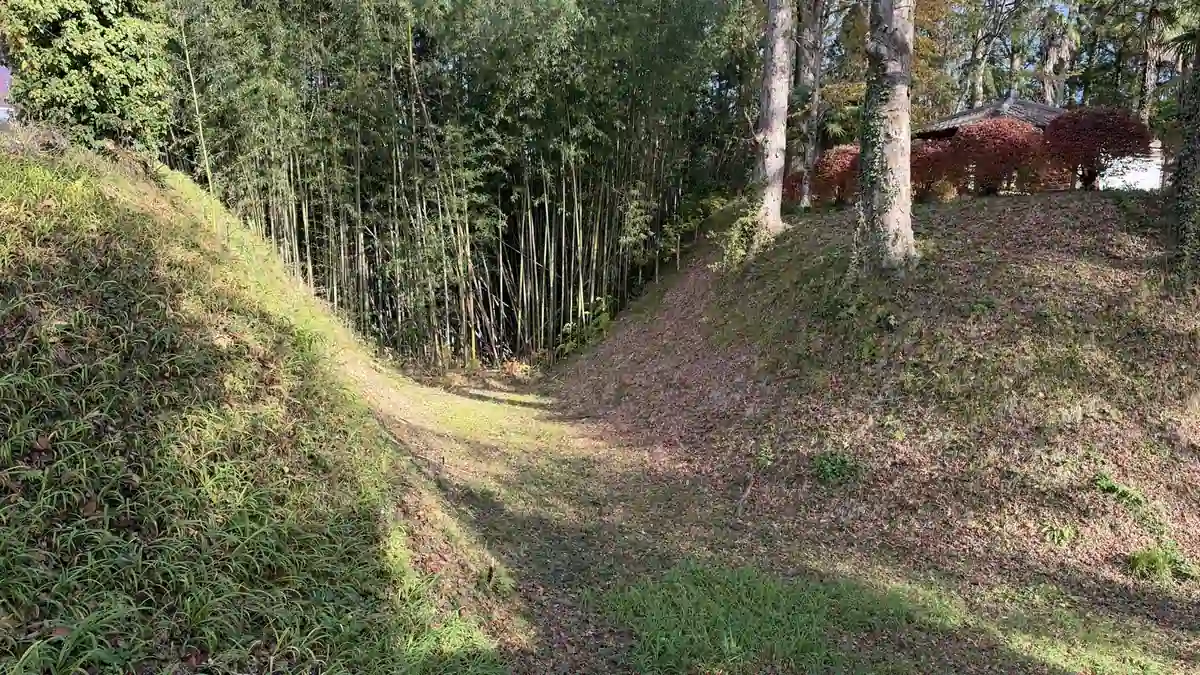
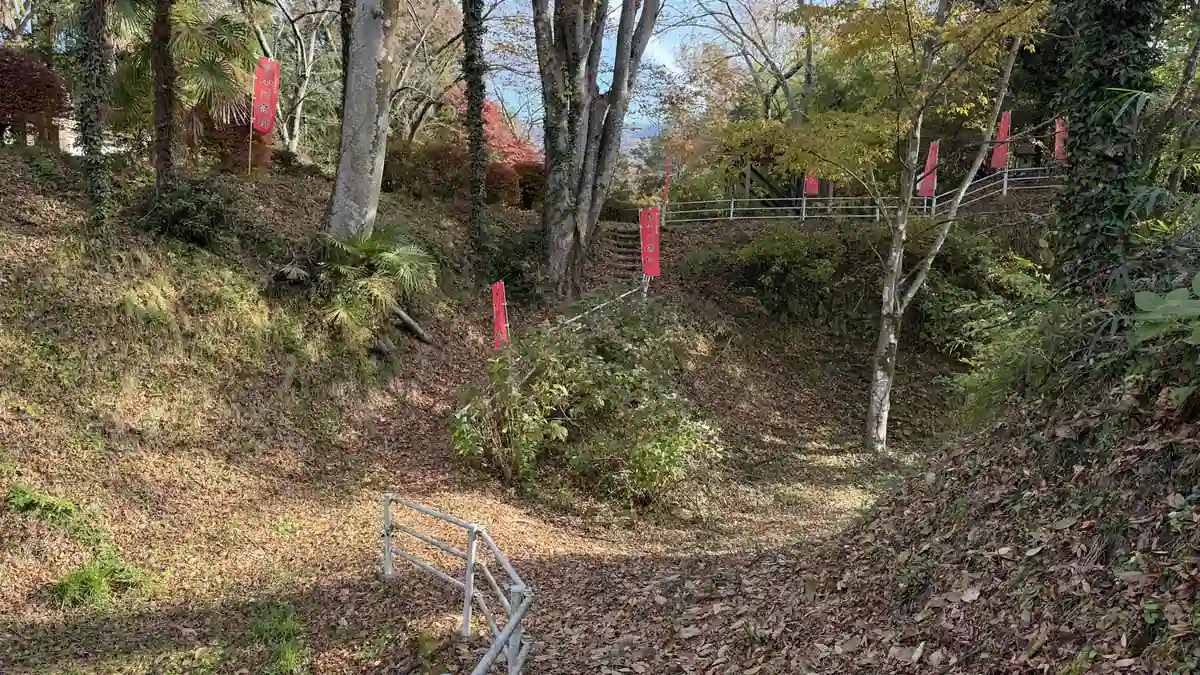
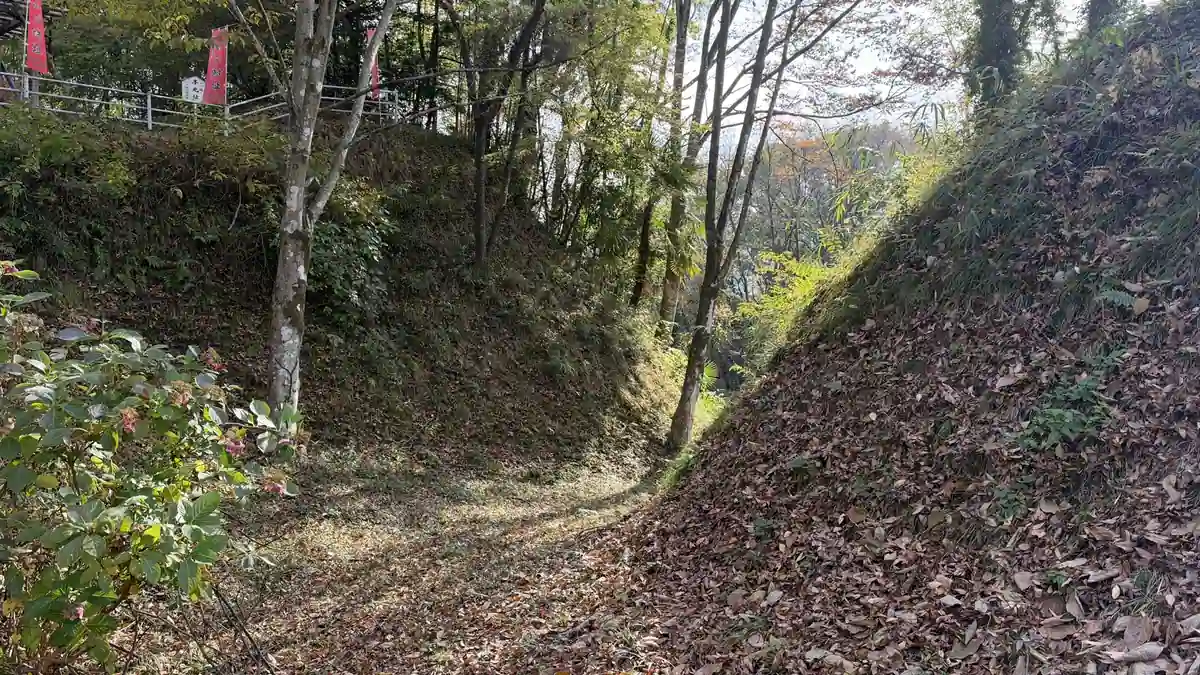
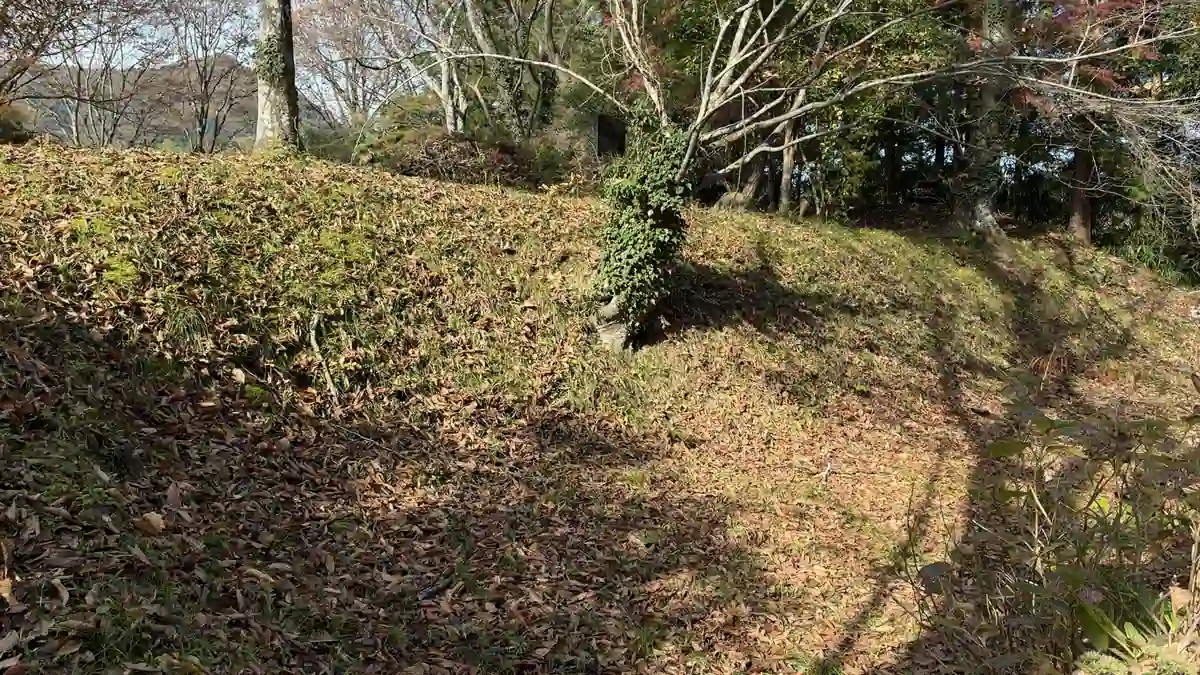
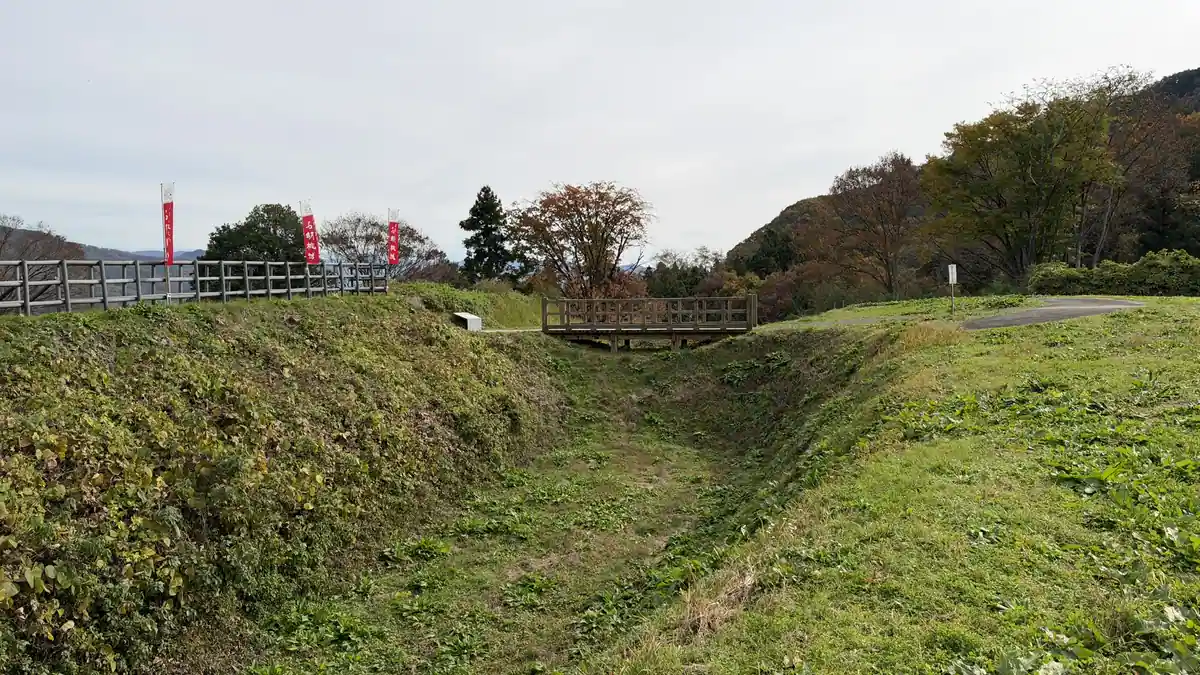
This is the dry moat beside the main enclosure. Even under fallen leaves and grass, the step between the flat top of the enclosure and the moat floor is clear. The floor runs on toward a bamboo grove, with high banks on both sides; from the bottom you can read the height of the bank.
A dry moat (karabori) is a moat dug without water. Japanese castles in the hills relied on such moats and banks rather than stone walls.
Tap a photo to enlarge
The main enclosure and the monument
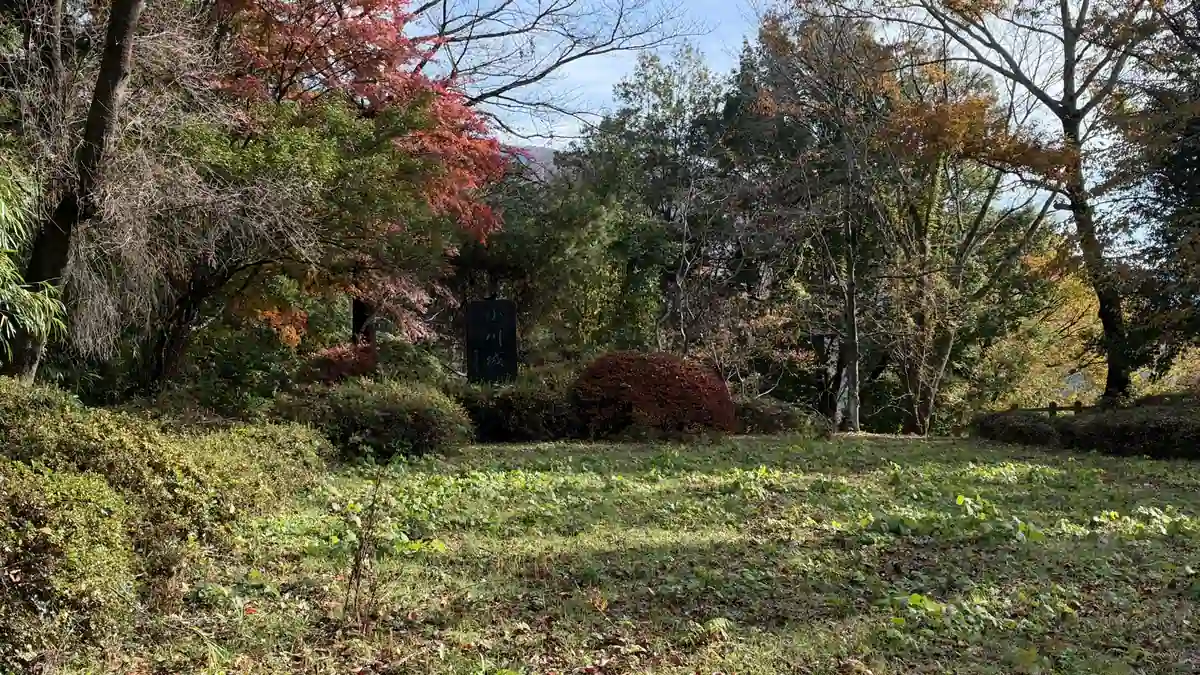
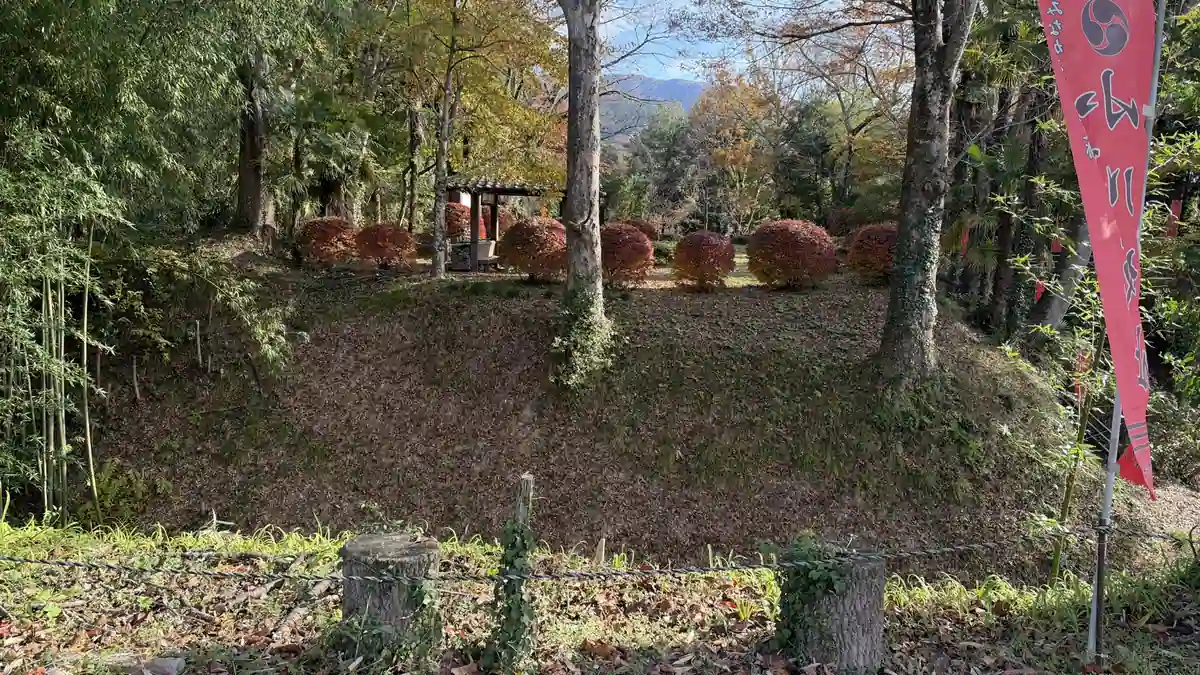
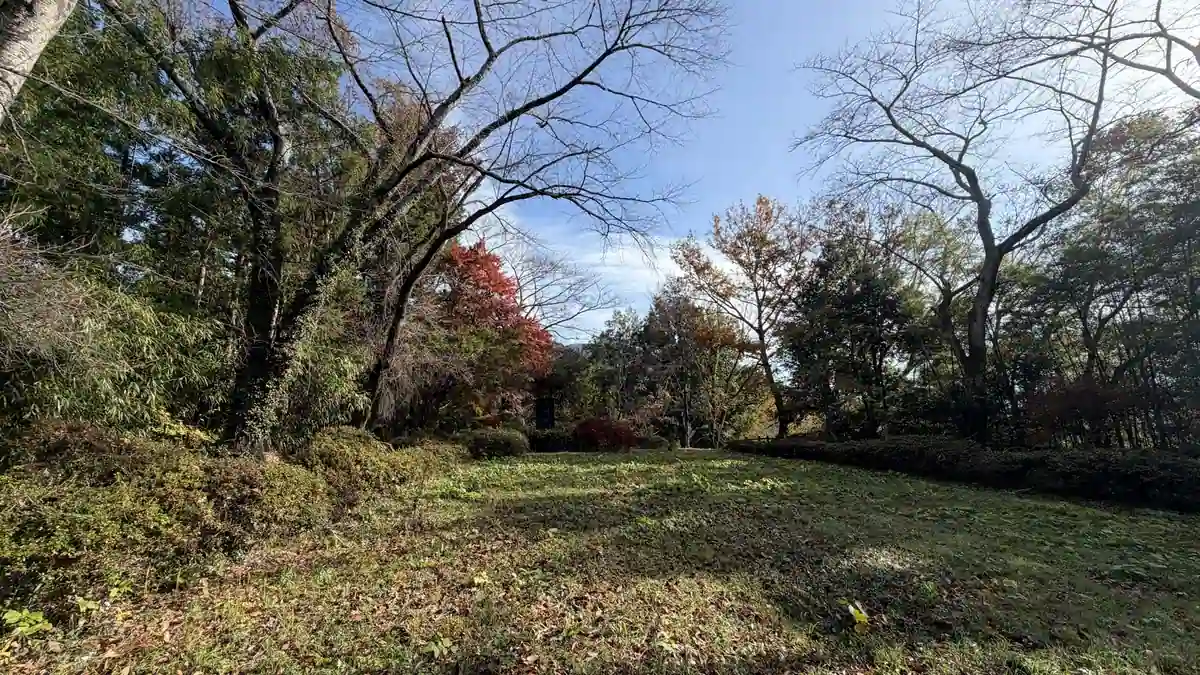
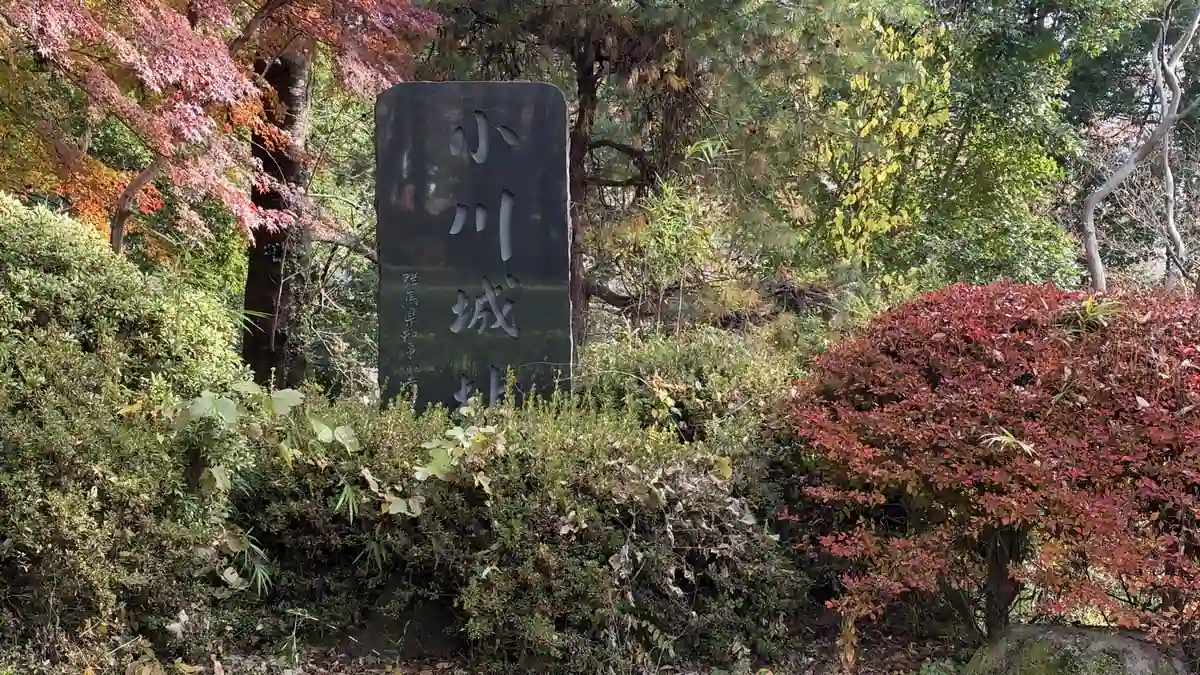
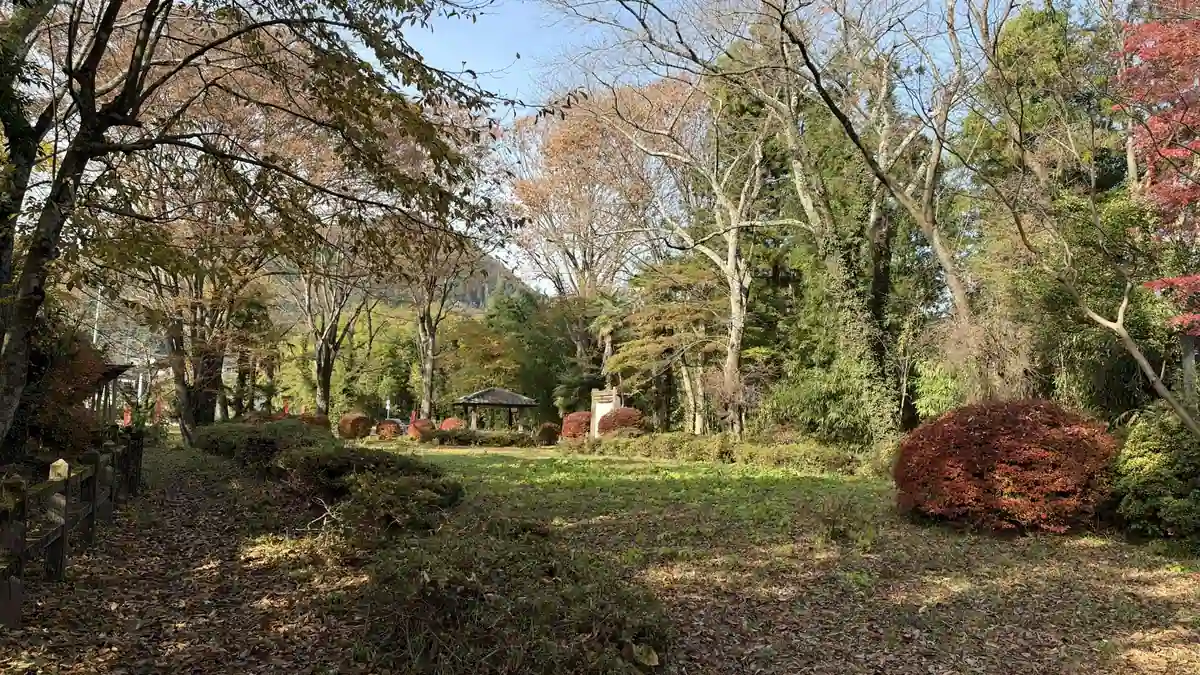
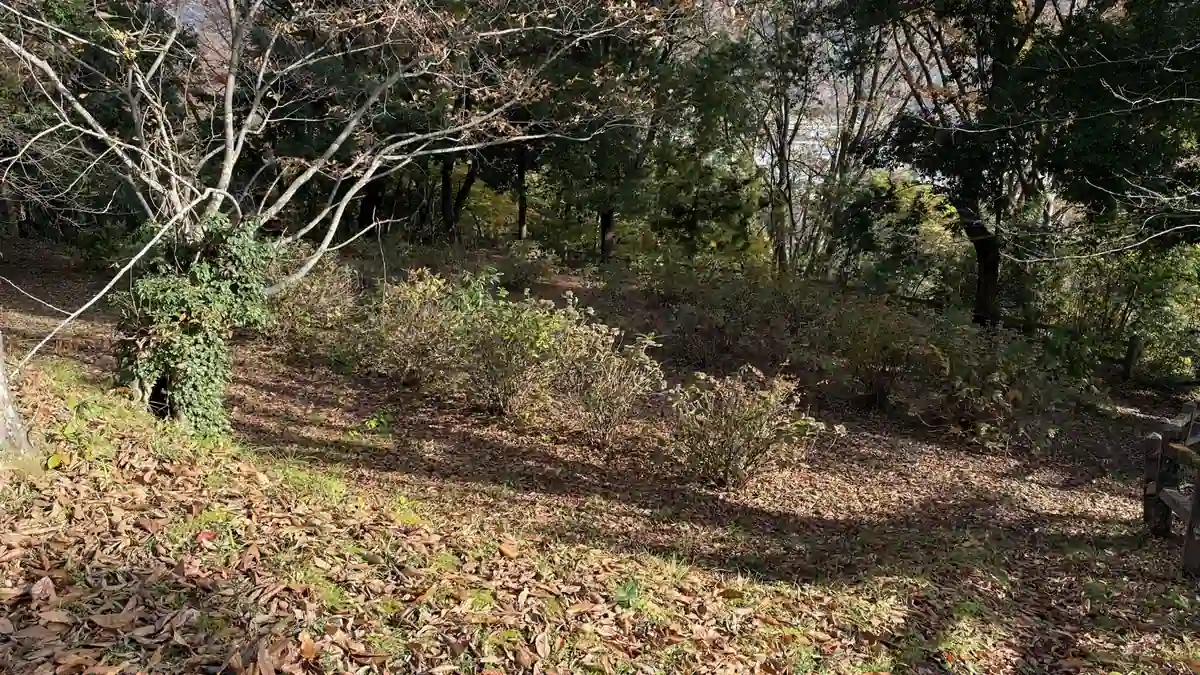
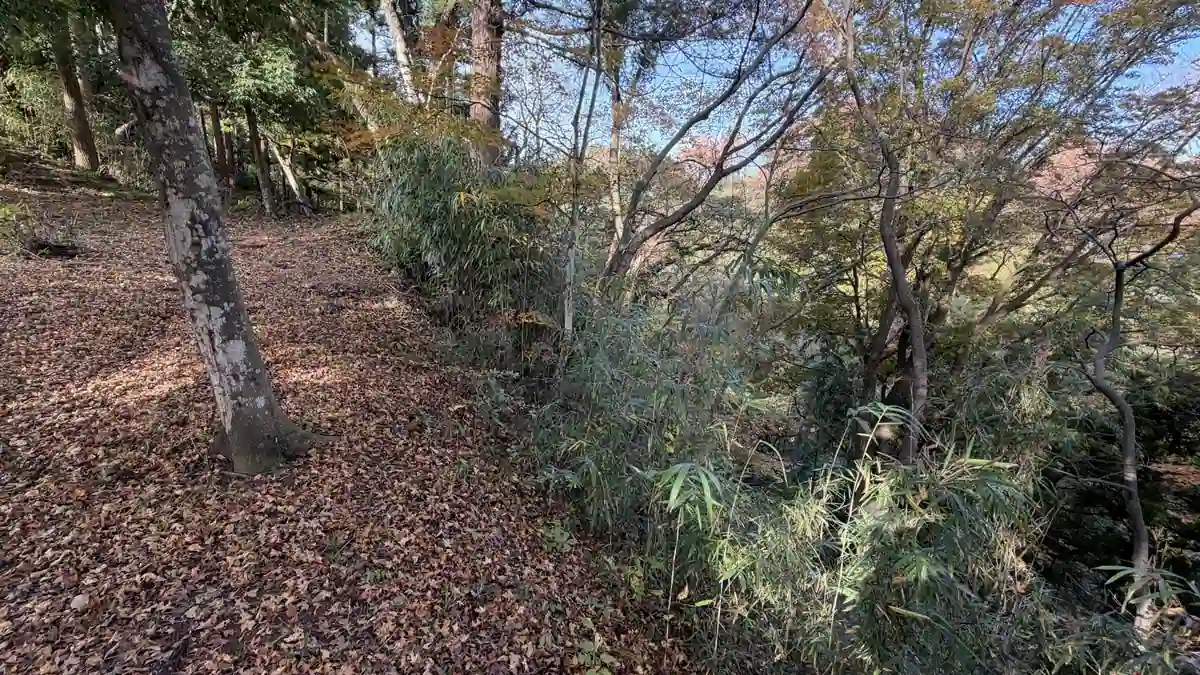
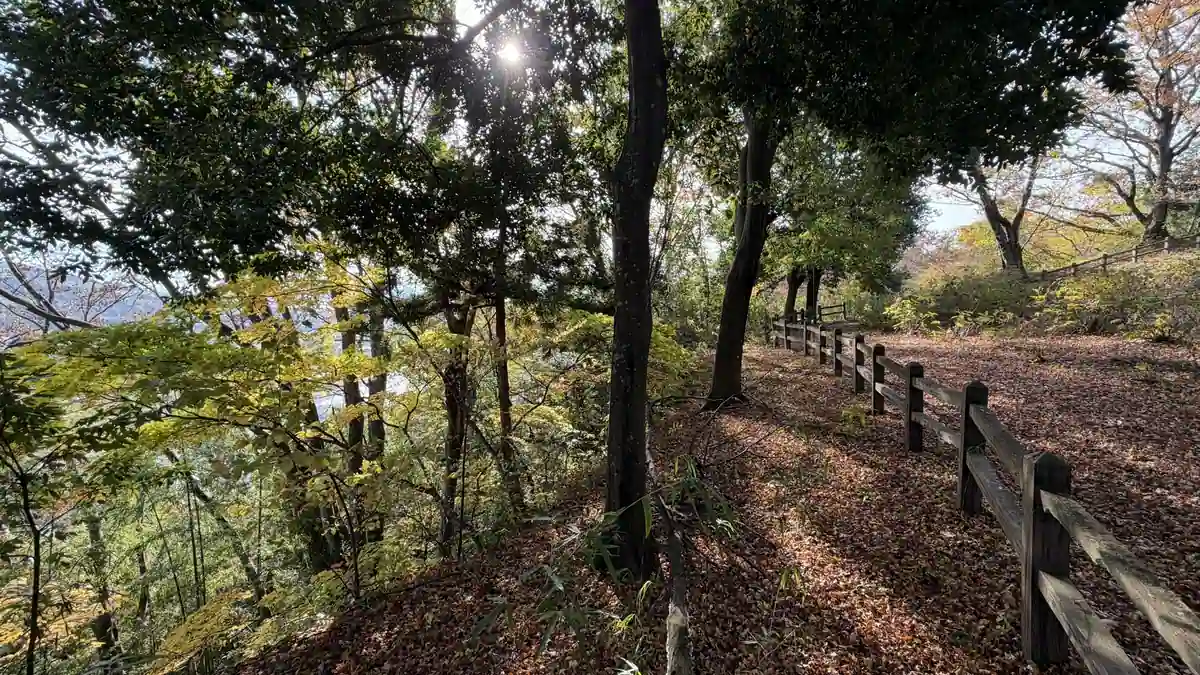
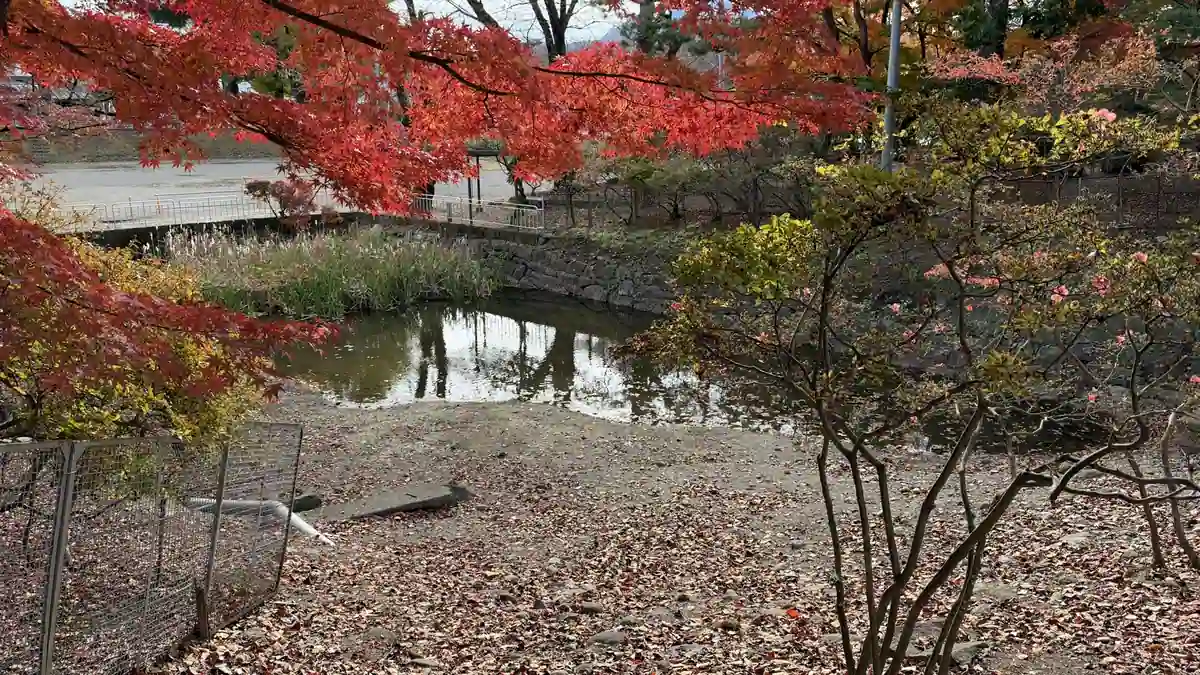
The main enclosure (honkaku, also called honmaru) is a flat, grassy area ringed by trees, with the “Ogawa Castle” monument at the far end. On my visit the shrubs around it had turned red. Along the edge are a low bank, a narrow path and a wooden fence.
The tourism association says part of an earthen wall and a watchtower platform site to the southwest remain. I could not tell which of the bumps and banks along the edge I photographed they are.
Tap a photo to enlarge
The gazebo, boards and signs
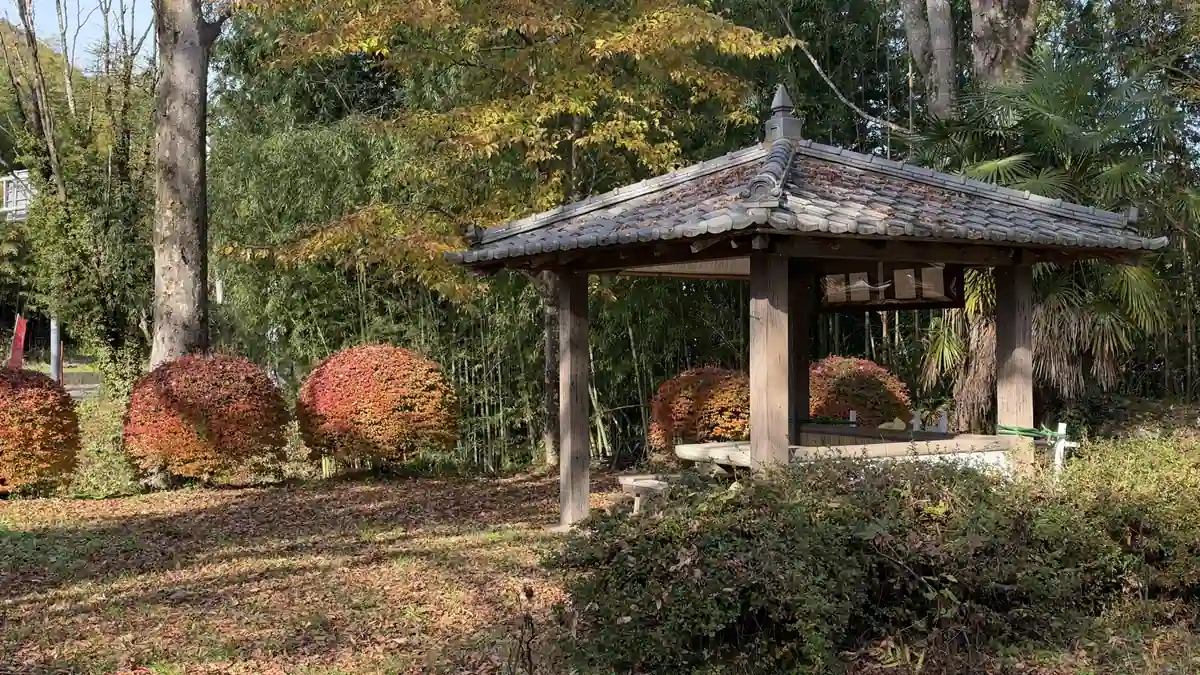
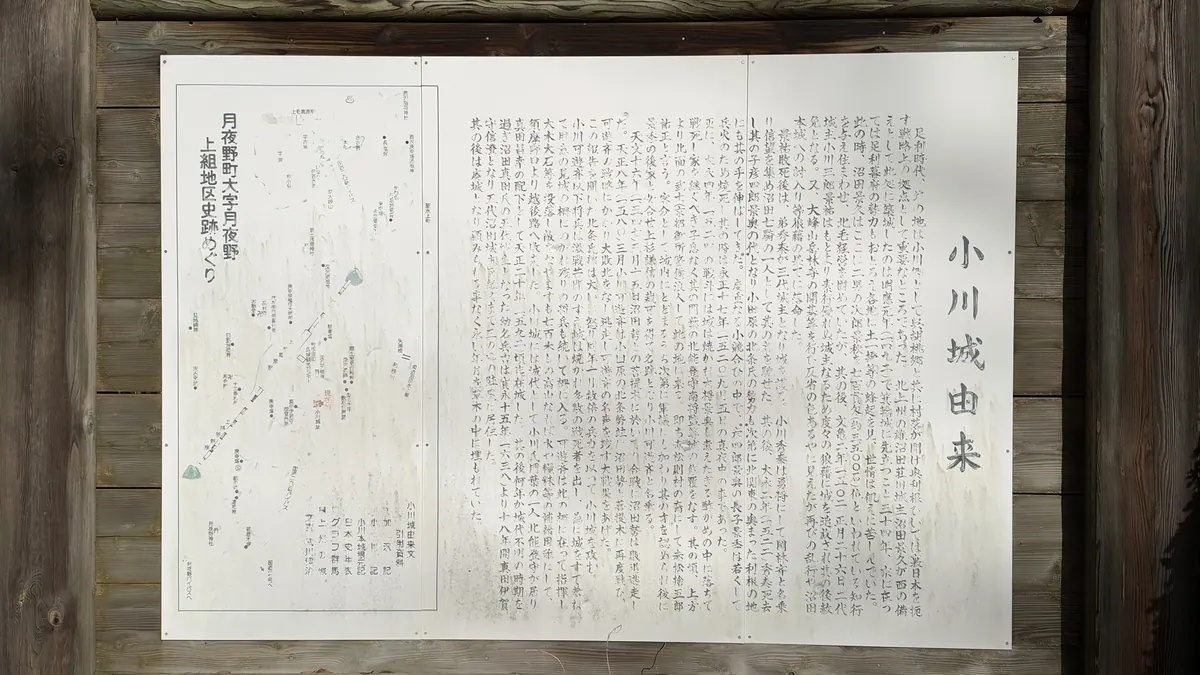
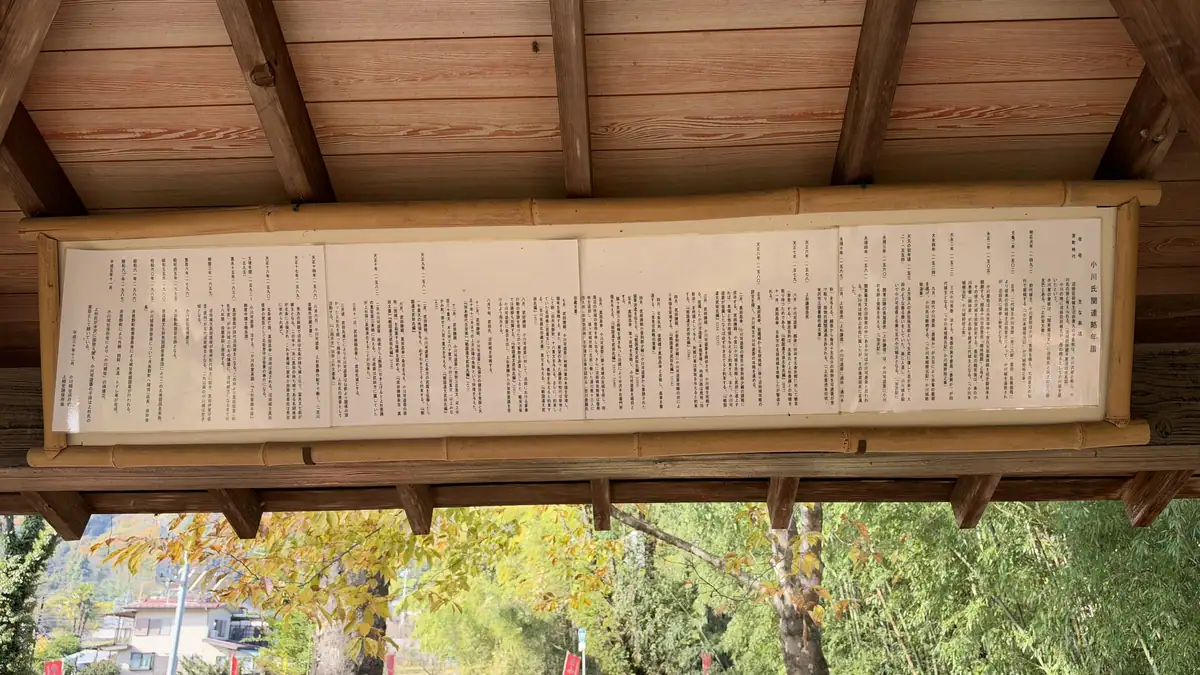
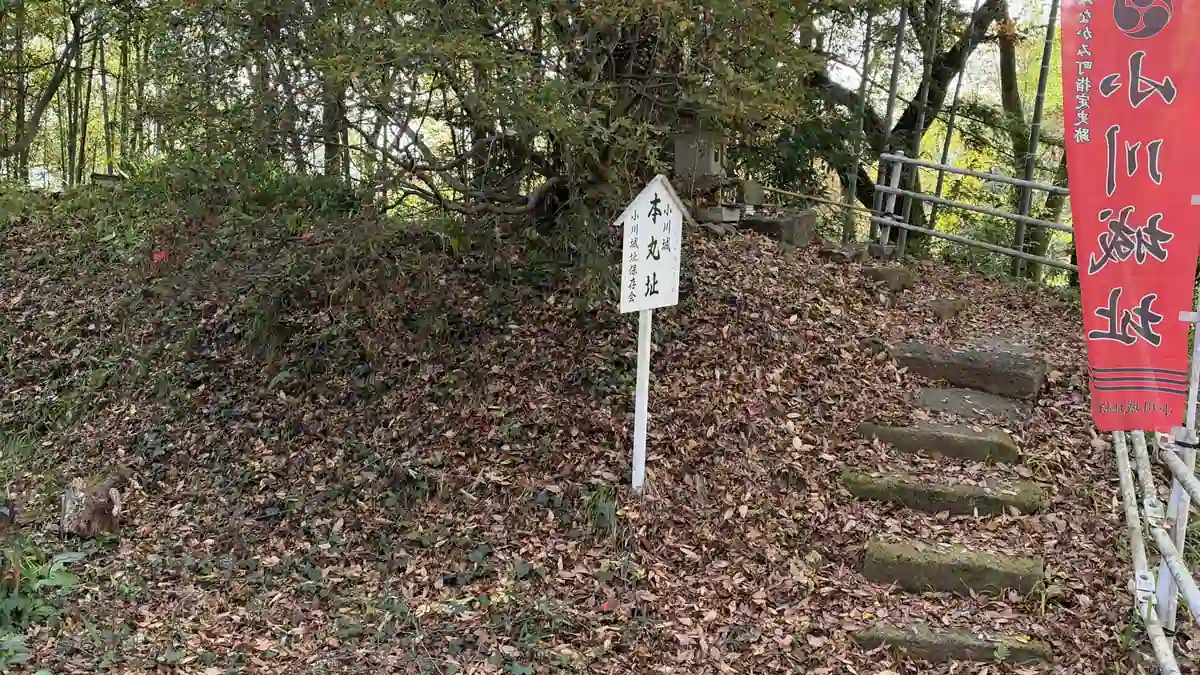
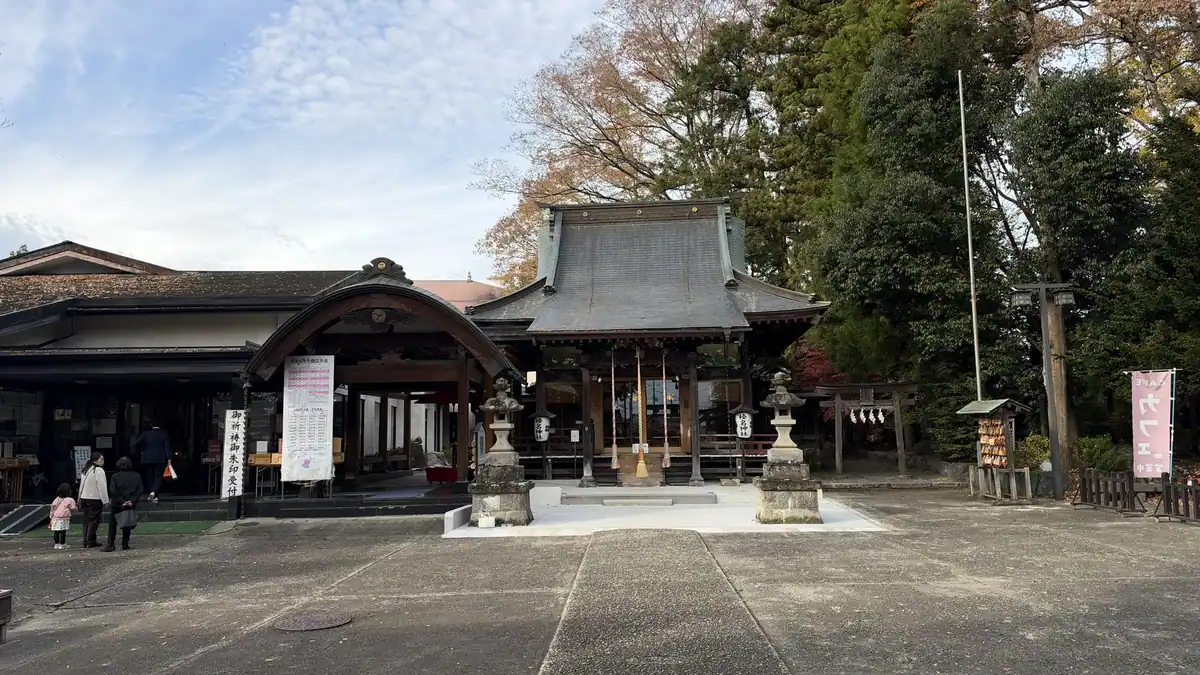
A gazebo for visitors stands in one corner of the main enclosure. It is a rest area, not a Sengoku-period building. Under its beams hang a framed text and a row of colored paper cards. You will also find a board on the origins of the castle and a sign for the main enclosure site beside stone steps. The boards are in Japanese; a camera-translation app helps.
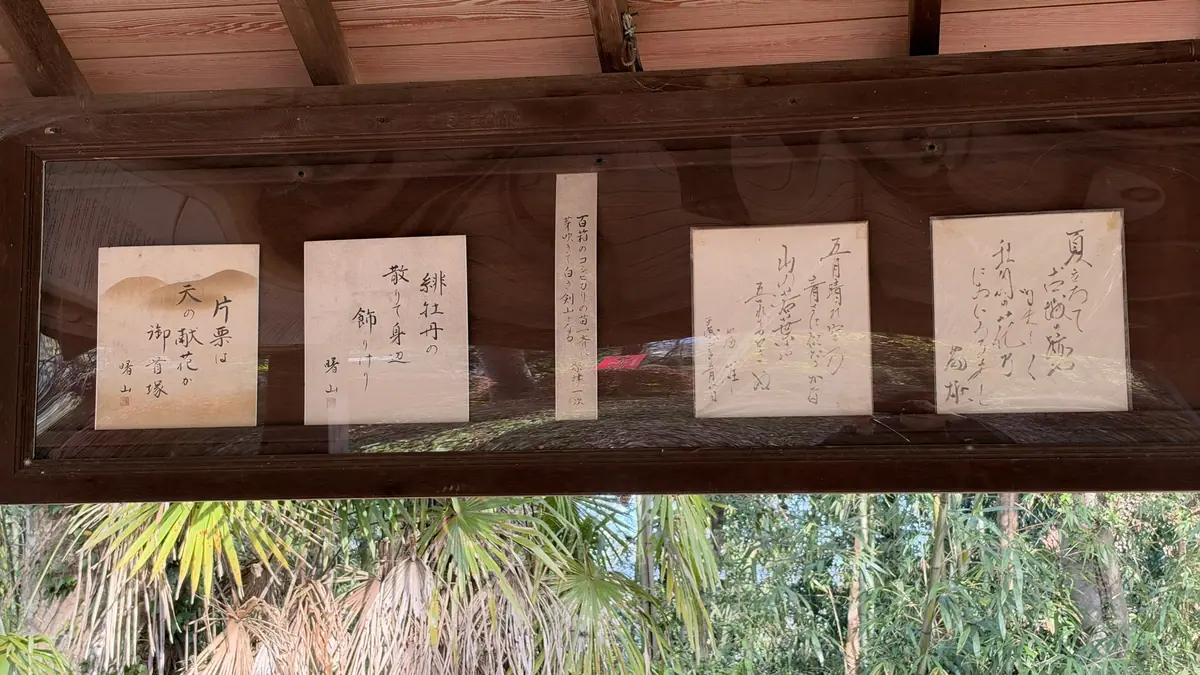
Tap a photo to enlarge
Time needed and the walking route
My visit took about 15 minutes, plus the trip to and from the station.
From the entrance you go down into the dry moat and up into the main enclosure. On my visit there were fallen leaves on the paths and steps. Shoes can get dirty here, so wear a pair you do not mind getting muddy.
Start at the roadside entrance with the marker post and the information board. A moat drops away behind the board.
From the entrance you cross the moat by going down and back up. Watch your footing on the fallen leaves.
You come out on a grassy area ringed by trees. The Ogawa Castle monument stands at the far end.
Walk the edge of the enclosure and look at the banks and the moat from the side.
Look at the gazebo and the boards, then return to the entrance.
From the entrance you can see mountains beyond the road. On my visit a snow-covered peak was visible in the distance.
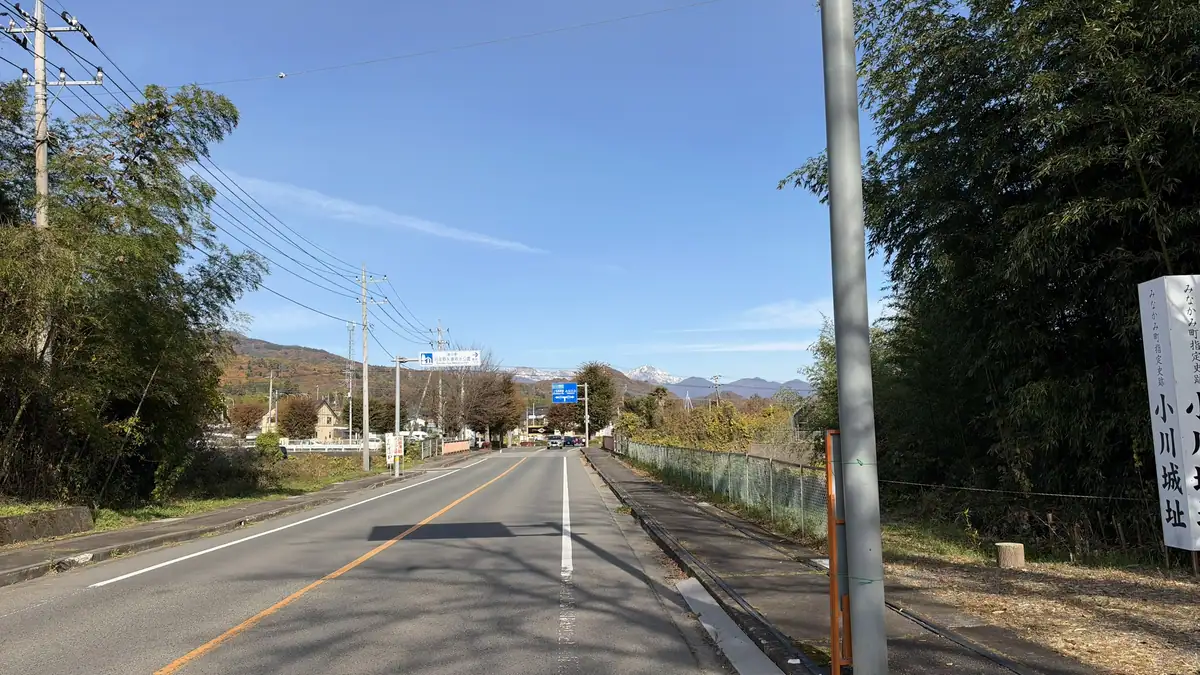
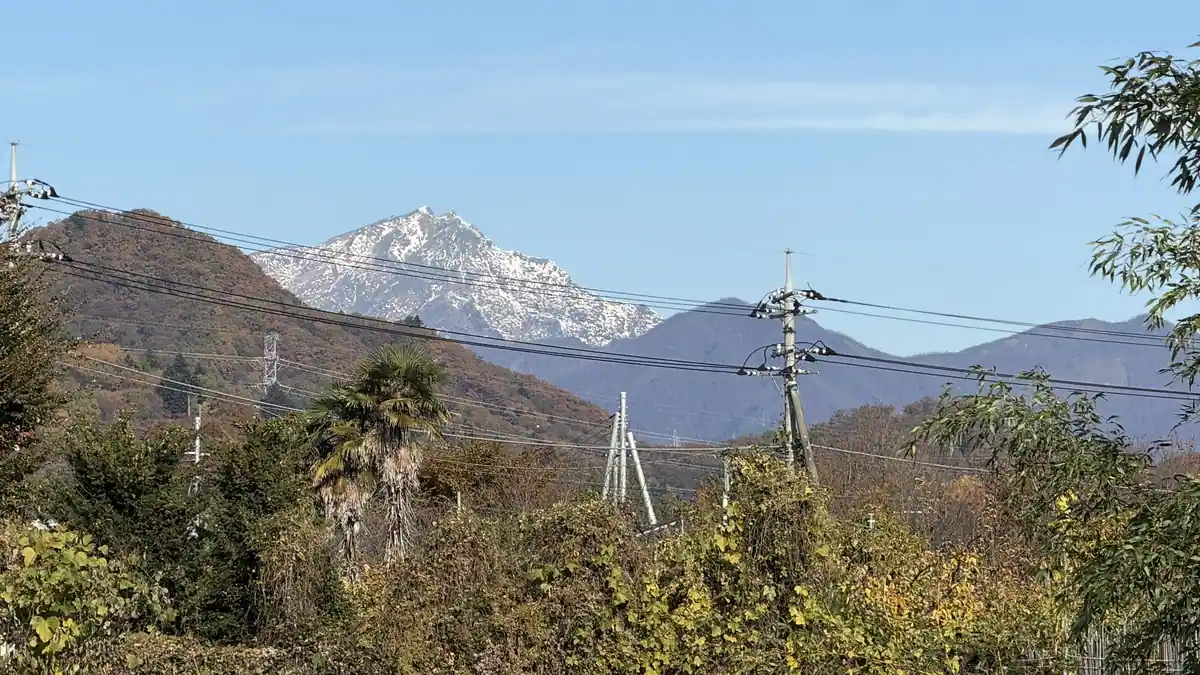
Tap a photo to enlarge
Getting there from Tokyo and Jomo-Kogen Station
From Tokyo, take the Joetsu Shinkansen to Jomo-Kogen Station; the Minakami Tourism Association gives 62 minutes at the fastest. Jomo-Kogen is a JR station, and Japan-Guide lists the shinkansen to Jomo-Kogen as covered by the Japan Rail Pass. On the Joetsu Shinkansen, not every train called Toki stops at Jomo-Kogen; some pass straight through. I only noticed from an announcement on board, and it was in Japanese, so check that your train stops at Jomo-Kogen before you get on (the Tanigawa trains normally stop there).
I drove from Jomo-Kogen Station. On foot, a castle-information website (cmeg.jp) places the site about 400 m east of the station, and the walking times I found range from 3 to 15 minutes depending on the source. None of this is official, so check the route on a map app if you plan to walk. Few taxis wait at the station, and the tourism association advises booking one ahead (there may be none after 16:00).
Getting to Ogawa Castle Ruins
| Address | 1125 Tsukiyono, Minakami, Tone District, Gunma |
|---|---|
| Nearest station | Jomo-Kogen Station (JR Joetsu Shinkansen). Gokan and Minakami stations on the Joetsu Line are different stations |
| From Tokyo | Joetsu Shinkansen to Jomo-Kogen, 62 minutes at the fastest (Minakami Tourism Association). It varies by train |
| Station to the site | About 400 m east of the station, according to a castle-information website (not official). Few taxis wait at the station |
| Bus | I could not find a local bus that goes to the site |
| Car | On November 14, 2026, I parked in a space for a few cars on the left of the entrance. I could not confirm whether it is meant for visitors |
| Station car park (a separate place) | 63 spaces at Jomo-Kogen Station. Free for 2 hours, then 100 yen per hour, up to 1,000 yen a day (tourism association, checked November 15, 2026). No motorcycles |
| Admission and hours | None given by the town or the tourism association. It is an open-air site |
| Inquiries | Minakami Tourism Association, +81-278-62-0401 (8:30–17:30, closed Saturdays, Sundays and public holidays) |
Driving in Japan with a foreign license
| What you need | An International Driving Permit issued under the 1949 Geneva Convention, plus your home license and passport. Permits issued under other conventions, such as the 1968 Vienna Convention, are not accepted. Licenses from Switzerland, Germany, France, Belgium, Monaco and Taiwan need an official Japanese translation instead (JAF, Eki Rent-A-Car) |
|---|---|
| Time limit | Up to one year from your entry into Japan (JAF) |
| Rental at Jomo-Kogen | Eki Rent-A-Car's Jomo-Kogen office is in the parking area under the elevated tracks in front of the station, open 8:00–19:00 (checked November 15, 2026). Eki Rent-A-Car has an English booking site |
| Car sharing | I used a Times Car car-share car from Jomo-Kogen Station. Times Car does not accept foreign or international driving licenses for membership, so visitors from abroad should book a rental car instead |
| Other rentals | You can also search rental cars on Rakuten Travel (Rakuten Travel car rental, PR; Japanese-language site) |
| On the road | Japan drives on the left |
Location of Ogawa Castle Ruins (1125 Tsukiyono, Minakami)
The entrance is marked by a white “Ogawa Castle Site” post and red banners (map by Google Maps).
The Ogawa and Sanada clans in the Numata region
Sources differ on when the castle was built. The board at the entrance says Numata Kagehisa, lord of Numata Castle, built it as a western defense in 1492. The Minakami Tourism Association also says Numata Kagehisa built it as a western defense. Minakami Town’s description of the designated site, however, gives “the Tenbun to Tensho eras (16th century), by tradition”. The name of Ogawa Kayusai is handed down as its lord.
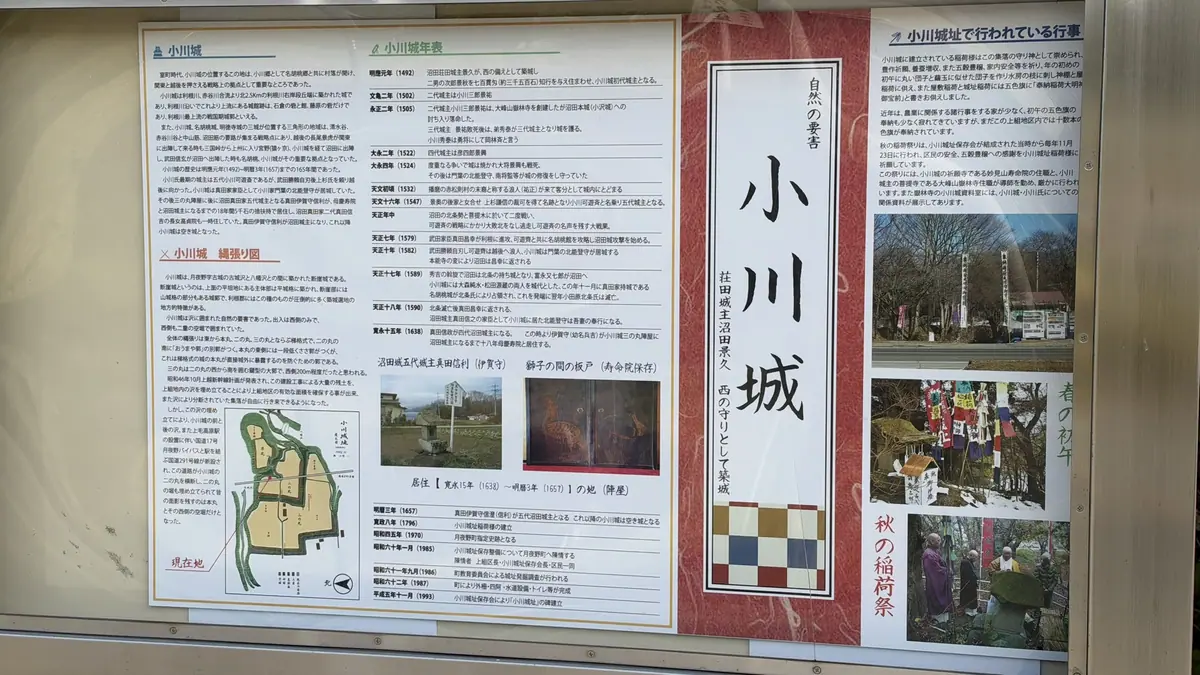
In the Sengoku (“Warring States”) period of the 15th and 16th centuries, the Numata region was fought over by the Sanada clan and the Hojo clan. Under a ruling by Toyotomi Hideyoshi, the warlord who unified Japan, in 1589, Numata Castle and Ogawa Castle went to the Hojo, and Nagurumi Castle to the Sanada. The Hojo seizure of Nagurumi Castle that year is said to have led to Hideyoshi’s attack on Odawara, and when the Hojo fell in 1590, Ogawa Castle passed to the Sanada.
The Odawara campaign is covered in our Odawara Castle guide, and the Sanada family in our guide to the Sanada Maru taiga drama.
Castle stamps (gojoin) and where to buy them
A gojoin is a castle stamp: a printed and inked paper card that many visitors collect to mark a castle visit, much like the goshuin seals of temples and shrines. Ogawa Castle has two designs, a washi-paper design and a newer washi-style design, at 300 yen each (tax included). They cannot be sent by mail.
| Jomo-Kogen Station office | The Tone-Numata regional information office inside the station (1756 Tsukiyono). The castle-stamp page says 9:00–17:00, but the information-office page says 9:00–16:00. If you arrive after 16:00, call +81-278-62-3089 first |
|---|---|
| Minakami Tourism Association | 1744-1 Tsukiyono. 8:30–17:30, closed Saturdays, Sundays and public holidays (+81-278-62-0401) |
If you are coming for the stamp, check the hours and stock with each office first.
Combining it with Nagurumi and Numata Castles
I found Ogawa Castle Ruins easy to fit into a day of castle visits: it lies on the way from Jomo-Kogen Station to Nagurumi Castle. My own visit took about 15 minutes; if you add Nagurumi or Numata Castle, plan the travel time between them as well.
Nearby is Gakurinji temple (1697 Tsukiyono). The tourism association says it was founded in 1505, with Ogawa Kagesuke, the second lord of Ogawa Castle, as its founding patron, and it exhibits materials on the Ogawa clan in its Ogawa Castle Archive Room. Opening days and admission are not given on the tourism association’s page, and the temple can be closed for its own events, so call +81-278-62-6455 first.
Minakami Town also notes that the site is close to Nagurumi Castle to the south and to Meitokuji Castle across the Tone River. The Meitokuji Castle site calls for care about private land, so check the town’s guidance before going.
Guides to the Numata and Minakami sites
The other places I visited on the same day, November 14, 2026, each have their own guide.
 Day-trip routeA day by car around Numata and Minakami8 stops from Jomo-Kogen Station: the order, the timings, and the train and car costsSee the route →
 Castle ruins | MinakamiNagurumi Castle RuinsEnclosures, dry moat and wooden bridge. The free guide and the castle stampsSee the guide →
 Castle ruins | NumataNumata Castle Ruins (Numata Park)The main-enclosure moat, the west turret's stone wall and the rebuilt bell tower. The history museum and the multi-site passSee the guide →
 Temple and shrine | NumataShogakuji Temple and Haruna ShrineKomatsuhime's grave, a shrine tied to Sanada Nobuyuki, and goshuinSee the guide →
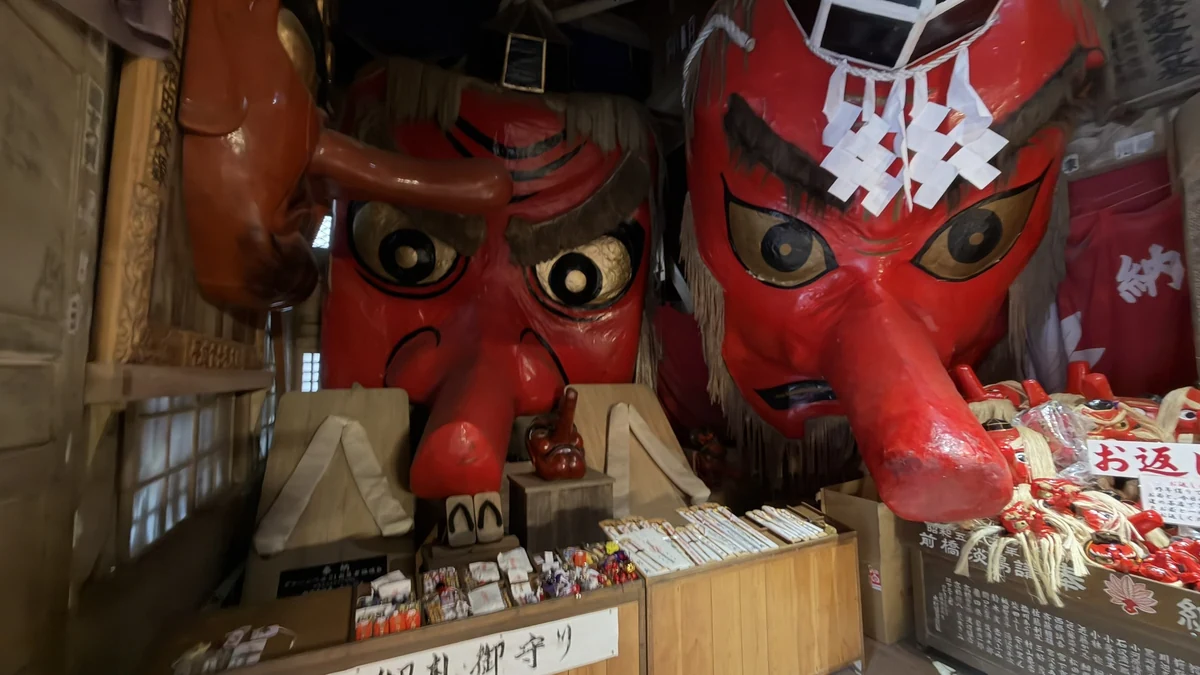 Temple | NumataKashozan Mirokuji TempleThe giant tengu masks, and the hollyhock and paulownia crests on the main hall. Notes on the mountain road and busesSee the guide →
Things to do in Minakami
PRThis section contains affiliate links to Asoview and KKday. If you book through them, this site earns a commission.
Minakami is better known for rafting, canyoning and hot springs than for castles. If you want to add an activity, you can browse these listing pages; check the contents, prices and seasons on each page.
Asoview
Activities in Minakami
Asoview's list of activity plans in Minakami, Gunma. (Japanese-language site; your browser's translation feature can help.)
See on AsoviewKKday
Minakami travel guide
KKday's page for Minakami, Gunma, in English, where you can browse tours and activities.
See on KKdayWhere to stay before or after Ogawa Castle Ruins
PRThis section contains affiliate links to Agoda, Jalan, Rakuten Travel and Yahoo! Travel Japan. If you book through them, this site earns a commission.
The ruins take only a short visit, so choose where to stay to suit the rest of your trip. Here are three options by purpose. Prices and availability differ between booking sites, so check them for your dates.
Near the station
Sanazawa Terrace (Tsukiyono)
2537-2 Tsukiyono, Minakami. About 5 minutes by car from Jomo-Kogen Station (official website)
A guesthouse with private rooms, dormitory beds and a large shared room at Sanazawa Onsen, a town-run hot spring, with a private sauna that looks out over rice terraces (official website).
Guests can book a pickup from Jomo-Kogen Station in advance. Free parking for about 25 cars. For overnight stays, the official website takes bookings through Rakuten Travel and Jalan. Jalan, Rakuten Travel and Yahoo! Travel are Japanese-language sites; your browser's translation feature can help.
Check rates on Rakuten TravelCheck rates on JalanSearch the town
Hotels in Minakami
In the same town as the ruins
The ruins and Jomo-Kogen Station are in Tsukiyono, while the hot-spring areas are scattered around the town. Check the distance from the station or the ruins on a map before you book.
Agoda searches all of Minakami; Jalan and Rakuten Travel search Minakami Onsen; Yahoo! Travel covers the Minakami, Oze and Numata area. None of them is limited to Tsukiyono or the station area. From Jomo-Kogen Station to Minakami Onsen is about 25 minutes by taxi (Minakami Tourism Association). Jalan, Rakuten Travel and Yahoo! Travel are Japanese-language sites; your browser's translation feature can help.
Browse Minakami hotels on AgodaBrowse Minakami hotels on JalanBrowse Minakami hotels on Rakuten TravelBrowse Minakami, Oze & Numata hotels on Yahoo! Travel JapanA special stay
Arata-shi Minakami (Minakami Onsen)
740-3 Yuhara, Minakami. Said to be about 15 minutes by car from Jomo-Kogen Station
An inn where every room has its own natural hot-spring open-air bath (official website).
Transfers from Jomo-Kogen Station are booked by phone with the inn by the day before (up to 8 people per ride, according to the inn's 2023 notice). Check the fare and times with the inn. Jalan, Rakuten Travel and Yahoo! Travel are Japanese-language sites; your browser's translation feature can help.
Check rates on AgodaCheck rates on JalanCheck rates on Rakuten TravelCheck rates on Yahoo! Travel JapanBefore booking, check the dates, number of guests, total price and cancellation terms.
FAQ
It is at 1125 Tsukiyono, Minakami, Tone District, Gunma Prefecture, north of Tokyo. Other castles in Japan share the name, including ones in Shiga and Ibaraki; this page covers the Ogawa Castle Ruins in Minakami.
On its own it is a small stop. I found it a good fit for a day that also includes Nagurumi Castle and Numata Castle. Jomo-Kogen Station is 62 minutes from Tokyo by shinkansen at the fastest (Minakami Tourism Association).
My visit took about 15 minutes, plus the trip to and from the station.
I saw no tower, gate or other castle building. What you can see is the main enclosure, the dry moat and the bank at the edge of the enclosure. The monument and the gazebo were added later.
A castle-information website (cmeg.jp) places the site about 400 m east of the station. The walking times I found range from 3 to 15 minutes depending on the source, and none of them is official. I drove. If you plan to walk, check the route on a map app.
You need an International Driving Permit issued under the 1949 Geneva Convention, with your home license and passport; licenses from Switzerland, Germany, France, Belgium, Monaco and Taiwan need an official Japanese translation instead (JAF). Times Car car-sharing does not accept foreign or international licenses, so book a rental car, for example at Eki Rent-A-Car's Jomo-Kogen office (8:00–19:00).
On November 14, 2026, I parked in a space for a few cars on the left of the entrance. I could not confirm whether it is meant for visitors. Jomo-Kogen Station has a separate car park with 63 spaces (free for 2 hours, then 100 yen per hour, up to 1,000 yen a day; Minakami Tourism Association, checked November 15, 2026).
The town and the tourism association give no admission fee or opening hours. It is an open-air site. To check before you go, contact the Minakami Tourism Association (+81-278-62-0401).
At the tourist information office inside Jomo-Kogen Station and at the Minakami Tourism Association. Each costs 300 yen (tax included), and they cannot be mailed. The station office’s closing time is given as 16:00 on one official page and 17:00 on another, and the tourism association’s office is closed on Saturdays, Sundays and public holidays.
From the entrance you go down into the moat and up into the main enclosure. On my visit there were fallen leaves on the paths and steps. Shoes can get dirty here, so wear a pair you do not mind getting muddy.
Sources
The facts on this page were checked on the pages below on November 15, 2026, and the driving-license rules on November 16, 2026. Hours and fares can change, so check them before you go.
- Minakami Town: designated cultural properties of Tsukiyono (Ogawa Castle Site, Meitokuji Castle Site; Japanese)
- Minakami Town: designated cultural properties list (Japanese)
- Minakami Tourism Association: Ogawa Castle Site (Japanese)
- Minakami Tourism Association: castle stamps of Minakami (Japanese)
- Minakami Tourism Association: information offices (Japanese)
- Minakami Tourism Association: access (Japanese)
- Minakami Tourism Association: FAQ, Jomo-Kogen Station car park (Japanese)
- Minakami Tourism Association: Gakurinji temple (Japanese)
- cmeg.jp: Ogawa Castle (distance from the station; not official; Japanese)
- Japan-Guide: Getting to Minakami
- JAF: Driving in Japan with a foreign license
- Eki Rent-A-Car: Driver's license (English)
- Eki Rent-A-Car: Jomo-Kogen office (Japanese)
- Times Car: Membership (Japanese)


comment