

A Day Trip from Tokyo to the Sanada Castles of Numata and Minakami: 8 Stops by Car, from Ogawa Castle to the Tengu Masks and a Hot Spring
On November 14, 2026, I took the train from Tokyo to Jomo-Kogen Station in Gunma Prefecture and spent the day driving around the castle ruins, temples and shrines of Numata and Minakami, the home ground of the Sanada clan. I saw Ogawa Castle, Nagurumi Castle, the Numata City History Museum, Numata Castle, Shogakuji temple, Haruna Shrine and Kashozan temple, then finished with a soak at the Shaka no Reisen hot spring. I had the car for about 8 hours, drove about 60 km and returned it at Jomo-Kogen around 17:10. Each castle, temple and shrine has its own full guide.
The Sanada were a small samurai clan who became famous in the wars of the late 16th century. Sanada Yukimura (Nobushige), the best-known of them, died fighting for the Toyotomi at Osaka in 1615; his father Masayuki and elder brother Nobuyuki built their power here, in the hills of northern Gunma. Nobuyuki held Numata Castle, and in 1589 the Hojo side's seizure of Nagurumi, a Sanada outpost, gave Toyotomi Hideyoshi his reason to attack the Hojo clan the following year.
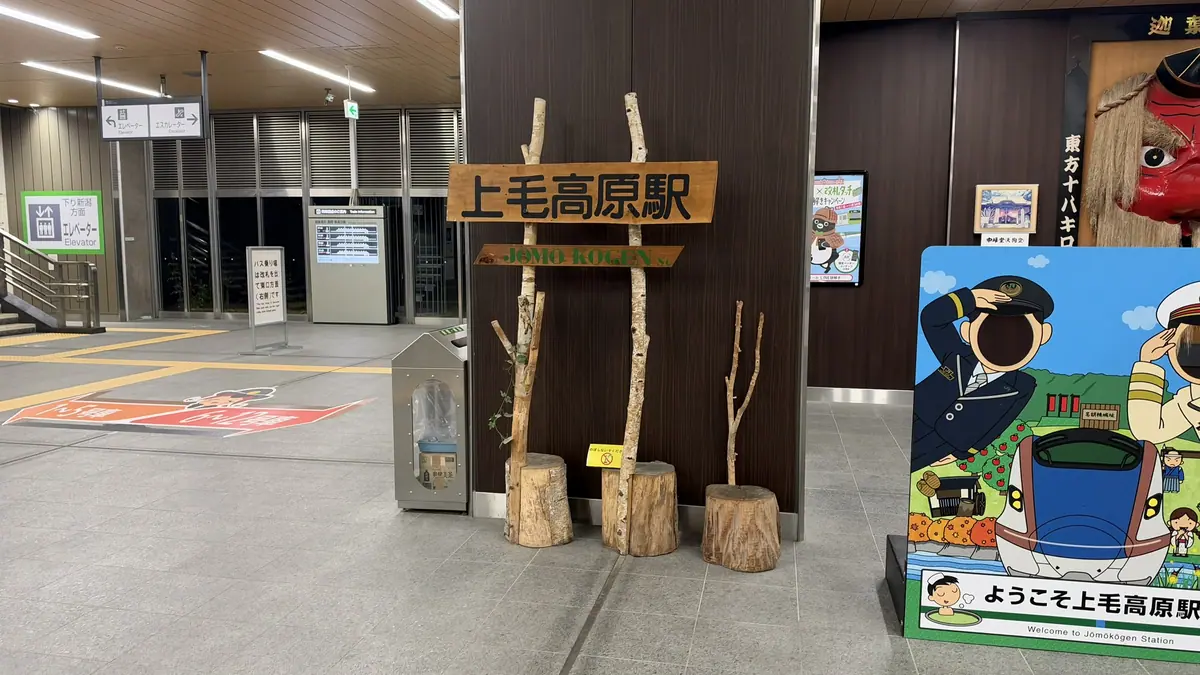
Jomo-Kogen is the shinkansen station for this area; Numata Station, on the slower JR Joetsu Line, is a different station. None of the three castle sites I visited has a castle tower left; what you see are moats, earthen walls and stone walls.
The pace felt just right to me. In November the days are short and it gets dark on the way back; I finished the historic sites by about 15:20 and then went to the hot spring. I ate a light convenience-store lunch and drove even within central Numata. If you want a sit-down lunch, or travel in the snow season, allow extra time.
| Order | Ogawa Castle → Nagurumi Castle → Numata City History Museum → Numata Castle → Shogakuji → Haruna Shrine → Kashozan → Shaka no Reisen |
|---|---|
| Transport | Train from Shinagawa to Takasaki, Joetsu Shinkansen from Takasaki to Jomo-Kogen, then a car-share car from Jomo-Kogen Station |
| Time | Car for about 8 hours. Returned around 17:10 (booked until 19:00) |
In this guide
The route: 8 stops by car from Jomo-Kogen Station
The order I went in and the time I spent at each place. The drives between them took extra time on top of this.
| Start | Arrived at Jomo-Kogen Station at 8:52 and picked up the car-share car in front of the station |
|---|---|
| 1 | Ogawa Castle Ruins (Minakami). About 15 minutes |
| 2 | Nagurumi Castle Ruins and information center (Minakami). A guide's talk of about 40 minutes (about 9:50–10:30), plus the center's exhibits and the site |
| 3 | Numata City History Museum (covered in the Numata Castle guide). About 30 minutes (about 11:25–11:57) |
| 4 | Numata Castle Ruins (Numata Park) and the Old Ubukata House. About 70 minutes (about 12:07–13:15) |
| 5 | Shogakuji. About 10 minutes |
| 6 | Haruna Shrine (Numata). About 25 minutes, including about 10 minutes waiting for a goshuin |
| 7 | Kashozan Mirokuji. About 35 minutes (about 14:45–15:20), including about 17 minutes on the mountain trail |
| 8 | Shaka no Reisen (Minakami). A hot-spring bath, finished around 16:40 |
| Return | Returned the car in front of Jomo-Kogen Station around 17:10 |
In the morning I started with Ogawa Castle and Nagurumi Castle in Minakami. Nagurumi was built by Sanada Masayuki as a forward base for attacking Numata Castle, and its seizure by the Hojo side in 1589 is said to have triggered Toyotomi Hideyoshi's Odawara campaign.
Then I moved into central Numata for the history museum, Numata Castle, Shogakuji and Haruna Shrine. Numata Castle was held by Masayuki's son Sanada Nobuyuki. Shogakuji has the grave of Nobuyuki's wife Komatsuhime, and Haruna Shrine was rebuilt by Nobuyuki.
In the afternoon I headed into the mountains to Kashozan Mirokuji, which is said to have been a prayer temple of Tokugawa Ieyasu. I ended the day at Shaka no Reisen, a hot spring with no link to the Sengoku wars, but one I had heard good things about.
Train from Tokyo and the car: shinkansen from Takasaki
I left Shinagawa (in Tokyo) at 6:11, took a regular JR train to Takasaki and the Joetsu Shinkansen from Takasaki to Jomo-Kogen, arriving at 8:52. When I looked up the fare for this route, it was 3,630 yen one way from Jomo-Kogen to Shinagawa.
| My route | 3,630 yen, the one-way fare I looked up from Jomo-Kogen to Shinagawa: a 2,750-yen ticket plus an 880-yen non-reserved shinkansen supplement from Jomo-Kogen to Takasaki. On the way out: Shinagawa 6:11, Jomo-Kogen 8:52 (2 hours 41 minutes) |
|---|---|
| Shinkansen from Tokyo | 5,600 yen, 1 hour 39 minutes. From Shinagawa to Tokyo Station, then the Joetsu Shinkansen to Jomo-Kogen. A 2,750-yen ticket plus a 2,850-yen non-reserved supplement |
| No shinkansen | 3,010 yen, 4 hours. Changing at Ueno, Takasaki and Gokan, then a bus from Gokan to Jomo-Kogen Station. 2,750 yen by rail plus 260 yen by bus |
I looked up the two other routes to compare them with mine. My route's 3,630 yen was 1,970 yen less than taking the shinkansen from Tokyo and 620 yen more than avoiding it. Fares and timetables change, so check them with JR before you travel. If you have a Japan Rail Pass, Japan-Guide lists the Joetsu Shinkansen to Jomo-Kogen as covered; the bus is not a JR service.
One more thing to watch is the stop. On the Joetsu Shinkansen, not every train called Toki stops at Jomo-Kogen; some pass straight through. I only noticed from an announcement on board, and it was in Japanese, so check that your train stops at Jomo-Kogen before you get on (the Tanigawa trains normally stop there).
For the car, I used a Times Car car-share car from in front of Jomo-Kogen Station: about 8 hours and about 60 km came to a little under 7,000 yen. I had booked it until 19:00 and returned it around 17:10. Times Car does not accept foreign or international driving licenses, though, so visitors from abroad should rent a car instead.
Renting a car at Jomo-Kogen Station
| What you need | An International Driving Permit issued under the 1949 Geneva Convention, plus your home license and passport. Permits issued under other conventions, such as the 1968 Vienna Convention, are not accepted. Licenses from Switzerland, Germany, France, Belgium, Monaco and Taiwan need an official Japanese translation instead (JAF, Eki Rent-A-Car) |
|---|---|
| Time limit | Up to one year from your entry into Japan (JAF) |
| Rental at Jomo-Kogen | Eki Rent-A-Car's Jomo-Kogen office is in the parking area under the elevated tracks in front of the station, open 8:00–19:00 (checked November 15, 2026). Eki Rent-A-Car has an English booking site |
| Car sharing | I used a Times Car car-share car from Jomo-Kogen Station. Times Car does not accept foreign or international driving licenses for membership, so visitors from abroad should book a rental car instead |
| Other rentals | You can also search rental cars on Rakuten Travel (Rakuten Travel car rental, PR; Japanese-language site) |
| On the road | Japan drives on the left |
| Two stations | Jomo-Kogen is the Joetsu Shinkansen station. Numata Station is on the JR Joetsu Line, in a different place |
From Ogawa and Nagurumi Castles to Numata's museum and castle
1. Ogawa Castle Ruins: the first castle site
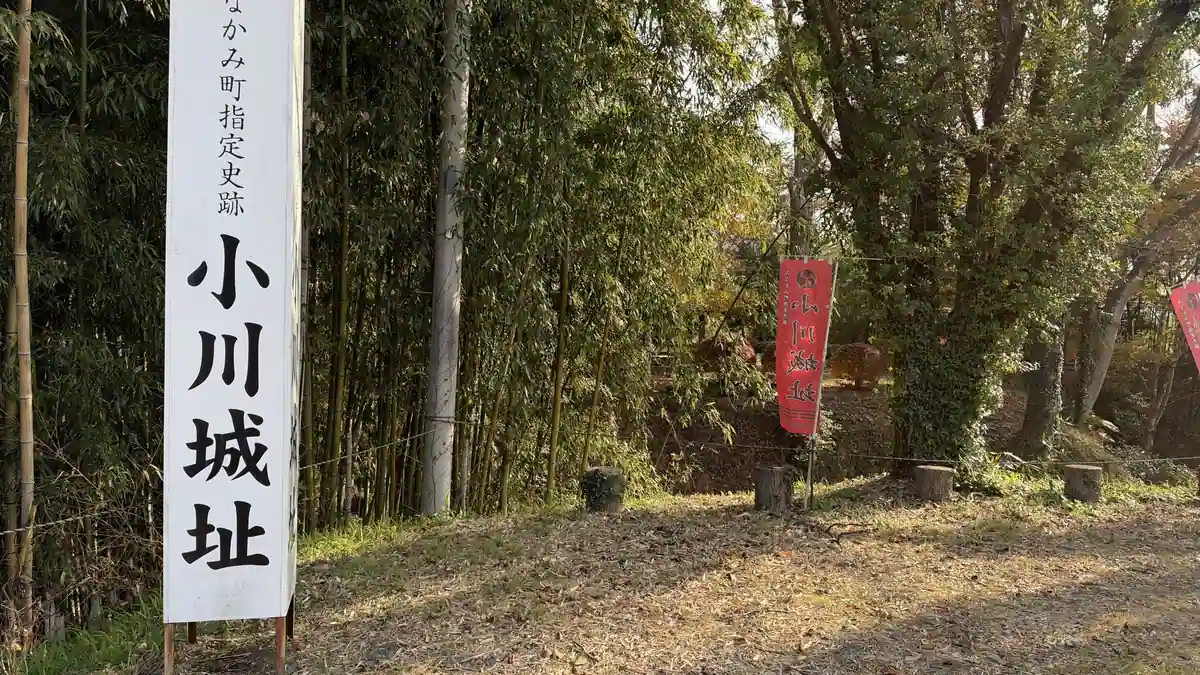
The first castle site after leaving Jomo-Kogen Station. I went in at the entrance with the Ogawa Castle Site marker post and looked around in about 15 minutes.
Full guide: Ogawa Castle Ruins (the dry moat and the main enclosure)
2. Nagurumi Castle Ruins and the information center: moats and bridges
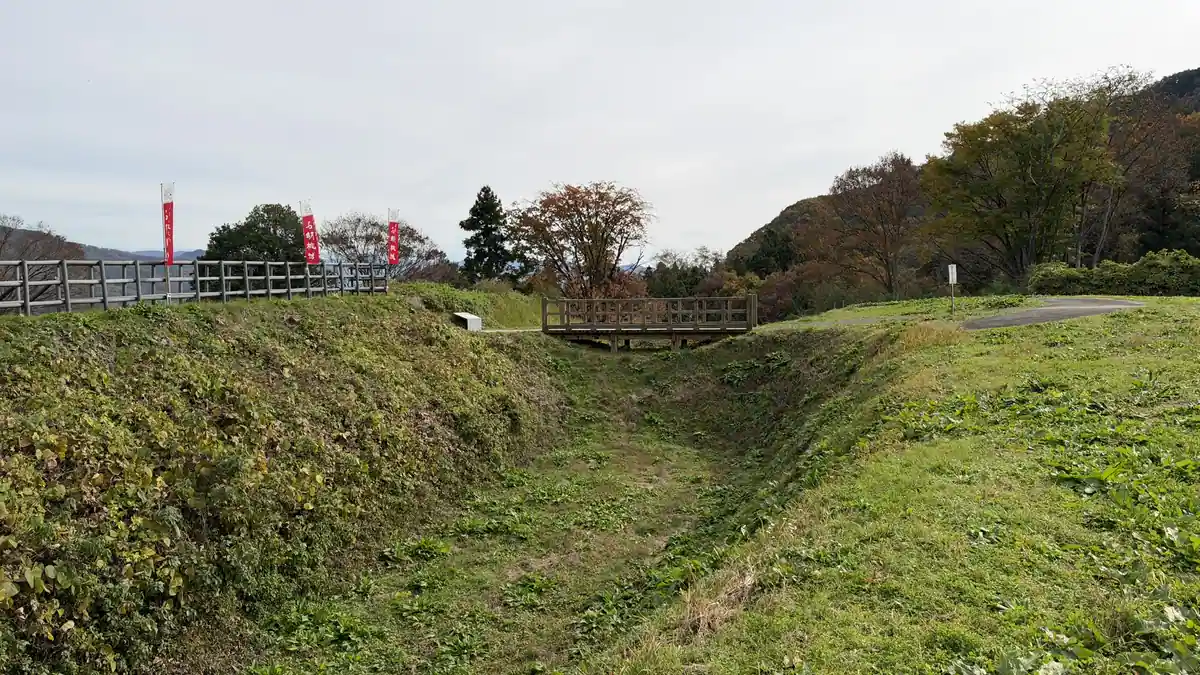
The second castle site. Wooden bridges cross the grassy moats from one enclosure to the next. I looked at the exhibits in the information center and had about 40 minutes with a volunteer guide.
Full guide: Nagurumi Castle Ruins (each enclosure and the Nagurumi incident)
3. Numata City History Museum: the original castle bell
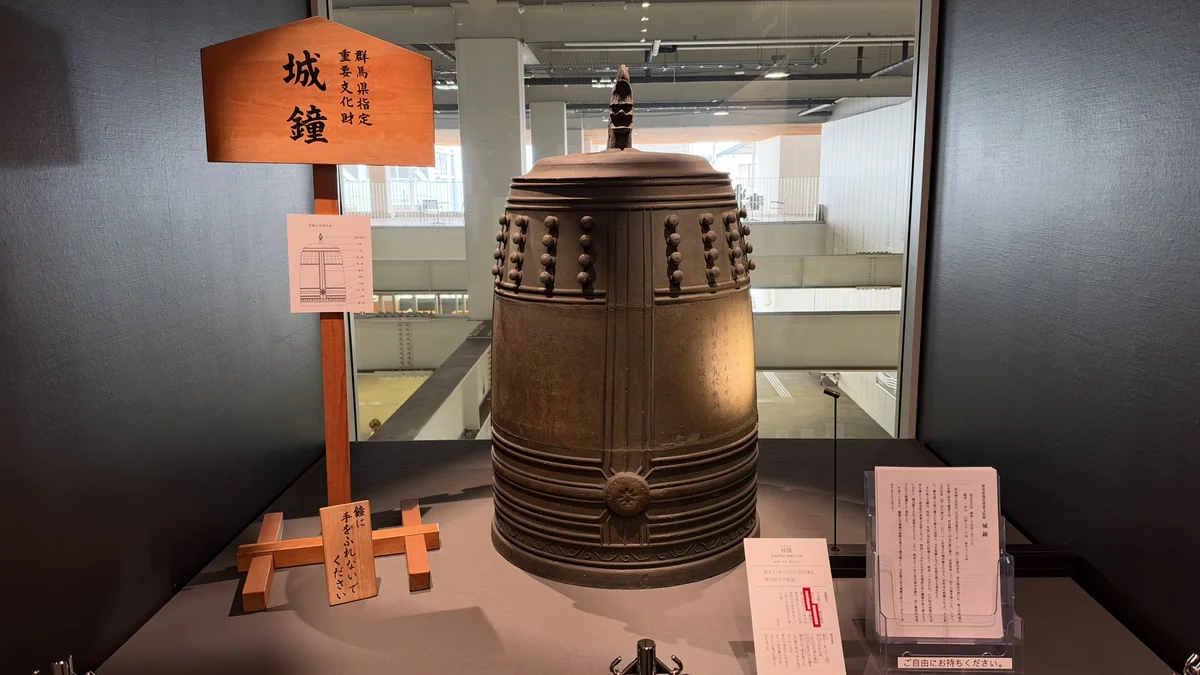
My first stop after driving from Minakami into central Numata. The museum is inside Terrace Numata, a civic building, and displays the original bell of Numata Castle. I spent about 30 minutes there. The bell in the bell tower at Numata Park, my next stop, is a copy.
Full guide: Numata Castle Ruins (including the museum)
4. Numata Castle Ruins (Numata Park): the reconstructed bell tower
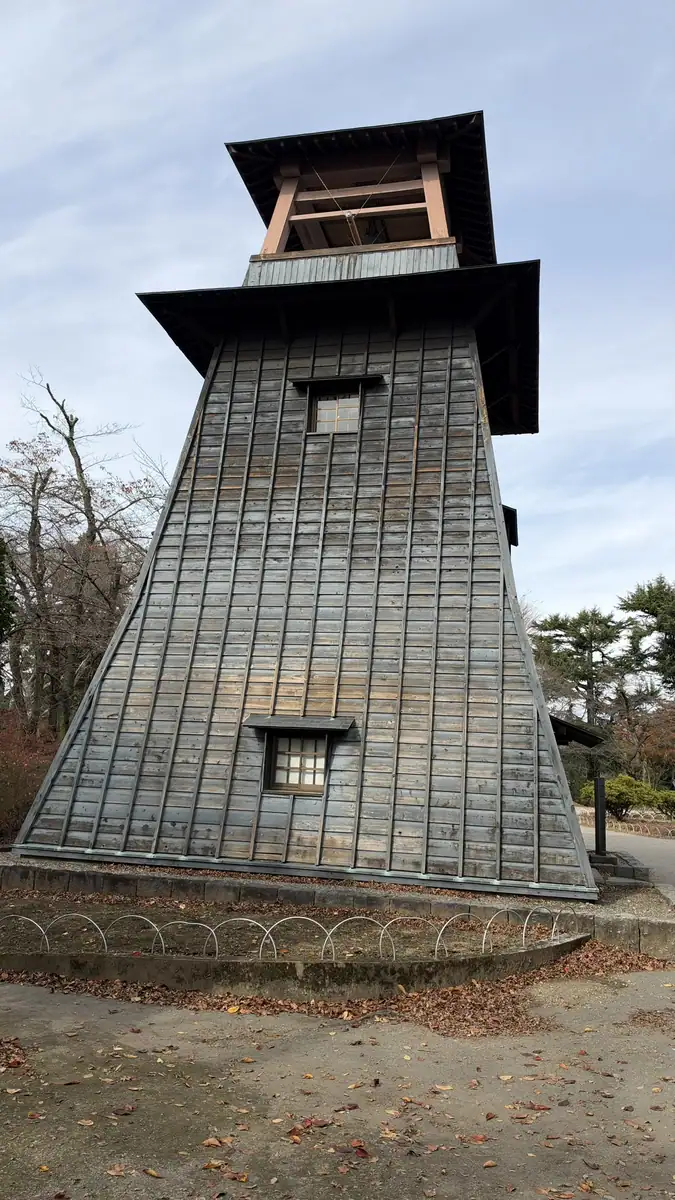
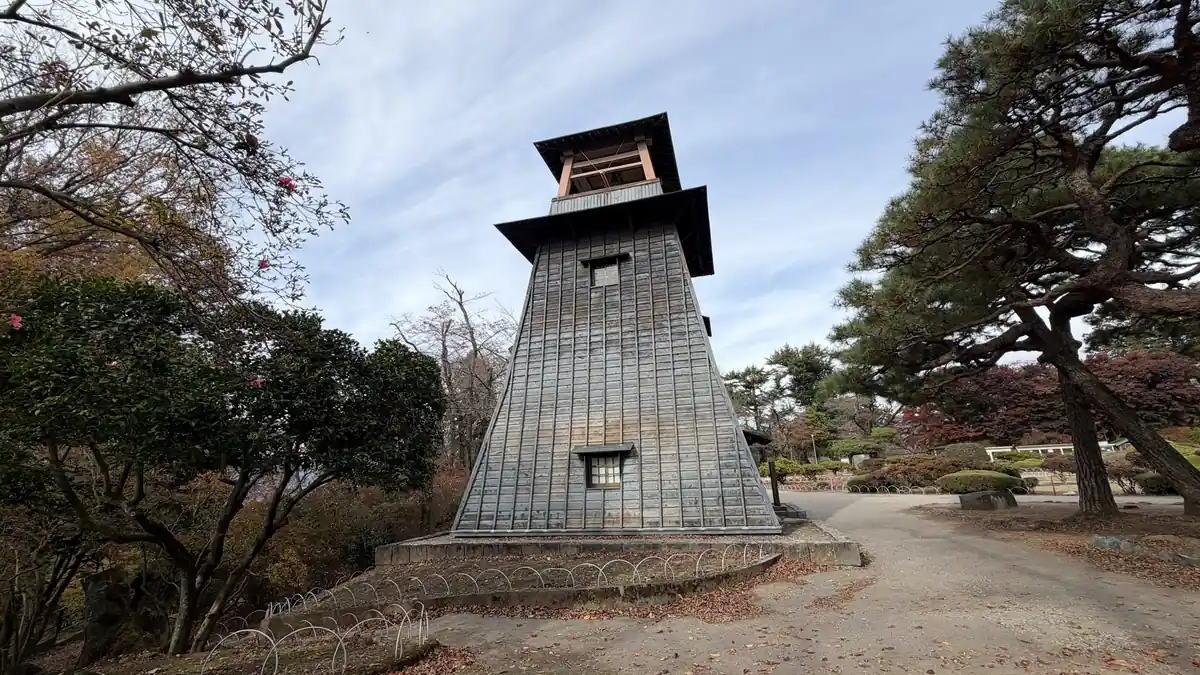
I drove from the museum to the park. No tower survives; I saw the remains of the main-enclosure moat, the stone wall of the west turret platform and the reconstructed bell tower. The bell tower reconstructs one built in 1899 at the old town hall and was moved into the park in 1983. Together with the Old Ubukata House, a 17th-century merchant house in the park, I spent about 70 minutes.
For lunch I skipped restaurants and ate a light meal from a convenience store.
Full guide: Numata Castle Ruins (stone walls, the old cherry tree, parking)
Shogakuji and Numata's Haruna Shrine
5. Shogakuji: Komatsuhime's grave
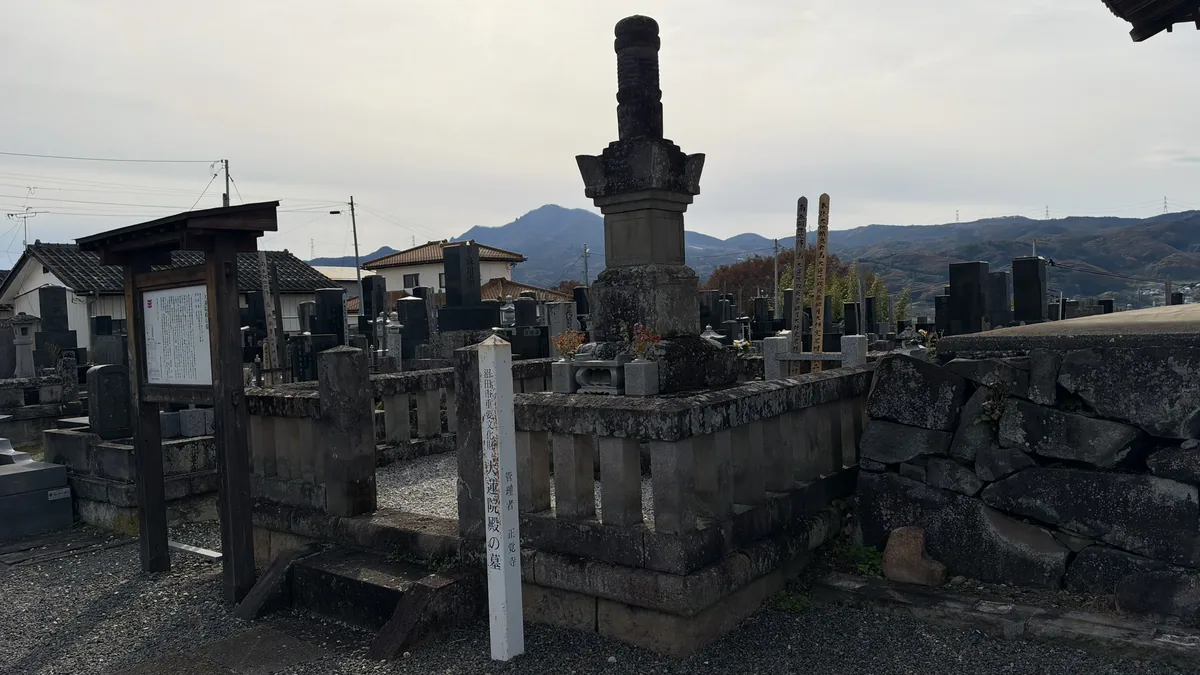
I drove from Numata Park to Shogakuji. It is one of the three places where the remains of Komatsuhime (Dairen-in-den) were buried; a stone pagoda stands inside a stone fence. I parked in the temple grounds by driving in on the left of the gate. My visit took about 10 minutes.
Full guide: Shogakuji and Haruna Shrine (Komatsuhime's grave and the gate)
6. Haruna Shrine: Sanada Nobuyuki's shrine
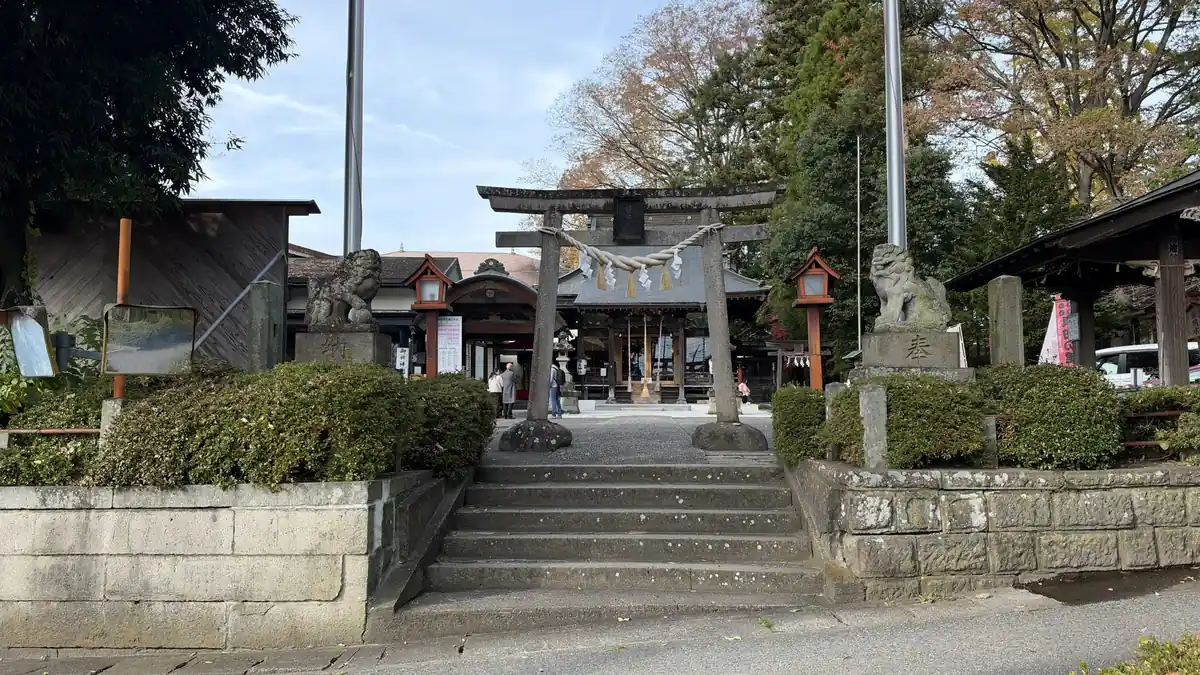
A shrine in Harunamachi, Numata, not the better-known Haruna Shrine on Mt. Haruna in Takasaki. It is said to have been rebuilt by Sanada Nobuyuki. The car park beside the grounds was full, so I followed a sign to another worshippers' car park. Including the wait for my goshuin (a shrine's seal stamp), I spent about 25 minutes.
Full guide: Shogakuji and Haruna Shrine (the carvings and goshuin)
From Kashozan to Shaka no Reisen and back to Jomo-Kogen
7. Kashozan Mirokuji: the giant tengu masks
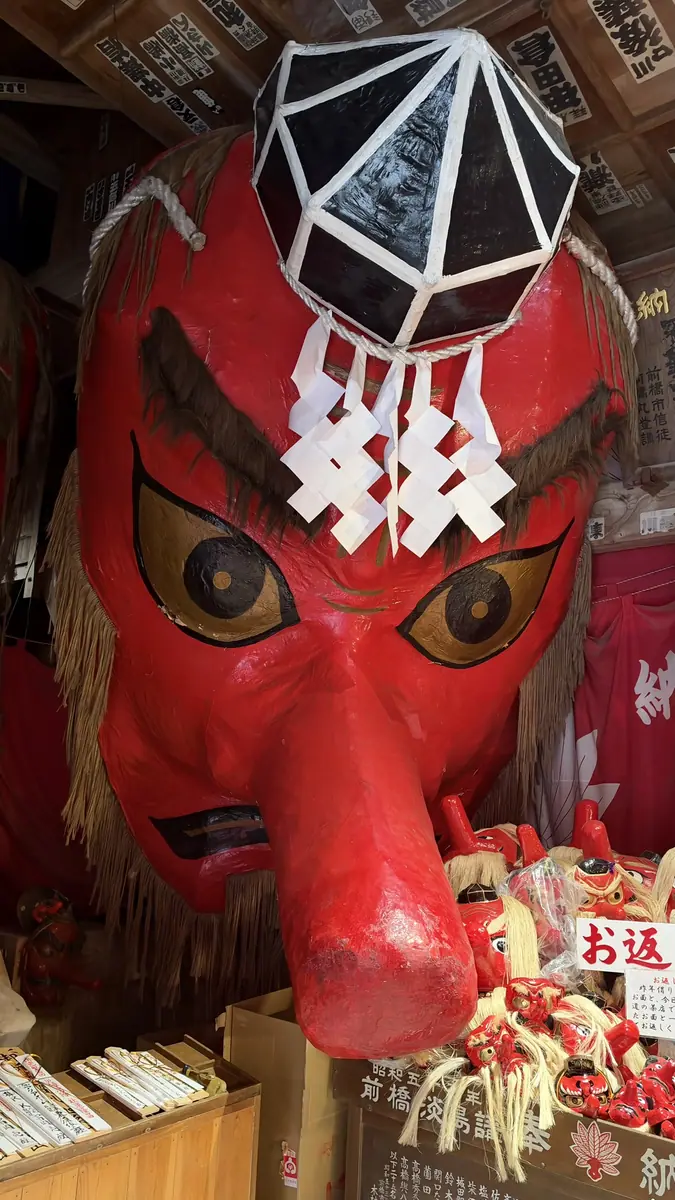
Leaving the town, I drove up into the mountains to the temple, arriving around 14:45 and staying until about 15:20, around 35 minutes. The giant tengu masks in Chuhodo Hall were what stayed with me. I also walked partway up the mountain trail toward Oshodai and turned back.
The road to the temple climbs in tight curves. Only once I reached the temple did I realize that the way up and the way down are partly separate roads. Follow the signs on site for which road to use, and watch for oncoming cars.
Full guide: Kashozan Mirokuji (the grounds, and getting there by bus)
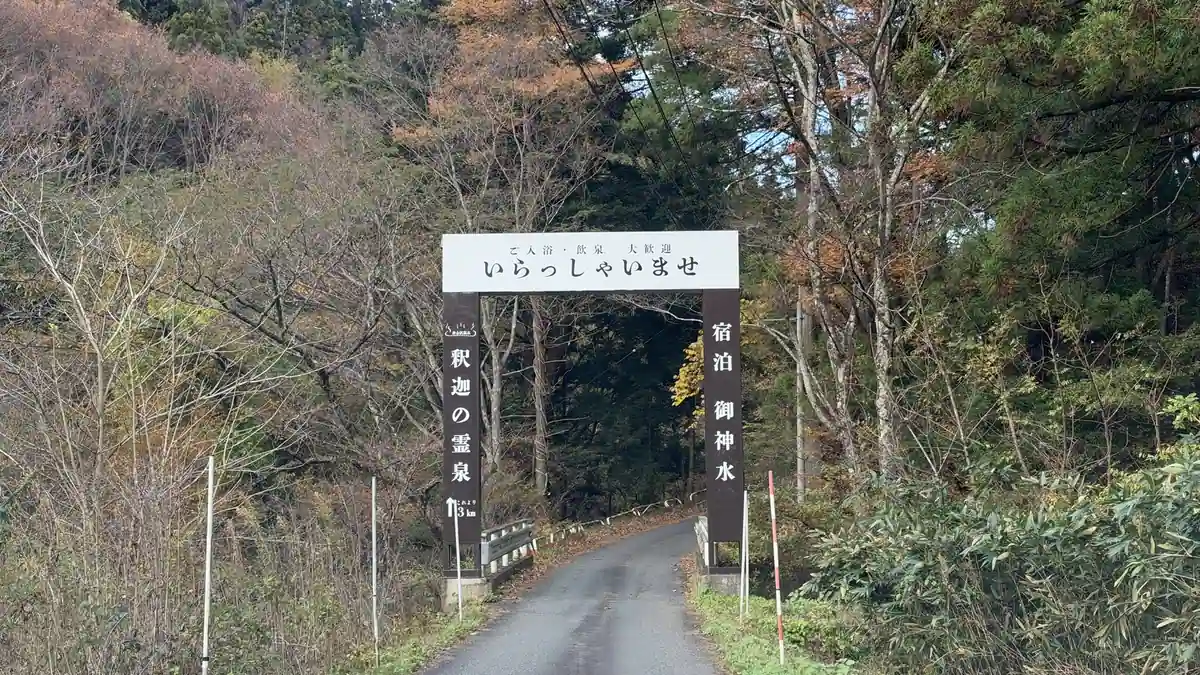
On the way from Kashozan to Shaka no Reisen, a sign reads “Shaka no Reisen, 3 km”. From there the road is narrow and carries two-way traffic, so when you meet an oncoming car, one of you has to pull into a wider spot to let the other pass. The facility's website also asks drivers to give way at the wider spots along the road.
8. Shaka no Reisen: a hot-spring bath to end the day
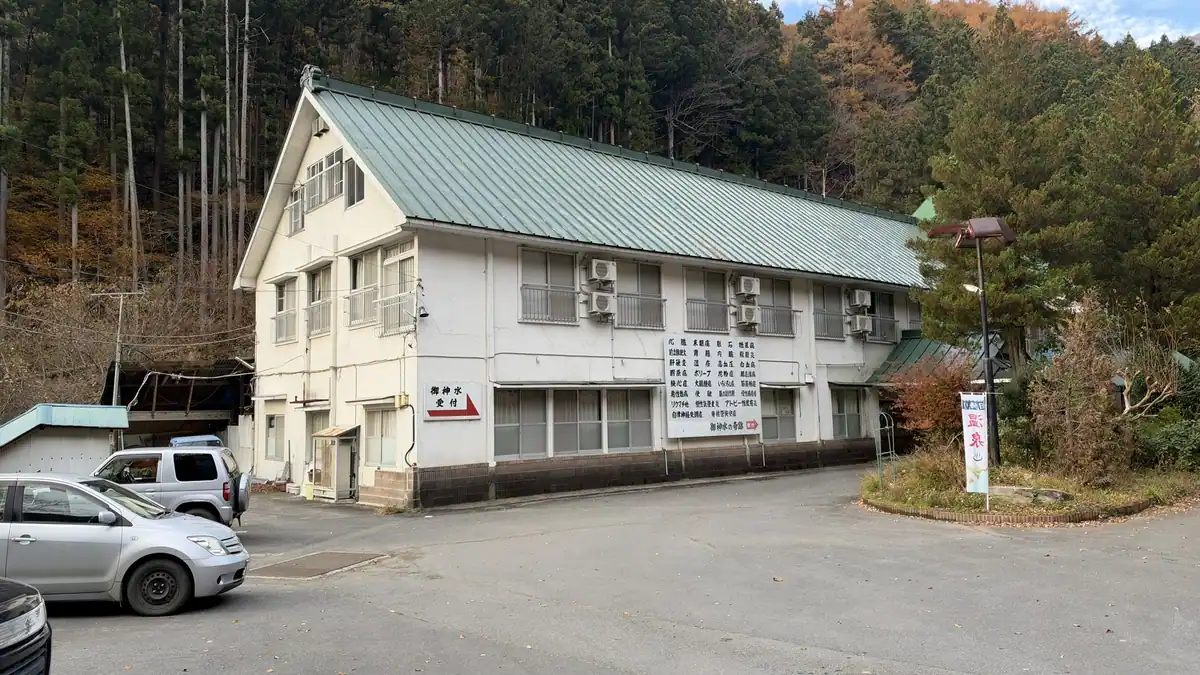
A hot-spring facility at 3768 Kamimoku, Minakami. I ended the day with a day-visit bath. I paid 1,500 yen, the same as the adult single-entry price on the official website. The bathroom was cleaner than I had expected; you can see photos of the baths on the official “Services” page. I finished bathing around 16:40. According to the website, reception is open from 9:30 to 18:00, and payment is basically in cash.
If you have not been to a Japanese hot spring (onsen) before: baths are usually separated by gender, you bathe without a swimsuit, and you wash and rinse at the shower area before getting into the bath. Tattoo rules vary between facilities, and I could not find Shaka no Reisen's policy, so ask before you go if this matters to you.
On my visit, the facility allowed guests to take home up to 4 liters of the spring water, and empty containers were not sold on site, so bring a plastic bottle if you want some. The official “How to buy the sacred water” page also lists 10-liter boxes (3,500 yen; the tap is sold separately). Check the current conditions with the facility.
Official website: Services and prices (photos of the baths) / How to buy the sacred water
After the bath I returned the car in front of Jomo-Kogen Station around 17:10. It was November, so it was dark on the way back.
Pacing and what it cost
Eight stops in one day felt just right to me. In November the days are short, and once it gets dark you cannot see the historic sites. Finishing them by about 15:20, stopping at the hot spring and returning the car around 17:10 worked well.
That day I ate a light convenience-store lunch and drove even between the museum, Numata Park and Shogakuji. I had booked the car until 19:00, which left room if things ran late.
These are the costs I can give figures for; the train is one way only.
| Train | 3,630 yen one way, Jomo-Kogen to Shinagawa (the fare I looked up; shinkansen as far as Takasaki) |
|---|---|
| Car | Under 7,000 yen (Times Car car share from Jomo-Kogen Station; about 8 hours, about 60 km). Not available with a foreign license; a rental car will cost differently |
| Museum and Old Ubukata House | Multi-site pass, 330 yen (I bought the pass). Single tickets are 220 yen for the museum and 110 yen for the house, so for these two alone the pass costs the same |
| Shaka no Reisen | Day-visit bath, 1,500 yen |
| Not included | The other half of the train fare, lunch, goshuin and castle stamps |
If you plan the same route, check closing days and hours first. The Numata City History Museum is closed on Wednesdays (open if a public holiday), the day after public holidays and over New Year. The Old Ubukata House is closed on Wednesdays (Thursday if Wednesday is a holiday), the day after public holidays and December 29–January 3, with last entry at 15:30. Nagurumi Castle's free guides are off on Tuesdays and Thursdays and from mid-December to mid-March. Kashozan asks visitors to call before coming from December to March because of snow. Day-visit reception at Shaka no Reisen closes at 18:00.
Tours and activities around Numata
PRThis section contains affiliate links to KKday. If you book through them, this site earns a commission.
KKday lists tours and activities in and around Numata. Check the details, prices and dates on the KKday page.
Where to stay before or after the Numata day trip
PRThis section contains affiliate links to Agoda, Jalan, Rakuten Travel and Yahoo! Travel Japan. If you book through them, this site earns a commission.
I did this as a day trip. If you would rather stay the night before or after and take it slowly, here are three bases. Check prices and availability for your dates on each site.
Search Numata
Hotels in Numata
Central Numata
For travelers who want to see Numata's museum and castle site again the next day. Central Numata is a different place from Jomo-Kogen Station, so if you return a car at the station, arrange how to get to your hotel.
Agoda searches Numata; Jalan and Rakuten Travel search "Numata"; Yahoo! Travel covers the Minakami, Oze and Numata area. Not every property is close to the station or the castle site. Jalan, Rakuten Travel and Yahoo! Travel are Japanese-language sites; your browser's translation feature can help.
Browse Numata hotels on AgodaBrowse Numata hotels on JalanBrowse Numata hotels on Rakuten TravelBrowse Minakami, Oze & Numata hotels on Yahoo! Travel JapanHotel in town
Hotel Route-Inn Numata
Nishikurauchi-machi, Numata
According to the hotel, it is about 18 minutes on foot (5 by car) from Numata Station and about 8 minutes by car from Numata IC. It has a large bath, and parking is free (hotel website).
It is a long way from Jomo-Kogen Station. Either keep the car until the next day or check how to get there after returning it at the station. Jalan, Rakuten Travel and Yahoo! Travel are Japanese-language sites; your browser's translation feature can help.
Check rates on AgodaCheck rates on JalanCheck rates on Rakuten TravelCheck rates on Yahoo! Travel JapanHot-spring inn
Ginshotei Awashima (Oigami Onsen)
603 Oigami, Tone-machi, Numata. About 20 minutes by car from Numata IC
A traditional Japanese inn (ryokan) at Oigami Onsen, for travelers who keep the car until the next day and combine the historic sites with a hot-spring night. It is not near Shaka no Reisen or Jomo-Kogen Station.
The inn's free shuttle (book by 16:00 the day before) leaves Jomo-Kogen Station at 14:00 and Numata Station at 14:20 (inn website), so it does not fit after a full day on this route. Jalan, Rakuten Travel and Yahoo! Travel are Japanese-language sites; your browser's translation feature can help.
Check rates on AgodaCheck rates on JalanCheck rates on Rakuten TravelCheck rates on Yahoo! Travel JapanBefore booking, check the dates, number of guests, total price and cancellation terms.
FAQ
I visited all 8 by car on November 14, 2026, using the car for about 8 hours. I ate a light convenience-store lunch and drove even within central Numata. If you want a sit-down lunch or travel in the snow season, allow extra time.
This route assumes a car. By public transport you would need to cut stops and rethink the timing. The bus to Kashozan runs only on weekends, holidays and December 29 to January 3, and it is still a 45-minute walk from the bus stop to the temple.
You need an International Driving Permit issued under the 1949 Geneva Convention (permits under the 1968 Vienna Convention are not accepted), with your home license and passport; licenses from Switzerland, Germany, France, Belgium, Monaco and Taiwan need an official Japanese translation instead (JAF). The Times Car car share I used does not accept foreign licenses, so book a rental car, for example at Eki Rent-A-Car's Jomo-Kogen office (8:00–19:00).
No. Jomo-Kogen is the Joetsu Shinkansen station, in Minakami. Numata Station is on the JR Joetsu Line. I picked up and returned the car at Jomo-Kogen.
I left Shinagawa at 6:11, took a regular JR train to Takasaki and the Joetsu Shinkansen to Jomo-Kogen, arriving at 8:52. The fare I looked up was 3,630 yen one way from Jomo-Kogen to Shinagawa (a 2,750-yen ticket plus an 880-yen non-reserved shinkansen supplement between Jomo-Kogen and Takasaki). Fares and timetables change, so check them with JR before you travel.
No. Some trains called Toki pass through without stopping. I only noticed from an announcement on board, in Japanese, so check that your train stops at Jomo-Kogen before you get on.
I did not go to a restaurant; I ate a light meal bought at a convenience store. If you want a sit-down lunch, allow time for it.
According to the official website, reception is open from 9:30 to 18:00, and a single adult entry is 1,500 yen, paid basically in cash. I finished bathing around 16:40 and returned the car at Jomo-Kogen around 17:10.
The road to Kashozan climbs in tight curves, and the way up and the way down are partly separate roads, so follow the signs on site. The road to Shaka no Reisen is narrow with two-way traffic; when you meet an oncoming car, one of you pulls into a wider spot to let the other pass.
No. At Ogawa, Nagurumi and Numata castles you see moats, earthen walls and stone walls. The bell tower in Numata Park is a reconstruction, and the original Numata Castle bell is at the Numata City History Museum.
Sources
Opening hours, fees and closing days were checked on the pages below on November 15–16, 2026, and the driving-license rules on November 16, 2026. The order, the time at each stop, the costs and my impressions are from my trip on November 14, 2026. The train fares are ones I looked up myself.
- Shaka no Reisen (official): Services and prices (Japanese)
- Shaka no Reisen (official): How to buy the sacred water (Japanese)
- Shaka no Reisen (official): Contact and access (Japanese)
- Numata City: Numata City History Museum (Japanese)
- Numata City: Old Ubukata House (Japanese)
- Numata City: Numata Park (Japanese)
- Minakami History Guide Association: free guides at Nagurumi Castle (Japanese)
- Kashozan Mirokuji (official): Events, prayers and training (Japanese)
- Hotel Route-Inn Numata (official, Japanese)
- Ginshotei Awashima: Access (official, Japanese)
- Japan-Guide: Getting to Minakami
- shinkansen.tabiris.com: Joetsu Shinkansen stopping patterns (Japanese)
- JAF: Driving in Japan with a foreign license
- Eki Rent-A-Car: Driver's license (English)
- Eki Rent-A-Car: Jomo-Kogen office (Japanese)
- Times Car: Membership (Japanese)


comment