


Old Nagoya Castle Ruins and the Uzumimon Escape Gate at Nagoya Castle
Tucked away in the Ninomaru Garden of Nagoya Castle are lesser-known yet deeply significant historical sites: the Uzumimon Remains (Hidden Gate), the Nagoya Castle Teahouse, and the Ruins of Old Nagoya Castle, linked to Oda Nobunaga. Though they may not stand out at first glance, each of these locations offers a rich blend of heritage and traditional Japanese aesthetics. Perfect for both history enthusiasts and those seeking peaceful reflection, this trail reveals the quieter, more contemplative side of Nagoya Castle.
On This Page
3 Hidden Historic Spots in Ninomaru Garden
The Uzumimon Remains, the Ninomaru Teahouse, and the Ruins of Old Nagoya Castle are all located inside Ninomaru Garden (二之丸), the secondary compound that once surrounded Nagoya Castle's Honmaru, and each spot is only about a one-minute walk from the next. Each spot's highlights, visit time, address, access notes, and trivia are available by tapping "Open Details" on its card.
Uzumimon Remains (Hidden Gate)
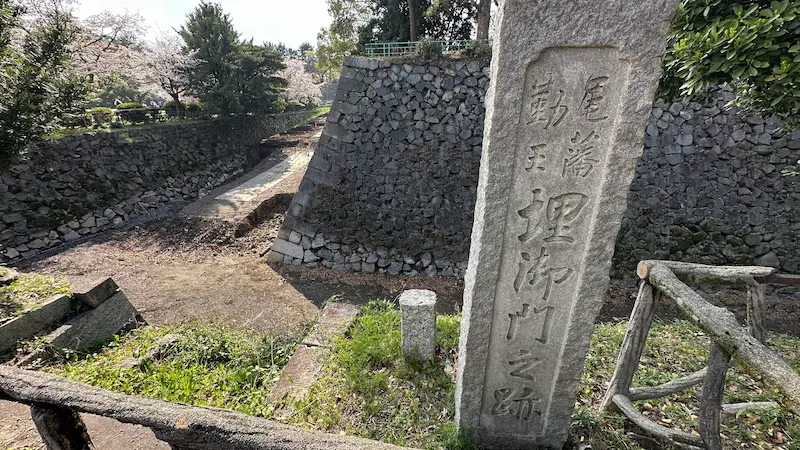
The Uzumimon Remains are located in the northwestern part of Ninomaru Garden. This secret passage was designed as an emergency escape route for the castle lord during times of crisis. Constructed beneath stone walls and earthen barriers, it allowed covert passage out of the castle, away from the eyes of enemies.
After exiting the gate, one would descend a steep staircase, cross the moat, and reach the gardens of Fukai-maru. From there, a hidden path led through Ōzone, Kachigawa, and Jōkōji Temple, ultimately connecting to the Kiso Road—a strategic escape route in times of siege.
While the actual gate no longer exists, a commemorative stone monument marks its former location, offering a glimpse into the defensive ingenuity of Nagoya Castle.
- Uzumimon Monument: A stone marker commemorates the hidden gate, allowing visitors to reflect on its historical significance.
- Ninomaru Garden: A designated scenic spot that offers picturesque seasonal views year-round.
- Seasonal Experiences: Cherry blossoms in spring and colorful foliage in autumn create a stunning natural backdrop.
Recommended visit time: Quick Look ~5 minutes / In-Depth Exploration ~10 minutes
Address: 1-1 Honmaru, Naka-ku, Nagoya, Aichi Prefecture, inside Ninomaru Garden
Access: Approx. 1-minute walk (40m) from the Nanban Plaster Wall
Trivia- Historical Insight: Designed for the lord's secret escape, the gate was built to avoid detection and ensure safety during emergencies.
- Hidden Detail: A favorite spot among history lovers, Uzumimon remains are a must-see for those seeking the lesser-known stories of Nagoya Castle.
- Famous Connections: Built under the command of Tokugawa Ieyasu, the gate was an integral part of the castle's original design.
Ninomaru Teahouse Chatei
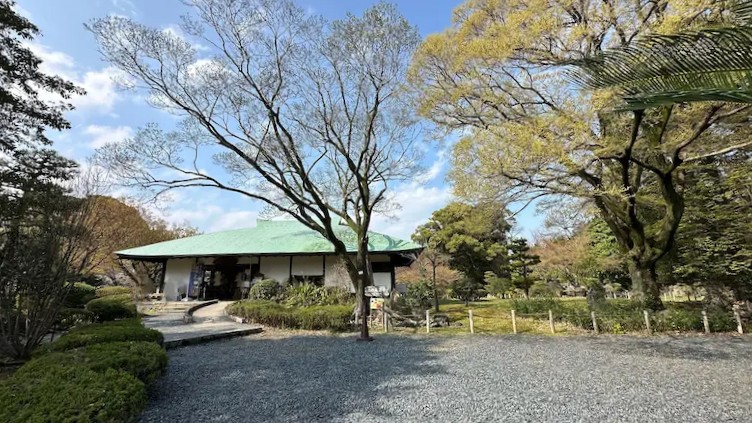
Located in a serene corner of Ninomaru Garden, the Ninomaru Teahouse offers visitors a tranquil place to relax while enjoying matcha green tea and traditional Japanese sweets. Surrounded by a strolling garden with ponds and seasonal foliage, this peaceful retreat blends seamlessly with the natural and historical setting of the castle grounds.
The teahouse has become a cherished resting place for visitors exploring the castle, offering a moment of calm within a setting rich in history and Japanese aesthetic values.
- Enjoy Matcha at the Teahouse: Savor traditional tea and sweets while gazing at the surrounding garden, which transforms with each season.
- Architectural Style: Built in the sukiya-zukuri style, the structure showcases the refined simplicity of traditional Japanese design.
- Seasonal Experiences: Spring cherry blossoms, lush greenery in early summer, vibrant autumn leaves, and winter snowscapes each offer their own special ambiance.
Recommended visit time: Brief Stop ~5 minutes / Relaxed Break ~30 minutes
Address: 1-1 Honmaru, Naka-ku, Nagoya, Aichi Prefecture, inside Ninomaru Garden
Access: Approx. 1-minute walk (110m) from the Uzumimon Remains
Trivia- Historical Insight: The current teahouse was reconstructed to reflect Edo-period architecture, in harmony with the garden's traditional design.
- Hidden Detail: The sweets served change with the seasons, offering a different experience each time you visit.
- Famous Connections: In the Edo period, several teahouses were built in the garden to entertain feudal lords and guests—a tradition continued by this teahouse today.
Ruins of Old Nagoya Castle
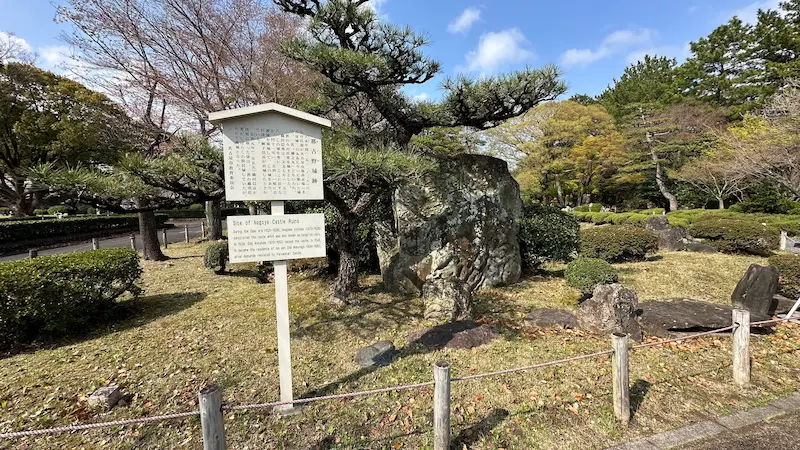
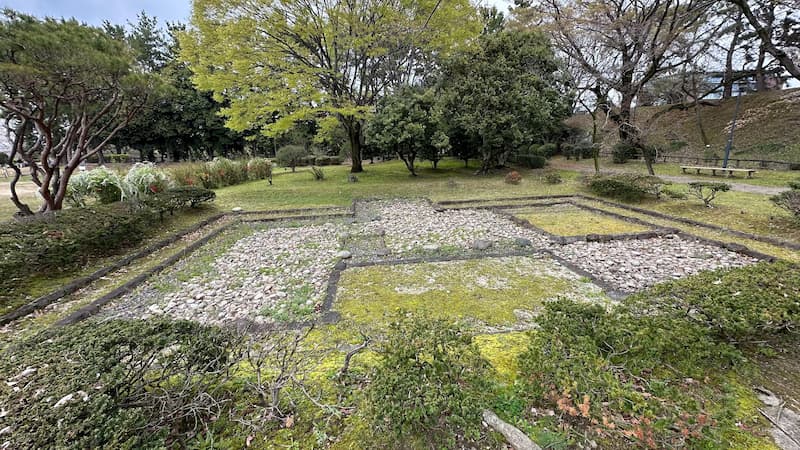
Located near the Ninomaru area of present-day Nagoya Castle, the Old Nagoya Castle Ruins are a significant historical site dating back to the Muromachi and Sengoku periods. The castle is believed to have been constructed during the Eisho era (1504–1521) by Imagawa Ujitoyo, a member of the Imagawa clan. It was also known at the time as "Yanaginomaru."
Later, the castle was seized by Oda Nobuhide, father of Oda Nobunaga, who lived there during his youth. Historical records suggest that Nobunaga resided here from the age of eight until his coming-of-age ceremony.
In 1552, Nobunaga relocated to Kiyosu Castle, marking the end of Old Nagoya Castle's role. Though the original castle was never rebuilt, its grounds were later incorporated into the Ninomaru section of Nagoya Castle.
Today, while no visible ruins remain, a memorial stone monument within Ninomaru Garden commemorates the former site of Old Nagoya Castle.
- Old Nagoya Castle Monument: A commemorative stone within the garden marks the location of the historic castle.
- Ninomaru Garden: Offers a scenic setting for walks and historical contemplation, enhanced by seasonal beauty.
- Seasonal Experiences: In spring and autumn, the garden's cherry blossoms and foliage create a vibrant contrast to the historical backdrop.
Recommended visit time: Quick Look ~3 minutes / Deeper Exploration ~15 minutes
Address: 1-1 Honmaru, Naka-ku, Nagoya, Aichi Prefecture, inside Ninomaru Garden
Access: Approx. 1-minute walk (60m) from the Ninomaru Teahouse
Trivia- Historical Insight: Originally built by the Imagawa clan, the castle was taken over by the Oda family, and briefly served as Oda Nobunaga's residence.
- Hidden Detail: Though ruins are no longer visible, the monument has become a symbolic site, cherished by history lovers.
- Famous Connections: Old Nagoya Castle is closely tied to Oda Nobunaga, one of Japan's most legendary warlords, marking an important chapter in Sengoku-era history.
A personal ranking based on repeated on-site visits by the Following the Shogun team (most recently June 2026). This is our own judgment, not the castle's official recommendation.
This is where the history that predates Nagoya Castle sits. It marks the castle built around 1504–1521 by Imagawa Ujitoyo, later seized by Oda Nobuhide, and where Oda Nobunaga is said to have lived as a young man. Whether you read Nagoya Castle purely as a Tokugawa castle, or as a site with a Sengoku layer beneath it, changes here.
The only place in this area where you can actually sit down, serving matcha and Japanese sweets with a view over the strolling pond garden. Covering all five areas of Nagoya Castle involves a lot of walking, so it is worth planning in as a rest stop.
A concealed passage for the lord to escape in an emergency — the recorded plan continued through Ōzone, Kachigawa and Jōkōji all the way to the Kiso Road. The story is excellent; what survives on the ground is just the gate site and looks unremarkable. Knowing the story first changes how it reads.
Nagoya Castle Guide Full Map
Nagoya Castle: Hours, Admission & Access
| Hours | 9:00 am – 4:30 pm (last entry to Honmaru Palace 4:00 pm) |
|---|---|
| Closed | December 29 – January 1 |
| Admission | Adults ¥500 (through September 30, 2026) / ¥1,000 (from October 1, 2026) Free for junior-high age and under, before and after the change Verified August 23, 2026. The increase was approved by the Nagoya City Council. Tickets bought before the change date remain valid afterwards. |
| Nearest station | Nagoya Castle Station (Meijo subway line), about a 5-minute walk |
Please check the official Nagoya Castle website for the latest hours and fees before you visit.
Why was Nagoya Castle built? Tokugawa Ieyasu, founder of the Tokugawa shogunate, ordered the castle rebuilt in November 1609; construction began in January 1610 and the main keep was completed in December 1612. It became the seat of the Owari Tokugawa family, the senior-most of the three Tokugawa branch houses (the Gosanke), and one of the most important castle towns in Japan.
FAQ
The Uzumimon Remains, in the northwestern part of Ninomaru Garden, mark the site of a secret escape passage built for the castle lord's use in emergencies. The gate itself no longer survives, but a stone monument marks its former location.
Old Nagoya Castle is believed to have been built during the Eishō era (1504–1521) by Imagawa Ujitoyo, and was later seized by Oda Nobuhide. His son, Oda Nobunaga, is said to have lived there from around age eight until his coming-of-age ceremony. Nobunaga relocated to Kiyosu Castle in 1552, after which Old Nagoya Castle's role came to an end.
At the Ninomaru Teahouse, visitors can enjoy matcha green tea and traditional Japanese sweets while overlooking a strolling garden with ponds. Built in the sukiya-zukuri style, it offers a quiet place to rest during a visit to the castle grounds.
Nagoya Castle is open 9:00 am to 4:30 pm (last entry to Honmaru Palace at 4:00 pm), closed December 29 through January 1. Adult admission is currently ¥500, rising to ¥1,000 from October 2026. The nearest station is Nagoya Castle Station on the Meijo subway line, about a 5-minute walk.
Related Articles on Nagoya Castle
Next Article
Previous Article
Index Article
More Nagoya Castle Guides
☕ Support This Site
Following the Shogun is built on original fieldwork and on-site research.
If you found this guide useful, your support helps keep it going.

You can also support via QR code


comment