


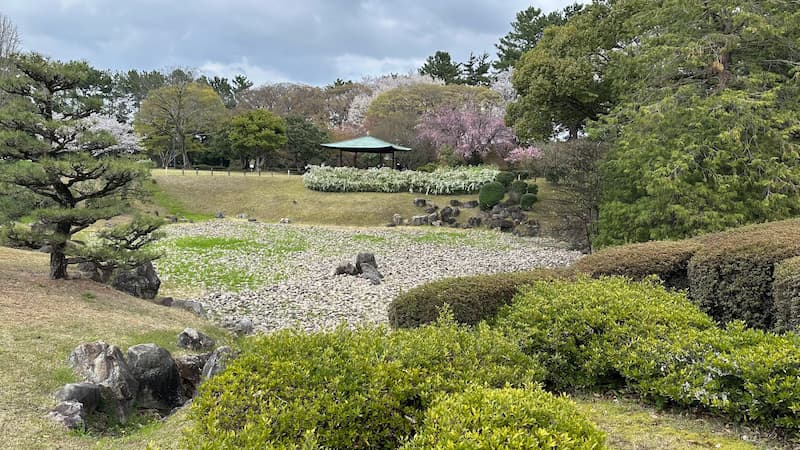
Nagoya Castle Ninomaru Garden and East Gate: 3 Spots on the East Side
Nestled on the eastern side of Nagoya Castle lies a captivating area where centuries of history blend seamlessly with seasonal natural beauty. Whether you're a history enthusiast or an avid photographer, highlights such as the "East Gate," the "Remains of the Ninomaru East Gate," and the "Ninomaru Garden" offer a rewarding exploration into the legacy of the Edo period. Discover the intricate charm of Nagoya Castle through its restored gates, heritage-rich ruins, and gardens that bloom in every season.
On This Page
3 Spots on the East Side of the Ninomaru
All three sites below sit within the Ninomaru — the secondary bailey that once encircled Nagoya Castle's Honmaru (main compound) — and are within a one- to five-minute walk of each other. Each spot's highlights, visit time, access notes, and trivia are available by tapping "Open Details" on its card.
Remains of the Ninomaru East Gate
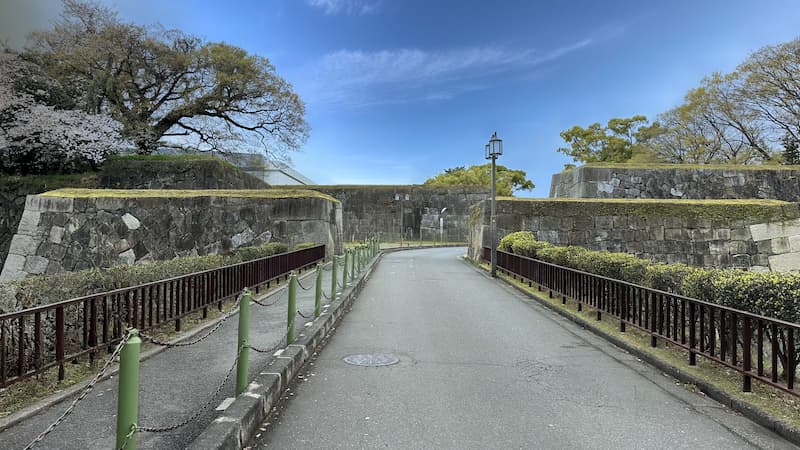
The remains of the Ninomaru East Gate once served as a key entrance to the eastern section of Nagoya Castle. This gate was part of the original construction commissioned by Tokugawa Ieyasu in 1610 and completed around 1612. Built in the traditional Koraimon style, it featured roofed main and side pillars, with decorative iron bands reinforcing its columns and doors.
In 1972, the gate was carefully relocated using original materials to the site of the former Honmaru East Second Gate, where it still stands today. This structure offers a rare glimpse into early Edo-period castle architecture and allows visitors to connect deeply with Japan's feudal past.
- Former Ninomaru East Second Gate: This historical gate, dismantled and reconstructed in 1972 at its current location, preserves the traditional Koraimon style and is a rare example of early Edo architecture.
- Ninomaru Garden: A nationally designated scenic spot, the garden offers ever-changing seasonal beauty.
- Seasonal Highlights: Cherry blossoms in spring and vibrant foliage in autumn make this area particularly photogenic.
Recommended visit time: Quick Look ~5 minutes / In-Depth Exploration ~15 minutes
Address: 1 Honmaru, Naka-ku, Nagoya, Aichi Prefecture
Access: Just a 4-minute walk (300m) from Exit 7 of Nagoya Castle Station (M07) on the Meijo Subway Line
Trivia- Hidden History: The gate was originally located at the Ninomaru East Iron Gate ruins before being relocated.
- Local Secrets: Numerous other culturally significant gates and turrets are scattered throughout Nagoya Castle grounds, perfect for history buffs.
- Famous Connections: Nagoya Castle was built under the orders of Tokugawa Ieyasu, solidifying the castle's deep-rooted ties to the Tokugawa clan.
East Gate
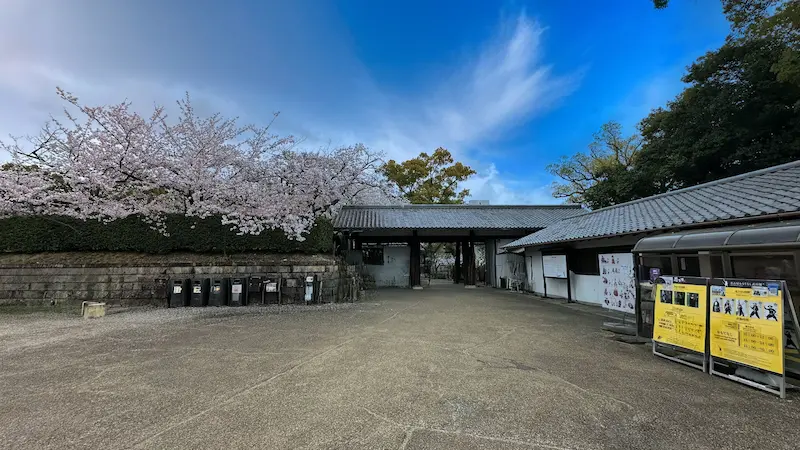
The East Gate of Nagoya Castle once served as a primary access point on the eastern perimeter, linking the castle interior with the surrounding castle town. Built as part of Tokugawa Ieyasu's castle project in 1609, the gate was surrounded by samurai residences and religious sites, forming a lively district outside the fortress.
Today, the area is home to gardens of peonies and tree peonies that burst into bloom between spring and early summer, offering a tranquil floral retreat just steps from the main castle path.
- Remains of the East Gate: Although the gate itself no longer exists, the remaining stone walls and surrounding scenery provide insight into the gate's former grandeur.
- Seasonal Highlights: From spring through early summer, the blooming peonies and tree peonies offer a stunning backdrop for a relaxing stroll or photo session.
Recommended visit time: Quick Look ~5 minutes / In-Depth Exploration ~15 minutes
Address: 1 Honmaru, Naka-ku, Nagoya, Aichi Prefecture
Access: About a 5-minute walk (400m) from the Former Ninomaru East Second Gate
Ticketing and AdmissionAs one of the main entrances to Nagoya Castle, the East Gate provides ticketing services through both vending machines and staffed windows. Visitors who purchase tickets online can also present or redeem them here.
Nagoya Castle Admission (as of 2025):
| Category | Price |
|---|---|
| General Adults | ¥500 |
| Seniors (Nagoya residents 65+) | ¥100* |
| Junior High & Under | Free |
*Please bring valid ID (e.g., health insurance card, driver's license) to confirm age and residence.
Admission also includes access to the Honmaru Palace.
Trivia- Hidden History: The area around the East Gate was once teeming with samurai homes and temples, reflecting the lively culture of the castle town.
- Local Secrets: Sharp-eyed visitors may spot stone mason carvings on the remaining walls — marks left by the original builders.
- Famous Connections: As part of Tokugawa Ieyasu's grand design, the East Gate stood as a symbol of the Tokugawa family's authority and prestige.
Ninomaru Garden
Located in the Ninomaru area of Nagoya Castle, this lush, tranquil garden is an oasis of natural beauty year-round. Home to a Camellia Garden with over 50 varieties blooming from winter to spring and the serene South Pond featuring artful rock arrangements, Ninomaru Garden is a peaceful escape amidst the grandeur of the castle.
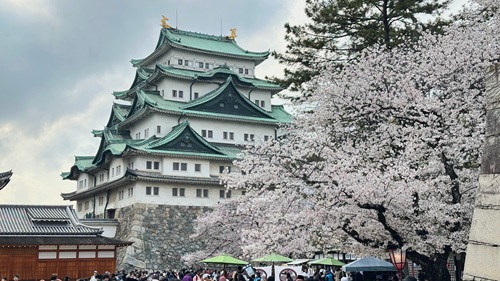
In spring, cherry blossoms transform the landscape into a picturesque dream, offering the perfect contrast to the surrounding historical architecture. The garden provides a peaceful, meditative space for those seeking a slower-paced castle experience.
- Camellia Garden: From winter to spring, this garden features around 50 camellia varieties, including those uniquely associated with Nagoya Castle.
- South Pond: A calm, reflective pond accented by traditional stonework, often visited by waterfowl, creating a tranquil ambiance.
- Seasonal Highlights: Cherry blossoms and camellias bloom in harmony during spring, making this a top spot for nature photography and peaceful strolls.
Recommended visit time: Quick Look ~15 minutes / In-Depth Exploration ~45 minutes
Address: 1-1 Honmaru, Naka-ku, Nagoya, Aichi Prefecture (Inside Ninomaru Garden)
Access: Only a 1-minute walk (70m) from the East Gate
Trivia- Hidden History: During the Edo period, the garden area was home to residences of high-ranking retainers. It was converted into a garden in the Meiji era.
- Local Secrets: Rare, classical camellia species grow here, making it a fascinating stop for horticultural enthusiasts.
- Famous Connections: The daimyō of the Owari-Tokugawa clan were known to frequent this garden, appreciating the subtle shifts of the seasons.
Additional Info: English translation of a sign originally displayed only in Japanese.
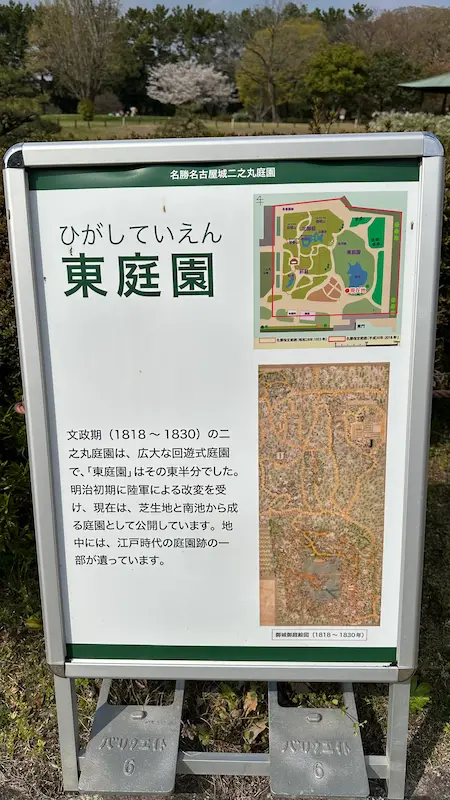
East Garden
During the Bunsei era (1818–1830), the Ninomaru Garden of Nagoya Castle was an expansive stroll garden, with the current "East Garden" constituting its eastern half. Altered significantly by the Imperial Army in the early Meiji period, today the East Garden is presented to visitors as a scenic space consisting of expansive lawns and the Southern Pond. Beneath its grounds, remnants of the original Edo-period garden layout still remain preserved.
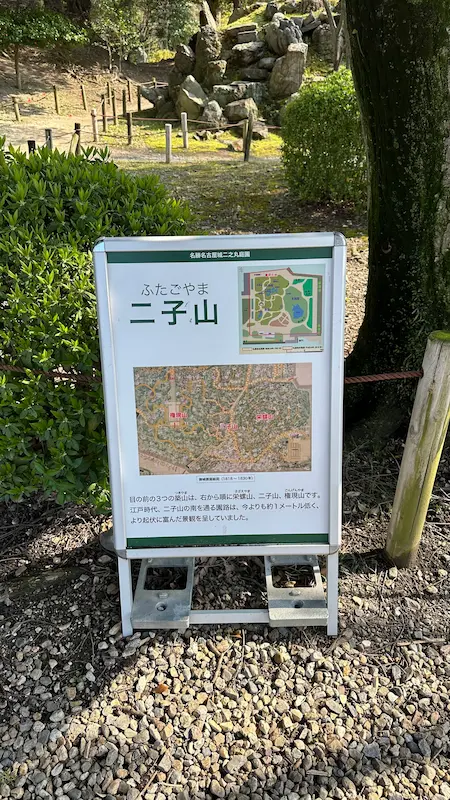
Twin Hills (Futagoyama)
The three artificial hills you see before you are, from left to right: Sazae Hill, Twin Hills (Futagoyama), and Gongen Hill. During the Edo period, the garden path running south of the Twin Hills was about one meter lower than it is today, creating a more dramatic and undulating landscape.
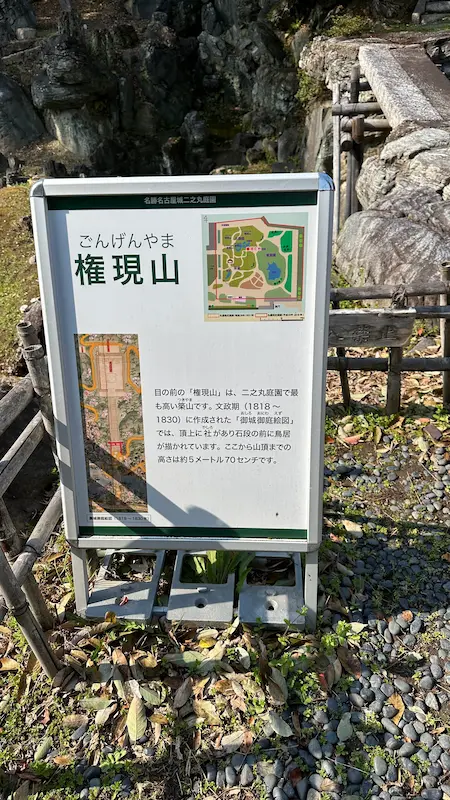
Gongen Hill
Standing before you is Gongen Hill, the tallest artificial hill in the Ninomaru Garden. According to the Official Castle Garden Map created during the Bunsei era (1818–1830), a small shrine once stood atop the hill, with a two-tiered stone staircase leading up to it, and a hermitage located at its base. The elevation from this point to the summit is approximately 5.7 meters.
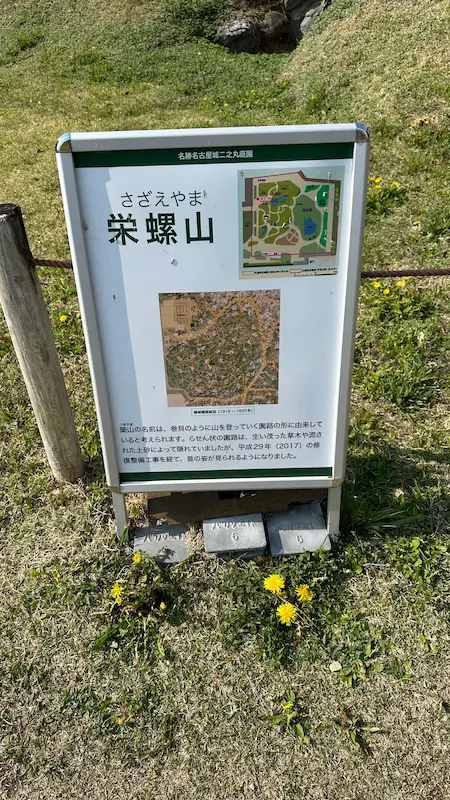
Sazae Hill
The name "Sazae Hill" is believed to originate from the spiral-shaped path that winds up the hill, resembling the swirl of a turban shell. Originally, the path was lined with pine trees, but over time, the dense overgrowth and terrain obscured its form. Following restoration work completed in 2017 (Heisei 29), the hill's original appearance has been beautifully revived and can now be appreciated once again.
A personal ranking based on repeated on-site visits by the Following the Shogun team (most recently June 2026). This is our own judgment, not the castle's official recommendation.
This is the one spot in the area that rewards the time you spend in it. Camellias from winter into spring, the quiet Minami-ike pond, cherry blossoms in spring — it changes with the season. The other two spots are a gate and a gate site; this is the one with something to linger over.
One of the castle's main entrances today, so you will pass through it naturally if you enter from this side. The gate itself is less the draw than the peony and Chinese-peony gardens laid out around it, which peak from spring into early summer.
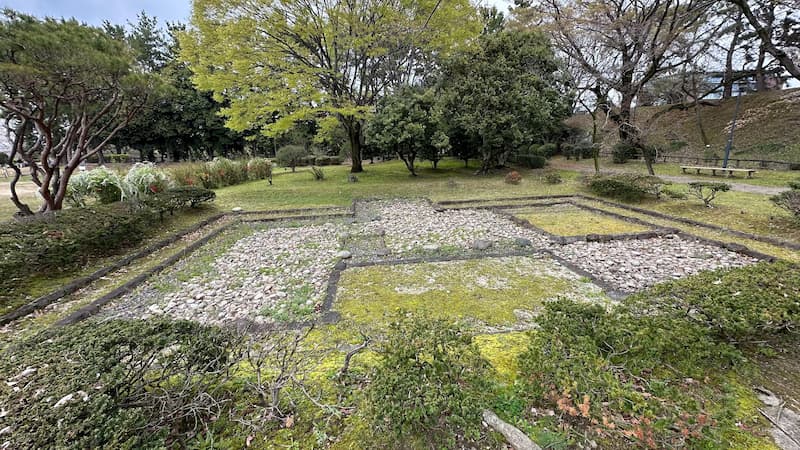
There is no gate standing here. Its original timbers were relocated in 1972 to the Honmaru East Ni-no-mon site, and you can see the actual structure in Honmaru Area Vol. 3. Treat this as a place to check the stonework and the information board, not a destination.
Nagoya Castle Guide Full Map
Nagoya Castle: Hours, Admission & Access
| Hours | 9:00 am – 4:30 pm (last entry to Honmaru Palace 4:00 pm) |
|---|---|
| Closed | December 29 – January 1 |
| Admission | Adults ¥500 (through September 30, 2026) / ¥1,000 (from October 1, 2026) Free for junior-high age and under, before and after the change Verified August 23, 2026. The increase was approved by the Nagoya City Council. Tickets bought before the change date remain valid afterwards. |
| Nearest station | Nagoya Castle Station (Meijo subway line), about a 5-minute walk |
Please check the official Nagoya Castle website for the latest hours and fees before you visit.
Why was Nagoya Castle built? Tokugawa Ieyasu, founder of the Tokugawa shogunate, ordered the castle rebuilt in November 1609; construction began in January 1610 and the main keep was completed in December 1612. It became the seat of the Owari Tokugawa family, the senior-most of the three Tokugawa branch houses (the Gosanke), and one of the most important castle towns in Japan.
FAQ
The gate was originally built as part of Nagoya Castle's construction, commissioned by Tokugawa Ieyasu starting in 1610 and completed around 1612. In 1972, it was relocated using its original materials to the site of the former Honmaru East Second Gate, where it stands today.
Yes. The East Gate is one of Nagoya Castle's main entrances, with both ticket vending machines and staffed windows. Tickets purchased online in advance can also be redeemed or presented here, and admission includes entry to the Honmaru Palace.
Ninomaru Garden features a Camellia Garden with around 50 varieties blooming from winter to spring, and the South Pond, a calm space with traditional stone arrangements. Cherry blossoms are also in full bloom in spring.
Nagoya Castle is open 9:00 am to 4:30 pm (last entry to Honmaru Palace at 4:00 pm), closed December 29 through January 1. Adult admission is currently ¥500, rising to ¥1,000 from October 2026. The nearest station is Nagoya Castle Station on the Meijo subway line, about a 5-minute walk.
Related Articles on Nagoya Castle
Next Article
Index Article
More Nagoya Castle Guides
☕ Support This Site
Following the Shogun is built on original fieldwork and on-site research.
If you found this guide useful, your support helps keep it going.

You can also support via QR code


comment