


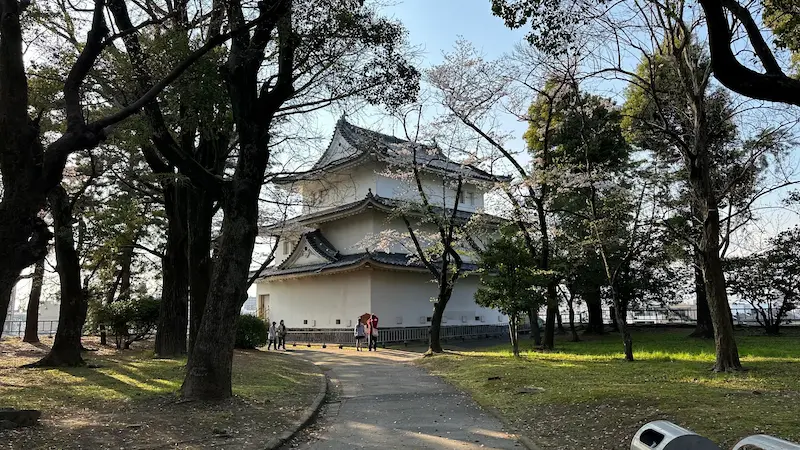
Nagoya Castle's Northwest Turret: Japan's Second-Largest Surviving Yagura
Nagoya Castle stands not only as a symbol of architectural grandeur but also as a testament to the military ingenuity of the Sengoku era. Its defensive features—ranging from the imposing Seihoku-sumi Yagura (Northwest Corner Turret), to the intimidating Kenbei (Spearhead Fence), and the cleverly designed narrow corridors known as U no Kubi (Cormorant’s Neck)—embody both practicality and aesthetic elegance. In this article, we guide you through the historic defensive elements of the Ofukemaru Area, where strategy and structure converge in a visually captivating display of samurai-era craftsmanship.
On This Page
3 Spots in Northwest Ofukemaru
The three sites below sit inside the Ofukemaru (御深井丸) — one of Nagoya Castle's outer fortified compounds — within a one- to four-minute walk of each other: it's about a 4-minute walk from the Seihoku-sumi Yagura to the Kenbei fence, and about a 1-minute walk from the Kenbei fence to U no Kubi. Each spot's highlights, visit time, access notes, and trivia are available by tapping "Open Details" on its card.
Seihoku-sumi Yagura Northwest Corner Turret
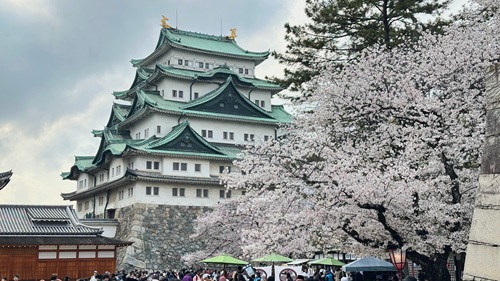
Positioned at the northwest edge of the Ofukemaru area, the Seihoku-sumi Yagura was constructed around 1619. Featuring a three-tiered exterior and three floors inside, this turret measures approximately 13.9 meters east-west, 16.9 meters north-south, and stands about 16.2 meters high. Among surviving three-tiered turrets from the Edo period, it ranks as the second largest in Japan, rivaling even some castle keeps in size.
Also known as the Kiyosu Yagura, it is believed to be a relocated structure—either the main or secondary keep—from Kiyosu Castle, dismantled and moved here around 1611. Repair works have revealed signs that support this theory.
In 1930, it was designated a National Treasure, and today it is preserved as an Important Cultural Property.
- Architectural Features: The irimoya-zukuri (hip-and-gable) roof with decorative ridge tiles and chidori hafu (gabled projections) on each side. Ishi-otoshi (stone-dropping slots) are installed on the north and west sides for defense.
- Surrounding Sites: Explore nearby historical features like the restored Sarumen Tea House and the Meiji-era Nogi Storehouse.
- Seasonal Appeal: Spring cherry blossoms beautifully frame the turret, offering stunning photographic opportunities.
Recommended visit time: Quick stop ~3 minutes / In-depth tour ~15 minutes
Address: 1-1 Honmaru, Naka Ward, Nagoya, Aichi Prefecture
Access: Approx. 3-minute walk (200m) from the Tea Houses
Trivia- Unexpected Origins: Thought to be relocated from Kiyosu Castle, thus earning the nickname Kiyosu Yagura.
- Hidden Gem: It's the second-largest surviving turret in Japan—larger than some castle keeps.
- Historic Significance: Constructed as part of Tokugawa Ieyasu's master plan for Nagoya Castle.
Kenbei Spearhead Fence
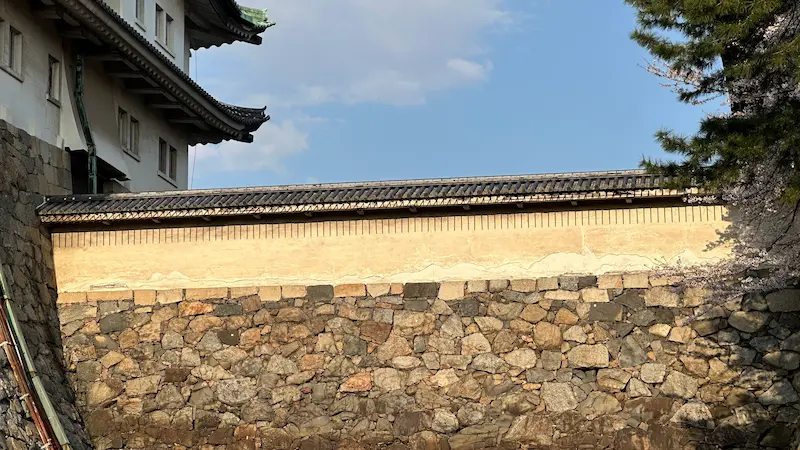
Kenbei, or "spearhead fence," is a rare and formidable defensive structure unique to Nagoya Castle. Located atop the southwest stone walls of the Honmaru Palace, this barrier features sharp triangular protrusions designed to physically prevent enemies from climbing over the walls.
These serrated spikes are not only practical but also serve as a powerful visual deterrent. As one of the few remaining examples of this structure in Japan, the Kenbei represents a striking blend of aesthetic design and military function.
- Fence Design: The jagged, triangular spikes atop the fence are both functional and intimidating, showcasing Edo-period ingenuity.
- Integrated Stonework: Built directly onto the stone walls of the palace, the Kenbei exemplifies the castle's robust and layered defensive planning.
- Seasonal Appeal: In spring and autumn, the natural surroundings enhance the visual impact of this rare defensive structure.
Recommended visit time: Quick stop ~3 minutes / In-depth observation ~10 minutes for those with an interest in architecture
Address: 1-1 Honmaru, Naka Ward, Nagoya, Aichi Prefecture (southwest stone wall)
Access: Approx. 4-minute walk (270m) from the Northwest Corner Turret
Trivia- Historical Context: While designed for actual combat defense, Kenbei also served as a symbol of authority and prestige.
- Little-Known Fact: Very few such fences remain in Japan—Nagoya Castle is one of the only places where you can see one up close.
- Famous Connection: The fence was part of Tokugawa Ieyasu's original blueprint for the castle, reflecting the military philosophy of the Owari Tokugawa clan.
U no Kubi Cormorant’s Neck
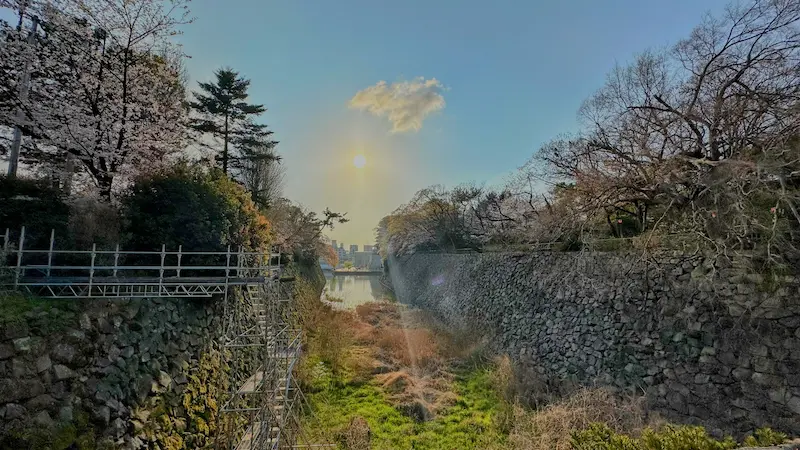
The term U no Kubi, or “Cormorant’s Neck,” refers to a narrow, winding section of the moat designed to extend deep into the interior of the castle grounds. This strategic layout funneled enemies into tight, constrained paths, making them easier to defend against.
Originally, five U no Kubi existed in Nagoya Castle. One was filled in during the Meiji era to facilitate carriage travel, leaving four still intact today. These narrow channels demonstrate brilliant defensive planning, turning natural topography into military advantage.
- Strategic Pathways: The narrowed, curving design limits enemy maneuverability, giving defenders a distinct upper hand.
- Stone Masonry: The precisely built stone walls contouring the moat showcase advanced engineering of the era.
- Seasonal Appeal: Springtime cherry blossoms add charm and contrast to this fortress-like structure.
Recommended visit time: Quick stop ~3 minutes / In-depth tour ~15 minutes
Address: 1-1 Honmaru, Naka Ward, Nagoya, Aichi Prefecture
Access: Approx. 1-minute walk (20m) from the Kenbei
Trivia- Unexpected Use: One U no Kubi was filled during the Meiji period to accommodate carriages, showing adaptation to modern needs.
- Little-Known Fact: This defensive design is rare and not commonly found in other Japanese castles.
- Famous Connection: Part of the original design under Tokugawa Ieyasu, it exemplifies the strategic sophistication of the time.
A personal ranking based on repeated on-site visits by the Following the Shogun team (most recently June 2026). This is our own judgment, not the castle's official recommendation.
This one structure is essentially the whole reason to walk out to this area. Built around 1619, it is the second-largest three-tiered turret surviving from the Edo period anywhere in Japan — about 16.2 m tall, larger than some castles' main keeps. Tradition holds that it was reused from the keep, or a smaller keep, of Kiyosu Castle, which is why it is also called the Kiyosu Turret. It is well away from the Southeast and Southwest turrets in the Honmaru, so check the map before setting off.
A defensive wall topped with a row of spear blades, making it physically difficult to climb over. Surviving stretches remain on the stone walls southwest of the Honmaru Palace and elsewhere, giving you a direct visual read on how the castle was meant to be defended. It makes more sense seen together with the Akazu no Mon in Honmaru Area Vol. 3.
A stretch where the moat narrows deep into the grounds to constrict the approach. Walk past without knowing what it is and you will not notice it. There were five of these originally; one near the Main Gate was filled in during the Meiji era, leaving four. Worth hunting down if castle layout design interests you.
Nagoya Castle Guide Full Map
Nagoya Castle: Hours, Admission & Access
| Hours | 9:00 am – 4:30 pm (last entry to Honmaru Palace 4:00 pm) |
|---|---|
| Closed | December 29 – January 1 |
| Admission | Adults ¥500 (through September 30, 2026) / ¥1,000 (from October 1, 2026) Free for junior-high age and under, before and after the change Verified August 23, 2026. The increase was approved by the Nagoya City Council. Tickets bought before the change date remain valid afterwards. |
| Nearest station | Nagoya Castle Station (Meijo subway line), about a 5-minute walk |
Please check the official Nagoya Castle website for the latest hours and fees before you visit.
Why was Nagoya Castle built? Tokugawa Ieyasu, founder of the Tokugawa shogunate, ordered the castle rebuilt in November 1609; construction began in January 1610 and the main keep was completed in December 1612. It became the seat of the Owari Tokugawa family, the senior-most of the three Tokugawa branch houses (the Gosanke), and one of the most important castle towns in Japan.
FAQ
The Seihoku-sumi Yagura was built around 1619 (Genna 5) at the northwest corner of the Ofukemaru. It has a three-tiered exterior and three interior floors, measuring approximately 13.9 meters east-west, 16.9 meters north-south, and 16.2 meters high. Among surviving three-tiered turrets from the Edo period, it ranks as the second largest in Japan. It was designated a National Treasure in 1930 and is now preserved as an Important Cultural Property. It is also known as the Kiyosu Yagura, believed to be a relocated keep from Kiyosu Castle.
The Kenbei is a rare defensive fence that survives atop the southwest stone walls of the Honmaru Palace. It features sharp triangular protrusions along its top edge, designed to physically prevent enemies from climbing over the walls. Very few such fences remain in Japan, making Nagoya Castle one of the only places to see one up close.
U no Kubi ("Cormorant's Neck") refers to a narrow, winding section of the moat that extends deep into the castle grounds, funneling attackers into tight, easily defended paths. Five originally existed at Nagoya Castle; one was filled in during the Meiji era to accommodate carriage travel, leaving four intact today.
Nagoya Castle is open 9:00 am to 4:30 pm (last entry to Honmaru Palace at 4:00 pm), closed December 29 through January 1. Adult admission is currently ¥500, rising to ¥1,000 from October 2026. The nearest station is Nagoya Castle Station on the Meijo subway line, about a 5-minute walk.
Related Articles on Nagoya Castle
Next Article
Previous Article
Index Article
More Nagoya Castle Guides
☕ Support This Site
Following the Shogun is built on original fieldwork and on-site research.
If you found this guide useful, your support helps keep it going.

You can also support via QR code


comment