


Honmaru Palace and the Kiyomasa Stone: What to See and How Long It Takes
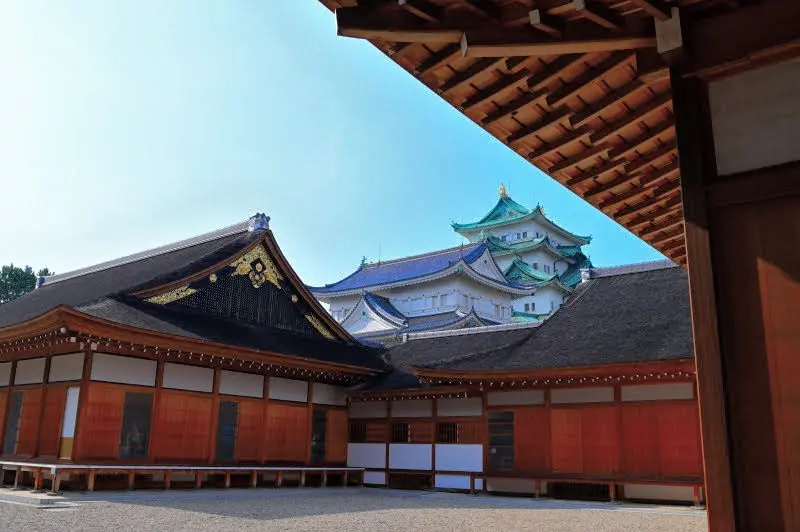
Within the Honmaru (Main Compound) of Nagoya Castle lies a collection of historically rich and architecturally stunning sites, including the Honmaru Palace, originally built as the official residence and government office of Tokugawa Yoshinao. Highlights include the Yudono Shoin (Bathhouse Study), the Kuroki Shoin, said to be connected to Kiyosu Castle, and the enormous Kiyomasa Stone. In this article, we'll walk you through these faithfully restored cultural treasures, offering insights into their significance and must-see features.
On This Page
4 Spots in the Honmaru Area
All four sites below are within a one- to five-minute walk of each other inside the Honmaru (本丸), the innermost and most heavily fortified compound of a Japanese castle. Each spot's highlights, visit time, access notes, and trivia are available by tapping "Open Details" on its card.
Yudono Shoin & Kuroki Shoin
🏛 Overview
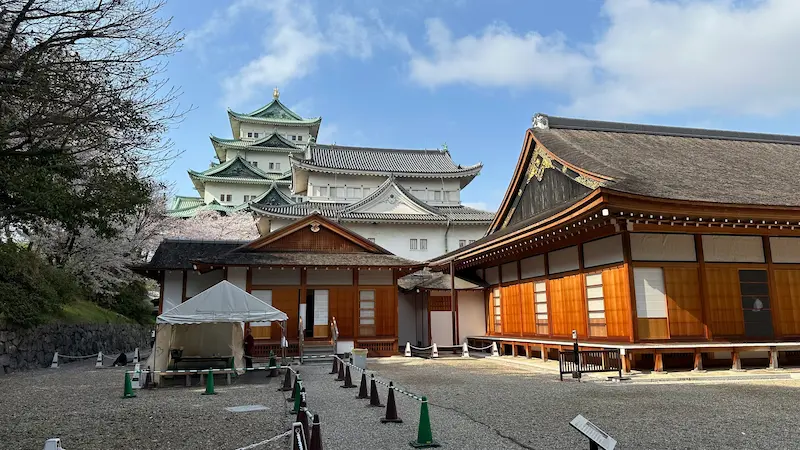
The Yudono Shoin (Bathhouse Study) and Kuroki Shoin (Dark-Wood Study) within Honmaru Palace were exclusively reserved for the shogun. The Yudono Shoin served as a private bathing and resting facility, complete with a bathhouse. The Kuroki Shoin, meanwhile, is believed to have been relocated from Kiyosu Castle, where it once served as Tokugawa Ieyasu's lodgings. Unlike the rest of the palace—constructed primarily with cypress—the Kuroki Shoin features high-quality pine wood, giving it a darker hue that inspired its name.
Though both buildings were destroyed in the air raids of 1945, they were meticulously reconstructed based on detailed historical documents and reopened to the public in 2018.
- Yudono Shoin Bathhouse: A glimpse into the bathing facilities used exclusively by the shogun.
- Kuroki Shoin Fusuma Paintings: Elegant monochrome ink paintings (suibokuga) on the fusuma (sliding wooden door panels) create a calming ambiance.
- Seasonal Tip: Enjoy cherry blossoms in spring as a beautiful backdrop to these historic structures.
Recommended visit time: Quick visit ~5 minutes (exterior only) / Full experience ~30 minutes (interior tour)
Address: 1-1 Honmaru, Naka-ku, Nagoya, Aichi Prefecture – Inside Honmaru Palace
Access: Approx. 1-minute walk (50 meters) from the Seinan Corner Turret.
Trivia- Unexpected History: The Kuroki Shoin is believed to be a relocated building from Kiyosu Castle, once used by Tokugawa Ieyasu himself.
- Hidden Gem: Some of the fusuma paintings from the Kuroki Shoin survived the war and are occasionally displayed during special exhibitions.
- Famous Connection: The Honmaru Palace was originally constructed by Tokugawa Ieyasu for his ninth son, Yoshinao, making it one of the most prestigious residential structures of the Tokugawa clan.
Honmaru Palace
🏛 Overview
The Honmaru Palace of Nagoya Castle was completed in 1615 as both the residence and government office of Tokugawa Yoshinao, the first lord of the Owari Domain. Later, it was also used as the official accommodation for visiting shoguns. Lavishly adorned with Kano school paintings and intricate gold fittings, the palace was hailed as the masterpiece of early modern castle residences.
It was designated as Japan's first National Treasure in 1930, but tragically destroyed in World War II bombings in 1945. Thanks to surviving blueprints and photographs, an ambitious reconstruction began in 2009, culminating in a faithful restoration completed in 2018.
- Grand Entrance: A stately entry used only by the shogun.
- Omote Shoin (Formal Reception Hall): Features spectacular gold-leaf wall paintings.
- Taimeisho (Audience Room): Lavishly decorated for family receptions and banquets.
- Jorakuden (Shogun's Quarters): The most luxurious room, built specifically for shogunal visits, featuring breathtaking Kano school murals.
- Seasonal Tip: Capture the palace's grandeur amidst cherry blossoms or autumn foliage.
Recommended visit time: Quick visit ~10 minutes (exterior) / Full interior tour ~1 hour
Address: 1-1 Honmaru, Naka-ku, Nagoya, Aichi Prefecture – Inside Nagoya Castle
Access: Approx. 5-minute walk (200 meters) from Yudono & Kuroki Shoin.
Trivia- Historical Significance: Considered the pinnacle of early modern Japanese architecture, the palace exemplified Edo-period luxury and design.
- Faithful Reconstruction: The faithful reconstruction was based on original blueprints, photographs, and measurement data.
- Famous Connection: Originally built for Tokugawa Yoshinao, it later became the official lodging for shoguns visiting Nagoya.
Honmaru East Ichinomon Gate Ruins
🏛 Overview
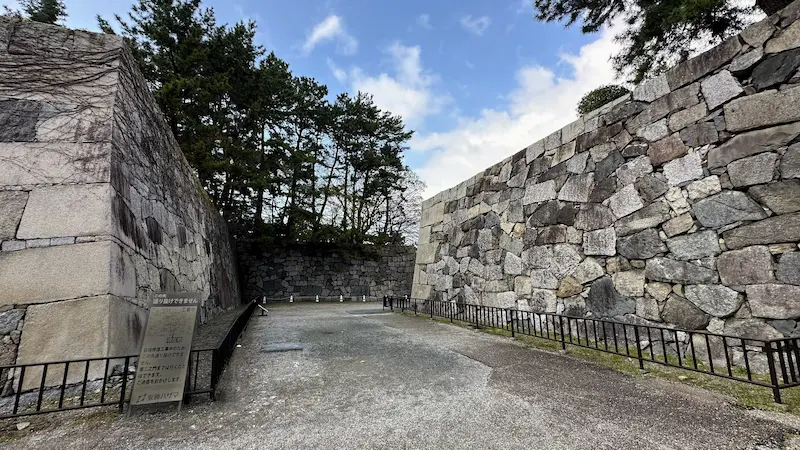
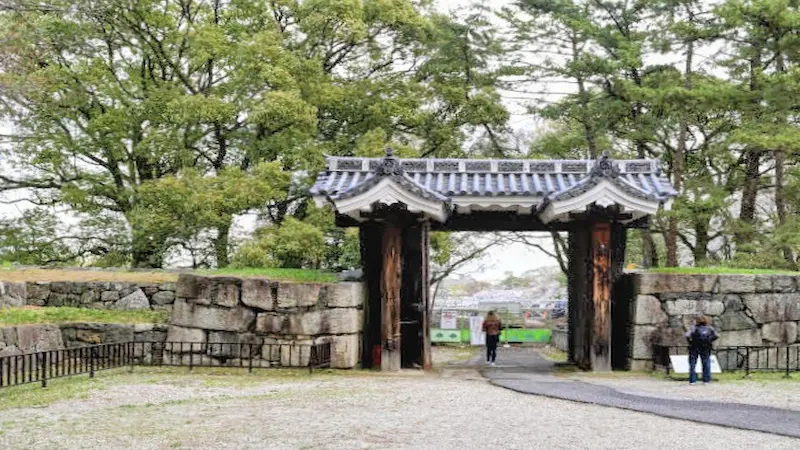
The Honmaru East Ichinomon Gate was once a key eastern entrance to the Honmaru compound. Along with the Higashi Ninomon (East Second Gate), it formed a defensive masugata (box-shaped gate complex). The gate was destroyed in the 1945 air raids, and today only its stone foundations remain.
- Stone Foundations: Observe the original masugata-style base and its strategic layout.
- Scenic Surroundings: Enjoy a tranquil walk through the historical heart of the castle.
- Seasonal Tip: During cherry blossom season, the stone structures contrast beautifully with the floral scenery.
Recommended visit time: Quick visit ~5 minutes / In-depth exploration ~15 minutes
Address: 1-1 Honmaru, Naka-ku, Nagoya, Aichi Prefecture – Inside Nagoya Castle
Access: Approx. 2-minute walk (60 meters) from Honmaru Palace.
Trivia- Key Role: This gate, in tandem with the East Second Gate, played a critical role in castle defense.
- A Favorite Among History Buffs: Though not widely advertised, the ruins are a favorite among history buffs.
- Famous Connection: Built under the orders of Tokugawa Ieyasu, like the rest of Nagoya Castle.
Kiyomasa Stone
🏛 Overview
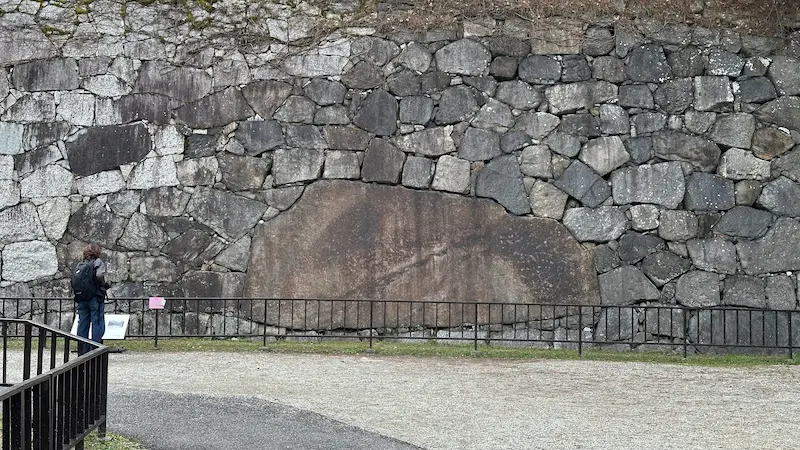
Located near the East Second Gate, the Kiyomasa Stone is the largest stone used in Nagoya Castle's stone walls—roughly the size of eight tatami mats and estimated to weigh over 10 tons. It is said to have been transported by the legendary castle-builder Kato Kiyomasa, hence its name.
However, records indicate the stone was likely placed by Kuroda Nagamasa, not Kiyomasa himself.
The castle's stonework was divided among 20 feudal lords from western Japan, each marking their assigned stones with a unique emblem. Kiyomasa oversaw the construction of the tenshudai (main tower base) and is said to have led 20,000 workers from Kumamoto, completing the job in just three months.
- Kiyomasa Stone's Sheer Scale: The largest block in the entire castle, its presence is unforgettable.
- Inscribed Marks: Discover carvings left by the daimyo tasked with stone delivery.
- Seasonal Tip: Cherry blossoms enhance the grandeur of this massive stone.
Recommended visit time: Quick visit ~5 minutes / Full appreciation ~15 minutes
Address: 1-1 Honmaru, Naka-ku, Nagoya, Aichi Prefecture – Near Honmaru East Second Gate
Access: Approx. 1-minute walk (5 meters) from the East First Gate Ruins.
Trivia- Unexpected History: Although named after Kiyomasa, the actual construction was led by Kuroda Nagamasa.
- Impressive Scale: Nagoya Castle's stone walls span a total length of 8.2 km—an architectural feat of the Edo period.
- Famous Connection: Kato Kiyomasa, renowned for his castle expertise, led the building of the tenshudai foundation.
A personal ranking based on repeated on-site visits by the Following the Shogun team (most recently June 2026). This is our own judgment, not the castle's official recommendation.
The one place in this area where you actually go inside a building, and the single biggest highlight of Nagoya Castle as a whole. It holds a large number of Kanō-school paintings across a wide floor plan, so a thorough look takes over an hour. Last entry is 4:00 pm (closing 4:30 pm) — earlier than most visitors expect — so build your day around this deadline.
These rooms are technically part of the Honmaru Palace, but the entrance is separate from the main palace visiting route — touring the palace alone will not take you past them. The Kuroki Shoin is said to have been relocated from Tokugawa Ieyasu's lodgings at Kiyosu Castle; unlike the other rooms, which are built entirely of hinoki cypress, this one uses pine. Worth seeking out deliberately, separately from the palace tour.
Just outside the palace, near the Honmaru East Ni-no-mon Gate. It is the largest stone in the castle's walls — roughly the size of eight tatami mats and an estimated 10 tonnes. It is named after Katō Kiyomasa, though the section was in fact built by Kuroda Nagamasa. Easy spot to photograph.
Destroyed in the 1945 air raids — only the stone base remains. You pass right by it on the way to the Kiyomasa Stone, so seeing it in passing is enough.
Nagoya Castle Guide Full Map
Nagoya Castle: Hours, Admission & Access
| Hours | 9:00 am – 4:30 pm (last entry to Honmaru Palace 4:00 pm) |
|---|---|
| Closed | December 29 – January 1 |
| Admission | Adults ¥500 (through September 30, 2026) / ¥1,000 (from October 1, 2026) Free for junior-high age and under, before and after the change Verified August 23, 2026. The increase was approved by the Nagoya City Council. Tickets bought before the change date remain valid afterwards. |
| Nearest station | Nagoya Castle Station (Meijo subway line), about a 5-minute walk |
Please check the official Nagoya Castle website for the latest hours and fees before you visit.
Why was Nagoya Castle built? Tokugawa Ieyasu, founder of the Tokugawa shogunate, ordered the castle rebuilt in November 1609; construction began in January 1610 and the main keep was completed in December 1612. It became the seat of the Owari Tokugawa family, the senior-most of the three Tokugawa branch houses (the Gosanke), and one of the most important castle towns in Japan.
FAQ
The Honmaru Palace was designated Japan's first National Treasure in 1930, alongside the main keep, but was destroyed in the 1945 air raids. Based on surviving blueprints and photographs, reconstruction began in 2009, and a faithful restoration was completed and opened to the public in 2018.
The Yudono Shoin was a private bathing facility used exclusively by the shogun, while the Kuroki Shoin is believed to have been relocated from Kiyosu Castle, where it once served as Tokugawa Ieyasu's lodgings. Both buildings were destroyed in the 1945 air raids and were later reconstructed, reopening to the public in 2018.
The Kiyomasa Stone is the largest stone used in Nagoya Castle's stone walls, roughly the size of eight tatami mats and estimated to weigh over 10 tons. It is said to have been transported by Kato Kiyomasa, though records indicate the stone was likely placed by Kuroda Nagamasa.
Nagoya Castle is open 9:00 am to 4:30 pm (last entry to Honmaru Palace at 4:00 pm), closed December 29 through January 1. Adult admission is currently ¥500, rising to ¥1,000 from October 2026. The nearest station is Nagoya Castle Station on the Meijo subway line, about a 5-minute walk.
Related Articles on Nagoya Castle
Next Article
Previous Article
Index Article
More Nagoya Castle Guides
☕ Support This Site
Following the Shogun is built on original fieldwork and on-site research.
If you found this guide useful, your support helps keep it going.

You can also support via QR code


comment