


Area 2: Nishi-no-Maru — The Princess’s Retreat
Step into the quiet elegance of Nishi-no-Maru, once the private quarters of Princess Sen, granddaughter of Tokugawa Ieyasu — a peaceful contrast to the fortress’s military core.
- 0. Table of Contents
- 1. Main Gate and Outer Grounds
- 2. Nishi-no-Maru — The Princess’s Retreat
- 3. Main Keep and Connecting Towers
- 4. East Bailey and Okiku’s Well
- 5. Moats, Stone Walls and Defenses
- 6. Gardens, Shrines and Surroundings
Step into the quiet elegance of Nishi-no-Maru, once the private quarters of Princess Sen, granddaughter of Tokugawa Ieyasu. This area, located on the west side of the castle, offers a peaceful contrast to the fortress’s military core — providing rare insight into the daily life of noble women during the Edo period.
As you explore this area, you’ll encounter the Nishi-no-Maru South Gate Ruins, secluded residences, and storage towers that once supported the women’s quarters. The long, narrow Wa-no-Yagura Corridor, stretching toward the Keshō Yagura, was specially designed to shield the princess and her attendants as they moved through the compound. Nishi-no-Maru’s graceful layout, garden-like setting, and refined architecture reflect a world of courtly life behind castle walls.
Nishi-no-Maru South Gate Ruins
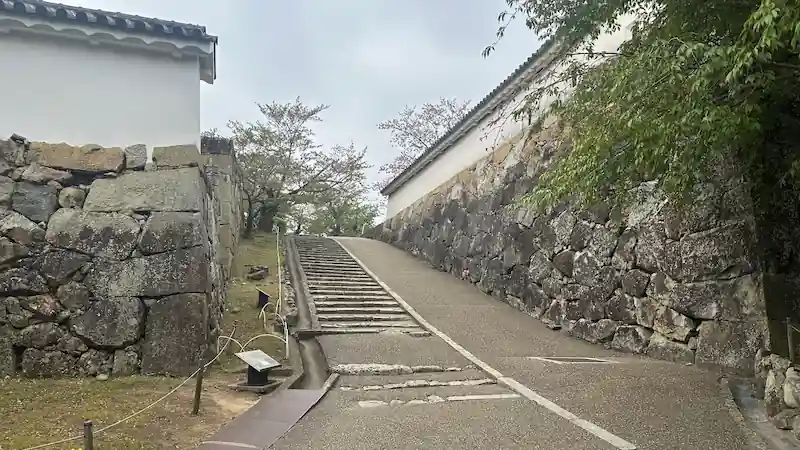
The South Gate Ruins mark the southern boundary of Nishi-no-Maru. Although the gate no longer stands, remnants of stone walls and the surrounding terrain clearly mark its former location. This gate once served as a functional entrance for those living and working within the women’s quarters, including court ladies and retainers. Since Nishi-no-Maru was home to Senhime and her entourage, the South Gate may have served as a discreet entry point for personal attendants or for deliveries of goods and supplies.
| Year built | Early 17th century (Edo period, Honda era from 1617) |
|---|---|
| Builder | Honda family (Honda Tadamasa / Honda Tadatoki) |
| Structure / features | Southern entrance to Nishi-no-Maru, likely a wooden gate with defensive features. |
| Current status | Gate no longer exists; only the site remains. |
Access: Approx. 1-minute walk (50 m) from Hishi-no-Mon Gate
Suggested time: Quick stop 5 min / in-depth visit 10 min
Ka-no-Yagura Turret
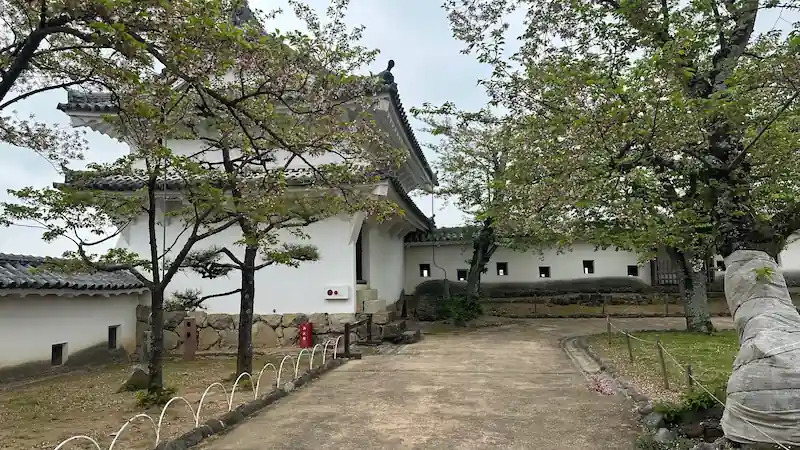
Ka-no-Yagura is a vital architectural element of Himeji Castle. Constructed between 1601 and 1609 under Ikeda Terumasa, a key Tokugawa ally, this corner turret exemplifies early Edo-period military architecture. Its dual-tiered structure and tiled roof provided both function and form as part of the castle’s defense system. Still standing today, it was designated an Important Cultural Property in 1931.
| Year built | Late 16th century (Momoyama period) |
|---|---|
| Builder | Likely built during the expansion under Ikeda Terumasa |
| Structure / features | A two-story turret on the western side of the castle, with stone-dropping holes (ishiotoshi) at its corners for defense. |
| Cultural property status | Important Cultural Property (designated 1931) |
Suggested time: Quick stop around 10 min / in-depth visit approx. 30 min
Wa-no-Yagura Turret
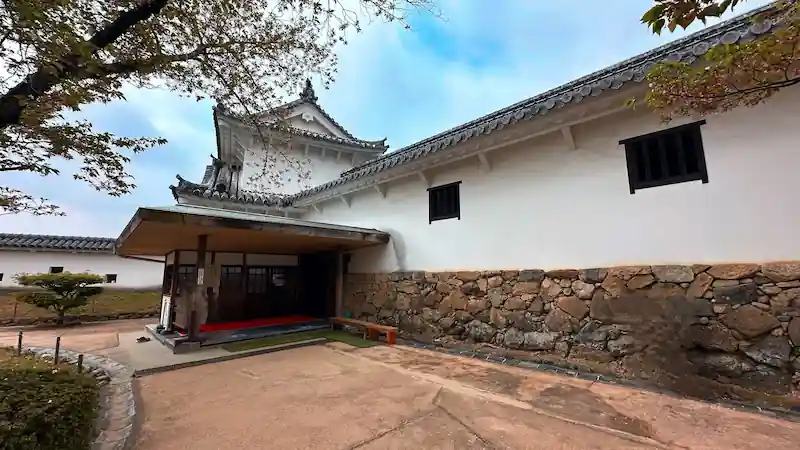
Located at the southern edge of Nishi-no-Maru, Wa-no-Yagura is a two-story turret that once played a critical role in defending the west side of the castle. The name “Wa” comes from the alphabetical labeling system used in castle blueprints to identify turrets. It served multiple purposes — observation, storage of arms and ammunition, and possibly as a temporary command post — and given its proximity to the Nishi-no-Maru Palace where Senhime lived, it was also tasked with protecting the residential zone. Today, visitors can enter through Wa-no-Yagura and walk the enclosed Watari-Yagura corridor leading to the Keshō Yagura, passing historical panels and exhibits on the way.
| Year built | 1617 |
|---|---|
| Builder | Honda Tadamasa |
| Structure / features | Two-story turret with tatami rooms, part of the Nishi-no-Maru residential complex. |
| Renovation history | Major restorations in the Showa era (1956–1964) and Heisei era (2009–2015). |
| Cultural property status | Important Cultural Property (designated 1931) |
Access: Approx. 1-minute walk (50 m) from Ka-no-Yagura Turret
Suggested time: Quick stop 5 min / in-depth visit 15 min (including the Hyakken Rōka)
Keshō Yagura (Makeup Turret)
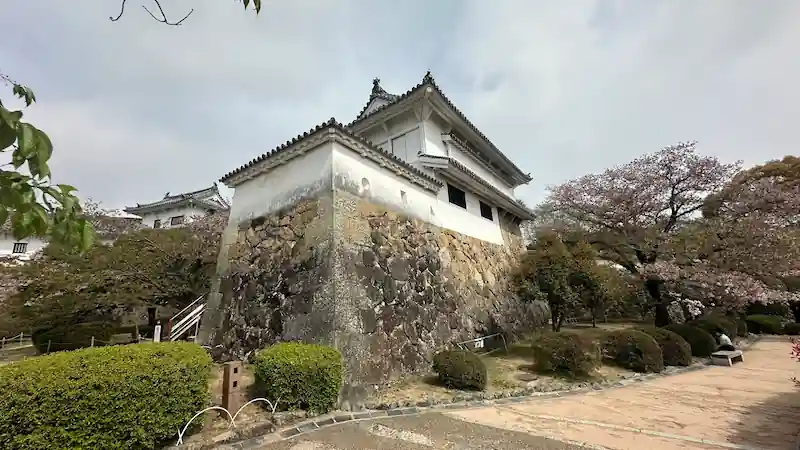
Keshō Yagura, or “Makeup Turret,” sits at the northern end of Nishi-no-Maru and stands out for its elegance. It is widely believed that Senhime, granddaughter of Tokugawa Ieyasu and daughter of Tokugawa Hidetada, used this turret as part of her personal quarters while residing in Nishi-no-Maru. The interior includes a tokonoma alcove, storage spaces, and shoji paper screens, indicating it was built as a livable space rather than a combat zone — a blend of military architecture with refined courtly life.
| Year built | 1617 |
|---|---|
| Builder | Honda Tadamasa |
| Structure / features | A two-story turret at the northern end of Nishi-no-Maru; served as a private chamber for Princess Sen, with tatami flooring and decorative elements. |
| Renovation history | Major restorations in the Showa era (1956–1964) and Heisei era (2009–2015). |
| Cultural property status | Important Cultural Property (designated 1931) |
| Remarks | Traditionally said to have been used by Princess Sen for personal preparations — a legendary account rather than a confirmed record; the name and original purpose remain debated among historians. |
Suggested time: Quick stop around 10 min / in-depth visit 20 min (combine with the Hyakken Rōka)
Ruins of the Nishi-no-Maru North Gate
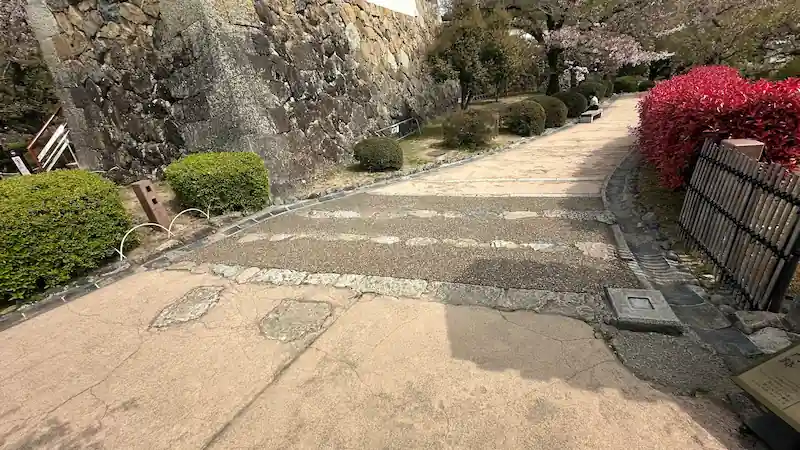
The North Gate Ruins mark the location of a once-vital entrance to Nishi-no-Maru. Nishi-no-Maru was specially designed for Senhime, daughter of Tokugawa Hidetada and wife of Honda Tadatoki, lord of Himeji Castle. It served as a residential area where the princess and her attendants lived in relative seclusion, and the North Gate functioned as both a practical entrance to this private domain and a strategic defensive line. Though the gate itself is gone, its stone base and angled stone walls remain.
| Year built | Early 17th century (Edo period) |
|---|---|
| Builder | Honda Tadamasa |
| Structure / features | Northern entrance to Nishi-no-Maru, likely a wooden gate with defensive features. |
| Current status | Gate no longer exists; only the site remains. |
Access: Approx. 1-minute walk (30 m) from Keshō Yagura (Makeup Turret)
Suggested time: Quick stop ~10 min / in-depth visit ~30 min (including all of Nishi-no-Maru)
Nu-no-Yagura (Turret Nu)
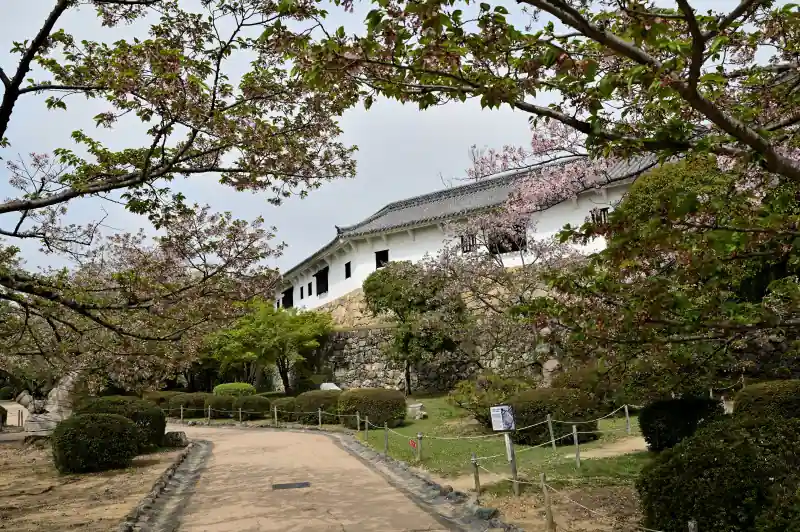
Nu-no-Yagura is a surviving turret at the north end of the Nishi-no-Maru Nagatsubone corridor, near the Keshō Yagura, forming part of the Nishi-no-Maru complex built up after the Honda family became lords of Himeji in 1617. It features sama (loopholes for firing) and ishi-otoshi (stone-drop chutes) as part of its defensive design.
| Year built | Early 17th century (Edo period, Honda era from 1617) |
|---|---|
| Builder | Honda family (Honda Tadamasa / Honda Tadatoki) |
| Structure / features | A turret at the north end of the Nishi-no-Maru Nagatsubone, near Keshō Yagura, part of the castle’s defensive system. |
| Cultural property status | Important Cultural Property (designated 1931) |
Access: Approx. 1-minute walk (45 m) from the Ruins of the Nishi-no-Maru North Gate
Suggested time: Quick stop 5 min / in-depth visit 10 min
Yo-no-Watari Yagura
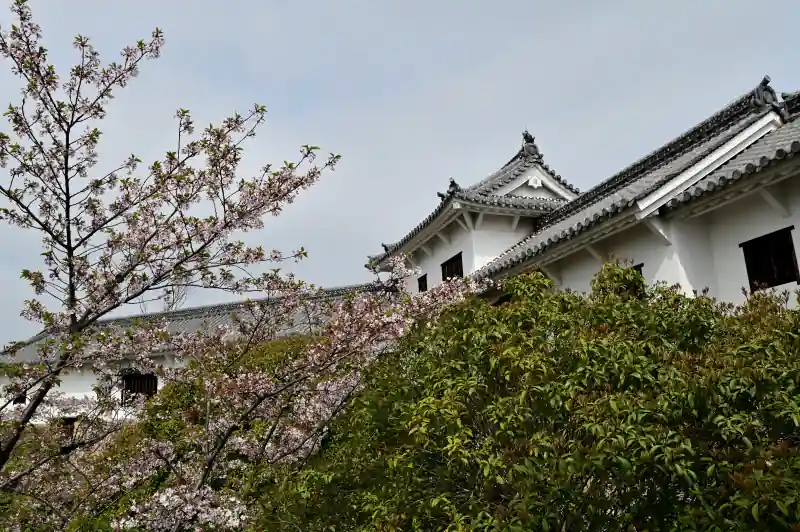
Yo-no-Watari Yagura is a corridor turret in Nishi-no-Maru, combining residential space and defensive stronghold as part of the complex surrounding the Nishi-no-Maru Palace, where Senhime resided after her second marriage. It is structurally integrated with Nu-no-Yagura and Ka-no-Watari Yagura, forming part of the Nishi-no-Maru Nagatsubone (Hyakken Rōka). Inside were rooms used by court ladies, along with defensive features such as loopholes and stone-dropping chutes. As of this writing, the interior is not open to the public; access may change over time.
| Year built | Early 17th century (Edo period, Honda era from 1617) |
|---|---|
| Builder | Honda family (Honda Tadamasa / Honda Tadatoki) |
| Structure / features | A connecting corridor turret within Nishi-no-Maru, part of the Hyakken Rōka system. |
| Cultural property status | Important Cultural Property (designated 1931) |
Access: Approx. 1-minute walk (20 m) from Nu-no-Yagura (Turret Nu)
Suggested time: ~10 min (exterior only) / ~30 min for the full West Bailey
Nishi-no-Maru Nagatsubone (Hyakken Rōka) 🎥 360°
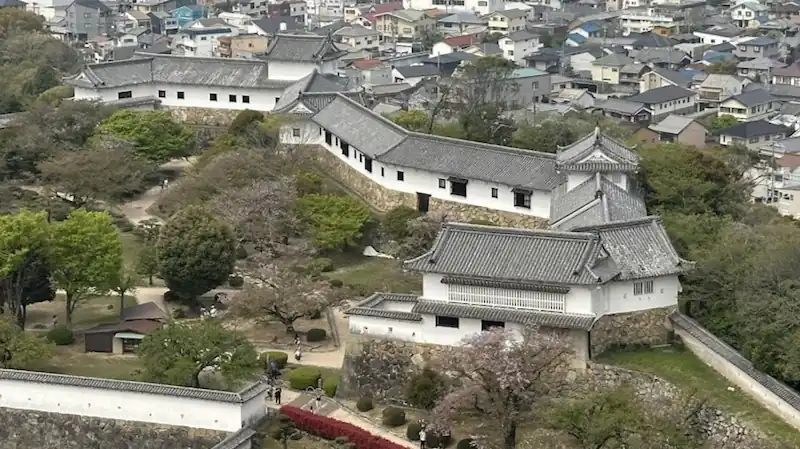
The Nishi-no-Maru Nagatsubone, also known as the Hyakken Rōka (“100 Ken Corridor”), is one of the most iconic architectural features of Himeji Castle. Stretching approximately 240 meters, it runs straight through Nishi-no-Maru, connecting various turrets and housing a series of private rooms (tsubone) for the court ladies who served Princess Sen (Senhime) — sister of the third shogun, Tokugawa Iemitsu, and wife of Honda Tadatoki, lord of Himeji Castle. Built when Senhime moved to Himeji Castle, the corridor housed these women’s-quarters rooms alongside genuine defensive features — lattice windows, sama (arrow and gun loopholes), and ishi-otoshi (stone-drop openings) — making it both a rare example of residential space for women within a military fortress and a functioning part of the castle’s defenses, including as a passage for rapid movement of guards in emergencies.
| Year built | 1618 |
|---|---|
| Builder | Honda Tadamasa |
| Structure / features | A 240-meter corridor connecting turrets and chambers, with tatami mats and shoji screens alongside lattice windows and defensive loopholes (sama). |
| Renovation history | Major restorations in the Showa era (1956–1964) and Heisei era (2009–2015). |
| Cultural property status | Important Cultural Property (designated 1931) |
Access: Approx. 1-minute walk (20 m) from Yo-no-Watari Yagura
Suggested time: Quick walk-through 10 min / full experience 25 min
Nishi-no-Maru Garden 🎥 360°
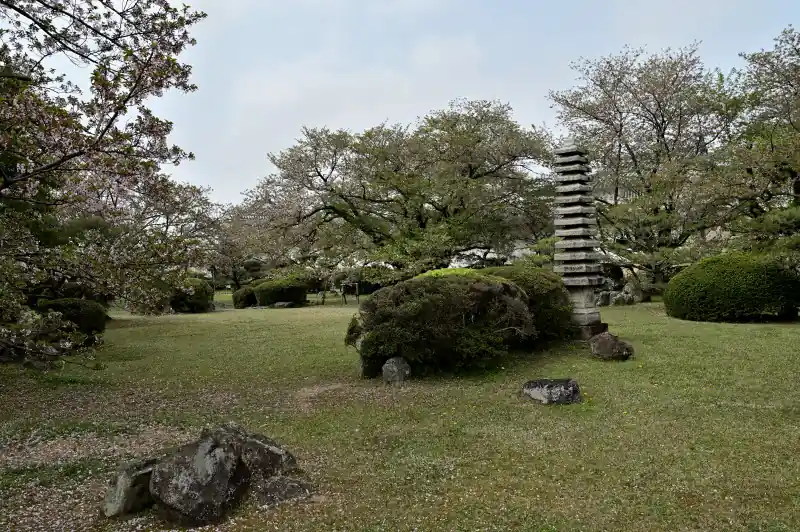
The Nishi-no-Maru Garden lies on the west side of the castle, where the lord’s wife once resided in the Nishi-no-Maru Palace. The garden is closely associated with Princess Sen (Senhime), daughter of Tokugawa Hidetada, who married Honda Tadatoki and spent a serene life here. Though the palace and its garden structures no longer remain, today’s well-maintained lawns, stone paths, and winding walkways are modern-era additions rather than survivals of the original Edo-period layout. Surviving watchtowers such as the Keshō Yagura, said to have been used by Senhime herself, still border the grounds. From here, visitors can view the castle keep from a diagonal rear angle — a hidden-gem perspective that’s less crowded and uniquely scenic.
| Year built | Unknown (likely during the Edo period) |
|---|---|
| Structure / features | A garden area within Nishi-no-Maru, known for its cherry trees and views of the main keep. |
| Current status | The present-day lawn and paths are a modern-era layout, not the original Edo-period garden; accessible to visitors. |
Access: Approx. 1-minute walk (36 m) from Nishi-no-Maru Nagatsubone (Hyakken Rōka)
Suggested time: Quick stop 15 min / in-depth visit 30 min (including the Hyakken Rōka and Senhime’s Path)
Ru-no-Yagura (Turret Ru)
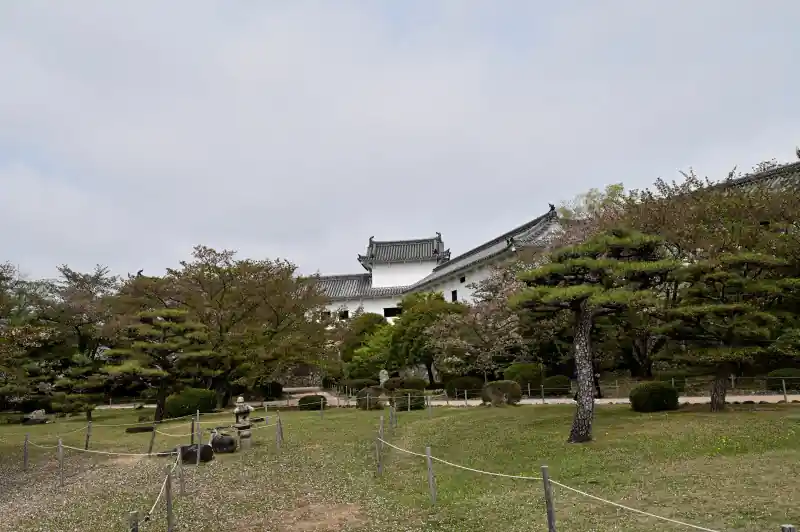
Ru-no-Yagura, on the northern side of Nishi-no-Maru, is a surviving turret connected to the Hyakken Rōka, positioned midway along the corridor to reinforce it structurally and serve as a defensive checkpoint. Though its interior is not open to the public, its exterior of white plaster atop solid stonework showcases the signature aesthetic of Himeji Castle. It was built as part of the Nishi-no-Maru complex developed after the Honda family became lords of Himeji in 1617, and it also stood alongside the living quarters of court women in Senhime’s entourage.
| Year built | Early 17th century (Edo period, Honda era from 1617) |
|---|---|
| Builder | Honda family (Honda Tadamasa / Honda Tadatoki) |
| Structure / features | A corner turret forming part of the castle’s defensive system, with wooden construction and white plaster walls. |
| Cultural property status | Important Cultural Property (designated 1931) |
Access: Approx. 1-minute walk (30 m) from Nishi-no-Maru Garden
Suggested time: Quick stop 5 min / in-depth visit 10 min
Wo-no-Yagura (Turret Wo)
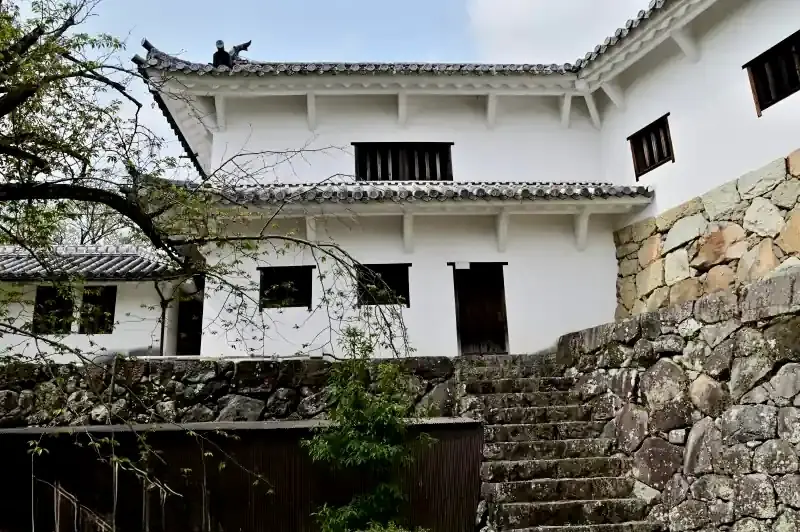
Wo-no-Yagura, at the northwestern edge of Nishi-no-Maru, is one of the original surviving turrets of Himeji Castle, playing a critical role in defending the outer western perimeter. Situated at the northern end of the Hyakken Rōka, it functioned as both a lookout and frontline defense structure, offering sweeping views of the surrounding terrain. The turret was not part of Hideyoshi’s original construction; it was added as part of the Nishi-no-Maru complex developed after the Honda family became lords of Himeji in 1617.
| Year built | Early 17th century (Edo period, Honda era from 1617) |
|---|---|
| Builder | Honda family (Honda Tadamasa / Honda Tadatoki) |
| Structure / features | A turret within the castle complex, situated at the northern terminus of the Hyakken Rōka. |
| Cultural property status | Important Cultural Property (designated 1931) |
Access: Approx. 1-minute walk (5 m) from Ru-no-Yagura (Turret Ru)
Suggested time: Quick stop 5 min / in-depth visit 15 min
Re-no-Watari Yagura
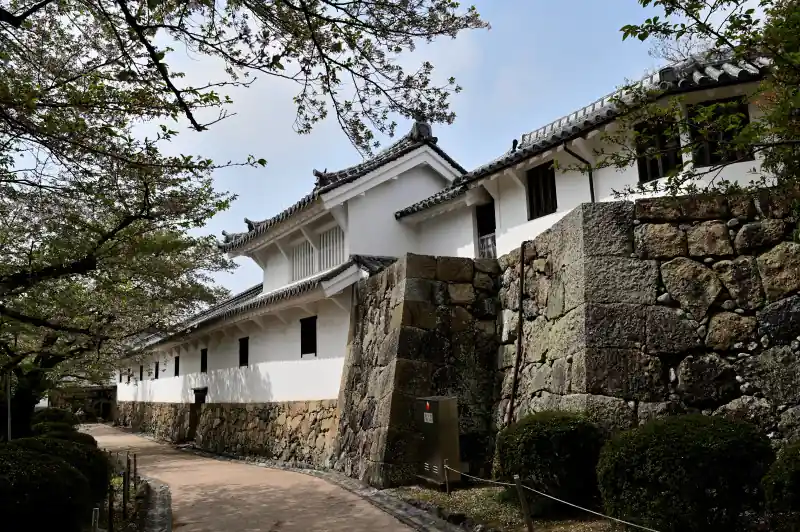
Among the interconnected turrets of Himeji Castle, Re-no-Watari Yagura stands out as a structure where architectural elegance and military ingenuity converge. It forms part of the Nishi-no-Maru Nagatsubone (Hyakken Rōka) and was built up as part of the Nishi-no-Maru complex developed after Honda Tadamasa became lord of Himeji in 1617. Shaped like the Japanese character “レ” (re), it connects neighboring turrets along the corridor, with narrow loopholes, latticed windows, steep stairways, and zigzagging corridors reflecting Edo-period castle defensive design. The interior, specially opened to the public in recent years, features restored sliding screens and matchlock gun displays.
| Year built | Early 17th century (Edo period, Honda era from 1617) |
|---|---|
| Builder | Honda family (Honda Tadamasa / Honda Tadatoki) |
| Structure / features | A connecting corridor turret within the castle complex. |
| Cultural property status | Important Cultural Property (designated 1931) |
Access: Approx. 1-minute walk (60 m) from Wo-no-Yagura (Turret Wo)
Suggested time: ~15 min for a quick highlight / ~45 min for a deeper visit including adjacent keeps
- Nishi-no-Maru South Gate Ruins
- Ka-no-Yagura Turret
- Wa-no-Yagura Turret
- Keshō Yagura (Makeup Turret)
- Ruins of the Nishi-no-Maru North Gate
- Nu-no-Yagura (Turret Nu)
- Yo-no-Watari Yagura
- Nishi-no-Maru Nagatsubone (Hyakken Rōka) 🎥 360°
- Nishi-no-Maru Garden 🎥 360°
- Ru-no-Yagura (Turret Ru)
- Wo-no-Yagura (Turret Wo)
- Re-no-Watari Yagura
- FAQ
- More on Himeji Castle
- Return to the Warlord Page
FAQ
Princess Sen was the granddaughter of Tokugawa Ieyasu. After the fall of Osaka Castle in 1615, she married Honda Tadatoki, lord of Himeji Castle, and lived in Nishi-no-Maru, which was designed as her residence.
It is a roughly 240-meter covered corridor, also called the Nishi-no-Maru Nagatsubone, that connects the turrets of Nishi-no-Maru and once housed private rooms for the court ladies who served Princess Sen.
Walking through all 12 spots takes roughly 45–60 minutes, including a walk along the Hyakken Rōka corridor to the Keshō Yagura.
More on Himeji Castle
Return to the Warlord Page
☕ Support This Site
Following the Shogun is built on original fieldwork and on-site research.
If you found this guide useful, your support helps keep it going.

You can also support via QR code


comment