


Nagakute Battlefield: What Remains of the 1584 Battle, and How to Visit from Nagoya
In 1584, the armies of Toyotomi Hideyoshi and Tokugawa Ieyasu fought the campaign known as the Battle of Komaki and Nagakute. The main battleground east of Nagoya is now a National Historic Site, and a museum opened beside it in April 2026. Here is what survives, and how to see it in half a day.
Is Nagakute Battlefield worth visiting?
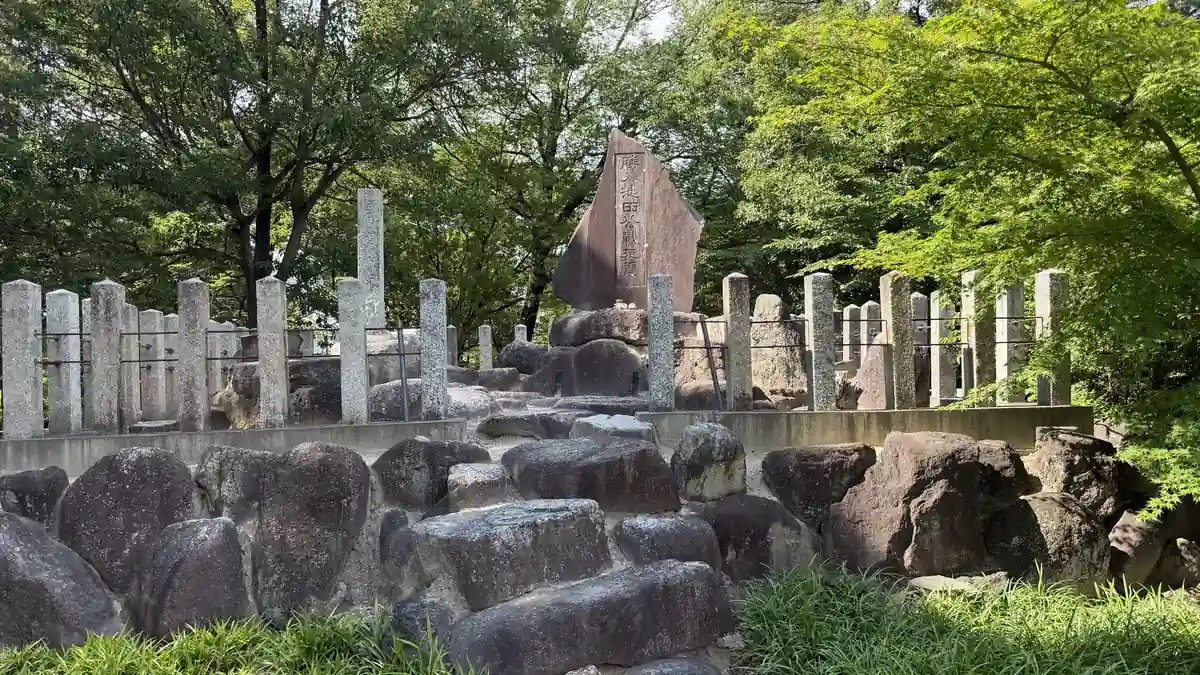
Be clear about what this site is before you go. Nagakute is not a castle. There is no keep, no gate and no stone wall. What survives on the battlefield itself is a landscaped park, three burial mounds marking where commanders are said to have fallen, stone monuments erected centuries after the battle, and the rise and fall of the ground itself.
What changed in 2026 is that you can now understand the site before you walk it. The Nagakute Battlefield Memorial Museum opened in April 2026 directly beside the historic site, and its theatre and projection-mapping displays lay out who moved where. Walk out of the building with that in your head and the park's gentle slopes stop looking like landscaping. The ground here is genuinely uneven, and that matters for a battle fought across it.
Worth the trip if you want to follow how the 1584 campaign actually unfolded, you are watching the 2026 NHK drama "Toyotomi Kyodai!", you want to stand where Ikeda Tsuneoki and Mori Nagayoshi were killed, or you have half a day spare in Nagoya.
Probably not for you if you are here for castle architecture, or you need a full day out with children. The museum's hands-on displays work well for families, but outdoors this is a memorial park, not a playground.
The other thing that stays with you is how carefully the site is kept. The mounds are not overgrown, the paths are maintained, and the signage is current. This is a place the local community clearly looks after. Nagakute sits about an hour from Nagoya Station by public transport, and the museum plus the park takes roughly ninety minutes, which makes it a realistic half-day trip from the city rather than a full-day expedition.
Start at the museum, not the park
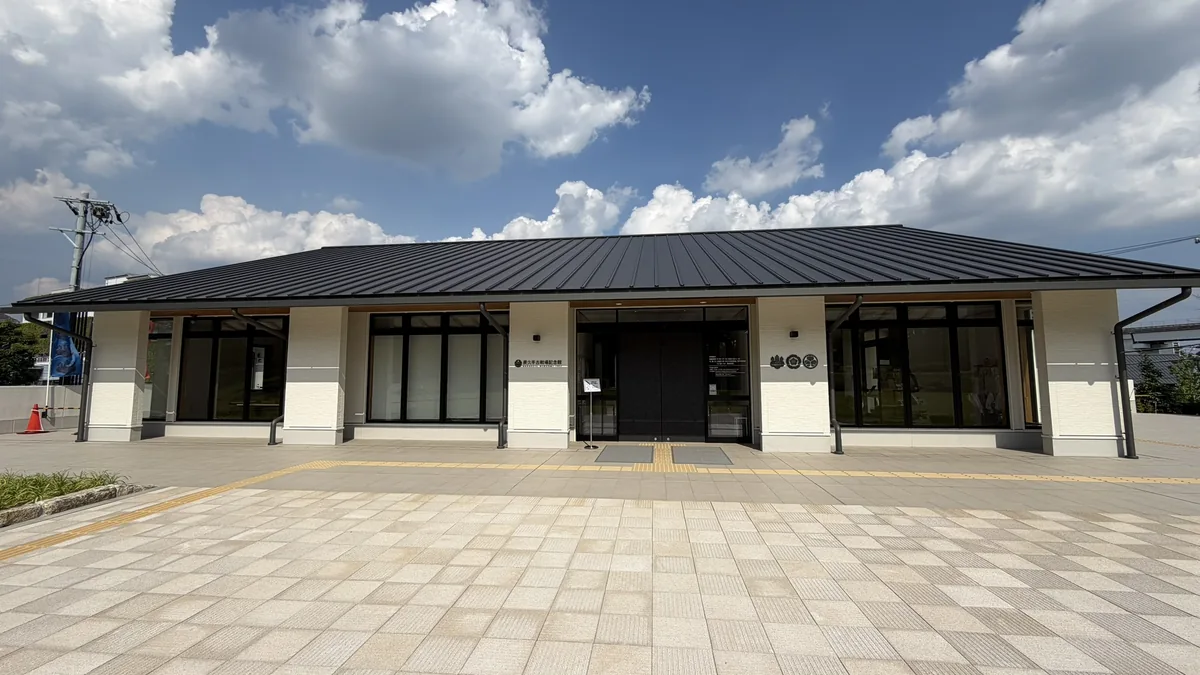
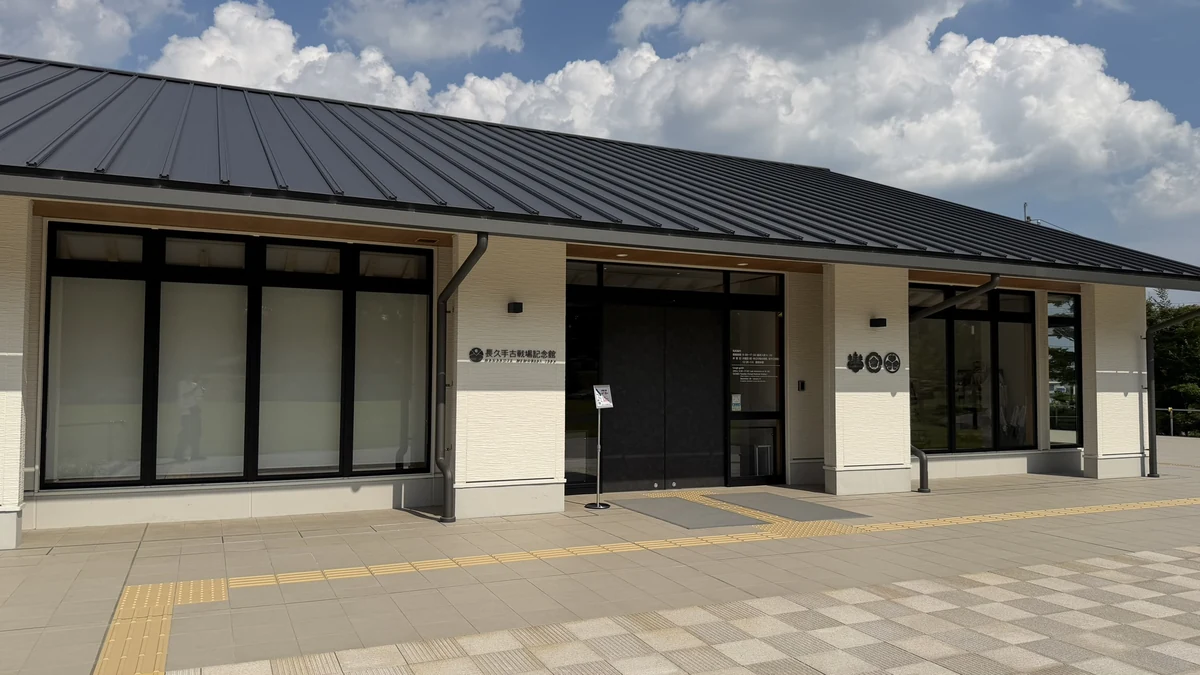
The Nagakute Battlefield Memorial Museum (長久手古戦場記念館) opened on 22 April 2026 inside the battlefield park. If you find older articles referring to the Nagakute City local history room, that facility closed on 30 November 2025 and its battle-related material moved here, so do not plan around it.
Go into the museum first. Two practical reasons: the reception desk hands out a route map of the historic sites scattered across the city, and the displays give you the shape of the battle before you are standing in front of a stone monument wondering what you are looking at. The ground floor is free to enter and has a large floor map showing where each site sits. The paid exhibition rooms are one level below.
Nagakute Battlefield Memorial Museum
Where the battle becomes legible before you walk the ground
A three-screen theatre runs the campaign as a story rather than a lecture, carrying you from the assassination of Oda Nobunaga in 1582 through the fighting at Nagakute to the peace that followed, with the commanders speaking their own parts. The fall of Inuyama Castle, the clash at Haguro, the long stand-off at Komaki and then the four separate engagements of 9 April all arrive in sequence, which is exactly what maps and timelines fail to convey.
The part that stays with you is a second film in which Oda Nobukatsu, Tokugawa Ieyasu and Hashiba Hideyoshi each look back on the battle in the first person. The same day is told three different ways: Ieyasu takes pride in how fast his army moved, while Hideyoshi is still preparing to destroy him afterwards. Adult and children's versions of the main film are shown, and the visuals carry the movement even if your Japanese is limited.
Beside it, a projection-mapping display throws the advance of both armies across a physical terrain model in chronological order, which is the clearest way to see the height differences around Nagakute.
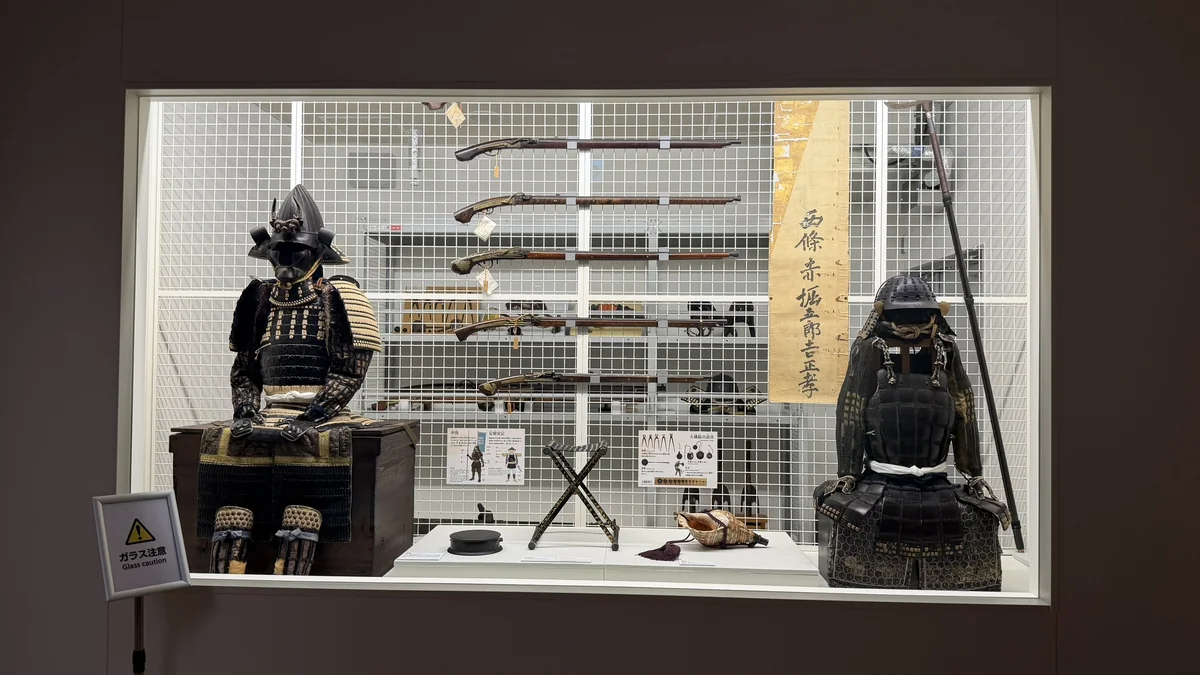
The exhibition rooms hold a reconstructed copy of the six-panel folding screen depicting the Battle of Nagakute, whose original belongs to the Tokugawa Art Museum in Nagoya, along with armour, matchlock guns and panels on each separate engagement. A glass-walled storage room lets you look into the collection store itself.
- The theatre — on a June 2026 visit, a three-screen film told the campaign as a story, alongside a second film in which three of the commanders look back on the battle in the first person. Programming changes over time, so check the museum's website before you go.
- Projection mapping — both armies advancing across a terrain model, which is the clearest way to grasp the height differences around Nagakute.
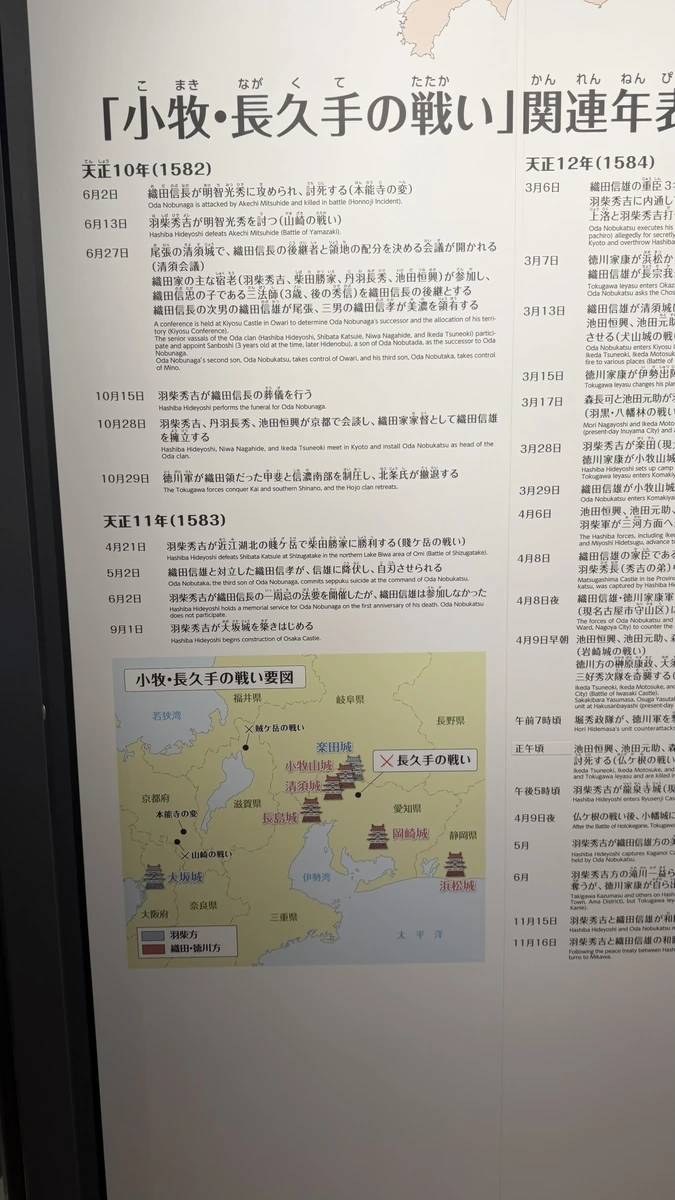
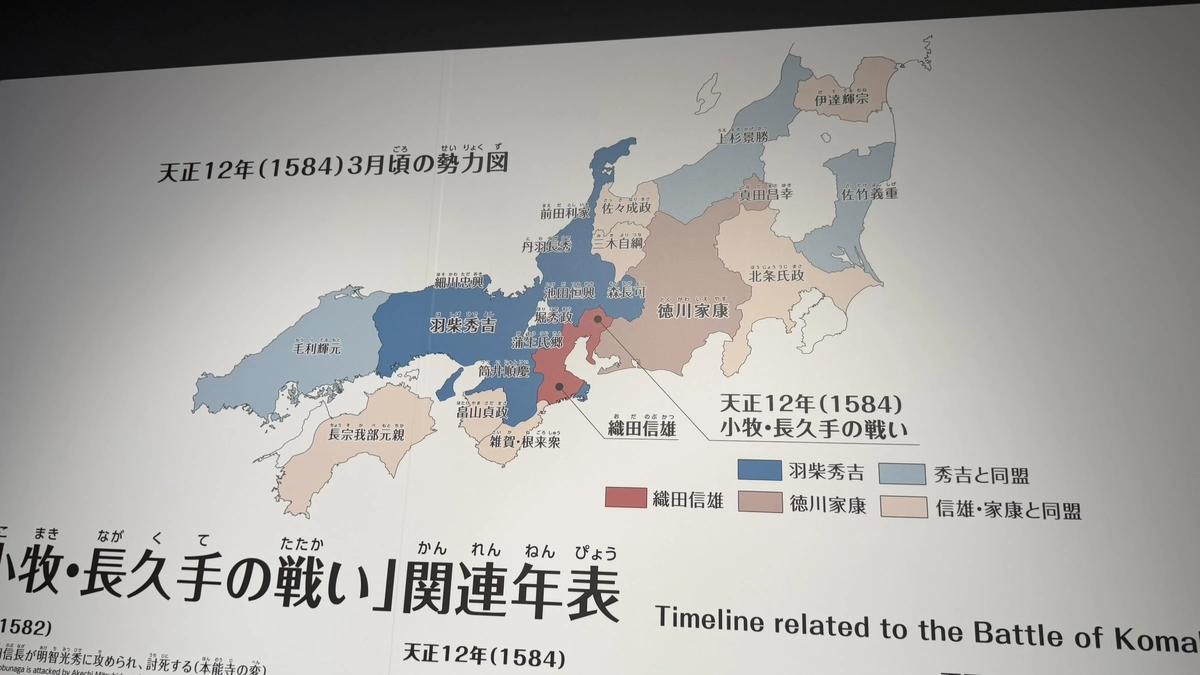
- Timeline and territorial maps — events around 1584, and the territories held by Hideyoshi, Ieyasu and Oda Nobukatsu, colour-coded.
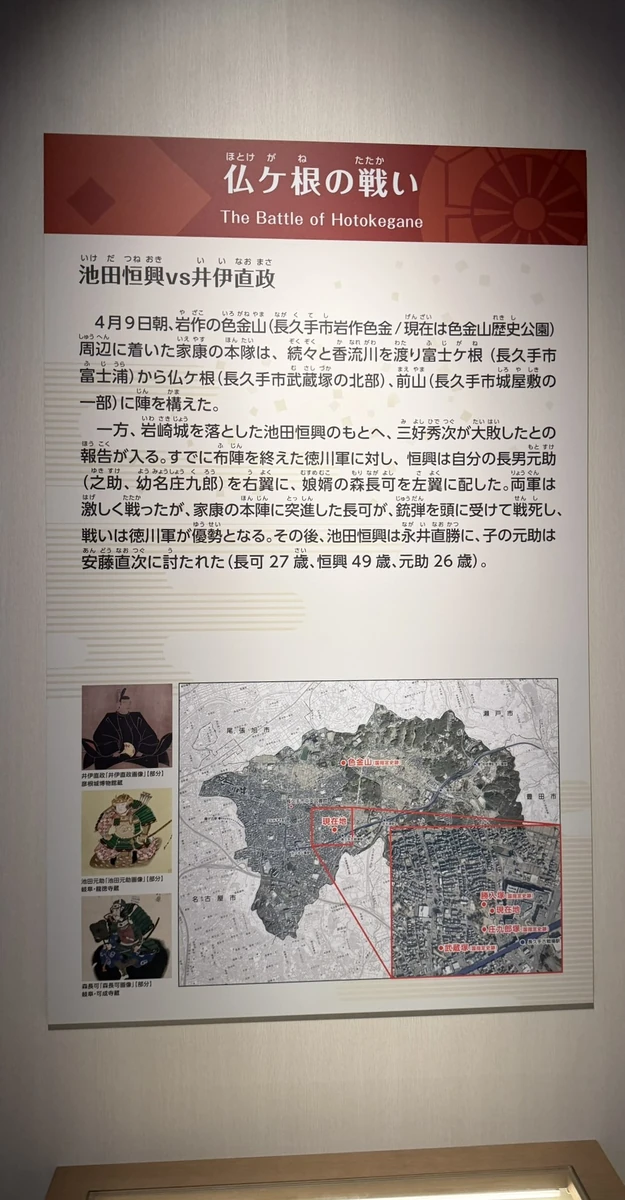
- Panels on each engagement — Hotokegane, Iwasaki Castle, Hakusanrin and Hinokigane are explained separately, which makes clear that "Nagakute" was not a single clash.
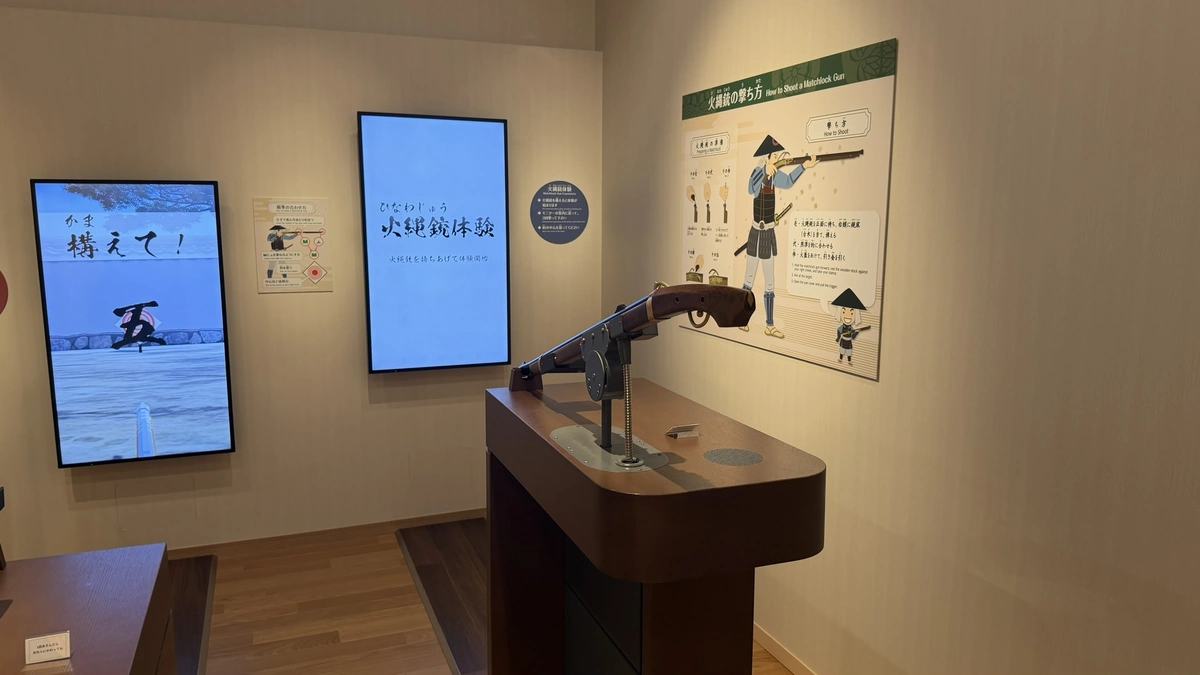
- Digital matchlock experience — a replica gun paired with a screen. Aiming it is genuinely difficult, and it holds the attention of adults, not just children.
Tap any photo to enlarge
Time needed — about 40 minutes from entering to leaving, on a June 2026 visit that included both the theatre film and the projection mapping, plus a walk through the exhibition rooms. Allow longer if you plan to browse the shop or use the free-access floor.
| Address | 204 Musashizuka, Nagakute City, Aichi 480-1121 (inside the battlefield park) |
|---|---|
| Hours | 9:00–17:00 (last entry to the exhibition rooms 16:30) |
| Closed | Tuesdays; if Tuesday is a public holiday the museum opens and closes the next weekday instead. Also 28 December – 4 January, plus occasional closures. |
| Admission | ¥400 for high school age and above during the permanent exhibition; ¥600 during special exhibitions. Free for junior high school age and below. |
| Access | 3 minutes on foot northwest of Nagakute Kosenjo Station (L04) on the Linimo line |
The museum is closed on 17 and 18 September while exhibits are changed over.
From 19 September to 29 November 2026, a special exhibition, "The Mori Brothers: A Family Who Lived Through the Sengoku Era", runs alongside the permanent displays. Admission rises to ¥600 for high school age and above during this period.
The west car park within the battlefield park is reported closed for maintenance work. Public transport is the more reliable option.
Getting there from Nagoya
Nagakute is a city immediately east of Nagoya, in Aichi Prefecture, roughly between central Nagoya and Toyota. It is not a remote rural site: the battlefield sits in a suburban area with a shopping mall across the road from the park.
You reach it on the Linimo (リニモ), a short magnetic-levitation line officially called the Tobu Kyuryo Line. This is worth understanding before you travel. The Linimo is not operated by JR, so a Japan Rail Pass does not cover it, and neither does the Nagoya subway that gets you to the interchange. Buy tickets at the station. The same line also serves Ghibli Park and the Toyota Automobile Museum, so Nagakute combines easily with either.
Access
| Nearest station | Nagakute Kosenjo Station (長久手古戦場駅, L04) on the Linimo line — 3 minutes on foot northwest |
|---|---|
| From Nagoya Station | Higashiyama subway line to Fujigaoka (about 30 min), change to the Linimo (about 10 min), then 3 minutes on foot |
| By bus | Meitetsu Bus Center to Toyota Hakubutsukan-mae, about 70 min; get off at Nagakute Kosenjo-eki, then 3 minutes on foot |
| By car | 2.5 km east of Nagoya IC on the Tomei Expressway, or 1.1 km west of Nagakute IC on the Nagoya-Seto Road; turn north at the Kosenjo-minami intersection |
| Parking | Available at the museum, but limited, and the west car park is reported closed from September 2026 for maintenance. Public transport is the safer choice. |
Two of the three mounds are inside the park. The third, Musashizuka, is a short walk west in a residential area. Signage is good, but the streets look alike, so keep a map app open for that last stretch. With one, the walk presents no difficulty at all.
The walking route
On the June 2026 visit the park came first and the museum second. Doing it in that order was a mistake worth passing on: the museum is what makes the mounds legible, and it is also where the route map is handed out. The sequence below is the corrected one.
In June 2026, walking from the park entrance through to finishing at Musashizuka took about 25 minutes, with about 40 minutes inside the museum. Ninety minutes covers the whole sequence comfortably, including the walk between them. With more time, the Ieyasu-related hills east of here add the opposing commander's point of view.
What actually happened at Nagakute
Some background, because the battle only makes sense as the aftermath of something else. In 1582, the warlord Oda Nobunaga — the man who had come closest to unifying Japan — was killed together with his heir Nobutada in the Honnoji Incident, a revolt by one of his own generals. His successors then turned on each other. Two figures came out on top: Hashiba Hideyoshi, one of Nobunaga's senior retainers, who had built his power base around Kyoto and who is better known by the surname he later took, Toyotomi; and Tokugawa Ieyasu, who had settled with the Hojo clan in the east and now held five provinces including Mikawa, roughly the eastern half of present-day Aichi Prefecture.
In 1584, Nobunaga's second son Oda Nobukatsu objected to Hideyoshi positioning himself as his father's successor, and asked Ieyasu for support. That is the campaign known as the Battle of Komaki and Nagakute, fought across what is now western and central Aichi Prefecture.
From the opening moves to the stand-off at Komaki
Fighting opened when Hideyoshi's forces took Inuyama Castle, held by one of Nobukatsu's retainers. At Haguro shortly afterwards, Ieyasu's army beat a force under Mori Nagayoshi. Hideyoshi then brought up his main army and set his headquarters at Gakuden Castle; Ieyasu occupied Komakiyama Castle, a hilltop fortress built by Nobunaga on an 86-metre hill about six kilometres to the south. With both commanders dug in and watching each other, the front stopped moving.
The flanking march, and four battles in one morning
To break the deadlock, Hideyoshi's side tried a flanking march — nakairi in Japanese — aimed at Ieyasu's home base in Mikawa. Late on 6 April 1584, a force of some 20,000 under Miyoshi Hidetsugu set out towards Okazaki. Ieyasu learned of the move and turned to pursue. On 9 April, four distinct engagements followed one another around Nagakute.
| Iwasaki Castle | The Ikeda contingent, hurrying towards Mikawa, was attacked by the defenders of Iwasaki Castle under Niwa Ujishige. Roughly 6,000 against a little over 200; the castle fell quickly. |
|---|---|
| Hakusanrin | At the rear of the strung-out column, Miyoshi Hidetsugu's troops were eating breakfast when Sakakibara Yasumasa's force hit them from behind. Hidetsugu lost his horse in the rout and came close to being killed. |
| Hinokigane | Hearing of the defeat, Hori Hidemasa took position on the Hinokigane rise and met the elated Tokugawa troops with massed matchlock fire, getting the better of the exchange. Then Ieyasu's main body reached Mihatayama and raised its gold fan standard, and Hori pulled his men out immediately. |
| Hotokegane | The decisive action of the day, fought across what is now the battlefield park. Ikeda Tsuneoki, his son Motosuke and Mori Nagayoshi were all killed here. |
The relationship between Mihatayama and Hinokigane is worth pausing on. Hori Hidemasa was winning his engagement, and withdrew the moment he saw whose standard had appeared on the hill. Elevation, and who could be seen from where, decided that call. Look at the two locations on a map after seeing the museum displays and the decision reads as terrain rather than as a line in a chronicle.
Hotokegane: what happened where the park is now
The museum's theatre film sets out the deployment in detail. Ikeda Tsuneoki held the centre with around 2,000 men, his son Motosuke the right wing with around 4,000, and Mori Nagayoshi the left with around 3,000. Facing them, Ieyasu and Nobukatsu commanded a main body of around 6,300, with Ii Naomasa's force of around 3,000 at Hotokegane itself. Roughly 18,000 men in total converged on this ground.
Fighting began around 10 in the morning. Ii Naomasa's troops fell on Ikeda Tsuneoki's centre, and Mori Nagayoshi was killed outright by a bullet through the forehead at the age of 27. Nagai Naokatsu then took Ikeda Tsuneoki, who was 49. Motosuke, the eldest son, was killed at 26. By early afternoon it was over. The three mounds standing in and beside the park today are the result of those few hours.
How the war actually ended
Ieyasu won at Nagakute and it settled nothing. The armies returned to their stand-off, with further fighting spreading to Kanie and elsewhere. What ended the war was a negotiation rather than a battle: in November 1584, Hideyoshi made a separate peace with Oda Nobukatsu. Ieyasu had entered the war to defend Nobukatsu and the Oda house, and that justification had just been signed away. He withdrew.
In 1585 Hideyoshi was appointed imperial regent, and the structure that had placed the Oda house at the top collapsed in practice. He is said to have gone on preparing a campaign against Ieyasu even after the peace, and to have abandoned it when the Tensho earthquake struck in January 1586. Ieyasu submitted later that year, travelling to meet Hideyoshi in person — but only after Hideyoshi had married his own sister to him and sent his mother east as a hostage.
So Nagakute is a battle Ieyasu won without changing the outcome of the war. What survived was the fact of it: Ieyasu had not lost to Hideyoshi. Sixteen years later he won at Sekigahara, and in 1603 he founded the shogunate that governed Japan for two and a half centuries. The museum's film closes on exactly that point.
The displays separate out each of these engagements, and the park and the three mounds belong to the last of them. According to the museum's panel, it was at Hotokegane that Ikeda Tsuneoki's force clashed with the troops of Ii Naomasa, and where the two Ikeda and Mori Nagayoshi were killed.
What remains today
One distinction to carry with you around the site. The stone monuments on the mounds were raised from the Edo period onwards, centuries after the fighting — they commemorate, they are not battlefield remains. The mounds mark places where commanders are traditionally said to have died. Read them as memorials on remembered ground rather than as surviving structures, and the site reads accurately.
Battlefield Park (Kosenjo Koen)
The main battleground, landscaped but not levelled
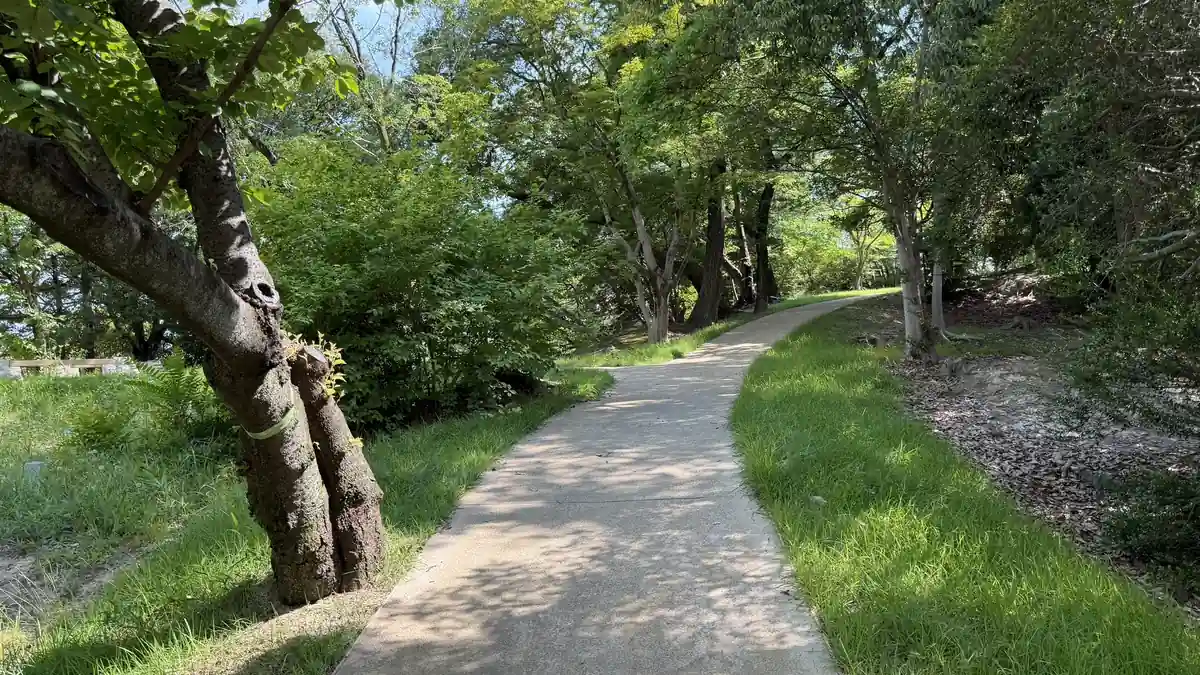
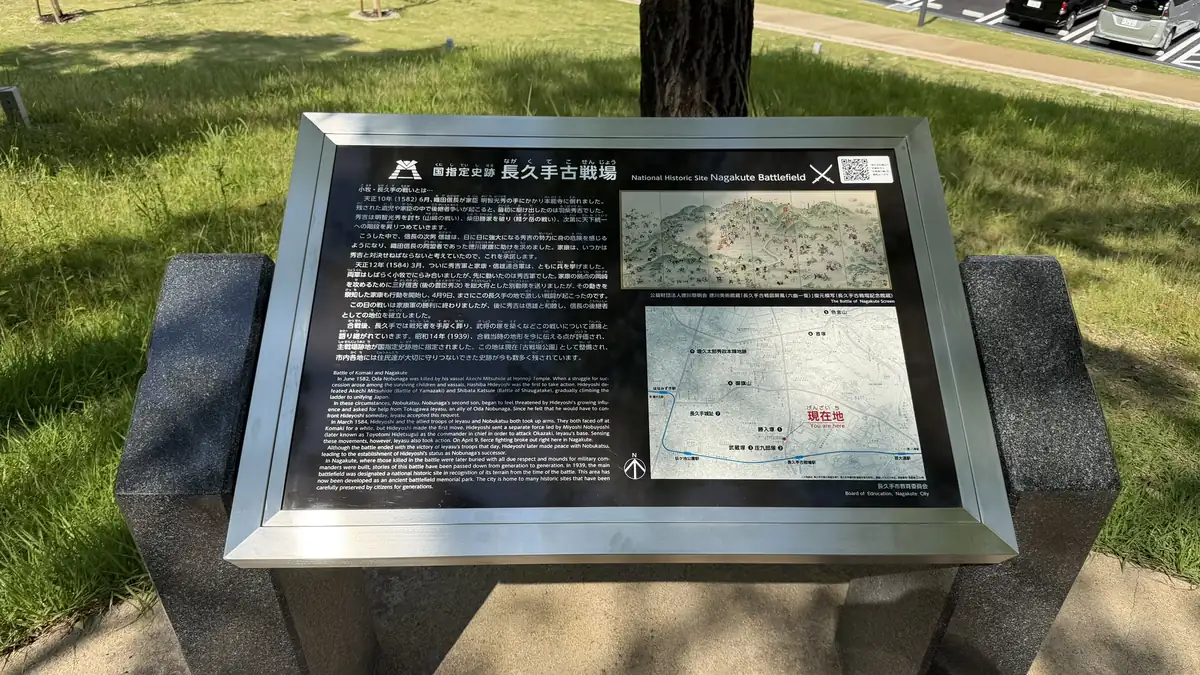
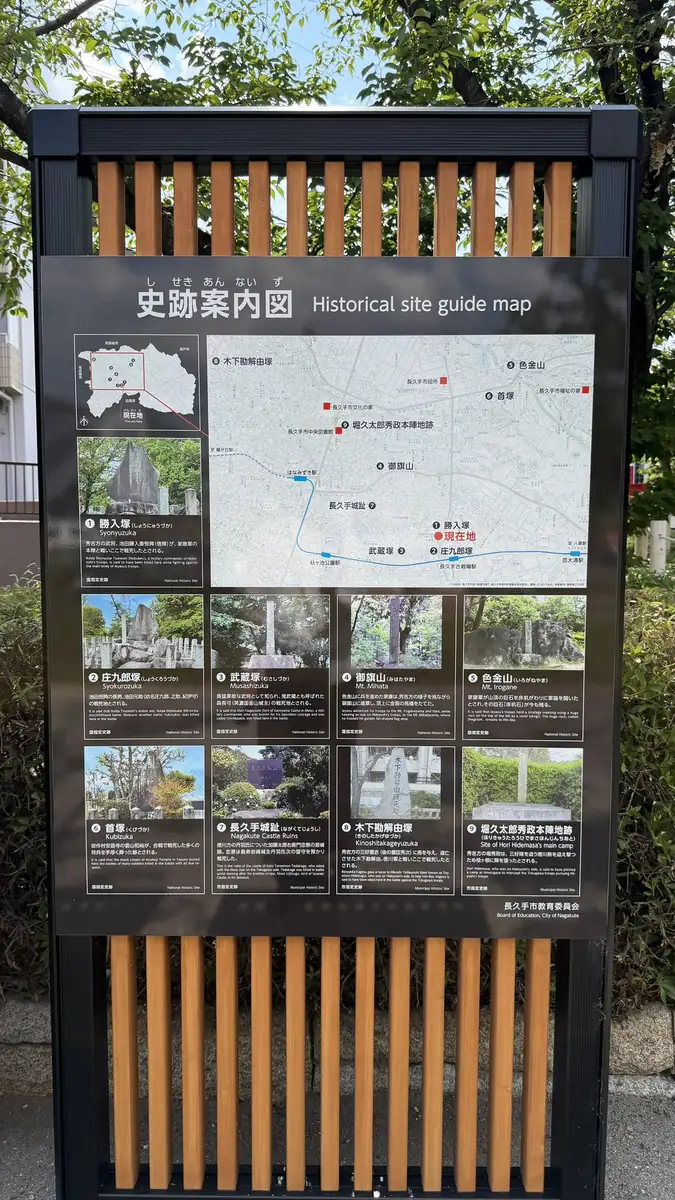
This park covers the core of the National Historic Site. Two of the three mounds, Shonyuzuka and Shokurozuka, stand within it, alongside lawns, benches and interpretive boards. The important thing is underfoot: the ground is not flat. Paths climb and drop, trees have been left standing, and even surrounded by housing you can read the shape of the terrain the armies fought across.
It is also strikingly well kept. Nothing is overgrown, the paths are in good condition, and the signage is current rather than faded. That impression — of a site the community actively cares for — lasts the whole way round.
- An interpretive board for the National Historic Site, with the course of the battle shown on a map
- Shonyuzuka and Shokurozuka, each with its own explanatory board
- A guide map to the wider battlefield sites, including those outside the park such as Musashizuka
- Lawns, benches, and posts carrying a plan of the park
Tap any photo to enlarge
Time needed — about 15 minutes to see both mounds inside the park and loop back. Adding Musashizuka brought the total to about 25 minutes in June 2026.
Shonyuzuka
Where Ikeda Tsuneoki is said to have been killed
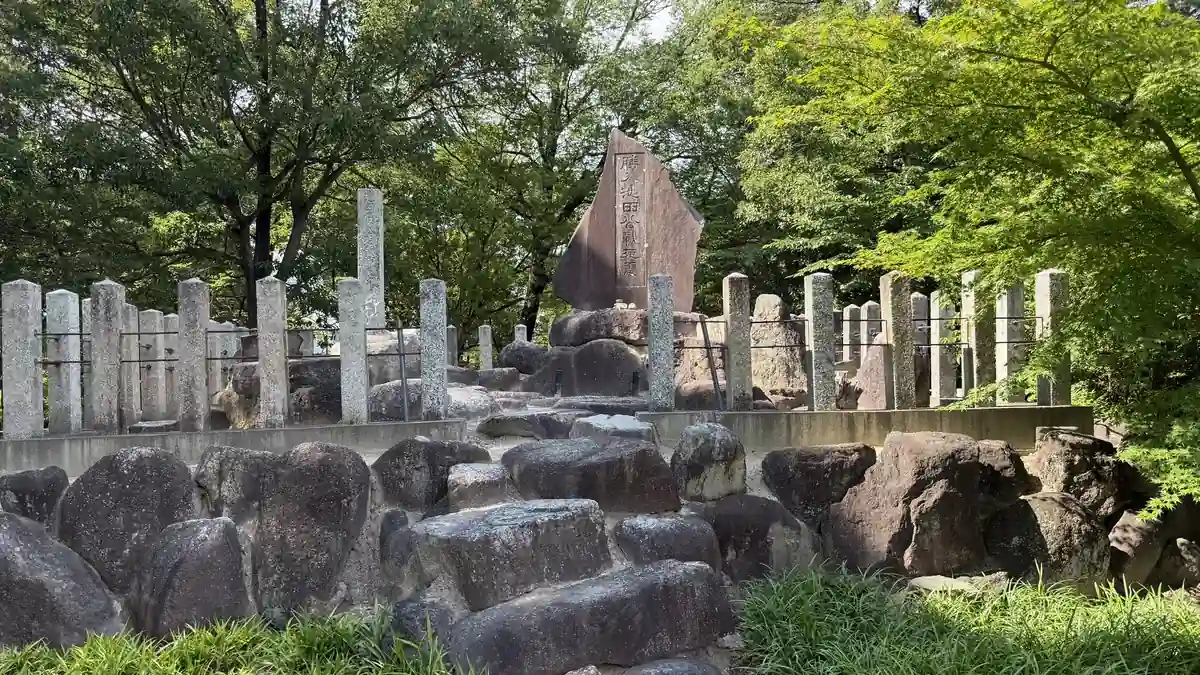
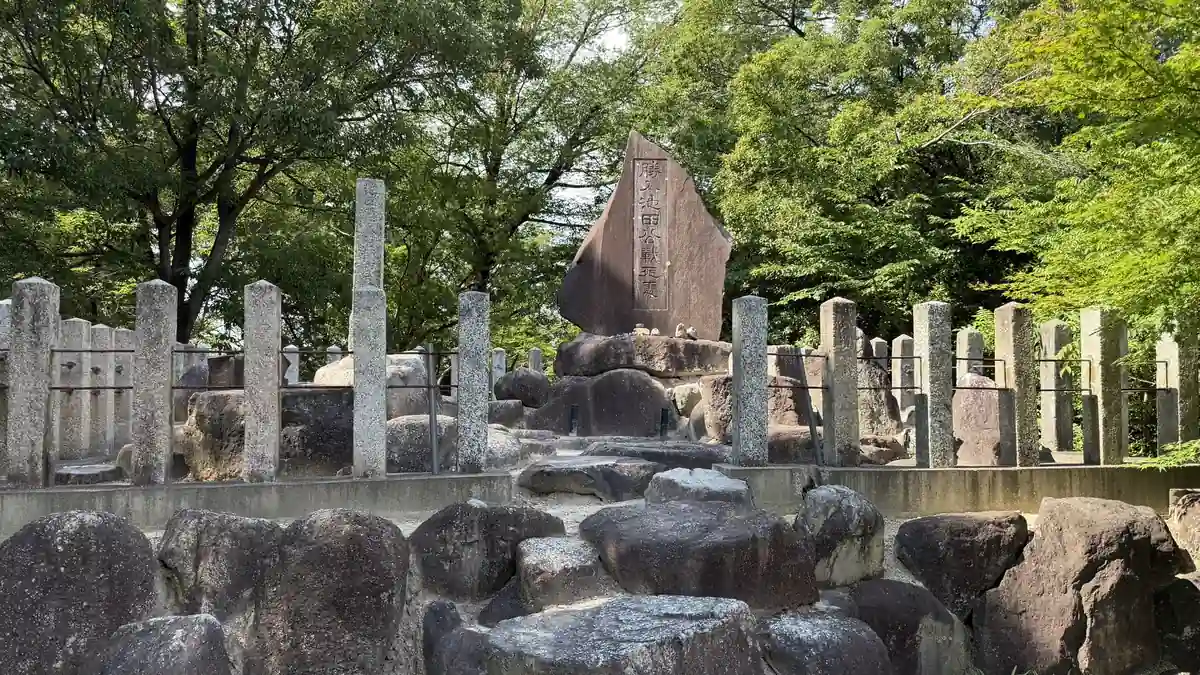
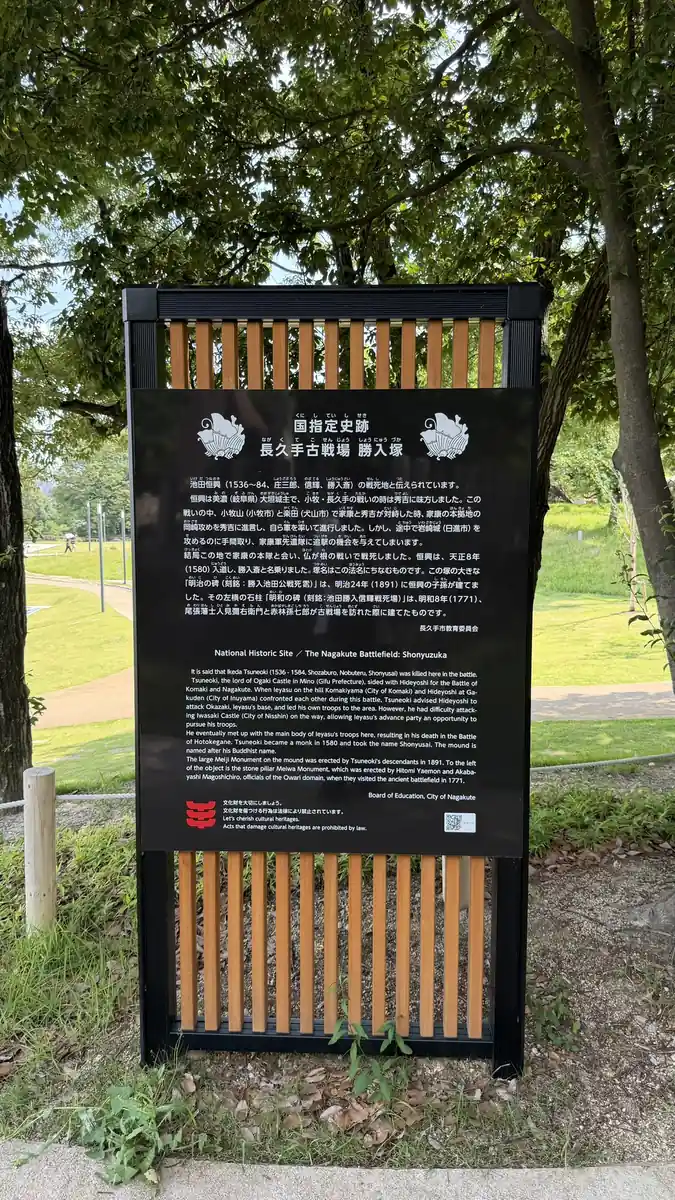
Shonyuzuka (勝入塚) marks the spot where Ikeda Tsuneoki, a commander on Hideyoshi's side, is said to have been killed. "Shonyu" was the name he took after entering religious life, which is why the mound carries it rather than his given name. A monument at the centre is inscribed with his name and the fact of his death in battle; stonework and a stone fence enclose the mound.
The monuments here date from the Edo period onwards, not from 1584. It is a quiet, tree-shaded corner a few steps up from the park path, and a signboard at the entrance means you will not walk past it.
Tap any photo to enlarge
Shokurozuka
The son's mound, a short walk from the father's
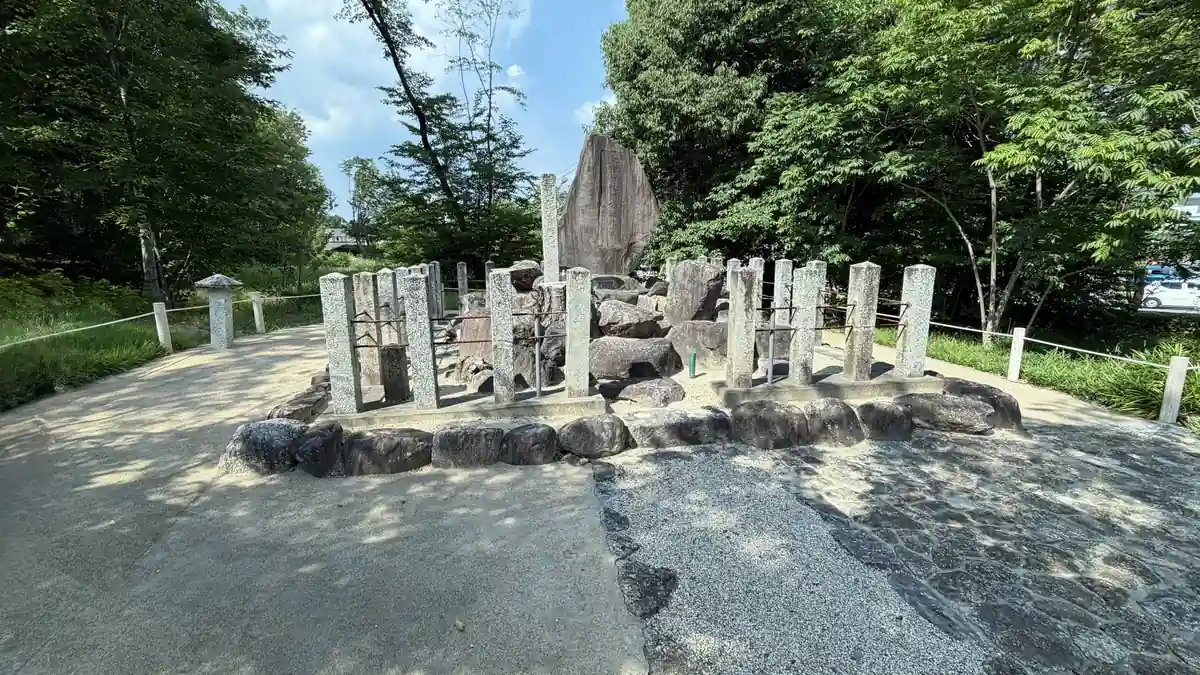
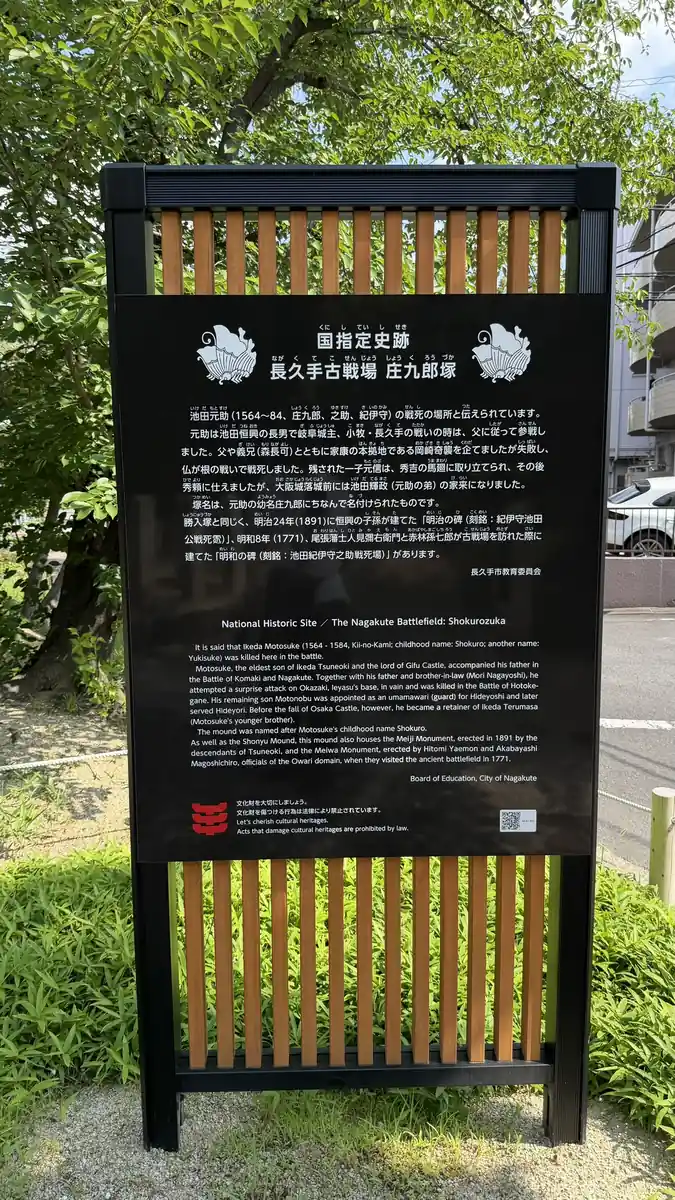
Shokurozuka (庄九郎塚) marks where Ikeda Motosuke, eldest son of Ikeda Tsuneoki, is said to have been killed. Motosuke was also known as Shokuro, hence the name. The construction closely mirrors Shonyuzuka: a monument set on stonework, enclosed by a stone fence, with a paved approach leading in from the park path and an explanatory board at the entrance.
It is a few minutes' walk from the father's mound, within the same park. Two mounds for the same family, on the same ground, a few minutes apart: that on its own tells you most of what happened here.
Musashizuka
Mori Nagayoshi's mound, outside the park in a residential street
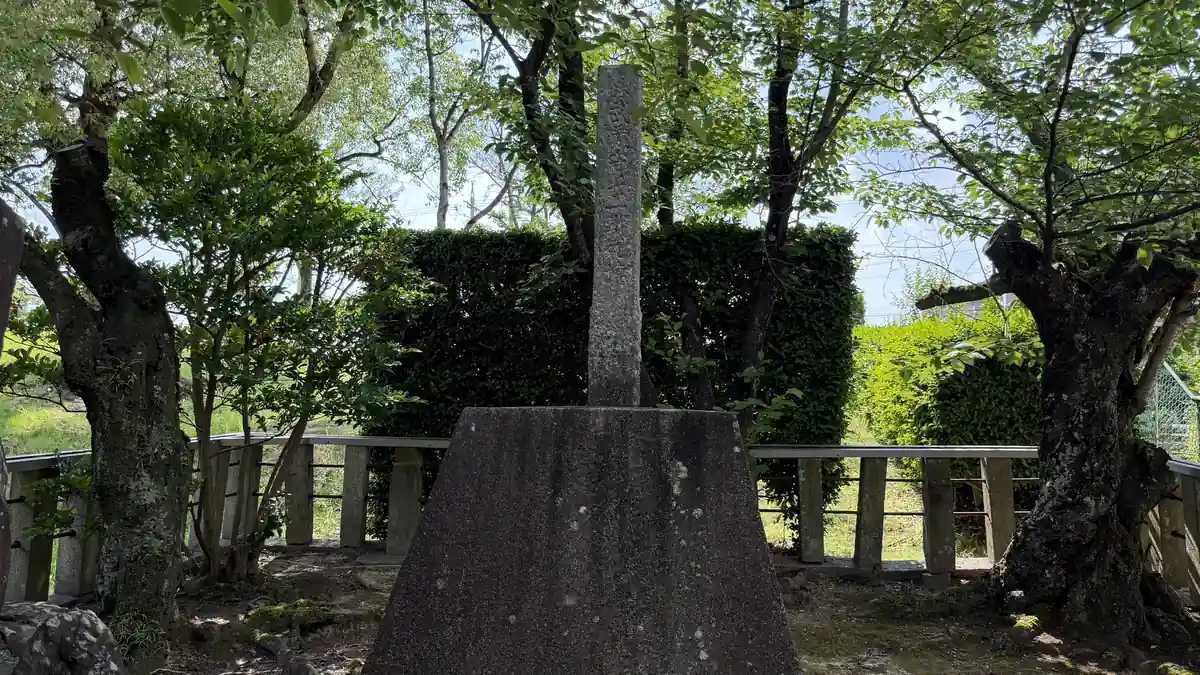
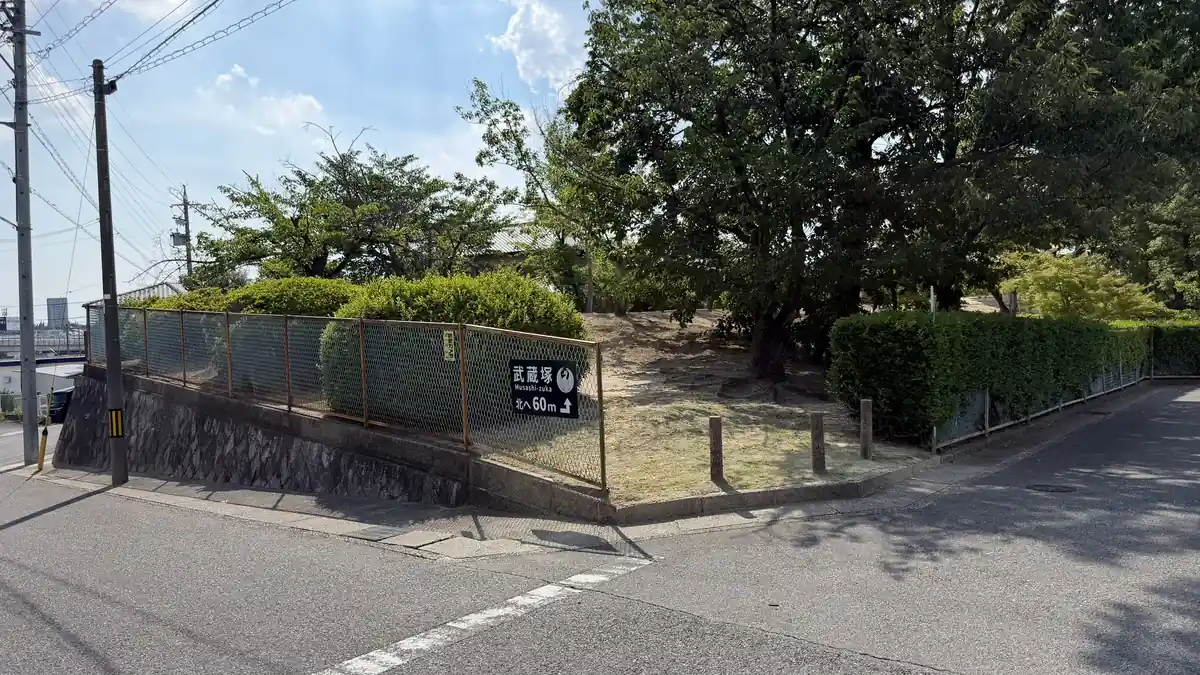
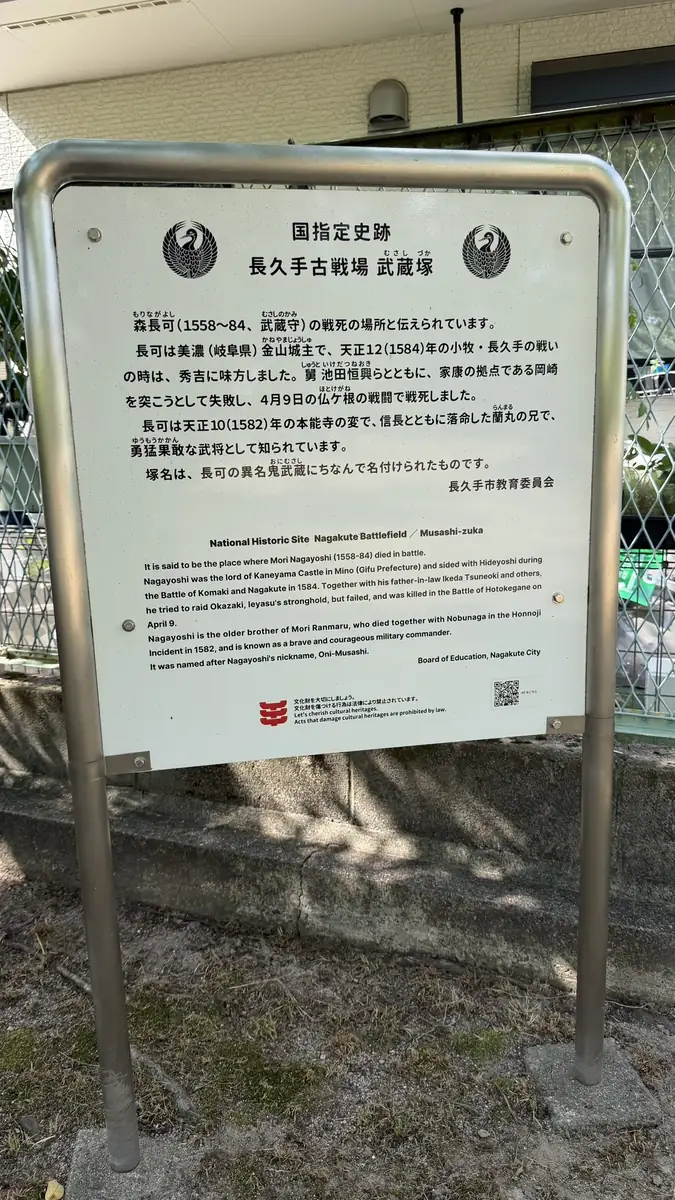
Musashizuka (武蔵塚) commemorates Mori Nagayoshi, another commander on Hideyoshi's side, who held the court title Musashi-no-kami — hence the name. It lies west of the battlefield park, among houses, reached from a roadside entrance signed "武蔵塚 50m". From there a short climb leads up to a wooded knoll.
Through a stone gateway stand the main monument and a second, tablet-shaped stone. The mound sits in the middle of a built-up area, but the trees and the slope around it have been left intact, and you can feel the ground change as you climb.
- Look for the roadside sign reading 武蔵塚 50m
- At the entrance, a marker post reads 武蔵塚, with a path leading up to the wooded mound
- The guide board in the battlefield park also shows its position
Tap any photo to enlarge
Walking difficulty — an easy, level walk from the battlefield park on pavements and signalled crossings. The only complication is that the residential streets offer few landmarks, so use a map app for that stretch.
Other battle sites in Nagakute
Further sites connected to the battle are scattered across the city. Mihatayama, Iroganeyama and Kubizuka were not visited on this trip. The official historic-site guide places them on a separate route from Hotokegane, the one covering the park and the three mounds above — worth adding if you have time to spare. What follows is drawn from the museum's official guide rather than from firsthand observation, and notes on the ground conditions will be added after a return visit.
| Mihatayama | National Historic Site. Ieyasu is said to have raised his gold fan standard on the summit; presented as the point from which the Tokugawa side surveyed the field. |
|---|---|
| Iroganeyama | National Historic Site, now a history park. It holds the "shogi-ishi", a stone on which Ieyasu is said to have sat during a council of war. |
| Kubizuka | National Historic Site. Described as a mound where a priest of Ansho-ji Temple and local villagers gave rites to the dead of both sides alike. |
| Hori Hidemasa's camp site | A monument marking the field headquarters of Hori Hidemasa, a commander on Hideyoshi's side. It now stands in Hinokigane Park. |
| Nagakute Castle site | Said to be the residence of Kato Tadakage; the site fell out of use after his death. |
| Ansho-ji Temple | The temple connected with Kubizuka and with rites for the dead. |
| Kinoshita Kageyu's mound | A mound for the Kinoshita brothers, who are said to have given their horse to Miyoshi Hidetsugu during the rout at Hakusanrin and were killed covering his escape. A separate monument nearby marks where one of them fell. |
The official guide organises these into three routes: Hotokegane, Mihatayama and Iroganeyama. The park and the three mounds make up the Hotokegane route; the other two are separate. A guided walk covering the sites takes roughly two to two and a half hours, at ¥1,000 per group, booked at least two weeks ahead. Guiding is in Japanese.
There is also a free digital stamp rally covering 14 sites connected with the battle, launched on 21 April 2026 and run through a smartphone app called MEGURUWAY. It runs in rounds rather than continuously, so check the current dates with the Nagakute City tourism association before relying on it. The app content is in Japanese.
Legend, memorial, and what is gone
Sites around Nagakute fall into four different categories, and keeping them apart is the difference between reading the place accurately and taking every stone at face value.
Designated
National Historic Site
Designated on 7 September 1939 as "Nagakute Battlefield, with Mihatayama, Kubizuka and Iroganeyama". The park, the three mounds and those three outlying sites are covered.
Commemorative
Later monuments
The stones standing on Shonyuzuka, Shokurozuka and Musashizuka were raised from the Edo period onwards. They are acts of remembrance, not battlefield remains.
Traditional
"It is said that..."
The stone on Iroganeyama where Ieyasu is said to have sat, and the pine on which his men are said to have hung their armour after the battle, belong to local tradition rather than documented record.
Lost
No longer there
The "pond of blood", where Ieyasu's men are said to have washed their blades, no longer exists. Only the place name survives, in the park that carries it.
This is also why the Japanese signage at these sites keeps saying "is said to have" rather than "did". Nagakute holds documented history and local memory side by side, and telling one from the other is the interesting part of walking it.
The commemorative battle seal
Japanese castle and historic-site visitors often collect printed commemorative seals — decorative calligraphic sheets bought at the site, similar in spirit to temple stamps. For the opening of the museum, the eleven municipalities linked to the campaign issued a set of "gassen-in", battle seals: Komaki, Nagakute, Nisshin, Kasugai, Inuyama, Owariasahi, Seto, Togo, Konan in Aichi Prefecture, and Kani and Kaizu in Gifu Prefecture. Sales began on 22 April 2026 in limited quantities, ending when stocks run out.
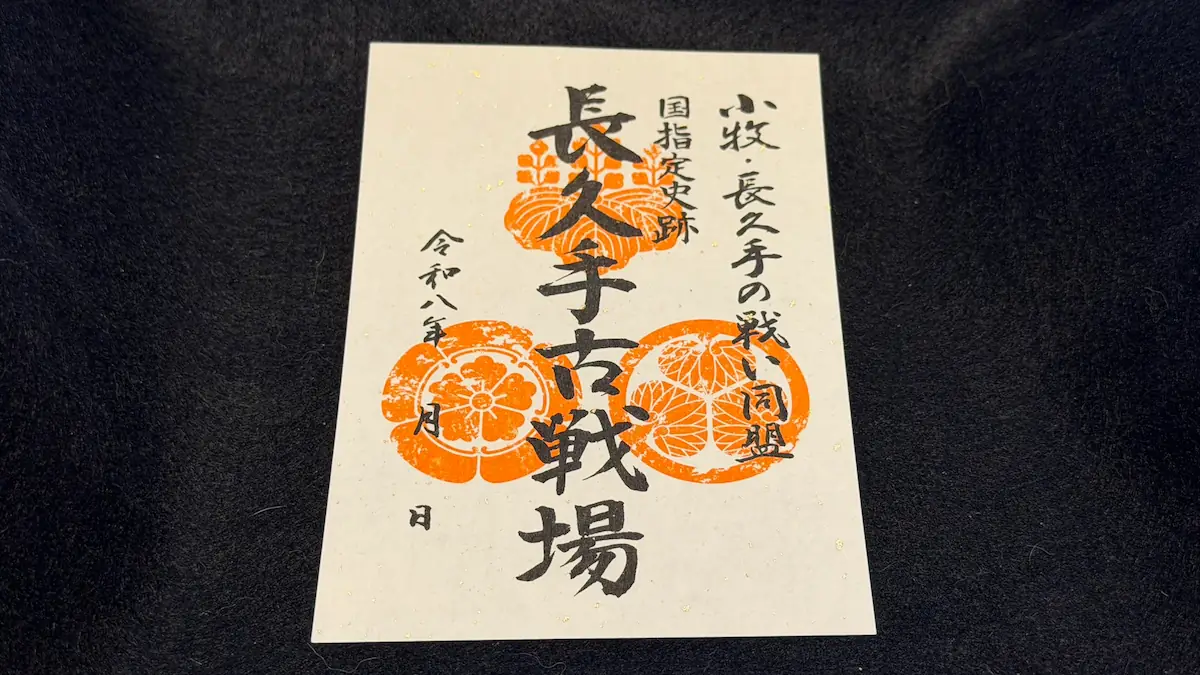
The Nagakute seal was available at the museum in June 2026. Stocks are finite, though: the Inuyama Castle version in the same series sold out on 26 May 2026. If you particularly want one, contact the museum before travelling to check availability.
A personal ranking based on a June 2026 visit. This is not the official recommended order from the museum or Nagakute City.
If you only do one thing first, do this. Reception hands out the route map for the rest of the site, and the theatre film and projection mapping give you the movement and the terrain before you're standing among the mounds. Around 40 minutes.
Same grounds as the museum, so there is almost no travel involved. Walking the slopes is itself the evidence that this was fought-over ground.
It needs a there-and-back walk outside the park, but it is signed from the road and easy on foot. With all three mounds seen, the account of the Hotokegane fighting lines up with the ground.
Map
The museum and the battlefield park share the same grounds. Musashizuka lies west of the map area, among the houses.
Visiting after NHK's "Toyotomi Kyodai!" episode 35
NHK's year-long historical drama for 2026, "Toyotomi Kyodai!" — released internationally as "Brothers in Arms" — follows Toyotomi Hidenaga, Hideyoshi's younger brother. Episode 35, "The Birth of Hidenaga", broadcast on 13 September 2026, is the Nagakute episode. If you are watching the series, this is the best possible moment to come.
In that episode, Oda Nobukatsu raises his army with Ieyasu's backing; Ikeda Tsuneoki proposes striking at Okazaki to draw the Tokugawa army out of Komakiyama Castle; Miyoshi Nobuyoshi — the future Toyotomi Hidetsugu — is given command of the operation and is routed by a Tokugawa surprise attack. The episode ends with the war spreading and stalling, and Hidenaga finding a way through.
Every one of those events maps onto ground you can walk in a single morning. What took a few minutes of screen time happened within a couple of kilometres of the museum door.
| The flanking plan | Ikeda Tsuneoki's proposal to attack Okazaki, which set the 9 April fighting in motion. |
|---|---|
| Hidetsugu's rout | The surprise attack at Hakusanrin, where he lost his horse and was saved by his retainers. |
| Ikeda Tsuneoki's death | At Hotokegane. Shonyuzuka marks the traditional spot. |
| Ikeda Motosuke's death | His eldest son, commemorated at Shokurozuka. |
| Mori Nagayoshi's death | The "demon Musashi" of the drama, commemorated at Musashizuka. |
Keep the drama and the history apart, though. Dialogue and motive are the screenwriter's work. For what happened at Nagakute, the museum displays and the boards on site are the place to start — and note again that Hideyoshi and Ieyasu did not face each other on this particular field.
One connection worth making if you are based in Nagoya: the original of the folding screen reproduced at the museum is held by the Tokugawa Art Museum in the city, which also staged a special exhibition tied to the drama.
Pair it with Komakiyama and Kiyosu
The campaign did not begin or end at Nagakute. Komakiyama Castle, where the two armies faced each other; Kiyosu, the Oda power centre; and Inuyama, on the line of Hideyoshi's advance. Visit two or three of them and the geography of 1584 falls into place.


comment