


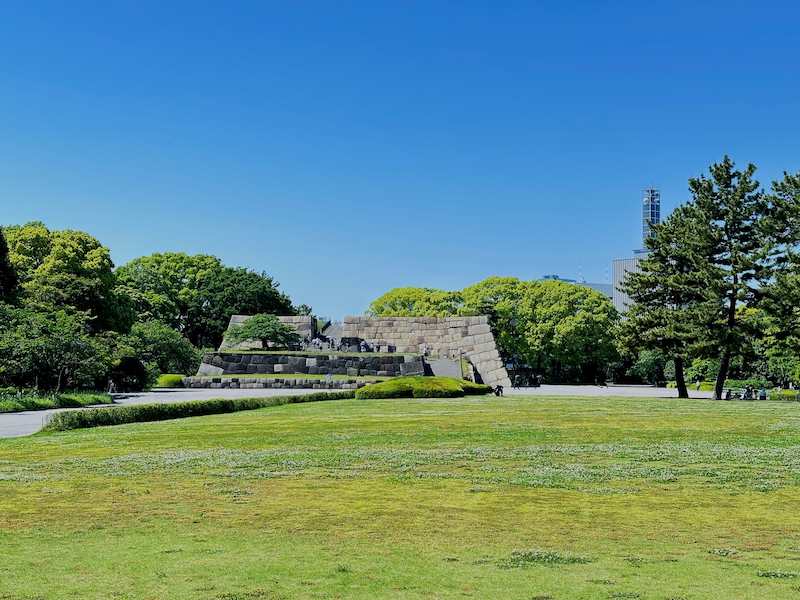
Exploring the Edo Castle Ruins: 7 Historical Highlights That Survived 400 Years
Original gates. A three-tiered watchtower. The stone foundation where Japan’s tallest castle once stood — all free to enter, all within 90 minutes. This guide covers what’s actually there and why it matters.
Location
East Gardens of the Imperial Palace (Higashi Gyoen), 1-1 Chiyoda, Chiyoda-ku, Tokyo
Admission
Free (Sannomaru Shozokan museum: currently closed — reopening autumn 2026)
Open Days
Tue – Sun (closed Mon & Fri, unless national holidays; also closed New Year period)
Hours
9:00 AM – 4:30 PM (last entry 4:00 PM; extended in summer)
Walk Time
~90 min for all 7 spots (Sannomaru Shozokan currently closed for renovation — see Spot 2 for details)
Nearest Station
Otemachi Station (Tokyo Metro, Exit T09) — 5-min walk to Otemon Gate
Parking
No dedicated lot — use paid parking in Otemachi / Marunouchi
Best Seasons
Late Mar – early Apr (cherry blossom) · Nov (autumn foliage)
⚠ Hours and admission are subject to change. Always confirm on the Imperial Household Agency website before visiting.
Explore the heart of Tokyo through one of its most historically layered sites. The East Gardens occupy the site of Edo Castle’s former inner citadel — the power center of the Tokugawa shogunate for over 260 years. Of the dozens of structures that once made up this enormous complex, only a handful survived the Great Fire of 1657, the Meiji-era demolitions, and World War II. The seven sites in this guide represent what actually remains. This page gives you the essentials: what each spot is, why it matters, and what to look for when you’re there. For a complete overview of Edo Castle’s history, see the Edo Castle complete guide. For deeper historical background on each area, follow the links to the detailed guides at the end of this page.
Why So Little Survives — A Brief History of Edo Castle
At its peak in the early 17th century, Edo Castle was the largest castle complex in the world by total enclosed area — roughly 5 km² within its outermost moat. Its main keep, rebuilt three times, reached approximately 44–51 meters at its tallest, making it the highest castle tower ever constructed in Japan. None of it was destroyed by enemies. It was lost to fire, politics, and time.
What you see today — the gates, watchtower, guardhouses, and stone foundation — are the genuine remnants of that history. Walking the route below is one of the few ways to experience original Edo-period architecture in central Tokyo.
Tour Overview Map
The route below starts at Otemon Gate (the main entrance from Otemachi Station) and follows a natural path through the gardens, ending at Ninomaru Garden near the Hirakawa Exit. Total walking distance is approximately 2 km.
The 7 Spots: What’s There and Why It Matters
Each card below covers the essentials. Tap the gold button to expand access details, historical data, and a map for each stop.
1. Otemon Gate
The main entrance to Edo Castle — built by Todo Takatora, with stone walls laid by Date Masamune
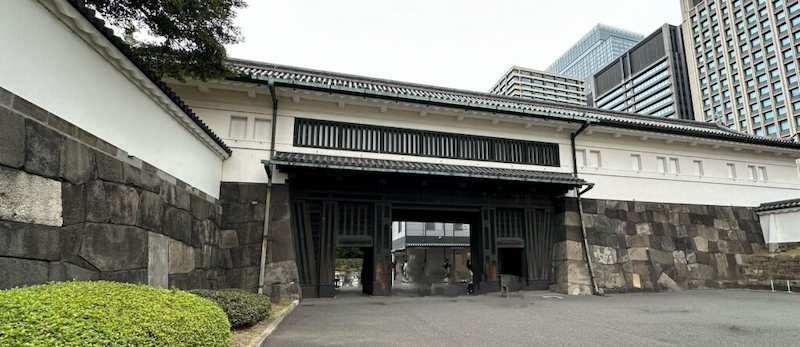
Otemon Gate was the face of the shogunate’s power — the entrance through which feudal lords (daimyo), imperial messengers, and shoguns themselves passed when entering Edo Castle. Built in 1607 by the renowned castle architect Todo Takatora, it was later reinforced in 1620 with stone walls constructed by Date Masamune, lord of Sendai. At its height, it was guarded by 30 muskets, 10 bows, and 20 long spears.
The inner gate (Koraimon) you see today is a genuine Edo-period structure — one of very few in Tokyo. The outer turret (Watariyagura) was destroyed in WWII air raids and rebuilt in wood in 1963. Stepping through the masugata (fortified courtyard between the two gates) gives you a direct, physical sense of the castle’s layered defense system — designed to trap and slow any attacker who made it this far.
Historic Data
| Year Built | 1607 (Keichō 12) |
|---|---|
| Builder | Tōdō Takatora (stone walls: Date Masamune, 1620) |
| Gate Type | Masugata-style — Kōraimon (inner) + Watariyagura (crossing turret) |
| Current Status | Kōraimon: original Edo structure. Watariyagura: rebuilt in wood, 1963 |
| WWII Damage | Watariyagura destroyed in air raids |
| Cultural Property | Tokyo Metropolitan Tangible Cultural Property (designated 1995) |
What to Look For
- The masugata courtyard: Walk through both gates and notice the square killing ground between them — the defensive logic becomes immediately clear.
- Stone wall construction: The nozurazumi (natural stone stacking) technique used by Date Masamune’s team can be seen up close on the left walls.
- Seasonal spring view: Cherry blossoms around the gate in late March create one of the most photographed scenes in the gardens.
Trivia
- The gate’s name “Ote” (大手) literally means “main hand” — a standard term in Japanese castle architecture for the primary entrance facing the town.
- Todo Takatora was responsible for designing many of Japan’s greatest castle walls; his techniques at Osaka Castle, Nijō Castle, and Edo Castle defined the era’s military architecture.
| Address | 1-1 Chiyoda, Chiyoda-ku, Tokyo |
|---|---|
| Access | 5-min walk from Otemachi Station (T09), Tokyo Metro Tozai Line (~0.4 km) |
| Parking | No dedicated lot — use paid parking in Otemachi / Marunouchi area |
| Visit Duration | Quick: ~15 min · In-depth: ~30 min |
| Admission | Free |
Walking route from Otemachi Station to Otemon Gate:
2. Sannomaru Shozokan (The Museum of the Imperial Collections)
Home to national treasures by Ito Jakuchu — currently closed for expansion, reopening autumn 2026
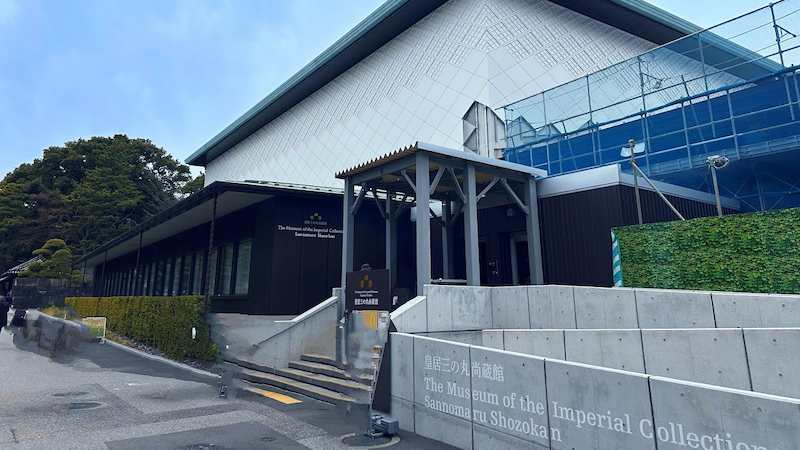
The Sannomaru Shozokan houses approximately 9,800 works from the Imperial Collection — paintings, sculptures, lacquerware, and textiles accumulated by the Imperial Household over centuries, including national treasures by Ito Jakuchu (the Colorful Realm of Living Beings series) and Kano Eitoku. The museum is currently closed for major expansion works and is scheduled to fully reopen in autumn 2026. When completed, the exhibition space will be eight times larger than the original building, with storage capacity four times greater. The museum building and grounds are visible on the route but cannot be entered during this period.
The museum is temporarily closed from May 7, 2025 until autumn 2026 for Phase 2 expansion works. While you cannot enter during this visit, the building itself is visible on the walking route. Looking ahead: when it reopens, the Shozokan will offer one of the most significant Imperial art experiences in Japan — works that were never intended for public display, now in a purpose-built facility eight times larger than the original. If you are visiting after autumn 2026, check the official museum website for current opening information. In the meantime, a pre-opening event is running at the Hyokeikan, Tokyo National Museum (through May 17, 2026).
Facility Data
| Opened | 1993 (Phase 1 new building: November 2023) |
|---|---|
| Current Status | Temporarily closed — expansion works from May 7, 2025. Full reopening: autumn 2026 |
| Operator | National Institutes for Cultural Heritage (transferred from Imperial Household Agency, 2023) |
| Collection | Approx. 9,800 works — paintings, sculpture, lacquerware, textiles, metalwork |
| Key Works | Ito Jakuchu’s Colorful Realm of Living Beings, Kano Eitoku’s Karajishi Folding Screen |
| When Reopened | Exhibition space 8× original size; storage 4× original — rotating exhibitions, no permanent display |
| Official Site | shozokan.nich.go.jp/en/ |
Trivia
- The collection was donated to the nation following Emperor Showa’s death — making works that had been private Imperial property available to the public for the first time.
- Yokoyama Taikan and Takamura Koun are among the other major artists represented in the holdings.
- A rarely-seen storage area is occasionally accessible during special events.
| Address | 1-1 Chiyoda, Chiyoda-ku, Tokyo |
|---|---|
| Access | 1-min walk from Otemon Gate (~80 m) |
| Current Status | Closed for expansion — reopening autumn 2026 |
| Visit Duration | Exterior visible on route; interior not accessible until autumn 2026 |
| Official Site | shozokan.nich.go.jp/en |
Route from Otemon Gate to Sannomaru Shozokan:
3. Hyakunin Guardhouse
The castle’s largest surviving guardhouse — barracks for the shogunate’s elite musketeer units
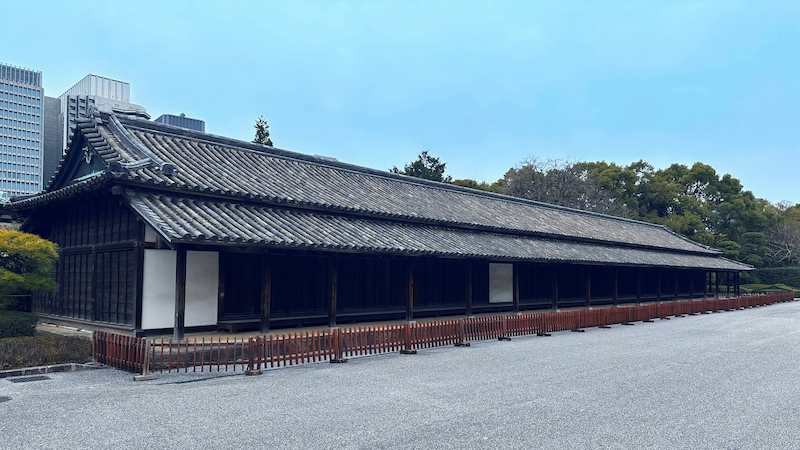
The Hyakunin Guardhouse is the largest of Edo Castle’s three surviving security posts — a longhouse spanning approximately 50 meters, manned by four elite gunner units: the Iga, Kōga, Negoro, and 25 Riders groups. These were not ordinary soldiers; they were descendants of the most feared firearms specialists of the Sengoku period, incorporated into the Tokugawa military apparatus. The building was restored in 1968 to its original Edo-era form and remains one of the most authentic structures in the gardens.
The Hyakunin-gumi literally means “Hundred-Man Unit” — though the actual number stationed here was larger. Each of the four groups had roots in the legendary ninja and gunner clans of the civil war era. By the time Edo Castle was complete, they had been absorbed into the shogunate’s security structure as an elite ceremonial and defensive force — their wartime skills now deployed to enforce peacetime order.
Historic Data
| Year Built | Early Edo period (exact year unknown) |
|---|---|
| Builder | Tokugawa Shogunate |
| Structure | Approx. 50-meter longhouse; row-house style barracks |
| Units Stationed | Iga, Kōga, Negoro, and 25 Riders gunner groups |
| Restoration | 1968 — returned to original Edo-period appearance |
| Current Status | Still standing; exterior viewable |
What to Look For
- Scale of the building: Walk the full length — 50 meters gives a physical sense of how many men were stationed here.
- Roof construction: The hip-and-gable (kirizuma) roof style and heavy timber framing are characteristic of Edo-period military architecture.
- Stone walls behind: The fortifications visible behind the guardhouse are part of the Nakanomon approach — your next stop.
| Address | 1-1 Chiyoda, Chiyoda-ku, Tokyo |
|---|---|
| Access | 2-min walk from Sannomaru Shozokan (~170 m) |
| Visit Duration | Quick: ~5 min · In-depth: ~15 min |
| Admission | Free (East Gardens entry) |
Route from Sannomaru Shozokan to Hyakunin Guardhouse:
4. Nakanomon Gate Ruins
The last threshold before the Honmaru — only stone walls remain, but they still carry daimyo clan marks
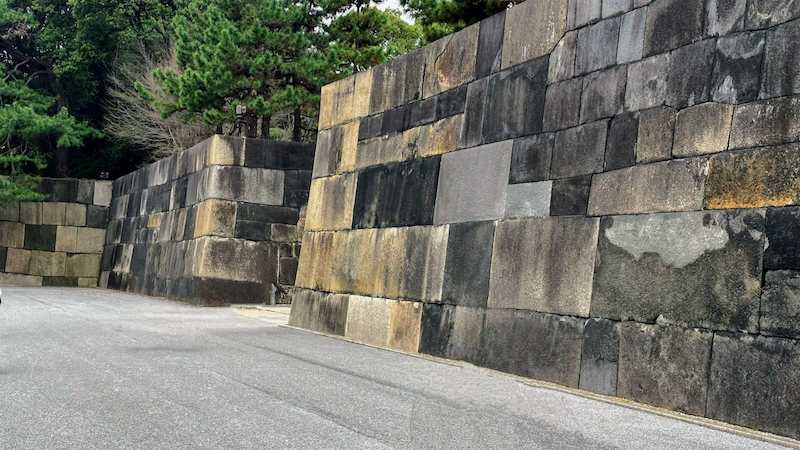
The Nakanomon Gate once stood as the heavily fortified final entrance to the Honmaru — the innermost citadel of Edo Castle. Shoguns, feudal lords, and imperial envoys passed through here on their way to the castle’s core. Today, the upper gate structure is gone, but the massive stone walls survive. Look closely at the individual stones: some still bear engraved marks (kokumon) identifying the daimyo clan responsible for quarrying and transporting each block — a direct record of the collaborative labor system that built the castle.
The practice of marking stones with clan symbols was both a record-keeping system and a system of accountability — if a wall section failed, the responsible lord could be identified. Running your hand along these walls, you’re touching stones that traveled from quarries across Japan, transported by hundreds of workers under individual daimyo orders. It’s one of the most tangible connections to the human scale of what building Edo Castle actually required.
Historic Data
| Original Function | Main fortified gate to the Honmaru (inner citadel) |
|---|---|
| Current Status | Stone walls remain; upper gate structure lost |
| Notable Feature | Kokumon (clan marks) carved into stones by daimyo construction teams |
| Nearby Structures | Hyakunin Guardhouse (passed en route) · Ōbansho guardhouse |
What to Look For
- Kokumon (clan marks): Look for carved symbols on individual stones — circles, triangles, and other geometric shapes identifying the daimyo who supplied them.
- Stone wall style: The nozurazumi (natural stacking without mortar) technique is visible here — the same tradition used across Japan’s greatest castles.
- Scale of the walls: Even without the gate above, the walls convey the imposing approach that any visitor — or attacker — would have faced.
| Address | 1-1 Chiyoda, Chiyoda-ku, Tokyo |
|---|---|
| Access | 1-min walk from Hyakunin Guardhouse (~50 m) |
| Visit Duration | Quick: ~5 min · In-depth: ~15 min |
| Admission | Free (East Gardens entry) |
Route from Hyakunin Guardhouse to Nakanomon Gate Ruins:
5. Fujimi Yagura (Fuji-View Watchtower)
The de facto symbol of Edo Castle — a three-tiered original watchtower that once had a clear view of Mount Fuji
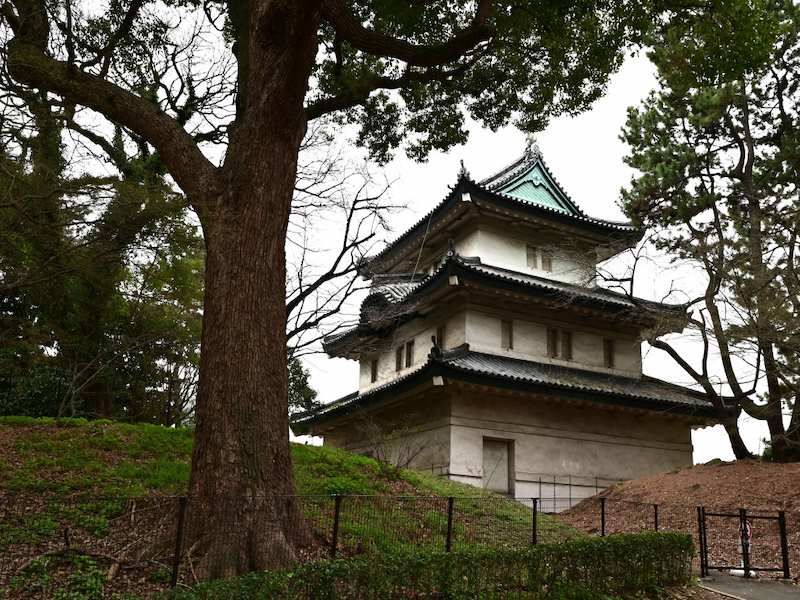
Fujimi Yagura is the most photographed structure in the East Gardens — and the most historically important one still standing in its original form. Built in the early Edo period and positioned for both surveillance and defense, this three-tiered watchtower was named “Fujimi” (富士見, “Fuji View”) because, on clear days, Mount Fuji was visible from its upper levels. After the Great Fire of Meireki in 1657 destroyed the main keep, this watchtower became the de facto symbol of Edo Castle — a role it still holds today.
When the tower was built, the Kanto Plain stretched open to the west, and on clear winter mornings, Mount Fuji dominated the horizon from the upper floors. Modern Tokyo’s skyline now blocks that sightline entirely. But standing below the watchtower today — white plaster against a blue sky, or cherry blossoms framing the black roof tiles in spring — it’s not difficult to understand why this image became the visual identity of the city’s most powerful institution.
Historic Data
| Year Built | Early Edo period (exact date unconfirmed) |
|---|---|
| Builder | Tokugawa Shogunate |
| Structure | Three-story watchtower; white plaster walls, black roof tiles |
| Name Meaning | “Fujimi” = Fuji View — originally had a clear sightline to Mount Fuji |
| Historical Role | Became the de facto symbol of Edo Castle after the main keep was destroyed in 1657 |
| Current Status | Original structure; still standing |
What to Look For
- White plaster and black tiles: The color contrast is deliberate — white signaled authority and visibility; black tiles were fireproofed with lacquer.
- Stone base: The ishigaki (stone plinth) below the tower uses the same construction techniques visible throughout the castle — large anchor stones at corners, infill stones between.
- Best photo angle: Approach from the south (from Nakanomon) to get the full three-tiered elevation against the sky.
- Cherry blossom season: Late March trees immediately around the tower create the classic image seen on most guides to the East Gardens.
| Address | 1-1 Chiyoda, Chiyoda-ku, Tokyo |
|---|---|
| Access | 4-min walk from Nakanomon Gate Ruins (~180 m) |
| Visit Duration | Quick: ~10 min · In-depth: ~20 min |
| Admission | Free (East Gardens entry) |
Route from Nakanomon Gate Ruins to Fujimi Yagura:
6. Tenshudai (Main Keep Foundation)
Where Japan’s greatest castle keep once stood — the silent stone platform of a colossus that was never rebuilt
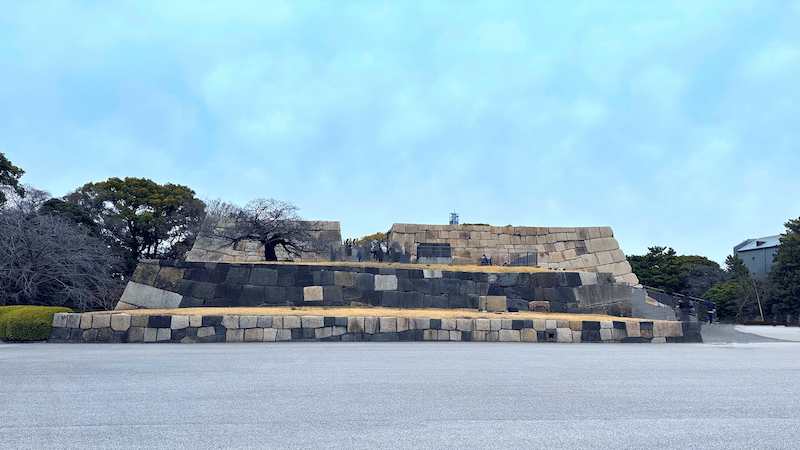
This is the site of what was once Japan’s tallest structure. The main keep of Edo Castle was rebuilt three times in the early Edo period, reaching approximately 44–51 meters tall — far exceeding any other castle tower in Japan. In 1657, the Great Fire of Meireki consumed the keep. What remains is the original stone foundation (Tenshudai): approximately 11 meters tall, 41 meters wide, and climbable. From the top, you see the East Gardens spread below and Tokyo’s modern skyline beyond — a powerful juxtaposition of what was and what is.
After the fire, the shogunate’s senior advisor Hoshina Masayuki made a decision that shaped Tokyo’s landscape for the next 370 years: he argued that the main keep was not militarily necessary and that the enormous resources required to rebuild it should instead fund the reconstruction of the city — which had been largely destroyed in the same fire. The political will to rebuild never returned. The stone platform you stand on today is the only evidence that Japan’s greatest castle tower ever existed here.
Historic Data
| Foundation Built | 1607 (Keichō 12) under Tokugawa Ieyasu |
|---|---|
| Main Keep Height | Approx. 44–51 meters (estimates vary by reconstruction) |
| Foundation Dimensions | Approx. 11 m tall · 41 m wide |
| Destroyed | 1657 — Great Fire of Meireki |
| Reason Not Rebuilt | Hoshina Masayuki advised redirecting resources to city reconstruction |
| Current Status | Original stone foundation open to visitors; climbable |
| Reconstruction Plans | Under study by Tokyo Metropolitan Government; no confirmed plan as of 2025 |
What to Look For
- Scale of the platform: Climb to the top — the 11-meter height gives a clear sense of why the keep above would have been visible from across the Kanto Plain.
- Panoramic views: Tokyo’s modern skyline from the Tenshudai top is one of the most striking contrasts available anywhere in the city.
- Kokumon (clan marks): Like the Nakanomon walls, some stones here bear marks identifying the daimyo who transported them.
- Cherry blossoms: The open space around the Tenshudai is one of the best spots in the gardens for spring viewing.
| Address | 1-1 Chiyoda, Chiyoda-ku, Tokyo |
|---|---|
| Access | 9-min walk from Fujimi Yagura (~700 m) |
| Visit Duration | Quick: ~10 min · In-depth: ~25 min |
| Admission | Free (East Gardens entry) |
| Accessibility | Steep stone steps to climb — not accessible for wheelchairs |
Route from Fujimi Yagura to Tenshudai:
7. Ninomaru Garden
A pond garden designed by Kobori Enshu in 1636 — now home to imperial koi and seasonal blooms
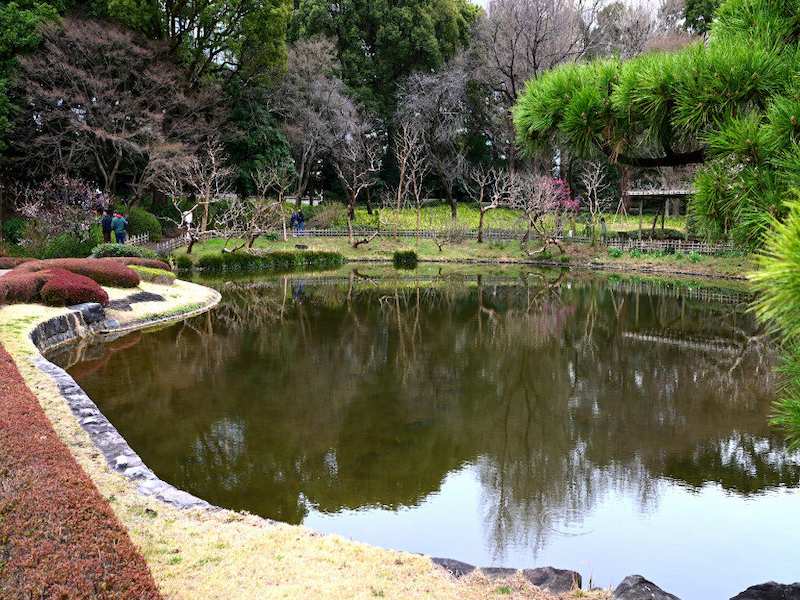
Ninomaru Garden offers a different kind of historical experience — not the drama of fortifications and fire, but the refined aesthetic sensibility of Edo-period garden design. Originally created in 1636 by Kobori Enshu, one of Japan’s most celebrated masters of landscape architecture and tea ceremony, it was restored in 1968 based on original blueprints from the era of the ninth shogun, Tokugawa Ieshige. The garden’s pond contains Hirenaga Nishikigoi — a rare long-finned ornamental carp released here by Emperor Emeritus Akihito in 2018.
Kobori Enshu was not just a garden designer; he was simultaneously a senior shogunate official, a tea ceremony master of the highest rank, and one of the leading artistic figures of the early Edo period. His gardens survive at Katsura Imperial Villa, Daitoku-ji, and several other landmark sites across Japan, including the Ninomaru Garden at Nijo-jo Castle in Kyoto. The fact that the shogun commissioned Enshu to design this garden tells you something about the role the space was intended to play — not military, but cultural and ceremonial.
Garden Data
| Original Design | 1636 by Kobori Enshū |
|---|---|
| Restored | 1968 — based on historical blueprints from the era of Tokugawa Ieshige (9th shogun) |
| Style | Shoin-style pond-centered stroll garden with Horai Island, crane and turtle islets |
| Original Destroyed | By fire in 1867 |
| Imperial Koi | Hirenaga Nishikigoi released by Emperor Emeritus Akihito in 2018 |
| Seasonal Highlights | Cherry blossoms (late Mar–early Apr) · Irises (early Jun) · Autumn foliage (Nov) |
What to Look For
- Horai Island: The central island in the pond represents the mythological land of immortality — a standard feature in high-status Edo-period garden design.
- Hirenaga Nishikigoi: Look for the long-finned ornamental carp — a hybrid species developed from Japanese and Indonesian stock, visually distinct from standard koi.
- Iris beds (early June): The garden contains one of the finest iris plantings in the area — less famous than Meiji Jingu’s, but more intimate and less crowded.
- Stone lanterns: Several traditional stone lanterns are positioned around the garden — remnants of the original Edo-period aesthetic.
| Address | 1-1 Chiyoda, Chiyoda-ku, Tokyo |
|---|---|
| Access | 9-min walk from Tenshudai (~800 m) |
| Visit Duration | Quick: ~15 min · In-depth: ~30 min |
| Admission | Free (East Gardens entry) |
| Exit | Hirakawa Exit is nearby — a convenient departure point if you don’t want to walk back to Otemon |
Route from Tenshudai to Ninomaru Garden:
Want the Full Story? Explore the Detailed Guides
This page covers the highlights. For in-depth historical background, architectural analysis, and extended notes on each area of the East Gardens, visit the four-part guide series:
Frequently Asked Questions
The Imperial Palace is the Emperor’s residence and is not open to the general public. The East Gardens (Higashi Gyoen) occupy the site of Edo Castle’s former inner citadel and are open to the public free of charge, Tuesday through Sunday. This is where the seven historical spots in this guide are located.
Of the seven sites in this guide: the Koraimon gate of Otemon Gate, the Hyakunin Guardhouse (restored 1968), and Fujimi Yagura are original Edo-period structures. The Watariyagura (turret) of Otemon Gate was rebuilt in wood in 1963 after WWII bombing. The Tenshudai is the original stone foundation — the main keep itself was never rebuilt after 1657. Nakanomon Gate survives as stone walls only.
Entry to the East Gardens is free. The Sannomaru Shozokan museum inside the gardens is currently closed for expansion works (from May 7, 2025) and is scheduled to reopen in autumn 2026. When it reopens, a separate admission fee will apply. Check the official museum website for the latest information.
The East Gardens are generally open 9:00 AM to 4:30 PM (last entry 4:00 PM), with extended hours in summer. They are closed on Mondays and Fridays unless those days fall on national holidays, and during the New Year period. Always confirm on the Imperial Household Agency’s website before visiting.
Approximately 90 minutes at a casual pace, covering around 2 km. Note that the Sannomaru Shozokan museum (Spot 2) is currently closed for renovation until autumn 2026, so you will pass the building but not enter. Spending extra time at the Tenshudai and Ninomaru Garden is easy — both are worth lingering at.
After the Great Fire of Meireki destroyed the main keep, Tokugawa advisor Hoshina Masayuki successfully argued that rebuilding was not militarily necessary and that the enormous resources should instead go toward reconstructing the city, which had been devastated by the same fire. The political will to rebuild never returned, and the stone foundation has stood empty ever since.
As of 2025, there is no confirmed plan to reconstruct the main keep. The Tokyo Metropolitan Government has studied feasibility, but no final decision has been made. The original stone foundation (Tenshudai) remains the primary feature at the site and is open to visitors.
Otemon Gate is a 5-minute walk (approximately 0.4 km) from Otemachi Station (T09), Tokyo Metro Tozai Line. It is also accessible from Nijubashimae Station on the Chiyoda Line. The address is 1-1 Chiyoda, Chiyoda-ku, Tokyo.
Yes, the gardens are open throughout most of the year. The most popular seasons are late March to early April (cherry blossoms around Fujimi Yagura and the Tenshudai) and November (autumn foliage). Early weekday mornings in spring are the best time to visit with fewer crowds.
Edo Castle is often cited as the world’s largest castle complex by total enclosed area — its outermost moat enclosed approximately 5 km². The main keep, at its peak, stood around 44–51 meters tall, making it the tallest castle tower ever constructed in Japan. Nothing comparable was built before or since.
There is no dedicated public parking at the East Gardens. Public transportation is strongly recommended. Several paid parking lots are available in the surrounding Otemachi and Marunouchi areas if driving is necessary.
Related Guides on This Site

Back to Main Page

☕ Support This Site
Following the Shogun is built on original fieldwork and on-site research.
If you found this guide useful, your support helps keep it going.

You can also support via QR code
This page is a historical travel guide created by Following the Shogun.


comment