


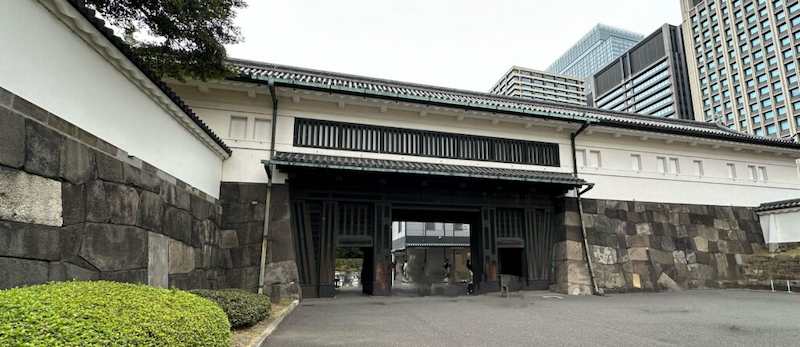
Otemon Gate: Edo Castle’s Main Entrance and Its Guardhouses
Edo Castle was the political heart of the Tokugawa shogunate established by Tokugawa Ieyasu, and many of its remains still survive across its vast grounds. This page focuses on the Otemon Gate Area, where you can walk through spaces that still reveal the castle’s original structure, including Otemon Gate, once used as the main entrance, and guardhouses that supported the shogun’s security system.
- ① Otemon Gate Area (This Page)
- ② Fujimi-yagura Turret Area
- ③ Honmaru Area
- ④ Ninomaru Area
- ⑤ Outer Grounds
- ▶ Back to the Complete Guide
Edo Castle was the political heart of the Tokugawa shogunate established by Tokugawa Ieyasu, and many of its remains still survive across its vast grounds. This page focuses on the Otemon Gate Area. Here you can walk through spaces that still reveal the castle’s original structure, including Otemon Gate, once used as the main entrance, and guardhouses that supported the shogun’s security system. Historical background and access information for each site are also included.
Opening Hours
Hours vary by season. Examples include 9:00 a.m.–6:00 p.m. from April 15 to the end of August, and 9:00 a.m.–4:00 p.m. from November to February. Last entry is 30 minutes before closing.
Closed Days
Mondays and Fridays, December 28 to January 3, and days when events or other circumstances affect access. Because schedules may change due to national holidays and other reasons, please check the official Imperial Household Agency website before visiting.
Suggested Time
Short visit: about 30–45 minutes / In-depth visit: about 1 hour
Admission
Free
Nearest Station
About 5 minutes on foot (approx. 0.4 km) from Otemachi Station (T09) on the Tokyo Metro Tozai Line
Museum of the Imperial Collections
Currently temporarily closed (full reopening planned for autumn 2026)
Otemon Gate Area
Otemon Gate 360°
Edo Castle’s main gate—a crucial masugata strongpoint where shoguns and daimyo once passed
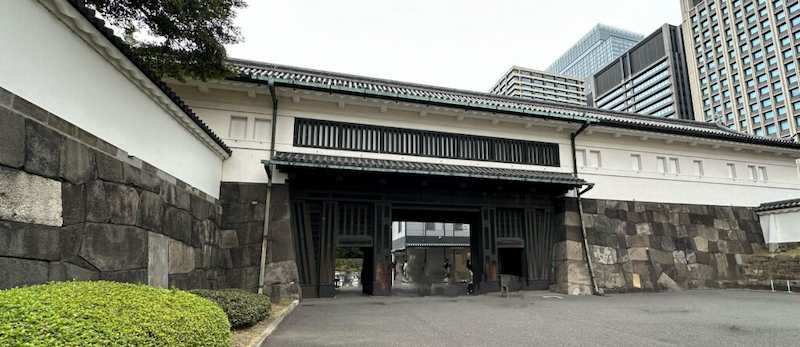
Otemon Gate was the main gate of the former Edo Castle and an important entrance used by daimyo staying in Edo under the sankin-kotai system when they came to the castle. It is said to have been designed by Todo Takatora during the Keicho era, while Sakai Tadatsuyo took part in the construction work of Kan’ei 6 (1629), and the stone walls on both sides are traditionally attributed to Date Masamune. Passing through the Koraimon gate, you enter a square defensive space known as a masugata, a powerful reminder of Edo Castle’s strict defensive design.
Detailed Historic Site Data
| Construction and Development | It is said to have been designed by Todo Takatora during the Keicho era. In the construction work of Kan’ei 6 (1629), Sakai Tadatsuyo took part, and the stone walls on both sides are traditionally said to have been built by Date Masamune. |
|---|---|
| Surviving and Restored Elements | The Otemon Koraimon gate is considered to have been rebuilt in Manji 2 (1659) after the Great Fire of Meireki. The Watari-yagura gate was destroyed in wartime fires and restored in 1967. |
| Loss and Damage | The Watari-yagura gate was destroyed in wartime fires. |
| Cultural Property Designation | Tokyo Metropolitan Tangible Cultural Property (1995) |
| Notes | The gate was protected by a strict security system that included 30 muskets, 10 bows, and 20 long spears. |
Highlights
- Koraimon Gate: A gate surviving from the Edo period. Its solid construction reveals the reliability of the architectural techniques of the time.
- Masugata: A square defensive space designed to prevent enemy intrusion. Passing through the gate lets you physically experience this defensive layout.
- Restored Watari-yagura Gate: Destroyed in wartime fires and restored in wood in 1967.
- Stone Walls: Edo-period stone walls remain around the gate and can be viewed up close.
- Seasonal Enjoyment: Cherry blossoms bloom here in spring.
Trivia
- Lesser-Known Historical Background: This was one of the busiest gates inside the castle, used by the shogun, imperial envoys, and daimyo coming to the castle. For that reason, its security appears to have been especially strict.
- Links to Famous Figures: Warlords who survived the Sengoku period, including Todo Takatora and Date Masamune, were involved in the castle’s construction.
| Address | 1-1 Chiyoda, Chiyoda City, Tokyo |
|---|---|
| Nearest Station | 5-minute walk from Otemachi Station (T09) on the Tokyo Metro Tozai Line (approx. 0.4 km) |
| Parking | No general visitor parking is listed within the Imperial Palace East Gardens. Public transportation is recommended. |
| Suggested Time | Quick visit: about 15 minutes / In-depth visit: about 30 minutes |
| Admission | Free |
Open the map to see the relationship between the nearest station and Otemon Gate.
Museum of the Imperial Collections, Sannomaru Shozokan
Home to artworks connected to the Imperial Family—an Imperial Palace museum preserving and passing on masterpieces
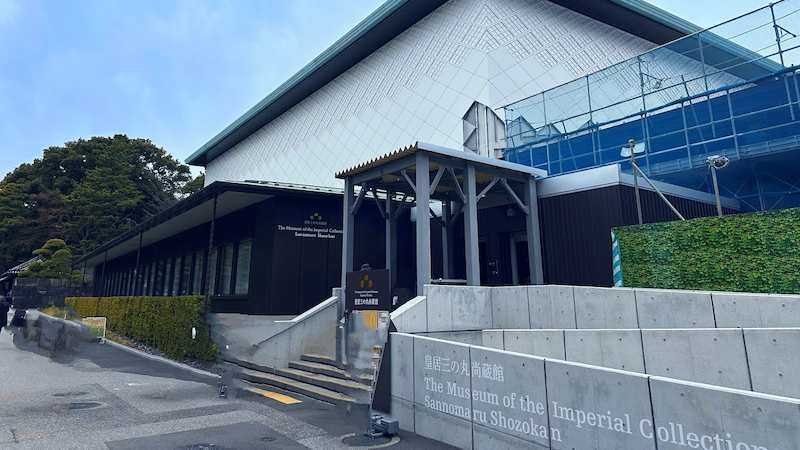
The Museum of the Imperial Collections, Sannomaru Shozokan, is a facility within the Imperial Palace East Gardens that houses and exhibits artworks connected to the Imperial Family. Opened in 1993, it has preserved, managed, researched, and exhibited paintings, calligraphy, crafts, and other works handed down in the Imperial Family. It is currently temporarily closed due to construction of the new facility, with full reopening scheduled for autumn 2026. Be sure to check the official website for the latest opening status before visiting.
Detailed Historic Site Data
| Opening Year | 1993 (Heisei 5) |
|---|---|
| Operator | National Institutes for Cultural Heritage (management was transferred from the Imperial Household Agency in 2023) |
| Overview | A facility that houses paintings, calligraphy, crafts, and other works connected to the Imperial Family, carrying out preservation, management, research, and public exhibitions. |
| Current Status | Temporarily closed due to construction of the new facility. Full reopening is scheduled for autumn 2026. |
| Visitor Note | Opening timing, exhibitions, and admission fees may change, so check the official website before visiting. |
Highlights
- Exhibitions of National Treasures and Important Cultural Properties: Works representing Japanese art, such as Ito Jakuchu’s Colorful Realm of Living Beings and Kano Eitoku’s Chinese Lions Folding Screen, may be displayed at times (exhibition content varies by period).
- Special and Thematic Exhibitions: After reopening, exhibition content is expected to change with each show. Check the official website for the latest exhibition information before visiting.
Trivia
- Lesser-Known Historical Background: The museum was established after artworks were donated from the Imperial Family to the nation following the passing of Emperor Showa.
- A Hidden Historic Spot: Some storage areas inside the museum are usually closed to the public and can only be viewed during special events.
- Connections to Renowned Artists: The collection includes many works by leading Japanese artists such as Yokoyama Taikan and Takamura Koun.
| Address | 1-1 Chiyoda, Chiyoda City, Tokyo |
|---|---|
| From Otemon Gate | 1-minute walk (approx. 0.1 km) |
| Parking | No general visitor parking is listed within the Imperial Palace East Gardens. Public transportation is recommended. |
| Suggested Time | Currently temporarily closed. After reopening, suggested time will vary depending on exhibition content. |
| Admission | Currently temporarily closed. After reopening, check the official website for admission fees. |
Open the map to see the relationship between Otemon Gate and the Museum of the Imperial Collections, Sannomaru Shozokan.
Doshin Guardhouse
An intermediate defensive line guarded by lower-ranking samurai—a small guard post where the Tokugawa aoi crest still remains
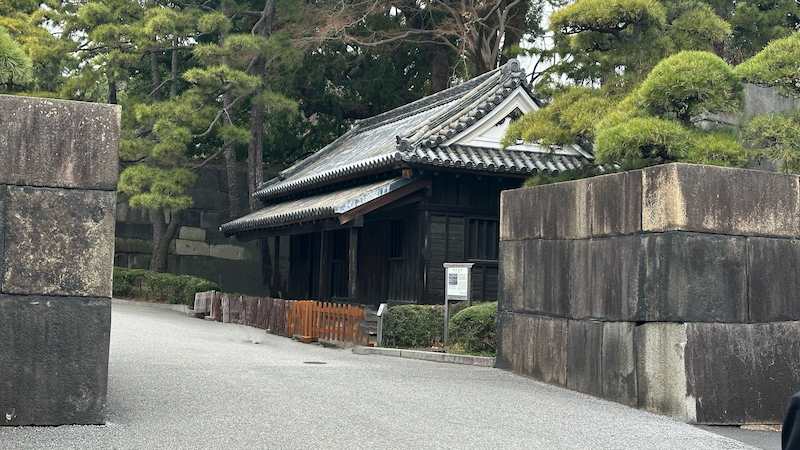
The Doshin Guardhouse is one of the three surviving guardhouses within Edo Castle. It was mainly staffed by lower-ranking samurai known as doshin. Located along the route from Otemon Gate toward the Honmaru, it was responsible for monitoring and guarding those entering the castle.
Detailed Historic Site Data
| Year Built | Late Edo period (exact year unknown) |
|---|---|
| Builder | Tokugawa Shogunate |
| Structure and Features | A single-story wooden guardhouse. The roof tiles bear the aoi crest, the family crest of the Tokugawa. |
| Surviving Condition | Survives as an Edo-period building. The roof tiles show the aoi crest of the Tokugawa shogunal family and the chrysanthemum crest of the Imperial Family. |
| Loss and Damage | None |
| Cultural Property Designation | None |
| Notes | A guardhouse where lower-ranking samurai called doshin served. |
Highlights
- The Doshin Guardhouse Building: Believed to date from the late Edo period, it has been repaired and still preserves its historic appearance.
- Aoi Crest on the Roof Tiles: The Tokugawa family’s aoi crest remains on the roof tiles and can be seen in the details.
- Masugata Stone Walls: Stone walls around the guardhouse preserve the castle’s masugata structure, helping visitors sense the layout of the fortifications.
Trivia
- Lesser-Known Historical Background: This guardhouse stood in a place where visitors heading from Otemon Gate toward the Honmaru were checked. Daimyo other than those from the Owari, Kii, and Mito branches of the Tokugawa were required to dismount here.
- A Hidden Historic Detail: The highest part of the roof uses gable-end tiles with the Tokugawa aoi crest, while the eaves use tiles bearing the mitsudomoe crest. Look up as you walk past, and you may notice the difference.
| Address | 1-1 Chiyoda, Chiyoda City, Tokyo |
|---|---|
| From Sannomaru Shozokan | 1-minute walk (approx. 0.1 km) |
| Parking | No general visitor parking is listed within the Imperial Palace East Gardens. Public transportation is recommended. |
| Suggested Time | Quick visit: about 5 minutes / In-depth visit: about 15 minutes |
| Admission | Free |
Open the map to see the relationship between the Museum of the Imperial Collections, Sannomaru Shozokan, and the Doshin Guardhouse.
Hyakunin Guardhouse 360°
One of Edo Castle’s largest guardhouses—a long security post defended by the Teppō Hyakunin-gumi gunners
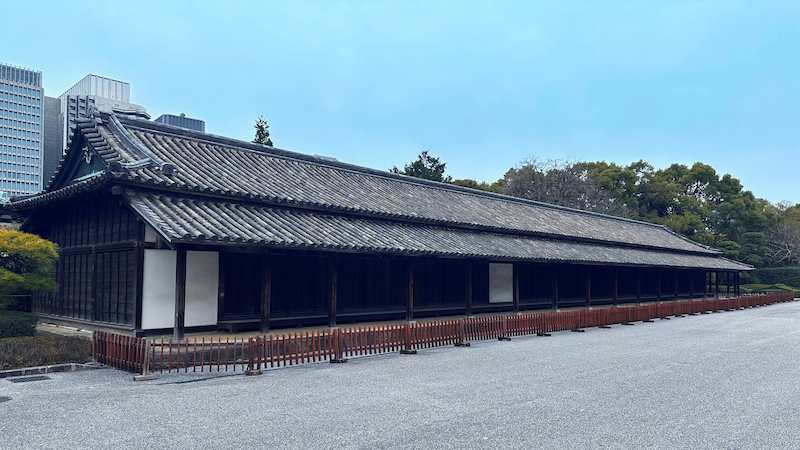
The Hyakunin Guardhouse is the largest of the three guardhouses still surviving within Edo Castle. It served as a security post for a gunner unit known as the Hyakunin-gumi. Located along the route from Otemon Gate toward the Honmaru, it monitored and guarded daimyo and important visitors entering the castle.
Detailed Historic Site Data
| Year Built | Early Edo period (exact year unknown) |
|---|---|
| Builder | Tokugawa Shogunate |
| Structure and Features | A long guardhouse described by the Imperial Household Agency as measuring 45 meters from north to south. From the exterior, visitors can sense the scale of this security base within Edo Castle. |
| Surviving Condition | Survives today. It was set up after passing the third gate, before proceeding toward Nakanomon Gate. |
| Loss and Damage | None |
| Cultural Property Designation | None |
| Notes | It is described as having been staffed day and night in shifts by four Teppō Hyakunin-gumi gunner groups: the Koga, Iga, Negoro, and Twenty-Five Riders groups. |
Highlights
- Scale of the Building: Its long, horizontal form conveys the size of Edo Castle’s guard system.
- Rows of Rooms: The building’s row-house-like composition gives a sense of how many guards could be stationed here.
- Surrounding Stone Walls: The nearby stonework lets visitors understand the defensive structure connecting Otemon Gate to the inner castle.
Trivia
- Historical Role: The Hyakunin-gumi gunners stationed here played a major role in guarding Edo Castle.
- The Four Gunner Groups: The Koga, Iga, Negoro, and Twenty-Five Riders groups are said to have worked in shifts day and night.
| Address | 1-1 Chiyoda, Chiyoda City, Tokyo |
|---|---|
| From Doshin Guardhouse | 1-minute walk (approx. 0.1 km) |
| Parking | No general visitor parking is listed within the Imperial Palace East Gardens. Public transportation is recommended. |
| Suggested Time | Quick visit: about 5 minutes / In-depth visit: about 15 minutes |
| Admission | Free |
Open the map to see the relationship between the Doshin Guardhouse and the Hyakunin Guardhouse.
Frequently Asked Questions
Admission to the Imperial Palace East Gardens is free, and advance reservations are not required. The Museum of the Imperial Collections, Sannomaru Shozokan, is located within the Imperial Palace East Gardens, but it is currently temporarily closed due to construction of the new facility. Full reopening is scheduled for autumn 2026. Please check the official website for the latest opening status.
If you focus on Otemon Gate, the Doshin Guardhouse, and the Hyakunin Guardhouse, allow about 30 to 45 minutes for a short visit. The Museum of the Imperial Collections, Sannomaru Shozokan, is currently temporarily closed, so if you plan to include its exhibitions after reopening, check the official website for opening status and exhibition details.
Of Otemon Gate, the Koraimon gate is considered an Edo-period structure rebuilt in Manji 2 (1659) after the Great Fire of Meireki. The Watari-yagura gate, however, was destroyed in wartime fires and restored in 1967. The stone walls on both sides are traditionally said to have been built by Date Masamune.
The closest access to the Otemon Gate Area is about a 5-minute walk (approx. 0.4 km) from Otemachi Station (T09) on the Tokyo Metro Tozai Line. It is also about a 15-minute walk from the Marunouchi side of JR Tokyo Station (JY01/JK26/JC01/JT01/JO19/JE01).
The Hyakunin Guardhouse is one of the largest guardhouses within Edo Castle and is described as having been staffed day and night in shifts by the Teppō Hyakunin-gumi gunner units from the Koga, Iga, Negoro, and Twenty-Five Riders groups. The Doshin Guardhouse was staffed by lower-ranking samurai called doshin and was involved in guarding the route from Otemon Gate toward the Honmaru.
The Museum of the Imperial Collections, Sannomaru Shozokan, houses paintings, calligraphy, crafts, and other works associated with the Imperial Family. It is currently temporarily closed due to construction of the new facility, with full reopening scheduled for autumn 2026. Exhibition details and reopening timing may change, so check the official website for the latest information before visiting.
Edo Castle Ruins Full Map
Related Articles on the Edo Castle Ruins
Next Article
Edo Castle Table of Contents
Back to Main Page

☕ Support This Site
Following the Shogun is built on original fieldwork and on-site research.
If you found this guide useful, your support helps keep it going.

You can also support via QR code
This page is a historical travel guide created by Following the Shogun.


comment