


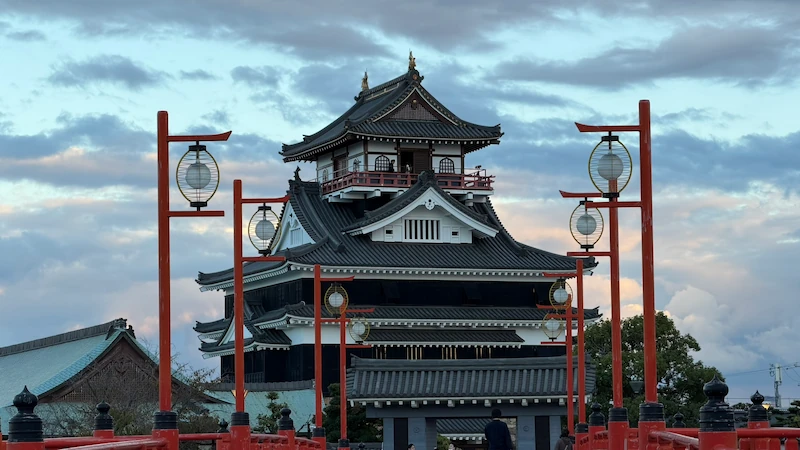
Kiyosu Castle Complete Guide | Nobunaga's Stronghold, the Kiyosu Conference & Access from Nagoya
Seven minutes from Nagoya, Kiyosu was where Nobunaga launched his rise to power — the stage of the Kiyosu Conference and, later, the Kiyosu-goshi relocation that helped build Nagoya itself.
On a January morning, as I stepped off at Kiyosu Station (CA70) and began walking toward Sōken-in, the first thing I felt was this: Kiyosu is smaller than you expect, but far richer than you imagine. It is only about seven minutes by train from Nagoya, and even if you connect every major site on foot, the route takes roughly 60 to 150 minutes. In that compact span of distance and time, you can feel nearly every major turning point in Japanese history from the Sengoku period into the early Edo era.
This was the base from which Nobunaga brought Owari under control, the departure point for Okehazama, the stage of the Kiyosu Conference that decided the Oda succession, and the city whose castle, temples, shrines, merchants, and even name were effectively transferred to Nagoya during the Kiyosu-goshi relocation. Kiyosu holds all of that history folded into its rivers, bridges, and small parks.
This guide is based on information checked on foot at the sites themselves. It includes easy-to-miss points, honest judgments about what is truly worth seeing, and seasonal notes for planning your visit.
Although Kiyosu sits directly next to Nagoya, the present-day town has the unmistakable quiet of a place whose capital has moved elsewhere. Yet beneath that calm surface, this was one of the great stages where Japan's center of power repeatedly changed hands.
Young Oda Nobunaga used Kiyosu to consolidate Owari and set out toward Okehazama—his first real step toward national power. But the story of Kiyosu did not end there. After the Honnō-ji Incident, rival claims flared at the Kiyosu Conference. Nobunaga's second son, Oda Nobukatsu, built massive stone defenses; under Toyotomi rule, Fukushima Masanori held the castle. After Sekigahara, Matsudaira Tadayoshi entered, followed by Tokugawa Yoshinao. Kiyosu remained a strategic seat where the strongest victors of each age took their place.
The final act was one of the largest urban relocations in Japanese history: Kiyosu-goshi. Castle, temples, shrines, townspeople, and even the name "Kiyosu" moved wholesale to Nagoya, leaving this ground to settle into a long, quiet sleep.
This page connects Kiyosu's layered history as a walk linking Sōken-in, Oda Nobunaga Kōsha Shrine, the Kiyosu Old Castle stone wall, Kiyosu Castle, and Kiyosu Park, with 360-degree panoramic photos along the way. Nobunaga, Hideyoshi, Ieyasu—the rulers who remade Japan all passed through this starting point, the town that also became the mother soil of Nagoya.
[The two "Kiyosu" spellings that deepen the story]
This guide uses two Japanese spellings: 清洲 and 清須. In general, 清須 is often used when discussing medieval and Sengoku-period history, while 清洲 is more common for modern place names and facilities after the Edo-period relocation. The fluctuation itself tells you how long and layered the history of this place really is.
- Kiyosu: Why this was Nobunaga's starting point
- What I learned by walking the route in person (visits from November 2025 to January 2026)
- Access from Nagoya and recommended walking routes
- Site guide: What to see and what to feel
- Kōseizan Sōken-in Temple
- Oda Nobunaga Kōsha Shrine (inside Kiyosu Old Castle Site Park) 🎥 360°
- Kiyosu Furusato no Yakata
- Kiyosu Old Castle Stone Wall (restored stone wall in Kiyosu Old Castle Site Park)
- Kiyosu Castle (reconstructed keep and hands-on history exhibits) 🎥 360°
- Kiyosu Park (Oda Nobunaga and Nōhime statues, and "Okehazama-yama") 🎥 360°
- What was the Kiyosu Conference? The transfer of power after the Honnō-ji Incident
- Practical information: Hours, fees, and seasonal tips
- Frequently asked questions
- Warrior profiles: Learn more about figures connected with Kiyosu
- More sites connected to Kiyosu's story
- Return to the main page
Kiyosu: Why this was Nobunaga's starting point
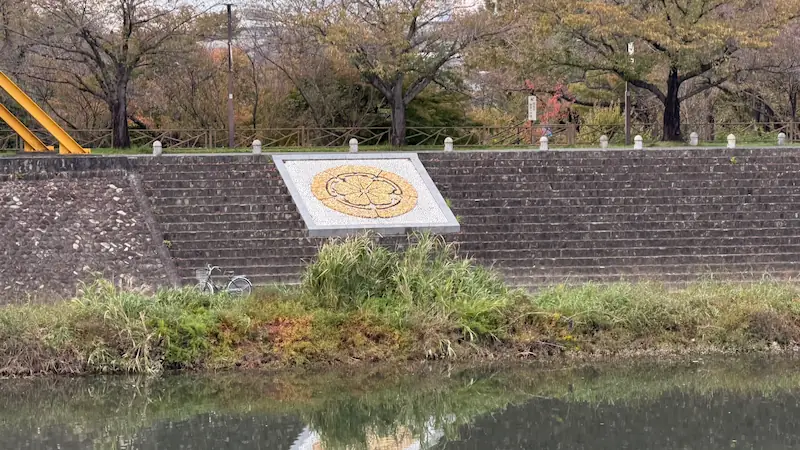
Although Kiyosu is right beside Nagoya, the air here still carries the quiet of a former capital after power has moved away. The lowland landscape shaped by the Gojō, Shin, and Shōnai rivers is peaceful today, but in the Sengoku period, those waterways and roads were the source of the town's strength. As a junction in the Owari Plain where people, goods, and information converged, Kiyosu was never a mere backdrop—it was infrastructure for ambition.

When Oda Nobunaga moved from Nagoya Castle to Kiyosu in 1555 and made it the base for mastering Owari, it was because the town already functioned as a military and urban center. Kiyosu was not simply a place with a castle. It was a city where highways, markets, and river transport met. The Mino Road connected Nagoya with the Nakasendō, and this combination of land and water networks became the stage machinery behind Nobunaga's rise.
After Kiyosu-goshi and the start of the Edo period, the area was reborn as a post town on the Mino Road. After the Honnō-ji Incident, the Kiyosu Conference met here to discuss succession and territory, and Kiyosu became remembered as the conference city where the future of national power was negotiated. In the early Edo period, the urban spotlight shifted to Nagoya, but Kiyosu retained the outline of its former prosperity.
Historical data
| Founded / developed | Early 15th century. Kiyosu Castle is said to have been built in 1405, with a castle town forming around it. |
|---|---|
| Founder | Traditionally attributed to Shiba Yoshishige, military governor of Owari. |
| Structure / character | A castle town and later post town supported by waterways such as the Gojō and Shin rivers and by highway networks. |
| Major changes | Urban functions moved to Nagoya during Kiyosu-goshi in the early 17th century. Kiyosu Park opened in 1922 and was renovated in 1999. |
| Current condition | The old center continues as a modern urban area. Memory of the former town survives in riverside walks and historical parks. |
| Loss / damage | During Kiyosu-goshi, the main urban district, temples, shrines, and merchant quarters were transferred to Nagoya, sharply reducing the old city's scale. |
| Cultural property notes | Nearby cultural assets include the national historic site Kaigarayama Shell Mound and Important Cultural Properties excavated from the Asahi Site. |
| Note | In spring, the Gojō River becomes a celebrated cherry blossom corridor. Kiyosu is unusual in offering both Sengoku history and ancient history from the Asahi Site in one compact area. |
Highlights
- The Gojō River landscape: The riverside walk still carries the memory of the castle town. The more you walk, the more the town's old structure comes into view.
- The old Mino Road and post-town atmosphere: Tracing the road that linked Nagoya and the Nakasendō helps explain why Kiyosu was once a destination, not merely a place to pass through.
- Seasonal appeal: During cherry blossom season, the Kiyosu Castle Sakura Festival is held across the Gojō River from the castle, and lantern-lit blossoms create a striking riverside scene.
Trivia
- An unexpected deeper past: Kiyosu's story is not only Sengoku history. It also sits near the Asahi Site and the Kaigarayama Shell Mound, evidence of another center of life stretching back to the Yayoi period.
- Kiyosu-goshi and Nagoya's grid plan: The move to Nagoya was tied to the grid-based planning of the new castle town. In that sense, Kiyosu helped give birth to Nagoya's urban form.
- Famous figures: Nobunaga's entry in 1555 made Kiyosu the launch point of his rise, and after the Honnō-ji Incident, the Kiyosu Conference debated succession and territorial redistribution.
Address
Around Kiyosu, Kiyosu City, Aichi Prefecture
Access
JR Nagoya Station (CA68) → Kiyosu Station (CA70), about 7 minutes
Suggested time
1 to 3 hours, depending on route
What I learned by walking the route in person (visits from November 2025 to January 2026)
When you get off at Kiyosu Station (CA70) on the JR Tōkaidō Line, you will find a tourist information board almost immediately outside the ticket gates, with directions toward Sōken-in. The walk from the station to the temple takes about six minutes. The route is fairly straightforward, but because it passes through a residential area, keeping a map open is reassuring.
Things I noticed on site:
- Kiyosu Castle is not on the exact original site: The current reconstructed keep was built in 1989 and stands slightly away from the original honmaru (a Japanese castle's main enclosure, where the lord's residence and keep normally stood). The Kiyosu Old Castle Site Park and restored stone wall are closer to the original main enclosure. Knowing this before you walk makes every stop more meaningful.
- Sōken-in requires advance reservation: If your goal is to see the fire-scarred helmet, contact the temple in advance. You may not be able to enter if you simply drop by on the day.
- Morning is best for the fourth-floor view: In the afternoon, the westering sun comes in from the direction of Nagoya Station (CA68), making photography harder. For panorama photos, visit in the morning.
- The stone wall is easy to miss: The restored stone wall is right beside Kiyosu Furusato no Yakata, but the sign is small. Without looking for it, you may walk past.
Crowds: On a winter weekday, the area was very quiet, and I was able to spend more than 30 minutes inside the castle at a relaxed pace. Cherry blossom season from late March to early April and the Nobunaga memorial festival on June 2 are busier.
Access from Nagoya and recommended walking routes
Kiyosu Station (CA70), about seven minutes by JR from Nagoya Station (CA68), is the fastest and most practical starting point. All major sites can be connected on foot, making it possible to trace the history of Kiyosu in a 60- to 150-minute circuit.
Access: JR vs. Meitetsu
JR Tōkaidō Line "Kiyosu Station (CA70)" (fastest and recommended)
From Nagoya Station (CA68), take the JR Tōkaidō Line toward Ōgaki for two stops, about seven minutes. From Kiyosu Station, Sōken-in is about six minutes on foot, or 0.45 km, while the castle area takes about 20 to 25 minutes.
→ Best for visitors following the recommended route: Sōken-in → Nobunaga Kōsha Shrine → Furusato no Yakata → stone wall → Kiyosu Castle → Kiyosu Park.
Meitetsu Nagoya Main Line "Shin-Kiyosu Station (NH44)" (best for scenery)
About ten minutes from Meitetsu Nagoya Station (NH36). From Shin-Kiyosu Station, walking toward the Gojō River lets you see the Nobunaga and Nōhime statues in Kiyosu Park first, then cross Ōte Bridge toward the castle.
→ Best for visitors who want to begin with the view of Kiyosu Castle beyond the vermilion Ōte Bridge.
JR Pass and IC card coverage on this route
The Nagoya–Kiyosu hop stays entirely on JR Central's Tōkaidō Main Line (local/rapid trains, not the Shinkansen). The nationwide JAPAN RAIL PASS covers ordinary JR local and rapid trains, so it is valid for this short ride. TOICA is valid, since both Nagoya and Kiyosu stations are within the TOICA area, and nationwide mutually compatible IC cards — Suica, ICOCA, PASMO, manaca, and others — also work here under Japan's national IC card interoperability system. Note that region-limited JR passes vary by product, so this does not necessarily extend to every regional pass; confirm coverage for any pass other than the nationwide JAPAN RAIL PASS before relying on it here. (Confirm current pass terms before your visit — coverage rules are subject to change.)
Getting to Nagoya from Tokyo, Kyoto & Osaka
Most international visitors reach Kiyosu by first getting to Nagoya Station, then continuing on the JR Tōkaidō Line as above. Approximate Shinkansen travel times to Nagoya Station (station-to-station; actual times vary by specific train and time of day):
| From Tokyo Station | Nozomi: about 1h40m | Hikari: about 2h | Kodama: about 2h40m |
|---|---|
| From Kyoto Station | Nozomi: about 33–35 min | Hikari: about 45–50 min | Kodama: about 1h |
| From Shin-Osaka Station | Nozomi: about 50 min | Hikari: about 1h–1h5m | Kodama: about 1h10–20m |
Two important notes. First, the standard nationwide JAPAN RAIL PASS covers Hikari and Kodama Shinkansen services but does not cover Nozomi — riding Nozomi requires buying a separate "Nozomi/Mizuho Special Fare Ticket" on top of the pass. Second, "from Osaka" above means Shin-Osaka Station specifically, the Shinkansen station. This is a different station from Osaka Station, the JR Osaka Loop Line/Kansai commuter hub in central Osaka — if you are starting from Osaka Station rather than Shin-Osaka Station, add transfer time to reach Shin-Osaka first. Do not assume the two are interchangeable when planning your journey.
Time-based route plans
60-minute course: Kiyosu Castle → Ōte Bridge photo spot → Kiyosu Park (Nobunaga and Nōhime statues)
- Spend 30 to 40 minutes viewing the castle exhibits from the first to fourth floors.
- Cross back over Ōte Bridge and walk to Kiyosu Park in about five minutes.
- See the Nobunaga and Nōhime statues and Okehazama-yama before returning to the station.
90-minute course: Add the Kiyosu Old Castle stone wall, Kiyosu Furusato no Yakata, and Oda Nobunaga Kōsha Shrine to the 60-minute course.
- After leaving the castle, walk about two minutes to the restored stone wall.
- Rest next door at Furusato no Yakata, which is free to enter.
- Pass through Kiyosu Old Castle Site Park to the Nobunaga Kōsha Shrine, about one minute away.
120- to 150-minute course: Add Sōken-in to the 90-minute course. Advance reservation is required.
- Visit Sōken-in first if you include it: It is six minutes on foot from Kiyosu Station (CA70), and from there it is natural to continue south toward the shrine, stone wall, castle, and park.
- Sōken-in → Nobunaga Kōsha Shrine (20 minutes / 1.5 km) → Furusato no Yakata (1 minute) → stone wall (1 minute) → Kiyosu Castle (2 minutes) → Kiyosu Park (5 minutes)
- A short rest at Furusato no Yakata and another on a park bench makes the route feel well paced.
Use these Japanese cards when taking a taxi between JR Kiyosu Station and Kiyosu Castle. Open the card you need and show the enlarged Japanese text to the driver.
▶ TAP / CLICK TO OPEN TAP / CLICK TO CLOSE Large Japanese text appears below for a taxi driver OPEN CLOSE From JR Kiyosu Station to Kiyosu Castle
Use this when taking a taxi from JR Kiyosu Station to Kiyosu Castle. The second line clarifies that you want to be dropped near the main entrance.
清洲城まで
お願いします
正面入口の近くまで
お願いします
Kiyosu Castle
From JR Kiyosu Station
▶ TAP / CLICK TO OPEN TAP / CLICK TO CLOSE Large Japanese text appears below for a taxi driver OPEN CLOSE From Kiyosu Castle back to JR Kiyosu Station
Use this when returning from Kiyosu Castle to JR Kiyosu Station. “JR Kiyosu Station” makes the destination clearer for the driver.
JR清洲駅まで
お願いします
駅入口の近くまで
お願いします
JR Kiyosu Station
From Kiyosu Castle
Site guide: What to see and what to feel
Kōseizan Sōken-in Temple
A temple where you encounter Nobunaga's fire-scarred helmet—the place where Tokugawa hands inherited Oda prayer

Oda Nobunaga's body was never found after the Honnō-ji Incident. Sōken-in is one of the places where that absence was turned into prayer. Its origin lies in Oda Nobukatsu, Nobunaga's son, who took over Ankoku-ji in Kuwana, Ise Province, to mourn his father and established Keiyōzan Sōken-ji in 1583, according to the temple's official history.
But Kiyosu's history is never simple. Temples in the Kiyosu castle town were also swept up in Kiyosu-goshi, moving to Nagoya with the town in 1610 and leaving the old ground behind as a ruin. Sōken-in, founded in 1644, was later rebuilt on land associated with Sōken-ji, as if restoring the old site once more as a place of prayer. Tokugawa Yoshinao, the first lord of Owari Domain, is said to have given it the name Kōseizan Sōken-in, creating a uniquely Owari seam where Tokugawa authority preserved Oda memory.
The temple treasure known as the "fire-scarred helmet" is explained as the helmet Nobukatsu had recovered from the burned remains immediately after the Honnō-ji Incident. The damaged bowl, stripped of its ornament by fire, carries a kind of reality that written records cannot fully convey. Advance reservation is required. If seeing the helmet is your reason for visiting, contact the temple beforehand.
Highlights
- The "fire-scarred helmet": Said to have been recovered by Nobukatsu after the Honnō-ji Incident. The burned, missing ornamentation wordlessly conveys the brutality of the event.
- The pairing of gate and bell tower: The disciplined frontage along the old road photographs beautifully as the public face of a castle-town temple.
- Seasonal suggestion: In spring, combine this temple with the cherry trees along the Gojō River for a day that brings together Kiyosu's riverside atmosphere and Nobunaga history.


Tap a photo to enlarge
Suggested time: Quick visit about 15 minutes; a deeper visit about 30 minutes.
Detailed historical data
| Founded | 1644, rebuilt on the former site of Sōken-ji. |
|---|---|
| Founder / restorer | Rebuilt by the monk Eikitsu, third abbot of Sōken-ji. |
| Structure / features | A Rinzai Zen temple of the Myōshin-ji school, with a gate, main hall, bell tower, and the helmet traditionally associated with Oda Nobunaga. |
| Changes | Greatly damaged by an earthquake in 1585 and rebuilt in Kiyosu; moved to Nagoya during Kiyosu-goshi in 1610; reestablished as Sōken-in in 1644. |
| Current condition | Main hall and gate remain. It is not open at all times; advance contact and reservation are required. |
| Loss / damage | Damaged in the 1585 earthquake. The original Sōken-ji was moved during Kiyosu-goshi, leaving the old site behind. |
| Cultural property status | Aichi Prefecture-designated cultural properties include a wooden standing Kannon statue and a purple robe of Chinese silk, both traditionally connected with Oda Nobukatsu's donations. |
| Note | A temple where visitors can feel a physical trace of Nobunaga. It pairs well with a walk along the old Mino Road. |
Trivia
- Three "Sōken" temples and Nobunaga memorialization: Azuchi's Sōken-ji has roots in the temple Nobunaga himself founded inside Azuchi Castle. Kyoto's Sōken-in was founded by Toyotomi Hideyoshi at Daitoku-ji to assert succession. Kiyosu's Sōken-in began through Nobunaga's son Nobukatsu, making it the most directly familial of the three.
- Famous figures: Its origin lies with Oda Nobukatsu, while its later name was given by Tokugawa Yoshinao, the ninth son of Tokugawa Ieyasu.
- Insider note: Visiting is not always possible without advance contact. Once your schedule is fixed, call early.
Address
1-5-2 Ōshima, Kiyosu, Aichi 452-0934
Access
6 minutes on foot from JR Kiyosu Station (CA70), about 0.45 km
Parking
Confirm in advance
Admission
Confirm in advance; reservation required
Open the map to check the relationship between Kiyosu Station and Sōken-in.
Oda Nobunaga Kōsha Shrine (inside Kiyosu Old Castle Site Park) 🎥 360°
A quiet place of prayer—a small shrine near the former honmaru honoring Nobunaga as a local guardian

Oda Nobunaga Kōsha Shrine sits quietly near the former main enclosure inside Kiyosu Old Castle Site Park. It enshrines Nobunaga as a guardian of the local community. Every year on June 2, the anniversary of his death, the Oda Nobunaga Memorial Festival is held here, and prayers are still offered.
Because the shrine does not make a dramatic claim on the landscape, the visit becomes a quiet act. Its slightly raised position and the short path through the trees help settle your thoughts before you arrive. With no theatrical staging, you can reflect on Nobunaga's story at your own pace.
Highlights
- A quiet shrine near the old main enclosure: Its restrained scale makes the site feel personal rather than touristic.
- June 2 memorial festival: The ceremony keeps Nobunaga's memory alive in the local community.
- Walk through the park: The short path through the trees gives the stop a meditative atmosphere.


Tap a photo to enlarge
Suggested time: about 5 to 20 minutes.
Address
Inside Kiyosu Old Castle Site Park, Kiyosu City, Aichi
Access
About 20 minutes on foot from JR Kiyosu Station, or a short walk from Kiyosu Castle
Admission
Free
Open the map to see the walking relationship between Sōken-in and Oda Nobunaga Kōsha Shrine.
Detailed historical data
| Established | Unknown, likely connected with modern park development and memorial activity. |
|---|---|
| Founder | Local residents and supporters; the present memorial festival is organized by local tourism groups including the Kiyosu City Tourism Association. |
| Structure / features | A small shrine dedicated to Oda Nobunaga inside Kiyosu Old Castle Site Park. Memorial rites are held in front of the shrine on his death anniversary. |
| Current condition | Still present as a worship spot within the park. |
| Cultural property status | No cultural property designation confirmed. |
| Note | The Oda Nobunaga Memorial Festival is held annually on June 2. |
Trivia
- A local guardian: Here Nobunaga is not only a national historical figure; he is honored as a protective presence tied to the community.
- Connected route: The shrine is easiest to understand when paired with the nearby restored stone wall and Furusato no Yakata.
Kiyosu Furusato no Yakata
A free rest stop and prime castle-view seat—your walking base overlooking Kiyosu Castle beyond Ōte Bridge
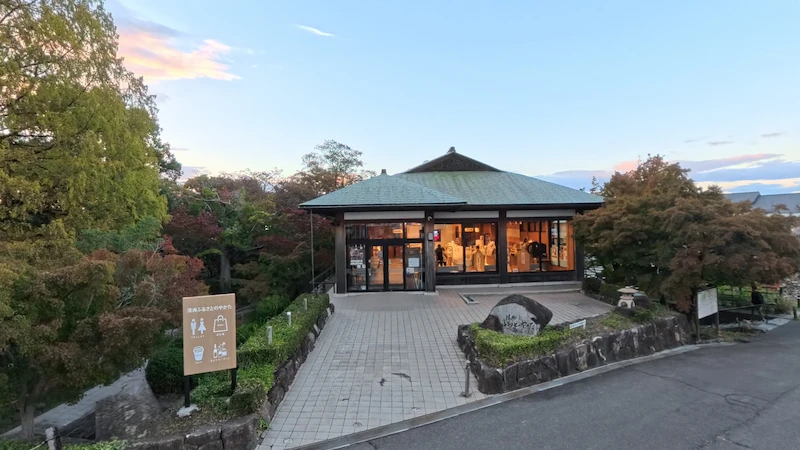
Kiyosu Furusato no Yakata is a free rest facility in a spot that overlooks the full profile of Kiyosu Castle from Ōte Bridge. It is ideal after a walk. In the basement is the Kiyosu Armor Workshop, where aluminum armor is made based on the okegawa-dō style said to have been devised by Nobunaga. Visitors can see the workshop up close, and the armor produced there is used for try-on experiences at Kiyosu Castle.
Highlights
- Kiyosu Castle view beyond Ōte Bridge: A prime seat for viewing the entire castle. Sitting here after your walk helps you read the shape of the old castle town.
- Souvenirs and local products: Nobunaga-themed goods let you bring a tangible memory of the trip home.
- Kiyosu Armor Workshop: Seeing handmade aluminum armor being produced adds a modern craft dimension to the castle visit.
Detailed historical data
| Operator | Kiyosu City as a tourism facility. |
|---|---|
| Structure / features | Free rest area plus local products and souvenir sales; adjacent to Kiyosu Old Castle Site Park, with a full view of Kiyosu Castle from Ōte Bridge. |
| Current condition | Open 9:00–17:00, closed Mondays; special notices may apply during cherry blossom viewing season. |
| Cultural property status | None. |
| Note | Home to the Kiyosu Armor Workshop in the basement; volunteer guide information is also available. |
Address
Kiyosu Furusato no Yakata, Kiyosu City, Aichi
Access
Beside Kiyosu Old Castle Site Park and close to Ōte Bridge
Admission
Free
Open the map to see the relationship between Furusato no Yakata and the restored stone wall.
Kiyosu Old Castle Stone Wall (restored stone wall in Kiyosu Old Castle Site Park)
A turning point from medieval to early-modern fortification—Sengoku stonework unearthed from beneath the ground
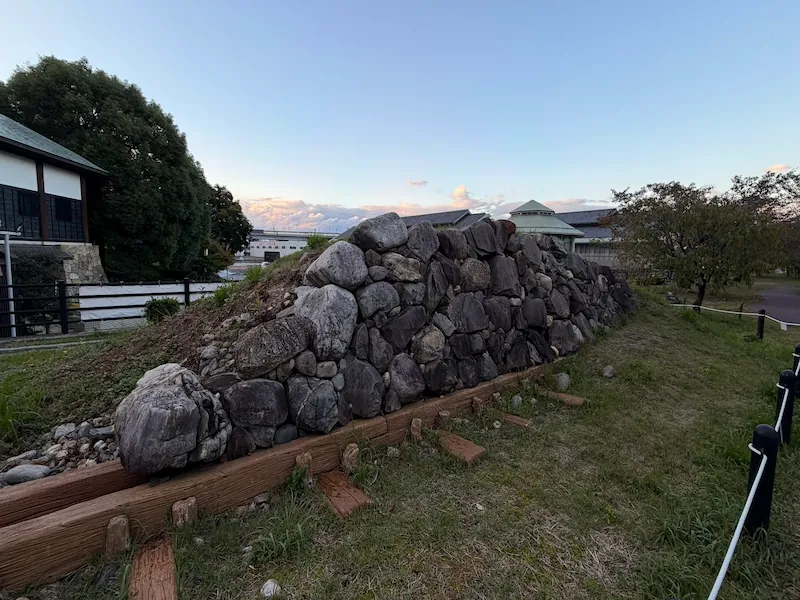
In Kiyosu Old Castle Site Park, where the breeze comes in from the Gojō River, the Kiyosu Old Castle stone wall suddenly catches your eye. Unlike the precisely cut stonework of later castles, it uses natural stones in a nozura-zumi style (a masonry technique that uses roughly unshaped natural stones rather than cut, fitted blocks). That roughness beautifully expresses a moment when Kiyosu was transforming into a Sengoku capital.
Oda Nobukatsu, Nobunaga's second son, is said to have carried out major renovations of Kiyosu Castle in 1586. To build a huge stone wall on soft ground, wooden pine piles were driven in, and a ladder-like foundation known as hashigo-dōgi was laid above them. This wall is a precious surviving clue to the civil engineering technology of the transition from medieval "earth castles" to early-modern "stone castles." During Kiyosu-goshi in 1610, many stones are said to have been reused for Nagoya Castle. In 1996, stones from the eastern side of the honmaru were discovered during river works, excavated, and moved to the present park, where they were restored.
Highlights
- The Sengoku character of nozura-zumi: The irregular surfaces of natural stones convey a very different atmosphere from the neat cut stone of later castles.
- Foundation technology against weak ground: The use of piles and base timbers to stabilize a stone wall on alluvial soil is the key engineering point.


Tap a photo to enlarge
Suggested time: 10 to 20 minutes.
Detailed historical data
| Built | Around 1586, during Oda Nobukatsu's major renovation of Kiyosu Castle. |
|---|---|
| Builder | Oda Nobukatsu. |
| Structure / features | Natural-stone nozura-zumi wall with foundation work adapted to soft alluvial ground using piles and ladder-like base timbers. |
| Changes | Many stones were reportedly removed for Nagoya Castle during Kiyosu-goshi. A portion was discovered in 1996 and relocated and restored in the park. |
| Current condition | Restored and displayed in Kiyosu Old Castle Site Park. |
| Note | An important physical reminder of the original castle area, closer to the former honmaru than the current reconstructed keep. |
Trivia
- Unexpected historical background: Stones were moved for reuse at Nagoya Castle during Kiyosu-goshi. The stones seen here had remained buried deeply enough to be discovered by chance in the Heisei era—stones that, in a sense, "missed the move" to Nagoya.
- Famous figure: The wall was built by Oda Nobukatsu. Though often judged as mediocre, this remains silent evidence of his civil engineering and architectural ambition.
Address
Kiyosu Old Castle Site Park, Kiyosu City, Aichi
Admission
Free
Open the map to see the stone wall's location beside Furusato no Yakata.
Kiyosu Castle (reconstructed keep and hands-on history exhibits) 🎥 360°
The experiential hub of Nobunaga's Kiyosu—from the runway to national power to the Kiyosu Conference

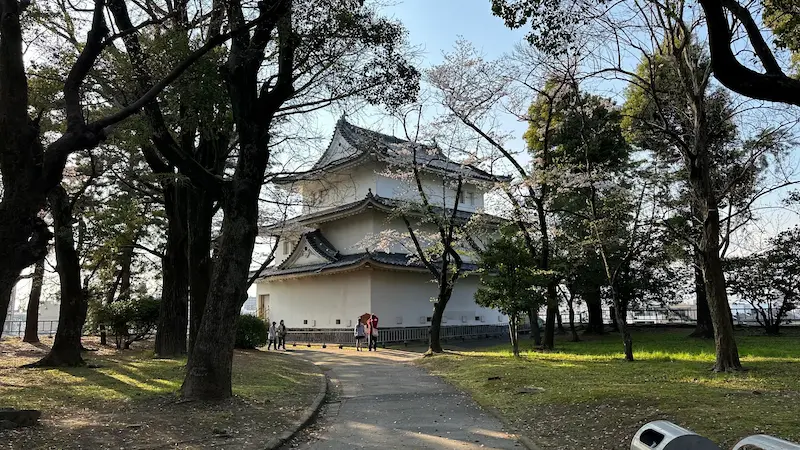
With the vermilion Ōte Bridge spanning the Gojō River and the golden shachi-topped keep reflected in the water, the Kiyosu Castle we see today is not a surviving Sengoku structure. It is a reconstructed castle that brings Kiyosu's history to life through exhibits and experiences. Even so, standing here helps you feel how the town's geography and transport networks supported the "runway" from which Oda Nobunaga moved from Nagoya Castle to Kiyosu and then launched toward Okehazama.
In Nobunaga's time, Kiyosu Castle is thought to have been closer in character to a fortified residence centered on the former shugo (military governor, a provincial administrative post under the shogunate) headquarters than to the image of later early-modern castles. After the Honnō-ji Incident and the Kiyosu Conference, Nobukatsu became lord and transformed Kiyosu into a large-scale castle complex with a keep and a full castle-town function.
During Kiyosu-goshi in 1610, the castle and town center moved to Nagoya. The castle was dismantled, and its materials were inherited by Nagoya Castle. The northwest corner turret of Nagoya Castle is traditionally called the Kiyosu Turret because old materials from this relocation are said to have been reused there.
After the site had disappeared from the historical stage, the present keep was reconstructed in 1989 as a symbol of Kiyosu. The right way to enjoy it is as a circuit-style history museum that includes the landscape of the Gojō River.
Enter across the vermilion Ōte Bridge, pass through the main gate, and notice the recreated Nobunaga wall beside the gate, modeled after the Nobunaga wall at Atsuta Jingū. Then step into the dry landscape garden, where the clear sound of the suikinkutsu water harp slows the rhythm of the journey. Inside the keep, exhibits unfold from the first through fourth floors: Kiyosu's origins, a virtual walk through the castle town, a Kiyosu Conference video theater, an Okehazama experience theater, a matchlock-gun experience theater, and the top-floor view with binoculars and a mechanical Kiyosu telescope. Next door, the Geinō Bunka-kan contains the Kuroki Shoin, said to have inspired the setting of the film The Kiyosu Conference, and offers armor and uchikake try-on experiences on weekends and holidays for a fee.
Highlights
- Exterior elements that switch on the Sengoku mood: The vermilion Ōte Bridge, main gate, and recreated Nobunaga wall quickly connect the visitor to Nobunaga and Okehazama.
- Interactive exhibits: The Kiyosu Conference theater and Okehazama experience make the castle more than a photo stop.
- Fourth-floor view: Looking out across the lowlands helps explain why Kiyosu mattered strategically.
- Geinō Bunka-kan: The Kuroki Shoin and armor try-on experience add a cultural and hands-on layer to the visit.


Tap a photo to enlarge
Suggested time: about 60 to 120 minutes for the keep exhibits.
Detailed historical data
| Built | Original Kiyosu Castle: 1405 / present reconstructed keep: 1989. |
|---|---|
| Founder / builder | Original: Shiba Yoshishige; present facility: rebuilt by Kiyosu City, formerly Kiyosu Town. |
| Structure / features | Reconstructed four-level exhibition keep, Geinō Bunka-kan with Kuroki Shoin and performance room, dry landscape garden with suikinkutsu, vermilion Ōte Bridge, main gate, and recreated Nobunaga wall. |
| Changes | The Nobunaga-period structure was likely close to a shugo residence; after the Kiyosu Conference, Nobukatsu expanded it; abandoned during Kiyosu-goshi in 1610; reconstructed at the present site in 1989. |
| Current condition | No Sengoku-period buildings survive. The current keep is an exhibition facility and symbol of Kiyosu. |
| Note | Best understood together with the original-site area around the old castle park and stone wall. |
Admission fees (Kiyosu Castle keep)
| Adult | ¥400 individual / ¥300 for groups of 30 or more |
|---|---|
| Child (elementary–junior high) | ¥200 individual / ¥150 for groups of 30 or more |
| Preschool | Free |
| Disability discount | Free on presentation of a disability certificate at the counter; one accompanying companion receives half price. |
Figures are from the Kiyosu City Tourism Association's official fee page as of this writing and may change — confirm current admission before your visit.
Armor & uchikake try-on experience (Geinō Bunka-kan)
| Armor (kacchū) | ¥500 per set / 30 minutes |
|---|---|
| Uchikake kimono | ¥200 per garment / 30 minutes |
| Days & hours | Saturdays, Sundays, and national holidays, 10:00–16:00, last entry 15:30 |
| Notes | Children's sizes are available but may not fit all body types. Groups of 5 or more must arrange in advance. The experience may be suspended or relocated due to events or venue circumstances. |
Whether Kiyosu Castle keep admission is required in addition to this try-on fee is not stated on the official page — treat this as unconfirmed and ask at the counter. Prices and hours may change; confirm before your visit.
Trivia
- Not the original site: The present keep stands away from the original honmaru; the Old Castle Site Park and stone wall are closer to it.
Address
1 Asahi Shiroyashiki, Kiyosu, Aichi 452-0932
Hours
9:00–16:30, last admission 16:00
Open the map to confirm the route from Kiyosu Castle toward Kiyosu Park.
Kiyosu Park (Oda Nobunaga and Nōhime statues, and "Okehazama-yama") 🎥 360°
A place to feel the moment of departure—the starting ground where 26-year-old Nobunaga looked toward Okehazama
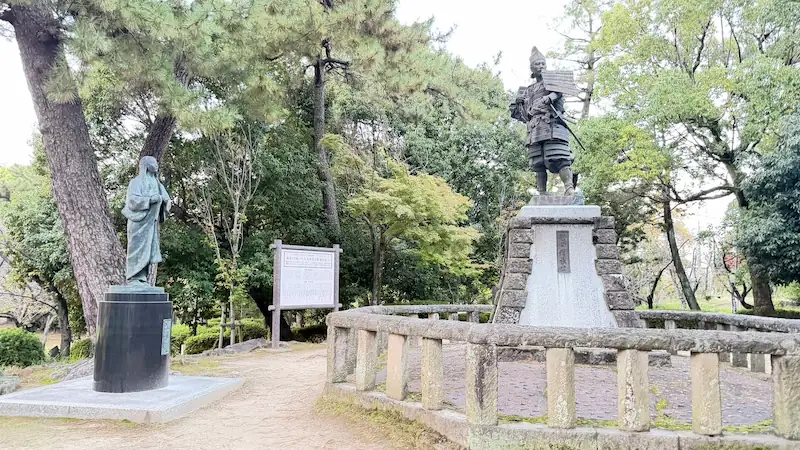
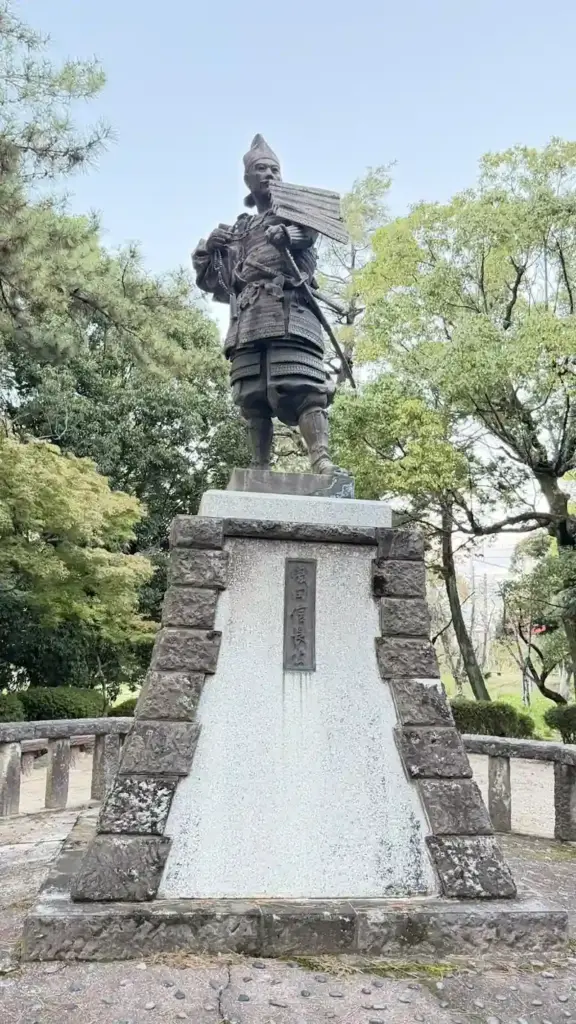
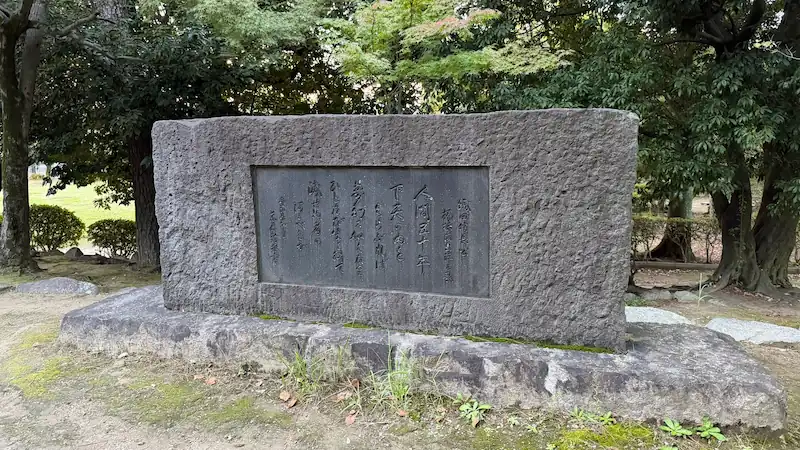
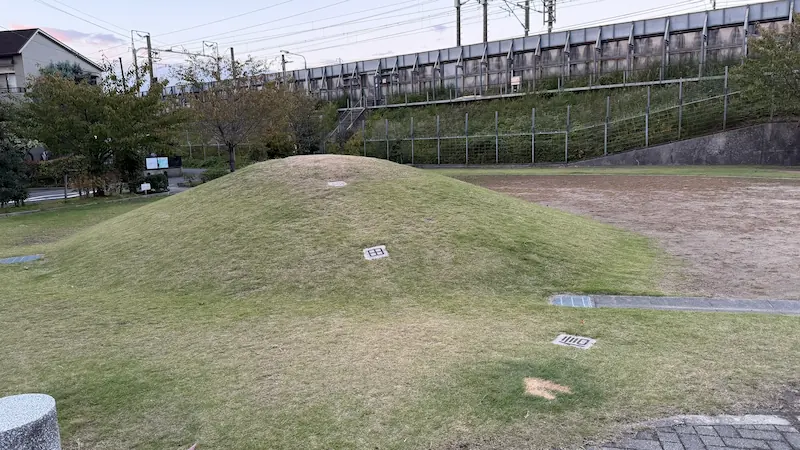
Kiyosu Park stands across the Gojō River from Kiyosu Castle. On a small rise, the bronze statue of Oda Nobunaga depicts him at age 26, setting out for the Battle of Okehazama in 1560. His gaze is directed toward Okehazama to the southeast, turning the statue itself into a narrative device. Since 2012, the statue of Nōhime has stood beside him, creating a pair that gives the park a more human, intimate atmosphere.
The park is free and always open, so it works well as the final stop after the castle. In spring, the Gojō River's cherry blossoms make the area especially photogenic; in quieter seasons, the statues and riverbank feel more contemplative.
Highlights
- Oda Nobunaga statue in departure pose: The statue depicts Nobunaga at 26, setting out for Okehazama in 1560. The direction of his gaze becomes part of the story.
- Nōhime statue: Moved beside Nobunaga in 2012, the statue changes the scene from a solitary warlord image into a pair.
- Okehazama-yama: The small mound offers a symbolic way to connect Kiyosu with the battle that changed Nobunaga's fate.
- Gojō River cherry blossoms: In spring, the riverside becomes one of the most atmospheric scenes in Kiyosu.


Tap a photo to enlarge
Suggested time: about 15 to 45 minutes.
Detailed historical data
| Opened | 1922, later renovated in 1999. |
|---|---|
| Features | Riverside park with statues of Oda Nobunaga and Nōhime, a small mound known as Okehazama-yama, and Gojō River scenery. |
| Current condition | Free and open at all times. |
| Seasonal note | Cherry blossoms along the Gojō River are a major seasonal draw from late March to early April. |
Address
Kiyosu Park, Kiyosu City, Aichi
Access
About five minutes on foot from Kiyosu Castle, roughly 350 m
Admission
Free
Open the map to check the relationship between Kiyosu Castle and Kiyosu Park.
What was the Kiyosu Conference? The transfer of power after the Honnō-ji Incident
It would be a shame to visit Kiyosu and let the experience end with "Kiyosu Castle equals Nobunaga's castle." Another event deeply engraved in this town is the Kiyosu Conference, held in June 1582.
After Nobunaga was killed in the Honnō-ji Incident, his leading retainers gathered in Kiyosu to decide who would become the next head of the Oda house and how the territories should be divided. The main participants included Hashiba Hideyoshi, Shibata Katsuie, Niwa Nagahide, and Ikeda Tsuneoki. Also central to the succession question were Nobunaga's descendants: Sanbōshi, the young son of Nobutada and later known as Hidenobu, as well as Nobunaga's second son Nobukatsu and third son Nobutaka.
The figure who maneuvered most skillfully at the conference was Hashiba Hideyoshi, later Toyotomi Hideyoshi. Shibata Katsuie backed Nobutaka and ultimately lost, setting the stage for the Battle of Shizugatake in 1583. The Kiyosu Conference is a crucial moment in Japanese history because it marks the shift in the path to national power from Nobunaga to Hideyoshi.
On the third floor of Kiyosu Castle, a video theater recreates the conference with life-size monitors. Seeing this scene through images and commentary in the place where the event unfolded is one of the experiences unique to Kiyosu Castle.
In 2013, director Kōki Mitani released the film The Kiyosu Conference, portraying the meeting with his characteristic comic touch. The Kuroki Shoin inside the Geinō Bunka-kan is said to have served as a model for the film's background setting and can be visited.
Practical information: Hours, fees, and seasonal tips
| Kiyosu Castle keep | 9:00–16:30, last admission 16:00. Closed Mondays; if Monday is a national holiday, closed the following weekday. Special holiday openings may apply. |
|---|---|
| Admission to the keep | Adult ¥400 (¥300/group of 30+); child (elementary–junior high) ¥200 (¥150/group); preschool free. Free entry with a disability certificate, plus half price for one companion. Figures from the Kiyosu City Tourism Association's official page; fees may change, so check the official site before visiting. |
| Geinō Bunka-kan armor/uchikake try-on | Saturdays, Sundays & national holidays, 10:00–16:00 (last entry 15:30). Armor ¥500/30 min; uchikake ¥200/30 min. Whether castle keep admission is also required is not stated on the official page — confirm at the counter. |
| Kiyosu Park | Free and open at all times. |
| Kiyosu Old Castle Site Park | Free and open at all times. |
| Kiyosu Furusato no Yakata | 9:00–17:00, closed Mondays. Notices may exclude closure days during cherry blossom viewing season. |
| Sōken-in | Advance contact and reservation required. Same-day visits may not be accepted; contact the temple directly as early as possible. |
| Getting here | About 7 minutes by JR (local/rapid) from Nagoya Station; JAPAN RAIL PASS, TOICA, Suica and other nationwide IC cards are all valid on this hop. See the Access section for Shinkansen connections from Tokyo, Kyoto and Osaka. |
| Recommended seasons | Cherry blossoms from late March to early April: peak Gojō River scenery. June 2: Nobunaga memorial festival. Autumn to winter: quieter and easier for slow walking. |
| Rainy-day plan | Prioritize indoor sites: Kiyosu Castle and Furusato no Yakata. Keep the riverside and park portions short. |
Frequently asked questions
Yes. It is about seven minutes by JR train from Nagoya Station (CA68), and after arriving you can visit all major sites on foot. Kiyosu Castle alone takes about two to three hours round trip, while a full circuit takes roughly three to four hours.
No. The current Kiyosu Castle keep was reconstructed in 1989. The original Kiyosu Castle used by Nobunaga was dismantled during Kiyosu-goshi in 1610, and the present keep also stands away from the original honmaru. The Kiyosu Old Castle Site Park and restored stone wall are closer to the original main enclosure. Knowing this before you visit makes every stop far more meaningful.
It is believed to have been held inside Kiyosu Castle or in related facilities nearby. On the third floor of the present Kiyosu Castle, a video theater recreates the conference with life-size monitors. The Kuroki Shoin, said to have inspired the setting of Kōki Mitani's 2013 film The Kiyosu Conference, can also be seen in the Geinō Bunka-kan.
Yes. At the Geinō Bunka-kan beside Kiyosu Castle, visitors can try on armor (¥500 per set, 30 minutes) or an uchikake kimono (¥200 per garment, 30 minutes) on Saturdays, Sundays, and national holidays, 10:00–16:00 (last entry 15:30). The armor pieces are aluminum works made at the Kiyosu Armor Workshop beneath Kiyosu Furusato no Yakata. Whether castle keep admission is also required is not stated on the official page, so confirm at the counter. Prices may change.
Per the Kiyosu City Tourism Association's official fee page, adult admission is ¥400 (¥300 for groups of 30 or more) and child (elementary to junior-high) admission is ¥200 (¥150 for groups). Preschool children enter free. Visitors presenting a disability certificate enter free, with one accompanying companion admitted at half price. Fees may change, so confirm before your visit.
No. Advance reservation is required. You may not be able to enter if you simply visit on the day. If seeing the helmet is your goal, contact Sōken-in directly in advance.
They stand on a small rise inside Kiyosu Park, across the Gojō River from Kiyosu Castle and about a five-minute walk, or 350 meters, away. The Nobunaga statue faces southeast toward Okehazama, and since 2012 the Nōhime statue has stood beside it as part of a pair.
Kiyosu appears as an early setting in the drama. Scenes such as Tōkichirō, later Hideyoshi, taking his younger brother Koichirō, later Hidenaga, toward Kiyosu frame the town as a starting point. The Kiyosu Conference is also an important turning point in the drama, and the castle exhibits become more enjoyable after watching it.
Yes. Kiyosu Castle is entirely indoors, and Kiyosu Furusato no Yakata is also an indoor rest facility. On rainy days, focus on the castle's first- to fourth-floor exhibits and keep the riverside and park portions brief when the weather clears.
During the cherry blossom season from late March to early April, the Kiyosu Castle Sakura Festival is held and weekends become crowded. Arriving early on a weekday morning, or visiting outside the bloom period, makes it easier to enjoy the area slowly.
Yes. The Nagoya–Kiyosu hop runs on JR Central's ordinary Tōkaidō Main Line, which the nationwide JAPAN RAIL PASS covers, along with TOICA, Suica, and other nationwide IC cards. To reach Nagoya Station itself, Shinkansen travel time is roughly 1h40m (Nozomi) from Tokyo, 33–35 minutes (Nozomi) from Kyoto, and about 50 minutes (Nozomi) from Shin-Osaka Station — note this is Shin-Osaka Station, not Osaka Station, so add transfer time if you are starting from Osaka Station. The standard JAPAN RAIL PASS covers Hikari and Kodama services but not Nozomi, which requires a separate surcharge ticket.
Warrior profiles: Learn more about figures connected with Kiyosu
To go deeper into the warriors who shaped Kiyosu's history, see these related pages as well.
More sites connected to Kiyosu's story
Kiyosu connects directly to several other places on this site — Nobunaga's decisive battle, the Toyotomi Brothers drama trail, and the Nagoya castle he and his heirs built next.
Return to the main page
Information on hours, fees, reservations, and special openings may change. Always check official local sources before visiting, especially during festivals, cherry blossom season, or when planning to view temple treasures that require advance reservation. Admission and try-on prices in this guide reflect the Kiyosu City Tourism Association's official fee page as of this writing.
☕ Support This Site
Following the Shogun is built on original fieldwork and on-site research.
If you found this guide useful, your support helps keep it going.

You can also support via QR code


comment