


Area 6: Gardens, Shrines and Surroundings
Where castle history meets spiritual calm — the tranquil outer edges of Himeji Castle, blending gardens, shrines, and quiet ruins with the old castle town.
Area 6 invites you to explore the tranquil outer edges of Himeji Castle, where history blends seamlessly with gardens, shrines, and quiet ruins. Visit the Hyogo Prefectural Museum of History for deeper context, stroll through the refined beauty of Kōkoen Garden, and pay respects at the Otokoyama Senhime Tenmangū Shrine, dedicated to Princess Sen.
Along the way, you’ll discover remnants of lost gates, hidden moats, and atmospheric paths like Sengoku no Komichi — each offering a peaceful reflection on the castle’s legacy and its cultural surroundings. This area is ideal for those seeking a slower pace and a deeper connection to the spirit of Himeji; because the spots are spread widely around the castle’s perimeter, most visitors pick a handful rather than covering all 22 in one visit.
Hyogo Prefectural Museum of History (兵庫県立歴史博物館)
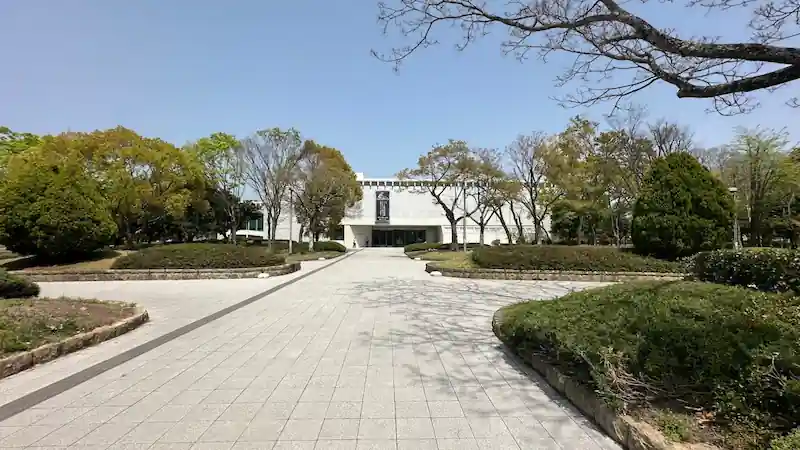
Located northeast of Himeji Castle, this museum was established in April 1983 to deepen understanding of local history. Designed by renowned architect Kenzo Tange, its architecture echoes Himeji Castle’s aesthetics with white walls and stone-like facades. Reopened in 2007 and again in 2023 after major upgrades, its exhibitions span from ancient times to the modern era, covering the history of Hyogo Prefecture (the former provinces of Settsu, Harima, Tajima, Tamba, and Awaji). The museum holds a collection of over 200,000 items, including an Important Cultural Property — a Kamakura-period painting of the Buddha’s parinirvana — and five Prefectural Tangible Cultural Properties, alongside exhibits like the “Anatomy of Himeji Castle,” which displays the East Main Pillar of the castle’s keep and shachihoko roof ornaments restored during the Showa-era renovation.
| Year established | 1983 |
|---|---|
| Architect | Kenzo Tange |
| Current status | Operational, with major renovations in 2007 and 2023 |
Access: Approx. 5-minute walk (350 m) from Kisaimon Gate Site
Suggested time: Quick highlights ~45 min / in-depth ~2 hours
Nozato Gate Ruins (野里門跡)
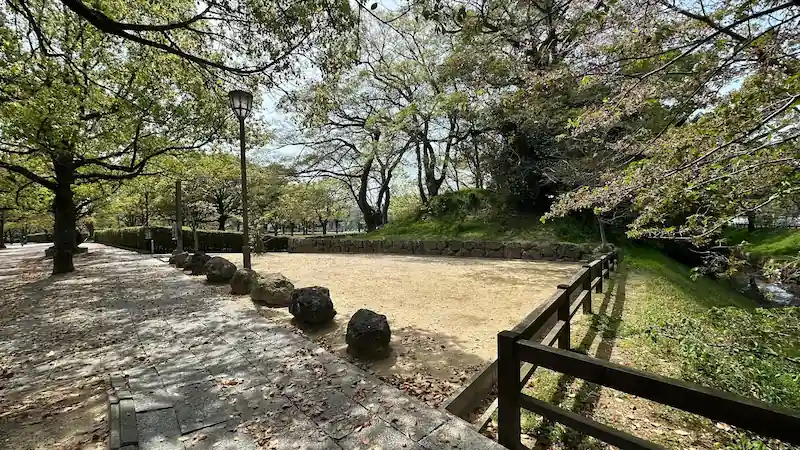
The Nozato Gate Ruins mark the former northern entrance to Himeji Castle’s inner castle town. The gate is said to take its name from the adjacent Nozato-machi, a district known for its metalworking artisans, and the surrounding area is believed to have functioned as a town district even before Toyotomi Hideyoshi’s 1581 renovations. Strategically positioned along the Tajima Kaido highway, it featured a complex zigzag design with two double-doored gateways separated by an inner courtyard — the larger inner gate, facing north, was topped with a storehouse, while the east-facing outer gate stood at a right angle to thwart direct assaults.
| Year built | Early 17th century (Edo period) |
|---|---|
| Builder | Ikeda Terumasa |
| Current status | Ruins remain; only stone foundations are visible |
Access: Approx. 4-minute walk (300 m) from Hyogo Prefectural Museum of History
Suggested time: Quick highlights ~10 min / in-depth ~20 min
Nakabori Site (North)
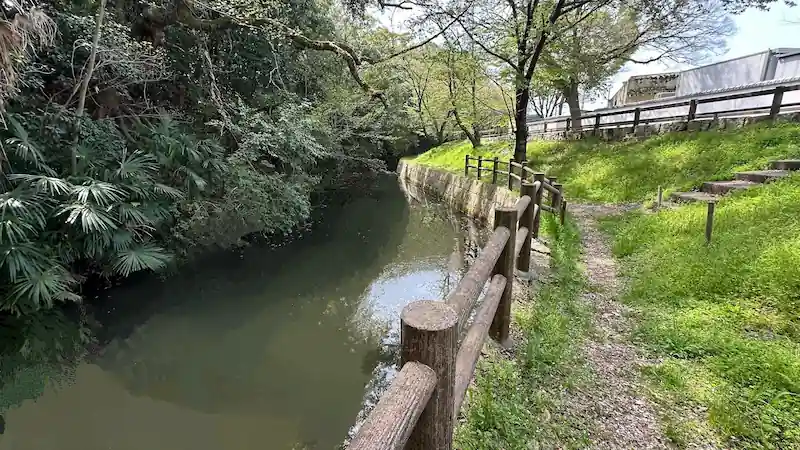
The Nakabori, or Middle Moat, was an integral part of Himeji Castle’s triple-moat defense system, alongside the inner (uchibori) and outer (sotobori) moats. Constructed in the early 17th century under Ikeda Terumasa, it extended approximately 4.3 kilometers around the castle’s core structures. This northern stretch, near Nozato Gate, is one of several surviving segments that give visitors a sense of the moat’s former scale; only the moat’s southern stretch was filled in, for the construction of National Route 2 (completed 1932), so the moat as a whole was not entirely lost.
| Year built | Early 17th century (Edo period) |
|---|---|
| Builder | Ikeda Terumasa |
| Current status | Partially preserved; southern stretch filled in, other sections including this one remain |
Access: Approx. 2-minute walk (180 m) from Nozato Gate Ruins
Suggested time: Quick stop ~10 min / in-depth up to ~30 min
Himeji Jinja (姫路神社)
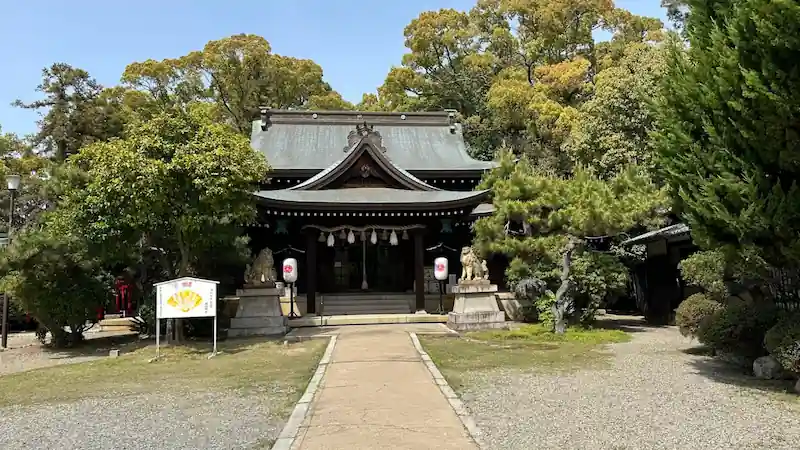
Himeji Jinja is a Shinto shrine adjacent to the castle grounds, established in 1879 (Meiji 12) by former retainers and prominent townspeople of Himeji Domain to honor Sakai Masachika, founder of the Sakai clan, who served as the domain’s last feudal lords. In 1927 (Showa 2) it was relocated to its current site in the northeastern part of the castle grounds, an area traditionally considered to ward off evil spirits. Within its precincts stand the Sunno Shrine, dedicated to Kawai Sunno, a notable figure in the domain’s development, and the Iwakura Inari Shrine, dedicated to the deity Ukanomitama.
| Year established | 1879 (Meiji 12) |
|---|---|
| Founder | Former retainers and townspeople of Himeji Domain |
| Current status | Active place of worship; relocated to current site in 1927 |
Access: Approx. 14-minute walk (1000 m) from Nakabori Site
Suggested time: Quick highlights ~20 min / in-depth ~45 min
North Segakushi Gate Ruins (北勢隠門跡)
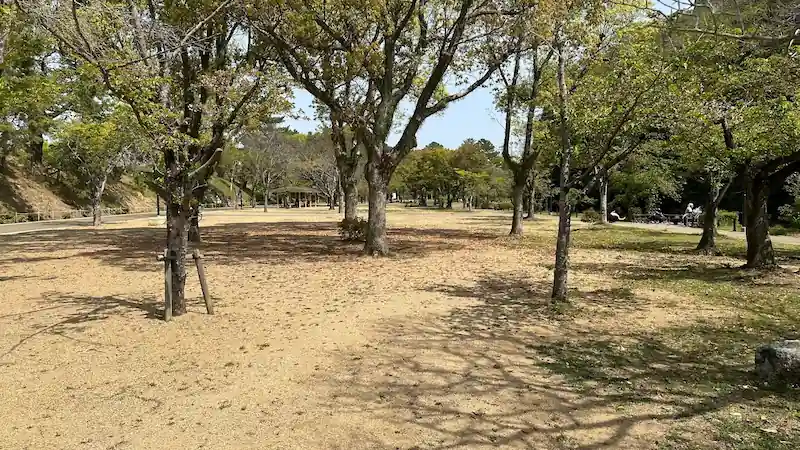
The North Segakushi Gate Ruins mark a former northern entrance to the castle’s inner compounds, now within Himeyama Park. “Segakushi” refers to a concealed or hidden area, indicating the gate’s role as a discreet access point within the castle’s broader defensive network. While the original structure no longer exists, remnants of the stone walls remain.
| Year built | Early 17th century |
|---|---|
| Builder | Ikeda Terumasa |
| Current status | Stone foundations remain; stone wall repairs conducted in 1995 |
Access: Approx. 3-minute walk (210 m) from Himeji Jinja
Suggested time: Quick highlights ~10 min / in-depth ~20 min
Segakushi Bailey (勢隠曲輪)
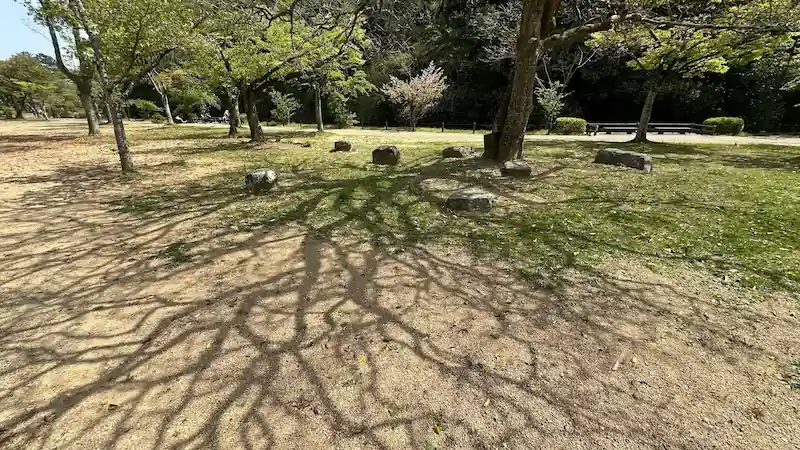
Segakushi Bailey is a narrow, elongated area on the northern side of the Main Keep, designed as a defensive buffer to impede direct access to the central compound. Flanked by earthworks and moats, it was accessible through the North and South Segakushi Gates. Today the area is part of Himeyama Park, especially picturesque during cherry blossom and autumn foliage seasons.
| Year built | Early 17th century |
|---|---|
| Builder | Ikeda Terumasa |
| Current status | Part of Himeyama Park; remnants of earthworks and stone walls remain |
Access: Approx. 1-minute walk (80 m) from North Segakushi Gate Ruins
Suggested time: Quick highlights ~15 min / in-depth ~30 min
Sagi-no-Shimizu (鷺の清水)
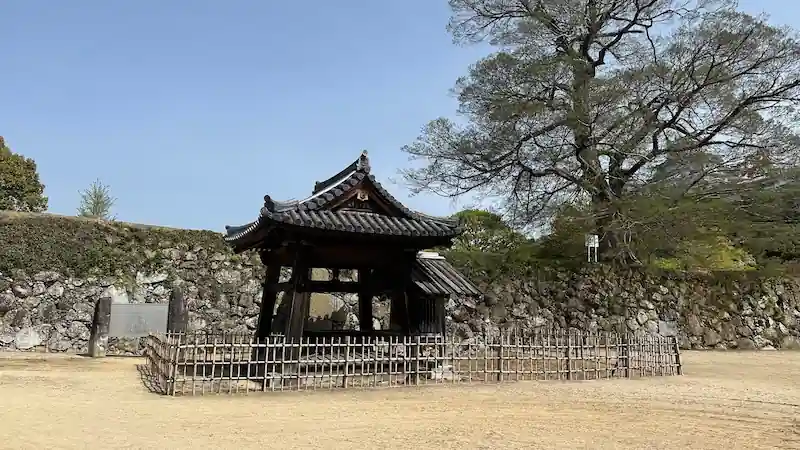
Sagi-no-Shimizu, or “Heron’s Spring,” is a historic well recognized as one of the “Harima Jūsui” (Ten Famous Waters of Harima), esteemed for its pure water since the Muromachi period. The water was reputedly used in tea ceremonies; because of its location within the castle, commoners were barred from direct access and instead drew from the spring where it flowed into the nearby Semba River. The well features a stone-lined outer structure roughly 2.8 by 6 meters and 2.5 meters deep, with a wooden-framed inner well 1.3 meters in diameter at its center.
| Year established | Before 1762 (documented in “Harima Kagami”) |
|---|---|
| Founder | Attributed to Akamatsu Yoshimura, lord of Harima Province |
| Current status | Preserved historical site; current structure is a faithful reconstruction |
Access: Approx. 1-minute walk (81 m) from North Segakushi Gate Ruins
Suggested time: Quick highlights ~10 min / in-depth ~20 min
Shimizu Gate Ruins (清水門跡)
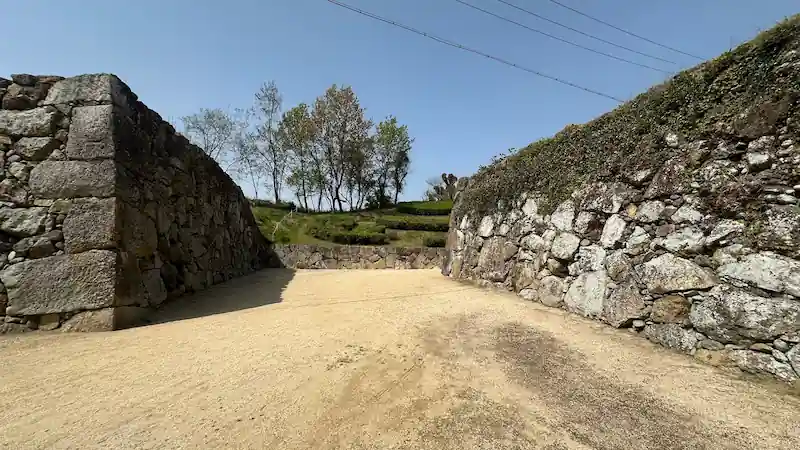
Shimizu Gate, meaning “Pure Water Gate,” was a gate in the castle’s middle moat and one of its key entrances, named for the nearby Sagi-no-Shimizu spring that supplied adjacent reservoirs and wells. Located along the Senba River, its architecture featured an outer west-facing koraimon gate leading into an inner courtyard, followed by a larger south-facing inner gate topped with a watchtower — a layout forcing attackers to slow down and change direction. A guardhouse stood just beyond the inner gate to monitor access.
| Year built | Early 17th century |
|---|---|
| Builder | Ikeda Terumasa |
| Current status | Stone foundations and reconstructed well house remain; original gate dismantled in the Meiji period |
Access: Approx. 1-minute walk (23 m) from Sagi-no-Shimizu
Suggested time: Quick highlights ~10 min / in-depth ~20 min
Otokoyama Haisuiike Park (Water Reservoir Park)
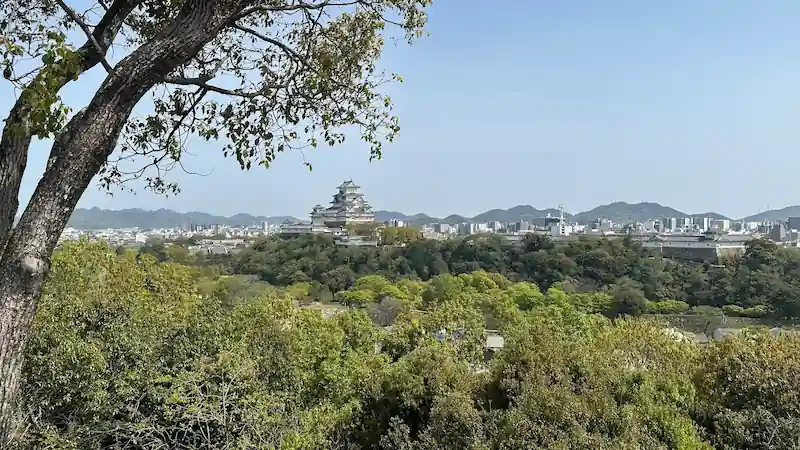
Perched atop the 57.5-meter-high Otokoyama hill, this park offers one of the most breathtaking panoramic views of Himeji Castle, reached via a climb of roughly 198 steps that rewards visitors with a view of the main keep and its three smaller towers together. The park is also home to Otokoyama Hachimangū Shrine, dedicated to the castle’s guardian deity, and is recognized as one of the “Ten Scenic Views of Himeji Castle” — popular with photographers, especially at sunrise, sunset, and when the castle is illuminated at night.
| Year built | Unknown (developed as a park in the 20th century) |
|---|---|
| Structure / features | Atop Otokoyama hill, approx. 57 m high, northwest of Himeji Castle; features a water reservoir and Otokoyama Hachimangū Shrine |
| Current status | Open to the public; accessible 24 hours |
Access: Approx. 6-minute walk (400 m) from Shimizu Gate Ruins
Suggested time: Quick stop ~20 min / in-depth up to ~1 hour
Otokoyama Senhime Tenmangū (男山千姫天満宮)
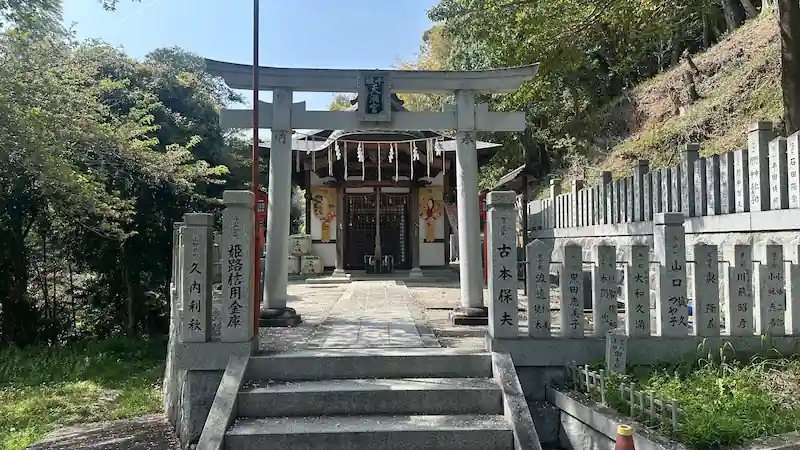
Perched on the slopes of Otokoyama northwest of the castle, this modest shrine was established in 1623 by Princess Senhime, granddaughter of Tokugawa Ieyasu, and dedicated to Tenman Daijizai Tenjin (Sugawara no Michizane), reflecting her faith and hopes for her family’s prosperity. After remarrying Honda Tadatoki and moving to Himeji Castle, Senhime is traditionally believed to have commissioned the shrine so she could offer prayers from the castle’s Nishi-no-Maru, with the shrine’s orientation allowing direct line-of-sight worship. The current structure, rebuilt in 2002, features elegant karahafu (curved gable) architecture.
| Year built | 1623 |
|---|---|
| Founder | Princess Senhime |
| Current status | Active shrine; current building reconstructed in 2002 |
Access: Approx. 2-minute walk (120 m) from Otokoyama Haisuiike Park
Suggested time: Quick highlights ~10 min / in-depth ~20 min
Sengoku no Komichi (千姫の小径)
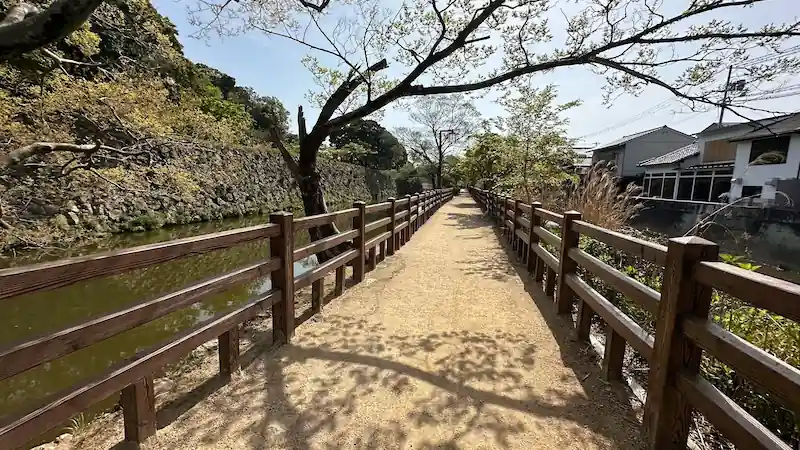
Sengoku no Komichi, or “Princess Sen’s Path,” is a picturesque walking trail between the western inner moat and the Semba River, running north to south alongside Himeji Castle. Lined with cherry blossoms and maple trees, it honors Princess Sen (Senhime), the granddaughter of Tokugawa Ieyasu who spent part of her life at Himeji Castle. While the path itself is a modern addition, it complements the historical ambiance of the castle grounds.
| Year established | Modern era (exact year not specified) |
|---|---|
| Founder | City of Himeji |
| Current status | Open to the public as a scenic walking trail |
Access: Approx. 5-minute walk (350 m) from Otokoyama Senhime Tenmangū
Suggested time: Quick highlights ~15 min / in-depth ~30 min
Ichinohashi Gate Ruins (市ノ橋門跡)
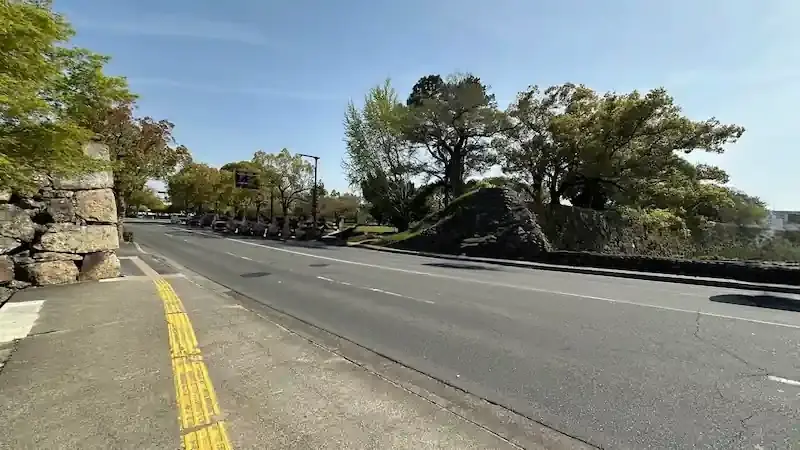
Ichinohashi Gate, meaning “Market Bridge Gate,” once served as a crucial western entrance connecting the castle grounds to the merchant and artisan districts across the Semba River. Its complex defensive design featured an outer gate facing west with a structure protruding over the moat, leading into an inner courtyard, then an inner gate set at an angle — a layout meant to slow down and expose attackers. A storehouse stood above the inner gate, with a guardhouse just beyond it.
| Year built | Early 17th century |
|---|---|
| Builder | Ikeda Terumasa |
| Current status | Gate structures lost; stone base remains visible |
Access: Approx. 7-minute walk (500 m) from Sengoku no Komichi
Suggested time: Quick highlights ~10 min / in-depth ~20 min
Statue of Princess Sen (Senhime)
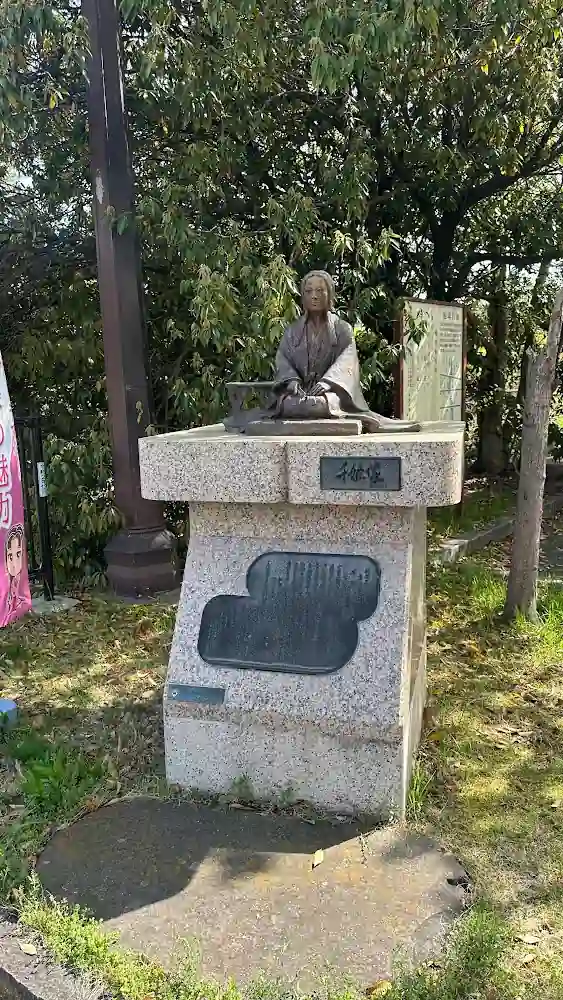
This bronze statue of Princess Sen stands near Himeji Castle, commemorating her role in the castle’s history. As the granddaughter of Tokugawa Ieyasu and wife of Honda Tadatoki, lord of Himeji Castle, Senhime’s life was marked by both privilege and tragedy — after surviving the fall of Osaka Castle, she remarried and moved to Himeji, becoming deeply involved in the domain’s cultural and social affairs. The statue faces the direction of Otokoyama and Senhime Tenmangū Shrine, where she is believed to have prayed, and stands near the Ichinohashi Gate ruins, aligned with the Nishinomaru Hyakken Rōka.
| Year built | 1997 (Heisei 9) |
|---|---|
| Builder | Senhime Tenmangū Shrine Committee |
| Remarks | Includes an informational plaque with a poem exchange between Princess Sen and her husband Honda Tadatoki |
Access: Approx. 2-minute walk (120 m) from Ichinohashi Gate Ruins
Suggested time: Quick stop ~10 min / in-depth up to ~30 min
Kōkoen Garden
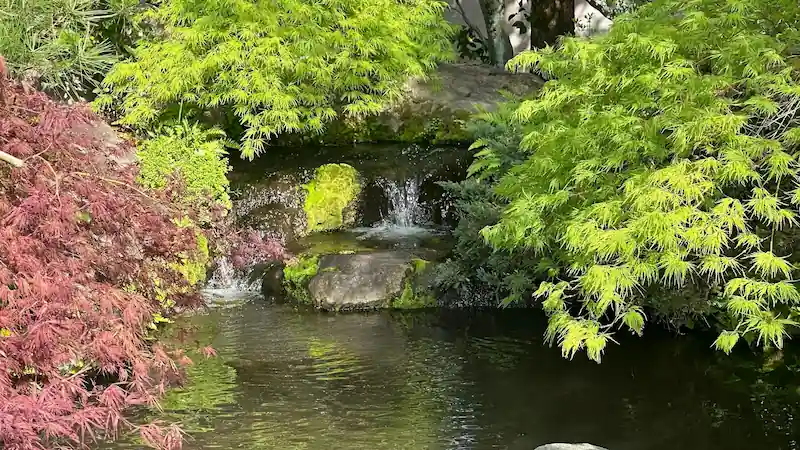
Kōkoen Garden is a meticulously designed Japanese garden on the former site of Himeji Castle’s western residence (Nishi O-yashiki). Opened in 1992 to mark the 100th anniversary of Himeji’s incorporation as a city, it spans 3.5 hectares and comprises nine distinct gardens arranged in a traditional kaiyū-shiki (strolling-style) layout, conveying the atmosphere of the old castle town and samurai aesthetics. The garden’s name is said to derive from either Meiji-era military leader Kawai Yoshifuru, a descendant of a Himeji retainer, or from a phrase meaning “to cherish the past” — and also honors “Kōko-dō,” a provincial school established by the Sakai clan in 1692. The design incorporates tea gardens, pond-centered stroll gardens, and miniature mountains with forest streams, creatively framing views of Himeji Castle’s white walls and stone foundations.
| Year built | 1992 |
|---|---|
| Builder | Himeji City |
| Structure / features | Nine Edo-period style gardens including the Garden of the Lord’s Residence, Tea Ceremony Garden, Bamboo Garden, and Flower Garden, with mud walls (tsuijibei), wooden gates, and the Sōju-an teahouse |
| Current status | Open to the public, with Sōju-an Tea House and Kassui-ken Restaurant |
Access: Approx. 5-minute walk (350 m) from the Statue of Princess Sen
Suggested time: Quick stroll ~30 min (selected areas) / full experience ~60 min (all gardens plus tea room)
Karo Yashiki Ato Park (家老屋敷跡公園)
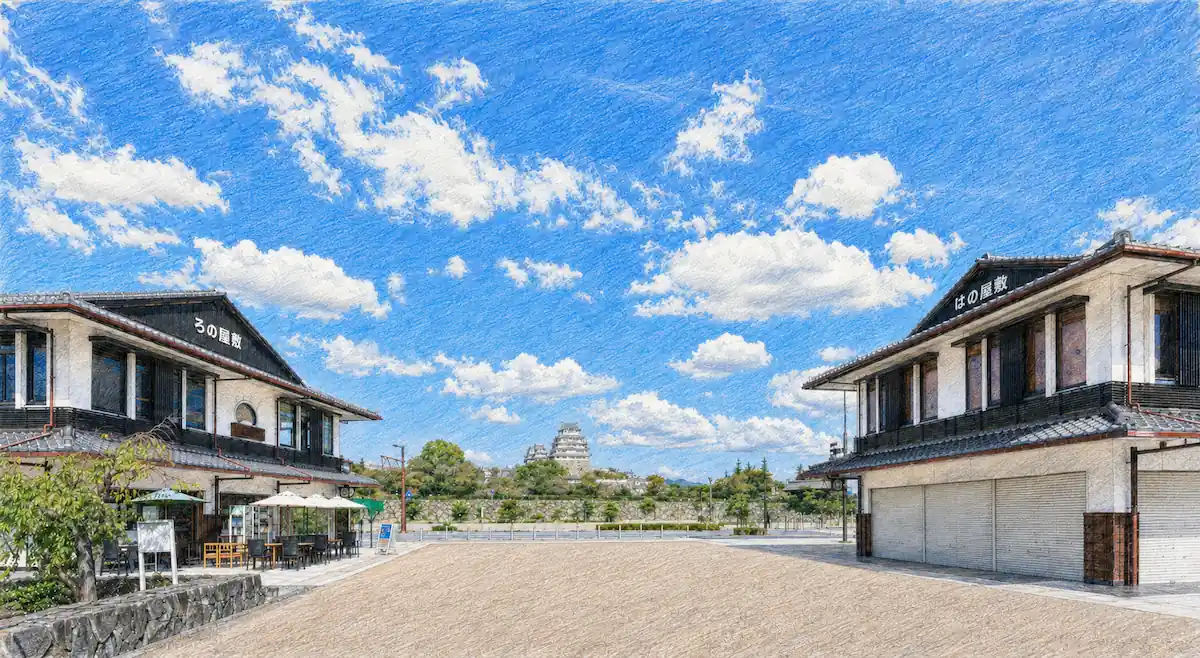
Karo Yashiki Ato Park — literally “Site of the Chief Retainers’ Residences” — is a small history park just southwest of Himeji Castle, right next to Kōkoen Garden, on the former grounds of the mansions belonging to the domain’s karō: the most senior samurai retainers, who administered Himeji Domain on the lord’s behalf. During the Edo period, homes for these high-ranking vassals spread out beyond the castle walls, a reminder that the castle’s administrative and ceremonial life extended well into the surrounding castle town. Archaeological excavations have uncovered and partly restored sections of the original earthen walls, gate foundations, and stone-lined property boundaries.
Access: Approx. 4-minute walk from Kōkoen Garden
Suggested time: Quick highlights ~5 min / in-depth ~15 min
Remains of South Segakushi Gate
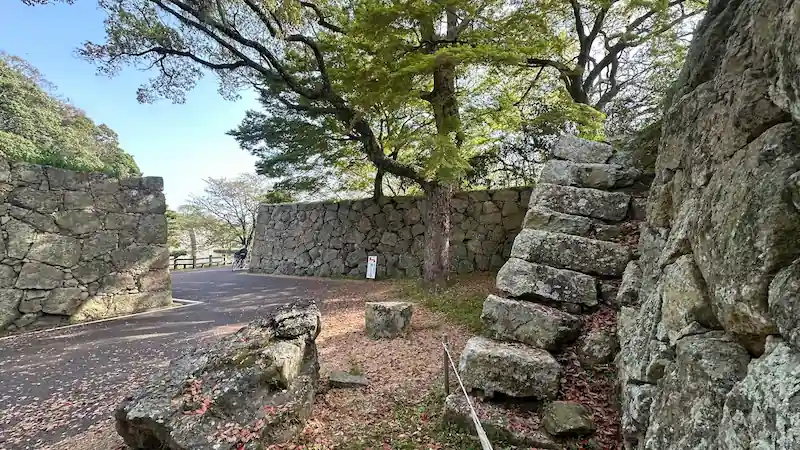
The South Segakushi Gate, once a vital component of the castle’s intricate defensive network, now exists only in remnants — one of numerous gates designed to confuse and slow down potential invaders. Visitors can observe stone foundations that hint at its past significance, with informational signage providing historical context.
| Year built | Early 17th century (Edo period) |
|---|---|
| Builder | Ikeda Terumasa |
| Structure / features | One of the concealed gates (kakure-mon) designed for surprise attacks and secret movements within the castle |
| Current status | Ruins remain; traces of stone foundations remain, though difficult to identify without context |
Access: Approx. 5-minute walk (400 m) from Kōkoen Garden
Suggested time: Quick stop ~10 min / in-depth up to ~30 min
Kuruma Gate Ruins (車門跡)
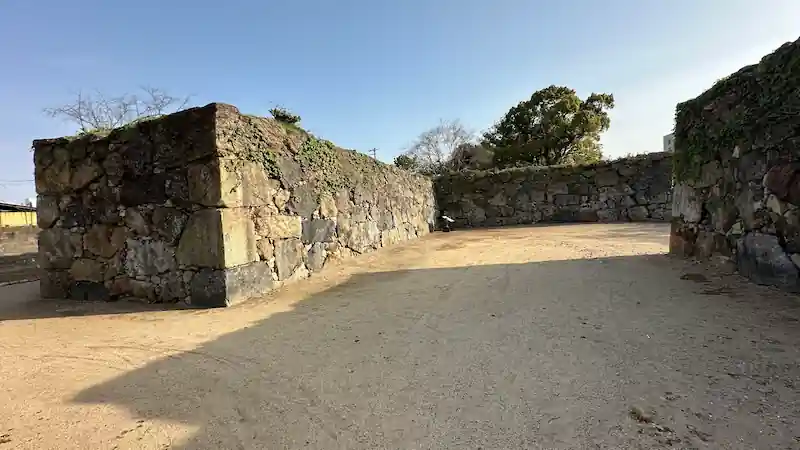
Kuruma Gate (“Carriage Gate”) was a significant western entrance positioned along the Semba River and the historic Saigoku Kaidō highway, reflecting its role in transporting vehicles and materials into the castle. It featured a double-masugata design: an outer gate facing west, a middle gate facing south, and a larger inner gate topped with a watchtower — a layout that slowed and exposed anyone passing through. Some accounts describe a removable wooden bridge over the moat and a waterside boat landing from the Semba River, though these details remain unconfirmed.
| Year built | Early 17th century |
|---|---|
| Builder | Ikeda Terumasa |
| Current status | Gate structures lost; stone base and layout remain visible |
Access: Approx. 8-minute walk (600 m) from Remains of South Segakushi Gate
Suggested time: Quick highlights ~10 min / in-depth ~20 min
Uzumi Gate Ruins (埋門跡)
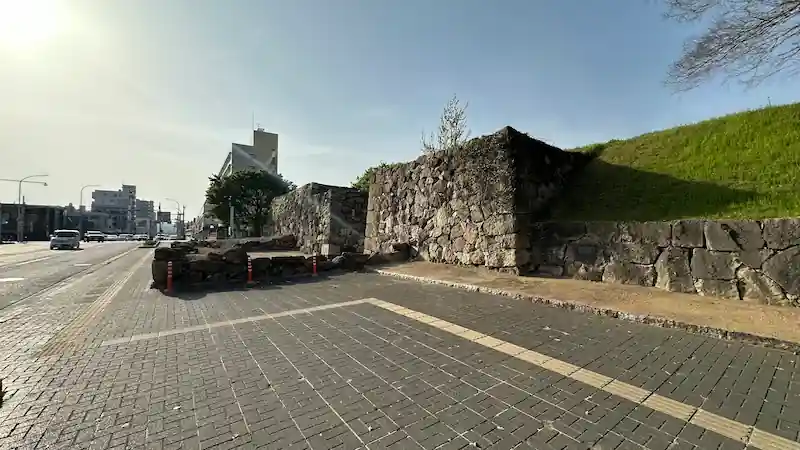
Uzumi Gate, meaning “Buried Gate,” was one of the gates set into Himeji Castle’s middle moat, on the southwestern side of the castle, said to have been added some years after Ikeda Terumasa’s main expansion by cutting an opening into an existing stone wall (hence its name) — though the exact construction date is not firmly established. Unlike other gates, it lacked a watchtower directly above it — instead, a two-story turret and guard station stood just west of the gate, overseeing the southwestern corner of the castle and the Saigoku Kaidō highway. The gate featured both an outer and inner gate, both facing south, with a soil bridge over the inner moat.
| Year built | Edo period; exact date uncertain, believed to postdate Ikeda Terumasa’s main expansion |
|---|---|
| Builder | Ikeda Terumasa |
| Current status | Gate structures lost; stone base remains visible |
Access: Approx. 2-minute walk (150 m) from Kuruma Gate Ruins
Suggested time: Quick highlights ~10 min / in-depth ~20 min
Kumataka-mon Gate Site
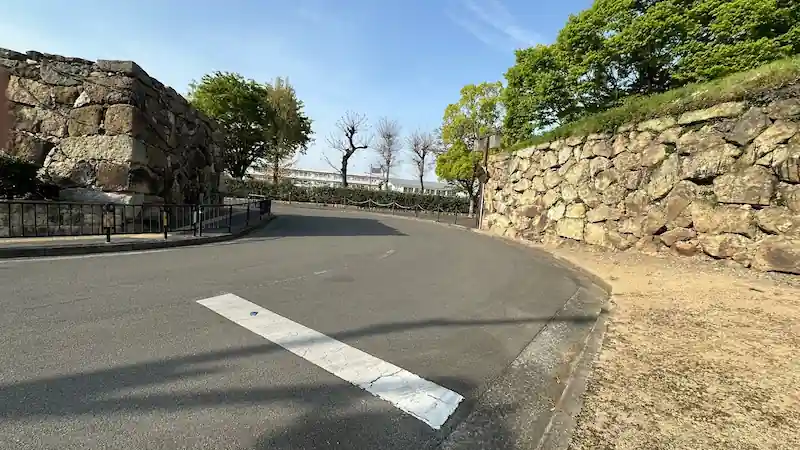
Kumataka-mon, named after the mountain hawk-eagle (kumataka), once stood as a significant entry point within the castle’s defensive network — one theory suggests the castle’s lord kept hunting birds nearby, linking the gate to the raptor, though the exact reason for the name remains uncertain. Only the stone foundations remain today. Notably, the earth-and-stone bridge in front of the gate functioned like a dam, helping regulate the moat’s water level by allowing water to spill over and raise the level on its other side.
| Year built | Early 17th century (Edo period) |
|---|---|
| Builder | Ikeda Terumasa |
| Current status | Ruins remain; stone foundations are visible |
Access: Approx. 4-minute walk (300 m) from Uzumi Gate Ruins
Suggested time: Quick stop ~10 min / in-depth up to ~30 min
Nakanomon Gate Site
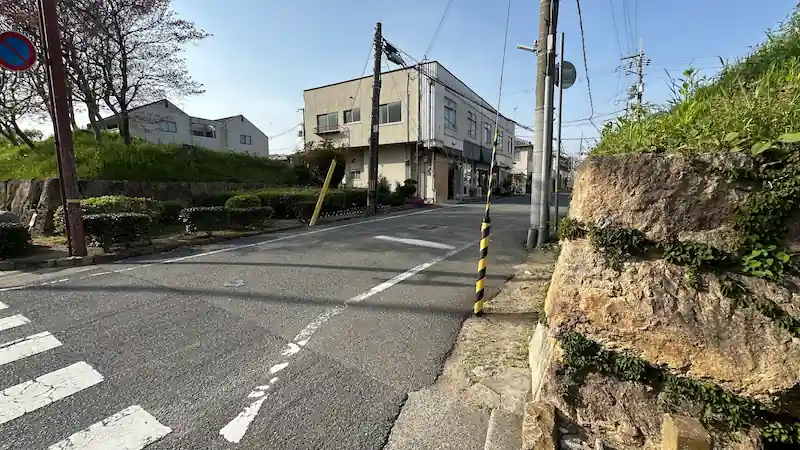
Nakanomon, or “Middle Gate,” once stood along the southern approach to Himeji Castle, a key checkpoint between the outer defenses and the castle proper, near the old Saigoku Highway. At night the gate was closed to the general public, with only physicians granted emergency access after sundown. An official noticeboard near the gate posted domain-wide proclamations for residents, making the area a hub of civic communication as well as a physical gateway.
| Year built | Early 17th century (Edo period) |
|---|---|
| Builder | Ikeda Terumasa |
| Current status | Ruins remain; stone foundations are visible |
Access: Approx. 4-minute walk (300 m) from Kumataka-mon Gate Site
Suggested time: Quick stop ~10 min / in-depth up to ~30 min
Nakabori (Middle Moat) Remains (中濠跡)
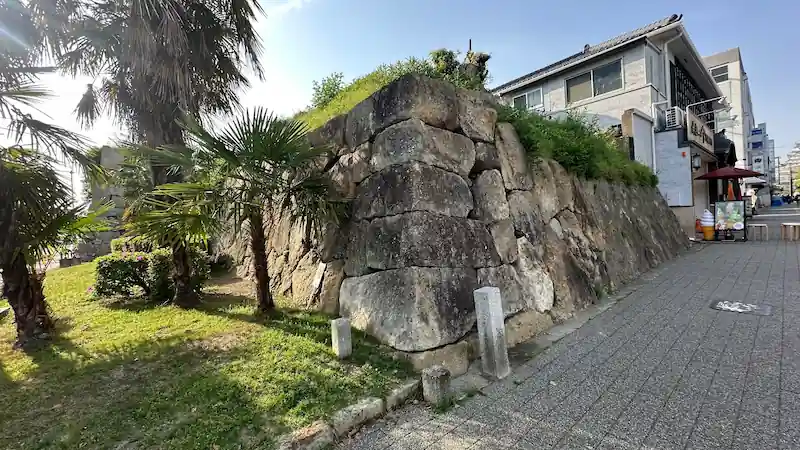
This southern stretch of the Nakabori (Middle Moat) encircled the Ninomaru (Second Bailey), forming part of the castle’s triple-moat defense system and protecting the samurai residences and administrative areas within. Constructed in the early 17th century under Ikeda Terumasa, this southern stretch of the moat was filled in when National Route 2 was built over its path (completed 1932) — only this southern portion was lost, not the moat as a whole — though sections and accompanying earthworks remain visible along walking paths that trace its original course.
| Year built | Early 17th century |
|---|---|
| Builder | Ikeda Terumasa |
| Current status | Sections remain visible; other parts filled in for urban development |
Access: Approx. 1-minute walk (66 m) from Nakanomon Gate Site
Suggested time: Quick highlights ~15 min / in-depth ~30 min
Sōja Gate Ruins (総社門跡)
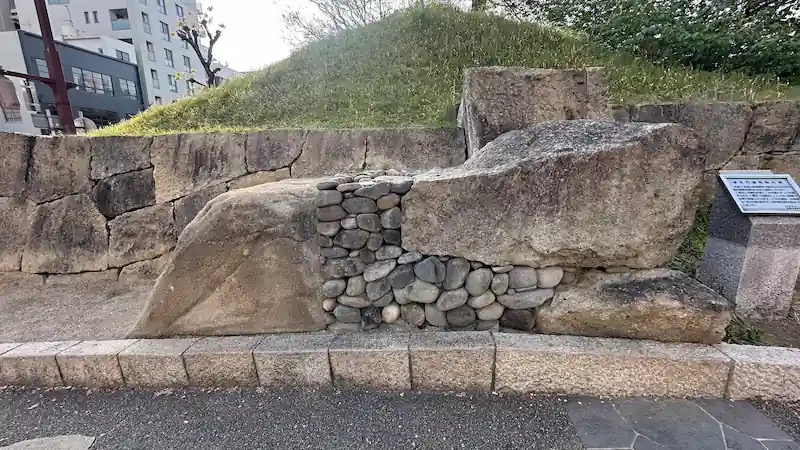
Sōja Gate was one of five main gates on the southern side of the castle’s Naka-kuruwa (Middle Bailey), named for its proximity to the west gate of Harima Sōja Shrine just northeast of the gate. Built in the early 17th century under Ikeda Terumasa, it featured a masugata design with an outer gate facing south and an inner gate facing east, trapping attackers in crossfire from multiple angles; a guardhouse nearby monitored those entering and exiting the castle.
| Year built | Early 17th century |
|---|---|
| Builder | Ikeda Terumasa |
| Current status | Gate structures lost; stone base remains visible; excavations in 1984 and 1995 revealed stone walls and a culvert |
Access: Approx. 4-minute walk (300 m) from Nakabori (Middle Moat) Remains
Suggested time: Quick highlights ~10 min / in-depth ~20 min
- Hyogo Prefectural Museum of History (兵庫県立歴史博物館)
- Nozato Gate Ruins (野里門跡)
- Nakabori Site (North)
- Himeji Jinja (姫路神社)
- North Segakushi Gate Ruins (北勢隠門跡)
- Segakushi Bailey (勢隠曲輪)
- Sagi-no-Shimizu (鷺の清水)
- Shimizu Gate Ruins (清水門跡)
- Otokoyama Haisuiike Park (Water Reservoir Park)
- Otokoyama Senhime Tenmangū (男山千姫天満宮)
- Sengoku no Komichi (千姫の小径)
- Ichinohashi Gate Ruins (市ノ橋門跡)
- Statue of Princess Sen (Senhime)
- Kōkoen Garden
- Karo Yashiki Ato Park (家老屋敷跡公園)
- Remains of South Segakushi Gate
- Kuruma Gate Ruins (車門跡)
- Uzumi Gate Ruins (埋門跡)
- Kumataka-mon Gate Site
- Nakanomon Gate Site
- Nakabori (Middle Moat) Remains (中濠跡)
- Sōja Gate Ruins (総社門跡)
- FAQ
- Himeji Castle Map
- More on Himeji Castle
- Return to the Warlord Page
FAQ
Kōkoen is a Japanese strolling garden opened in 1992 on the former site of Himeji Castle’s western residence. It consists of nine distinct gardens spanning 3.5 hectares, designed to evoke the atmosphere of the old castle town and samurai-era aesthetics.
Princess Sen (Senhime) is believed to have commissioned Otokoyama Senhime Tenmangū in 1623 so she could pray toward it from the castle’s Nishi-no-Maru, where she lived after marrying Honda Tadatoki. The shrine faces east for this reason.
The 22 spots are spread widely around the castle’s perimeter, so most visitors select a handful rather than visiting all of them. A focused visit to Kōkoen Garden, the Otokoyama shrines, and Sengoku no Komichi takes about 2–3 hours; covering every gate ruin and moat remnant can take 4 hours or more.
Himeji Castle Map
More on Himeji Castle
Return to the Warlord Page


☕ Support This Site
Following the Shogun is built on original fieldwork and on-site research.
If you found this guide useful, your support helps keep it going.

You can also support via QR code


comment