


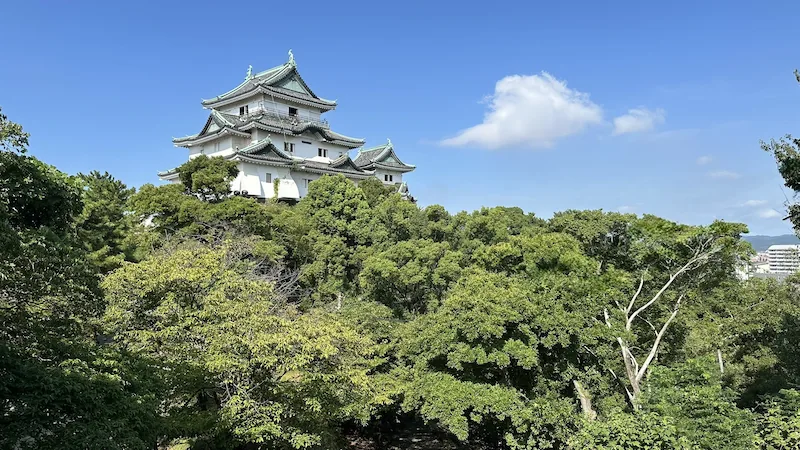
Leave the keep behind and head west, and Wakayama Castle shows you an entirely different side of itself.
This guide covers all four spots in the nishinomaru and Momijidani Garden area, in walking order: vermilion-painted Oimawashi Gate, the Wakayama History Museum, where the castle’s story unfolds in more depth, Momijidani Garden itself — a nationally designated scenic site — and the Onbashi Corridor Bridge, a structure you’ll rarely find at any other castle in Japan. Four 360° panoramas and firsthand, on-site detail round out the route.
THREE-AREA NAVFrom the keep onward to the nishinomaru and Momijidani Garden
Back to the full guideA Wakayama Castle visit flows naturally from the outer bailey, through the honmaru and keep, and finally into the nishinomaru and Momijidani Garden for a quieter finish. This page covers that last stretch — the garden and corridor bridge you’d walk after seeing the keep.
The Outer Bailey
Ichi-no-hashi Bridge to the Omote Slope
Built around Okaguchi Gate and the Matsu-no-maru wall, this area covers the castle’s entrance and its outer line of defense.
The Nishinomaru Area, Spot by Spot (In Walking Order)
Starting at Oimawashi Gate, this route runs through the Wakayama History Museum for some background on the castle before continuing into Momijidani Garden, then crosses the Onbashi Corridor Bridge back toward the ninomaru. Budget about 45 to 60 minutes.
1. The West Gate and a Home Base for History
Oimawashi Gate
Painted vermilion against misfortune — the practical “red gate” linking castle and parade ground
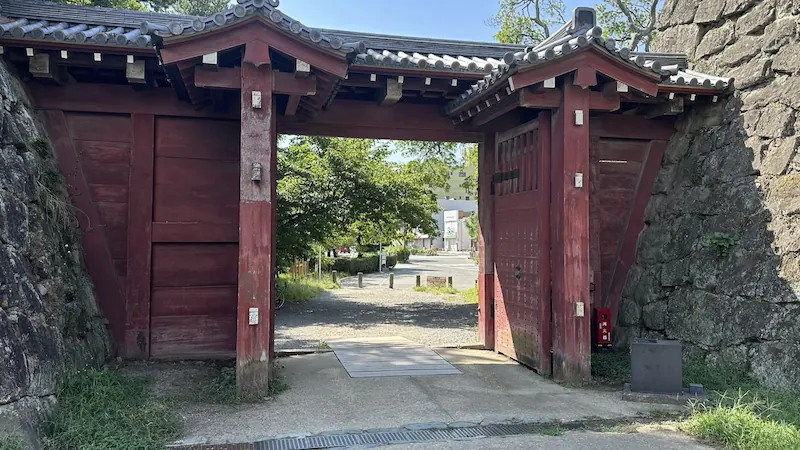
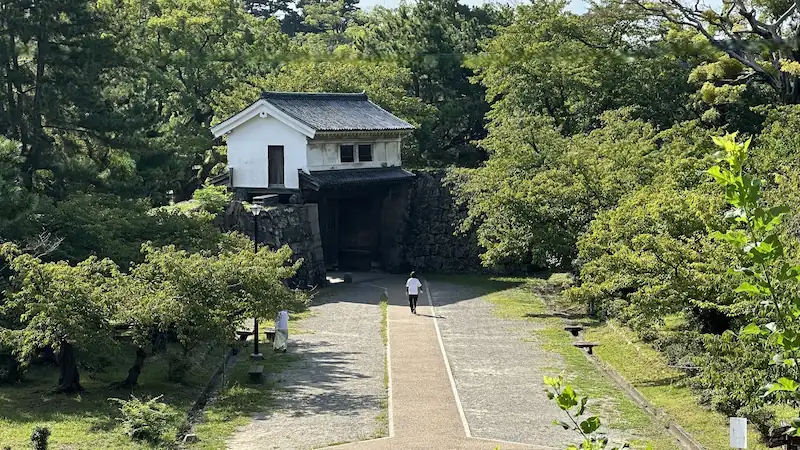
Oimawashi Gate marks the castle’s western entrance, and it once served as a working passage between the honmaru and ninomaru and the parade grounds outside — the Ōgi-no-shiba lawn and Suna-no-maru. Restoration work around 1983–84 (Shōwa 58–59) turned up traces of the original vermilion paint, and the gate has kept that color ever since. Alongside Okaguchi Gate and the Well House, it’s one of the few structures on the grounds that genuinely survive from the domain era.
Set against green trees and stone walls, it makes a striking contrast to white-walled Okaguchi Gate — the one spot on the grounds where the color scheme suddenly changes, and it catches the eye every time.
| Built | Early Edo period. It’s often dated to 1629 (Kan’ei 6), though the city’s cultural-property records note that material analysis leaves open the possibility that it predates the Kan’ei era. |
|---|---|
| Design | A kōrai-mon, a simple gate form without a turret, distinguished by its vermilion paint. |
| Why it’s vermilion | One account holds it was painted for protection, since it sits in the ura-kimon direction relative to the lord’s residence in the ninomaru — traces of the original color were confirmed during 1985 (Shōwa 60) restoration work. |
| Current state | Still standing; designated a Wakayama City Cultural Property. |
⏳ Time to visit: about 5–10 minutes to see the gate and walls
🗺 Address: 3 Ichibanchō, Wakayama City, Wakayama Prefecture (west side of Wakayama Castle)
🚶 Access: About 5 minutes on foot from Kusu Gate
- The only vermilion gate on the grounds: a genuinely rare survivor at Wakayama Castle, its color a sharp contrast to Okaguchi Gate’s white walls and black tile.
- An everyday entrance, not a defensive one: this gate connected the castle to the parade grounds and the world beyond its walls, a reminder that castle life was as much about routine traffic as it was about defense.
- A kōrai-mon by design: unlike the defensively minded keep or Okaguchi Gate, this one was built simply to keep daily traffic moving.
💡 Trivia: The name Oimawashi-mon — roughly “chase-around gate” — is said to come from the parade ground at Ōgi-no-shiba just outside, where horses were once run in circles for training.
The Wakayama History Museum
A briefing stop before the rest of the castle — the Edo-period grounds reconstructed in VR
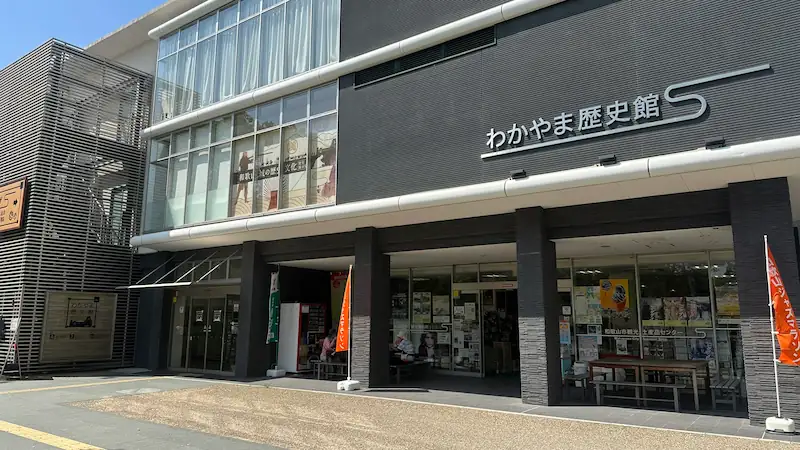
The Wakayama History Museum, on the castle grounds, is where you go to learn the history and culture behind the site. It’s a relatively new addition, opened in 2015, with a tourist information desk and gift shop on the ground floor and a history exhibit, a video theater, and a VR experience upstairs. Stopping here before Momijidani Garden and the Onbashi Corridor Bridge gives you a fuller picture of the castle’s history, and the rest of the nishinomaru area lands better for it.
| Opened | September 2015 |
|---|---|
| Highlights on display | Historical materials from the castle and the Kishū domain, including a gold seal passed down through the Kishū Tokugawa family, plus “Wakayama Castle Reborn,” a CG-rendered VR reconstruction of the late-Edo-period grounds |
| 2nd-floor history exhibit | 9:00 a.m.–5:30 p.m. (last entry 5:00 p.m.) |
| Closed | December 29–31 |
| Admission | Adults (including high school students) ¥100 / Elementary and junior high school students free / A combined ticket with the keep is available |
⏳ Time to visit: about 20–30 minutes for the main exhibits and the video experience
🗺 Address: 3 Ichibanchō, Wakayama City, Wakayama Prefecture (within Wakayama Castle Park)
🚶 Access: About 4 minutes on foot from Oimawashi Gate
- Watch the castle come back to life in VR: “Wakayama Castle Reborn” reconstructs the late-Edo-period grounds in CG, letting you see the old building layout and something of the castle town’s atmosphere firsthand.
- A convenient stop for information and souvenirs: the ground floor houses a tourist information desk and gift shop, handy either before or after your visit.
💡 Trivia: Starting here before walking the grounds makes the stone walls, turrets, and baileys click into place far more easily than seeing them cold.
2. Beauty and Refinement: Garden and Corridor Bridge
Momijidani Garden (the Nishi-no-maru Garden)
A daimyo’s garden shaped by pond and pavilion — free to enter, and nationally recognized
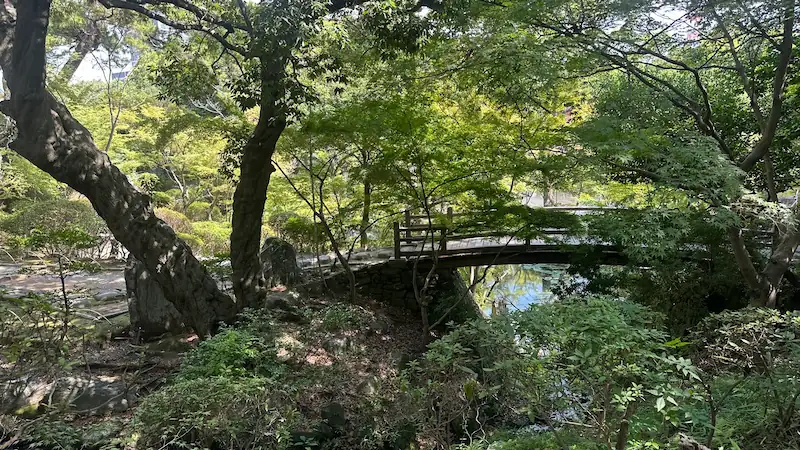
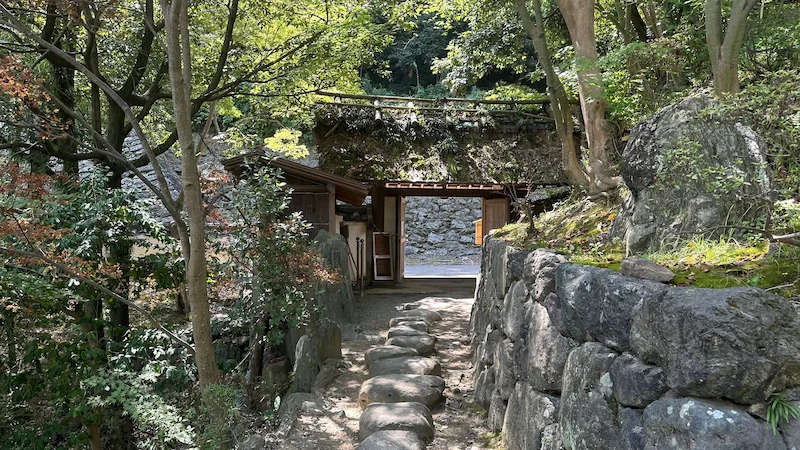
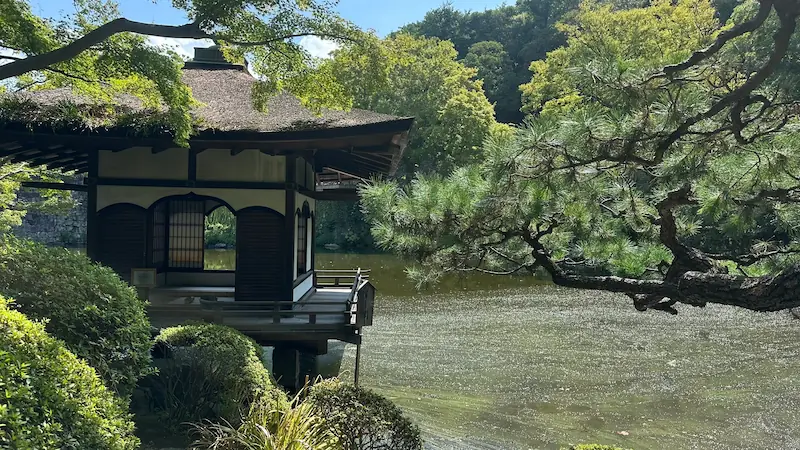
Momijidani Garden, also known as the Nishi-no-maru Garden, took shape in the early Edo period as a daimyo’s garden within the castle grounds. Official accounts generally credit Tokugawa Yorinobu, the Kishū Tokugawa family’s first lord, with commissioning it in the style of Kobori Enshū, though a rival theory holds that Ueda Sōko, chief retainer to the Asano family, designed it instead. The garden makes deliberate use of the castle’s uneven terrain, working ponds, a waterfall, bridges, and stone arrangements into the landscape, and it was designated a nationally recognized place of scenic beauty in 1985 (Shōwa 60). Free to enter, it’s one of the most restful spots anywhere on the grounds.
Panorama Photo The lush Japanese garden.
| Laid out | Early Edo period. Generally credited to Tokugawa Yorinobu, the domain’s first lord, in the style of Kobori Enshū, though a rival theory attributes the design to Ueda Sōko, chief retainer of the Asano family. |
|---|---|
| Design | A strolling pond garden that uses the site’s natural rise and fall, arranging ponds, a waterfall, bridges, stonework, and the Engyokaku pavilion across the terrain. |
| The Engyokaku | A fishing-lodge-style pavilion on the pond’s edge, an ideal spot to rest and take in the water and garden. |
| Designation | Designated a nationally recognized place of scenic beauty in 1985 (Shōwa 60). |
| Visiting | Free admission. Open 9:00 a.m. to 5:00 p.m. (last entry 4:45 p.m.). The Kōshōan tea house offers tea service for a fee. |
| Peak foliage | Typically late November into early December, when the maples reflected in the pond and the view of the Engyokaku are at their best. |
⏳ Time to visit: about 15–20 minutes to take in the pond, bridges, and Engyokaku, or 30–45 minutes at an easy pace
🗺 Address: 3 Ichibanchō, Wakayama City, Wakayama Prefecture (within Wakayama Castle Park)
🚶 Access: About 1 minute on foot from the Wakayama History Museum
- Pond and pavilion, working as one: sky and greenery reflected in the water, the Engyokaku standing quietly at its edge — together they give this corner of the castle a stillness found nowhere else on the grounds.
- A pause at the Kōshōan tea house: sip matcha with the garden as your backdrop, a paid tea service tucked right into the grounds.
- A garden that changes with the seasons: autumn color gets the attention, but deep summer green and winter stillness each give the place its own character.
💡 Trivia: Momijidani Garden is an unusual case of a castle’s own moat and hillside terrain being repurposed into a formal garden — its “water and land” turned to a different use entirely. It’s also worth noting how accessible it is: free to enter, yet still one of the grounds’ most significant, nationally recognized sites.
The Onbashi Corridor Bridge
A covered bridge rare anywhere in Japan — and one you can actually walk through
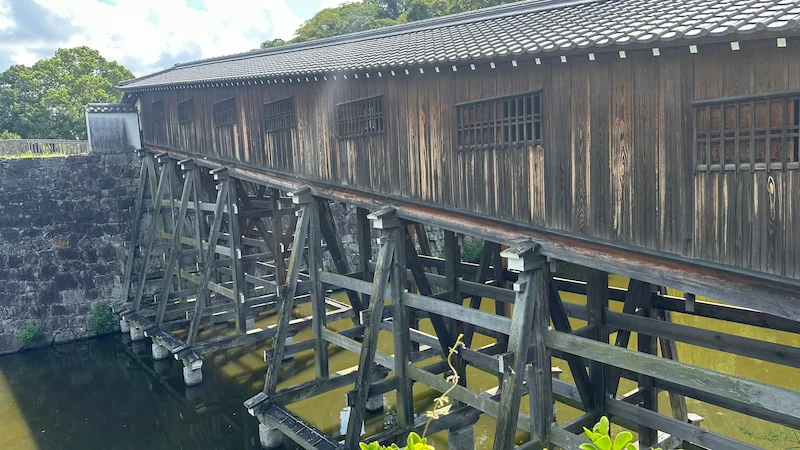
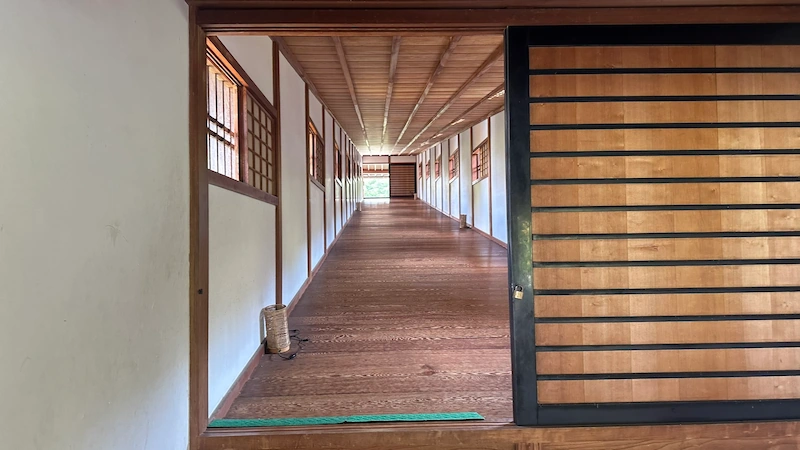
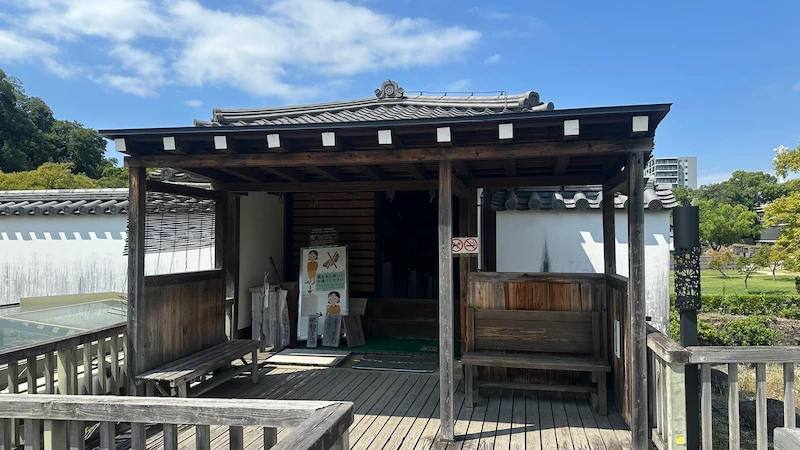
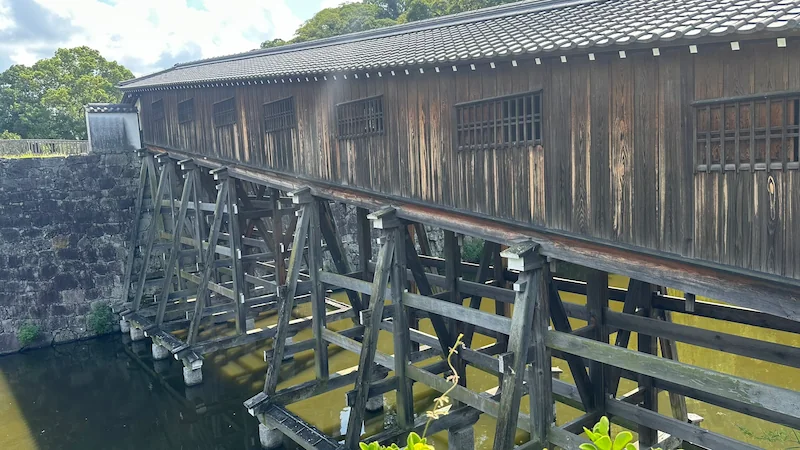
The Onbashi Corridor Bridge is a roofed walkway linking the ninomaru to the nishinomaru, where Momijidani Garden lies. In its day, only the domain lord, his closest attendants, and the women of his household were permitted to cross it — a private passage rather than a public one. It was rebuilt in wood in 2006 (Heisei 18) using Edo-period plans and archaeological findings, and today you can walk through it for free, shoes off, during opening hours (9:00 a.m. to 4:45 p.m.). It’s closed December 29 through 31.
Panorama Photo Inside the corridor.
From the outside.
| Rebuilt | Completed in 2006 (Heisei 18). |
|---|---|
| Design | A wooden, roofed corridor bridge roughly 27 meters long and 3 meters wide. Since the ninomaru and nishinomaru sit about 3.4 meters apart in elevation, the bridge crosses on a diagonal; the floor is notched wood, cut in for traction. |
| Purpose | A covered passage that let the lord, his attendants, and the women of his household move between the ninomaru and the garden in the nishinomaru safely and out of sight. |
| Basis for the reconstruction | Rebuilt from archaeological findings and Edo-period plans, giving visitors a genuine sense of the original structure. |
| Current use | Open to walk through, shoes off, free of charge. |
⏳ Time to visit: about 5 minutes just to cross, or 10–15 minutes to take in the structure properly
🗺 Address: 3 Ichibanchō, Wakayama City, Wakayama Prefecture (between the nishinomaru and ninomaru, Wakayama Castle)
🚶 Access: About 2 minutes on foot from Momijidani Garden
- A rarity among Japan’s castles: a reconstructed, roofed corridor bridge you can actually walk through is something distinctly Wakayama.
- Why it crosses on a diagonal: the roughly 3.4-meter difference in elevation between the ninomaru and nishinomaru forced the design, and the sawtooth-notched wood floor keeps footing steady along the slope.
- A “corridor,” not just a “bridge”: sealed off from view by roof and walls, this was a private passage for the lord and his household alone. It disappeared sometime after the Meiji era, and the 2006 reconstruction brought that original route back.
💡 Trivia: The name Onbashi Rōka — literally “honorable bridge corridor” — describes exactly what it is: bridge and hallway combined, a VIP-only route linking the ninomaru, where the domain’s business was conducted, to the garden in the nishinomaru, safely and out of public view.
Frequently Asked Questions
Momijidani Garden is free to enter. It’s open 9:00 a.m. to 5:00 p.m., with last entry at 4:45 p.m., and closed December 29–31. The Kōshōan tea house inside the garden offers tea service for a fee, though its own hours run 9:00 a.m. to 4:30 p.m. and it closes from December 29 through January 3. Hours are subject to change without notice, so check the official Wakayama Castle site before you go.
Peak color usually falls in late November to early December. The garden earns its name — Momijidani, “Maple Valley” — precisely because autumn is its finest season, and the combination of the central pond and the Engyokaku, a fishing-lodge-style pavilion on its bank, is at its most striking then. Timing shifts a little year to year, so check current conditions before visiting.
The Onbashi Corridor Bridge is a roofed walkway connecting the ninomaru to the nishinomaru, where Momijidani Garden sits. It runs about 27 meters long and 3 meters wide, and because the ninomaru and nishinomaru sit roughly 3.4 meters apart in elevation, the bridge crosses on a diagonal to bridge the gap. Rebuilt in wood in 2006 using Edo-period plans and archaeological findings, it’s free to cross today — visitors just remove their shoes first. Bridges like this are rare at Japanese castle sites, and being able to actually walk through one is something distinctly Wakayama.
One account holds that, seen from the lord’s residence in the ninomaru, this gate sits in the direction of ura-kimon — the “back demon gate,” considered just as unlucky as the northeast kimon it mirrors — and was painted vermilion as protection against misfortune. Restoration work in 1985 (Shōwa 60) confirmed traces of that original red paint, and the gate has been kept vermilion ever since.
The second-floor history exhibit at the Wakayama History Museum costs ¥100 for adults, including high school students, and is free for elementary and junior high school students; a combined ticket with the keep is available. It’s open 9:00 a.m. to 5:30 p.m., with last entry at 5:00 p.m., and closed December 29–31. The second floor holds materials tied to the Kishū Tokugawa family and a CG-rendered VR feature, “Wakayama Castle Reborn,” that reconstructs the late-Edo-period castle.
All Wakayama Castle guide pages: Once you’ve finished the nishinomaru and Momijidani Garden area, you can head back to an earlier area or the full guide.


comment