


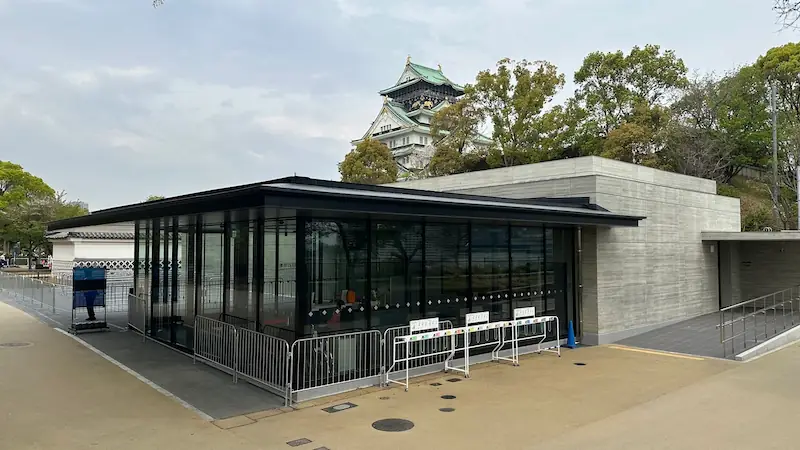
Osaka Castle’s Toyotomi Stone Wall Museum: An On-Site Report
Coming Face to Face with the Toyotomi-Era Stone Walls Sleeping Underground
A first-hand account of an early-morning visit to the Toyotomi Stone Wall Museum (豊臣石垣館), which opened at Osaka Castle in April 2025. This guide shares what it’s like to stand quietly before the preserved stone walls of Toyotomi-era Osaka Castle, hidden underground beneath the present-day castle grounds.
Located in the Honmaru — the central, most heavily fortified enclosure of a Japanese castle — the Toyotomi Stone Wall Museum preserves and displays the stone walls of the original Osaka Castle, built by the 16th-century warlord Toyotomi Hideyoshi. Every stone wall visible above ground at Osaka Castle today dates from the Tokugawa shogunate’s reconstruction of the castle (1620–1629); this museum is one of the few places at Osaka Castle where visitors can see stonework from Hideyoshi’s own era, up close. It can be viewed with a Main Tower admission ticket.
Toyotomi Stone Wall Museum: Key Facts
| Opened | April 1, 2025 |
|---|---|
| Admission | Included in Osaka Castle Main Tower admission — Adults ¥1,200 / high school & university students ¥600 / junior-high-school age and under free (proof required) |
| Suggested Visit Time | About 20–30 minutes |
| Hours | 9:00–18:00 (last entry 17:30) |
| Closed | Year-end/New Year holidays (December 28–January 1) |
| Location | 1-1 Osakajo, Chuo-ku, Osaka (Honmaru area) |
- The Moment That Stayed With Me
- Early April 2025, first thing in the morningAnticipation and Quiet Excitement for a New Discovery
- Guided by Wall Panels and a Central Screen at the Entrance
- Descending Underground — Real Stone Walls Between Light and Shadow, 20 Minutes of Silence
- Traces of Fire and Faith — What the Stones and Repurposed Foundation Stones Reveal
- A Space That Reaches All the Senses
The Moment That Stayed With Me
What follows is a first-hand account from an April 2025 visit.
Early April 2025, first thing in the morningAnticipation and Quiet Excitement for a New Discovery
On a morning when I’d wandered over to Osaka Castle on a whim, I came across the Toyotomi Stone Wall Museum quite by chance. It had opened just days earlier, on April 1, 2025, and my chest tightened with excitement at the thought of it. I had no idea what to expect inside, but even before stepping through the entrance, I felt the particular joy of a new door into history being opened.
Guided by Wall Panels and a Central Screen at the Entrance
As soon as I entered, I was drawn to the wall panels lining the entrance, illustrating the structure and history of the stone walls. On the large central screen, a video and narration walked through the story with impressive production quality — from the 1615 Summer Siege of Osaka (the campaign in which Tokugawa forces defeated the Toyotomi clan) to the burial of the walls under earthen fill said to have reached approximately 6 meters near the middle level (中ノ段, Naka-no-dan). My anticipation for the underground stone walls I was about to see grew with every minute.
Descending Underground — Real Stone Walls Between Light and Shadow, 20 Minutes of Silence
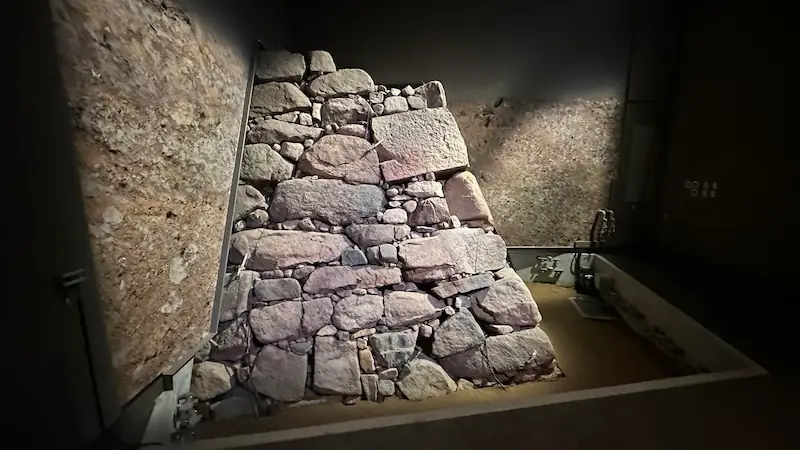
Descending the stairs, the stone walls emerging from the darkness were made all the more striking by modern lighting. I found myself standing still for nearly twenty minutes, gazing at stones that Hideyoshi or his consort Lady Yodo may once have touched, feeling a sense of reverence I couldn’t quite put into words.
Traces of Fire and Faith — What the Stones and Repurposed Foundation Stones Reveal
A Space That Reaches All the Senses
Inside the dim museum, the video’s narration whispered through the space, and even the sound of footsteps seemed to be swallowed by the silence. The modern space and the 400-year-old stones blended together, and for a moment I felt as if I had wandered, alone, into the Toyotomi era.
Because I arrived right at opening, I had the rare luxury of near-solitude — a quiet, blissful stretch of time spent simply facing the stones. That contrast between state-of-the-art facilities and genuine centuries-old stonework is exactly what makes this museum special.
Photo Gallery
Visitor Information: Facility Details
Hours, Admission & Access
| Hours | 9:00–18:00 (last entry 17:30) |
|---|---|
| Closed | Year-end/New Year holidays (December 28–January 1) |
| Admission | Included in Osaka Castle main tower admission fee — Adults ¥1,200 / high school & university students ¥600 / junior-high-school age and under free (proof required) |
| Ticket Purchase | No standalone ticket for the Stone Wall Museum alone — included in the Osaka Castle main tower admission fee. Tickets available at the on-site ticket counter or via the official website |
| Location | 1-1 Osakajo, Chuo-ku, Osaka 540-0002 |
| Phone | 06-6941-3044 |
| Official Site | Toyotomi Stone Wall Museum — Official Page (Japanese) |
If you’d like to see other highlights in a short amount of time, also check out the 7 Must-See Spots Walking Tour (a half-day model course).
(Source note: opening information and admission fees are from the official Osaka Castle website. Hours, fees, and exhibition status are subject to change, so checking the official website before your visit is recommended.)
Frequently Asked Questions (Toyotomi Stone Wall Museum)
It opened on April 1, 2025. The preserved stone walls of Toyotomi-era Osaka Castle are displayed underground in the Honmaru area.
Based on an actual visit, 20–30 minutes is enough to see everything at a relaxed pace — a few minutes for the entrance wall panels and the video guidance on the central screen, plus time to take in the underground stone walls.
The Toyotomi Stone Wall Museum can be viewed with an Osaka Castle Main Tower admission ticket. Adults ¥1,200, high school and university students ¥600, junior-high-school age and under free (proof required). Tickets are available at the on-site ticket counter or via the official website.
You can see genuine stone walls from Toyotomi-era Osaka Castle up close — some stones carry traces of having been exposed to the fierce fires of the Summer Siege of Osaka, and others show signs of having been repurposed from the foundation stones of an ancient temple during construction. These are traces of Hideyoshi’s own era, distinct from the Tokugawa-era stone walls visible above ground.
It’s located at 1-1 Osakajo, Chuo-ku, Osaka, within the Honmaru area, right next to Osaka Castle’s Main Tower — head toward the Main Tower and you’ll find it without trouble. Hours are 9:00–18:00 (last entry 17:30), closed during the year-end/New Year holidays (December 28–January 1).
Trip Reflections
A different kind of experience from the grandeur of the Main Tower above — genuine history, buried underground. Standing before stones that carry traces of fire and others repurposed from an ancient temple’s foundation, I felt that history isn’t just something you read about in books; it can speak to you directly. Whether you have twenty minutes or thirty, this is a space worth taking the time to experience for yourself.
Continue Exploring
Back to the Osaka Castle Complete Guide
Back to the Main Page

☕ Support This Site
Following the Shogun is built on original fieldwork and on-site research.
If you found this guide useful, your support helps keep it going.

You can also support via QR code


comment