


SHŌGUN Characters and Their Real-Life Historical Counterparts
SHŌGUN is a fictional drama, but its characters are rooted in real people who shaped Japan around 1600. Here is each character paired with the real historical figure who inspired them, with links to full profiles and the sites where you can follow their footsteps across Japan.
- Fiction Meets History – Who Inspired the Characters?
- SHŌGUN Characters vs. Their Real-Life Figures — At a Glance
- SHOGUN Characters and the Real Life People Behind Them
- Lord Yoshii Toranaga → Tokugawa Ieyasu (1543–1616)
- John Blackthorne → William Adams (1564–1620)
- Lady Toda Mariko → Hosokawa Gracia (1563–1600)
- Toda Hirokatsu → Hosokawa Tadaoki (1563–1646)
- Toda Hiromatsu → Hosokawa Fujitaka / Yūsai (1534–1610)
- General Ishido → Ishida Mitsunari (1560–1600)
- Kashigi Yabushige → Original Character (Fictional Composite)
- Father Martin Alvito → Pedro Páez / Jesuit Missionaries
- Lady Ochiba → Yodo-dono (1569–1615)
- The Taikō → Toyotomi Hideyoshi (1537–1598)
- Akechi Jinsai → Akechi Mitsuhide (1528?–1582)
- Kuroda Nobuhisa → Oda Nobunaga (1534–1582)
- Looking Ahead: SHŌGUN Season 2
- Frequently Asked Questions
Fiction Meets History – Who Inspired the Characters?
While SHŌGUN is a fictional drama, the SHOGUN characters real life counterparts are deeply rooted in the history and legends of actual individuals who helped shape Japan during one of its most pivotal eras. Understanding who inspired these characters offers a richer perspective on the drama's narrative, its power dynamics, and its portrayal of samurai-era culture.
Below, each character is paired with their real-life counterpart, with links to detailed profiles and travel guides where you can follow their footsteps across Japan.
SHŌGUN Characters vs. Their Real-Life Figures — At a Glance
| SHŌGUN Character | Real Historical Figure | Role in the Story |
|---|---|---|
| Lord Yoshii Toranaga | Tokugawa Ieyasu (1543–1616) | Main character |
| John Blackthorne | William Adams (1564–1620) | Main character |
| Lady Toda Mariko | Hosokawa Gracia (1563–1600) | Main character |
| Toda Hirokatsu | Hosokawa Tadaoki (1563–1646) | Supporting |
| Toda Hiromatsu | Hosokawa Fujitaka / Yūsai (1534–1610) | Supporting |
| General Ishido | Ishida Mitsunari (1560–1600) | Antagonist |
| Kashigi Yabushige | Fictional composite | Supporting |
| Father Martin Alvito | Jesuit missionaries (e.g. Pedro Páez, Luís Fróis) | Supporting |
| The Taikō | Toyotomi Hideyoshi (1537–1598) | Deceased — looms over the story |
| Lady Ochiba | Yodo-dono (1569–1615) | Supporting |
| Akechi Jinsai | Akechi Mitsuhide (1528?–1582) | Deceased — backstory |
| Kuroda Nobuhisa | Oda Nobunaga (1534–1582) | Deceased — backstory |
SHOGUN Characters and the Real Life People Behind Them
Lord Yoshii Toranaga → Tokugawa Ieyasu (1543–1616)
The patient strategist who unified Japan
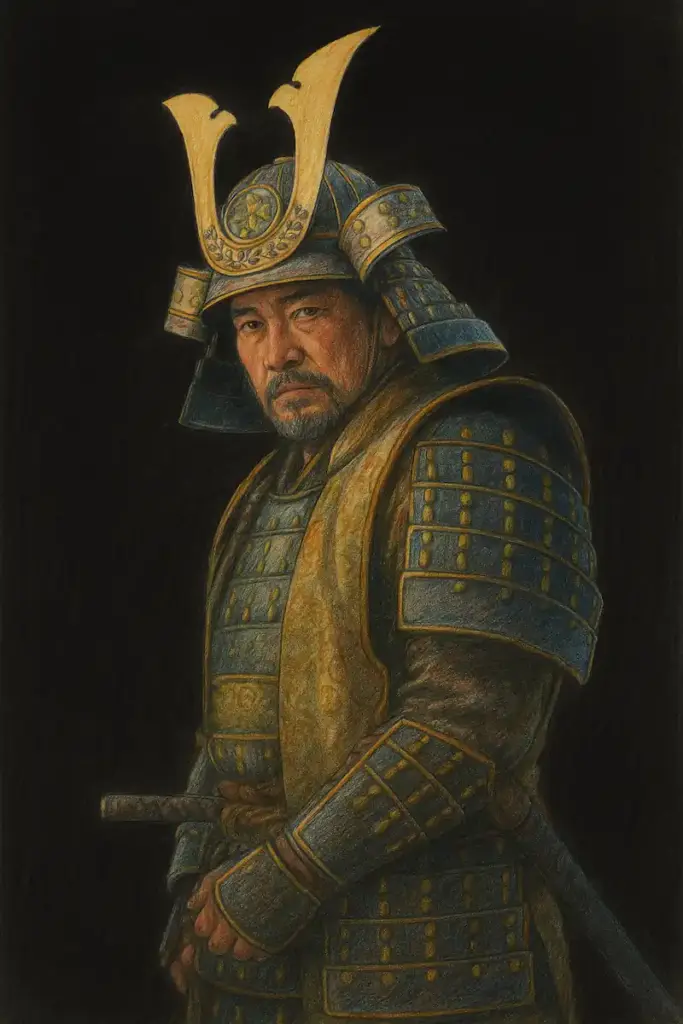
A cunning and strategic leader, Lord Toranaga is based on Tokugawa Ieyasu, the man who ultimately unified Japan after the Battle of Sekigahara in 1600. Known for his patience, political genius, and ability to outmaneuver rivals, Ieyasu laid the foundation for over 260 years of Tokugawa rule.
In the drama, Toranaga's careful calculations, control over information, and use of allies and enemies alike mirror the real-life tactics Ieyasu used to seize power in a fractured nation.
Want to learn more about Tokugawa Ieyasu? Click below!
In Season 2, Hiroyuki Sanada is confirmed to return as Yoshii Toranaga, with the story set more than a decade after Season 1.
John Blackthorne → William Adams (1564–1620)
The English navigator who became samurai
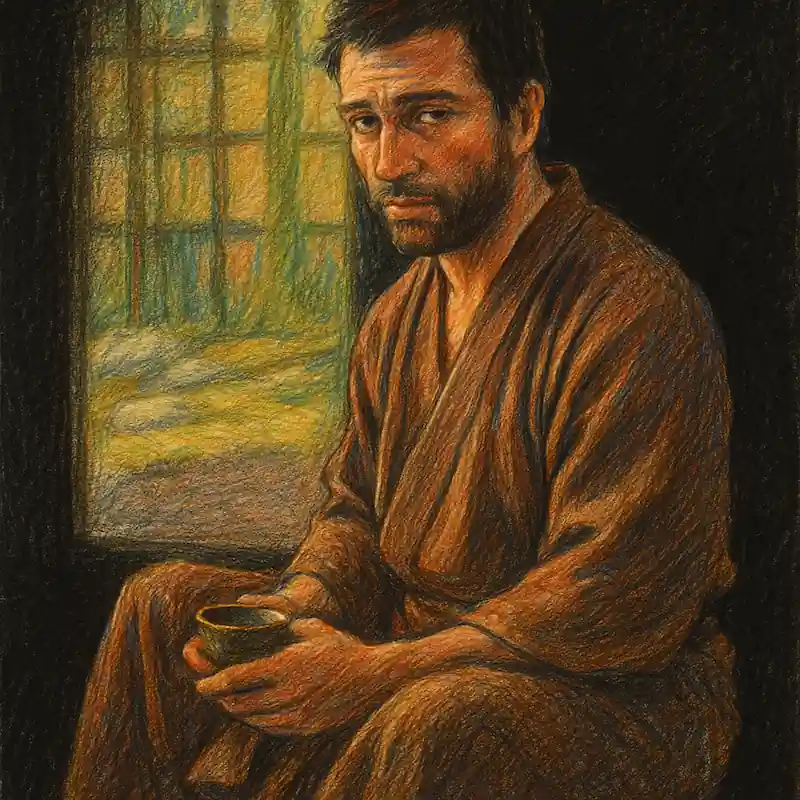
Blackthorne, the English pilot who finds himself in the heart of a foreign culture, is modeled after William Adams, the first Englishman to reach Japan. Like his fictional counterpart, Adams was shipwrecked, taken prisoner, and eventually gained the favor of Tokugawa Ieyasu.
He became a trusted advisor and samurai under the name Miura Anjin, helping to navigate foreign relations in a time of rising tension with Christian missionaries.
Explore the full story of William Adams (Miura Anjin)

In Season 2, Cosmo Jarvis is confirmed to return as John Blackthorne, continuing the story more than a decade after the events of Season 1.
Lady Toda Mariko → Hosokawa Gracia (1563–1600)
A noblewoman torn between duty, faith, and personal agency
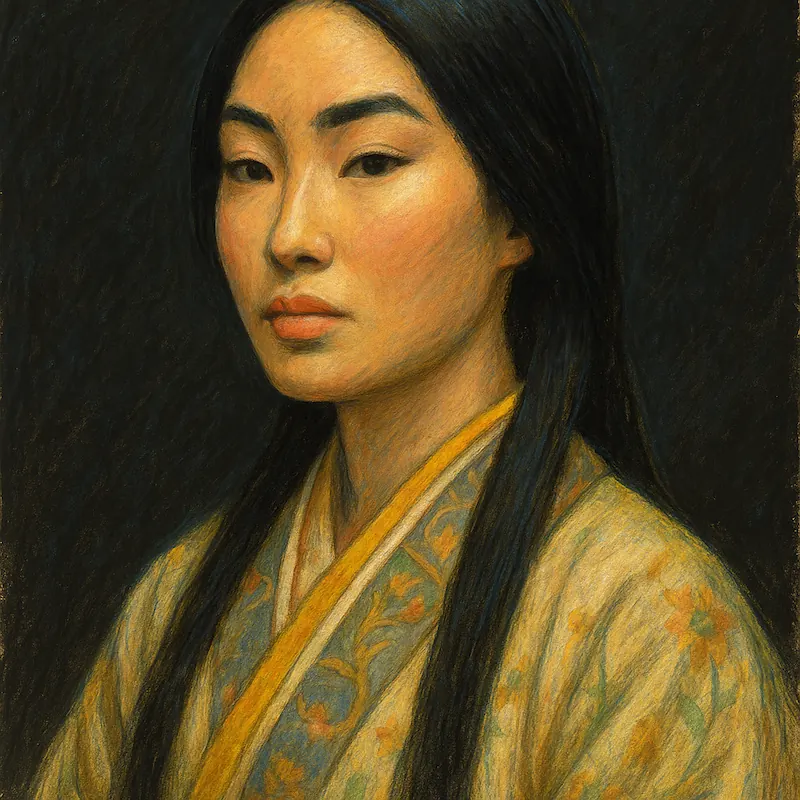
A noblewoman torn between duty, faith, and personal agency, Lady Toda Mariko is inspired by Hosokawa Gracia, a real-life Christian convert and daughter of Akechi Mitsuhide. In both history and fiction, she is a woman caught in the crossfire of political upheaval and religious persecution.
Mariko's quiet strength, intelligence, and unwavering devotion make her one of the drama's most compelling figures. Her character bridges East and West, offering the audience a view into the spiritual and moral dilemmas of the era through a uniquely female lens.
Read the full profile of Hosokawa Gracia
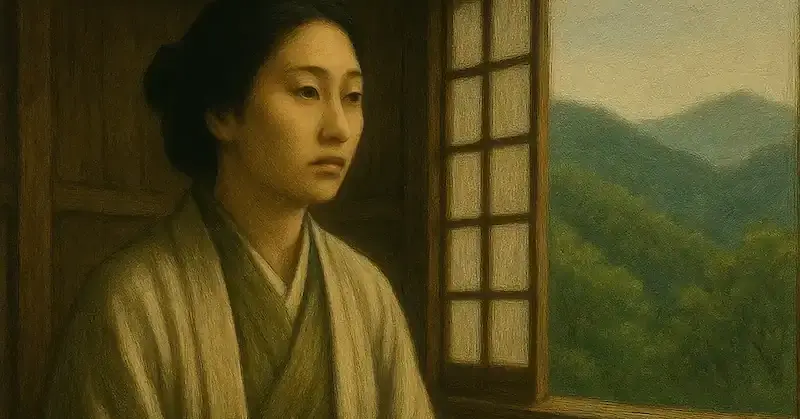
See also: Hosokawa Gracia — visit her real sites, and Shōryūji Castle, the real Mariko's home.
Toda Hirokatsu → Hosokawa Tadaoki (1563–1646)
Brave on the battlefield, volatile at home
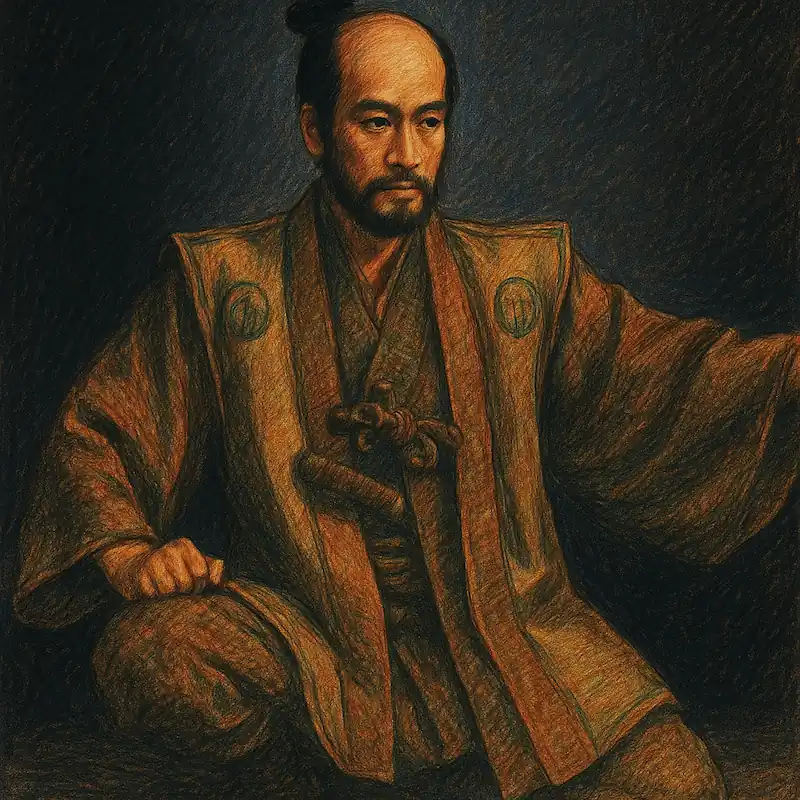
As the husband of Lady Toda Mariko in SHŌGUN, Toda Hirokatsu is a complex figure—brave and disciplined on the battlefield, yet emotionally volatile and dangerously controlling at home. His character draws inspiration from Hosokawa Tadaoki, a prominent daimyo and husband of Hosokawa Gracia.
Tadaoki served both Oda Nobunaga and Toyotomi Hideyoshi and was known for his military prowess and cultural sophistication. However, his relationship with Gracia was marked by tension, particularly after her father, Akechi Mitsuhide, betrayed Nobunaga. The portrayal of Hirokatsu channels both Tadaoki's loyalty and the darker aspects of samurai honor and pride.
Toda Hiromatsu → Hosokawa Fujitaka / Yūsai (1534–1610)
The warrior-scholar and unwavering pillar of tradition
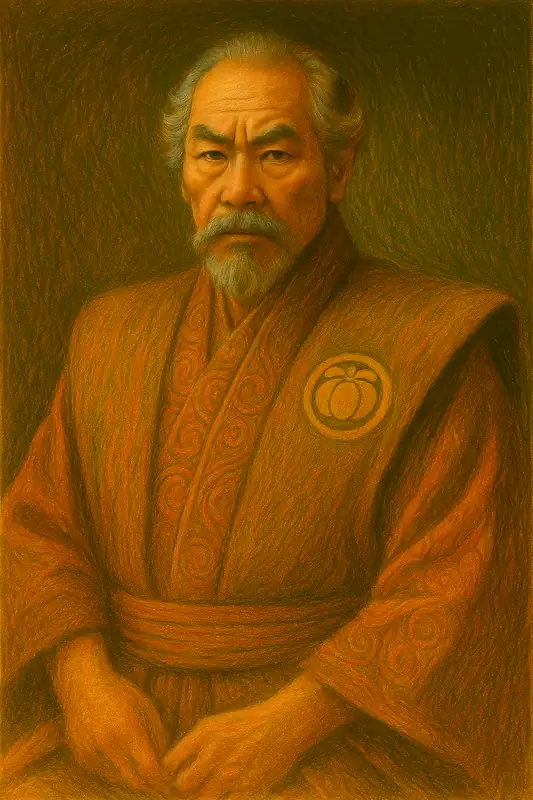
Toda Hiromatsu, the wise and deeply loyal elder statesman in SHŌGUN, serves as one of Lord Toranaga's most trusted and respected retainers. His character is most closely modeled after Hosokawa Fujitaka, also known by his scholarly name Yūsai—a distinguished courtier, strategist, and poet of the late Sengoku period.
Hosokawa Fujitaka was not only a seasoned warrior who served under Oda Nobunaga and later supported Tokugawa Ieyasu, but also a man of profound cultural refinement. Much like Hiromatsu, Fujitaka embodied the ideal of a warrior-scholar—someone who upheld the values of loyalty, poetry, etiquette, and diplomacy in an age of turmoil.
In the drama, Hiromatsu is portrayed as an unwavering pillar of tradition—someone who speaks plainly, acts with honor, and serves Toranaga not out of ambition, but out of lifelong duty and paternal affection. He brings emotional depth to the political drama, often reminding Toranaga—and the viewer—of the cost of power and the value of legacy.
Just as Fujitaka famously refused to support Ishida Mitsunari, even when his own son (Hosokawa Tadaoki) was caught in the crossfire, Hiromatsu represents the kind of personal integrity and quiet strength that helped carry Japan through one of its most uncertain historical chapters.
General Ishido → Ishida Mitsunari (1560–1600)
The bureaucrat-turned-military leader driven by rigid justice
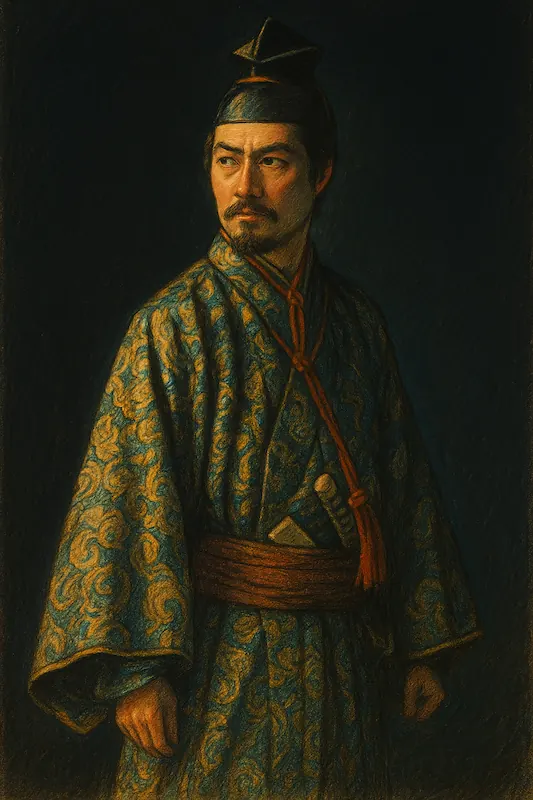
General Ishido, the main antagonist in SHŌGUN, is inspired by Ishida Mitsunari, the rival of Tokugawa Ieyasu. Historically, Mitsunari led the Western Army in the Battle of Sekigahara and was ultimately defeated.
Like Ishido in the drama, Mitsunari was a bureaucrat-turned-military leader, known for his rigid sense of justice and deep loyalty to Toyotomi Hideyori, heir of Hideyoshi.
Kashigi Yabushige → Original Character (Fictional Composite)
The cunning opportunist who mirrors the moral ambiguity of an era
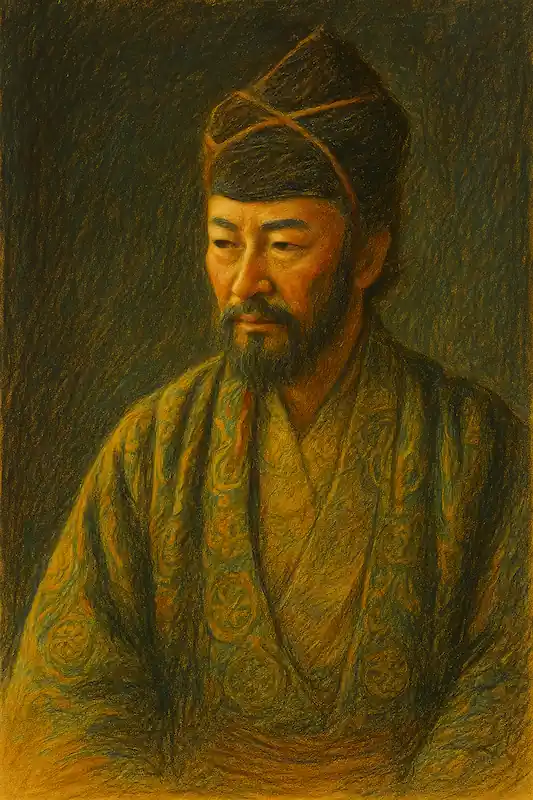
Kashigi Yabushige, one of the most cunning and unpredictable figures in SHŌGUN, is an original creation—not directly based on a single historical figure but rather a composite of archetypal Sengoku-era opportunists. His shifting allegiances, performative loyalty, and survival instincts reflect the chaotic power struggles that defined Japan's feudal age.
In the series, Yabushige is both entertaining and unsettling. He oscillates between bravado and fear, devotion and betrayal—constantly recalibrating his loyalties based on who holds the upper hand.
Though fictional, Yabushige's personality echoes aspects of historical figures like Araki Murashige, Kuroda Kanbei, or even Akechi Mitsuhide—all known for navigating treacherous political waters. Ultimately, Yabushige's character gives the audience a glimpse into the less heroic—but very human—side of samurai politics.
Father Martin Alvito → Pedro Páez / Jesuit Missionaries
The voice of European ambition in a suspicious land
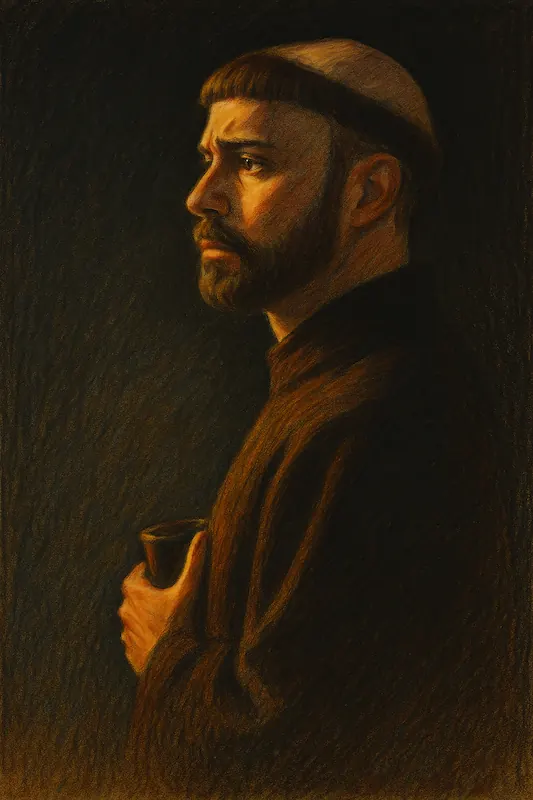
Father Martin Alvito represents the many European missionaries—particularly Jesuits—who came to Japan in the 16th and 17th centuries. He is loosely based on figures such as Pedro Páez and Luís Fróis, who lived in Japan and played complex roles in diplomacy, education, and the spread of Christianity.
His character reflects the real-world religious tensions that influenced politics and power struggles during this period.
In Season 2, Tommy Bastow is among the announced returning cast, so Father Alvito can be tied to the continuing SHŌGUN storyline.
Lady Ochiba → Yodo-dono (1569–1615)
The mother who would burn an empire to protect her son
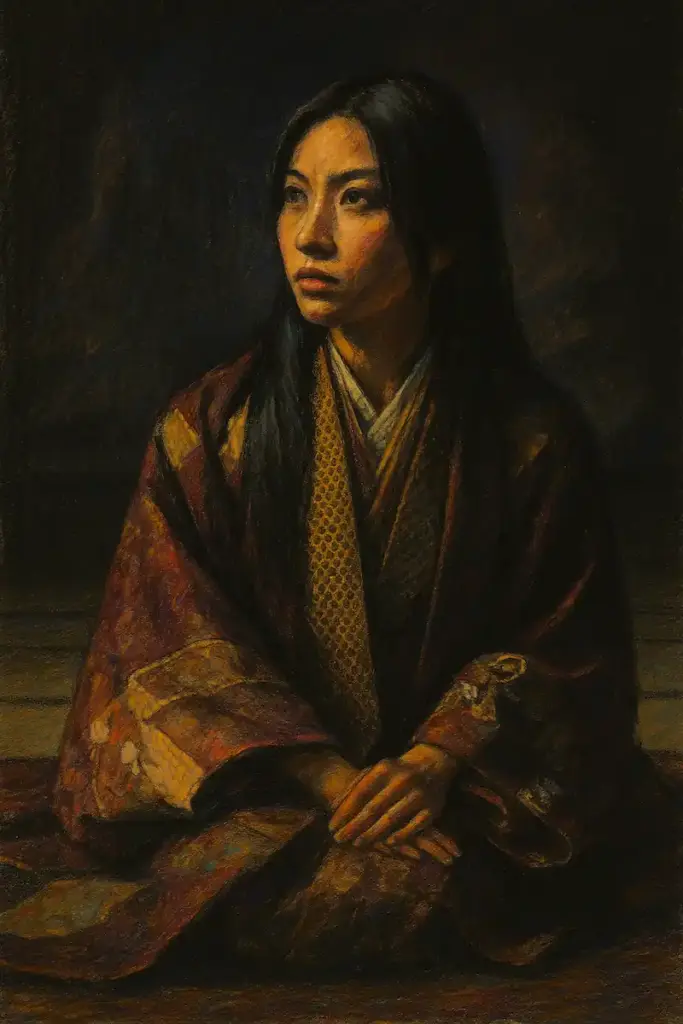
Lady Ochiba, the mother of the Taikō's only surviving son, is a powerful figure who shapes the political atmosphere in SHŌGUN even in the Taikō's absence. She is modeled after Yodo-dono (Lady Chacha), the concubine of Toyotomi Hideyoshi and mother of Toyotomi Hideyori.
As a political force within Osaka Castle, Yodo-dono fiercely defended her son's claim to power, ultimately resisting Tokugawa dominance. In the series, Ochiba embodies this legacy of maternal power, ambition, and tragic resistance, highlighting the influence women held behind the scenes of Japan's shifting leadership.
See also: Osaka Castle's Northern Stronghold — where Lady Yodo made her last stand.
In Season 2, Fumi Nikaidô is among the announced returning cast, making Lady Ochiba one of the key Season 1 figures to watch.
The Taikō → Toyotomi Hideyoshi (1537–1598)
The peasant who became supreme ruler—and left a nation in crisis
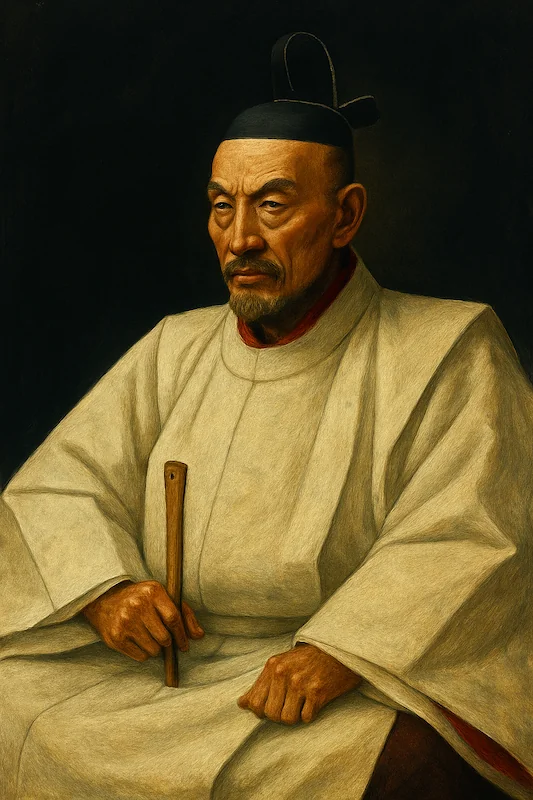
Though deceased at the time SHŌGUN begins, the Taikō looms large over every decision and allegiance in the series. He is modeled after Toyotomi Hideyoshi, the brilliant and ambitious warlord who unified Japan after the fall of Oda Nobunaga. Known for his meteoric rise from peasant roots to supreme ruler, Hideyoshi established a centralized government—but left the nation vulnerable after his death by naming his young son as heir.
In the drama, the Taikō's legacy is a central source of political tension. His former generals, now divided between loyalty to his child and their own ambitions, mirror the real-life factionalism that followed Hideyoshi's death.
Read the full profile of Toyotomi Hideyoshi

Akechi Jinsai → Akechi Mitsuhide (1528?–1582)
The rebel whose betrayal haunts his daughter across generations
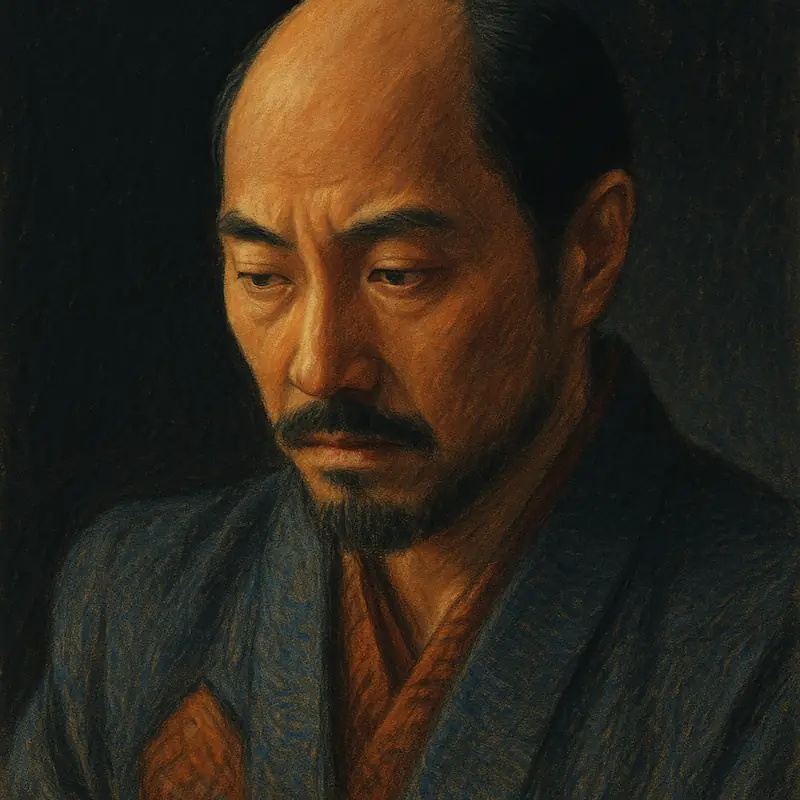
Though deceased before the events of SHŌGUN, Akechi Jinsai—father of Lady Toda Mariko—is an invisible yet deeply present force in the drama. His legacy, shaped by rebellion and disgrace, mirrors that of Akechi Mitsuhide, the general who infamously betrayed Oda Nobunaga at Honnō-ji.
In the series, Jinsai's defection and downfall cast a long shadow over Mariko's life and faith, placing her in a moral and social limbo. His presence underscores the theme of honor tainted by betrayal, a thread that runs deeply through Mariko's internal struggle.
See also: Honnō-ji — where Akechi Mitsuhide betrayed Nobunaga.
Kuroda Nobuhisa → Oda Nobunaga (1534–1582)
The revolutionary unifier whose death fractured a nation
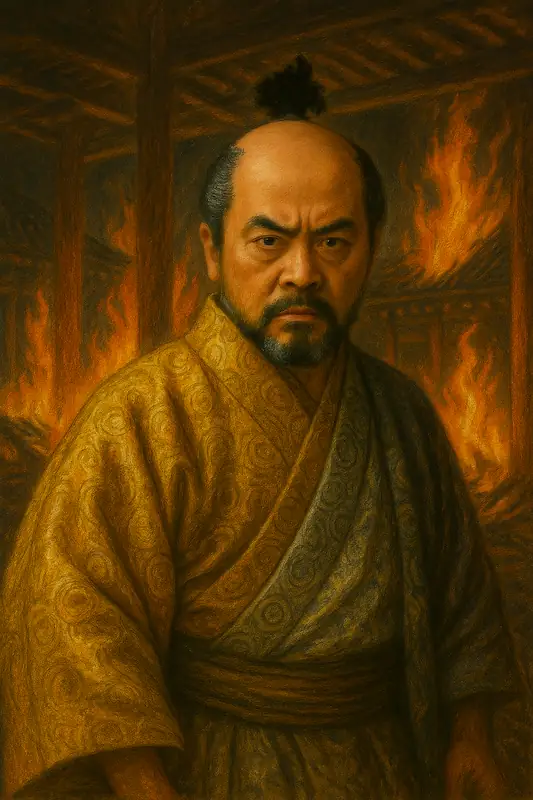
Though deceased long before the events of SHŌGUN unfold, the shadow of Kuroda Nobuhisa looms heavily over the series' political landscape. In the series, he is presented as the father of Lady Ochiba and the former unifier of Japan's fractured realms, representing both a historical golden age and the root of unresolved power struggles. Historically, however, the woman who inspired Lady Ochiba—Yodo-hime, also known as Chacha—was not Oda Nobunaga's daughter, but the daughter of Azai Nagamasa. Kuroda Nobuhisa himself is a fictionalized adaptation of Oda Nobunaga, one of Japan's most iconic and transformative warlords.
Historically, Oda Nobunaga was the first of the "Three Unifiers" of Japan. Known for his radical military reforms, ruthless ambition, and embrace of Western firearms and Christianity, Nobunaga destabilized the longstanding feudal system and initiated a centralized governance model. His sudden death at Honnō-ji in 1582—assassinated by his own retainer, Akechi Mitsuhide—left a violent power vacuum later filled by Toyotomi Hideyoshi and, ultimately, Tokugawa Ieyasu.
Kuroda Nobuhisa thus serves as a mythic ghost in SHŌGUN: not merely a past ruler, but the embodiment of a turning point in Japan's history—a reminder that power gained through brilliance can crumble through betrayal.
Want to learn more about Oda Nobunaga? Click below!
See also: Oda Nobunaga — the sites he built and what remains today.
By exploring the real individuals who inspired the world of SHŌGUN—including those who shaped it from the shadows—we gain a deeper appreciation for the drama's historical depth, cultural nuance, and enduring relevance.
Looking Ahead: SHŌGUN Season 2
SHŌGUN Season 2 is currently in production in Vancouver and is set more than a decade after the events of Season 1. Below are the cast members officially announced as returning, alongside the Season 1 characters they play.
| Season 1 Character | Returning Actor |
|---|---|
| Yoshii Toranaga | Hiroyuki Sanada |
| John Blackthorne | Cosmo Jarvis |
| Lady Ochiba | Fumi Nikaidô |
| Buntaro | Shinnosuke Abe |
| Omi | Hiroto Kanai |
| Kiri | Yoriko Dôguchi |
| Father Alvito | Tommy Bastow |
| Gin | Yuko Miyamoto |
| Saeki | Eita Okuno |
| Kiku | Yuka Kouri |
Frequently Asked Questions
Lord Yoshii Toranaga is based on Tokugawa Ieyasu (1543–1616), the founder of the Tokugawa shogunate who unified Japan after the Battle of Sekigahara in 1600. His patience, political genius, and strategic brilliance are accurately portrayed in the series.
Blackthorne is based on William Adams (1564–1620), the first Englishman to reach Japan. Adams was shipwrecked, became a trusted advisor to Tokugawa Ieyasu, and was granted samurai status under the name Miura Anjin. You can visit sites related to his life in our pilgrimage guide.
Yes. Lady Toda Mariko is inspired by Hosokawa Gracia (1563–1600), a Christian convert and daughter of the infamous traitor Akechi Mitsuhide. Her dramatic death in Osaka before the Battle of Sekigahara became legendary in Japanese history.
Yes. Toda Hirokatsu, Lady Mariko's husband in the series, is inspired by Hosokawa Tadaoki (1563–1646), a prominent daimyo who served both Oda Nobunaga and Toyotomi Hideyoshi and was the real husband of Hosokawa Gracia.
Kashigi Yabushige is a fictional composite—not directly based on a single historical figure, but inspired by various Sengoku-era opportunists known for shifting loyalties, such as Araki Murashige and others.
The series references three key historical figures: Oda Nobunaga (fictionalized as Kuroda Nobuhisa), Toyotomi Hideyoshi (the Taikō), and Tokugawa Ieyasu (Lord Toranaga). Together, they are known as Japan's Three Unifiers who brought the Sengoku period to an end.
Absolutely! From Osaka Castle (Hideyoshi's legacy) to Yokosuka (William Adams' home) to Sekigahara (the decisive battlefield), Japan is full of accessible sites connected to these figures. See our complete travel guide.
Yes. SHŌGUN Season 2 is in production in Vancouver and is set more than a decade after Season 1. Confirmed returning cast includes Hiroyuki Sanada (Toranaga), Cosmo Jarvis (Blackthorne), and Fumi Nikaidô (Lady Ochiba), among others.
Explore More on Following the Shogun
Written and maintained by the Following the Shogun Editorial Team. We research Sengoku- and Edo-era castles, battlefields, temples and historic sites on the ground, and organize how SHŌGUN's story compares with real history for travelers. This page is part of the Inside SHŌGUN series on Following The Shogun. Character profiles are based on the FX/Hulu 2024 series and verified historical sources. Last updated: 2026.
☕ Support This Site
Following the Shogun is built on original fieldwork and on-site research.
If you found this guide useful, your support helps keep it going.

You can also support via QR code

