


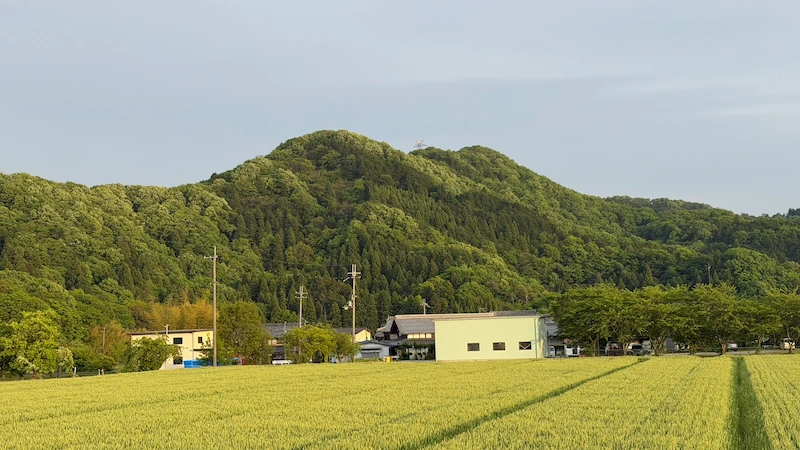
Yokoyama Castle Ruins Guide: Access, History & Hiking Routes
Yokoyama Castle Ruins, spanning Nagahama and Maibara in Shiga Prefecture, is the mountain castle where Kinoshita Tōkichirō—later known as Toyotomi Hideyoshi—was first entrusted by Oda Nobunaga to serve as castellan. After the Battle of Anegawa in 1570, Nobunaga seized the castle, and Hideyoshi was stationed here as a forward base to contain Odani Castle. At the foot of the mountain stands Ōhara Kannonji Temple, a place associated with the story of Ishida Mitsunari, then a young temple servant, offering tea to Hideyoshi and being discovered through the legendary “Wisdom of the Three Bowls.”
The site is gaining renewed attention after being introduced as Nobunaga’s camp in the 2026 NHK Taiga drama Toyotomi Brothers! Yet if you choose the wrong hiking route, there are places where you can find yourself unable to tell whether what lies ahead is even a trail. Based on my own visit in May 2026, this guide offers practical advice, including what to watch for when choosing your route.
Basic Information and Access
| Admission | Free |
|---|---|
| Time needed | Round trip from Kannonji Temple to the South Castle and North Castle: about 1.5 to 2 hours (about 2 to 2.5 hours if you also visit Kannonji Temple) |
| Parking | Ōhara Kannonji Temple parking lot (free) |
| Train + bus | JR Nagahama Station (JR-A09) or Ōmi-Nagaoka Station (CA81) → Kokoku Bus Ōmi-Nagaoka Line, get off at “Kannonji Temple” → about 5 minutes on foot to Kannonji Temple |
| By car | About 10 minutes from Nagahama IC on the Hokuriku Expressway |
| Recommended trailhead | If you plan to go via Kannonji Temple, this page recommends the Saigoku Thirty-Three Kannon Pilgrimage Route. If you are not visiting the temple, use the “Yokoyama Hiking Course” beside Hiyoshi Shrine. (Maintained and beginner-friendly) Website introducing other routes URL https://www.za.ztv.ne.jp/kita-ohmi/yokoyama/root.html |
| Caution | Entering the mountain after evening is dangerous. Trekking shoes are essential. A hiking pole is recommended. |
Choosing Your Hiking Route | Comparing the Two Main Routes
There are two main routes to Yokoyama Castle Ruins. On a map, the “Thirteen Buddhas Pilgrimage Route” may appear to be the shortest path, but based on my own experience, I strongly advise against using it for the climb up. Before planning your visit, make sure you understand the difference between these two routes.
Saigoku Thirty-Three Kannon Pilgrimage RouteOn the right when facing the main hall
- Wooden steps and Buddhist statues are in place
- Safe for beginners and families
- About 40 minutes to the summit
- The route is clear and relatively hard to lose
Thirteen Buddhas Pilgrimage RouteOn the left when facing the main hall
- Easy to take the wrong branch immediately after the entrance
- Few signs, and at times you cannot tell whether it is a trail
- Wet fallen leaves and slopes of more than 45 degrees
- May still be considered for descent, but only with caution
Firsthand Report: When the “Trail Disappeared” on the Thirteen Buddhas Pilgrimage Route — The Trap of the Shortest Path
For this visit, I parked at Ōhara Kannonji Temple and began the climb at around 4:20 p.m. Looking at the map, the “Thirteen Buddhas Pilgrimage Route” appeared to be the shortest way up. Having visited many mountain castles before, I assumed it would simply be a steep but manageable trail. That assumption began to fall apart almost immediately after the entrance.
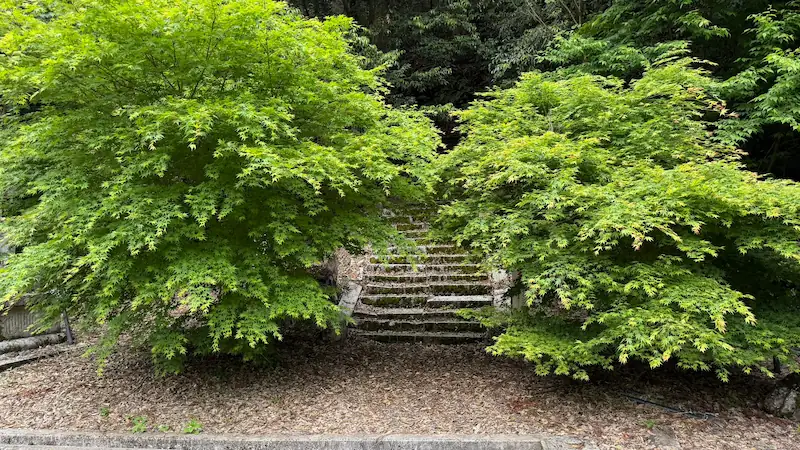
There is a route sign at the entrance. But just beyond it, beside a concrete wall, I noticed a narrow path just wide enough for one person. I could push through branches and keep moving. It looked like part of the route. That was my first wrong turn.
Soon after, the line that looked like a trail simply vanished. In front of me was a damp slope of roughly 45 degrees. There were no compacted footprints, and several lines looked as though they might be climbable, but I could not tell which, if any, was the official route. From that point on, everything became guesswork.
I had no confidence in where to place my feet. Only after putting my weight down could I tell whether the ground would hold or slip. I grabbed exposed roots in the soil, but I could not know whether they were truly fixed until I pulled on them. What looked like a root sometimes turned out to be a loose fallen branch. I could move forward on all fours. But “being able to move forward” is not proof that you are on the correct route.
The greatest risk in my mind was falling. When climbing alone, a fall or injury can immediately become a situation where returning is impossible. I decided to retreat and search in another direction. Then, about 10 meters ahead on the mountain side to the right, I saw a Buddhist statue. The route was named after Buddhist figures, and there was one in front of me. That was the moment I could finally be sure I had found the official route. Later, when wooden steps appeared, I felt certain I was on the right path. After wandering and correcting course, I eventually reached the “Tanigumi-Nagahama Old Road / Kannonji Entrance” and was able to continue.
At 4:55 p.m., I reached the South Castle ruins. The moment I saw the bell—an unmistakable man-made object—I felt a powerful sense of arrival unlike anything I had experienced at many other mountain castles. At 5:02 p.m., I reached the North Castle ruins. The entire ordeal had taken about 35 minutes from the start, but the feeling of “I made it” was exceptionally strong.
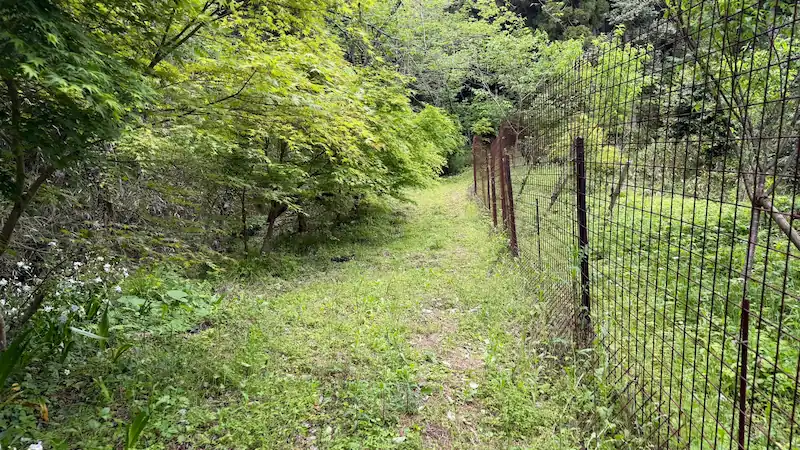
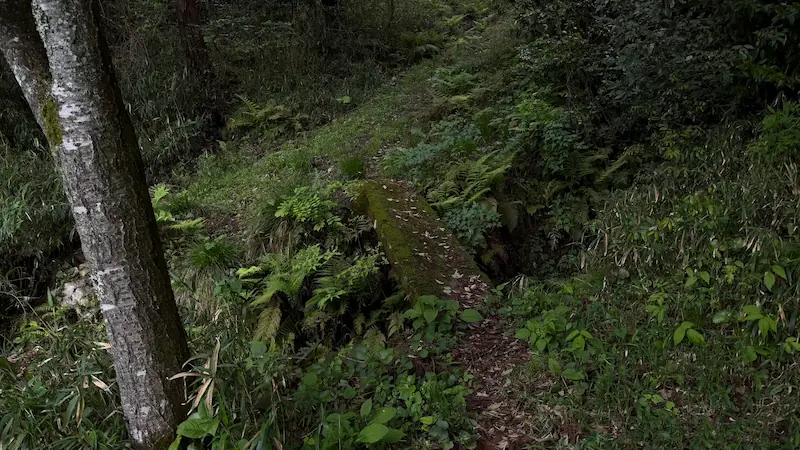
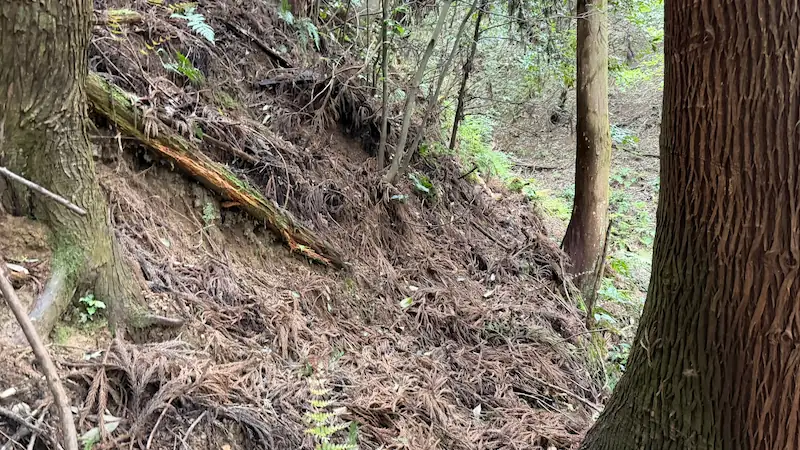
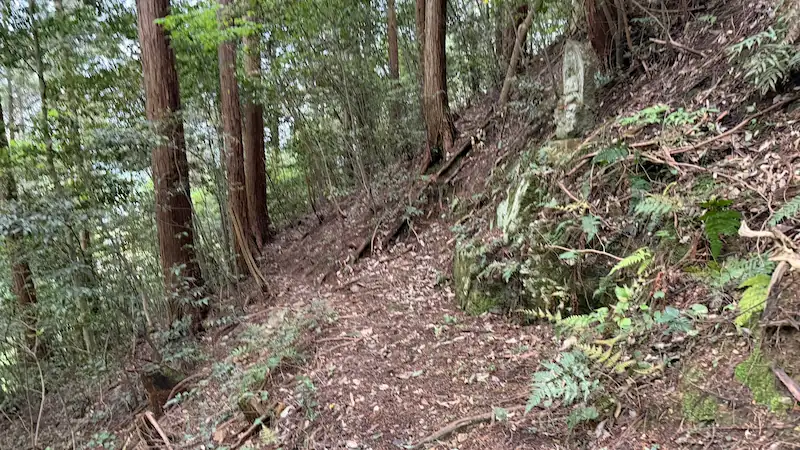
- Using it for the climb up is strongly not recommended (you may reach a point where you cannot tell whether it is a trail at all)
- It is easy to take a wrong branch immediately after the entrance. The key markers for the official entrance are wooden steps and Buddhist statues
- There are damp slopes of more than 45 degrees. Trekking shoes are essential
- There are places where you may need to grab roots, but what looks like a root may be a loose branch. Proceed carefully
- A hiking pole will greatly improve stability
- Do not start in the evening—the moment you get lost, you are racing against sunset. Even 30 minutes less daylight makes route judgment far harder
- When climbing alone, the risk of falling can directly lead to being unable to return. Take this seriously
Beginners, families, and anyone who does not regularly hike should choose the Saigoku Thirty-Three Kannon Pilgrimage Route without hesitation.
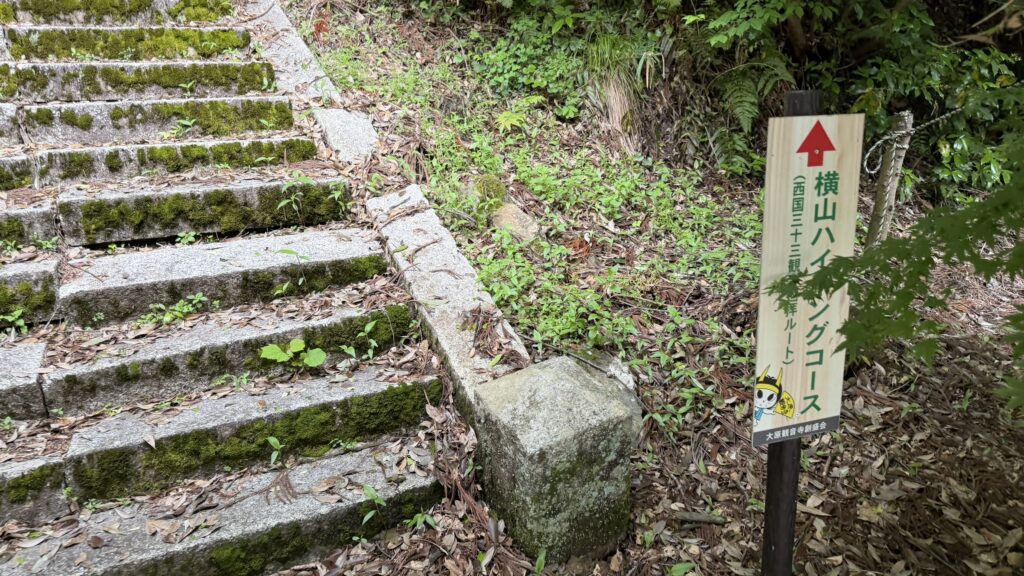
Why People Choose This Route — The Misleading Appeal of “Shortest”
When you search online for routes to Yokoyama Castle Ruins, some pages introduce the Thirteen Buddhas Pilgrimage Route as the “shortest distance.” On the map at the temple entrance, it certainly looks that way. But that is precisely the problem.
It creates an assumption: shortest means direct, steep perhaps, but still climbable. The more mountain castles you have visited, the more likely you may be to think, “I can push through this.” I was one of those people.
The real problem with this route is not difficulty, but whether it functions as a route at all. It is not simply a “hard hiking trail.” It is terrain where you can no longer tell whether you are on a trail. Even with hiking experience, that sensation—of losing the very basis for route judgment—is hard to anticipate.
Recommended Walking Plan (Starting from Ōhara Kannonji Temple)
If arriving by car, I had no trouble navigating there with Google Maps or a similar app.
A small historic site symbolizing the meeting between Mitsunari and Hideyoshi. It is easy to miss, so check it first
The main hall, bell tower, and main gate are Important Cultural Properties of Japan. The grounds are associated with the “Wisdom of the Three Bowls” story
*The Thirteen Buddhas Pilgrimage Route is not recommended for ascending. I strongly recommend the Saigoku Thirty-Three Kannon Pilgrimage Route
Look for the earthworks, koguchi entrance, and vertical dry moat. There is also a bell, which gives a strong sense of arrival
About 312 meters above sea level. Highlights include the double dry moat, views across northern Ōmi, and the third-order triangulation point
Use the Saigoku Thirty-Three Kannon Pilgrimage Route on the way back as well
Spot Details
Ishida Mitsunari Water-Drawn Well
The place where the fateful “Wisdom of the Three Bowls” encounter with Hideyoshi began
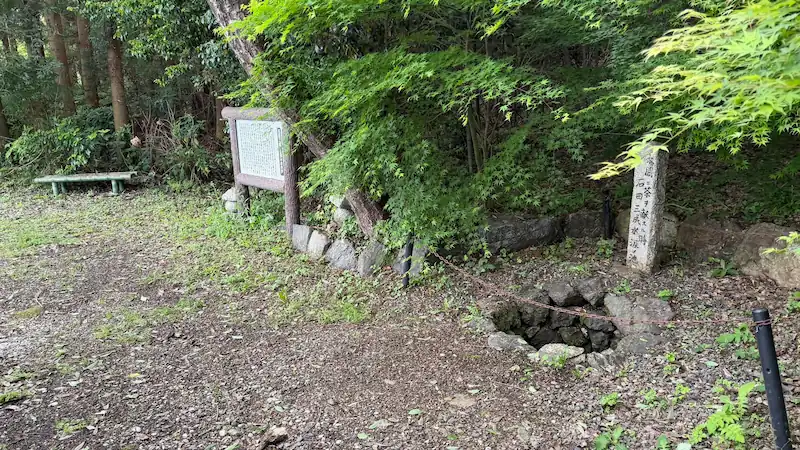
Within the grounds of Ōhara Kannonji Temple, at the foot of Yokoyama Castle Ruins, an old well remains where Ishida Mitsunari is said to have drawn water for tea offered to Toyotomi Hideyoshi. Kannonji Temple is formally known as Ibukiyama Kannon Gokokuji, an ancient temple counted among the former four great temples of Mount Ibuki. The story of the “Wisdom of the Three Bowls”—in which Hideyoshi stopped here during falconry and Mitsunari, then a young temple servant, served him tea—has long been told as the moment Mitsunari’s talent first came to Hideyoshi’s attention. The well itself is a modest historic site, but nearby are the temple’s main hall, bell tower, and main gate, all Important Cultural Properties of Japan. In the quiet temple grounds, it is easy to imagine the moment when the life of a major Sengoku figure began to change.
🌅 360° Panorama Photo: In front of the well

⏳ Suggested visit time: quick stop 3 minutes / slower visit 10 minutes
📍 Highlight: The well where Mitsunari is said to have drawn the water for tea offered to Hideyoshi. In the quiet setting of Ōhara Kannonji Temple, it gives you a tangible sense of the starting point of one of the great rises in Sengoku history.
| Current state | Preserved as an old well within the grounds of Ōhara Kannonji Temple |
|---|---|
| Cultural property status | No confirmed designation for the well itself. The main hall, bell tower, main gate, and wooden seated statue of Dengyō Daishi at Kannonji Temple are Important Cultural Properties of Japan |
| Notes | Ōhara Kannonji Temple is known as the place where Ishida Mitsunari and Toyotomi Hideyoshi met |
🗺 Address: 1342 Asahi, Maibara, Shiga Prefecture
🔍 An unexpected historical background: Tradition says that when Hideyoshi stopped at Kannonji Temple during a falconry outing, Ishida Mitsunari, then a young temple servant, served him tea and was recognized for his intelligence. The famous “Wisdom of the Three Bowls” story says the first bowl was large and lukewarm, the second slightly hotter and smaller, and the third hot and served in a small bowl—an anecdote that shows Mitsunari’s quick judgment and sensitivity.
🔍 A detail known to enthusiasts: The formal name of Ōhara Kannonji Temple is Ibukiyama Kannon Gokokuji. It was once counted among the former four great temples of Mount Ibuki. In its prime, it was a major Tendai temple with 14 chō of temple land and 23 sub-temples.
Ōhara Kannonji Temple
An ancient temple associated with the Wisdom of the Three Bowls, and a Tendai temple with multiple Important Cultural Properties
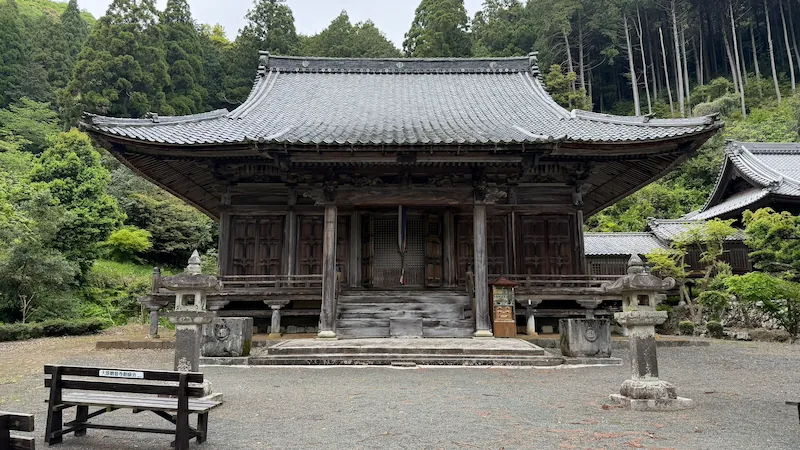
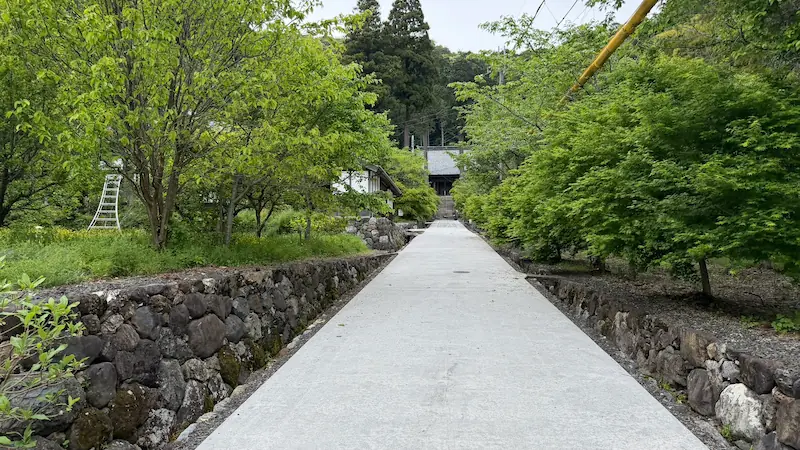
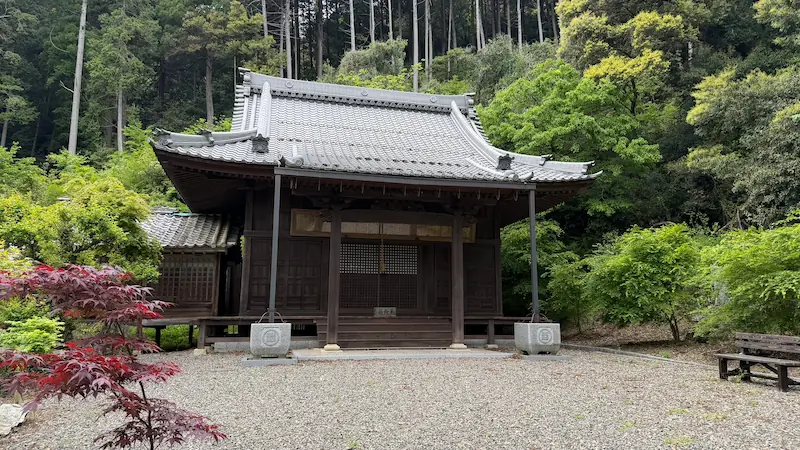
Standing at the foot of Mount Ibuki, Ōhara Kannonji Temple is an ancient Tendai temple formally known as Ibukiyama Kannon Gokokuji. It was founded by the monk Sanshu during the Ninju era and later moved to its present location during the Shōgen era. The temple grounds are known as the setting of the “Wisdom of the Three Bowls,” the story in which Ishida Mitsunari, then a young temple servant, served tea to Hashiba Hideyoshi when Hideyoshi stopped by during a falconry outing, and was recognized for his talent. The present main hall, an irimoya-style building from the mid-Edo period, conveys the power of early modern temple architecture through its dragon carvings in the inner sanctuary and its varied decorative design. Within these grounds, the quiet atmosphere of an old temple overlaps with a defining moment in Sengoku history.
🌅 360° Panorama Photo: In front of the main hall

⏳ Suggested visit time: quick stop 10 minutes / slower visit 30 minutes
📍 Main highlights: The main hall, an Important Cultural Property of Japan (a powerful example of mid-Edo early modern temple architecture, with an imposing irimoya-style form and dragon carvings in the inner sanctuary) / The temple grounds associated with the Wisdom of the Three Bowls (together with the water-drawn well, it offers a vivid sense of Sengoku history)
| Founder | Founded during the Ninju era (833–850) by the monk Sanshu |
|---|---|
| Current main hall | Built in Shōtoku 6 (1716). Five bays by five bays, irimoya-style roof, sangawara tile roofing (altered in Meiji 1) |
| Master carpenter | Miyabe Tahei |
| Cultural property status | Main hall, bell tower, main gate, and wooden seated statue of Dengyō Daishi: Important Cultural Properties of Japan / 625 Kannonji documents: Shiga Prefecture-designated cultural property |
| Event | Ōhara Kannonji Lantern Festival (held in conjunction with the memorial service for Lord Mitsunari) |
🗺 Address: 1342 Asahi, Maibara, Shiga Prefecture
🔍 An unexpected historical background: The temple was originally located on Mount Ibuki and moved to its present site during the Shōgen era (1259–1260). Under the protection of the Ōhara clan, it grew into a major temple with 14 chō of temple land and 23 sub-temples.
🔍 Connection to famous figures: Tradition says Ishida Mitsunari served tea to Hashiba Hideyoshi while he was a young temple servant, in the episode known as the Wisdom of the Three Bowls. The lantern festival held in connection with Lord Mitsunari’s memorial service has become a seasonal autumn tradition in the area.
Yokoyama Castle South Castle Ruins
Earthworks, a koguchi entrance, and vertical dry moats remain on the ridge. The “first checkpoint” before heading to the North Castle
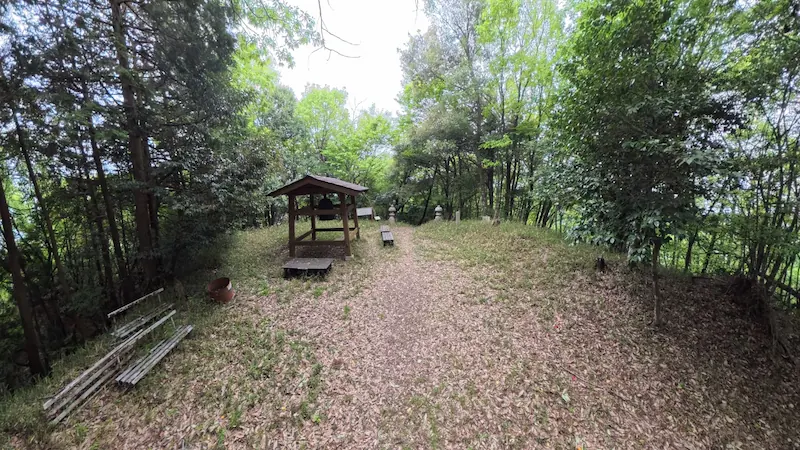
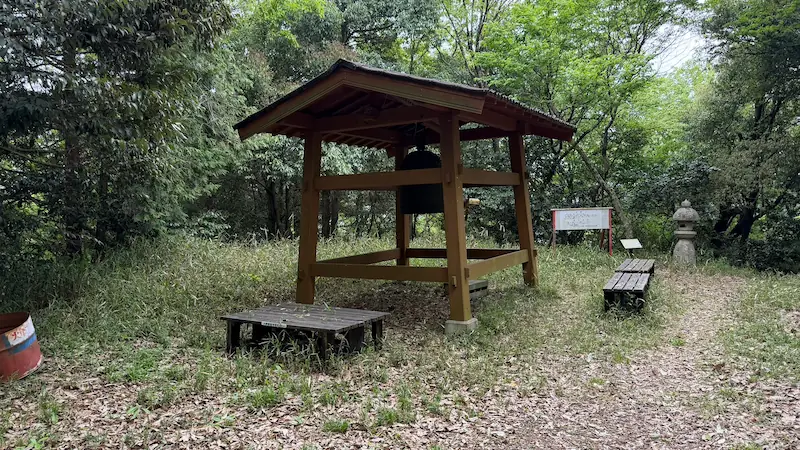
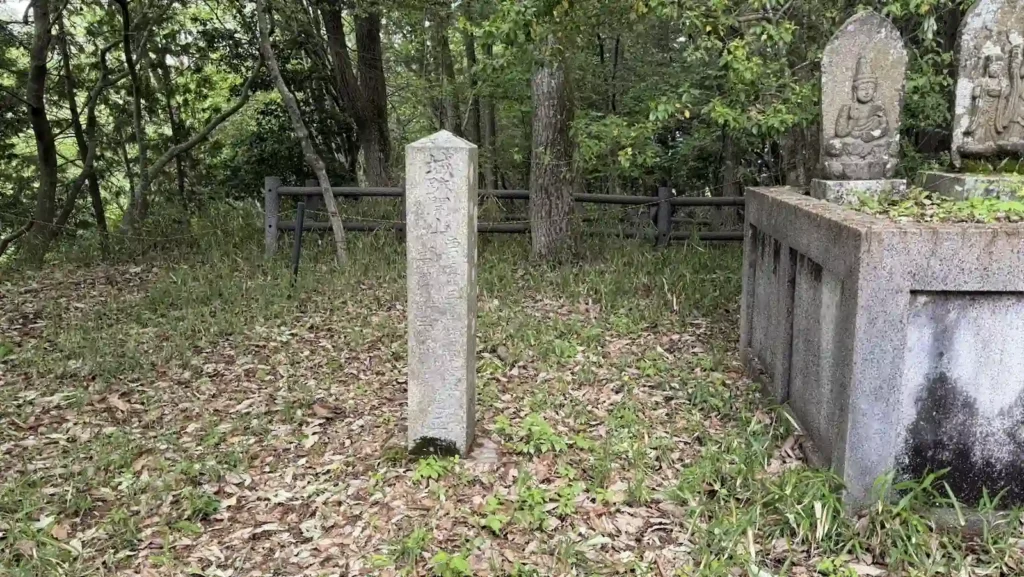
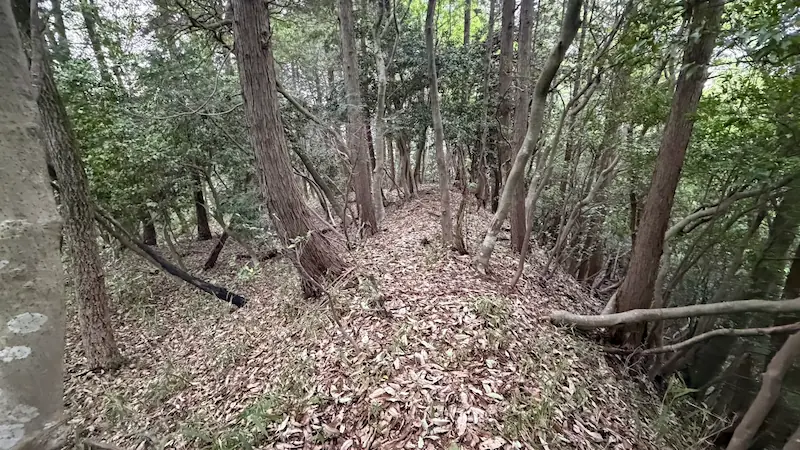
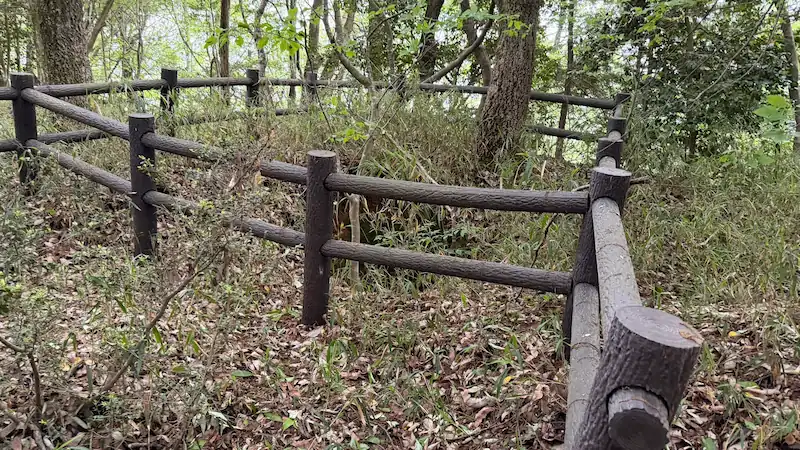
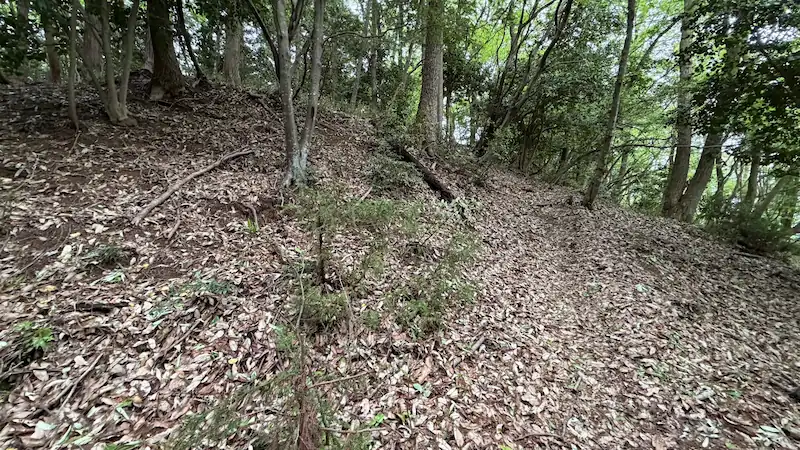
Yokoyama Castle South Castle Ruins form the southern core of the castle remains spread across the ridge of the Yokoyama Hills. Yokoyama Castle is known as a branch castle of the Kyōgoku clan, later serving as an outlying fort protecting the Azai clan’s Odani Castle. After the Battle of Anegawa in 1570, it became a forward base for Oda Nobunaga’s forces. The South Castle area is characterized by defenses designed for ridge-top warfare, including earthworks, a koguchi entrance, vertical earthworks, and vertical dry moats around the main enclosure.
I reached the South Castle at 4:55 p.m. after getting lost on the Thirteen Buddhas Pilgrimage Route. There is a bell here, and when I saw that unmistakable man-made object while covered in mud, the relief of having “arrived” was stronger than almost anything I have felt at other mountain castles. Standing in this enclosure before continuing to the North Castle, you can feel that Yokoyama Castle was not merely a castle on a mountaintop, but a strategic mountain fortress controlling multiple ridges.
🌅 360° Panorama Photo: South Castle kuruwa enclosure

🌅 360° Panorama Photo: Earthworks and well at the South Castle

⏳ Suggested visit time: quick stop 5 minutes / slower visit 20 minutes
📍 Main highlights: earthworks, koguchi entrance, and vertical dry moats (defensive features that show how the ridge path was blocked and protected) / The “first enclosure” where you begin to grasp the shape of the castle before heading to the North Castle
| Structure and features | A kuruwa enclosure on the southern ridge of Yokoyama Castle. The area around the main enclosure includes earthworks, a koguchi entrance, vertical earthworks, and vertical dry moats |
|---|---|
| Current state | Remains such as kuruwa enclosures, earthworks, koguchi entrance, vertical earthworks, and vertical dry moats can still be identified |
| Abandonment | Yokoyama Castle as a whole was abandoned after the Battle of Shizugatake |
🗺 Address: Ishida-chō, Nagahama / Muraida and surrounding areas, Maibara, Shiga Prefecture
🔍 An unexpected historical background: After the Battle of Anegawa, Yokoyama Castle became an Oda-side base for the campaign against Odani Castle, and Kinoshita Tōkichirō was stationed here as castellan. Information on-site indicates that stone Buddhist statues from the Eighty-Eight Sacred Places are scattered along the path descending from the South Castle toward Kannonji Temple.
🔍 Connection to famous figures: Oda Nobunaga captured Yokoyama Castle after the Battle of Anegawa. Toyotomi Hideyoshi served here as castellan during the period when he was still known as Kinoshita Tōkichirō.
Yokoyama Castle North Castle Ruins (Main Enclosure)
About 312 meters above sea level. The main enclosure where Hideyoshi was stationed, with a double dry moat and sweeping views of northern Ōmi
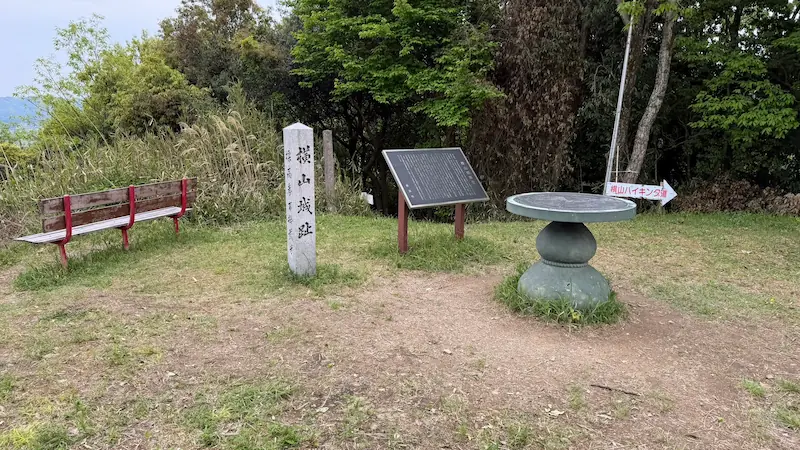
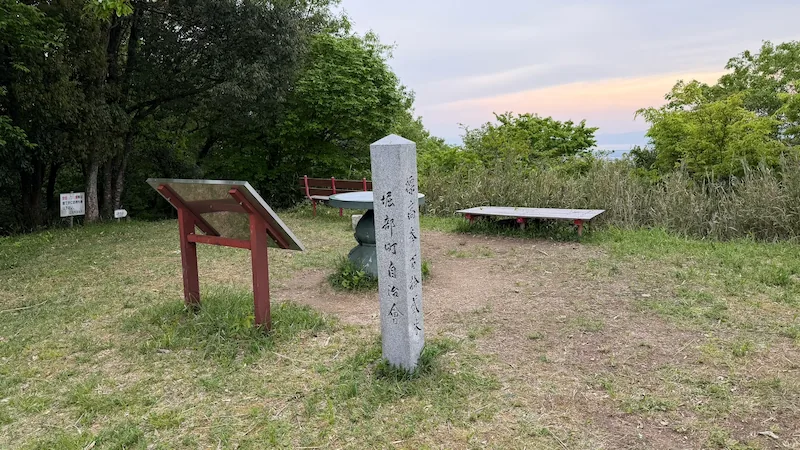
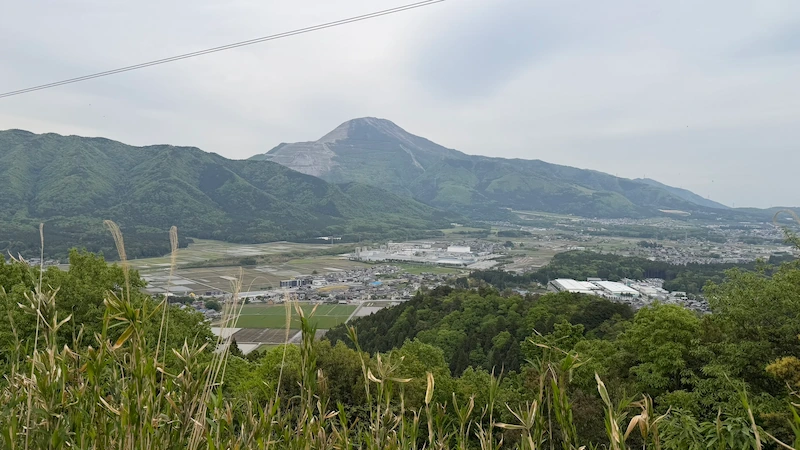
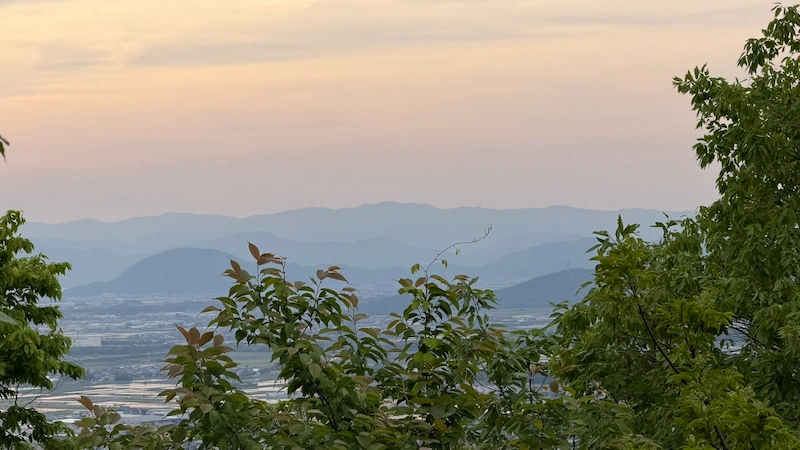
Yokoyama Castle North Castle Ruins are located near the highest point of the Yokoyama Hills, at about 312 meters above sea level, and are thought to form the castle’s central main enclosure. From this position, the castle overlooks the Hokkoku Wakiōkan road to the east and the Hokkoku Kaidō road to the west, clearly revealing its role as a fortress controlling traffic in northern Ōmi. After Oda Nobunaga captured Yokoyama Castle following the Battle of Anegawa, it became a forward base against Odani Castle, the Azai clan’s stronghold, and Kinoshita Tōkichirō—later Toyotomi Hideyoshi—was stationed here.
The main highlight of the North Castle is the double dry moat that cuts across the end of the ridge. After seeing the defensive layout at the South Castle and then continuing to the North Castle, the views and military logic of Yokoyama Castle as a whole suddenly become clear. I reached it at 5:02 p.m.—about seven minutes from the South Castle. On a clear day, you can see Mount Ibuki, Lake Biwa, Odani Castle Ruins to the north, and the site of the Battle of Anegawa.
🌅 360° Panorama Photo: North Castle Ruins

⏳ Suggested visit time: quick stop 10 minutes / slower visit 25 minutes
📍 Main highlights: double dry moat (a classic mountain castle defensive remain) / grand panorama of northern Ōmi (Mount Ibuki, Lake Biwa, and Odani Castle Ruins) / third-order triangulation point “Horibe”
| Elevation | About 312 meters (third-order triangulation point “Horibe”) |
|---|---|
| Structure and features | Main enclosure near the highest point of the Yokoyama Hills, with a double dry moat at the tip of the ridge |
| Renovation history | Repaired by Rokkaku Sadayori in Eishō 15 (1518) → rebuilt by Azai Nagamasa in Eiroku 4 (1561) → renovated by Hashiba Hideyoshi in Tenshō 11 (1583), during the Battle of Shizugatake |
| Views | Views of Mount Ibuki, Lake Biwa, Odani Castle Ruins, and the Anegawa Battlefield |
| Abandonment | Abandoned after the Battle of Shizugatake |
🗺 Address: Ishida-chō, Nagahama / Muraida and surrounding areas, Maibara, Shiga Prefecture
🔍 An unexpected historical background: Yokoyama Castle remained important even after the fall of Odani Castle. During the Battle of Shizugatake in Tenshō 11 (1583), Hashiba Hideyoshi renovated the castle and used it together with Nagahama Castle as a rear base. It was abandoned afterward.
🔍 A detail known to enthusiasts: The North Castle area has the marker for the third-order triangulation point “Horibe,” making it a place where castle exploration and terrain observation can be enjoyed together. From autumn through early spring, it is an excellent hiking destination, with views of northern Ōmi opening through the trees.
🔍 Connection to famous figures: Oda Nobunaga captured Yokoyama Castle, and Toyotomi Hideyoshi—then Kinoshita Tōkichirō—was stationed here as castellan. Tokugawa Ieyasu fought as part of the Oda-allied forces at the Battle of Anegawa.
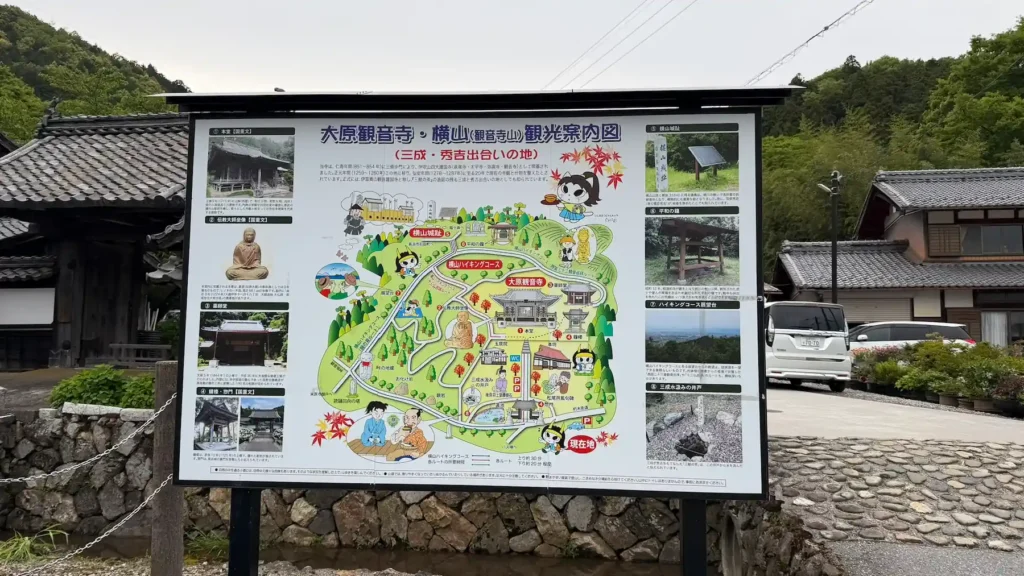
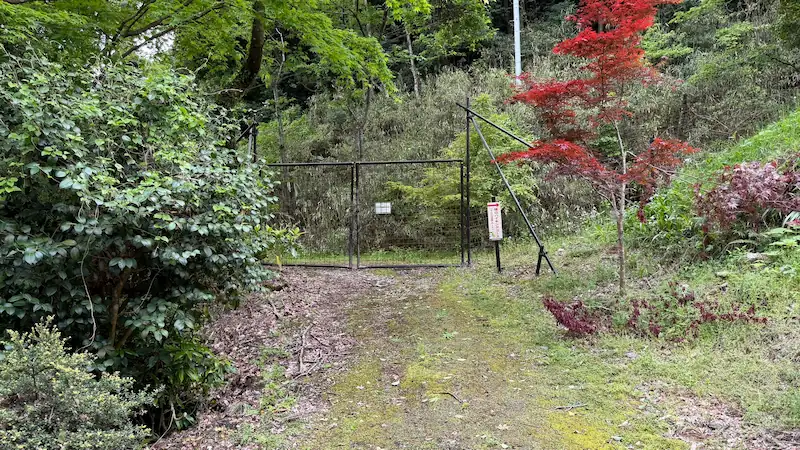
The overview signboard is located near the entrance. Despite the reassuring look of the sign, the various hiking courses are not as easy as they may appear, so prepare carefully.
Connection to the 2026 NHK Taiga Drama Toyotomi Brothers!
In the 2026 NHK Taiga drama Toyotomi Brothers!, Yokoyama Castle is introduced as Nobunaga’s camp. The drama features many scenes involving Hideyoshi, then Kinoshita Tōkichirō, and Yokoyama Castle is one of its important settings.
As places associated with Hideyoshi and Mitsunari, Ōhara Kannonji Temple (the Wisdom of the Three Bowls), Yokoyama Castle Ruins (Hideyoshi’s first appointment as castellan), and Ishida Mitsunari’s birthplace (Ishida-chō, Nagahama) are becoming a popular combined route. The stone marker for Ishida Mitsunari’s birthplace is about five minutes by car from Yokoyama Castle Ruins.


comment