


3 Hidden Nobunaga Shrines in Nara — Explore with 360° Panoramic Photos
In Nara Prefecture, three small shrines preserve the memory of Oda Nobunaga in unexpected ways: a mysterious Inari shrine bearing his name in Kashihara, a seated Nobunaga statue sharing space with a children's seesaw in Sakurai, and a vermilion shrine beside an ancient burial mound in Tenri. All three come with immersive 360° panoramic photos and full visitor access information.
Why Are There Nobunaga Shrines in Nara?
Oda Nobunaga himself had relatively limited direct involvement with Yamato Province — the ancient name for modern Nara Prefecture. Two of the three sites here have a clear regional context: they sit in domains ruled by descendants of Nobunaga's own younger brother. The origin of the third, Nobunaga Daimyōjin in Kashihara, remains uncertain.
After Nobunaga's death in the Honnō-ji Incident of 1582, branches of the Oda clan were assigned domains across Japan during the Edo period. Two of them took root here in Nara: the Yanagimoto Domain (now Tenri City) and the Shibamura Domain (now part of Sakurai City) were both ruled for generations by descendants of Oda Nagamasu, also known by his tea-ceremony name Uraku-sai — Nobunaga's own younger brother. As lords of Yanagimoto, this branch of the family established a Kenkun Shrine within the grounds of the ancient Isanagi Shrine, enshrining their famous ancestor. The Oda family of Yanagimoto maintained a documented historical connection to this area throughout the Edo period.
A similar pattern occurred in Sakurai City, where the former village of Shiba was the seat of the Shibamura Domain's own jin'ya (administrative headquarters). It is said to be a branch of the Kenkun Shrine in Kyoto, and it continues to be maintained by the local community today; Oda Elementary School, next to the shrine, now stands on the former jin'ya's palace grounds.
The third shrine — Nobunaga Daimyōjin in Kashihara — is the most mysterious of all. Unlike the other two, there are no clear records linking it to the Oda clan or to Nobunaga himself. How and why the name "Nobunaga" became attached to a small Inari shrine in a residential neighborhood remains an open question — one that makes visiting this spot all the more compelling.
Together, these three shrines reveal how later generations chose to remember, enshrine, and make use of Nobunaga's legacy — each in a different way, each reflecting a different facet of local faith, political strategy, and community identity.
3 Nobunaga Shrines to Visit in Nara
Nobunaga Daimyōjin (Kashihara City) 🎥 360°
Historical Value ☆ / Uniqueness of Local Faith ☆☆☆ / Mystery Factor ☆☆☆
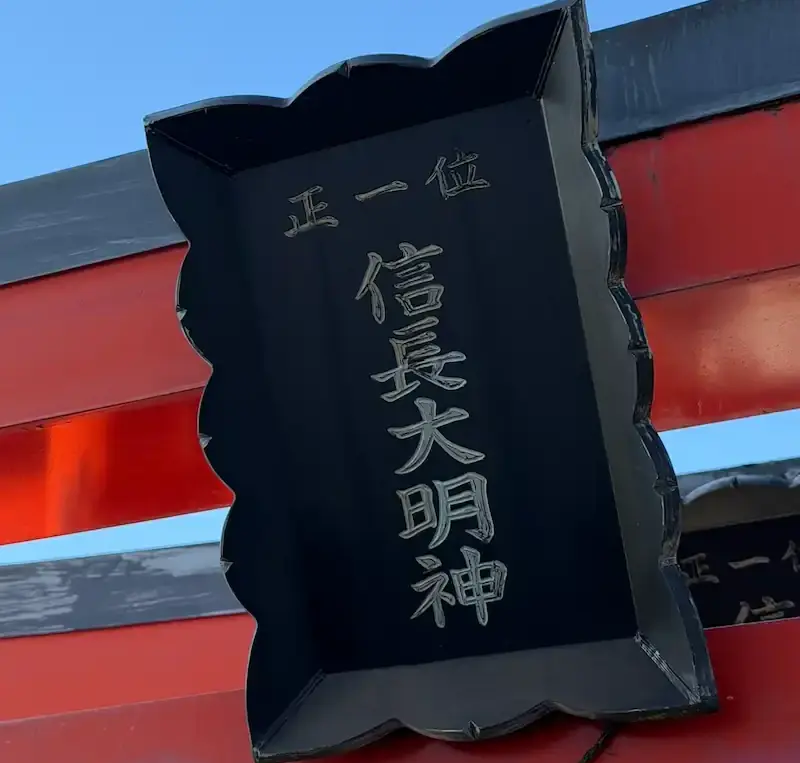
Tucked quietly within a residential neighborhood in Shinguchi-chō, Kashihara City, "Nobunaga Daimyōjin" (a commonly used name rather than an official one) is a tiny shrine known only to those who seek out the deeper layers of local history. With virtually no formal records documenting its origins and completely untouched by tourism, it stands as a micro–local heritage site. The shrine is located at address "488-4," and together with the adjacent Suga Shrine, it forms the spiritual core of the Shinguchi-chō community.
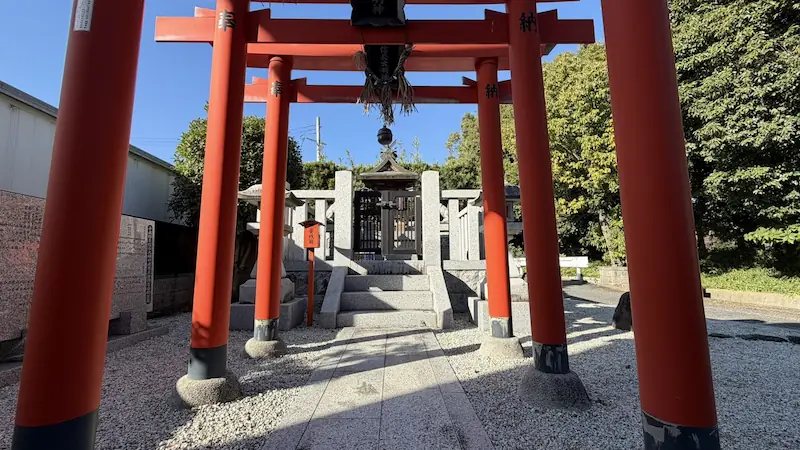
The shrine's highly unusual name naturally evokes an association with Oda Nobunaga, the famed warlord of the Sengoku era. However, no conclusive historical sources confirm any direct connection. The structure itself resembles an Inari-style shrine, marked by a series of bright vermilion torii gates. This makes the question all the more intriguing: why and how did the name "Nobunaga" become attached to a local Inari deity in the course of the community's religious history?
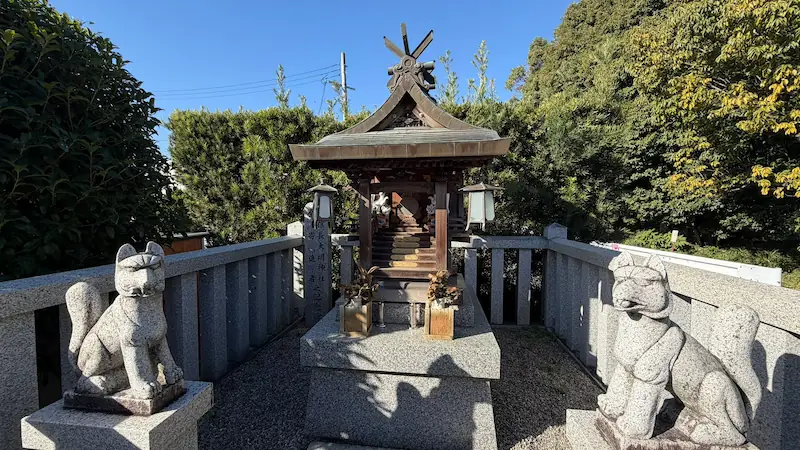
The grounds are extremely small, with no elaborate decorations or large structures. Yet this modest scale is precisely what conveys its role as a deeply rooted "ujigami" — a neighborhood guardian deity intimately woven into everyday life in Shinguchi-chō.
Author's Note: When I visited in November 2025, the shrine was so well hidden within the residential streets that even Google Maps struggled to pinpoint it. There were no tourist signs whatsoever — just the small vermilion torii gates emerging between ordinary houses. The quiet of the neighborhood, broken only by the occasional bicycle bell, made the encounter with the stone marker reading "Nobunaga Daimyōjin" all the more striking.
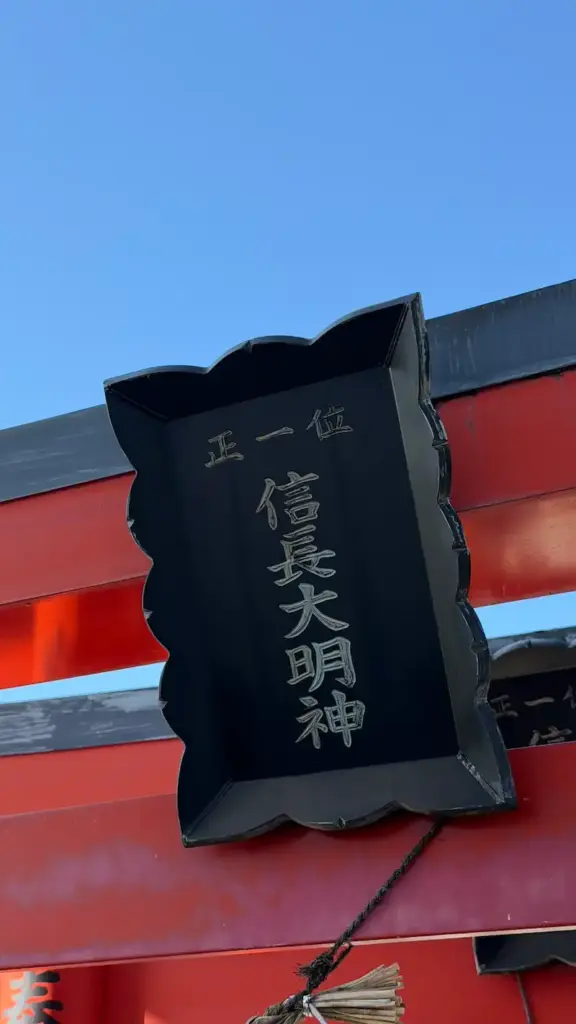
- The enigmatic stone marker: The stone marker carved with "Nobunaga Daimyōjin" defines the very identity of this shrine. Why has the name of Nobunaga — who is believed to have had little direct connection to this area — been preserved here? Standing before this marker is one of the most fascinating moments of the visit.
- A humble, everyday Inari-style presence: Instead of a large worship hall or impressive gate, the short, natural approach leading through vermilion torii to the main sanctuary reveals the shrine's character as a "deity of everyday life," rather than a monumental sacred site.
- Contrast with Suga Shrine: Visiting together with the neighboring Suga Shrine — dedicated to Gozu Tennō — highlights the unique role and peculiarity of this tiny shrine. The close coexistence of two shrines venerating different deities captures the historical depth of Shinguchi-chō.
Tap to enlarge
| Construction Date / Builder | Unknown (maintained through long-standing local faith) |
|---|---|
| Structure & Features | A small Inari-style shrine with vermilion torii gates and a stone marker; positioned directly along a local residential road. |
| Renovation / Restoration History | No recorded information (details unknown) |
| Current Condition | Confirmed standing as of the November 2025 on-site visit, in Shinguchi-chō, Kashihara City. |
| Damage or Loss | No known incidents |
| Cultural Property Status | Not confirmed |
| Notes | The shrine's very name is the greatest mystery. No confirmed connection to Oda Nobunaga has been established, and the site remains a topic of debate among local historians. |
What makes it worth a look: the compact shrine building itself, and its contrast with neighboring Suga Shrine
If you also explore further: a stroll through the surrounding streets of Shinguchi-chō, including Suga Shrine
Address: Shinguchi-chō 488-4, Kashihara City, Nara Prefecture
Access: Ninokuchi Station (B38, Kintetsu Kashihara Line), approx. 5 minutes on foot (about 0.3 km)
Kenkun Shrine (Sakurai City) 🎥 360°
Historical Value ☆☆ / Sense of Otherness ☆☆☆ / Degree of Clash with Everyday Life ☆☆☆
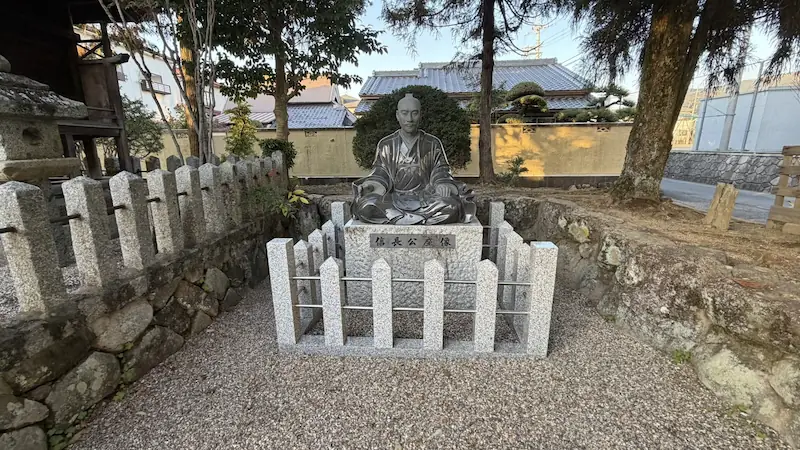
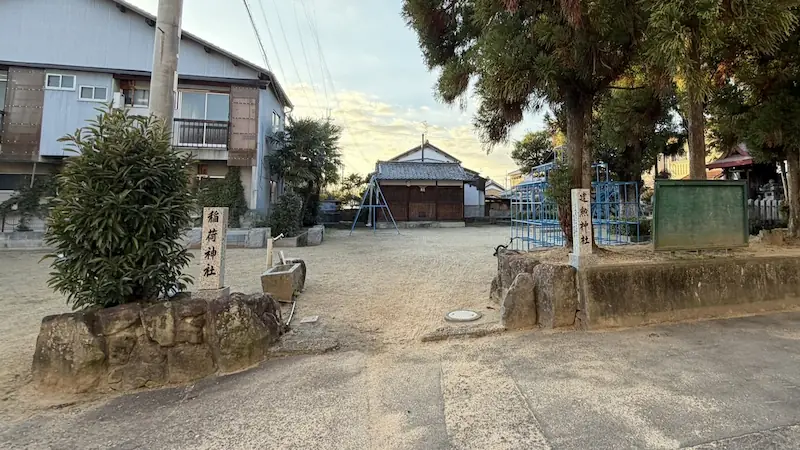
Located in Shiba, Sakurai City, Nara Prefecture (the former village of Shiba), Kenkun Shrine enshrines the Sengoku warlord Oda Nobunaga as its deity and is affectionately known by locals as "Shinchoko-san" (a nickname for Lord Nobunaga). The greatest appeal of this place lies in how the overwhelming historical presence of a "unifier of the realm" sits side by side with the everyday routines of the neighborhood. On the adjacent land once stood the domain's former jin'ya (administrative headquarters), now the site of Oda Elementary School. The school crest incorporates the Oda family crest, a clear reminder that this area was once part of the Oda clan's domain.
Within the shrine grounds you'll find a seated statue of Nobunaga, but at his feet is a space that functions as part of a children's playground. This bizarre yet charming scene — a seesaw set right in front of Nobunaga's statue — is vivid proof that this shrine, as a "fragment of history," has taken root in a unique way in the everyday lives of local residents.
Believed to be a branch shrine of the main Kenkun Shrine in Kyoto, this compact neighborhood shrine is an easy place to drop by, yet the more you learn about it, the more clearly you feel the unusual bonds between the Oda clan's history and the local community.
Author's Note: The moment I turned the corner and saw the seesaw directly in front of Nobunaga's stone statue, I burst out laughing — and then immediately felt moved. There is something deeply human about the way this community has absorbed a towering historical figure into the fabric of daily life. Children play here after school, completely unfazed by the warlord watching over them.
- The surreal pairing of Nobunaga's statue and a seesaw (top highlight): In front of the seated statue of Lord Oda Nobunaga, you'll find a seesaw and other playground equipment that local children actually use. This overwhelmingly unique sight — where a once all-powerful warlord shares space with a neighborhood play area — is the shrine's most striking visual feature.
- Traces of the old jin'ya at Oda Elementary School: The adjacent Oda Elementary School stands on the former site of the Shibamura domain's jin'ya, on the palace grounds itself. Look closely at the school gate and crest to see the Oda clan's family crest (Oda mokkō).
- The atmosphere of "Shinchoko-san," a beloved local deity: Though the shrine is not grand, the quiet grounds blend seamlessly into the surrounding residential streets.
Tap to enlarge
| Foundation / Relocation | Believed to have been relocated and developed by at least the Meiji era (within the former village of Shiba). |
|---|---|
| Founder | Thought to have been established and enshrined by local residents with ties to the former Oda domain; no detailed records of specific founders survive. |
| Structure & Features | A small shrine precinct adjoining an Inari shrine, featuring a seated statue of Oda Nobunaga and playground equipment. |
| Renovation / Restoration History | The grounds were relocated and improved over time; some sources suggest relocation around 1896 (Meiji 29). |
| Current Condition | Still standing and open to worship. Located around the Tama-zuka area of Shiba, Sakurai City. |
| Damage or Loss | No notable incidents reported. |
| Cultural Property Status | None confirmed (considered a local community shrine). |
| Notes | Regarded as a branch of the main Kenkun Shrine in Kyoto's Kita Ward. The Shibamura Domain that maintained it was ruled by descendants of Oda Nagamasu (Uraku-sai), Nobunaga's younger brother. |
Quick highlights: the Nobunaga statue and the playground beside it
For a deeper visit: the former jin'ya site and a stroll around the neighborhood
Address: Shiba, Sakurai City, Nara Prefecture
Access: around 20 minutes on foot from Miwa Station (JR Sakurai Line)
Kenkun Shrine (Tenri City) 🎥 360°
Historical Value ☆☆ / Depth of Overlapping Historical Layers ☆☆☆ / Contrast with Ancient Belief Systems ☆☆☆
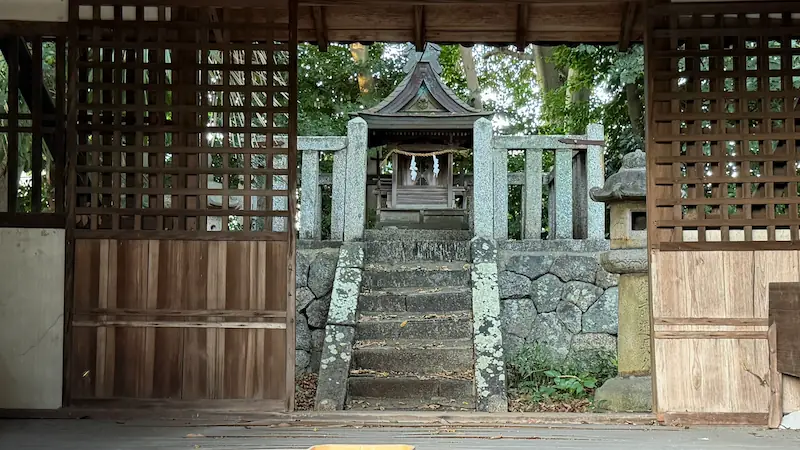
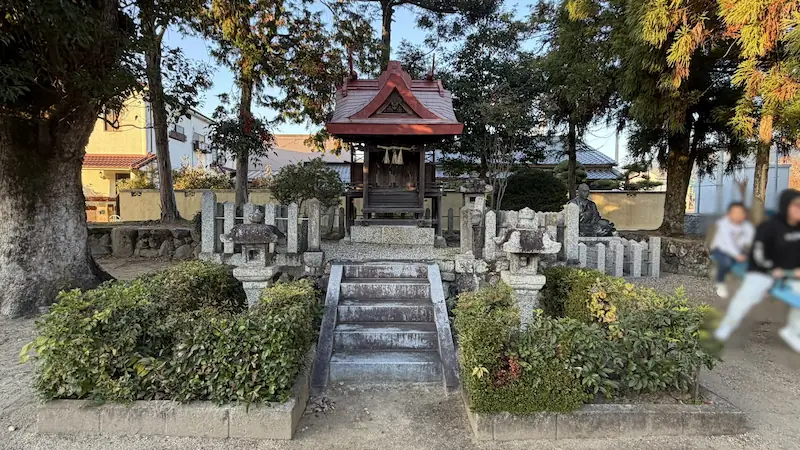
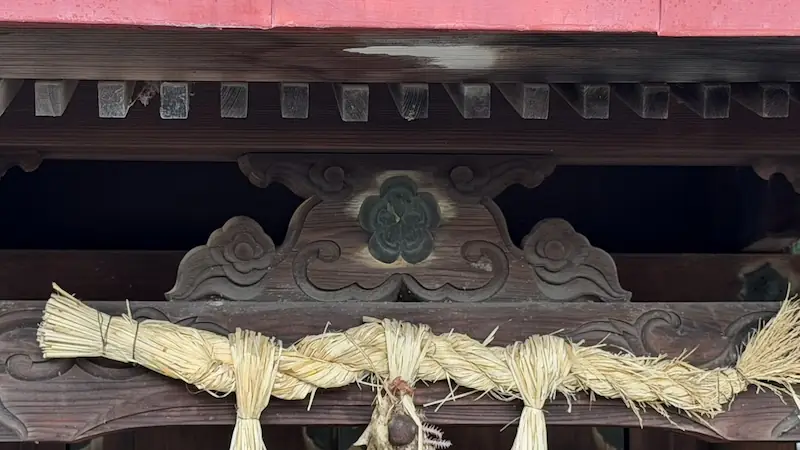
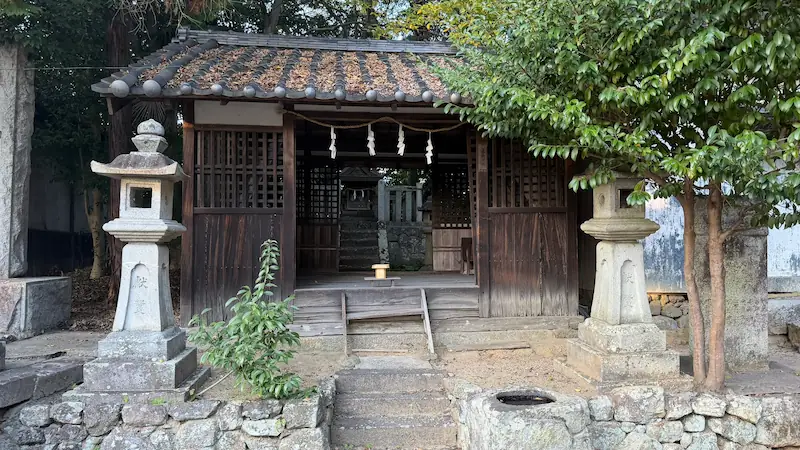
Kenkun Shrine, located in Yanagimotochō, Tenri City, Nara Prefecture, is a subsidiary shrine (massha) within the grounds of Isanagi Shrine, a major sacred site whose origins date back to the Kofun period. Here, you can literally see layers of history stacked on top of one another: the immense authority of ancient burial mounds (the Yanagimoto Kofun Group) overlaid with the power and prestige of a samurai clan from the early modern era.
The enshrined deity is Oda Nobunaga. The shrine is said to have been established as a subsidiary shrine because the lords of the Yanagimoto Domain during the Edo period — descendants of Oda Nagamasu (Uraku-sai), Nobunaga's younger brother — were members of the Oda clan. The quiet surroundings — a blend of houses and rice fields — open up toward a keyhole-shaped tumulus (zenpō-kōen-fun) rising in the background, creating a striking visual contrast. Despite being a small subsidiary shrine, it is affectionately called "Shinchoko-san" by locals.
Author's Note: Standing in front of this small vermilion shrine and looking up to see the outline of a massive ancient burial mound rising behind it — that was the single most powerful moment of my entire visit to Nara's Nobunaga shrines. The rice paddies surrounding the area were golden in late November light, adding to the sense of timelessness.
- A vivid contrast between ancient and early modern history: From within the grounds of Isanagi Shrine, you can look out toward the keyhole-shaped Tenjinyama Kofun behind it — a rare composition that lets you feel Japan's shifting centers of power across the centuries in one glance.
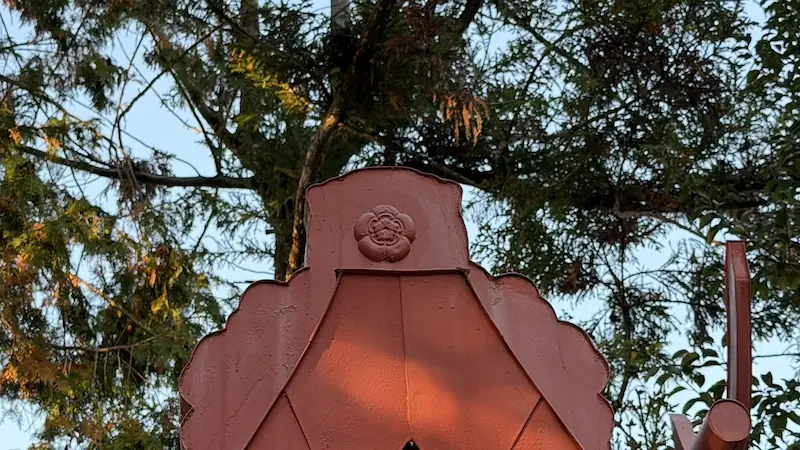
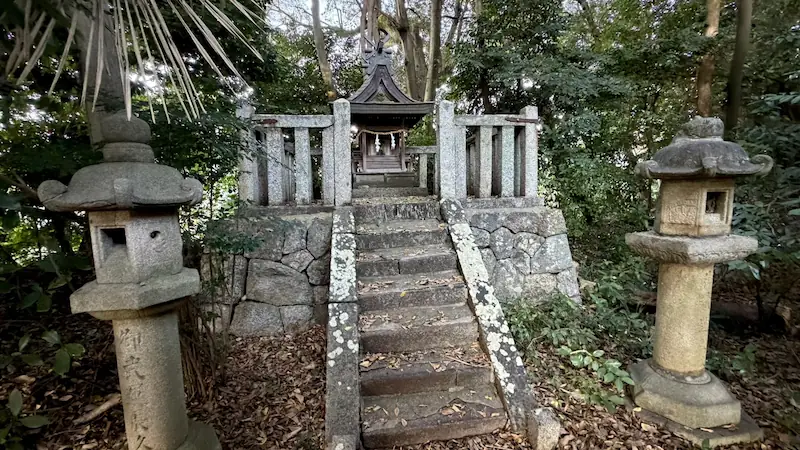
- The placement of authority as a subsidiary shrine: The vermilion shrine hall stands on a stone terrace, maintaining a dignified status alongside the main Isanagi Shrine.
- The quiet presence of a former domain seat: The approach to the shrine and the surrounding rice fields are wrapped in stillness, ideal for a contemplative walk.
Tap to enlarge
| Foundation | Exact year unknown. Believed to be connected with the Oda clan's rule over Yanagimoto Domain. |
|---|---|
| Enshrined Deity | Lord Oda Nobunaga |
| Structure & Features | Located within the grounds of the main Isanagi Shrine, facing south. The hall is painted vermilion and the main sanctuary stands atop a stone base. |
| Renovation / Restoration History | No clear records. |
| Current Condition | Still standing and open to worship. |
| Cultural Property Status | No official designation confirmed. |
| Notes | Regarded as a branch of the main Kenkun Shrine in Kyoto's Kita Ward. The Yanagimoto Domain's lords were descendants of Oda Nagamasu (Uraku-sai), Nobunaga's younger brother. Also known as "Takeisao Shrine." |
Quick highlights: the shrine building and its position relative to the burial mound
For a deeper visit: tracing the layers of history from ancient to early-modern times
Address: Yanagimotochō 1899, Tenri City, Nara Prefecture
Access: About 10 minutes on foot from Yanagimoto Station on the JR Sakurai Line.
Based on an on-site visit in November 2025. This is the author's personal ranking, not an official recommendation.
A seesaw at the feet of Nobunaga's statue is a sight you will not find anywhere else in Japan. Combined with the Oda family crest at the neighboring elementary school, this is the most visually memorable of the three.
The view of an ancient burial mound rising directly behind a Sengoku-era shrine is a striking, one-glance summary of Japanese history, and Yanagimoto Station is a reasonably easy 10-minute walk away.
The grounds are very small and the visit itself takes about 10 minutes. It's the most mysterious of the three, but if you're pressed for time, skipping it costs you the least.
Practical Tips: Visiting All Three Shrines
All three shrines are located along the rail lines in the southern Nara area (Kintetsu Kashihara Line and JR Sakurai Line). The most efficient route is:
Kintetsu Kashihara Line → walk to Nobunaga Daimyōjin in Kashihara (5 min walk).
From Kashiharajingu-mae Station to Miwa Station (JR Sakurai Line) → walk to Kenkun Shrine in Sakurai (20 min walk).
Walk to Kenkun Shrine in Tenri (10 min walk).
Route: 3 locations connected by rail, with transfers required along the way.
Best paired with: a walk along the Yamanobe-no-Michi hiking trail (which passes near the Tenri and Sakurai shrines), a stop at Kashihara Jingu Shrine, or, along the same Kintetsu Kashihara Line, a visit to Yamato Koriyama Castle.
Tip: Dedicated parking is unconfirmed at all three shrines. Public transport + walking is the recommended approach. Wear comfortable shoes.
| Nearest Stations | Nobunaga Daimyōjin: Ninokuchi Station (Kintetsu Kashihara Line), 5-min walk. Kenkun Shrine (Sakurai): Miwa Station (JR Sakurai Line), 20-min walk. Kenkun Shrine (Tenri): Yanagimoto Station (JR Sakurai Line), 10-min walk. |
|---|---|
| Practical Shinkansen Station | Kyoto Station. For Nobunaga Daimyojin/Ninokuchi Station, a Kintetsu limited express reaches the neighboring Yamato-Yagi Station in about 48-50 minutes (approximate; varies by train). |
| Travel Time From Major Cities | Nobunaga Daimyojin (Ninokuchi Station): approximated via Yamato-Yagi Station -- about 48-50 min from Kyoto by Kintetsu limited express / about 43 min from Osaka-Namba with one transfer at Tsuruhashi / about 1h46m-1h55m from Kintetsu Nagoya by limited express. Kenkun Shrine (Sakurai): using Kintetsu Osaka Line's Sakurai Station as the practical gateway, about 58 min from Osaka with one transfer at Tsuruhashi. Kenkun Shrine (Tenri): using Kintetsu Tenri Line's Tenri Station as the practical gateway, about 1h4m from Kyoto with no transfer, about 57 min-1h8m from Osaka-Namba. From each gateway station it's a further few minutes to about 20 minutes by local train and on foot to the shrine's actual nearest station (Ninokuchi / Miwa / Yanagimoto). From Tokyo: approx. 3h-3h30m overall via Shinkansen + Kintetsu transfer (rough estimate). All figures vary by train, connection, and time of day. |
| Difficulty | The 3 sites are not within walking distance of each other and require train transfers between them. Each individual shrine sits on flat residential or rural streets. |
| Recommended Transport | Train + walking |
| Parking | Nobunaga Daimyojin: a visit blog notes visitors parking at the adjacent Suga Shrine instead, but current availability/permission is unconfirmed. Kenkun Shrine (Sakurai): dedicated parking is unconfirmed. Kenkun Shrine (Tenri): no public source found -- Unconfirmed. |
| Hours | No official visitor-hours information was found online for any of the 3 shrines, and on-site hours signage has not been confirmed. |
| Notes | The 3 sites are several kilometers apart from each other. Build in extra time for train transfers if visiting all three in one day. |
Frequently Asked Questions
While Nobunaga himself had limited direct involvement with Nara (Yamato Province), descendants of his younger brother Oda Nagamasu (Uraku-sai) ruled the Yanagimoto and Shibamura domains in the Edo period, and local communities preserved his memory through shrines in Kashihara, Sakurai, and Tenri.
All three are within Nara Prefecture and reachable by the Kintetsu Kashihara Line and JR Sakurai Line, though train transfers are required. Total travel time depends on your connections and starting point, so check the timetable for your travel date. See the "Practical Tips" section above for a suggested route.
Kenkun Shrine (also read as "Takeisao Shrine") is a Shinto shrine that enshrines Oda Nobunaga. The most famous one is located on Mount Funaoka in Kyoto, established by decree of Emperor Meiji and elevated to Special Government Shrine (Bekkaku Kanpeisha) status in 1875. Smaller shrines said to be branches of it exist in Sakurai and Tenri in Nara Prefecture, in areas historically ruled by Oda clan descendants.
A tiny Inari-style shrine in Kashihara City bearing the name "Nobunaga Daimyōjin" — despite having no confirmed historical connection to the warlord Oda Nobunaga. The origin of the name remains a mystery debated by local historians.
The Kenkun Shrine in Kyoto is the main shrine, located on Mount Funaoka and designated a Special Government Shrine in 1875. It features grand architecture and significant cultural properties. The Nara shrines, by contrast, are small community shrines outside Nara's major sightseeing circuit — each reflecting a different local relationship with Nobunaga's memory.
← Back to the Oda Nobunaga page

☕ Support This Site
Following the Shogun is built on original fieldwork and on-site research.
If you found this guide useful, your support helps keep it going.

You can also support via QR code


comment