


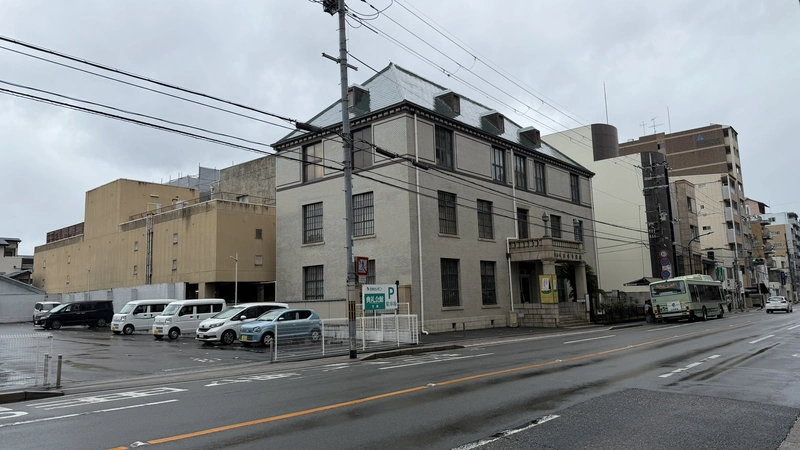
Kyoto City Archaeological Museum: Free Entry and the Excavated Kyoto of Toyotomi Hideyoshi
Nothing above ground survives of Jurakudai or Fushimi Castle, the two great buildings Toyotomi Hideyoshi raised in Kyoto. What survives is underground, and this small free museum is where the excavated pieces are displayed. I visited on 9 September 2026 and spent about 40 minutes covering both the ground-floor special exhibition and the permanent galleries upstairs.
Is it worth stopping here?
This depends on what you plan to see elsewhere in Kyoto. If Hideyoshi is part of your trip, the answer is yes, and the reason is specific. Jurakudai, the palace-fortress he completed in 1587, was demolished in 1595, and the site today holds only stone markers. Fushimi Castle, where he spent his last years, no longer stands in its original form either. If you walk to those sites first, there is very little to look at. Come here first and you see the actual gold-leafed roof tiles that came off those buildings, and the markers start to mean something.
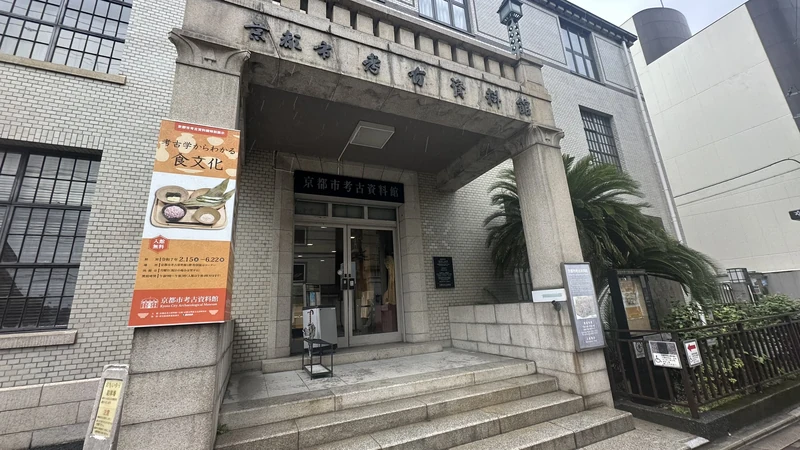
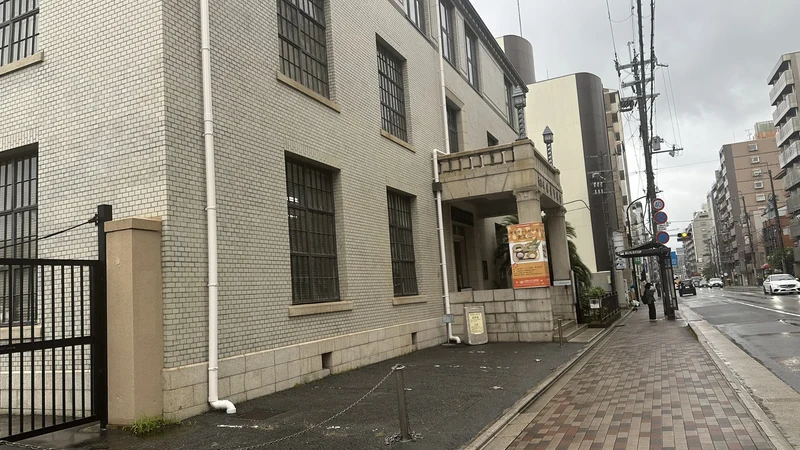
Two things to know before you decide. The museum is small, occupying one floor of galleries plus a ground-floor exhibition corner, so 40 minutes is realistic rather than a rushed estimate. And when I visited, the objects had no English labels. The building itself is worth the walk regardless: it is the former Nishijin Textile Hall, a registered cultural property of the City of Kyoto.
| Admission | Free, including the special exhibition |
|---|---|
| Time needed | About 40 minutes for both floors (9 September 2026 visit) |
| Opening hours | 9:00–17:00, last entry 16:30 |
| Closed | Mondays. If Monday is a public holiday the museum opens and closes the next weekday instead |
| Special exhibition | Hideyoshi's Remaking of Kyoto, 11 July – 23 November 2026, ground-floor exhibition corner and the display case under the stairs |
| English labelling | At the time of the visit, the objects carried no English labels |
| Photography | A few displays were marked no-photography; the rest could be photographed. Follow the signage on the day |
| What survives | Excavated objects, not standing buildings. Jurakudai and Fushimi Castle are gone from the surface |
Getting there
The museum faces Imadegawa-dori in the Nishijin district, north-west of central Kyoto. The city bus stop is directly across the street from the entrance. I arrived by taking the subway to Imadegawa Station and changing to a bus, after visiting the Furuta Oribe Museum earlier in the day. Walking from the subway station is also straightforward if you prefer to stay above ground.
Access
| Address | 265-1 Motoisa-cho, Imadegawa-dori Omiya Higashi-iru, Kamigyo-ku, Kyoto 602-8435 |
|---|---|
| Phone | 075-432-3245 |
| Nearest bus stop | Imadegawa Omiya, directly outside. Horikawa Imadegawa is also within a short walk |
| Nearest station | Imadegawa Station (Karasuma subway line, station number K06), then about 10–15 minutes west along Imadegawa-dori |
| Shinkansen station | Kyoto Station |
| From Kyoto Station | City bus route 9 (bound for Nishigamo Shako-mae) stops at Horikawa Imadegawa, about a 2-minute walk west of the museum. Route 101 (via Nijo Castle) stops at Imadegawa Omiya. You can also take the Karasuma subway line to Imadegawa and walk or change to a bus. Journey times vary by route and time of day; check with Kyoto City Transportation Bureau |
| From other cities | Check individually. Travel time to Kyoto Station depends on your operator and service |
| Difficulty on foot | Low. Flat ground from the bus stop, and the museum occupies two floors |
| Recommended transport | City bus. Walking makes sense if you are also visiting Seimei Shrine, the Nishijin Textile Center or the Jurakudai markers |
| Parking | Not confirmed. No dedicated visitor parking is listed in the official information |
| Reception | 9:00–17:00, last entry 16:30 |
| Note | Closed Mondays. The special exhibition ends on 23 November 2026 |
Tap any photo to enlarge
The special exhibition: Hideyoshi's Remaking of Kyoto (until 23 November 2026)
Hideyoshi controlled Kyoto for little more than a decade. In that time he built Jurakudai and Fushimi Castle, ringed the city with an earthen rampart called the Odoi, and drove new streets through a grid that had survived since the Heian period. This exhibition presents that programme of rebuilding through what archaeology has recovered: excavated objects, photographs taken during excavation, and panels reproducing early maps.
It is organised into six themes: Kyoto before Hideyoshi; Myokenji Castle and Jurakudai; the Tensho land division, Teramachi, the Odoi, Kyoto Shinjo and the court nobles' quarter; Fushimi and Yodo castles; the Great Buddha of Hoko-ji in Higashiyama; and tea ceramics excavated within the city. What follows are the displays I stopped at longest on 9 September 2026. Individual objects may be rotated.
The exhibition corner
Ground floor, just past reception
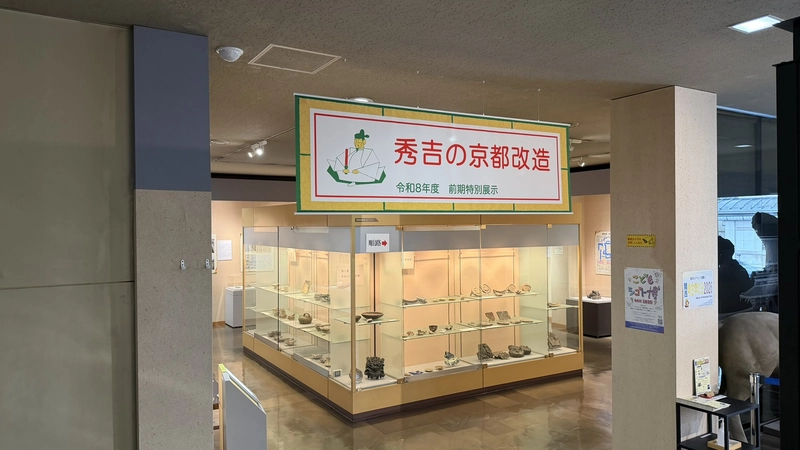
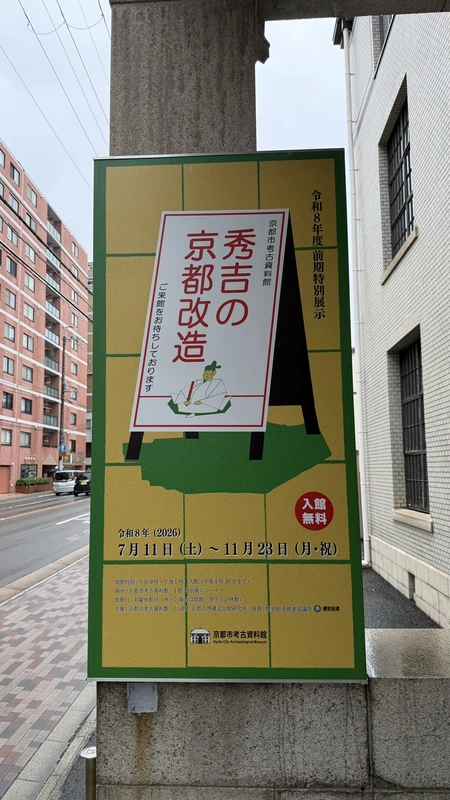
This is a corner of the ground floor rather than a separate hall, so adjust your expectations on scale. What is there is dense: the gold-leafed tiles in particular reward slow looking, and the time goes quickly once you start comparing them. A notice board outside the building tells you whether the exhibition is running before you go in.
Tap any photo to enlarge
| Dates | 11 July – 23 November 2026 |
|---|---|
| Venue | Ground-floor exhibition corner and the display case under the stairs |
| Admission | Free |
| Organisers | Kyoto City Archaeological Museum and the Kyoto City Archaeological Research Institute |
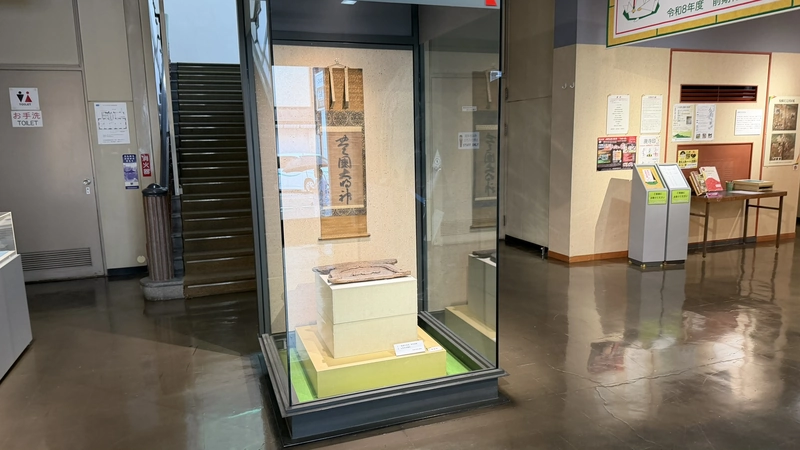
A kaerumata said to come from Jurakudai
Not a tile, but a piece of the building itself
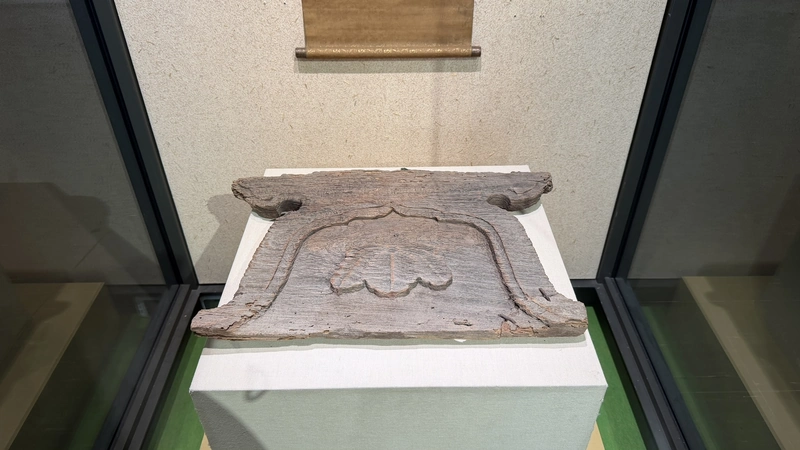
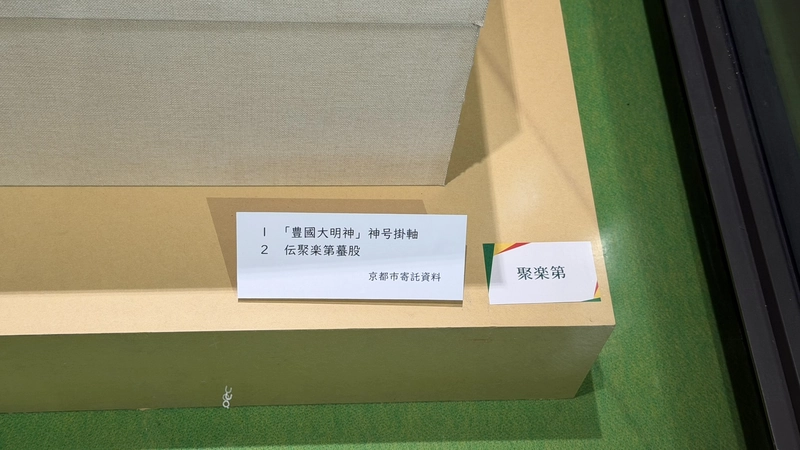
Placed at the front of the display. A kaerumata is a carved wooden member set between beams in traditional Japanese architecture, part decorative and part structural. Among cases of tiles and pottery, this is the one object that is a piece of the building's timber frame. Note the wording: it is said to come from Jurakudai rather than documented as such. That distinction matters, though the fact that the attribution was passed down at all says something about how the lost palace was remembered.
Tap any photo to enlarge
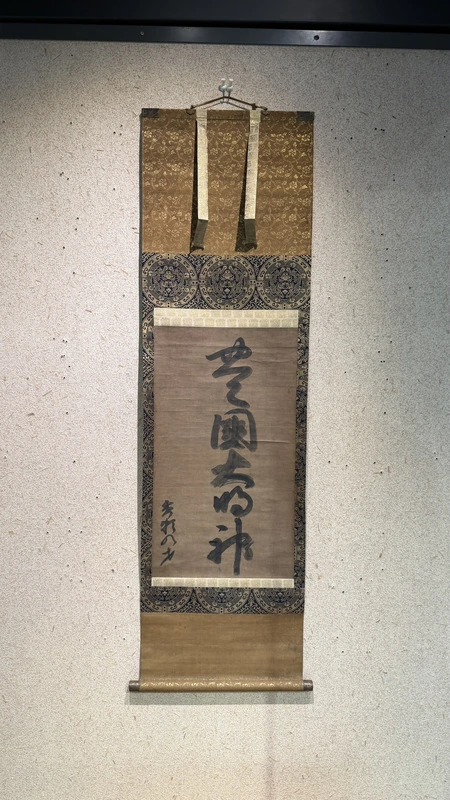
Beside it hangs a scroll bearing the name Hokoku Daimyojin, the divine title given to Hideyoshi after his death. An exhibition about how he rebuilt a city opens with the object that made him a god.
Roof tile from the Honno-ji site
A building named on its own roof
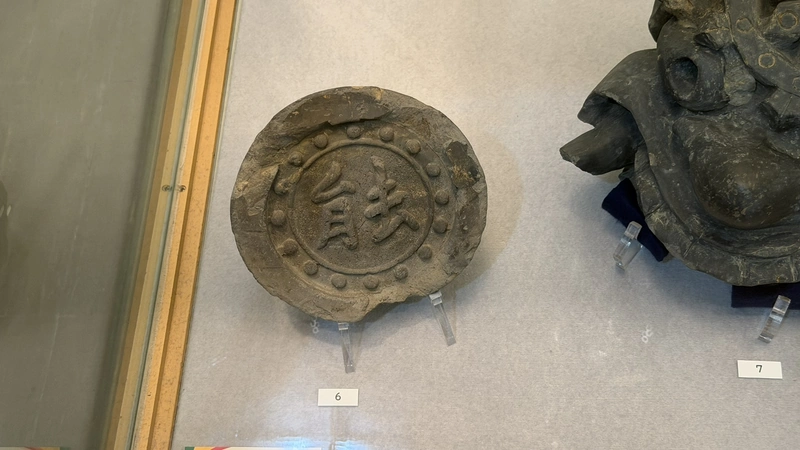
The round tile that finished the eaves carries the character no, the second character of Honno-ji. Honno-ji is where Oda Nobunaga died in 1582, and here a fragment of its roof identifies itself in writing. The exhibition places it in the opening theme, Kyoto before Hideyoshi, so you pass through Nobunaga's city before reaching Hideyoshi's rebuilding of it.
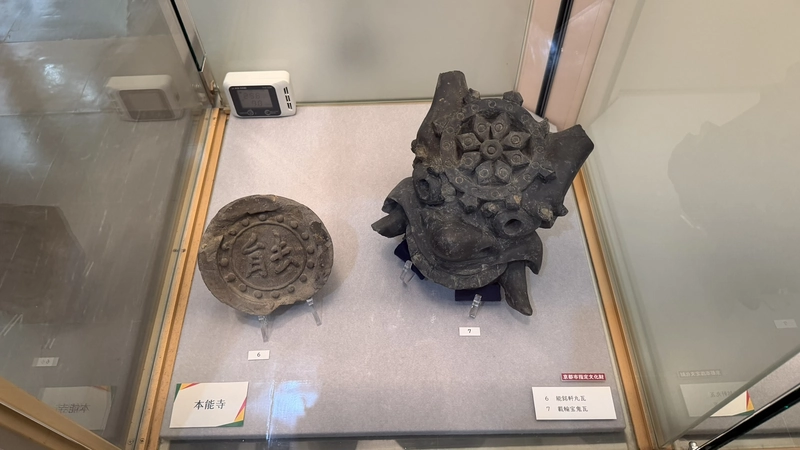
A ridge-end tile from the same site sits in the case beside it. With the eaves tile and the ridge tile together, the shape of the roof becomes easier to picture.
The temple that stands in Kyoto today is not on the original site. Honno-ji Temple, Former Honnoji Site and Nanbanji explains the three locations and how to walk between them.
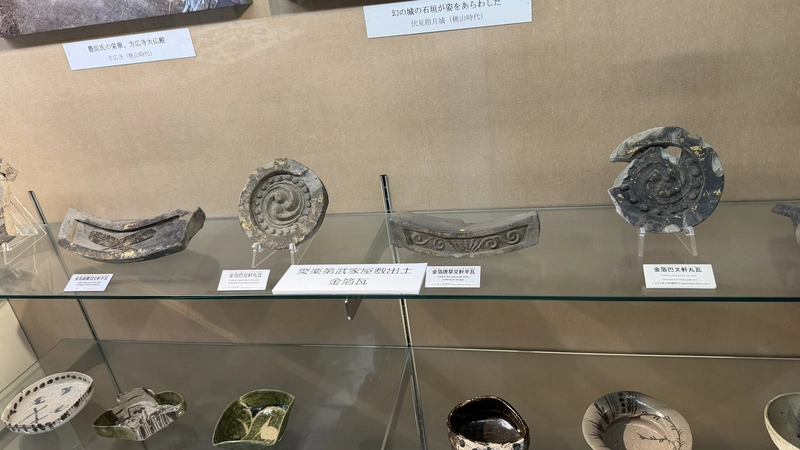
Gold-leafed tiles from the Jurakudai site
Paulownia, arabesque, grape leaf, and a ridge ornament
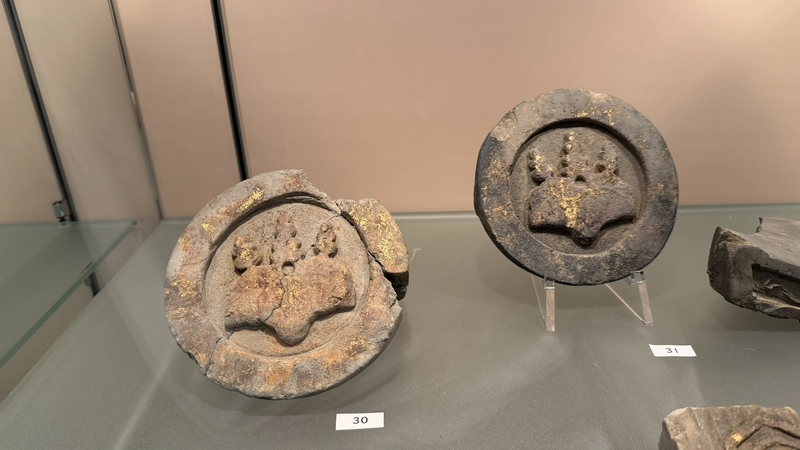
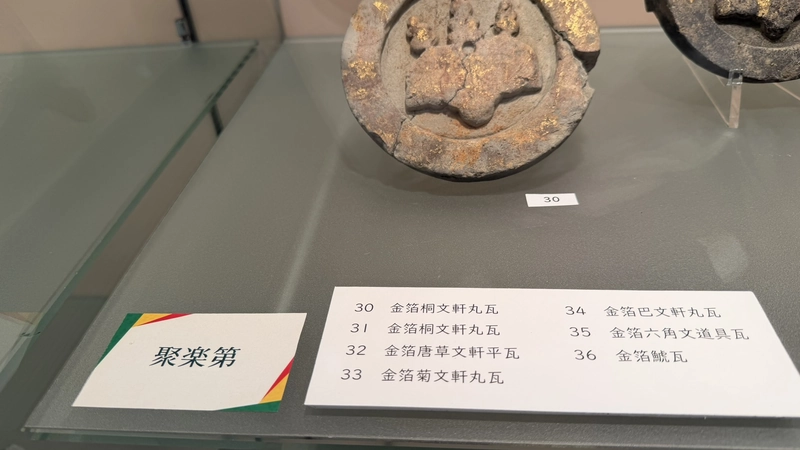
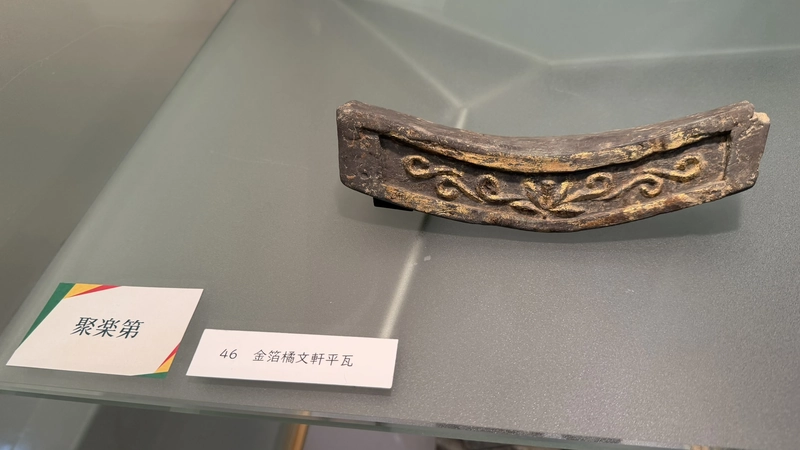
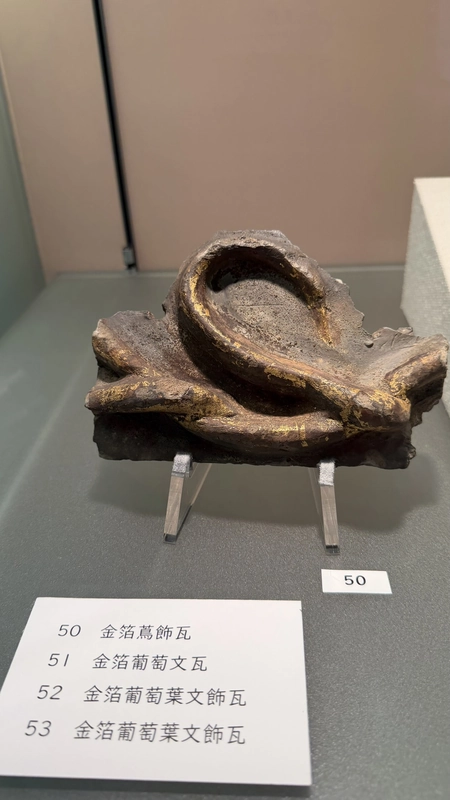
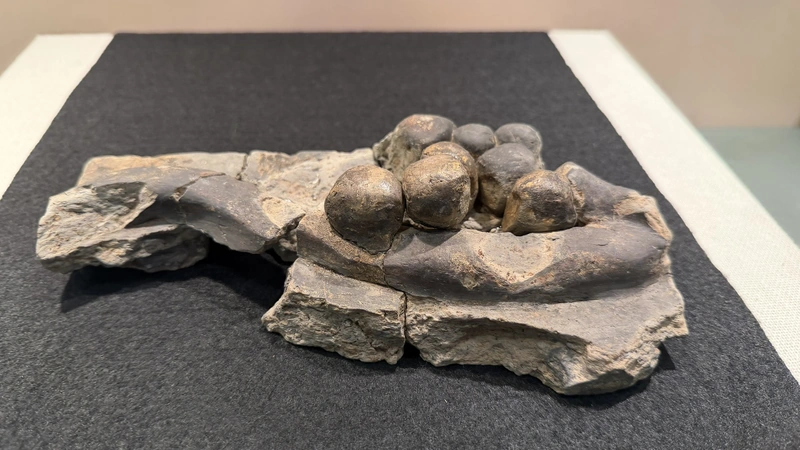
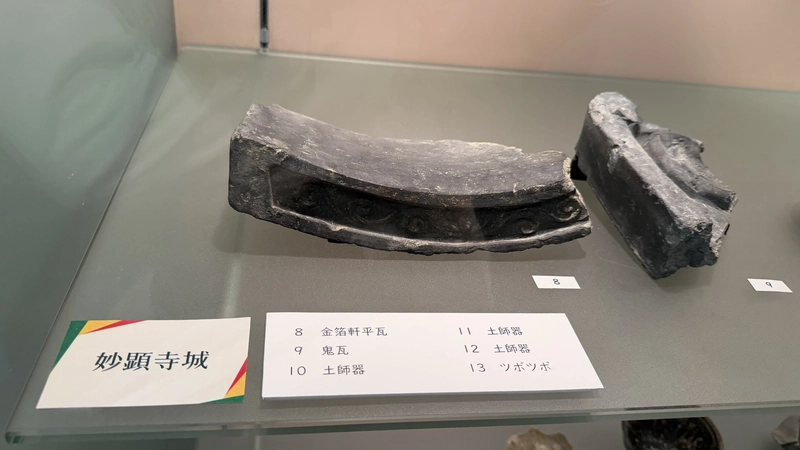
This is what the exhibition is built around. Gold leaf survives on a tile stamped with the paulownia crest, the emblem Hideyoshi used, and from one object you can extrapolate a roofline of gold crests running along the eaves. The range of designs is the surprise: arabesque scrollwork, grapes with their leaves, and a large ridge ornament known as a shibi, all gilded. How much gold remains differs from piece to piece, from a faint trace to a clearly readable surface.
Jurakudai was finished in 1587 and pulled down in 1595. Nothing stands at the site now, only stone markers placed in modern times. These tiles are the physical evidence that the building was there at all.
- Paulownia-crest eaves tile — the Toyotomi emblem, in gold leaf
- Arabesque flat eaves tile — scrolling foliage across a flat tile
- Grape-leaf ornamental tile — grapes and leaves, an unexpected motif on a fortress
- Gilded shibi — the large ornament that sat on the roof ridge
- Gold-leafed tile from the Myokenji Castle site — Hideyoshi's earlier base in Kyoto, before Jurakudai
Tap any photo to enlarge
If you want to walk the site these came out of, Jurakudai, Kyoto maps the markers and the excavation points. Seeing the tiles first changes what the markers mean.
Kyoto Shinjo, the Odoi and the Tensho land division
He rebuilt the street plan, not only the castles
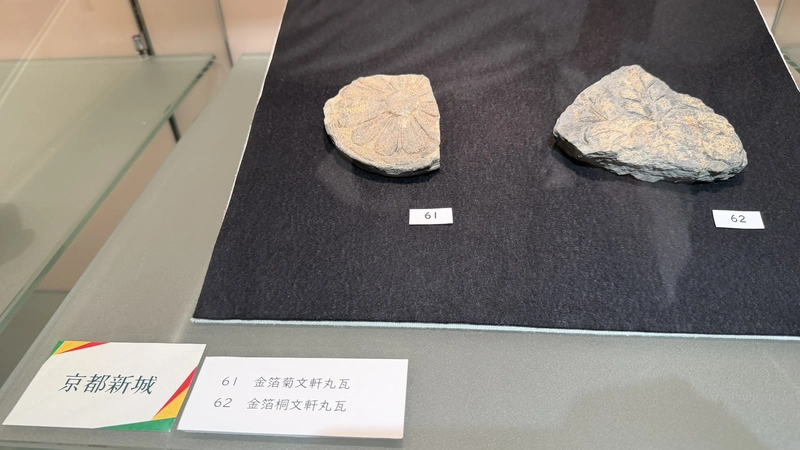
Gilded tiles were also recovered from Kyoto Shinjo, a later Toyotomi residence, and here they carry chrysanthemum as well as paulownia crests, which makes for a direct comparison with the Jurakudai tiles. This theme covers more than buildings. The Tensho land division reorganised the city's blocks, Teramachi gathered temples onto a single street, and the Odoi enclosed the whole city in an earthen rampart. What Hideyoshi changed was the shape of Kyoto itself.
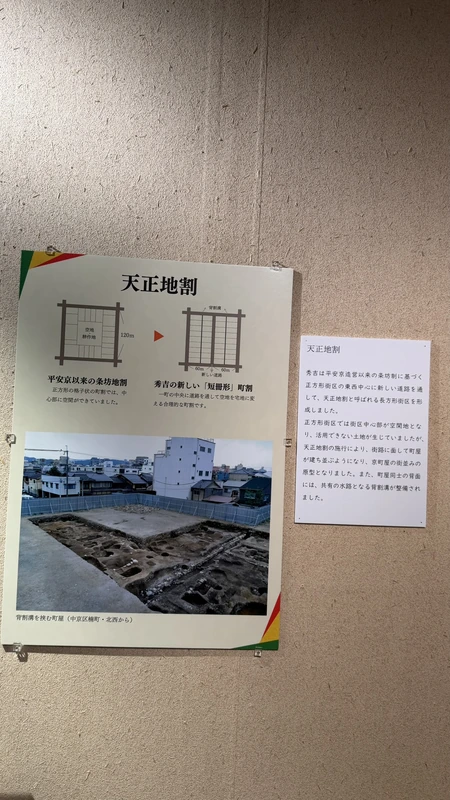
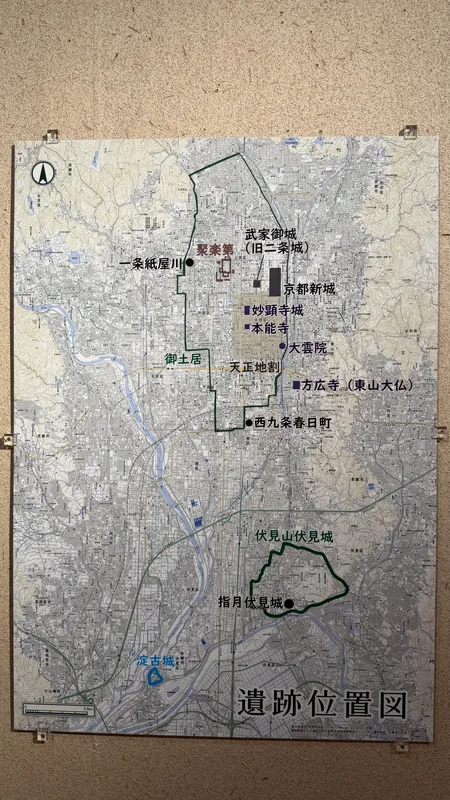
Tap any photo to enlarge
What came out of the OdoiExcavation of the rampart produced more than data about the earthwork. A wooden board inscribed with Western letters, a Christian grave marker, and small wooden objects for daily use: a mortar, a bowl, a spinning top. In a city defined in most visitors' minds by temples and shrines, that grave marker is direct evidence that Christians lived here too. Shift your eye down from the scale of the earthwork and you find the people who lived beside it.
Fushimi and Yodo castles
Where Hideyoshi spent his last years
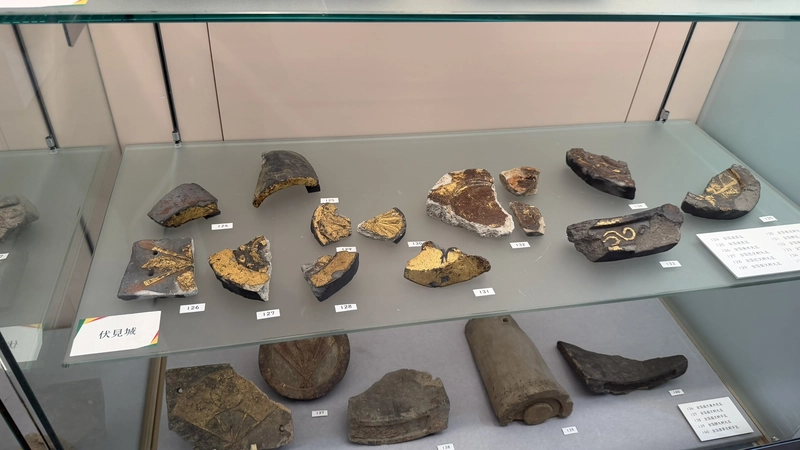
Gilded tiles were recovered in quantity from the Fushimi Castle site as well, and set against the Jurakudai tiles the design families are visibly different. Nothing of the Momoyama-period castle stands on the ground today. Panels cover the excavation of both Fushimi castles, the earlier one at Shigetsu and the later one on the hill, so you can follow the castle as it moved. Yodo Castle belongs to the same theme.
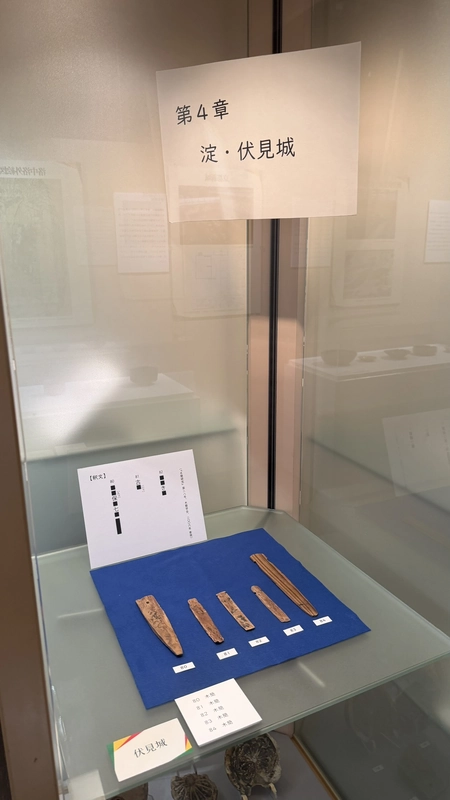
The venue is divided by numbered section headings, so you always know which theme you are looking at. Fushimi and Yodo are gathered under the fourth.
Reconstructing a gold-leafed tile
The excavated original next to a new copy
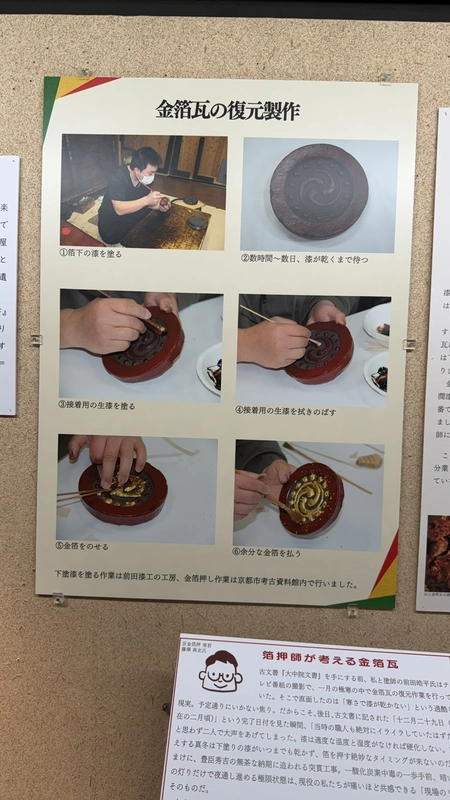
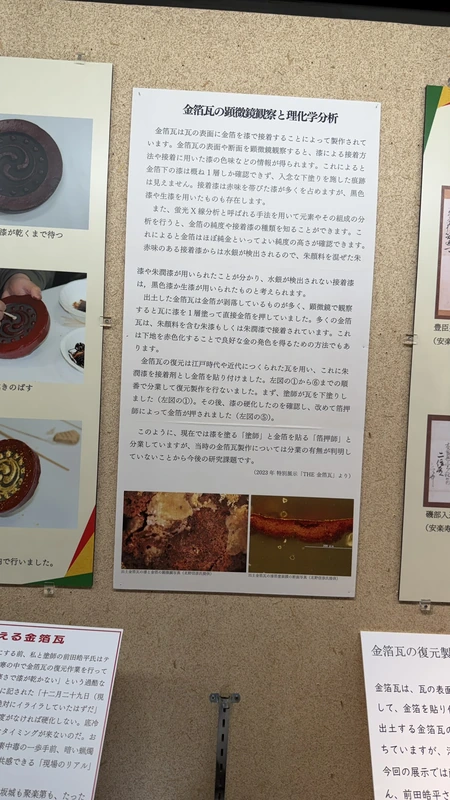
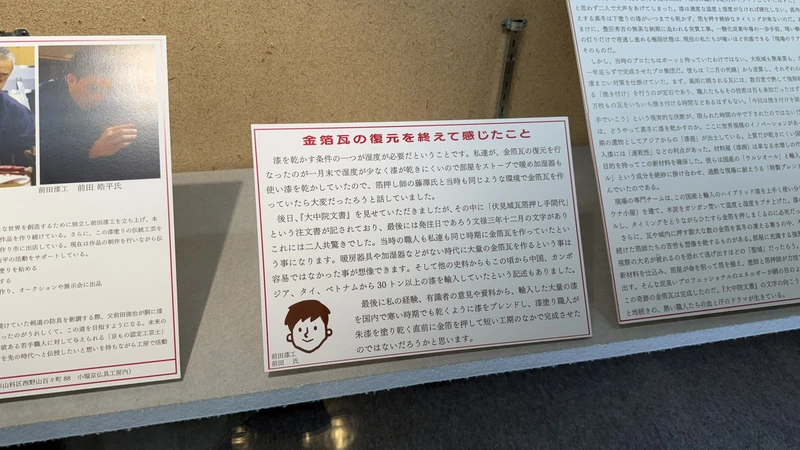
A gold-leafed eaves tile made in 2026 is displayed together with an account of how it was produced. On the excavated tiles most of the gold has gone; beside the reconstruction, it becomes obvious how loud these roofs originally were. Keep the distinction clear as you look: this piece is a modern reconstruction, not an excavated object.
Tap any photo to enlarge
The displays also cover how the tiles were examined under the microscope and analysed in the laboratory. Showing the method rather than only the object is what you would expect from an exhibition run by a research institute.
An Oribe dish from Furuta Oribe's residence
Tea-culture ceramics, dug out of a city block
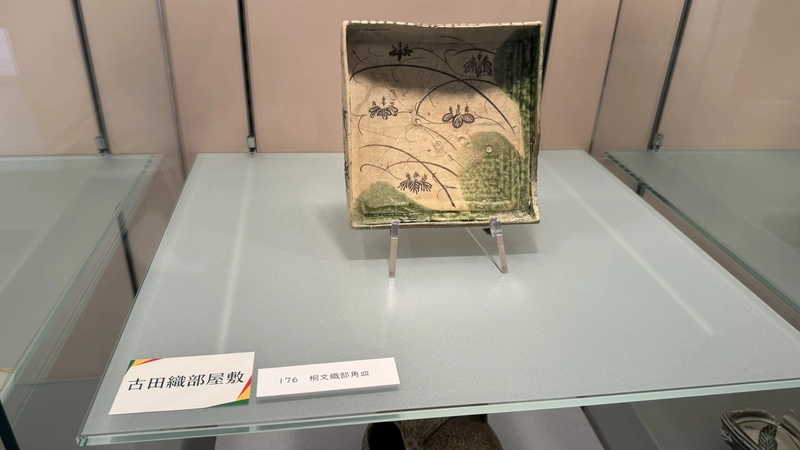
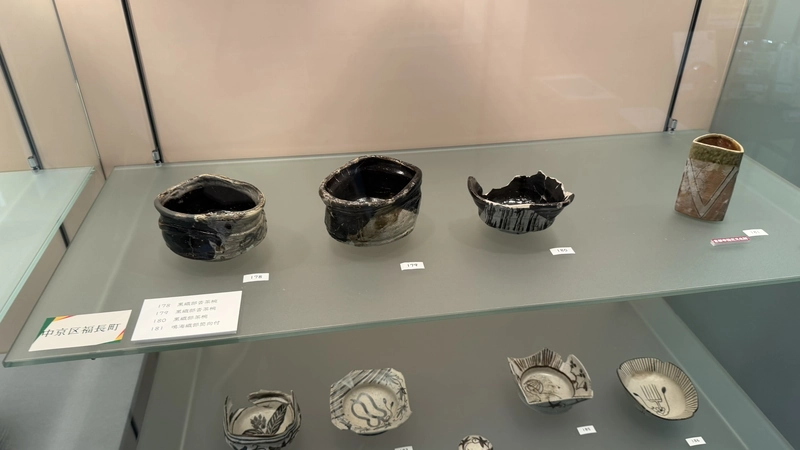
Furuta Oribe served Nobunaga, Hideyoshi and Ieyasu, and shaped the tea ceremony as decisively as any figure after Sen no Rikyu. A square dish excavated from the site of his residence is displayed here intact enough to read both the paulownia design and the angular form. It is a serving dish rather than a tea bowl, which is the interesting part: it tells you what was carried into the room alongside the tea.
Tap any photo to enlarge
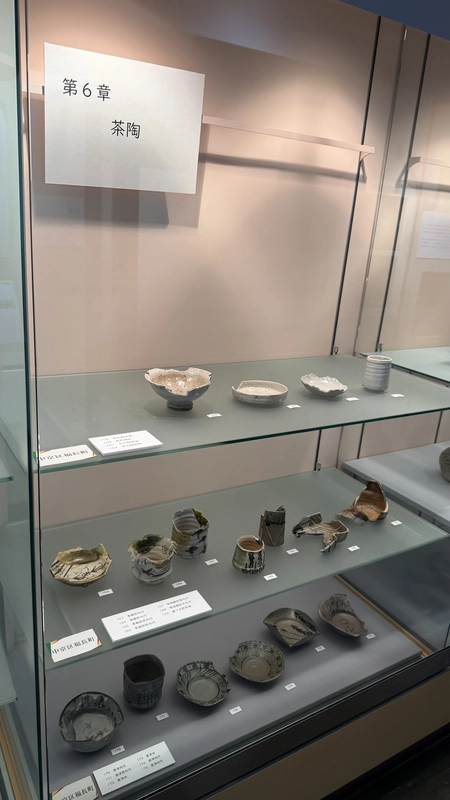
Black Oribe tea bowls and Shino Oribe serving dishes excavated in Nakagyo Ward are shown nearby. Karatsu, Kiseto and imported ceramics came out of the Fushimi Castle site. The variety of wares is a direct measure of the variety of daily life.
If Oribe himself interests you, the Furuta Oribe Museum is a short trip away. I saw it earlier on the same day.
The permanent galleries upstairs
Some visitors see the special exhibition and leave. The permanent galleries on the first floor are free as well, and they run chronologically from the Palaeolithic through to the Edo period, so they give you the whole depth of ground under the city in one room.
The permanent galleries
Around 1,000 excavated objects, in chronological order
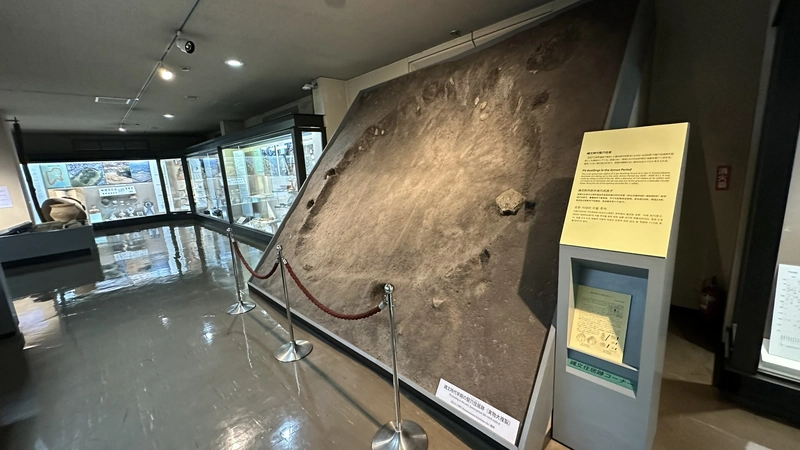
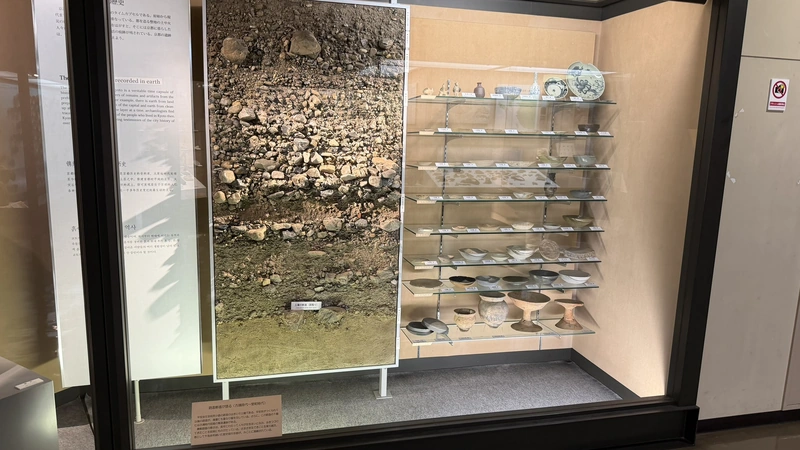
Cases are arranged by period, combining pottery, roof tiles and photographs taken during excavation. One display shows a section of soil layers as they were found, which makes the idea of a stratified city literal rather than abstract. If you have come for the special exhibition, the case of eaves tiles excavated across the city is the one to spend time on, because you can follow how the designs change.
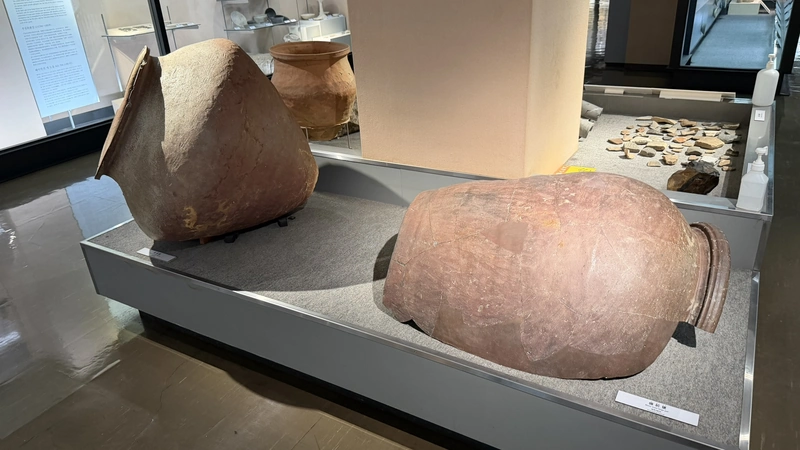
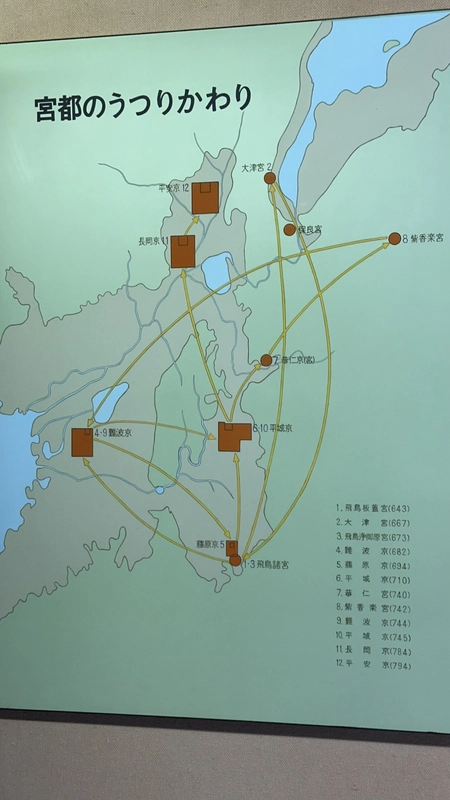
Tap any photo to enlarge
The map panel tracing how the imperial capital moved before settling at Kyoto is a useful orientation piece if you are new to the period.
The shachi tile from Yodo Castle
An object whose scale does the work
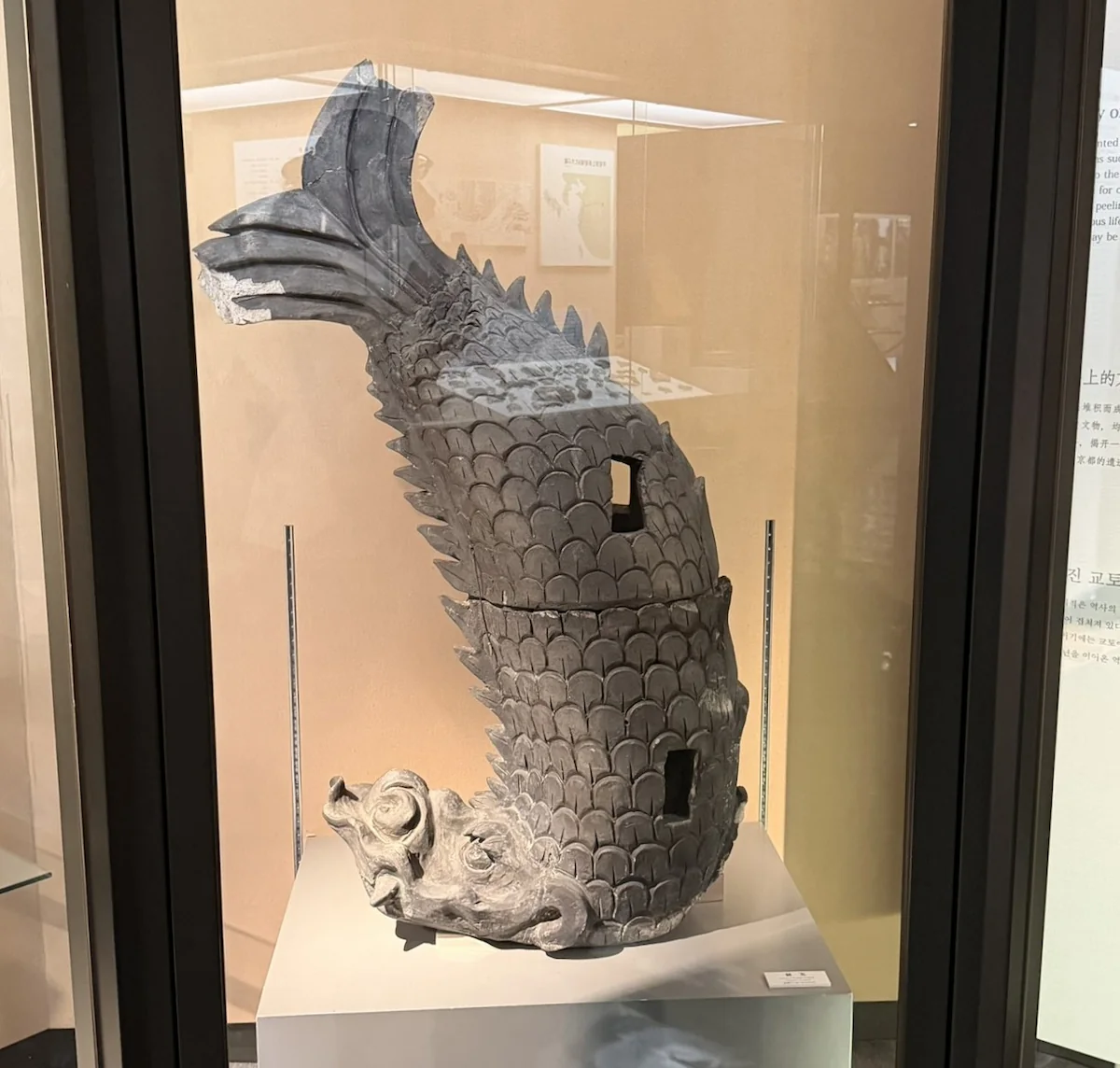
The single most arresting object in the permanent galleries. A shachi is the mythical fish-like creature placed on the roof ridge of a keep or turret, and photographs consistently undersell how large these are. The case allows a view from the side as well as the front, so you get the depth that a flat image loses.
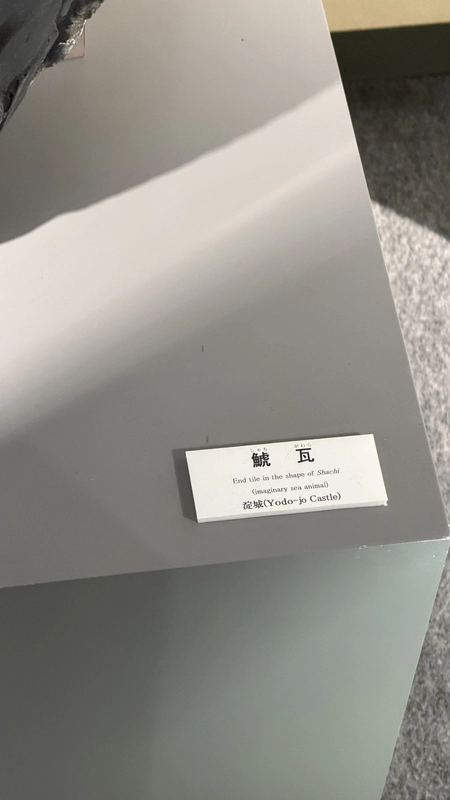
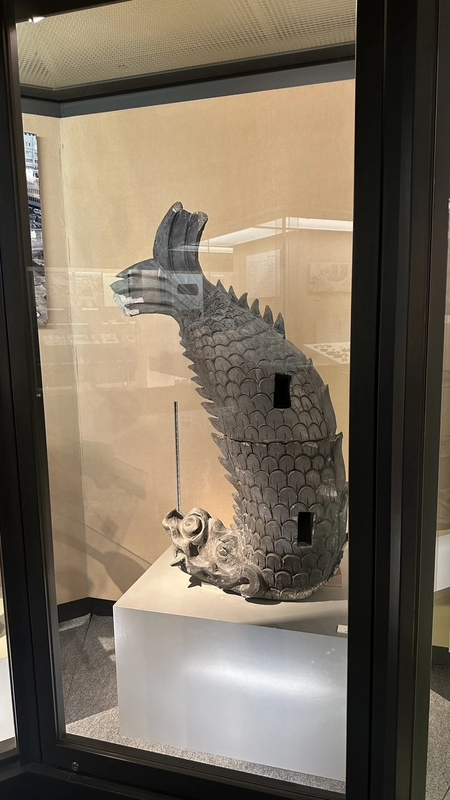
Tap any photo to enlarge
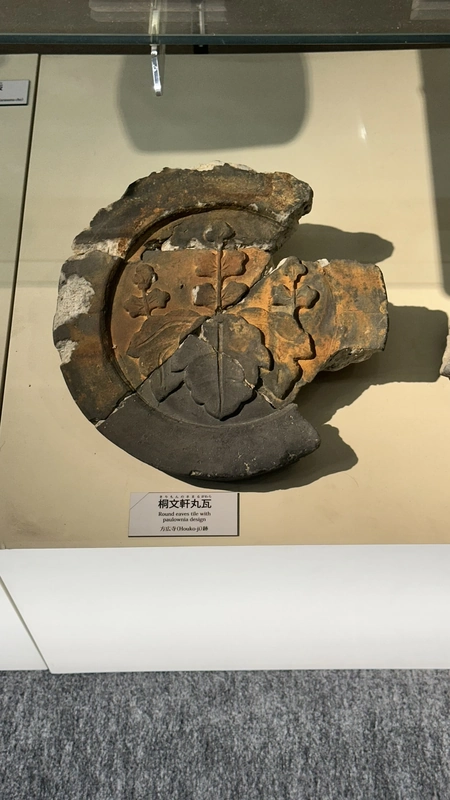
A paulownia-crest tile from the Hoko-ji site is also on permanent display. Hoko-ji is the temple where Hideyoshi had a Great Buddha built, and it appears in the special exhibition as well, so moving between the two floors you meet the same crest coming out of different ground.
The building: the former Nishijin Textile Hall
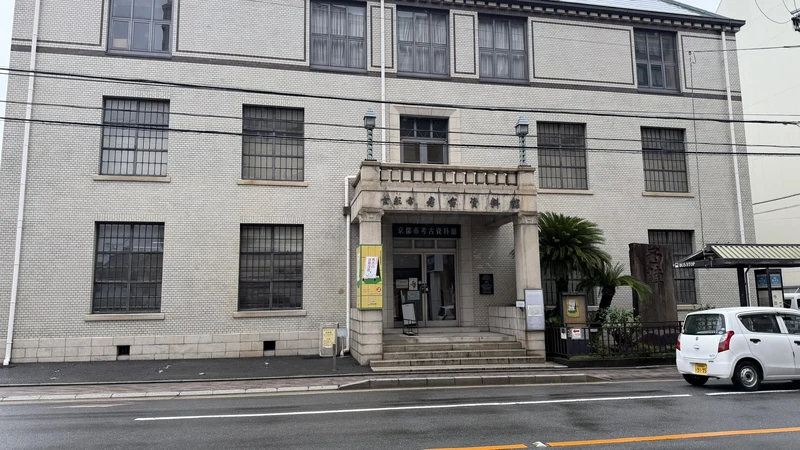
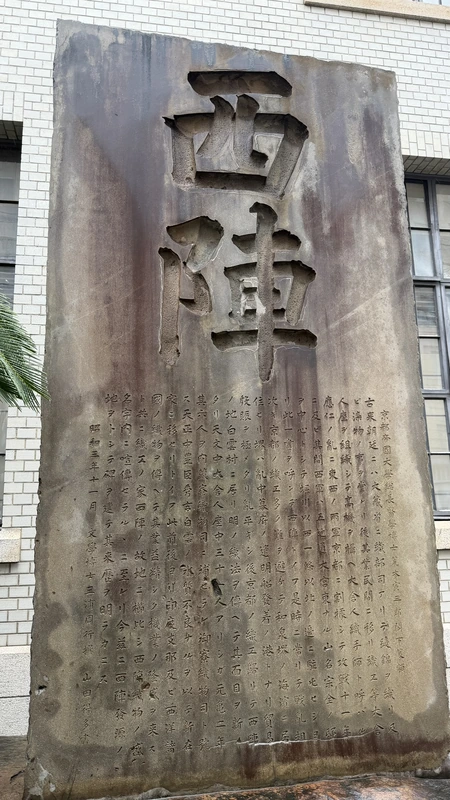
The museum occupies a building put up as a hall for the Nishijin textile industry and now listed as a registered tangible cultural property of the City of Kyoto. The museum opened here in November 1979. Nishijin is the weaving district, and signage on the street announces it. You come for the excavated objects and get the building and the neighbourhood as well.
Castle stamps for Jurakudai
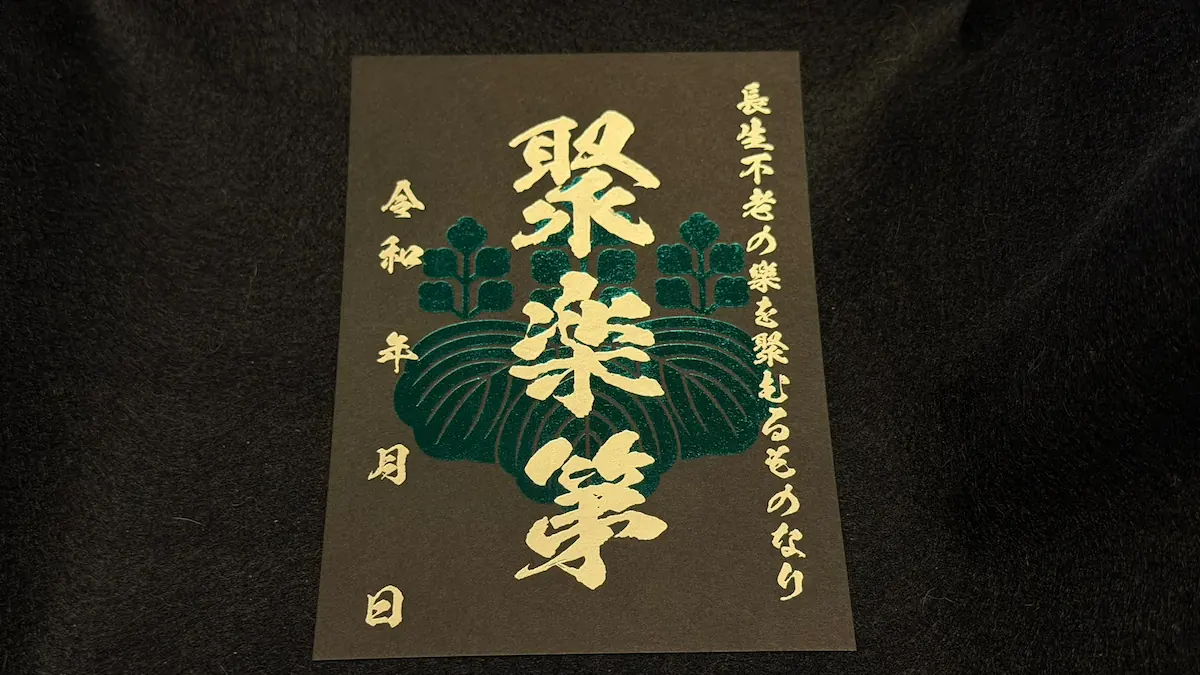
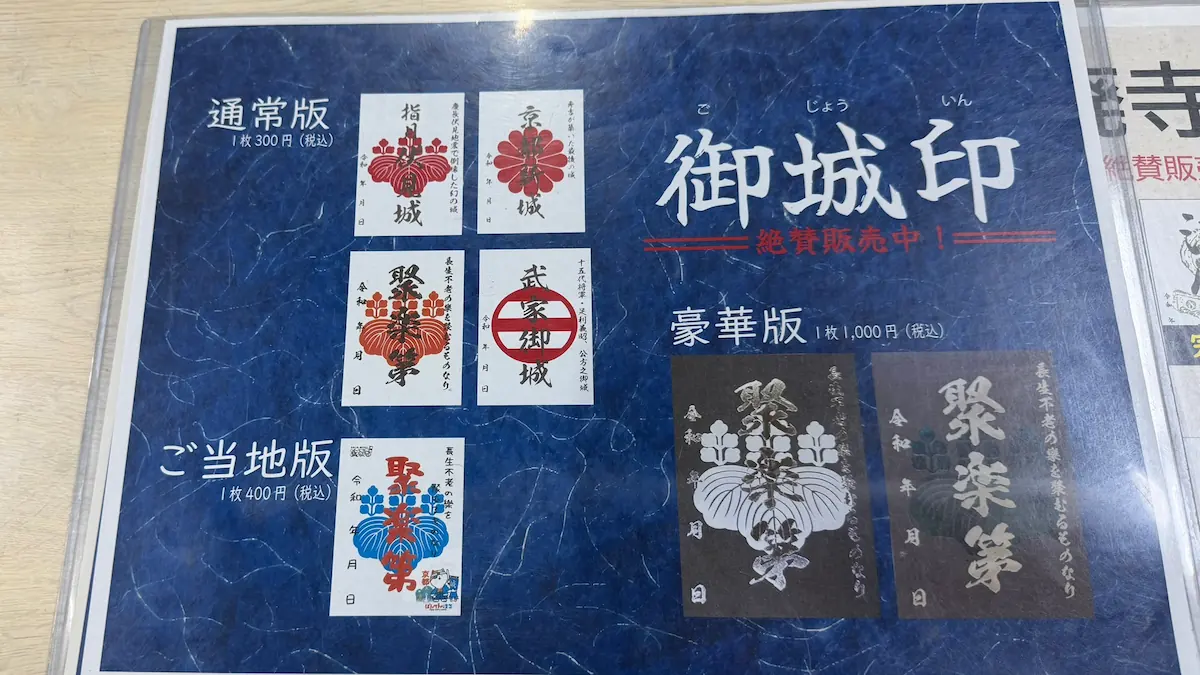
The museum sells gojoin, commemorative stamped cards issued for castles and collected in much the same way as temple seals. As of the 9 September 2026 visit, the desk was carrying four standard designs (300 yen each), one local-edition design (400 yen), and two deluxe designs (1,000 yen each). I bought one of the deluxe versions for 1,000 yen. These have been sold on site only, with no mail order or reservations, so if you particularly want one, ask at the desk when you arrive. Designs, stock and prices change over time.
Who this suits
Come here if your itinerary includes places where nothing is left standing. At the Jurakudai markers or at the Fushimi Castle site, there is little to fix your attention on, and a marker beside a road is a hard thing to feel anything about. Seeing the gilded tiles and the wooden bracket first gives you something concrete to carry to those sites. It also suits anyone who wants to stand close to objects Hideyoshi's Kyoto actually left behind, in a city where the Tokugawa period did a thorough job of removing him from view.
The Sengoku period is usually told through battles and rivalries. What this exhibition made clear to me is that Hideyoshi's work in Kyoto was administrative and civic: a palace, a castle, a rampart, a new street grid. The objects in the cases are tiles and pots. What they add up to is urban planning.


comment