


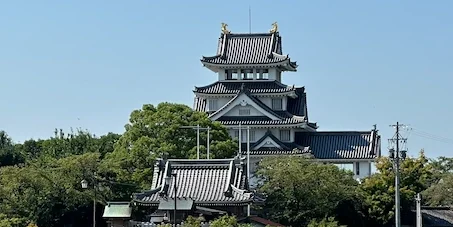
A white keep-style building stands beside the Nagara and Sai rivers. This is Sunomata Ichiya Castle, a museum built on the site where Toyotomi Hideyoshi is said to have raised a fort overnight. Here are the hours, bus and car access, what to see on each floor, and the castle stamp, in the order I walked it.
Contents
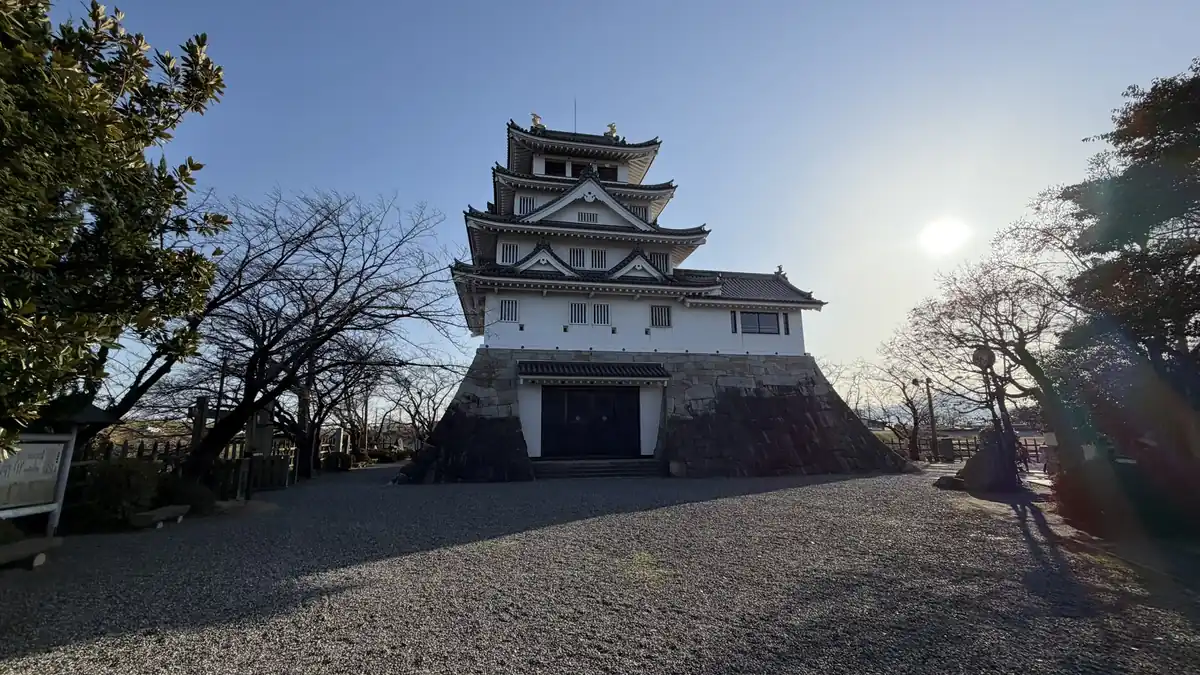
“Ichiya-jo” means “one-night castle.” According to a tale told since the Edo period, the young Kinoshita Tokichiro, later Toyotomi Hideyoshi, built a fort at Sunomata in a single night for Oda Nobunaga. The building you see today is a keep-style museum that opened in April 1991. It is not the original fort.
I first visited in August 2024 and returned in February 2026, so the photos show both summer and winter. Many of the museum’s displays are based on documents handed down in the Maeno family. In this guide, what the exhibits present as account or tradition is marked as such, and kept separate from what I confirmed on site.
The 2026 NHK Taiga drama “Toyotomi Brothers!” has made Sunomata a popular stop. Our Toyotomi Brothers! historic sites guide lists the other places in the story. Two I have walked are Anegawa Battlefield and Unuma Castle site. From the 5th-floor observation room you can see Gifu Castle in the distance, which features in our Nobunaga’s Gifu guide.
Key points
| Visited | August 2024 (summer) and February 2026 (winter) |
|---|---|
| Hours | 9:00 a.m.–5:00 p.m. (last entry 4:30 p.m.). Closed Mondays (the next day if Monday is a holiday), the day after a national holiday, and Dec 29–Jan 3 |
| Admission | ¥200 for adults, ¥150 per person for groups of 20 or more. Free for those under 18 and some other groups (Ogaki City) |
| Getting there | A 12-minute walk from “Sunomata” bus stop. By car, about 15 minutes from Anpachi Smart IC on the Meishin Expressway |
| Highlights | The view from Taiko Shusse Bridge, permanent exhibits on floors 1–3, a special exhibition on floor 4, the 5th-floor observation room, Toyokuni Shrine |
| Castle stamp (gojoin) | ¥300 at reception. A limited design tied to “Toyotomi Brothers!” was on sale in February 2026 |
| Photography | Some exhibits cannot be photographed. Flash, video and tripods are restricted (follow the notice at the entrance) |
Route
I walked from the bus stop along the embankment, crossed Taiko Shusse Bridge and entered the museum. Seeing the exhibits first, then going up to the 5th floor, makes the river and the embankment outside the windows easier to read.
Spot guide: Sunomata in the order I walked it
Hours, prices and closing days come from Ogaki City’s official information (checked in November 2026). Please check the latest notice before you go.
From the bus stop to Taiko Shusse Bridge
The white walls appear beyond the embankment; cross the bridge and you are there.
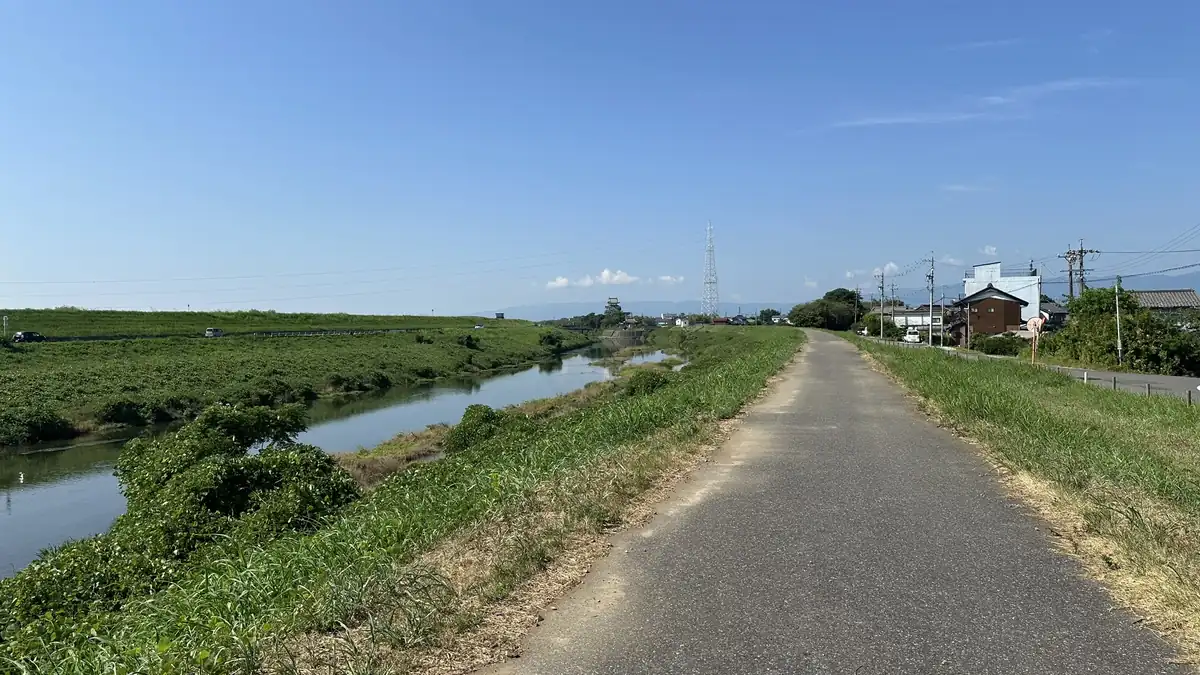
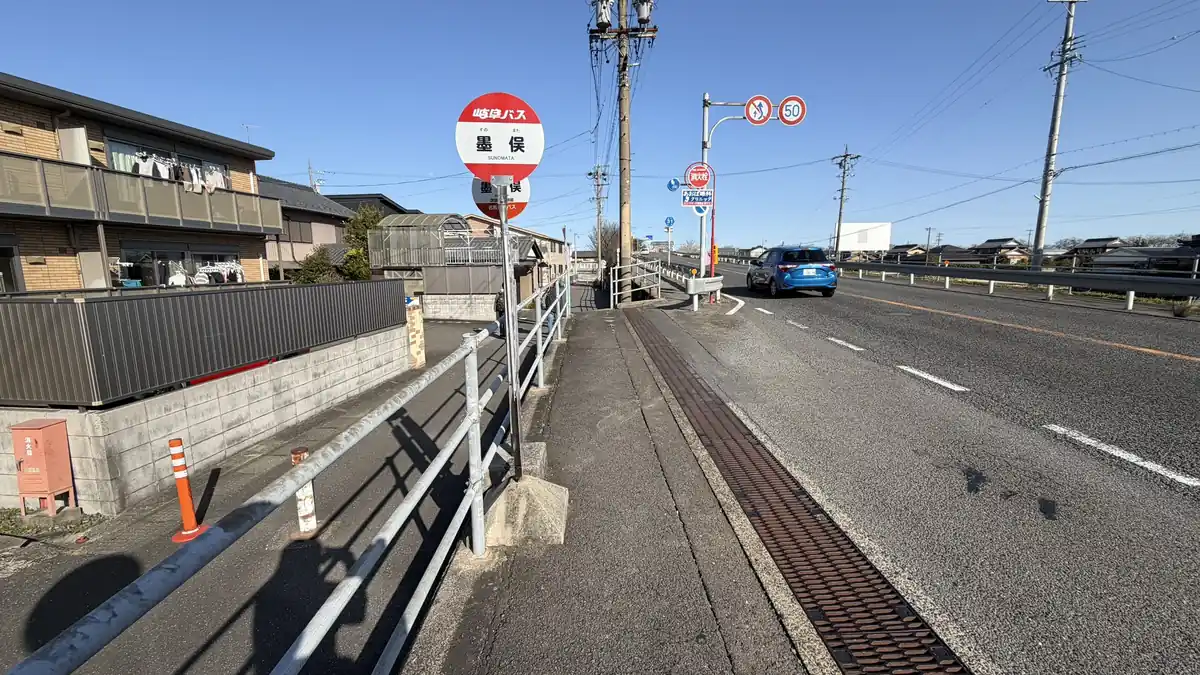
I got off at Sunomata bus stop (Gifu Bus) and walked along the embankment path by the river. Ogaki City gives the walk as 12 minutes. The white keep-style building is a small shape in the distance at first and grows as you approach.
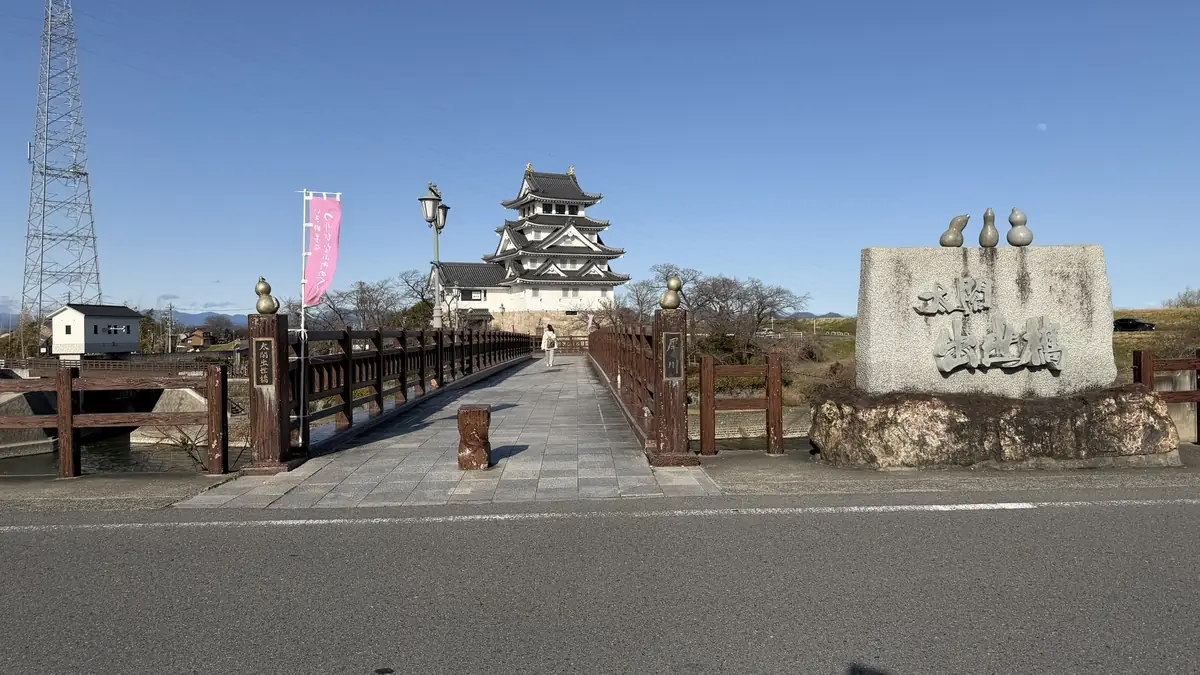
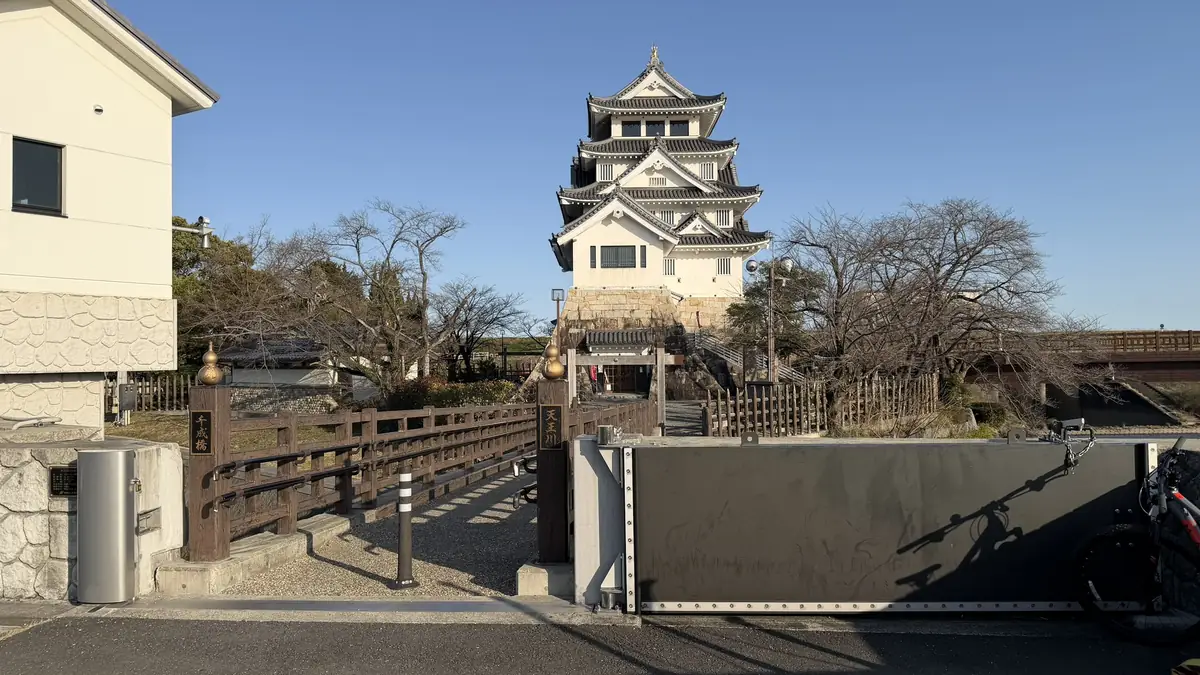
The bridge over the Sai River beside the museum is Taiko Shusse Bridge (“Taiko” is a title for Hideyoshi; “Shusse” means rising in the world). Its name stone is topped with three gourds, a nod to Hideyoshi’s gourd standard. The bridge entrance is a good spot to photograph the castle, the bridge and its name together.
In February 2026 the sky was clear and the bank was covered in dry grass. Compared with the green of August 2024, the same bridge looks quite different.
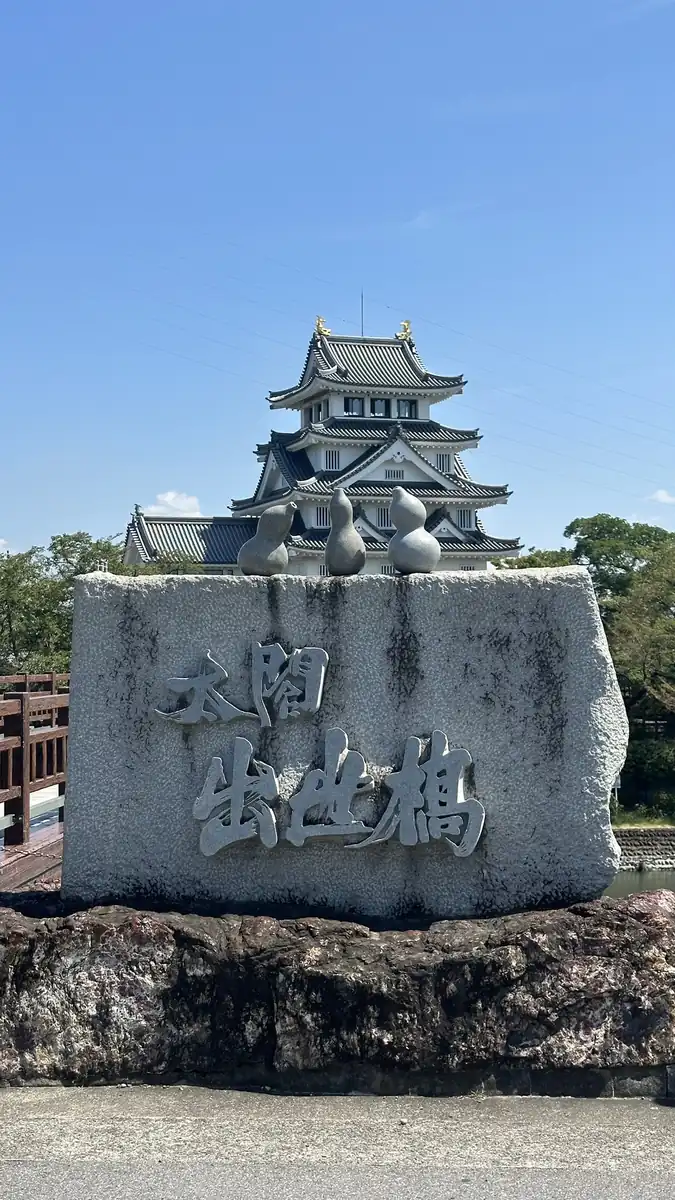
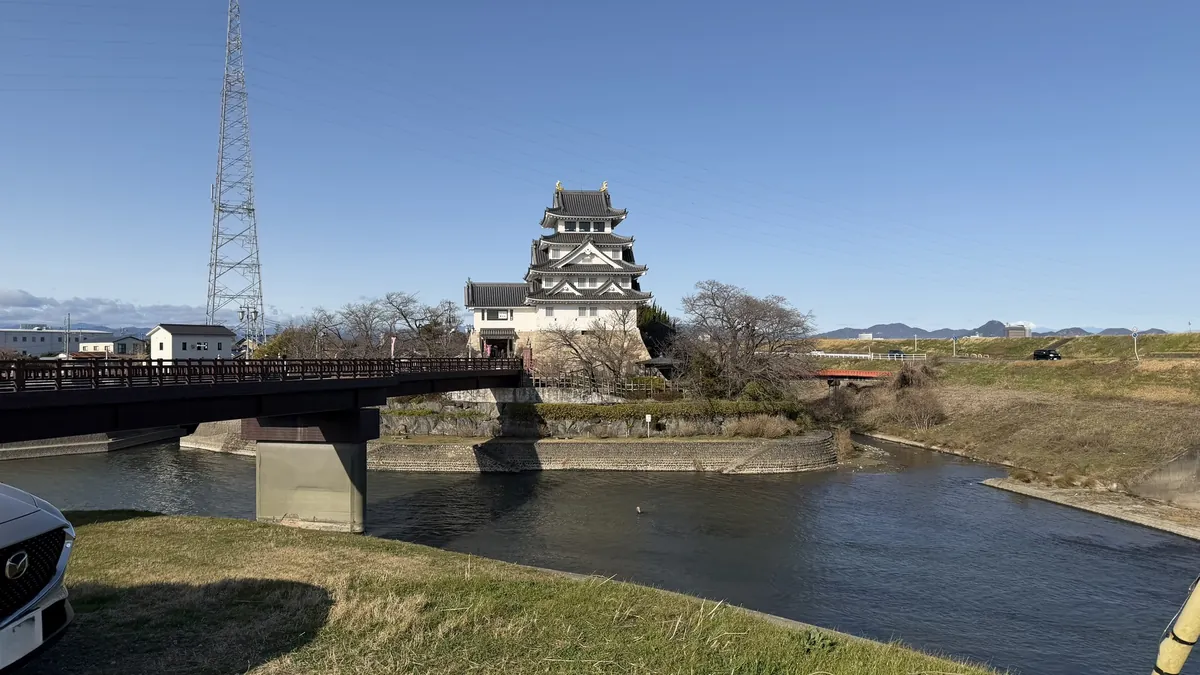
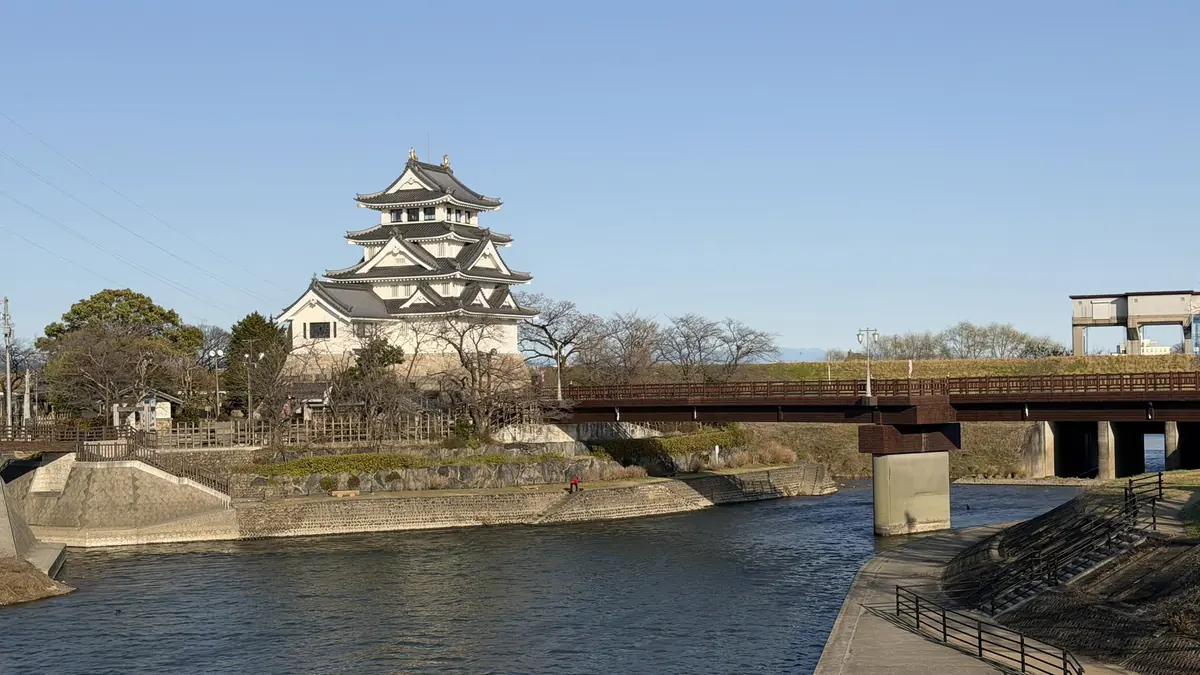
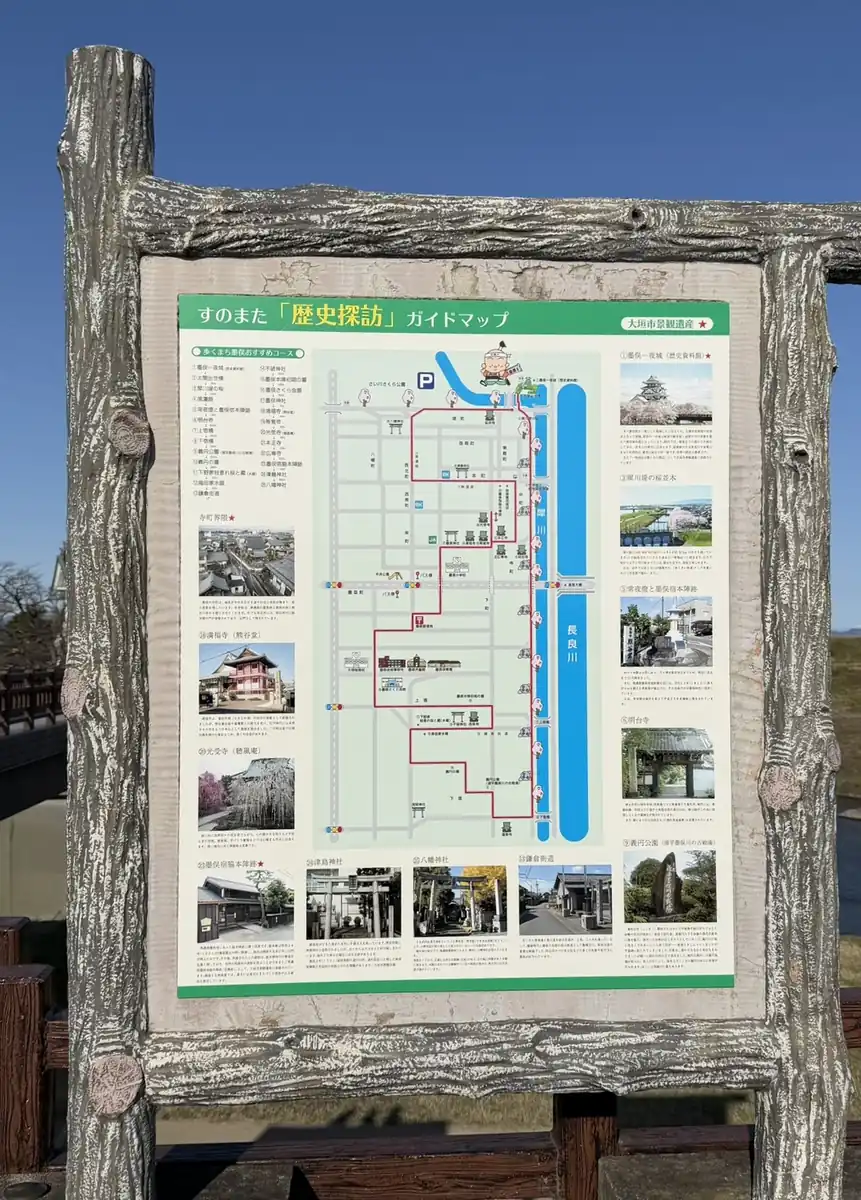
Tap a photo to enlarge
Sunomata Ichiya Castle (Ogaki City Sunomata History Museum)
Five floors that follow the one-night-castle tradition and Hideyoshi’s career.
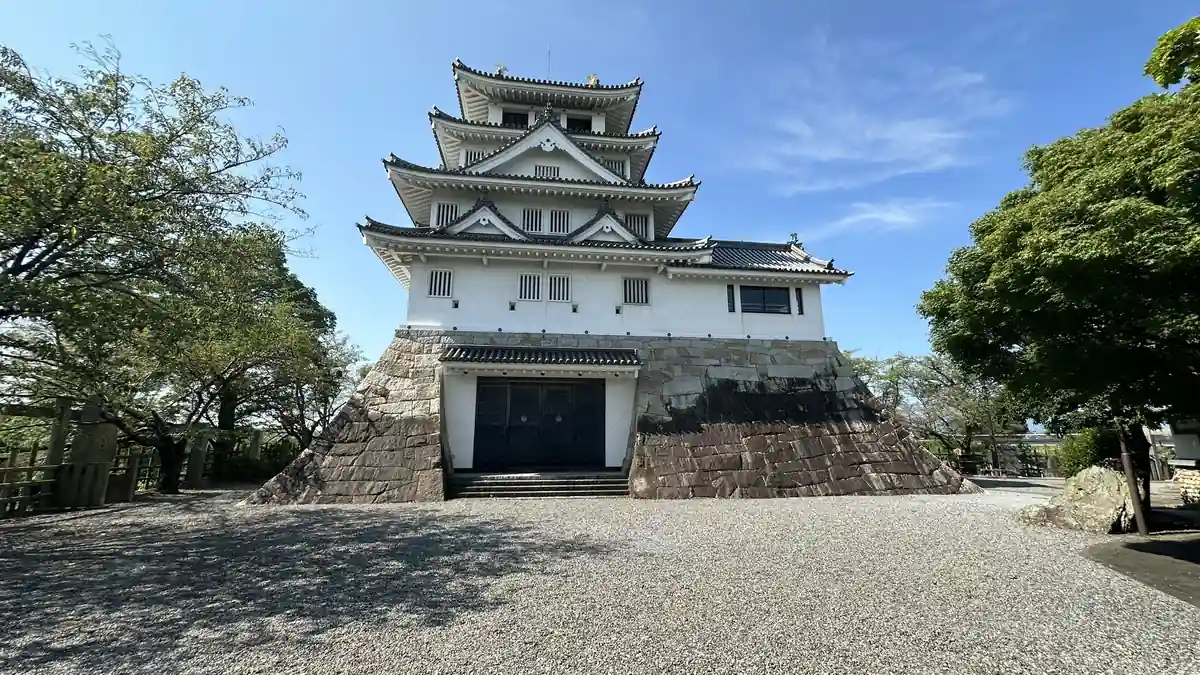
The building is a keep-style museum that opened in April 1991. It is sometimes described as modeled on Ogaki Castle, and it is not the fort of the 1560s. A CG illustration in the exhibits shows a fort ringed by fences and ditches, quite different from the white keep.
Hours are 9:00 a.m.–5:00 p.m. (last entry 4:30 p.m.). The museum is closed on Mondays (the next day if Monday is a national holiday), the day after a national holiday, and from December 29 to January 3. During the cherry blossom festival (late March to early April) and at full bloom, it may open on days it would normally be closed. Admission is ¥200 for adults; people under 18 and some other groups enter free.
Each floor has its own theme. The sections below give photos and tips for each one.
| Address | 1742-1 Sunomata, Sunomata-cho, Ogaki, Gifu 503-0102 |
|---|---|
| Hours | 9:00 a.m.–5:00 p.m. (last entry 4:30 p.m.) |
| Closed | Mondays (next day if a holiday), the day after a national holiday, Dec 29–Jan 3 |
| Admission | Adults ¥200, groups of 20+ ¥150 per person. Free for those under 18, Ogaki residents aged 65+, and holders of disability certificates and their carers (show the certificate) |
Hours and prices follow Ogaki City’s official information (checked November 2026).
There are two entrances. From the side with the large dark doors, you climb a flight of stone steps. From the Sennari Bridge over the Tenno River, you pass a wooden gate to the lower entrance.
Photos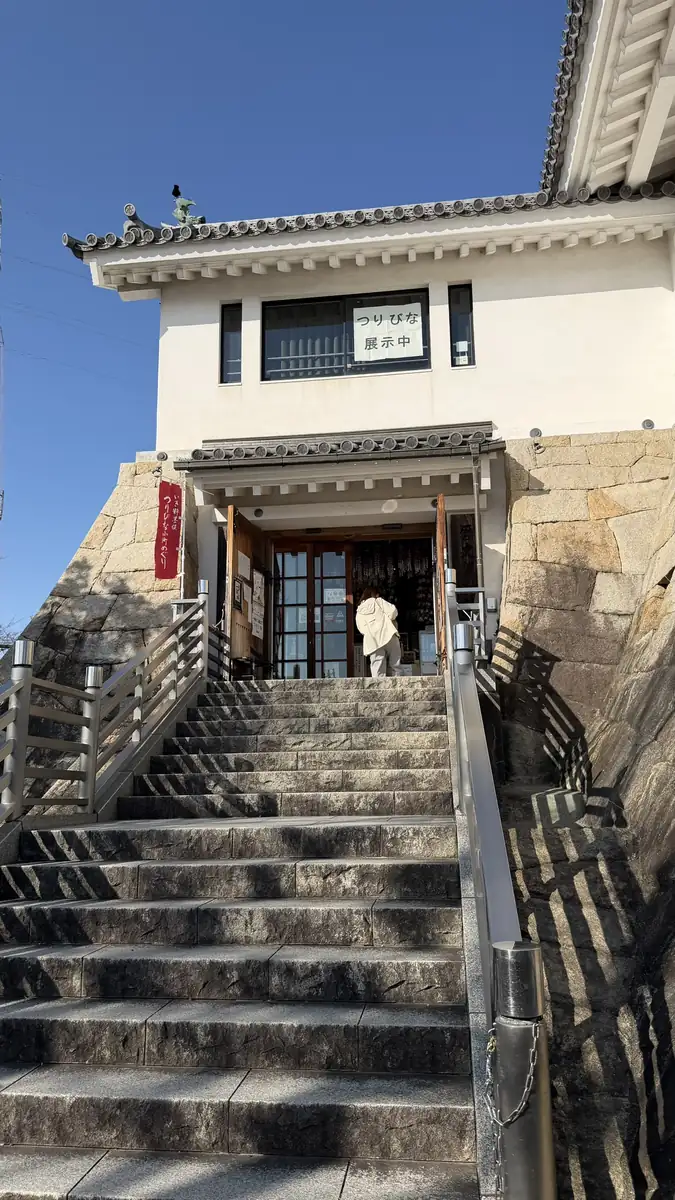
Tap a photo to enlarge
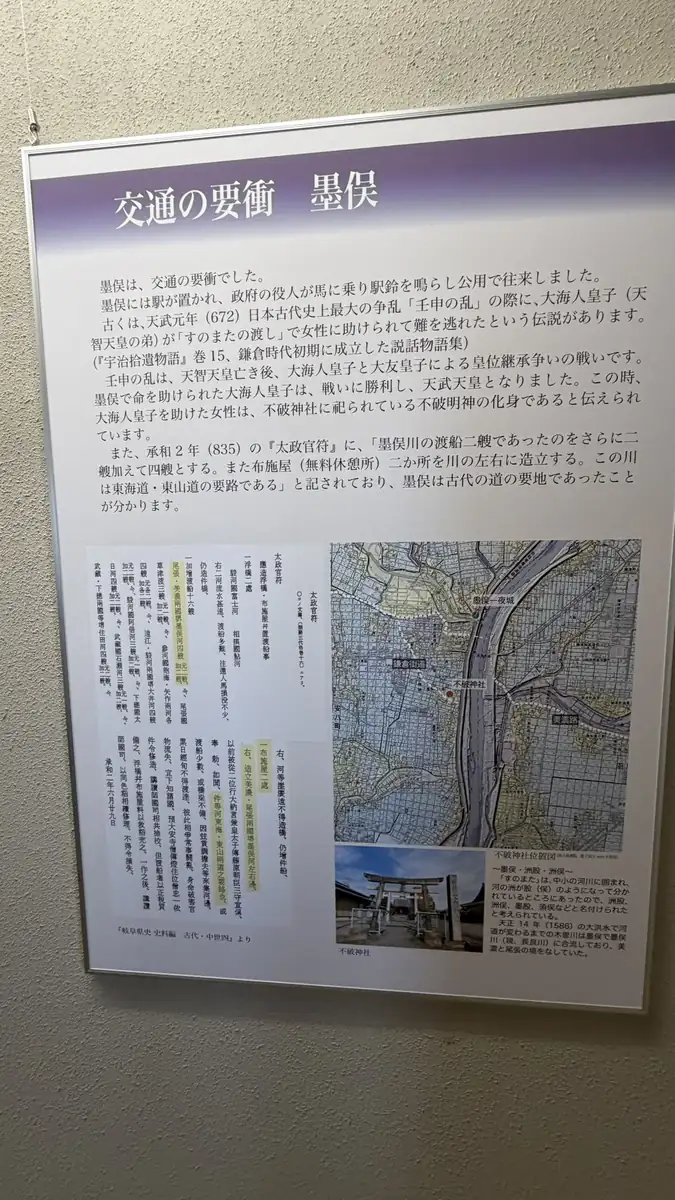
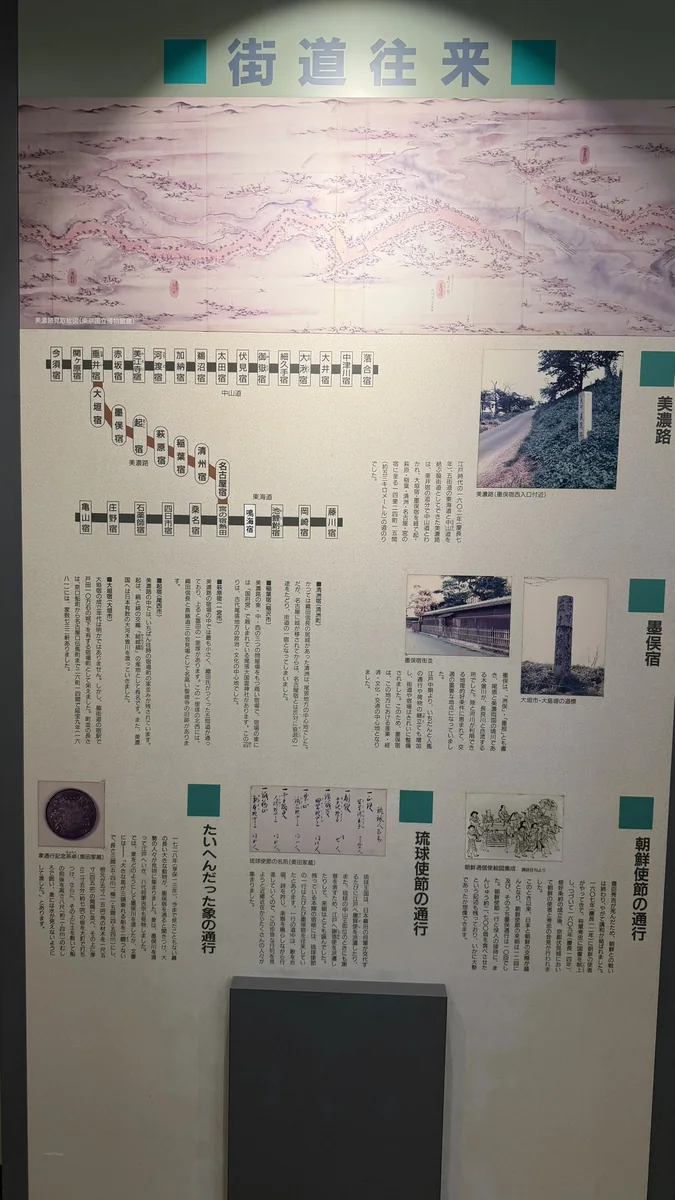
The first floor is a local-history gallery, “History of Sunomata.” Panels cover the Minoji road and its post station, the river port that moved timber, and Sunomata’s role as a crossroads since ancient times. It helps to see that this was a place where people and goods gathered before turning to the castle story.
Photos
Tap a photo to enlarge
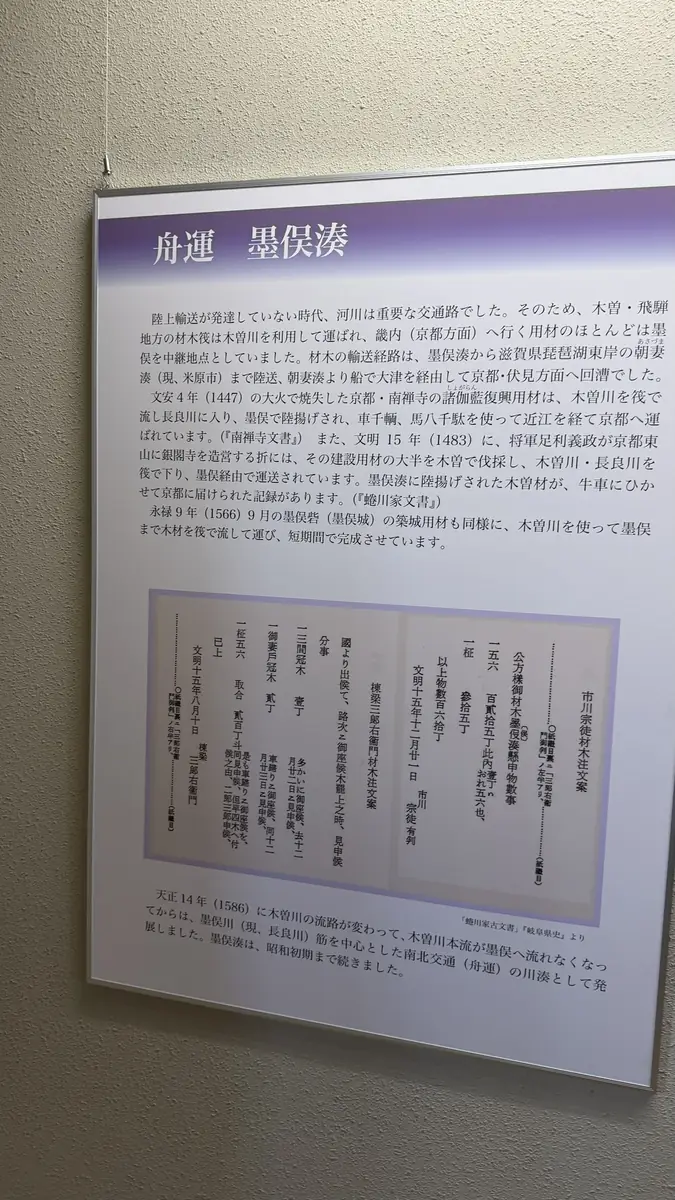
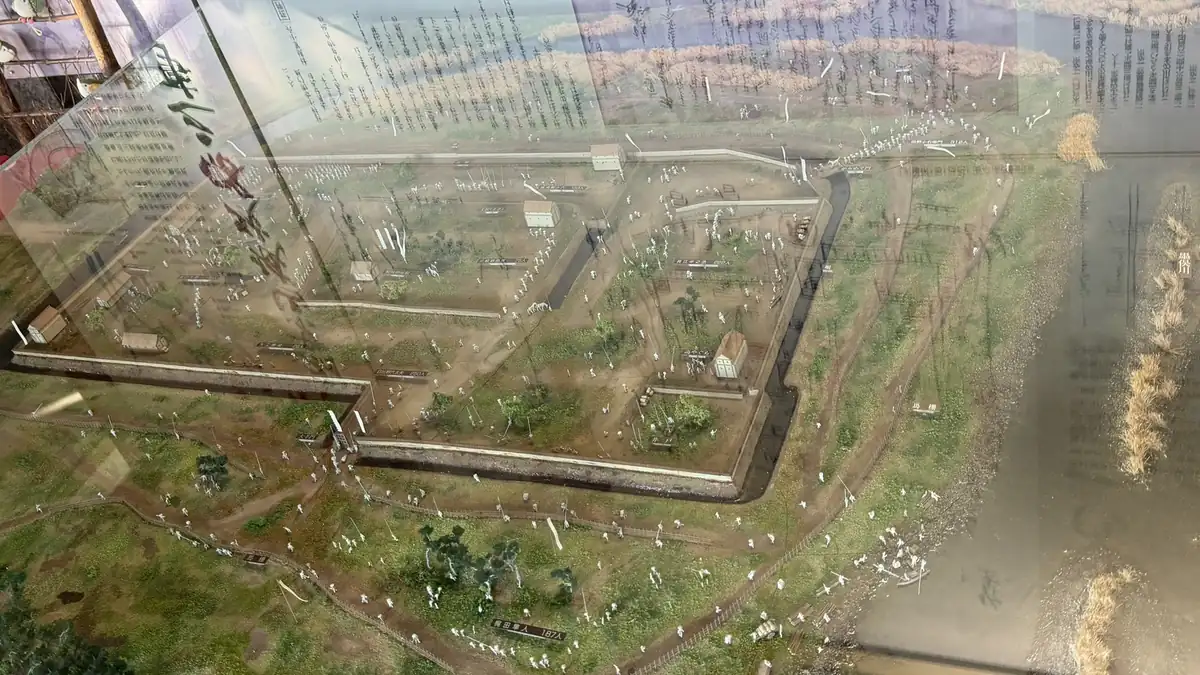
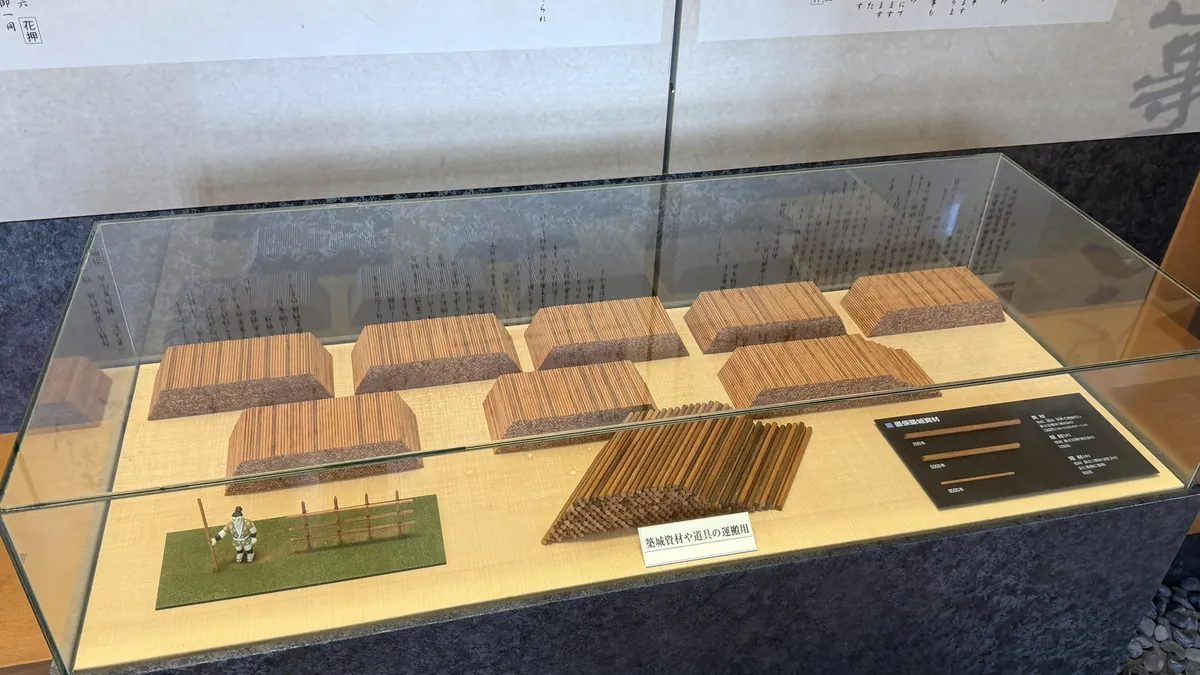
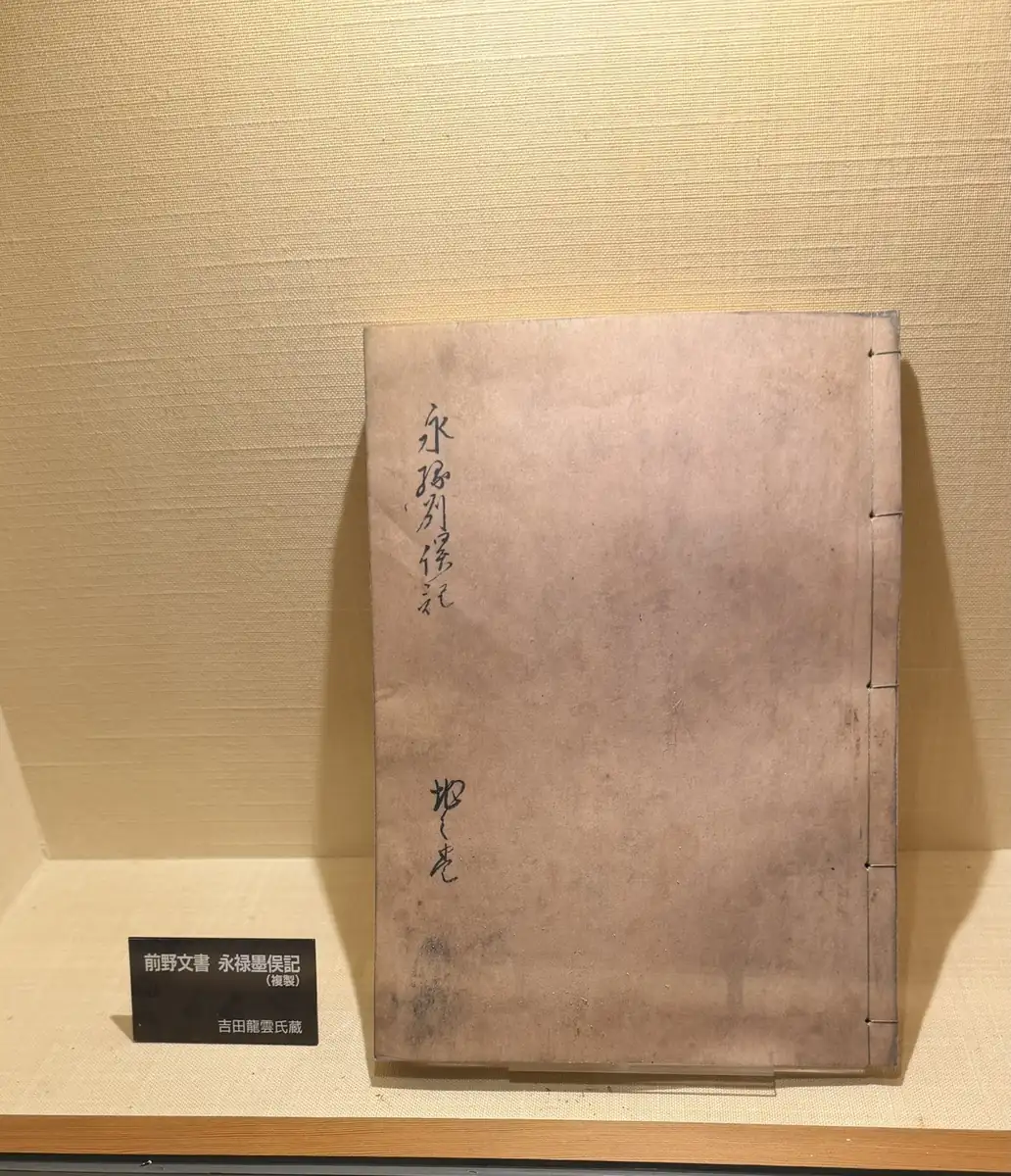
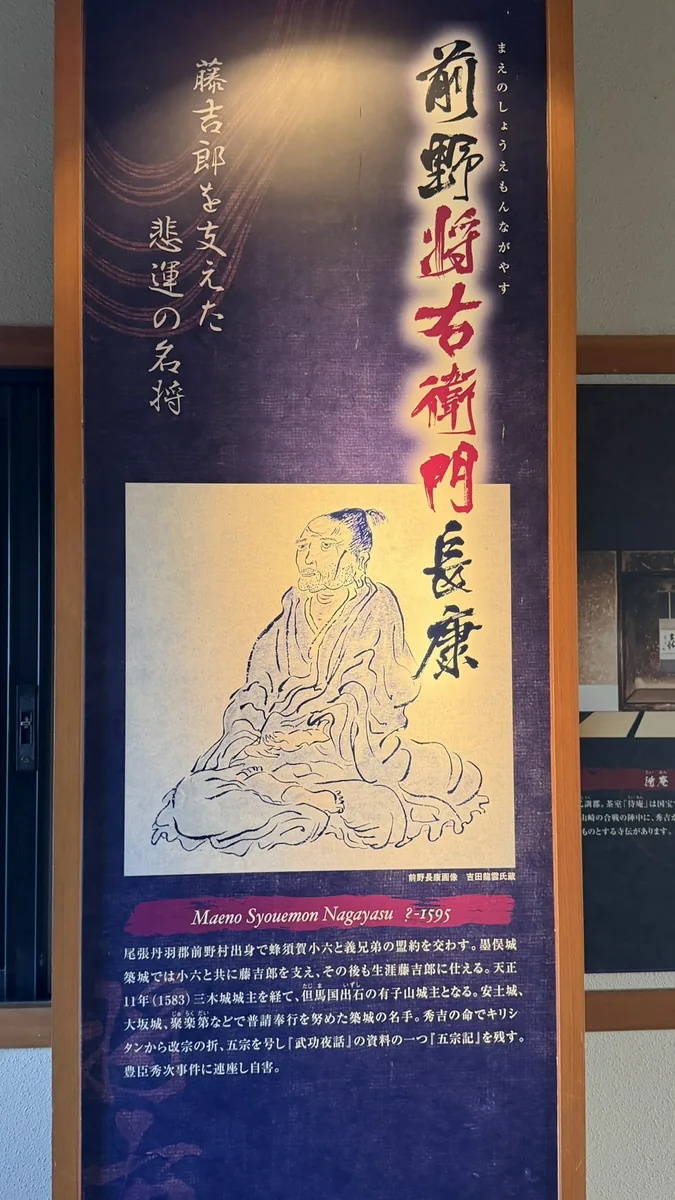
The second floor presents the construction story. You will see a map of the route that brought timber from the Kiso and Sakai rivers to Sunomata, a model log raft, and a 3D model of the fort showing fences, ditches and workers. Letters attributed to Hachisuka Koroku are on display, and so is a facsimile of the Maeno family’s “Eiroku Sunomata-ki.”
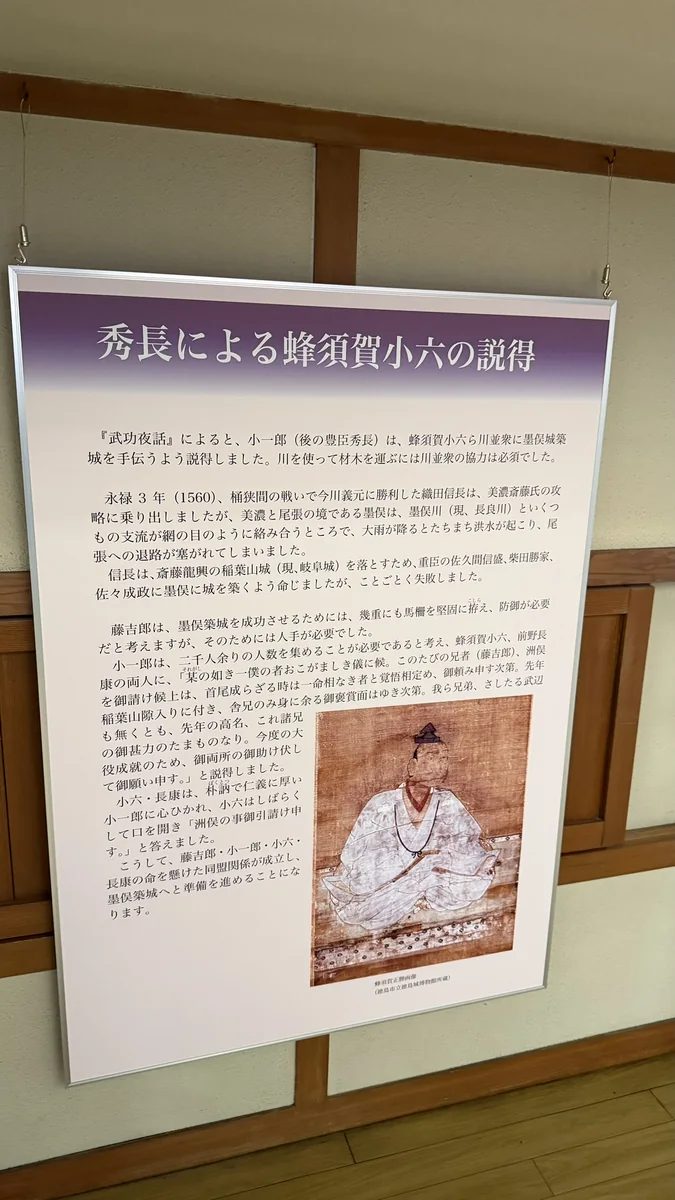
These are accounts and traditions as the museum presents them. A photograph alone cannot confirm the sequence of construction or the relationships between people. Even so, the models make it clear how the museum imagines the timber being moved and the fences set up. One panel tells how Hidenaga, Hideyoshi’s younger brother, is said to have persuaded Hachisuka Koroku to help.
Photos
Tap a photo to enlarge
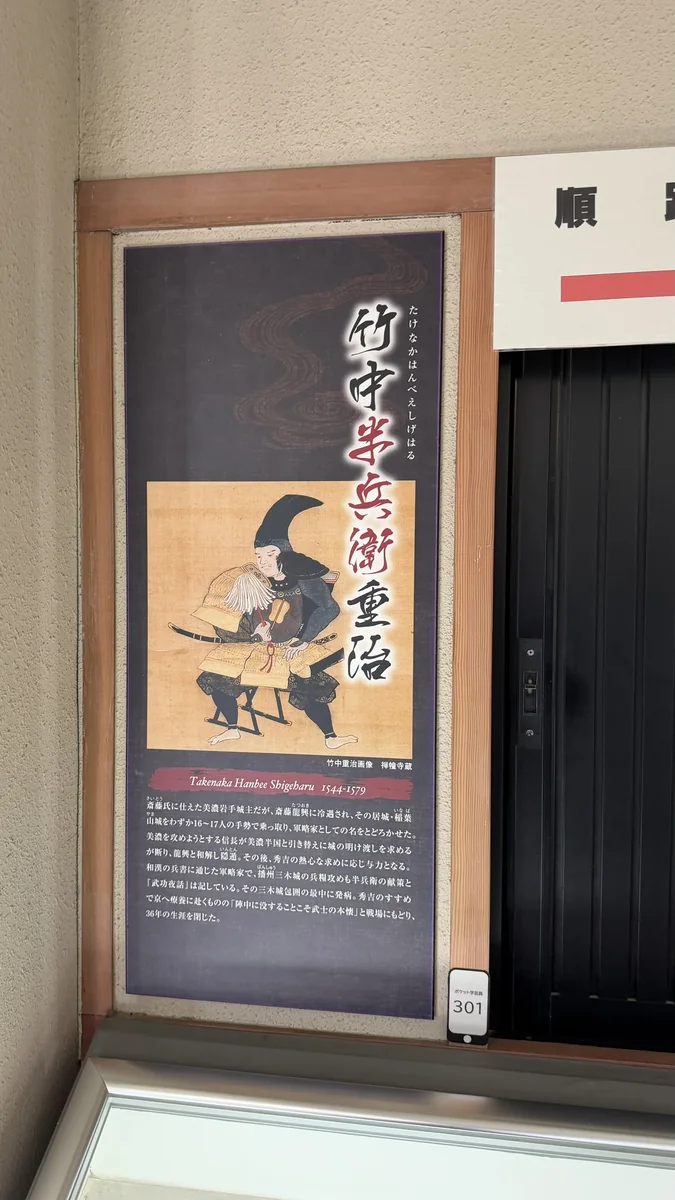
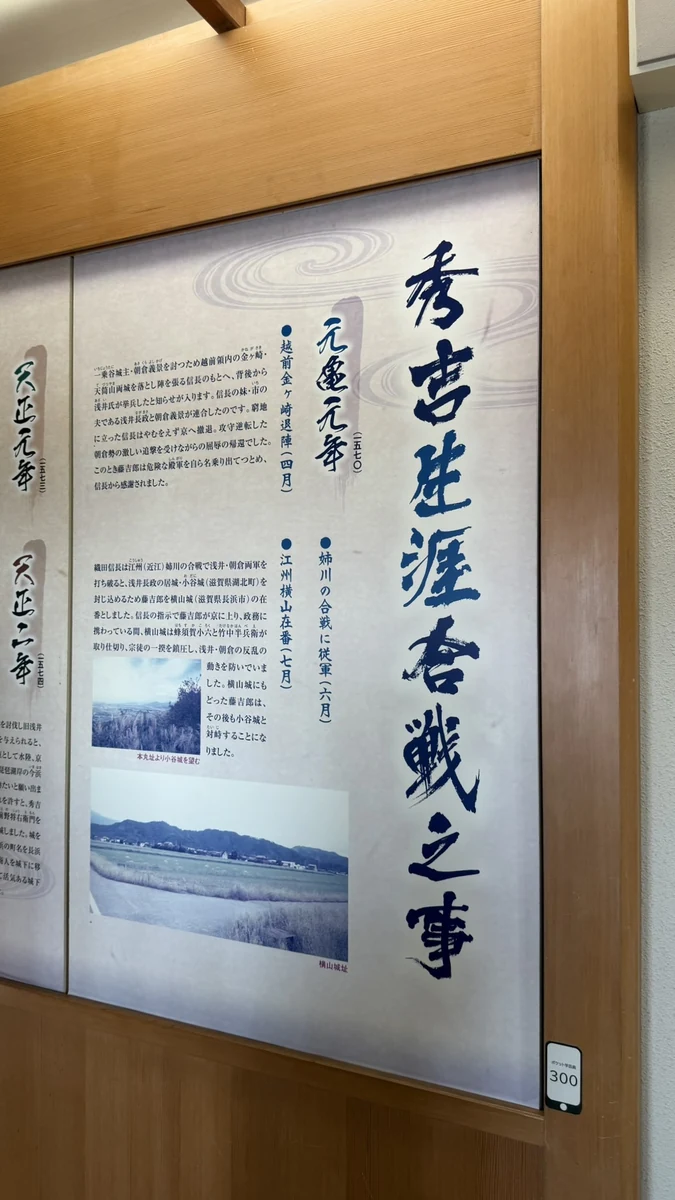
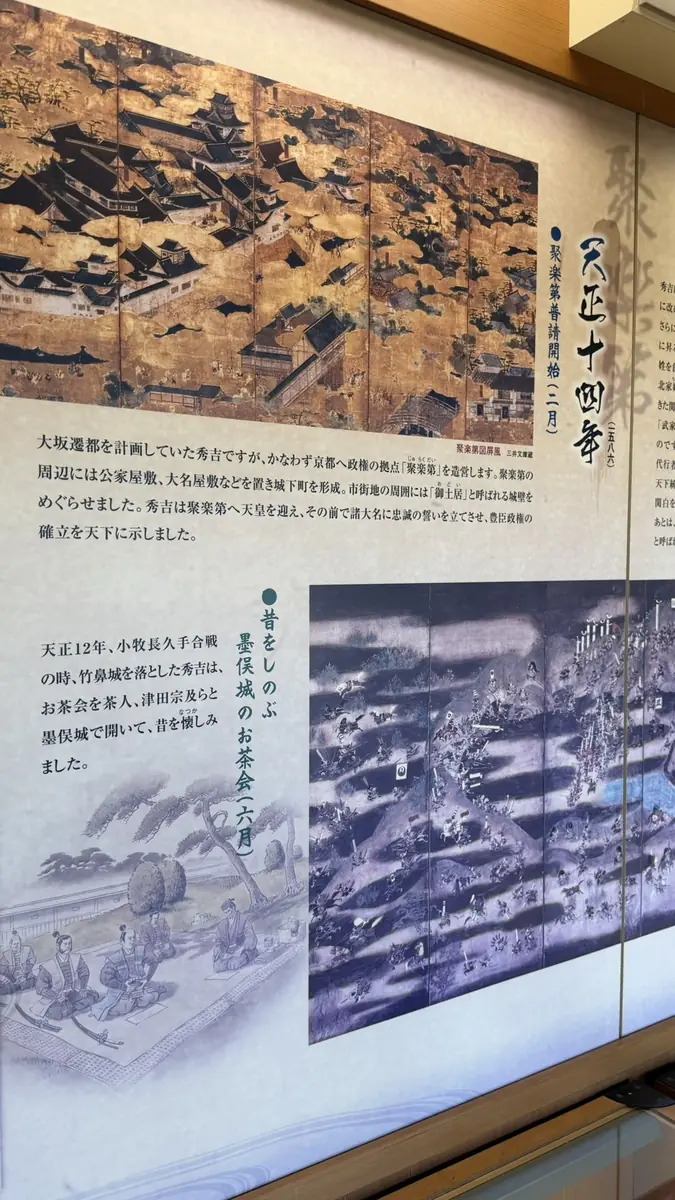
The third floor places Sunomata within Hideyoshi’s later career. Timelines and battle illustrations run through Anegawa, Nagashino, the Honnoji Incident, Yamazaki, Komaki-Nagakute, Jurakudai and Sekigahara. Portrait panels introduce Takenaka Hanbei, Kuroda Kanbei and others, which is handy if you know the names from the drama.
Photos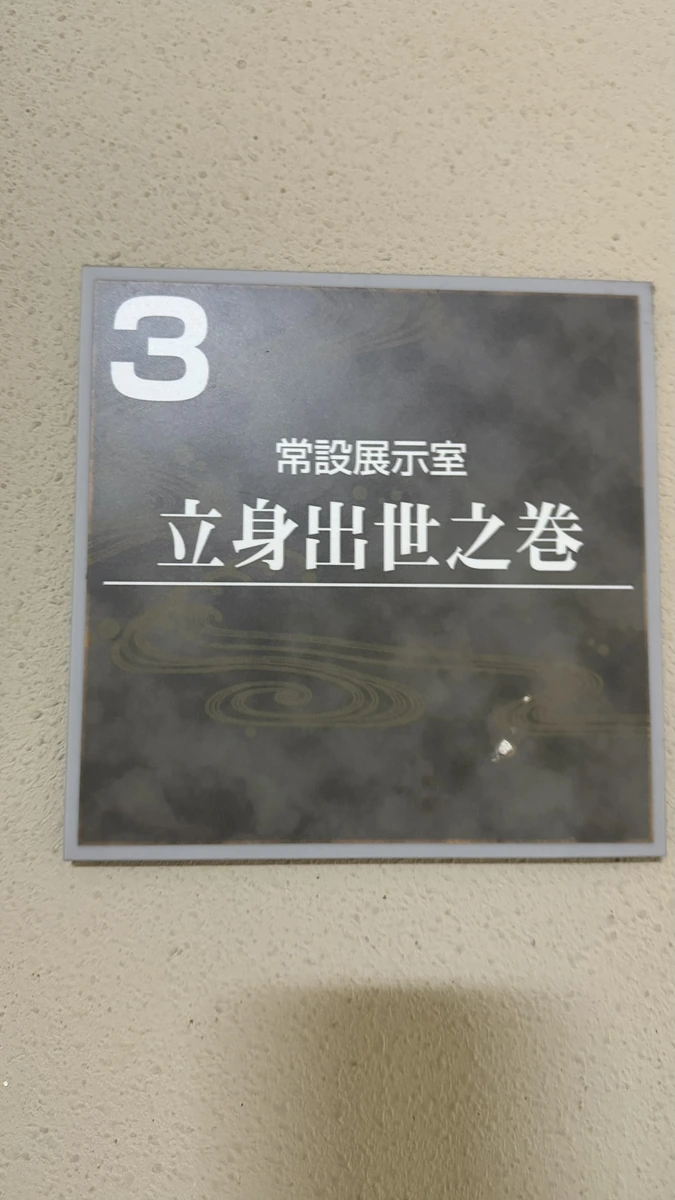
Tap a photo to enlarge
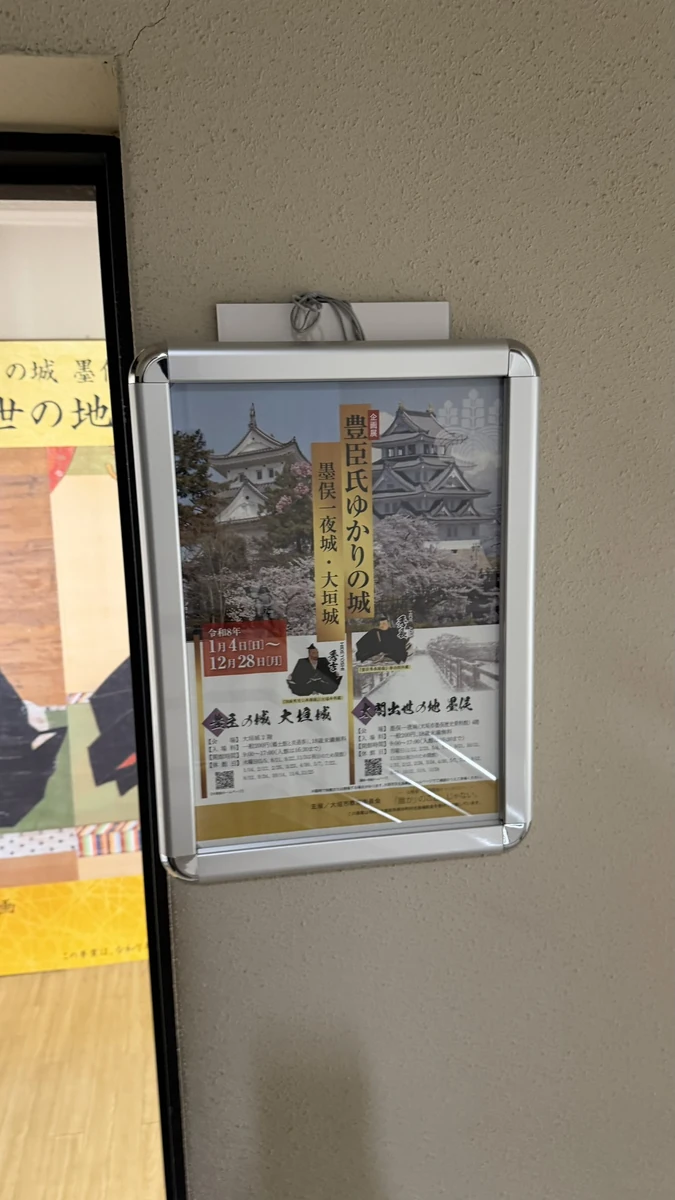
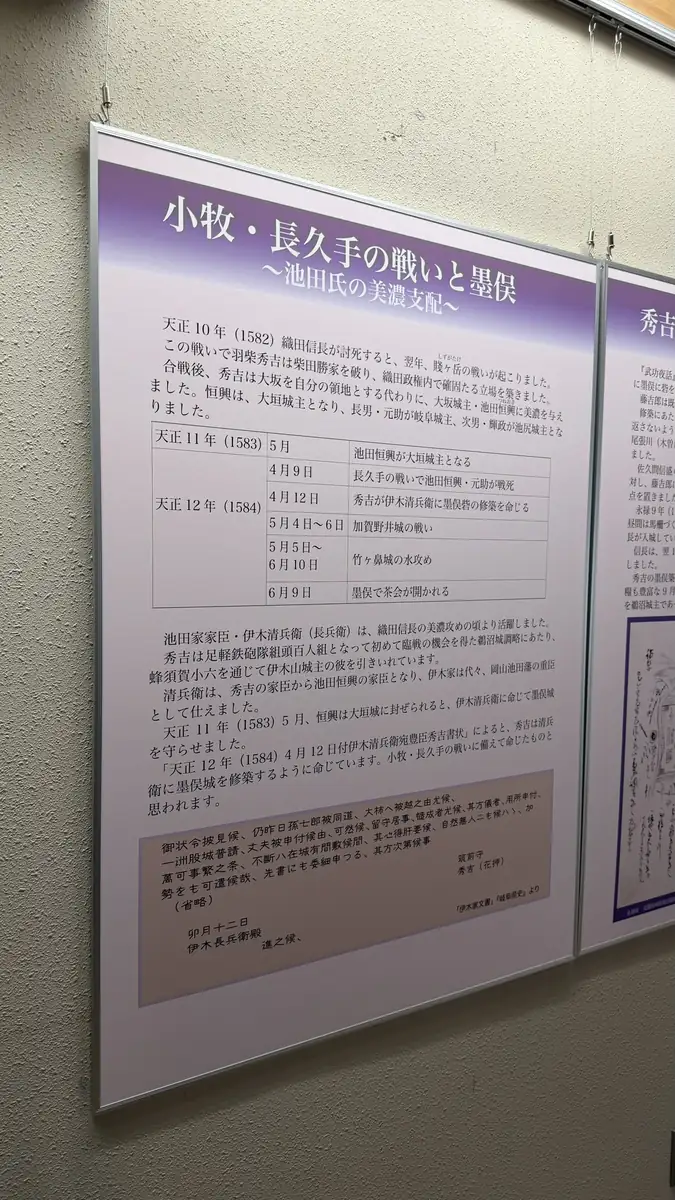
On the fourth floor, the museum hosts the Sunomata part of the special exhibition “Castles Linked to the Toyotomi: Sunomata Ichiya Castle and Ogaki Castle.” The Sunomata section is titled “Taiko Shusse no Chi: Sunomata” (Sunomata, where the Taiko rose). Ogaki City says the exhibition began in January 2026; the closing date is on the notice at the museum. The second venue is on the second floor of Ogaki Castle.
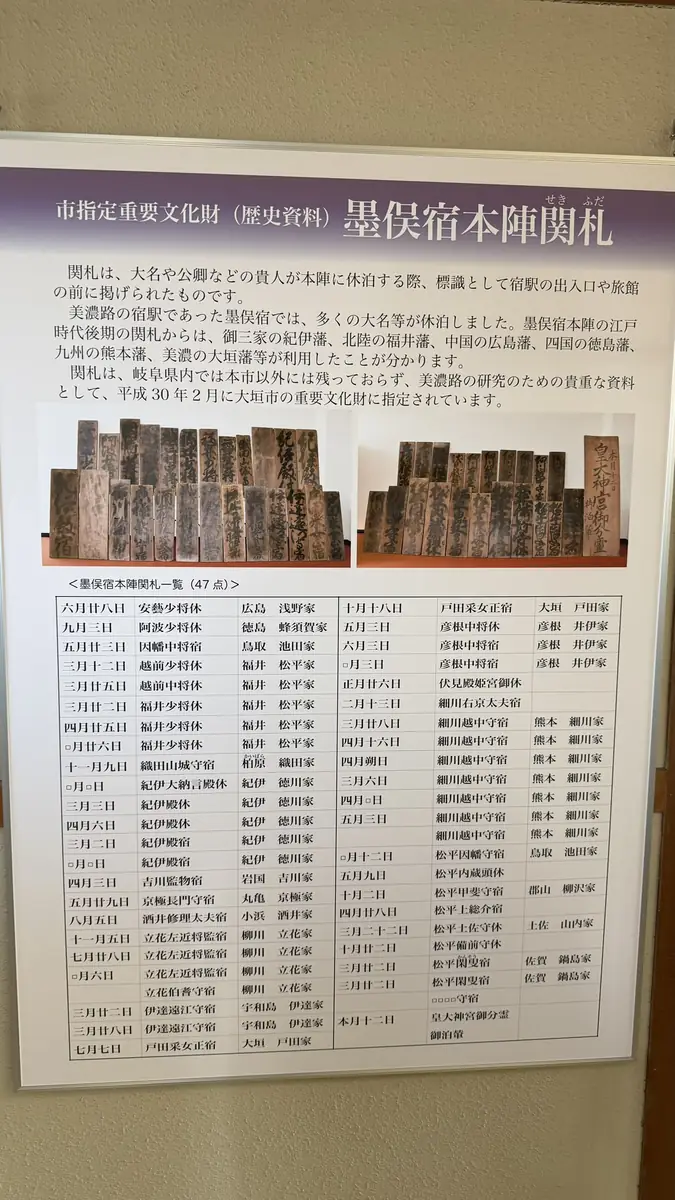
Panels cover Sunomata as a transport hub, Nobunaga’s campaigns in Mino, the link between Sunomata and the Komaki-Nagakute conflict, and the museum’s lodging signs from Sunomata’s honjin. A board with portraits of Hideyoshi and Hidenaga stands at the entrance.
Photos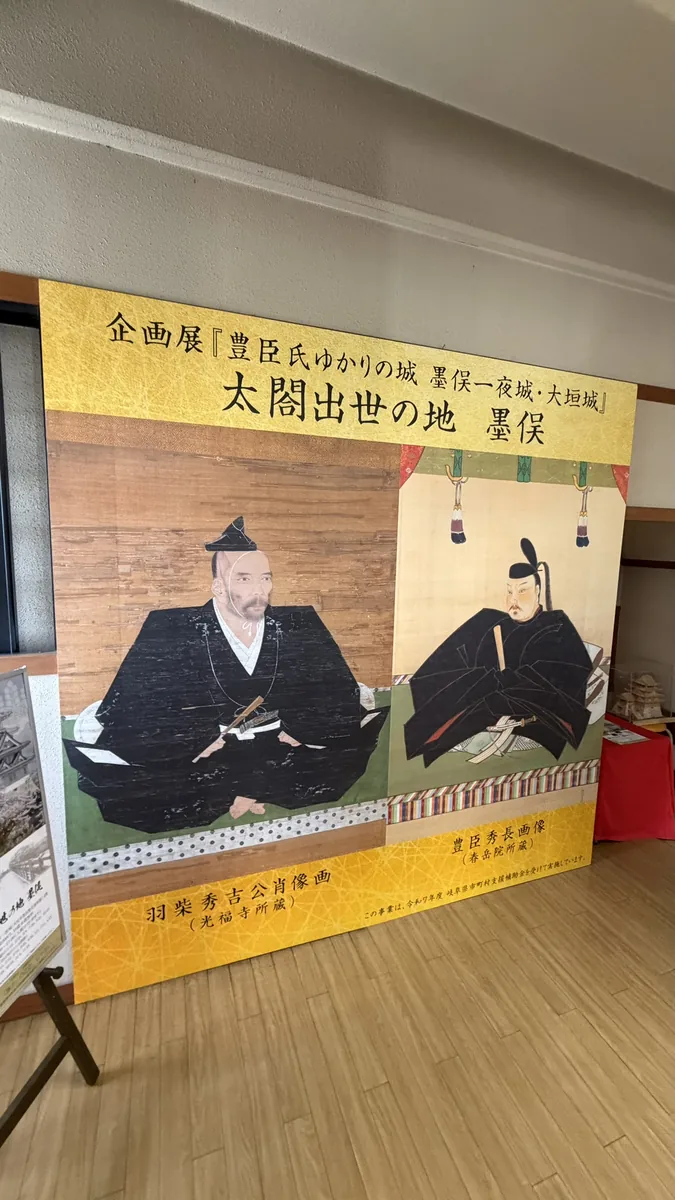
Tap a photo to enlarge
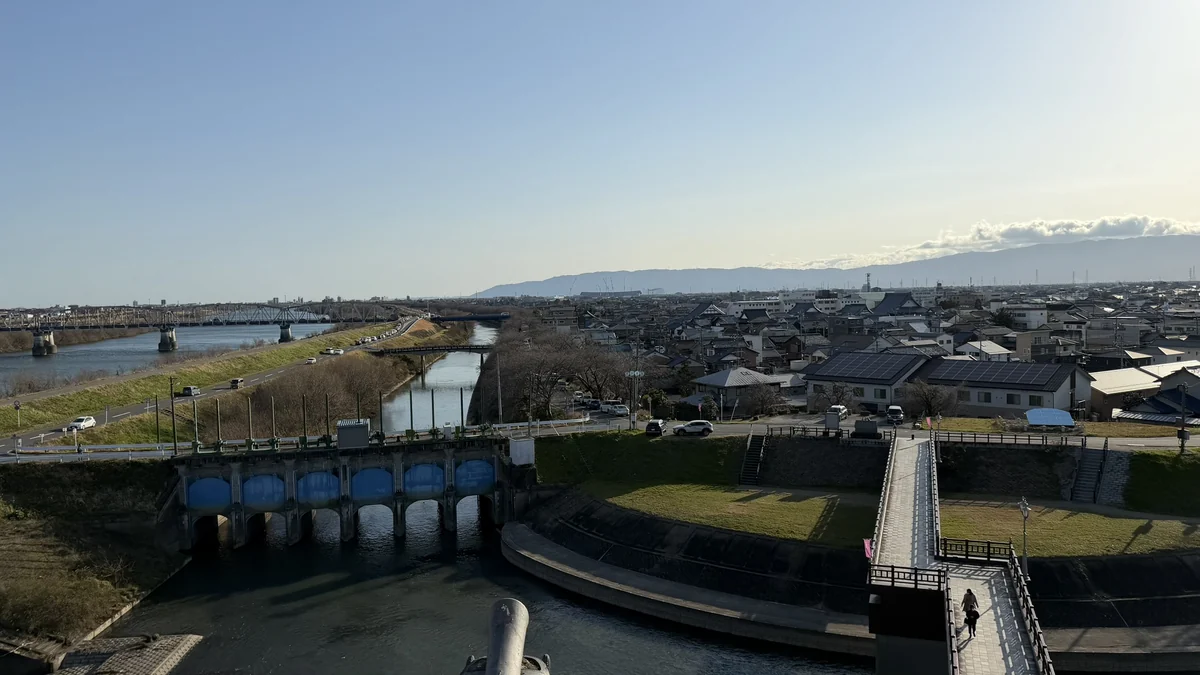
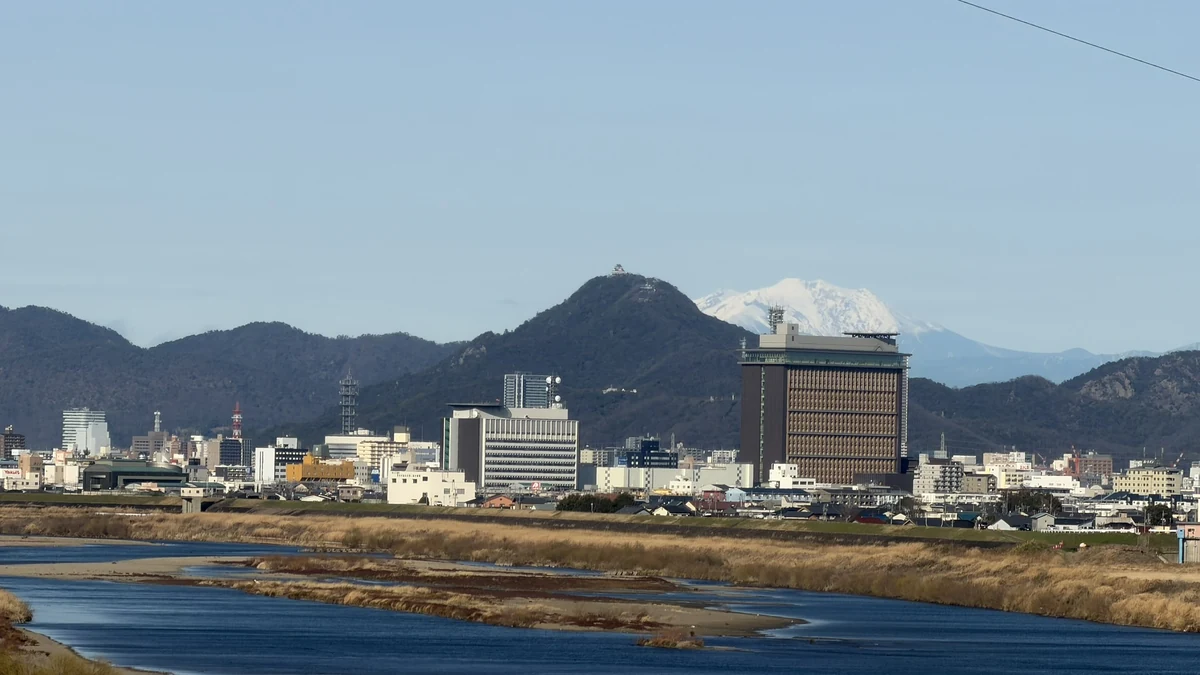
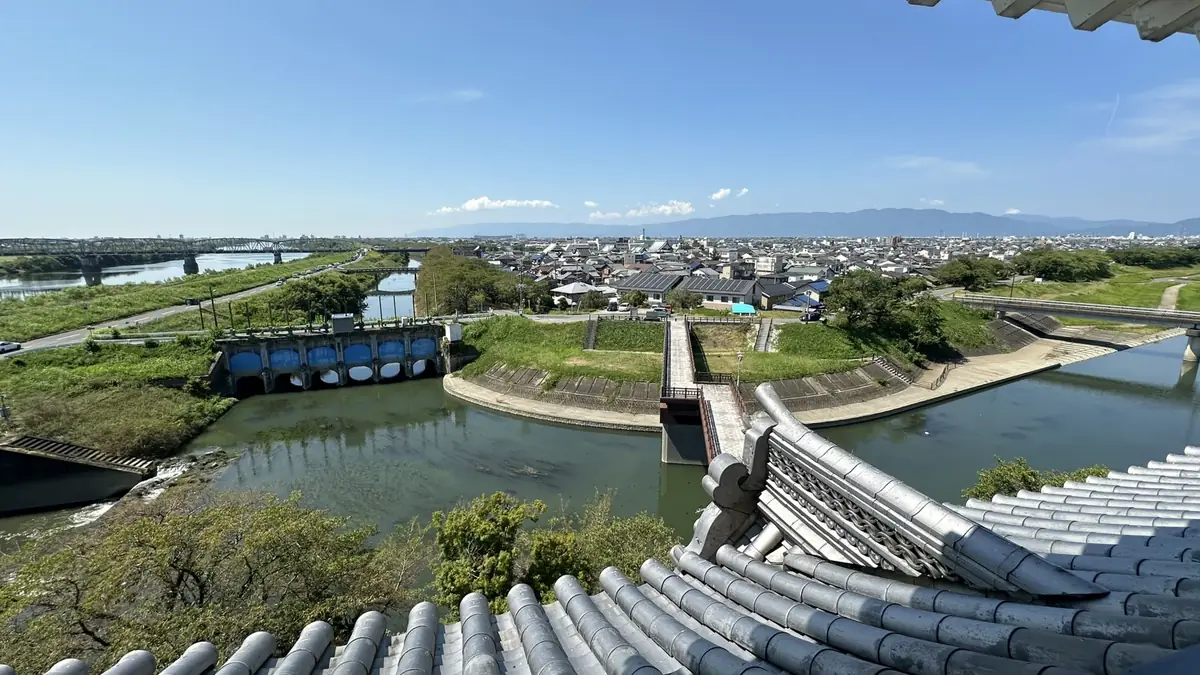
The top floor has an observation room marked “Scenic Sunomata.” The windows look down on Taiko Shusse Bridge, a blue-doored sluice gate and the riverside town. In February 2026 I could also see Gifu Castle on Mt. Kinka far across the Nagara River.
Go up after the exhibits. The route map you saw on the second floor then connects with the actual river and embankment below. It works as a preview before you walk, or a check afterward.
Photos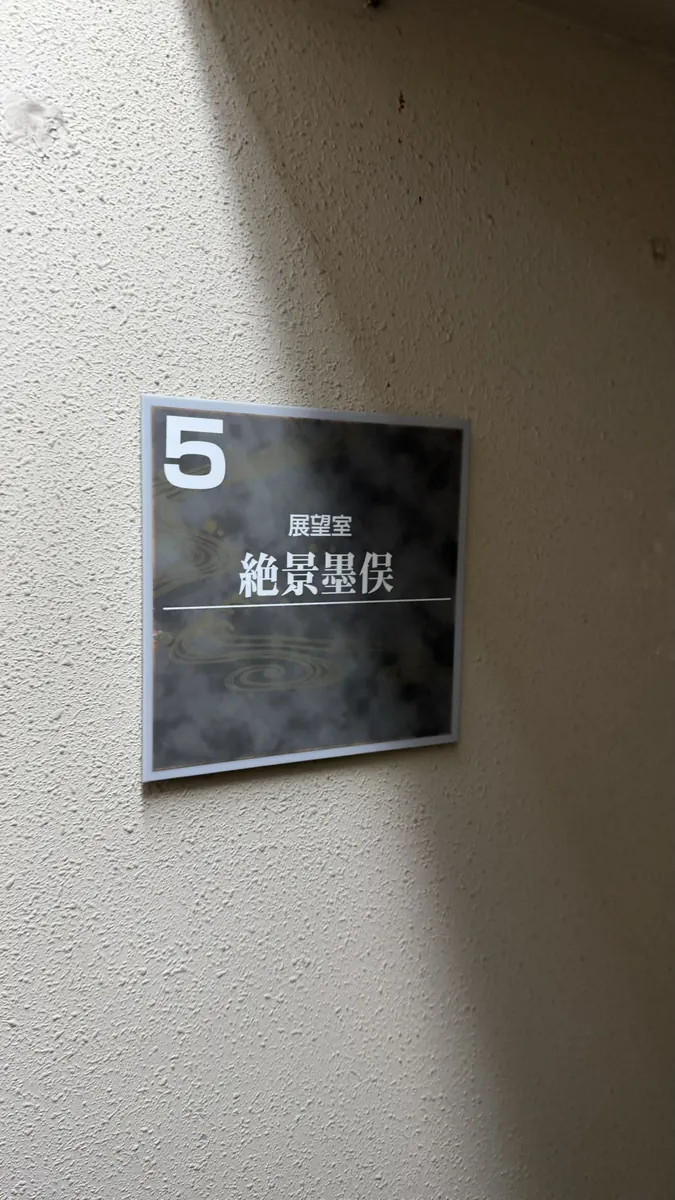
Tap a photo to enlarge
I did not note the floor for these. They are a suit of blue-laced armor, a case with a gourd-shaped standard, and a CG illustration of the fort.
A notice inside explains the photo rules. Some exhibits are marked no photography, and flash, video and tripods are restricted. Commercial use needs prior permission.
Photos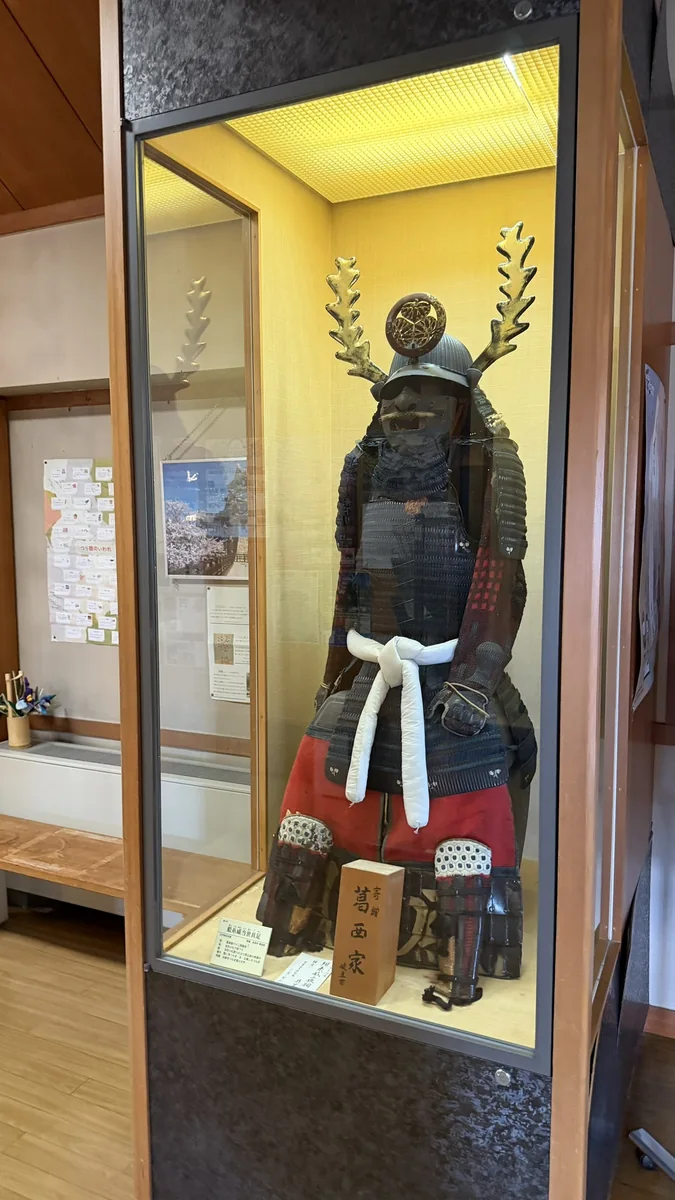
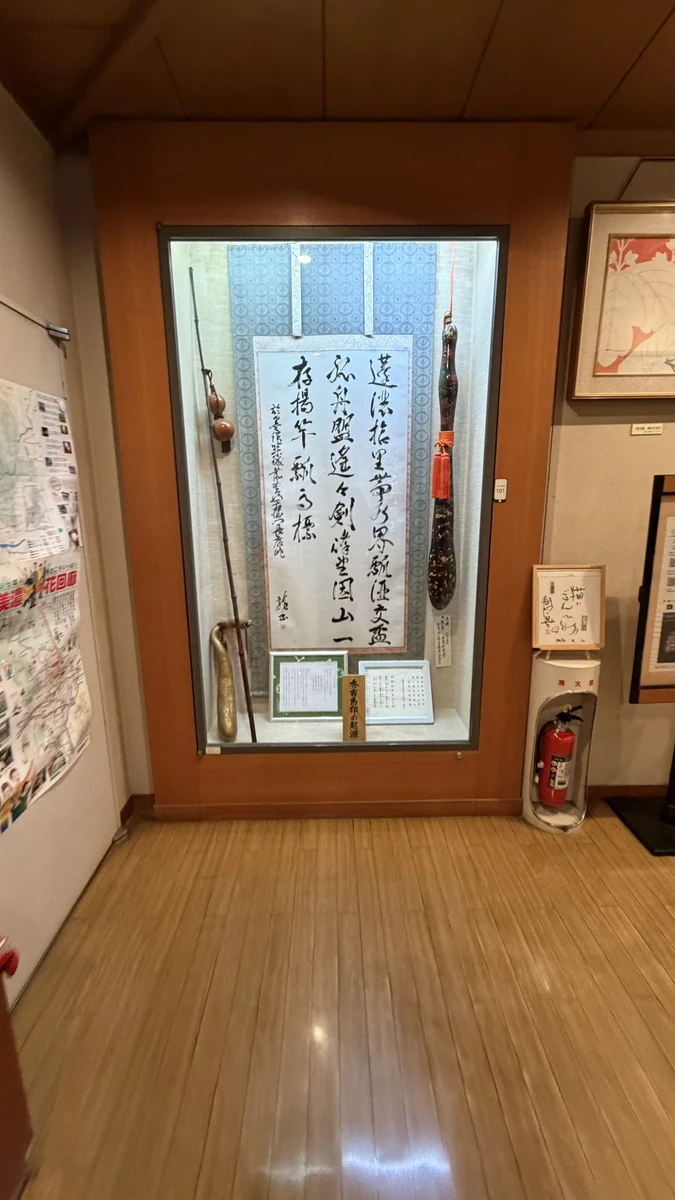
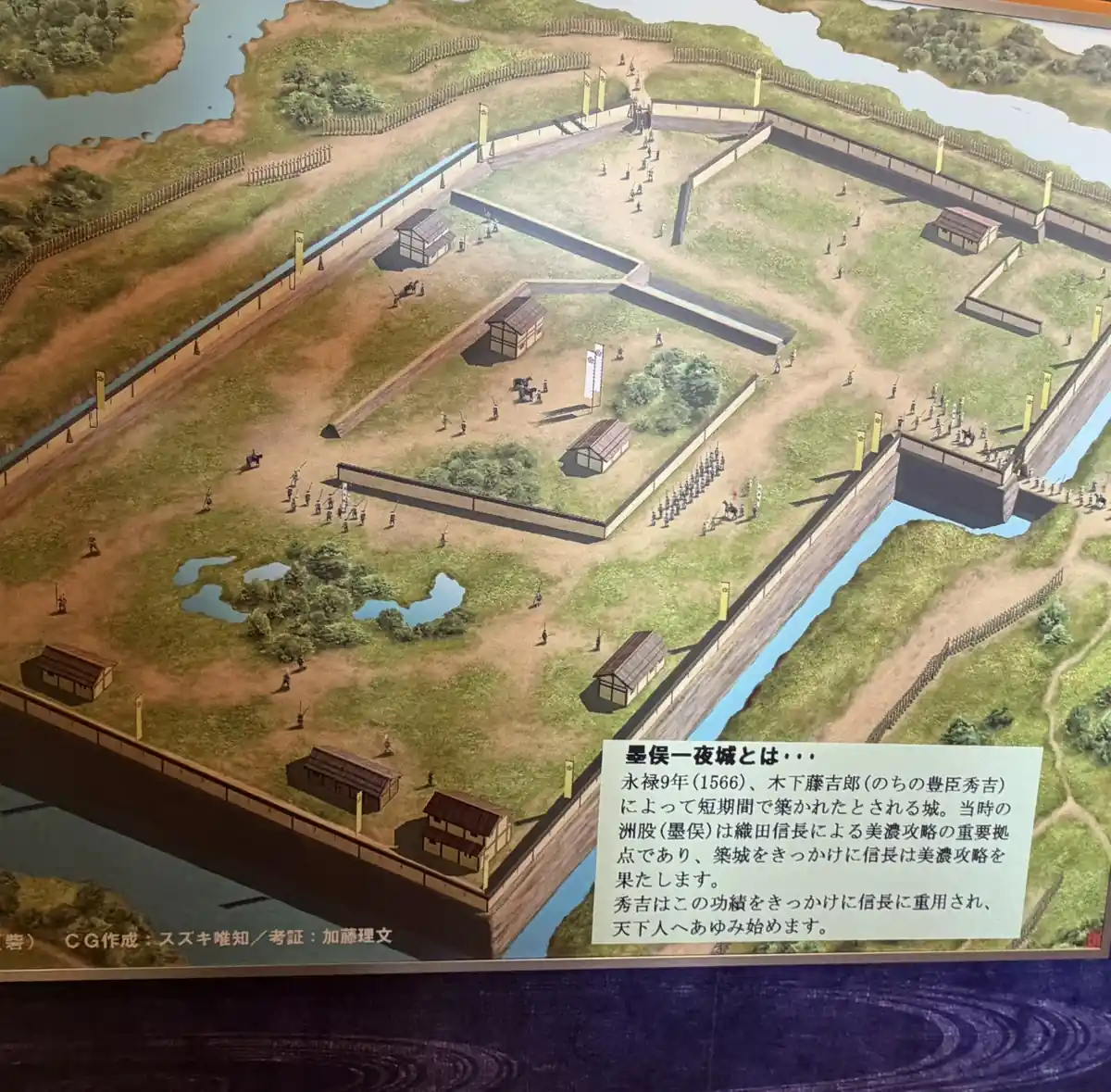
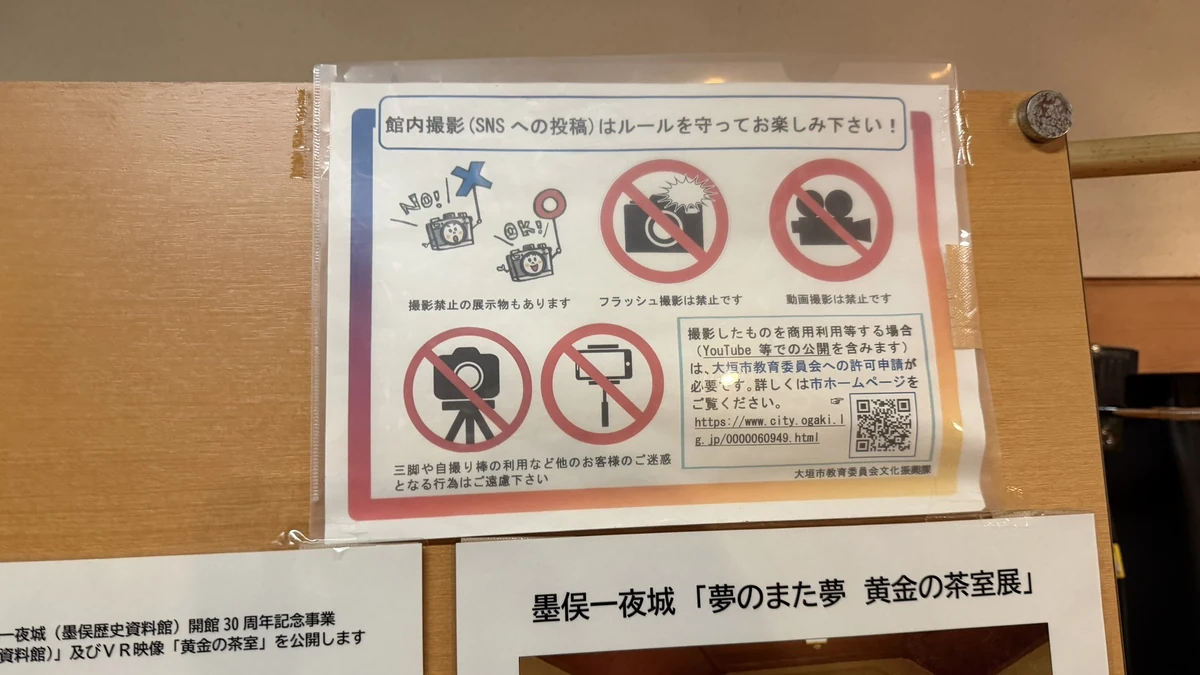
Tap a photo to enlarge
The Taikoki account of the one-night castle
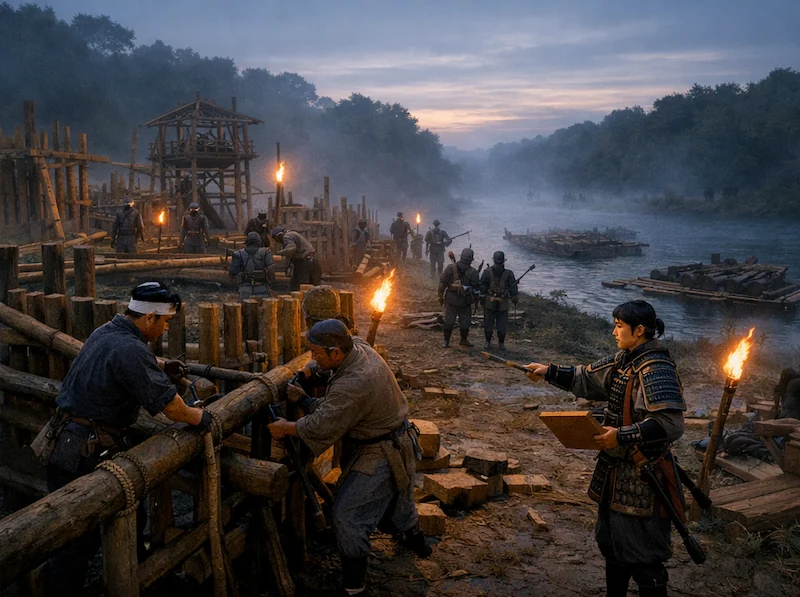
In the Taikoki, an Edo-period war chronicle, the building of Sunomata shows the young Tokichiro’s ingenuity. In the story, Oda Nobunaga orders a fort at Sunomata as a forward base for his campaign in Mino. Enemy interference stalls the work, and Tokichiro steps forward.
He is said to have had the timber prepared upstream, floated it down the river and assembled it at Sunomata all at once. With help from river-wise men such as Hachisuka Koroku, the fort is said to have been finished in a short time. The story presents a victory won by terrain and river transport rather than force, and it shaped the later image of Hideyoshi.
The museum presents this outline using accounts such as the Maeno family’s “Buko Yawa” and “Eiroku Sunomata-ki.” How the story is told varies in its details. Read it as a tradition as the museum presents it, and then walk from Taiko Shusse Bridge along the river to see why this waterside became its setting.
Castle-site park
A statue of Tokichiro, a gourd fountain and a replica horse fence surround the museum.
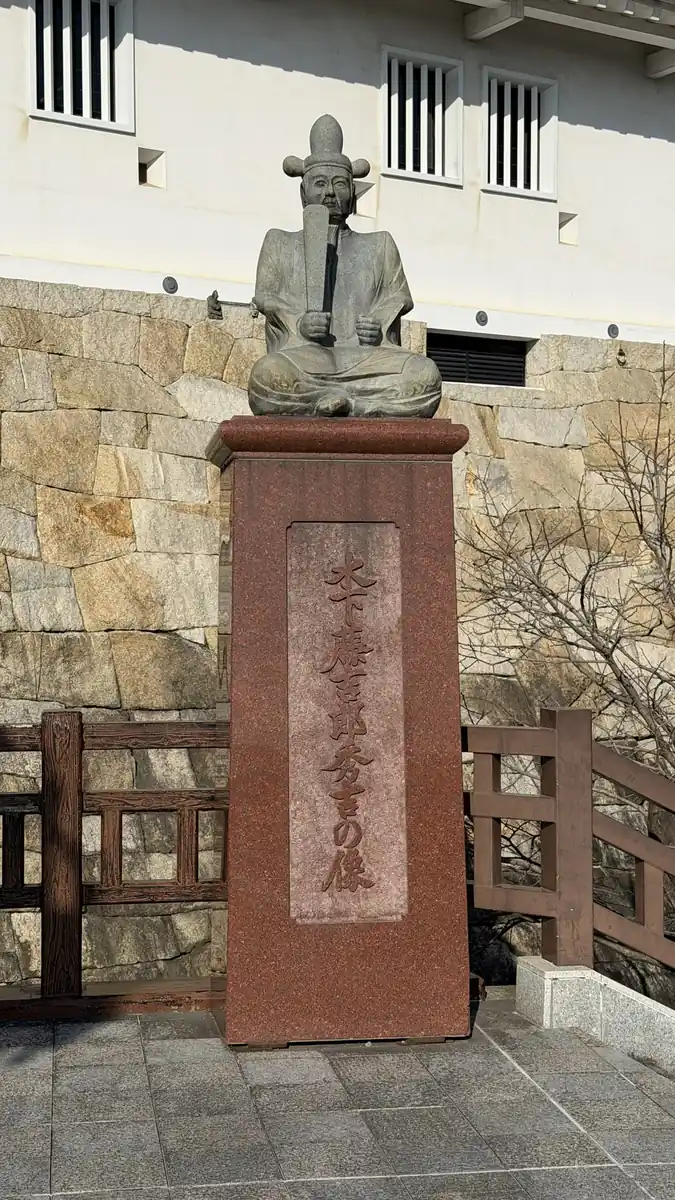
In front of the museum is the “Kinoshita Tokichiro Hideyoshi” statue, seated in court dress and holding a ceremonial baton. Toward the river is the “Taiko Hideyoshi Shusse Fountain,” where water falls from the mouth of a stone gourd. Gourd motifs appear all over the town.
A sign beside a wooden fence, “Tokichiro’s Horse Fence,” gives measurements and construction details of the fence from the Maeno documents. An outdoor board on the building of the castle shows sketches of towers, long houses and fences. Read both as accounts and traditions.
Under the trees is a black stone marker for “Ichiya-jo Site” in the Thirty-six Views of the Kiso Three Rivers. Walking the grounds took about 30 minutes together with the museum visit.
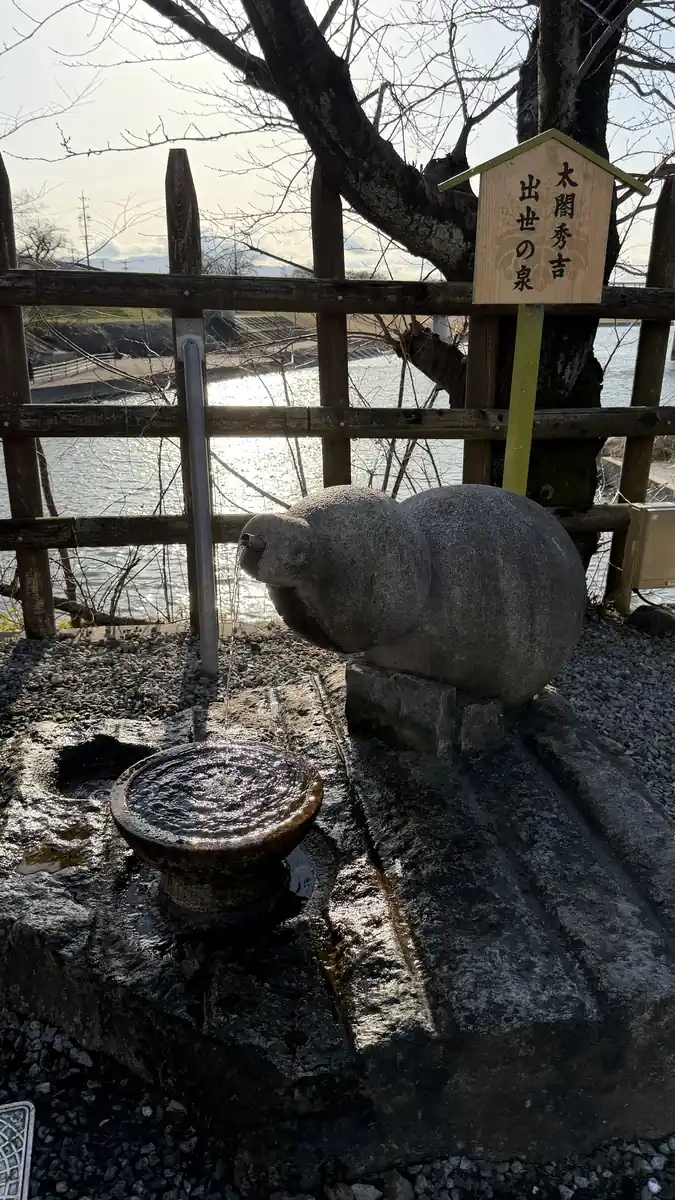
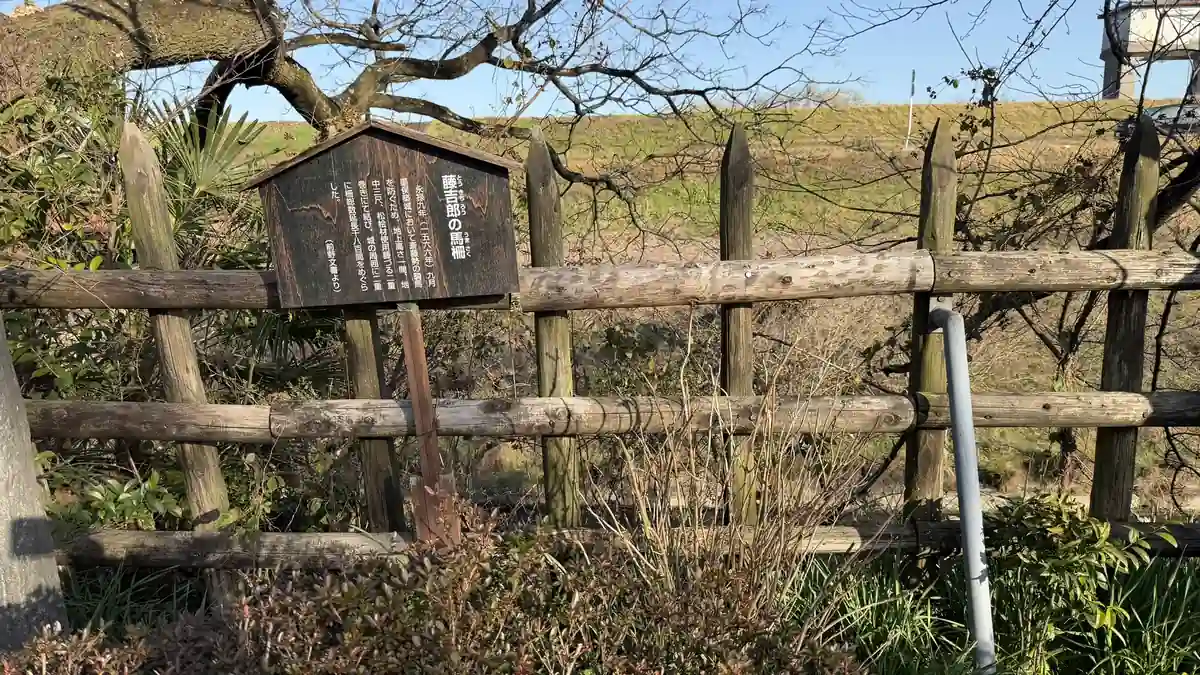
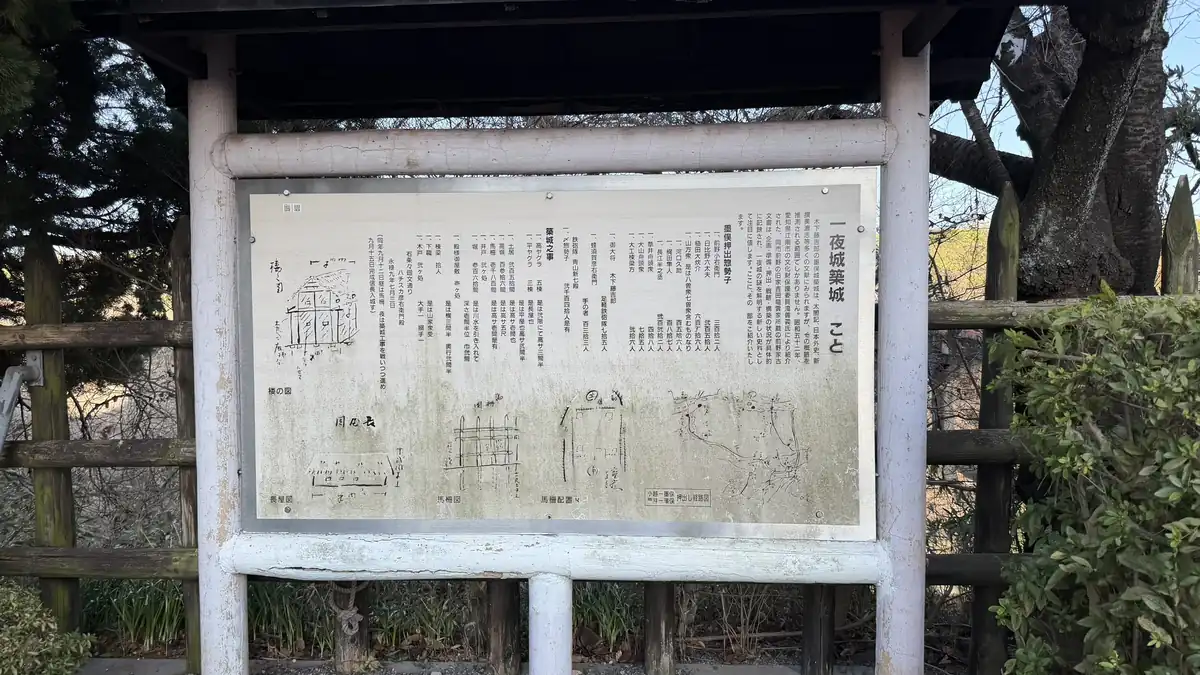
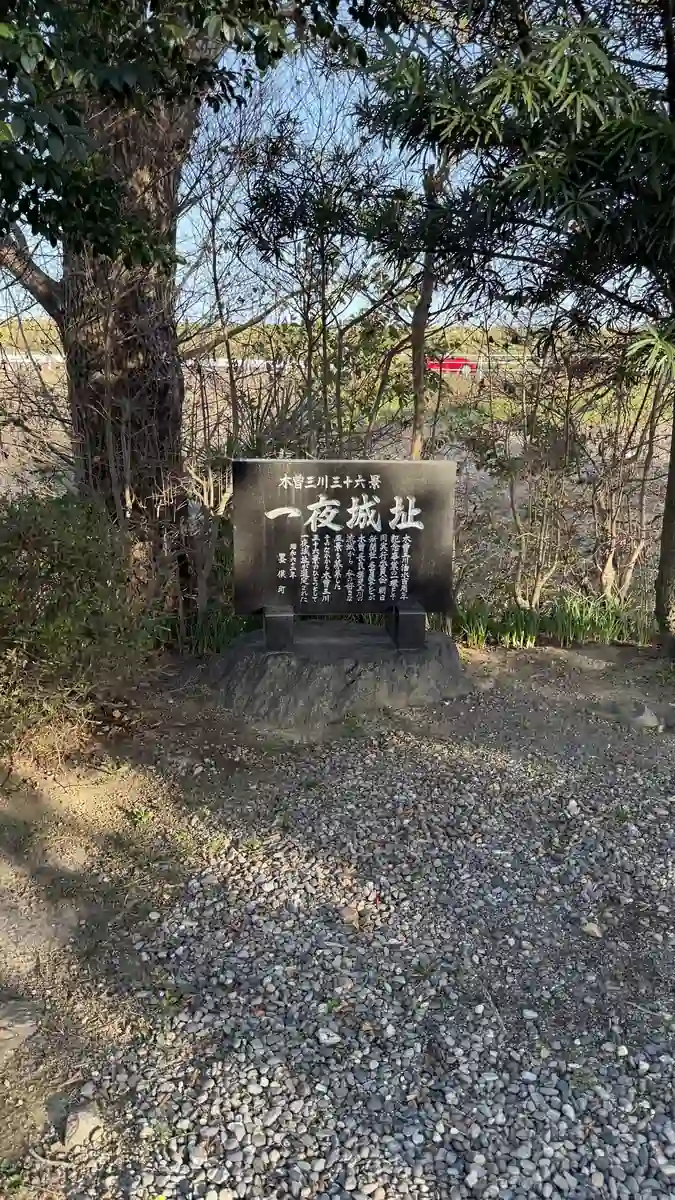
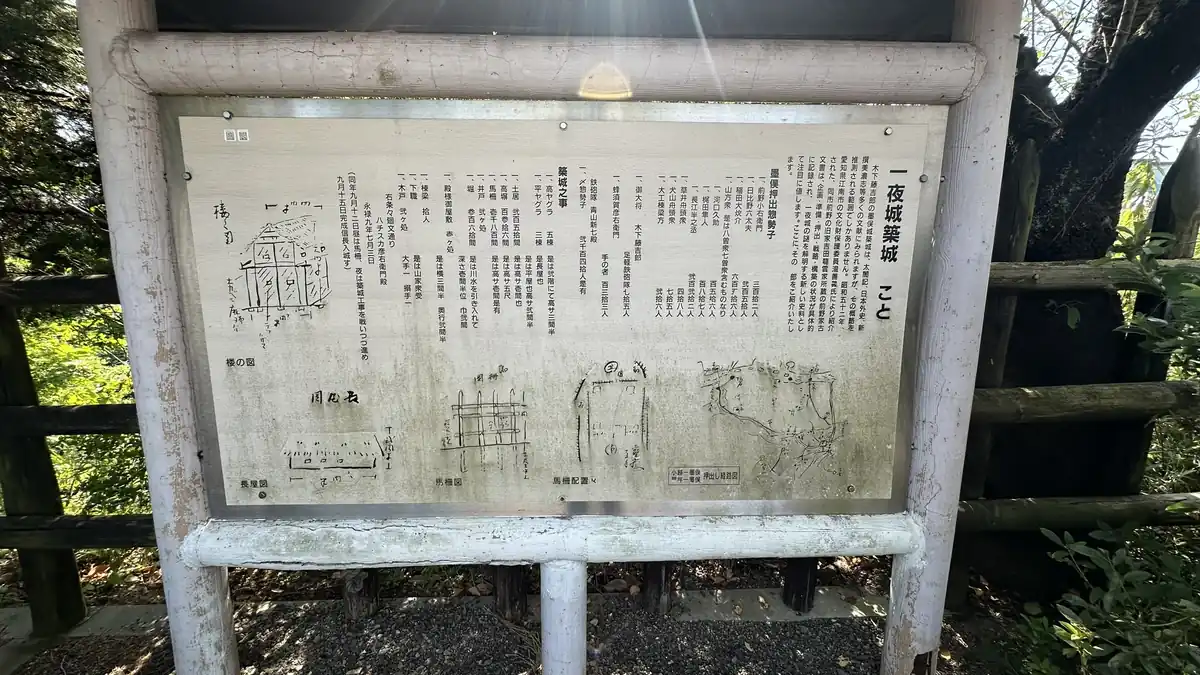
Tap a photo to enlarge
Toyokuni Shrine and Shirahige Shrine
A small shrine to Hideyoshi stands within the museum grounds.
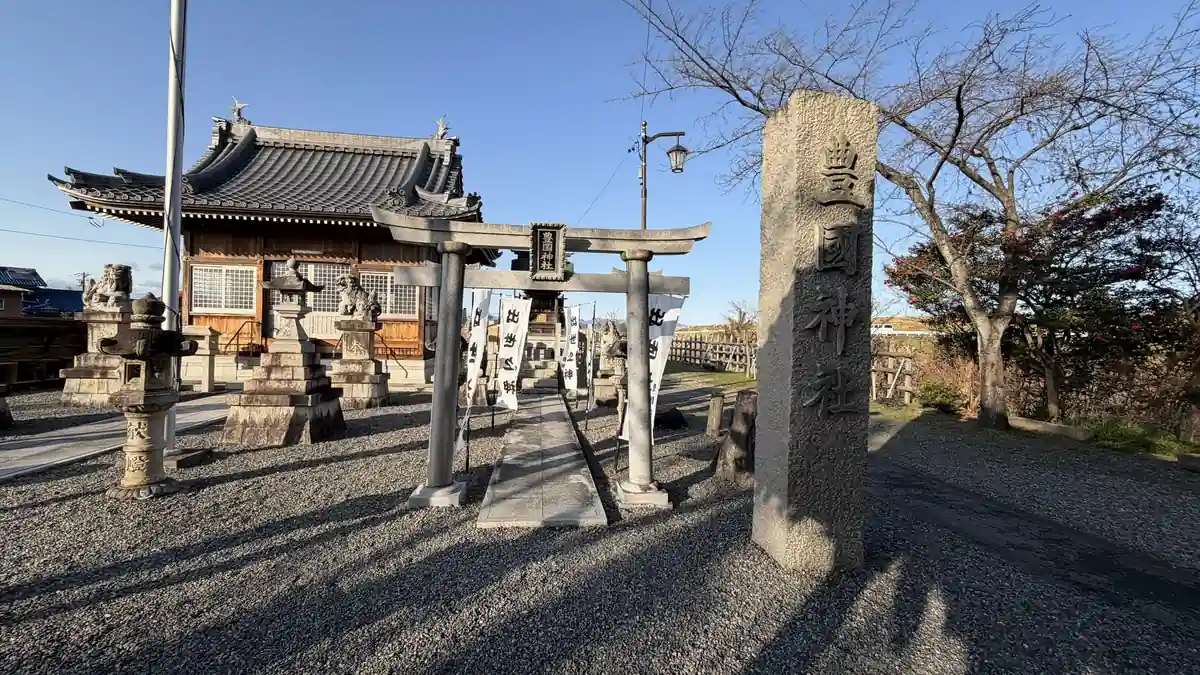
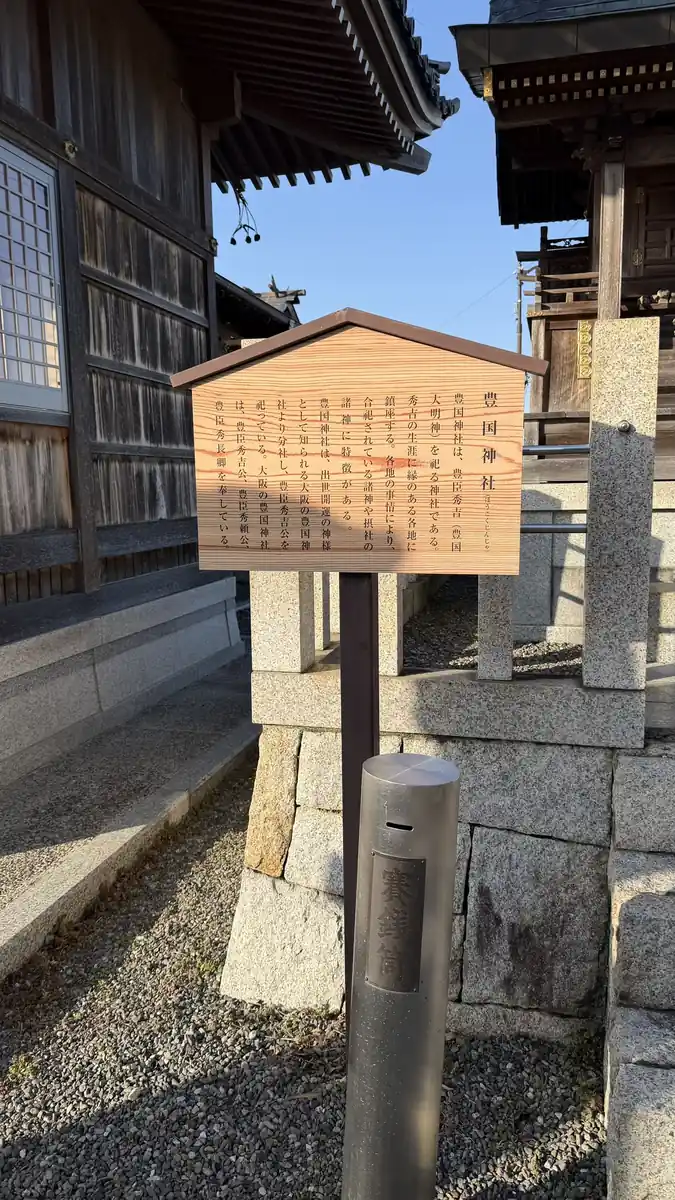
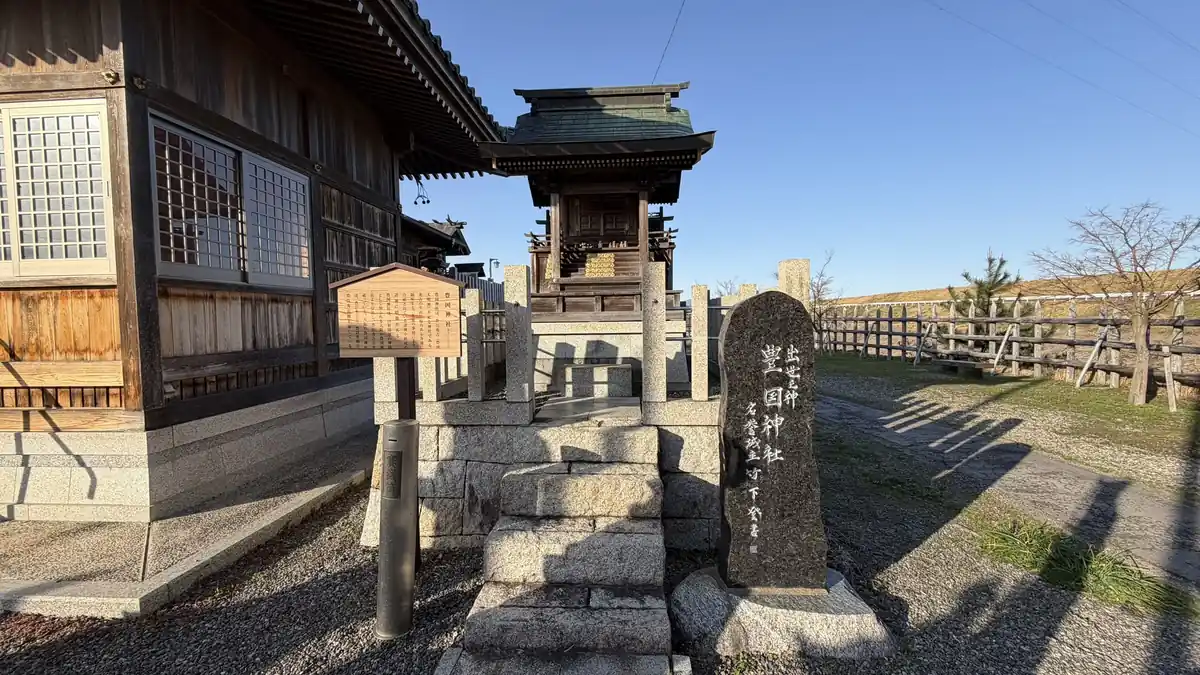
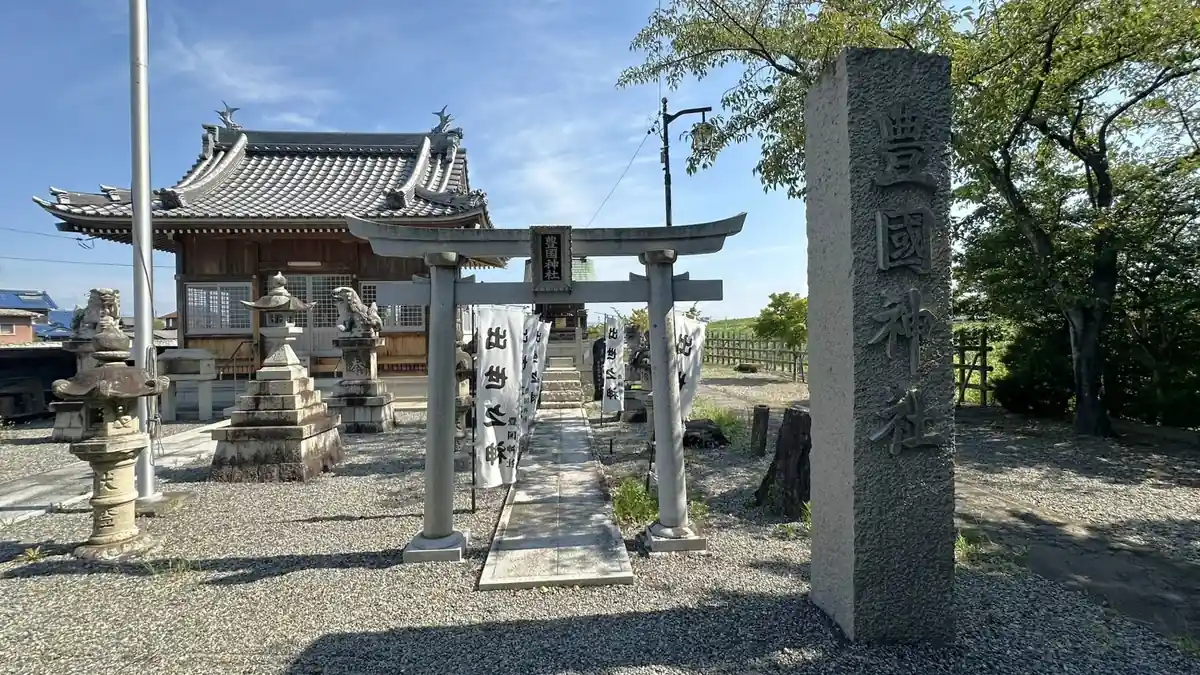
Toyokuni Shrine stands beside Shirahige Shrine inside the museum grounds. It is a sub-shrine of Shirahige Shrine, built in 1992 according to local information, and the signboard says it was enshrined from the Toyokuni Shrine in Osaka.
A stone name pillar, banners reading “Shusse no Kami” (the god of success) and a small sanctuary on stone steps fit the “rise to fame” story of Sunomata. The much larger hall of Shirahige Shrine stands next to it, so it is easy to see that they are separate shrines. A visit takes about 10 minutes.
I could not confirm that goshuin (shrine stamps) were available at either Toyokuni or Shirahige Shrine in February 2026. This can change, so check the notices on site.
| Address | 1735-1 Sunomata, Sunomata-cho, Ogaki, Gifu 503-0102 (inside Shirahige Shrine) |
|---|
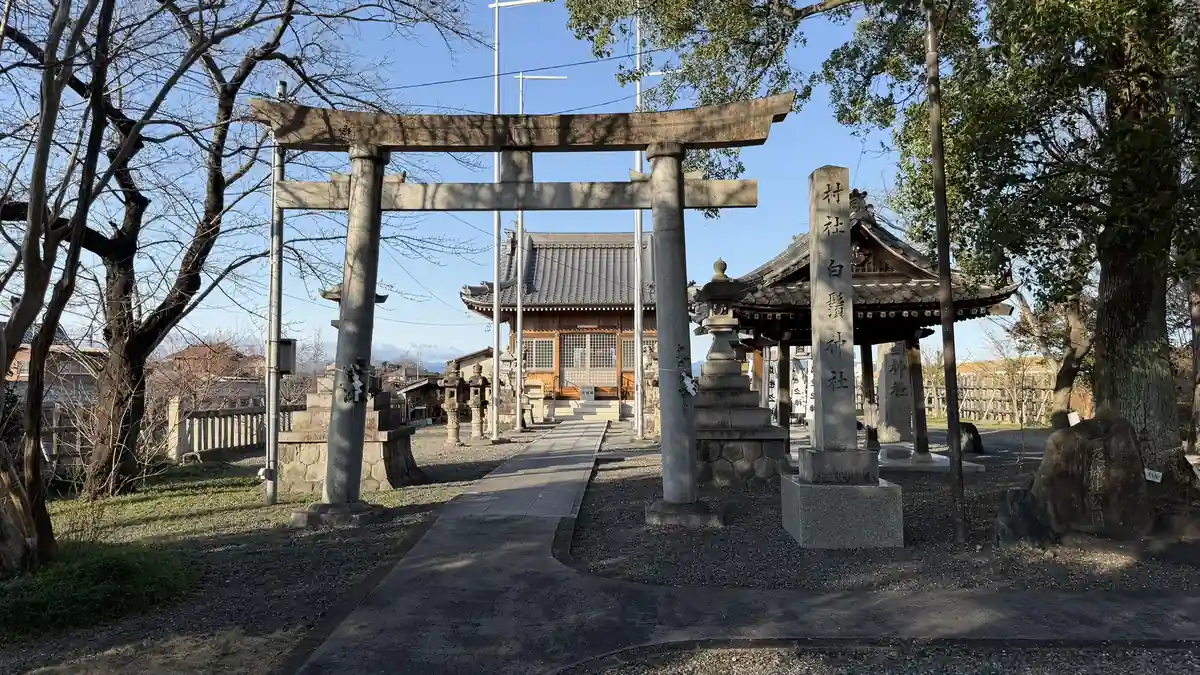
Tap a photo to enlarge
Castle stamp (gojoin)
Available at the reception on the first floor.
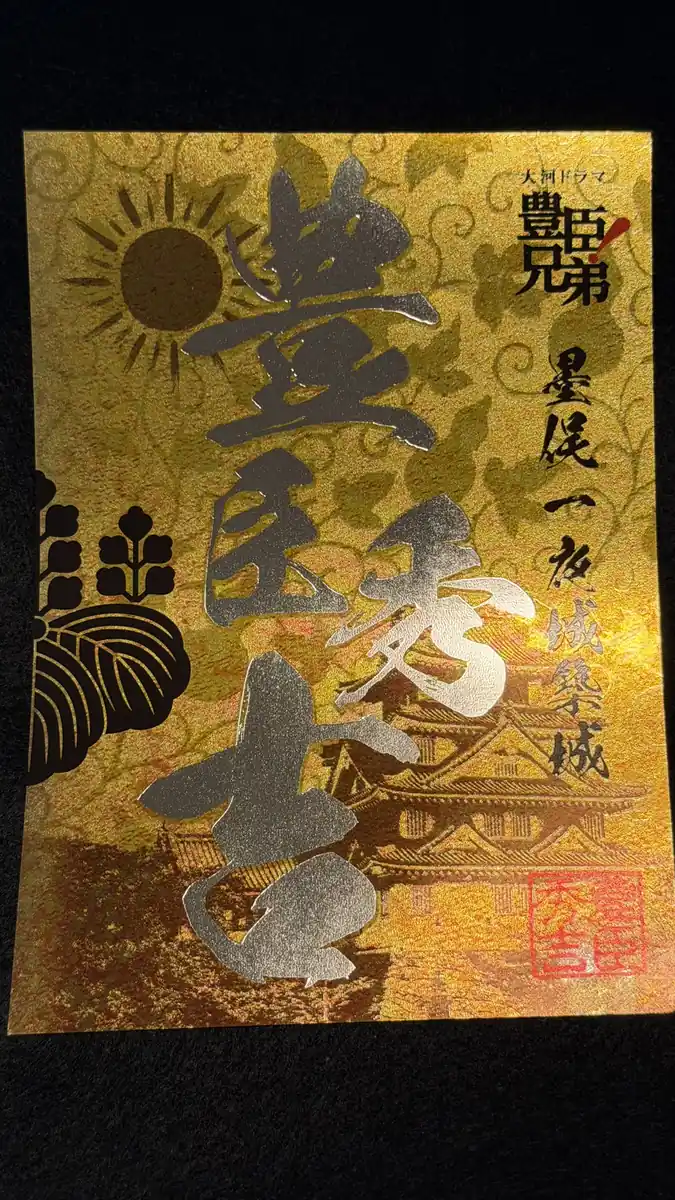
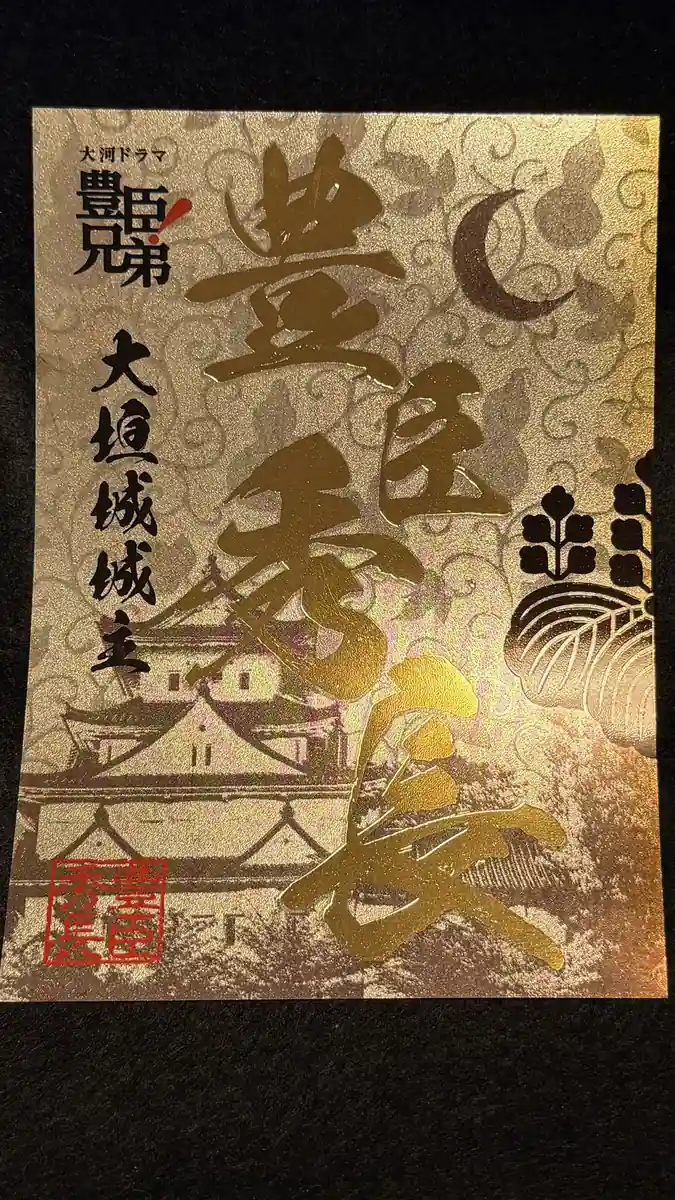
A gojoin is a castle stamp, a printed card collected by castle fans, much like the goshuin that shrines and temples give out. Sunomata’s costs ¥300 at the first-floor reception. In February 2026 there was also a limited design with the “Toyotomi Brothers!” logo. The two cards in the photo, “Toyotomi Hideyoshi” for Sunomata and “Toyotomi Hidenaga” for Ogaki Castle, were bought on site in February 2026.
Designs, sales periods and stock can change. Look in at the reception first when you enter. As noted above, I could not confirm shrine goshuin at Toyokuni or Shirahige Shrine.
Getting there and basic information
Getting there and basic information
| Address | 1742-1 Sunomata, Sunomata-cho, Ogaki, Gifu 503-0102 |
|---|---|
| Bus from Ogaki | From JR Ogaki Station South Exit, platform 2, take a Meihan Kintetsu Bus bound for Gifu Shotoku Gakuen University and get off at “Sunomata.” Then walk 12 minutes |
| Bus from Gifu | From JR Gifu Station (platform 6) or Meitetsu Gifu Station (platform 1), take a Gifu Bus bound for Sunomata to the terminus, “Sunomata.” Then walk 12 minutes. The bus can follow a visit to Gifu Castle |
| By car | About 15 minutes from Anpachi Smart IC, 20 minutes from Gifu-Hashima IC, 30 minutes from Ogaki IC (Meishin Expressway) |
| Parking | Sai-kawa Sakura Park Parking is the lot suggested, and it is generally free. Unlocked at 9:00 a.m. and locked at 6:30 p.m. from April to September, locked at 5:30 p.m. from October to March. It is about an 18-minute walk (1.3 km / 0.8 miles by map app) to the museum. In some years there are traffic restrictions and a contribution fee during the cherry blossom season (late March to early April) |
| Time needed | About 1 hour for the museum and grounds, 1.5 hours with the observation room and shrines |
| Rainy days | The museum is fine in rain. The embankment and paths can be slippery when wet, so wear shoes with grip |
| Maps | The walk from the parking lot is mapped below. The walk from the bus stop is in the accordion in the first spot |
Where to stay near Sunomata
PRThis section contains affiliate links to the booking site Agoda. If you book through them, this site earns a commission. Areas are chosen for location and ease of travel.
Sunomata can be a day trip. If you pair it with Gifu Castle or Ogaki Castle, staying nearby gives you more time. Prices vary a lot by date, so I list areas only.
Closest
Ogaki
Agoda search area: Ogaki
The starting point for the bus to Sunomata, including hotels by the station.
Find stays in Ogaki on AgodaEasy access
Gifu Station
Agoda search area: around Gifu Station
Fits a trip that pairs Gifu Castle with the bus to Sunomata.
Find stays near Gifu Station on AgodaUse as a base
Nagoya Station
Agoda search area: around Nagoya Station
Fits a trip based in Nagoya, with day trips to Sunomata, Gifu and Inuyama.
Find stays near Nagoya Station on AgodaThe links open with default dates and guest numbers. Check dates, price and cancellation terms on the booking page.
FAQ
Sunomata Ichiya Castle is open from 9:00 a.m. to 5:00 p.m., with last entry at 4:30 p.m. Admission is ¥200 for adults and ¥150 per person for groups of 20 or more. Those under 18 and some other groups enter free. This follows Ogaki City’s official information (checked November 2026).
The museum is closed on Mondays (the next day if Monday is a national holiday), the day after a national holiday, and from December 29 to January 3. During the cherry blossom festival (late March to early April) and at full bloom it may open on other days.
From JR Ogaki Station South Exit, platform 2, take a Meihan Kintetsu Bus bound for Gifu Shotoku Gakuen University and get off at “Sunomata.” From JR Gifu Station (platform 6) or Meitetsu Gifu Station (platform 1), take a Gifu Bus bound for Sunomata to the last stop. Both walks take 12 minutes. Timetables change, so check before you go.
Sai-kawa Sakura Park Parking is suggested and is generally free. It is locked at 6:30 p.m. from April to September and 5:30 p.m. from October to March. In some years there are traffic restrictions and a contribution fee during the cherry blossom season. The walk to the museum takes about 18 minutes.
About 1 hour for the museum and the park. With the observation room and the shrines, 1.5 hours. Allow more time in cherry blossom season.
Some exhibits cannot be photographed, and flash, video and tripods are restricted. Commercial use needs permission. Check the notice after you enter.
At the first-floor reception, for ¥300. In February 2026 a limited design for “Toyotomi Brothers!” was also on sale. Designs and stock can change.
I could not confirm that goshuin were available at Toyokuni Shrine or Shirahige Shrine in February 2026. Please check the notices on site.
No. It is a keep-style museum that opened in April 1991. The exhibits show a fort with fences and ditches, which looks different from the white keep.
The one-night story is a tradition. It appears in the Taikoki, an Edo-period war chronicle, and the museum presents it through accounts such as the Maeno family documents. The details vary between tellings, so this guide treats it as a tradition and not as a confirmed record.
Related guides
☕ Support This Site
Following the Shogun is built on original fieldwork and on-site research.
If you found this guide useful, your support helps keep it going.

You can also support via QR code


comment