


Step into the World of the Taiga Drama “Toyotomi Brothers!” | Two Free Exhibitions in Kinomoto [Battle of Shizugatake]
- Two Free Exhibition Spots in Kinomoto for Understanding Shizugatake
- Recommended Route: A 30-Minute Kinomoto Primer
- 1. Toyotomi Great Return Station (2nd Floor, JR Kinomoto Station)
- 2. Kohoku Library Special Exhibition “The Battle of Shizugatake” [Until May 31]
- What You Can Learn from These Two Sites Before Walking the Battlefield
- Related Spots in the Kinomoto Area
- Frequently Asked Questions
- Related Website Links
Two Free Exhibition Spots in Kinomoto for Understanding Shizugatake
There are two places in Kinomoto where you can encounter the Battle of Shizugatake: Toyotomi Great Return Station on the second-floor free passage of JR Kinomoto Station, and Kohoku Library’s special exhibition, “The Battle of Shizugatake,” just a five-minute walk from the station. Both are free to enter. In just 30 to 40 minutes across the two sites, you can grasp the full picture of the battle, from a battlefield diorama and old maps to the mystery of the Seven Spears of Shizugatake.
The Battle of Shizugatake is expected to appear in the taiga drama “Toyotomi Brothers!”—the scene of Hideyoshi’s “Great Return from Mino,” when he rushed 52 kilometers back from Ogaki, and Hidenaga’s decision to wait on Tagamiyama, trusting that his elder brother would return. The stage for that story is here in Kinomoto. Use this route as a primer before walking the battlefield, or stop by on your way back to the station.
Recommended Route: A 30-Minute Kinomoto Primer
1. Toyotomi Great Return Station (2nd Floor, JR Kinomoto Station)
Toyotomi Great Return Station
An in-station primer that gives you a bird’s-eye view of every phase of the Battle of Shizugatake
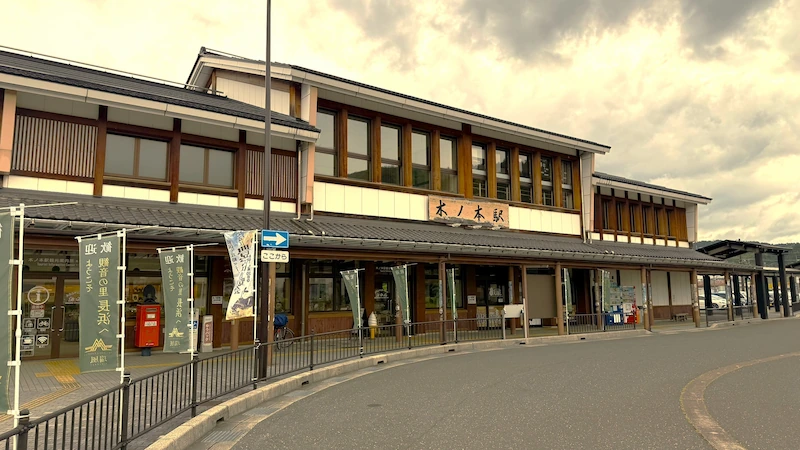
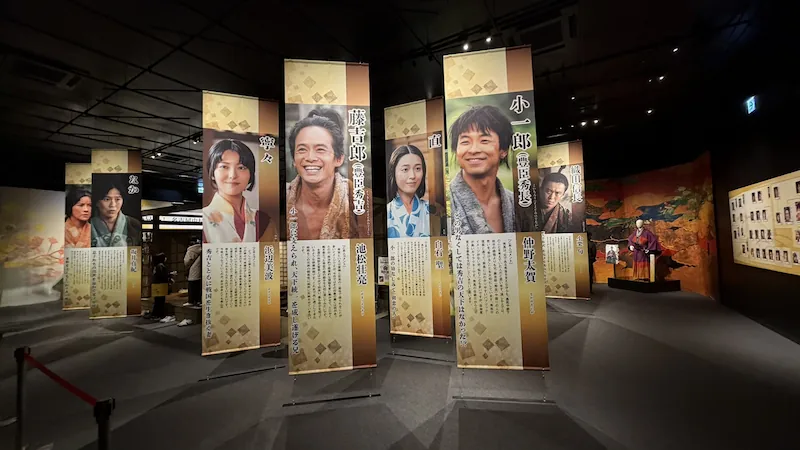
The “Great Return” refers to the “Great Return from Mino,” when Hashiba Hideyoshi raced 52 kilometers from Ogaki Castle in five hours in 1583 (Tensho 11). This rapid march was one of the key factors that dramatically shifted the course of the Battle of Shizugatake. An exhibition that organizes every phase of the battle by fort is located on the second-floor free passage of JR Kinomoto Station. Because the ticket gates are on the second floor, you can step off the train and head straight into the concourse. As soon as you enter, the large faces of warlords greet you.
Exhibition Highlights: The Diorama and Fort-by-Fort Panels
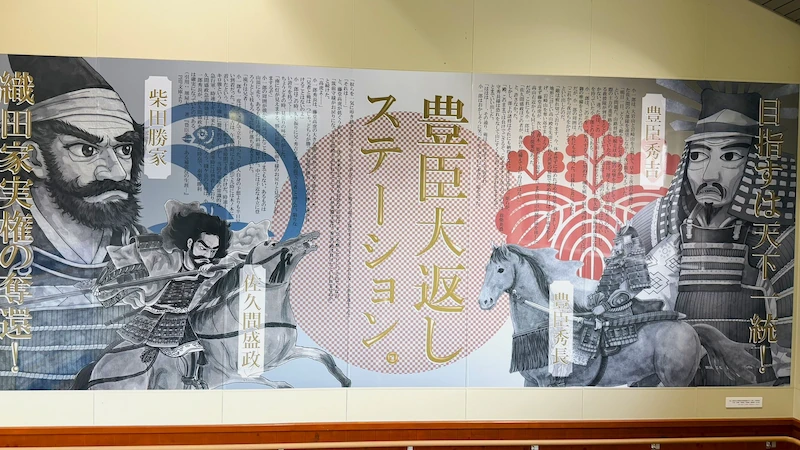
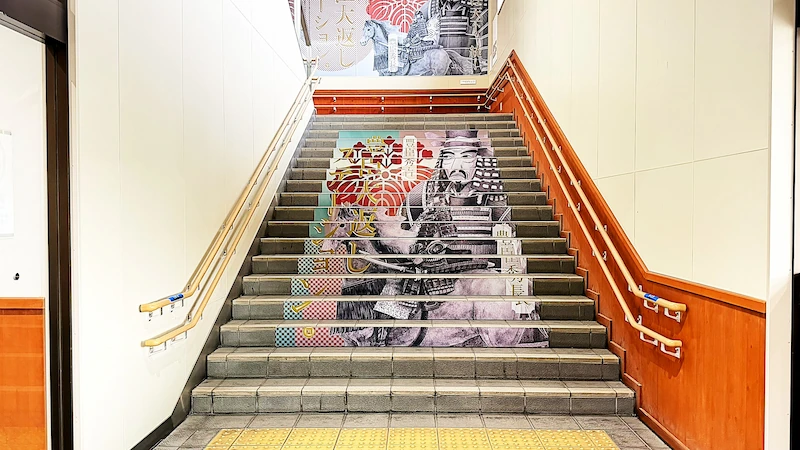
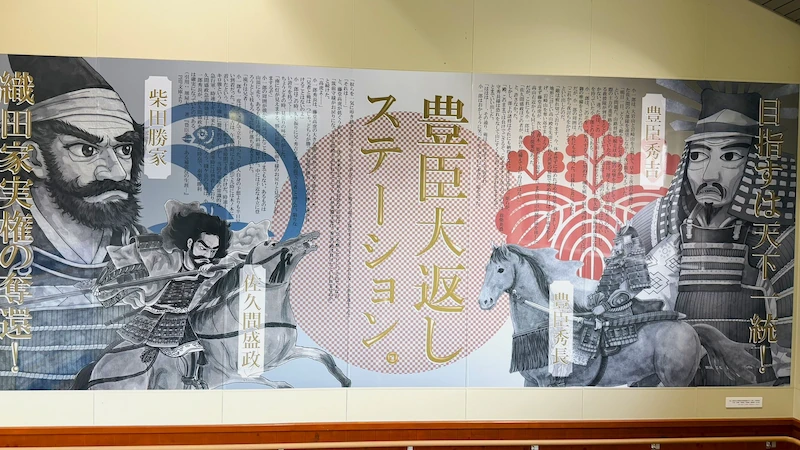
As you enter the second-floor concourse, the first thing that catches your eye is a large wall panel. It shows four warlords—Shibata Katsuie, Sakuma Morimasa, Hashiba Hideyoshi, and Hashiba Hidenaga—facing one another, with the phrase “Aiming for the unification of the realm!” displayed above them. In a single image, it conveys that the Battle of Shizugatake was the battle in which the brothers Hideyoshi and Hidenaga opened the path toward national unification.
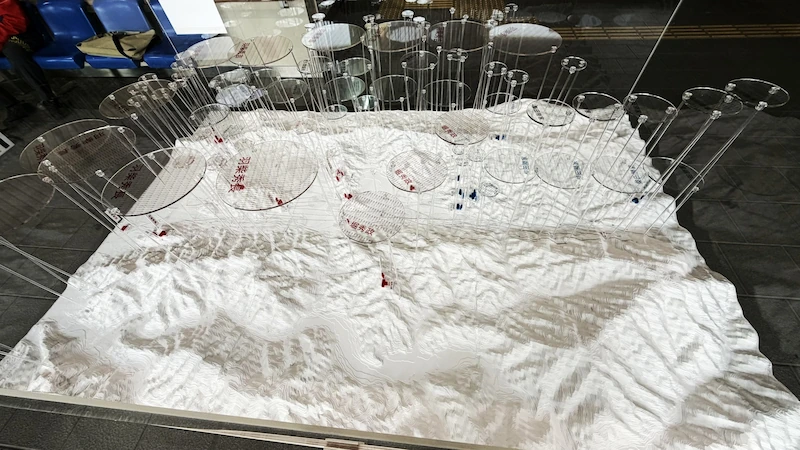
The heart of the exhibition is a set of wall panels explaining individual forts and phases of the battle, along with a three-dimensional terrain diorama made from acrylic. The diorama recreates the mountain ridges around Shizugatake in impressive detail, making the relationship between each fort—from Higashinoyama Fort to Tagamiyama—clear at a glance. When seen in three dimensions, the geographical inevitability of why this place became a battlefield makes sense in a way that is difficult to grasp from a flat map alone.
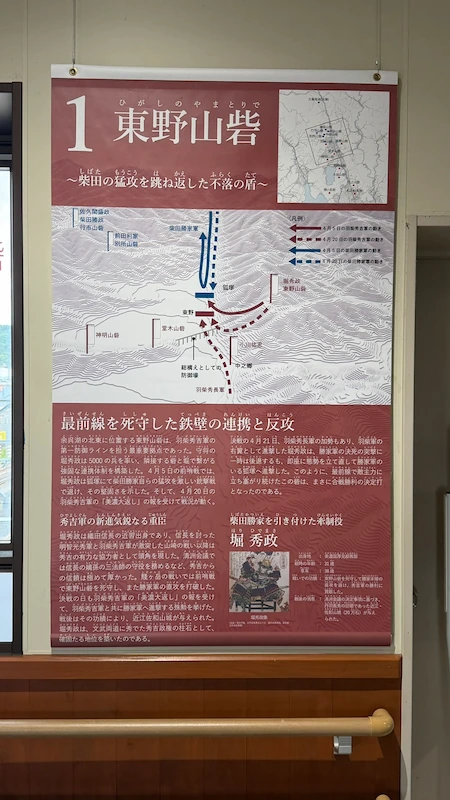
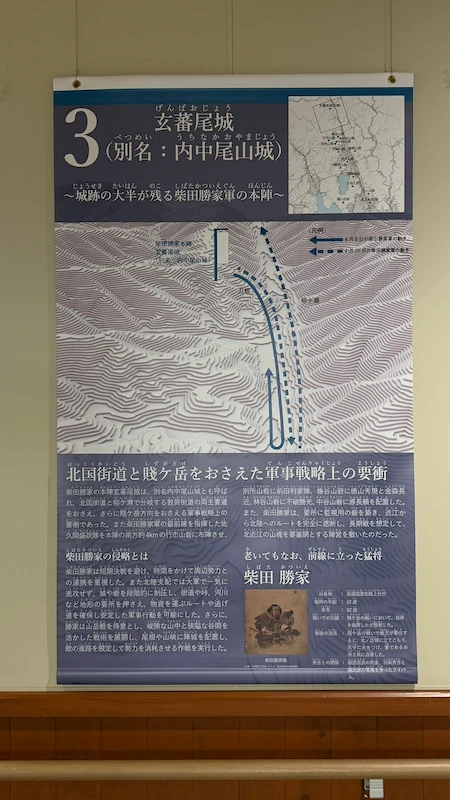
Each exhibition panel stands on its own, explaining the role of a specific fort, such as Higashinoyama Fort, defended by Hori Hidemasa, and Genbao Castle, Shibata’s headquarters. The text is fairly detailed, so rather than trying to read everything on-site, it is best to photograph the panels that interest you and read them again later.
There are eight panels in total.
1. Higashinoyama Fort, 2. Nakanogo, 3. Genbao Castle, 4. Gyoichiyama Fort and Besshoyama Fort, 5. Tenjinyama, Shinmeiyama, and Dokiyama Forts, 6. Lake Yogo, 7. Iwasakiyama Fort, 8. Oiwayama Fort
Shizugatake Beyond the Windows: An Exhibition Unique to This Location
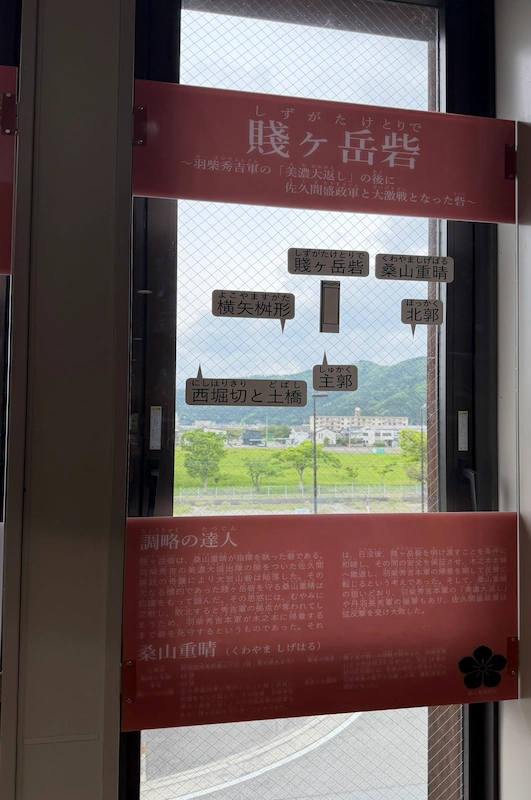
The second-floor concourse also includes display panels that make use of the station windows. Through the glass you can see the actual direction of Shizugatake, while explanatory labels marking the positions of the forts are overlaid on the windowpanes. Reading a battle map while looking through the glass at the real mountain ridges beyond it—this panel has a slightly different charm from the others.
Shizugatake, Where Hidenaga Waited: A Scene to Watch for in the Taiga Drama
Estimated time required: about 15 minutes
Visitor Information: Toyotomi Great Return Station
| Location | JR Kinomoto Station free passage / around the Kohoku Library parking area (main exhibition: second-floor free passage of JR Kinomoto Station) |
|---|---|
| Hours | 10:00 a.m.–4:00 p.m. (subject to change; please check official information before visiting) |
| Admission | Free |
| Exhibition Period | Until December 20, 2026 (same period as the Kita-Omi Toyotomi Expo) |
| Access | Immediately after getting off at Kinomoto Station on the JR Hokuriku Main Line (inside the station, second floor) |
▼ Battle Background: What Was the Battle of Shizugatake?
In April 1583 (Tensho 11), Hashiba Hideyoshi and Shibata Katsuie clashed in Ika District, Omi Province—today’s northern Nagahama City. It was the battle in which the power struggle over Oda Nobunaga’s succession reached its peak after Nobunaga fell in the Honnoji Incident the previous year. Hideyoshi launched the “Great Return from Mino,” racing 52 kilometers from Ogaki Castle in five hours, and struck Sakuma Morimasa’s overextended forces. This rapid mobility, together with the judgment of Hideyoshi’s younger brother Hidenaga, who kept waiting on Tagamiyama in the belief that Hideyoshi would return, strongly influenced the outcome. After his victory, Hideyoshi’s path toward national unification accelerated dramatically.2. Kohoku Library Special Exhibition “The Battle of Shizugatake” [Until May 31]
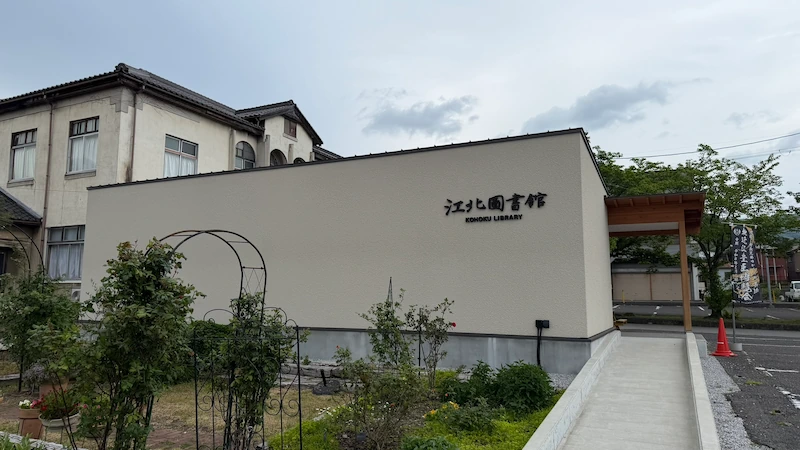
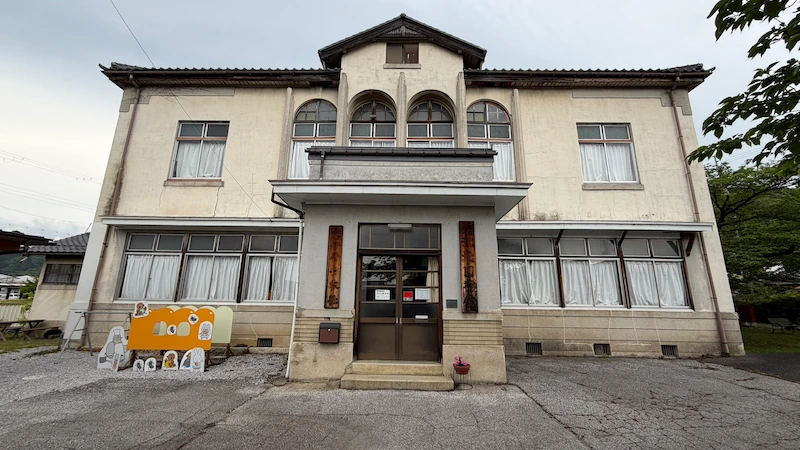
Kohoku Library Special Exhibition “The Battle of Shizugatake”
A Meiji-era library with creaking wooden floors, where records of the old battlefield still breathe
Closed on Tuesdays and Wednesdays. However, it will be open from April 29 to May 6 during Golden Week.
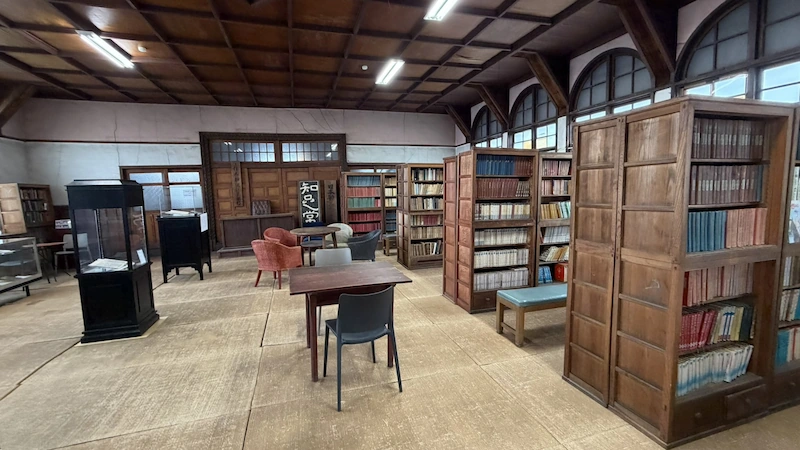
It takes less than five minutes to walk here from the station. Before you, a white-walled building with rows of semicircular arched windows appears. This is Kohoku Library—a private library founded in 1906 (Meiji 39), with its roots in the Sugino Bunko collection established in 1902 (Meiji 35). As the oldest existing library in Shiga Prefecture, it continues to operate in Kinomoto today. The current two-story wooden building was completed in 1937 (Showa 12). To coincide with this year’s taiga drama, the library is hosting a special exhibition that interprets “The Battle of Shizugatake” through local materials from its collection.
The Building Itself Is an Exhibit: A Historic Wooden Library Rooted in Sugino Bunko
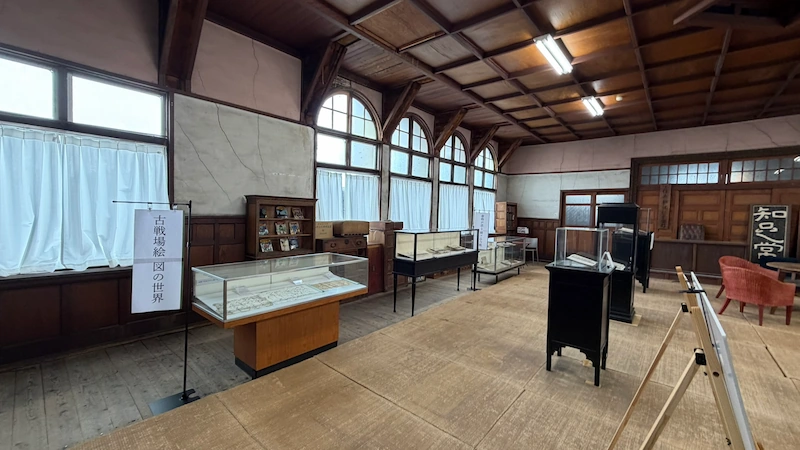
Once inside, the atmosphere of the building itself is the first thing that overwhelms you. This wooden structure was completed in 1937 (Showa 12), and the floorboards creak beneath your feet as you walk down the wooden corridors. Sunlight pours in through large semicircular arched windows, and old bookshelves line the rooms. The wooden ceiling, fading walls, and brown floors create a space that feels like a scene from an old film. You may have come for the exhibition, but you will likely find yourself pausing to take in the building itself.
Old Battlefield Maps and the Mystery of the Seven Spears: What Only a Library Can Reveal
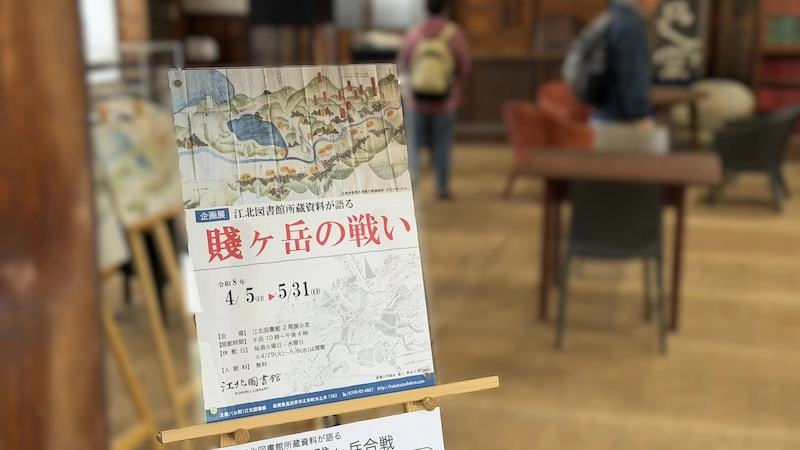
The special exhibition focuses mainly on local materials preserved in the former Ika District, now part of Nagahama City. Its presentation is distinctive: rather than simply retelling the battle, it traces how the Battle of Shizugatake has been narrated across different eras. Edo-period battlefield maps, war tales, district records, Meiji-era textbooks—the same battle appears in different forms depending on the period, revealing the changing ways it has been remembered.
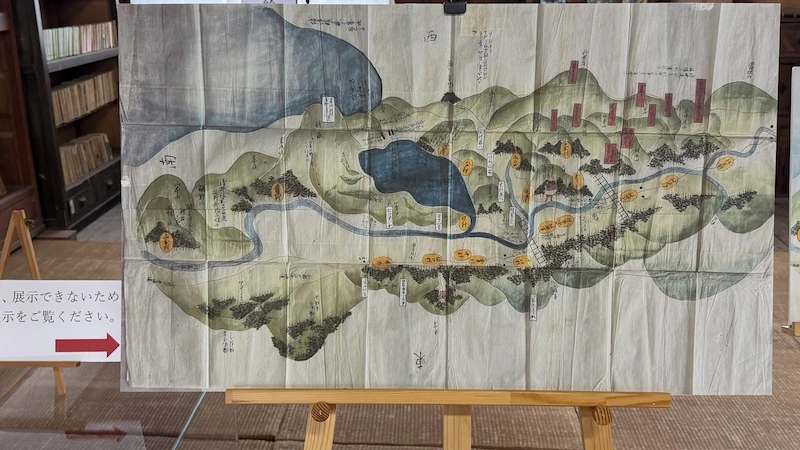
The exhibit that drew my eye most was the “Map of the Formations at the Shizugatake Battlefield in Ika District, Goshu,” created in 1813 and displayed in a large format on an easel. The positions of the Hashiba and Shibata forces are color-coded, and the lettering for the Shibata side is written larger than that of the Hashiba side. Because the map was produced on the Echizen side, it preserves the perspective of “the defeated side.” Reading that explanation reminded me that documents always change depending on who created them.
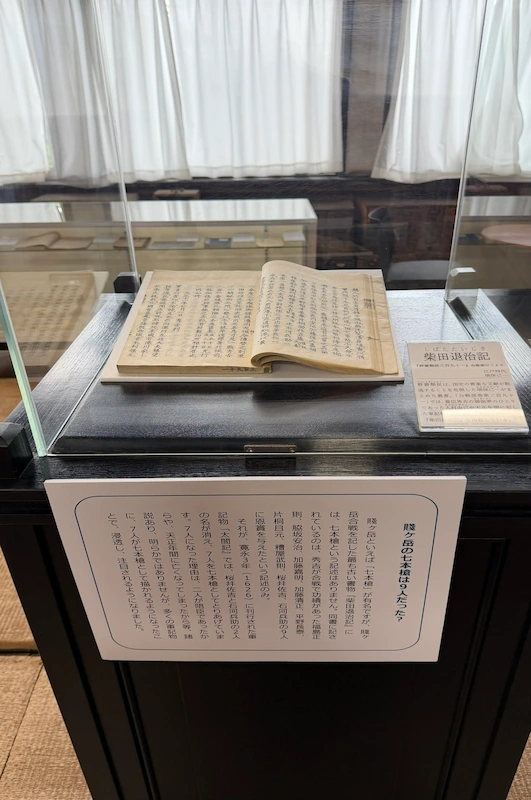
The copy of Shibata Taijiki displayed in the exhibition case is also not to be missed. The reason I stopped in front of this case was the title of the explanatory panel beside it: “Were there nine Seven Spears?” The Seven Spears of Shizugatake are well known as seven warriors, including Kato Kiyomasa and Fukushima Masanori. Yet some war tales record nine men as having received rewards. Here, through the library’s materials, you can follow the process by which the story was later remembered as “seven.” Behind the changing number lies a tug-of-war between record and narrative.
Estimated time required: about 15 to 20 minutes (30 minutes or more if you read carefully)
Visitor Information: Kohoku Library
| Location | Kohoku Library (1362 Kinomoto, Kinomoto-cho, Nagahama City) |
|---|---|
| Hours | 10:00 a.m.–4:00 p.m. |
| Closed | Tuesdays and Wednesdays (open from April 29 to May 6) |
| Admission | The special exhibition is free |
| Exhibition Period | April 5 to Sunday, May 31, 2026 |
| Phone | 0749-82-4867 |
| Access | About a five-minute walk from the east exit of JR Kinomoto Station |
▼ About Kohoku Library: A Local Center of Knowledge Since the Meiji Era
Kohoku Library traces its origins to Sugino Bunko, a collection opened in 1902 (Meiji 35) by Sugino Fumiya, a lawyer from Yogo Village, and was established as a private library in 1906 (Meiji 39). Sugino, who had relied on libraries while studying through hardship in Tokyo, is said to have donated his book collection because he wanted people in his hometown to have access to books as well. Supported by the local community, the library continues to operate today as the oldest existing library in Shiga Prefecture. The current building is a two-story wooden structure completed in 1937 (Showa 12). In recent years, the library raised repair funds through crowdfunding and also opened a new annex, “Lib+.” Its collection numbers about 50,000 volumes, including books from the Meiji through Showa periods and local materials from the Edo period.What You Can Learn from These Two Sites Before Walking the Battlefield
At Toyotomi Great Return Station, you can grasp the terrain of the battle and its major phases. At Kohoku Library, you can encounter the mystery of the Seven Spears through local materials. Neither is a large-scale exhibition. Even so, those 30 to 40 minutes will make walking the battlefield far richer. A set of primer panels placed directly along the station flow, and a small document exhibition in an old library where the wooden floors creak—the Battle of Shizugatake remains not only on the battlefield, but quietly here in front of Kinomoto Station as well.
Related Spots in the Kinomoto Area
Frequently Asked Questions
Related Website Links


comment