


Fujimi-yagura Turret and the 47 Ronin Incident Site: Edo Castle Area Guide
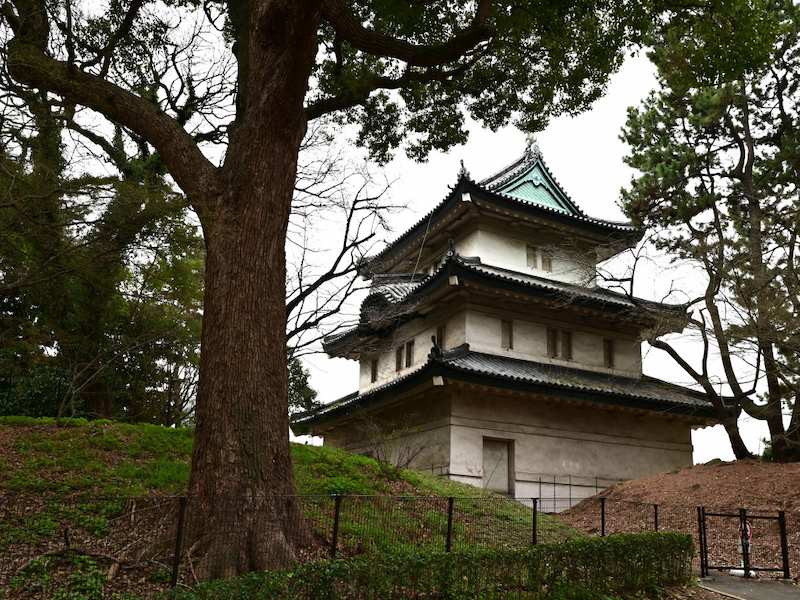
After passing through the Otemon Gate Area, you enter the Fujimi-yagura Turret Area, which leads toward the core of Edo Castle. Highlights include Fujimi-yagura Turret, the only surviving three-tier, three-story structure in Edo Castle, and the Matsu-no-Oroka Corridor Site, the scene of the 1701 sword-drawing incident that set in motion the story of the Forty-seven Ronin.
- ① Otemon Gate Area
- ② Fujimi-yagura Turret Area (This Page)
- ③ Honmaru Area
- ④ Ninomaru Area
- ⑤ Outer Grounds
- ▶ Back to the Complete Guide
After passing through the Otemon Gate Area, you enter the Fujimi-yagura Turret Area, which leads toward the core of Edo Castle. The route gradually crosses a sequence of defensive lines—the Nakanomon Gate Site, Obansho Guardhouse, and Chujakumon Gate Site—allowing visitors to experience the layered security system of Edo Castle.
This area has two essential highlights. The first is Fujimi-yagura Turret, the only surviving three-tier, three-story structure in Edo Castle, which functioned as a symbolic substitute for the main keep after the keep was lost to fire. The second is the Matsu-no-Oroka Corridor Site, the scene where Asano Takumi-no-kami struck Kira Kozuke-no-suke in 1701, setting in motion the story later known as Chushingura—the tale of the Forty-seven Ronin.
Opening Hours
Hours vary by season. Last entry is 30 minutes before closing.
Closed Days
Mondays and Fridays, December 28 to January 3, and days affected by events or official functions. Schedules may change due to national holidays and other circumstances.
Suggested Time
Quick visit: about 40 to 60 minutes / In-depth visit: about 1.5 to 2 hours
Admission
All sites are free to visit.
Access from the Previous Area
About 1 to 2 minutes on foot from the Otemon Gate Area (Hyakunin Guardhouse)
Next Area
The Honmaru Area is immediately beyond the Matsu-no-Oroka Corridor Site.
Fujimi-yagura Turret Area
Following the route from the Hyakunin Guardhouse brings you through a series of defensive lines toward the Honmaru: the Nakanomon Gate Site, Obansho Guardhouse, and Chujakumon Gate Site. From there, the path continues to Fujimi-yagura Turret and the Matsu-no-Oroka Corridor Site—an area where the authority of the Tokugawa shogunate and the memory of one of Japan’s most famous historical incidents are concentrated.
Nakanomon Gate Site
A major entrance to the Honmaru—the stone walls alone still speak of Edo Castle’s inner checkpoint
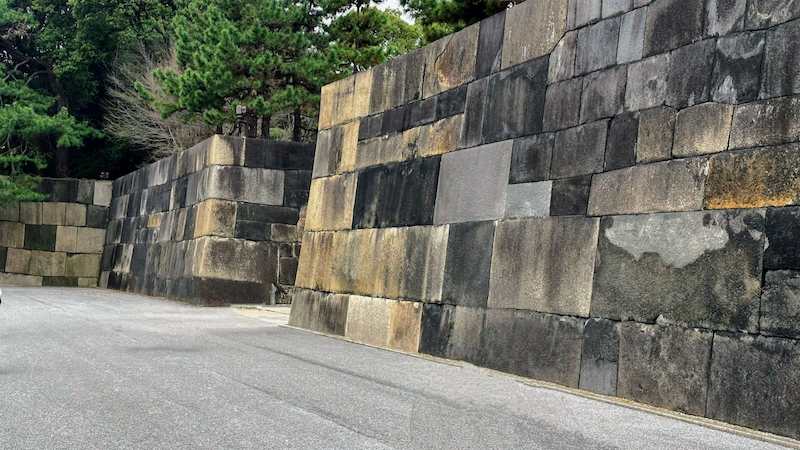
The Nakanomon Gate Site is the remnant of a gate that once functioned as a major entrance to the Honmaru of Edo Castle. Throughout the Edo period, this gate was used when the shogun and daimyo entered the inner castle, and because of its importance, it was closely guarded. Today only the stone walls remain, but they still allow visitors to imagine the grandeur of the original structure.
The stone walls preserve traces of repair periods and the daimyo involved in construction. By looking closely, you can read the history of Edo Castle construction in the details. Because the site lies along the route from the Hyakunin Guardhouse, it is an excellent place to experience the changing layers of the castle’s security line in sequence.
Detailed Historic Site Data
| Year Built | Unknown |
|---|---|
| Builder | Unknown |
| Structure and Features | Gate site where only the stone walls survive. |
| Renovation and Restoration | Unknown |
| Current Condition | The stone walls survive. The upper gate structure has been lost. |
| Cultural Property Designation | This remnant is included within the Special Historic Site “Edo Castle Ruins.” Check official information for any individual structure designation. |
Highlights
- Stone-Wall Techniques: The stone walls at the Nakanomon Gate Site preserve the advanced stone-setting techniques of the Edo period. Compare the size and arrangement of the stones with the walls near the Hyakunin Guardhouse to notice the differences.
- Continuity of the Defensive Line: The route from Hyakunin Guardhouse to Nakanomon Gate Site, Obansho Guardhouse, and Chujakumon Gate Site reveals a multi-layered security structure.
- Traces of Stone-Wall Repair: The Nakanomon stone walls were dismantled and repaired between 2005 and 2007. At the site, pay attention to the way the massive stones are stacked and the precision of their finishing to feel the scale of Edo Castle construction.
Trivia
- A Key Defensive Point: Nakanomon was the third defensive line after Otemon Gate and the Hyakunin Guardhouse. The Honmaru could not be reached without passing through this point, making it part of the layered system protecting the shogun.
| Address | 1-1 Chiyoda, Chiyoda City, Tokyo |
|---|---|
| From Hyakunin Guardhouse | About 1 minute on foot (approx. 50 m) |
| Suggested Time | Quick visit: about 5 minutes / In-depth visit: about 15 minutes |
| Admission | Free |
Open the map to see the relationship between the Hyakunin Guardhouse and the Nakanomon Gate Site.
Obansho Guardhouse
The final checkpoint before the Honmaru—a guardhouse with shooting steps defended by yoriki and doshin
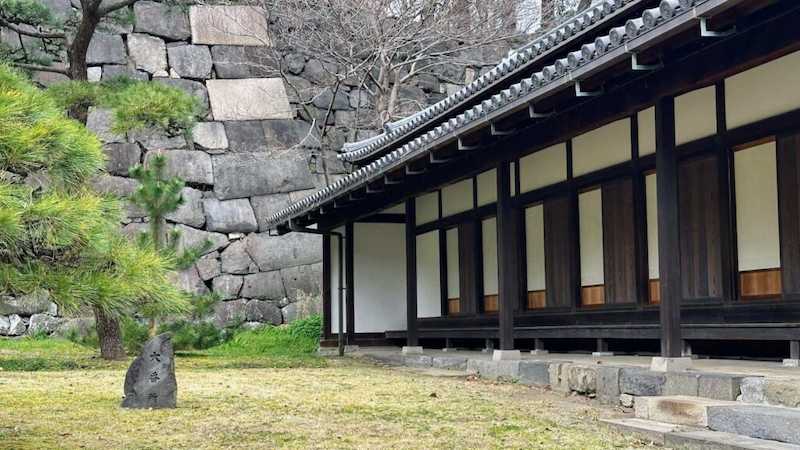
Located inside Ote Nakanomon, the Obansho Guardhouse served as the final checkpoint before the Honmaru. Among the three guardhouses—the Doshin Guardhouse, Hyakunin Guardhouse, and Obansho Guardhouse—it held the highest status, and higher-ranking guards such as yoriki and doshin are said to have been stationed here.
The present building was restored to its Edo-period form in 1968 when the Imperial Palace East Gardens opened to the public. Behind the building are 15 stone steps described as shooting steps, showing that the Obansho was not merely a guard station but also a defensive facility protecting the Honmaru.
Detailed Historic Site Data
| Year Built | Unknown |
|---|---|
| Builder | Unknown |
| Structure and Features | Restored guardhouse building. Fifteen shooting stone steps survive behind the building. |
| Renovation and Restoration | Restored to its Edo-period form in 1968 when the Imperial Palace East Gardens opened. |
| Current Condition | The restored building survives. Fifteen stone steps used for shooting remain behind the building. |
| Cultural Property Designation | This remnant is included within the Special Historic Site “Edo Castle Ruins.” Check official information for any individual structure designation. |
Highlights
- Shooting Stone Steps (15 Steps): Behind the building are 15 stone steps described as having been used for shooting. They are easy to miss from the front, so walk around the area to locate them and better understand how the Obansho functioned as a defensive facility.
- Hierarchy of the Guardhouses: Comparing the three guardhouses—Doshin Guardhouse, Hyakunin Guardhouse, and Obansho Guardhouse—reveals differences in scale and rank. The Obansho stood closest to the Honmaru and had the highest status.
Trivia
- The Rank of Yoriki and Doshin: The Obansho was staffed not only by doshin but also by yoriki. Yoriki were higher-ranking officials than doshin, showing that a more prestigious guard force was assigned to this final checkpoint before the Honmaru.
- Purpose of the Shooting Stone Steps: The stepped structure behind the guardhouse suggests a design conscious of defending against intruders. Paying attention not only to the front of the building but also to the stone steps behind it makes the visit much more revealing.
| Address | 1-1 Chiyoda, Chiyoda City, Tokyo |
|---|---|
| From Nakanomon Gate Site | About 1 minute on foot (approx. 12 m) |
| Suggested Time | Quick visit: about 5 minutes / In-depth visit: about 15 minutes |
| Admission | Free |
Open the map to see the relationship between the Nakanomon Gate Site and Obansho Guardhouse.
Chujakumon Gate Site
The final gate to the Honmaru Palace—fire-scarred stone walls and two guardian zelkova trees
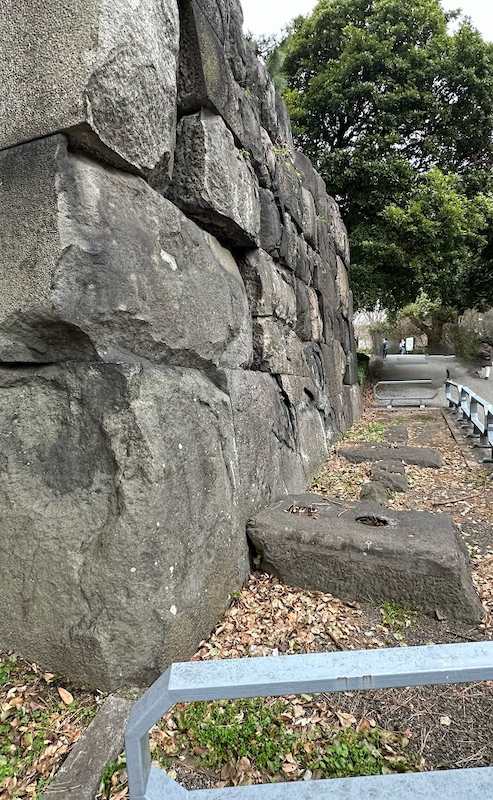
Chujakumon Gate was the main gate of Edo Castle’s Honmaru and the final checkpoint leading to the shogun’s residence, the Honmaru Palace. It was the last passage point for daimyo coming to the castle, and even the Tokugawa Gosanke—the three highest-ranking branch houses of Owari, Kii, and Mito—are said to have been required to dismount before this gate.
The gate burned down together with the Honmaru Palace in the fire of 1863 (Bunkyu 3), and only the stone walls remain today. The surfaces of the stone walls, discolored and damaged by the heat of the fire, still preserve traces of the blaze that raged more than 160 years ago. The two zelkova trees standing like gateposts mark the position of the former front entrance to the palace.
Detailed Historic Site Data
| Year Built | Unknown |
|---|---|
| Builder | Unknown |
| Structure and Features | Stone walls and two zelkova trees remain. The gate was destroyed by fire in 1863. |
| Current Condition | Stone walls survive, with discoloration and surface damage caused by fire. |
| Loss and Damage | Destroyed by fire in 1863 (Bunkyu 3) |
| Cultural Property Designation | This remnant is included within the Special Historic Site “Edo Castle Ruins.” Check official information for any individual structure designation. |
Highlights
- Stone Walls with Traces of Fire: The stone walls discolored and degraded by the heat of the 1863 fire remain as visible traces of history. Be sure to look for the discolored sections in person.
- Two Zelkova Trees: The two zelkova trees standing like gateposts serve as landmarks marking the former location of the palace’s front entrance.
- Seasonal Color: In spring, cherry blossoms brighten the area; in autumn, the stone walls are framed by fall foliage.
Trivia
- Fire-Scarred Stone Walls: The stone walls at the Chujakumon Gate Site are described as preserving traces of heat from the 1863 fire. Look closely at the discoloration and surface damage to imagine the intensity of the blaze that destroyed the Honmaru Palace.
- Even the Gosanke Had to Dismount Here: Even the Owari, Kii, and Mito houses—the highest-ranking Tokugawa branch families—were required to leave their palanquins before this gate. The shogun’s authority was expressed in the structure of the space itself.
- A Gate Leading to the Shogun’s Residence: Chujakumon was an important gate leading to the formal entrance of the Honmaru Palace and the final checkpoint on the daimyo’s route into the castle. It is a place where the status of the shogun’s residence can be felt through spatial design.
| Address | 1-1 Chiyoda, Chiyoda City, Tokyo |
|---|---|
| From Obansho Guardhouse | About 2 minutes on foot (approx. 100 m) |
| Suggested Time | Quick visit: about 5 minutes / In-depth visit: about 10 minutes |
| Admission | Free |
Open the map to see the relationship between Obansho Guardhouse and the Chujakumon Gate Site.
Fujimi-yagura Turret 360°
The symbol of Edo Castle after the keep was lost—a surviving three-tier, three-story structure where white walls and black tiles stand in striking contrast
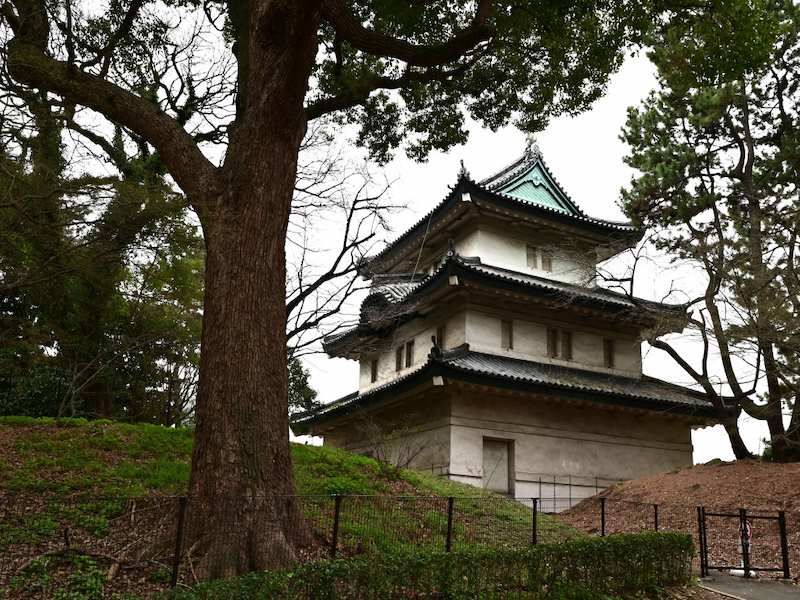
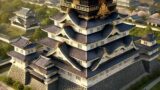
Fujimi-yagura Turret is a three-tier, three-story turret standing at the southern edge of Edo Castle’s Honmaru and is the only surviving turret at Edo Castle with a three-tier roof. In the Great Fire of Meireki in 1657, both the main keep and Fujimi-yagura were destroyed, and Fujimi-yagura was rebuilt in Manji 2 (1659). After the main keep was never reconstructed, the turret came to serve as a symbolic substitute for it. It is also said that shoguns viewed Mount Fuji, the sea at Shinagawa, and fireworks at Ryogoku from here.
The contrast between its white walls and black roof tiles is beautiful, and it is known for its “happo-shomen” design, meaning it appears to have a formal front from every direction. It is said that Mount Fuji could once be seen from this turret, giving the structure its name.
Detailed Historic Site Data
| Construction and Rebuilding | Rebuilt in Manji 2 (1659). It is considered a reconstruction of the turret originally built around Keicho 11 (1606), which burned down in the Great Fire of Meireki in 1657. |
|---|---|
| Structure and Features | A three-story wooden structure, about 16 meters high. It is the only surviving turret at Edo Castle with a three-tier roof. |
| Repairs and Restoration | Damaged in the Great Kanto Earthquake of 1923 and restored in 1925. Exterior walls and other elements were repaired in 1967. |
| Current Condition | Survives today as the only remaining three-tier, three-story building at Edo Castle. |
| Cultural Property Designation | This remnant is included within the Special Historic Site “Edo Castle Ruins.” Check official information for any individual structure designation. |
Highlights
- Happo-shomen Design: The turret was designed so that it appears the same from all four directions, creating the impression of a front on every side. Walk around it and enjoy how its expression changes with the angle.
- Beauty of White Walls and Black Tiles: The contrast between white plaster walls and black roof tiles stands out especially against blue skies and during the cherry-blossom season.
- Height of the Stone Base: The stone base supporting the turret is another highlight. The masonry conveys the high level of Edo-period castle-building techniques.
- Historical Meaning as a Substitute for the Main Keep: Knowing that it served as a substitute for the main keep after the keep burned down gives the building a weight beyond its appearance.
Trivia
- Why the Main Keep Was Not Rebuilt: After the Great Fire of Meireki, the shogunate did not rebuild the main keep because of financial strain and because it prioritized the reconstruction of the castle town over the keep. From then on, Fujimi-yagura effectively served as the symbolic substitute for the main keep.
- Mount Fuji Cannot Be Seen Today: Because of surrounding high-rise buildings, it is now difficult to see Mount Fuji from here. The contrast between the Edo-period view and today’s cityscape is part of the site’s appeal.
- Materials Used in the 1925 Restoration: When the turret was restored after damage from the Great Kanto Earthquake, original materials were reused as much as possible. The building seen today reflects that restoration.
| Address | 1-1 Chiyoda, Chiyoda City, Tokyo |
|---|---|
| From Chujakumon Gate Site | About 3 minutes on foot (approx. 100 m) |
| Suggested Time | Quick visit: about 10 minutes / In-depth visit: about 20 minutes |
| Admission | Free (interior not open to the public) |
Open the map to see the relationship between the Chujakumon Gate Site and Fujimi-yagura Turret.
Matsu-no-Oroka Corridor Site 360°
The scene of the sword-drawing incident that began Chushingura—a stone marker alone tells the story of a 50-meter corridor
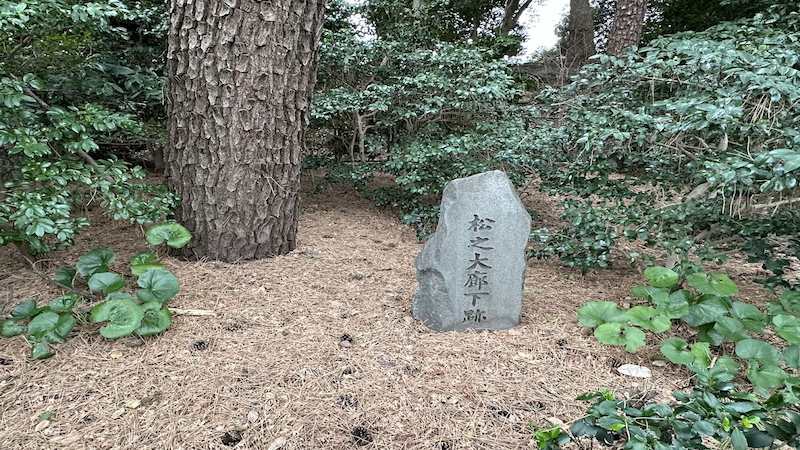
Matsu-no-Oroka was a tatami-covered corridor inside Edo Castle’s Honmaru Palace, measuring about 50 meters in length and about 5 meters in width. It took its name from the sliding-door paintings of pine trees and plovers that decorated the corridor.
This site is known as the stage of the Matsu-no-Oroka sword-drawing incident, where Asano Takumi-no-kami Naganori, lord of the Ako Domain, attacked Kira Kozuke-no-suke Yoshinaka, a senior official in charge of court protocol, on March 14, 1701. The incident led to the later raid by the Ako ronin, the story now widely known in the West as the tale of the Forty-seven Ronin, or Chushingura. Today no building remains and only a stone marker stands on the site, but standing in the place where one of the most famous incidents in Japanese history unfolded is a powerful experience.
Detailed Historic Site Data
| Year of the Incident | March 14, 1701 (Genroku 14) |
|---|---|
| Outline of the Incident | A sword-drawing incident in which Asano Takumi-no-kami attacked Kira Kozuke-no-suke (the Matsu-no-Oroka sword-drawing incident) |
| Scale of the Corridor | Approximately 50 meters long (19 m westward and 31 m northward), about 5 meters wide, and covered with tatami mats |
| Interior Features | The sliding doors were painted with pine trees and plovers. |
| Current Condition | No building remains. A stone marker stands on the site. |
| Loss and Damage | Destroyed together with the Honmaru Palace in the fire of 1863 (Bunkyu 3) |
Highlights
- Stone Marker at the Matsu-no-Oroka Corridor Site: A marker identifies the location of the corridor where the sword-drawing incident occurred. Although the building no longer exists, standing here makes the historical setting feel real.
- The Vastness of the Former Honmaru: The marker stands within a broad lawn area. Walk while imagining the Honmaru Palace buildings that once filled this space to grasp their scale.
- A Sacred Site for Chushingura Enthusiasts: This is the place where the story of Chushingura, retold in kabuki, film, and television drama, began. Knowing the story transforms the experience of what might otherwise look like a simple marker.
Trivia
- The Gravity of Drawing a Sword Inside the Castle: Drawing a blade inside Edo Castle was a grave taboo, and Asano Takumi-no-kami was ordered to commit seppuku the same day. Kira Kozuke-no-suke, however, received no punishment, and the controversy surrounding that decision eventually led to the raid by the Ako ronin.
- Origin of the Corridor’s Name: “Matsu-no-Oroka” means the Great Pine Corridor, named for the sliding-door paintings of pine trees and plovers. It is a rare example of a corridor named after its interior decoration.
- Cultural Impact of Chushingura: The story of Asano, Kira, and the Ako ronin has become deeply rooted in Japanese culture through kabuki, joruri puppet theater, film, and television drama. It remains one of the best-known historical episodes in Japan.
| Address | 1-1 Chiyoda, Chiyoda City, Tokyo |
|---|---|
| From Fujimi-yagura Turret | About 3 minutes on foot (approx. 100 m) |
| Suggested Time | Quick visit: about 5 minutes / In-depth visit: about 10 minutes |
| Admission | Free |
Open the map to see the relationship between Fujimi-yagura Turret and the Matsu-no-Oroka Corridor Site.
Frequently Asked Questions
Fujimi-yagura Turret can be viewed from the exterior only. The interior is not normally open to the public. From outside, visitors can closely observe its three-tier, three-story structure and stone walls.
At the Matsu-no-Oroka Corridor Site, a stone marker indicates the location of the corridor where the famous sword-drawing incident took place. The building itself no longer survives, and only the marker stands in the broad lawn area of the former Honmaru, but it is a place where visitors can sense the setting of a major historical event.
If you visit the five sites—the Nakanomon Gate Site, Obansho Guardhouse, Chujakumon Gate Site, Fujimi-yagura Turret, and Matsu-no-Oroka Corridor Site—at a quick pace, allow about 40 to 60 minutes. For a more detailed visit to each site, plan for about 1.5 to 2 hours.
Today, it is difficult to see Mount Fuji because of surrounding high-rise buildings. The name comes from the fact that Mount Fuji could once be seen from here during the Edo period, but the modern cityscape now blocks the view.
When the gate burned down together with the Honmaru Palace in the fire of 1863 (Bunkyu 3), heat damaged and discolored the surface of the stone walls. These marks can still be viewed today as traces of the intensity of the fire.
Admission to the Imperial Palace East Gardens is free, and advance reservations are not required. All sites in the Fujimi-yagura Turret Area can be visited free of charge. Opening hours and closed days may change, so please check the official Imperial Household Agency website before visiting.
Behind the Obansho Guardhouse building are 15 stone steps described as having been used for shooting. They are easy to miss from the front, so walk around the area to find them and you can better understand how the Obansho functioned as a defensive facility protecting the Honmaru.
Edo Castle Ruins Full Map
The Fujimi-yagura Turret Area lies between the Otemon Gate Area and the Honmaru Area. Continuing straight from the Matsu-no-Oroka Corridor Site leads into the Honmaru Area, including Fujimi-tamon Defense House and the Tenshudai Keep Base.
Related Articles on the Edo Castle Ruins
Next Area: Honmaru Area
Previous Area: Otemon Gate Area
Edo Castle Table of Contents
Back to Main Page

☕ Support This Site
Following the Shogun is built on original fieldwork and on-site research.
If you found this guide useful, your support helps keep it going.

You can also support via QR code
This page is a historical travel guide created by Following the Shogun.


comment