



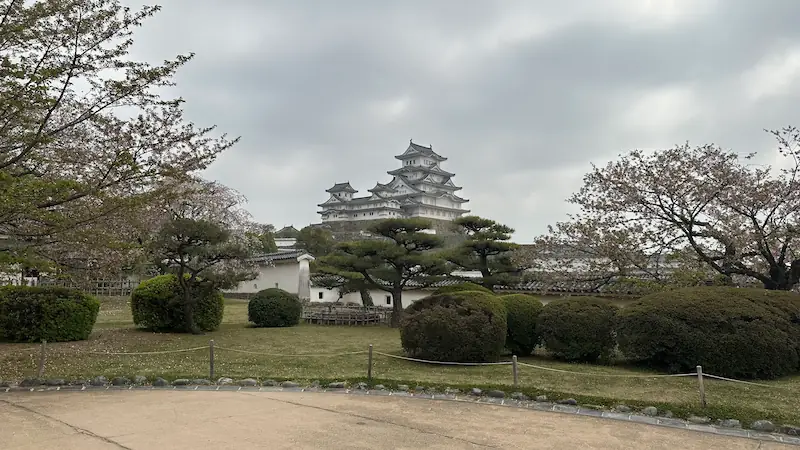
Where to See Samurai History in Japan
Twelve sites — castles, battlefields, a samurai quarter and two shrines — from the Sengoku and Edo periods, compared by what you can still see, where to base yourself and how much time to allow.
Samurai history in Japan is spread across very different places: castles whose original keeps still stand, ruins where a keep once rose, battlefields marked by little more than a stone, a preserved samurai quarter, and the shrines where Tokugawa Ieyasu is honoured. This guide compares twelve of them that Following the Shogun (FTS) has covered in its own field guides, so you can decide which ones to build a trip around. Use the interest tiles to jump to a theme, or go straight to the table to see what remains today, where to base yourself and how long each place takes.
Each site has its own FTS field guide with maps, opening hours and fees, so this page does not repeat them. The last column of the table shows when I visited, as recorded in that guide (for example “Field visit: Feb 2026”), or “not recorded” where the guide gives no date. A visit date tells you how recent my photographs and notes are. It does not tell you that a site is open or unchanged today, so check the linked guide and the site’s official information before you travel.
Choose Your Interest
Compare the Sites
“First history trip” and “Go deeper” are not a ranking. The first marks places that are easy to reach from a main base and make sense without background reading. The second marks places that need some background or extra travel to appreciate.
| Site | Historic Experience | What You Can See Today | Best For | Travel Base & Access | Time Needed | FTS Field Visit |
|---|---|---|---|---|---|---|
| Himeji Castle | Shogunate rule: rebuilt after Sekigahara by Ikeda Terumasa, Ieyasu’s son-in-law | Main keep: Original structure (National Treasure) Turrets: Original structure | First history trip Original keep | Osaka or Kyoto · Easy day trip About 32 min from Shin-Osaka, then a 15–20 min walk Steep keep stairs | Half day | Field visit: Sep 2025 |
| Inuyama Castle | Unification: Hideyoshi’s base in the 1584 Komaki–Nagakute campaign | Keep: Original structure (National Treasure) Castle gates: Relocated to nearby temples | First history trip Original keep | Nagoya · Easy day trip About 25 min by Meitetsu, then a 20 min walk Steep stairs | 1–2 h for the keep Half day with the garden | Field visit: Feb 2026 |
| Osaka Castle | Unification: Toyotomi castle, rebuilt by the Tokugawa after 1615 | Main Tower: Reconstructed (1931) Main gates, several turrets & walls: Original structure (Tokugawa era) | First history trip Rulers’ power | Osaka · City center Otemon Gate about 10 min on foot from Tanimachi 4-chome Station | 1–2 h from the outside Half day with the interiors | Field visit: not recorded |
| Nijo Castle | Shogunate rule: Ieyasu’s Kyoto castle, where the shogunate’s end began in 1867 | Ninomaru Palace: Original structure (National Treasure) Honmaru Palace: Relocated (Meiji era) Keep base: Ruins & earthworks | First history trip Rulers’ power | Kyoto · City center 1 min on foot from Nijojo-mae Station | Half day | Field visit: not recorded |
| Edo Castle (Imperial Palace East Gardens) | Shogunate rule: seat of Tokugawa government from 1603 | Keep base & walls: Ruins & earthworks Fujimi-yagura turret: Original structure | Go deeper Rulers’ power | Tokyo · City center About 15 min on foot from Tokyo Station | Half day | Field visit: not recorded |
| Azuchi Castle Ruins | Unification: Nobunaga’s castle, keep burned in 1582 | Keep platform & Otemichi stone steps: Ruins & earthworks | Go deeper Rulers’ power | Kyoto · Day trip with planning 45–50 min by train, then a 20 min walk Long stone steps | 1–2 h | Field visit: Apr 2024 and Apr 2025 |
| Okehazama | Battle (1560): Nobunaga defeats Imagawa Yoshimoto | Fort and castle sites: Monuments & markers Two sites claimed as the battlefield | Go deeper Battlefield walk | Nagoya · Easy day trip About 15 min to JR Odaka Station by local train | 1–2 h for the fort walk | Field visit: Jan 2026 |
| Shizugatake | Battle (1583): Hideyoshi against Shibata Katsuie | Summit: Monuments & markers Fort earthworks: Ruins & earthworks (hard to spot) | Go deeper Battlefield walk | Kyoto or Nagoya · Day trip with planning Train to JR Kinomoto (about 1 h 30 min from Kyoto), then taxi (about 5 min, book ahead), route bus plus a 10-min walk, or the weekend and holiday shuttle to the lift Lift closed in winter; until 16:00 from November | See guide | Field visit: May 2026 |
| Kanazawa Castle | Domain life: Maeda family castle from 1583 | Ishikawa-mon & Sanjikken Nagaya: Original structure (Important Cultural Property) Hishi Yagura & Gojikken Nagaya: Reconstructed (wood, 2001) | First history trip Samurai town | Kanazawa · City center About 20 min by bus from Kanazawa Station | 1–2 h | Field visit: Oct 2025 |
| Nagamachi Samurai District | Domain life: quarter of upper- and middle-ranking samurai | Lanes, earthen walls & canal: Historic streetscape | Go deeper Samurai town | Kanazawa · City center About 18 min by bus from Kanazawa Station | ~1 h | Field visit: not recorded |
| Nikko Toshogu | Deification: where Ieyasu was enshrined in 1617 | Yomeimon & main shrine: Original structure (active shrine; National Treasure) | First history trip Shrine & legacy | Tokyo · Day trip with planning About 2 h each way by Tobu limited express | Half day | Field visit: Feb 2026 |
| Kunozan Toshogu | Deification: Ieyasu’s first burial place, 1616; shrine finished 1617 | Shrine buildings (1617): Original structure (active shrine; National Treasure) | Go deeper Shrine & legacy | Shizuoka · Day trip with planning About 1 h from Tokyo or Nagoya by Shinkansen, then bus and ropeway or 1,159 steps | 1–2 h | Field visit: Apr 2026 Access: ropeway & museum closed 1–21 Dec 2026 (per FTS guide) |
Castles & Military Power
Only twelve castles in Japan still have their original keep, and these two are among them. They show what a castle was built to do: Himeji’s keep, completed in 1609, has gone more than 400 years without being destroyed by war, earthquake or fire, while Inuyama’s small National Treasure keep lets you climb to a railed top-floor gallery. A third original keep, at Hirosaki, is covered under More Sites to Explore.
Himeji Castle
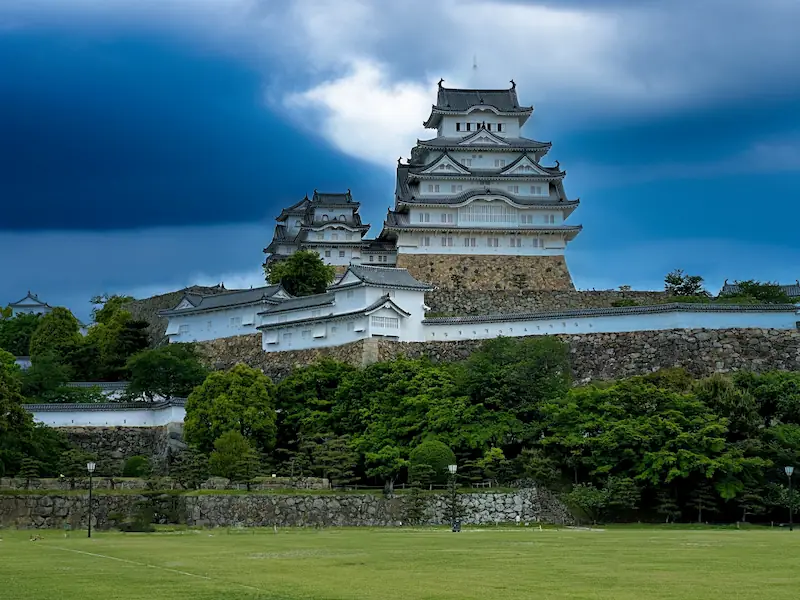
Himeji Castle’s main keep was completed in 1609 and has never been destroyed by war, earthquake or fire in more than 400 years. After the Battle of Sekigahara, Ieyasu gave the domain to his son-in-law Ikeda Terumasa, who rebuilt the castle on the scale you see today. The approach to the keep is a maze of gates and sloping paths designed to confuse attackers, and the Nishi-no-Maru bailey holds original wooden turrets linked by roofed corridors.
- Main keep: five tiers on the outside, six floors above ground plus a basement inside.
- Gates and passageways: a network of original and restored gates that forms the maze-like approach.
- Nishi-no-Maru: the west bailey, once home to Princess Sen, with long corridors and views of the keep.
- Stone walls and moats: concentric moats and white-plastered walls around the grounds.
On my visits, queues for the steep interior staircases began building around 10:00 a.m., and an early start meant climbing at my own pace. The interior is darker than you expect, and the highlight is the two huge pillars rising through the floors. The outer moats and stone walls were almost empty when I walked them.
DesignationsNational Treasure (Main Keep); UNESCO World Heritage Site, inscribed 1993.
Inuyama Castle
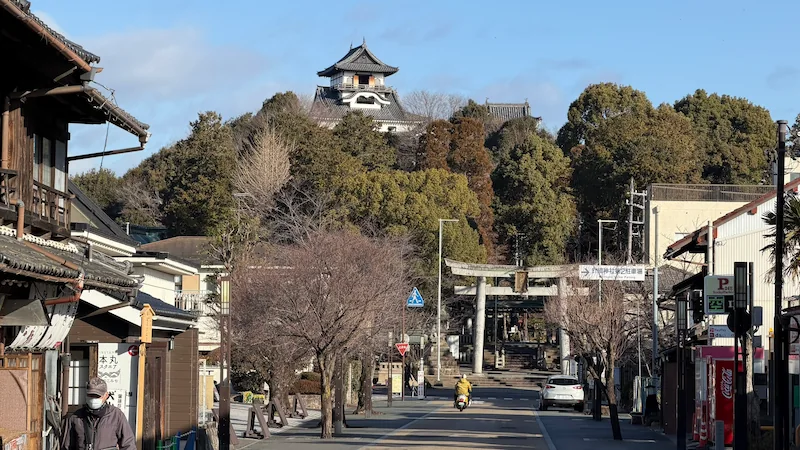
Inuyama’s keep is a National Treasure and one of only twelve original castle towers left in Japan. It stands on a hill above the Kiso River, and the usual approach is on foot from Inuyama Station along Honmachi-dori, the old merchant street. Oda Nobunaga’s uncle founded the castle, and in the Edo period the Naruse family governed it for eight generations until the end of the shogunate.
- The keep: a small wooden tower with a railed top-floor gallery and views over the Kiso River and the Owari plain.
- Honmachi-dori: the old merchant street that runs straight to the foot of the castle hill.
- Urakuen Garden and the Joan tea house: the garden below the castle, with a National Treasure tea house.
- Relocated castle gates: former castle gates carried to nearby temples and rebuilt there.
The original wooden stairs inside the keep are steep and narrow, so use the handrails and take your time.
DesignationsNational Treasure (keep and the Joan tea house).
Rulers & Political Power
These four sites show where power was held and how it changed hands. Azuchi was Oda Nobunaga’s seat, and its keep and main enclosure burned in 1582. Osaka began as the Toyotomi castle and was rebuilt by the Tokugawa after 1615, so the gates and walls above ground are Tokugawa work. Nijo was completed by Tokugawa Ieyasu in 1603 and is where the last shogun announced the return of power to the Emperor in 1867. Edo Castle was the seat of Tokugawa government from 1603. For the people behind these castles, see the hubs for Nobunaga, Ieyasu and Toyotomi Hideyoshi.
Osaka Castle
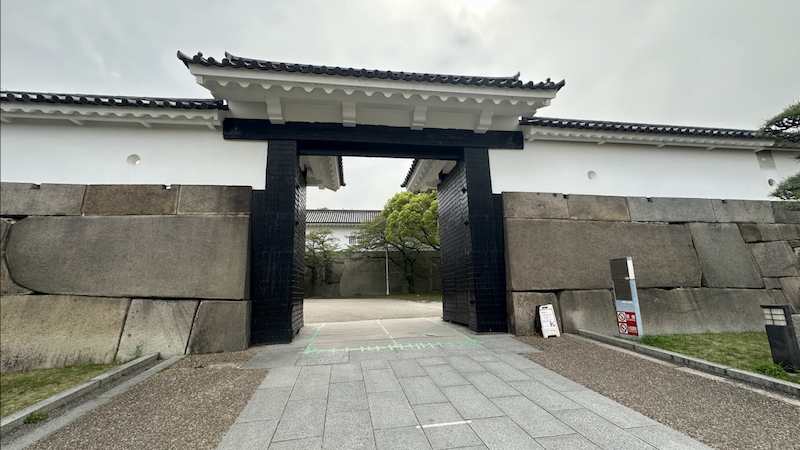
Osaka Castle shows one site changing hands. The Tokugawa rebuilt it after the fall of the Toyotomi in 1615, and the gates, turrets and huge stones you see today are Tokugawa-era work. The Main Tower is a 1931 rebuilding paid for with donations from Osaka’s citizens, and a surviving layer of the Toyotomi-era castle lies buried beneath the ground.
- Otemon Gate and Tamon Yagura: the main entrance, built around a masugata courtyard with huge named stones just inside.
- Nishinomaru Garden: three Important Cultural Property structures, including Japan’s only surviving stone-built gunpowder magazine (1685).
- Toyotomi Stone Wall Museum: the buried Toyotomi-era walls.
- Main Tower: an 8-floor museum on Toyotomi Hideyoshi and the castle’s history.
Most visitors head straight for the Main Tower elevator, but the Stone Wall Museum is covered by the same ticket and takes only 15–20 minutes. Seeing it first makes the exhibits inside the tower easier to follow.
DesignationsImportant Cultural Property: Tamon Yagura, Sengan Yagura, Inui Yagura and Enshogura.
Nijo Castle
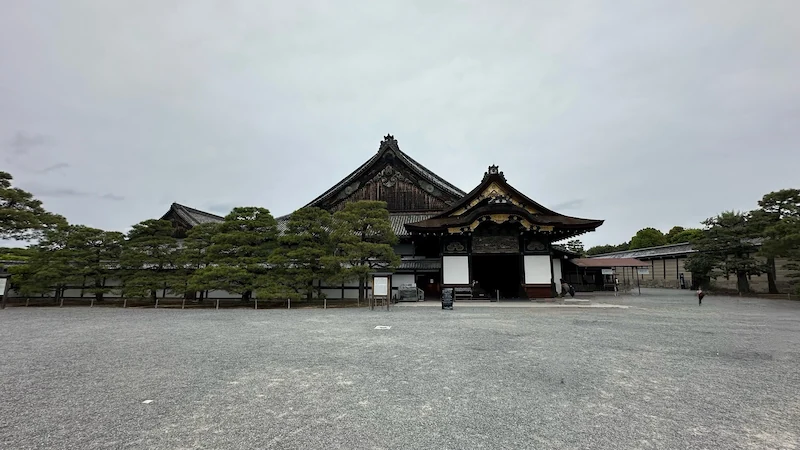
Tokugawa Ieyasu completed Nijo Castle in 1603 and held the ceremonies marking his appointment as shogun here that year. It served as the Kyoto residence for shoguns visiting the imperial capital. In October 1867 the last shogun, Tokugawa Yoshinobu, gathered senior retainers of about 40 domains in the Great Hall of Ninomaru Palace to hear their views on returning political authority to the Imperial Court. He made the offer the next day, and the court accepted it, which brought the Tokugawa shogunate, in power for more than 260 years, to its close.
- Karamon Gate and Ninomaru Palace: the ornate gate dates from the 1626 imperial visit; the palace is where Yoshinobu consulted the domain retainers before returning power to the court in 1867.
- Honmaru Palace: a Meiji-era imperial residence, built when part of the Katsura-no-miya princely residence was relocated here. Interior visits need an advance reservation and a separate ticket.
- Keep base: the stone base can be climbed; the keep itself was lost to a lightning fire in 1750.
- Seiryu-en Garden: a garden within the castle grounds.
The keep-base ruins are open to climb, and the view from the top takes in the castle’s buildings and gardens. Honmaru Palace was moved here in the Meiji era from a princely residence, so don’t expect samurai-era interiors.
DesignationsNational Treasure (Ninomaru Palace); part of the UNESCO World Heritage Site “Historic Monuments of Ancient Kyoto”, inscribed 1994.
Edo Castle (Imperial Palace East Gardens)
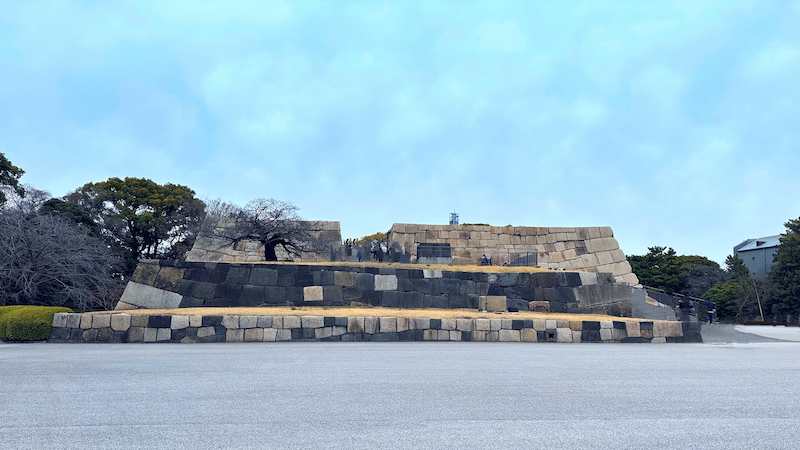
Edo Castle was the residence of the Tokugawa shoguns and the seat of their government from 1603. Its main keep burned in the Great Fire of Meireki in 1657 and was never rebuilt, and the palace buildings of the Honmaru are gone. Several Edo-period structures do survive, among them the Fujimi-yagura, the castle’s only remaining three-storey turret (rebuilt in 1659 after the fire), and guardhouses such as the Doshin-bansho and Hyakunin-bansho. After the Meiji Restoration the castle’s central area became the Imperial Palace, and since 1968 its eastern part, the former Honmaru, Ninomaru and Sannomaru, has been open to the public as the Imperial Palace East Gardens. Because the keep and palaces are gone, it rewards visitors who already know what they are looking for.
- Keep base: the stone base of the keep survives in the Honmaru area, and you can climb to the top. A reconstructed model of the keep is shown nearby.
- Fujimi-yagura turret: the only three-storey turret of Edo Castle still standing, rebuilt in 1659 after the Meireki fire.
- Guardhouses: the Doshin-bansho and Hyakunin-bansho, Edo-period guardhouses on the approach to the Honmaru, and the Obansho, restored to its Edo-period form in 1968.
- Otemon Gate: the Koraimon gate was rebuilt in 1659 and the Watari-yagura gate restored in 1967.
- Marked sites: for example the Matsu-no-Oroka Corridor site, where a marker and sign recall the 1701 attack by Asano Takumi-no-kami on Kira Kozuke-no-suke.
Azuchi Castle Ruins
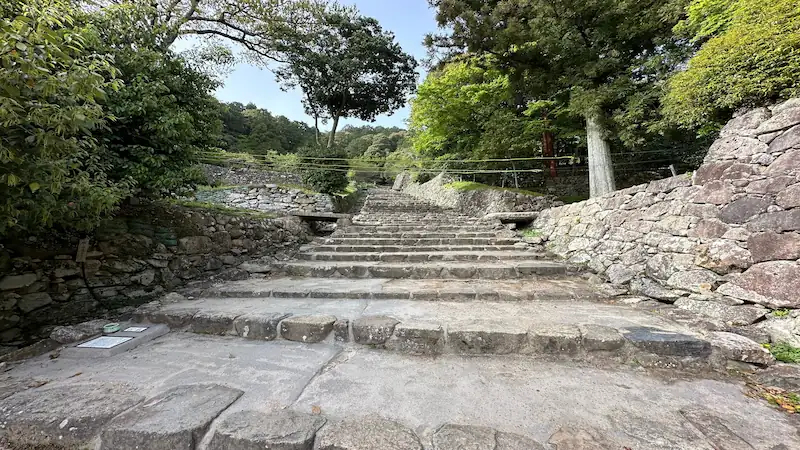
Azuchi was Oda Nobunaga’s seat of power, built on a mountaintop in Shiga Prefecture. After Nobunaga was killed in the Honno-ji Incident of 1582 the keep and main enclosure burned, and the castle had stood for only about three years. The cause of the fire is still debated. The keep has not been rebuilt: what you climb to is its stone platform, up Otemichi, a straight stone staircase six metres wide.
- Otemichi: the main approach, a straight run of stone steps.
- Tenshudai: the platform where the main tower stood.
- Retainers’ residence sites and Nobunaga’s Mausoleum: also part of the site.
- Sokenji Temple area: a Three-Story Pagoda and a Nio Gate.
- 360° panoramas: FTS publishes panoramas of Otemichi, the Tenshudai and other spots, so you can preview the site.
The stretch just before the Tenshudai is especially steep. After at least five visits, I strongly recommend sneakers or hiking shoes, since sandals or heels are dangerous here. Free walking sticks can be borrowed at the entrance counter.
DesignationsNational Special Historic Site. The Three-Story Pagoda and Nio Gate at Sokenji Temple are Important Cultural Properties.
Battles That Changed Japan
Battlefields reward preparation. At Okehazama in 1560, Oda Nobunaga defeated the much larger army of Imagawa Yoshimoto. At Shizugatake in 1583, Hashiba Hideyoshi and Shibata Katsuie fought in the power struggle that followed Nobunaga’s death. Neither place has a castle to look at. You stand on the terrain, with markers and signboards to read it by, which is why both are tagged “Go deeper”. Okehazama also has two separate sites that each present themselves as the battlefield, about 1.2 km apart, because the sources do not fix the exact spot.
Okehazama

Nobunaga’s victory at Okehazama, on 19 May 1560 by the old lunar calendar, is credited with setting him on the path to unifying the country. The FTS guide follows the opening skirmishes: Odaka Castle Ruins, Washizu Fort Ruins and Marune Fort Ruins sit within a few hundred metres of one another in Nagoya’s Midori Ward. Here a young Matsudaira Motoyasu, the future Tokugawa Ieyasu, fought on the Imagawa side against Nobunaga.
- Odaka Castle Ruins: a stone marker near the former honmaru; the earthen ramparts are largely gone, though traces of the moat survive.
- Washizu Fort Ruins: preserved as a small park with a stone marker and information boards. No original buildings remain.
- Marune Fort Ruins: a stone marker at the site of the satellite fort.
- Two battlefield sites: the Okehazama Battlefield Legend Site in Toyoake, and Okehazama Battlefield Park (Dengaku-tsubo) in Nagoya. Each is presented as the place where Yoshimoto was killed.
Standing at the Washizu marker on its low hill, about 35 m up, you can see why the spot was used for a lookout and defence. Walking the distances between the sites turns the battle lines on a map into something you can feel.
DesignationsNational Historic Site: Odaka Castle Ruins with the attached Marune and Washizu Fort Ruins (designated 1938), and the Okehazama Battlefield Legend Site in Toyoake (designated 1937).
Shizugatake
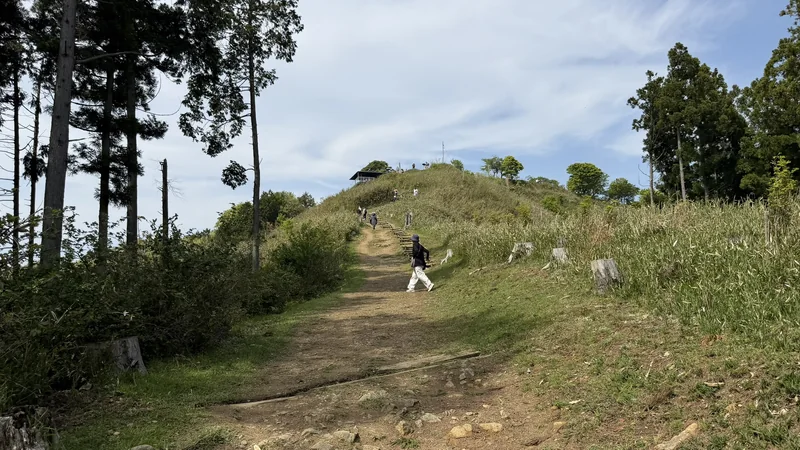
Shizugatake is a mountain northeast of Lake Biwa where Hideyoshi’s forces and Shibata Katsuie’s fought a decisive battle in 1583, part of the power struggle after Nobunaga’s death the year before. There is no reconstructed castle and no stone walls. From JR Kinomoto Station you reach the chairlift base in the Oto district by taxi, route bus or, on weekends and holidays, a free shuttle bus. The lift carries visitors most of the way up, and from the summit area you look out over two lakes, Lake Biwa and Lake Yogo.
- Summit area: information panels, a memorial sculpture and a handful of later-era markers.
- Earthworks: surveys document fort-related earthworks, but they are not easy to pick out on the ground without prior knowledge.
- The walk after the lift: the lift does not reach the summit, so you still cover a stretch of dirt path and log-built steps.
Shizugatake is not primarily a place to see clear castle ruins. The terrain itself, with the lakes, the ridgelines and the low ground between them, gives you a sense of how large the battle was. It may feel underwhelming if you expect stone walls, a reconstructed keep or clearly visible moats and earthworks.
Domain & Samurai Town Life
A castle was only part of a domain’s capital. Kanazawa lets you see both halves: the castle the Maeda family held from 1583, and Nagamachi, the quarter where upper- and middle-ranking samurai of the Kaga Domain lived. Kanazawa Castle has no surviving keep, but Edo-period originals, Meiji military architecture and modern reconstructions stand side by side on one walkable loop, which makes it a good place to learn to tell original from rebuilt.
Kanazawa Castle
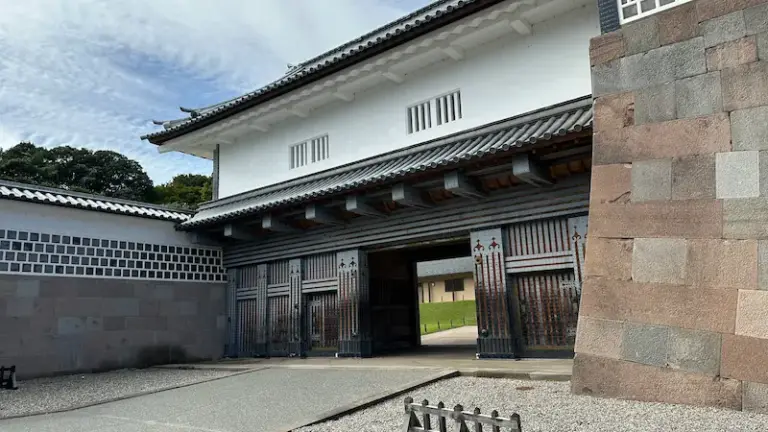
Maeda Toshiie took the castle in 1583, and the Maeda family held it until the end of the Edo period. Unlike Himeji, Matsumoto or Osaka, Kanazawa Castle has no dominant keep. Its appeal is the mix on the ground: only three genuine Edo-period buildings stand in the park, alongside reconstructions finished between 2001 and 2020.
- Original: Ishikawa-mon Gate (rebuilt 1788), Sanjikken Nagaya (rebuilt 1858) and the Tsurumaru Warehouse.
- Reconstructed: Hishi Yagura and Gojikken Nagaya (2001), Kahoku-mon Gate (2010), and Nezumita-mon Gate and Bridge (2020).
- Gyokusen’inmaru Garden: restored in 2015 from historical records of the Maeda lords’ garden.
If seeing authentic Edo architecture is your priority, linger at Ishikawa-mon, Sanjikken Nagaya and the Tsurumaru Warehouse. Hishi Yagura and Kahoku-mon are impressive but modern. Inside the paid Nagaya, the timber framing is shown in detail.
DesignationsImportant Cultural Property: Ishikawa-mon Gate and Sanjikken Nagaya.
Nagamachi Samurai District
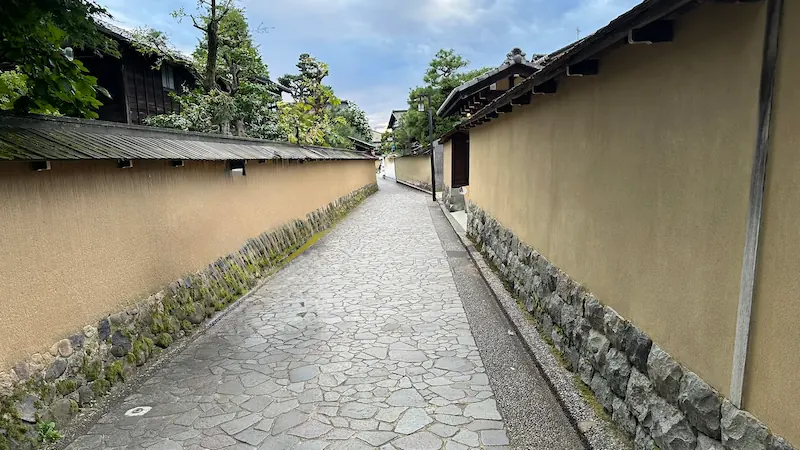
Nagamachi preserves the former residential quarter of upper- and middle-ranking samurai of the Kaga Domain. Cobblestone lanes, ochre earthen walls and the Onosho Canal remain, and the lanes bend deliberately, the defensive road design of a castle town. It is an area to stroll rather than a single monument.
- Lanes and earthen walls: narrow, winding lanes with the Onosho Canal running in front of the residences.
- Nomura Family Residence: a residence with its interior open to the public, with a garden and shoin-style reception rooms.
- Ashigaru Museum: relocated and reconstructed foot-soldier residences.
- Kanazawa Shinise Kinenkan: a relocated former merchant house, originally a pharmacy.
In winter the earthen walls are wrapped in straw matting (komo-gake) to protect them from snow and frost. Winter visitors see the walls wrapped this way; the bends in the lanes show the castle-town road design.
Ieyasu’s Shrines & Legacy
Most visitors meet the Toshogu shrines at Nikko, so it is natural to assume Tokugawa Ieyasu lies there. The answer is less simple. Ieyasu died in 1616 and left instructions that he be buried first at Kunozan, near Shizuoka. A year later, in 1617, he was enshrined at Nikko. Whether his remains were also moved to Nikko is a matter of debate, and Kunozan Toshogu says its mausoleum still stands over his burial place. Both shrines have buildings designated National Treasures. Nikko is the larger complex, Kunozan the smaller and much quieter one.
Nikko Toshogu
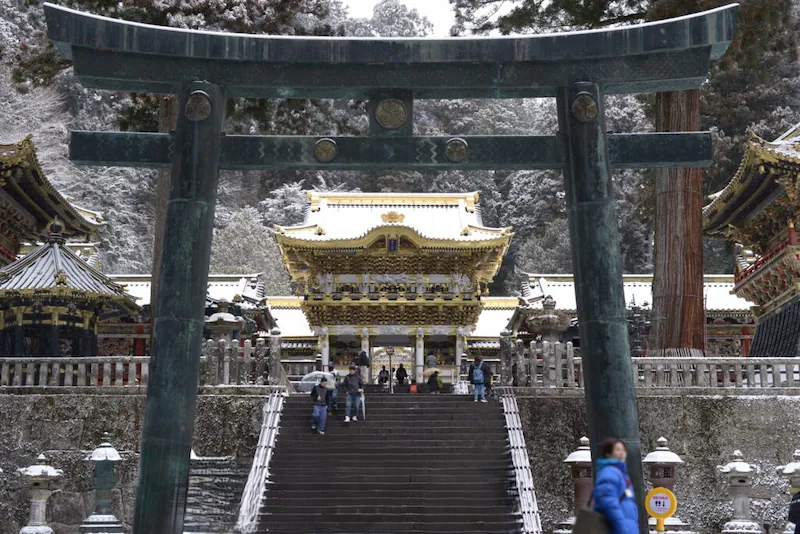
Nikko Toshogu is the large shrine complex where Ieyasu was enshrined. The route climbs from the Bronze Torii and the richly carved Yomeimon Gate to the Sleeping Cat, then up 207 stone steps through a cedar grove to the Inner Sanctuary, where the bronze Treasure Pagoda is venerated as Ieyasu’s tomb. The carvings are the draw: Karamon Gate alone has 611 of them, more than the 508 on Yomeimon. Several of the buildings, including Karamon, Sakashita-mon and the Inner Sanctuary worship hall, date from 1636, during the Kan’ei reconstruction.
- Yomeimon Gate: carved so densely that the structure almost disappears beneath the decoration.
- Sleeping Cat: the carving, traditionally credited to Hidari Jingoro, at the entrance to the path that leads to the Inner Sanctuary. On the reverse, two sparrows play in bamboo.
- Main shrine and worship hall: the central building; you remove your shoes to enter.
- Inner Sanctuary: a worship hall, Inuki-mon Gate and a bronze Treasure Pagoda in the cedar grove.
The Honjido (Crying Dragon Hall) exterior, the Sacred Stable and the Sleeping Cat are easier to photograph early in the morning. Lines began forming at several points after about 10 a.m. On my visit the Inner Sanctuary round trip took about 30 minutes in the quiet early morning.
DesignationsThe shrine lists Yomeimon Gate, the corridors (Kairo) on either side of it, Karamon Gate, the main shrine and the Sleeping Cat carving as National Treasures. Important Cultural Property: the Bronze Torii and Sakashita-mon Gate.
Kunozan Toshogu
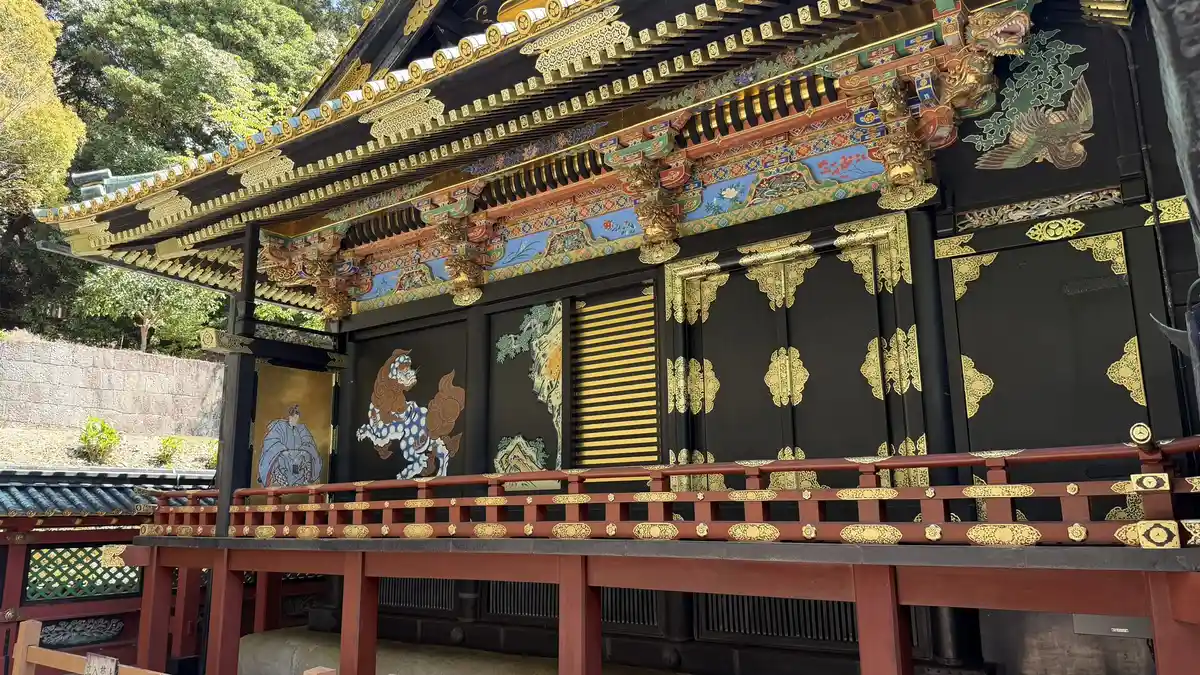
The shrine on Kunozan, a steep coastal hill outside Shizuoka, was finished in 1617 and describes itself as the origin of every Toshogu shrine in Japan. This is not a ruin. The main shrine buildings completed in 1617 still stand, finished in black lacquer with densely painted carvings, and you can stand just outside the railing, so the detail is readable.
- Main shrine buildings: original 1617 woodwork, lacquered and painted.
- Other early-1600s structures: the two-storey gate, the sacred stable, the drum tower and the Hie Shrine.
- The mausoleum: reached by a further climb above the main hall.
- Views: Mount Fuji and Shimizu Port from the Nihondaira plateau, and Suruga Bay from the hill.
The old stone stairway is not modern engineered stairs. It was laid by hand, so step heights and depths vary; watch your feet on the way down. The walk from the gate to the main hall is short, so you spend your time on the carvings rather than in queues.
DesignationsNational Treasure: the main shrine buildings (designated December 2010). Important Cultural Property: the two-storey gate, sacred stable, drum tower, Hie Shrine and several other early-1600s structures.
What “Original” Really Means
“Original” can mean different things. In the table above, each part of a site is described with one of these terms, so a single castle can carry several. Osaka, for example, has a rebuilt main tower and original gates and walls.
| Original structure | An Edo-period or earlier building standing on its original site. Example: Himeji’s main keep, completed in 1609. |
|---|---|
| Original structure (active shrine) | The same, at a shrine where worship continues. Nikko and Kunozan are examples. The shrine is still in use, which is a separate matter from whether the buildings are original. |
| Reconstructed (wood) | Rebuilt later in timber. Example: Kanazawa’s Hishi Yagura and Gojikken Nagaya (2001). |
| Reconstructed (concrete) | Rebuilt later in reinforced concrete. Where an FTS guide does not state the material, this page says only “Reconstructed” and gives the year, as for Osaka’s Main Tower (1931). |
| Relocated | An old building moved from elsewhere. Examples: Nijo’s Honmaru Palace, built when part of the Katsura-no-miya princely residence was moved there in the Meiji era, and Inuyama’s former castle gates, now at nearby temples. |
| Ruins & earthworks | Stone walls, moats, ramparts and keep platforms without the building. Examples: the keep bases at Edo and Azuchi. |
| Monuments & markers | Stones, signboards and memorials on a former site, with little or nothing built left to see. Examples: Okehazama and the Shizugatake summit. |
| Historic streetscape | A preserved quarter of lanes, walls and canals. This page does not judge whether individual buildings are original or rebuilt. Example: Nagamachi. |
Heritage designations such as National Treasure, Important Cultural Property, National Historic Site and World Heritage Site are separate systems, each with its own criteria. They are not steps on one ladder of quality, and this guide does not score or rank sites by them. Where an FTS field guide states a designation, it is listed on that site’s card.
Planning by Travel Base
From Tokyo
Edo Castle is the one site in this guide inside Tokyo itself. The Imperial Palace East Gardens are about a 15-minute walk from the Marunouchi North Exit of Tokyo Station. Nikko Toshogu is a long day trip: about 1 hour 50 minutes to 2 hours each way by Tobu limited express from Asakusa, and about 8–10 hours door to door. Odawara Castle, listed under More Sites to Explore, is an easy day trip from Tokyo and a natural stop on the way to Hakone. More in the FTS guide to samurai sites around Tokyo.
From Kyoto & Osaka
Nijo Castle is a 1-minute walk from Nijojo-mae Station in Kyoto, and Osaka Castle’s Otemon Gate is about 10 minutes on foot from Tanimachi 4-chome Station. Himeji is about 32 minutes from Shin-Osaka Station, followed by a 15–20 minute walk from Himeji Station. Azuchi is about 45–50 minutes from Kyoto Station by train, then a 20-minute walk from JR Azuchi Station. Shizugatake is about 1 hour 30 minutes from Kyoto Station to JR Kinomoto Station. The chairlift starts in the Oto district, not at the station: allow about 5 minutes by taxi (book ahead, as no taxis wait at the lift), about 15 minutes by route bus to the Oto stop plus a 10-minute walk, or the free shuttle bus on weekends and holidays. Wakayama, Odani and Yamatokoriyama are also reachable from this base; see More Sites to Explore. More in the FTS guide to samurai sites around Kyoto and Osaka.
From Nagoya
Inuyama is about 25 minutes from Meitetsu Nagoya Station, and the Okehazama forts start at JR Odaka Station, about 15 minutes from Nagoya Station on local trains. Nagakute, listed under More Sites, is also a Nagoya-based trip. Shizugatake is about 1 hour 15 minutes from Nagoya by Shinkansen to Maibara and the JR Hokuriku Line, though connections vary. More in the FTS guide to samurai sites around Nagoya and central Japan, which also covers Kanazawa and Shizuoka.
Further afield
Kanazawa is about 2 hours 30 minutes from Tokyo by the Hokuriku Shinkansen, or about 2 hours 15 minutes from Shin-Osaka with a change at Tsuruga. Kunozan Toshogu is based in Shizuoka, a stop on the Tokaido Shinkansen served by Hikari and Kodama trains, roughly midway between Tokyo and Nagoya. Hirosaki is about 4 hours from Tokyo by Shinkansen and local train. For Hirosaki, see the FTS guide to samurai sites in Tohoku.
More Sites to Explore
FTS has full guides to these six as well. They are not in the comparison table, either because of current conditions on site or because they add depth to a theme rather than a new kind of experience.
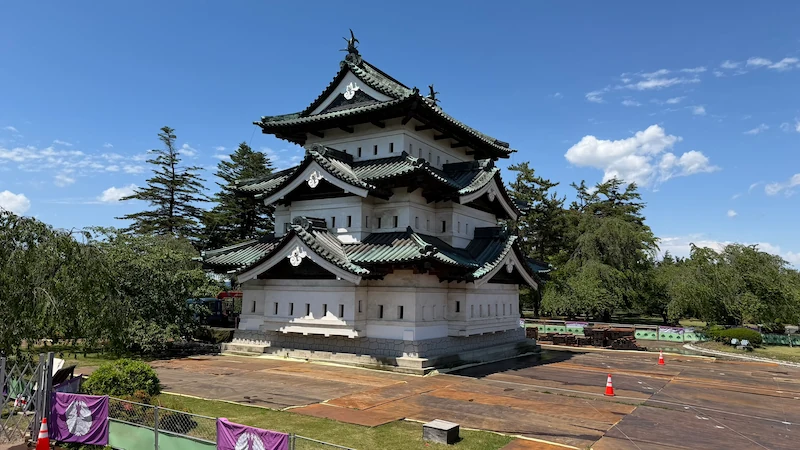 Hirosaki Castle: an original keep, interior closed
The keep interior has been closed for preservation work since 24 November 2025. The FTS guide cites August 2026 news reports that it is scheduled to reopen in fiscal 2033, so confirm with Hirosaki City before planning around it. The keep exterior, three corner turrets and most original gates can still be seen up close.
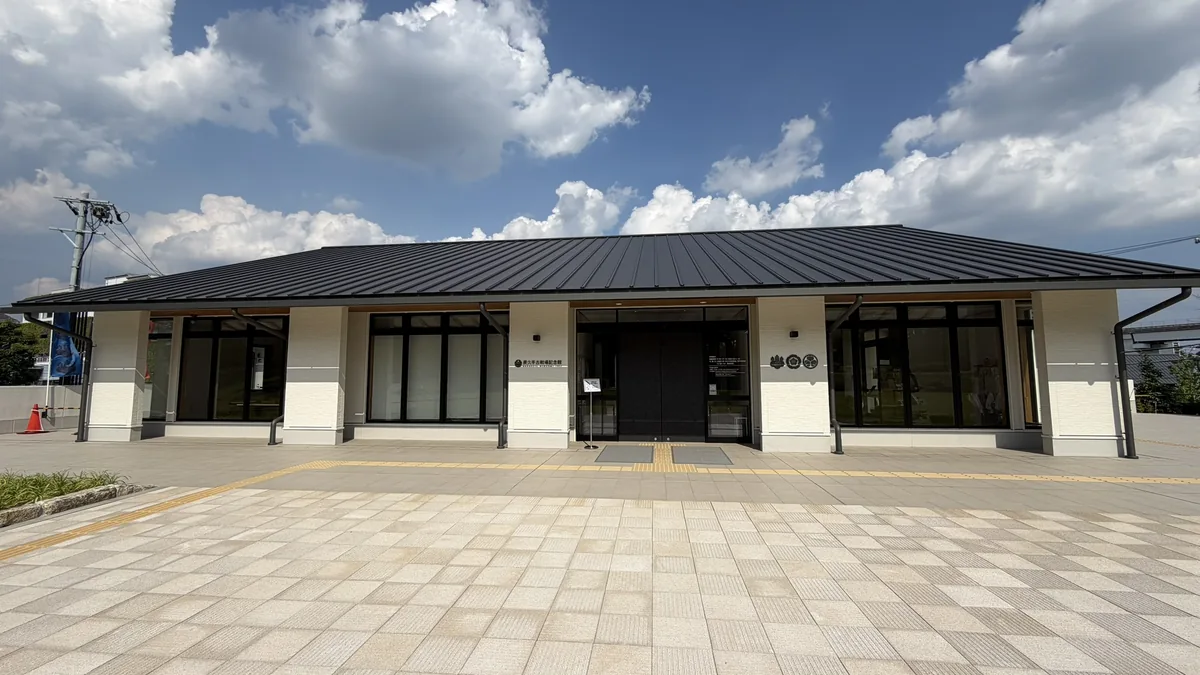
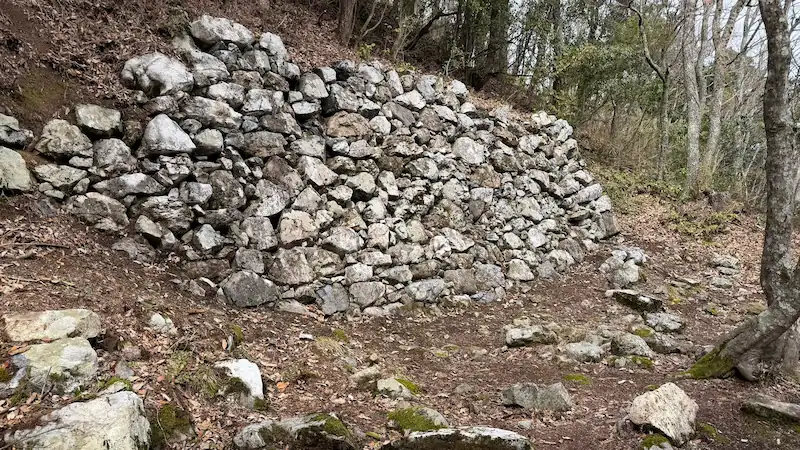
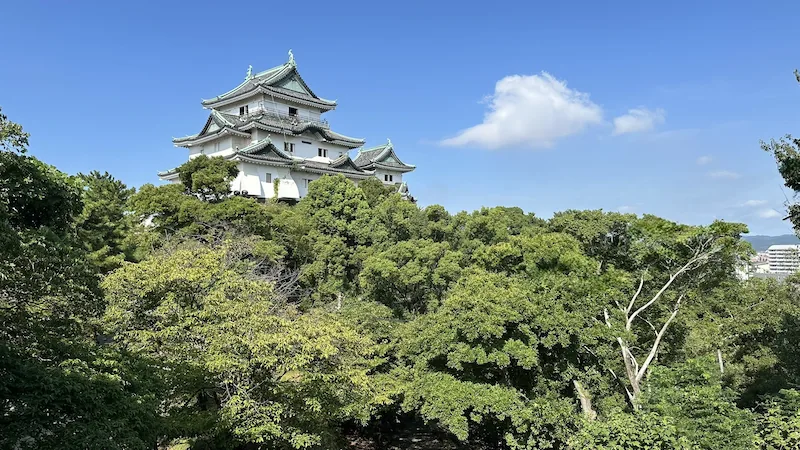
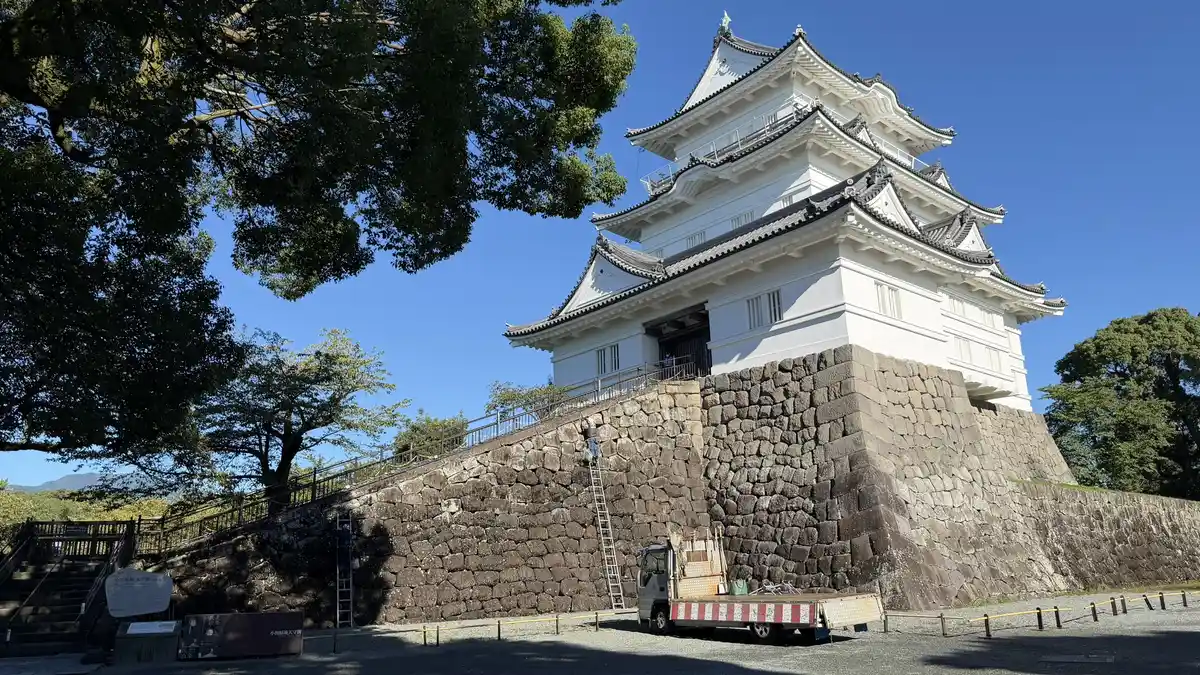
Sites Not Compared Here
I have also visited the Nagashino battlefield and Matsumoto Castle. Neither has a standalone field guide on this site yet, so they are not compared here, and this page makes no claims about them beyond the visit.
Two major sites are not covered by FTS at all. Sekigahara is the site of the 1600 battle that decided who would rule Japan, and Kumamoto Castle is the other. For either, check the official visitor information of the site itself.
Before You Visit
Frequently Asked Questions
Only twelve castles in Japan still have their original keep. Himeji and Inuyama, covered above, are two of them, and Hirosaki is a third. At Himeji the main keep was completed in 1609. Inuyama’s is a National Treasure. Many famous castles are not on that list. Kanazawa Castle, for example, has no surviving keep, and Osaka’s Main Tower dates from 1931. The “What You Can See Today” column of the table sorts original from rebuilt for each site.
Not the keep. The present Main Tower was rebuilt in 1931 with donations from Osaka’s citizens, and it is the third tower on the site. The gates, turrets and stone walls you see above ground come from the Tokugawa rebuilding after the Toyotomi fell in 1615. Several turrets, such as Sengan Yagura and Inui Yagura (both 1620), are designated Important Cultural Properties. A surviving layer of the Toyotomi-era castle lies buried underneath. See the FTS Osaka Castle walking guide for the details.
From the founding of the Edo shogunate in 1603, Edo Castle was the residence of the Tokugawa shoguns and the seat of their government. Its keep burned in 1657, and today you can visit its eastern part as the Imperial Palace East Gardens. In Kyoto, Nijo Castle served as the residence for shoguns visiting the imperial capital. The Palace East Gardens and Nijo are both in the table above.
Use the Time Needed column, and add the travel. Nikko takes about 8–10 hours door to door from Tokyo, and Himeji needs 3–4 hours on site, so treat those as one-site days. Within a single city, shorter stops can share a day. In Kanazawa, the castle’s full route takes 90–120 minutes and the Nagamachi quarter is a stroll of 10–20 minutes. Each site’s FTS guide gives the detail.
They suit travellers who enjoy reading terrain and already know the story. At Shizugatake there is no reconstructed castle and no stone walls, but the lakes, ridgelines and low ground show how large the battle was. At Okehazama you walk between fort sites marked by stones and signboards. If you expect buildings to look at, start with a castle or shrine, and come to the battlefields once you want the history behind them.
Explore in Depth
To go further, follow one of the three great unifiers, browse the sites by region, or read how the drama SHŌGUN compares with the history.
☕ Support This Site
Following the Shogun is built on original fieldwork and on-site research.
If you found this guide useful, your support helps keep it going.

You can also support via QR code