


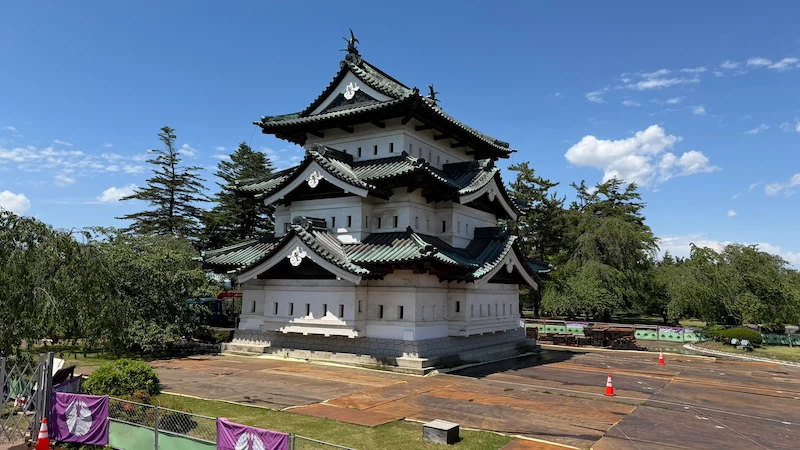
Hirosaki Castle: A Complete 2026 Visit Guide
One of Japan's 12 castles with an original surviving keep. This guide covers everything you need for a 2026 visit — access, admission, opening hours, and exactly what you can (and can't) see during the ongoing renovation.
Quick Answer: Can You Visit Hirosaki Castle in 2026?
Yes. Hirosaki Castle is open in 2026, but the keep interior is closed for preservation work. You can still see the original keep exterior, three surviving corner turrets, and most of the original gates up close. Honmaru and Kitanokaku admission is ¥320 for adults, and a keep-area-only visit takes about 40 minutes.
| Keep interior | Closed since November 24, 2025. News reports in August 2026 said the keep is scheduled to reopen to the public in fiscal 2033. |
|---|---|
| Keep move-back | Hirosaki City scheduled the keep's move back onto its original stone base for July to mid-November 2026. |
| Gates under repair | Higashi-uchi-mon (East Inner Gate) and Kame-ko-mon (North Gate), until approx. March 2027 |
| Keep exterior | Viewable from close range. From around autumn 2028, a protective enclosure may cover it. |
At a Glance
Hirosaki Castle is in Hirosaki, Aomori Prefecture, in northern Japan (Tohoku). It's one of only 12 castles in Japan with an original, non-reconstructed keep — and major preservation work is currently underway. Here's what that means for your visit: the keep interior is closed, but the exterior, surrounding turrets, gates, and grounds remain open and well worth seeing.
| Keep (Tenshu) | Original surviving keep — interior closed during renovation (exterior viewing available) |
|---|---|
| Cultural Properties | 9 Important Cultural Property buildings: 1 keep, 3 corner turrets, 5 castle gates |
| Time Required | Keep area only: ~40 min / Full grounds: 2–3 hrs / With museum & stamps: ~3.5 hrs |
| Nearest Station | JR Hirosaki Station — bus ~15 min or walk ~30 min |
| Admission | Honmaru & Kitanokaku: Adults ¥320 / Combined (incl. Botanical Garden): Adults ¥520 Hirosaki Castle Information Center: Free |
| Castle Stamp (Gojōin) | Available at Hirosaki Castle Information Center (as of author's May 2026 visit — subject to change) |
| Parking | Paid parking available around Hirosaki Park (crowded during cherry blossom season) |
| Best for | Fans of original castle architecture / history enthusiasts / visitors outside cherry blossom season |
Yes — even with the keep interior closed. Hirosaki Castle has more surviving original buildings than almost any other castle in Japan: 3 original corner turrets, 5 original gates, and a well-preserved triple-moat layout. The keep exterior is still fully visible, and the panoramic views from the Honmaru are impressive. If you enjoy castle architecture and history, this is one of the most rewarding castles to visit in Japan.
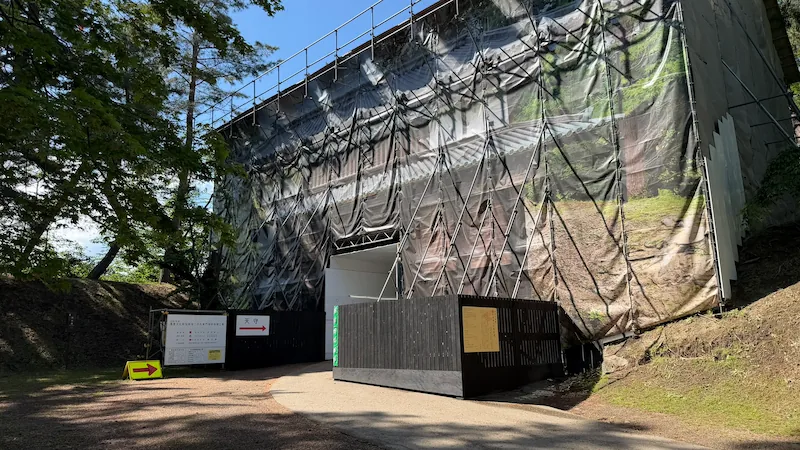
The keep interior has been closed since November 24, 2025, due to the hikiya (castle relocation) and ongoing preservation work. Two of the five gates — Higashi-uchi-mon (East Inner Gate) and Kame-ko-mon (North Gate) — are under preservation repair and are wrapped in scaffolding. The keep itself can be viewed from the outside from close range.
Hirosaki Castle Tickets & Entrance Fee
Most of Hirosaki Park is free. You only need a ticket for the Honmaru (Main Bailey) and Kitanokaku (North Enclosure), the paid zone around the keep. No advance booking is needed for the castle; tickets are sold on site.
| Paid Zone | Honmaru (Main Bailey) & Kitanokaku (North Enclosure) — includes the keep area |
|---|---|
| Paid Season | April 1 – November 23 each year |
| Honmaru & Kitanokaku | Adults ¥320 / Children ¥100 |
| Combined Ticket (incl. Botanical Garden) | Adults ¥520 / Children ¥160 |
| Winter (Nov 24 – Mar 31) | Honmaru & Kitanokaku open free of charge (keep interior closed) |
| Information Center | Open year-round, free admission (9:00–17:00, last entry 16:30) |
※ Fees and hours confirmed during the author's May 2026 visit. Subject to change — please check the Hirosaki Park official website (English) before visiting.
Hirosaki Castle Map & Location
Hirosaki Castle is in Hirosaki, Aomori Prefecture, in the Tohoku region of northern Japan — about 4 hours from Tokyo by train. The main south entrance (Otemon Gate) is approx. 2.3 km from JR Hirosaki Station.
Hirosaki Castle / Hirosaki Park (Google Map)
See the full castle grounds map below, or our detailed grounds guide for moats and bridges.
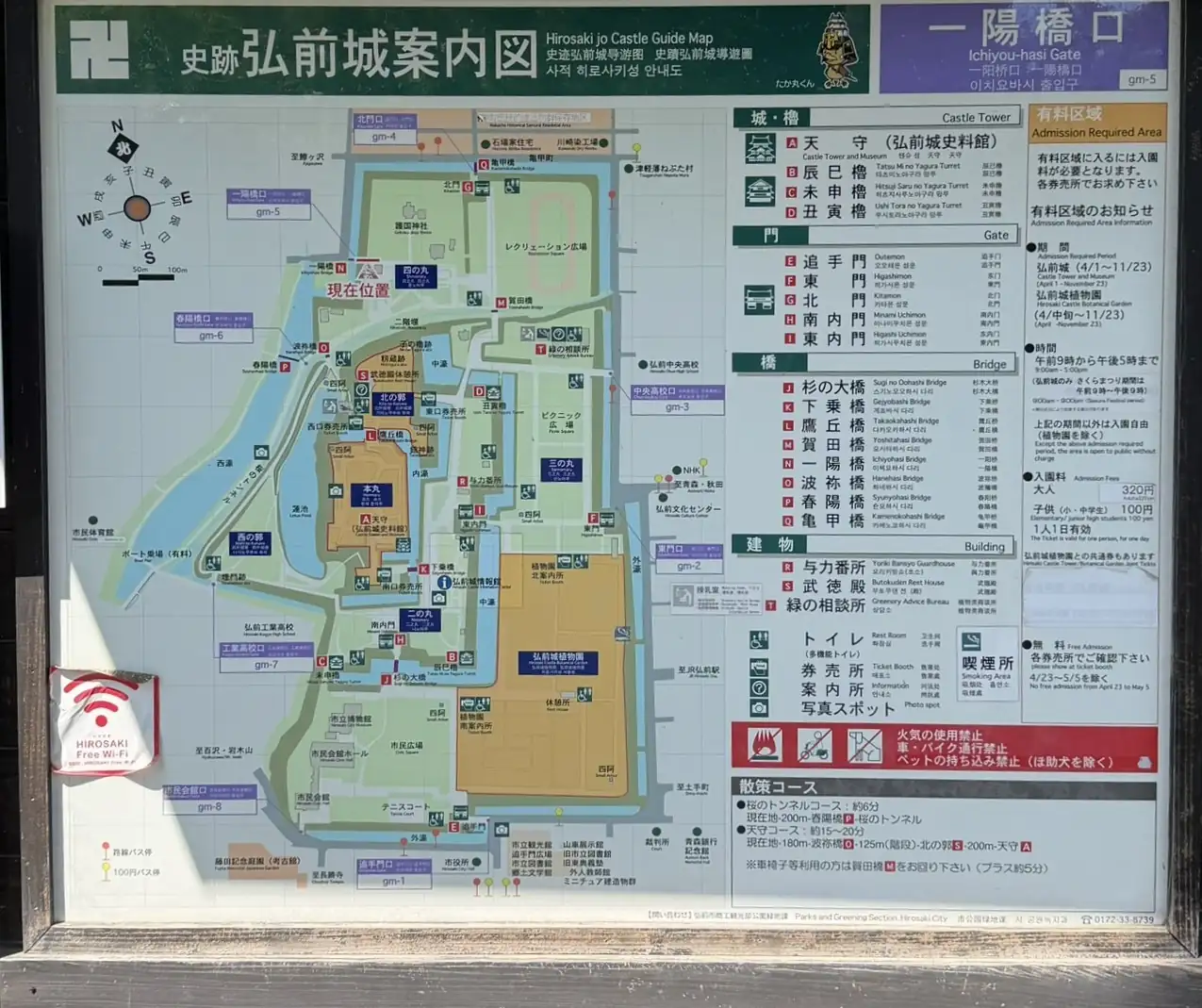
Hirosaki Castle or Hirosaki Park?
They are the same place. Hirosaki Park is the public park developed on the former castle grounds. Hirosaki Castle's original structures, stone walls, and moats are preserved within the park. Most of the park is freely accessible; the Honmaru (Main Bailey) and Kitanokaku (North Enclosure) require paid admission during the April–November season (Adults ¥320).
What You Can (and Can't) See in 2026
Major preservation and renovation work is currently underway at Hirosaki Castle. Here is what the situation looked like during the author's May 2026 visit.
In 2015, the 400-ton wooden keep was relocated approximately 77.62 meters from its original stone base to allow for major stone wall repair work — a process called hikiya. This is one of the most remarkable castle preservation projects in modern Japan. The keep is currently being moved back (hikimodoshi) to its original position, a process underway in 2026. Keep interior viewing is suspended from November 24, 2025, for several years while structural reinforcement continues.
According to Hirosaki City (flyer issued March 12, 2026, in Japanese), the keep is scheduled to be moved back onto its original stone base between July and mid-November 2026, and a public pulling event was held on August 21–23. News reports in August 2026 said roof and wall repairs will follow the move, and that the keep is scheduled to reopen to the public in fiscal 2033.
Construction details elsewhere on this page reflect the author's May 2026 visit. For the full story of why the keep was moved, see The Hikiya Project in our history guide.
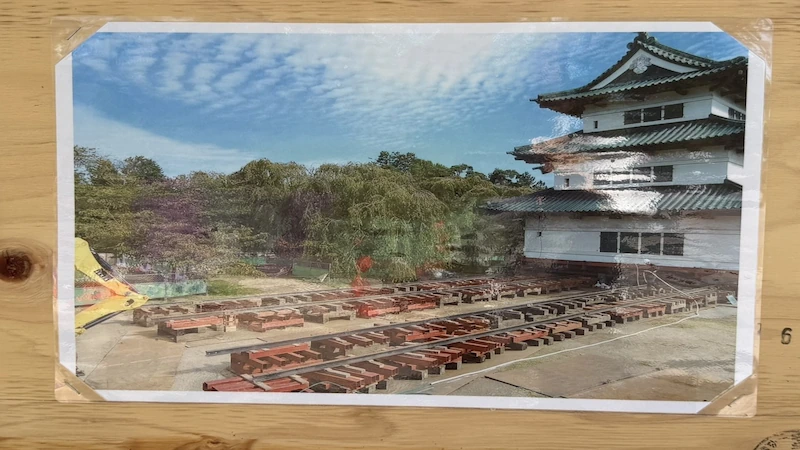
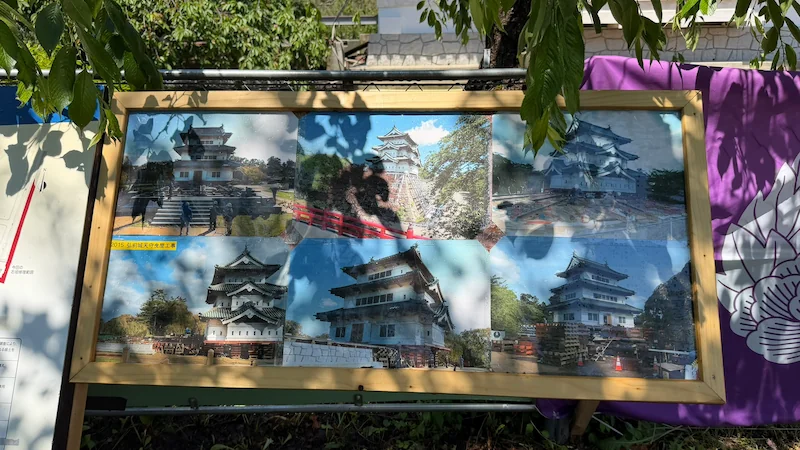
Keep relocation and stone wall repair work (May 2026) / Tap to enlarge
Current Status of Each Area (May 2026)
| Area / Building | Status (May 2026) |
|---|---|
| Keep exterior | Viewable from close range |
| Keep interior | Closed (from Nov 24, 2025 — several years) |
| Honmaru stone walls / keep base | Under repair — scaffolding visible |
| 3 corner turrets (Nijomaru) | Exterior viewable |
| Otemon Gate (Main Gate) | Open / viewable |
| Minami-uchi-mon (South Inner Gate) | Open / viewable |
| Higashi-uchi-mon (East Inner Gate) | Preservation repair (scaffolding, until approx. March 2027) |
| Higashi-mon (East Gate, Sannomaru) | Exterior viewable |
| Kame-ko-mon / Kitamon (North Gate) | Preservation repair (scaffolding, until approx. March 2027) |
| Moats, stone walls, earthworks | Fully viewable |
| Hirosaki Castle Information Center | Open year-round, free |
From fiscal year 2027 onward, construction scaffolding is expected to partially obstruct the keep exterior. From around autumn 2028, a full protective enclosure (suyane) is planned to cover the entire keep for the duration of the preservation work. If you want to see the keep exterior, an earlier visit is recommended. Please check the latest status on the official Hirosaki City website before visiting.
What You Can See During Construction
- Hirosaki Castle keep exterior (from the temporary foundation area)
- The three surviving corner turrets in the Nijomaru (Hitsujisaru, Tatsumi, Ushitora)
- Otemon Gate, Minamiuchimon Gate, and Higashiuchimon Gate — part of all five original gates (note: Higashiuchimon is partially hidden by preservation scaffolding until approx. March 2027)
- Gejo-bashi Bridge, Sugino Ohashi Bridge, and other historic bridges
- Inner moat (Uchi-bori) and the triple-moat layout and historic bridges
- Stone walls and earthworks throughout the grounds
- Hirosaki Castle Information Center (exhibits, castle stamp, goods)
What's Closed & When It Reopens
The keep return (hikimodoshi) is scheduled to finish in 2026, but interior viewing will stay closed for several more years during reinforcement work. From around autumn 2028, a full protective enclosure may cover the keep exterior, so an earlier visit is recommended if seeing the exterior unobstructed matters to you. Higashi-uchi-mon (East Inner Gate) and Kame-ko-mon (North Gate) are under preservation repair until approximately March 2027.
Getting There: Hirosaki Station to Hirosaki Castle
| Nearest Station | JR Hirosaki Station (JR Ou Line / Konan Railway Konan Line) |
|---|---|
| By Bus | From Hirosaki Station bus terminal: take a city bus, alight at "Shiyakusho-mae" (City Hall). Walk straight to the south entrance. Approx. 15 min, ¥200. |
| On Foot | From Hirosaki Station to Otemon Gate: approx. 2.3 km, ~30 min walk. Mostly flat. |
| By Taxi | Approx. 10 min from Hirosaki Station. Useful with luggage or in bad weather. |
| From Tokyo | Tokyo → Tohoku Shinkansen → Shin-Aomori Station (approx. 3 hrs) → JR Ou Line → Hirosaki Station (approx. 1 hr). Total: approx. 4 hrs. |
| From Aomori | Aomori Station → JR Ou Line → Hirosaki Station: approx. 45 min. |
| From Sapporo | Sapporo → Hokkaido Shinkansen → Shin-Hakodate-Hokuto → Tohoku Shinkansen → Shin-Aomori → JR Ou Line → Hirosaki: approx. 5.5–6+ hrs depending on connections. Verify timetable before travel. |
| Difficulty | Easy. Bus and walking routes are beginner-friendly. Flat terrain within the park. |
| English Support | The Information Center has English-language exhibits and videos; on-site signage is partly in English. Check current English support before visiting. |
Recommended Route
Below is a suggested walking route for first-time visitors. The route starts from the south entrance (Otemon Gate side), which is the main entrance closest to the bus stop and most convenient from Hirosaki Station. Each stop links to its section in our Buildings and Grounds guides.
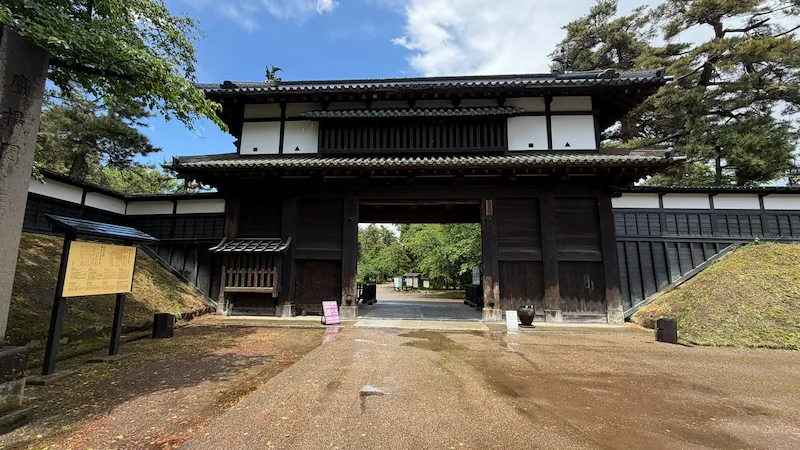 Enter through Ōtemon Gate
Start from Ōtemon Gate on the south side of Hirosaki Park. As one of the castle’s surviving gates, it makes a fitting and impressive entrance to your walk through the former castle grounds.
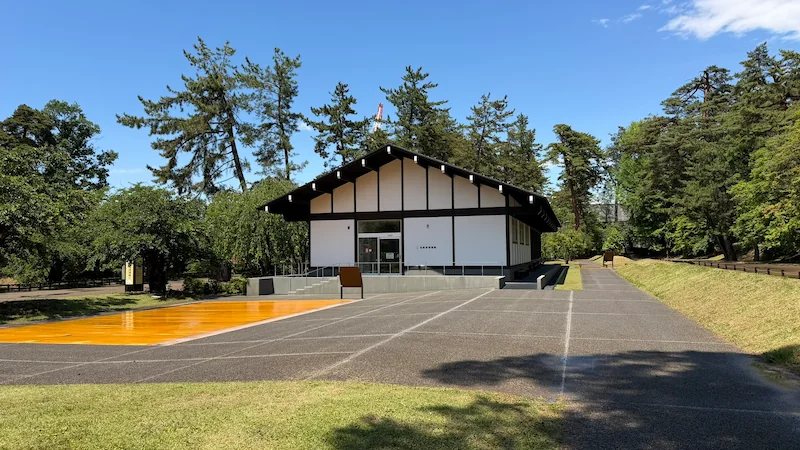 Get oriented at the Hirosaki Castle Information Center
After entering through Ōtemon Gate, head toward the Ninomaru area and stop first at the Hirosaki Castle Information Center. The videos and exhibits introduce the history of the Tsugaru clan, the development of Hirosaki Castle, and the background behind the relocation and return of the castle tower. This context will make the rest of your visit much more meaningful. You can also purchase a castle seal, known as a gojōin (castle seal), and a castle seal book here. The Japan’s Top 100 Castles stamp is available at both the Information Center and the Green Consultation Center.
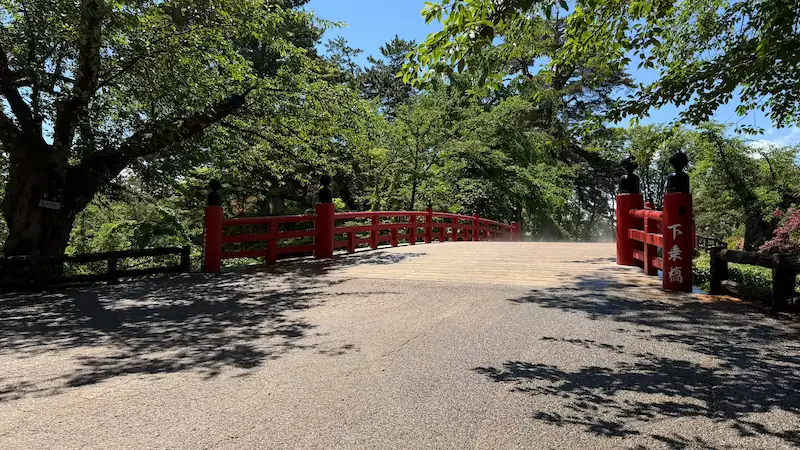 View the castle tower from Gejōbashi Bridge
From the Information Center, continue to Gejōbashi Bridge. This is one of the classic viewpoints for seeing Hirosaki Castle Tower, with the bridge, moat, and tower forming one of the park’s most recognizable scenes.
Walk through the Honmaru and Kita-no-Kuruwa
Cross Gejōbashi Bridge and enter the paid area, which includes the Honmaru and Kita-no-Kuruwa. In the Honmaru, you can see the castle tower up close, while the Kita-no-Kuruwa offers a quieter atmosphere and a sense of the castle’s inner layout.
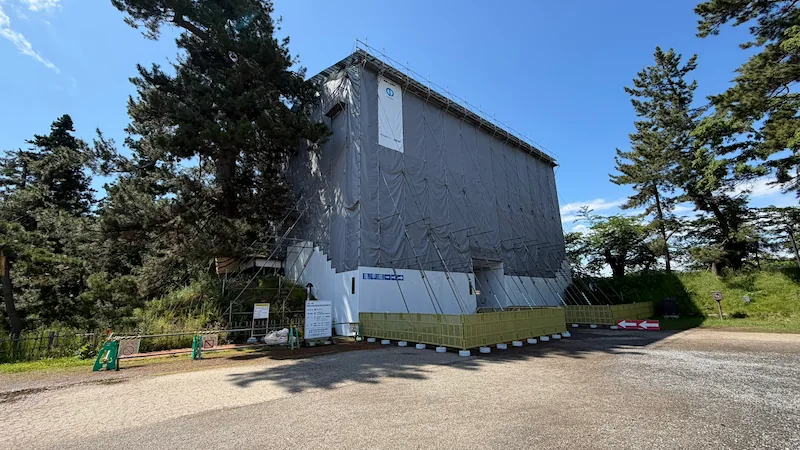 Continue to the Yon-no-Maru, North Gate, and Kikkō Bridge area
After exploring the Honmaru and Kita-no-Kuruwa, continue toward the Yon-no-Maru. Walking around the North Gate and Kikkō Bridge area helps you appreciate the northern side of the castle grounds and the scale of the former fortress.
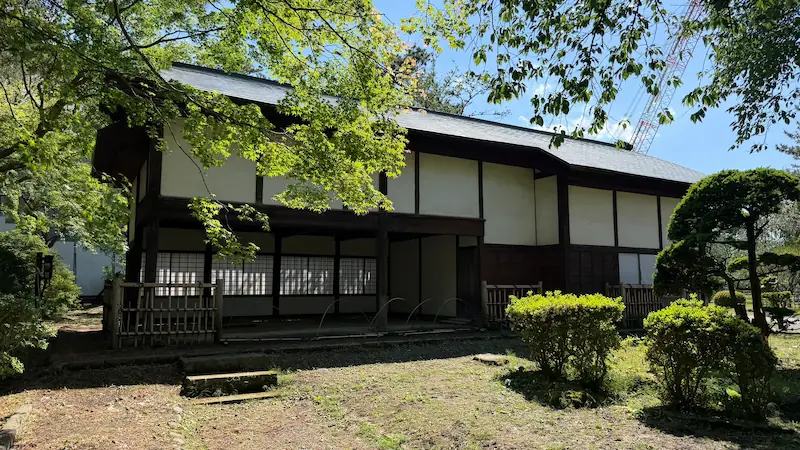 Head south through the Yoriki Guardhouse and Higashi-Uchimon Gate to the Sannomaru
From the Yon-no-Maru, walk south toward the Yoriki Guardhouse and Higashi-Uchimon Gate. Passing through Higashi-Uchimon Gate brings you into the Sannomaru area, allowing you to follow the connections between the castle’s gates and baileys as you move through the site.
 Return to Higashi-Uchimon Gate, pass through the Ninomaru, and continue toward the Hirosaki City Museum
After visiting the Sannomaru, return toward Higashi-Uchimon Gate and walk back through the Ninomaru as you head south. If you have time and are interested in exhibits related to the Hirosaki domain and local history, consider stopping at the Hirosaki City Museum on your way back toward Ōtemon Gate.
Continue past the museum area and return to your starting point at Ōtemon Gate. This route gives you a well-rounded walk through Hirosaki Castle’s key gates, bridges, baileys, moat views, and the castle tower area.
Time guide: Information Center + Keep area only ≈ 40 min / Full Honmaru + Nijomaru walk ≈ 1.5–2 hrs / All grounds including outer moats, Kita-no-kaku, and cherry tree spots ≈ 3+ hrs
Based on the author's May 2026 visit. This is a personal ranking, not an official recommendation from Hirosaki City or Hirosaki Park.
The interior is closed, but you can see one of Japan's 12 original keeps from close range. From fiscal 2027 scaffolding is expected to block part of the view, and from around autumn 2028 an enclosure may cover it, so the sooner the better.
Free, open year-round, and the quickest way to understand the keep's relocation and return before you see it. The gojōin is sold here.
Original turrets whose exteriors are all viewable. Few castles keep three.
One of the classic viewpoints for the keep, with the bridge and moat in the same frame. It is on the way from the Information Center to the Honmaru.
Wrapped in scaffolding for preservation repair until approx. March 2027. Not worth a detour for the exteriors until the work is done.
Castle Stamp (Gojōin), 100 Famous Castles Stamp & Goods
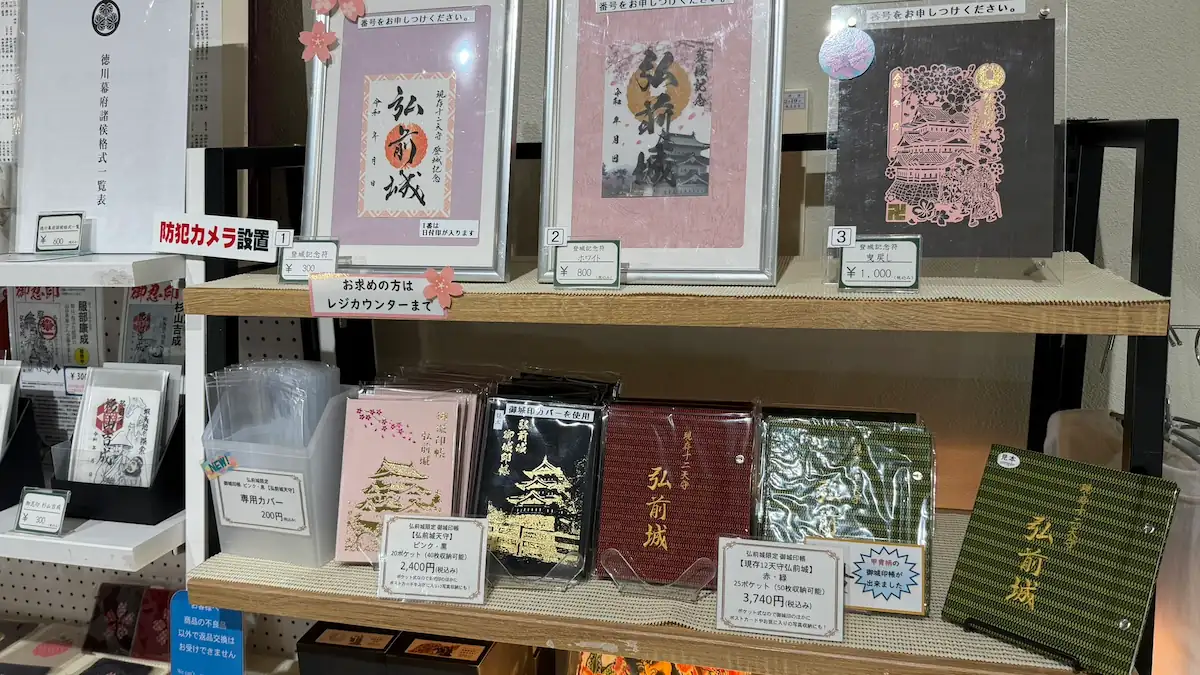
During the author's May 2026 visit, the Hirosaki Castle gojōin (castle seal) was available for purchase at the Hirosaki Castle Information Center. Availability and designs are subject to change — please check before visiting.
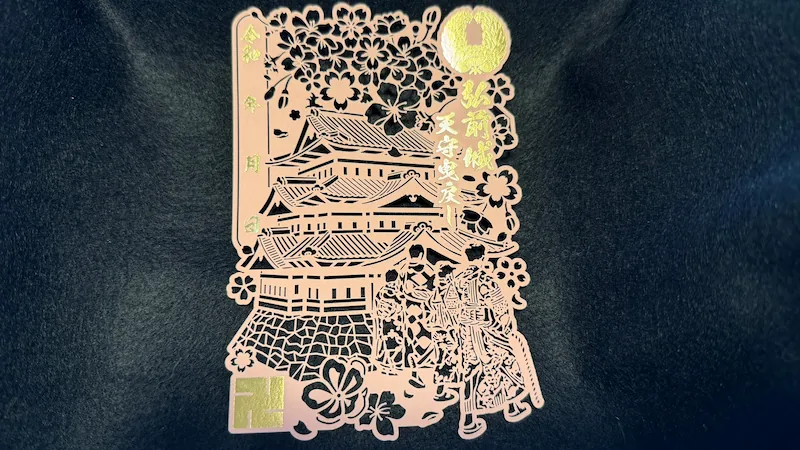
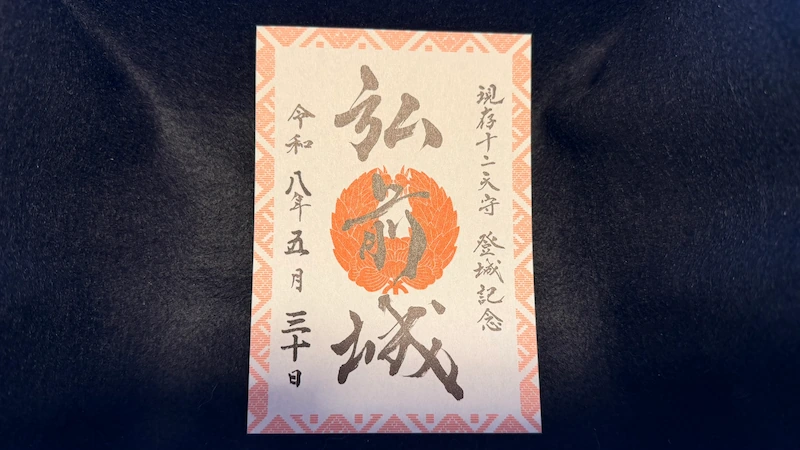
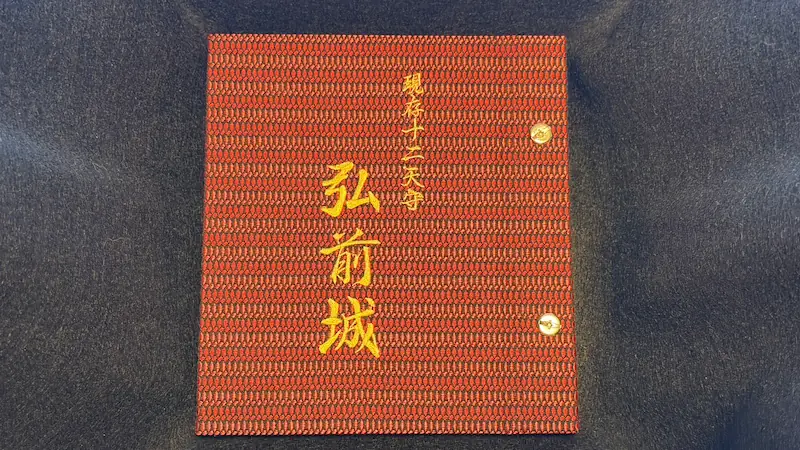
Hirosaki Castle gojōin castle seals obtained at the Information Center (May 2026) / Tap to enlarge
At the Information Center, the author also found goods for sale during May 2026 — including the gojōin stamp book. The Japan 100 Famous Castles stamp is available at the Information Center and the Green Consultation Center (Midori no Soudan-jo) inside the park.
Cherry Blossoms at Hirosaki Park
Hirosaki Castle is one of Japan's most celebrated cherry blossom destinations, with approximately 2,600 cherry trees of 52 varieties. Peak bloom is typically late April to early May, and the Cherry Blossom Festival brings heavy crowds and full parking lots. Japan's largest-girth and oldest Somei Yoshino trees are covered in our Grounds Guide.
Why Hirosaki Castle Is Worth It
Hirosaki Castle is one of only 12 castles in Japan with an original surviving keep — and beyond the keep, it retains 3 original corner turrets and 5 original gates, all designated Important Cultural Properties. Few castle sites in Japan preserve this much original Edo-period architecture in one place. To understand why the current keep is not the original — and the lightning strike and rebuilding that shaped its history — see our history guide. For a building-by-building walkthrough of the keep, turrets, and gates, see the architecture guide.
Frequently Asked Questions
Hirosaki City scheduled the keep's move back onto its original stone base for July to mid-November 2026. Roof and wall repairs follow, and news reports in August 2026 said the keep is scheduled to reopen to the public in fiscal 2033. The exterior is still viewable from close range.
Yes. The keep exterior is fully visible from close range. From around autumn 2028, a protective enclosure may cover it during preservation work.
Not at the moment. Interior viewing has been suspended since November 24, 2025 for the keep's return to its original base and the structural reinforcement and preservation work that follows. News reports in August 2026 said the keep is scheduled to reopen to the public in fiscal 2033. The keep exterior can be viewed from close range.
In 2015 the 400-ton wooden keep was moved approximately 77.62 meters so the stone walls of its base could be repaired. Hirosaki City scheduled the move back for July to mid-November 2026, and a public pulling event was held on August 21–23, 2026.
Yes, absolutely. Hirosaki Castle has more surviving original buildings than almost any other castle in Japan. Beyond the keep, you can see 3 original corner turrets, 5 original castle gates, extensive stone walls, a triple-moat layout, and the keep exterior — all Important Cultural Properties. The historical depth and landscape of Hirosaki Park make it one of the most rewarding castle visits in the country.
The keep is original — it has never been demolished or reconstructed. However, it is not the castle's first tower. The original five-story keep built around 1611 was destroyed by lightning in 1627. The current three-story keep was built in 1810 by the 9th domain lord. It is one of Japan's 12 surviving original keeps (現存天守), meaning it has stood without major rebuilding since the Edo period. For more on this history, see the History page.
The Honmaru and Kitanokaku cost ¥320 for adults and ¥100 for children from April 1 to November 23. A combined ticket including the Botanical Garden is ¥520 for adults. In winter (November 24 – March 31) the Honmaru and Kitanokaku are free, and most of Hirosaki Park is free year-round.
The most practical route: Tokyo → Tohoku Shinkansen → Shin-Aomori Station (approx. 3 hrs) → JR Ou Line → Hirosaki Station (approx. 1 hr). Total journey is approximately 4 hours. From Hirosaki Station, take a city bus (~15 min) or walk (~30 min) to the park's south entrance. Overnight stay in Hirosaki or Aomori City is recommended if you want to explore at a relaxed pace.
Keep area and Honmaru only: approximately 40 minutes. Main grounds including turrets, gates, and moats: 2–3 hours. Full experience including the Information Center, castle stamps, and cherry tree spots: approximately 3.5 hours. The grounds are spacious, so comfortable walking shoes are recommended.
Hirosaki Castle is one of Japan's most celebrated cherry blossom destinations, with approximately 2,600 cherry trees of 52 varieties. The park also contains what is considered Japan's oldest Somei Yoshino cherry tree (planted in 1882, designated Aomori Prefecture Natural Monument) and Japan's largest-girth Somei Yoshino tree (trunk circumference 5.82m, as of October 2023). Peak bloom is typically late April to early May.
Yes — Hirosaki Park is the public park developed on the former castle grounds. Hirosaki Castle's original structures, stone walls, and moats are preserved within the park. Most of the park is freely accessible; the Honmaru (Main Bailey) and Kitanokaku (North Enclosure) require paid admission during the April–November season (Adults ¥320).
During the author's May 2026 visit, the Hirosaki Castle gojōin (castle seal) was available at the Hirosaki Castle Information Center inside the south entrance. The Japan 100 Famous Castles stamp is available at the Information Center and the Green Consultation Center (Midori no Soudan-jo). Availability is subject to change — check before visiting.
Paid parking is available at several lots around Hirosaki Park. During major events such as the Cherry Blossom Festival (late April – early May), parking fills quickly and the surrounding roads become congested. Using public transport from Hirosaki Station is recommended during busy periods.
In Hirosaki, Aomori Prefecture, in the Tohoku region of northern Japan — about 4 hours from Tokyo by train.
Most of Hirosaki Park is free. The Honmaru and Kitanokaku cost ¥320 for adults during the April–November season; in winter they open free of charge.
Yes. The Hirosaki Park official website has an English version at hirosakipark.com/en, linked in the Tickets section of this guide. Check it for the latest fees, hours and construction status.
Yes — Aomori to Hirosaki is about 45 minutes by JR Ou Line, making a half-day or day trip easy.
The Information Center is open 9:00–17:00 year-round. The paid Honmaru area operates seasonally; check official sources for current hours.
Yes. The original keep, 3 turrets, 5 gates, and the triple-moat layout are there year-round, and the park is far less crowded than in late April.
The Information Center offers exhibits and videos, and on-site signage is partly in English. Check current English support before visiting.
No advance booking is needed for the castle; tickets are sold on site.
Explore Hirosaki Castle Further
Related Articles and Nearby Historic Sites
Hirosaki, where the Main Hall of Hirosaki Toshogu Shrine stands, is home to many historic sites connected with the Tsugaru clan, including Hirosaki Castle. Other shrines and temples associated with the Tsugaru family, such as Takateru Shrine and Choshoji Temple, are also well known in Aomori Prefecture.
☕ Support Following the Shogun
This site is produced through field research across Japan.
If this guide helped you plan your visit, your support keeps the research going.

Scan to support via QR code


comment