


Ninja Temple & Nagamachi Samurai District
Earthen-walled samurai lanes at Nagamachi, a museum recreating the homes of foot soldiers, the geisha atmosphere of Nishi Chaya, the trick-filled “Ninja Temple” Myoryuji, and Maeda-linked prayer and memorial temples — explore 10 spots in the Nagamachi & Teramachi area with 360° panoramas.
Toshiie Maeda was the founding lord of the Kaga Domain, which once governed the Kaga, Noto, and Ecchu provinces. This area concentrates the everyday culture of that domain’s Edo-period life — the Nagamachi & Teramachi “living heritage corridor.” Earthen-walled lanes and canals run through Nagamachi, once home to samurai; a museum recreates the houses where foot soldiers actually lived; the Nishi Chaya District preserves the atmosphere of a geisha entertainment quarter; Myoryuji — the “Ninja Temple” — was built with tricks to deceive attackers; and prayer and memorial temples linked to the Maeda family are scattered throughout. Add the celebrated gardens of the Nomura family residence and Sendake Garden, and this district reveals a layered picture of samurai daily life, defensive urban planning, and religious and artistic culture. This page walks through each spot with 360° photography, covering the architecture, streetscape, historical background, and practical visiting times and access for each.
Hochizan Kudokuin Dairenji Temple
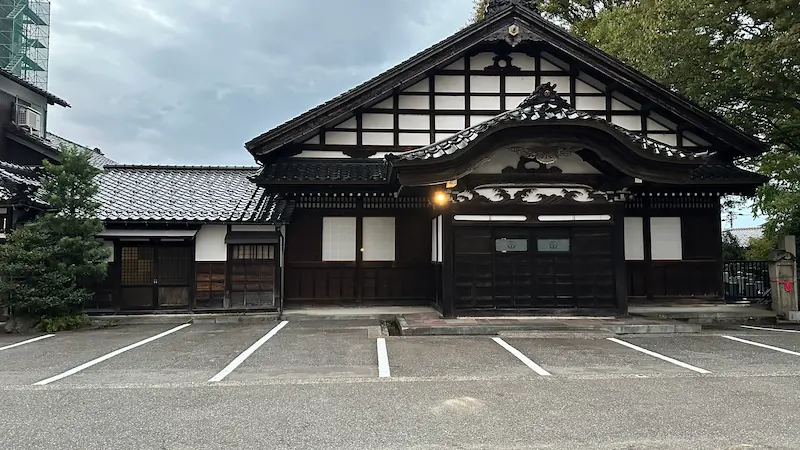
Dairenji Temple is a Jodo-shu (Pure Land) Buddhist temple in the Nomachi district of Kanazawa, formally named Hozan-in Kudokuin Dairenji. It was founded in 1604 by Kozuka Awaji-no-kami Hidemasa, a senior retainer who served Toshiie Maeda, the founding lord of the Kaga Domain. Its mountain name, “Hozan” (Treasure Pond Mountain), comes from the way the temple grounds sit lower than the surrounding street — likened to a pond overflowing with the Buddha Amida’s teachings. Records suggest the temple originally stood near Kanazawa Castle before being relocated to its present site in Nomachi.
- Memorial Hall for Princess Go: Built to honor Princess Go — the fourth daughter of Toshiie Maeda and wife of Hideie Ukita — the temple enshrines her mortuary tablet and a personal Kannon statue as temple treasures.
- Memorial Towers for Go and Hideie: Memorial towers to Princess Go and her husband Hideie Ukita stand side by side on the grounds.
- West Gate & Princess Go Relief: A relief of Princess Go was unveiled in front of the west gate in 1994, followed the next year by a memorial service marking the 360th anniversary of her death.
- Merchant & Scholar Graves: Gravestones connected to the tea merchant “Dogoya” and the Confucian scholar Korei Fujita are scattered across the grounds.
- Jizo Statues on the Grounds: Jizo (guardian bodhisattva) statues, including one dedicated to “Namu Enmei Jizo,” reflect the temple’s deep ties to Jizo worship.
⏳ Visiting Time: Grounds only: about 5 minutes / Including an interior visit: about 15 minutes (reservation required)
🗺 Address: 2-1-14 Nomachi, Kanazawa, Ishikawa
🚶 Access: A 2-minute walk from the “Hirokoji” stop on the Kanazawa Loop Bus or Hokuriku Railroad local bus, or a 1-minute walk from the “Nishi Chaya District” stop.
⭐ Recommendation: Historical Value ★★★ / Visual Appeal ★★ / Experiential Value ★★
| Year Founded | 1604 |
|---|---|
| Founder | Kozuka Awaji-no-kami Hidemasa |
| School / Mountain Name | Jodo-shu (Pure Land) Buddhism — Hozan-in Kudokuin |
| Formal Name | Hozan-in Kudokuin Dairenji |
| Surviving Structures | Main hall (rebuilt 1815), west main gate, memorial towers, and more |
| Cultural Designation | No specific cultural-property designation on record |
| Notes | Well known as the memorial hall for Princess Go (Toshiie’s fourth daughter, wife of Hideie Ukita) |
A Name Inspired by the Land: The temple grounds sit lower than the surrounding street — likened to a pond — which is said to be the origin of the mountain name “Hozan” (Treasure Pond).
Rebuilt with Maeda Support: The current main hall was rebuilt in 1815; the temple’s 15th head priest, Nyuyo, is said to have received a donation of 50 pine trees from the Maeda family for the project.
Princess Go’s Fate and Memorial: After Hideie Ukita was defeated at the Battle of Sekigahara and exiled, Princess Go returned to Kanazawa; Dairenji became an important site for honoring the bond between the couple. In 1995, on the 360th anniversary of her death, hair relics of Go and Hideie were divided and jointly enshrined here.
Nishi Chaya District 🎥 360°
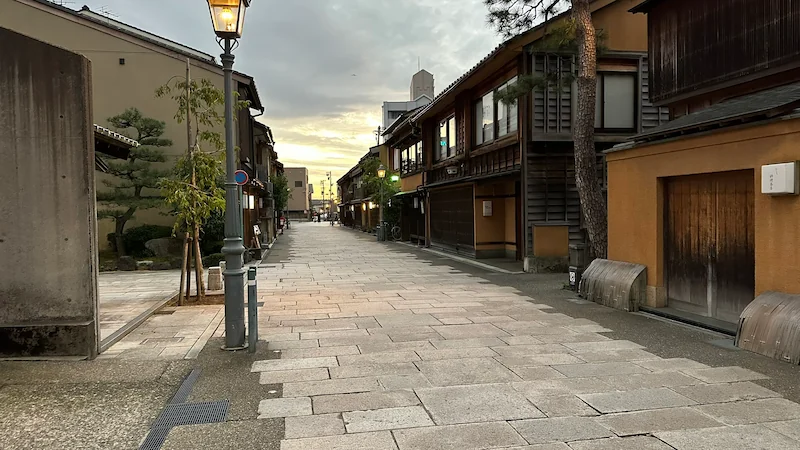
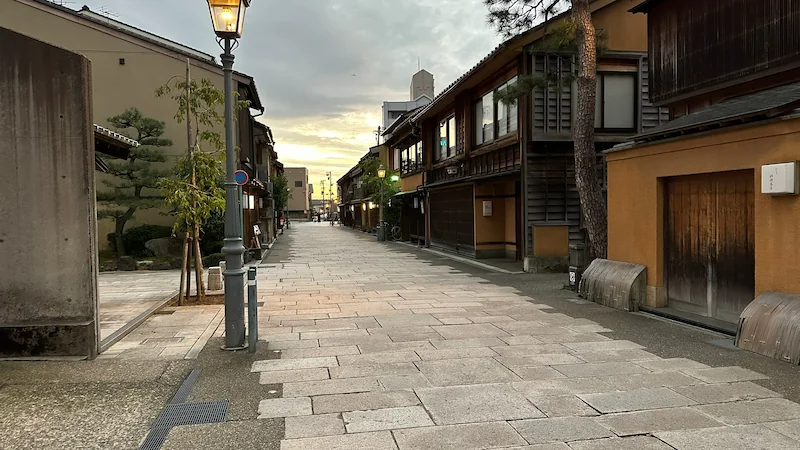
The Nishi (“West”) Chaya District is one of Kanazawa’s three historic geisha entertainment districts, alongside Higashi Chaya and Kazuemachi. It traces its origins to 1820, when the Kaga Domain granted official permission for the district to operate. Smaller than its counterparts — the main street runs only about 100 meters — it preserves traditional wooden teahouse buildings with distinctive latticed windows (kimusuko) and a quiet, understated atmosphere. Today, five teahouses (Meigetsu, Mine, Han-ya, Asa-no-ya, and Hana-no-yado) operate here, with a total of 15 geisha in residence — the largest number among Kanazawa’s three chaya districts.
- Nishi Chaya Museum (former Kichibei-ro Teahouse): Built on the site of the Kichibei-ro teahouse, once frequented by Taisho-era novelist Seijiro Shimada, with a reconstructed teahouse interior.
- Former Nishi Kenban Office: A Taisho-era building with a Western-style exterior that once served as the geisha registry office; now a Registered Tangible Cultural Property.
- Historic Streetscape: Rows of atmospheric two-story wooden teahouses with latticed windows and kimusuko screens line the street.
- Living Geisha Culture: In the evening you may hear the sound of shamisen and drums — a reminder that this is still a working geisha district.
- A Growing Sweets Scene: In recent years, candied-bean shops, traditional confectioners, and cafes have opened alongside the historic teahouses.
⏳ Visiting Time: Strolling the street: 10–20 minutes / Including museum and teahouse interiors: 40 minutes
🗺 Address: Nomachi 2-chome, Kanazawa, Ishikawa (Nishi Chaya District)
🚶 Access: A 3-minute walk (about 250 m) from Dairenji Temple.
⭐ Recommendation: Historical Value ★★★ / Visual Appeal ★★★ / Experiential Value ★★
| Established | 1820 (officially licensed) |
|---|---|
| Name Origin | Named “Nishi” (West) for its location west of Kanazawa Castle |
| Building Style | Two-story wooden teahouse buildings with latticed windows lining the street |
| Key Sites | Nishi Chaya Museum (former Kichibei-ro teahouse) and the former Nishi Kenban geisha registry office (a Registered Tangible Cultural Property) |
| Geisha Presence | Several teahouses remain active, and the geisha tradition continues today |
| Condition | Well preserved; the street retains its historic atmosphere |
| Notes | Fewer tourists than Higashi Chaya, making it well suited to a quiet, unhurried stroll |
Once Known as “Nishi-no-Kuruwa”: At its founding the district was called “Nishi-no-Kuruwa” (the Western Enclosure), reflecting how licensed pleasure districts were physically separated from the rest of the city.
The Most Geisha of the Three Districts: Nishi Chaya has the largest number of active geisha among Kanazawa’s three historic chaya districts.
Close to the Ninja Temple: Nishi Chaya is within easy walking distance of Myoryuji, the famous “Ninja Temple,” making it easy to combine the two on one route.
Shokyuzan Myoryuji Temple (the “Ninja Temple”)
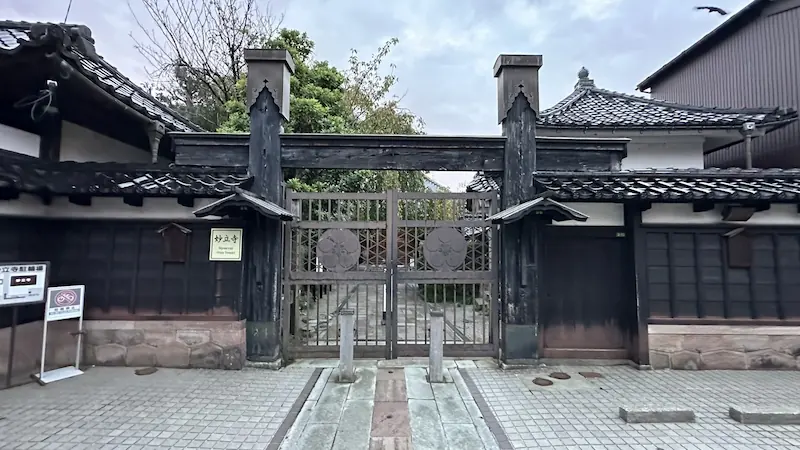
No visit to Kanazawa is complete without Shokyuzan Myoryuji, better known as the “Ninja Temple.” Despite the nickname, the temple has no historical connection to actual ninja — it earned the name because of its elaborate defensive tricks. Under shogunate surveillance, the Kaga Domain built this Nichiren-sect temple as a fortified structure designed to confuse and delay any attacker in the event of a crisis. It was established when the third lord of Kaga, Toshitsune Maeda, relocated a prayer hall that had previously stood inside Kanazawa Castle.
- A Trapdoor Offering Box: Legend holds that removing the offering box triggers the floor beneath it to drop away.
- Hidden Stairs and Moving Floors: Removing floorboards reveals hidden stairways, and some passages are said to shift — the building is riddled with tricks like these.
- Lookout Tower: A watchtower at the peak of the main hall’s roof is said to have allowed a view over a wide distance.
- An Escape-Route Well: Tradition holds that a well beneath the temple concealed an escape route leading toward Kanazawa Castle.
- A Deceptively Complex Interior: What looks like a two-story building from outside actually hides seven levels, 23 rooms, and 29 staircases.
- Low Tea-Room Ceilings: One tea room reportedly has an intentionally low ceiling, designed to prevent an attacker from swinging a weapon.
- The Sword-and-Plum-Blossom Crest: The Maeda family’s “sword and plum blossom” crest appears throughout the temple’s decoration, a visible link to the Kaga Domain.
🌎 Official Website (Japanese only)
⏳ Visiting Time: Main highlights: about 30 minutes / In-depth visit: about 40 minutes
🗺 Address: 1-2-12 Nomachi, Kanazawa, Ishikawa
🚶 Access: A 4-minute walk (about 240 m) from the Nishi Chaya District.
⭐ Recommendation: Historical Value ★★★ / Visual Appeal ★★★ / Experiential Value ★★★
| Founded / Relocated | Founded in 1643; relocated to the Teramachi temple district in 1659 (its present location) |
|---|---|
| School / Mountain Name | Nichiren Buddhism / Shokyuzan |
| Structure & Features | Appears to be two stories from the outside but conceals seven levels, 23 rooms, and 29 staircases, riddled with trapdoors, hidden stairways, secret passages, and a lookout tower. |
| Purpose & Role | Served as a Kaga Domain prayer hall, and is thought to have doubled as a fortified outpost within the Teramachi temple district. |
| Visiting Restrictions | Interior visits are by reservation only, with a required guided tour. Photography and recording are prohibited inside. |
| Hours & Admission | Usually 9:00 a.m.–4:00 p.m. (until 4:30 p.m. March–October); closed year-end/New Year and on memorial-service days. Admission: adults ¥1,200 / elementary school students ¥800 (subject to change). |
| Address | 1-2-12 Nomachi, Kanazawa, Ishikawa |
| Notes | The temple uses the Maeda family’s “sword and plum blossom” crest. |
Where the “Ninja Temple” Name Comes From: Ninja were never actually involved — the nickname comes from the building’s trick-filled, ninja-hideout-like structure.
Part of a Defensive Temple District: The layout of the Teramachi temple district as a whole is thought to reflect a defensive design, with temples doubling as watch posts and fortified outposts for the castle town.
A Hidden Viewing Room: Tradition holds that the main hall contained a concealed mezzanine-like space where the lord could observe worship without being seen by ordinary visitors.
Senjuin Temple
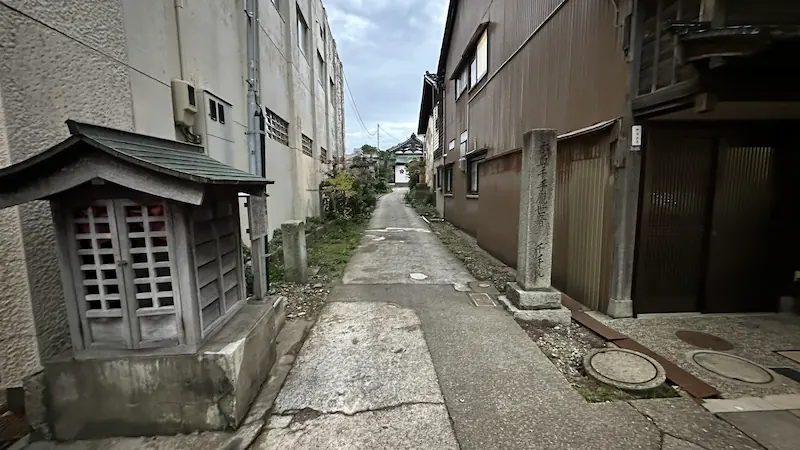
Senjuin is a Koyasan Shingon-sect temple within Kanazawa’s Teramachi temple district, known as a prayer temple long favored by the Maeda ruling family. Tradition holds that Toshiie Maeda himself prayed here for victory before the Battle of Suemori in Noto, after which the temple was treated as an official prayer site for the domain’s lords. The grounds hold an Eleven-Faced Kannon statue said to have been entrusted to the temple by the Maeda family, along with stone Buddha statues and roadside Jizo figures — a quiet corner of the city with deep historical roots.
- Eleven-Faced Kannon Statue: Said to have been entrusted to the temple by the Maeda family, this statue symbolizes the temple’s deep ties to the ruling clan.
- Jizo and Stone Buddha Statues Along the Approach: Numerous Jizo and stone Buddha statues line the approach, greeting visitors with quiet reverence.
- Sutra Container & Temple Treasures: Records describe a sutra container said to hold a prayer letter from the Maeda family, engraved with finely detailed crane, tortoise, and pine-bamboo-plum motifs.
- Plum-Blossom Crest on the Main Hall: Tradition holds that the Maeda family’s plum-blossom crest appears on the exterior of the main hall.
- A Battle Prayer Tradition: Toshiie Maeda is said to have prayed here before the Battle of Suemori in Noto, after which the temple became a site of prayer for successive domain lords.
⏳ Visiting Time: Grounds only: about 15–20 minutes / A closer look at the interior and statues: about 30 minutes
🗺 Address: 3-1-26 Nomachi, Kanazawa, Ishikawa
🚶 Access: A 6-minute walk (about 450 m) from Myoryuji Temple.
⭐ Recommendation: Historical Value ★★★ / Visual Appeal ★★ / Experiential Value ★
| School / Mountain Name | Koyasan Shingon Buddhism / Chokyuzan Senjuin |
|---|---|
| Location | 3-1-26 Nomachi, Kanazawa, Ishikawa |
| Principal Image & Treasures | Senju Kannon (thousand-armed Kannon); an Eleven-Faced Kannon said to be a Maeda family heirloom; stone Buddha statues; a sutra container |
| Founding & Relocation History | Tradition holds the temple was founded in Tsurugi during the Tencho era (824–834), later moved to Kenrokuzaka, then relocated again to Teramachi in the Genna era |
| Role | A prayer temple for the Maeda ruling family, with a long-standing connection to the domain’s lords |
| Visiting | Grounds and interior open to visitors; no admission fee |
| Notes | Some sources note that goshuin (temple seal stamps) are not normally offered here |
Layered Founding Traditions: The temple’s founding is traditionally dated to the Tencho era, but repeated relocations and rebuildings over the centuries have left overlapping accounts of its earlier sites.
A Domain Prayer Site: Tradition holds that founding lord Toshiie Maeda prayed here for victory, establishing the temple’s status as a site visited by successive generations of domain lords.
No Admission Fee: Both the grounds and the temple interior are said to be free to visit, though it is worth confirming current conditions on-site.
Gesshōji Temple
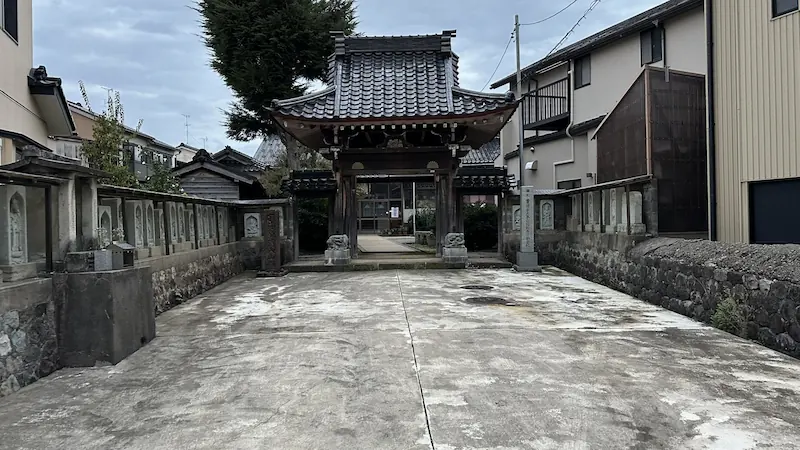
Gesshoji is the memorial temple of Shunkein (Princess Koh), the eldest daughter of Toshiie Maeda and Lady Matsu. Under the third lord, Toshitsune Maeda, the temple’s grounds were expanded and it once housed grand halls, but these were later lost to the great Rokuto fire. The current buildings were rebuilt using materials relocated from a Maeda family residence. The grounds are notable for a large collection of stone Buddha statues, said to have been gathered from Mt. Utatsu and the old Tsurugi highway.
- Stone Buddha Collection: Tradition holds that 33 Kannon statues each from Mt. Utatsu and the old Tsurugi highway were gathered and enshrined here.
- Main Gate: Retains elements of its earlier architectural style, said to have survived past fires.
- Rebuilt Main Hall: A dignified hall rebuilt using materials relocated from a Maeda family residence.
- Ties to Princess Koh (Shunkein): As the memorial temple for Princess Koh, a daughter of Toshiie Maeda and Lady Matsu, the temple carries a direct link to the Maeda family line.
- Visiting Restrictions: The grounds are free and open to stroll, but interior viewing is generally by reservation only, reflecting the priority placed on preserving the buildings.
⏳ Visiting Time: Grounds only: about 15–20 minutes / Including an interior visit: about 30–45 minutes (reservation required)
🗺 Address: 3-20-34 Nomachi, Kanazawa, Ishikawa
🚶 Access: About a 3-minute walk from the “Numatamachi” stop on the Hokuriku Railroad local bus.
⭐ Recommendation: Historical Value ★★★ / Visual Appeal ★★ / Experiential Value ★★
| Year Founded | 1652 |
|---|---|
| Founder | Nagatoki Maeda (son of Princess Koh) |
| Founding Priest | Egaku Daiosho (5th head priest of Ryuenji) |
| School | Soto Zen (Tokozan Gesshoji) |
| Structure & Features | Main hall, gate, and priests’ quarters include many relocated building elements; a collection of stone Buddha statues is enshrined on the grounds |
| Historical Changes | Destroyed by fire; rebuilt and reconstructed with relocated materials in the Meiji era |
| Current Condition | Buildings survive; interior visits are reservation-only and limited |
| Cultural Designation | No specific designation on record |
| Notes | The stone Buddha collection is said to include 33 Kannon statues each from Mt. Utatsu and the old Tsurugi highway; the grounds are free to visit |
Rebuilt After the Great Rokuto Fire: Under third lord Toshitsune Maeda the temple once held grand halls, but these were lost to the great Rokuto fire; the present buildings were rebuilt using materials relocated from a Maeda family residence.
Nagamachi Samurai District 🎥 360°
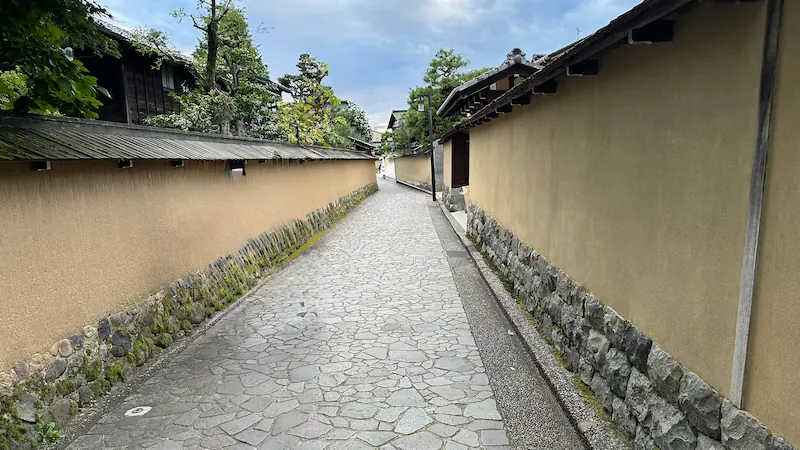
The Nagamachi Samurai District preserves the former residential quarter of upper- and middle-ranking samurai during the Kaga Domain era. Cobblestone lanes, ochre-colored earthen walls, and the gentle flow of the Onosho Canal all remain, offering a taste of Edo-period castle-town atmosphere. Conveniently close to the lively Korinbo and Katamachi districts near Kanazawa Station, it offers a striking contrast — step off the main streets and you enter a hushed, unhurried world. Strolling here, visitors can intuitively sense the layout of a samurai residence and the deliberately winding, defensive road design of a castle town.
- The Nomura Family Residence: The only residence in this area with its interior open to the public, notable for its garden and shoin-style samurai reception rooms, with old trees, stone lanterns, and a winding stream in harmony.
- Cobblestone Lanes and Earthen Walls: The narrow, deliberately winding “crank” streets and earthen-walled lanes preserve the traces of a defensively designed castle town.
- Scenery Along the Onosho Canal: A canal runs in front of the residences, and the contrast between flowing water and earthen walls creates an especially evocative scene.
- Ashigaru Museum: A museum with relocated and reconstructed foot-soldier (ashigaru) residences, offering a glimpse into their everyday lives.
- Kanazawa Shinise Kinenkan: A relocated former merchant house (originally the Nakaya Pharmacy) recreating the atmosphere and displays of an old Kanazawa business.
- Winter “Komo-gake” Straw Matting: In winter, the earthen walls are wrapped in straw matting (komo-gake) to protect them from snow and frost, creating an especially atmospheric winter scene.
⏳ Visiting Time: Main highlights: about 10 minutes / A leisurely visit: about 20 minutes
🗺 Address: Nagamachi, Kanazawa, Ishikawa
🚶 Access: About 18 minutes from Kanazawa Station by Hokutetsu bus bound for Korinbo.
⭐ Recommendation: Historical Value ★★★ / Visual Appeal ★★★ / Experiential Value ★★
| Period | Edo period, under Maeda domain rule |
|---|---|
| Primary Use | Residential quarter for upper- and middle-ranking Kaga Domain samurai |
| Structure & Features | Earthen walls, cobblestone lanes, narrow winding “crank” streets, long gate-houses, and residences with private gardens |
| Preservation | Lanes and walls are well preserved; the Nomura family residence is one of the few open to the public |
| Cultural Designation | Designated as a traditional environment preservation district and landscape district |
| Notes | Nearby facilities include the reconstructed Ashigaru Museum, the Shinise Kinenkan (Old Merchant House Museum), and a yuzen-dyeing museum |
The “Goppo Stone”: Large stones known as “goppo-ishi” sit outside many Nagamachi homes; records suggest they were used to knock packed snow off wooden clogs (geta).
Where the Name “Nagamachi” Comes From: One theory holds the district takes its name from the Naga family of samurai who once had residences here; another simply points to the long (naga) stretch of the street itself.
Roads Built for Defense: Rather than running straight, the streets were deliberately bent into “crank” shapes to block sightlines — a design believed to reflect defensive intent.
Maeda Tosanokami-ke Shiryokan (Maeda Tosanokami Family Museum)
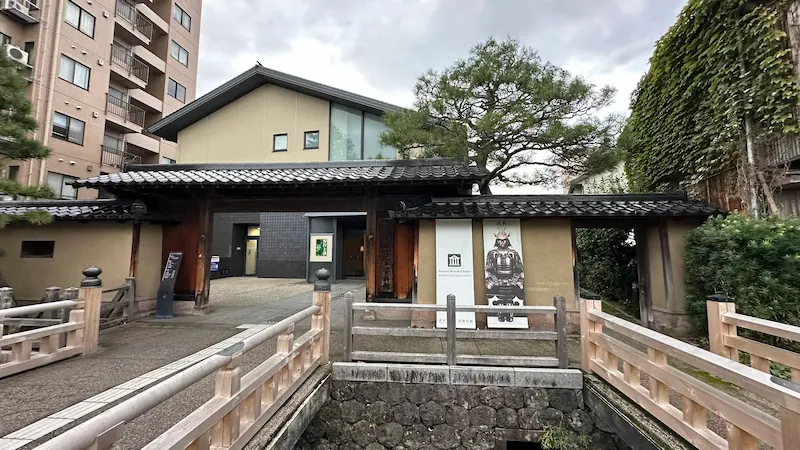
The Maeda Tosanokami-ke Shiryokan preserves and displays heirlooms of the Maeda Tosanokami family, one of the most prestigious retainer families of the Kaga Domain. The family was founded by Toshimasa Maeda, the second son of Toshiie Maeda, and ranked among the “Kaga Hakke” — the eight most senior retainer families — playing a deep role in domain administration while preserving a rich collection of documents, letters, and household objects. Through displays that bring samurai culture to life, the museum reveals the history and role of a senior retainer family that is often overshadowed by the main Maeda line itself.
- Documents and Letters of the Maeda Tosanokami Family: Correspondence with the main Maeda house and records related to family succession offer valuable insight into shogunate and domain history; the permanent display is limited to roughly 80 items.
- Household Objects, Armor, and Family Heirlooms: Finely made everyday tools, armor, and decorative household items reveal the details of samurai daily life.
- An Interior Courtyard and Japanese Garden Viewing Room: The building includes an interior courtyard passage and an attached Japanese-garden viewing room, adding atmosphere as visitors move through the space.
- Special and Seasonal Exhibitions: Around four special exhibitions are held per year, including recent displays on Edo-period publishing culture.
- A Senior Retainer’s Perspective: The exhibits complement the story of the main Maeda house by showing the daily life, thought, and culture of a senior retainer family.
🌎 Official Website (Japanese only)
⏳ Visiting Time: A quick overview: about 15 minutes / Reading the exhibits in detail: about 40 minutes
🗺 Address: 2-10-17 Katamachi, Kanazawa, Ishikawa
🚶 Access: A 5-minute walk (about 350 m) from the Nagamachi Samurai District.
⭐ Recommendation: Historical Value ★ / Visual Appeal ★★★ / Experiential Value ★★
| Year Opened | April 27, 2002 (newly built) |
|---|---|
| Operator | A City of Kanazawa facility, operated by the Kanazawa Cultural Promotion Foundation |
| Floor Area | About 1,098 m² |
| Collection Size | About 9,000 items, including some designated Ishikawa Prefectural Cultural Properties |
| Main Exhibits | Historical documents, paintings and calligraphy, household objects, armor and weapons, and records related to family succession |
| Admission | Adults ¥310; groups of 20+ ¥260; ages 65+/visitors with disabilities ¥210; high school age and under free |
| Hours | 9:30 a.m.–5:00 p.m. (last entry 4:30 p.m.) |
| Closed | Mondays (or the following weekday if Monday is a holiday), year-end/New Year, and exhibition change-over periods |
| Address | 2-10-17 Katamachi, Kanazawa, Ishikawa (near the Nagamachi Samurai District) |
| Access | About a 5-minute walk from the “Korinbo” stop on the castle-town loop bus or Hokutetsu bus, or immediately next to the “Shinise Kinenkan” stop on the Kanazawa Furatto Bus |
| Suggested Visit Length | About 30 minutes (45–60 minutes if viewing exhibits in detail) |
| Notes | A combination ticket with the adjacent Shinise Kinenkan (Old Merchant House Museum) is available |
The Family’s Lineage: Founding ancestor Toshimasa Maeda was the second son of Toshiie Maeda and his wife Matsu, and the family continued as senior retainers through to the end of the shogunate era.
A Combined Ticket with the Shinise Kinenkan: A combination admission ticket with the nearby Kanazawa Shinise Kinenkan (Old Merchant House Museum) is available, making it efficient to visit both together.
A Compact but Rewarding Visit: Visitor reviews describe the museum as fairly compact, but note that reading the displays carefully can easily take 90 minutes or more.
Nomura Family Samurai Residence
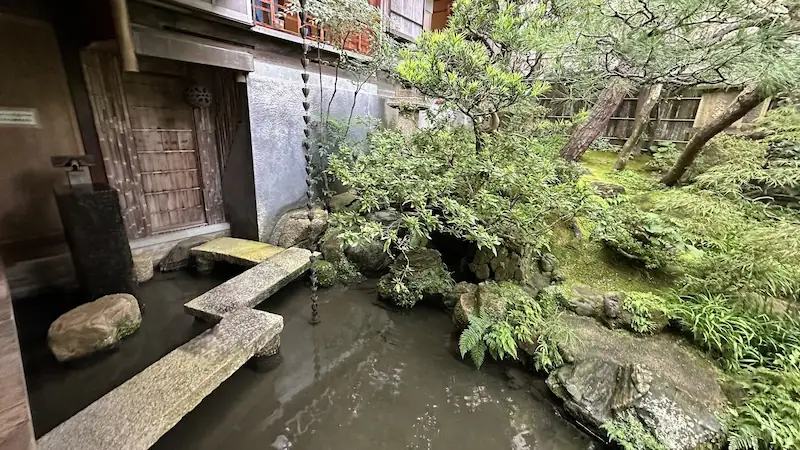
Set within an area of Kanazawa that still preserves its old castle-town atmosphere, the Nomura Family Samurai Residence occupies the former estate of a distinguished family whose founder, Denbei Nobusada Nomura, served the Kaga Domain during the Edo period. For eleven generations, the family held magistrate posts within the domain, and the residence — its layout, garden, earthen walls, and cobblestone paths — still conveys the refined culture of upper-ranking samurai life. The grounds hold garden trees over 400 years old, a strolling garden with a winding stream, heirloom armor and swords, and elegantly painted sliding doors, offering visitors a vivid sense of upper-class samurai life in the Edo period. The garden in particular has been ranked third nationwide by an overseas gardening magazine and awarded two stars in the Michelin Green Guide Japan.
- Japanese Garden (Winding Stream, Stone Bridge, Old Trees): A “winding stream” flows right up to the veranda’s edge; garden trees around 400 years old and an impressive snow-viewing stone lantern make this one of the finest gardens in the district.
- Formal Reception Room, Painted Doors, Swords, and Armor: The formal “jodan-no-ma” reception room, used to receive the domain lord, retains sliding doors painted by an official domain artist, and the residence displays armor and weaponry — a tangible sense of samurai life and status.
- Seasonal Highlights: Winter snow-protection ropes (yukitsuri) and straw matting, spring cherry blossoms, fresh green leaves, and autumn foliage all make the garden especially photogenic; the contrast between snow and earthen walls in winter is a distinctly Kanazawa scene.
🌎 Official Website (Japanese only)
⏳ Visiting Time: Main highlights: about 30–40 minutes / A leisurely visit: about 1–1.5 hours
🗺 Address: 1-3-32 Nagamachi, Kanazawa, Ishikawa
🚶 Access: A 2-minute walk (about 220 m) from the Nagamachi Samurai District.
⭐ Recommendation: Historical Value ★★★ / Visual Appeal ★★★ / Experiential Value ★★★
| Built | The residence grounds date to the Edo period; the current building was relocated and remodeled from a Kitamae-bune shipowner’s residence in the early Showa era (the garden retains Edo-period materials and techniques) |
|---|---|
| Built By | Denbei Nobusada Nomura (a Kaga Domain samurai) |
| Structure & Features | A sukiya-style tea room, a Japanese garden with a winding stream, and an earthen-walled, cobblestone samurai streetscape |
| Restoration History | Part of the main residence was demolished in the Meiji era following the dissolution of the samurai system, and the grounds were reduced; the current building was relocated from a Kitamae-bune shipowner’s residence in the early Showa era |
| Current Condition | Open to the public today; both the residence and garden can be visited |
| Losses | Part of the main building was demolished in the Meiji era and the grounds were reduced in size |
| Cultural Designation | The building (the former Nomura residence) is a National Registered Tangible Cultural Property (the garden itself is not designated, but is highly regarded internationally) |
| Notes | Garden ranking: 3rd place nationwide in the 2003 “Journal of Japanese Gardening” ranking of Japanese gardens |
| Admission & Hours | Adults ¥550, high school ¥400, elementary/junior high ¥250. Open 8:30–17:30 (Apr–Sep) and 8:30–16:30 (Oct–Mar); last entry 30 minutes before closing. As of September 2026. |
A Surprising Historical Detail: The estate is said to have originally covered about 3,300 m² (roughly 1,000 tsubo), but most of the land was divided and repurposed after the samurai system was dissolved in the Meiji era — the present garden and buildings occupy only a portion of the original grounds.
A Lesser-Known Detail: The tea room on the grounds, named “Fubaku-an,” uses a single board of ancient buried cedar (jindai-sugi) for its paulownia-panel ceiling — an extravagant detail for a tea room.
Recognized by the Michelin Green Guide: The Nomura family garden has also been featured with a two-star rating in the Michelin Green Guide Japan.
Sendake Garden
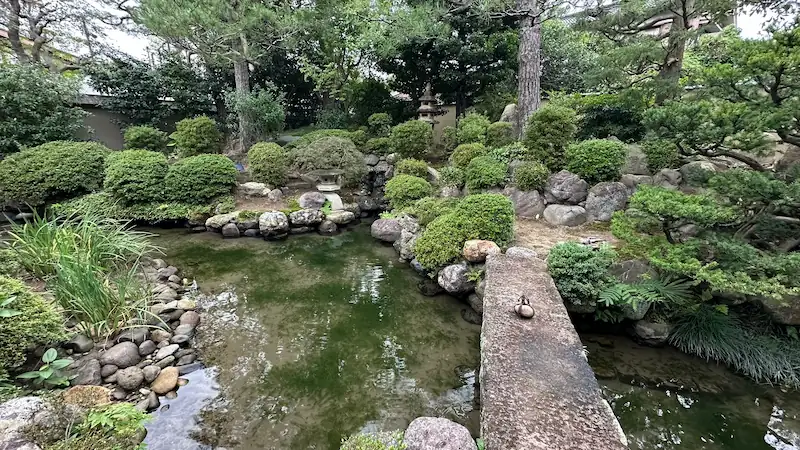
Located within the historic Nagamachi Samurai District, Sendake Garden is a strolling pond garden built in 1894 by the former Sendake family, once samurai retainers of the Kaga Domain. A quiet pond forms the garden’s centerpiece, fed by water drawn from the adjacent Onosho Canal, with an artificial hill, stone bridges, and stone lanterns arranged around it. Snow-viewing lanterns and a stone bridge made of reddish Tomuro stone echo the style of the nearby Kenrokuen Garden. The garden opened to the public in April 2025, allowing visitors to see a space that had previously been closed to outsiders. Set within a former samurai estate, it offers a peaceful place to take in the atmosphere of a samurai residence, the sound of flowing water, and the changing of the seasons.
- A Pond and Artificial Hill on a Circular Path: The path circles a pond and hill at the garden’s center, with flowing water, stone bridges, and carefully placed rocks creating a tranquil scene.
- Snow-Viewing Lanterns and a Tomuro-Stone Bridge: A stone bridge of reddish Tomuro stone and snow-viewing lanterns beside the pond evoke the elegance of a grand Japanese garden.
- Seasonal Highlights: Azaleas color the pondside in spring and early summer, with fresh greenery, autumn leaves, and the crisp air of winter each offering their own appeal.
🌎 Official Website (Japanese only)
⏳ Visiting Time: Main highlights: about 20–30 minutes / A leisurely visit: about 1 hour
🗺 Address: 1-4-22 Nagamachi, Kanazawa, Ishikawa
🚶 Access: Directly in front of the Nomura Family Residence.
⭐ Recommendation: Historical Value ★★ / Visual Appeal ★★★ / Experiential Value ★★
| Built | 1894 |
|---|---|
| Built By | Norifumi Senda, a former Kaga Domain samurai |
| Structure & Features | A strolling pond garden fed by canal water, with an artificial hill, stone bridges, snow-viewing lanterns, and azaleas |
| Restoration History | Developed from the mid-Meiji through Taisho eras, largely unchanged in form since |
| Current Condition | Survives intact and is open to the public |
| Losses | No significant losses or damage on record |
| Cultural Designation | Designated a Kanazawa City Historic Site and Place of Scenic Beauty |
| Notes | Open to the public since April 2025, with an attached exhibition room |
A Surprising Historical Detail: The garden cleverly draws on the Onosho Canal, making it one of the earliest examples in the Nagamachi district of channeling a samurai residence’s water supply directly into garden design.
A Lesser-Known Detail: The garden includes a “suikinkutsu” (a buried ceramic chamber that produces a resonant water sound) and a “shishi-odoshi” deer scarer — a garden meant to be enjoyed by ear as well as by eye.
A Notable Historical Figure: Norifumi Senda was a former Kaga Domain samurai active during the turbulent transition from the shogunate to the Meiji era; the garden and residence offer a tangible link to that period.
Kanazawa City Ashigaru Museum
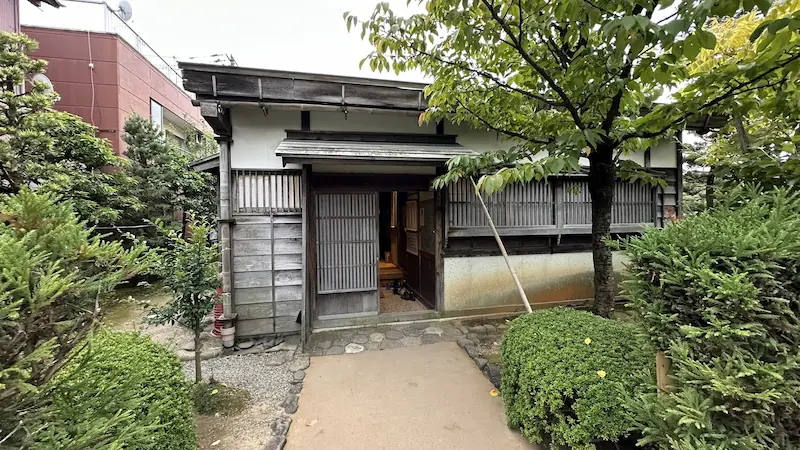
The Kanazawa City Ashigaru Museum, located within the Nagamachi Samurai District, is a cultural facility dedicated to the everyday lives of ashigaru — the lower-ranking foot soldiers of the domain era. It opened in November 1997, built around two relocated and restored ashigaru residences originally belonging to the Takanishi and Shimizu families. Inside, visitors can see the living spaces of an ashigaru household — the sitting room, kitchen, and bedroom — alongside displays covering their duties, income, and daily life.
- The Takanishi and Shimizu Residences: Two relocated and reconstructed residences with stone-weighted board roofs, recreating the building style and layout of the past.
- Displays of Ashigaru Daily Life: Household objects, furnishings, and low dining trays recreate the family life and routines of an ashigaru household.
- Explanatory Panels and Displays: Detailed panels cover the institutional background of ashigaru life — their income, expenses, duties, and family structure.
- Hedges, Plantings, and Garden Layout: Hedges surround the property with plantings inside, recreating the feel of the original residential setting.
- A Fitting Stop on the Route: Its location within the Nagamachi Samurai District walking route makes it easy to combine with a visit to the surrounding samurai residences, offering a useful contrast in social rank.
⏳ Visiting Time: A quick visit: about 15 minutes / Reading the exhibits in detail: about 30 minutes
🗺 Address: 1-9-3 Nagamachi, Kanazawa, Ishikawa
🚶 Access: A 3-minute walk (about 250 m) from Sendake Garden.
⭐ Recommendation: Historical Value ★★ / Visual Appeal ★★ / Experiential Value ★★★
| Year Opened | November 1997 |
|---|---|
| Location | 1-9-3 Nagamachi, Kanazawa, Ishikawa |
| Hours | 9:30 a.m.–5:00 p.m. (last entry 4:30 p.m.) |
| Closed | Open every day of the year |
| Admission | Free |
| Structure & Features | Two single-story wooden ashigaru residences (the Takanishi and Shimizu houses), relocated here, with stone-weighted board roofs and recreated period living spaces |
| Exhibits | Everyday household items belonging to ashigaru families, with panel displays on their duties, income and expenses, and family life during the domain era |
| Notes | Conveniently located along the Nagamachi Samurai District walking route, with a municipal sightseeing parking lot nearby |
The Kaga Domain’s Approach to Ashigaru Housing: While many domains housed their ashigaru in shared barracks, records suggest the Kaga Domain provided standalone houses instead — a policy the museum’s residence layout is said to reflect.
Detailed Displays Despite Free Admission: Even as a free facility, the museum is well regarded for its detailed explanatory panels, which go as far as explaining the institutional background of the era.
The Background to Its Opening: The museum opened in 1997 as part of a broader effort to preserve samurai-era culture around the Nagamachi Samurai District.
Based on multiple personal visits — this is the author’s own priority order, not an official recommendation for the Nagamachi & Teramachi area.
A nationally famous fortified temple. Interior visits require advance reservation, so plan for this one first when mapping out your day.
The quietest of Kanazawa’s three historic geisha districts. Its teahouse streetscape rewards even a short visit.
The earthen-walled lanes and the Nomura family’s celebrated garden — open to the public — form the core of the Nagamachi area. Efficient to see together.
All three sit right next to the Nagamachi Samurai District — worth a stop if the subject interests you.
Nagamachi & Teramachi Area Map
| Nearest Station | JR Kanazawa Station |
|---|---|
| From the Station | Hokutetsu bus bound for “Korinbo” from Kanazawa Station, about 15–20 minutes, then about a 5-minute walk from the Korinbo stop to the Nagamachi Samurai District (general public info, unverified on-site) |
| Useful Shinkansen Station | JR Kanazawa Station (Hokuriku Shinkansen) |
| From Tokyo | About 2 hours 30 minutes via the Hokuriku Shinkansen “Kagayaki” (general public info, unverified on-site) |
| From Osaka | Limited Express Thunderbird to Tsuruga, transfer to the Hokuriku Shinkansen; about 2 hours 20 minutes total (general public info, unverified on-site) |
| From Kyoto | Limited Express Thunderbird to Tsuruga, transfer to the Hokuriku Shinkansen; about 2 hours total (general public info, unverified on-site) |
| From Nagoya | Limited Express Shirasagi to Tsuruga, transfer to the Hokuriku Shinkansen; about 3 hours total (general public info, unverified on-site) |
| Getting Around Locally | From the Nagamachi Samurai District, both the Nishi Chaya District and Myoryuji (Ninja Temple) are within walking distance. Some streets in the Teramachi temple area have gentle slopes, so comfortable walking shoes are recommended |
| Recommended Transport | Local buses from Kanazawa Station are convenient; within the area, walking is the most practical way to get around |
| Parking | Municipal sightseeing parking is available near the Nagamachi Samurai District (capacity and rates unconfirmed) |
| Notes | Interior visits at Myoryuji (Ninja Temple) require advance reservation. Admission fees and hours differ at the Maeda Tosanokami Family Museum and the Kanazawa City Ashigaru Museum — see each spot’s details above |
※ Shinkansen times, fares, and bus details above are general estimates based on publicly available information, not figures verified on-site by this website. Please check official sources such as JR West / JR East for the latest information.
Explore More Toshiie Maeda Heritage Sites
Frequently Asked Questions
Adding up the visiting-time estimates for each spot, a quick tour takes about 2–3 hours in total, while a leisurely visit takes about 5–6 hours. See the “Visiting Time” note under each spot above for details.
No. As noted above, interior visits at Myoryuji require an advance reservation and a guided tour. Book as soon as your visit date is set.
Yes. As noted above, a combination admission ticket is available with the adjacent Kanazawa Shinise Kinenkan (Old Merchant House Museum).
Yes. The Nomura Family Residence is open to the public, both the residence interior and garden, and Sendake Garden has also been open to the public since April 2025. Both are within a couple of minutes’ walk of the Nagamachi Samurai District.
The Maeda Tosanokami Family Museum. Its founding ancestor, Toshimasa Maeda, was Toshiie Maeda’s second son with Lady Matsu, and the family served for generations as one of the Kaga Domain’s most senior retainer houses. See the Maeda Tosanokami Family Museum section above for details.
☕ Support This Site
Following the Shogun is built on first-hand, on-site research.
If this article helped you, your support keeps this project going.

You can also scan the QR code to support this site
Next Page
Previous Page
Back to the Toshiie Maeda Heritage Index
Back to the Homepage



comment