


Shiba Toshogu Shrine Tokyo: What to See, Time and Access
Shiba Toshogu Shrine is a compact shrine in Shiba Park, Tokyo, dedicated to Tokugawa Ieyasu. This field guide covers the rebuilt hall, normally hidden statue, great ginkgo and practical walking times.
Quick verdict: who should visit Shiba Toshogu Shrine?
Shiba Toshogu works well for travellers already visiting Zojoji, anyone following Tokugawa Ieyasu sites in Japan, and visitors curious about Toshogu shrines after seeing Nikko Toshogu. It is also an easy short stop from the Toei Mita Line.
It is less suitable if you expect a large compound filled with historic buildings. The walk from the stone torii to the worship hall took about three minutes on this visit. That figure is walking time to the hall, not the time needed to finish seeing the whole shrine.
| Address | 4-8-10 Shiba-koen, Minato City, Tokyo |
|---|---|
| Nearest station | Shibakoen Station (Toei Mita Line, I05), Exit A4; about 1 minute |
| Admission | Free |
| Time to allow | About 10–20 minutes for a short visit |
| Torii to hall | About 3 minutes on this visit |
| Steps | The approach has steps; the side path used on the return was not step-free |
| Easy combination | Zojoji Temple, the former Taitoku-in gate and Shiba Park |
What to see inside the shrine
Stone torii, approach and purification pavilion
A short approach from the road to the worship hall
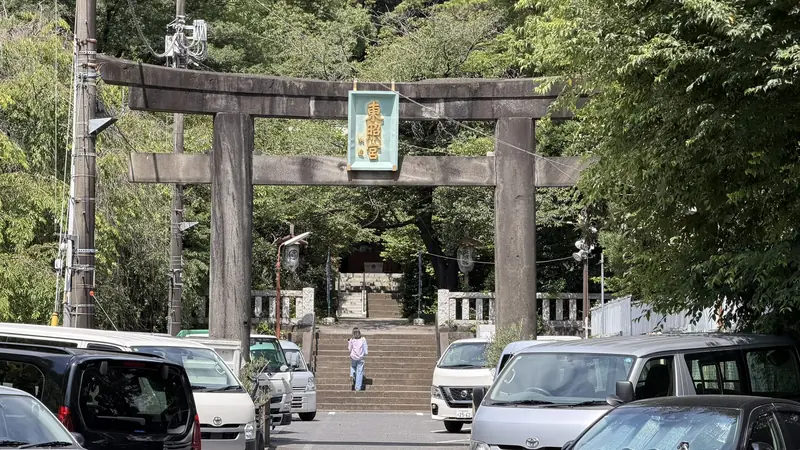
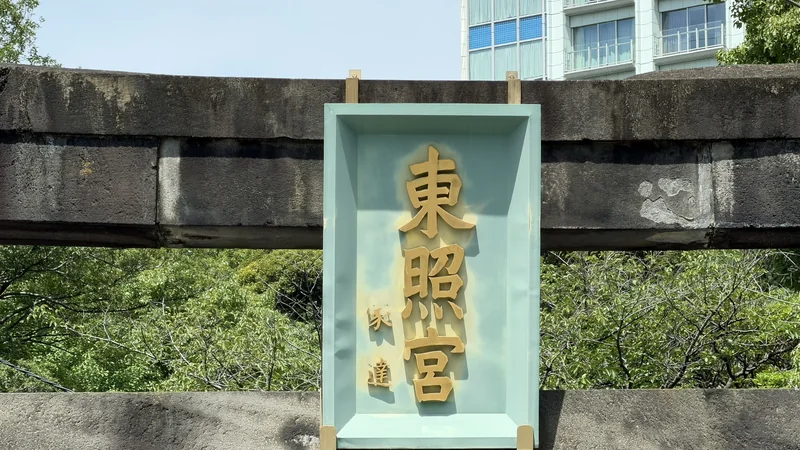
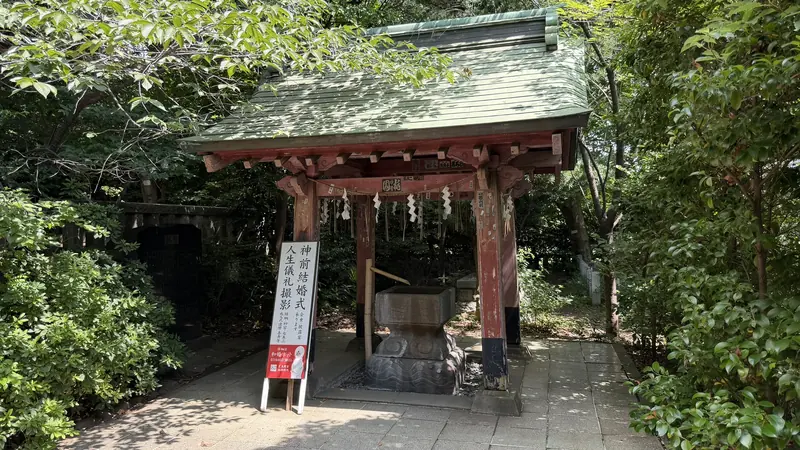
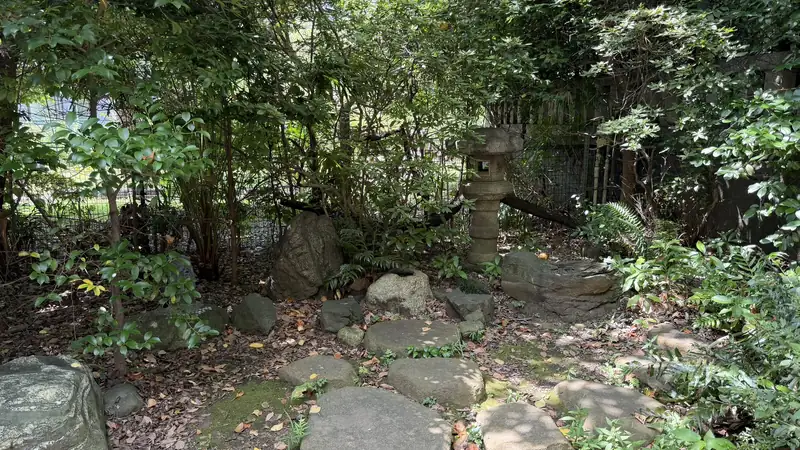
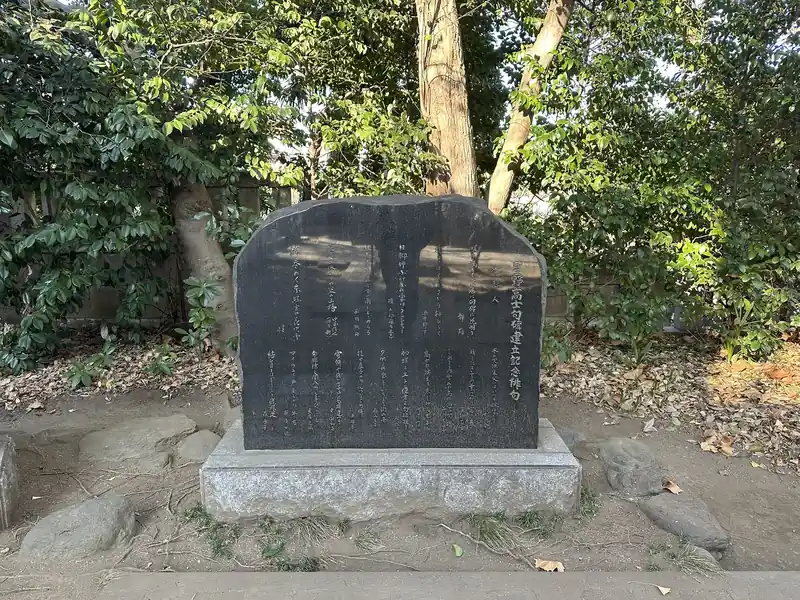
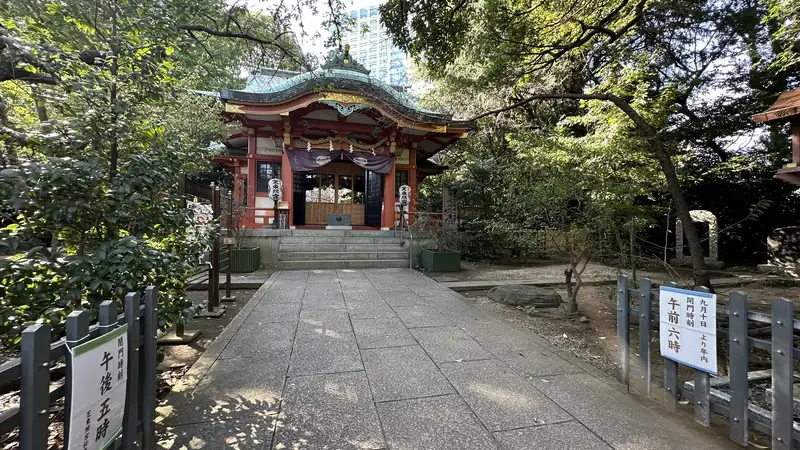
The stone torii beside the road marks the entrance. From here, the approach continues beneath trees and climbs towards the worship hall. The three-minute figure is walking time to the hall, not the total visit time.
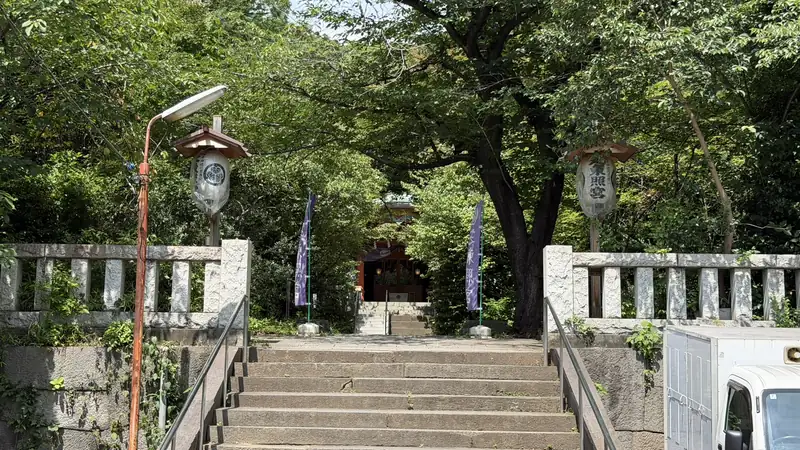
- There are stone steps on the approach.
- The side path used on the return did not provide a step-free alternative.
- A small purification pavilion with a red roof stands along the route.
Tap an image to enlarge it
Travellers who need to avoid steps should check the latest access information before visiting.
What survives, what was rebuilt, and what is normally hidden
Shiba Toshogu lost its shrine building in 1945, but the statue commissioned by Ieyasu in 1601 survived the wartime destruction; the present worship hall was rebuilt in 1969.
| Worship hall | Rebuilt in 1969; the exterior is visible |
|---|---|
| Ieyasu statue | Made in 1601; survived the war; Tokyo-designated cultural property; normally not visible |
| Great ginkgo | Traditionally said to have been planted by Iemitsu in 1641; Tokyo-designated natural monument; visible |
| Torii and approach | The present visitor route; visible |
| Purification pavilion and office | Present shrine facilities; visible |
The present worship hall
A postwar reconstruction
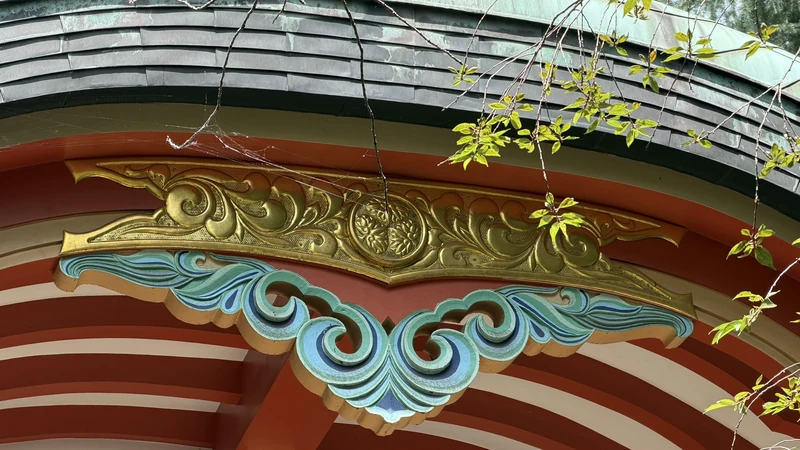
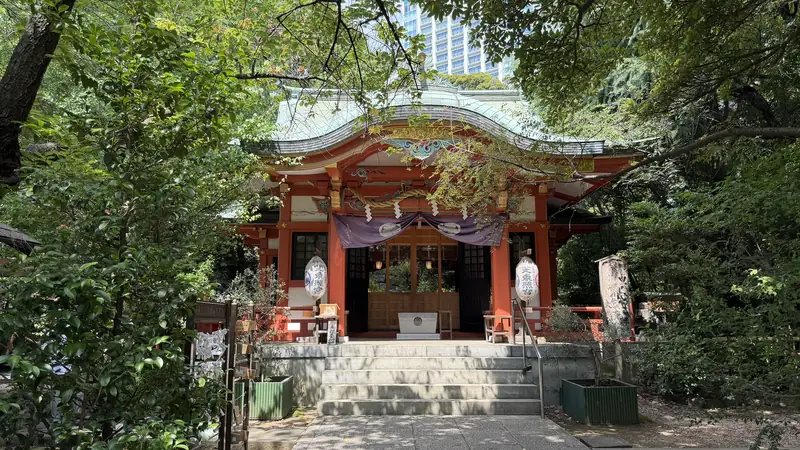
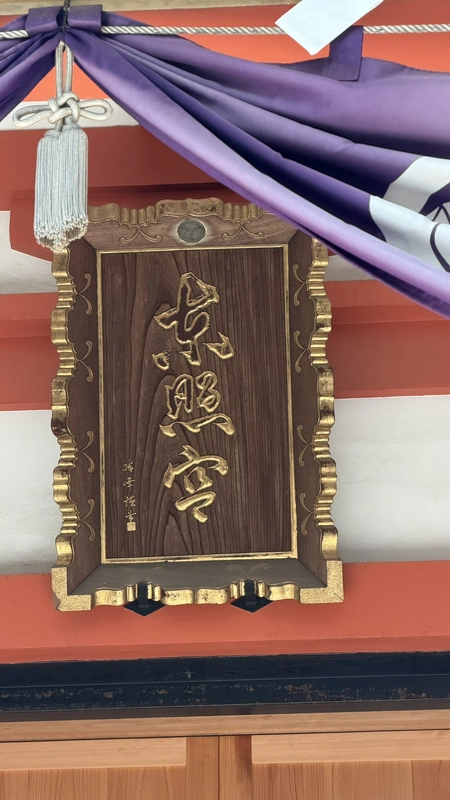
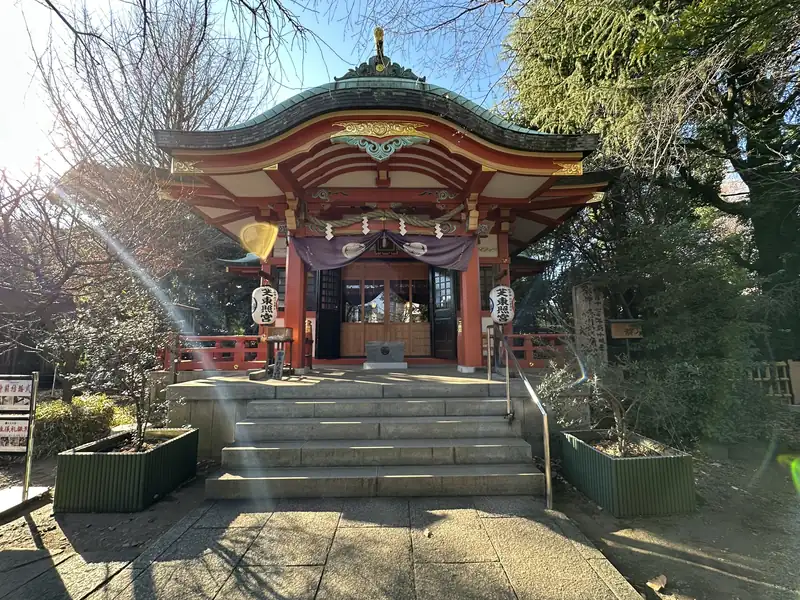
Look closely and you can see colored carving beneath the curved gable, gold-toned fittings and blue-green details. Its neat appearance does not come from the survival of an Edo-period building; this is a postwar reconstruction.
- The hall was rebuilt in 1633.
- It was destroyed in the 1945 air raids.
- The present worship hall was rebuilt in 1969.
Tap an image to enlarge it
Tokugawa Ieyasu's life-size statue
A sacred statue commissioned during Ieyasu's lifetime
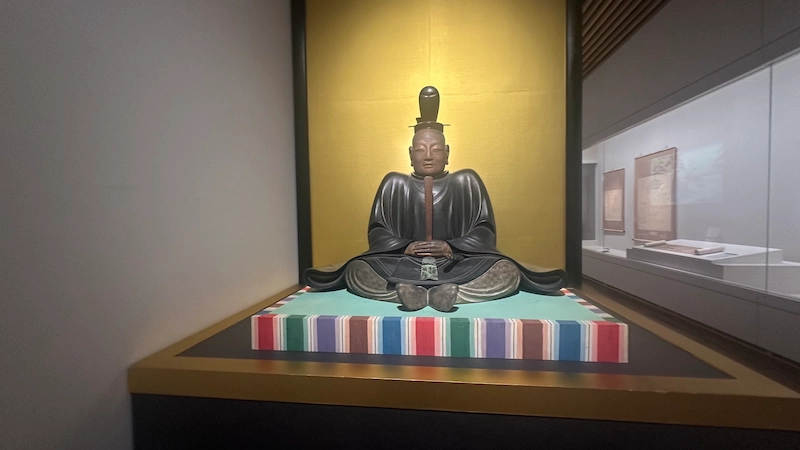
The shrine's sacred object is a life-size seated statue commissioned by Tokugawa Ieyasu when he turned sixty in 1601. According to Shiba Toshogu's official history, he asked for it to be enshrined at Zojoji after his death, and it was brought to the Ankoku-den hall founded there in 1617.
KISS Port is the official website of the Minato City Sports, Community, Culture and Health Foundation, a public-interest foundation that shares local information on culture, sport, health, facilities and community activities. Its Shiba Toshogu article says that the statue, which survived the destruction of 1945 and was designated an Important Cultural Property by the Tokyo Metropolitan Government in 1963, is shown on April 17. Visitors should confirm the current year's arrangements on the shrine's official website.
From Zojoji's Ankoku-den to Shiba Toshogu
Shiba Toshogu is a Shinto shrine today, but it began in 1617 as Ankoku-den within Zojoji, the Tokugawa family's Buddhist temple. This historical Ankoku-den was the predecessor of Shiba Toshogu and should not be confused with the present Ankoku-den now standing inside Zojoji. The shrine became separate from the temple during the early Meiji period, following the government policy that divided Shinto and Buddhism.
The hall was rebuilt in 1633 and survived until the 1945 air raids. The building seen today dates from 1969. The most important early object is therefore not the visible hall but the statue kept inside it, together with the old ginkgo standing in the grounds.
The great ginkgo
Traditionally associated with Tokugawa Iemitsu
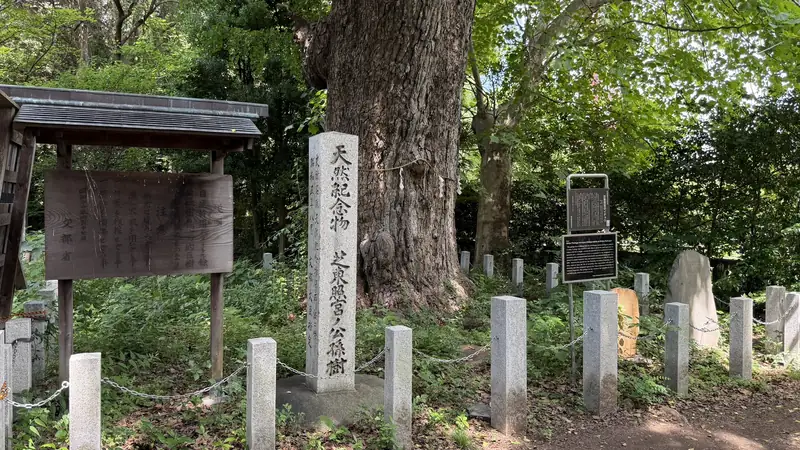
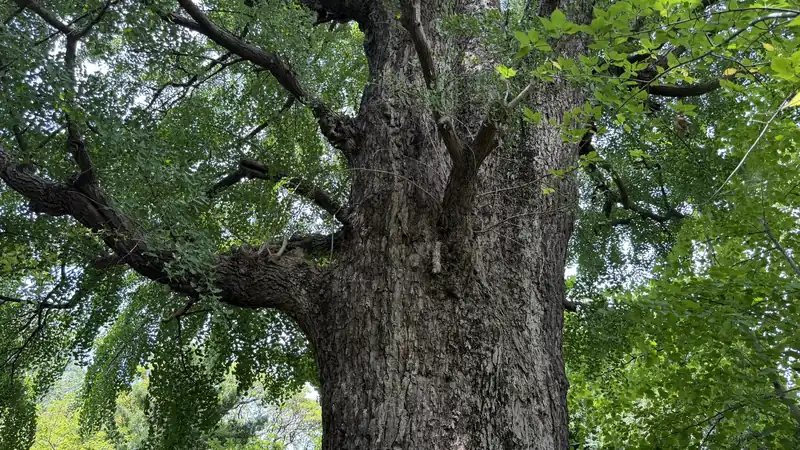
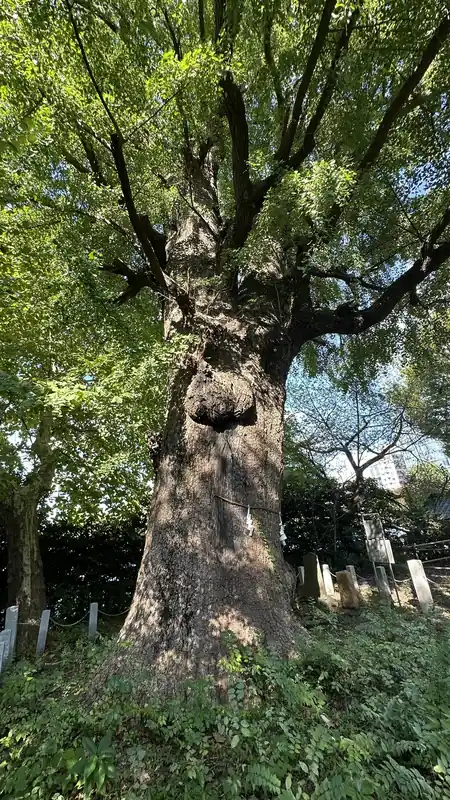
After seeing the worship hall, walk over to the great ginkgo. The KISS Port article mentioned above records a height of about 21.5 metres and a trunk circumference of about 6.5 metres.
- Viewing both the thick trunk and crown gives a better sense of the tree's scale.
- The story of Iemitsu planting it is presented as a shrine tradition.
- The golden image is from December 2024; the green set is from July 2026.
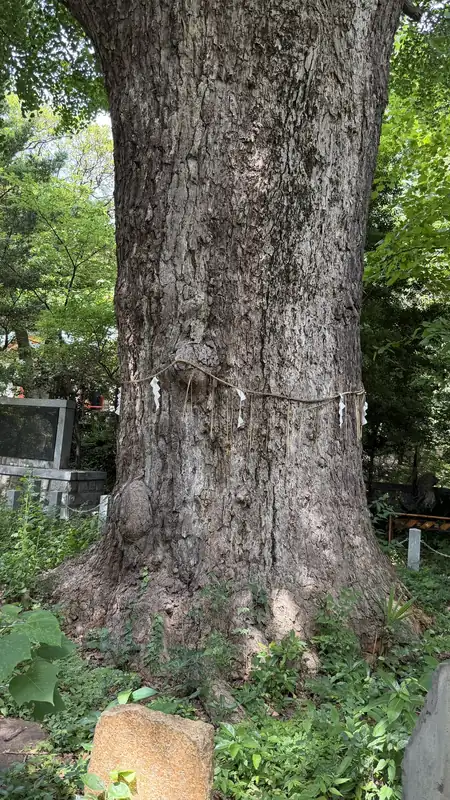
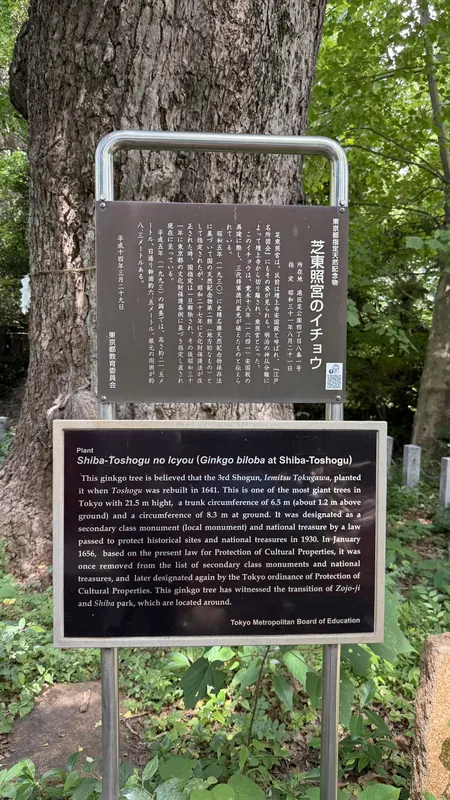
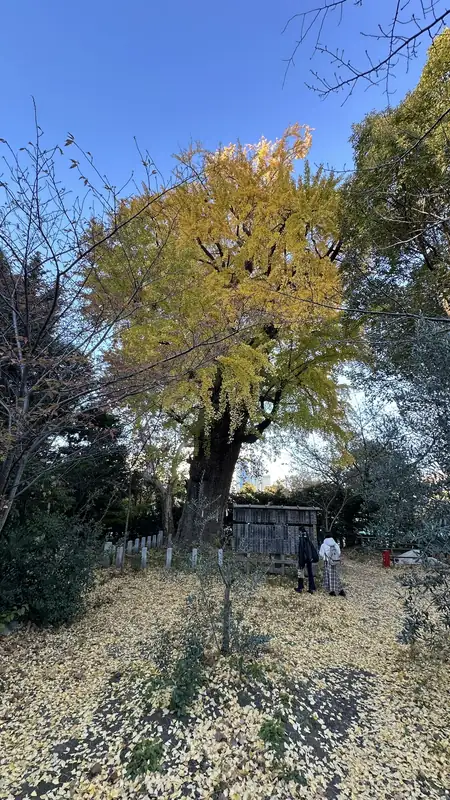
Tap an image to enlarge it
Sacred rock area beside the hall
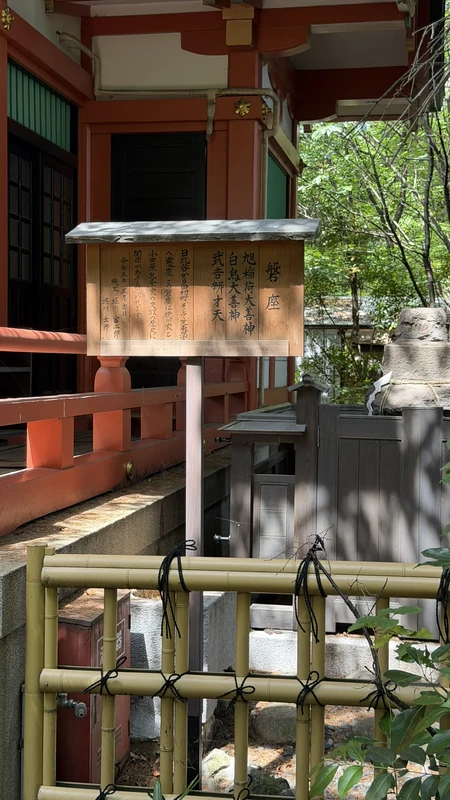
A sign and a stone enclosed by bamboo fencing
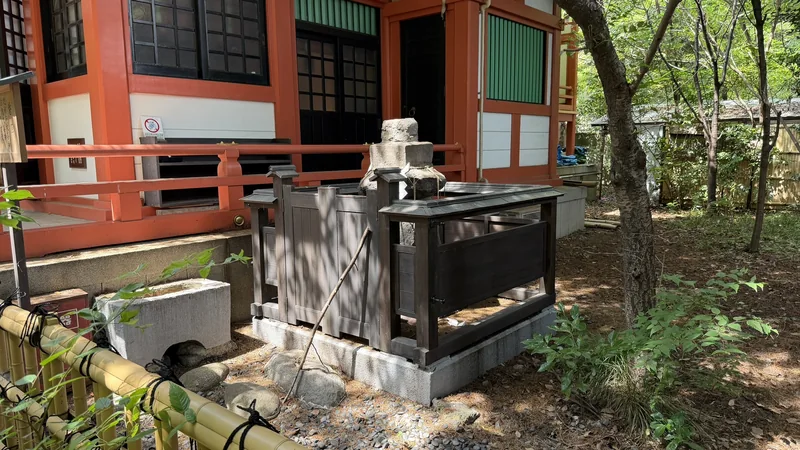
A sign beside the worship hall is headed “Iwakura” and identifies three deities associated with the site. Visitors exploring around the hall can see it together with the sacred rock.
Tap an image to enlarge it
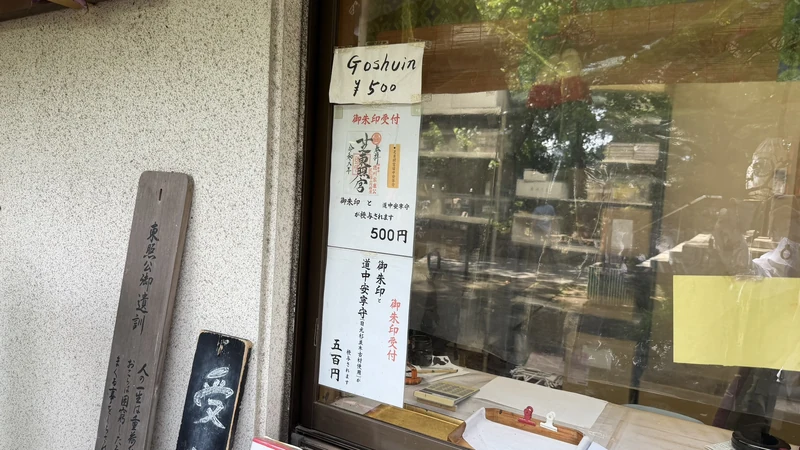
Wooden goshuin book and shrine office
What was available during the visit
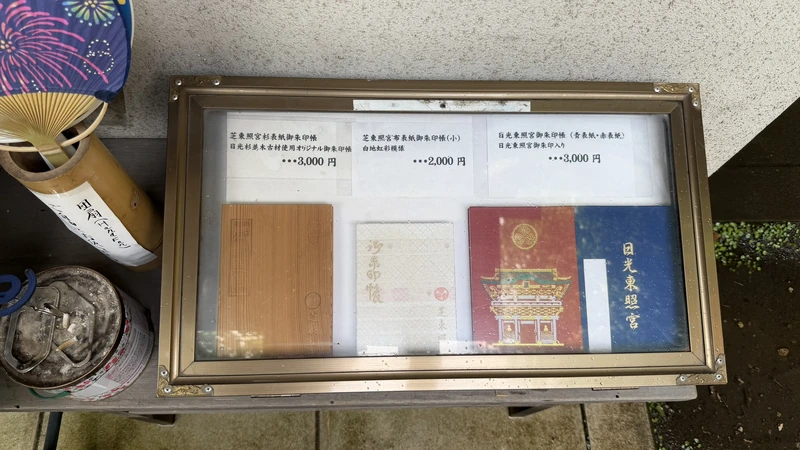
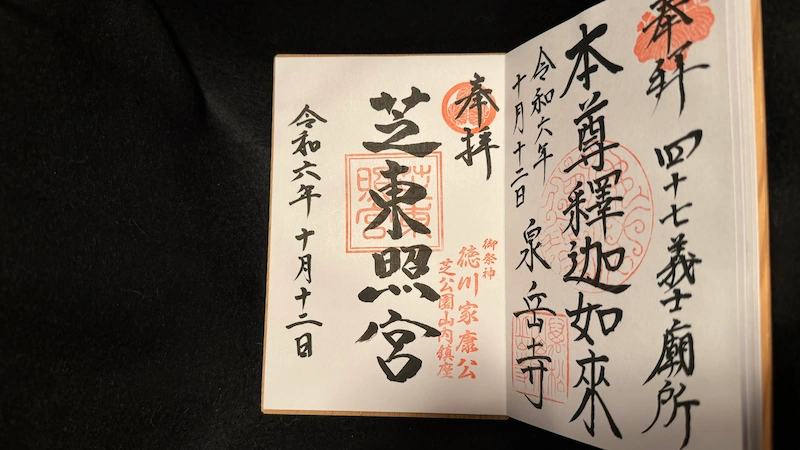
I bought one of the wooden-covered books as a record of the visit. Its solid wooden cover made it a distinctive keepsake from Shiba Toshogu.
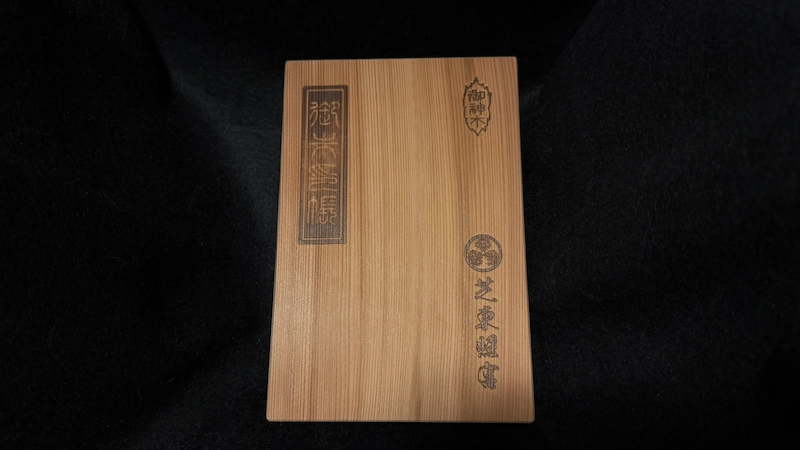
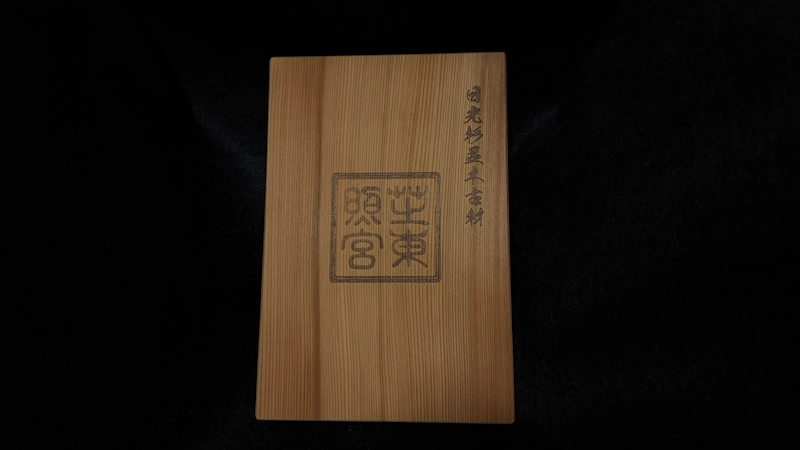
These are the front and back covers of the wooden goshuin book I bought, together with the goshuin I received.
Tap an image to enlarge it
Fees, reception hours and whether a seal is written directly or supplied on paper can change, so check the notices at the shrine on the day.
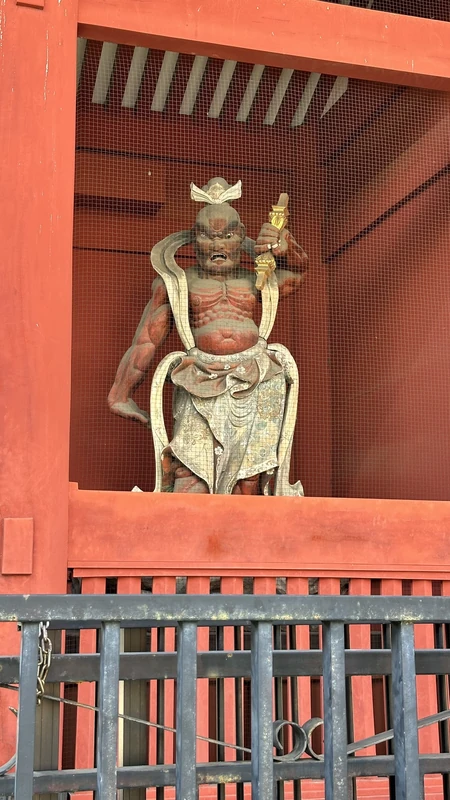
Former main gate of the Taitoku-in Mausoleum
A Tokugawa landmark between Zojoji and Shiba Toshogu
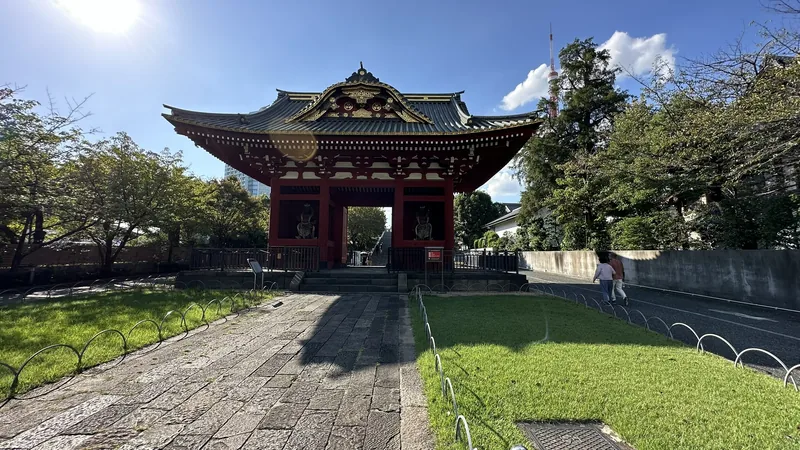
My route was Daimon Station, then Zojoji Temple, followed by Shiba Toshogu. The final section was about 500 metres and took roughly six minutes, passing the former gate before continuing along the main road.
The Taitoku-in Mausoleum was built in 1632 for Tokugawa Hidetada, the second shogun. Most of the complex was destroyed in 1945.
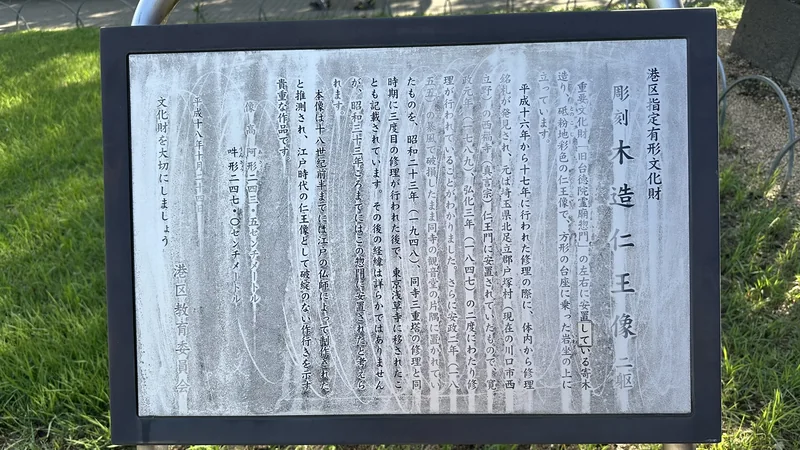
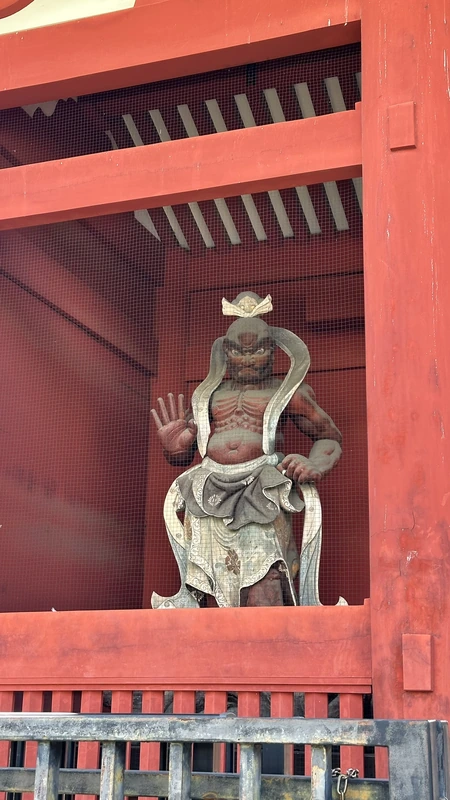
Two wooden Nio guardians stand in the gate, with a Minato City cultural-property sign nearby.
Tap an image to enlarge it
This is the author's personal order based on multiple visits, most recently in July 2026. It is not an official route recommended by Shiba Toshogu.
Pray at the worship hall first and see the present building, reconstructed in 1969. The sacred statue behind it is normally closed from view.
Next, check the shrine office for amulets and goshuin. On this visit, I bought a wooden goshuin book and received a goshuin.
If time remains, take the short walk from the hall to the Tokyo-designated natural monument.
How to get to Shiba Toshogu
The shortest approach is from Shibakoen Station (I05) on the Toei Mita Line. Shiba Toshogu's official site says Exit A4 is immediately beside the shrine area. GO TOKYO—the official Tokyo travel guide operated by the Tokyo Convention & Visitors Bureau—gives a walking time of about one minute.
Access
| Shibakoen (I05) | Exit A4; immediate / about 1 minute |
|---|---|
| Onarimon (I06) | Exit A1; about 2 minutes |
| Daimon (A09/E20) | Exit A6; about 5 minutes |
| Akabanebashi (E21) | Akabanebashi Exit; about 7 minutes |
| JR Hamamatsucho | About 12 minutes on foot |
| Address | 4-8-10 Shiba-koen, Minato City, Tokyo |
| Admission | Free |
From Daimon, an alternative is to visit Zojoji first and then walk past the former Taitoku-in gate to Shiba Toshogu. Admission to the shrine grounds is free. Opening access and festival arrangements can change, so check the shrine's official website before travelling.
Frequently asked questions
It is a useful short stop for travellers visiting Zojoji or following Tokugawa Ieyasu sites in Tokyo. It is not a large shrine complex like Nikko Toshogu.
The walk from the torii to the worship hall took about three minutes. Allow about 10–20 minutes for a short visit including the ginkgo and shrine office.
Shibakoen Station (I05) on the Toei Mita Line is closest. GO TOKYO, the Tokyo Convention & Visitors Bureau's official Tokyo travel guide, gives a walking time of about one minute from Exit A4.
Yes. Admission to the shrine grounds is free; shrine office items are separate.
No. The earlier hall was destroyed in 1945, and the present building was rebuilt in 1969.
The statue is normally closed from view. KISS Port, the Minato City Sports, Community, Culture and Health Foundation's official local-information website, describes an annual viewing on April 17, but check the shrine's current announcement before visiting.
Yes. The walk from Zojoji is about 500 metres and took roughly six minutes, passing the former main gate of the Taitoku-in Mausoleum.
The approach used on this visit included steps, and the side path used on the return did not avoid them.
Final thoughts
Shiba Toshogu is not a destination for a large collection of historic shrine buildings. The torii-to-hall walk takes about three minutes and the grounds are compact. Yet the rebuilt hall shelters the statue Ieyasu commissioned during his lifetime, while the great ginkgo preserves a tradition linked to his grandson Iemitsu.
For the shortest visit, use Shibakoen Station Exit A4. For a more connected Tokugawa route, start at Daimon, visit Zojoji and walk past the former Taitoku-in gate before reaching the shrine.
Official information and related sites
Continue exploring Tokugawa Tokyo
☕ Support This Site
Following the Shogun is built on original fieldwork and on-site research.
If you found this guide useful, your support helps keep it going.

You can also support via QR code


comment