


Miura Anjin in Tokyo: 4 Free Historic Sites Near Tokyo Station
Millions of travellers pass through Tokyo Station without knowing that one of the most unusual figures in Japanese history is commemorated a few minutes' walk from the platforms. William Adams — known in Japan as Miura Anjin, and the historical figure who partly inspired John Blackthorne in the TV series Shōgun — arrived in Japan in 1600 and became a retainer of the shogun Tokugawa Ieyasu. Four monuments near the station mark his story and that of his Dutch shipmate Jan Joosten, whose name became the Yaesu (八重洲) district on the east side of the station. All four are free, outdoors or inside an underground mall, and need no tickets or booking.
On this page
Walking Route from Tokyo Station
The four sites are easiest to see in the order below. Each takes about five minutes to look at, so roughly 20 minutes of viewing in total, plus the walking time between them. If you only have ten minutes before a shinkansen, the De Liefde Ship Monument, one minute from the Marunouchi South Exit, is the realistic choice.
About 5 minutes. A 1-minute walk from the Marunouchi South Exit, on the west side of the station.
About 5 minutes. Reached underground from the Yaesu Central Exit — no need to go outside.
About 5 minutes. On the traffic island at the Nihonbashi 3-chome intersection.
About 5 minutes. A 15-minute walk (about 1 km) from the Yaesu Exit, in Nihonbashi Muromachi.
Getting to Tokyo Station
| Station | Tokyo Station (東京駅), codes JY01 (JR Yamanote Line), JK26 (JR Keihin-Tohoku Line) and M17 (Tokyo Metro Marunouchi Line). Not to be confused with Tokyo Metro's Otemachi or Nihombashi stations, which are separate stations nearby. |
|---|---|
| From Haneda Airport (HND) | About 30–40 minutes. Either the Tokyo Monorail to Hamamatsucho and then JR (the whole route is covered by the Japan Rail Pass), or the Keikyu Line to Shinagawa and then JR (cheaper, but the Keikyu section is not covered by the Japan Rail Pass). Expect roughly ¥500–700 in total. Check current fares on the day. |
| Two sides of the station | The Marunouchi side (west, the red-brick historic building) and the Yaesu side (east, the modern bus terminal side). This walk uses both, so note which exit each site is listed under. |
| Admission | Free at all four sites. No tickets, booking or opening hours — three are outdoors on public streets and one is on a wall inside a public underground mall. |
De Liefde Ship Monument (Marunouchi Building)
⭐ Rating — Historical significance: ★★ / Visual appeal: ★★ / Experience: ★
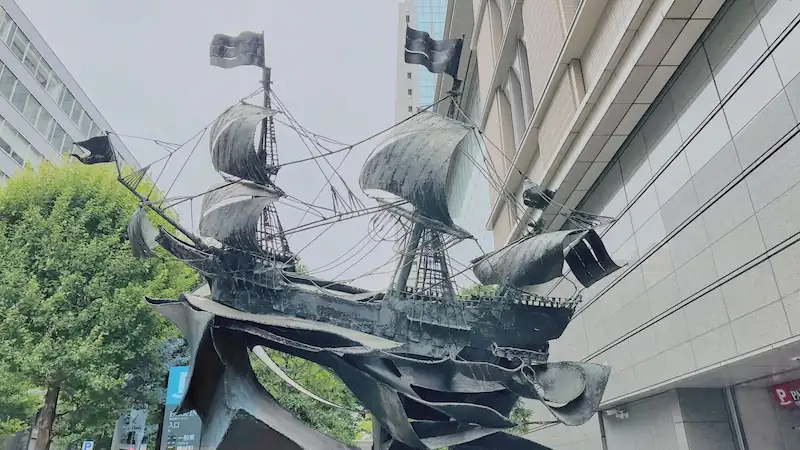
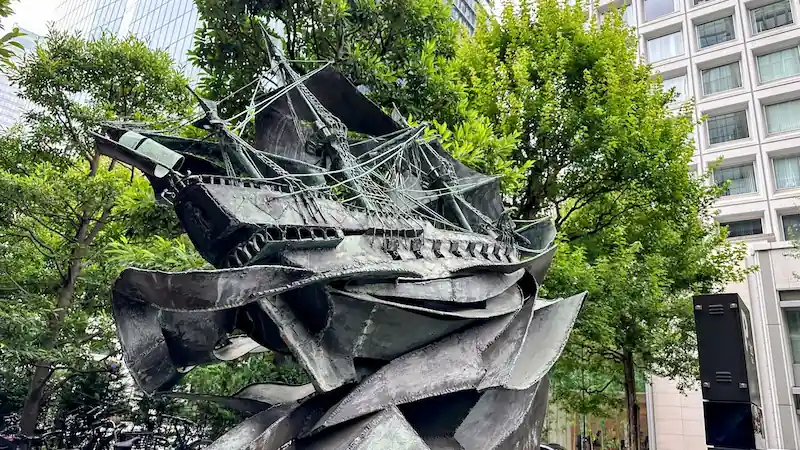
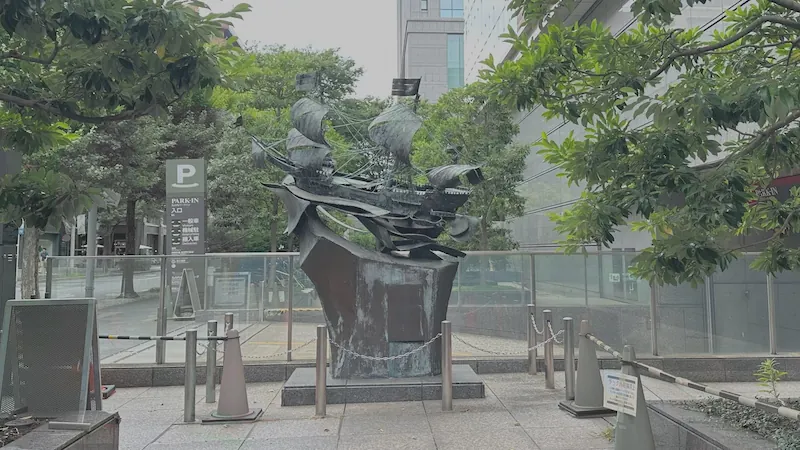
This bronze sculpture represents De Liefde, the Dutch merchant ship that ran aground on the coast of Kyushu in 1600 carrying William Adams (Miura Anjin) and Jan Joosten, both of whom went on to advise Tokugawa Ieyasu. It stands beside the Marunouchi Building at 2-4-1 Marunouchi in Chiyoda City, a one-minute walk from the Marunouchi South Exit of Tokyo Station.
The monument was presented to the Japanese government by the Kingdom of the Netherlands on 22 April 1980, during the visit of Dutch Prime Minister Dries van Agt, marking the arrival of De Liefde in Japan in 1600 and the early contact between Tokugawa Ieyasu and the Dutch.
Highlights
- The ship sculpture: the rigging and hull of the model are finely worked, and the dark bronze stands out against the glass of the Marunouchi high-rises.
- Explanatory plaque: the ship's arrival and the donation are explained on site in Dutch and Japanese.
- Seasonal note: in spring the cherry blossom, and in autumn the foliage of the nearby Imperial Palace grounds, make a striking contrast with the modern setting.
Tap an image to enlarge
⏳ Suggested visit duration
Quick stop: about 5 minutes
Longer look: about 10 minutes
Address & access
🗺 Address: 2-4-1 Marunouchi, Chiyoda City, Tokyo
🚶 Access:
A 1-minute walk (about 0.1 km) from the Marunouchi South Exit of Tokyo Station, served by JR lines and the Tokyo Metro Marunouchi Line. The monument sits behind the bicycle parking on the south-east side of the Marunouchi Building, so it is easy to walk straight past.
Key facts
| Year erected | 1980 |
|---|---|
| Donated by | Government of the Kingdom of the Netherlands |
| Structure | Bronze sailing-ship sculpture |
| Restoration history | None |
| Current condition | Well preserved |
| Damage or loss | None |
| Cultural property status | Not designated (commemorative monument) |
| Notes | Located behind the bicycle parking on the south-east side of the Marunouchi Building |
📌 Trivia
- The first Dutch ship to reach Japan: De Liefde carried Jan Joosten, whose Japanese name gave the Yaesu district its name, and William Adams, who became Tokugawa Ieyasu's adviser on diplomacy, gunnery and navigation.
- Easy to miss: tucked behind the bicycle parking, the monument is passed by thousands of commuters a day who never notice it.
- The blue-eyed samurai: Adams, an Englishman, served Tokugawa Ieyasu closely enough to be granted the status of hatamoto, a direct retainer of the shogun, and is remembered in Japan as the “samurai with blue eyes”.
Jan Joosten Memorial Statue (Yaesu Underground Mall)
⭐ Rating — Historical significance: ★★ / Visual appeal: ★ / Experience: ★
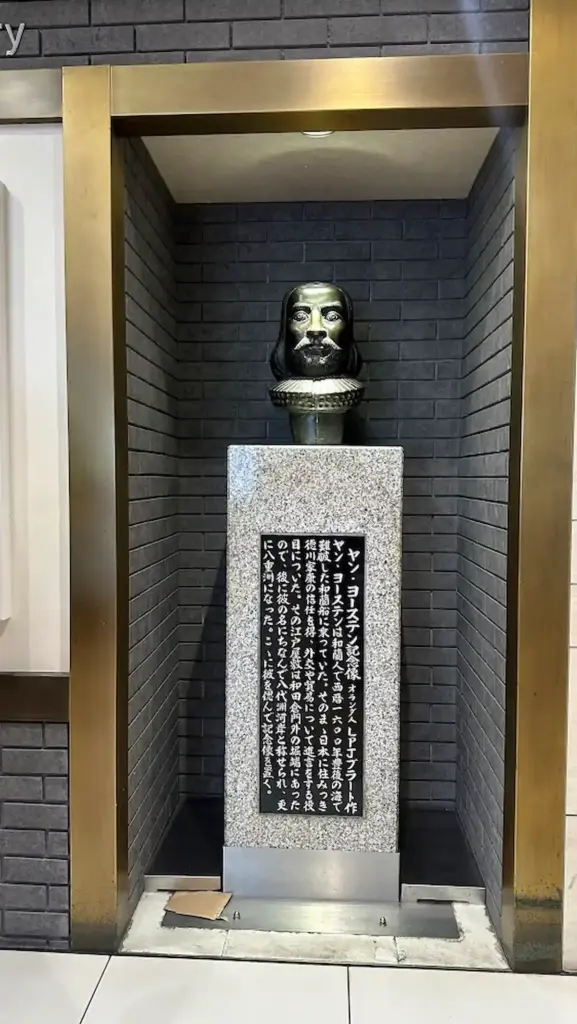
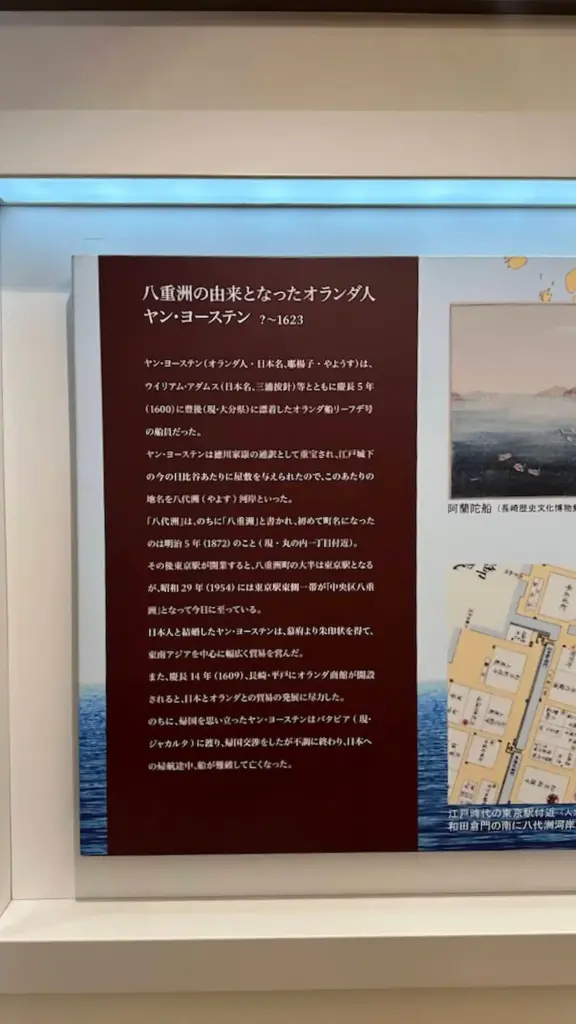
This bronze bust of the Dutch navigator Jan Joosten van Lodensteijn is set into the east wall of Sotobori Underground Avenue No.1 (外堀地下1番通り) inside the Yaesu Underground Mall, known locally as Yaechika (ヤエチカ). Joosten reached Japan aboard De Liefde alongside William Adams and became a trusted adviser to Tokugawa Ieyasu on foreign affairs and trade. His Japanese name is the origin of the district name Yaesu.
Because the mall connects directly to the Yaesu Central Exit, this is the one site on the walk you can reach without going outside — useful in rain, in summer heat, or if you are carrying luggage.
Highlights
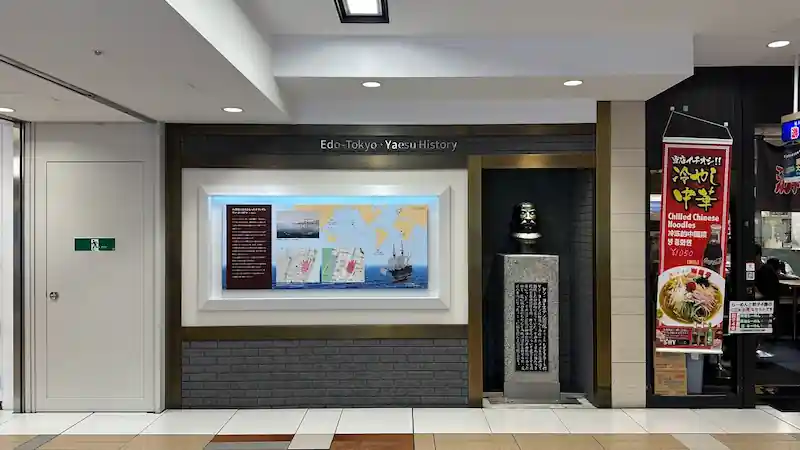
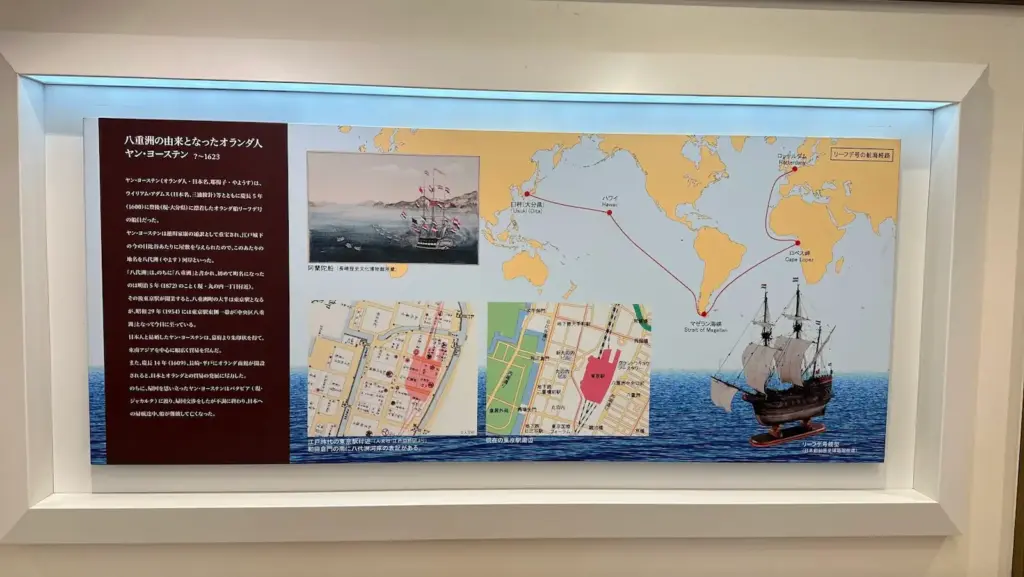
- Bust and history panel: an illustrated panel beside the bust explains Joosten's voyage and the origin of the name Yaesu, with a map of De Liefde's route and an old map of Edo.
- Mall mascot: Joosten also appears as an illustrated character around the underground mall, which makes spotting him a small scavenger hunt.
- Seasonal note: in winter and during events, the character appears in shop decorations throughout the mall.
Tap an image to enlarge
⏳ Suggested visit duration
Quick stop: about 5 minutes
Longer look: about 15 minutes
Address & access
🗺 Address: Sotobori Underground Avenue No.1, Yaesu Underground Mall, Chuo City, Tokyo
🚶 Access:
Directly connected to the Yaesu Central Exit of Tokyo Station. Walk along Sotobori Underground Avenue No.1; the bust is on the east wall between the ramen shop Yukitei and Ore no Italian & Bakery.
Key facts
| Year installed | 2009 (at the present location) |
|---|---|
| Sculptor | L.P.J. Braat, Dutch sculptor |
| Structure | Wall-mounted bronze bust |
| Restoration history | None reported |
| Current condition | Excellent |
| Damage or loss | None |
| Cultural property status | Not designated (commemorative statue) |
| Notes | Displayed alongside the “EDO-TOKYO / YAESU HISTORY” character panel |
On-site signboards (transcribed)
Statue of Jan Joosten
Created by Dutch sculptor L.P.J. BraatJan Joosten was a Dutchman who arrived in Japan in the year 1600 after his Dutch ship was wrecked off the coast of Bungo (present-day Oita Prefecture). He settled in Japan and gained the trust of Tokugawa Ieyasu, serving as an advisor on foreign diplomacy and trade.
His residence in Edo (now Tokyo) was located near the outer moat of Wadakura Gate. The area later came to be known as “Yayosu-gashi” (Yayosu Wharf) in honor of his name, which eventually evolved into “Yaesu.”
This statue was erected in remembrance of his legacy.
The Dutchman Who Inspired the Name “Yaesu”
Jan Joosten (?–1623)Jan Joosten (a Dutchman, known in Japan as Yayōsu or 耶楊子) was a crew member aboard the Dutch merchant ship De Liefde, which drifted ashore in Bungo Province (present-day Ōita Prefecture) in 1600, during the Keichō era, along with Englishman William Adams (known in Japan as Miura Anjin).
Later in life, Joosten attempted to return to his homeland. He traveled to Batavia (modern-day Jakarta), the center of Dutch operations in the East Indies, but failed in his negotiations to repatriate. While returning to Japan, his ship was wrecked, and he perished at sea.
Joosten served as an interpreter and advisor to Tokugawa Ieyasu and was granted a residence near present-day Hibiya, Tokyo. As a result, the area came to be known as Yayōsu-gashi (Yayōsu Wharf).
The name “Yayōsu” was later written as “Yaesu” (八重洲). It became an official district name in 1872 (Meiji 5), covering what is now Marunouchi 1-chome. After the opening of Tokyo Station, much of the former Yayōsu district became part of the station area. In 1954 (Shōwa 29), the eastern side of Tokyo Station was officially designated as Yaesu in Chūō City — a name still used today.
Joosten married a Japanese woman and, under the Tokugawa shogunate's red-seal licence system (shuinjō), engaged in wide-ranging trade throughout Southeast Asia.
When the Dutch trading post was established in Hirado, Nagasaki in 1609 (Keichō 14), Joosten played a key role in developing Japan–Netherlands trade relations.
The two signboards differ slightly on where Joosten's Edo residence stood (near the outer moat at Wadakura Gate, or near present-day Hibiya). Both texts are reproduced here as they appear on site.
📌 Trivia
- How Yaesu got its name: Joosten's Japanese name, Yayōsu (耶楊子), is said to have shifted through Yayosu to Yaesu, the district on the east side of Tokyo Station.
- Easy to miss: the bust is set quietly into a wall of the underground mall, and part of the pleasure is finding it. Shop lighting sometimes picks it out.
- One of the first Western retainers: Joosten advised Tokugawa Ieyasu on diplomacy and trade and is counted among the earliest Westerners to serve the shogunate.
Jan Joosten Memorial Plaque (Yaesu Avenue & Chuo-dori Intersection)
⭐ Rating — Historical significance: ★★ / Visual appeal: ★★ / Experience: ★
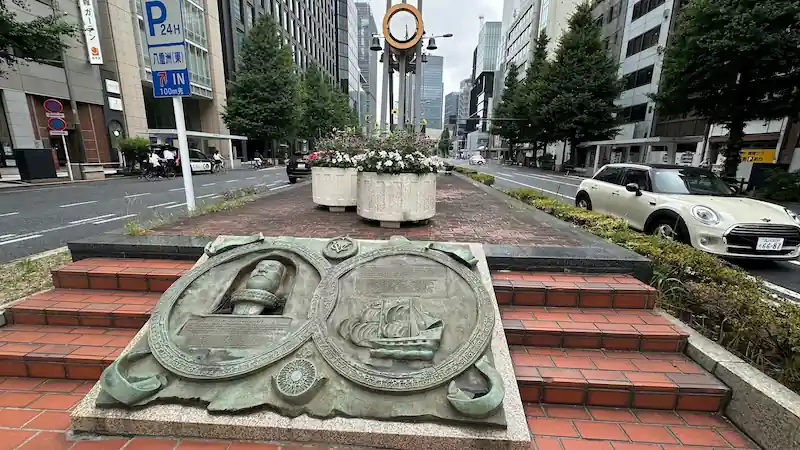
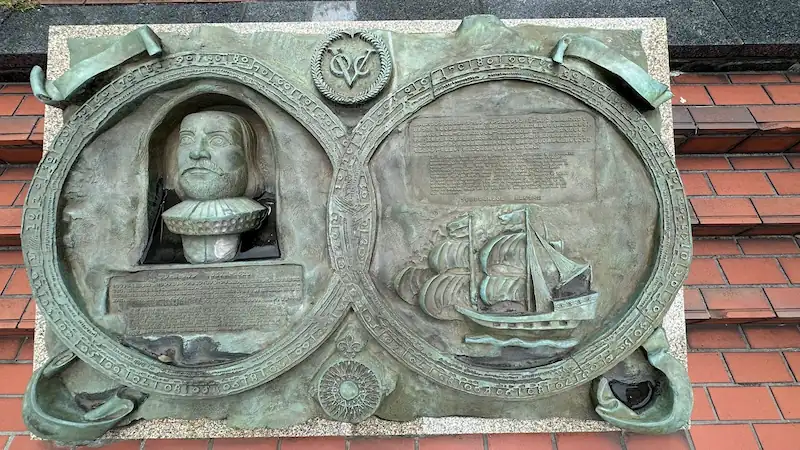
This bronze relief stands on the traffic island in the middle of the road at the Nihonbashi 3-chome intersection, where Yaesu Avenue meets Chuo-dori a short walk east of Tokyo Station. Chuo City erected it in 1989 to mark 380 years of relations between Japan and the Netherlands. The relief shows Jan Joosten on the left and De Liefde, the ship that brought him to Japan, on the right, with a compass, an armillary sphere, a stylised sea and the emblem of the Dutch East India Company between them.
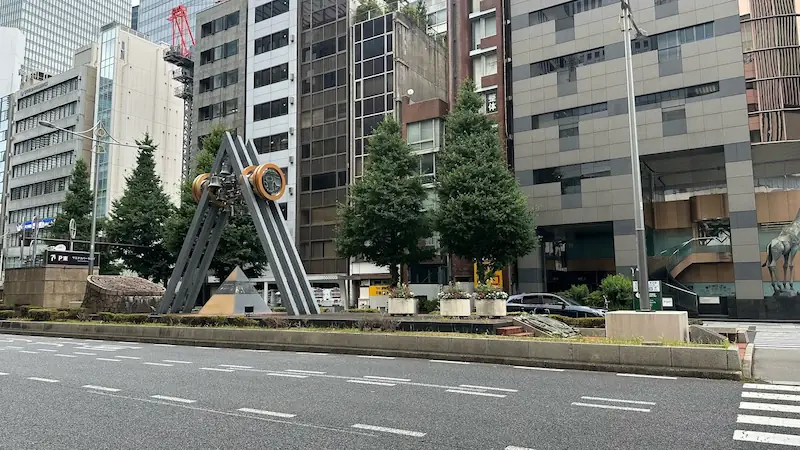
Because it sits on a central reservation, you have to use the pedestrian crossing to reach it and cross back again. The 7-metre “Peace Bell” (平和の鐘) monument directly beside it is the landmark to aim for.
Highlights
- Portrait and ship relief: Joosten's face and the hull of De Liefde are modelled in noticeable depth for a street-side plaque.
- Navigation motifs: a compass, an armillary sphere and old-map styling are worked into the design.
- The Peace Bell: the 7-metre monument next to the plaque rings on the hour.
Tap an image to enlarge
⏳ Suggested visit duration
Quick stop: about 5 minutes
Longer look: about 10 minutes
Address & access
🗺 Address: Nihonbashi 3-chome, Chuo City, Tokyo (traffic island on Yaesu Avenue)
🚶 Access:
A few minutes' walk from the Yaesu Exit of Tokyo Station. Follow Yaesu Avenue east to the Nihonbashi 3-chome intersection; the 7-metre “Peace Bell” monument stands directly in front of the plaque.
Key facts
| Year erected | 1989 |
|---|---|
| Commissioned by | Chuo City, Tokyo (380th anniversary of Japan–Netherlands relations) |
| Structure | Bronze relief: Jan Joosten on the left, De Liefde on the right |
| Restoration history | None |
| Current condition | Well preserved |
| Damage or loss | None |
| Cultural property status | Not designated (memorial plaque) |
| Notes | Next to the 7-metre “Peace Bell” monument, which serves as the landmark |
📌 Trivia
- An adviser inside the shogun's city: Joosten arrived on De Liefde in 1600, served Tokugawa Ieyasu as a diplomatic adviser and was granted a residence close to Edo Castle.
- Easy to miss: standing on a traffic island, the plaque is overlooked by almost everyone crossing the junction. The Peace Bell is the reliable marker.
- Two foreigners, one ship: Joosten and William Adams arrived together and both won Ieyasu's trust, becoming among the earliest foreign-born retainers in Japan.
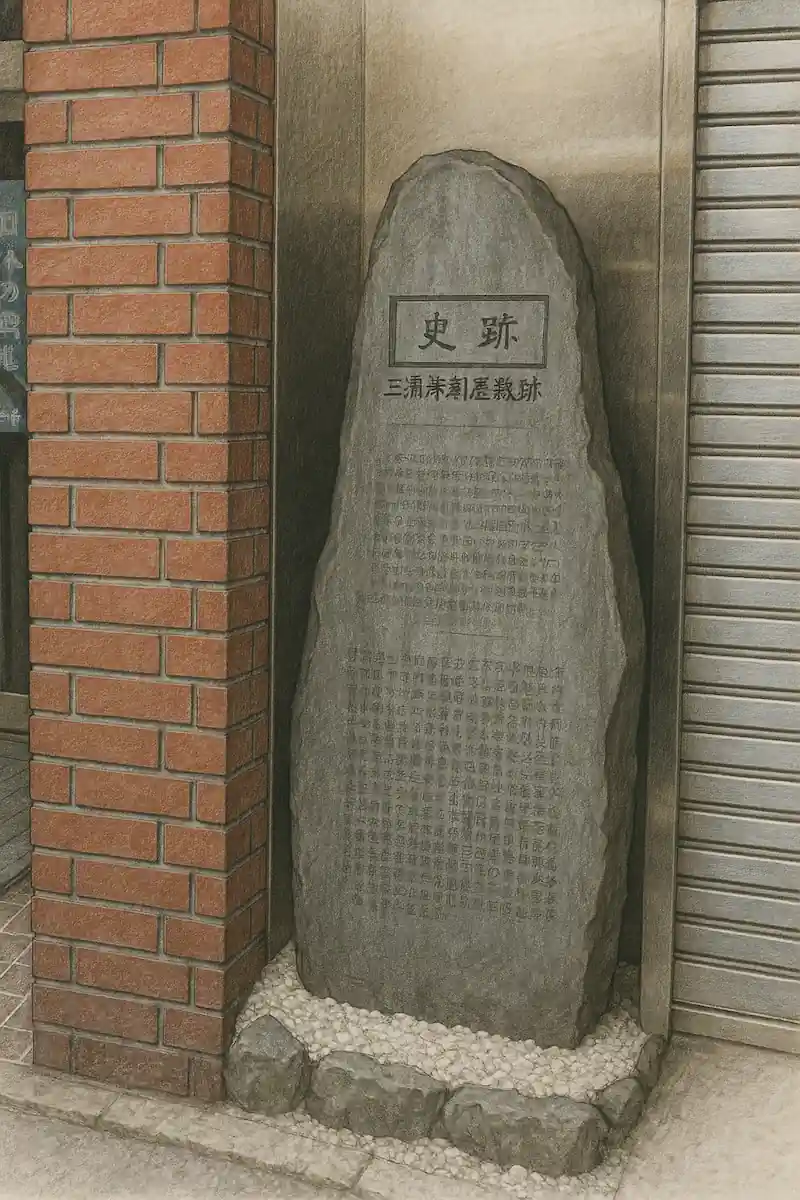
Site of William Adams' Residence & Anjin-dori Street (Nihonbashi, Tokyo)
⭐ Rating — Historical significance: ★★★ / Visual appeal: ★ / Experience: ★★
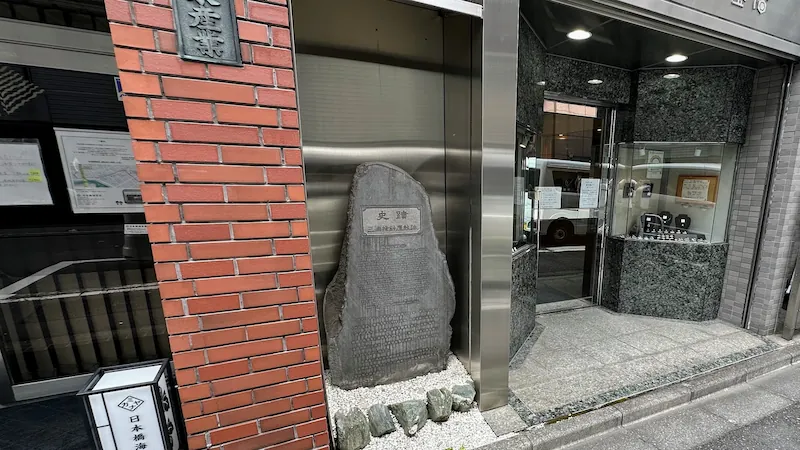
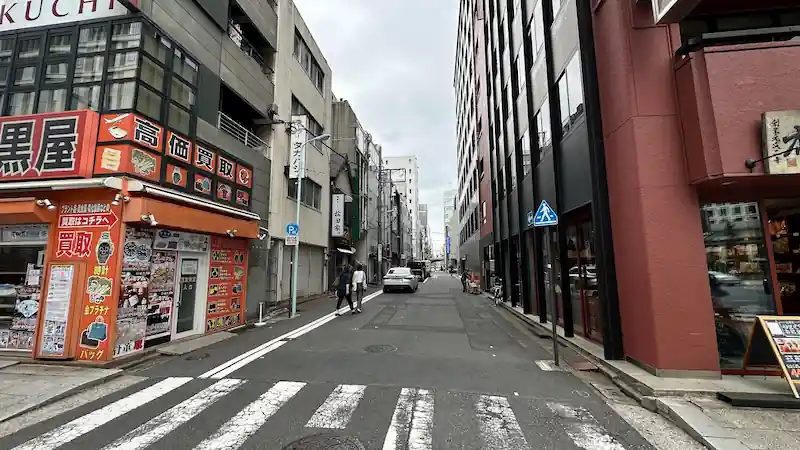
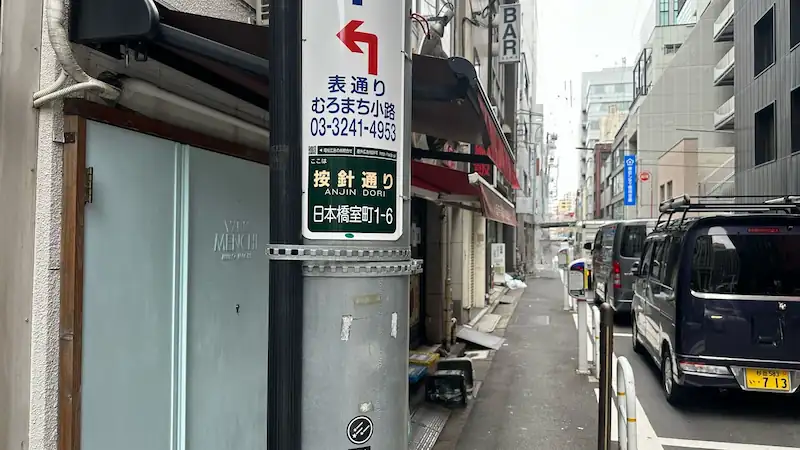
In the early Edo period (1603–1868), Tokugawa Ieyasu granted William Adams a residence here in Nihonbashi Muromachi and the rank of hatamoto, a direct retainer of the shogun — an extraordinary position for a foreigner. A modest stone monument now marks the spot, and the street beside it still carries the name Anjin-dori (按針通り).
Of the four sites on this walk, this is the only one where Adams himself is recorded as having lived, and it is designated a Historic Site (旧跡) by the Tokyo Metropolitan Government. It is also the furthest out: about a 15-minute walk (roughly 1 km) from the Yaesu Exit of Tokyo Station.
Highlights
- The monument: the inscription is in both Japanese and English, so you can read it without any Japanese. The present stone was re-erected by local residents after the original was destroyed in the war.
- Anjin-dori Street: the name is printed even on the utility poles, preserving the memory of the old town name Anjin-cho (安針町).
- History between the office blocks: the site is wedged between modern buildings, and the contrast is the point — nothing announces it from the main road.
Tap an image to enlarge
⏳ Suggested visit duration
About 2–10 minutes
Address & access
🗺 Address: 1-10-8 Nihonbashi Muromachi, Chuo City, Tokyo
🚶 Access:
A 15-minute walk (about 1 km) from the Yaesu Exit of Tokyo Station.
Key facts
| Monument erected | 1930 |
|---|---|
| Rebuilt | 1951, by local residents, after the original was destroyed in the war |
| Structure | Stone monument with a bilingual Japanese and English inscription |
| Current condition | Well maintained, set between office buildings |
| Cultural property status | Historic Site (旧跡) designated by the Tokyo Metropolitan Government |
| Notes | Best seen together with a walk along Anjin-dori Street |
📌 Trivia
- The old town name: this area was officially called Anjin-cho (安針町) from the Edo period until 1932, which is where the street name Anjin-dori comes from.
- The monument's own history: destroyed during the war and rebuilt in 1951 with an English inscription, it is today a Historic Site designated by the Tokyo Metropolitan Government.
- Connection to Shogun: John Blackthorne, the protagonist of the series, was modelled in part on Adams, and the site has drawn new attention since the show aired.
Adams' presence — a symbol of how outward-looking early Edo briefly was — survives quietly inside modern Tokyo, and fits easily into a wider walk through the city's layered history.
This is the author's own ranking after visiting the sites in person. It is not an official recommendation from any of the organisations involved.
The only one of the four where Adams himself is recorded as having lived, and the only one with a cultural property designation. The catch is the distance: about 15 minutes on foot each way from the Yaesu Exit, so allow roughly 40 minutes for the round trip.
One minute from the Marunouchi South Exit and about five minutes to look at. If you only have ten minutes before a train, this is the one site that genuinely fits.
Connected underground to the Yaesu Central Exit, so you stay dry and out of the heat, and the panel beside it explains where the name Yaesu comes from.
It sits on a traffic island, so you have to cross the road and cross back. The subject overlaps with the statue, so if time is tight the statue alone covers the same story.
Map: Miura Anjin Sites in Tokyo
Frequently Asked Questions
Yes, with one caveat. The three sites closest to the station take about five minutes each to look at, so you can see all three comfortably within an hour. The Site of William Adams' Residence is a 15-minute walk each way, so add it only if you have roughly 40 minutes to spare for the round trip.
Miura Anjin is the Japanese name of William Adams, an English navigator who reached Japan in 1600 aboard the Dutch ship De Liefde and went on to serve Tokugawa Ieyasu, receiving the rank of hatamoto, a direct retainer of the shogun. John Blackthorne, the protagonist of the TV series Shogun, was modelled in part on him.
The name comes from Jan Joosten, the Dutch crewman who arrived with William Adams on De Liefde. His Japanese name, Yayosu, is said to have shifted through Yayosu-gashi to Yaesu. A panel next to the Jan Joosten Memorial Statue in the Yaesu Underground Mall explains this on site.
No. All four are free. Three are outdoor monuments on public streets and one is mounted on a wall inside a public underground mall, so there are no tickets, no opening hours and no reservation.
The De Liefde Ship Monument. It is a one-minute walk from the Marunouchi South Exit, beside the Marunouchi Building, and takes about five minutes to see.
No, they are two separate monuments. The statue is a bronze bust on a wall inside the Yaesu Underground Mall. The plaque is a bronze relief on the traffic island at the Nihonbashi 3-chome intersection, where Yaesu Avenue meets Chuo-dori.
About a 15-minute walk, roughly 1 km, from the Yaesu Exit, in Nihonbashi Muromachi. It is the furthest of the four sites from the station.
Back to the Miura Anjin Guide

☕ Support This Site
Following the Shogun is built on original fieldwork and on-site research.
If you found this guide useful, your support helps keep it going.

You can also support via QR code


comment