


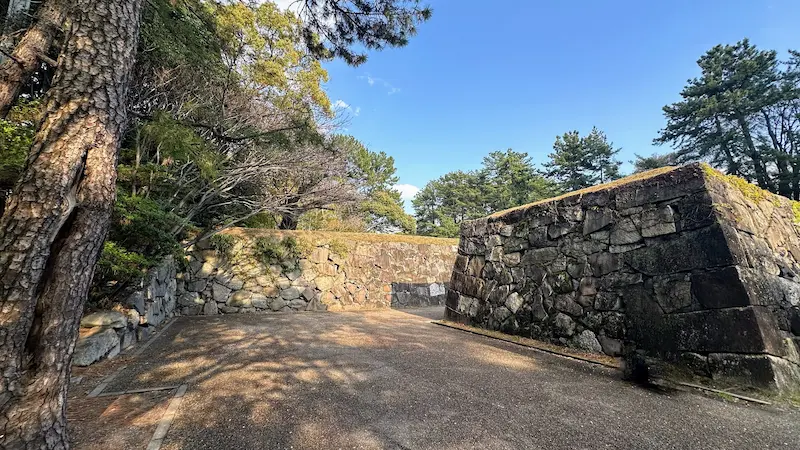
Keep Foundation Stones and a Kofun Stone Chamber in Nagoya Castle's Ofukemaru
Nestled in the northwest corner of Nagoya Castle lies the Ofukemaru area, a hidden gem where the legacy of stone fortifications and the elegance of tea culture coexist in quiet harmony. Here you’ll find the ruins of the Shiogura Gate, scarred foundation stones from wartime destruction, and a refined cluster of tea houses—all offering a tranquil, reflective counterpoint to the castle’s grandiose central structures. Step into a world where history is etched in stone and hospitality is served in porcelain.
On This Page
4 Spots in Ofukemaru
The Shiogura Gate Ruins, Tenshukaku Foundation Stones, Stone Coffin Chamber, and Tea Houses are all within about a one-minute walk of each other in the northwest corner of Nagoya Castle's grounds. Each spot's highlights, visit time, access notes, and trivia are available by tapping "Open Details" on its card.
Shiogura Gate Ruins
Situated on the eastern side of the Ofukemaru area, the Shiogura Gate Ruins mark the former entrance to a small defensive enclosure once known as Shiogura-kamae. This gate was designed in the masugata-mon style—a box-like defensive structure—and served as the primary entrance to the salt storage area, from which it derived its name.
Although the gate itself no longer stands, the remaining stone walls still vividly evoke its historical role within the castle's defensive network. Impressively, these stones are inscribed with the crests and markings of the daimyo who contributed to the castle's construction—making this a point of great historical significance.
- Remnants of the Gate: Observe the original masugata stone layout, showcasing Edo-era defensive engineering.
- Inscriptions in Stone: Spot the engraved seals left by feudal lords—an exciting challenge for history buffs.
- Seasonal Appeal: In spring, cherry blossoms bloom around the ruins, offering a picturesque blend of nature and history.
Recommended visit time: Quick Stop ~3 minutes / In-depth Tour ~15 minutes
Address: 1-1 Honmaru, Naka Ward, Nagoya, Aichi Prefecture (inside Ofukemaru)
Access: Approx. 1-minute walk (30m) from Akazu no Mon (Fumeimon)
Trivia- Historical Function: This gate facilitated the movement of stored provisions, particularly salt, within the castle grounds.
- Hidden Detail: It's also a popular viewing point for spotting daimyo marks on the stones supporting the Tenshukaku.
- Famous Connections: Built by feudal lords under the command of Tokugawa Ieyasu, their legacy remains carved in stone.
Tenshukaku Foundation Stones
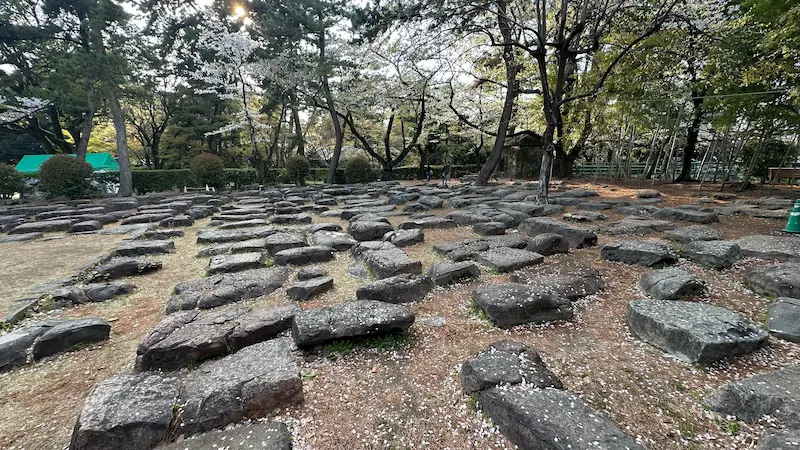
The Tenshukaku Foundation Stones once supported the grand main keep of Nagoya Castle. Following the destruction of the keep during the 1945 air raids, these foundation stones were relocated to the eastern side of Ofukemaru and preserved as a memorial.
The stones still bear burn marks from the firebombing, serving as stark, tangible evidence of wartime devastation. The original Tenshukaku was built in just three months by master castle builder Kato Kiyomasa, who oversaw the construction of the keep's stone base between 1610 and 1612.
Today, the stones are arranged to reflect their original placement, allowing visitors to appreciate the immense scale and structure of the former keep.
- Stone Layout: The foundation stones are neatly arranged to reflect the original structure, allowing you to envision the architectural footprint of the main keep.
- Scorched Marks: Evidence of wartime destruction can still be seen on the stones, offering a solemn reminder of the past.
- Seasonal Appeal: Cherry blossoms in spring add a touch of beauty to this somber historical site.
Recommended visit time: Quick Stop ~3 minutes / In-depth Tour ~15 minutes
Address: 1-1 Honmaru, Naka Ward, Nagoya, Aichi Prefecture (inside Ofukemaru)
Access: Approx. 1-minute walk (20m) from Shiogura Gate Ruins
Trivia- Historical Relocation: These stones were moved here after WWII and reassembled to preserve their original layout.
- Hidden Legacy: Some stones still retain burn marks from the bombing—an enduring testament to their historical significance.
- Famous Builder: The stone base of the keep was built by Kato Kiyomasa, showcasing his legendary skill in castle construction.
Sekkanshiki Sekishitsu: The Stone Coffin Chamber
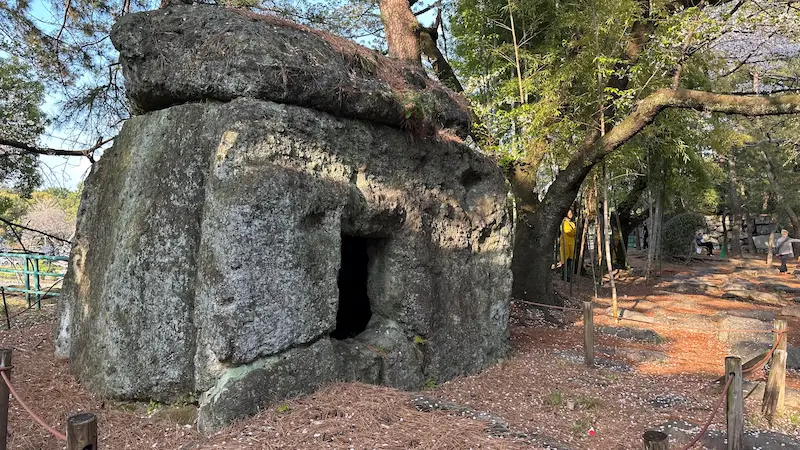
The Sekkanshiki Sekishitsu (stone coffin-style chamber) is a burial facility dating back to the late Kofun period, approximately 1,400 years ago — Japan's ancient tomb-mound era, roughly the 3rd to 7th century CE — now quietly situated within the Ofukemaru Tea Garden in the northwestern grounds of Nagoya Castle. However, it's important to note that this stone chamber did not originally stand at this location prior to the construction of Nagoya Castle. It was relocated and preserved here during the early Showa period, having originally been part of the Danbara Kofun in Matsue City, Shimane Prefecture.
As such, the chamber has no direct connection to Tokugawa Ieyasu or the Edo-period history of Nagoya Castle. Instead, it is preserved as an archaeological exhibit showcasing the cultural heritage of ancient Izumo, and is part of the castle's broader cultural display.
- Stone Coffin-Style Chamber: This Kofun-era burial structure measures approximately 2.5 meters wide, 1.8 meters deep, and 2 meters high. It's built using a combination of large stones, showcasing impressive ancient stonework.
- Izumo-Style Design: A representative example of burial chambers commonly found in the San'in region, this chamber offers insights into the funerary culture of ancient Japan.
- Contrast with the Tea Garden: The juxtaposition of the ancient burial structure and the refined Edo-period tea garden of Nagoya Castle creates a fascinating cultural contrast.
Additional Info: English translation of a sign originally displayed only in Japanese.
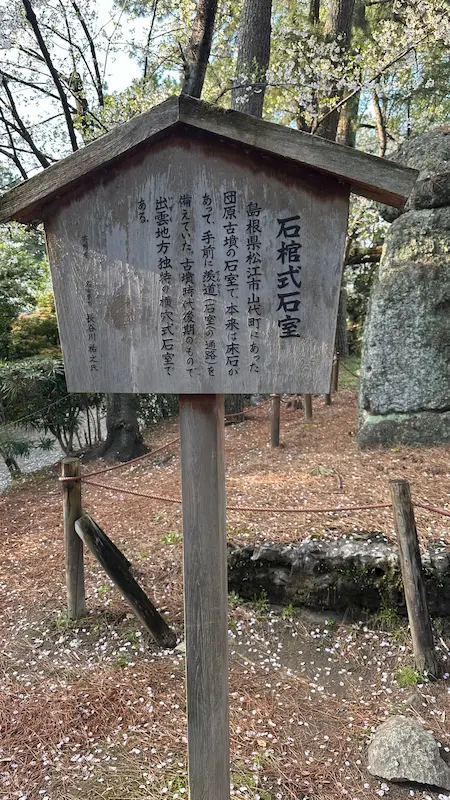
Sarcophagus-Style Stone Chamber
This stone chamber was originally part of the Tawara Kofun burial mound located in Yamashiro Town, Matsue City, Shimane Prefecture. In its original form, the chamber featured a floor stone and an antechamber (known as a sendō)—a passage leading into the burial chamber itself. Dating back to the late Kofun period, this is a distinctive example of a horizontal stone chamber burial unique to the Izumo region.
Donated by: Mr. Hiroyuki Hasegawa
Estimated visit duration: Quick look: Around 5–10 minutes / For archaeology enthusiasts: Approximately 15–20 minutes
Address: 1-1 Honmaru, Naka Ward, Nagoya, Aichi Prefecture
Access: Approximately a 1-minute walk (about 20 meters) from the Tenshukaku Foundation Stones.
Trivia- A Hidden Historical Journey: This chamber was purchased in 1936 (Showa 11) by a Nagoya-based antiquities dealer, Chogido Hasegawa, and later donated to Nagoya City in 1949 (Showa 24). It was relocated from the Danbara Kofun in Shimane Prefecture.
- A Little-Known Feature: It is the only Kofun-era structure within Nagoya Castle, though visitors should keep in mind that it is a relocated structure and not native to the site.
- No Connection to Famous Figures: This structure has no ties to Tokugawa Ieyasu or the Owari Tokugawa family, and it played no role in the original construction of Nagoya Castle (which took place between 1609 and 1612).
Tea Houses
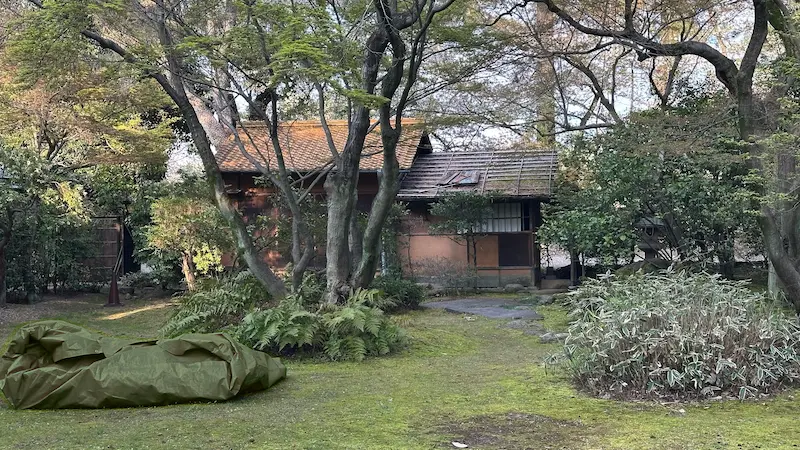
Within the gardens of Ofukemaru is a 2,000-square-meter space that is home to four distinct tea houses, each with its own architectural style and historical backstory. These structures, though not usually open to the public, are used during special occasions such as tea ceremonies and weddings—preserving the spirit of Nagoya's rich tea culture.
- Sarumen Tea House: Named for a floor pillar whose grain resembles a monkey's face—referencing Oda Nobunaga's famous remark about Toyotomi Hideyoshi.
- Bōgaku Tea House: Though its origins are unclear, it is one of the notable tea spaces within the castle grounds.
- Yūin Tea House: A faithful reproduction of the original tea room built by Sen Sōtan, grandson of tea master Sen Rikyū.
- Oribe Hall: Dedicated to tea master Furuta Oribe, this structure was built in 1955 to honor his legacy.
- Architectural Aesthetics: Enjoy the refined designs and traditional craftsmanship of each tea house.
- Serene Gardens: Wander through landscaped grounds that offer a calming escape and seasonal visual delights.
- Seasonal Appeal: Spring cherry blossoms and autumn leaves enhance the harmony of nature and architecture.
Recommended visit time: Quick Stop ~3 minutes (for a quick stroll and exterior viewing) / In-depth Tour ~15 minutes (for observing each structure and photography)
Address: 1-1 Honmaru, Naka Ward, Nagoya, Aichi Prefecture (inside Ofukemaru)
Access: Approx. 1-minute walk (50m) from the Sekkanshiki Sekishitsu: The Stone Coffin Chamber
Trivia- Unexpected History: The Sarumen Tea House takes its name from a floor pillar resembling a monkey's face—a nod to Hideyoshi's nickname.
- Little-Known Fact: These tea houses are generally closed to the public but can be accessed during exclusive events.
- Cultural Significance: The Yūin Tea House links directly to Sen Rikyū's lineage, marking its importance in the world of Japanese tea ceremony.
A personal ranking based on repeated on-site visits by the Following the Shogun team (most recently June 2026). This is our own judgment, not the castle's official recommendation.
The actual stones that once carried the main keep, and they still bear the scorch marks from the 1945 air raids. Viewing the rebuilt keep from outside does not convey that it burned down; here that fact is physically in front of you.
A late-Kofun-period burial chamber roughly 1,400 years old — but it did not originally stand at Nagoya Castle. It was moved here in the early Shōwa era from the Danbara Kofun in Matsue, Shimane Prefecture. Lower priority if you came for the castle itself, though nothing else inside the grounds is quite this unusual.
The site of a masugata gate that served the Shiogura enclosure, thought to have held salt and other stores. Only the stonework remains, and it sits on the path into the Ofukemaru, so seeing it in passing is enough.
Four tea houses are laid out across roughly 2,000 m² of garden, but they are not normally open to the public — access is limited to special occasions such as tea ceremonies and weddings. Treat this as a place to view the garden from outside.
Nagoya Castle Guide Full Map
Nagoya Castle: Hours, Admission & Access
| Hours | 9:00 am – 4:30 pm (last entry to Honmaru Palace 4:00 pm) |
|---|---|
| Closed | December 29 – January 1 |
| Admission | Adults ¥500 (through September 30, 2026) / ¥1,000 (from October 1, 2026) Free for junior-high age and under, before and after the change Verified August 23, 2026. The increase was approved by the Nagoya City Council. Tickets bought before the change date remain valid afterwards. |
| Nearest station | Nagoya Castle Station (Meijo subway line), about a 5-minute walk |
Please check the official Nagoya Castle website for the latest hours and fees before you visit.
Why was Nagoya Castle built? Tokugawa Ieyasu, founder of the Tokugawa shogunate, ordered the castle rebuilt in November 1609; construction began in January 1610 and the main keep was completed in December 1612. It became the seat of the Owari Tokugawa family, the senior-most of the three Tokugawa branch houses (the Gosanke), and one of the most important castle towns in Japan.
FAQ
The Shiogura Gate Ruins mark the former entrance to a small defensive enclosure called Shiogura-kamae in the eastern part of the Ofukemaru area. The gate itself no longer stands, but the surviving stone walls are inscribed with the crests of the daimyo who contributed to the castle's construction.
Nagoya Castle's main keep (tenshukaku) was destroyed in the 1945 air raids, and its foundation stones were relocated to the eastern side of Ofukemaru and preserved as a memorial. The keep's stone base was originally built in just three months by master castle builder Kato Kiyomasa.
No, it isn't directly connected. The stone coffin-style chamber (Sekkanshiki Sekishitsu) dates to the late Kofun period, roughly 1,400 years ago, and was originally part of the Danbara Kofun in Matsue City, Shimane Prefecture, before being relocated here in the early Showa period. It has no ties to Tokugawa Ieyasu or the castle's original 1609–1612 construction.
Nagoya Castle is open 9:00 am to 4:30 pm (last entry to Honmaru Palace at 4:00 pm), closed December 29 through January 1. Adult admission is currently ¥500, rising to ¥1,000 from October 2026. The nearest station is Nagoya Castle Station on the Meijo subway line, about a 5-minute walk.
Related Articles on Nagoya Castle
Next Article
Previous Article
Index Article
More Nagoya Castle Guides
☕ Support This Site
Following the Shogun is built on original fieldwork and on-site research.
If you found this guide useful, your support helps keep it going.

You can also support via QR code


comment