

Uraga and Miura Anjin: A Walking Guide to the Port William Adams Helped Open
The real William Adams, the model for Anjin in SHŌGUN, worked in Uraga about 400 years ago. This guide covers the trade monument, the legendary site of his residence, the ferry and his statue in the city museum, from walks on March 1 and July 21, 2025.
On this page
Anjin, the blue-eyed samurai in the TV drama SHŌGUN, was inspired by William Adams, an English navigator known in Japan as Miura Anjin. Adams landed in Japan in 1600 and became an adviser to Tokugawa Ieyasu, the warlord who founded the shogunate. For some years he was closely tied to Uraga, a harbor town in Yokosuka, Kanagawa Prefecture. Most visitors know Uraga as the place where Commodore Perry’s Black Ships arrived in 1853, but in the early Edo period Ieyasu and Adams saw it as a future international trading port.
This guide covers the Uraga side of Adams’s story. The nationally designated sites in Yokosuka, Anjinzuka (his tomb), Kashima Shrine and Jodoji Temple, are covered in William Adams in Yokosuka: A Self-Guided Walk. Walk both and you can follow Adams through the city from start to finish.
Background for first-time visitors
Most signs in Uraga are in Japanese only. This short primer explains the names and ideas you will meet on the walk, so the places make sense when you arrive.
| Miura Anjin (三浦按針) | The Japanese name given to William Adams. “Miura” refers to the Miura Peninsula, where he received an estate; “Anjin” means “pilot” (literally a compass needle). The character Anjin in SHŌGUN is fictional and only inspired by him. |
|---|---|
| Uraga (浦賀) | A port at the mouth of Edo Bay. Edo is the old name of Tokyo, so ships bound for the shogun’s capital passed through here. Later in the Edo period the shogunate checked incoming ships at Uraga, and Perry’s squadron anchored here in 1853. |
| Edo period (1603–1868) | The era of Tokugawa rule. Signs and monuments often give dates in Japanese era names. Keichō covers 1596 to 1615 and Genna begins in 1615, so “Genna 2” is 1616. Years are converted in this guide. |
| Nishi / Higashi (西 / 東) | West and East. Uraga Bay splits the town in two, so you will see Nishi-Uraga (West Uraga) and Higashi-Uraga (East Uraga). A small ferry links the two shores. |
| Kano Shrine (叶神社) | Two shrines with the same name stand on opposite shores, Nishi Kano and Higashi Kano. The character 叶 means a wish being granted, which is why both are known as wish-granting shrines. |
| Jinja and -ji (神社 / 寺) | A jinja is a Shinto shrine and is marked by a torii gate. A name ending in -ji (寺) is a Buddhist temple. Both are places of worship, so keep your voice down and avoid blocking the paths. |
| Tōshōgū (東照宮) | A shrine to Tokugawa Ieyasu, who was deified after his death. Uraga and Kamoi each have a small one. |
| Hi (碑) | A stone monument. The trade monument’s title, 日西墨比, takes one character from each country: Japan (日), Spain (西), Mexico (墨) and the Philippines (比). |
At a glance
| Visited | March 1 and July 21, 2025 |
|---|---|
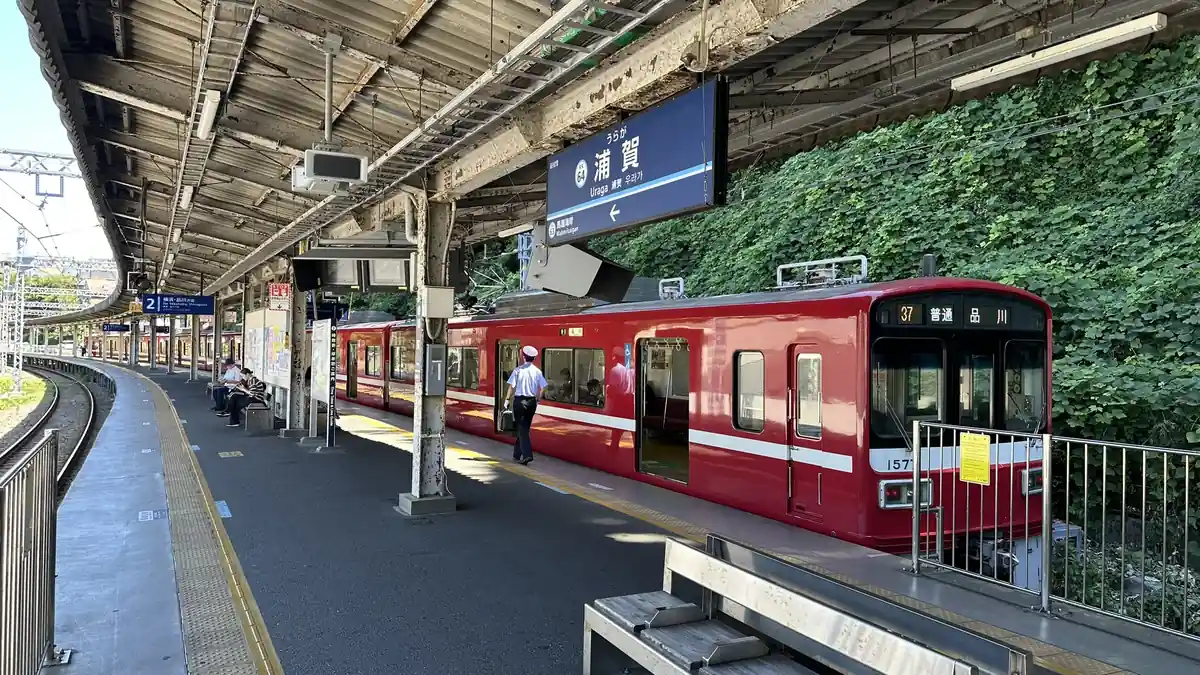
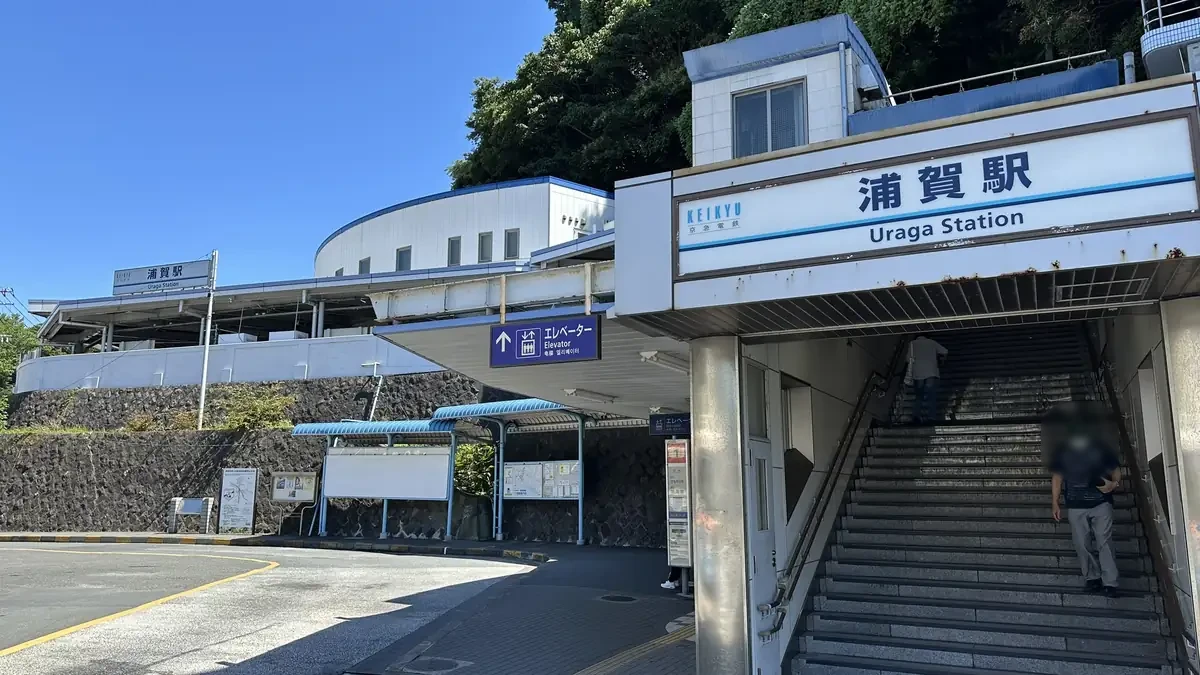
| Start | Keikyu Main Line, Uraga Station (KK64) |
| Places that touch the Anjin story | The trade monument at Higashi Kano Shrine, the Suzaki signboard, and the figure of Adams in Yokosuka City Museum |
| Time at the monument | About 10 minutes for a quick stop, or about 30 minutes with the shrine grounds |
| Uraga ferry | Adults 400 yen, children (elementary and junior high) 200 yen, as posted on March 1, 2025 |
| Easy to skip if Anjin is your goal | Kamoi, the Uraga ferry and Nishi Kano Shrine |
Why Uraga? Ieyasu’s international strategy and Adams’s task
In 1600, a few years after Adams washed ashore in Bungo Province in Kyushu, Ieyasu came to trust him and invited him to Edo as an adviser on diplomacy, navigation and shipbuilding. His fief was in Henmi Village on the Miura Peninsula, in what is now Nishi-Henmi-cho, Yokosuka. Historical evidence suggests, however, that he did his practical work farther east, in Uraga.
Uraga lies at the entrance to Edo Bay. Its water is calm and deep, which made it a natural harbor for building and anchoring ships, and its closeness to Edo gave it strategic value for both defense and commerce.
Ieyasu wanted to open trade routes with the Dutch, Spanish and Portuguese, and he expected Adams to negotiate and give technical advice. Two of Adams’s main roles were repairing and building ocean-going ships at Uraga and developing a Western-style trading port.
According to local tradition and records, Adams based his work and his residence on the east shore of Uraga, near present-day Higashi-Uraga-cho. Two places stand out: Kajiyamachi (“blacksmith town”, around today’s Hodoji Temple), where he is said to have built and repaired ships, and the site traditionally believed to be his residence (the area behind and south of Torinji Temple).
It is also said that Adams oversaw repairs at Uraga when the Spanish galleon San Francisco, which sailed between Manila and Acapulco, was wrecked off Japan. If so, Uraga may briefly have served as a stopover on the trans-Pacific route.
Through Adams’s diplomacy, Ieyasu sought trade with the Philippines and Mexico. After Ieyasu’s death in 1616, however, the shogunate moved toward national isolation, and the plan for Uraga as a thriving international port was never realized.
What remains: a vanished residence, surviving names and a monument
Nothing in Uraga directly proves Adams’s presence: no building or confirmed remains of his residence survive. His memory lives on in place names, local tradition and a recent monument.
- The traditional site of Adams’s residence (the area behind Torinji Temple): Today it is a residential neighborhood, but it was once called “Anjin Yashiki” (Anjin’s residence). The name has come down from the Edo period, and some accounts mention a small shrine he is said to have revered.
- Kajiyamachi (near Hodoji Temple): Blacksmiths who worked on wrecked ships are said to have gathered here, and the name survives.
- Monument to Japan-Spain-Mexico-Philippines Trade (Higashi Kano Shrine): Erected in 2019, it tells of the international port that Adams was part of planning. The four countries’ initials are carved on it, and it stands as a reminder that Uraga was briefly open to the world.
Walking in Anjin’s footsteps through Uraga
Uraga is a quiet port today, but you can still sense Adams’s legacy at the following places.
| Higashi Kano Shrine | Home to the trade monument, with views over Uraga Bay. It is known as a shrine where wishes come true. See the spot guide. |
|---|---|
| Behind Torinji Temple | The traditional site of Adams’s residence. No monument remains, but local place names and the lie of the land give a feel for the past. See Torinji. |
| Around Hodoji Temple | An area that recalls Kajiyamachi, where blacksmiths once lived. See Hodoji. |
| Uraga ferry | A ferry that has run since the Edo period, between West and East Uraga. Adams may have crossed this way too. See the ferry. |
Walking route
This route combines my two visits, on March 1 and July 21, 2025, into one order.
On the other day (July 21), I visited Torinji Temple, Suzaki and Hodoji Temple, then went on to Kamoi for Hachiman Shrine and Kamoi Toshogu. I had lunch and a soak at Yokosuka Onsen Yuraku no Sato, and took the Keikyu line from Mabori-kaigan Station to Kenritsu-daigaku Station for the museum.
Spot guide: Uraga, Kamoi and Yokosuka
The spots below are grouped by place, not by the order I walked them. The places that bear directly on Adams are the monument and signboards in East Uraga and the museum display.
West Uraga: Nishi Kano Shrine and the Uraga ferry
Nishi Kano Shrine
The west-shore twin of Higashi Kano Shrine
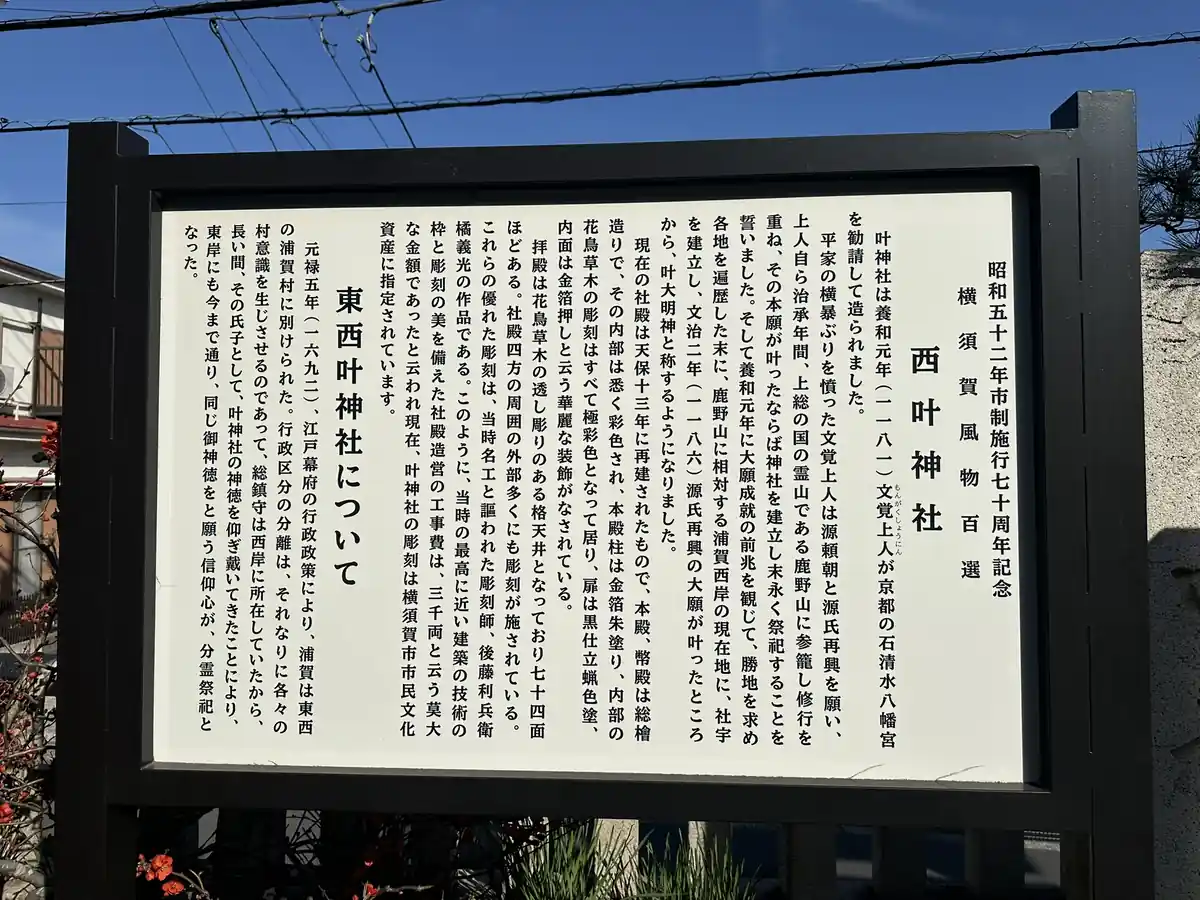
This shrine stands on the west shore of Uraga Bay, facing Higashi Kano Shrine across the water. I reached it by taking the Uraga ferry from the east to the west landing. A signboard in the grounds explains how Uraga came to be divided into east and west and tells the story of the two Kano shrines.
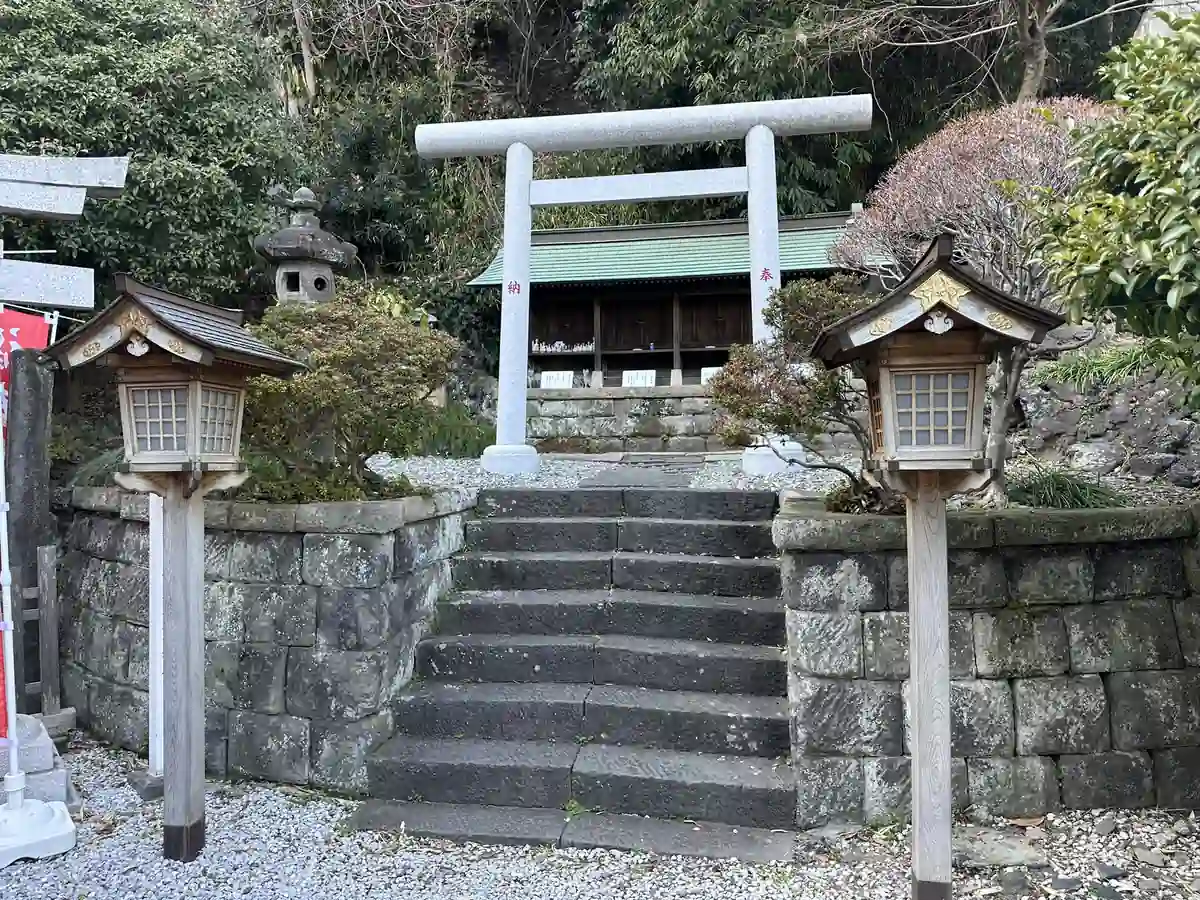
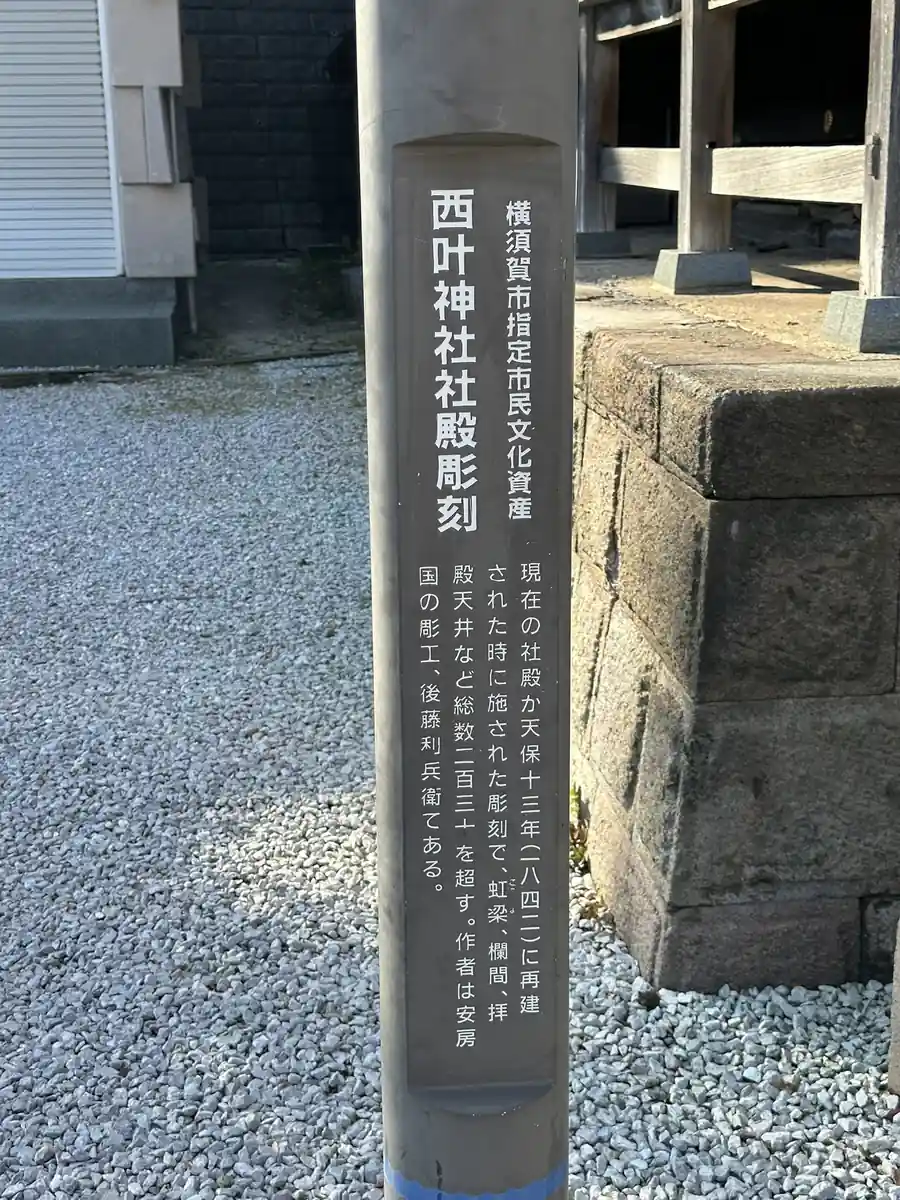
The shrine buildings were rebuilt in 1842, and their carvings are listed by Yokosuka City as a local cultural property. A marker says there are more than 230 carved works on the beams, panels and the ceiling of the worship hall, and names the carver as Goto Rihei of Awa.
Kanagawa Prefecture’s tourism site describes a local belief that a magatama bead (a curved, comma-shaped bead) taken from Nishi Kano Shrine, kept in an amulet bag from Higashi Kano Shrine, ties you to your love, work and friends. I saw nothing here that links the shrine directly to Adams. If Adams is your aim you can skip it, but it is a good stop for the carvings and for understanding how the two sides of Uraga fit together.
This route uses the ferry, in three parts.
1. From Keikyu Uraga Station to the East landing of the ferry (on foot)
2. Take the Uraga ferry from the East landing to the West landing. Fares are in the ferry section below.
3. From the West landing to Nishi Kano Shrine (on foot)
- Carved shrine buildings: rebuilt in 1842, with more than 230 carvings according to the marker.
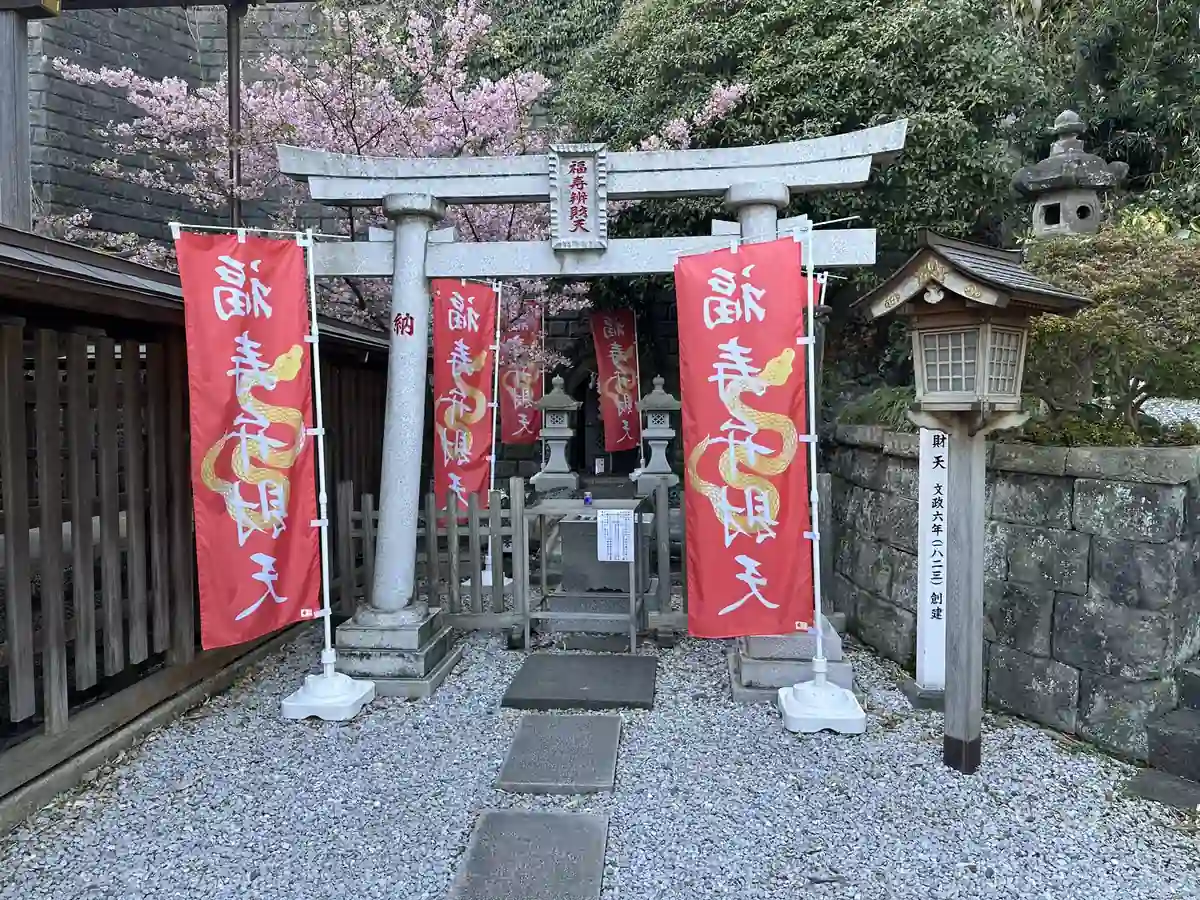
- Fukuju Benzaiten: a small subsidiary shrine, recognizable by its stone torii and red banners with snake designs.
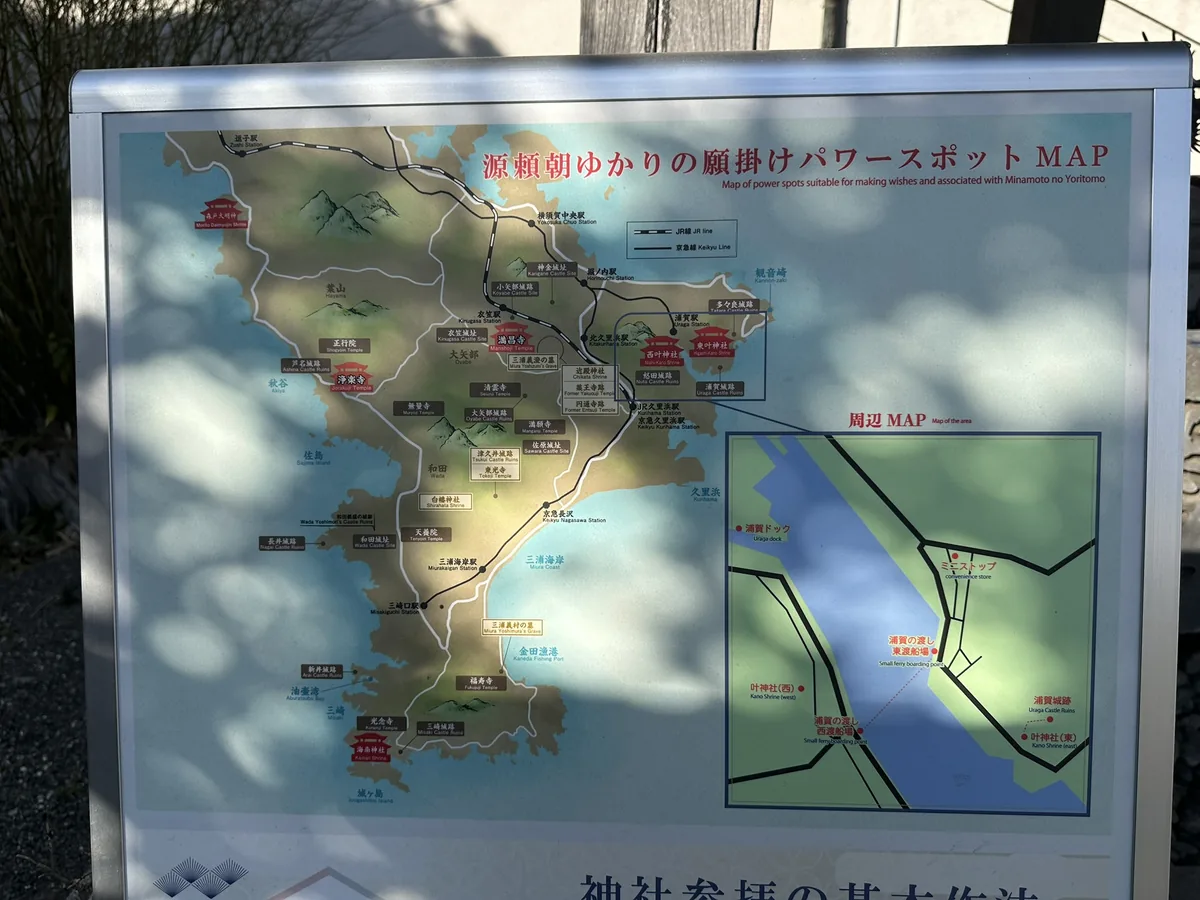
- Signboards: one explains Nishi Kano Shrine and the “two Kano shrines”, and another is a map of places linked to Minamoto no Yoritomo, the founder of the Kamakura shogunate.
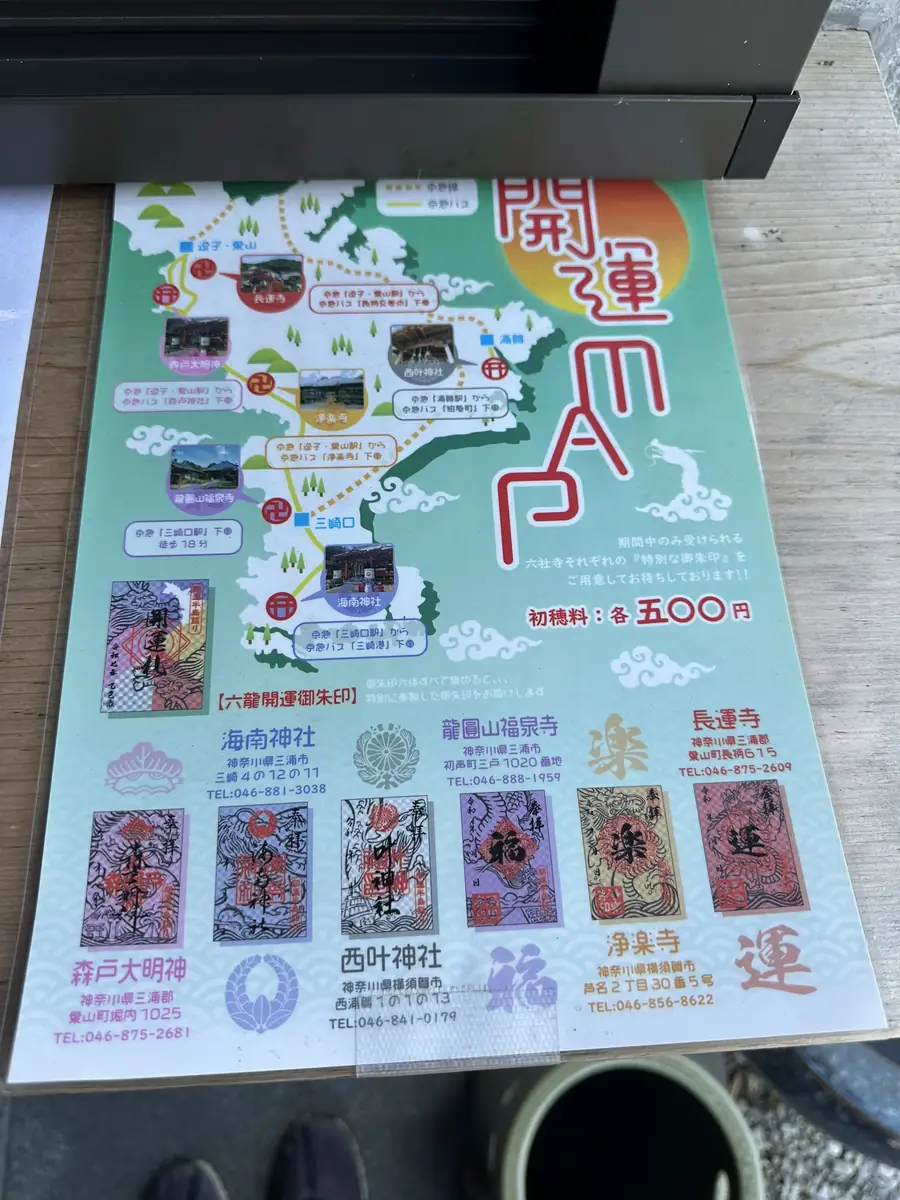
- Six Dragons goshuin project: on March 1, 2025, a poster listed six shrines and temples (Morito Daimyojin, Chōunji, Nishi Kano Shrine, Jorakuji, Fukusenji and Kainan Shrine) in a goshuin circuit. A goshuin is a hand-written seal that shrines and temples give to visitors. Check each site for what is available now.
Tap a photo to enlarge
Uraga Ferry (Uraga no Watashi)
The small boat that links West and East Uraga
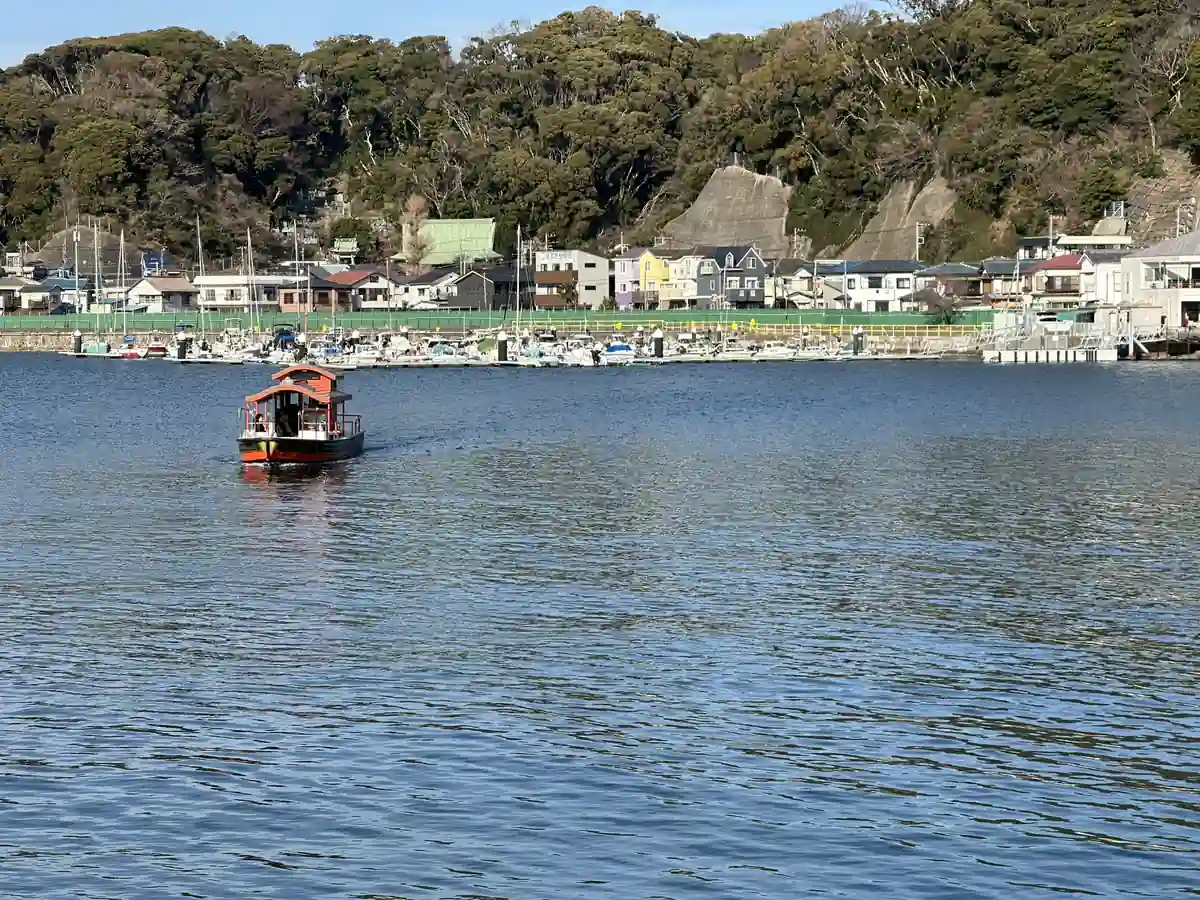
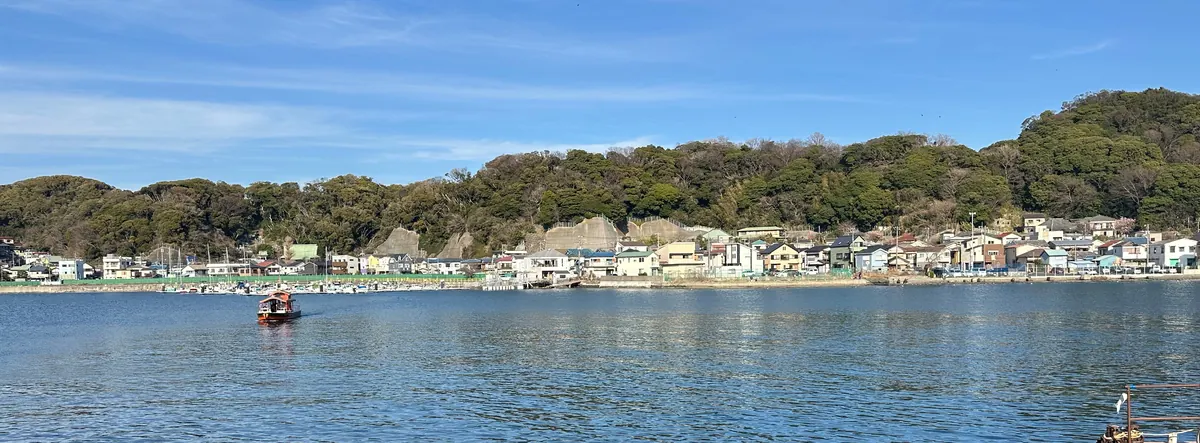
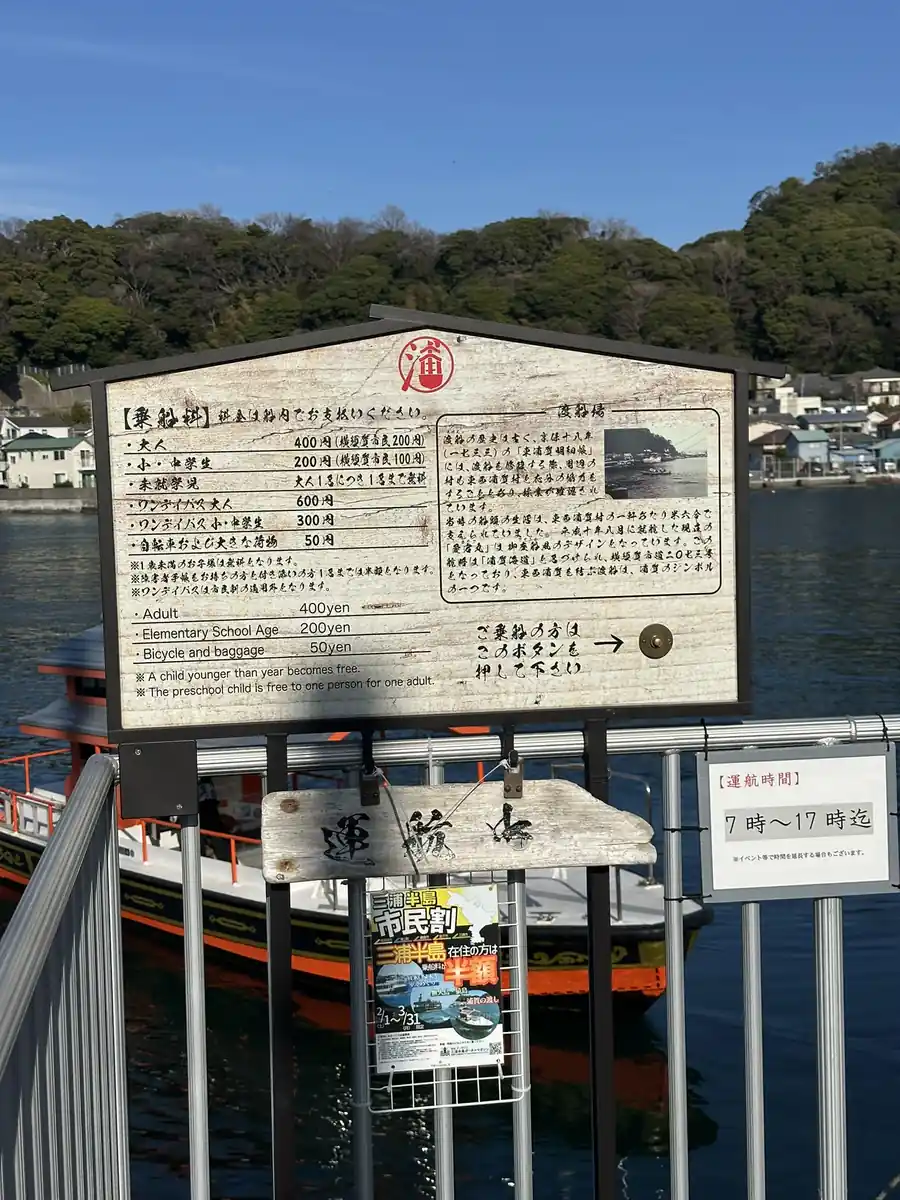
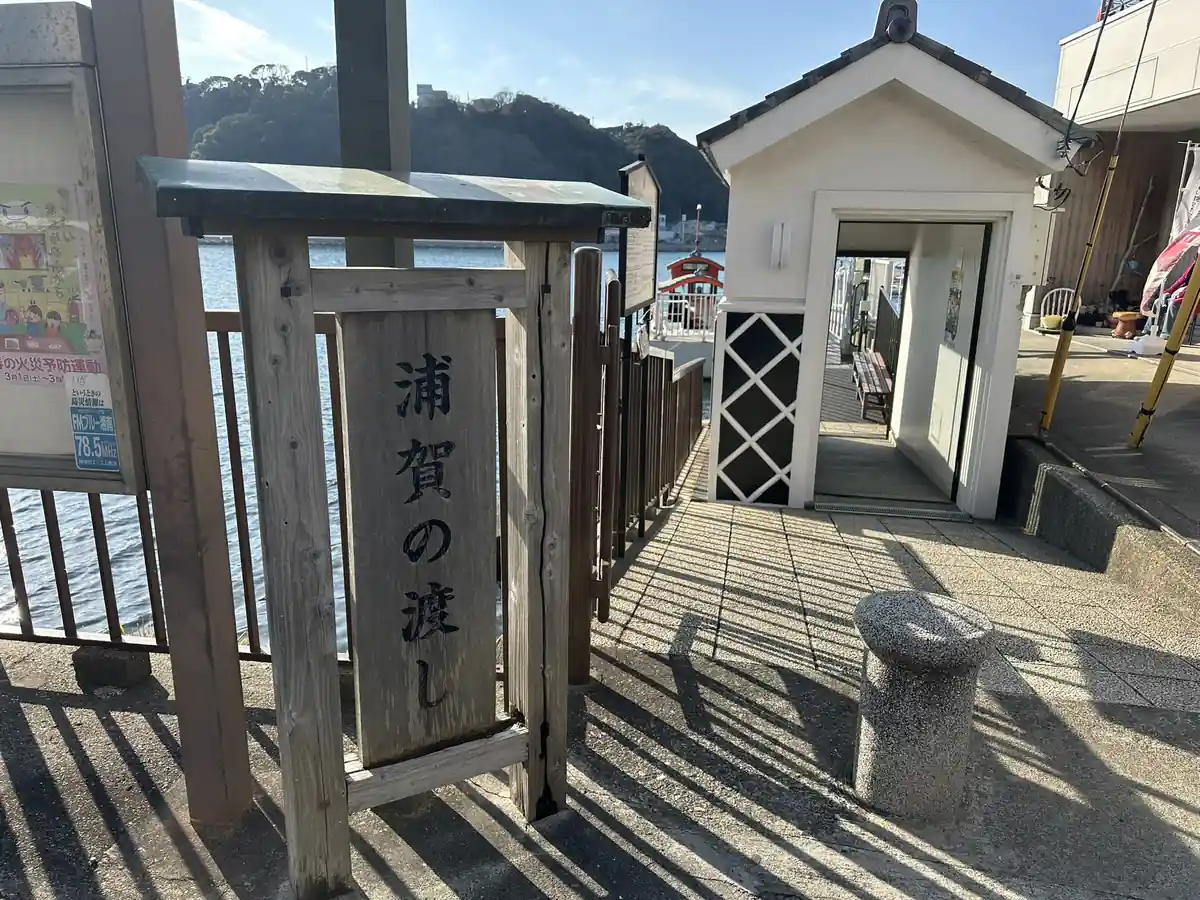
The ferry crosses Uraga Bay between the west and east shores. Each landing has a sign and a waiting shelter, and at the West landing a board explains how to call the boat with a button.
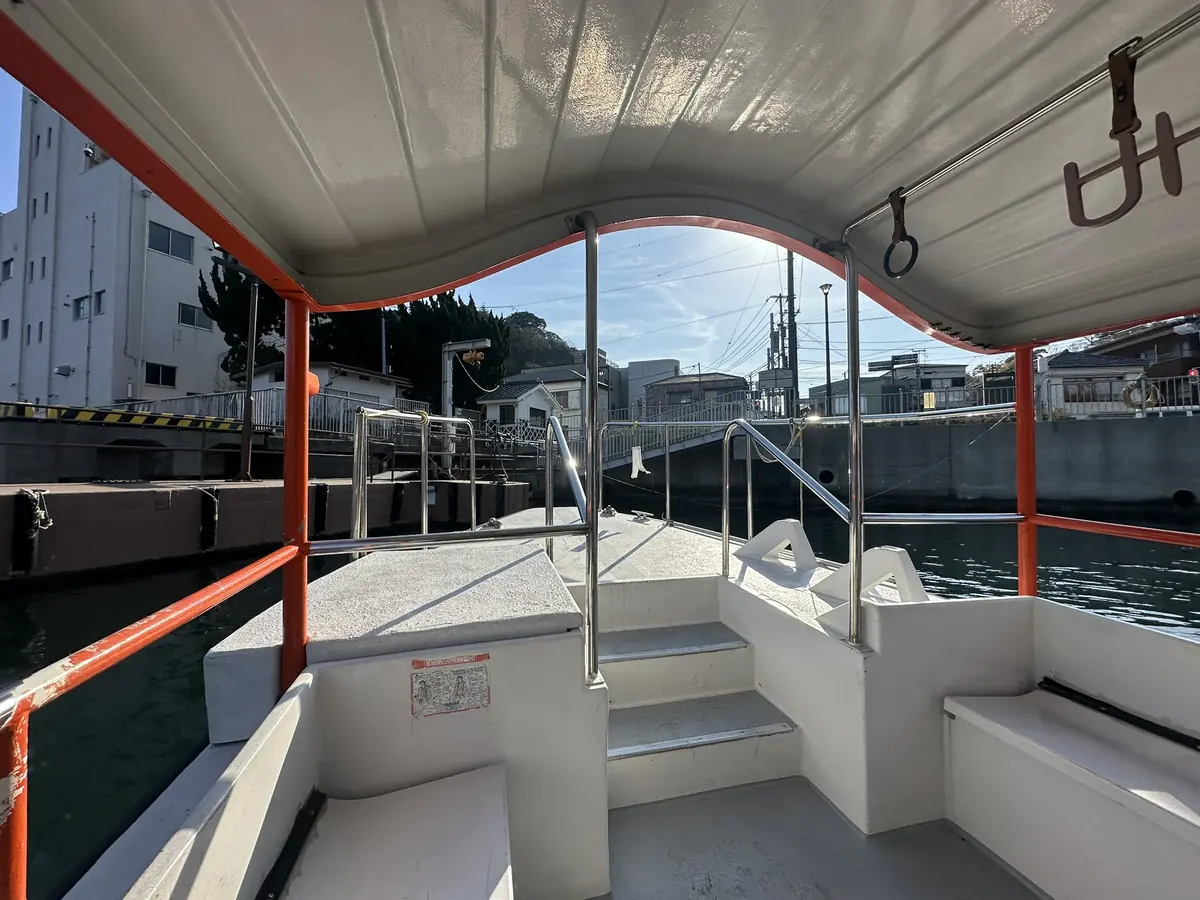
On March 1, 2025, I boarded at the East landing, visited Nishi Kano Shrine on the west side, then took the ferry back from the West landing. It is a small boat with a red roof, and from the water you can see houses and temples on the east shore.
The fare board at the West landing showed adults 400 yen, elementary and junior high school students 200 yen, and free for preschool children, one per adult. The posted hours were 7:00 to 17:00. Kanagawa Prefecture’s tourism site gives the same fares and hours and notes that the ferry may not run in stormy weather or during inspections. It also points out that the ferry is officially a municipal road, Route 2073, which makes it an unusual one. Check the landing for current fares.
From Nishi Kano Shrine to the West landing (on foot)
Board at the West landing and cross to the East landing.
| Fare | Adults 400 yen / elementary and junior high students 200 yen / preschool children free, one per adult (posted March 1, 2025) |
|---|---|
| Hours | 7:00 to 17:00 (posted March 1, 2025) |
| Landings | West landing and East landing |
| How to board | Press the call button at the landing |
| Boat | Built in 1998, fiberglass, capacity 12 passengers (Yokosuka City) |
Tap a photo to enlarge
East Uraga: the legendary residence site, the trade monument and Mount Myojin
Torinji Temple and Miura Inari Shrine
A Jodo-sect temple in East Uraga, beside an Inari shrine gate
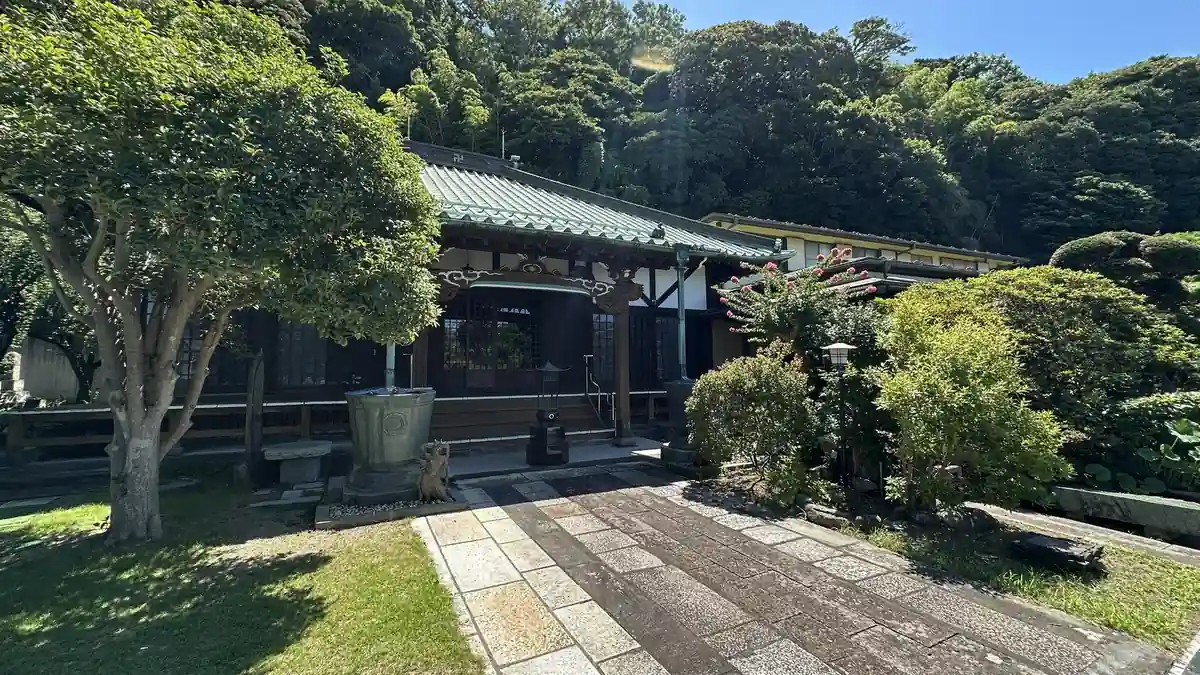
This temple stands up a slope in East Uraga and holds the graves of Nakajima Saburosuke and his son. Saburosuke was an officer of the Uraga magistrate’s office who chose to remain loyal to the shogunate to the end. At the entrance the temple’s name stone stands beside the stone torii and steps of Miura Inari Shrine.
A signboard at the entrance, headed “Shinpon, Raiden and Miura Inari Shrine”, tells how Edoya Hangoro, a brothel owner, gave up his property, freed his women and became a monk, and how the sumo wrestler Raiden Tameemon held a sumo event here in 1809.
Yokosuka City’s “Uraga walk” guide says the area from behind Miura Inari Shrine to Hodoji Temple, below the stone walls, is called “Anjin Yashiki”, Anjin’s residence. No remains or monument survive.
- Graves of Nakajima Saburosuke and his son: the city says Saburosuke stayed loyal to the shogunate after the Meiji Restoration and died with his son at the Chiyogadai battery in Hakodate.
- Miura Inari Shrine: a stone torii and a small shrine beside the temple gate.
- Signboard: the story of Edoya Hangoro and Raiden.
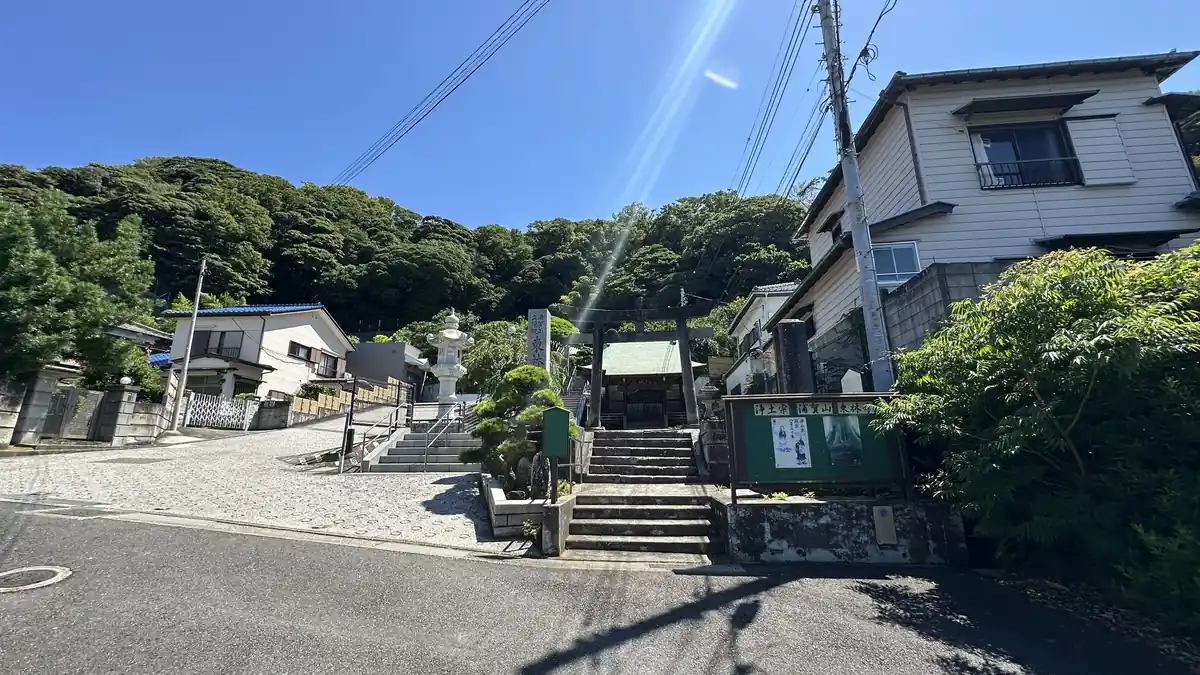
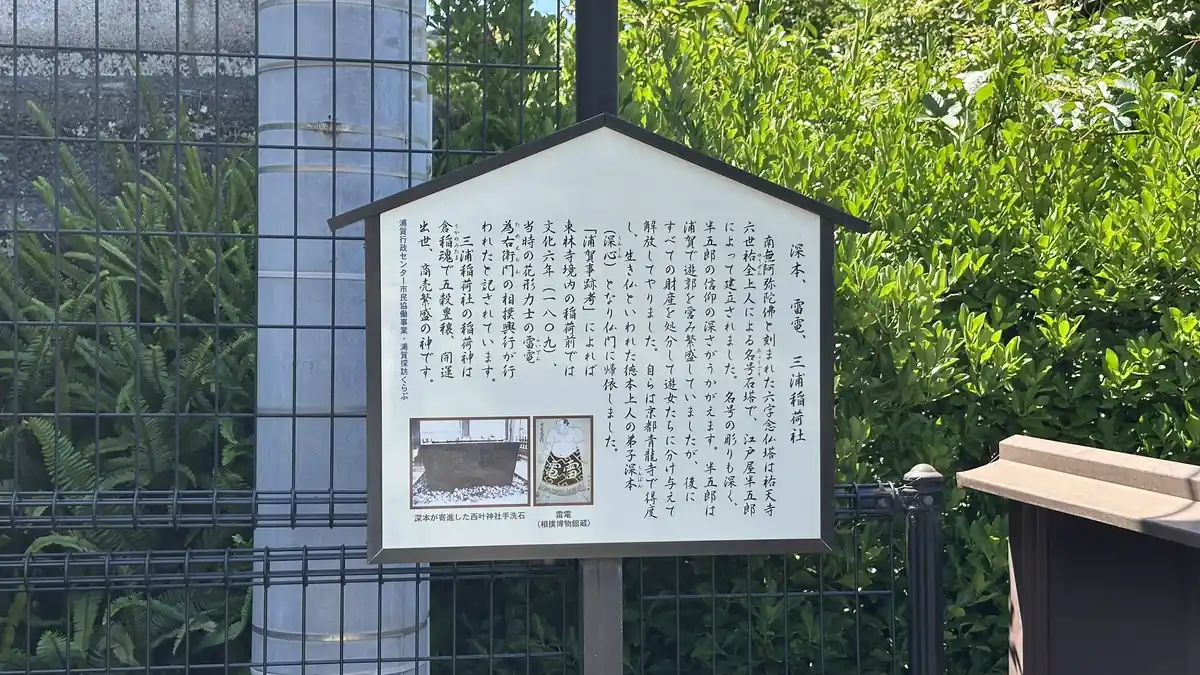
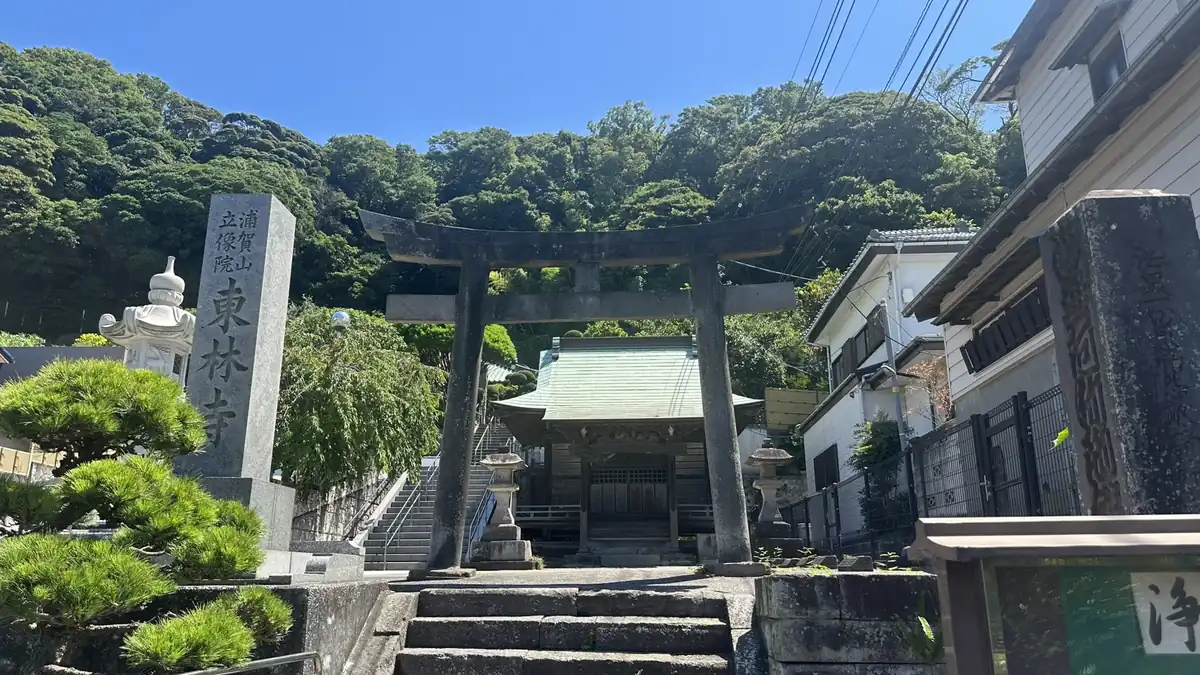
Tap a photo to enlarge
Suzaki signboard
A sign about Adams’s residence and Uraga Castle
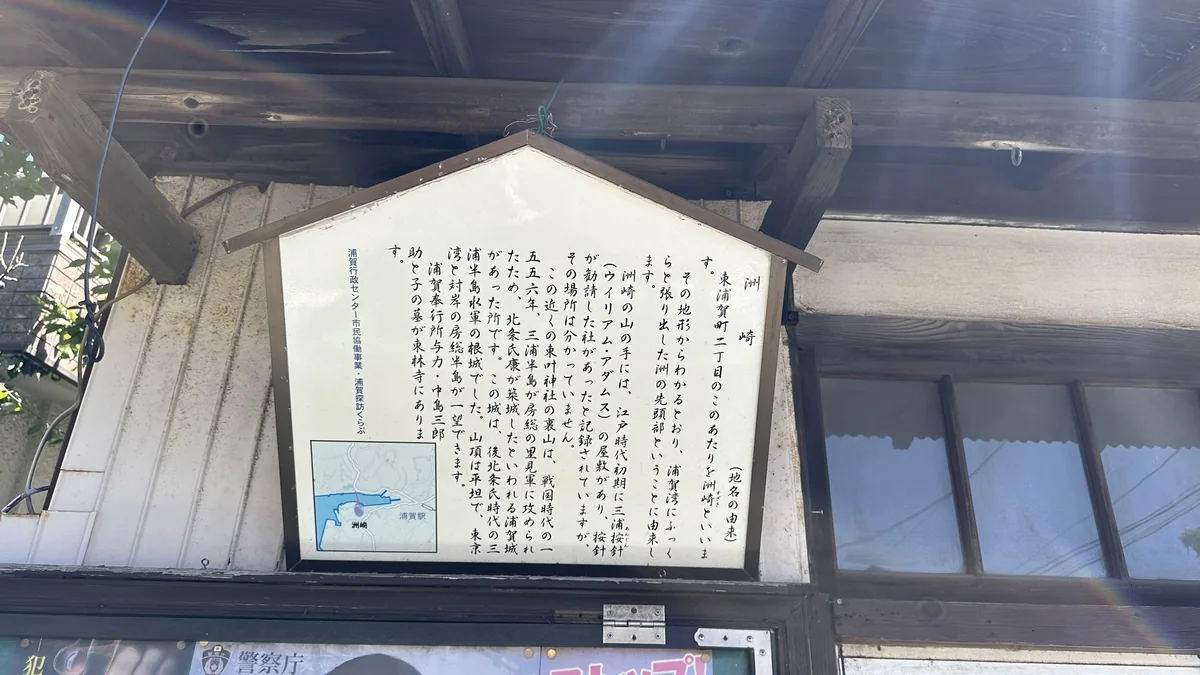
A signboard in the Suzaki district of East Uraga explains the origin of the place name. It records old accounts of Adams’s residence and the story that Uraga Castle once stood on the hill behind Higashi Kano Shrine.
The board says the exact location of the residence is not known. There is no monument or remains, so reading this sign is the closest you can get on site to the story of Adams’s residence.
Around Hodoji Temple
The slope said to be the old blacksmith town
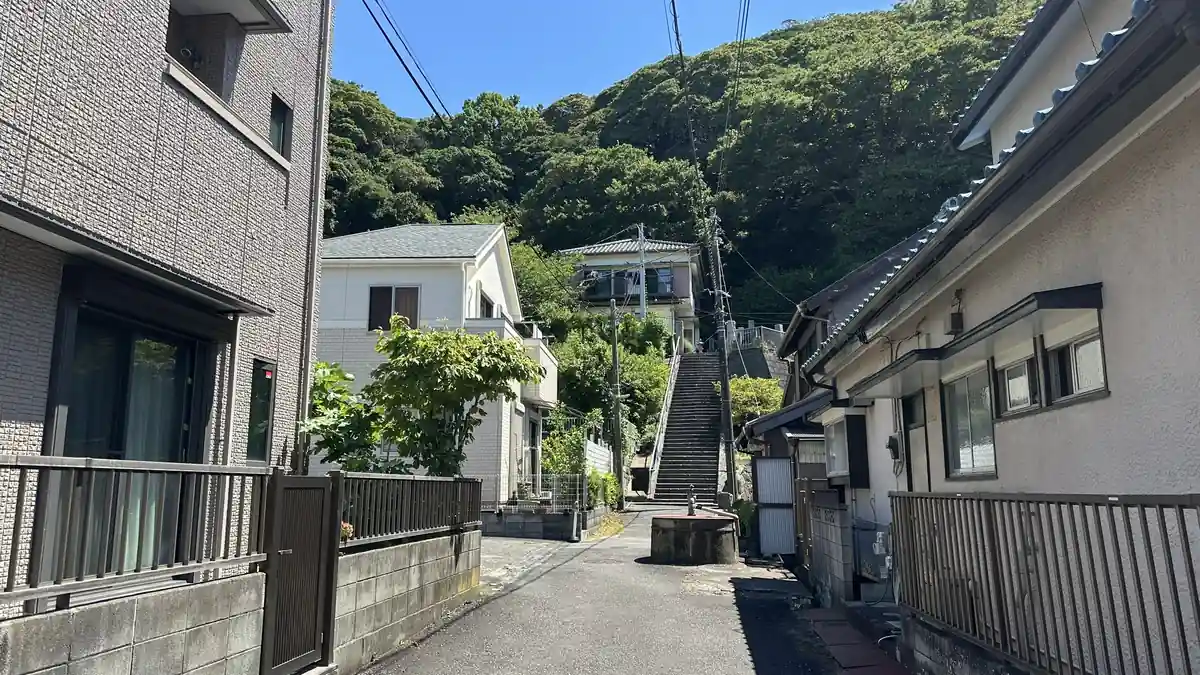
Houses line the slope of East Uraga, and the area around Hodoji Temple is said to preserve the memory of Kajiyamachi, the blacksmith town. A hand-pump well still stands in one lane, and a long flight of stone steps leads up beyond it.
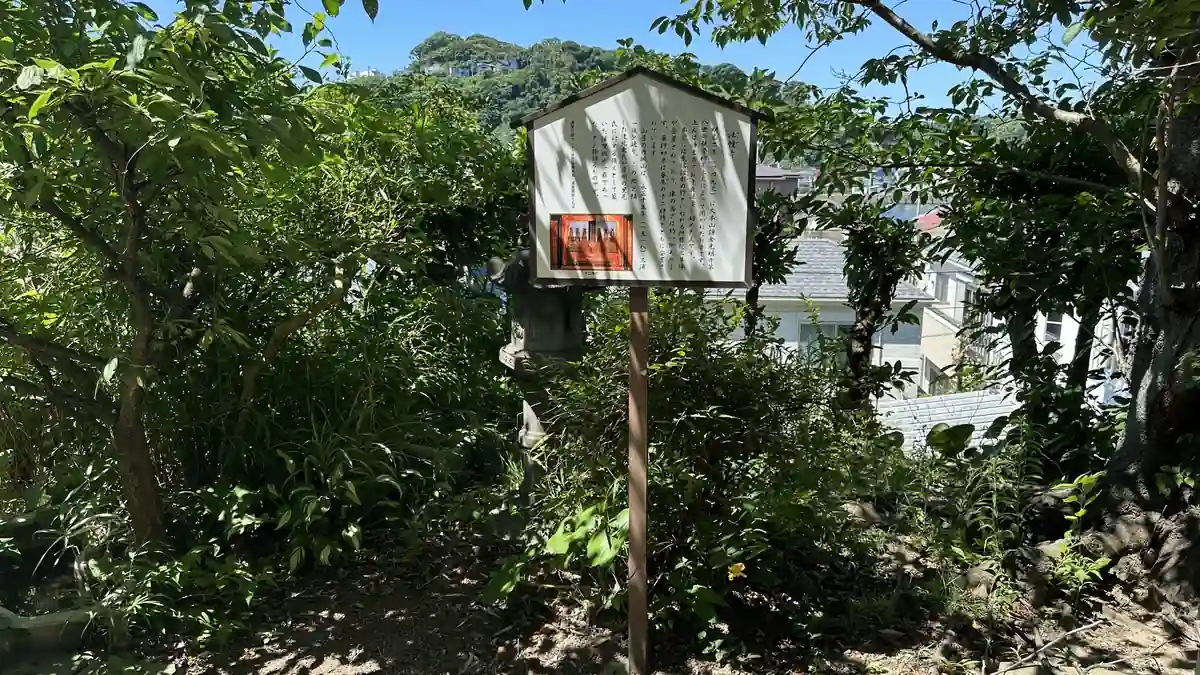
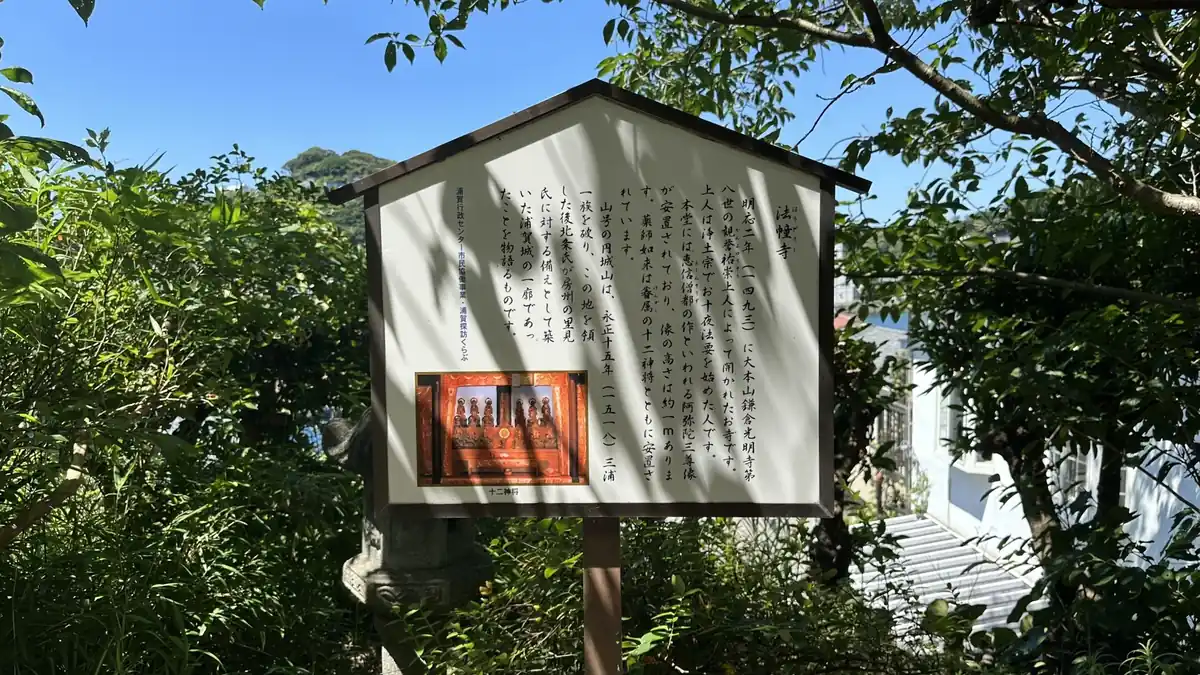
A signboard in the trees on the hill explains the temple. It says Hodoji was founded in 1493, that its main hall houses an Amida triad, and that it also keeps a Yakushi Buddha and the Twelve Divine Generals. The board also touches on its link to Uraga Castle.
Tap a photo to enlarge
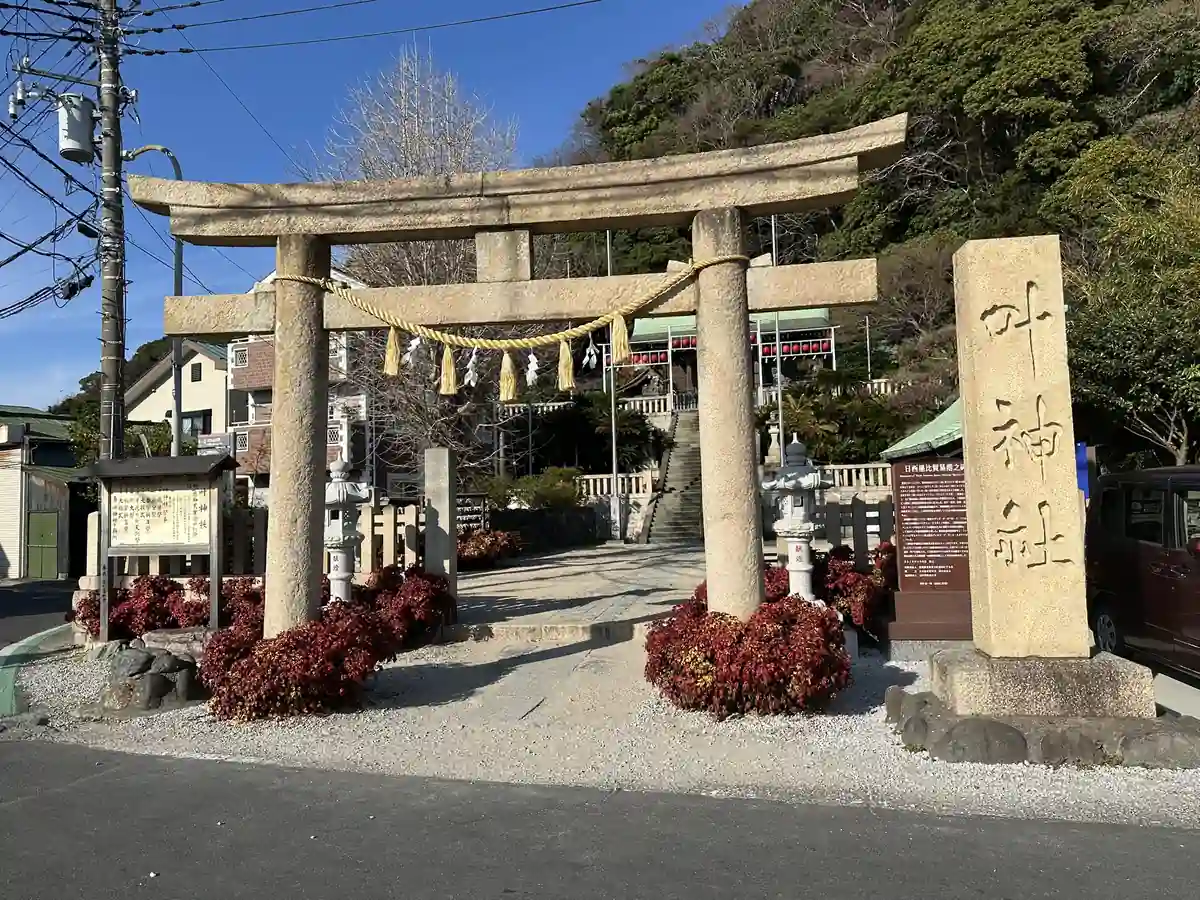
Monument to Japan-Spain-Mexico-Philippines Trade (日西墨比貿易港之碑)
A stone monument to Uraga’s days as an international port
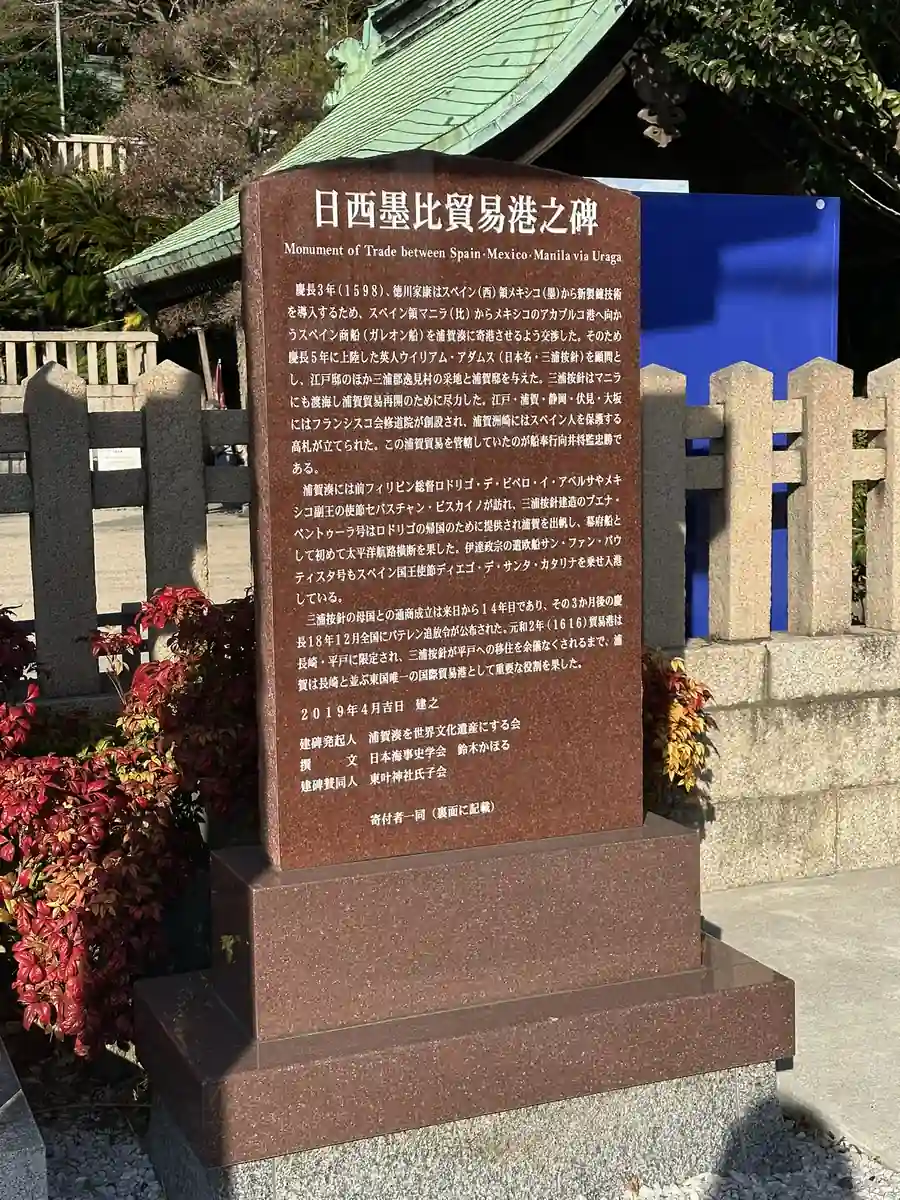
The monument stands at the entrance of Higashi Kano Shrine in Higashi-Uraga, Yokosuka. It was put up in 2019 to recall Uraga’s brief role as an international trading port in the Keichō era (1596 to 1615). Adams, trusted by Ieyasu, took part in negotiations with Spain, Mexico (then New Spain) and the Philippines. According to the inscription, Uraga became the only international port in eastern Japan at the time, on a level with Nagasaki and Hirado, and the first trans-Pacific trade route was realized.
- The inscription: It summarizes exchanges with Manila and Mexico through Spain during the Keichō era, the Pacific route, and the road to national isolation, and gives a sense of how people saw the world then.
- Placement: It stands beside the shrine approach, in harmony with the stone steps, torii gate and water basin.
- Seasons: Cherry blossoms in spring and autumn leaves make a pretty setting, and a ferry crossing fits well into the same visit.
Quick stop: about 10 minutes, for photos and reading the inscription.
Fuller visit: about 30 minutes, including a walk around the Higashi Kano Shrine grounds.
2-21-25 Higashi-Uraga, Yokosuka, Kanagawa (within Higashi Kano Shrine)
Access from Uraga Station is summarized under “Getting there” at the bottom of this page.
Rating
Historical significance: ★★★
Visual appeal: ★★
Experience: ★★
| Year erected | 2019 (unveiled on April 25) |
|---|---|
| Erected by | Committee for Making Uraga Port a World Heritage Site and the parishioners of Higashi Kano Shrine |
| Structure | Red granite monument. It describes Uraga’s role as a trading port linked to Spain, Mexico and the Philippines. |
| Restorations | None recorded since it was erected |
| Condition | Good. It stands beside the approach to Higashi Kano Shrine. |
| Designation | Recognized locally as a historic monument (not nationally designated) |
| Notes | The inscription includes English. The monument and the shrine’s cherry trees are a local attraction. |
In Keichō 3 (1598), Tokugawa Ieyasu initiated negotiations to bring a Spanish galleon, en route from Manila (then a Spanish colony) to the port of Acapulco in Mexico (also under Spanish rule), to call at the port of Uraga. His goal was to introduce advanced refining technology from New Spain (Mexico) into Japan.
To support this effort, Tokugawa appointed the Englishman William Adams (known in Japan as Miura Anjin), who had landed in Japan in Keichō 5 (1600), as his adviser. Adams was granted a residence in Edo, a fief in Henmi Village in Miura District, and a residence in Uraga. He later traveled to Manila and worked tirelessly to reopen trade through Uraga.
Franciscan missions were established in Edo, Uraga, Shizuoka, Fushimi and Osaka during this period, and a public notice was erected in Uraga’s Suzaki area to protect Spanish nationals.
The official overseeing Uraga’s maritime affairs was Mukai Shōgen Tadakatsu, the shogunate’s naval commissioner.
Uraga Port welcomed several key historical figures, including Rodrigo de Vivero y Aberrucia, former governor-general of the Philippines, and Sebastián Vizcaíno, envoy of the Viceroy of Mexico. The Buena Ventura, a vessel built by Miura Anjin, was offered to Rodrigo for his return voyage and became the first Tokugawa-era ship to successfully cross the Pacific Ocean.
The European envoy ship San Juan Bautista, commissioned by Date Masamune, also called at Uraga with Spanish royal envoy Diego de Santa Catalina aboard.
Formal trade relations with Miura Anjin’s homeland were established 14 years after his arrival in Japan. However, just three months later, in December of Keichō 18 (1613), the nationwide edict to expel Christian missionaries (Bateren) was issued.
By Genna 2 (1616), all international trade was restricted to Nagasaki and Hirado, forcing Miura Anjin to relocate to Hirado. Until that time, Uraga had played a critical role as the only international trading port in eastern Japan, standing alongside Nagasaki in national importance.
Erected: April 2019
Monument initiative: Committee for Making Uraga Port a World Heritage Site
Inscription by: Kahoru Suzuki, Japan Maritime History Society
Funding: Parishioners of Higashi Kano Shrine
Donors: Listed on the reverse side of the monument
This monument pairs well with the national historic sites in the Yokosuka guide, Anjinzuka, Kashima Shrine and Jodoji Temple. Together they show Adams’s part in international diplomacy and why Edo Bay and Uraga mattered.
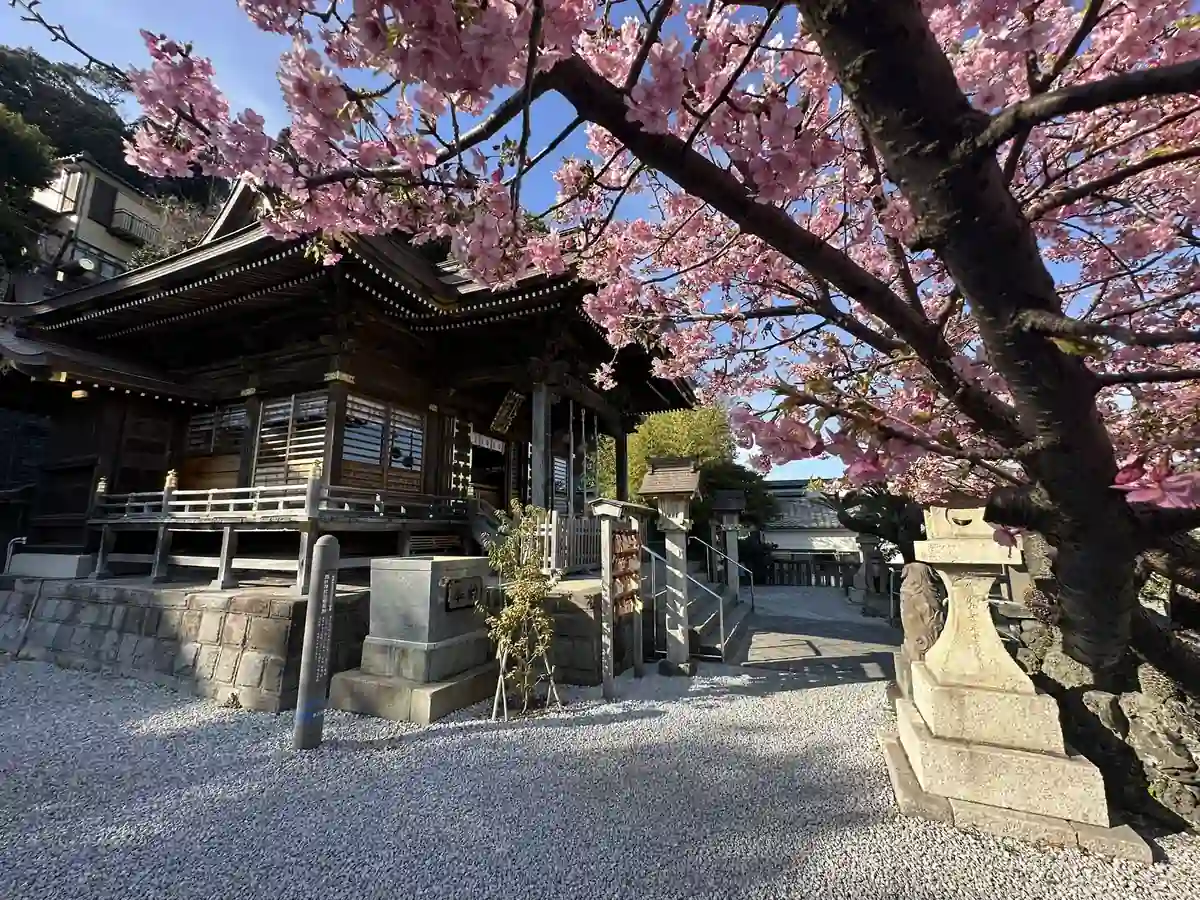
Higashi Kano Shrine
Cycads, red lanterns and a worship hall above the steps
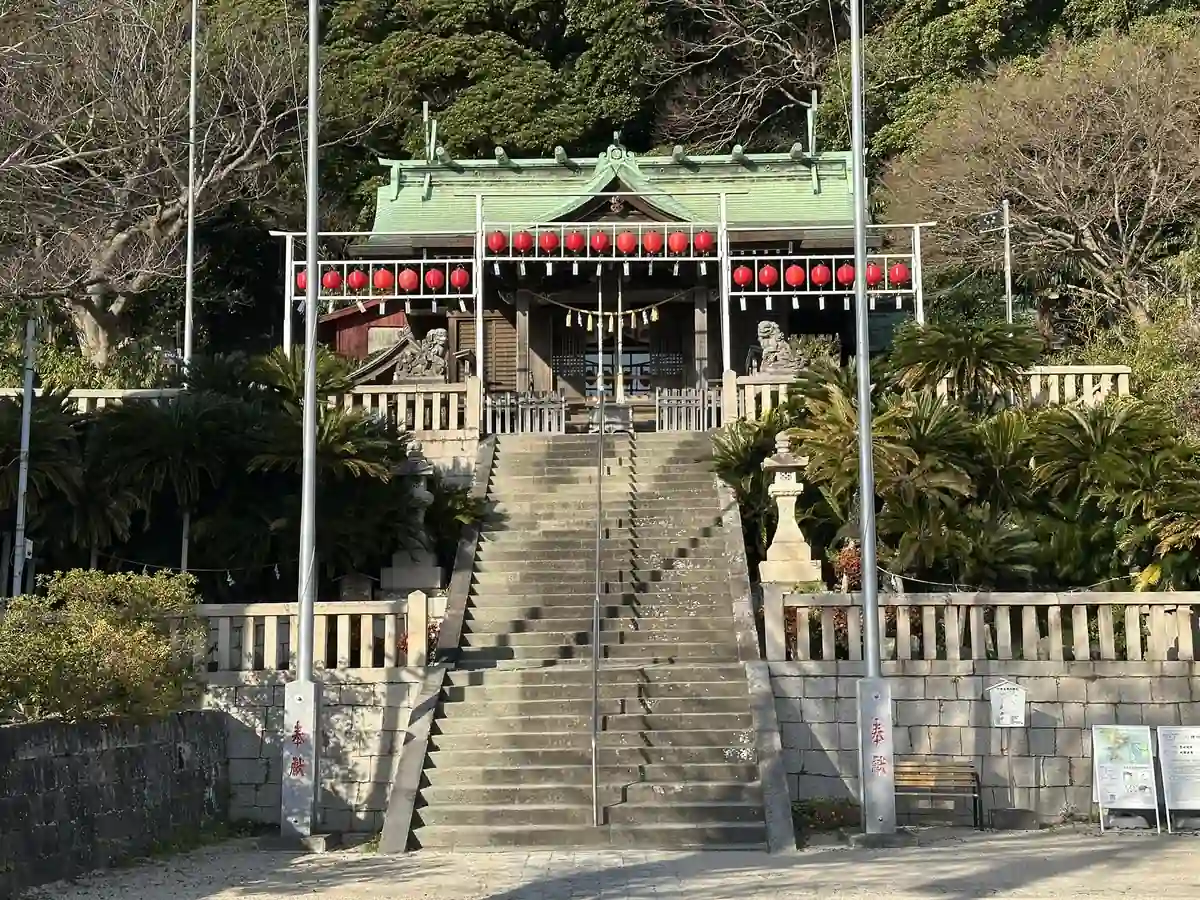
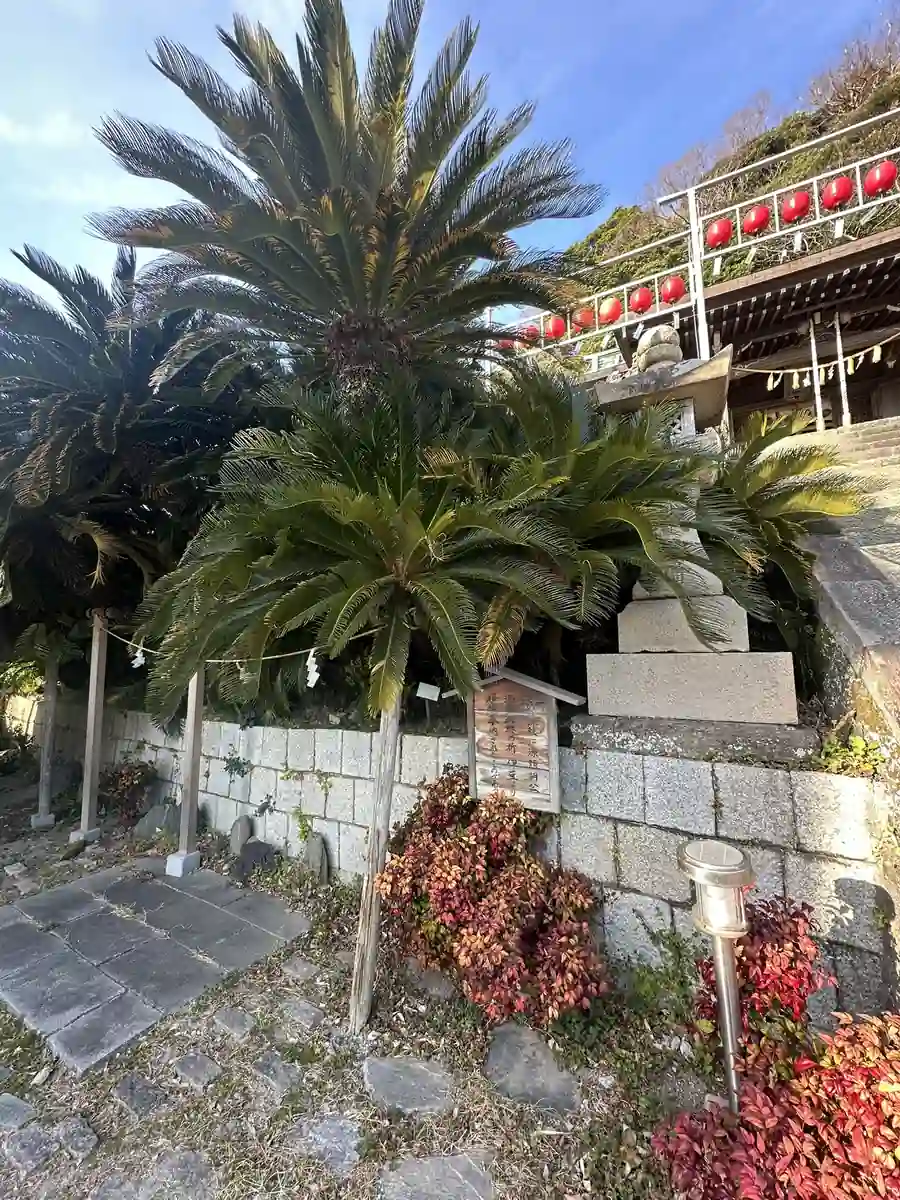
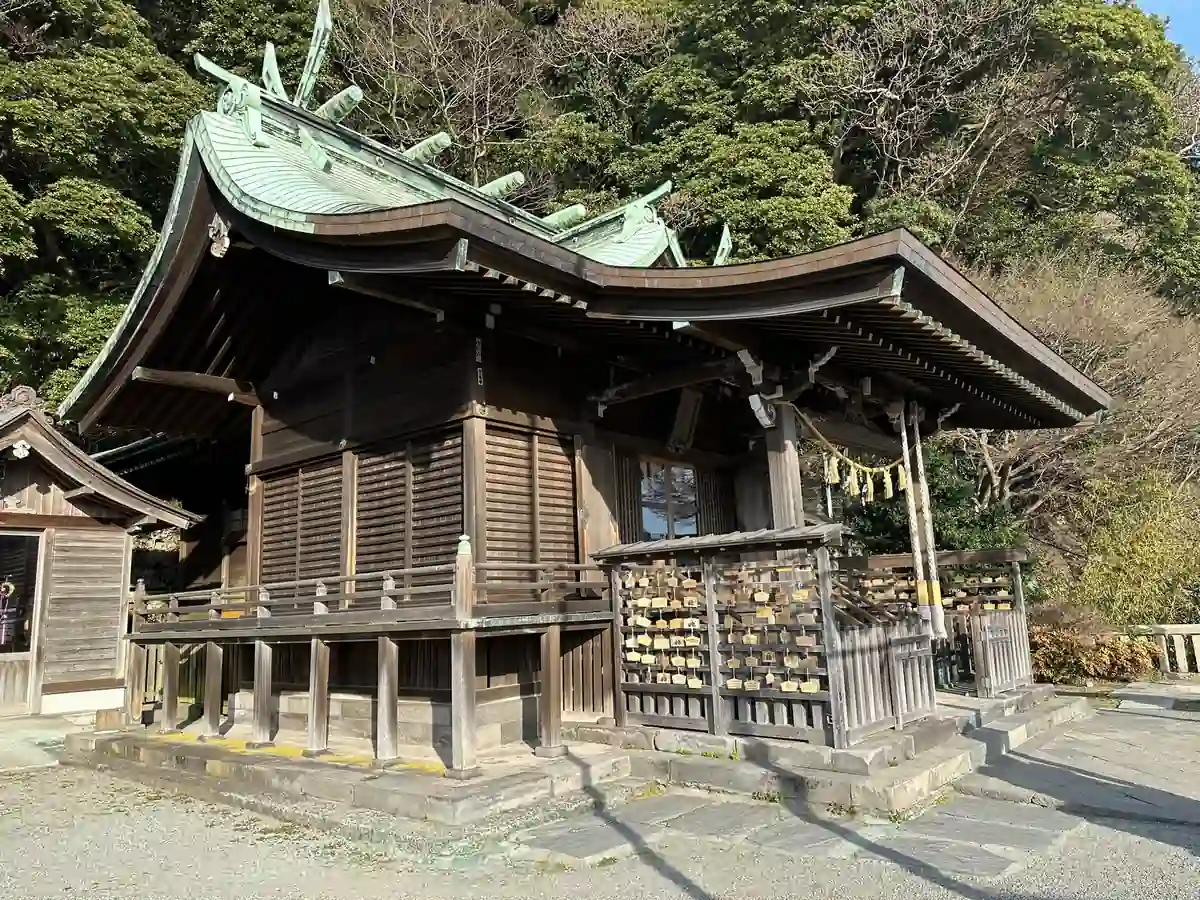
Higashi Kano Shrine stands on a hillside. You climb stone steps through a stone torii to the worship hall. Cycads grow on both sides, and red lanterns hang under the green-patina copper roof, a view that is best from the foot of the steps. The fence in front of the hall is hung with many votive tablets (ema), wooden plaques on which visitors write their wishes.
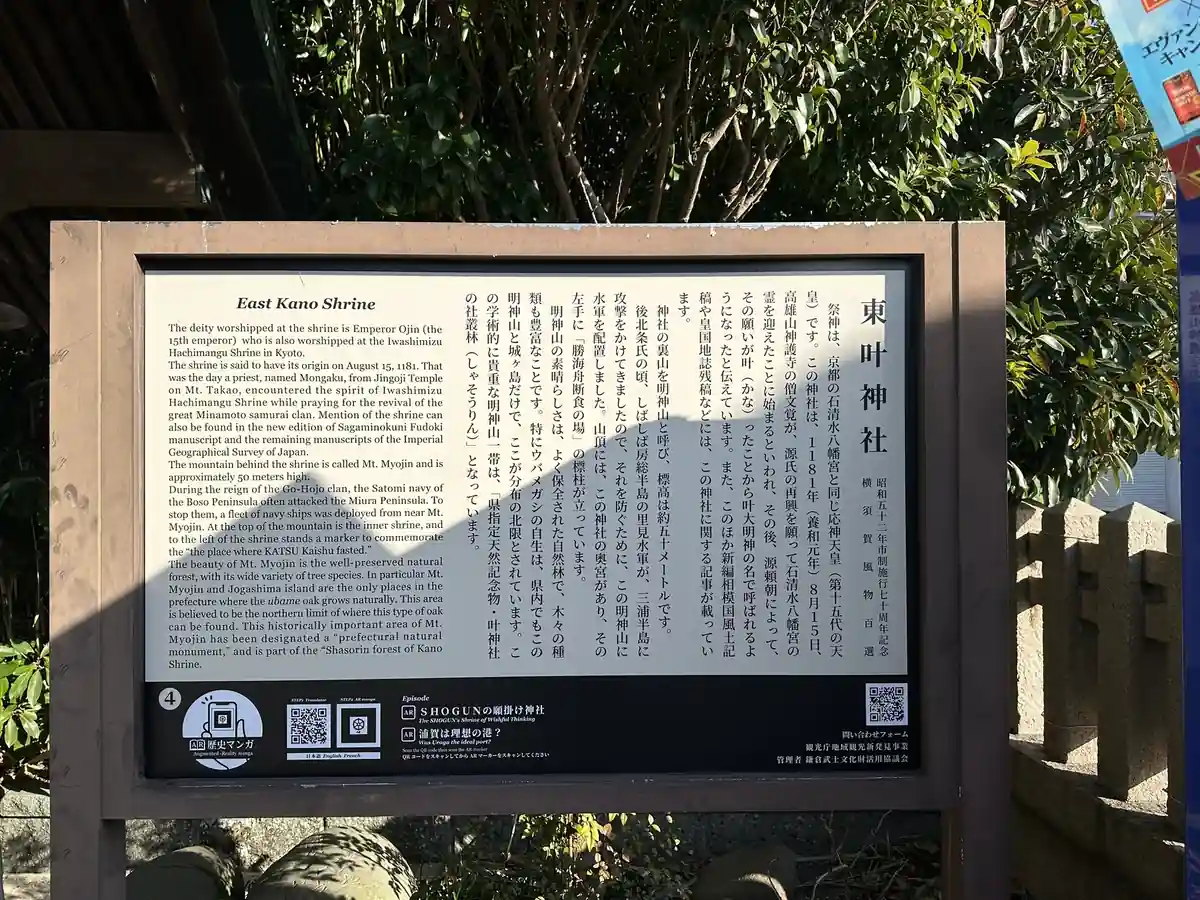
A bilingual board near the entrance covers the shrine’s legendary founding, the history of Mount Myojin, the tradition of Katsu Kaishu’s fast and the shrine forest, which is a natural monument of Kanagawa Prefecture. A grounds map shows the path from the worship hall to the inner shrine on Mount Myojin, Uraga Toshogu and Shinmei Shrine. Kanagawa Prefecture’s tourism site says the shrine is dedicated to the guardian deity of Higashi-Uraga and that visiting is free at any time.
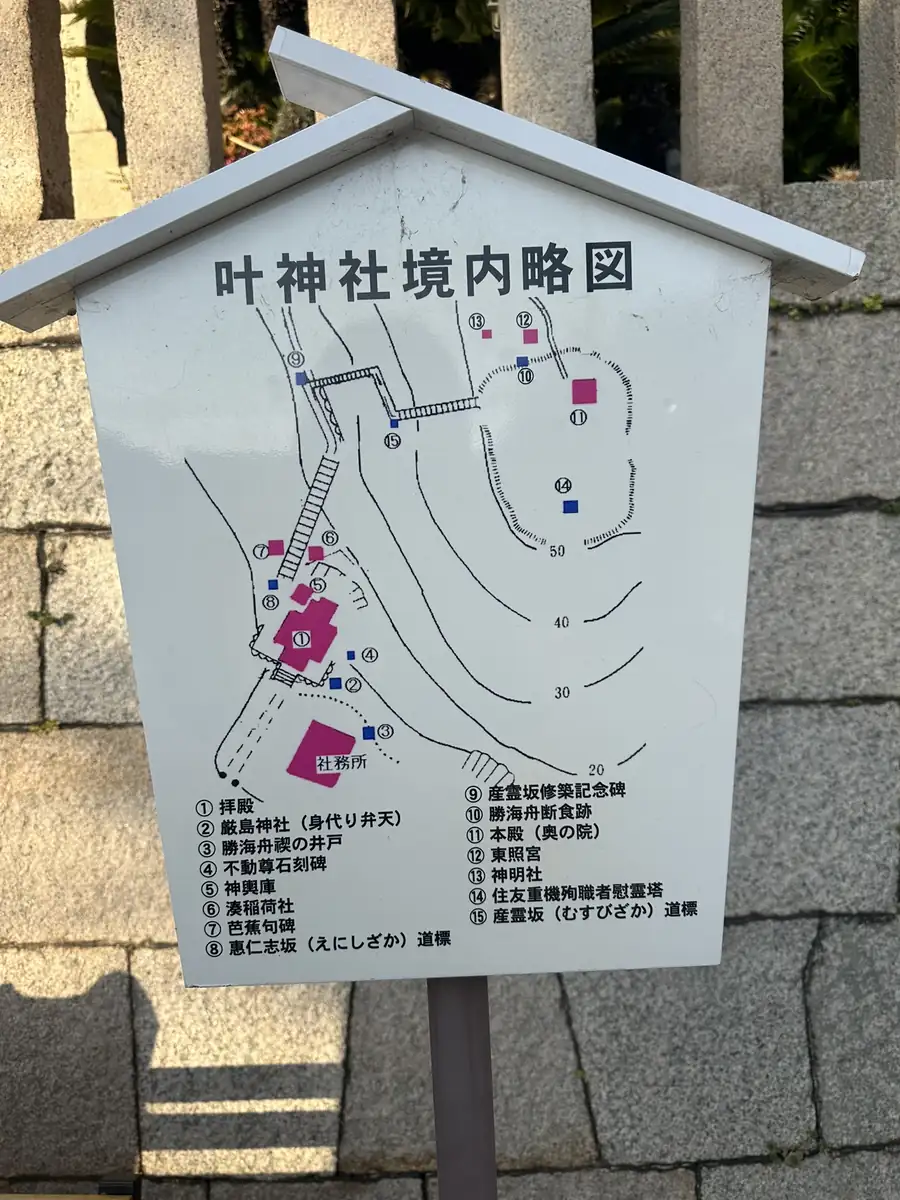
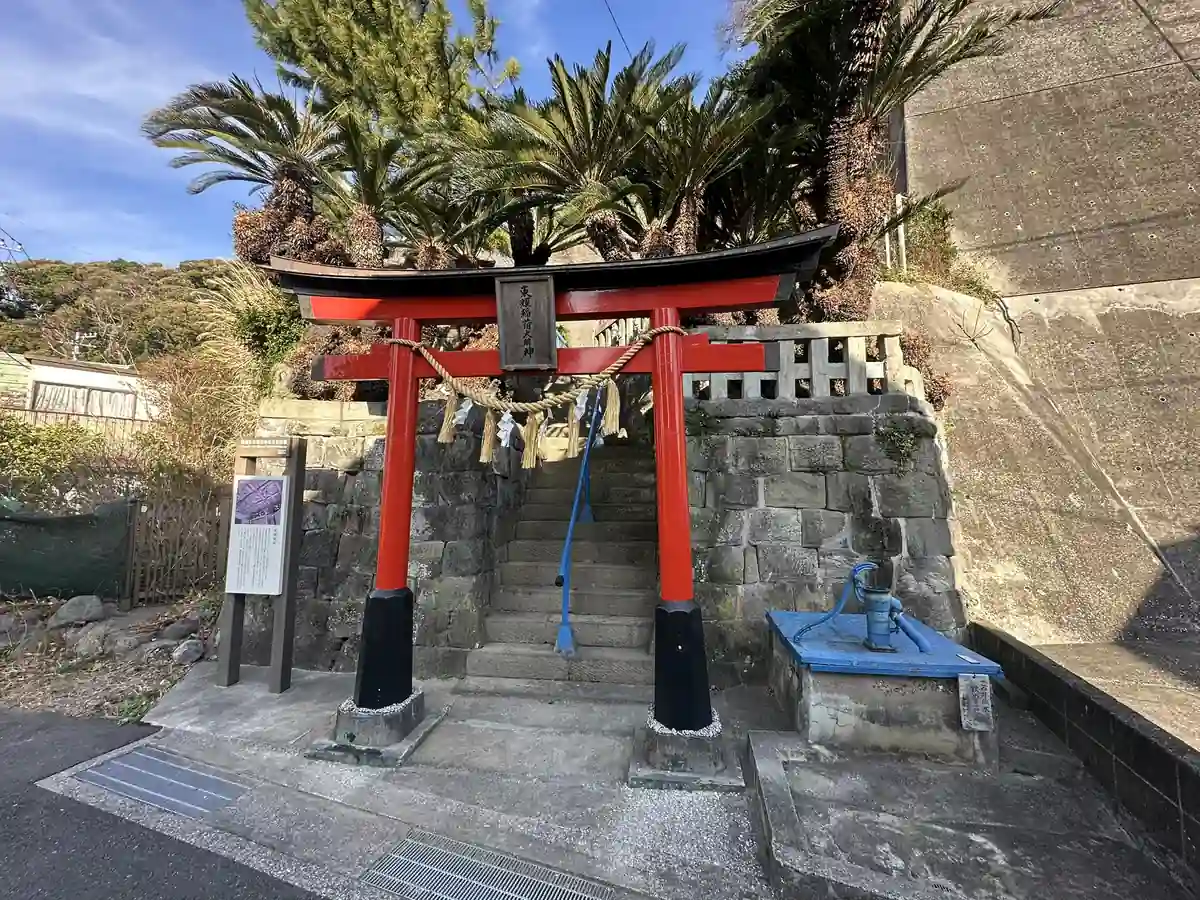
Tap a photo to enlarge
Mount Myojin: Uraga Toshogu, Uraga Castle site and Katsu Kaishu’s fasting site
The wooded hill behind Higashi Kano Shrine
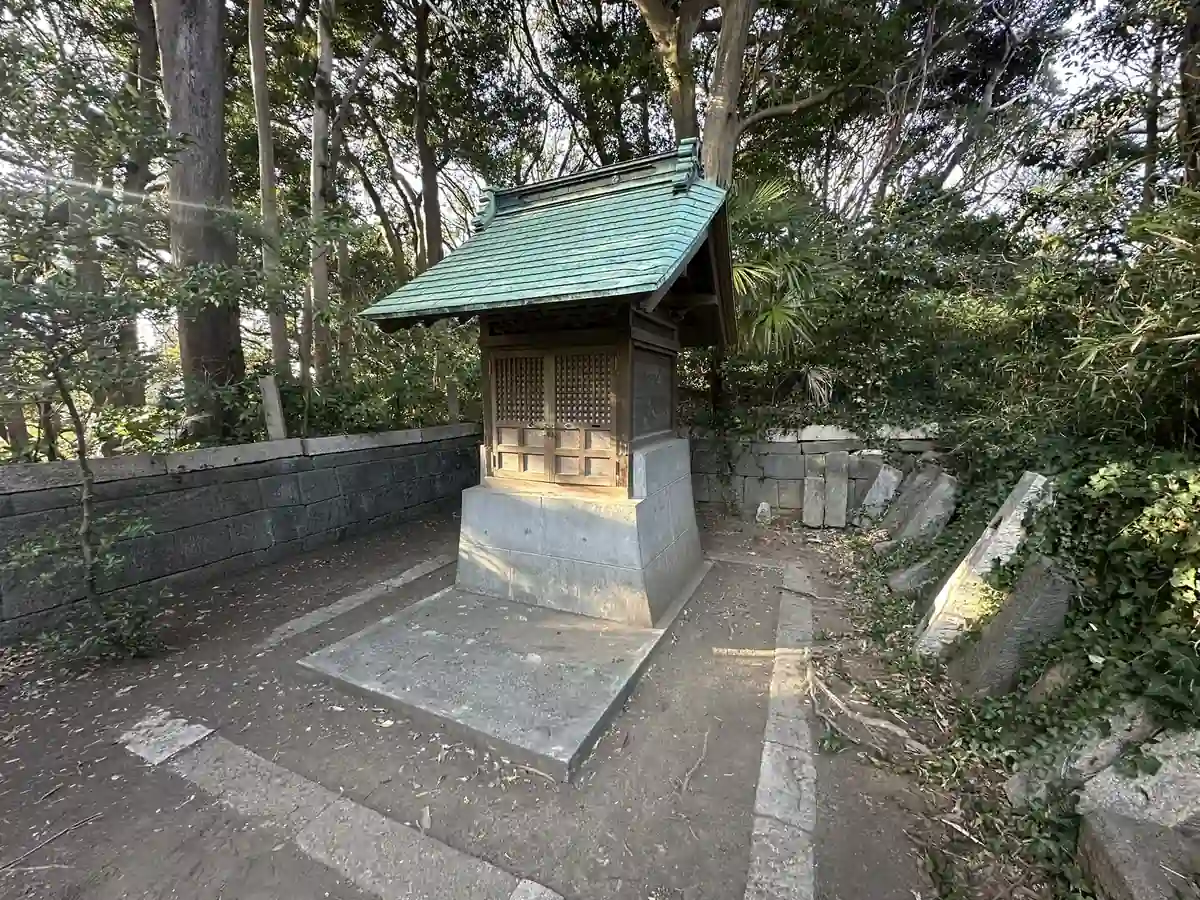
On Mount Myojin, behind Higashi Kano Shrine, stands a small shrine called Uraga Toshogu. A wooden building with latticed doors sits on a stone base. The Kanagawa Shrine Agency lists it as a Tosho shrine, which honors Tokugawa Ieyasu. It is worth noticing that the man the monument credits with trying to turn Uraga into a trading port is enshrined on the same hill.
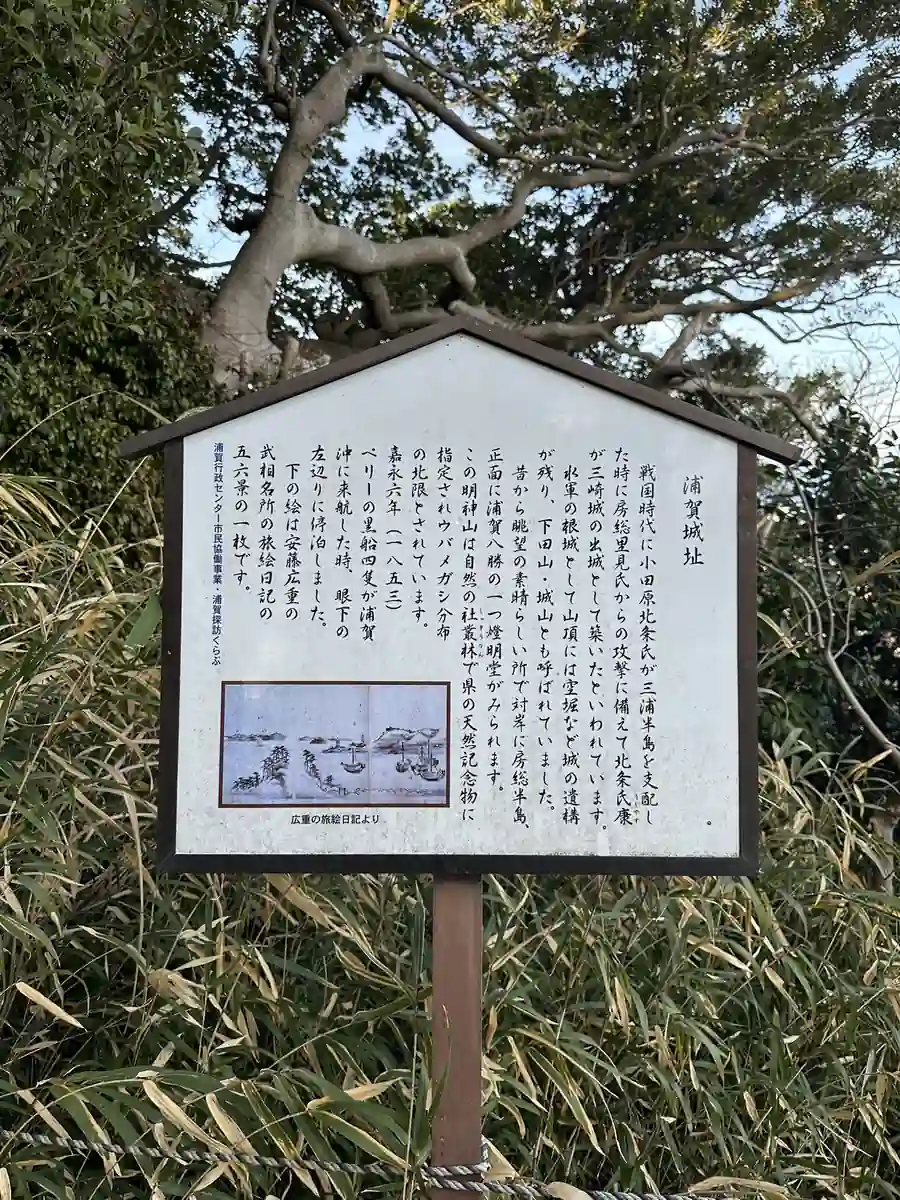
At the summit a signboard marks the site of Uraga Castle. It was reportedly built by the Later Hojo clan as a defense against the Satomi clan across the bay in Awa, and it commanded a view of Tokyo Bay. A historical illustration, from the travel diary of the artist Hiroshige, accompanies it.
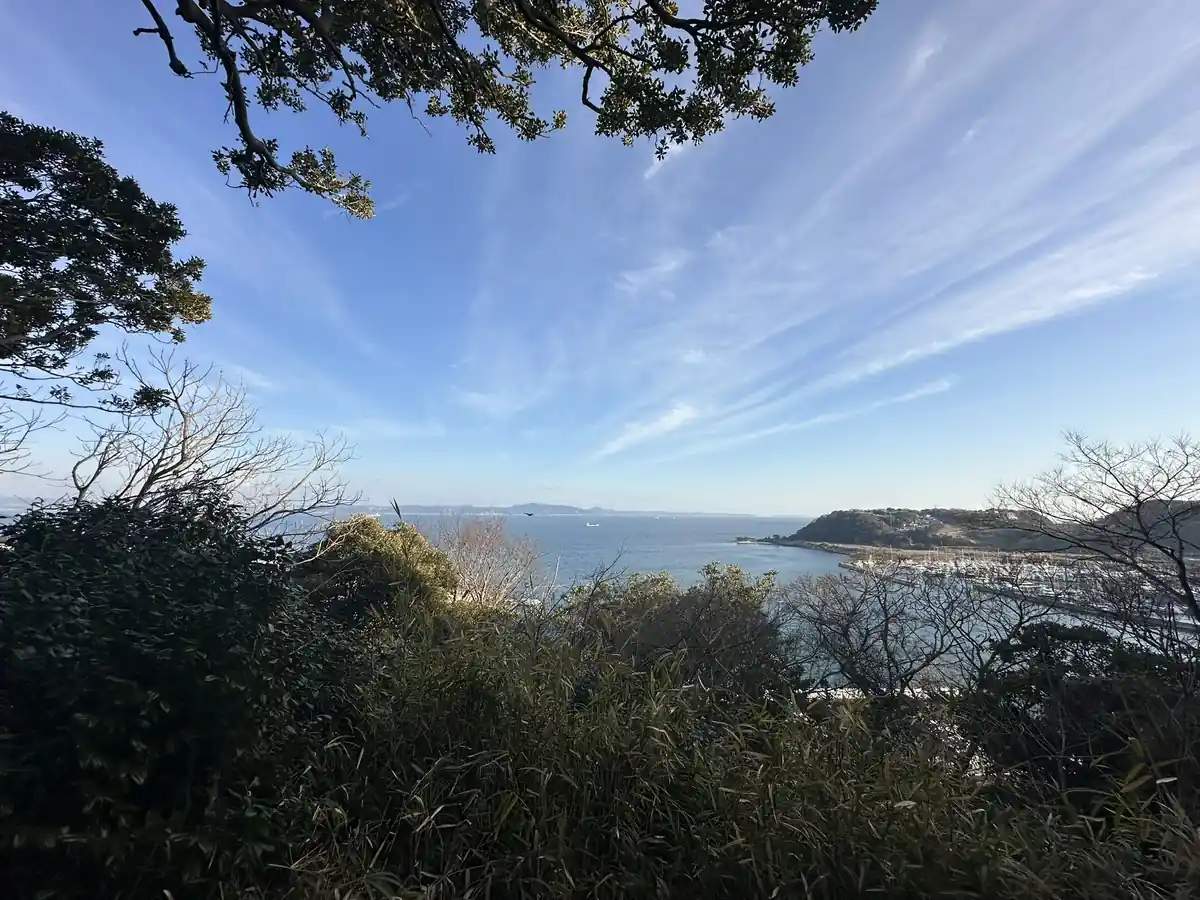
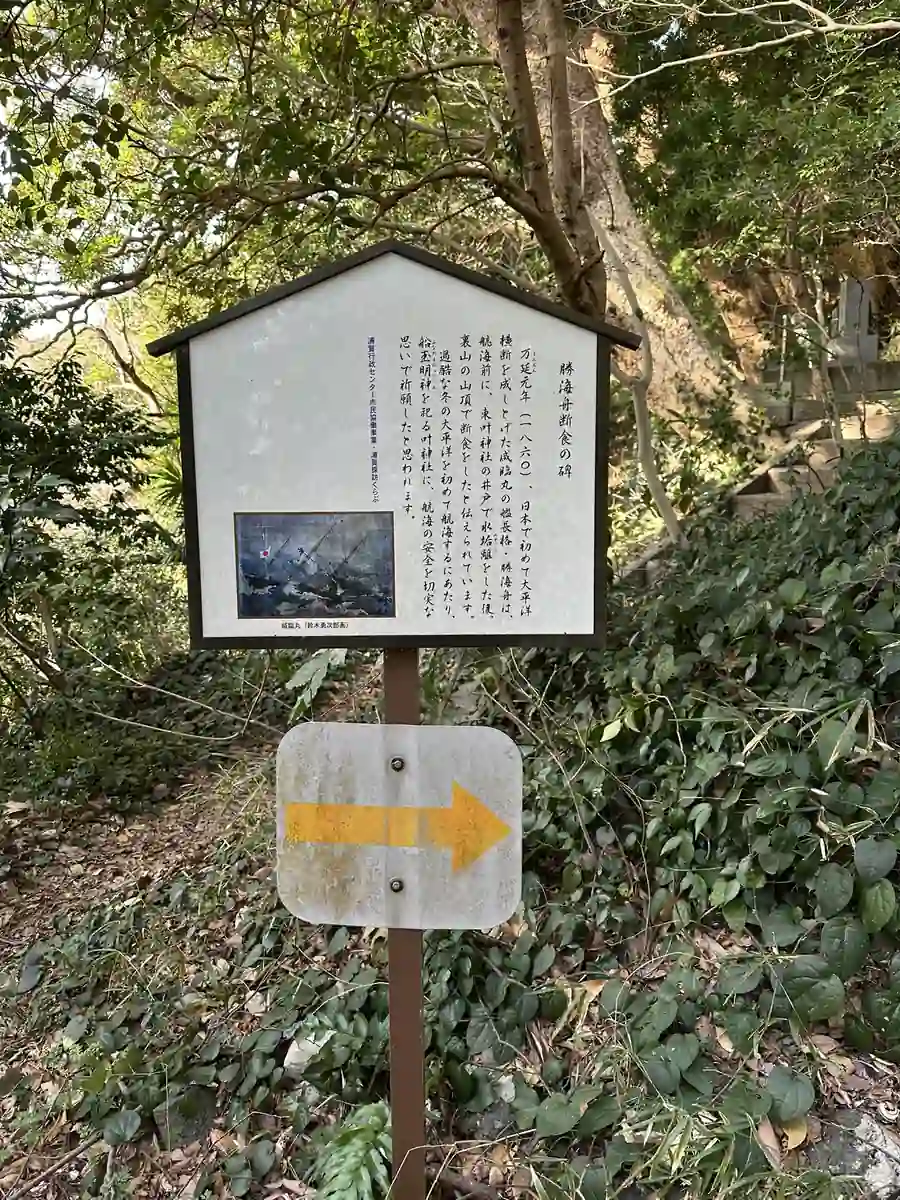
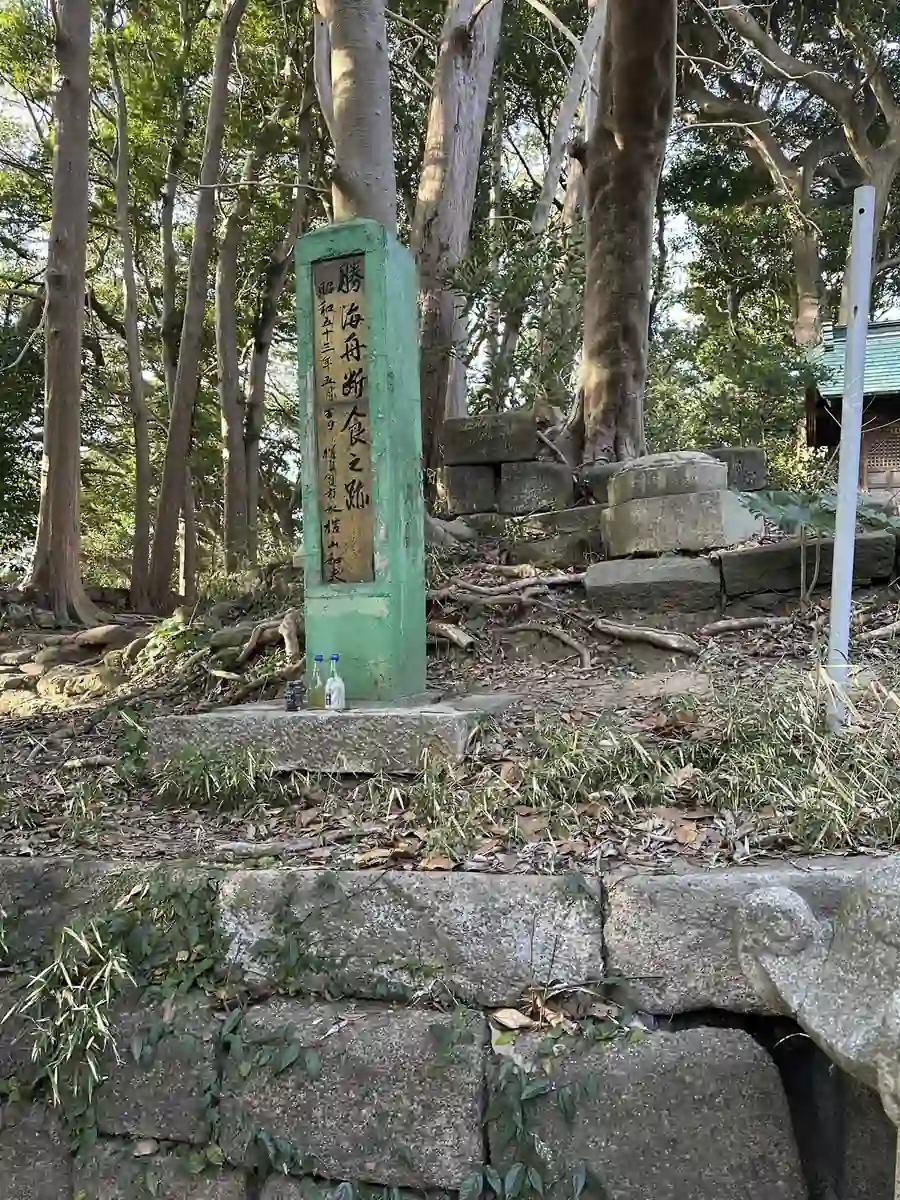
Through the trees you can see the mouth of Uraga Bay and Tokyo Bay. On the path a marker reads “Katsu Kaishu’s fasting site”, and a board explains the tradition that Katsu Kaishu purified himself with water and fasted here before he crossed the Pacific on the Kanrin Maru in 1860.
Climb the path behind the worship hall of Higashi Kano Shrine to reach Uraga Toshogu on top of the hill. The map shows the location of Uraga Toshogu.
- Uraga Toshogu: a small shrine with latticed doors and a green-patina roof. A stone lantern at the foot of the short steps is carved with the word for “offering”.
- Uraga Castle site: a signboard explains the castle’s story and the hill’s position.
- Katsu Kaishu’s fasting site: marked by a post along the path.
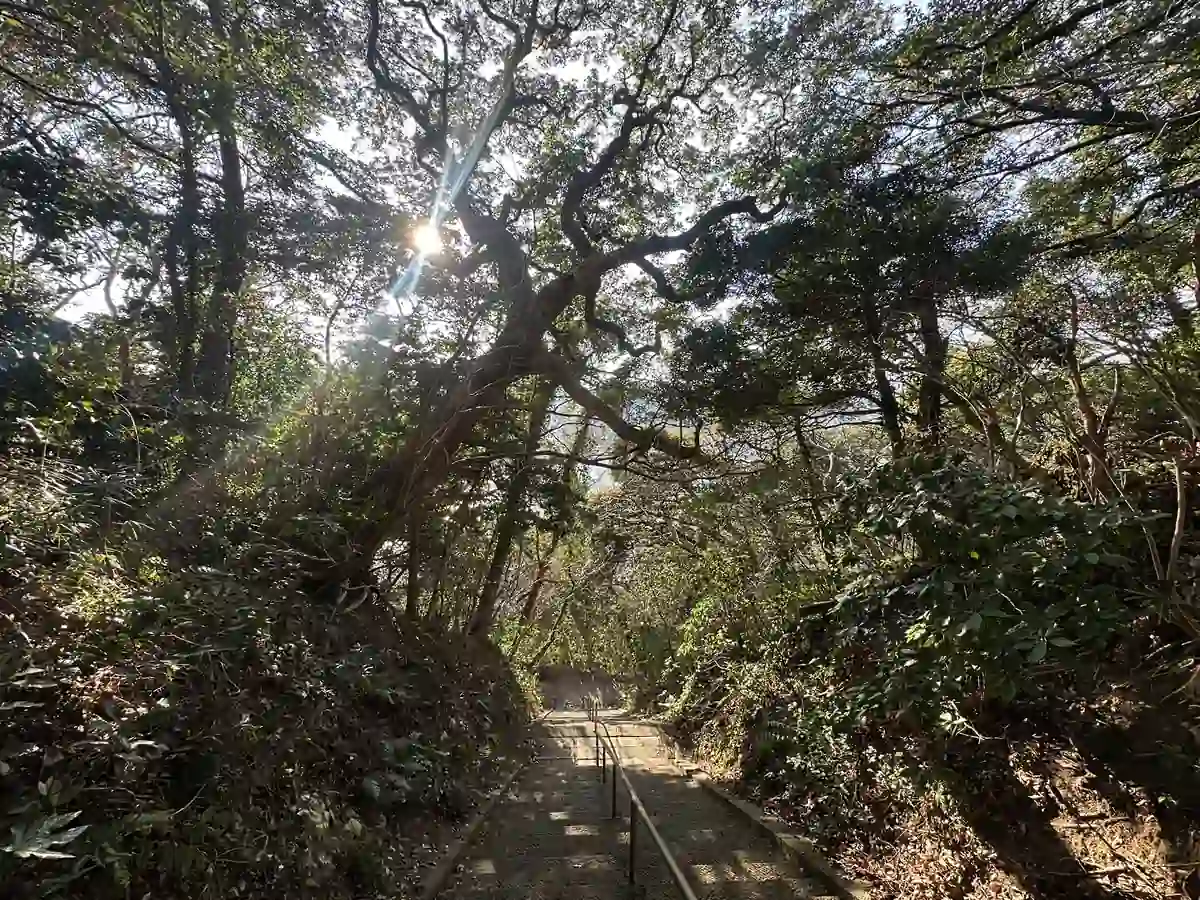
- View: The mouth of Uraga Bay and Tokyo Bay can be seen. The path is a long flight of steps with a handrail.
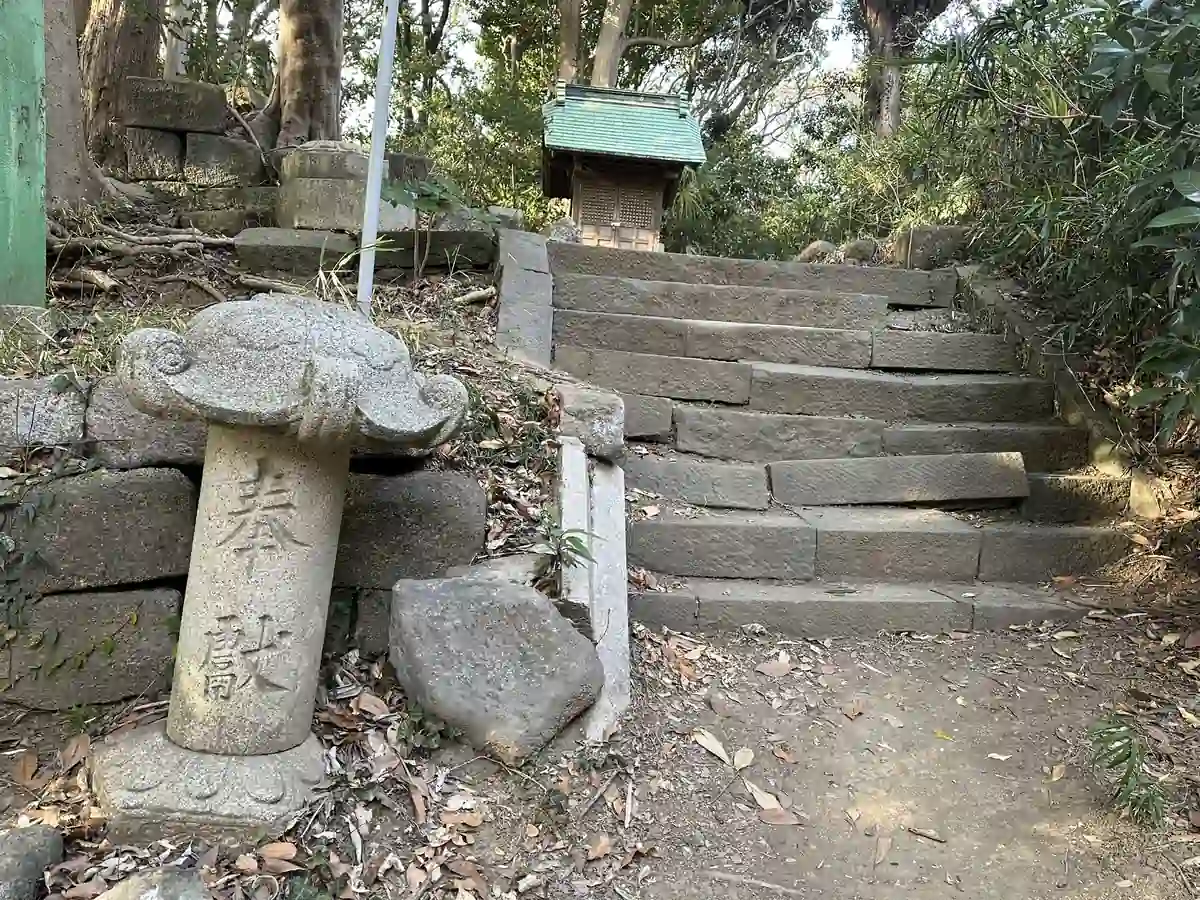
Tap a photo to enlarge
Kamoi: Hachiman Shrine, Kamoi Toshogu and a hot spring
Kamoi is a seaside district north of Uraga on the Keikyu line. These stops have no confirmed link to Adams, so I suggest them as a stroll to add to your day in Uraga.
Kamoi Hachiman Shrine
A shrine with a white torii facing the sea
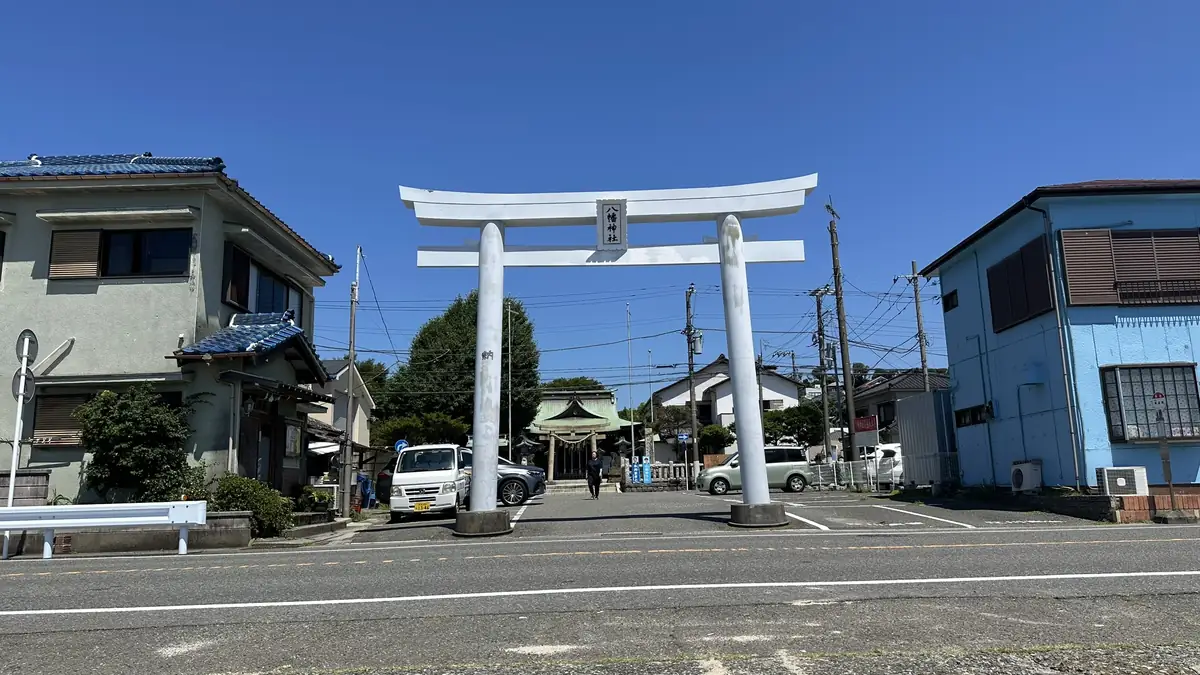
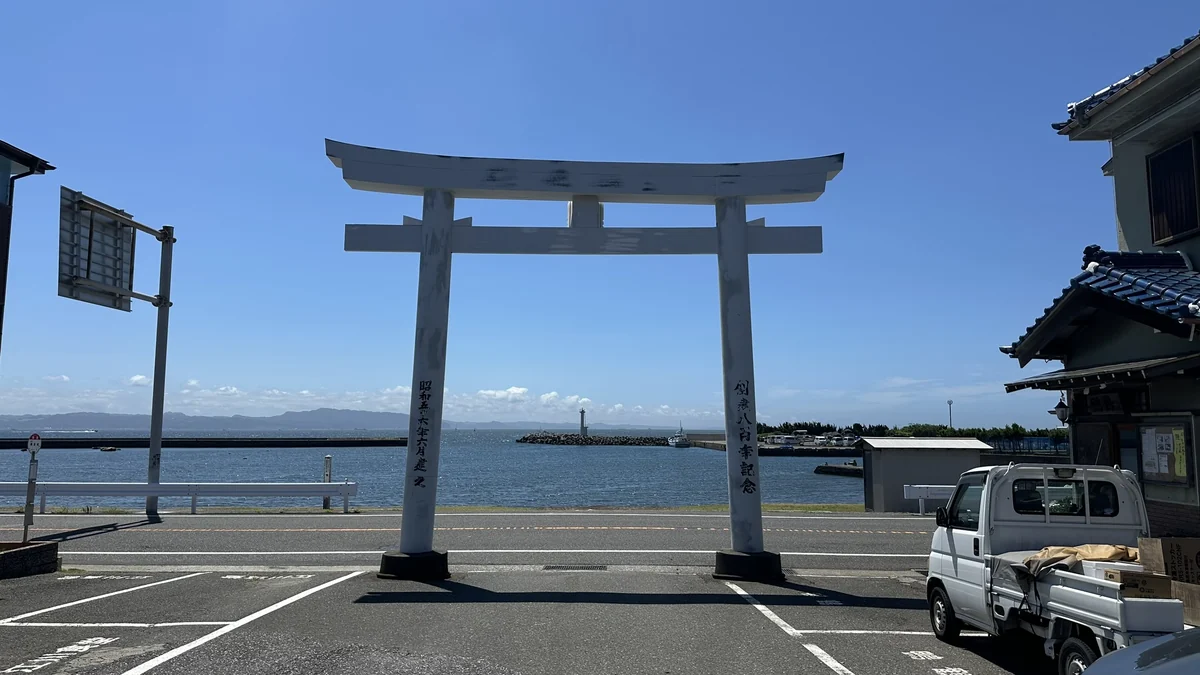
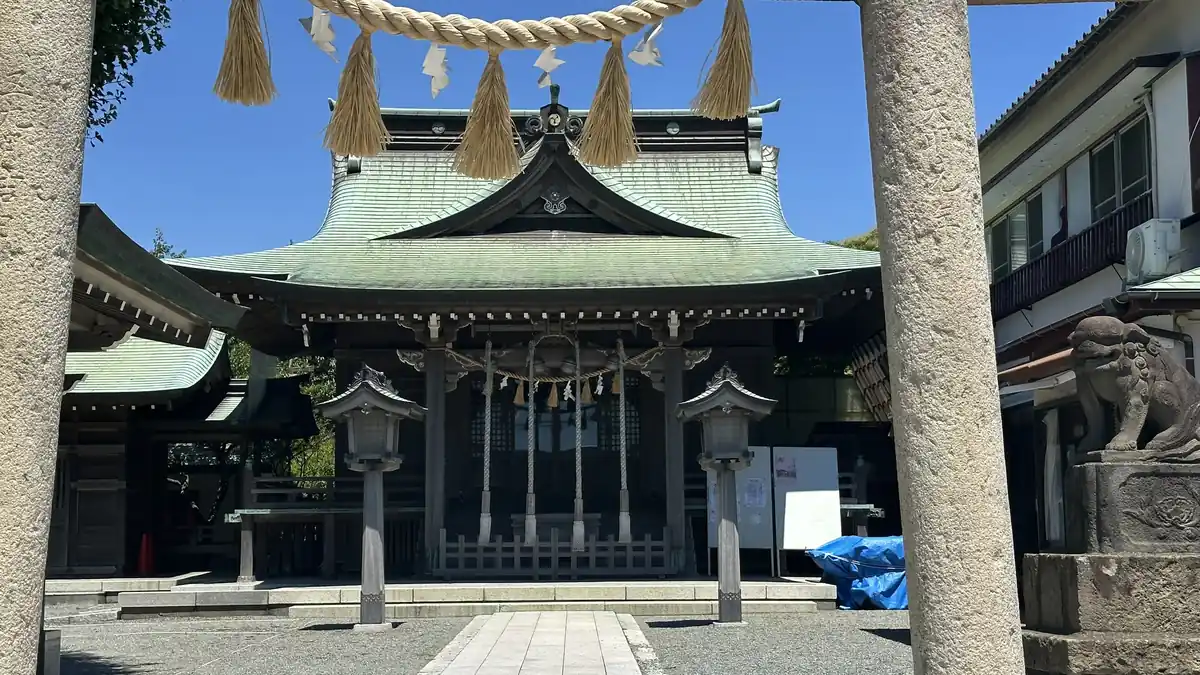
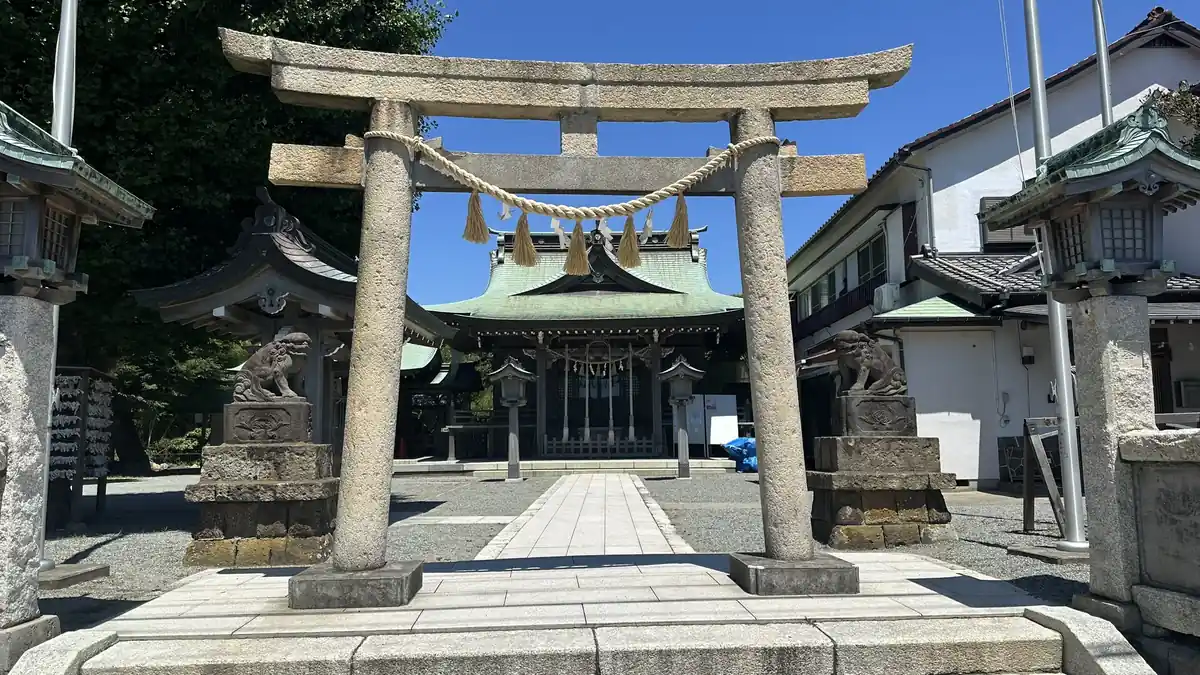
A white torii stands on the road along the Kamoi coast. The plaque reads “Hachiman Shrine” (Hachiman is the Shinto god of war and the guardian of warriors), and a green-patina roof is visible beyond it. From the grounds you can look back through the torii to Kamoi’s harbor and breakwater, which shows how close to the water the shrine stands.
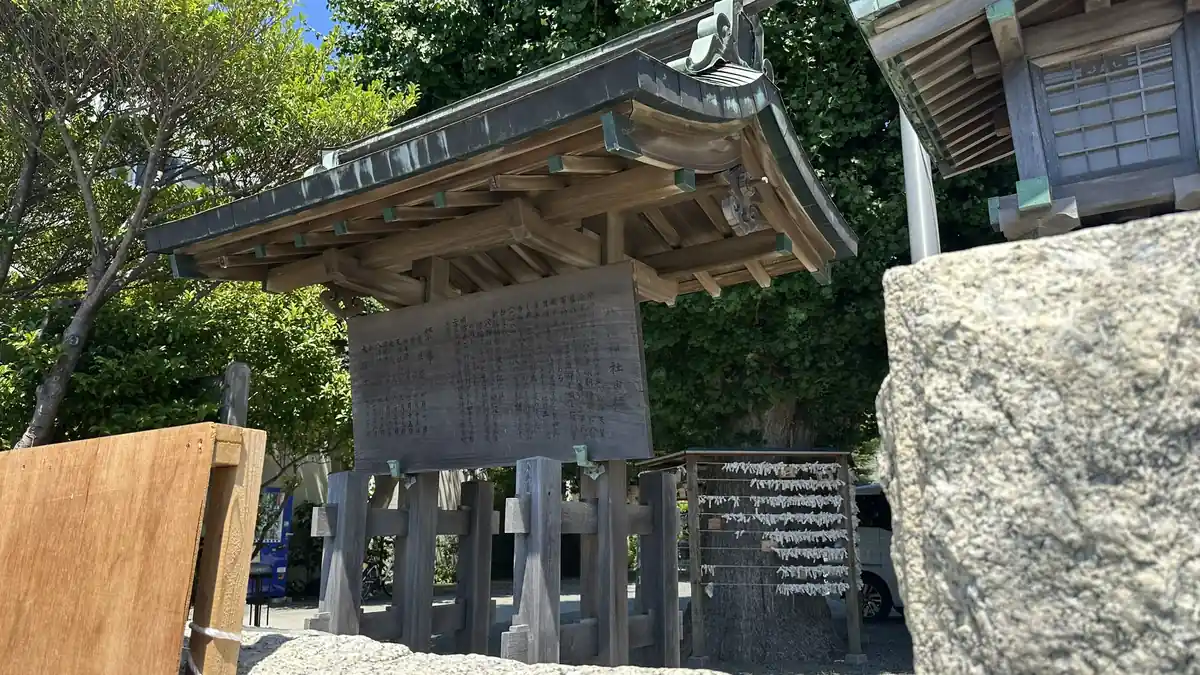
A history board lists a founding legend tied to Minamoto no Yoritomo and the Miura clan, along with the festival dates. Behind the stone torii stands a wooden worship hall with a large roof and a curved gable.
Tap a photo to enlarge
Kamoi Toshogu
A small shrine tucked against a rock face
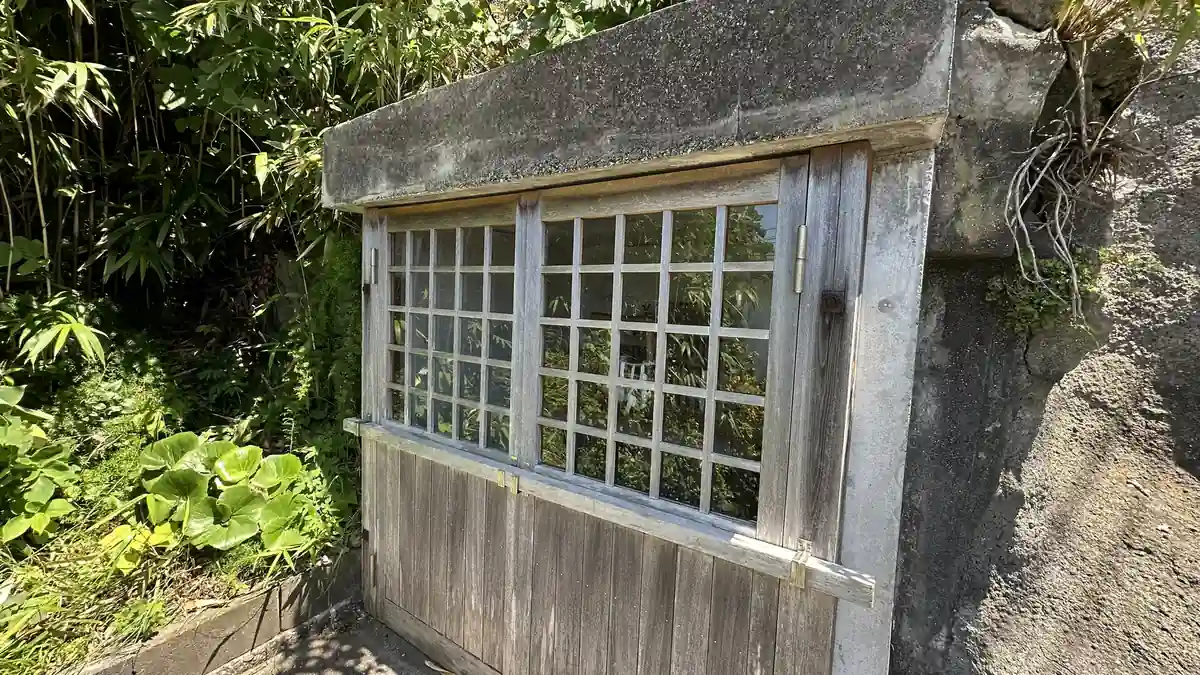
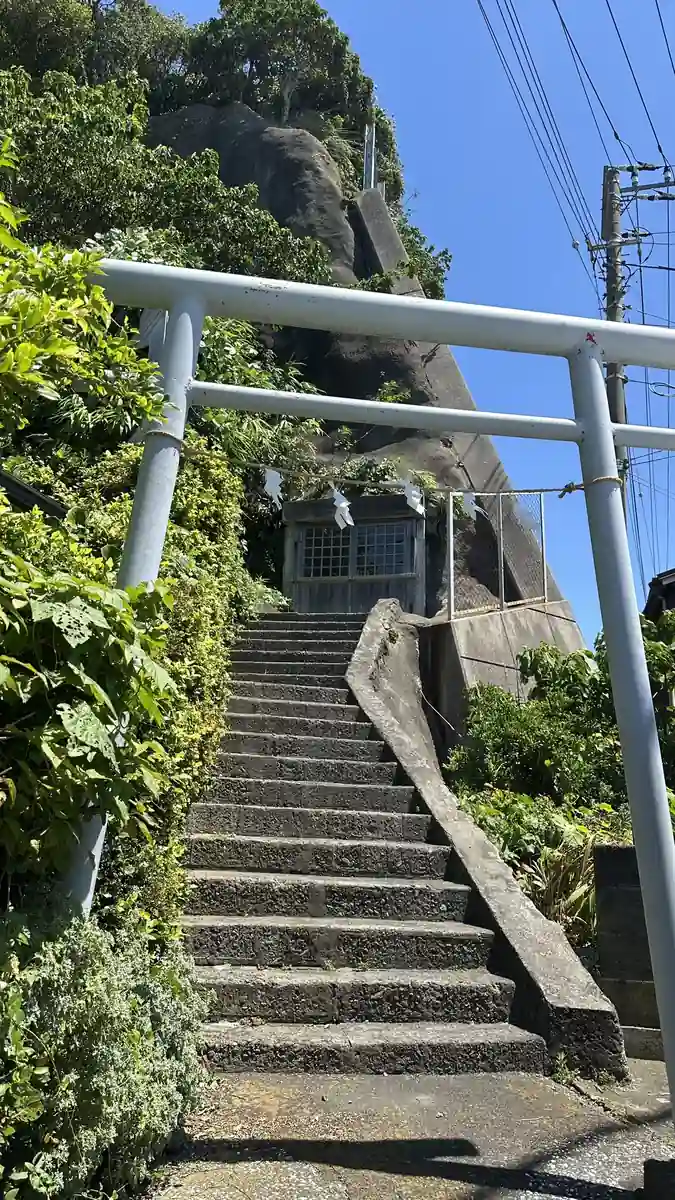
This small shrine is separate from Hachiman Shrine. Climb the steep stone steps through a white torii to a latticed wooden door set into an opening in the rock, with a sacred rope and white paper streamers visible inside. Bamboo and plants surround it, and it feels quiet.
I could not find its founding date or history on site, but a Toshogu is a shrine to Ieyasu, so it hints at the ties between the Tokugawa era and Uraga and Kamoi.
Yokosuka Onsen Yuraku no Sato
A hot spring and lunch on the walk
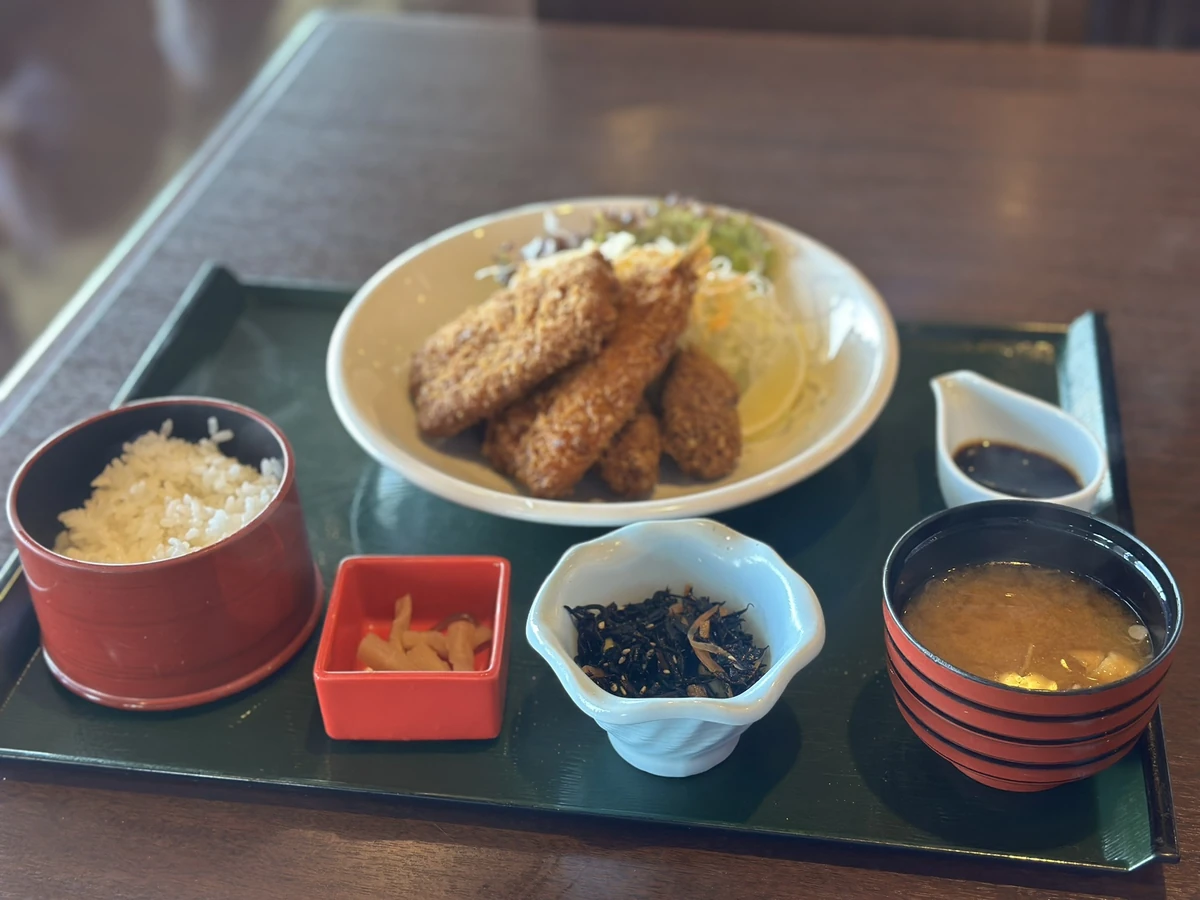
I stopped here on the way to Mabori-kaigan Station. The facility is large and clean, and from the open-air bath you look out over Tokyo Bay. I had a soak and then lunch in the building.
It is a good place to rest on a hot summer day before heading to the museum. If you have not used a Japanese public bath, know that you wash thoroughly before entering the water and bathe without swimwear. Check the facility’s rules on matters such as tattoos, and for its hours and prices.
Yokosuka City Museum: Adams’s statue
After reading about Adams on the signs and the monument in Uraga, the museum’s exhibit connects the story to Yokosuka as a whole. I took the Keikyu line from Uraga to Kenritsu-daigaku Station.
Yokosuka City Museum (横須賀市自然・人文博物館)
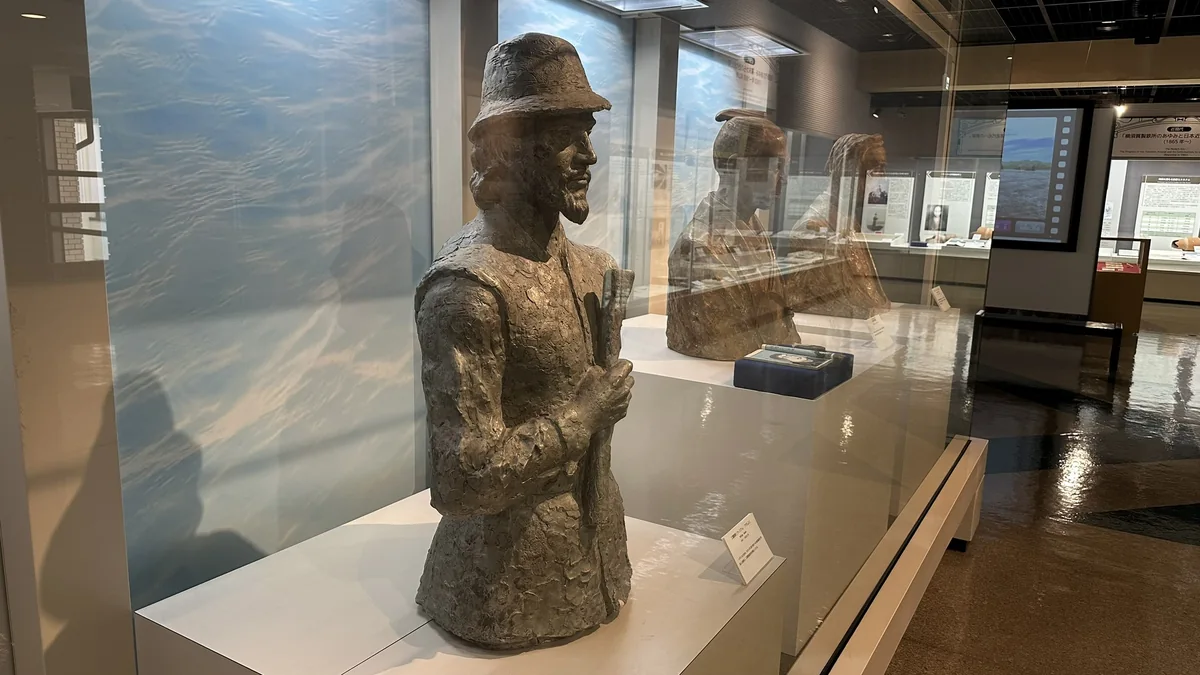
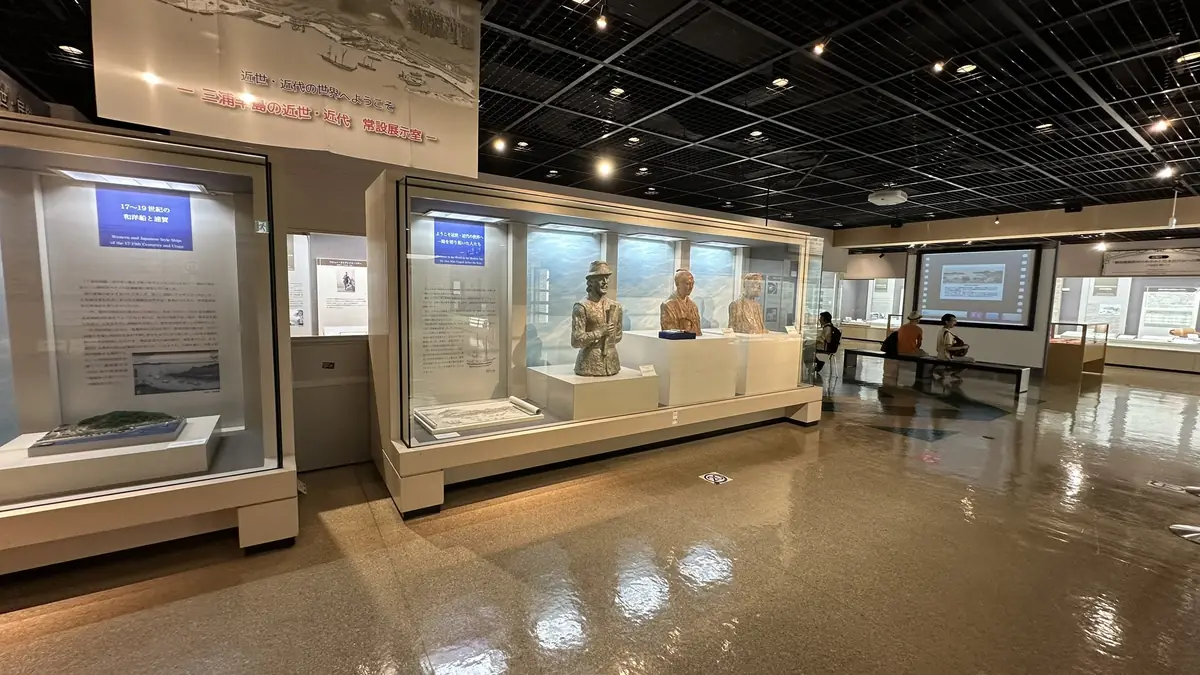
Statues of William Adams, Oguri Tadamasa and Verny on the second floor
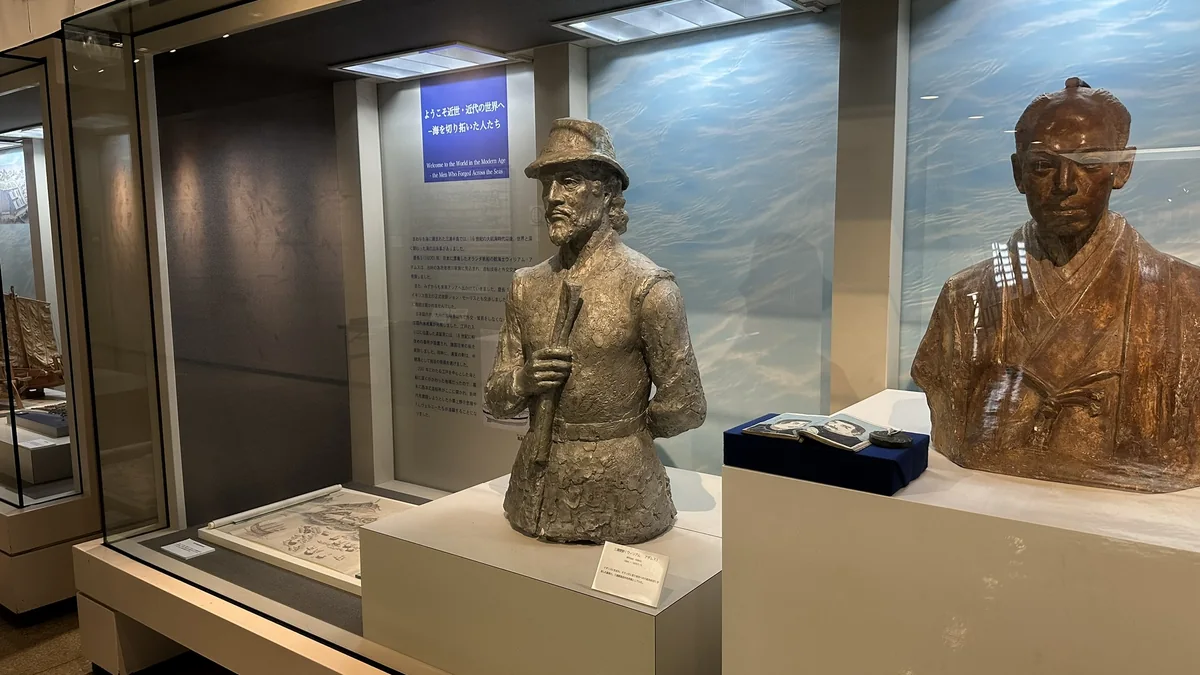
On the second floor of the humanities building, the permanent gallery “Modern Miura Peninsula” (early modern and modern periods) has a figure of William Adams. Beside him are Oguri Tadamasa, a shogunate official who helped found the Yokosuka shipyard, and François Léonce Verny, the French engineer who built it. The case introduces Yokosuka’s history of the sea and shipbuilding through these three men. There are also ship and port panels and a video corner.
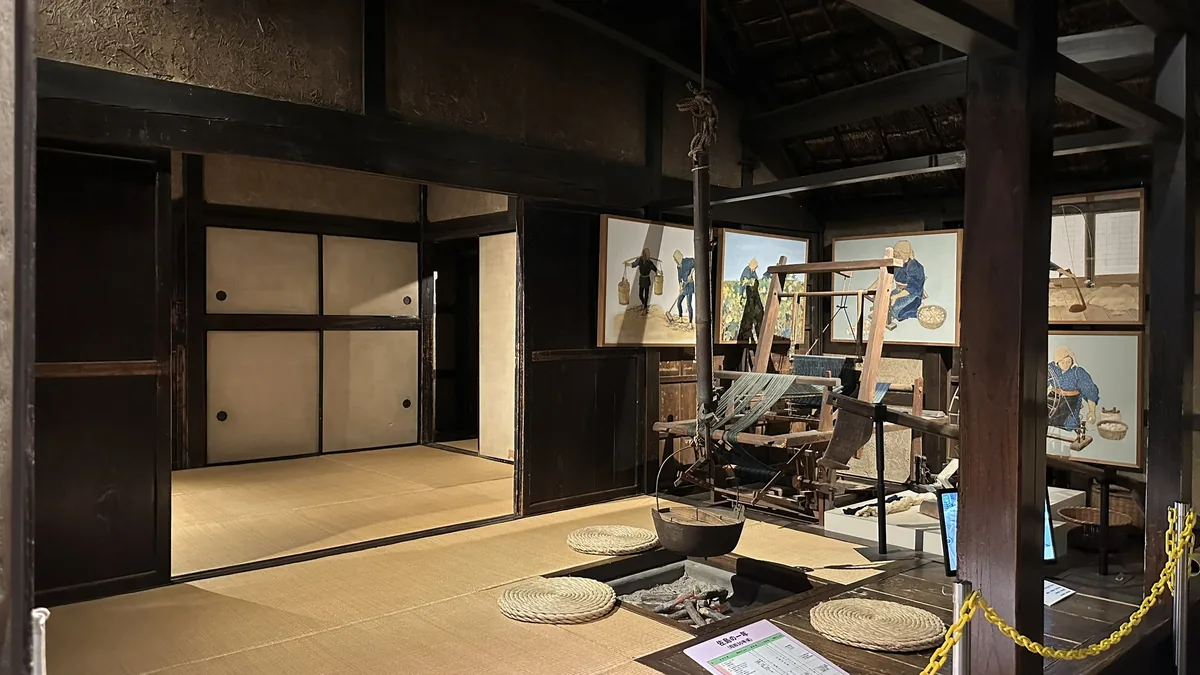
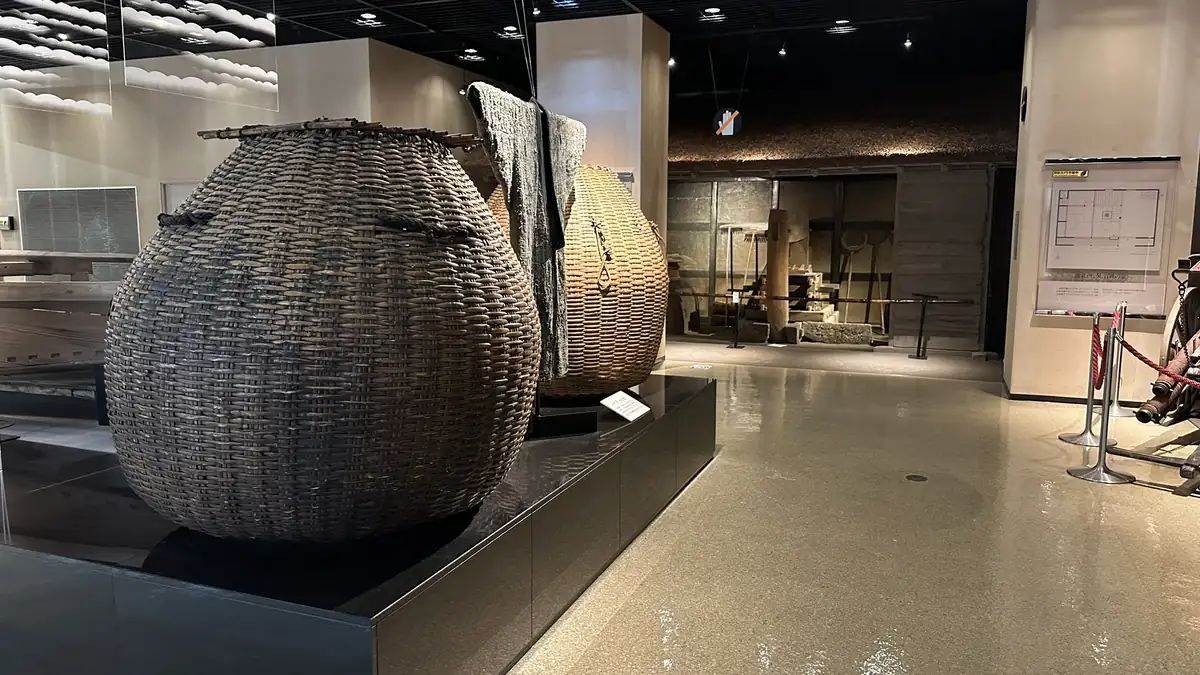
I stayed about 25 minutes. The Adams figure alone takes little time, but the museum also has a fisherman’s house built in 1842 in Sajima and moved here, and displays of Miura Peninsula fishing gear. If you have time, they are worth seeing.
At the entrance to Heiwa Chuo Park next to the museum is a name stone with the former name “Chuo Park”.
| Address | 95 Fukadadai, Yokosuka, Kanagawa |
|---|---|
| Hours | 9:00 to 17:00 |
| Closed | Mondays (the next day if Monday is a holiday) and December 29 to January 3 |
| Admission | Free |
| Nearest station | Keikyu Yokosuka-Chuo Station, about a 10 to 15 minute walk (the museum’s Japanese page says 10 minutes and its English page says 15) |
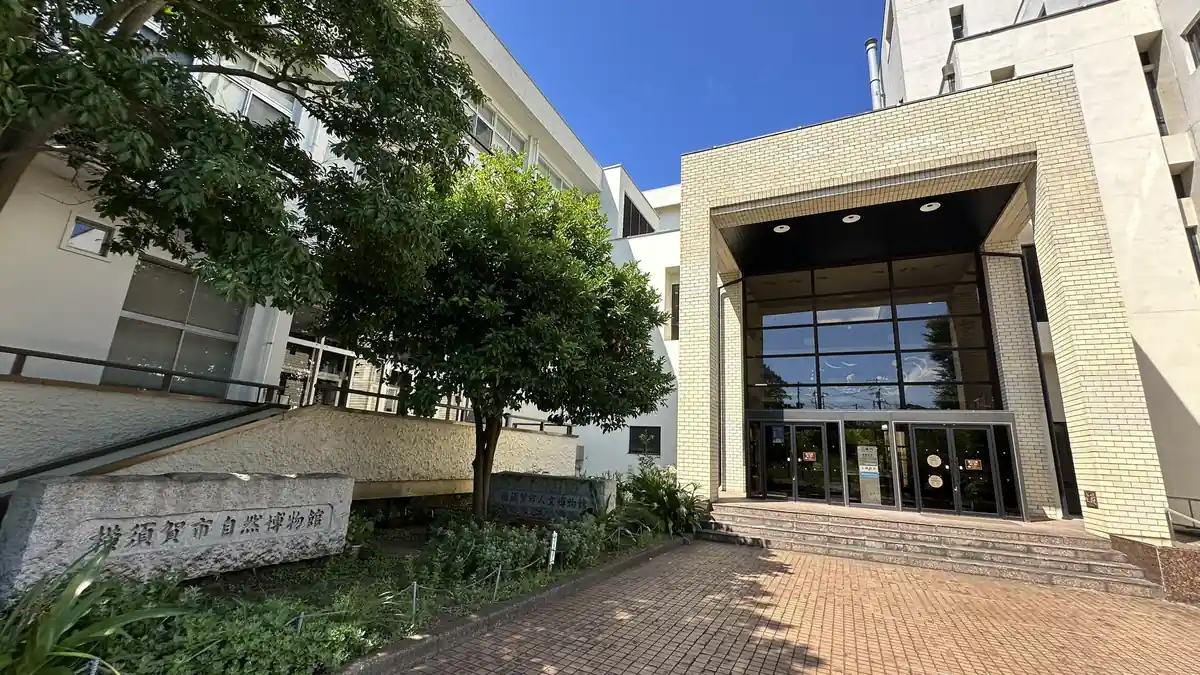
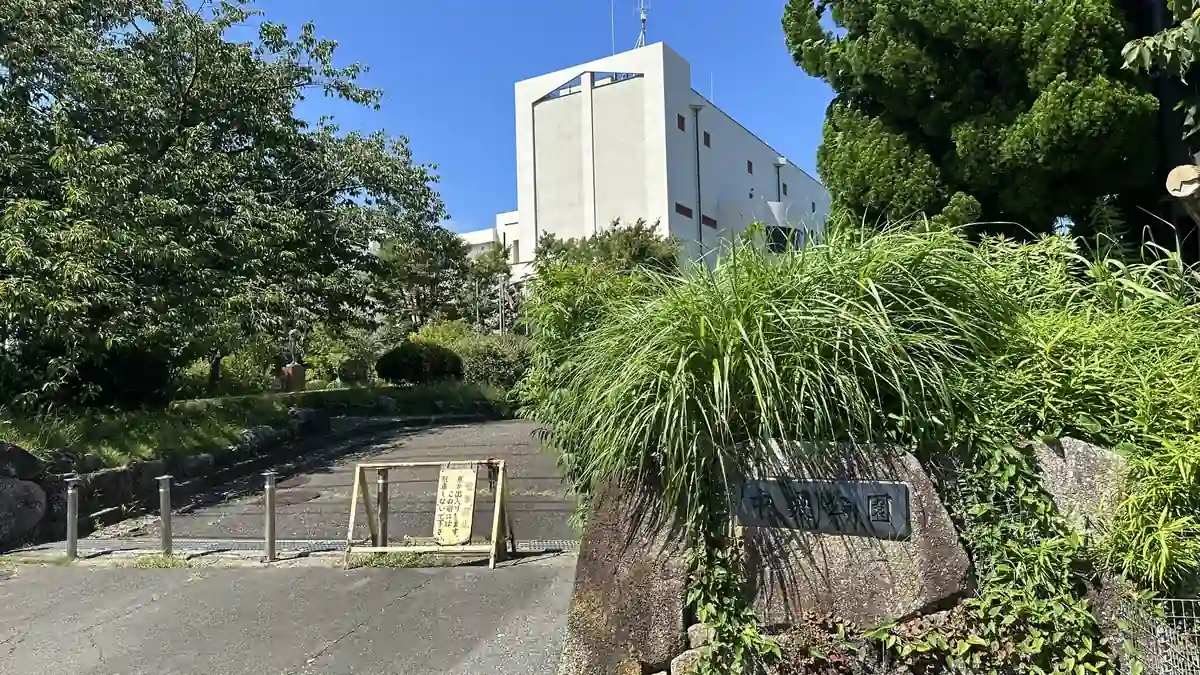
Tap a photo to enlarge
If you are short on time: my priorities
This is my personal ranking, based on two visits in March and July 2025, for visitors who care about Adams. It is not an official recommendation.
The monument and the shrine boards tell the story of Adams and the trading port in one place. It is about 20 minutes on foot from Uraga Station and is worth the trip by itself.
You can read the signs about Adams’s residence here. They lie on the way to the monument, so they are easy to add.
You can see the figure of Adams up close. Admission is free, and I spent about 25 minutes.
If Adams is the goal, you can leave these out. If you like town walks or shrine carvings, fit them in as time allows.
Getting there and basic information
Uraga is the last stop on the Keikyu Main Line (KK64). Times and fares below are approximate; they change with timetables and fare revisions, so check a route planner before you go.
Getting there and basic information
| Start | Keikyu Uraga Station (bus stops outside) |
|---|---|
| From Haneda Airport | About 89 minutes, about 720 yen |
| From Tokyo Station | About 85 minutes, about 950 yen |
| Trade monument | About 20 minutes on foot (1.5 km) from Uraga Station. By bus, get off at “Shinmachi” and walk about 7 minutes. |
| Uraga ferry | Between the West and East landings. Adults 400 yen, elementary and junior high students 200 yen, preschool children free (one per adult). 7:00 to 17:00 (posted March 1, 2025) |
| Museum | From Uraga Station, take the Keikyu line to Kenritsu-daigaku Station. 9:00 to 17:00, closed Mondays and Dec 29 to Jan 3, free (the museum’s official site, November 2, 2026) |
| Maps | Searching each spot name in Google Maps will take you there. |
Where to stay before or after Uraga
PRThis section contains affiliate links to the booking site Agoda. If you book through them, this site earns a commission. The areas are chosen for location and ease of travel.
You can walk around Uraga from Keikyu Uraga Station, but with the monument, the museum and Kamoi added it takes more than half a day. If a day trip is too tight, you can stay on the Yokosuka side or stay in Yokohama and ride the Keikyu line there and back. Prices change a lot with dates and rooms, so I do not compare them here and only list the areas.
Close to the sites
Yokosuka Station area
Agoda search area: around Yokosuka Station
Suits a trip that splits Uraga and Yokosuka City Museum across two days.
Find stays near Yokosuka Station on AgodaEasy to get around
Yokohama Station area
Agoda search area: around Yokohama Station
Yokohama is on the same Keikyu line as Uraga. It suits a trip that pairs Uraga with Yokohama or central Tokyo.
Find stays near Yokohama Station on AgodaOn the Agoda page, the dates and number of guests start at default values. Check the dates, price and cancellation terms on screen before you book.
FAQ
Miura Anjin is the Japanese name of William Adams, an English navigator who reached Japan in 1600 and served Tokugawa Ieyasu as an adviser. The character Anjin in SHŌGUN is fictional but inspired by him.
On March 1, 2025, the posted fares were 400 yen for adults and 200 yen for elementary and junior high school students, and preschool children were free, one per adult. The posted hours were 7:00 to 17:00. Check the landing for current fares and hours.
It is a stone monument at the entrance of Higashi Kano Shrine, put up in 2019. It tells the story of Uraga’s brief time as an international trading port, which Adams helped plan. The inscription is translated in the spot guide above.
It is about 20 minutes on foot (1.5 km) from Keikyu Uraga Station. By bus, get off at “Shinmachi” and walk about 7 minutes.
The exact place is not known, and the signboard at Suzaki says the same. Yokosuka City’s “Uraga walk” guide calls the area from behind Miura Inari Shrine to Hodoji Temple, below the stone walls, “Anjin Yashiki”. No remains or monument survive.
If Adams is your focus, skip Kamoi, the Uraga ferry and Nishi Kano Shrine. Put the monument first, then add Torinji Temple, Suzaki, Hodoji Temple and the museum as time allows.
The museum’s official site (checked November 2, 2026) gives 9:00 to 17:00, closed Mondays (the next day if Monday is a holiday) and December 29 to January 3, with free admission. About 25 minutes was enough to see the Adams figure.
Anjinzuka, Kashima Shrine and Jodoji Temple are covered in a separate guide, William Adams in Yokosuka. This page focuses on the monument, the residence legend and the museum on the Uraga side.
Related guides
☕ Support This Site
Following the Shogun is built on original fieldwork and on-site research.
If you found this guide useful, your support helps keep it going.

You can also support via QR code


comment