




Journey Through Hirado: Where the Western Samurai William Adams Walked and History and Culture Converge
In this article, we introduce a captivating sightseeing route that traces the footsteps of Miura Anjin through a town where Japanese and Western cultures intertwine.
William Adams, known in Japan as Miura Anjin, was the inspiration for the protagonist in SHŌGUN and is celebrated worldwide as the first Western samurai in Japanese history. After drifting ashore in 1600, he became a trusted diplomatic advisor to Tokugawa Ieyasu. Today, the city of Hirado in Nagasaki Prefecture, where Adams spent his later years, preserves many sites connected to his life and legacy. From the Anjin Residence and the monument marking the place of his death, to his statue and grave, as well as the Dutch Trading Post and the Matsura Historical Museum, Hirado is an irresistible destination for history enthusiasts. In this article, we introduce a captivating sightseeing route that traces the footsteps of Miura Anjin through a town where Japanese and Western cultures intertwine.
Walking Route at a Glance
How to Get to Hirado by Train
From Nagasaki Airport, it takes approximately 4 hours to reach Tabira-Hiradoguchi Station (19).
Fare: 2,830 yen (varies by time of day)
Sites Connected with William Adams in Hirado
Anjin no Yakata (Hirado Tsutaya)

This site is locally believed to be where William Adams, known as Miura Anjin, once lived, and is also known as the former residence of Yajiro Kida. Historical accounts suggest Adams stayed with the Kida family, although the exact period is unclear. The wooden building, around 300 years old, has been beautifully restored and now houses the renowned confectionery shop Hirado Tsutaya on the ground floor. After completing his service as a diplomatic advisor and trade promoter under Tokugawa Ieyasu, Adams spent his later years here in Hirado. Even today, you can still sense the early international trade and the mix of Japanese and Western influences that once flourished here.
Anjin no Yakata presents the mix of Japanese and Western culture that Miura Anjin embodied. This unique site invites you to savor traditional sweets while feeling the atmosphere of early international exchange.
Highlights
- Traditional Townhouse Architecture: The lattice windows, exposed beams, and earthen floors evoke the atmosphere of an old merchant residence brought back to life.
- Hirado’s Oldest Confectionery: According to tradition, the shop was founded in 1502 and served as the official confectioner to the Matsura clan for over 400 years. However, historical records do not clearly confirm continuous operation since Adams’s time.
Suggested Visit Time
Quick stop: around 20 minutes (including shopping and a short break)
Extended visit: 45 minutes to 1 hour (to fully enjoy the atmosphere and browse the sweets)
Address: 431 Kihikita-machi, Hirado, Nagasaki Prefecture (British Trading Post Street)
Access:
About 22 minutes by bus from Hirado Port Exchange Plaza (approx. 1 km)
Recommended Rating
Historical Significance: ☆☆☆
Visual Appeal: ☆☆☆
Experiential Value: ☆☆☆
| Year of Construction | Early 17th century (approx. 300 years old) |
|---|---|
| Builder | Unknown (likely the influential Kida merchant family) |
| Structure & Features | Two-story traditional wooden townhouse with lattice windows, exposed beams, and classic Japanese craftsmanship |
| Renovation & Restoration | Converted into a shop after the Meiji period; recently renovated and preserved |
| Current Condition | Excellent. The first floor sells local sweets; the second floor offers a rest area |
| Damage or Loss | None |
| Cultural Heritage Status | Not designated (the building itself is not protected) |
| Notes | The sign reads “Anjin no Yakata.” Local tradition says Hirado Tsutaya was founded in 1502, making it one of the city’s oldest confectionery shops. |
Monument Marking the Place of William Adams’s Passing

This stone monument marks the place where William Adams, known in Japan as Miura Anjin, spent his final days and passed away on May 16, 1620. It stands quietly in front of a piano school on Kihikita-machi Street in Hirado. The inscription reads: “On May 16, 1620 (Genna 6), William Adams passed away at this residence (the Kida Yajiroemon home). He was 57 years old.” The monument preserves the memory of Adams’s last moments in Japan, where he lived a life that bridged East and West.
This monument marks the place and date of William Adams’s death. Related historical sites surround it, which makes it a good first stop.
Highlights
- Monument to His Passing: The engraved date and inscription quietly honor the end of Adams’s extraordinary life.
- Background of the Monument: Installed in 2009 by Hirado City and local organizations to preserve the memory of Adams’s final days.
Suggested Visit Time
Quick stop: approx. 5–10 minutes
Extended visit: approx. 20 minutes (including nearby historical sites related to Anjin)
Address: Kihikita-machi, Hirado, Nagasaki Prefecture (in front of Shiraishi Piano School)
Access:
Less than a 1-minute walk from Anjin no Yakata
Recommended Rating
Historical Significance: ☆☆☆
Visual Appeal: ☆☆
Experiential Value: ☆
| Year Built | 2009 |
|---|---|
| Builder | Hirado City (with support from local residents and the tourism association) |
| Structure & Features | Vertical stone monument with gold-lettered inscription: “Place of Miura Anjin’s Passing” |
| Renovation & Restoration | No major restorations since installation; well maintained |
| Current Condition | Excellent. The area around the monument has been paved and landscaped |
| Damage or Loss | None |
| Cultural Property Designation | None |
| Notes | Located near other related landmarks such as Anjin no Yakata and the former British Trading Post site |
Saiwai Bridge (Dutch Bridge)

Saiwai Bridge, spanning the Kagami River in Hirado, Nagasaki Prefecture, has its origins in 1669, when Lord Matsura Shigenobu first built a wooden bridge to link the castle and the castle town. In 1702, it was replaced by the present stone single-arch bridge. Often called the “Dutch Bridge,” it showcases masonry techniques influenced by the Dutch trading post buildings that flourished here around 1600. While the bridge did not exist during the lifetime of William Adams (Miura Anjin), who died in 1620, it reflects the technological and cultural exchange sparked by the era of early international trade. In this way, Saiwai Bridge can be seen as a product of the cross-cultural spirit that Adams helped nurture.
Saiwai Bridge stands as a powerful symbol of Hirado’s technological and cultural exchange, inspired by the early days of international trade that began during the time of William Adams. Be sure to include this graceful landmark in your historical walking route through the old trading district.
Highlights
- Stone Arch Design: The graceful semicircular arch, crafted with Dutch masonry techniques, creates a striking reflection in the Kagami River.
- Origin of the Name: The bridge was named “Saiwai” (Happiness) because it eased the inconvenience of travel between the castle and the town, bringing “good fortune.”
Suggested Visit Time
Quick visit: approx. 10 minutes
Extended visit: approx. 20 minutes
Address: 1508-3 Iwanoue-machi, Hirado, Nagasaki Prefecture
Access:
Approx. 2-minute walk (about 120 m) from the Monument Marking the Place of William Adams’s Passing
Recommended Rating
Historical Significance: ☆☆☆
Visual Appeal: ☆☆☆
Experiential Value: ☆☆☆
| Year Built | 1702 (Genroku 15) |
|---|---|
| Builder | Matsura Tada (30th Lord of the Matsura Clan) |
| Structure & Features | Stone single-arch bridge with a fan-shaped stone pattern and an elegant semicircular arch |
| Renovation & Restoration | Completely dismantled and restored in 1984, including the reconstruction of the Saiwai Gate |
| Current Condition | Excellent. Designated as an Important Cultural Property of Japan |
| Damage or Loss | None |
| Cultural Property Designation | National Important Cultural Property |
| Notes | Also known as the “Dutch Bridge.” In 2014, recognized as a “Romance Heritage Site of Japan” |
Monument to the Site of the British Trading Post

Standing beside Hirado City Hall, just across Saiwai Bridge (the Dutch Bridge), this monument commemorates the British trading post that operated in Hirado from 1613 to 1623. Erected in 1927 by a group of British residents in Japan, it honors the history of early trade and international exchange. The inscription includes the English name “William Adamus” (William Adams), recognizing his pivotal role in helping establish the trading post. This granite monument recalls the period when Japan opened its doors to the world.
The Monument to the Site of the British Trading Post is a key landmark symbolizing the pioneering Anglo-Japanese trade built by figures like William Adams and Richard Cocks. When combined with a visit to Saiwai Bridge and the original trading post sites, it fills out the picture of the age of exploration.
Highlights
- The Monument: Erected in 1927, it commemorates the history of the British trading post. Inscriptions and reliefs tell the story in English and Japanese.
- Purpose of the Monument: Built to celebrate the 400th anniversary of the founding of the British trading post, the inscriptions are in both English and Japanese.
Suggested Visit Time
Quick visit: approx. 5 minutes
Extended visit: approx. 15 minutes
Address: 1508 Iwanoue-machi, Hirado, Nagasaki Prefecture (beside Hirado City Hall)
Access:
About a 1-minute walk from Saiwai Bridge, on the City Hall grounds
Recommended Rating
Historical Significance: ☆☆☆
Visual Appeal: ☆
Experiential Value: ☆
| Year Built | 1927 (Showa 2) |
|---|---|
| Builder | British residents in Japan |
| Structure & Features | Vertical granite monument with relief engraving and inscriptions in English |
| Renovation & Restoration | No major restorations; maintained in original condition |
| Current Condition | Excellent. Surrounded by stone steps and landscaped trees |
| Damage or Loss | None |
| Cultural Property Designation | Not designated |
| Notes | A symbolic landmark of the British trading post under the Hirado domain; together with Saiwai Bridge, it tells the story of early overseas trade |
Standing Statue of William Adams (Miura Anjin) on the Historical Path

This life-size bronze statue of William Adams (Miura Anjin) stands along the “Historical Path” in Hirado City, Nagasaki Prefecture. Installed in 2009 as part of a series of monuments celebrating Hirado’s legacy as a hub of international trade, the statue captures Adams’s dual identity as a skilled navigator and as a hatamoto and diplomatic advisor to Tokugawa Ieyasu. The dignified figure, holding nautical instruments and a sword, blends seamlessly into the old townscape while reminding passersby of his extraordinary story.
This statue of William Adams invites you to experience his story in the very streets where he once walked. It’s a perfect short stop for history lovers, families, and couples alike.
Highlights
- William Adams Statue: Life-size, holding a navigator’s rod and wearing a hat, it represents his role as both explorer and diplomat.
- Monument Arrangement: All five statues are evenly spaced along the Historical Path, designed to create a walking narrative of Hirado’s international heritage.
Suggested Visit Time
Quick stop: about 5 minutes
Extended visit: 15 minutes (to see all five monuments and explore the area)
Address: Sakigata-machi, Hirado City, Nagasaki Prefecture (along the Historical Path)
Access:
About a 7-minute walk from the Monument to the British Trading Post.
Recommended Rating
Historical Significance: ☆☆
Visual Appeal: ☆☆
Experiential Value: ☆☆
| Year Built | 2009 (Heisei 21) |
|---|---|
| Builder | Nagasaki Prefecture / Hirado City “Historical Path” Development Project |
| Structure & Features | Life-size bronze statue posed holding a navigator’s rod, hat, and sword |
| Renovation & Restoration | None noted (well maintained since installation) |
| Current Condition | Excellent. Popular stop for tourists exploring the historic path |
| Damage or Loss | None |
| Cultural Property Designation | Not designated |
| Notes | One of five statues depicting figures such as Richard Cocks and Jacques Specx |
Grave of William Adams (Miura Anjin) – Sakigata Park
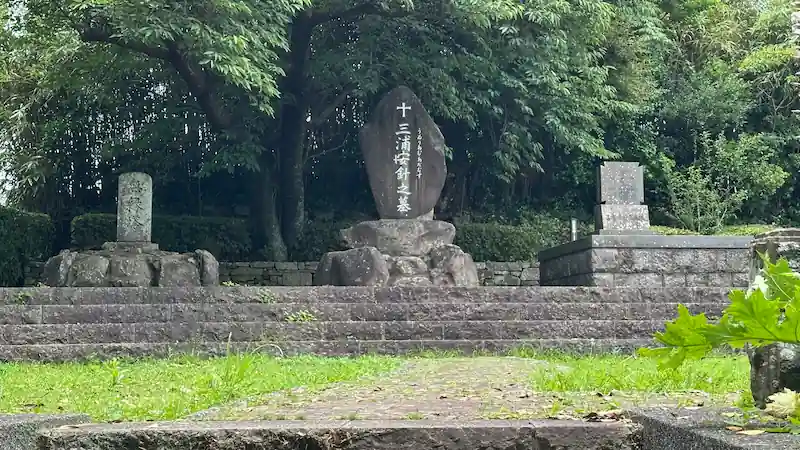
Perched atop a hill in Sakigata Park stands the tuff stone monument inscribed “Grave of Miura Anjin,” erected in 1954. The site offers sweeping views over Hirado Port, blending solemnity with natural beauty. Slightly to the right lies the “Couple’s Mound,” built in 1964 to mark the 400th anniversary of Adams’s birth. This mound enshrines a symbolic pebble brought from the grave of his wife, Mary Hynne Adams, in England. Together, the two memorials evoke a touching vision of a couple reunited across time and oceans.
Both monuments are carefully preserved, and the serene atmosphere combined with the panoramic setting deepens the sense of historical romance visitors feel here.
The Grave of Miura Anjin is a moving site where the life of Japan’s first English-born samurai comes full circle. It’s an inspiring destination for history enthusiasts and travelers seeking beautiful views and a sense of connection to the past.
Highlights
- Grave of Miura Anjin: Inscribed in Japanese, this monument commemorates him as the first English samurai.
- Excavated Remains: In 2017–2019, archaeologists discovered bones in a Western-style grave here, later published in Nature as highly likely belonging to Adams.
Suggested Visit Time
Quick visit: about 15 minutes
Extended visit: about 30 minutes
Address: 2529 Okubo-cho, Hirado City, Nagasaki Prefecture (inside Sakigata Park)
Access:
About a 14-minute walk (approx. 750m) from the William Adams Statue on the Historical Path.
Recommended Rating
Historical Significance: ☆☆☆
Visual Appeal: ☆☆
Experiential Value: ☆
| Year Built | 1954 (Showa 29) |
|---|---|
| Builder | Hirado City (with support from British associates) |
| Structure & Features | Two tuff stone monuments: the central grave marker of Adams, and the Couple’s Mound on the right. A memorial for unidentified souls stands on the left. |
| Renovation & Restoration | In 1964, the pebble from his wife’s grave was placed in the Couple’s Mound. |
| Current Condition | Excellent. Maintained as part of the park grounds. |
| Damage or Loss | None |
| Cultural Property Designation | Not designated |
| Notes | Excavations conducted between 2017–2019 uncovered bone fragments, which scientific analysis published in Nature in 2020 identified as very likely Adams himself. |
Hirado Dutch Trading Post
The Hirado Dutch Trading Post was established in 1609 by the Dutch East India Company (VOC), marking the formal start of trade between Japan and the Netherlands. Founded by Jacques Specx and William Adams (Miura Anjin), the trading post became a hub of international commerce. The stone warehouse built in 1639 is considered Japan’s first Western-style stone building. In 1641, due to the shogunate’s isolationist policies, the Dutch relocated to Dejima, ending Hirado’s 33 years as a vibrant trade center. Faithfully reconstructed in 2011, the warehouse now operates as a museum, displaying trade goods and documents from the Age of Exploration.
The Hirado Dutch Trading Post is a rare site where you can experience firsthand the dynamic trade and cultural exchanges between early Edo Japan and the Netherlands. Highly recommended for history lovers, families, and anyone curious about the Age of Exploration.
Highlights
- Reconstructed 1639 Warehouse: The first Western stone building in Japan—built with over 20,000 sandstone blocks, a marvel of engineering.
- The Year Inscription Controversy: The roof tile marked “Anno Christi 1639” was seen as a Christian symbol, prompting the shogunate to order the building’s destruction in 1640.
Suggested Visit Time
Quick visit: approx. 30 minutes (museum only)
Extended visit: 1–1.5 hours (museum + surrounding area)
Address: 2477 Okubo-cho, Hirado City, Nagasaki Prefecture
Access:
About an 8-minute walk from the Grave of William Adams (Sakigata Park)
Recommended Rating
Historical Significance: ☆☆☆
Visual Appeal: ☆☆☆
Experiential Value: ☆☆☆
| Year Built | 1639 (Keicho 14) |
|---|---|
| Builder | VOC (Jacques Specx and associates), supported by the Matsura clan of Hirado |
| Structure & Features | Western-style stone warehouse (sandstone masonry, Japan’s first Western stone building) |
| Restoration History | Excavated 1987–2003, reconstructed 2006–2011 |
| Current Condition | Excellent. Operates as a museum in the restored building |
| Destruction or Loss | The original building was demolished in 1640 and does not survive |
| Cultural Heritage Status | Designated National Historic Site (1922) |
| Notes | The museum features a 1612 map, trade records, and a recreated director’s office |
Matsura Historical Museum

The Matsura Historical Museum is housed in Tsuru-ga-mine Residence, a Western-style mansion built in 1893 by the 37th lord of the Matsura clan, Matsura Atsushi. In 1955, the Matsura family donated the property and its grounds to the city, opening it to the public. Over 130 years old, the building itself is an exceptional exhibit and has been designated a Tangible Cultural Property by Nagasaki Prefecture. The grounds also feature Kan'untei, a registered Cultural Property tea house, and a historic storehouse, offering visitors an immersive experience in architectural heritage.
The Matsura Historical Museum is a cultural treasure trove capturing the spirit of international exchange pioneered by Miura Anjin and the Matsura clan. It suits history enthusiasts as well as anyone who wants a peaceful garden and a cup of tea.
Highlights
- Namban Trade Artifacts: Maps, navigation records, and official documents related to Portuguese, Dutch, and English trade.
- Residence-Turned-Museum: The only facility displaying Matsura clan artifacts in their original historic residence.
Suggested Visit Time
Quick visit: approx. 30 minutes (main exhibits + garden walk)
Extended visit: 1–1.5 hours (special exhibitions + tea ceremony experience)
Address: 12 Kagamigawa-cho, Hirado City, Nagasaki Prefecture
Access:
About an 8-minute walk (500 m) from the Dutch Trading Post. Conveniently located along the Hirado Port Exchange Plaza and “Path of History” walking route.
Recommended Rating
Historical Significance: ☆☆☆
Visual Appeal: ☆☆☆
Experiential Value: ☆☆☆
| Year Built | 1893 (Meiji 26) |
|---|---|
| Builder | 37th Matsura Lord, Matsura Atsushi |
| Structure & Features | Wooden Japanese-style mansion with a high-stone-wall garden and the Kan'untei tea house |
| Restoration History | Converted to a museum after WWII (opened in 1955); regularly maintained |
| Current Condition | Excellent; open to the public as a designated Cultural Property |
| Destruction or Loss | None |
| Cultural Heritage Status | Main building: Prefectural Tangible Cultural Property; Storehouse & Tea House: National Registered Tangible Cultural Properties |
| Notes | Approximately 30,000 items in the collection, with about 200 on display; combination tickets with the Dutch Trading Post are available |
A personal ranking based on the star ratings in this guide and the author’s on-site visit, not an official recommended order.
Rated three stars on all three criteria. The wooden townhouse, around 300 years old, is locally believed to be where Adams lived, and a quick stop takes around 20 minutes including shopping and a short break.
Rated three stars on all three criteria. The trading post was established in 1609 by the Dutch East India Company (VOC), and a museum-only visit takes about 30 minutes.
Three stars on all criteria and only about 10 minutes for a quick visit, about a 2-minute walk (120 m) from the monument marking the place of Adams’s passing.
Three stars on all criteria. A quick visit takes about 30 minutes, but allow 1–1.5 hours if you add special exhibitions and the tea ceremony experience.
Historical significance is rated three stars, but visual appeal and experiential value get one star each. It stands beside Hirado City Hall, about a 1-minute walk from Saiwai Bridge, so about 5 minutes is enough.
Recommended Parking: Hirado Port Exchange Plaza Parking Lot
If you’re arriving by car, the Hirado Port Exchange Plaza Parking Lot is a convenient and budget-friendly option. There’s also a tourist information center on-site.
Hirado Port Exchange Plaza Parking Lot
| Address | 776-6 Sakigata-cho, Hirado City, Nagasaki Prefecture 859-5104 |
|---|---|
| Rates | First 2 hours free, then ¥100 per 30 minutes |
| Capacity | 59 spaces |
| Hours | Open 24 hours |
Frequently Asked Questions
William Adams, known in Japan as Miura Anjin, was the inspiration for the protagonist in SHŌGUN and is celebrated worldwide as the first Western samurai in Japanese history. After drifting ashore in 1600, he became a trusted diplomatic advisor to Tokugawa Ieyasu. Hirado in Nagasaki Prefecture is where Adams spent his later years.
This guide covers eight sites: Anjin no Yakata (Hirado Tsutaya), the Monument Marking the Place of William Adams’s Passing, Saiwai Bridge (Dutch Bridge), the Monument to the Site of the British Trading Post, the Standing Statue of William Adams on the Historical Path, the Grave of William Adams in Sakigata Park, the Hirado Dutch Trading Post and the Matsura Historical Museum.
A quick visit takes about 20 minutes at Anjin no Yakata, 5–10 minutes at the monument marking the place of Adams’s passing, about 10 minutes at Saiwai Bridge, about 5 minutes at the British Trading Post monument, about 5 minutes at the statue, about 15 minutes at the grave, and about 30 minutes each at the Dutch Trading Post (museum only) and the Matsura Historical Museum.
The sites are listed in walking order. The monument marking the place of Adams’s passing is less than a 1-minute walk from Anjin no Yakata, and Saiwai Bridge is about 2 minutes (about 120 m) further. The British Trading Post monument is about 1 minute from the bridge and the statue about 7 minutes beyond that. The grave in Sakigata Park is about 14 minutes (approx. 750 m) from the statue, the Dutch Trading Post about 8 minutes from the grave, and the Matsura Historical Museum about 8 minutes (500 m) from the Dutch Trading Post.
From Nagasaki Airport, it takes approximately 4 hours to reach Tabira-Hiradoguchi Station (19). The map in the getting-there section shows the route.
The Hirado Port Exchange Plaza Parking Lot (776-6 Sakigata-cho, Hirado City) is a convenient and budget-friendly option. The first 2 hours are free, then it costs ¥100 per 30 minutes. It has 59 spaces, is open 24 hours, and has a tourist information center on-site.
Excavations conducted between 2017 and 2019 uncovered bone fragments. Scientific analysis published in Nature in 2020 identified them as very likely Adams himself.
Hirado Journal

Return to the Miura Anjin Page

More on William Adams (Miura Anjin)
☕ Support This Site
Following the Shogun is built on original fieldwork and on-site research.
If you found this guide useful, your support helps keep it going.

You can also support via QR code


comment