


Taiga Drama Gō: Hime-tachi no Sengoku – Plot, Cast and History vs. Fiction
The 2011 Taiga drama that follows Gō, youngest daughter of Azai Nagamasa and Oichi, through the fall of Odani Castle, her three marriages and her life as the wife of Tokugawa Hidetada, the future second shogun. Basic facts, cast, her three husbands, history vs. fiction and the sites connected to her.
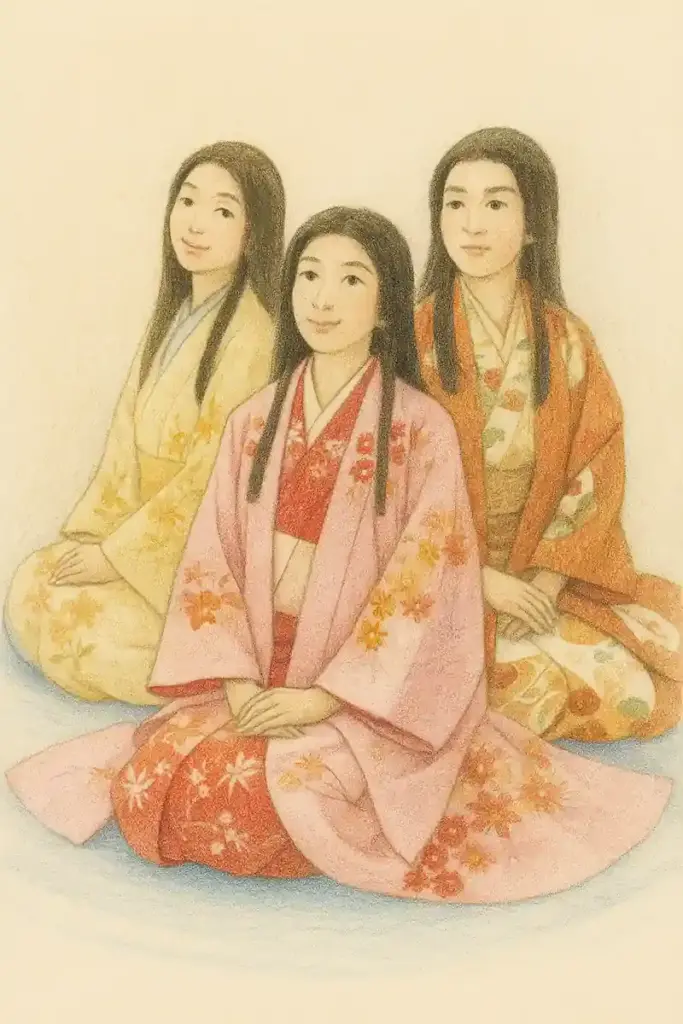
Gō: Hime-tachi no Sengoku (Gō: The Sengoku Princesses) is the 50th NHK Taiga drama, broadcast in 2011. It follows Gō, the youngest daughter of Azai Nagamasa and Oichi, through the fall of Odani Castle, her three marriages and her life as the wife of Tokugawa Hidetada, the future second shogun.
This guide covers the basic facts, the main cast, the relationships among the three Azai sisters, a plot overview, Gō's three husbands, and where the drama differs from history. It also points to the historic sites connected to her: Odani Castle, Kitanoshō Castle and Zōjō-ji. Everything from the plot overview onward discusses how the story unfolds.
Gō: Hime-tachi no Sengoku at a glance
| Broadcast | January 9 – November 27, 2011 |
|---|---|
| Series | 50th NHK Taiga drama (46 episodes) |
| Lead | Ueno Juri as Gō |
| Writer | Tabuchi Kumiko |
| Music | Yoshimata Ryō |
| Period | Late Sengoku (Warring States) to early Edo period |
Women like Gō are usually supporting characters in Sengoku dramas. This series puts the three Azai sisters at the center and shows the age of Nobunaga, Hideyoshi and Ieyasu from the family circle around them.
Main cast and the Azai sisters
Who plays whom
| Gō (Ueno Juri) | Protagonist, youngest of the three Azai sisters |
|---|---|
| Chacha / Lady Yodo (Miyazawa Rie) | Eldest sister |
| Hatsu / later Jōkōin (Mizukawa Asami) | Second sister |
| Oichi (Suzuki Honami) | Mother; Oda Nobunaga's younger sister |
| Azai Nagamasa (Tokiwa Takashi) | Father; lord of Odani Castle |
| Oda Nobunaga (Toyokawa Etsushi) | Uncle (her mother's brother) |
| Toyotomi Hideyoshi (Kishitani Goro) | Protects the sisters; Chacha's husband |
| Shibata Katsuie (Daichi Yasuo) | Oichi's second husband |
| Saji Kazunari (Taira Takehiro) | Gō's first husband |
| Toyotomi Hidekatsu (AKIRA) | Gō's second husband |
| Tokugawa Hidetada (Mukai Osamu) | Gō's third husband |
| Tokugawa Ieyasu (Kitaōji Kinya) | Hidetada's father |
| Sen-hime (Kutsuna Shiori) | Daughter of Gō and Hidetada; wife of Hideyori |
| Toyotomi Hideyori (the actor Taiga) | Son of Chacha and Hideyoshi; Gō's nephew |
Some characters are played by different actors as children. This table lists the main casting only.
Chacha, Hatsu and Gō compared
| Chacha | Concubine of Toyotomi Hideyoshi and mother of Hideyori. She stands at the center of the Toyotomi family and dies with Hideyori at the end of the Siege of Osaka. |
|---|---|
| Hatsu | Wife of Kyōgoku Takatsugu. Connected to both sides; known for acting as an envoy in the peace talks of the Winter Siege of Osaka. |
| Gō | Marries Saji Kazunari, Toyotomi Hidekatsu and Tokugawa Hidetada. Her last husband became the second shogun, while her sister Chacha was on the Toyotomi side, so she stands between the Tokugawa and the Toyotomi. |
Family ties: Gō, Chacha, Sen-hime and Hideyori
| Children of Gō and Hidetada | Sen-hime, Iemitsu (third shogun), Kazuko (empress consort of Emperor Go-Mizunoo), and others |
|---|---|
| Child of Chacha and Hideyoshi | Hideyori |
| Sen-hime and Hideyori | Husband and wife. Sen-hime is Gō's daughter and Hideyori is Gō's nephew, so the couple are first cousins. |
Plot overview in three stages
From here on, the story is discussed. Instead of walking through all 46 episodes, this section follows three turning points in Gō's life.
From the fall of Odani Castle to the loss of Oichi
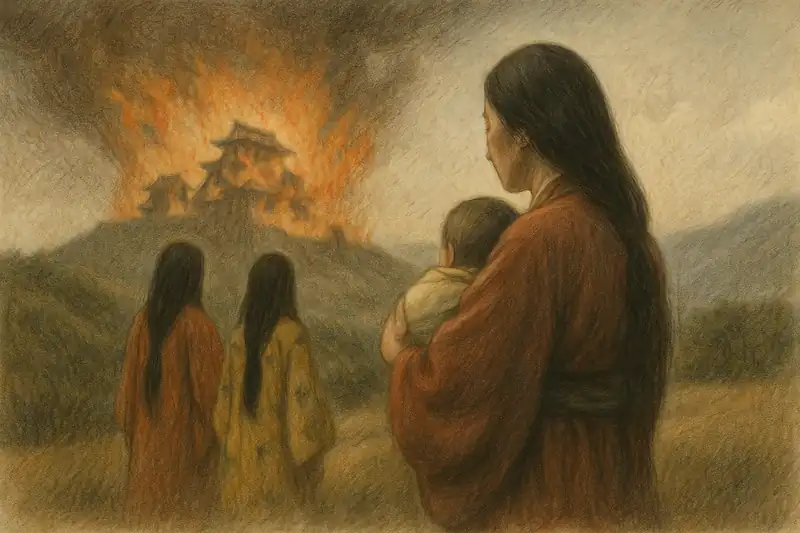
Gō is traditionally said to have been born in 1573, the year her father, Azai Nagamasa, took his own life as Oda Nobunaga's army besieged Odani Castle. Oichi and her three daughters were taken in by the Oda side. After Nobunaga's death, Oichi married Shibata Katsuie, and the family moved to Kitanoshō Castle in Echizen Province (present-day Fukui).
The drama's Katsuie is both bold and warm, and he treats the girls like his own daughters. In 1583, however, Hashiba (later Toyotomi) Hideyoshi defeats him at the Battle of Shizugatake, and Katsuie and Oichi die by suicide in Kitanoshō Castle. For the second time, Gō loses a father figure while still a child. The sisters are then taken in by Hideyoshi, the man who defeated their stepfather.
Life under the Toyotomi and the marriages to Saji Kazunari and Toyotomi Hidekatsu
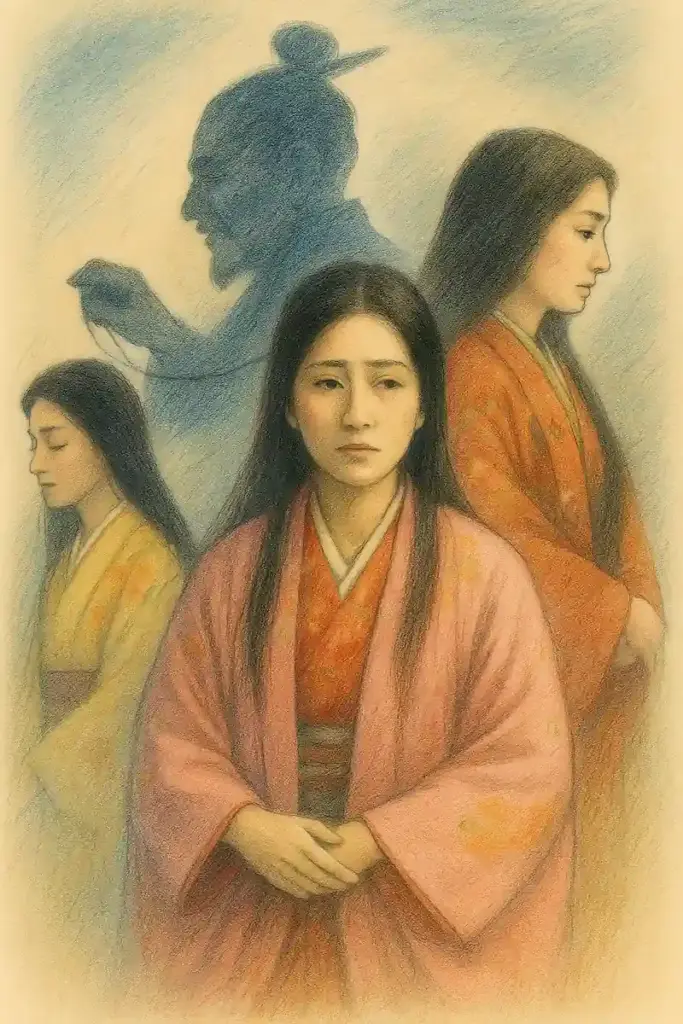
Under Hideyoshi's roof, Chacha becomes his concubine and gives birth to Hideyori, which puts her at the center of the Toyotomi family. Gō goes through a series of political marriages. Her first husband is Saji Kazunari, a warrior from Owari Province; the marriage is said to have ended at Hideyoshi's wish.
Her second husband is Hideyoshi's nephew, Toyotomi Hidekatsu. NHK's episode guide says Gō marries him in Episode 26, "Haha ni naru toki" (When She Becomes a Mother). Hidekatsu crossed to Korea during the Bunroku campaign and died of illness there. Episode 27 is titled "Hidekatsu no yuigon" (Hidekatsu's Last Words).
Marriage to Hidetada, the Toyotomi–Tokugawa split, and the final episodes
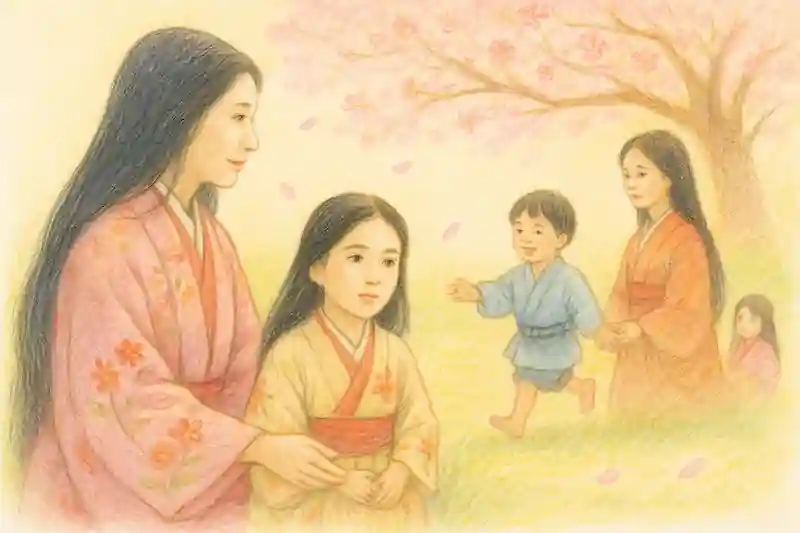
After Episode 28, "Hidetada ni totsuge" (Marry Hidetada), Gō becomes the wife of Tokugawa Ieyasu's third son, Hidetada. The drama portrays Hidetada as gentle and sincere, in contrast to his father. Gō is wary at first but comes to trust him, and the couple have children including Sen-hime, Iemitsu and Kazuko.
The Toyotomi–Tokugawa conflict finally leads to the Siege of Osaka, where Chacha and Hideyori die. According to the official synopses, Gō falls ill after hearing of Yodo's (Chacha's) death in Episode 44. In Episode 45 she travels to Sunpu, where Ieyasu speaks to Hidetada about his hopes. The finale, "Kibō" (Hope), deals with the choice of Iemitsu as heir and a problem involving a child of Hidetada's born outside marriage.
The ending belongs to the drama. Please do not read it as an account of Gō's real later years or death, or of how the Ōoku (the shogun's inner palace) came into being.
Who were Gō's three husbands?
| 1st: Saji Kazunari | Warrior from Owari Province; played by Taira Takehiro. The marriage is generally said to have been annulled at Hideyoshi's wish; the year and circumstances are debated. |
|---|---|
| 2nd: Toyotomi Hidekatsu (Kokichi Hidekatsu) | Second son of Hideyoshi's elder sister Nisshū; played by AKIRA. Crossed to Korea in the Bunroku campaign and died of illness. |
| 3rd: Tokugawa Hidetada | Third son of Ieyasu and later the second shogun; played by Mukai Osamu. At the Tokugawa mausoleum at Zōjō-ji in Tokyo, he is now enshrined together with his wife, Sūgen-in (Gō). |
Gō's second husband was Toyotomi Hidekatsu, not Toyotomi Hidetsugu. Hidetsugu was Hidekatsu's elder brother and a different person. Several men also carried the name Hidekatsu. Oji Hidekatsu, said to be a son of Nobunaga, died in 1585 and is not the Kokichi Hidekatsu who married Gō. The Nagahama Hikiyama Museum introduces the two separately.
With Hidekatsu, Gō had a daughter, Sadako, who later married the courtier Kujō Yukiie. With Hidetada she had Sen-hime, Iemitsu, Kazuko and others. The dates of the marriages and the reasons for the first divorce are debated, so this guide keeps to what is generally accepted.
The drama versus history
Official synopses tell us what happens in the drama; they are not evidence for history. The table below compares only points where the historical side can be checked against museum or temple explanations.
| Second husband | Drama: Gō marries Toyotomi Hidekatsu (AKIRA); Episode 27 is titled "Hidekatsu's Last Words." History: Kokichi Hidekatsu was the second son of Hideyoshi's elder sister Nisshū and died of illness in Korea during the Bunroku campaign. Note: do not confuse him with Hidetsugu or with Oji Hidekatsu, said to be Nobunaga's son. |
|---|---|
| Three husbands | Drama: Kazunari, Hidekatsu, Hidetada, in that order. History: the generally accepted order is the same, but marriage dates and the circumstances of the divorce are debated. Note: do not turn the drama's timing into a timeline. |
| End of the first marriage | Drama: it ends at Hideyoshi's wish. History: said to have been a divorce at Hideyoshi's wish; contemporary records of the details are limited. Note: read the characters' feelings as drama. |
| The Ōoku | Drama: the finale is described as linking Gō's wishes to the birth of the Ōoku. History: the Ōoku system was put in place step by step during the early Edo period. Note: do not credit a single person with creating it. |
The Azai–Asakura relationship cannot be summed up as a simple betrayal either. After Nobunaga's invasion of Echizen, the Azai turned against the Oda and fought Nobunaga alongside the Asakura. The Battle of Anegawa took place in 1570, and Odani Castle fell in 1573 as part of the same conflict.
Historic sites connected to Gō and the Azai sisters
These are historic sites connected to Gō, not filming locations for the drama. They are in Shiga, Fukui and Tokyo, far apart, so this guide does not combine them into a one-day route.
Odani Castle Ruins: where the Azai story begins
Odani was a mountain castle in Ōmi Province (present-day Shiga) and the home of Azai Nagamasa. Its fall in 1573 is where Gō's story starts. You see it by walking the mountain terrain. For access and timing, see the Odani Castle Ruins Complete Guide; for the main enclosures, see the guide to 14 sites in the main-bailey area. The Gi to Kizuna Hall is also described as a stop to combine with Odani.
Kitanoshō Castle Ruins and Shibata Shrine: where Katsuie and Oichi died

This is the site of Kitanoshō Castle in Fukui, where Shibata Katsuie and Oichi took their own lives. The sisters left here and were taken in by Hideyoshi. Our Kitanosho Castle Ruins guide covers what you can see on site. The 1583 battlefield that led to their deaths can be walked at Shizugatake and at Genbao Castle Ruins, said to be Katsuie's headquarters.
Zōjō-ji and the Tokugawa mausoleum: Hidetada and Gō (Sūgen-in)
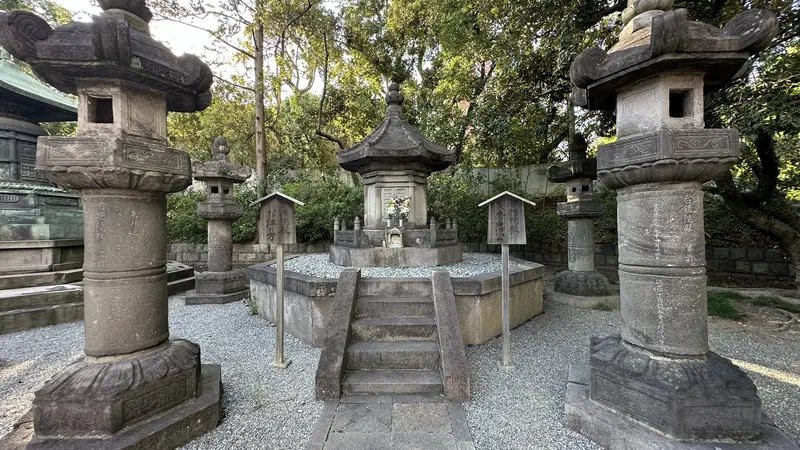
Zōjō-ji in Tokyo holds the tomb of the second shogun, Hidetada, who is now enshrined together with his wife, Sūgen-in (Gō). The visit is covered in our Zōjō-ji guide, and the same article points to Shiba Toshogu Shrine nearby.
According to Zōjō-ji's official site (checked October 8, 2026), the Tokugawa mausoleum is closed from October 27 (Tue) to December 1 (Tue), 2026, so the tombs cannot be visited during that period. The Treasure Exhibition Hall is listed as open as usual.
Other castles linked to the story
The Tokugawa base Gō married into is covered in our Edo Castle guide. For the end of Chacha and Hideyori, see the northern area of Osaka Castle. After the fall of Osaka Castle, Sen-hime remarried Honda Tadatoki and lived at Himeji Castle. Gō herself did not live there.
What stands out in the drama
What stays with me is how the three sisters are tied to different families and how the family finally splits between the Toyotomi and the Tokugawa. Gō ends up between her sister Chacha on the Toyotomi side and her husband Hidetada on the Tokugawa side.
In the scenes of Odani and Kitanoshō falling, the pain of being separated from someone you love feels timeless. Gō grows up never knowing her father's face and goes on to endure many partings, and that thread runs through the whole story.
How to watch Gō: Hime-tachi no Sengoku
Availability and prices change. Before you subscribe or buy, check each service's page for whether the series is included, whether it is free with a subscription or sold per episode, and the price. The official program page is NHK On Demand's page for the series.
Amazon pages (affiliate links):
Amazon viewing page 1
Amazon viewing page 2
Find the Blu-ray on Amazon
We have not confirmed an official English-subtitled release, so check the subtitle options on each page. Blu-ray sets differ in what they contain (complete edition, highlights and so on), so check the product page before you buy. This page contains affiliate links.
Frequently asked questions
Like "go" with a long "o." Her name is written 江 in Japanese.
It aired in 2011 as the 50th Taiga drama and ran for 46 episodes.
Saji Kazunari, Toyotomi Hidekatsu and Tokugawa Hidetada. The second was Hidekatsu, not Hidetsugu.
They were husband and wife. Sen-hime was the daughter of Gō and Hidetada, and Hideyori was the son of Gō's sister Chacha, so they were first cousins.
At the Tokugawa mausoleum in Zōjō-ji, Tokyo, where she is enshrined together with her husband Hidetada. The mausoleum is closed from October 27 to December 1, 2026.
Sources
- NHK On Demand: Gō: Hime-tachi no Sengoku (series information and viewing)
- Nagahama Hikiyama Museum, "Hideyoshi and the Three Hidekatsu" (Kokichi and Oji Hidekatsu)
- Zōjō-ji official site, Tokugawa mausoleum (closure dates and joint enshrinement; checked October 8, 2026)
Related guides
☕ Support This Site
Following the Shogun is built on original fieldwork and on-site research.
If you found this guide useful, your support helps keep it going.

You can also support via QR code


comment