


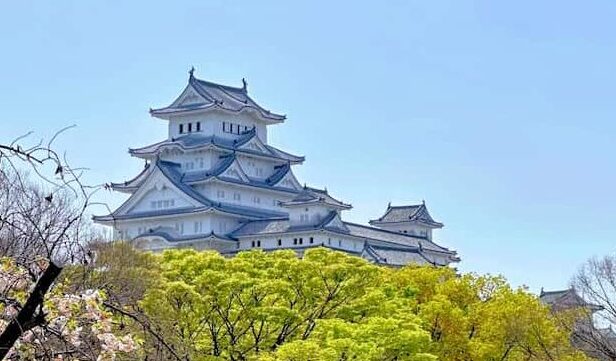
Himeji Castle: Japan's Finest Surviving Feudal Fortress
Japan's best-preserved original castle, a UNESCO World Heritage Site since 1993. Explore all six areas — from the iconic Main Keep to the West Bailey of Princess Sen — through this complete hub guide.
🧭 Insider Tips — From Someone Who Has Visited Multiple Times
Here's what I wish I'd known on my first trip — and what most guides don't tell you.
- Arrive before 9:30 AM. The outer grounds never feel overwhelmed, but the Main Keep interior is a different story. On my visits (most recently April 2025), queues began building on the steep interior staircases from around 10:00 AM — though crowd levels vary day to day. An early start means you'll climb at your own pace — and see the castle glowing in the morning light.
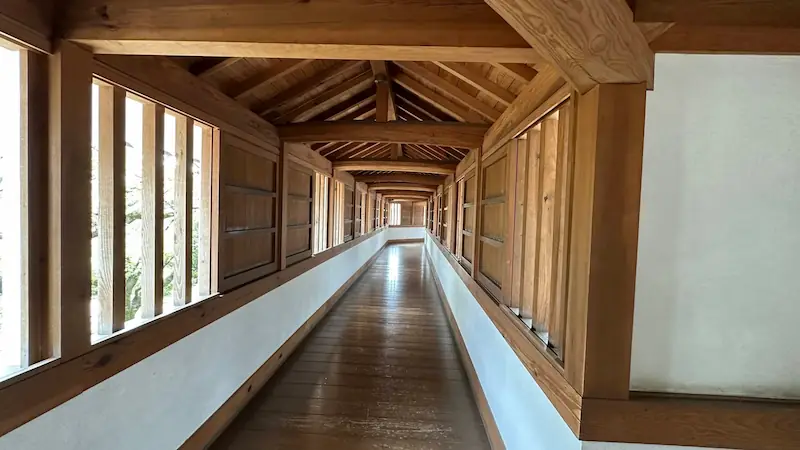
- Don't walk past the Nishi-no-Maru turrets. I did exactly that on my first visit — and only discovered them on my second. A network of original wooden yagura (turrets) connected by roofed watariyagura corridors, all walkable. Nothing else in Japan quite compares to standing inside those linked structures.
- The Main Keep interior is darker than you expect. Windows are few and far between. The staircases are steep, but what stays with you are the two enormous pillars — rising unbroken from the ground floor to the upper storeys — a structural feat rarely seen in any other Japanese castle.
- Area 5 (Moats & Stone Walls) is the quiet surprise. Most visitors head straight for the keep and miss the outer perimeter entirely. On my April 2025 visit I found it almost empty — ideal for unhurried photography and taking in the sheer scale of the castle's defensive engineering, though this can vary by day.
Step into a living masterpiece of early modern Japanese castle architecture. Himeji Castle, crowned by its elegant white Main Keep, stands as the finest surviving example of Japanese castle design. The Main Keep (Daitenshu) itself has never been destroyed by war, earthquake, or fire in over 400 years — though not every building on the grounds was so fortunate; the Bizenmaru palace, for example, was lost to fire in 1882.
Having visited castles across Japan — including Osaka Castle, Hikone Castle, Nijo Castle, Edo Castle, and Matsumoto Castle — one truth becomes clear: no other site preserves the architectural spirit and original structures of Japan's feudal era as completely as Himeji Castle. While countless castles once dotted the country, many were dismantled by government order or lost to the ravages of war. Amid such widespread loss, Himeji Castle stands apart — not only with its original Main Keep intact, but also with a remarkable number of surviving yagura turrets, gates, walls, and stone foundations. In terms of historical continuity and physical preservation, it is unmatched in Japan.
Whether you're a history enthusiast eager to walk through centuries of martial legacy, or a first-time traveler drawn by iconic beauty, Himeji Castle offers an unforgettable encounter with Japan's cultural soul.
🏠 Introduction
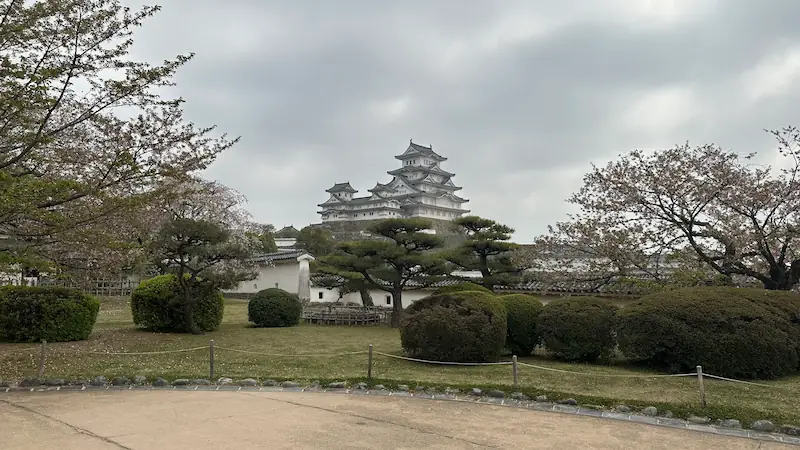
Known as the "White Heron Castle" for its graceful, soaring silhouette, Himeji Castle is a national treasure that has captivated generations. Originally fortified in the 14th century and expanded to its current grandeur in 1609, the castle became a Tokugawa stronghold under Ikeda Terumasa following the pivotal Battle of Sekigahara.
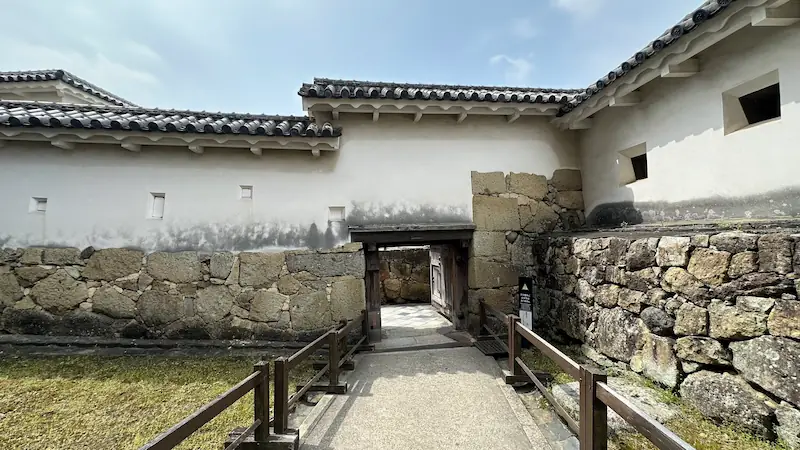
Its defensive innovations — including labyrinthine paths, multiple masugata (box-shaped) gates, and strategic loopholes — reflect the height of samurai-era military planning. But it's the visual harmony of its white plaster walls and multi-layered rooftops that makes Himeji Castle the crown jewel of Japanese architecture.
Today, Himeji Castle invites visitors to explore its story through three distinct experiences: a climb through the commanding Main Tower, a stroll through the serene West Bailey once home to Princess Sen, and a walk along fortified walls and hidden passageways that once defied enemy advances.
Make the Most of Your Visit — Down to the Last Stone
Tap to enlarge
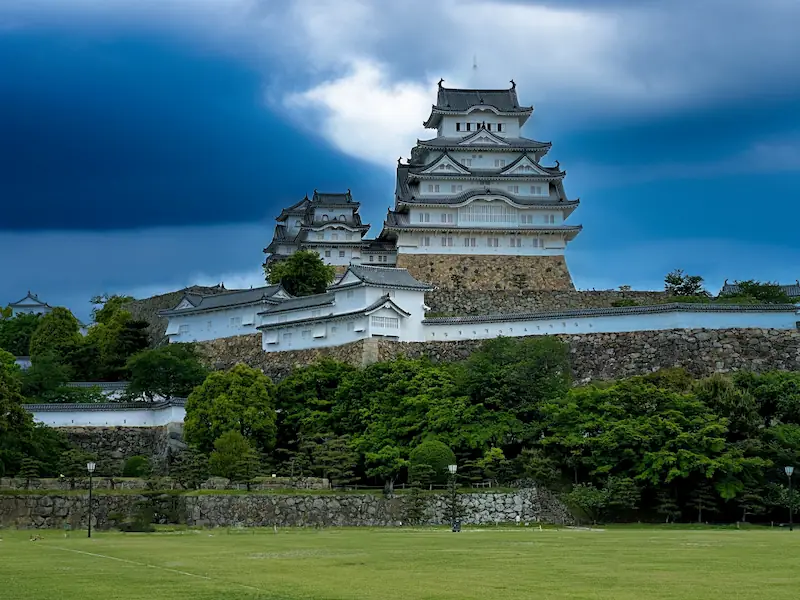
Renowned as the "White Heron Castle" for its elegant white façade, Himeji Castle stands as one of Japan's most breathtaking and historically significant castles. This comprehensive guide unveils every must-see historical site around the castle grounds, ensuring you don't miss a single detail during your visit.
From the grand Main Keep (Tenshu) to the Sakuramon Bridge and Otemon Gate, Himeji Castle is a showcase of sophisticated feudal-era architecture — from the late Sengoku through early Edo periods. Explore its intricate gates, watchtowers, and masterfully built stone walls, as well as the Nishi-no-Maru Bailey, once home to Princess Sen of the Tokugawa family.
Dive deeper into the labyrinthine network of gates and sloping paths that lead to the keep — an ingenious defensive layout designed to outwit enemy invaders. This guide also shares little-known historical anecdotes, seasonal views, and hidden photo spots that delight history enthusiasts.
Whether you're preparing for your trip or using this as your on-the-go guide, this all-in-one resource will enrich your Himeji Castle experience tenfold. Get ready to discover the full beauty, history, and secrets of this UNESCO World Heritage site — one area at a time.
🧱 What Remains of Himeji Castle Today?
📜 History of Himeji Castle
Akamatsu Norimura establishes the original stronghold on Himeyama Hill.
Ikeda Terumasa, Tokugawa ally, rebuilds into a complex of 80+ buildings — the castle seen today.
Designated a World Heritage Site — one of only 12 original castle keeps surviving in Japan.
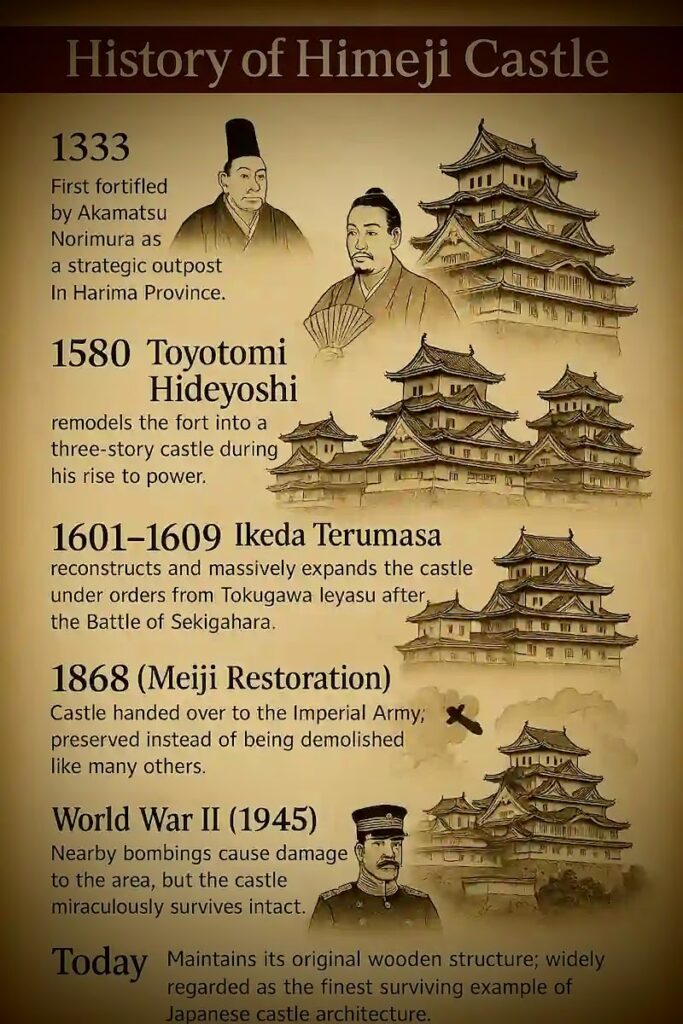
First fortified in 1333 by Akamatsu Norimura, the site of Himeji Castle evolved over centuries into Japan's most celebrated and best-preserved feudal stronghold. Its transformation into the iconic white castle seen today began in earnest after the pivotal Battle of Sekigahara in 1600, when Tokugawa Ieyasu awarded the domain to his son-in-law, Ikeda Terumasa.
Between 1601 and 1609, Ikeda oversaw an ambitious reconstruction, expanding the castle into a sophisticated military complex with over 80 buildings, labyrinthine defenses, and elegant architectural flourishes. Himeji Castle emerged not just as a fortress — but as a symbol of Tokugawa power in western Japan.
Remarkably, the castle was never attacked in a full-scale siege, and its Main Keep survived earthquake and fire intact — though not every building within the castle grounds was so fortunate; the Bizenmaru palace, for instance, was lost to fire in 1882. Despite the wave of castle demolitions after the Meiji Restoration and the widely told (if not always precisely sourced) accounts of its survival through World War II air raids, the Main Keep and many other wooden structures have retained their original, centuries-old form.
Designated a UNESCO World Heritage Site in 1993, Himeji Castle continues to represent the pinnacle of samurai-era fortification, artistry, and strategy.
👑 About Princess Sen (Senhime)

Princess Sen, affectionately known as Senhime (1597–1666), was the daughter of Tokugawa Hidetada, the second shogun, and granddaughter of Tokugawa Ieyasu. Born into Japan's most powerful political family, she stood at the heart of events that shaped the early Edo period.
At the age of seven, she was married to Toyotomi Hideyori — the son of Toyotomi Hideyoshi and Lady Yodo, and a prominent political rival to the Tokugawa family — as part of a strategic alliance aimed at stabilizing tensions between the two clans. Their union ended in tragedy with the fall of Osaka Castle in 1615. Senhime was famously rescued during the siege and later remarried Honda Tadatoki, a respected samurai lord and future lord of Himeji Castle.
She lived in Himeji for several years, during which she is said to have contributed to the refinement of castle life and the promotion of cultural and religious activities. Her residence in the Nishi-no-Maru Palace and the Makeup Turret (Keshō Yagura) remain enduring symbols of her legacy.
Senhime is remembered not only for her noble lineage but for her resilience, grace, and enduring presence in the cultural memory of Himeji Castle.
🚉 How to Get Here: JR Himeji Station (JR-A85)
From Kansai International Airport (KIX)
Approx. travel time: 120 minutes
Fare: ~3,160 yen
From Shin-Osaka Station
Approx. travel time: 32 minutes
Fare: 3,870 yen
🔷 Quick Tour for Casual Visitors
⏱ How to Allocate Your Time — Based on Multiple Visits
These are realistic estimates based on personal experience, not the optimistic figures you'll find on official signage.
| Area | Suggested Time | Note |
|---|---|---|
| Area 1 — Main Gate & Outer Grounds | 45–60 min | Good for photos of the keep from a distance |
| Area 2 — Nishi-no-Maru ★ Don't rush | 45–60 min | The watariyagura corridors are easy to miss — allow extra time |
| Area 3 — Main Keep | 60–90 min (inc. queue) | Arrive before 10:00 AM to avoid staircase queues |
| Area 4 — East Bailey & Okiku's Well | 30–45 min | Interesting historical atmosphere; quieter than the main areas |
| Area 5 — Moats & Stone Walls Hidden gem | 30 min | Almost always quiet — excellent for undisturbed photography |
| Area 6 — Gardens, Shrines & Surroundings | 45–60 min | Kōkoen Garden requires a separate entry fee; worth it in autumn |
Based on multiple personal visits, most recently April 2025. Allow extra time for photography, seasonal events, and crowds on weekends and public holidays.
▶ 7 Best Spots in Himeji Castle Grounds
Short on time? No worries. We've curated 7 of the most iconic and photogenic highlights across Himeji Castle's expansive grounds — all easily enjoyed in under an hour. From the majestic Main Tower to tranquil gardens and samurai-era defense systems, this quick tour captures the essence of Japan's finest original castle.
🟠 Easy to follow
📸 Great for photos
🧭 Perfect for first-time visitors
🔶 Complete Guide for History Enthusiasts
Curious about the deeper legacy of Himeji Castle? Our detailed guide takes you through every corner of this World Heritage site, uncovering the architectural brilliance, defensive strategy, and cultural symbolism behind Japan's most revered feudal fortress. From concealed turrets and maze-like passageways to elegant living quarters and ancient stonework, discover what makes Himeji Castle a true national treasure.
📜 Rich historical context
🎯 90 featured locations across 6 areas
🔍 Hidden stories and original structures
🔑 Special Report — Exclusive Access
Inside Himeji Castle's Hishi-no-Mon Gate: A Rarely Seen Part of the Castle Complex
During a special public opening, I was granted access to Hishi-no-Mon Gate — a section of the castle grounds not normally open to visitors. This report documents what I found inside, including structural details and historical context unavailable in standard guides.
Read the Full Special Report →Explore All 6 Areas
The full guide is split into 6 areas covering 90 spots. Jump into any area below, or see the complete Table of Contents for a spot-by-spot directory of the entire castle grounds.
Himeji Castle Map
❓ FAQ – Himeji Castle
No. Entry to the Main Keep (Daitenshu) and Nishi-no-Maru (West Bailey) requires a paid ticket. As of July 2026, general admission (age 18+) is 2,500 yen; Himeji city residents pay 1,000 yen; entry is free for visitors under 18. The outer grounds around the moat can be viewed for free.
For a quick visit focusing on the main highlights, allow approximately 60–90 minutes. For a thorough exploration of all six areas including the West Bailey, Main Keep interior, East Bailey, and surrounding moats and gardens, plan for a full half-day (3–4 hours). See the area-by-area time guide above for a detailed breakdown based on personal visit experience.
Yes. The Main Keep (Daitenshu) is the original wooden structure completed in 1609, and it has never been destroyed by war, earthquake, or fire. Not every building on the grounds survived, however — the Bizenmaru palace, for example, was lost to fire in 1882. Many connecting turrets, gates, and stone walls do survive from the early Edo period, making Himeji Castle one of the finest and most complete original castles in Japan.
From Shin-Osaka Station, take the Shinkansen (Nozomi or Hikari) to Himeji Station — approximately 32 minutes, around 3,870 yen. From Kyoto, take the Shinkansen or JR Special Rapid to Himeji. From Kansai International Airport (KIX), allow approximately 120 minutes via train, around 3,160 yen. Himeji Castle is a 15–20 minute walk or short bus ride from JR Himeji Station.
Spring (late March to early April) is the most popular season for cherry blossom viewing with the white castle as a backdrop. Autumn (November) offers beautiful foliage. Summer can be hot and crowded; early morning visits are recommended. Winter brings clear skies and fewer crowds, offering clean views of the white towers.
Princess Sen (Senhime, 1597–1666) was the granddaughter of Tokugawa Ieyasu and daughter of the second shogun, Tokugawa Hidetada. She was married to Toyotomi Hideyori at age seven, then rescued during the fall of Osaka Castle in 1615. She later married Honda Tadatoki, lord of Himeji Castle, and lived at Himeji for several years. The Nishi-no-Maru Palace and Keshō Yagura (Makeup Turret) are closely associated with her legacy.
Yes. Himeji Castle was designated a UNESCO World Heritage Site in 1993, recognized as an outstanding example of Japanese castle architecture from the late Sengoku through early Edo periods. It is also designated a National Treasure of Japan.
🔙 Return to the Warlord Page


☕ Support This Site
Following the Shogun is built on original fieldwork and on-site research.
If you found this guide useful, your support helps keep it going.

You can also support via QR code


comment