


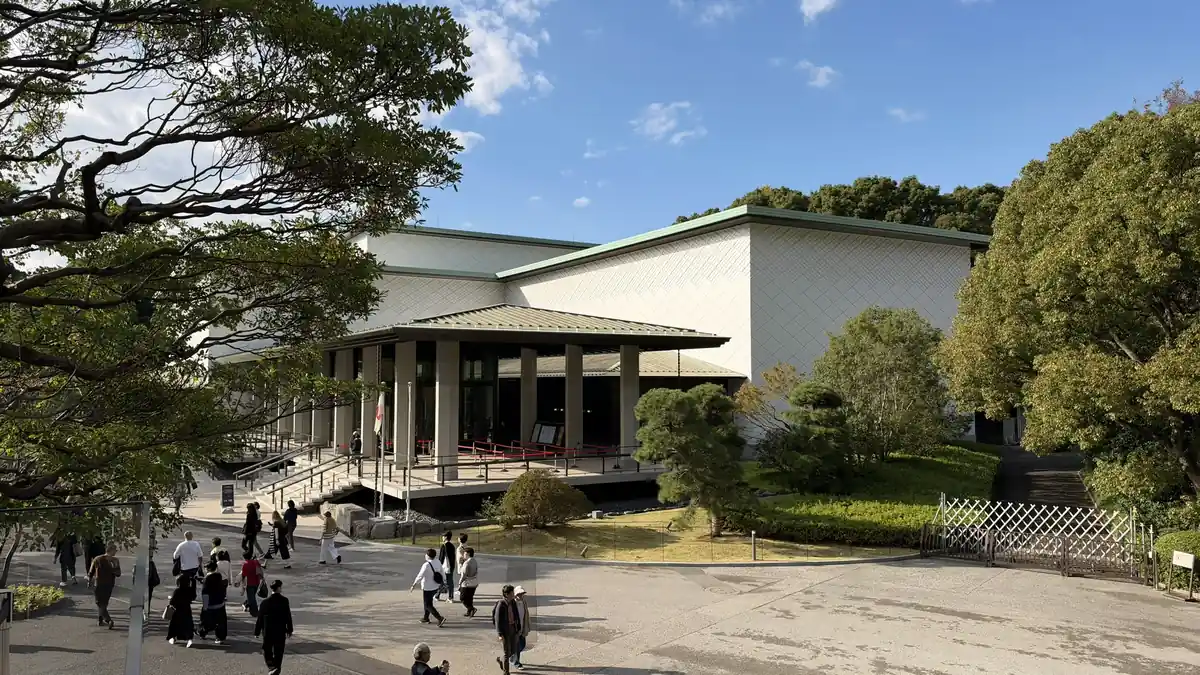
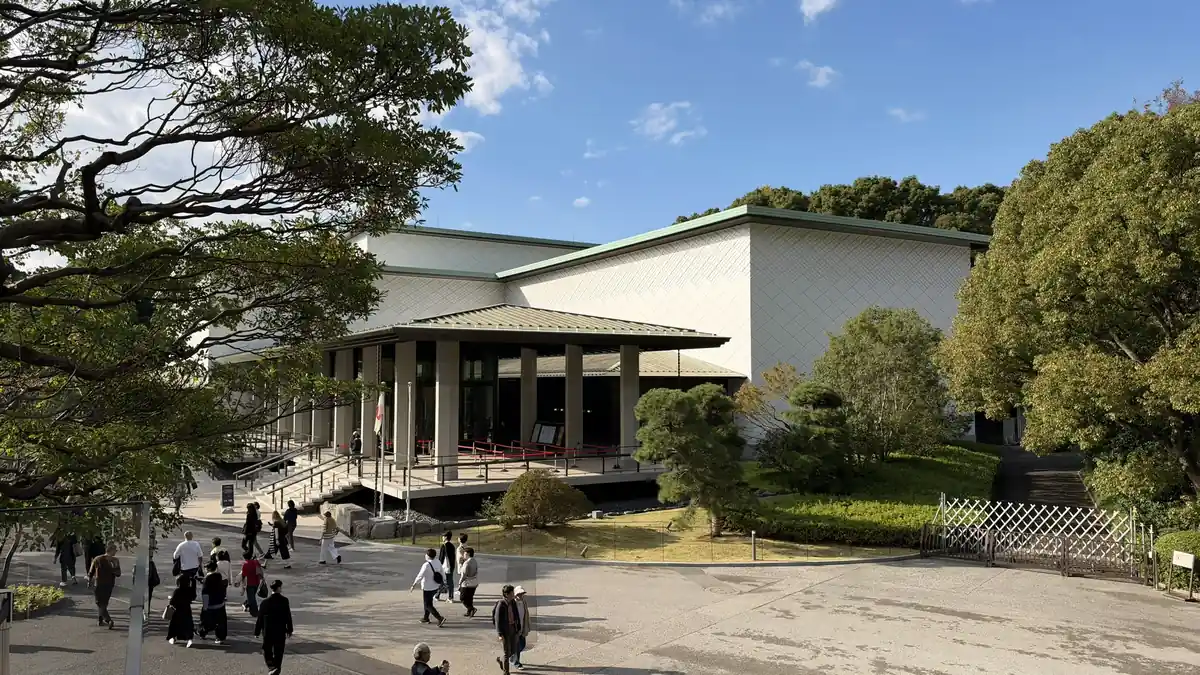
Sannomaru Shozokan Guide: Tickets, Access and a Half-Day Route Through the East Gardens
A museum just inside Ōte-mon Gate, in the Imperial Palace East Gardens. This guide covers how to book a timed ticket, how to get in, a half-day route that adds the old Edo Castle grounds, and what I saw on the opening day of the inaugural exhibition.
The Museum of the Imperial Collections, Sannomaru Shozokan (the name is usually shortened to Sannomaru Shozokan) holds art handed down through the Japanese imperial family. It held its grand opening on November 3, 2026, with the special exhibition “Beauty Through the Ages: Treasures of the Imperial Collections.” The works range from a lute and a mirror from the Shōsōin, the 8th-century imperial storehouse in Nara, to a lacquered bookcase made by master craftsmen of the Meiji era.
I went on opening day. The booking site was sold out and I had given up, but after I walked into the East Gardens and reloaded the page, a 2:30 p.m. slot had opened up and I got in. Below you will find the tickets and booking rules, directions, a half-day route, and what the first rotation of the exhibition looked like.
In this guide
If you only want the exhibition “Beauty Through the Ages,” use these links to go straight to the works.
Highlights of “Beauty Through the Ages”
At a glance | Tickets, hours, closed days and time needed
| Booking | Timed-entry tickets only, and none are sold at the museum on the day. Only visitors with a disability certificate (plus one carer) and children of elementary-school age or younger can enter without a reservation. |
|---|---|
| How to buy | ART PASS (e-ticket) or Seven Ticket (a paper ticket from a Seven-Eleven in Japan). I found no coupons or discounts (as of Nov. 3, 2026). |
| Admission | General ¥2,500 (tax included) for “Beauty Through the Ages,” until Jan. 24, 2027 |
| Hours | 9:30 a.m. – 5:00 p.m. (last admission 4:30 p.m.). Fridays and Saturdays open until 8:00 p.m. (last admission 7:30 p.m.) |
| Closed | Mondays in general. For Mondays when it is open, rotation closures and New Year, see the table in Getting there. |
| East Gardens | Free, no reservation. From November to February it closes at 4:00 p.m. (last entry 3:30 p.m.). Closed on Mondays and Fridays in general, but open on public holidays (see Getting there). |
| Time needed | About 80 minutes inside the museum (my visit). Plan on half a day if you add the Ōte Rest House and a walk around the Edo Castle grounds. |
About the museum | About 6,300 works from the imperial collections
Museum of the Imperial Collections, Sannomaru Shozokan
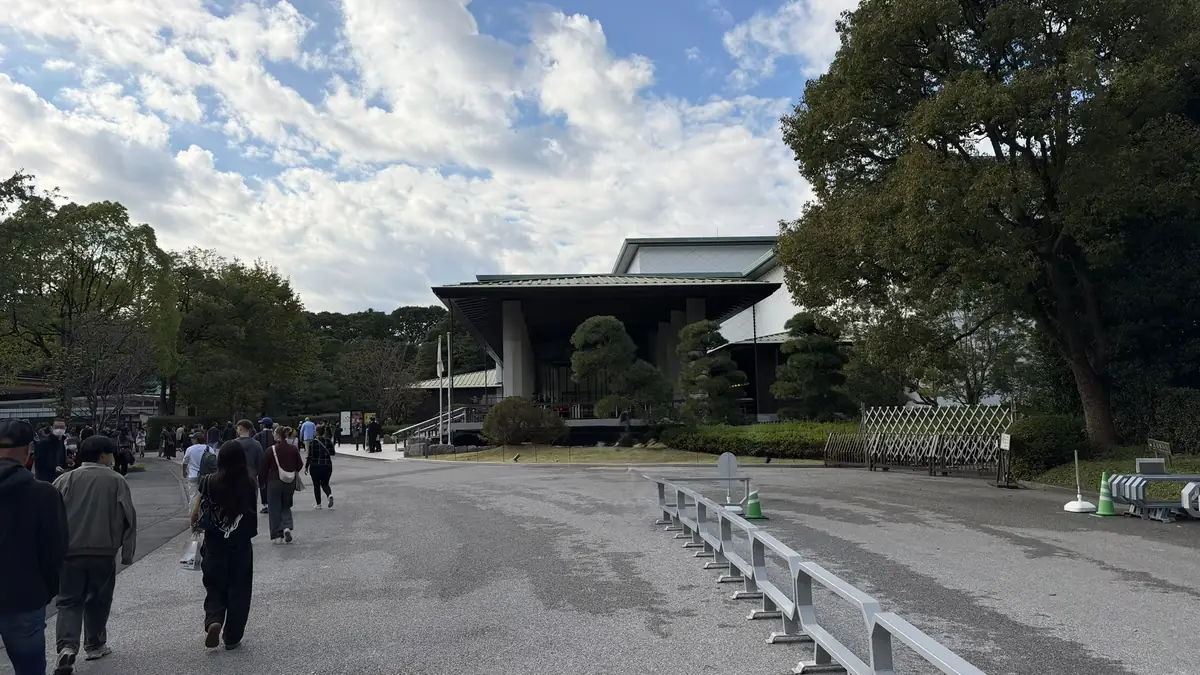
The museum keeps paintings, calligraphy and craftwork that the Imperial Household passed down over generations. It began in 1989, when Emperor Emeritus Akihito and Empress Kōjun donated these items to the state. It opened in 1993 as the Sannomaru Shozokan under the Imperial Household Agency, moved to the National Institutes for Cultural Heritage in 2023 and partly reopened that November. The grand opening in November 2026 opened the whole building.
The collection numbers about 6,300 items, including 10 National Treasures and 13 Important Cultural Properties. The exhibition rooms are about eight times larger than before.
“Sannomaru” means the third bailey of Edo Castle, which is where the museum stands. The building is new; no Edo-period structure survives here.
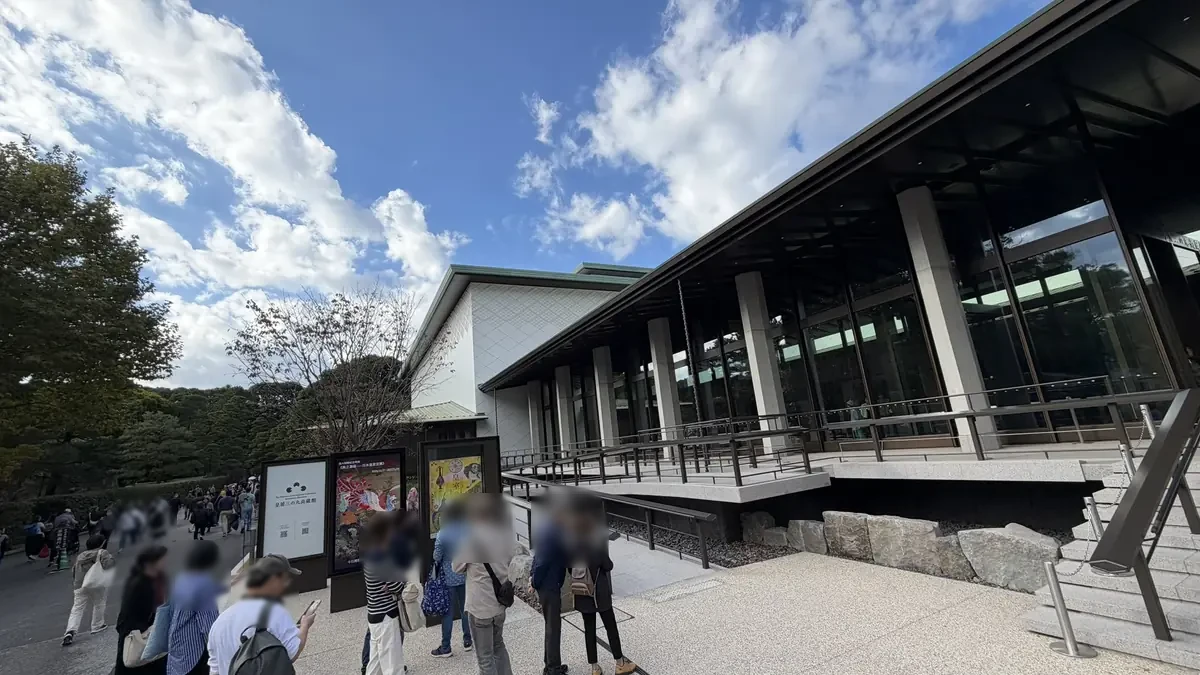
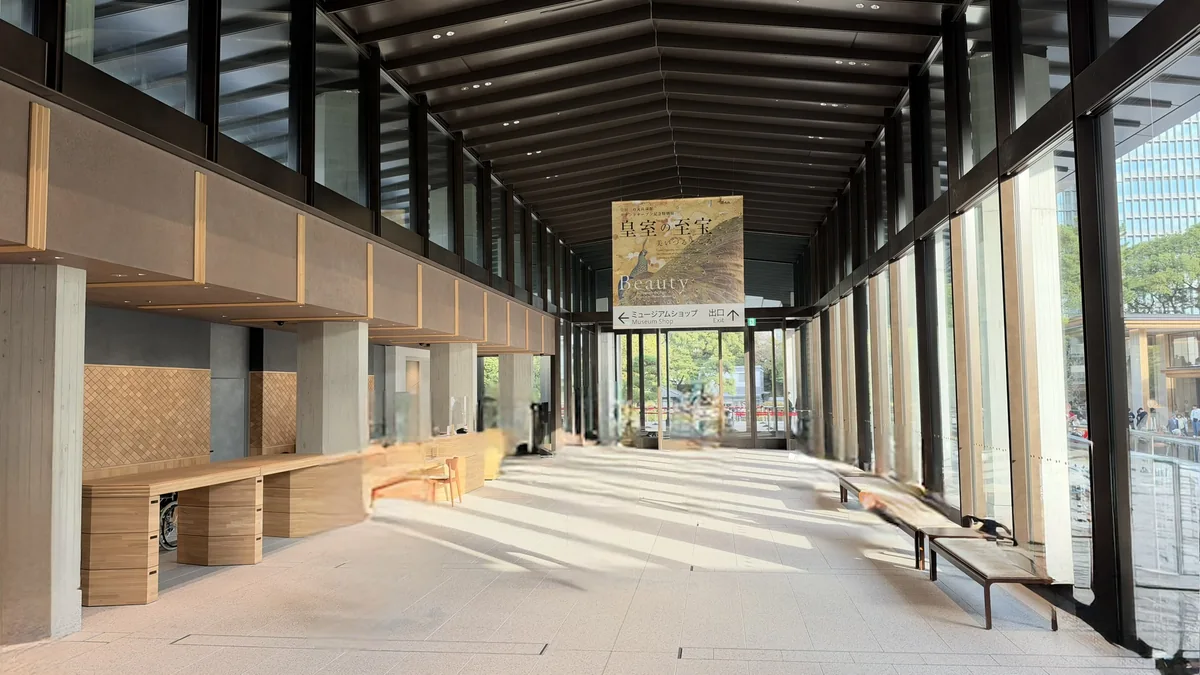
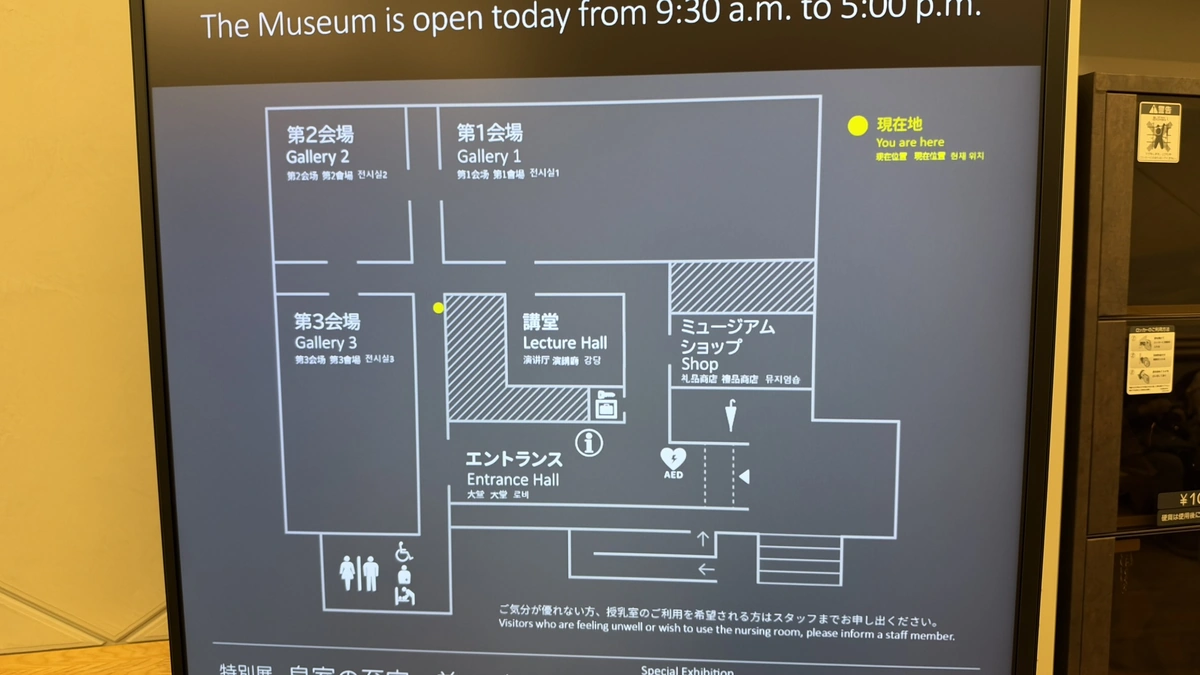
Tap a photo to enlarge it.
The galleries are divided into Galleries 1 to 3, and there are a lecture hall and a museum shop. Next to the entrance stairs there is a ramp with handrails.
Tickets and booking | Timed entry only, no tickets at the door
Admission to “Beauty Through the Ages” is ¥2,500 (tax included) for general visitors. General tickets are timed-entry, and the museum sells none on the day. If a slot is open, you can book until one minute before its entry time begins. You can buy through ART PASS, Seven Ticket or a Seven-Eleven store. I found no coupons or discounts (as of November 3, 2026). Visitors with a disability certificate and one carer, and children of elementary-school age or younger, don’t need a reservation.
| ART PASS (e-ticket) | No booking fee. You can change the date and time twice; cancellation is not possible. |
|---|---|
| Seven Ticket (paper ticket) | Reserve at the multi-copy machine inside a Seven-Eleven, or on the Seven Ticket site (¥110 per ticket if you use the site). You need a paper ticket printed at a Seven-Eleven; payment records and screenshots won’t get you in. |
| Discounts and coupons | None listed on the official page, and I found none (as of Nov. 3, 2026). |
| Booking deadline | Until one minute before each slot starts, if seats remain. |
| On sale | Rotation 2: Nov. 11 at 10:00 a.m. Rotation 3: Dec. 2 at 10:00 a.m. (Japan time). |
| Refunds and re-entry | No refunds or reissues. You can walk back into the galleries on the same day, but once you leave the building you can’t re-enter. |
- Free, ART PASS reservation required: anyone under 23 on the day of the visit, university, high school and junior high students, and holders of a complimentary ticket.
- Free, no reservation: holders of a disability certificate and one carer, and children of elementary-school age or younger (a guardian who has a reservation must come with them). You may have to wait to enter when it is busy.
- What to bring: documents that prove you qualify. For the under-23 category, that means ID showing your date of birth (a driver’s license, health insurance card or passport), and for students a student ID. Holders of a complimentary ticket need both the ticket and the ART PASS QR ticket (children of elementary-school age or younger don’t need documents). If you can’t show the right documents, or if a general-ticket visitor booked a free slot, you are refused at entry, and you can’t pay the difference or change the ticket type on site.
- Lectures and slide talks need their own tickets, even for visitors who are otherwise free.
Booking from overseas: what to know
The museum’s English site has its own ticket page and its ART PASS links are set to English. ART PASS has no booking fee. Seven Ticket gives you a paper ticket that has to be printed at a Seven-Eleven in Japan, so if you are planning from abroad, ART PASS is the simpler route. The official pages don’t say which payment methods ART PASS accepts, so check at checkout.
If you are under 23, entry is free with a reservation, and the official English page lists a passport as an accepted ID showing your date of birth. Bring your passport. Free slots are limited and can sell out even when paid tickets remain. For students, the official pages ask for a student ID but don’t say whether overseas student IDs are accepted.
Don’t phone to ask about availability; the museum asks visitors to check the booking site. You enter within your reserved time slot. There is no waiting space inside the building, so the museum asks visitors not to arrive earlier than their slot.
From sold out to a seat: how I got in
The booking site was sold out on opening day, and I had given up. After I walked into the East Gardens and reloaded the page a few times, a 2:30 p.m. slot appeared on ART PASS at about 1:45 p.m. I booked it on my phone right away and was inside 45 minutes later. The Seven Ticket site never showed an opening.
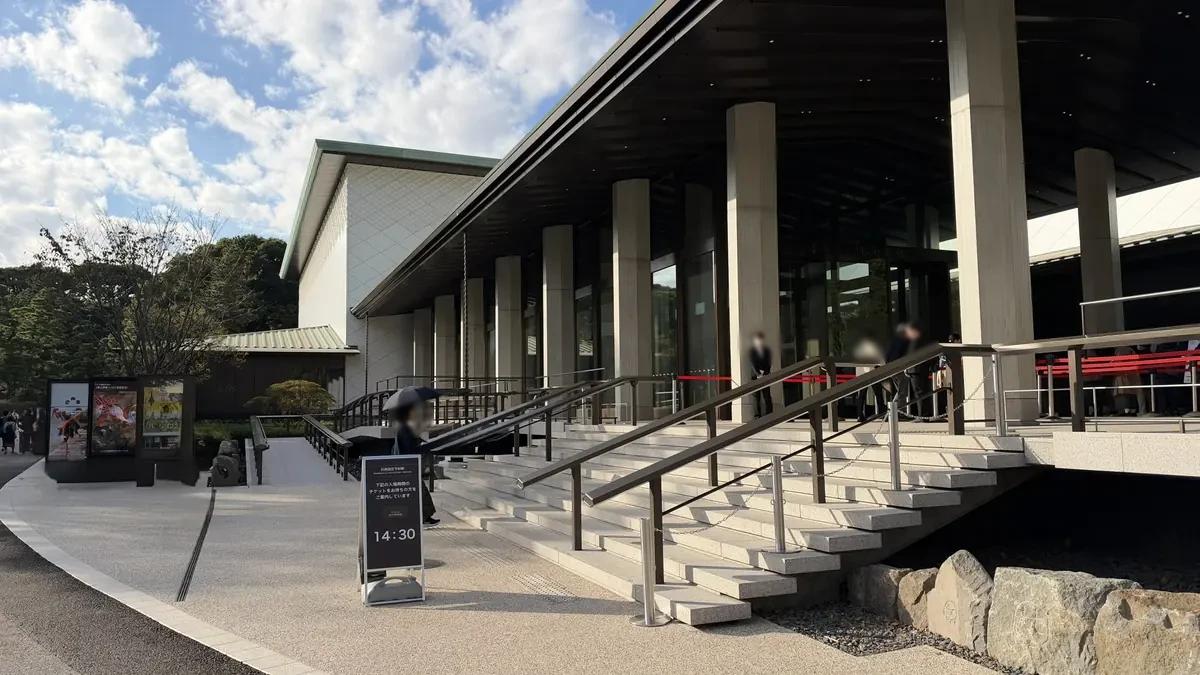
Entry is by reserved slot. When I reached the entrance five minutes early, people from the same slot were already lined up, and some seemed to have been waiting for ten minutes or more. The sign by the entrance still read “sold out today.”
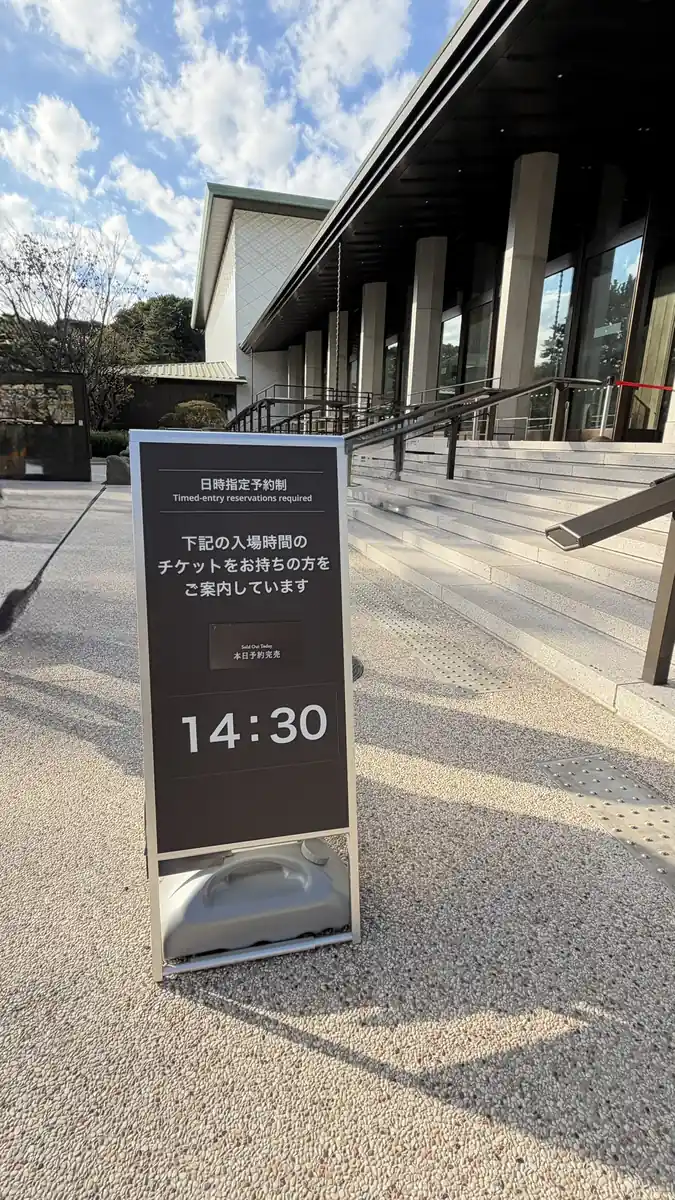
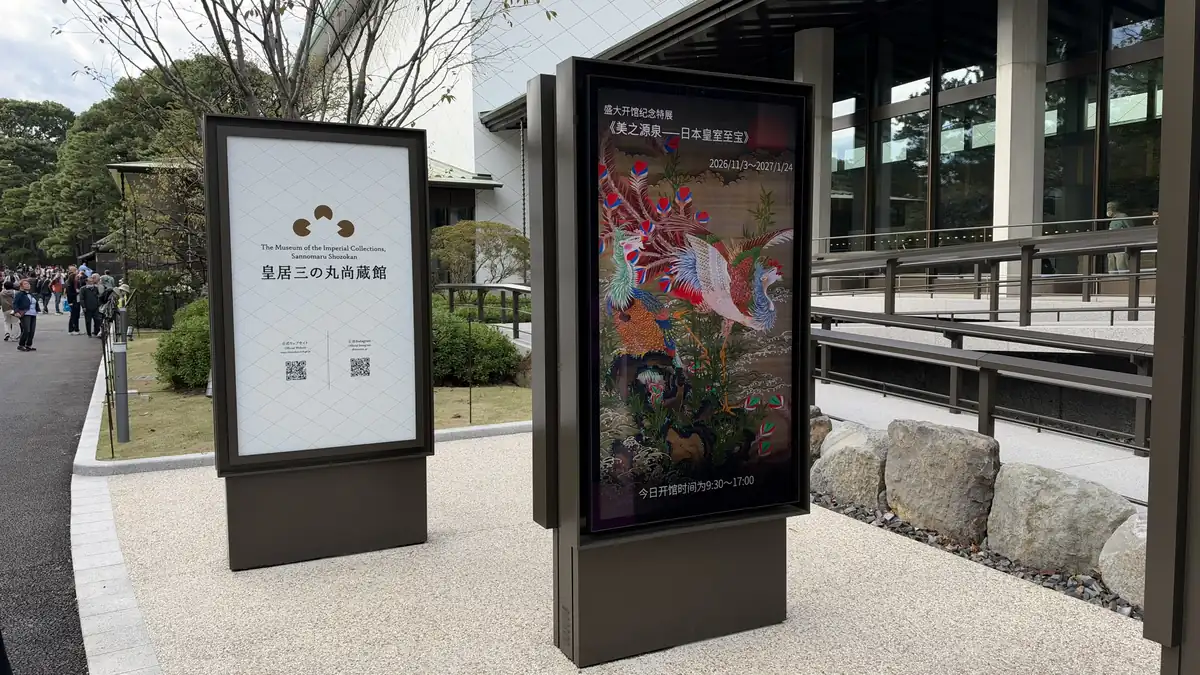
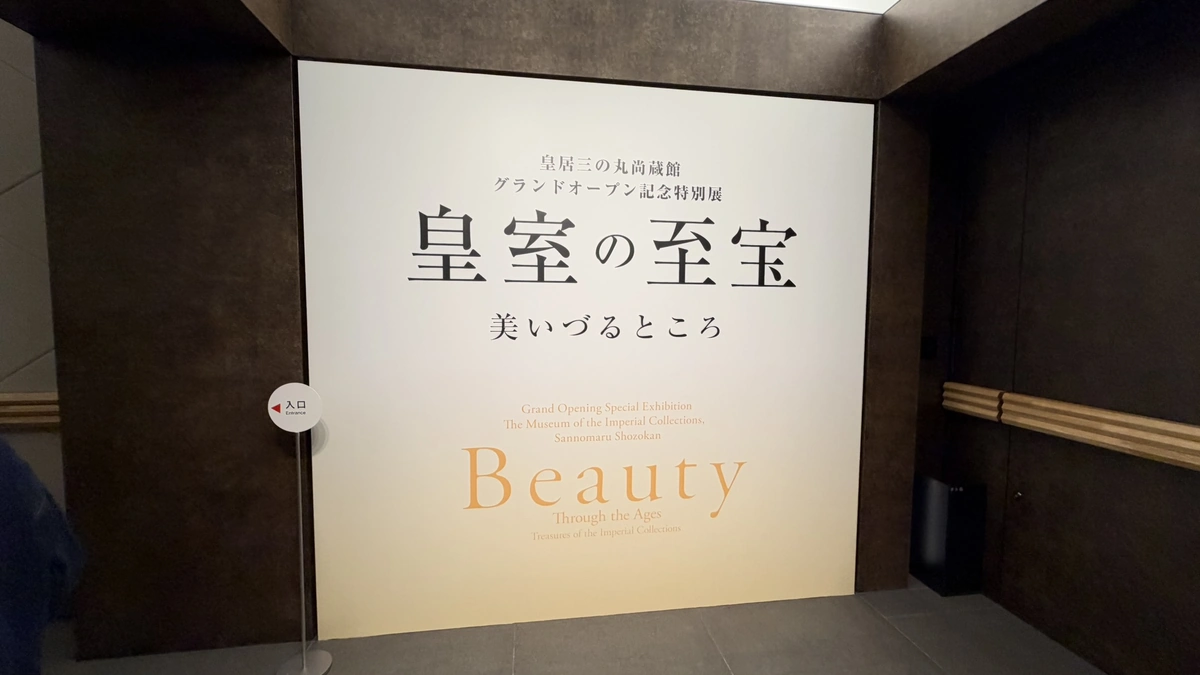
Tap a photo to enlarge it (taken Nov. 3, 2026).
Getting there | Ōte-mon, Hirakawa-mon and Kita-Hanebashi-mon gates
The museum stands inside the Imperial Palace East Gardens, the former inner grounds of Edo Castle, and the closest way in is Ōte-mon Gate. It is about a 5-minute walk from Exit C13a of Ōtemachi Station (several subway lines stop there) and about 15 minutes from the Marunouchi North Exit of Tokyo Station. After the gate, the museum is only about 100 m away.
The Imperial Household Agency expects crowds around Ōte-mon in the period just after the museum’s opening and on weekends, and suggests using Hirakawa-mon or Kita-Hanebashi-mon instead. Both are close to Takebashi Station on the Tōzai Line, but they are open only on the East Gardens’ open days and hours. If you are going to the museum when the gardens are closed (Mondays and Fridays in general, or after closing time), Ōte-mon is the only gate you can use.
| Address | 1-8 Chiyoda, Chiyoda-ku, Tokyo (inside the Imperial Palace East Gardens) |
|---|---|
| Subway | Ōtemachi Station, Exit C13a, to Ōte-mon Gate: about 5 min on foot |
| JR and shinkansen | Tokyo Station, Marunouchi North Exit, to Ōte-mon Gate: about 15 min on foot. The Tōkaidō, Tōhoku, Jōetsu and Hokuriku shinkansen stop at Tokyo Station. Travel times from Nagoya, Kyoto, Shin-Osaka and elsewhere depend on the train, so check them in a route-search app. |
| From the gate to the museum | About 100 m |
| Ease of getting around | You walk from the station. The entrance has stairs and a ramp with handrails. |
| Transport | Train and on foot. The museum has no parking or bicycle parking, and motor vehicles and bicycles can’t enter the East Gardens. |
| Hours | 9:30 a.m. – 5:00 p.m. (last admission 4:30 p.m.). Fridays and Saturdays until 8:00 p.m. (last admission 7:30 p.m.). |
| Closed days | Mondays in general (open on Nov. 23, 2026 and Jan. 11, 2027). Also closed Nov. 24–25, Dec. 22, Dec. 28, 2026 – Jan. 3, 2027, and Jan. 12, 2027. The museum may close at short notice. |
| East Gardens closed days | Mondays and Fridays in general. The gardens are open on public holidays other than the Emperor’s Birthday, and if a Monday holiday is open, the following Tuesday is closed. Also closed Dec. 28 – Jan. 3 and on event days. See the Imperial Household Agency’s closure calendar. |
| Notes | Bags are screened at Ōte-mon, so leave extra time to reach the museum within your slot. |
Ōte-mon Gate | The way into the museum
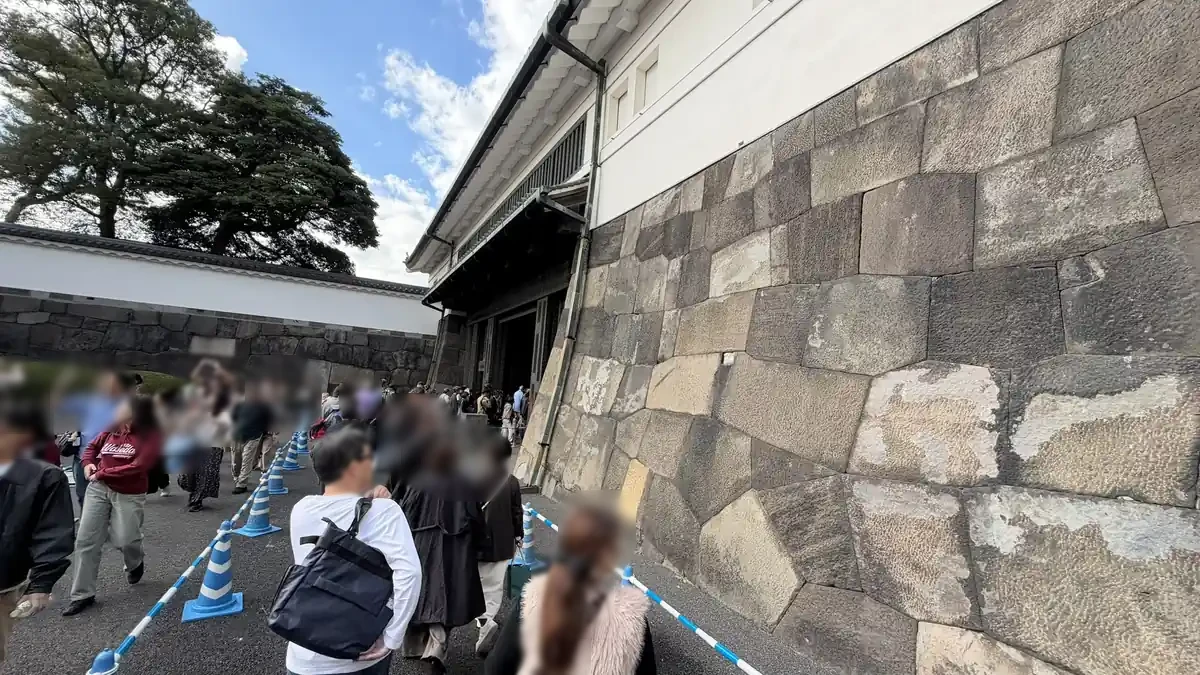
Ōte-mon was the main gate of Edo Castle, the Tokugawa shoguns’ seat, which is now the Imperial Palace. Today it is the main entrance to the East Gardens and the museum.
On opening day the bag check was not on the bridge in front of the gate. It was at the inner gate of the masugata, the walled square just inside, where a long waiting lane had been set up. When I passed after noon, the wait was about 10 minutes at most.
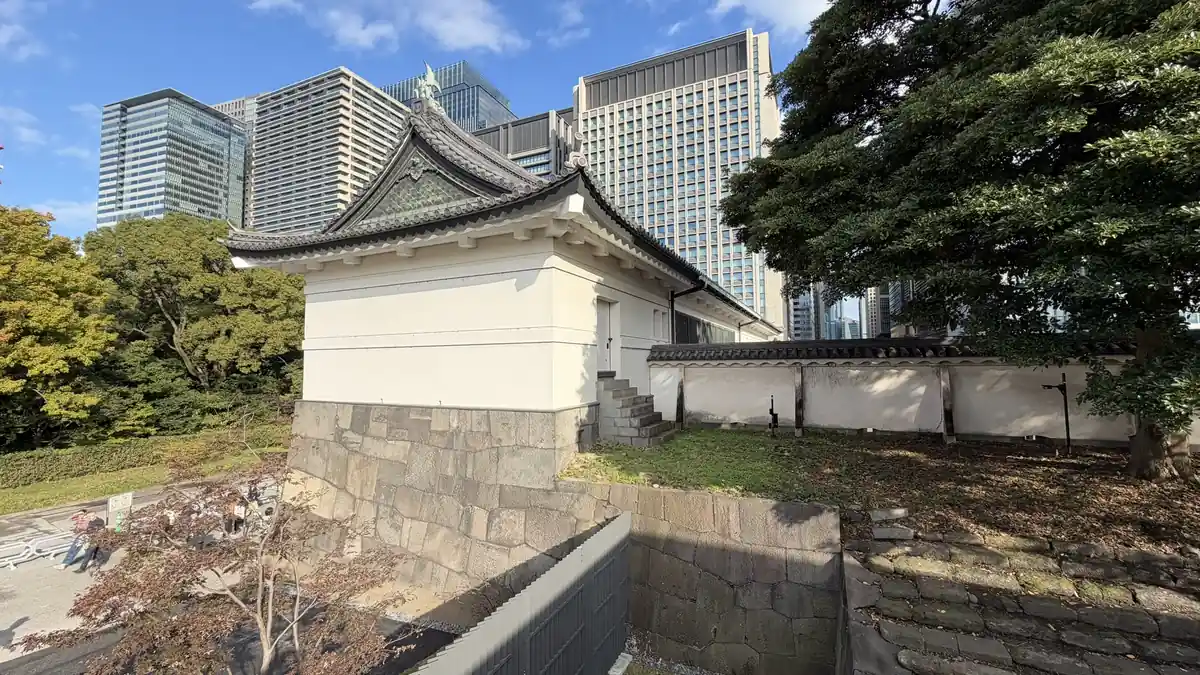
From Takebashi Station (Tōzai Line, Exit 1a), the museum’s own guide gives about 10 minutes to Hirakawa-mon and about 15 minutes to Kita-Hanebashi-mon, while the Imperial Household Agency says about 5 minutes to each gate. The two official sources differ. Either way, you still have to walk through the East Gardens to reach the museum, so leave some margin before your slot. For the history and sights of Ōte-mon, see Otemon Gate: Edo Castle’s Main Entrance and Its Guardhouses.
Map: Museum of the Imperial Collections, Sannomaru Shozokan
Ōte Rest House | Café (Sarutahiko Coffee), shop, exhibits and hours
Ōte Rest House
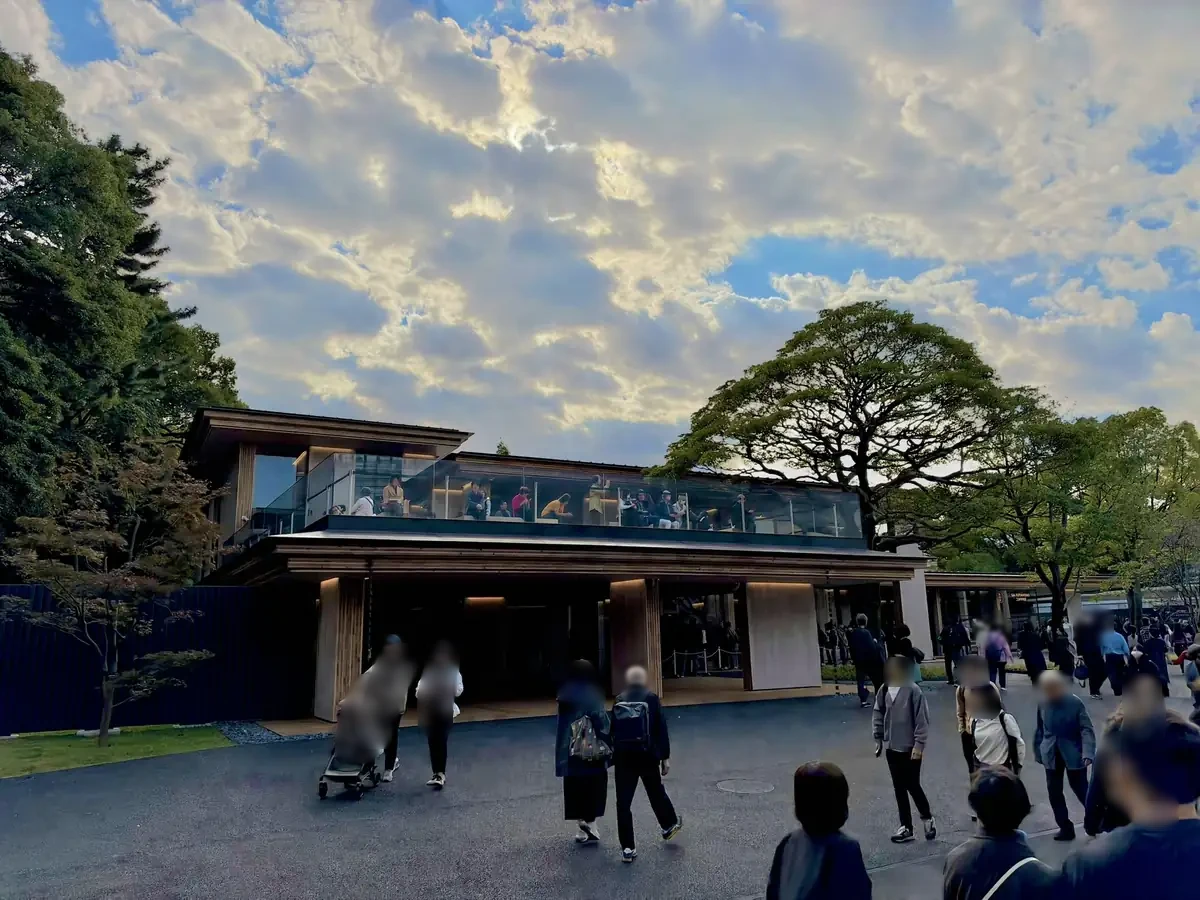
The Ōte Rest House, a short walk from the museum, opened at the same time. It is a separate building with exhibit corners, benches, a café and a shop. The exhibits follow four themes: the seasons of Japan, traditional culture, nature, and the imperial family and the Palace.
What struck me first was the soft feel of all that wood. The ceilings are high and much of the wall is glass, so the space is bright and open, and it calms you down. The displays are built into walls and pillars so they don’t spoil the interior. It doesn’t only talk about the Palace; it is a pleasant place that tries to show what is good about Japan.
On opening day the café was Sarutahiko Coffee. The line was long, and I guessed the wait at about 20 minutes, so I skipped it. Takeout seemed to be possible. This was opening day, so it may be quieter on ordinary days.
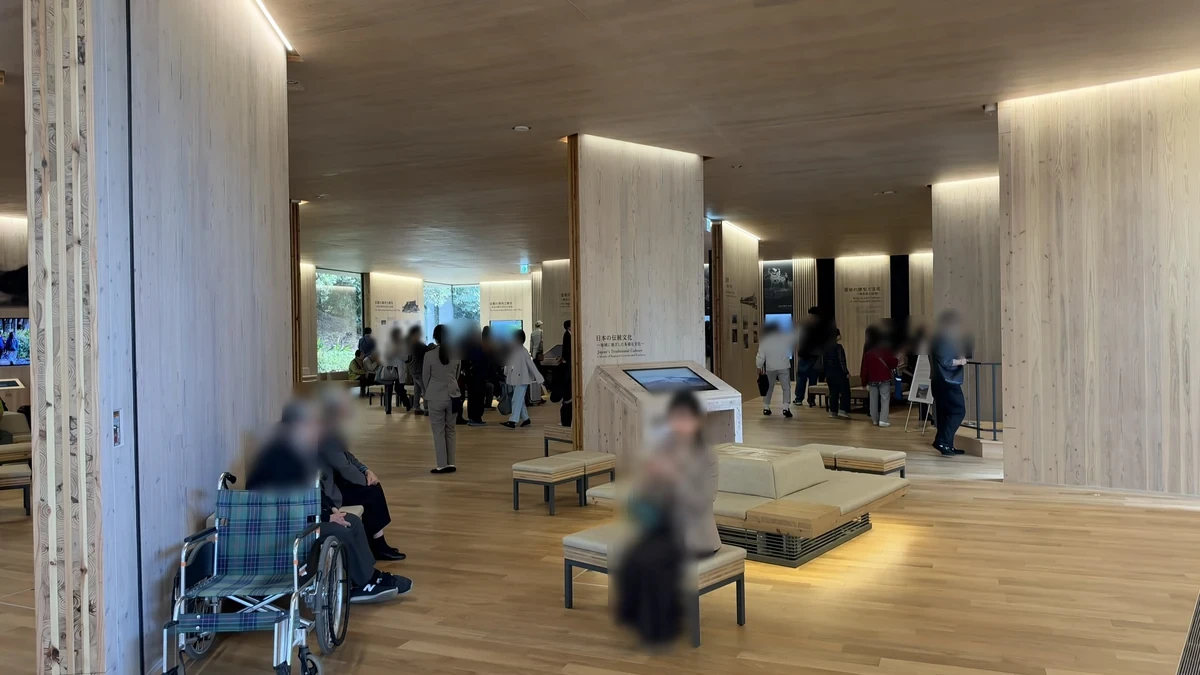
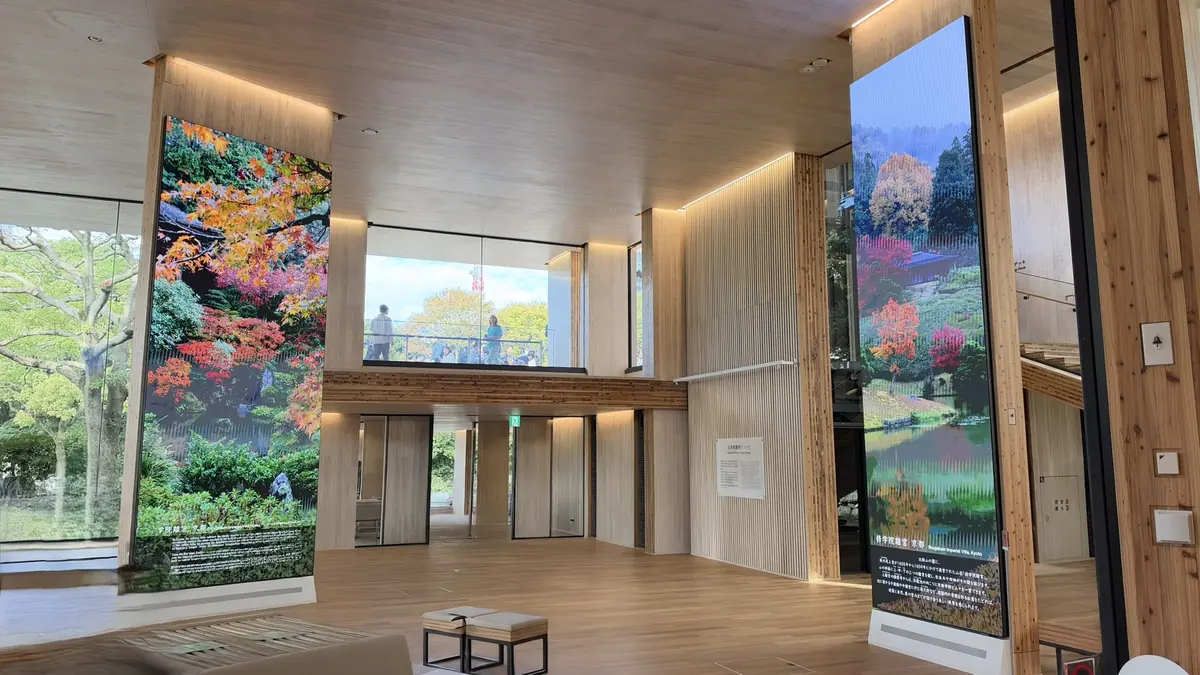
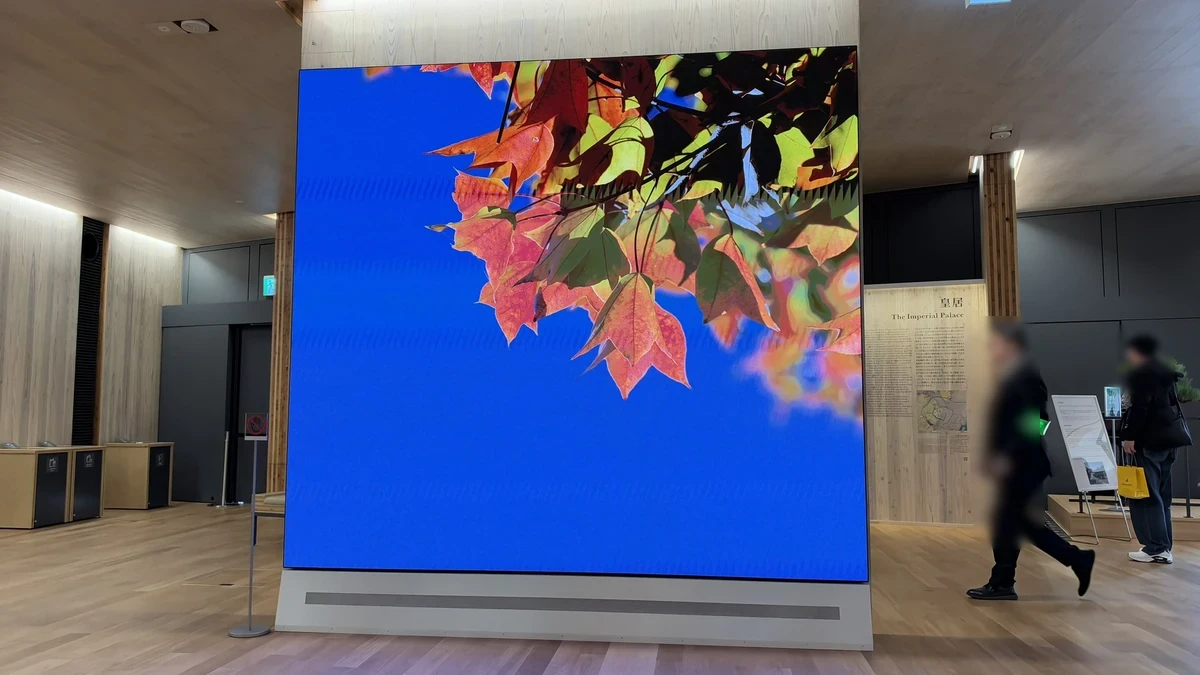
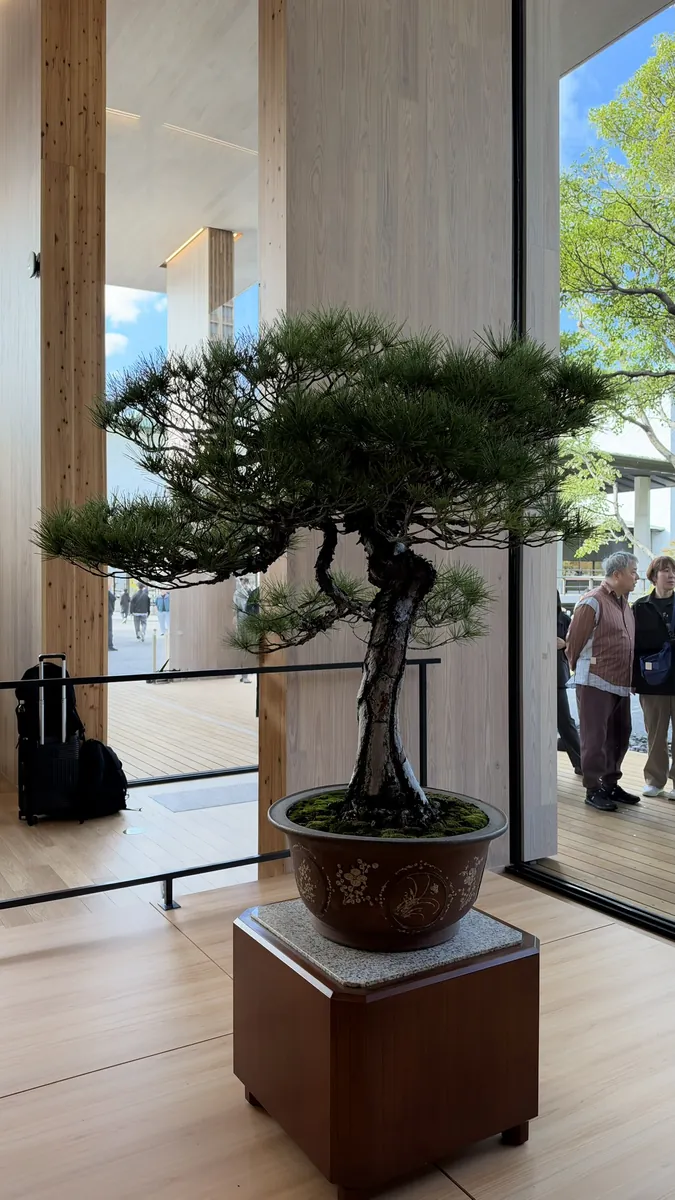
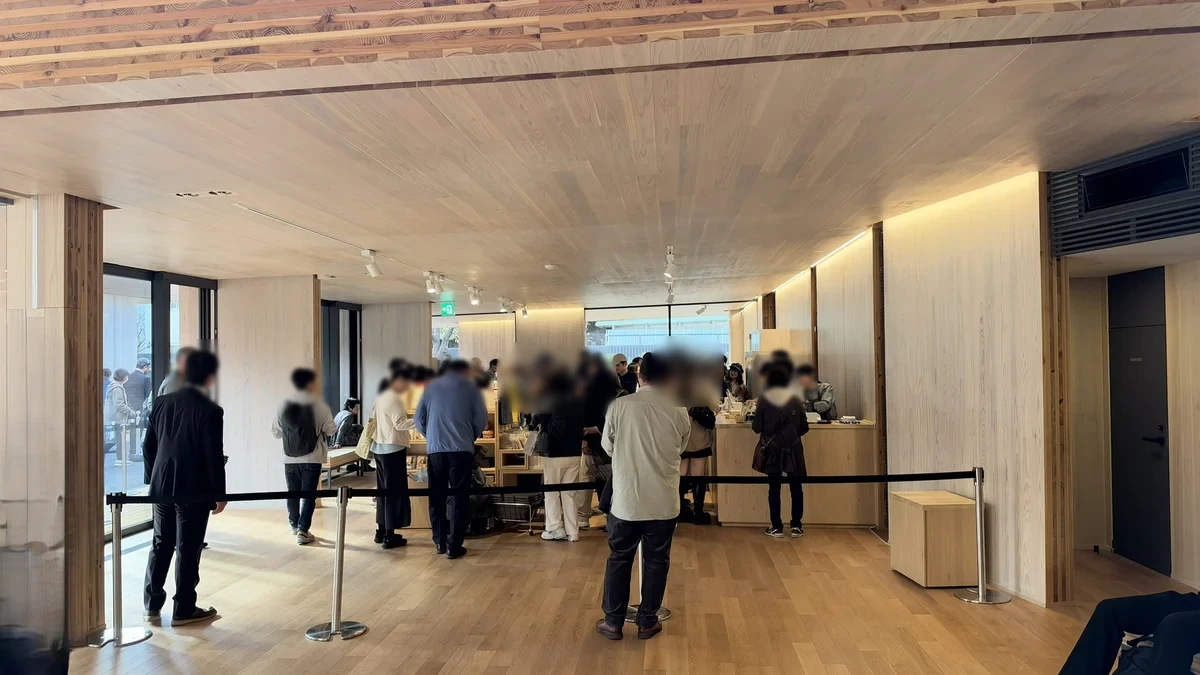
Tap a photo to enlarge it.
The photos of villas and autumn leaves show video on the in-house displays, not the view outside.
The rest house is open in principle on the East Gardens’ open days and hours. When the gardens are closed or have closed for the day, museum visitors can still use it as long as the museum is open.
Half-day route with the East Gardens | Time needed
If you are coming through Ōte-mon anyway, the Edo Castle ruins are worth a walk after the museum. Here is a half-day plan for a morning slot on a day when the East Gardens are open. Time spent inside the buildings and on the walk adds up to about 3 hours 20 minutes, so with moving around and waiting, expect half a day. On days the East Gardens are closed, you can’t walk the ruins or leave through Hirakawa-mon, and the visit centers on the museum and the Ōte Rest House.
Ōte-mon Gate into the East Gardens
Ōte Rest House (about 30 min)
Museum (about 80 min)
For the route and the sights of the ruins, see Edo Castle Ruins Today: What Still Stands and 7 Sites to See in 90 Minutes. The times for the museum and the rest house are what I actually spent; the 90 minutes for the ruins is that article’s estimate.
If your slot is late in the afternoon, walk the ruins first
From November to February the East Gardens close at 4:00 p.m., with last entry at 3:30 p.m. My slot was 2:30 p.m., and I left the museum at 3:50 p.m., with no time left for the ruins. If you book an afternoon slot, walk the ruins first and head to the museum in time for your slot. For reference, this is how my day went.
| About 1:40 p.m. | Entered the East Gardens through Ōte-mon |
|---|---|
| About 1:45 p.m. | Booked the 2:30 p.m. slot on ART PASS |
| 1:55 – 2:25 p.m. | Looked around the Ōte Rest House |
| 2:30 – 3:50 p.m. | At the exhibition in the museum |
| 3:50 p.m. | Left the museum and went straight home (10 minutes before closing) |
Late opening on Fridays and Saturdays
The museum is open until 8:00 p.m. on Fridays and Saturdays (last admission 7:30 p.m.). But the East Gardens are closed on Fridays in general, and on Saturdays they have closed by the evening. After closing time only Ōte-mon is open, so an evening slot is a museum-only visit, which suits a stop after work. If you also want to see the ruins, choose a daytime slot. Museum visitors can still use the Ōte Rest House when the gardens are closed.
How busy opening day was
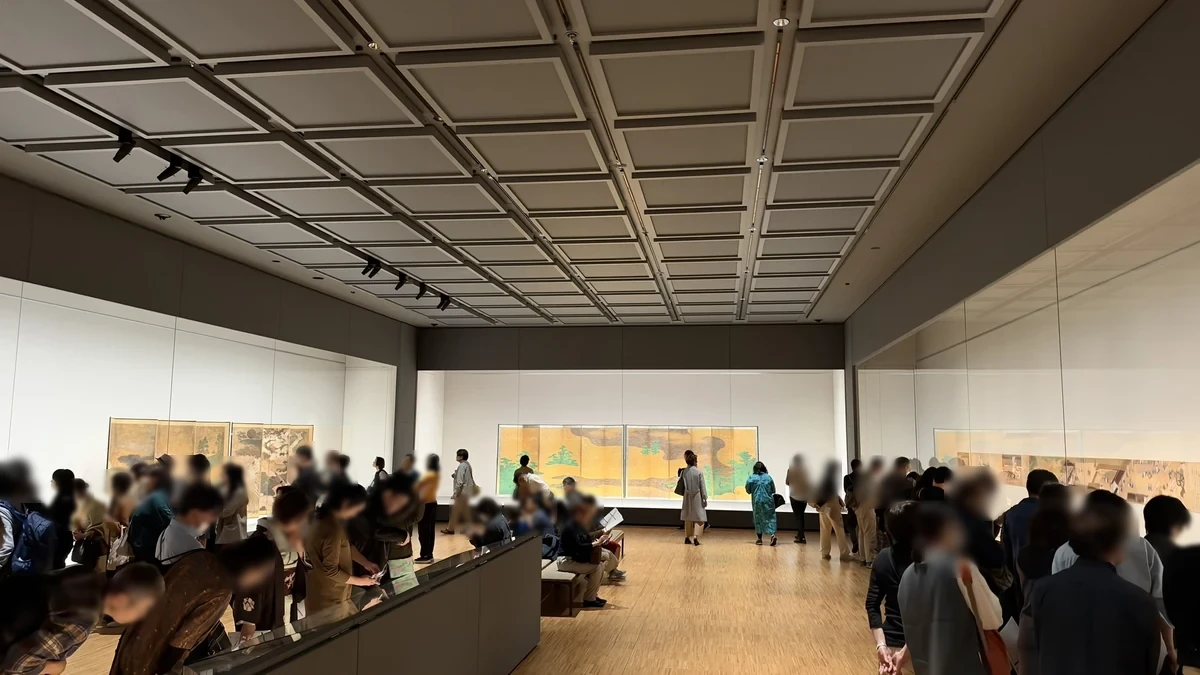
This is how things were on opening day, November 3, 2026. The bag check at Ōte-mon took about 10 minutes at most. At the museum, people from the same time slot had started lining up more than 10 minutes early, and when I arrived five minutes before my slot a line had already formed. The museum asks visitors not to arrive before their slot, so read this only as a description of that day.
Inside, there were waiting lines in front of the popular works. Staff were suggesting that visitors see the quieter exhibits first and come back later. I did just that, and returned when the lines were shorter, which saved me time.
The current exhibition | “Beauty Through the Ages: Treasures of the Imperial Collections”
This special exhibition celebrates the museum’s grand opening and runs until January 24, 2027. It is divided into three rotations, and every work on display changes from one rotation to the next. If you have a particular work in mind, first check which rotation it is in.
| Rotation 1 Nov. 3 – 23 | Shōsōin treasures associated with Emperor Shōmu, Kanō Tan’yū’s Tale of Genji screens, Meiji maki-e lacquer and more |
|---|---|
| Rotation 2 Nov. 26 – Dec. 20 | Treasures linked to Prince Shōtoku and art of the Taishō era (Gigaku masks, a dragon-headed water vessel, works by Tomioka Tessai and more) |
| Rotation 3 Dec. 23 – Jan. 24 | The Illustrated Scrolls of the Mongol Invasion (Mōko shūrai ekotoba), bonbonnières, the Chinese Lions screens by Kanō Eitoku and Tsunenobu, and more |
I saw Rotation 1. A sign inside the museum divides the show into three sections: Japanese art at its finest, the Shōsōin treasures, and “Meiji: the birth of the Imperial Household Artists.” What follows are the works I actually saw in Rotation 1.
Shōsōin treasures | The red sandalwood biwa and the eight-lobed mirror
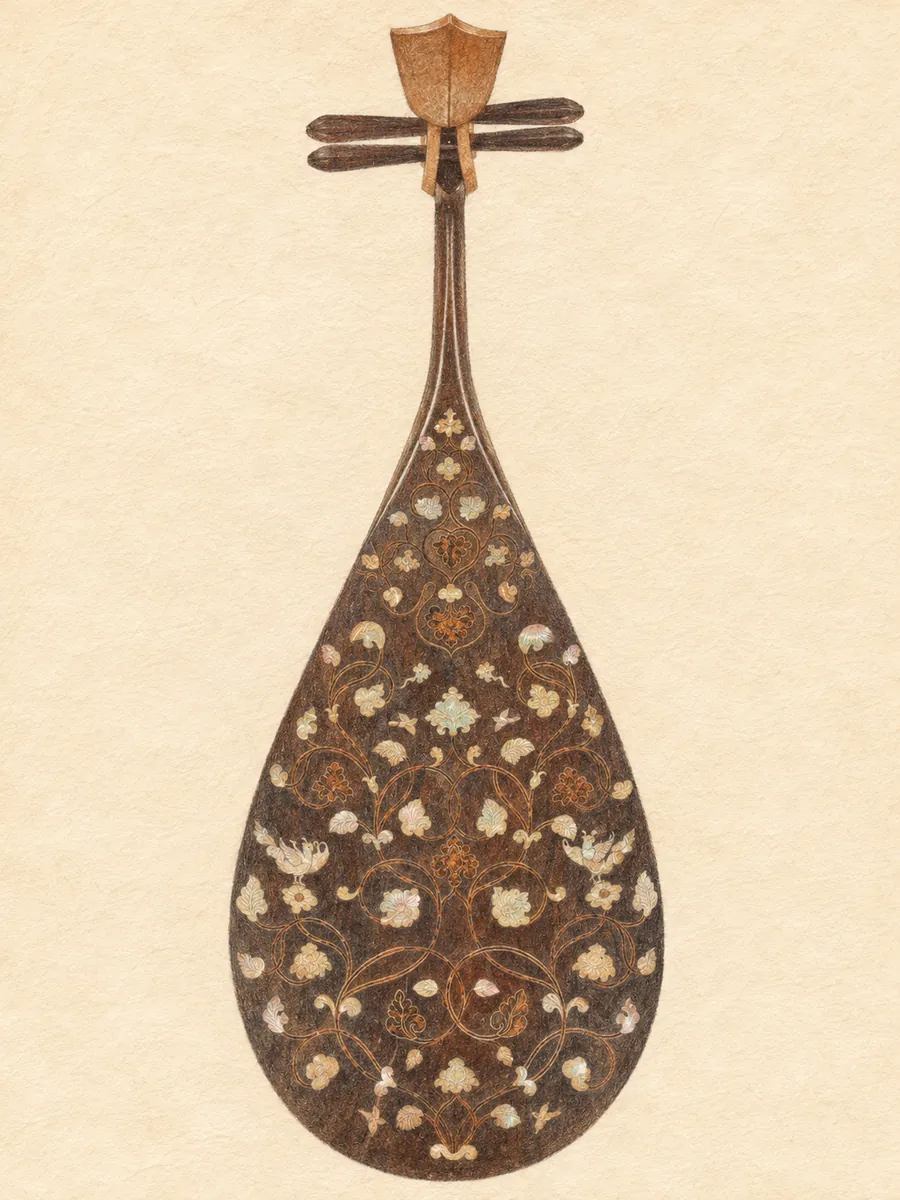
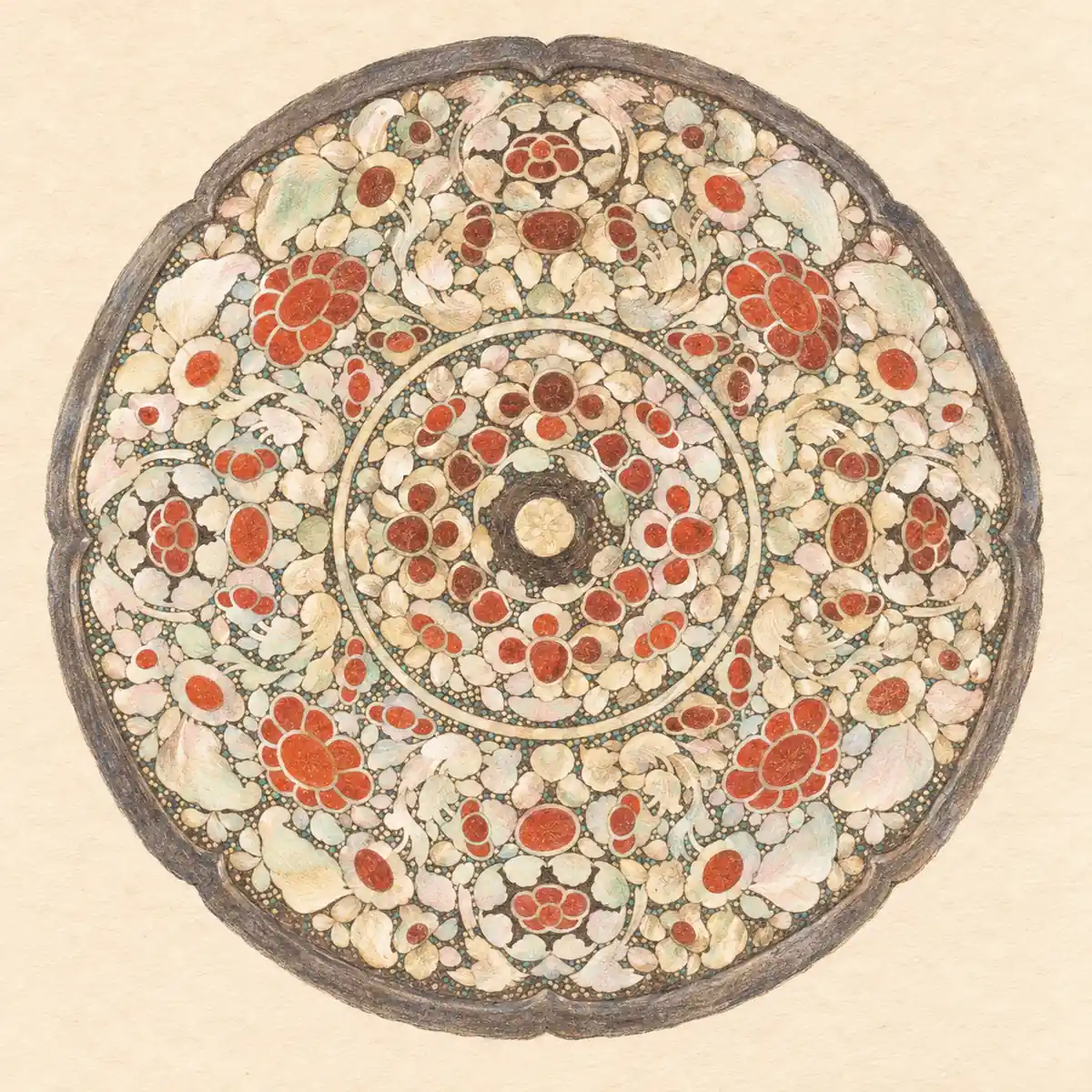
AI illustrationAI-generated illustrations explaining the decoration of the red sandalwood biwa (left) and the eight-lobed mirror (right). They are not photographs of the real objects or accurate reconstructions, and details and colors differ from the originals. Tap to enlarge.
The first things to see in this rotation are two treasures from the Shōsōin, the imperial storehouse in Nara. The red sandalwood biwa (a Japanese lute) with mother-of-pearl inlay is a four-string lute of the 8th century, and it also appears in the Kokka chinpōchō, the catalogue of the treasures Emperor Shōmu cherished. The pattern of hōsōge arabesques (a stylized flower) is made of turban-shell mother-of-pearl combined with inlays of tortoiseshell and amber.
What stayed with me in person was the glint of the inlaid turban shell. On the other piece, the eight-lobed mirror with a mother-of-pearl back, the back is covered with tiny pieces of turquoise, mother-of-pearl and amber in hōsōge patterns, and I stared at the fine red decoration. I couldn’t photograph these two on the day, so I use AI-generated images here.
The biwa is a Shōsōin treasure (North Section 27) from Tang-dynasty China or the Nara period (8th century). The mirror is a Shōsōin treasure (North Section 42-7) from Tang-dynasty China (8th century). Photographs of the real objects are on the museum’s official English exhibition page.
Screens, scrolls and paintings | Tan’yū, Jakuchū, Hokusai
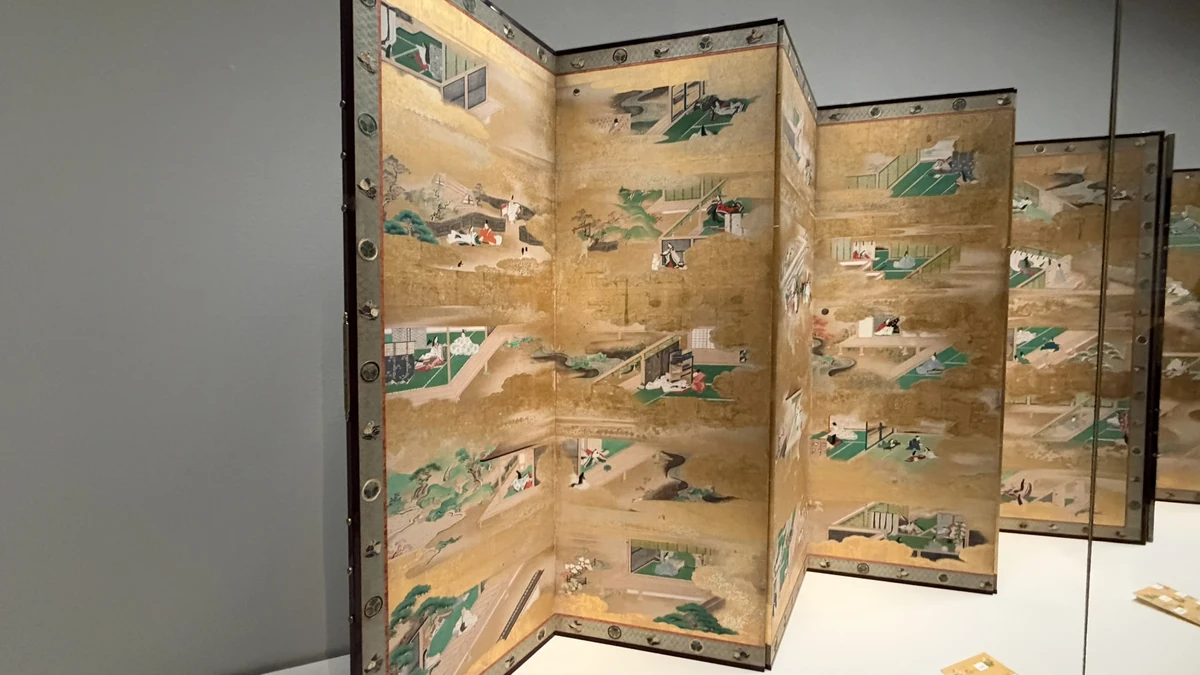
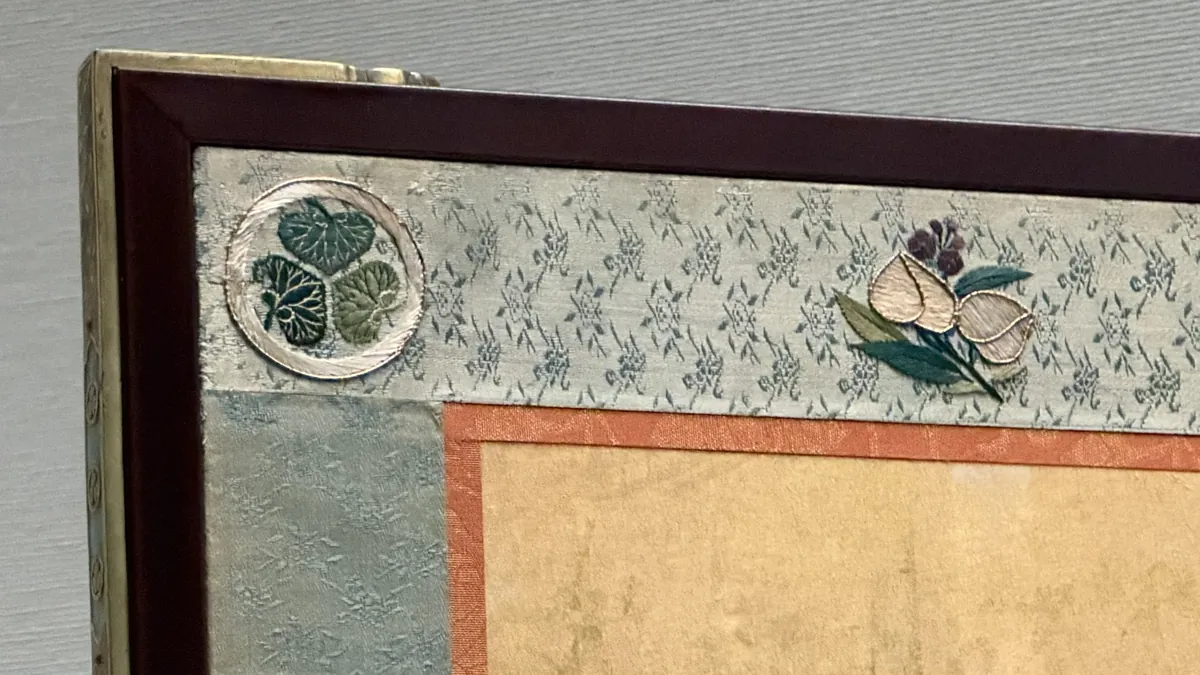
The painting to stop for is Kanō Tan’yū’s pair of folding screens of The Tale of Genji, the early 11th-century novel of court life. Scenes of palaces and gardens appear one after another among the gold clouds, and as you walk along the folds of the screen, the scene changes. The screens are thought to be part of the wedding furnishings of Tomihime, daughter of Maeda Toshitsune, lord of the Kaga domain, when she married Prince Toshitada of the Hachijō-no-miya house. The upper border also carries the triple-hollyhock crest of the Tokugawa family, so it is worth looking at the frame as well as the painting.
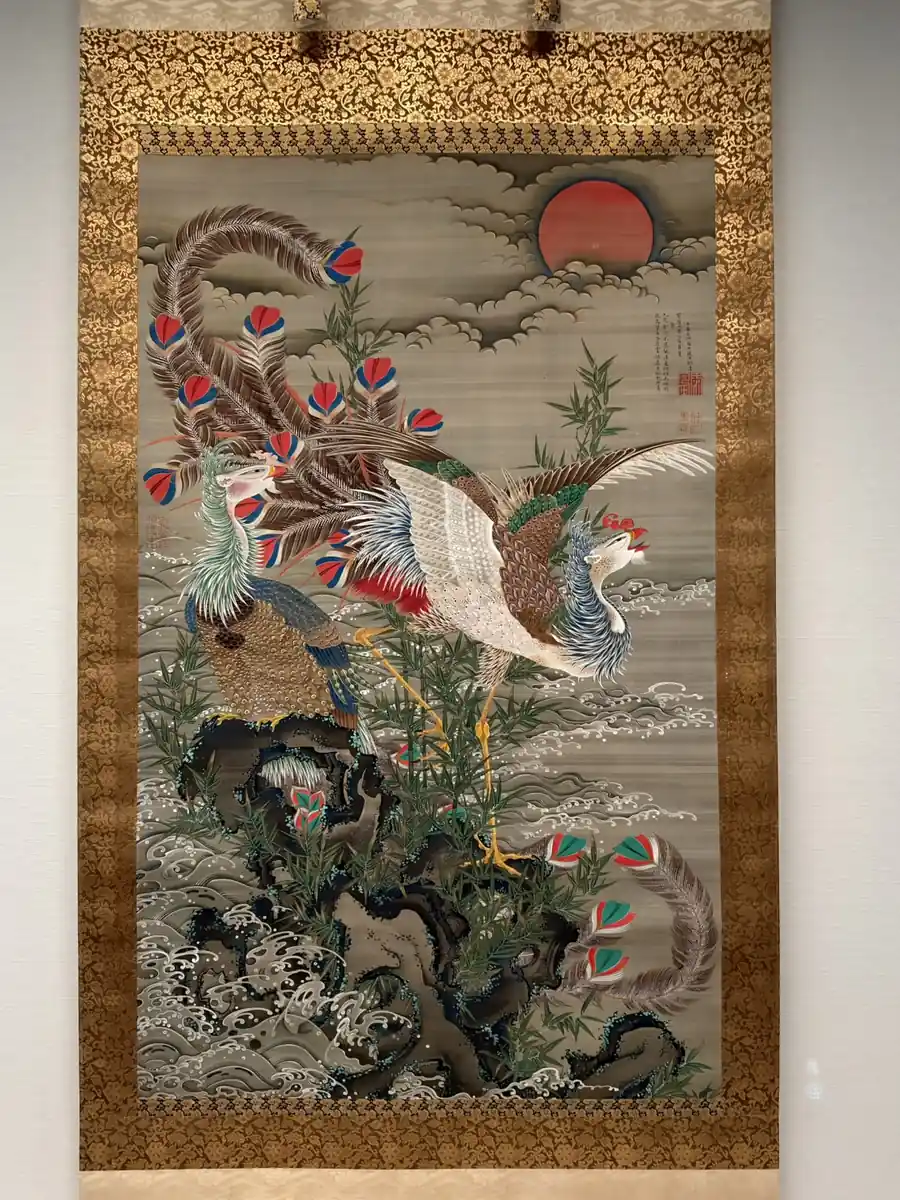
Also on view were Itō Jakuchū’s Phoenixes and the Rising Sun, in which two phoenixes spread their tail feathers against a red morning sun; Katsushika Hokusai’s Watermelon, with a cut watermelon, a sheet of white paper and a knife; and the National Treasures Wakan rōeishū on cloud-patterned paper and Kasuga Gongen genki-e, the illustrated miracles of the Kasuga deity.
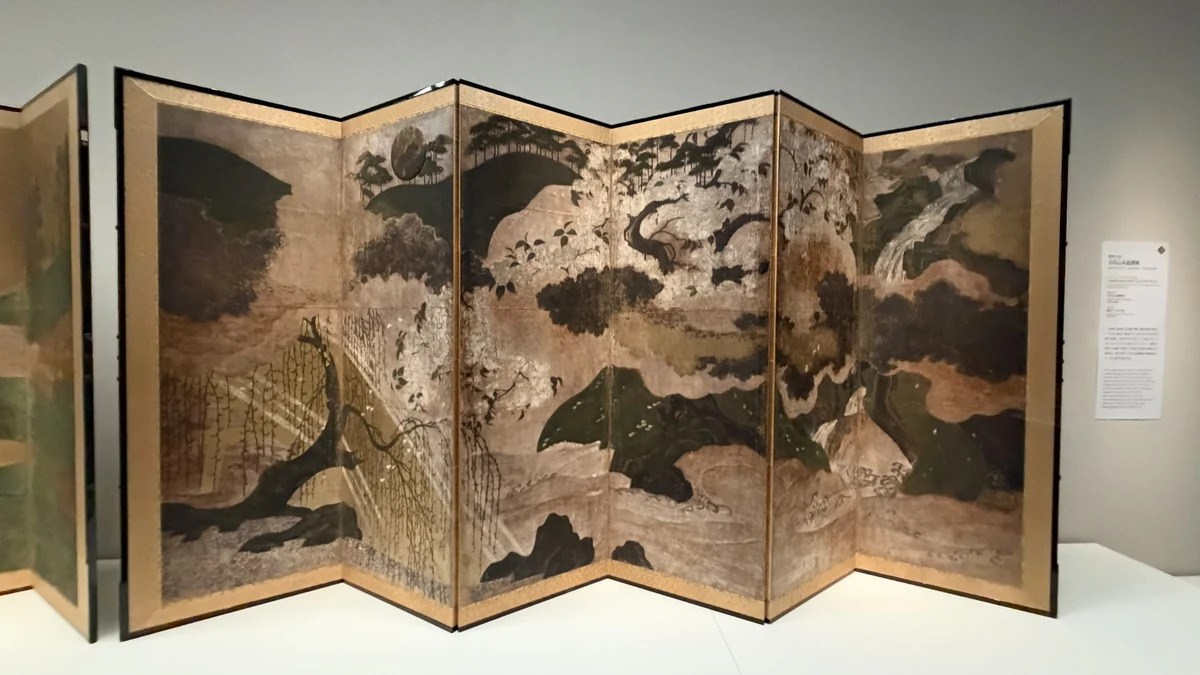
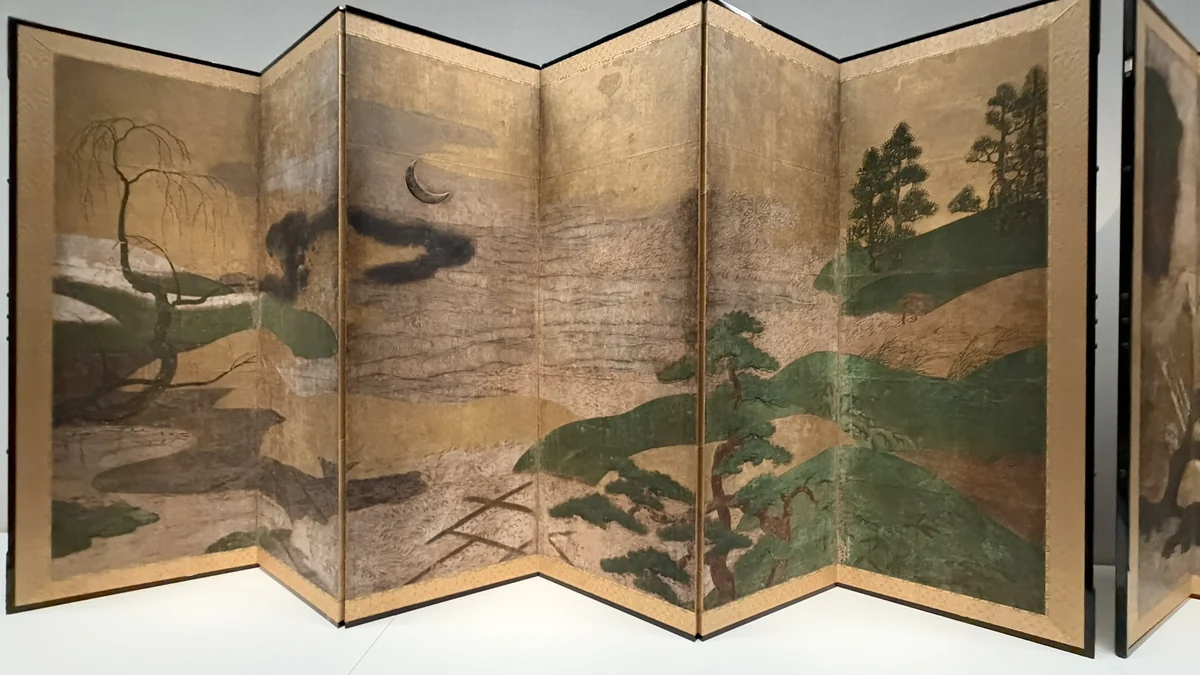
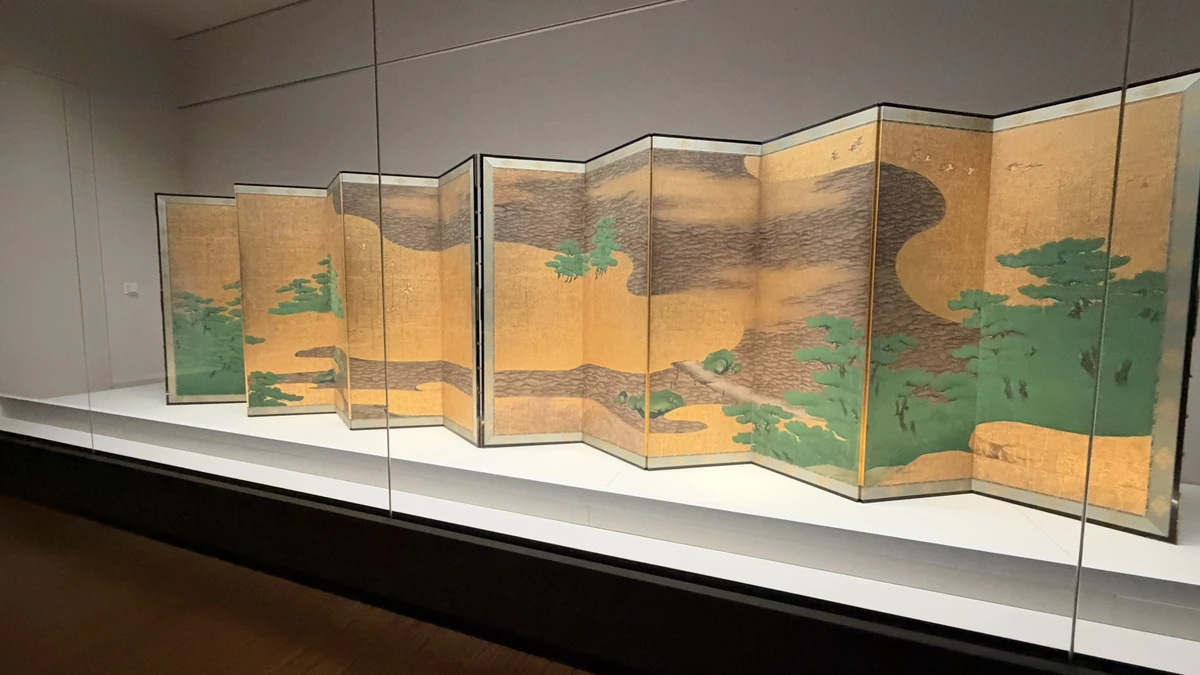
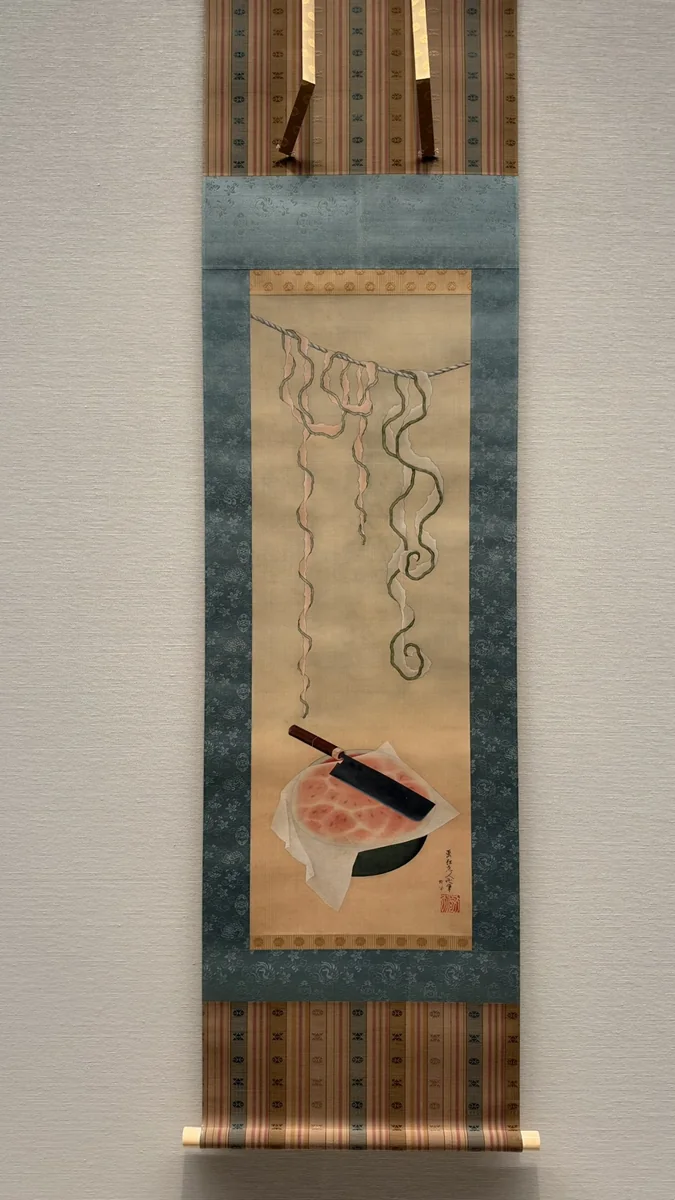
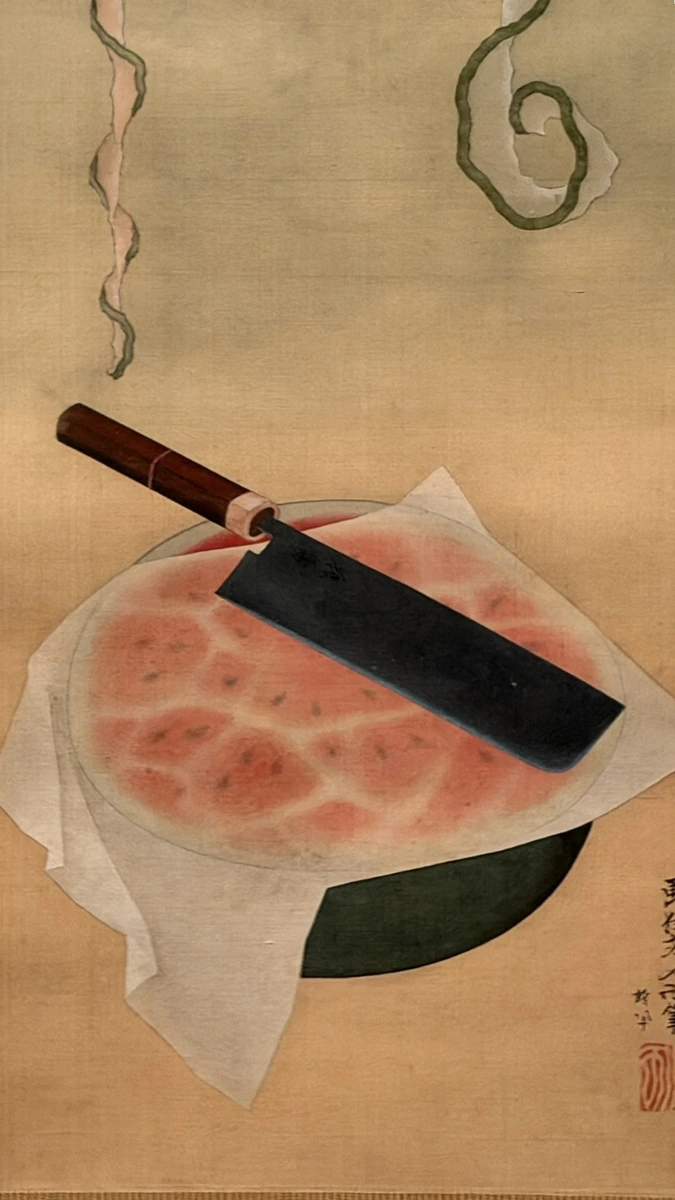
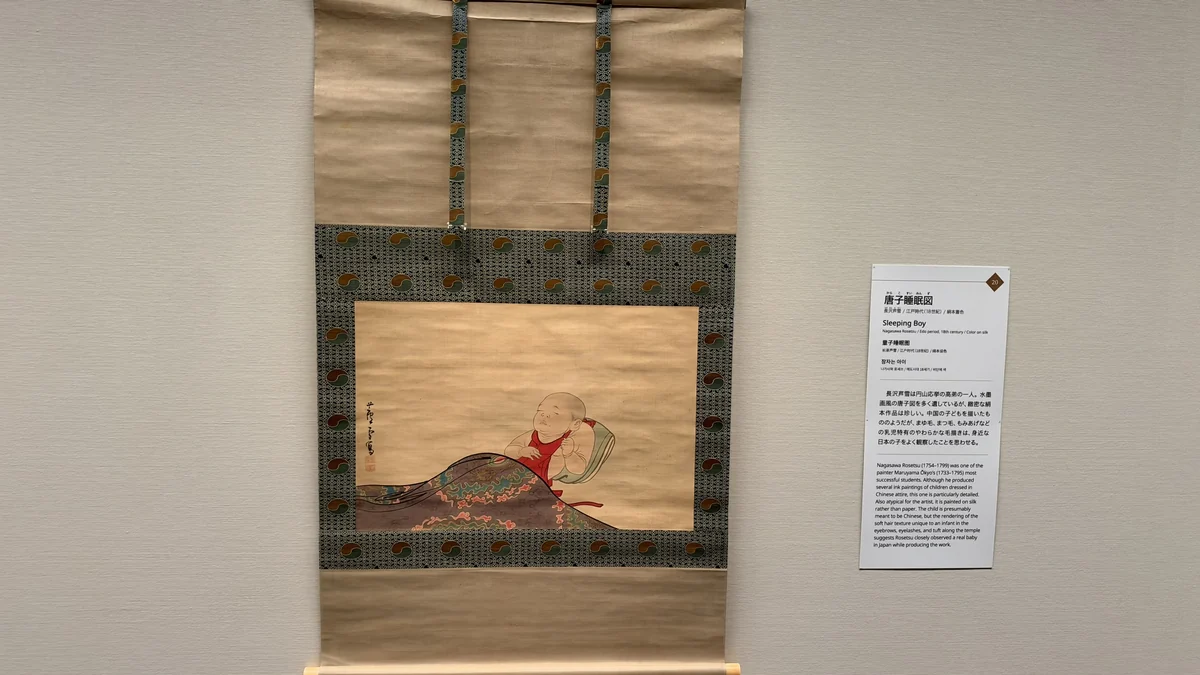
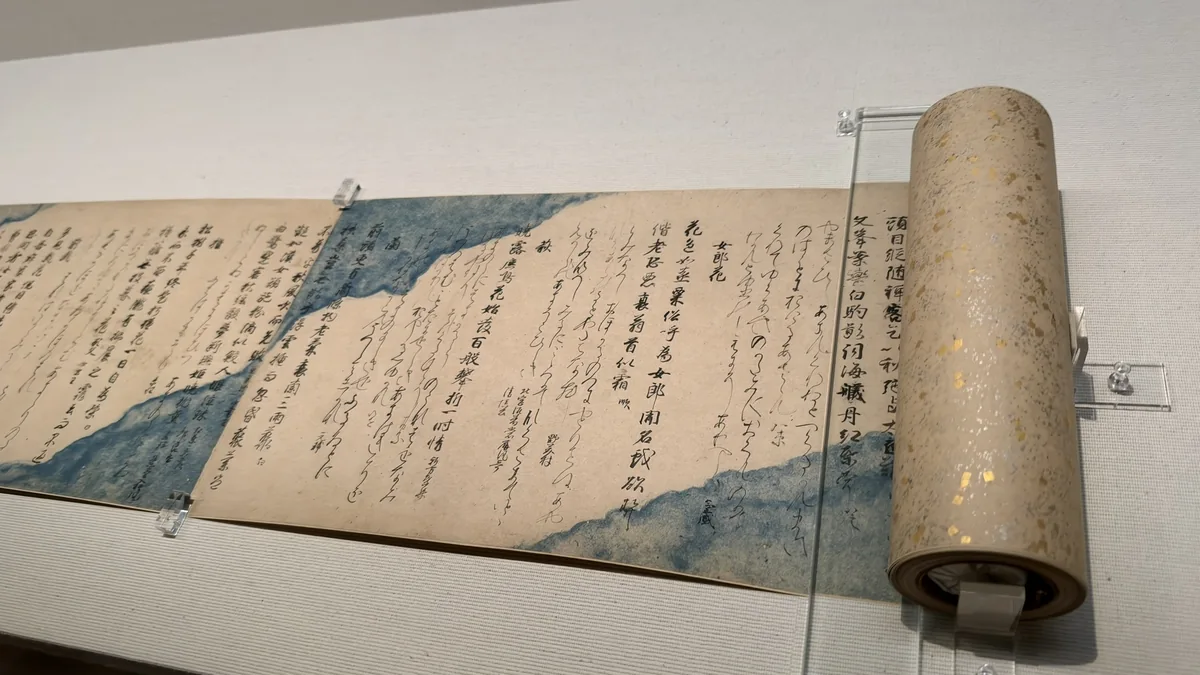
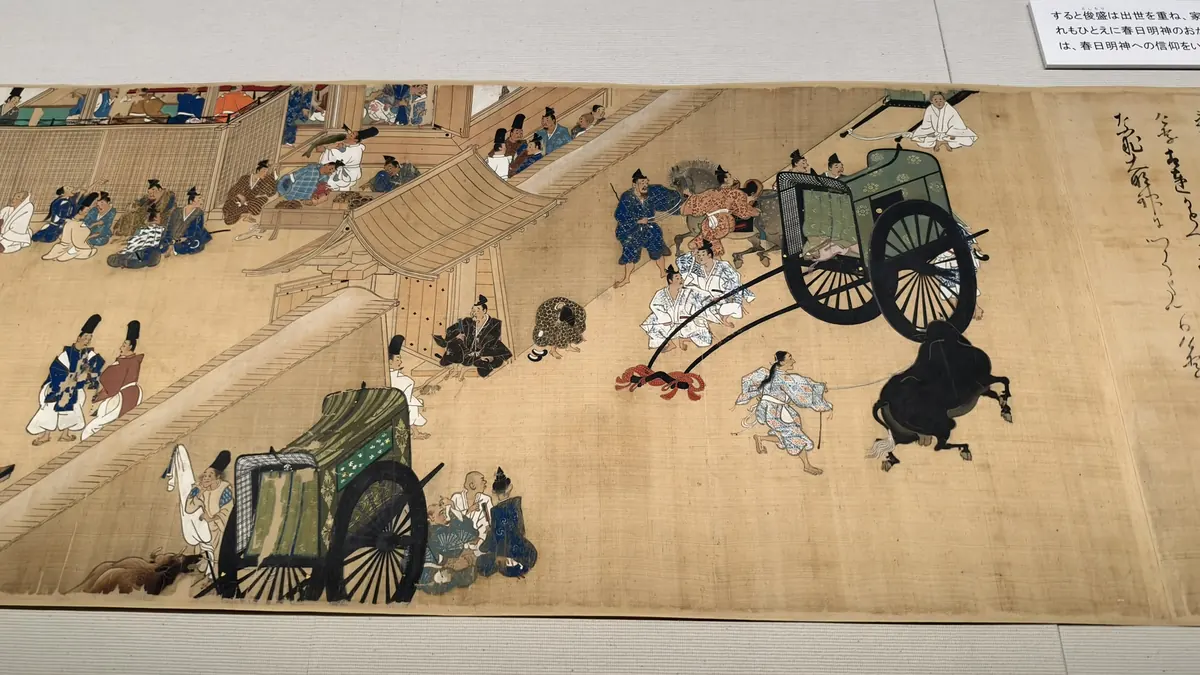
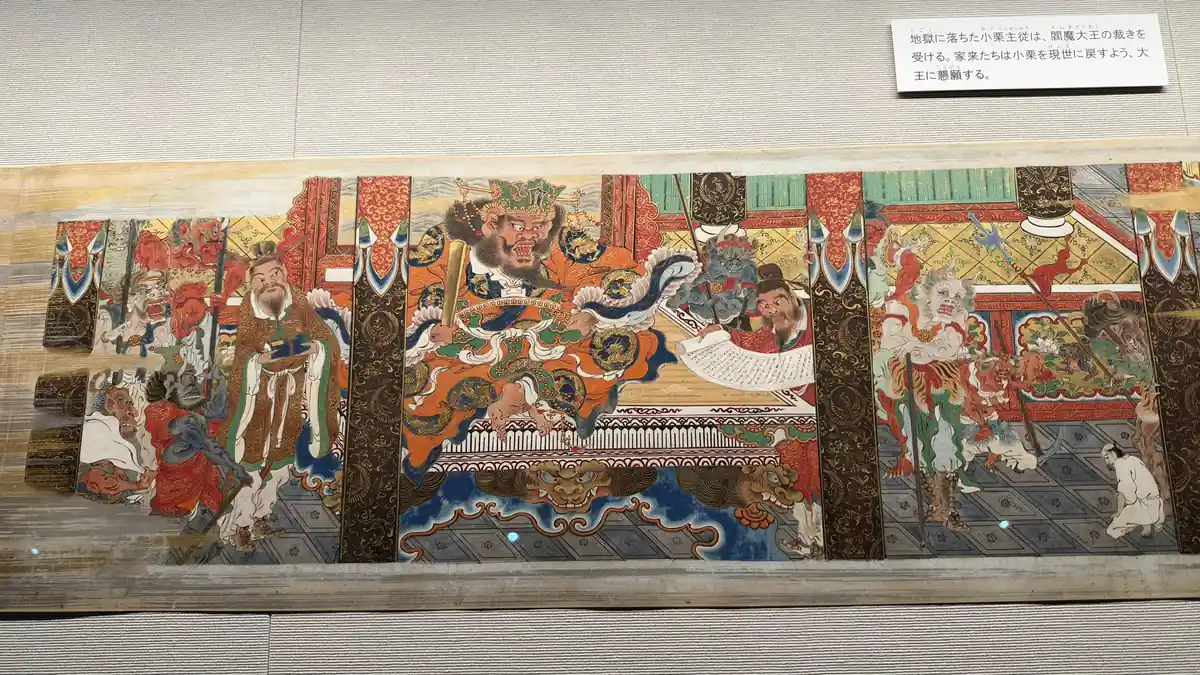
Tap a photo to enlarge it (taken Nov. 3, 2026).
Lacquer writing table, inkstone box and incense set
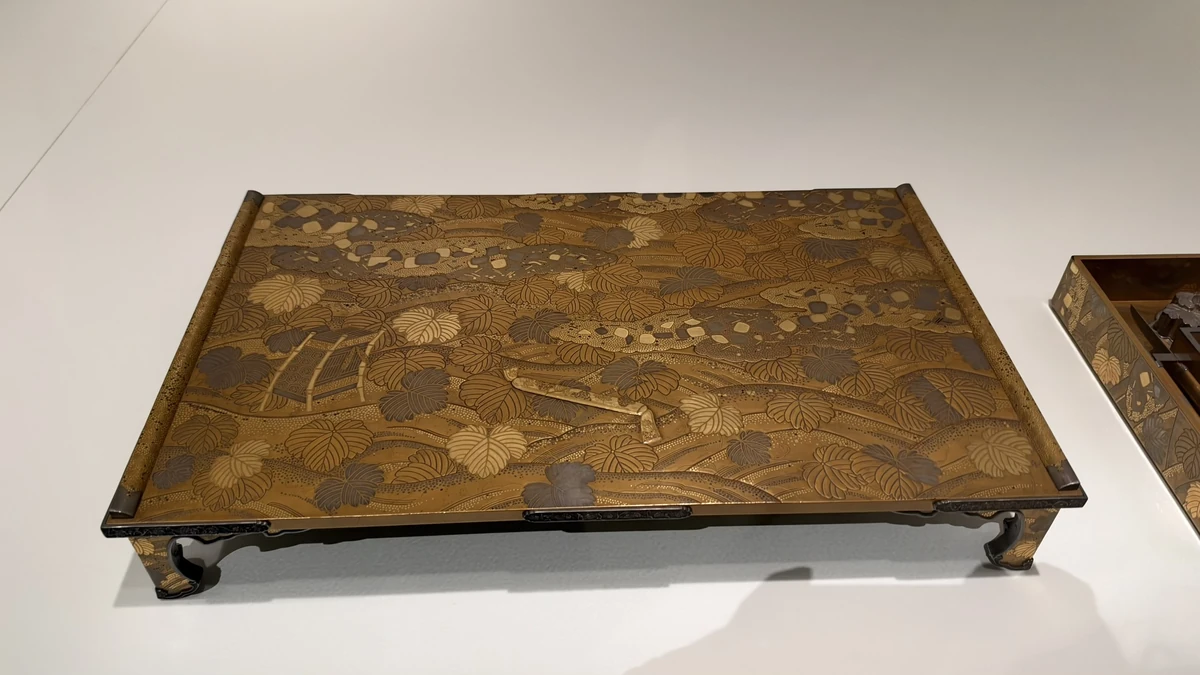
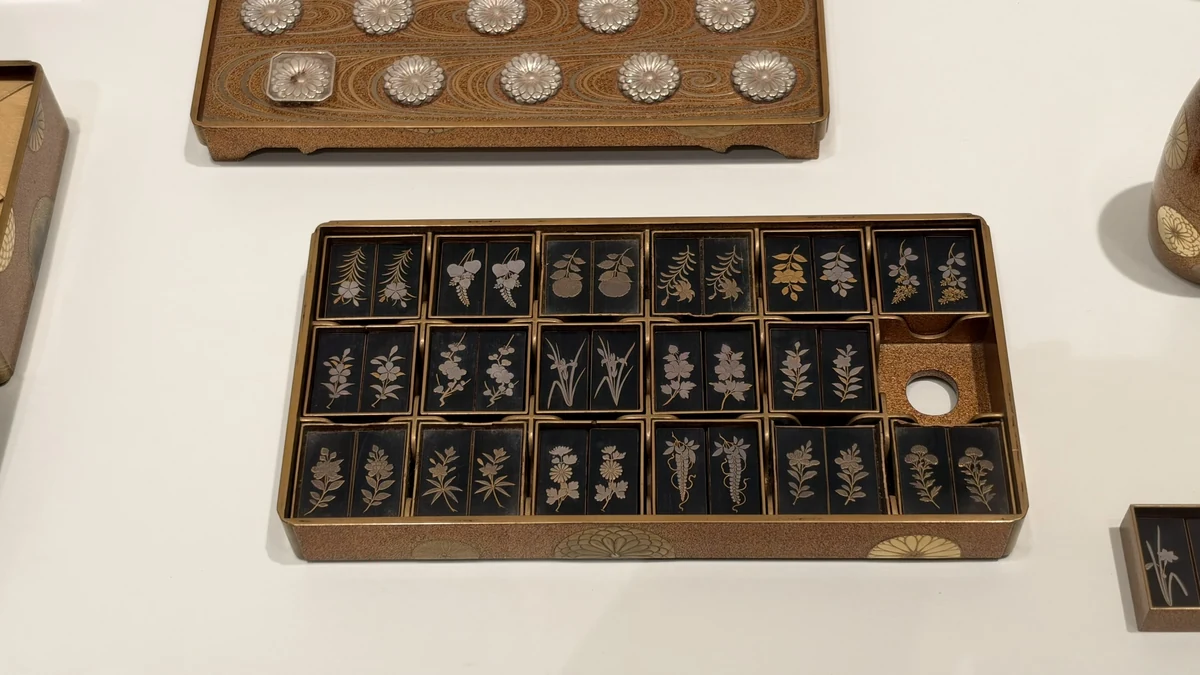
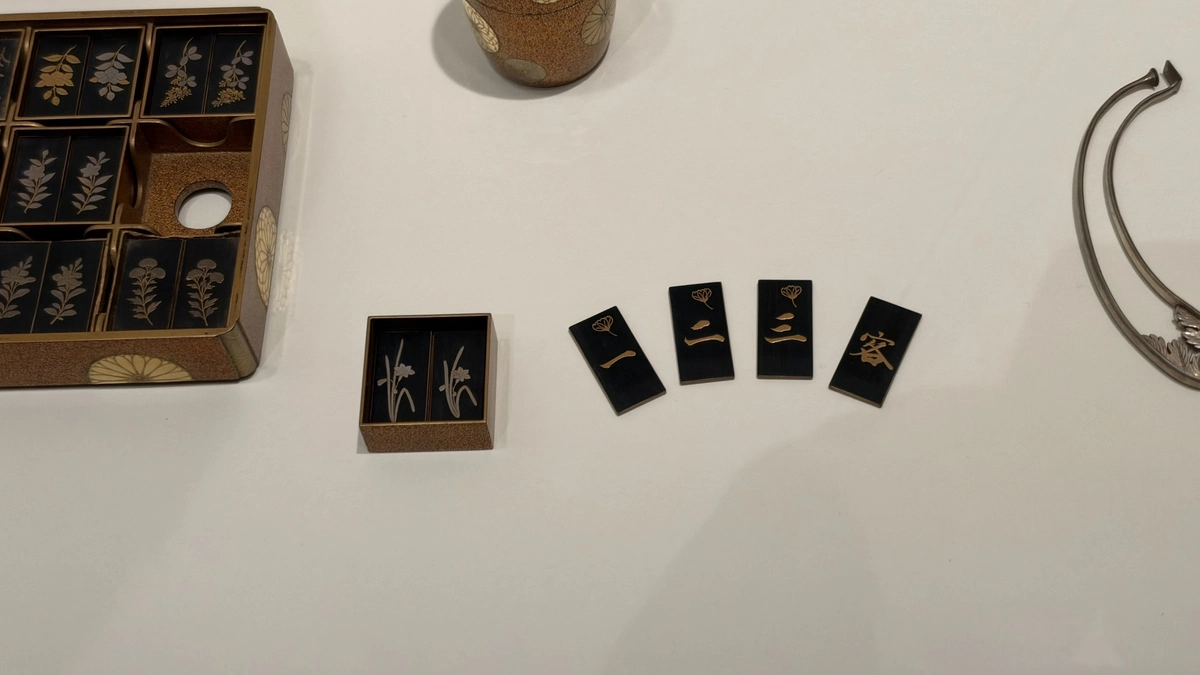
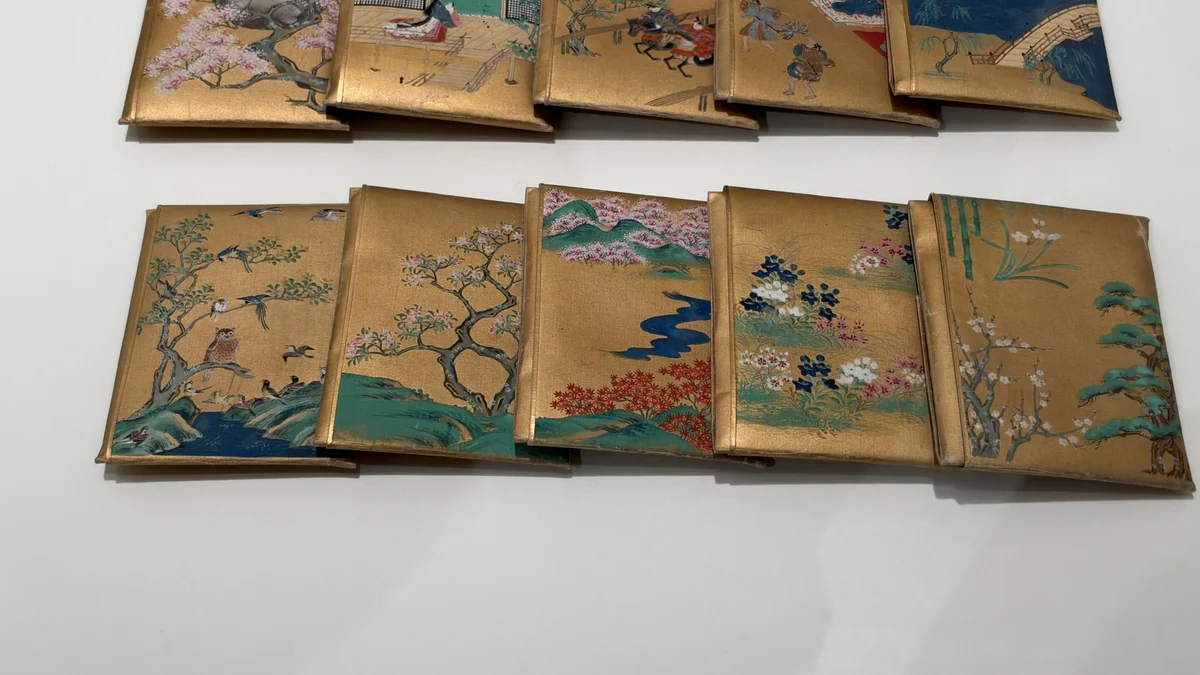
Among the crafts, don’t miss the maki-e furnishings (maki-e is lacquer decorated with gold and silver powder). On the Azuchi-Momoyama-period writing table and inkstone box with the ivy-path design, gold and silver ivy leaves overlap across the whole top, and the maki-e continues inside the inkstone box. The Edo-period incense set for the ten-incense game, with scattered chrysanthemum maki-e, decorates even small items such as censers, tally cards and incense wrappers with plants and birds, and you want to compare them one by one.
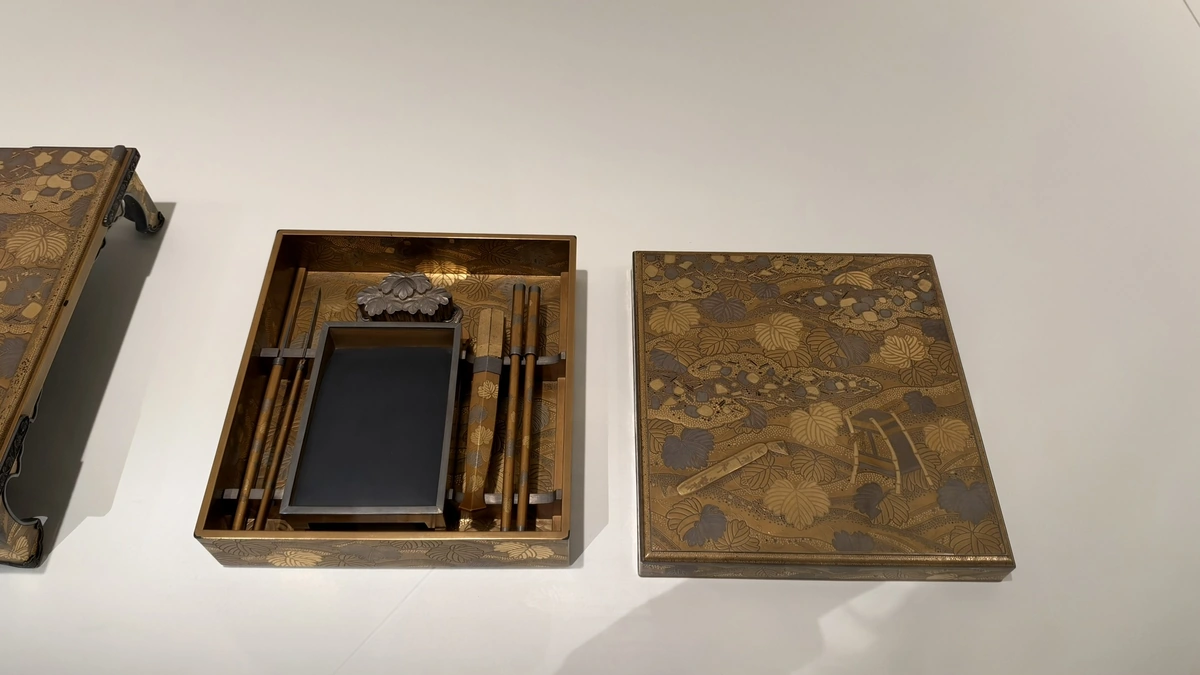
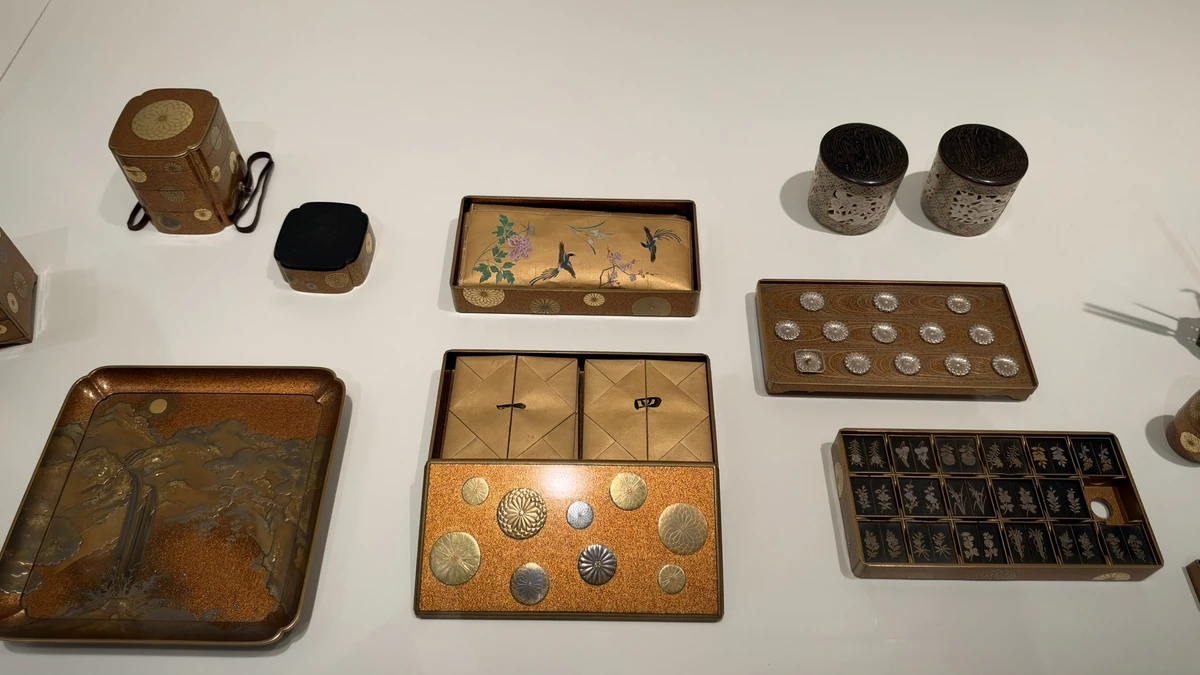
Tap a photo to enlarge it.
Chrysanthemum maki-e bookcase and Meiji craft
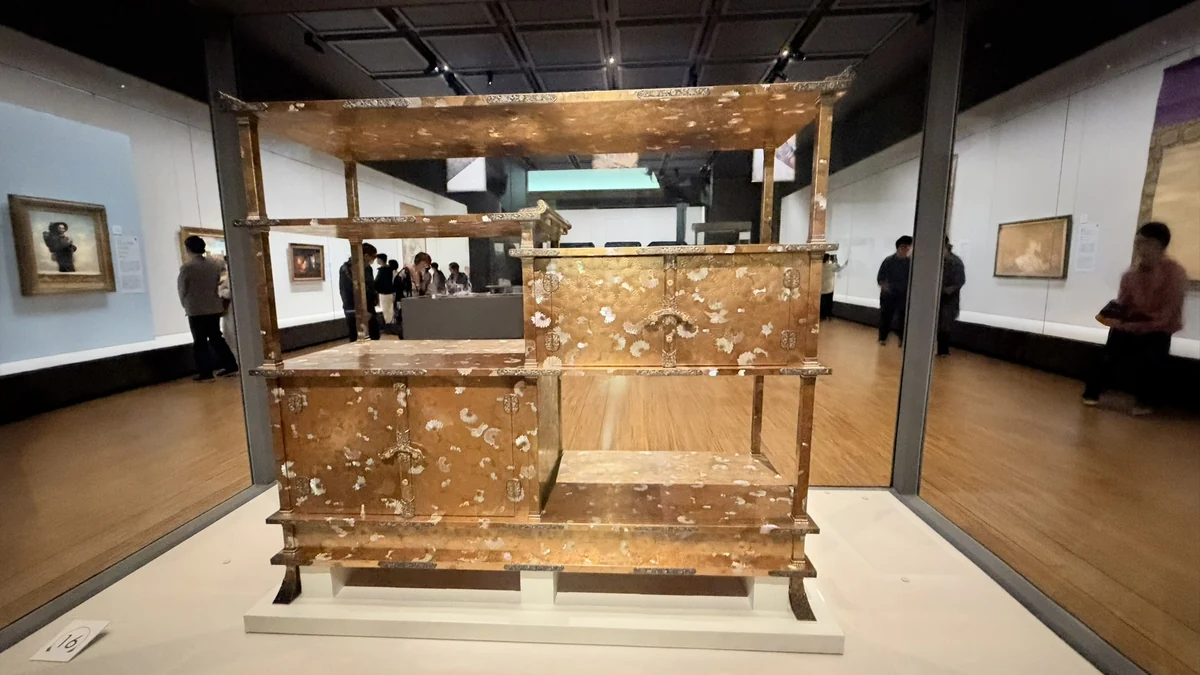
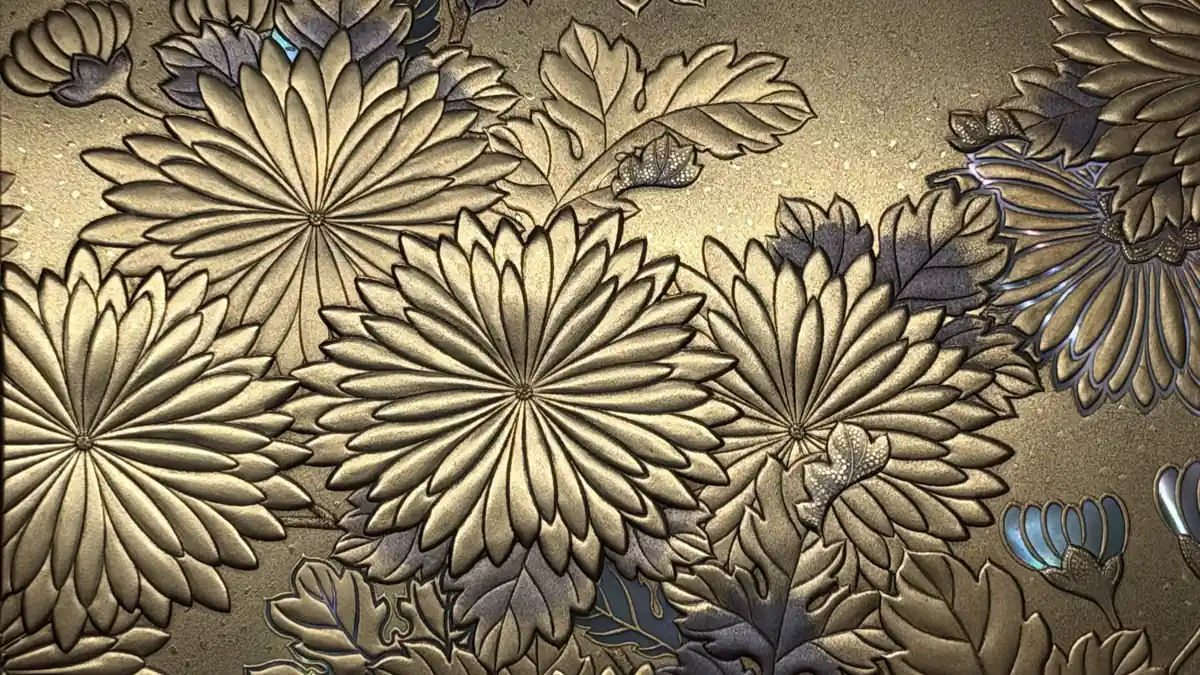
The work regarded as a landmark of Meiji maki-e is the bookcase of 1903. Rokkaku Shisui drew the design, Kawanobe Itchō did the maki-e, and Unno Shōmin carved the metal fittings. It is an Important Cultural Property. Small birds play among chrysanthemum flowers, rendered in raised gold maki-e and a great deal of mother-of-pearl. I was told that the pattern runs without a break across the front and back, the pillars and the inside.
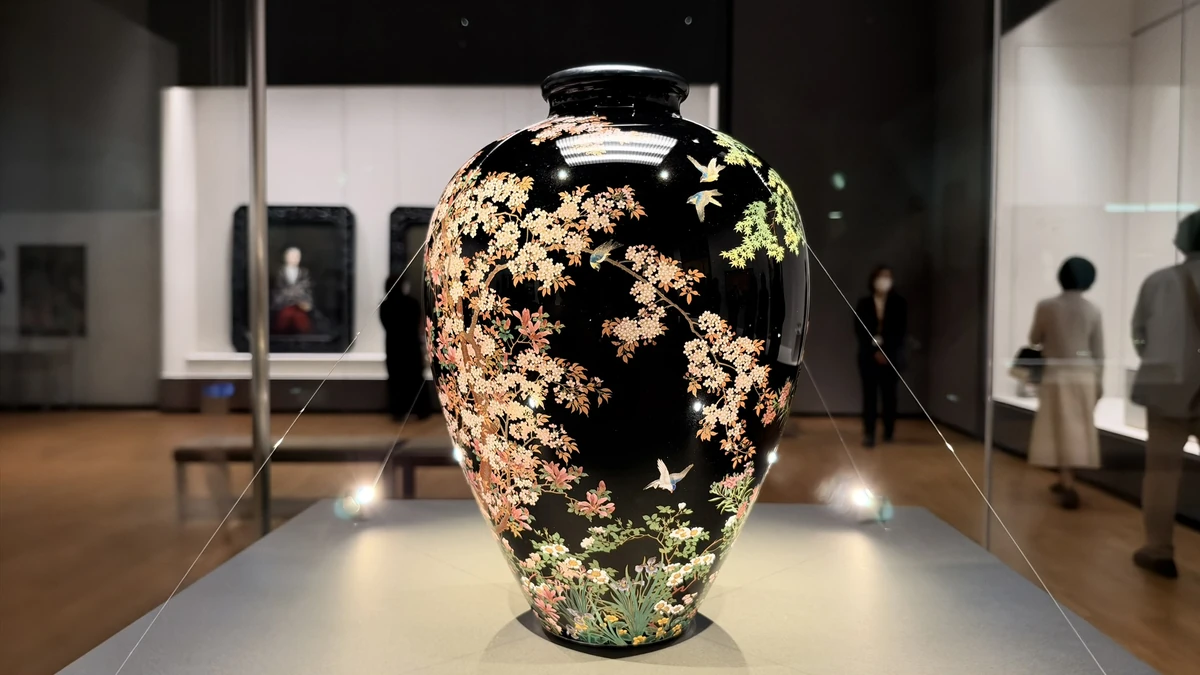
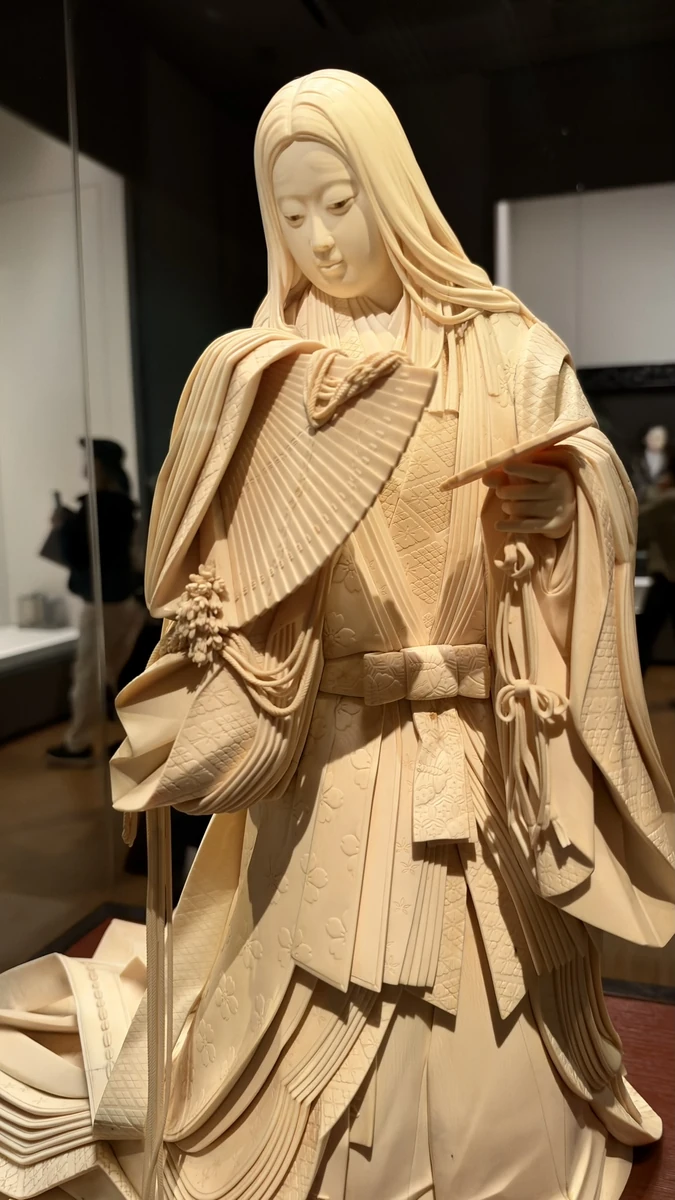
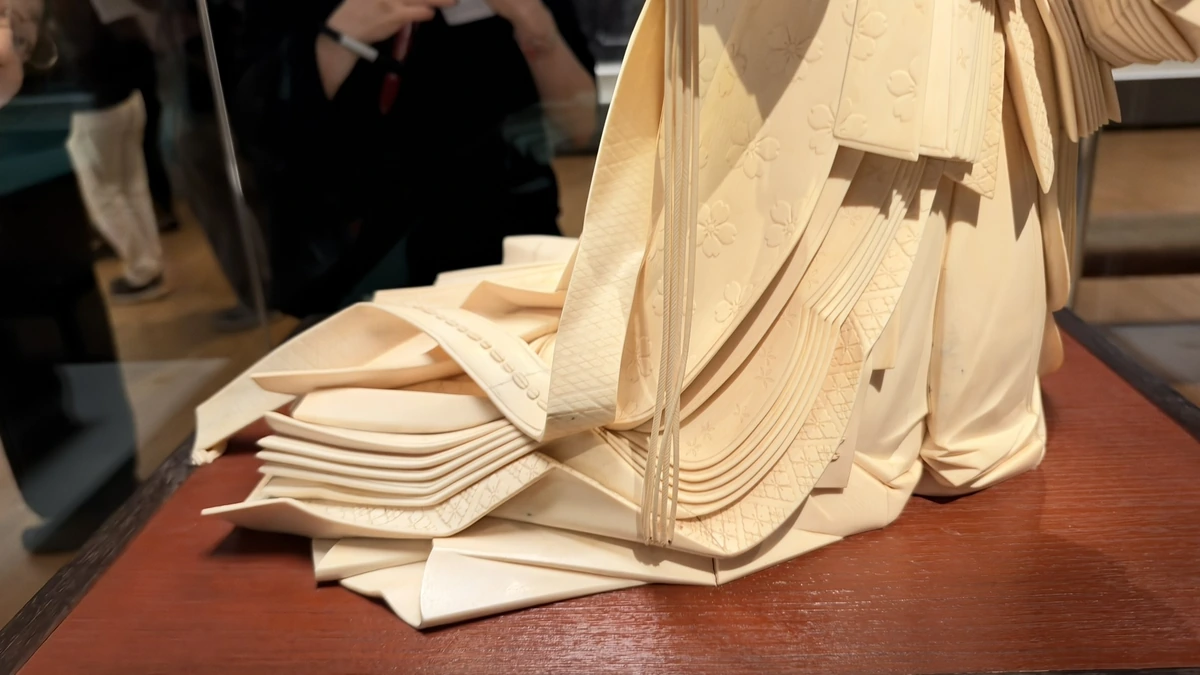
The whole piece glows gold, with turban shell set into it. Up close, wherever I looked there was craft: petals of mother-of-pearl shining blue and pink, small birds drawn with fine lines, and fittings with chrysanthemum and paulownia motifs. Other Meiji craft on view includes a cloisonné vase by Namikawa Yasuyuki and the ivory carving Court Lady (Kanjo okimono) by Asahi Gyokuzan.
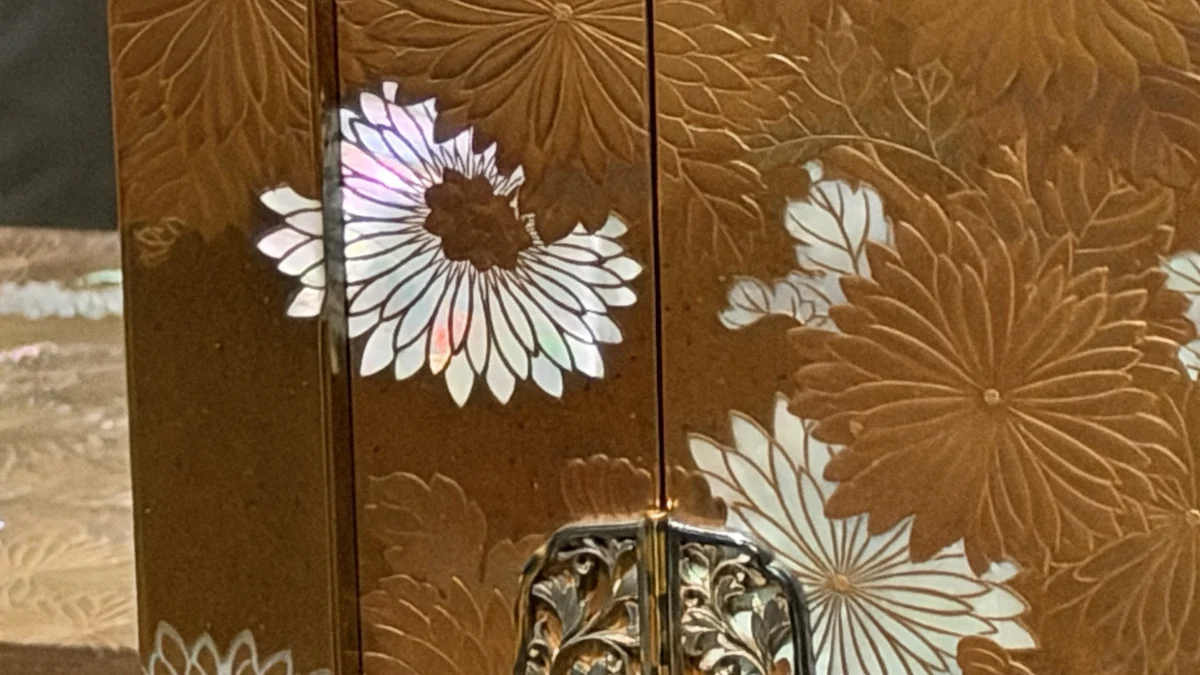
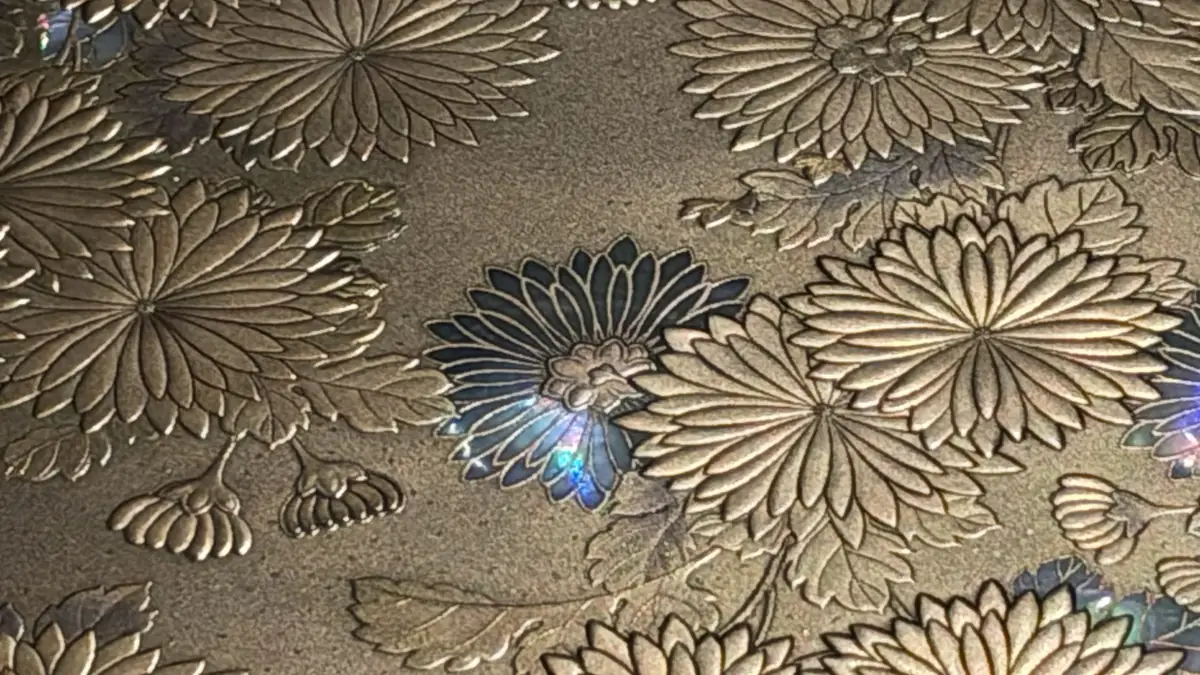
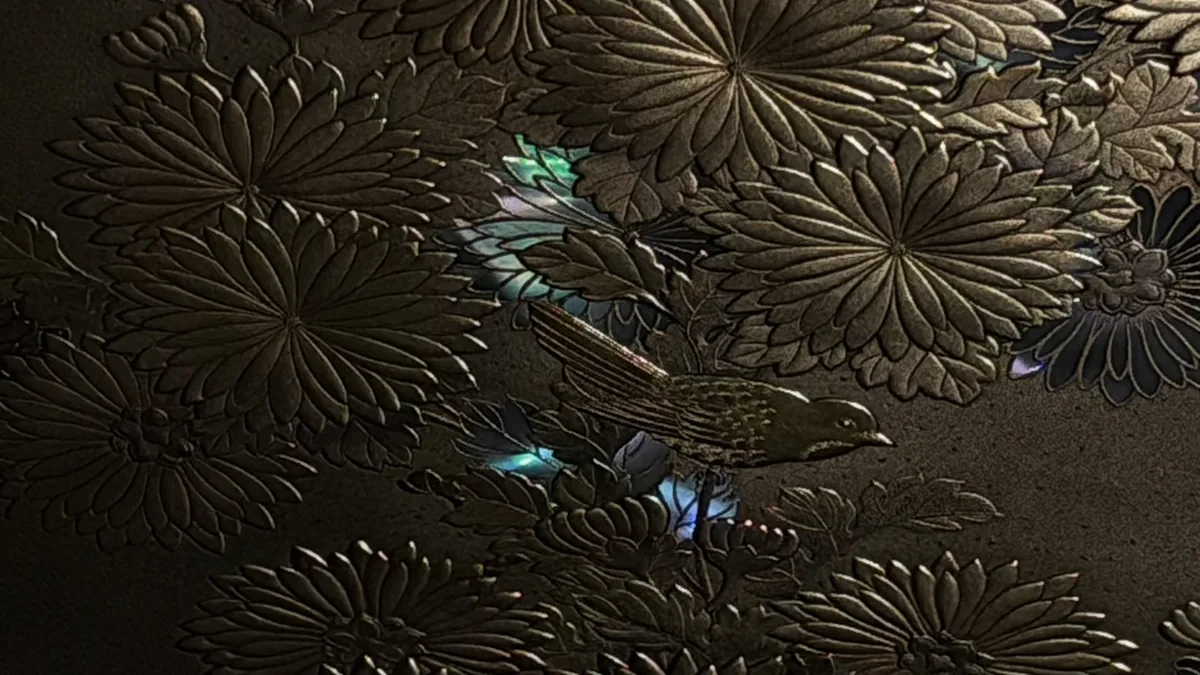
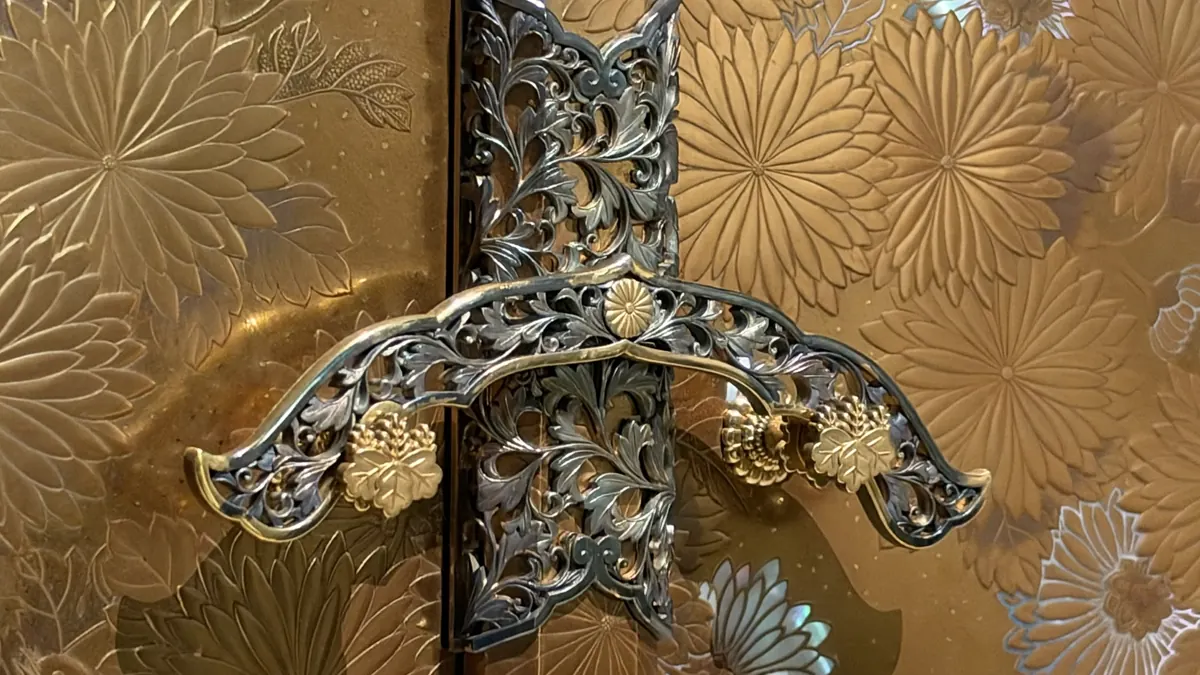
Tap a photo to enlarge it.
The cloisonné vase (1899) is an Important Cultural Property; the Court Lady dates from 1901.
Next exhibitions | “Sacred Garden of Birds and Flowers” and “Japanese Calligraphy”
Two more special exhibitions follow “Beauty Through the Ages” to mark the grand opening. The one to watch is the exhibition of Itō Jakuchū’s “Colorful Realm of Living Beings” (Dōshoku sai-e), starting in February 2027.
| Sacred Garden of Birds and Flowers | Feb. 4 – Mar. 14, 2027. Itō Jakuchū’s 30-scroll series is shown together. General ¥3,000, timed entry. Some works are rotated during the run. |
|---|---|
| Japanese Calligraphy: A 1,300-Year Legacy of Beauty | Mar. 25 – May 16, 2027. General ¥2,500. |
“Colorful Realm of Living Beings” is a series of 30 hanging-scroll paintings of birds and flowers by Itō Jakuchū, an 18th-century painter from Kyoto. It will be the first time in about ten years that all 30 scrolls are shown together in Japan, and the first since the series was designated a National Treasure in 2021. Other masterpieces of bird-and-flower painting from Kyoto of the same period are also planned.
Tickets for both exhibitions were not yet on sale (as of November 3, 2026). “Sacred Garden of Birds and Flowers” is timed-entry like the current exhibition, and the museum says it will not sell tickets at the door. Book early once the sale date is announced.
Where to stay before or after the museum
PRThis section contains affiliate links to Agoda. If you book through them, this site earns a commission. I choose hotels for their location and how easy they are to travel from.
Here are three options by purpose for visitors staying in Tokyo. If you already have a hotel in the city, you can simply go from there. It is about a 15-minute walk from Tokyo Station to Ōte-mon and about 5 minutes from Ōtemachi Station. Prices vary a lot with dates and room types, so I haven’t compared them.
CLOSE TO THE MUSEUM
Around Tokyo Station
About 15 minutes on foot from the Marunouchi North Exit to Ōte-mon
Suits an early slot, or a plan to walk around the East Gardens.
Agoda’s Tokyo Station area includes hotels on both the Marunouchi and Yaesu sides, so the distance to Ōte-mon varies by hotel.
Browse Tokyo Station area hotels on AgodaEASY TO MOVE ON
Around Shinagawa Station
A station served by the Tōkaidō Shinkansen
An option if you are heading to Kyoto or Osaka by Tōkaidō Shinkansen the next day.
From Shinagawa you travel to the East Gardens by train. Agoda’s Shinagawa area also includes hotels away from the station.
Browse Shinagawa area hotels on AgodaA SPECIAL STAY
The Tokyo Station Hotel
Inside the Marunouchi station building of Tokyo Station (1-9-1 Marunouchi, Chiyoda-ku)
A hotel that opened in 1915, inside the station building that is an Important Cultural Property. For travelers who want a stay in a historic building to be part of the trip.
I haven’t measured the walk from the hotel entrance to Ōte-mon.
Check rates on AgodaThe links open with Agoda’s default dates and guest count. Check the dates, price, and cancellation terms on the booking page before you reserve.
FAQ
General admission requires a timed-entry reservation, and the museum does not sell tickets at the door. You can buy through ART PASS or Seven Ticket, and if a slot has seats left you can book up to one minute before it starts. Holders of a disability certificate and one carer, and children of elementary-school age or younger, don’t need a reservation (children need to be with a guardian who has booked). Visitors under 23, students and other free-entry visitors generally still need a reservation. I found no coupons or discounts (as of Nov. 3, 2026).
Seats can open up later. On November 3, after seeing “sold out,” I reloaded the booking page and bought a 2:30 p.m. slot on ART PASS at about 1:45 p.m. I don’t know why seats open or when, so this is not a method you can count on. If your dates are fixed, book on the first day tickets go on sale.
Visitors who are under 23 on the day of the visit enter free, but you still need a reservation on ART PASS, and you must show ID with your date of birth on arrival. The official English page lists a passport as an accepted ID. Free slots are limited and can sell out even when paid tickets remain. If you can’t show the right documents, or if you booked a free slot without being eligible, you will be refused at entry, and you can’t pay the difference on site.
I spent about 80 minutes inside the museum and about 30 minutes at the Ōte Rest House. If you also walk the Edo Castle ruins on a day the East Gardens are open (about 90 minutes by that article’s estimate), your time at the sights comes to about 3 hours 20 minutes, and with walking and waiting you should plan on half a day.
Yes. On opening day it was Sarutahiko Coffee. The line was long and I guessed the wait at about 20 minutes. Takeout seemed to be possible. There is also a shop and an exhibit corner. The rest house is open in principle on the East Gardens’ open days and hours, but when the gardens are closed, museum visitors can still use it as long as the museum is open.
Yes, if the museum itself is open: you can enter through Ōte-mon even when the East Gardens are closed or have closed for the day. The East Gardens are closed on Fridays in general, but the museum is open then. A few days, such as New Year, close both, and you can’t walk the ruins when the gardens are closed, so check the museum’s opening information for your date.
No. In “Beauty Through the Ages,” all works are replaced from one rotation to the next. If there is a particular work you want to see, check which rotation it is in on the official site before you book.
No. Sannomaru Shozokan is a ticketed, timed-entry museum, with its own entrance and reception, separate from the Imperial Palace public tour. For the tour, see Tokyo Imperial Palace Public Tour: Same-Day Tickets, the Day’s Flow and 6 Key Spots.
On the same day you can return to the galleries inside, but once you leave the building you can’t re-enter. Take your rest or your walk through the ruins before your visit or after it.
Related pages
☕ Support this site
Following the Shogun is researched on location.
If you found this article useful, your support would mean a lot.

You can also support us by scanning the QR code
Sources
Fees, hours, booking terms, access and exhibition details are official information as of November 3, 2026. They can change, so check the official sites before you go.
- Museum of the Imperial Collections, Sannomaru Shozokan | Admission and tickets (English)
- Museum of the Imperial Collections, Sannomaru Shozokan | “Beauty Through the Ages” ticket information (English)
- Museum of the Imperial Collections, Sannomaru Shozokan | “Beauty Through the Ages: Treasures of the Imperial Collections” (English)
- Museum of the Imperial Collections, Sannomaru Shozokan | “Sacred Garden of Birds and Flowers” (English)
- Museum of the Imperial Collections, Sannomaru Shozokan | Access (English)
- Museum of the Imperial Collections, Sannomaru Shozokan | Upcoming exhibitions (English)
- Imperial Household Agency | Imperial Palace East Gardens (Japanese)
- Imperial Household Agency | Ōte Rest House (Japanese)
- Bijutsu Techo | Report on the grand opening: number of works and gallery area (Japanese)


comment