


Tokyo Imperial Palace Public Tour: Same-Day Tickets, the Day’s Flow and 6 Main Spots
When are same-day tickets distributed? What can you actually see? The official tour is free and runs about 75 minutes. This guide highlights six main spots — including Fujimi-yagura Turret, Nijubashi Bridge, and Fushimi-yagura Turret — along with the schedule, access, and a step-by-step report from an actual visit.
The Imperial Palace public tour is an official tour organized by the Imperial Household Agency that lets visitors walk inside the Imperial Palace grounds with a free guided visit. Over about 1 hour and 15 minutes, the route passes through areas normally closed to the public, including Fujimi-yagura Turret, Nijubashi Bridge, Fushimi-yagura Turret, and the Imperial Palace East Court.
This page explains how to get same-day numbered tickets, when to line up, what happens on the day, and the highlights of each stop, using photos and notes from an actual visit.
Tour Fee
Free
Duration
About 1 hour and 15 minutes
Meeting Point
Kikyo-mon Gate (Inner Sakuradamon Gate)
Multilingual Guidance
The Imperial Household Agency tour audio guide app supports six languages: Japanese, English, Chinese, Korean, French, and Spanish.
Reservation
Advance reservation, 200 people per session, or same-day numbered ticket, 300 people per session on a first-come, first-served basis
Required Documents
Personal identification, such as a driver’s license or passport. Copies are not accepted.
Tour Schedule and Reception Times
| Morning Tour | Afternoon Tour | |
|---|---|---|
| Numbered Ticket Distribution | From 9:00 a.m. | From 12:30 p.m. |
| Reception Starts | From 9:30 a.m. | From 1:00 p.m. |
| Tour Starts | Around 10:00 a.m. | Around 1:30 p.m. |
| Tour Ends | Around 11:15 a.m. | Around 2:45 p.m. |
Days or sessions affected by official events
Sundays / Mondays
National holidays specified by law, except when the holiday falls on a Saturday
Afternoons from July 1 to September 30
December 28 to January 4
Access and Meeting Point
Address
1-1 Chiyoda, Chiyoda City, Tokyo
Meeting Point
Kikyo-mon Gate (Inner Sakuradamon Gate)
Nearest Stations
Nijubashimae Station (Chiyoda Line, C10), Exit 6, about 10 min on foot; Otemachi Station (Toei Mita Line, I09), Exit D2, about 10 min on foot
Practical Shinkansen Station
JR Tokyo Station, about 15 min on foot from the Marunouchi Central Exit
Walking Difficulty
The tour route covers roughly 2.2 km / about 1 hour outdoors, including a moderately steep slope — comfortable walking shoes are recommended
Recommended Transport
On foot (the entire route is walked)
Things to Note
A bag check is required. Keep your belongings to a minimum; the Imperial Household Agency advises using a coin locker in advance if needed
Tour Duration
About 1 hour and 15 minutes
Tour Fee
Free
From Exit 6 of Nijubashimae Station (Chiyoda Line)
From Exit D2 of Otemachi Station (Toei Mita Line)
From the Marunouchi Central Exit of JR Tokyo Station
How to Get Same-Day Tickets and What Happens on the Day
Here is a first-hand report of how the day unfolded during my visit. If this is your first time joining the tour, use it as a practical guide to what to do and when.
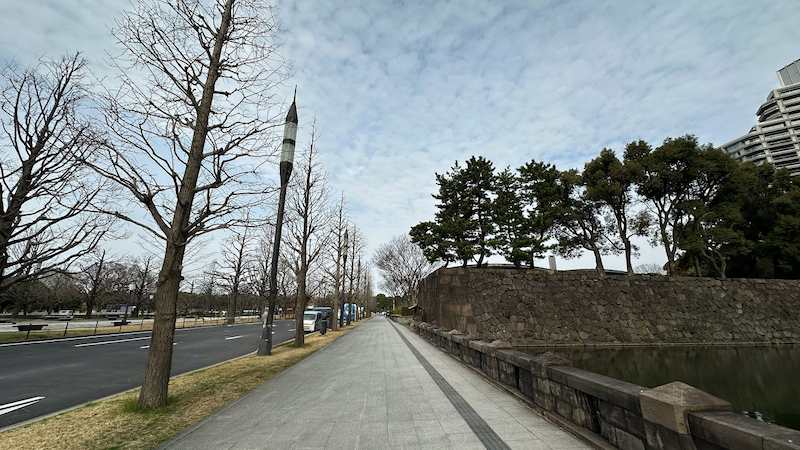
I arrived at Kikyo-mon Gate at 8:00 a.m., and around 30 people were already in line. By the time ticket distribution began at 9:00, the line had grown significantly, which made the tour’s popularity clear. On the day I visited, arriving around 8:00 a.m. gave me enough time and peace of mind, but same-day registration is first-come, first-served and ends once all numbered tickets are gone. On busy days, arriving early is strongly recommended. After receiving the numbered ticket, there is about an hour before the tour begins, so you can adjust your schedule at a nearby café.
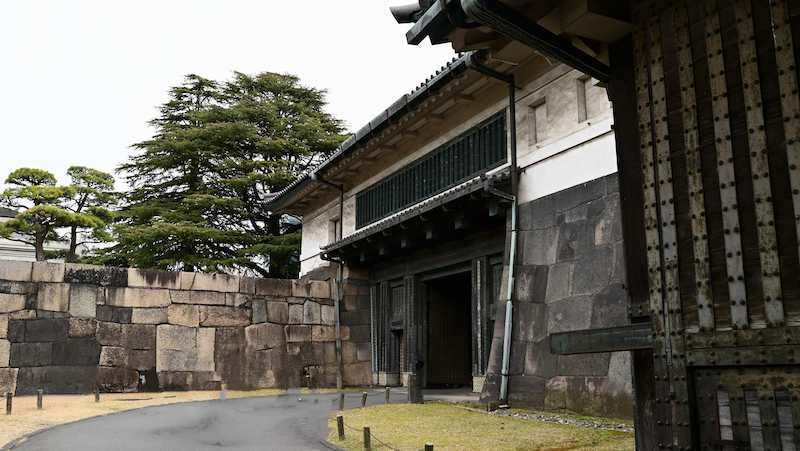
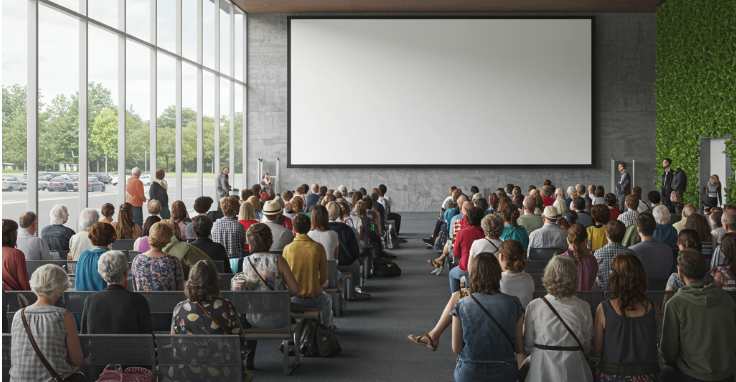
Around 9:45 a.m., I returned to Kikyo-mon Gate and received a numbered tag to wear around my neck. A large number of participants had gathered in the waiting room during my visit, where staff explained the tour rules and precautions. Tour pamphlets, available in six languages, are distributed, and there is also a souvenir corner. If you want to buy souvenirs, do it before the tour begins.
Highlights of 6 Main Spots
The tour route begins at Fujimi-yagura Turret and ends at Yamashita-dori. Below, I introduce the historical background of each stop along with what I felt on site.
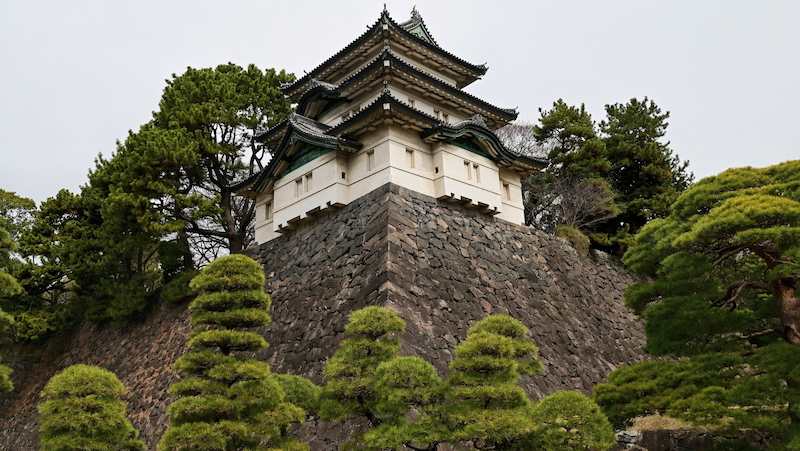
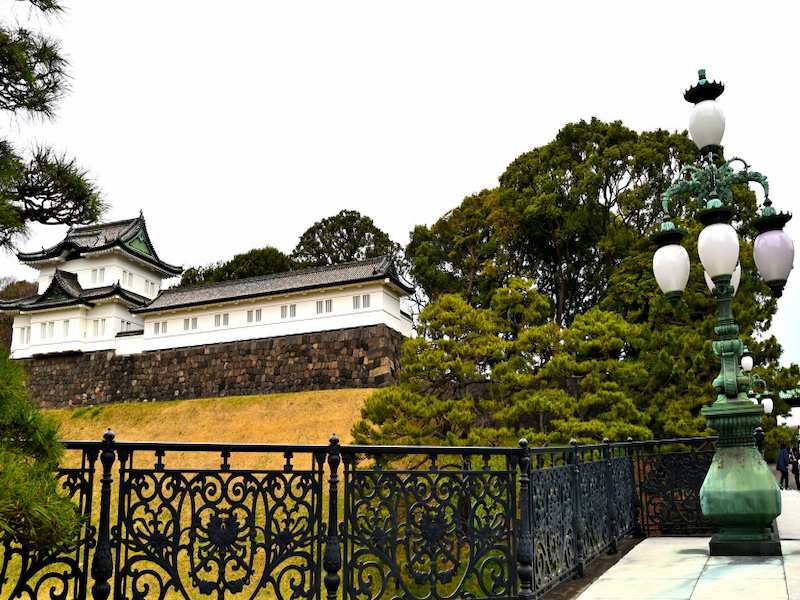
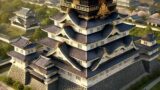
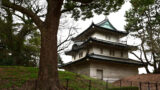
The first stop, Fujimi-yagura Turret, can also be seen from the Imperial Palace East Gardens, but looking up at it closely from the opposite side of the moat is an experience unique to the public tour. The contrast between the white walls and black roof tiles is striking, and the turret’s commanding presence above the moat feels especially powerful. After the main keep burned down in the Great Fire of Meireki in 1657, the shogun is said to have viewed Mount Fuji from here, and the turret effectively served as a substitute for the keep. According to the on-site explanation during my visit, it is now used as a storehouse for artworks.
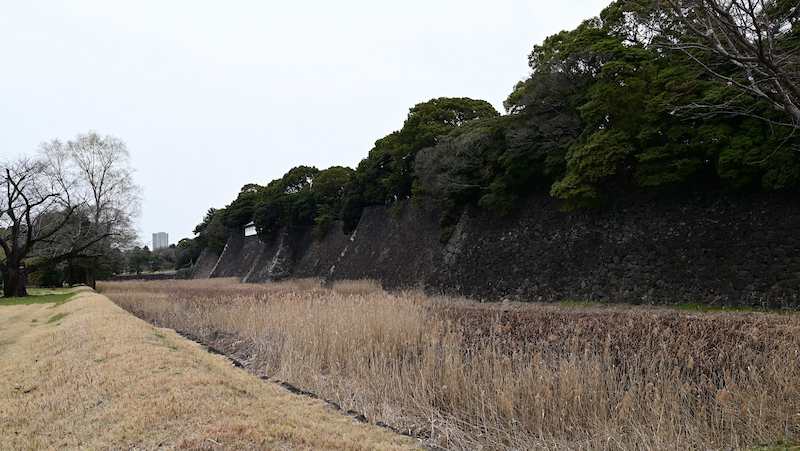
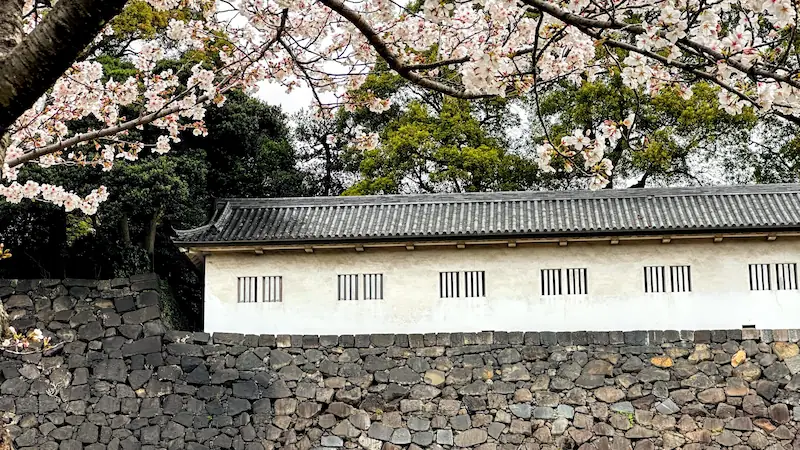
Fujimi-tamon is the only one of Edo Castle’s many tamon — long, low defensive structures that also stored weapons — still standing today. It can also be seen from the Honmaru side of the Imperial Palace East Gardens, but the view from outside, across Hasuikebori Moat, is a perspective unique to the public tour. The moat is said to fill with lotus flowers depending on the season. They weren’t in bloom during my visit, but the combination of the moat’s shape and the tamon still gives a strong sense of Edo Castle’s scale.
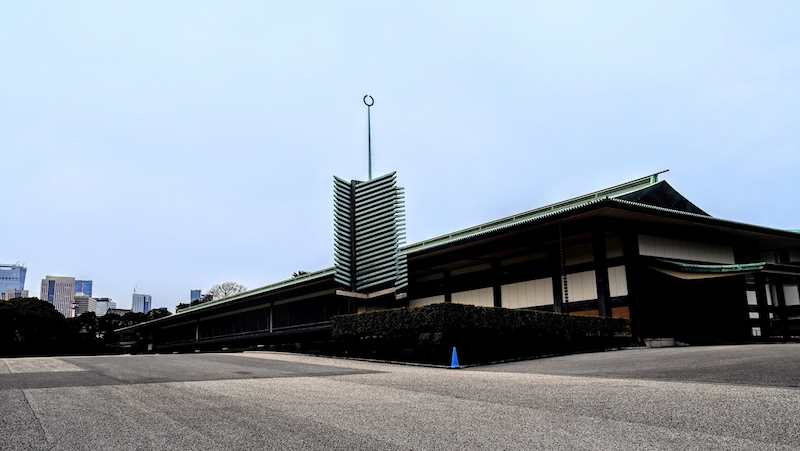
After passing beside the Imperial Household Agency Building, you arrive at the vast Imperial Palace East Court. It is well known as the place where large crowds gather for the New Year’s Greeting and the Emperor’s Birthday public greeting, and many visitors will recognize it from television. This same plaza, also used for the New Year’s Greeting and the Emperor’s Birthday greeting, can be walked through on the public tour as well.
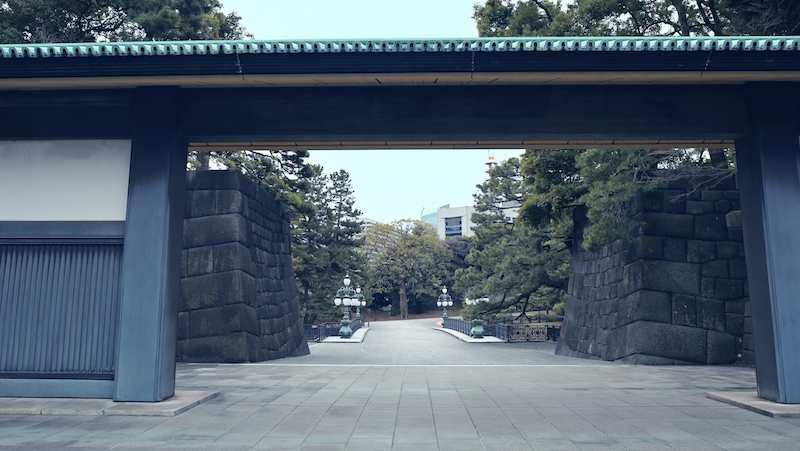
Nijubashi Bridge is one of the highlights of any Imperial Palace visit. Its name comes from the fact that the former bridge had a “double” structure, with a lower bridge and another level built above it. Today it has been rebuilt as a single-level structure, but the name preserves that history. The Main Gate Stone Bridge in front is also nicknamed Meganebashi, or Eyeglasses Bridge — on calm days, the bridge’s arches and their reflection can look like a pair of glasses.
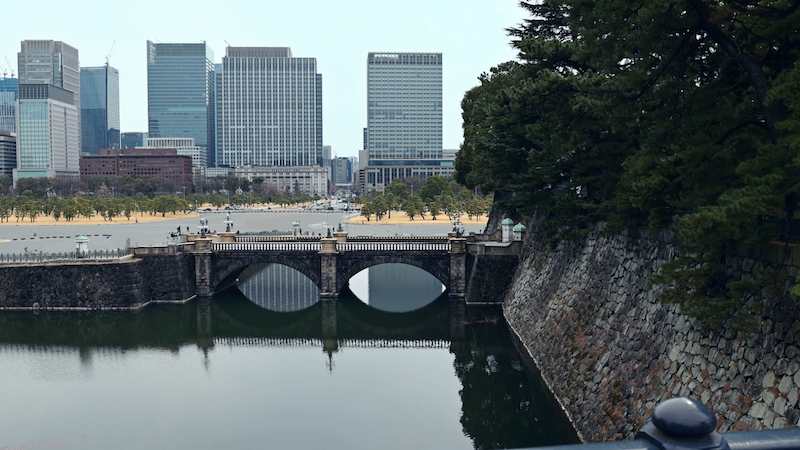
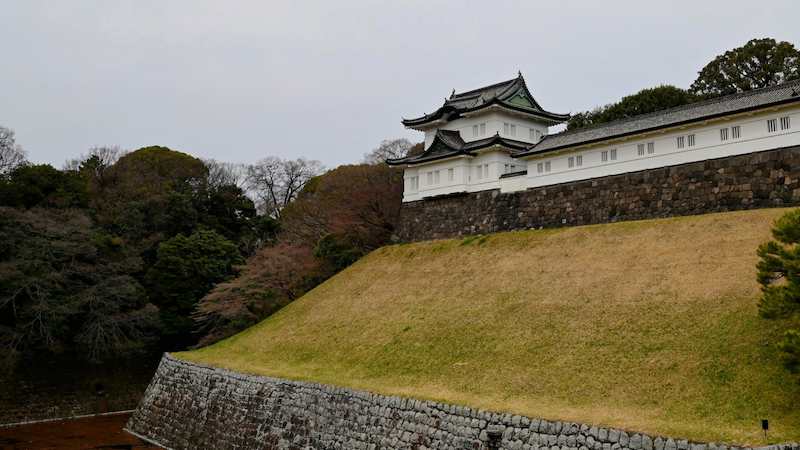
Fushimi-yagura Turret can be seen from Nijubashi Bridge. By long-standing tradition, it is said to have originally stood at Fushimi Castle in Kyoto and later been moved here. The Imperial Household Agency itself describes it as “said to be the most beautiful” of Edo Castle’s surviving turrets, and its two-story structure looks picturesque from every angle. Its dignity as a former defensive position remains vivid today.
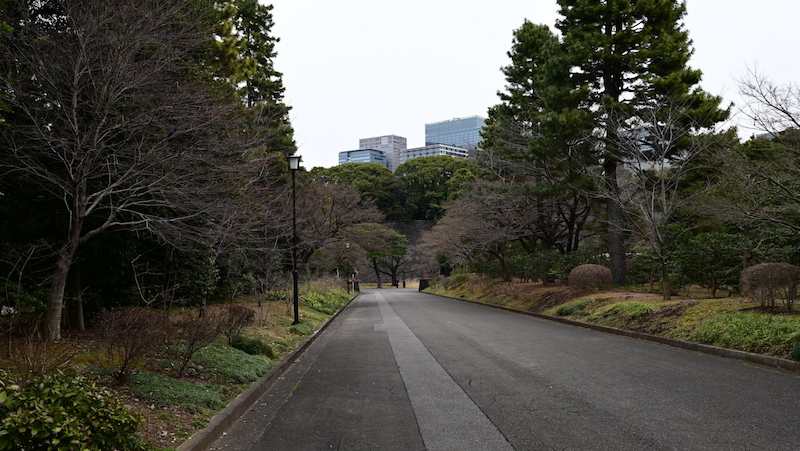
The tour ends along Yamashita-dori, a quiet tree-lined path. On nearby Momijiyama, the Toshogu shrine dedicated to Tokugawa Ieyasu and the mausoleums of successive shoguns once stood during the Edo period. Those buildings no longer remain, but knowing that Momijiyama was deeply connected with the shogunate’s rituals changes the impression of this peaceful path. The Shinobazu-guchi torii gate at Ueno Toshogu Shrine is said to have been moved in 1873 from Momijiyama Toshogu within Edo Castle. See the Ueno Toshogu Shrine guide for photos. The mausoleums of the Tokugawa shoguns themselves survive nearby at Kaneiji Temple, the resting place of six of the fifteen shoguns.
Highlights at a Glance
- Fujimi-yagura Turret: A surviving three-tier turret of Edo Castle. After the main keep burned down, it served historically as a substitute for the keep. Looking up at it across the moat is an angle unique to the public tour.
- Fujimi-tamon and Hasuikebori Moat: Edo Castle’s only surviving tamon, a defensive structure that also stored weapons. Seeing it from outside across Hasuikebori Moat offers a different perspective from the Imperial Palace East Gardens.
- Imperial Palace East Court: The public tour lets visitors enter the plaza opened for the New Year’s Greeting and the Emperor’s Birthday public greeting.
- Nijubashi Bridge and the Main Gate Stone Bridge: Knowing the origin of the name changes how you see them. On calm days, the reflection of the Meganebashi arches is another highlight.
- Fushimi-yagura Turret: A two-story turret said to have been moved from Fushimi Castle. The view from Nijubashi Bridge is especially beautiful, and it is highly regarded among the surviving Edo Castle turrets.
- Yamashita-dori: A quiet tree-lined path near Momijiyama. This tour offers a rare chance to walk near the former site of the shogunate’s Toshogu shrine.
Frequently Asked Questions (FAQ)
They are distributed at Kikyo-mon Gate, also known as Inner Sakuradamon Gate. Distribution begins at 9:00 a.m. for the morning tour and at 12:30 p.m. for the afternoon tour. Same-day registration is first-come, first-served. On the day I visited, arriving around 8:00 a.m. was early enough to line up with plenty of time, but conditions vary, so early arrival is recommended. After receiving a numbered ticket, there is about an hour before the tour starts, so you can adjust your schedule nearby, such as by having breakfast.
No. The tour is free. You need either an advance reservation, limited to 200 people per session, or a same-day numbered ticket, limited to 300 people per session on a first-come, first-served basis. Do not forget personal identification. Copies are not accepted.
The official tour takes about 1 hour and 15 minutes. This guide highlights six main spots along the way: Fujimi-yagura Turret, Fujimi-tamon, the Imperial Palace East Court, Nijubashi Bridge, Fushimi-yagura Turret, and Yamashita-dori.
It is not mandatory. The main ways to join are advance application and same-day registration. Advance application includes online application as well as application by post or at the office. Same-day numbered tickets are distributed in front of Kikyo-mon Gate, with up to 300 people accepted per session on a first-come, first-served basis. If you want to secure a spot on a specific date, consider applying in advance.
The Imperial Household Agency tour audio guide app supports six languages: Japanese, English, Chinese, Korean, French, and Spanish. Availability of guides and printed materials may change, so check the official Imperial Household Agency website if needed.
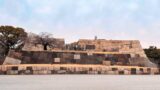
The Imperial Palace East Gardens are a self-guided area entered from Otemon Gate or Hirakawa Gate, where visitors can explore sites such as the Tenshudai Keep Base and the Honmaru Site at their own pace. The Imperial Palace public tour is a guided tour through normally restricted western areas, including Fujimi-yagura Turret, Nijubashi Bridge, and Fushimi-yagura Turret. Combining both gives a deeper understanding of the Edo Castle ruins.
Someikan is available as a rest area for tour participants, with a shop, vending machines, and restrooms. Keep your belongings to a minimum; the Imperial Household Agency advises using a coin locker in advance if needed.
Yes. You need identification that can verify your identity, such as a driver’s license, passport, My Number card, or student ID. Copies are not accepted, and you cannot join the tour if you cannot present identification at reception.
📋 Imperial Palace Public Tour Summary
The tour is free. It is normally held twice a day, in the morning and afternoon, but is suspended on Sundays, Mondays, national holidays, afternoons from July 1 to September 30, December 28 to January 4, and other days affected by official events. Please check the Imperial Household Agency’s official website for the latest information before visiting.
Numbered tickets are distributed at Kikyo-mon Gate, from 9:00 a.m. for the morning tour and from 12:30 p.m. for the afternoon tour. Same-day spaces are limited to 300 people per session on a first-come, first-served basis, so arriving around 8:00 a.m. is recommended for the morning tour. The tour takes about 1 hour and 15 minutes and supports six languages. The route follows Fujimi-yagura Turret → Fujimi-tamon and Hasuikebori Moat → Imperial Palace East Court → Nijubashi Bridge and Main Gate Stone Bridge → Fushimi-yagura Turret → Yamashita-dori. Personal identification is required, and copies are not accepted. For the latest details, please check the official Imperial Household Agency tour guide page.
Related Guides to the Imperial Palace East Gardens
Along with the Imperial Palace public tour, the free-entry Imperial Palace East Gardens are also well worth visiting. You can see Fujimi-tamon and Fujimi-yagura Turret, both viewed during the public tour, from a different angle inside the East Gardens.
Return to the Tokugawa Ieyasu Page

Back to Main Page

☕ Support This Site
Following the Shogun is built on original, on-site research.
If this guide has been helpful, your support is greatly appreciated.

You can also support via the QR code


comment