


Takeda Castle Ruins: A Complete Guide to Japan's "Castle in the Sky"
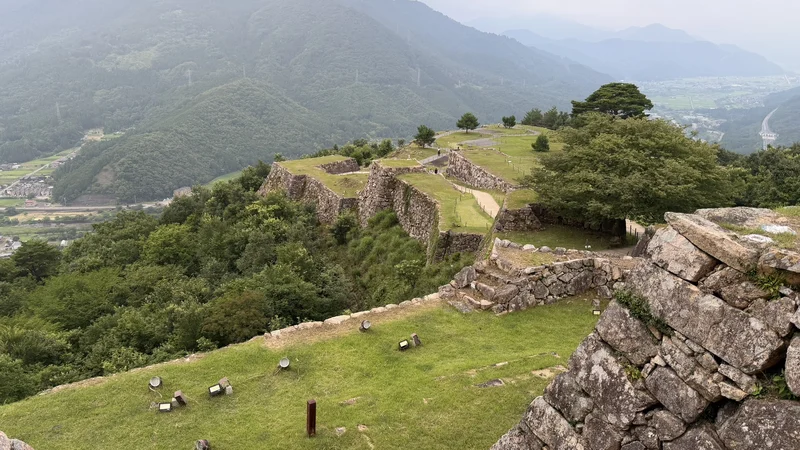
No tower, turret, or gate survives at Takeda Castle Ruins today. What you actually see on site is a long line of stone walls running along a mountain ridge, and the stacked terraces, called baileys, that once supported the castle's wooden buildings. Takeda Castle Ruins is a nationally designated Historic Site (Shiseki) protecting these stone-wall and bailey remains on the mountaintop.
- Takeda Castle Ruins — Walking Through Meticulously Built Stone Walls
- Quick Summary Before You Go
- Takeda Castle Ruins and Mt. Ritsuunkyo Are Not the Same Place
- Hours, Admission, and On-Site Rules
- Getting to Takeda Castle Ruins
- Walking an Early-Morning Climb, Step by Step
- The History of Takeda Castle
- What Survives Today, and What Does Not
- Guide to the 13 Sights, in Viewing Order
- Mitsuke Turret Site (見附櫓跡) 🎥 360°
- Kita-Senjo (北千畳) 🎥 360°
- Sannomaru (三の丸) 🎥 360°
- Take-no-mon Gate Site (武の門跡) 🎥 360°
- Ninomaru (二の丸) 🎥 360°
- Honmaru (本丸) 🎥 360°
- Tenshudai (天守台) 🎥 360°
- Hanayashiki Bailey Site (花屋敷跡) 🎥 360°
- Minami-Ninomaru (南二の丸) 🎥 360°
- Main Gate Site (正門跡)
- Minami-Senjo (南千畳) 🎥 360°
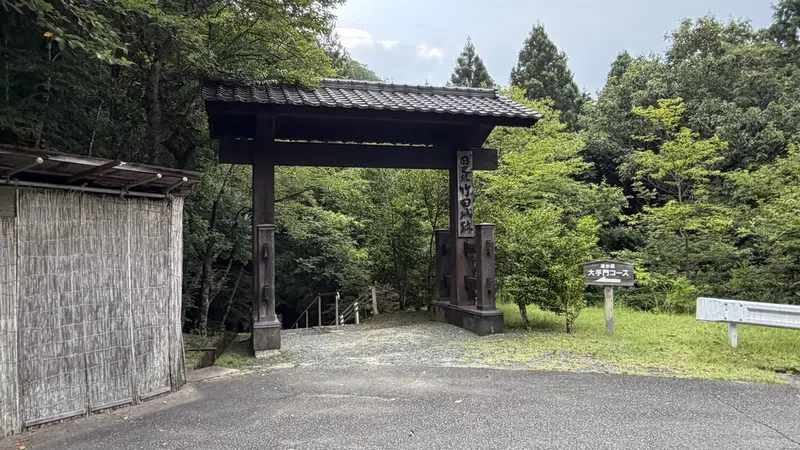
- Ote Entrance / Main Gate Site (大手口・大手門跡) 🎥 360°
- "Ochinai Iwa" — The Rock That Never Falls (落ちない岩) 🎥 360°
- The 13 Core Sights at a Glance
- Nearby Facilities: Yamashiro-no-Sato, the Tenku-no-Shiro Information Center, and Old Takeda Town
- Other Nearby Spots
- Goshuin-jo and the Japan's Top 100 Castles Stamp
- Visiting at Dawn, and Where to Stay Nearby
- Takeda Castle Ruins at Night: Illumination
- Legends & Trivia
- Frequently Asked Questions
- Planning Your Visit: A Summary
Takeda Castle Ruins — Walking Through Meticulously Built Stone Walls
Tap a photo to enlarge it
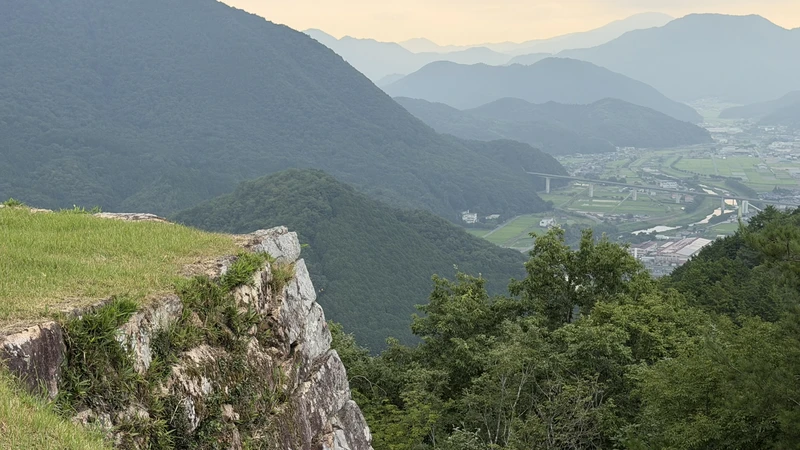
Takeda Castle Ruins is often called Japan's "Castle in the Sky." That nickname actually describes the view from a separate mountain across the valley, Mt. Ritsuunkyo, where on the right autumn and winter mornings a sea of cloud can appear below the ruins, making the castle look like it is floating in the sky. Walking inside Takeda Castle Ruins itself and viewing it from Mt. Ritsuunkyo are two completely different experiences, in two different locations. Climbing up into the ruins puts you inside the stone walls, looking closely at how the baileys are laid out and how the stones were stacked — but from up here, you cannot see the "floating castle" view of the whole site that Mt. Ritsuunkyo is famous for.
Takeda Castle Ruins is a mountaintop castle site that visitors reach on foot, climbing one of several hiking trails from JR Takeda Station or from the Yamashiro-no-Sato visitor area (both described in the Access section below). Sections of the trails are unpaved dirt paths or stone steps, and there is no road that cars can use to reach the ruins themselves. If your main interest is reading the layout of a Japanese mountain castle from its stone walls and bailey terraces, this site rewards that closely. If you are hoping to see standing towers or turrets, note that none survive here — this is a stone-and-earthwork ruin, not a reconstructed castle building.
One quick note on the name: this Takeda Castle, in Asago City, Hyogo Prefecture, has no connection to the Takeda clan of Kai Province (in what is now Yamanashi Prefecture, central Japan) led by the famous daimyo Takeda Shingen. The two share a name by coincidence — the castle here takes its name from the local Takeda area, not from the Takeda clan. It is also unrelated to Taketa City in Oita Prefecture, on the island of Kyushu, which uses a different reading of similar kanji.
Quick Summary Before You Go
| Best for | Visitors who want to walk through real stone walls and baileys up close |
|---|---|
| Not ideal for | Visitors mainly hoping to see a standing castle tower or turret |
| What survives | Stone walls, baileys, gate sites, and the stone keep foundation (tenshudai) |
| What does not survive | The tower, turrets, and gates themselves |
| Official time inside the ruins | 30–60 minutes (not including the climb up or down) |
| Climb time from Takeda Station area | About 40 minutes, per official trail signage |
| Round trip by train from Takeda Station | Roughly 2 to 2.5 hours total — climbing up, touring the ruins, and walking back down |
| Nearest station | JR Takeda Station, on the JR Bantan Line |
| Admission | ¥500 for high school age and up; free for middle school age and under (as of July 2026 — confirm current pricing before you go) |
| Relationship to Mt. Ritsuunkyo | A separate location. Walking inside the castle ruins and viewing the "floating castle" from Mt. Ritsuunkyo are two different experiences |
Takeda Castle Ruins and Mt. Ritsuunkyo Are Not the Same Place
| Aspect | Takeda Castle Ruins | Mt. Ritsuunkyo |
|---|---|---|
| Experience | Walk inside the ruins and see the stone walls, baileys, and keep foundation up close | View Takeda Castle Ruins from across the valley |
| Location | Summit of Mt. Kojo (the mountain the castle sits on) | A separate mountain, facing Mt. Kojo across the valley |
| What you see | The stonework, the layout of the baileys, and the surrounding mountains | Under the right conditions, Takeda Castle Ruins appears to float above a sea of cloud |
| Getting there | Climb from Takeda Station or Yamashiro-no-Sato | A separate parking area and trail |
This guide is based on a visit inside Takeda Castle Ruins; the author did not visit Mt. Ritsuunkyo. Anything said here about the view from Mt. Ritsuunkyo is limited to official visitor information.
Most of the famous "castle floating on a sea of cloud" photos are taken from Mt. Ritsuunkyo, not from inside Takeda Castle Ruins — you cannot get that same view by walking through the ruins themselves. If you want to experience both, plan for two separate trips, each with its own access route and parking.
Hours, Admission, and On-Site Rules
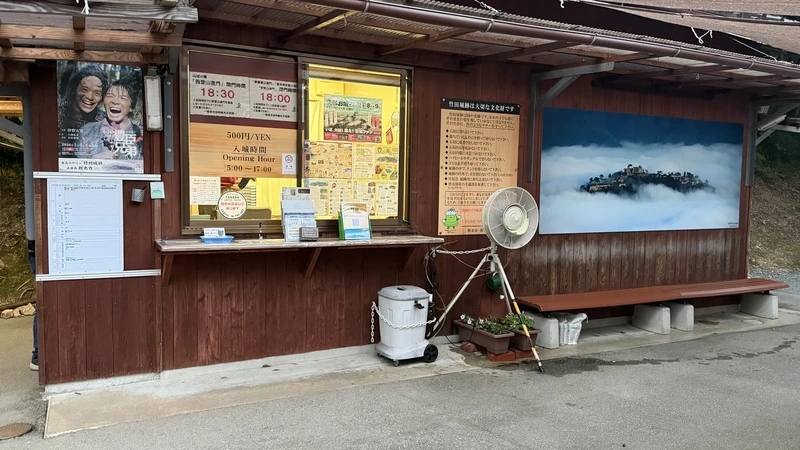
| Opening hours | June 1 – December 6, 2026: 5:00 AM – 5:00 PM |
|---|---|
| Admission | ¥500 for high school age and up; free for middle school age and under. Groups of 20 or more pay ¥450 per person (high school age and up) |
| Payment | Individual admission can be paid in cash or with PayPay (a Japanese mobile payment app). Group admission is cash only. Accepted payment methods may change, so check official information before your visit |
| Time inside the ruins | Official estimate: 30–60 minutes (not including the climb up or down) |
| Winter closure | Closed in principle from January 4 through late February |
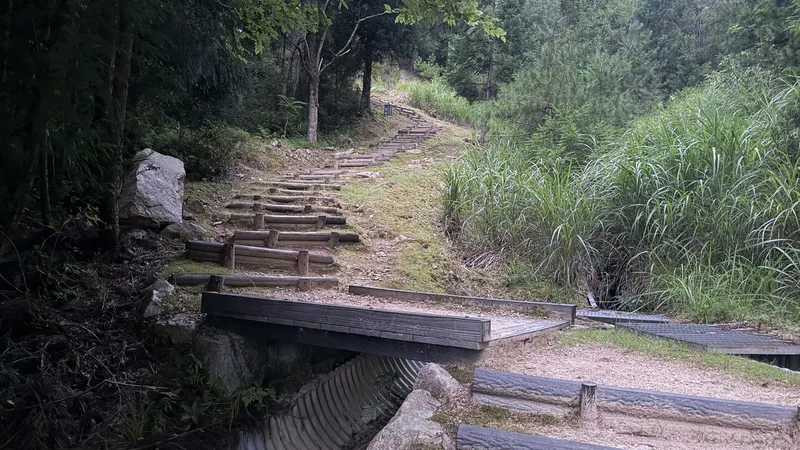
- Footing: the trails include unpaved sections, stone steps, and uneven ground. Wear sneakers or other footwear suited to hiking
- Restrooms: there are none inside the ruins themselves. Use one before you start climbing
- Rest areas: there is no dedicated rest facility, but during a July 2026 visit there were benches at Kita-Senjo (the North Senjo bailey)
- Smoking: prohibited everywhere from the parking areas through the trails and the ruins themselves
- Trail opening hours differ by starting point — see the Access section below
- Entry may be restricted during thunderstorms, heavy rain, snow, or icy conditions
Opening hours, admission fees, and trail conditions can all change. Check official information for the latest details before you visit.
Getting to Takeda Castle Ruins
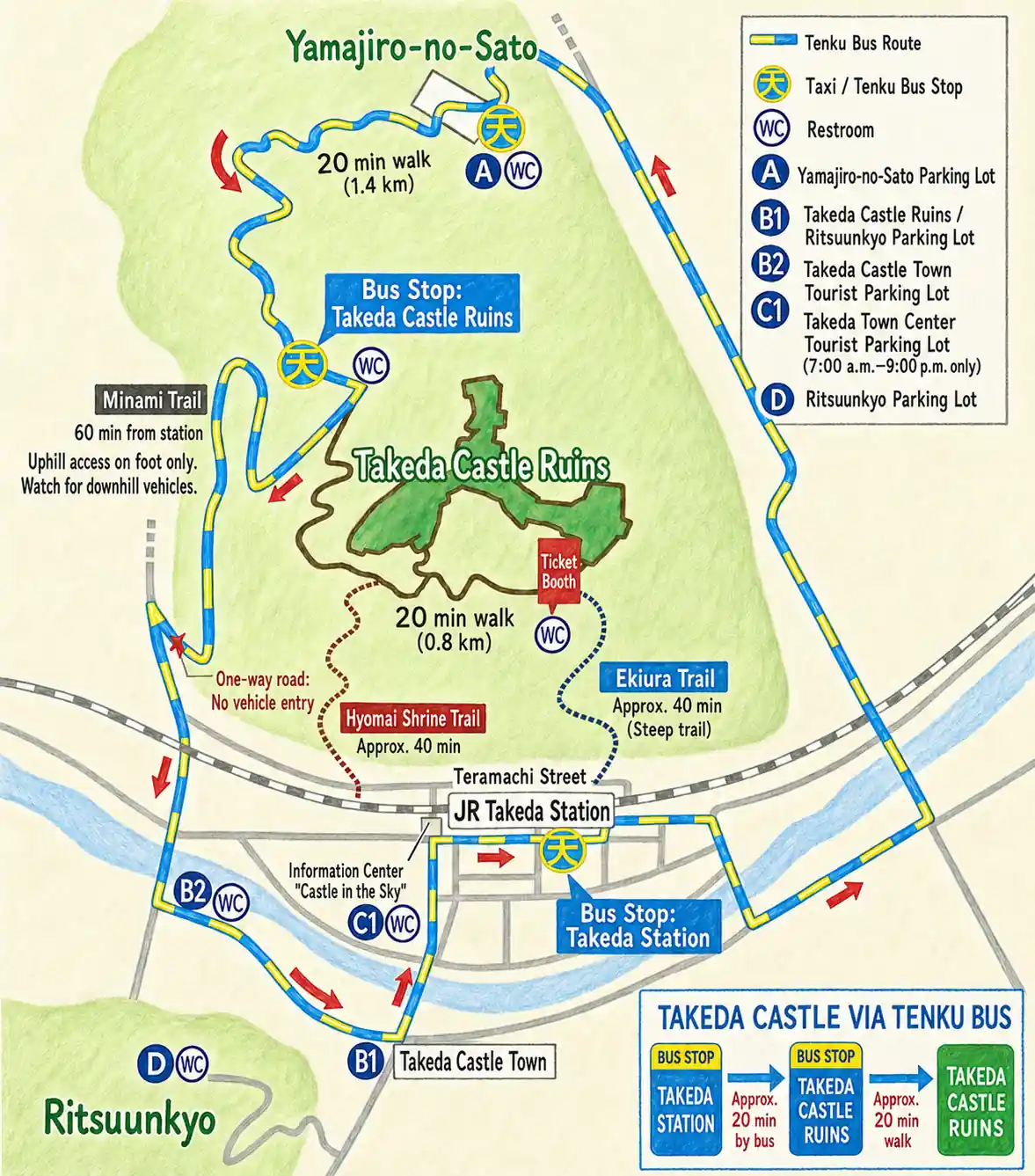
However you arrive, Takeda Castle Ruins is a mountain site that always ends with a walk. The trails include unpaved sections, stone steps, and uneven ground, and even if you use the Tenku Bus (the seasonal "Castle in the Sky" shuttle bus) or a taxi, about 900 meters and roughly 20 minutes of walking from the midway bus stop to the ruins still remain. During the day, walking up from JR Takeda Station or taking the Tenku Bus on days it runs are the most practical options. If your main goal is the early-morning scenery, staying overnight near Takeda Station is worth considering.
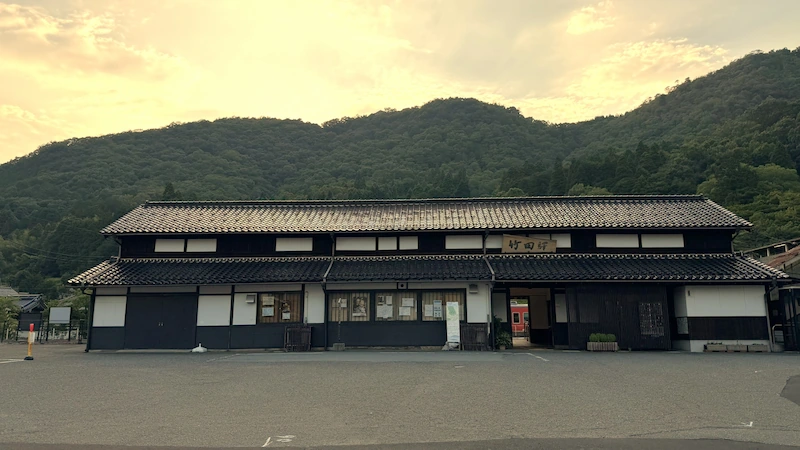
From JR Takeda Station
- Ekiura Trail or Hyome-jinja Trail: official estimate about 40 minutes (open 5:00 AM – 4:30 PM)
- Firsthand note: on a cool early morning, it took about 30 minutes from a hotel near the station to the entrance of the ruins. Time of day, physical condition, luggage, and trail surface conditions will all affect this
- Station numbering: no official station number could be confirmed for JR Takeda Station
From the Yamashiro-no-Sato Parking Area
- West Trail (Nishi-Tozando): official estimate about 40 minutes (open 4:30 AM – 4:30 PM)
- On-site signage gives the distance to the fee-collection building as 2.2 km, about 40 minutes on foot
From the Takeda Castle Ruins / Mt. Ritsuunkyo Parking Area
- South Trail (Minami-Tozando): official estimate about 60 minutes (open 5:00 AM – 4:00 PM)
- Firsthand note: this trail was used for the descent, with a stop at Hyome-jinja Shrine along the way, reaching JR Takeda Station in about 50 minutes total. The whole route is paved with asphalt, so it's a good option if you'd rather avoid the unpaved sections of the other trails.
From the Takeda Machinaka Tourist Parking Area
- Usable only between 7:00 AM and 9:00 PM
- From here, you climb via the Hyome-jinja Trail or the Ekiura Trail, both about 50 minutes from the parking area
Using the Tenku Bus (seasonal shuttle)
- From the midway bus stop, it is about 900 meters and roughly 20 minutes on foot to the ruins. Even if you take the bus, this final stretch has to be walked
- Operating days and times vary by season and day of the week — check the official timetable
If you are driving
- Private vehicles cannot drive up to the entrance of the ruins. Park at the Yamashiro-no-Sato area or one of the other lots above, then walk or take the shuttle bus from there
The Practical Shinkansen Gateway
- Himeji Station is the practical gateway. On direct limited-express trains, the journey from Himeji Station to Takeda Station takes about 1 hour. Local trains or routes that require a transfer take longer, so check the timetable for your travel date. Himeji itself is reachable by Shinkansen from Kyoto, Osaka, and Kobe, which makes it a workable base if you are combining Takeda Castle Ruins with a Kansai itinerary
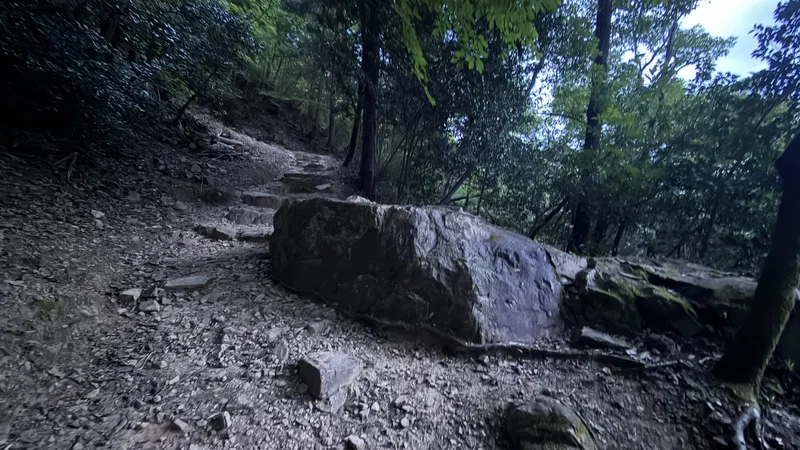
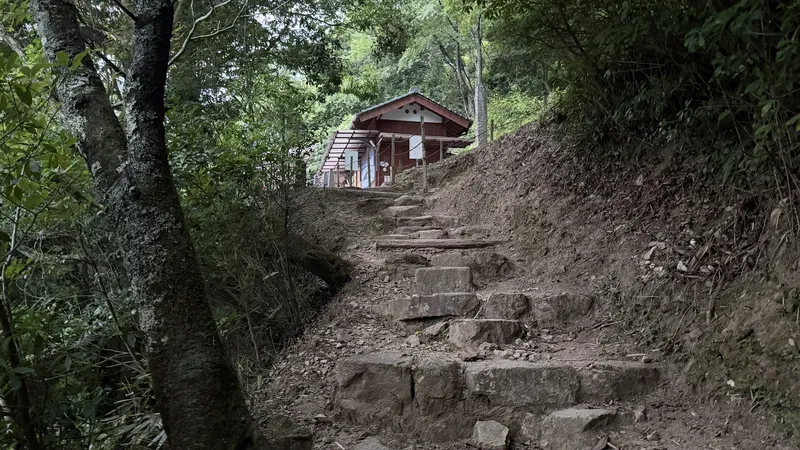
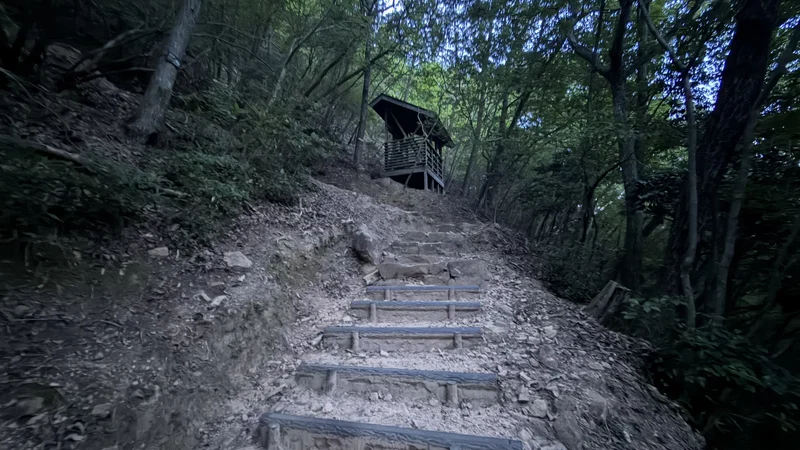
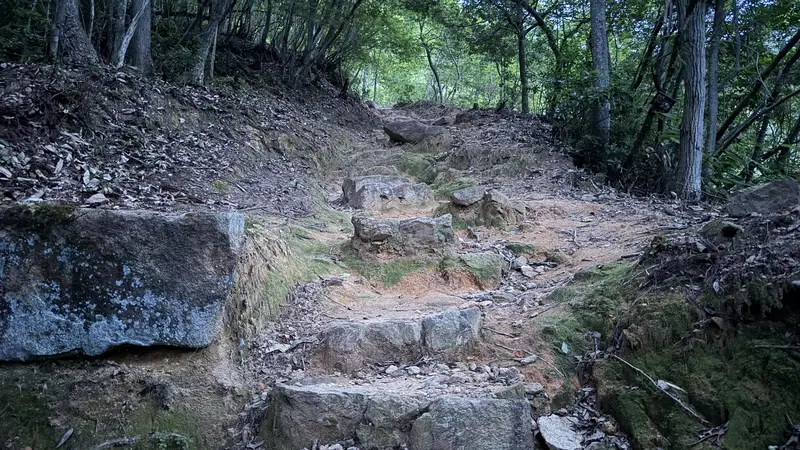
A note on accessibility: even with the shuttle bus, about 900 meters of walking remains from the midway bus stop, over unpaved ground and stone steps. If step-free access is essential, check official accessibility information before you go.
Walking an Early-Morning Climb, Step by Step
Here is what the walk up to Takeda Castle Ruins, and the route through the ruins themselves, actually looked like on one early-morning visit.
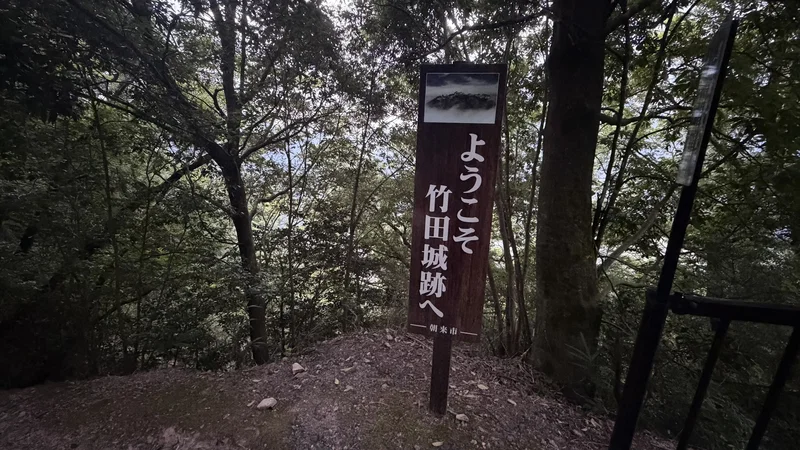
Around 4:45 AM, the walk began from a hotel near Takeda Station toward the Ekiura Trail behind the station. It is an ordinary mountain path, unpaved and climbing steadily the whole way. Thanks to the cool early-morning air in July, it was possible to walk the whole way without a break, reaching the entrance to the ruins in about 30 minutes.
Tap a photo to enlarge it
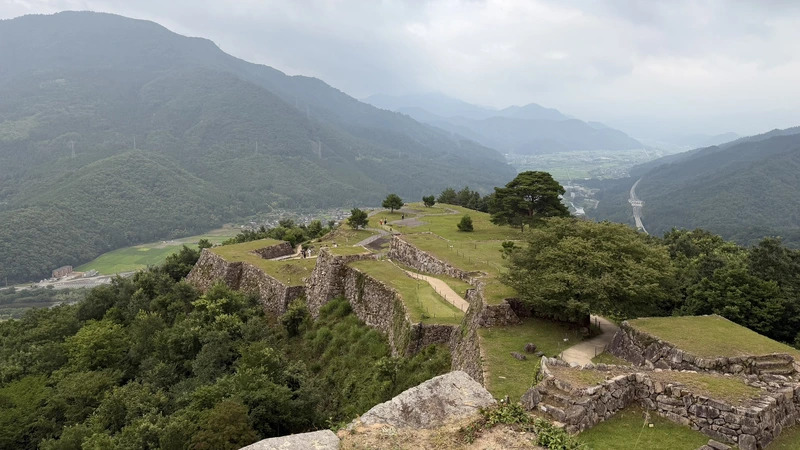
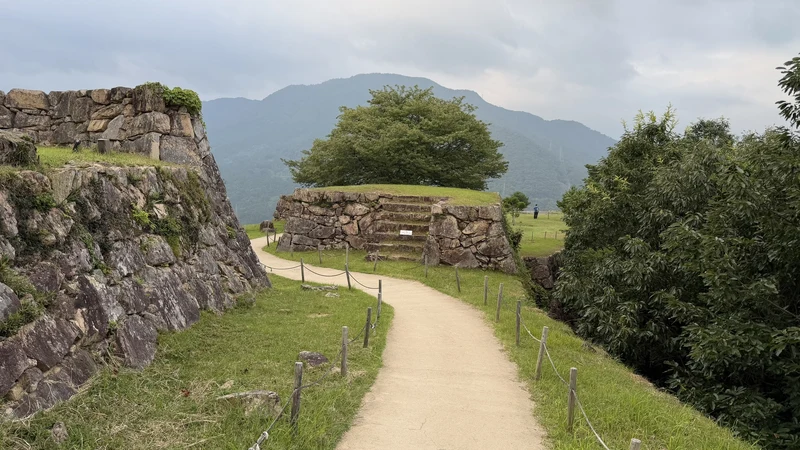
Inside the ruins, the route started at Kita-Senjo (the North Senjo bailey), then continued through Sannomaru (the Third Bailey), Ninomaru (the Second Bailey), Honmaru (the Main Bailey), and up to Tenshudai (the keep foundation). During a July 2026 visit, the viewing route was set up as one-way, so after Tenshudai the walk led back through Honmaru and Ninomaru before continuing on to Hiradono, Minami-Ninomaru (the South Ninomaru bailey), and Minami-Senjo (the South Senjo bailey).
Along the way, Hanayashiki-ato (the Hanayashiki bailey site) was closed to entry during this July 2026 visit, so it was only possible to look down on it from a higher point near Hiradono. If you are wondering whether that closure is still in effect, it is worth checking before your visit.
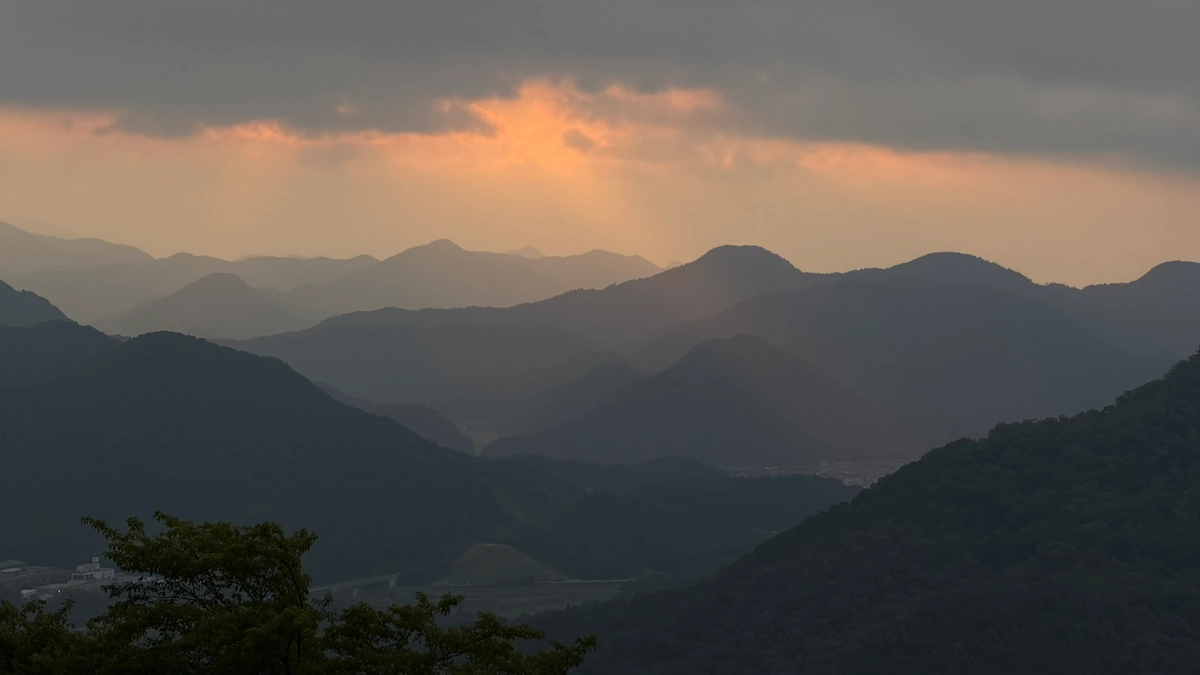
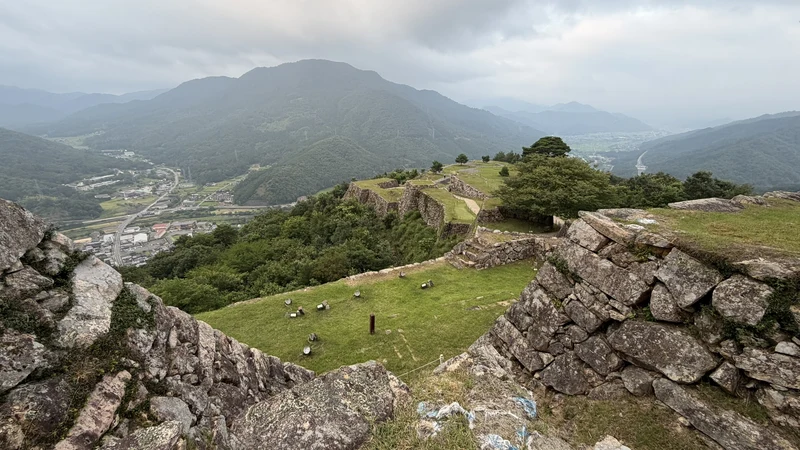
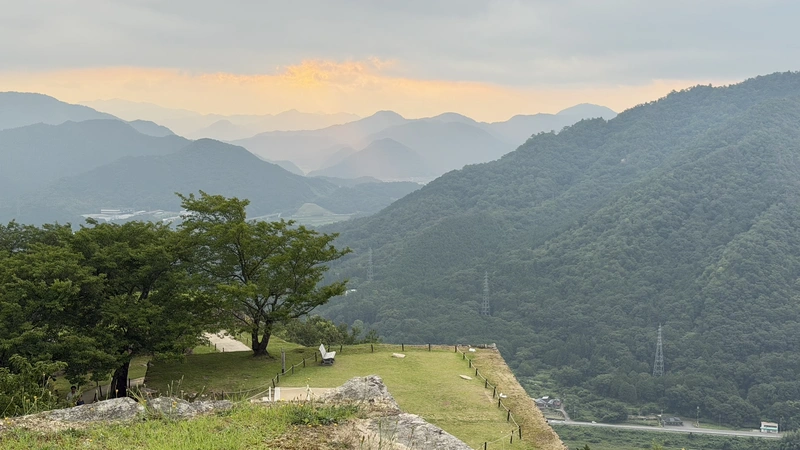
Climbing up to Tenshudai along the route, the sun broke through a gap in the clouds just then, lighting up the stone walls, the grass, and the distant mountains all at once. This was not the result of timing the visit for sunrise — it simply happened to appear while walking the normal viewing route.
Standing at Tenshudai, the site felt larger than expected. Walking from Kita-Senjo to Minami-Senjo, taking in Honmaru and Tenshudai along the way, felt like covering roughly 600 meters (a rough, felt estimate rather than a measured distance). Rather than one castle concentrated on a single peak, Takeda Castle Ruins felt like a long chain of baileys strung out along a mountain ridge.
Walking the sloped mountain path, it was hard not to think about the sheer effort it must have taken to carry that much stone up this same mountain and build these walls by hand.
Time spent inside the ruins came to about 50 minutes; from leaving the hotel to finishing the visit inside the ruins, not counting the walk back down, the whole outing took about 1 hour and 20 minutes.
For the walk back down, the South Trail (Minami-Tozando) was used, stopping at Hyome-jinja Shrine along the way, and it took about 50 minutes to reach the station. If you're traveling by train from Takeda Station, the round trip — climbing up, touring the ruins, and walking back down — comes to roughly 2 to 2.5 hours.
The History of Takeda Castle
Takeda Castle is traditionally said to have been built around 1443 on the orders of Yamana Mochitoyo — also known as Yamana Sozen, one of the most powerful regional military governors (shugo) in Japan at the time — who had it constructed for his retainer, the Otagaki family. This is not a fact confirmed in surviving documents; it is an oral tradition handed down over the centuries.
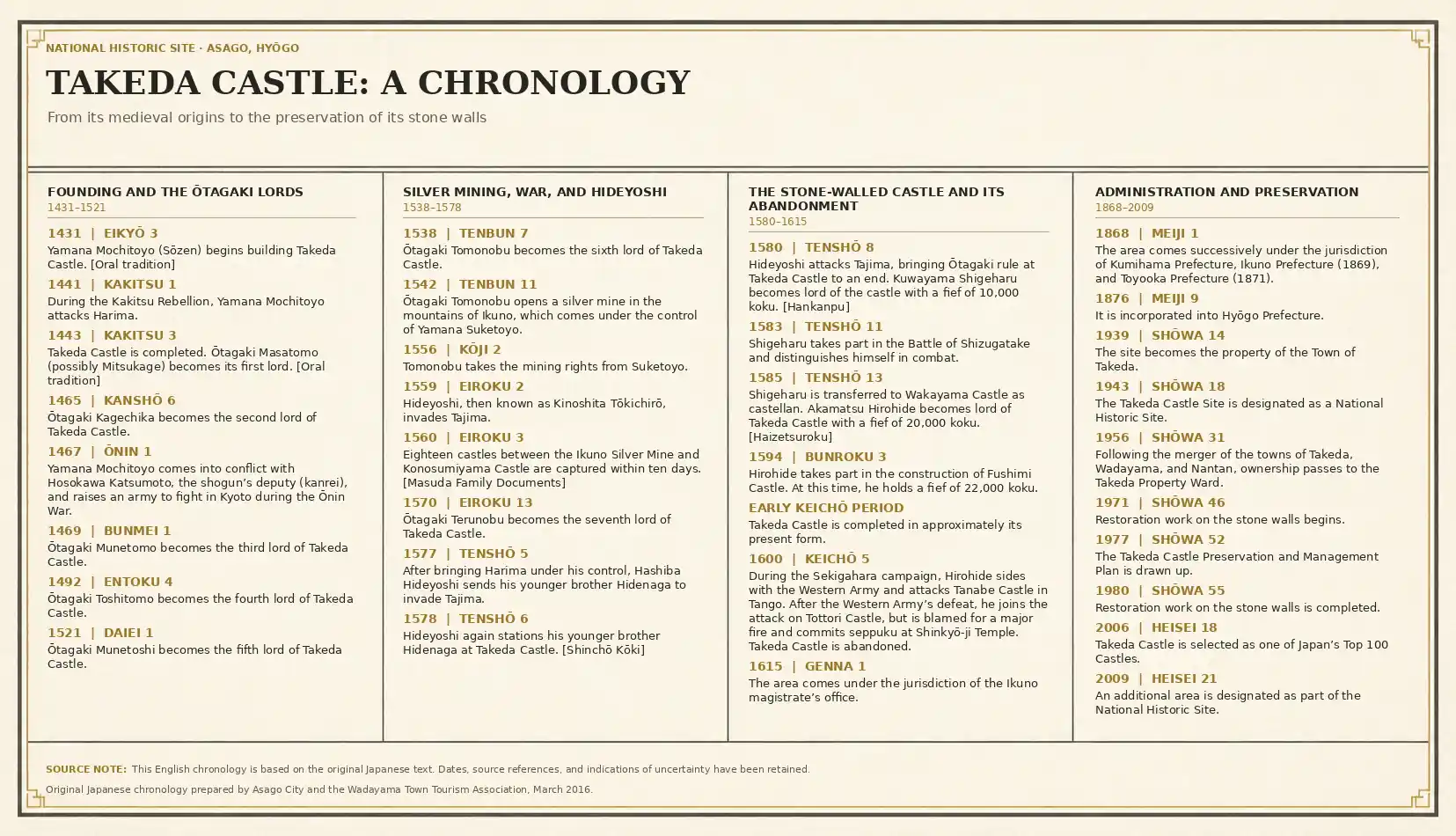
Afterward, the Otagaki family served as senior retainers of the Yamana clan and held the castle for several generations.
In the closing decades of the Sengoku (Warring States) period, after Hashiba Hideyoshi — the general who would later rise to power as Toyotomi Hideyoshi — conquered Tajima Province (roughly present-day northern Hyogo Prefecture, where Takeda Castle stands), his younger half-brother Hashiba Hidenaga served as the castle's deputy commander. Kuwayama Shigeharu became lord after Hidenaga, and in 1585 Akamatsu Hirohide took the castle, becoming its final lord.
The all-stone fortifications visible today are believed to date mainly from Akamatsu Hirohide's time as lord. Tourist information sometimes credits Hidenaga with rebuilding the castle, but the full stone-wall complex seen today cannot be attributed to Hidenaga alone. The stones are stacked using a technique called nozura-zumi — a rough method that uses natural, largely uncut stones — said to be the work of the Anou-shu, a group of stonemasons from Omi Province (now Shiga Prefecture, east of Kyoto). This, too, is a widely repeated account rather than a confirmed historical fact.
In 1600, amid the conflict surrounding the Battle of Sekigahara, Akamatsu Hirohide was ordered to take his own life, and Takeda Castle was abandoned. It was never used as a castle again; today it survives as a protected historic site consisting of stone walls and bailey remains. It was designated a National Historic Site in 1943, and the protected area was expanded in 2009.
In 2026, the NHK historical drama series "Toyotomi Kyodai!" ("The Toyotomi Brothers"), which follows Hideyoshi and Hidenaga, has brought renewed attention to Takeda Castle and its connection to Hidenaga.
What Survives Today, and What Does Not
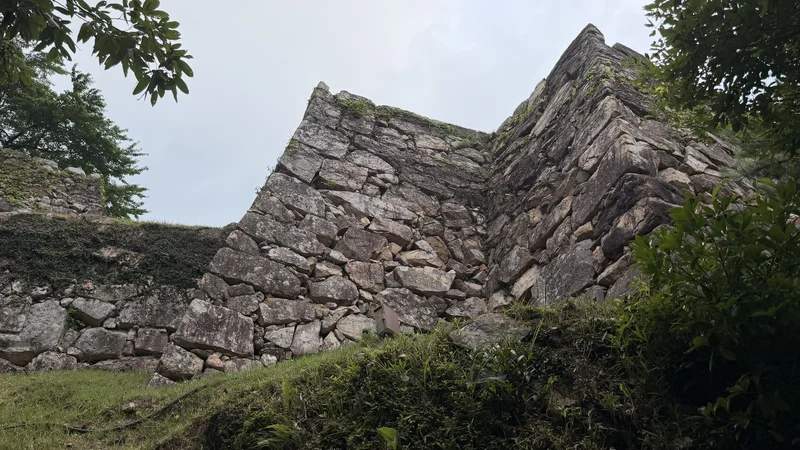
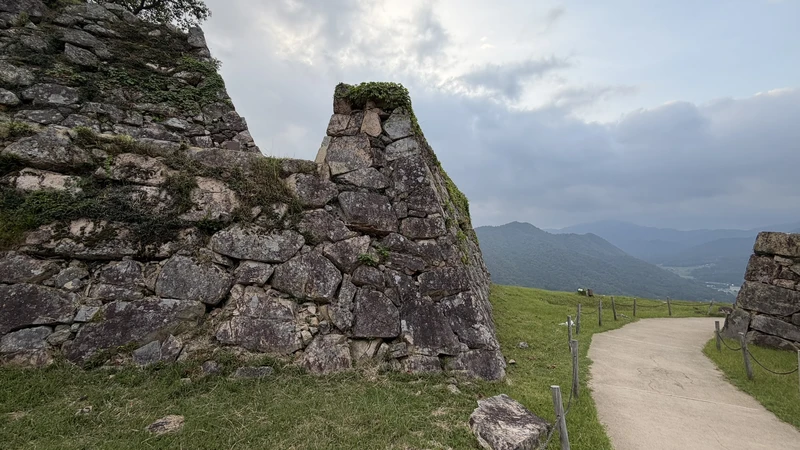
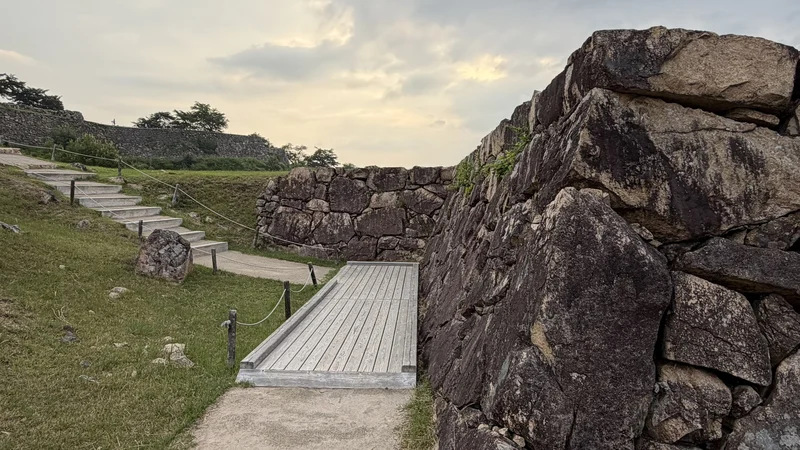
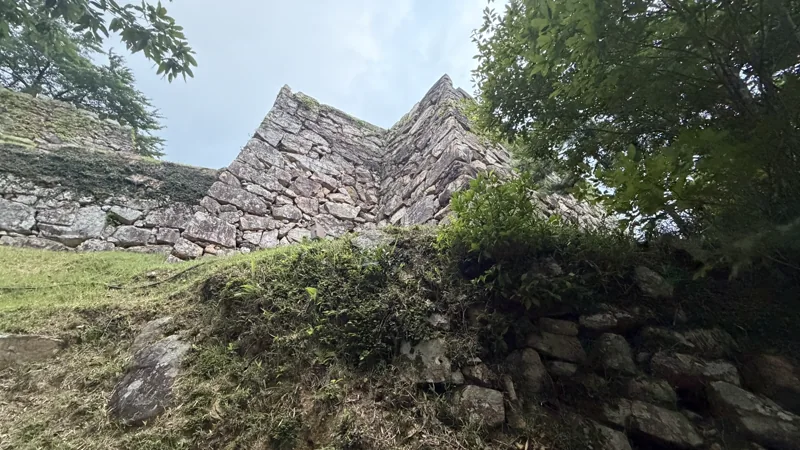
No buildings survive at Takeda Castle Ruins — there is no tower (tenshu), no turret (yagura), and no gate. What you actually see on site are the ruins themselves: stone walls, baileys (kuruwa, the terraced enclosures that once held the castle's buildings), gate sites, the keep foundation (tenshudai), and the shape of the mountain that all of it was built on.
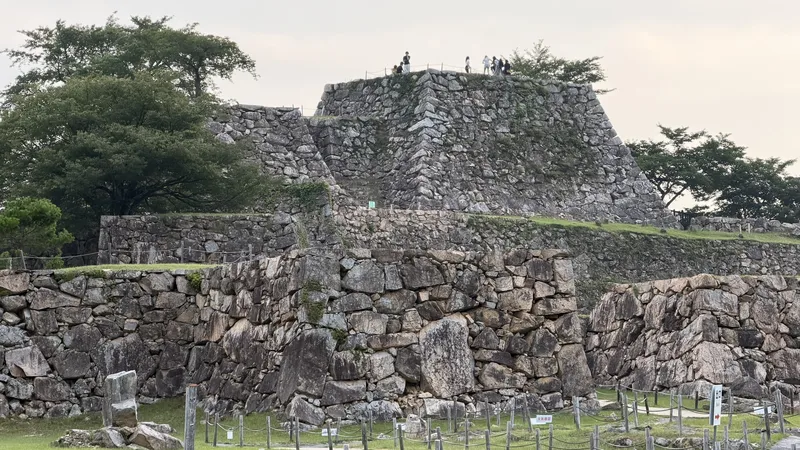
Tenshudai sits a step higher than everything around it, and its square, clearly outlined stone platform is easy to make out. The tower itself is gone, but standing on this high, squared-off foundation makes it easy to feel that this was the heart of the castle.
Tap a photo to enlarge it
At the same time, in wide, open baileys like Kita-Senjo and Minami-Senjo, it is not easy to tell from the stonework and terrain alone what buildings once stood there or how the space was used. Without a sign or an explanation nearby, these areas can simply look like large, flat clearings.
Even the stone walls themselves are not always easy to read: it can be genuinely difficult to tell original stonework apart from later repairs just by looking. In the same way, some of the lawns and walking paths seen during a July 2026 visit were likely landscaped after the site opened to the public, rather than dating from the castle's active years. The exact dates and extent of that landscaping would need to be confirmed against on-site signage and official records.
The appeal of Takeda Castle Ruins is not simply the absence of buildings — it is the chance to look at the stone walls and the terrain and, with the help of on-site signage and other resources, picture what once took place here.
Guide to the 13 Sights, in Viewing Order
During a July 2026 visit, the tour of Takeda Castle Ruins followed a one-way route. After reaching Tenshudai, it was possible to walk back through Honmaru and Ninomaru. Below are 13 sights, introduced in that viewing order.
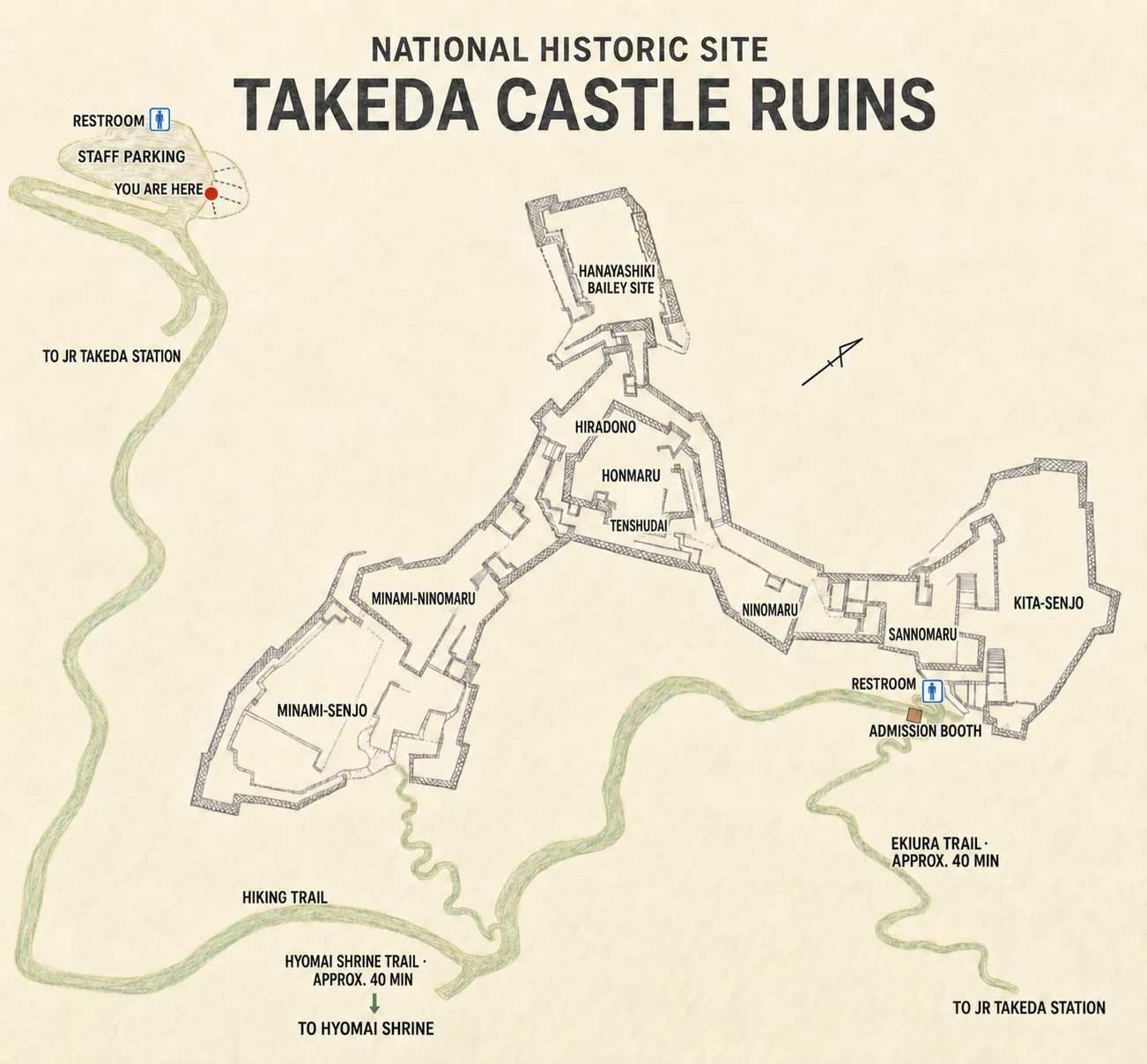
The order below is based on the on-site layout maps and information boards, combined with a firsthand walk through the ruins.
Mitsuke Turret Site (見附櫓跡) 🎥 360°
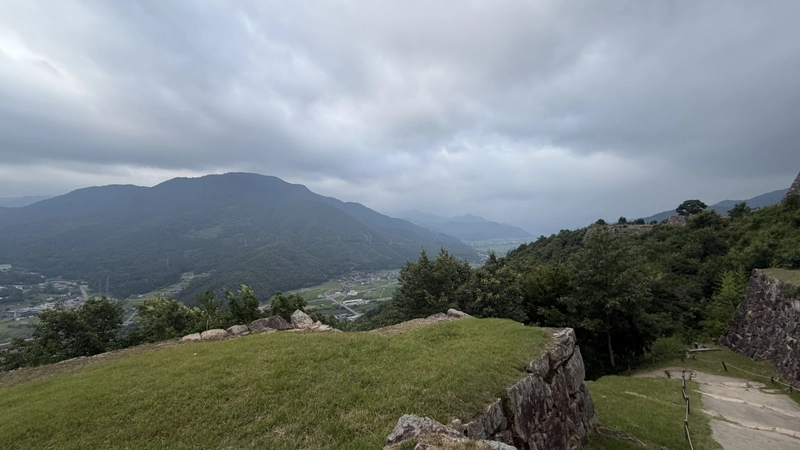
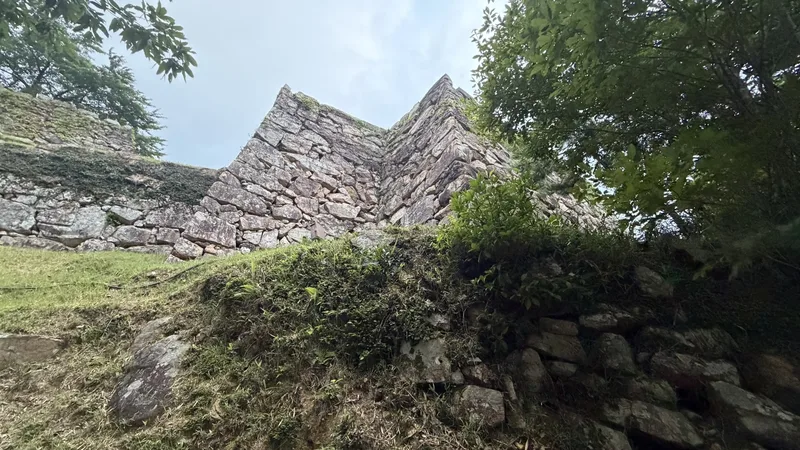
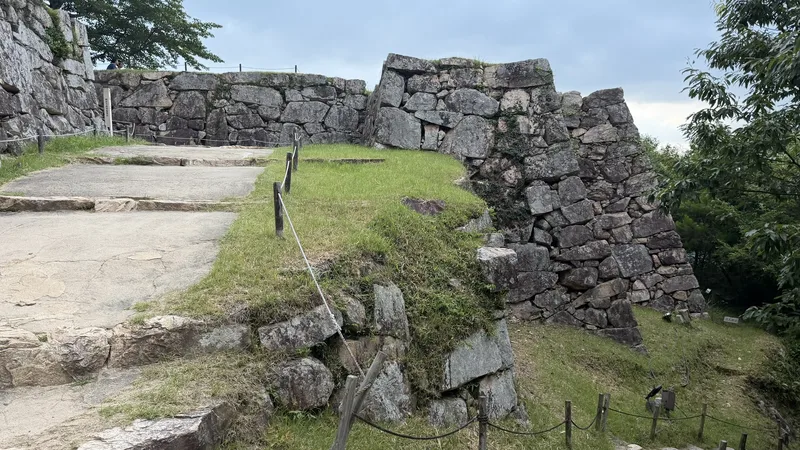
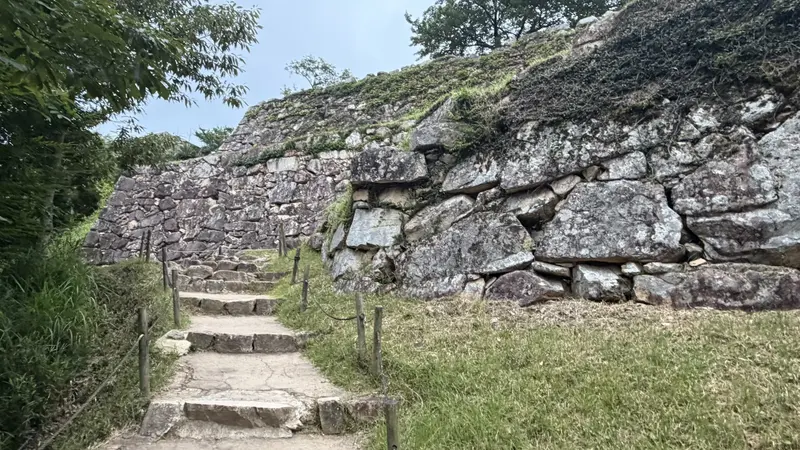
Mitsuke Turret Site marks where a turret (yagura, a defensive tower smaller than the main keep) is said to have stood. On-site signage was hard to read clearly enough to pin down the exact spot, so this section instead shows the viewing path and scenery around the general area.
Kita-Senjo (北千畳) 🎥 360°
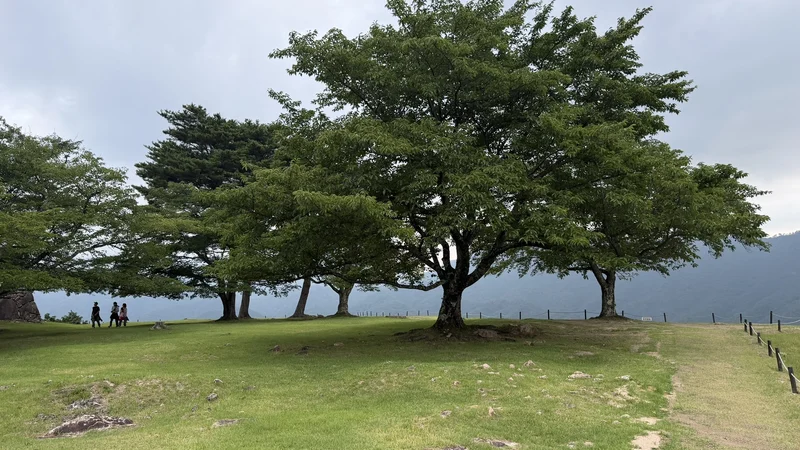
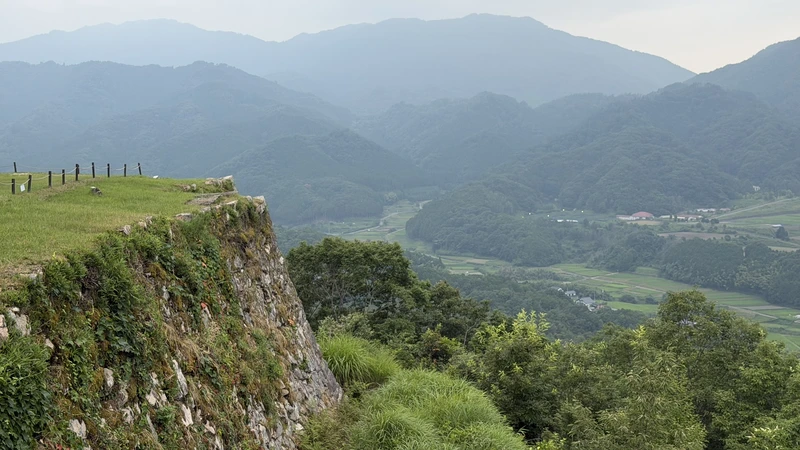
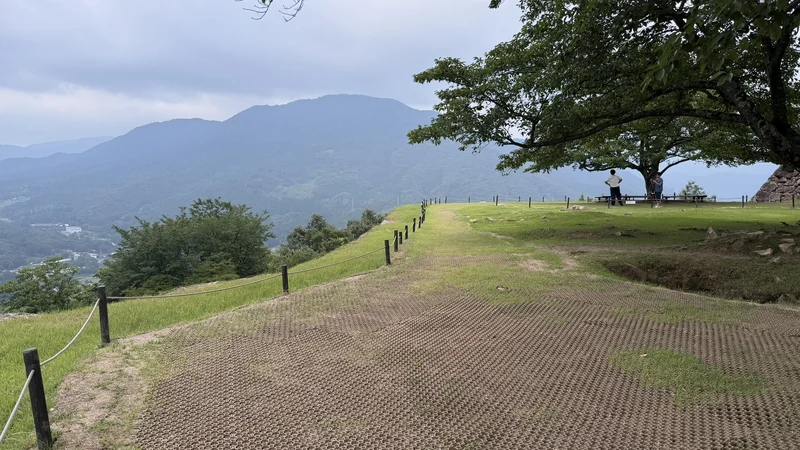
Kita-Senjo, the North Senjo bailey, is the first wide, open bailey visitors reach inside the ruins. The view opens up right after finishing the climb, looking out over the town below and the mountains all around. It is the spot that first gives you the sense of having arrived at Takeda Castle Ruins.
Sannomaru (三の丸) 🎥 360°
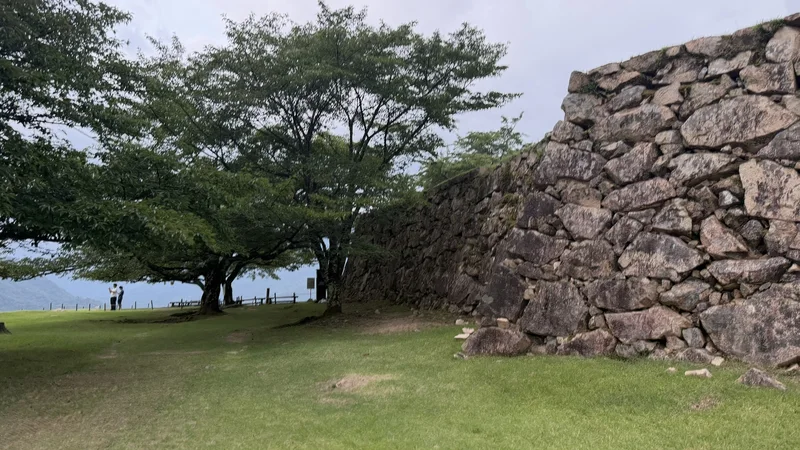
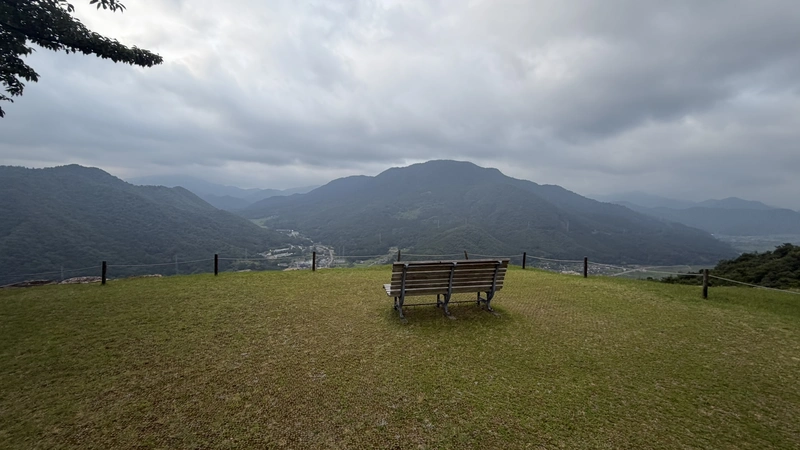
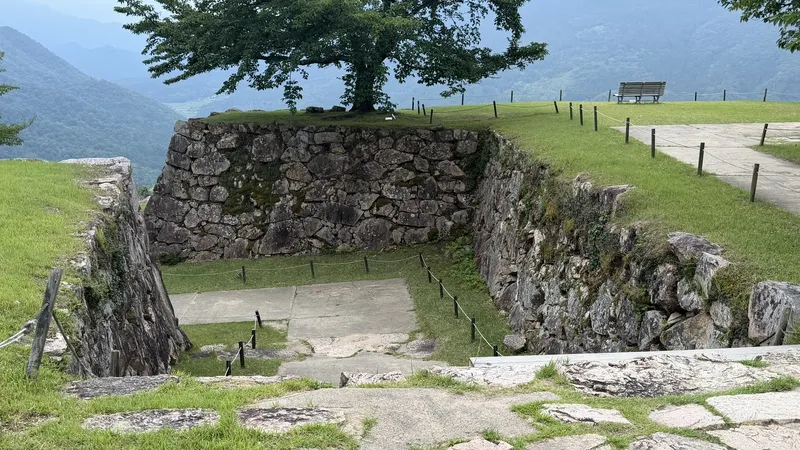
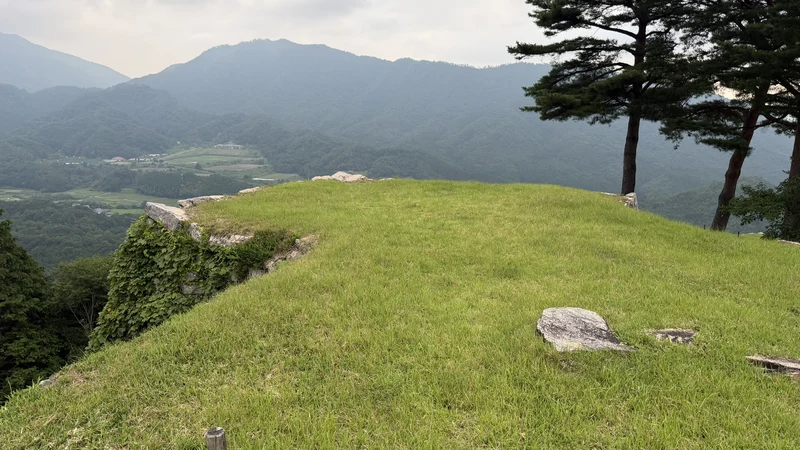
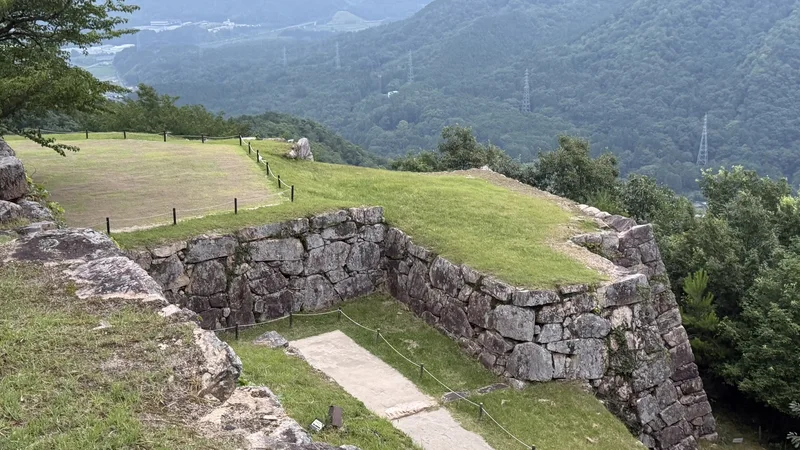
Sannomaru, the Third Bailey, is described on site as including a masugata koguchi, a squared, box-shaped gate enclosure used to slow and expose attackers. The photos in this section were taken around what appears, from their order and position, to be the Sannomaru area. On the stretch leading from Sannomaru toward the central baileys (Ninomaru, Honmaru, and Tenshudai), there is also a kuichigai koguchi — a staggered, offset gate passage designed to break up a straight line of attack.
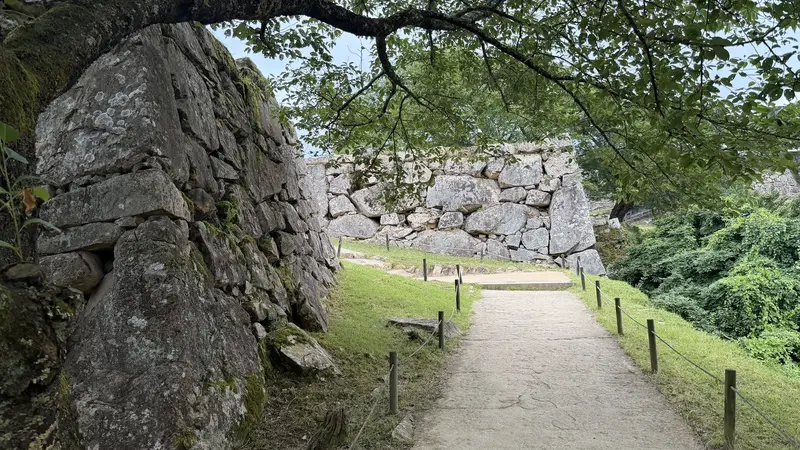
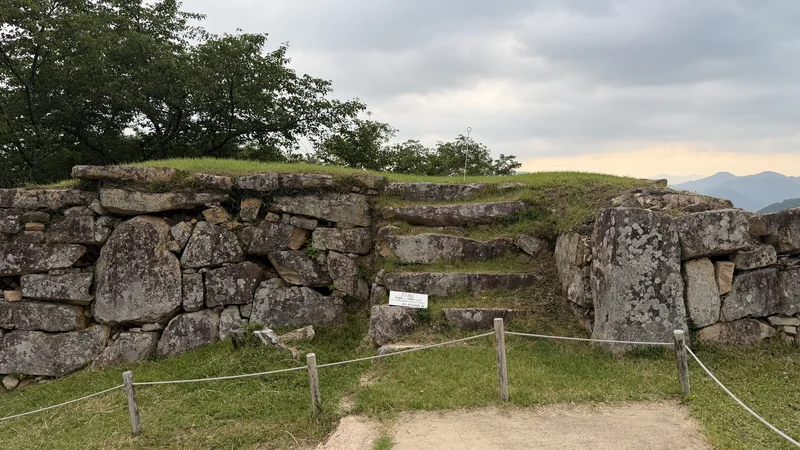
Take-no-mon Gate Site (武の門跡) 🎥 360°
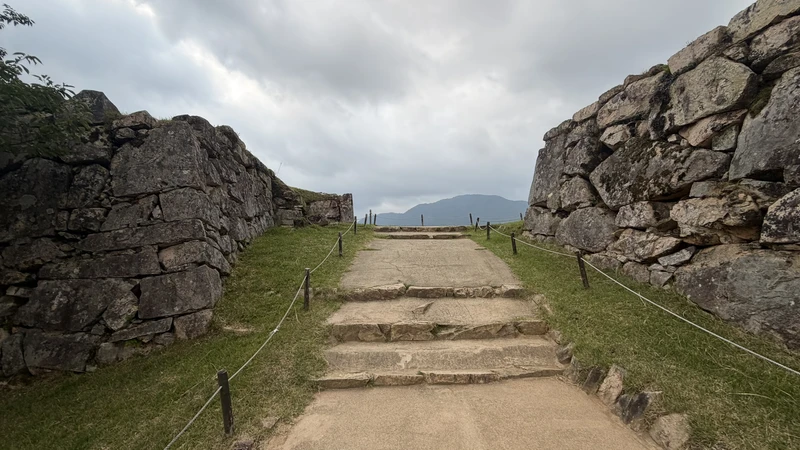
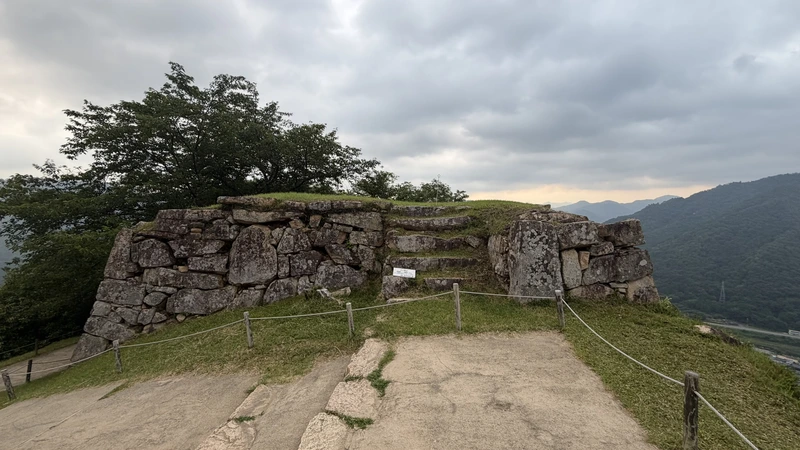
Take-no-mon Gate Site marks a gate that once stood between Sannomaru and Ninomaru. A bending, gate-like passage enclosed by stone walls still survives here.
Ninomaru (二の丸) 🎥 360°
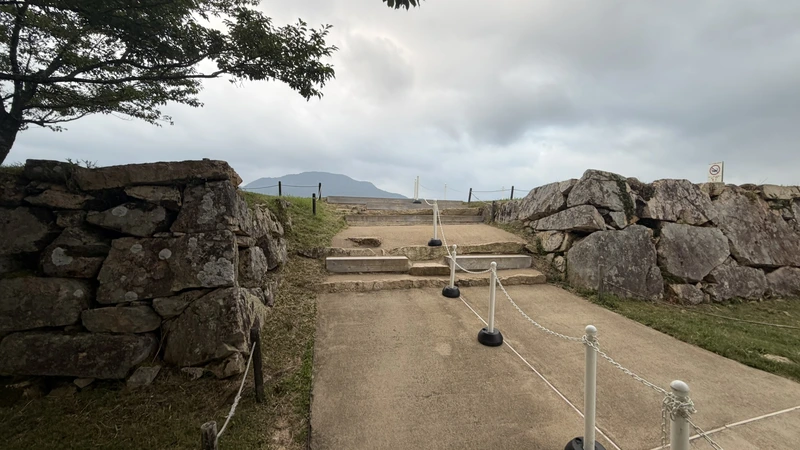
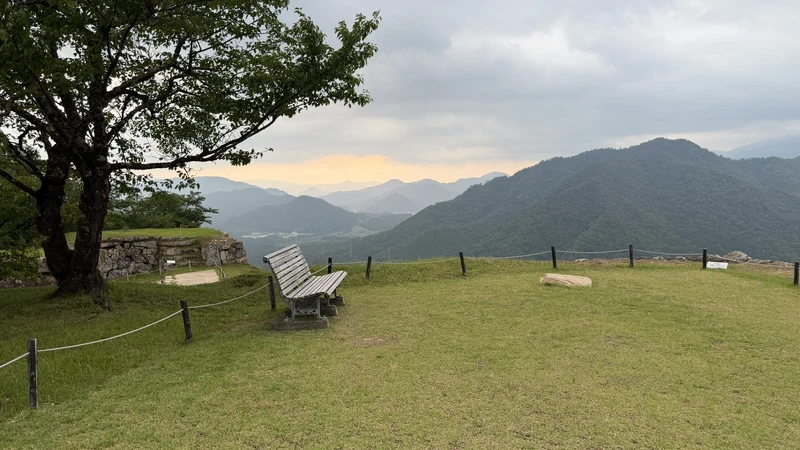
Ninomaru, the Second Bailey, sits next to Honmaru. A narrow entrance enclosed by stone walls survives here, along with benches for visitors to rest.
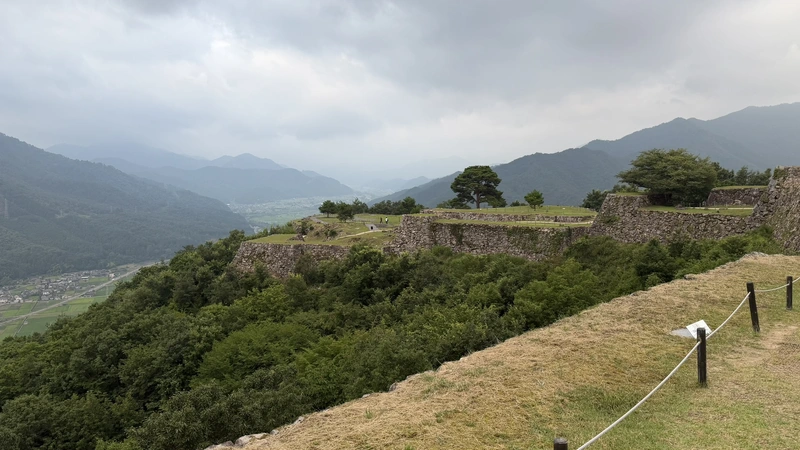
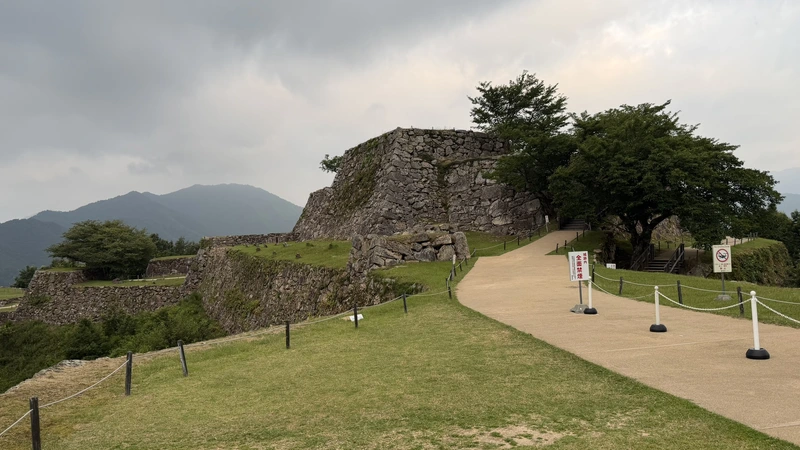
Honmaru (本丸) 🎥 360°
Honmaru, the Main Bailey, is one corner of the central group of baileys next to Tenshudai.
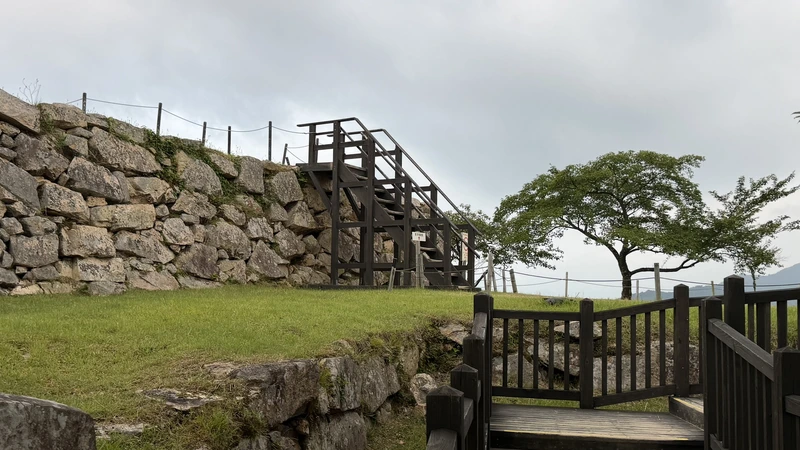
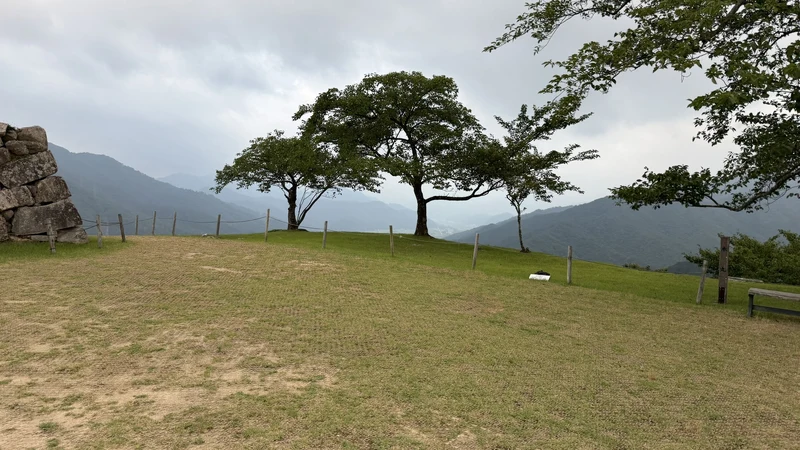
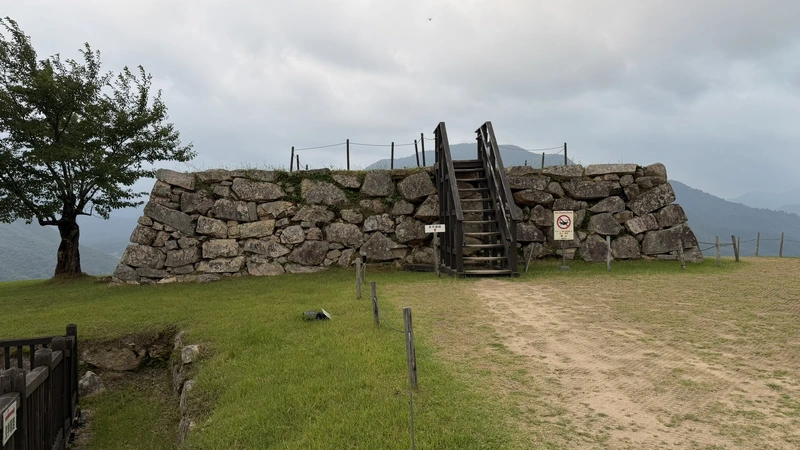
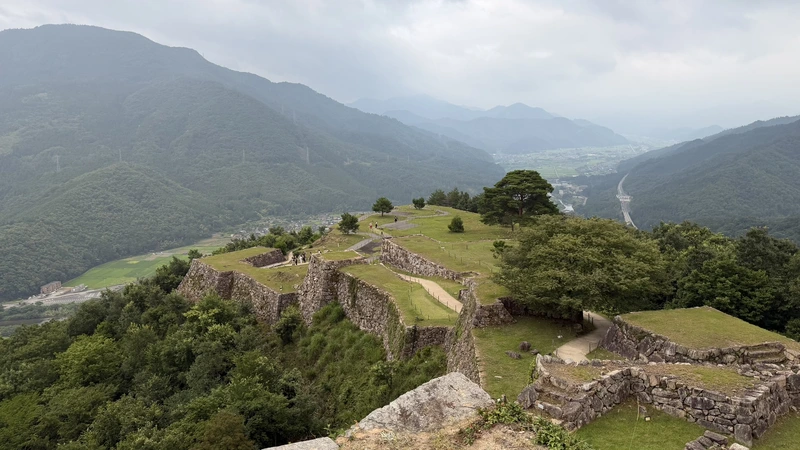
Tenshudai (天守台) 🎥 360°
Tenshudai, the stone foundation that once supported the castle's main keep (tenshu), is the highest point inside the ruins, with views down over Honmaru, Ninomaru, and the baileys and stone walls stretching to the north and south. The keep itself is gone, but standing on this high stone platform makes it easy to feel that this was once the center of the castle. It is also the best spot to take in, all at once, how the different parts of Takeda Castle Ruins connect to one another.
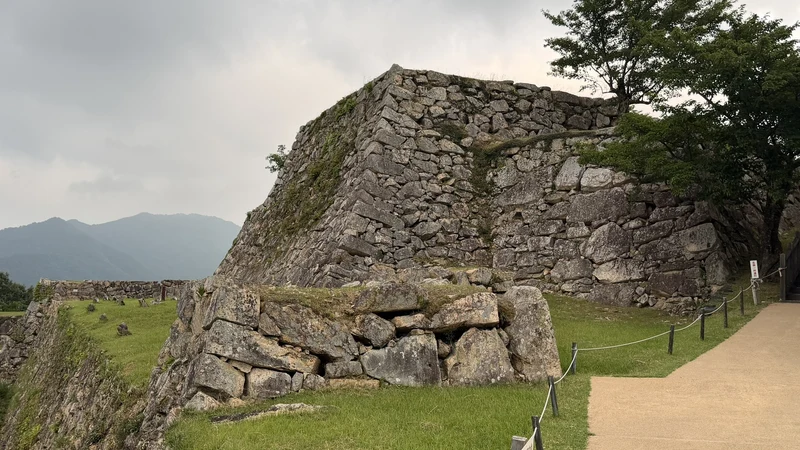
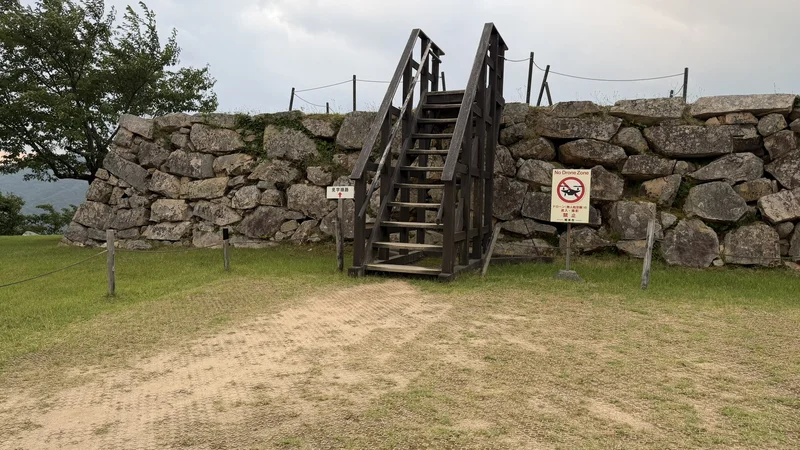
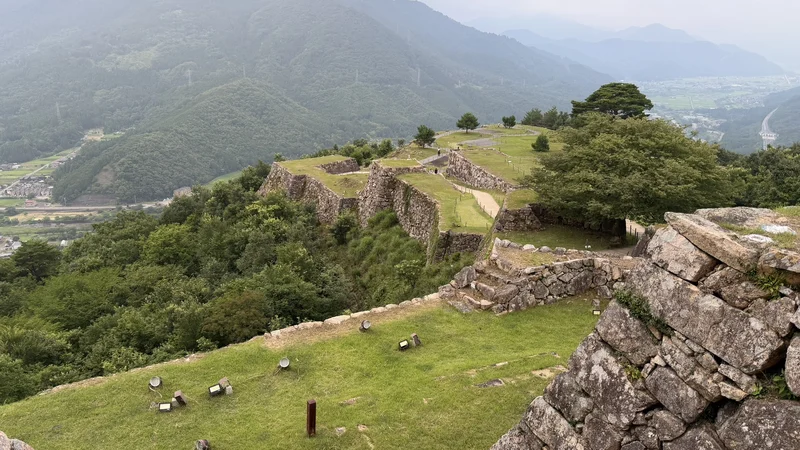
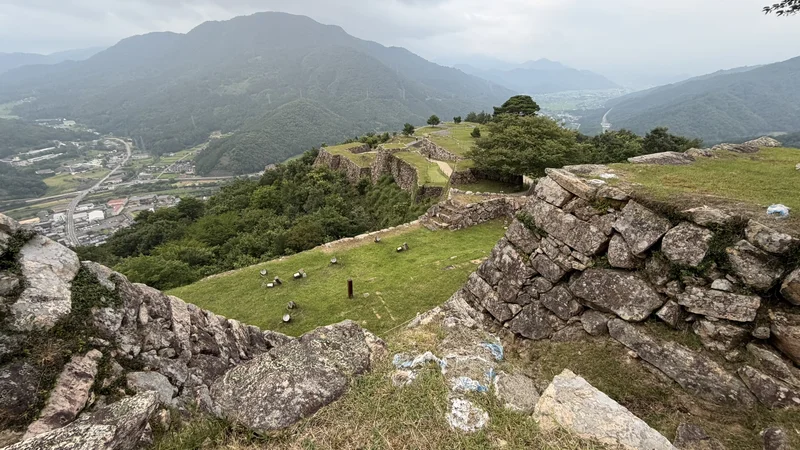
Hanayashiki Bailey Site (花屋敷跡) 🎥 360°
Hanayashiki Bailey Site was closed to entry during a July 2026 visit, so it was not possible to walk inside it. It was viewed instead from a higher point near Hiradono, looking down. Check the latest information before your visit to see whether this closure is still in effect.
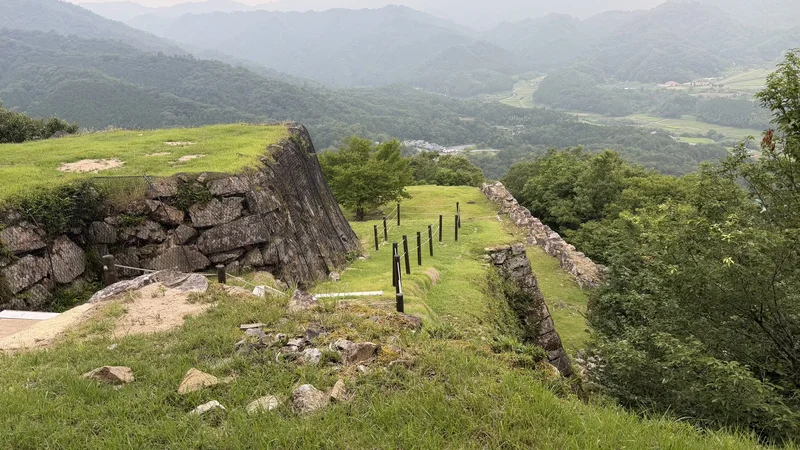
Minami-Ninomaru (南二の丸) 🎥 360°
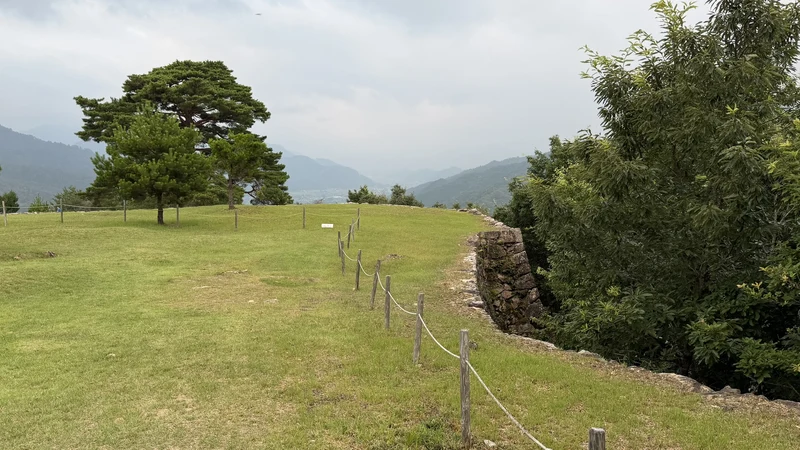
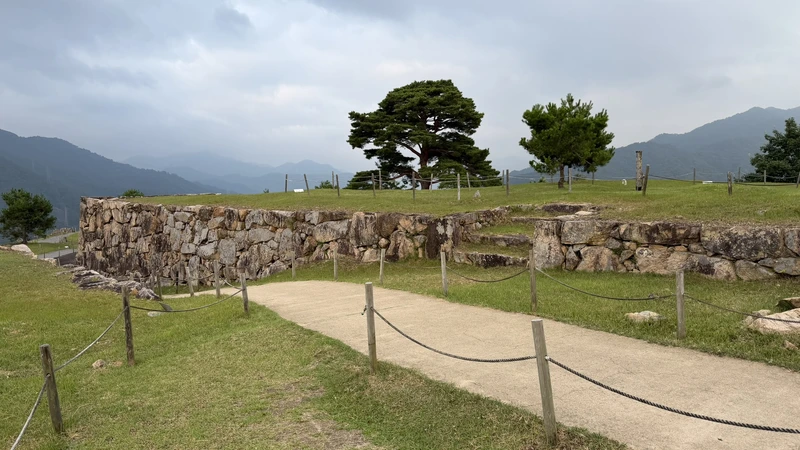
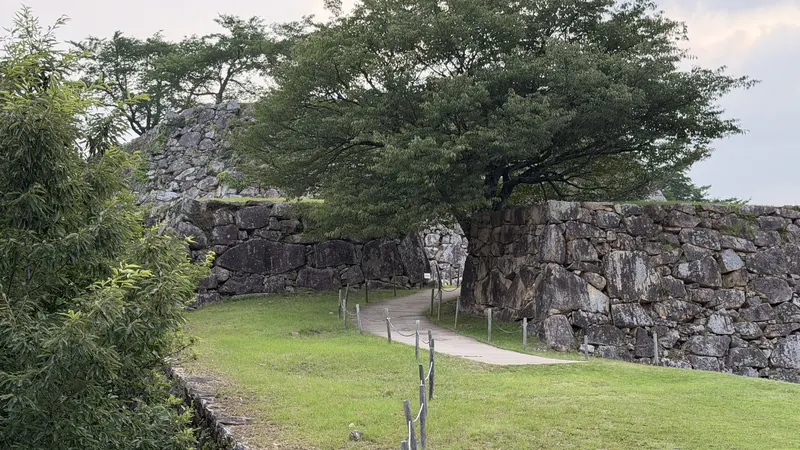
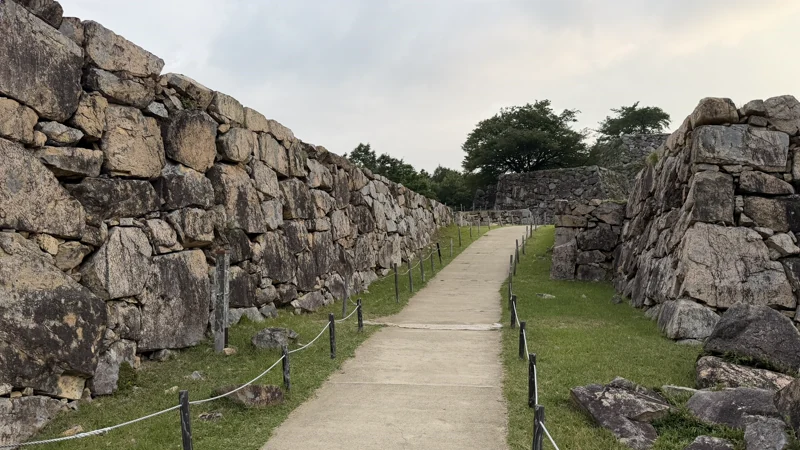
From Minami-Ninomaru, the South Ninomaru bailey, you look up at Tenshudai from below. In contrast to the view down from Tenshudai, this angle shows the high central keep foundation and the stone walls and gate sites stacked beneath it in a way that felt genuinely three-dimensional. Small stone walls and what appear to be gate sites are packed closely together throughout the area, making clear that the castle was built up from many smaller sections rather than one single, large stone wall.
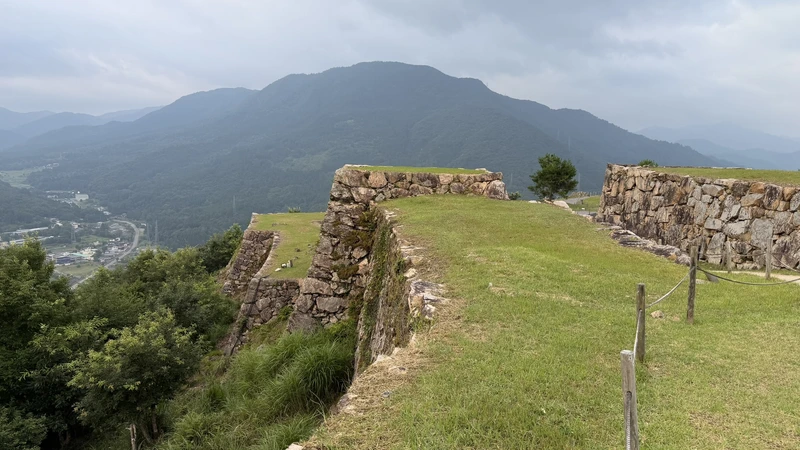
Main Gate Site (正門跡)
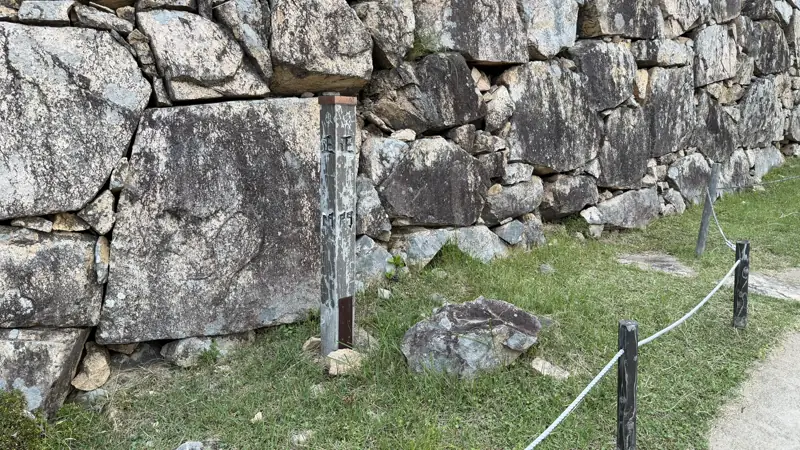
Main Gate Site marks a former gate located between Minami-Ninomaru and Minami-Senjo. On-site signage labels it simply "Seimon" ("Main Gate").
Minami-Senjo (南千畳) 🎥 360°
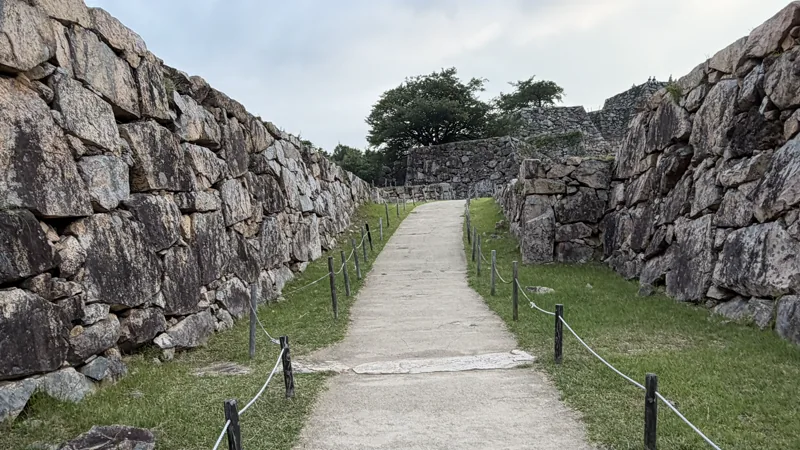
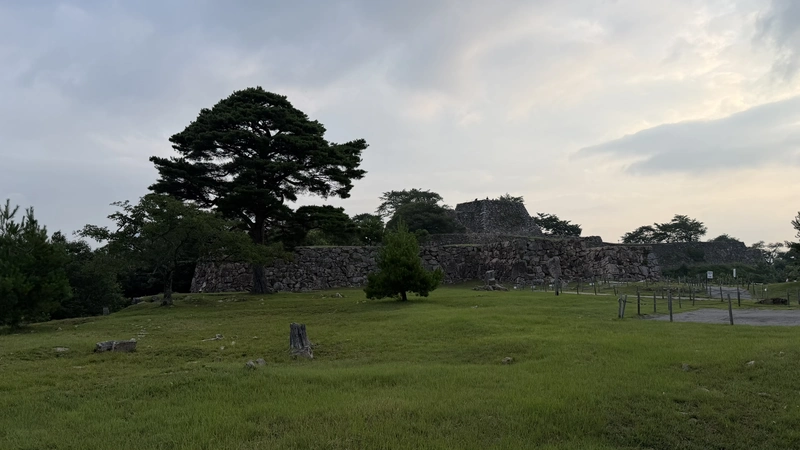
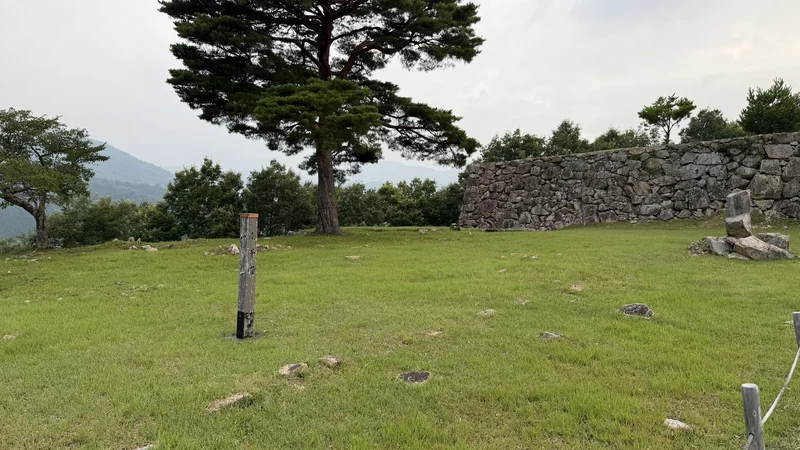
Minami-Senjo, the South Senjo bailey, is the wide, open bailey walked near the end of the viewing route. Like Kita-Senjo, it opens into a broad, open space, and it serves as the closing sight of a visit to Takeda Castle Ruins.
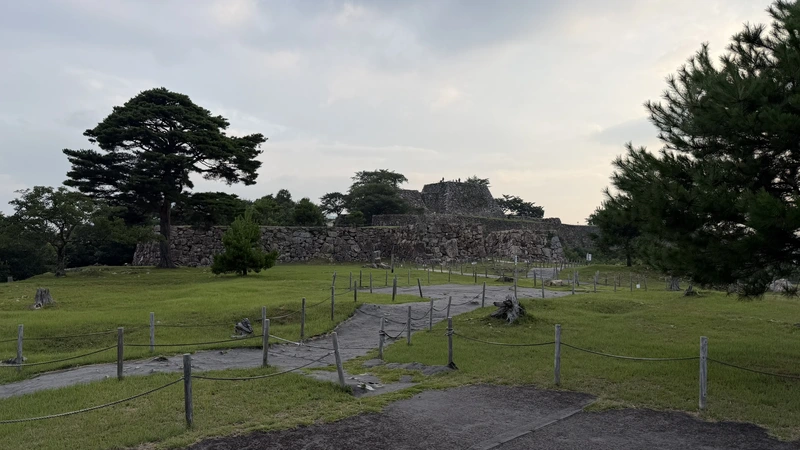
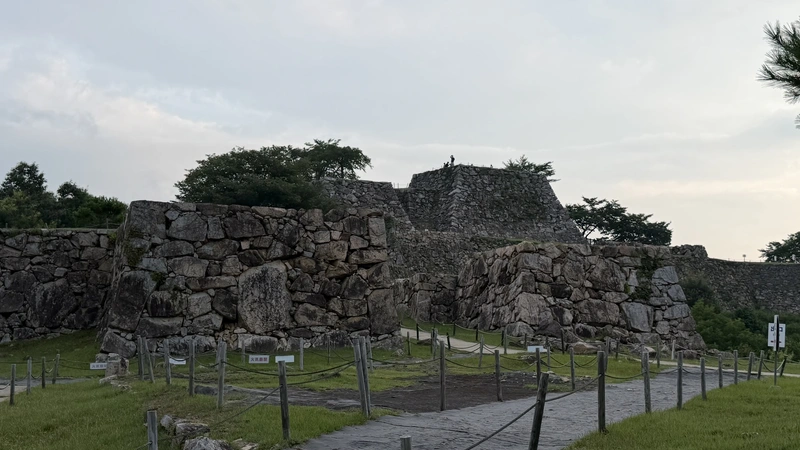
Ote Entrance / Main Gate Site (大手口・大手門跡) 🎥 360°
Ote Entrance and Main Gate Site mark the area that once formed the castle's front approach. The on-site marker post reads "Ote-guchi" ("Ote Entrance"), and this area is also referred to as the Ote-mon (Main Gate) site.
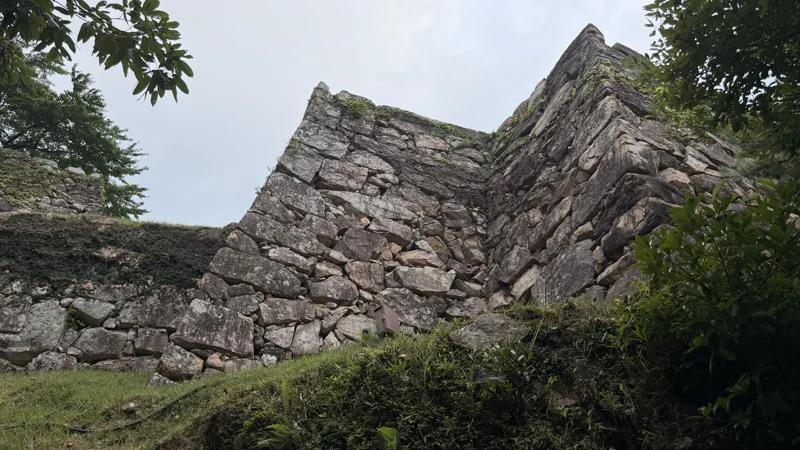
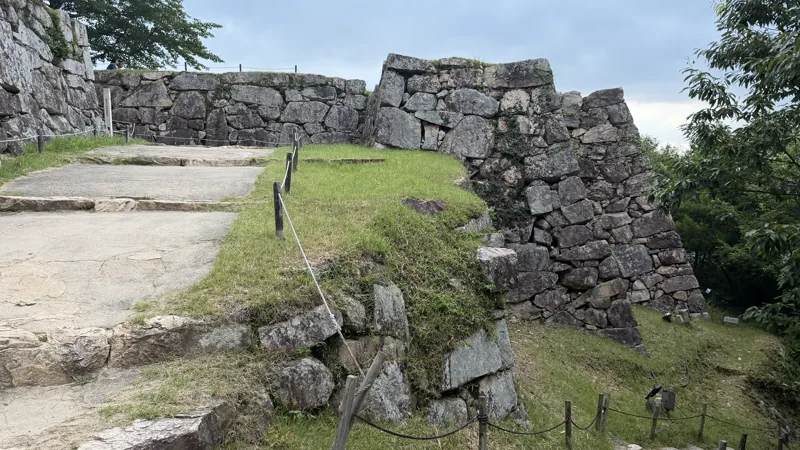
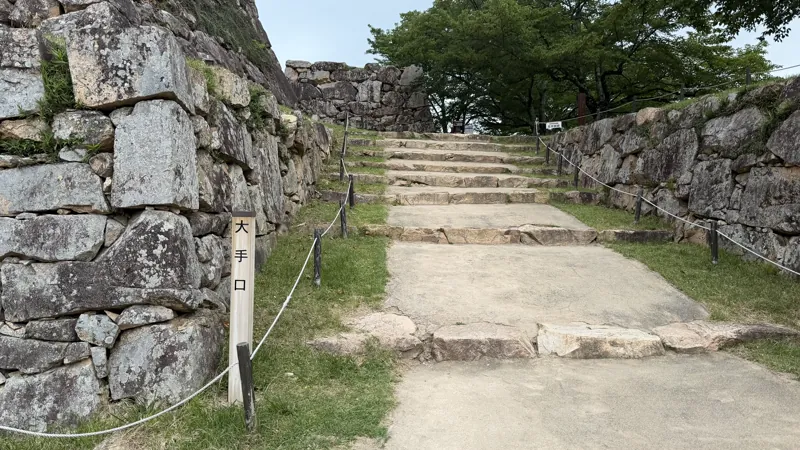
"Ochinai Iwa" — The Rock That Never Falls (落ちない岩) 🎥 360°
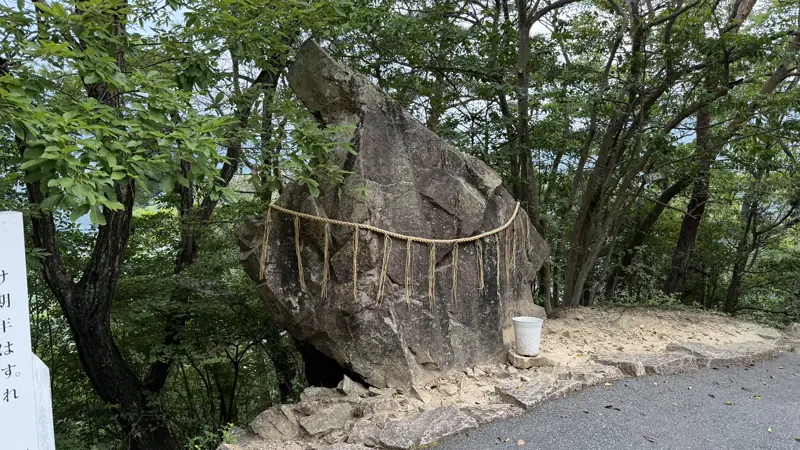
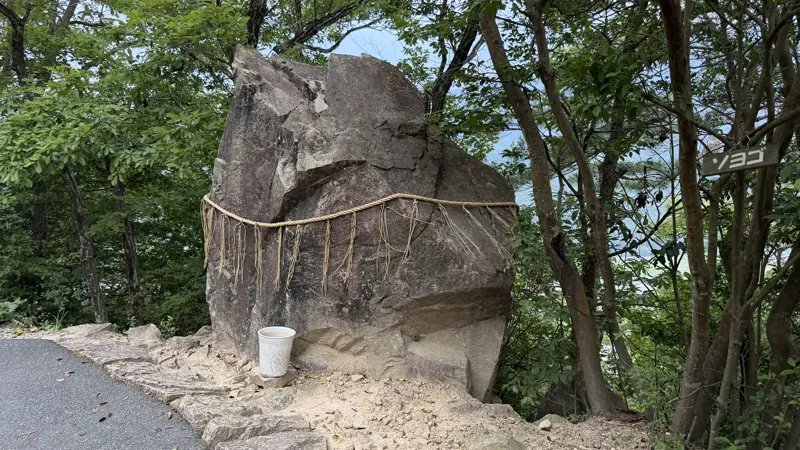
Ochinai Iwa is a rock beside the trail on the way down after finishing the tour of the ruins. A sign nearby explains its name and story. This name is now also used by Asago City as the title of a local event; the fuller story behind the rock, and its legend, is covered in the Legends & Trivia section of this guide.
The 13 Core Sights at a Glance
| Spot ID | Name | Type / Current Condition |
|---|---|---|
| TC-01 | Mitsuke Turret Site (見附櫓跡) | Turret site / ruin |
| TC-02 | Kita-Senjo (北千畳) | Bailey / stone-wall remains |
| TC-03 | Sannomaru (三の丸) | Bailey / gate passage / stone-wall remains |
| TC-04 | Take-no-mon Gate Site (武の門跡) | Gate site |
| TC-05 | Ninomaru (二の丸) | Bailey / stone-wall remains |
| TC-06 | Honmaru (本丸) | Main bailey / stone-wall remains |
| TC-07 | Tenshudai (天守台) | Keep foundation / ruin |
| TC-08 | Hanayashiki Bailey Site (花屋敷跡) | Bailey / site |
| TC-09 | Minami-Ninomaru (南二の丸) | Bailey / stone-wall remains |
| TC-10 | Main Gate Site (正門跡) | Gate site |
| TC-11 | Minami-Senjo (南千畳) | Bailey / stone-wall remains |
| TC-12 | Ote Entrance / Main Gate Site (大手口・大手門跡) | Gate passage / gate site / stone-wall remains |
| TC-13 | "Ochinai Iwa" Rock (落ちない岩) | Trailside rock / local landmark and legend |
Detailed construction dates, the specific people responsible for renovations, and the exact timing of each sight's disuse are, in most cases, not well enough documented to state with confidence, so this article does not guess at them.
Nearby Facilities: Yamashiro-no-Sato, the Tenku-no-Shiro Information Center, and Old Takeda Town
Around Takeda Castle Ruins, you will find Yamashiro-no-Sato, the base for parking and the shuttle bus; the Tenku-no-Shiro ("Castle in the Sky") Information Center, which has exhibits and visitor information; and old Takeda town, spread around the station.
Yamashiro-no-Sato
This is the starting point if you are arriving by car or by the Tenku Bus. The West Trail (Nishi-Tozando) from here is an official estimate of about 40 minutes.
Tenku-no-Shiro Information Center
This exhibition facility covers the history of Takeda Castle and its present-day condition, and it is also one of the distribution points for the goshuin-jo (a decorative, calligraphed castle-visit certificate, similar in spirit to the goshuin stamps collected at shrines and temples across Japan) and for the Japan's Top 100 Castles stamp, part of a nationwide stamp-rally challenge for castle enthusiasts. During a July 2026 visit, the center was still closed when the tour of the ruins finished early in the morning, so it was not possible to see the exhibits or use the counter that handles the goshuin-jo and stamp. If you are planning an early-morning visit, stopping by this center the day before, during its regular opening hours, makes it much easier to plan your schedule.
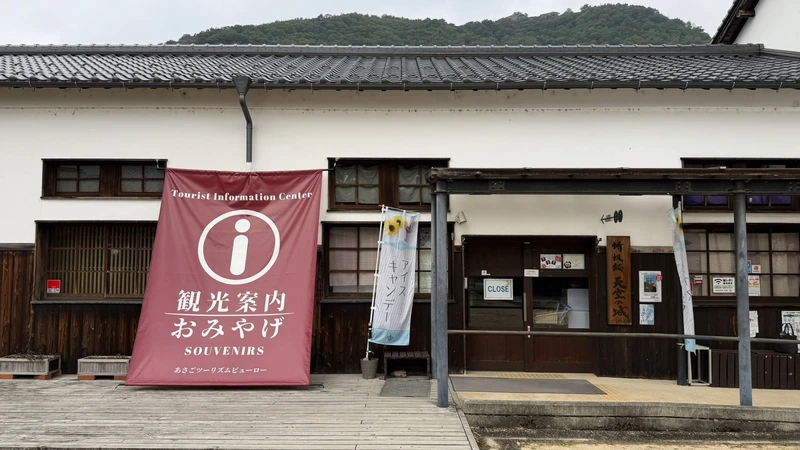
Old Takeda Town
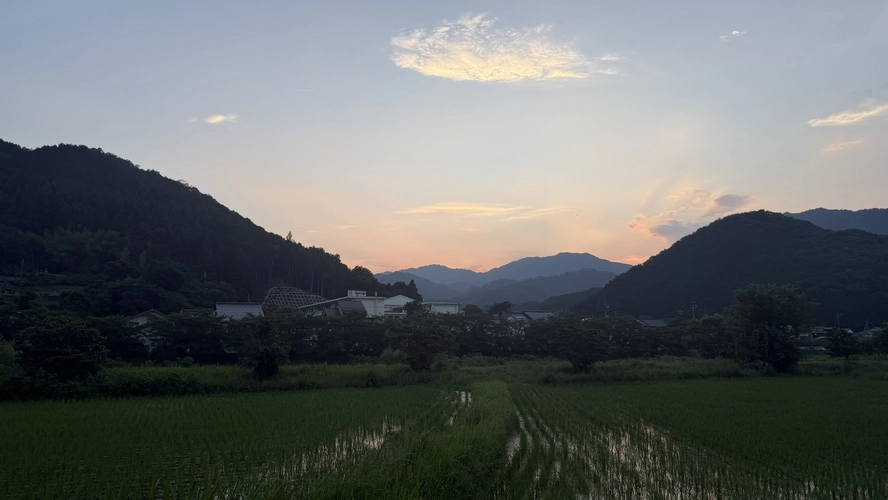
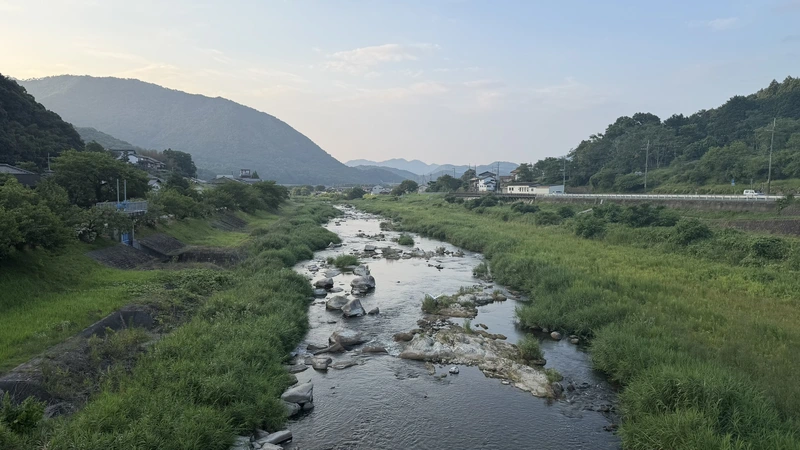
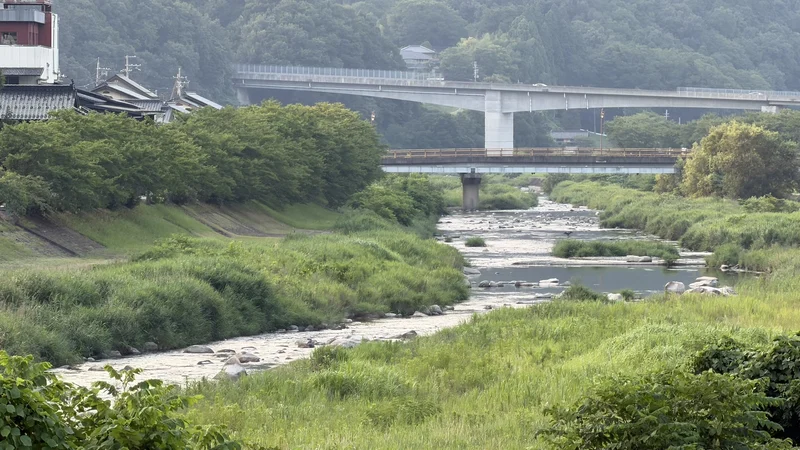
Around Takeda Station, a small area of temple-lined streets still carries the atmosphere of the old castle town. During a July 2026 visit, this guide's author only passed through the streets near the station on the way from the hotel to the trailhead, without setting aside dedicated time to explore the old town itself. A closer look at the town is planned for a future article.
Other Nearby Spots
A few more places are within easy walking distance of JR Takeda Station, beyond the castle ruins and the facilities above.
Otemon, in the Town Below (大手門)
Otemon is a site in the town of Takeda, believed to mark the location of a former outer gate. Don't confuse it with the "Ote Entrance / Main Gate Site" (大手口・大手門跡) inside the castle ruins themselves, covered as sight #12 in the viewing-order guide above — the two are separate locations that happen to share a similar name.
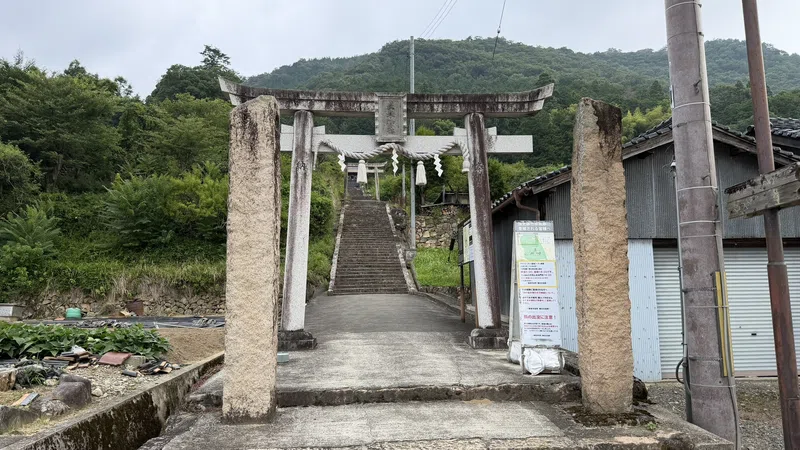
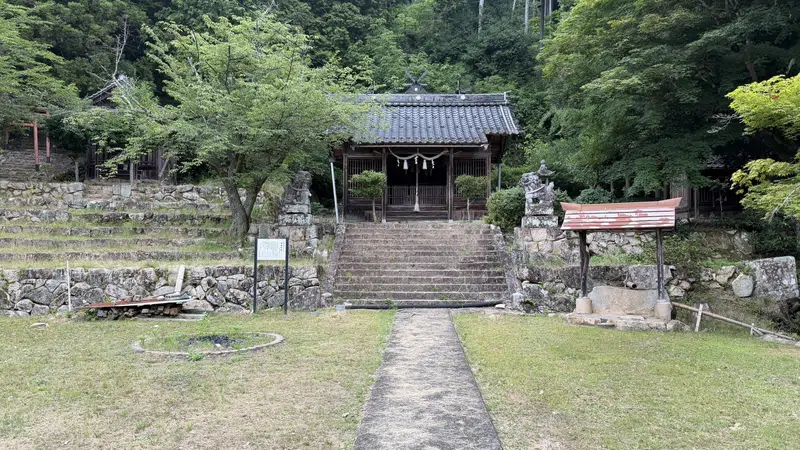
Hyome-jinja Shrine (表米神社)
Hyome-jinja is a Shinto shrine (jinja) along the South Trail (Minami-Tozando) — the route used for the descent described earlier in this guide. Its grounds include a dohyo, a sumo ring, and the torii gate at its entrance looks out over a view of the town of Takeda.
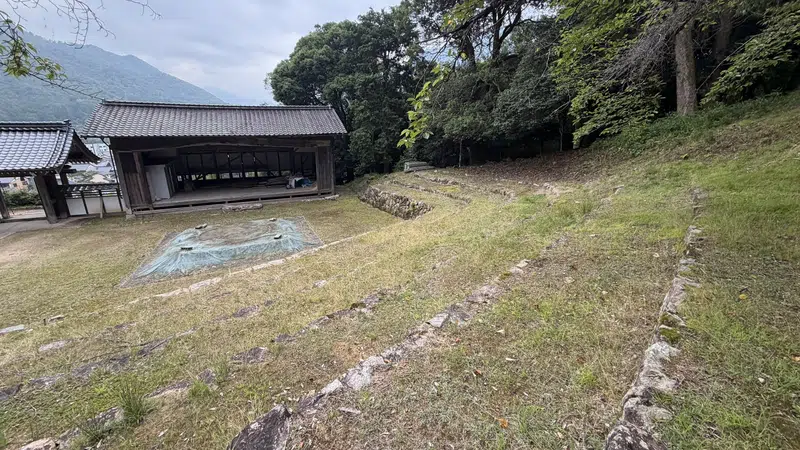
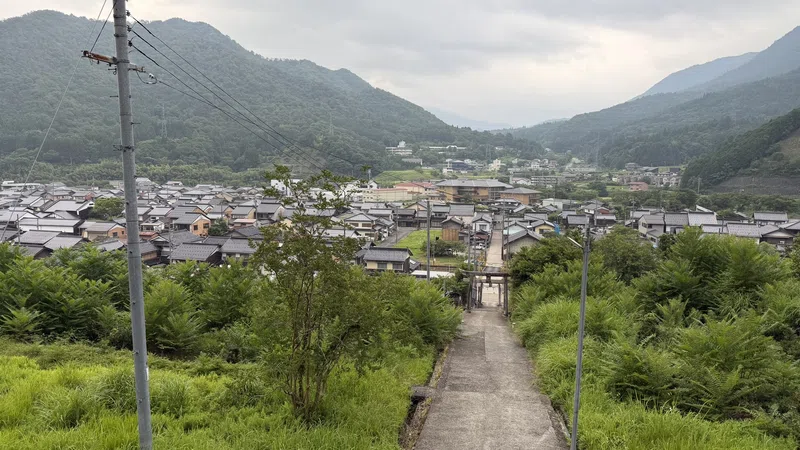
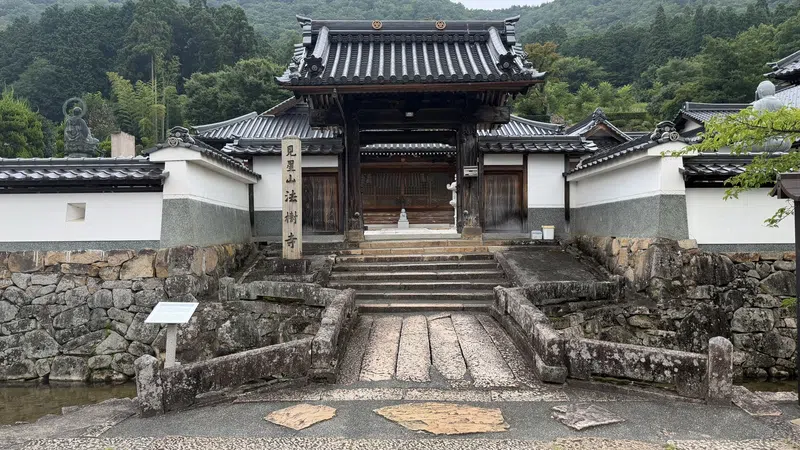
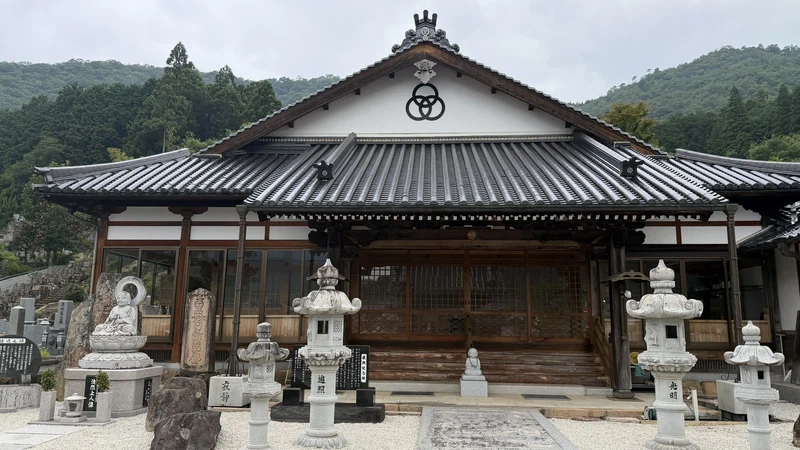
The Takeda Teramachi: Four Temples on One Street (竹田寺町通)
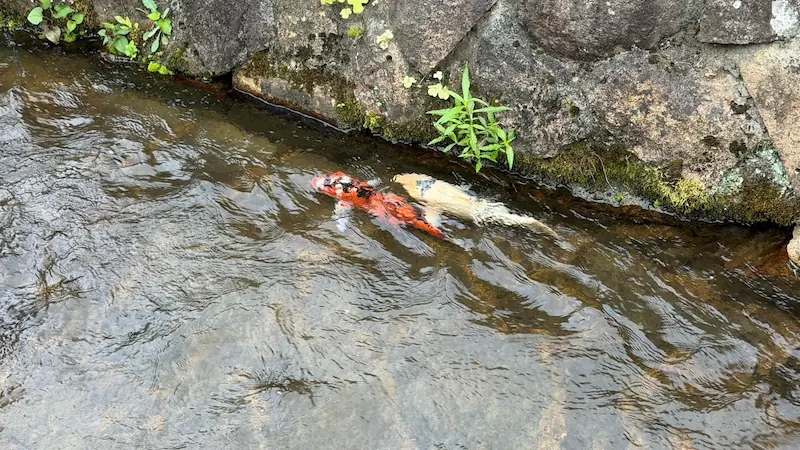
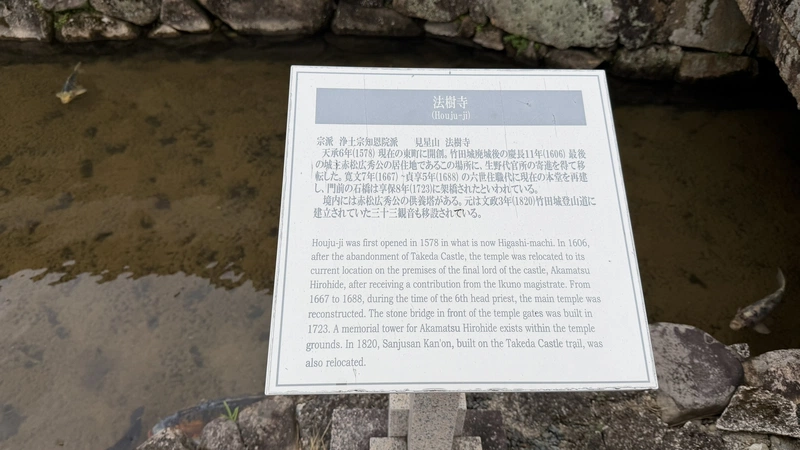
A short walk from JR Takeda Station is the Takeda Teramachi, a street lined with Buddhist temples. Teramachi (literally "temple town") is a common feature of old Japanese castle towns — a street or district where temples were deliberately grouped together, often for defensive reasons. A water channel runs alongside the street, and carp can be seen swimming in it.
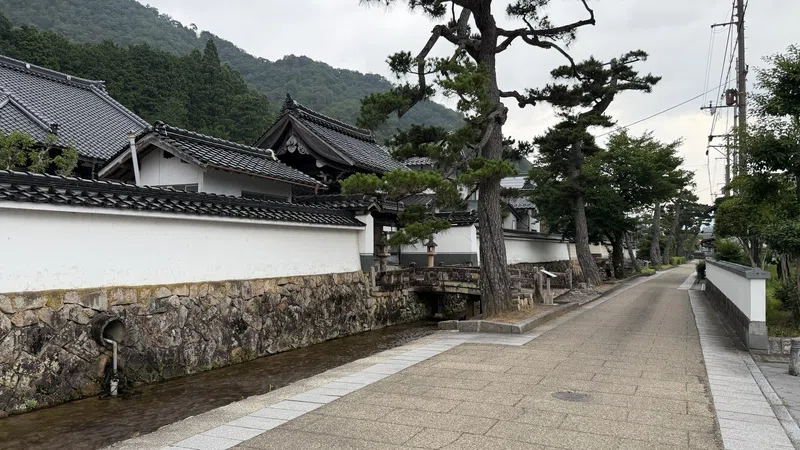
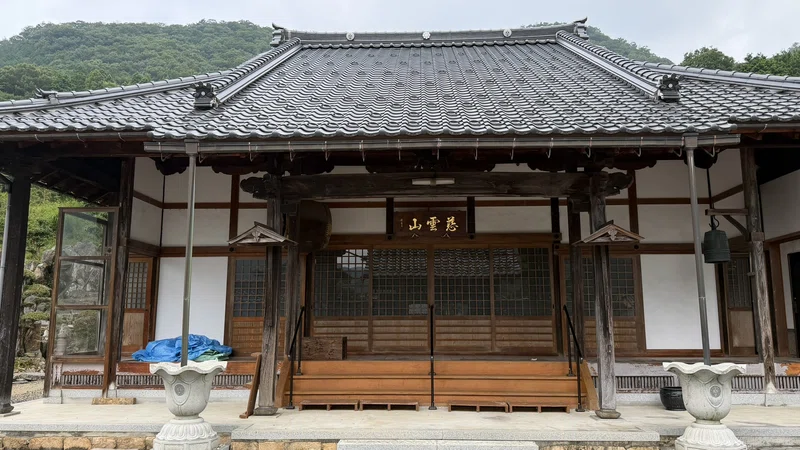
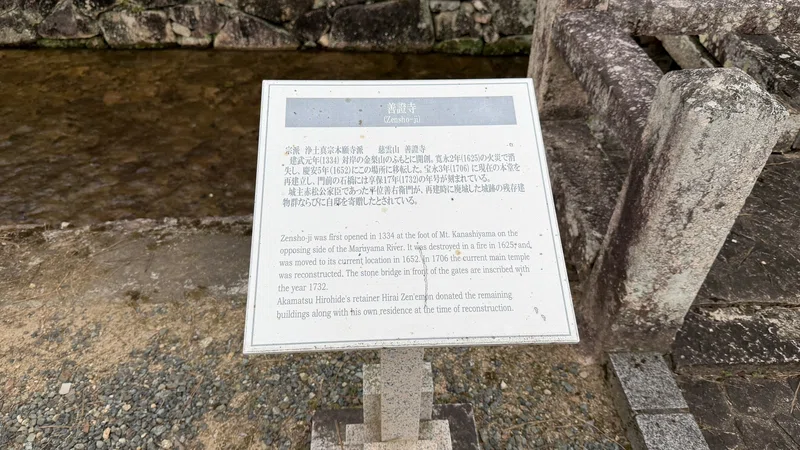
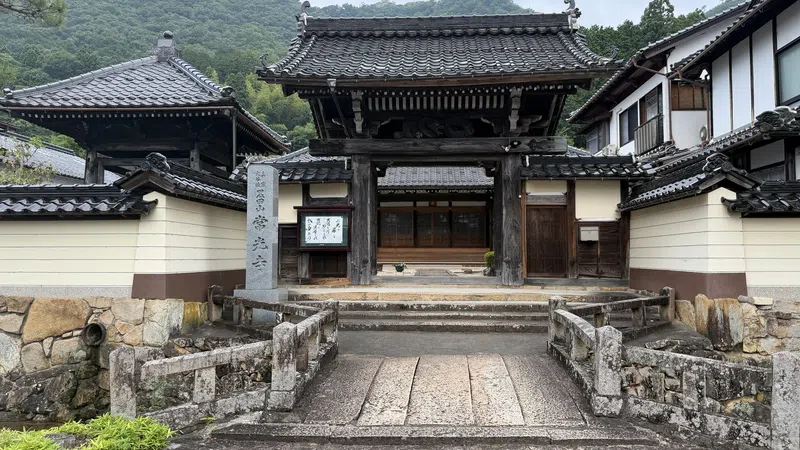
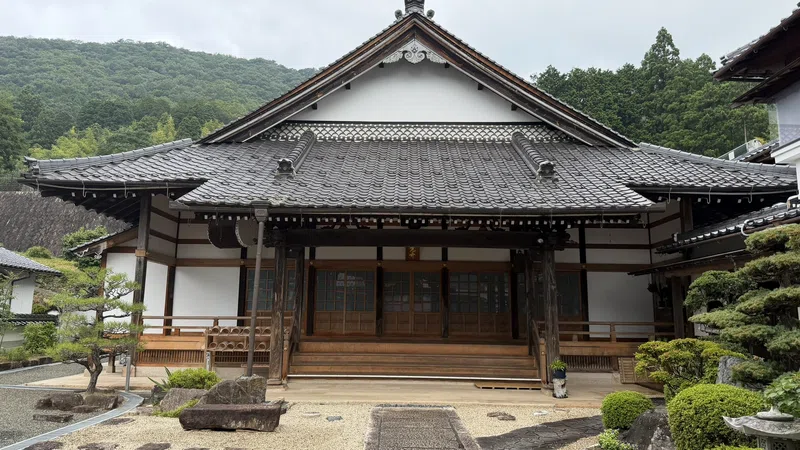
The four temples along this street are Zensho-ji, Jokoji, Shokoji, and Hojuji. The suffix "-ji" simply means "Buddhist temple" in Japanese, so you may also see these written as Zensho-ji Temple, Jokoji Temple, and so on.
Zensho-ji (善證寺)
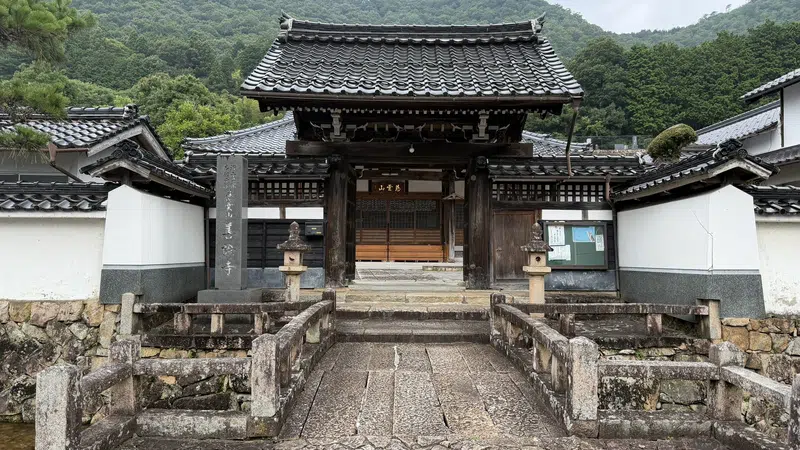
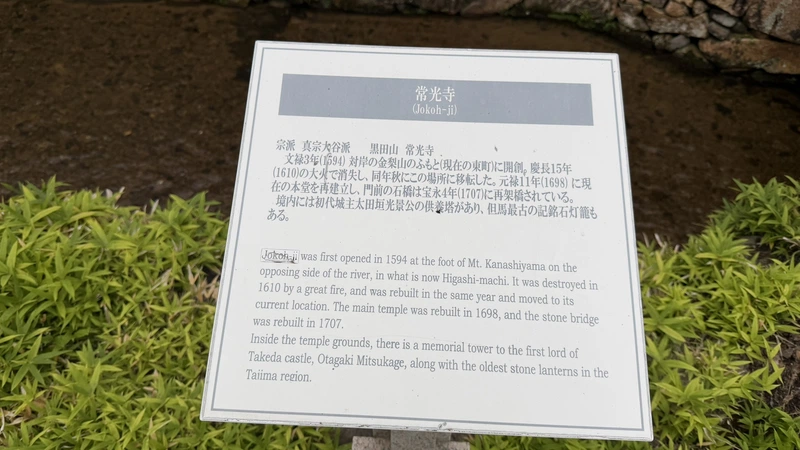
Jokoji (常光寺)
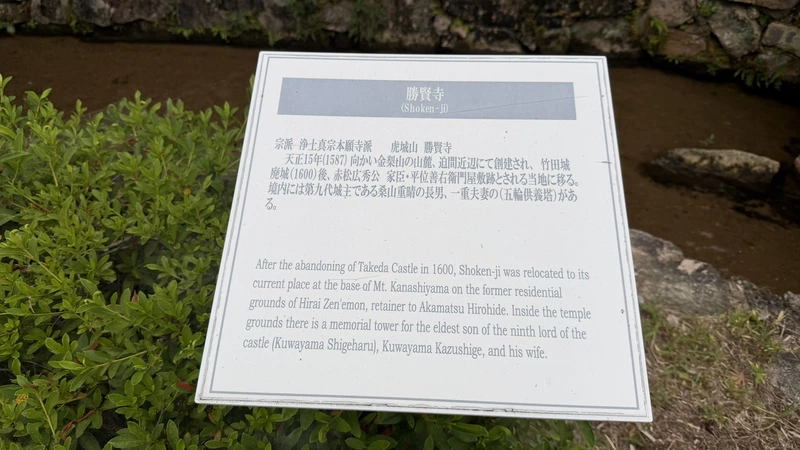
Shokoji (勝賢寺)
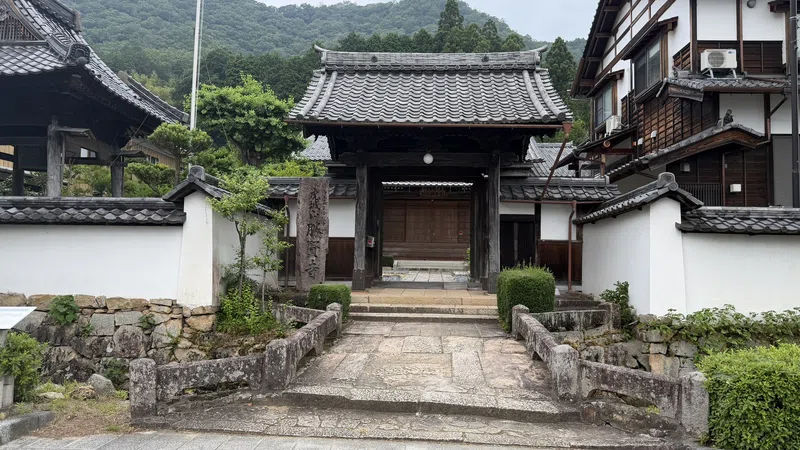
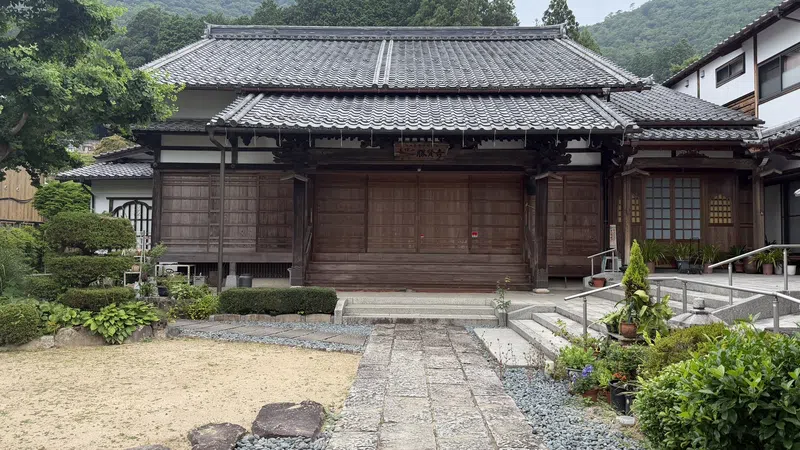
Hojuji (法樹寺)
Goshuin-jo and the Japan's Top 100 Castles Stamp
Takeda Castle Ruins offers a standard goshuin-jo and a Japan's Top 100 Castles stamp. During a July 2026 visit, the Tenku-no-Shiro Information Center — the visitor hub for both — was still closed when the early-morning tour of the ruins finished, so it was not possible to obtain the goshuin-jo or stamp the visit book on that trip.

If your visit to Takeda Castle Ruins is built around an early morning, fitting in the goshuin-jo or stamp on the same morning can be difficult. Stopping by the day before, during regular opening hours, gives you more breathing room on the day itself.
Limited-Edition Goshuin-jo Tied to the "Toyotomi Kyodai!" Drama
Starting June 14, 2026, Takeda Castle Ruins has offered a limited-edition goshuin-jo honoring Hashiba Hidenaga, the historical figure most closely associated with the castle (see the History section above). The characters for "Takeda Castle" are rendered in gold holographic foil, alongside the kamon (family crests) of the Toyotomi and Hashiba clans and the official logo of the NHK historical drama "Toyotomi Kyodai!" It's priced at ¥1,000, limited to 1,000 copies, and issued without a date filled in.
It's sold at two locations: the Tenku-no-Shiro Information Center, and the Kouryu-no-Yakata ("Exchange Hall") building at Yamashiro-no-Sato, known as TAKEDA Soranone. Because supply is limited, it may sell out before your visit.
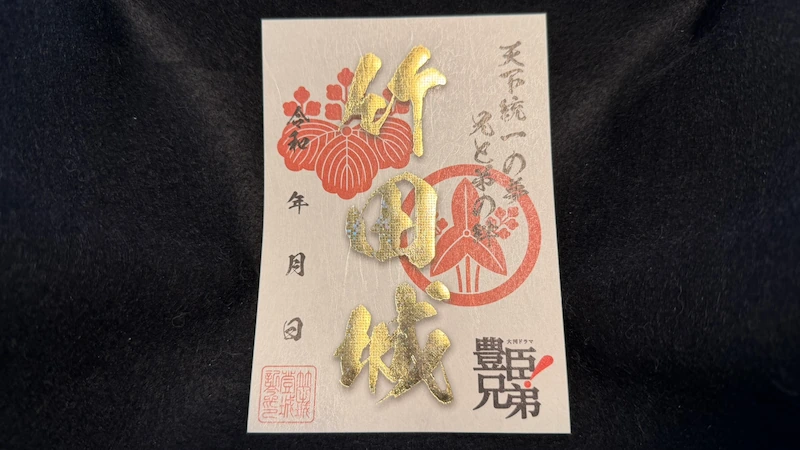
Where the goshuin-jo, the stamp book, and the stamp itself — along with the limited-edition goshuin-jo above — can currently be obtained, their prices, the distribution period, and the hours during which they can be stamped, are all subject to change — check official information before your visit.
Visiting at Dawn, and Where to Stay Nearby
If seeing Takeda Castle Ruins at dawn is your goal, staying overnight near Takeda Station is a realistic option.
For this visit, the author set out from Arima Onsen (a well-known hot spring town near Kobe), stopped in Himeji, and visited Ikuno Silver Mine (生野銀山), a historic mine along the same route, before arriving in Takeda around 6:00 PM and staying the night at a hotel about a two-minute walk from Takeda Station. The hotel was room-only, with no breakfast service, so a pastry bought the day before was eaten before setting out. If you are leaving very early in the morning, there is no guarantee that shops will be open, so it is worth having food ready the night before.
During a July 2026 visit, the town of Takeda was nearly empty of people and cars in the early morning, making for a quiet walk through the streets to the trailhead behind the station. After coming back down, the strongest lingering effect was not physical fatigue from the climb itself, but grogginess from the early start. If you plan a long journey or a packed schedule right after an early-morning climb, it is worth factoring in sleep, not just physical stamina.
If sunrise or the early-morning atmosphere is your main goal, staying near Takeda Station is recommended. If a daytime visit is all you need, a day trip from the Himeji area is also worth considering. Traveling round-trip from farther afield, such as Osaka, by public transportation tends to mean longer travel times and a somewhat rushed schedule.
Takeda Castle Ruins at Night: Illumination
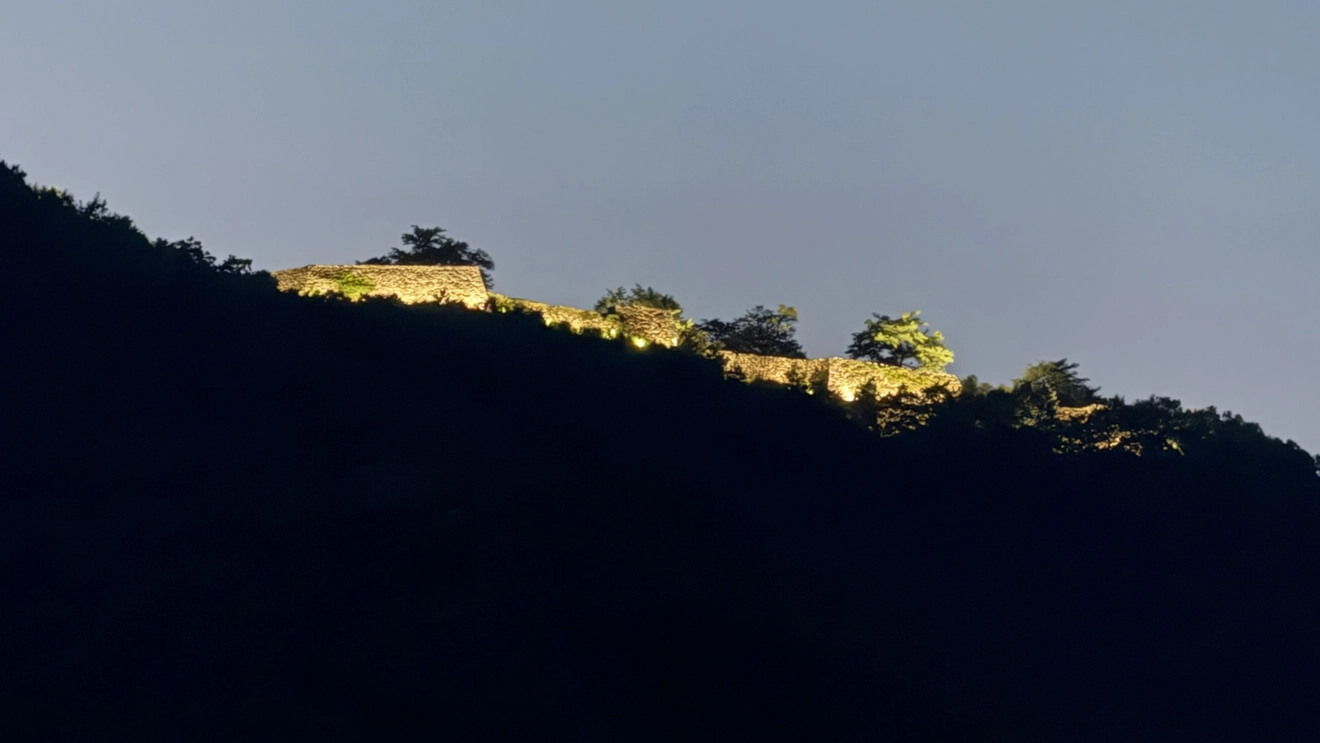
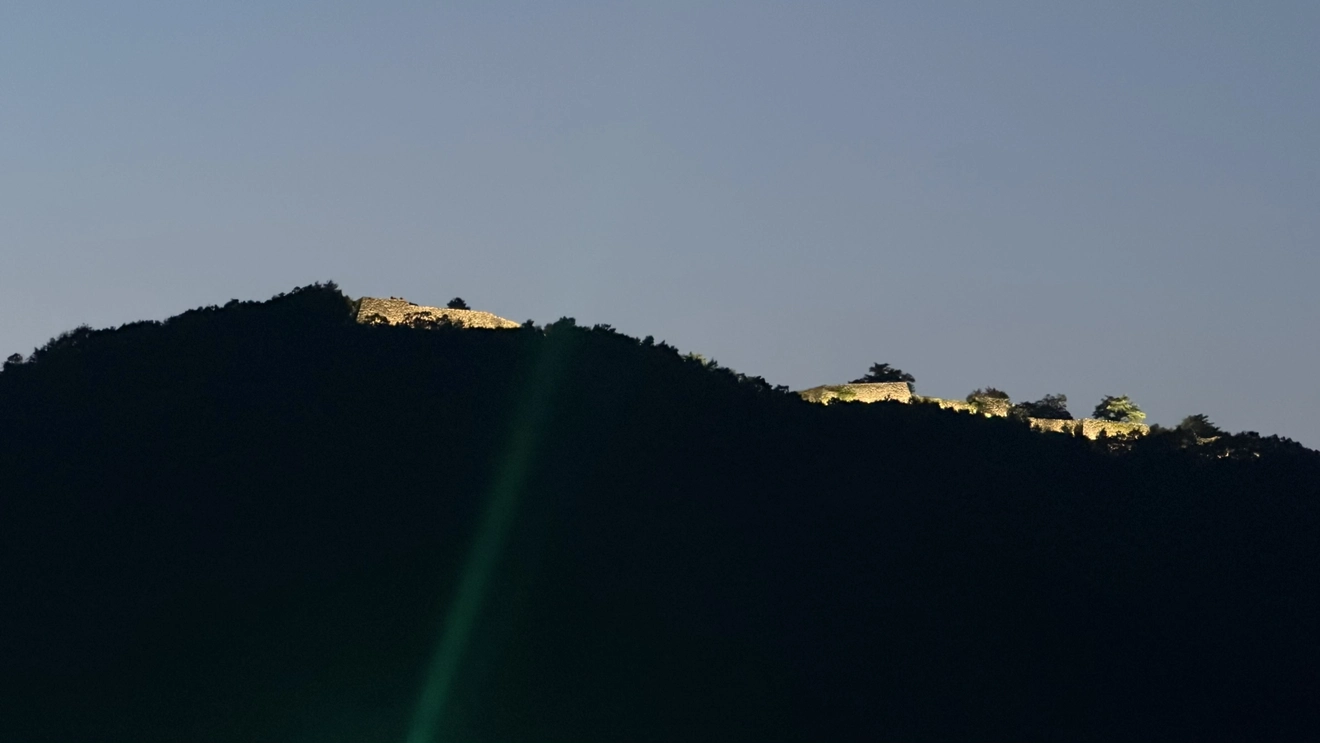
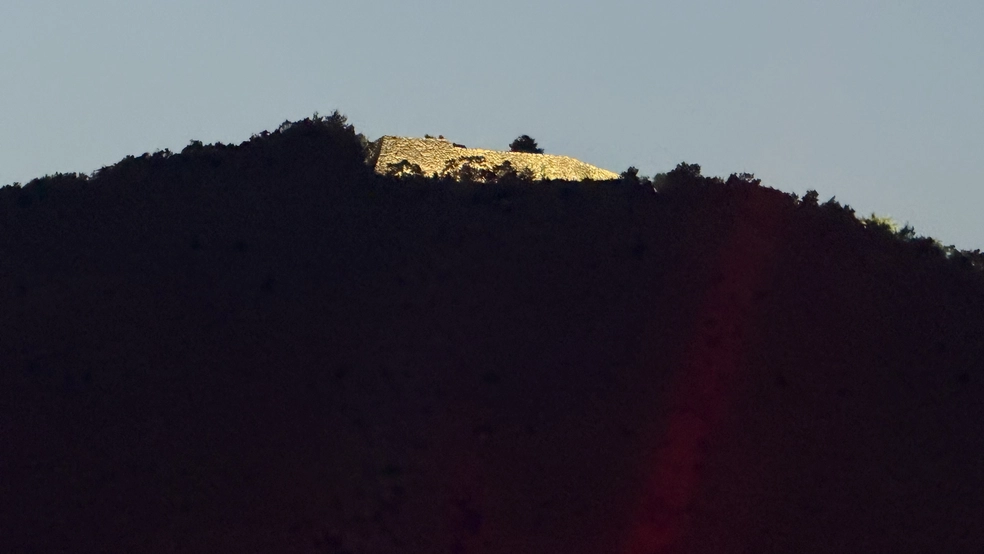
During certain periods, Takeda Castle Ruins is illuminated after dark, and the lit-up ruins can be seen from the base of the mountain and from nearby viewpoints. Since this visit focused on the early morning, the night photos in this section are reference images obtained on site rather than firsthand shots from this trip. The exact dates and hours of the illumination change from year to year, so check official information before you visit.
Tap a photo to enlarge it
Legends & Trivia
Ochinai Iwa, "The Rock That Never Falls"
Ochinai Iwa is a rock beside the trail on the way down after touring the ruins. A sign nearby explains its name and story.
Seeing how large the rock is, perched on the slope, it is easy to think, "how has this never fallen?" — which makes the name click into place. In Japanese, the verb ochiru means both "to fall" and, colloquially, "to fail an exam," so a rock famous for never falling has also become associated with not failing exams. Any deeper historical origin, or the exact nature of the luck it is said to bring for exams or other pursuits, is presented here as a locally cherished nickname and tradition, not as confirmed history. Asago City currently also uses this name for a local event. Photos and a 360° panorama of the rock appear in the "Ochinai Iwa" entry of the viewing-order guide above.
"Reclining Tiger Castle": Kofuga-jo and Gako-jo
Takeda Castle Ruins is also known by the nicknames Kofuga-jo and Gako-jo, both meaning roughly "Reclining Tiger Castle" — a reference to how the chain of baileys along the mountain ridge is said to resemble the silhouette of a crouching tiger. This is a popular nickname often used in tourist information, rather than a confirmed historical origin for the name.
Frequently Asked Questions
¥500 for high school age and up; free for middle school age and under (as of July 2026; groups of 20 or more pay ¥450 per person, high school age and up). Check the current fee before your visit.
Private vehicles cannot drive up to the entrance of the ruins. Park at the Yamashiro-no-Sato area or one of the other lots described in the Access section, then walk or take the shuttle bus from there.
The official estimate for touring the ruins is 30–60 minutes (not including the climb up or down). The climb from Takeda Station is an official estimate of about 40 minutes. On one early-morning visit, it took about 30 minutes from the hotel to the entrance, about 50 minutes inside the ruins, and about 1 hour 20 minutes in total from leaving the hotel to finishing the tour, not counting the walk back down. The descent, via the South Trail (Minami-Tozando) with a stop at Hyome-jinja Shrine, took about 50 minutes back to the station. If you're traveling by train from Takeda Station, the round trip — climbing up, touring the ruins, and walking back down — comes to roughly 2 to 2.5 hours.
Takeda Castle Ruins is where you walk inside the site and see the stone walls and baileys up close. Mt. Ritsuunkyo is a separate mountain across the valley where you view the whole castle site from a distance. They are on different mountains, with different access routes.
The Tenku-no-Shiro Information Center is generally the distribution point, but the location, hours, and stock can change. This guide's author visited early in the morning and was unable to get one. Check official information before your visit.
Planning Your Visit: A Summary
Takeda Castle Ruins is not a site to visit purely for the sea-of-cloud view. In July 2026, this guide's author left a hotel near Takeda Station around 4:45 AM and, after climbing the unpaved mountain trail behind the station for about 30 minutes without a break, reached the entrance to the ruins. No sea of cloud was visible on this visit, but seeing the intricate combinations of large and small stone walls up close, along with the morning light falling across them, made the climb feel worthwhile for the stonework alone.
For anyone interested in examining the shape and construction of the stone walls, or the differences in elevation between the baileys, up close, this site is worth recommending regardless of whether the sea of cloud appears. If you are hoping to see a standing tower or turret, note that Takeda Castle Ruins does not have one.
If you want to see the castle floating above a sea of cloud, plan a separate visit to Mt. Ritsuunkyo.
Sites connected to Toyotomi Hidenaga survive across the wider Tajima and Harima regions (roughly present-day northern and southwestern Hyogo Prefecture) beyond Takeda Castle alone, and related articles are planned. If you are interested in the ruins of other Japanese mountain castles like this one, articles covering other mountain castles in the Tajima area are also planned (coming soon). After touring Takeda Castle Ruins, this guide's author also visited Arikoyama Castle Ruins (有子山城跡) in the city of Toyooka, elsewhere in Tajima — a separate article covering that site is in the works.
☕ Support This Site
Following the Shogun is built on firsthand, on-the-ground reporting.
If this article has been useful, your support is a big help.

You can also support via this QR code


comment