Taiyuin was built according to Iemitsu's wish that it should not surpass Toshogu. From the contrast with Toshogu to Treasure Museum exhibition notes from a February 2026 on-site visit when photography was not allowed, this guide covers Taiyuin, the Tenkai statue, and hidden spots from the field.
✅Visited and verified on site February 22, 2026. I walked Toshogu, Taiyuin, and the Treasure Museum in person. Exhibitions, admission fees, and opening hours may change — check official sources before your visit.
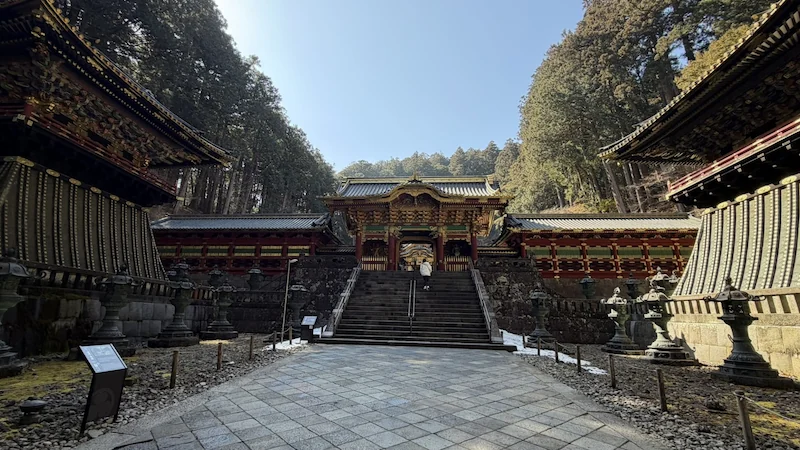
Taiyuin is the mausoleum of Tokugawa Iemitsu, the third Tokugawa shogun, built according to his wish that it should not surpass Toshogu. Where Toshogu appears bright and ornate in white and gold, Taiyuin's black, gold, and vermilion feel weightier in the shadows of the trees. That contrast reshapes how you read the whole mountain precinct.
This page covers Taiyuin Mausoleum, the Treasure Museum — with exhibition notes from a February 22, 2026 visit when photography was not allowed — the Tenkai statue, the old Inner Sanctuary remains, and other hidden spots, all based on on-site verification. For tickets, access, and time needed, see the Essential guide. For the full guide to Yomeimon, the Sleeping Cat, and the Inner Sanctuary, see the Complete guide.
Taiyuin is best understood as Toshogu's continuation. It stands within the same mountain precinct, yet the atmosphere is different. Toshogu is a shrine that enshrines Ieyasu; Taiyuin is a temple mausoleum for Iemitsu. That difference explains why the two places feel so unlike each other.
Toshogu (Ieyasu)
Taiyuin (Iemitsu)
Type
Shinto shrine enshrining Tosho Daigongen
Temple and mausoleum (Rinnoji Taiyuin)
Atmosphere
Bright and ornate. White and gold leave a strong impression in the sunlight
Quiet and composed. Black, gold, and vermilion appear deeper in the shadows of the trees
Order of Visit
Visit first; Toshogu becomes the point of reference
The contrast is easier to feel after seeing Toshogu
Design Intent
The foundation of shogunal legitimacy
A spatial expression of succession that keeps Ieyasu at the center
National Historic SiteMany Important Cultural Properties and National Treasures
Taiyuin Mausoleum
Iemitsu's mausoleum / a space of succession understood through contrast with Toshogu
To use a simple metaphor, Toshogu feels like the sun, while Taiyuin feels like the moon. Both are magnificent and both contain brightness, but at Taiyuin the first thing I felt was stillness.
Key Points for Reading Taiyuin Through Its Contrast with Toshogu
Toshogu: white and gold are prominent, and in sunlight the impression is bright and ornate
Taiyuin: black, gold, and vermilion appear weightier within the tree-lined setting
The difference is not simply a matter of color or the amount of gold. It becomes much easier to understand if you read Taiyuin as a form of succession that does not disturb the hierarchy: Ieyasu remains the center, while Iemitsu places himself as the successor.
📜 Historic Site Data
Formal Name
Rinnoji Taiyuin
Dedicated To
The mausoleum of Tokugawa Iemitsu, the third Tokugawa shogun
Year Built
1653. Built by the fourth shogun, Tokugawa Ietsuna, after Iemitsu's death and in accordance with Iemitsu's final wishes
Architectural Style
Gongen-zukuri. Built according to Iemitsu's wish that it should not surpass Toshogu, which enshrines Ieyasu
Main Components
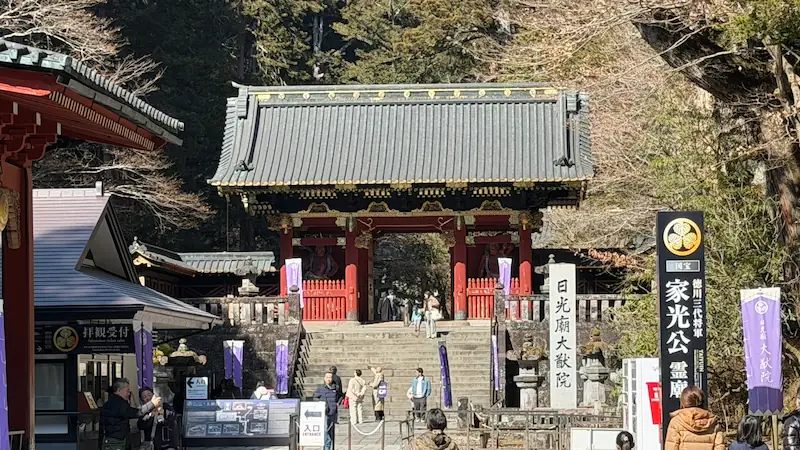
Nio-mon Gate, Niten-mon Gate, Yasha-mon Gate, Koka-mon Gate, worship hall, main hall, Okunoin Treasure Pagoda, and related structures
Cultural Status
Includes many National Treasures and Important Cultural Properties, including Niten-mon Gate. Part of the UNESCO World Heritage "Shrines and Temples of Nikko"
Notes
The solemn, restrained design reflects Iemitsu's wish that the mausoleum should not surpass the shrine enshrining Ieyasu
Iemitsu asked that Taiyuin should "not surpass Toshogu." Taiyuin was built according to Iemitsu's own wish that it should not surpass Toshogu. For Iemitsu, Ieyasu was an object of deep reverence, and he avoided building his own mausoleum in a way that would exceed his grandfather's. On site, Toshogu's bright and ornate impression contrasts strongly with Taiyuin, where black, gold, and vermilion appear deep in the shadows of the trees and create a quieter atmosphere.
Four points to notice when comparing Taiyuin with Toshogu
Toshogu: white and gold leave a strong impression → Taiyuin: black, gold, and vermilion feel weightier
Toshogu: shrine / Shinto → Taiyuin: temple and mausoleum, with stronger Buddhist elements
Toshogu: bright and ornate → Taiyuin: quiet and composed
Toshogu: Yomeimon is the great highlight → Taiyuin: the layered structure of Niten-mon, Yasha-mon, and Koka-mon
Taiyuin also has a dragon ceiling painting. Toshogu's Crying Dragon in the Honjido / Yakushido Hall is famous, but Taiyuin also has a dragon painting on the ceiling of its worship hall. It is a different work from Toshogu's Crying Dragon, and during the visit, the way the sound resonated there was also explained. This is recorded here as an on-site observation.
🎥
360° Panorama — On-Site ExperienceTaiyuin Niten-mon Gate — a quieter atmosphere compared with Toshogu's Yomeimon Gate
🎥
360° Panorama — On-Site ExperienceTaiyuin worship hall — Iemitsu's mausoleum and the destination point of succession
Easy to miss: Ryukoin is not open to visitors, but there is a vantage point from which it can be seen clearly — farther up the stairs along the route. At Taiyuin, pulling back from the main axis occasionally reveals more than walking straight ahead.
◆
Treasure Museum — Exhibition Notes and No-Photography Record
Photography note: During the visit on February 22, 2026, photography was not allowed anywhere inside the Treasure Museum. All records on this page are based on notes taken during the visit. Exhibits may rotate — please treat this as a record of that specific visit.
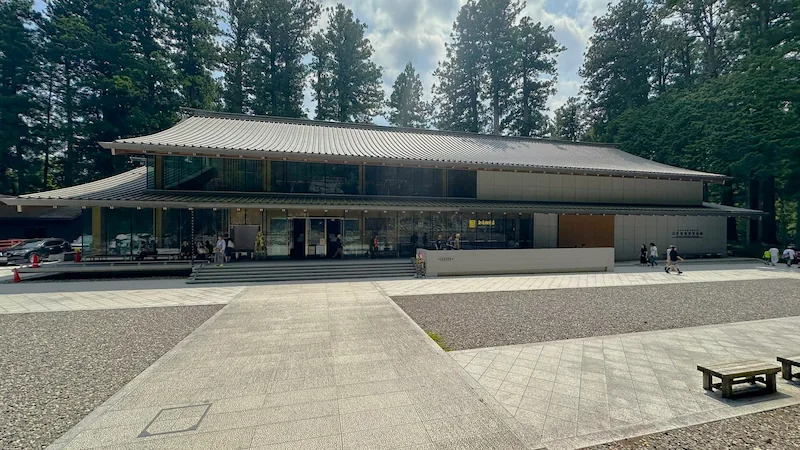
The Treasure Museum sits apart from the main Toshogu shrine, but it matters enormously as a guide to how Ieyasu is meant to be understood. After the entrance gate, the first room is a small theater. As of my February 22, 2026 visit, the route began with a roughly 20-minute film introducing Ieyasu before visitors moved into the exhibition rooms. Content and running time may change.
The Treasure Museum does more than display its collection. It first hands visitors a framework for how to see Ieyasu, then connects that image to the actual objects. The impressions formed in the shrine precinct are reinforced here through objects and explanatory text.
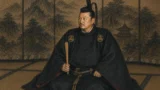
Summary of the Introductory Film: Martial Strength, Wisdom, and Righteousness
The film felt like an introduction designed to hand visitors an image of Ieyasu as the founder of peace. Rather than a neutral historical summary, it's a deliberate framing — a story designed to give visitors the image of Ieyasu that Toshogu wants them to carry.
Three Axes of the Introductory Film
Martial StrengthIeyasu is presented as someone who survived the Sengoku period and learned from defeat. The emphasis felt less like simple martial valor and more like "the martial power necessary to establish peace."
WisdomThe film emphasizes learning during his years as a hostage, as well as wisdom connected to governance, institutions, and city-building. Its role is to present Ieyasu as someone capable of creating a lasting order.
RighteousnessIeyasu is shown as someone who valued trust, brought people together, and sought an upright order. This felt like the theme the film emphasized most strongly.
The film connects Ieyasu's positive qualities into a clear arc, and the historical complexity is streamlined accordingly. What to take from it is not a complete historical picture, but the image Toshogu wants visitors to hold first. It works as an introduction that shifts Ieyasu from "victor" to "protector."
Exhibition Notes by Category — As of February 22, 2026
Confirmed Exhibits — Subject to Rotation
ArmorThe Nanban armor, traditionally said to have been worn at Sekigahara, left a particularly strong impression. As a symbol of Ieyasu's "martial strength," it supports the image of Ieyasu as a Sengoku warlord before his deification.
DocumentsThe Seii Taishogun appointment document, documents connected with Tosho Daigongen, and illustrated materials related to the Nikko pilgrimage route. These show how Ieyasu's power and deification were supported through institutions and records.
Cultural ObjectsInkstones, Setoguro tea bowls, tea utensils, court caps, and related objects. These broaden Ieyasu's image beyond that of a warrior and present him as a figure connected to governance and culture.
Swords / ImagesA separate room contained numerous swords, as well as folding screens and image-based exhibits. The exhibition space presents Ieyasu not only through "martial strength," but as a more comprehensive figure.
◆
Hidden Spots Around the Nikko Mountain Precinct
These spots sit slightly off the main visitor route, but they give the deification of Tokugawa Ieyasu — and Nikko's meaning — a third dimension. Major tourism articles often skip them, but this guide records them as supporting points around the precinct.
Around the Mountain Precinct
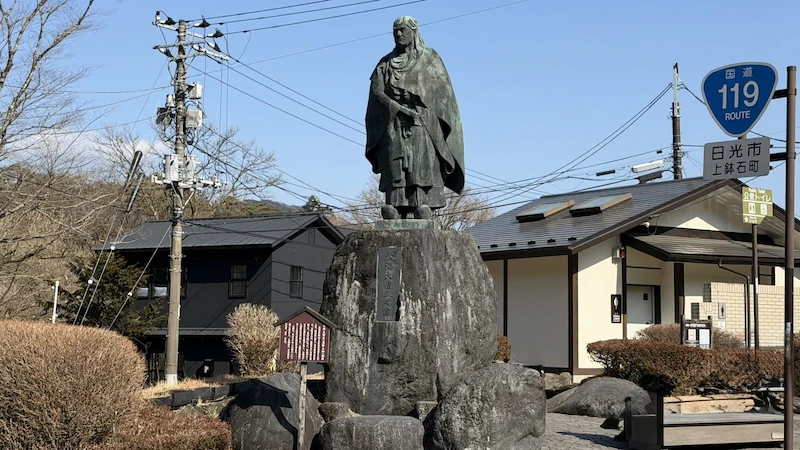
Statue of Tenkai
A hidden stop that helps explain who constructed the story of Nikko
Tenkai is known as a monk who served Tokugawa Ieyasu, and he is often mentioned in the context of making Nikko a spiritual pillar of Tokugawa rule. What matters here is less the sculptural form and more why Tenkai is remembered at Nikko. Including this statue in your route makes it easier to see Toshogu as a place someone deliberately built as an argument.
📜 Historic Figure Data
Figure
Tenkai, also known as Jigen Daishi. Traditionally said to have lived from 1536 to 1643 and to have died at the age of 107
Role
A high-ranking Tendai monk who served three Tokugawa rulers: Ieyasu, Hidetada, and Iemitsu. He also played a major role in the revival of Rinnoji Temple at Nikko
Connection to Toshogu
During Ieyasu's deification, Tenkai's argument for adopting Sanno Ichijitsu Shinto was accepted. He helped establish the form in which Ieyasu became a Shinto deity as Tosho Daigongen
Tenkai helped define the divine status of Tosho Daigongen. When Ieyasu died in 1616, debate arose over whether he should be enshrined according to Yoshida Shinto or Sanno Shinto / Sanno Ichijitsu Shinto. Tenkai strongly advocated Sanno Shinto, a syncretic form blending Buddhism and Shinto, and this approach was adopted. As a result, Ieyasu was deified as Tosho Daigongen, a being who combined Buddhist and Shinto dimensions. Without Tenkai, the form of Toshogu may have been very different.
There is a legend that Tenkai was actually Akechi Mitsuhide. Many details of Tenkai's origins remain unclear, and there are multiple theories about his birth year. Since the Edo period, there has been a legend that Akechi Mitsuhide survived after the Honnoji Incident and later became Tenkai. However, the evidence is thin, and scholars generally view the theory skeptically. Because Tenkai's origins contain unresolved points, such legends have continued to circulate. The Akechi Mitsuhide identity theory should not be treated as historical fact.
🎥
360° Panorama — On-Site ExperienceStatue of Tenkai — hidden spot around the mountain precinct
Important Cultural PropertyRestored Remains
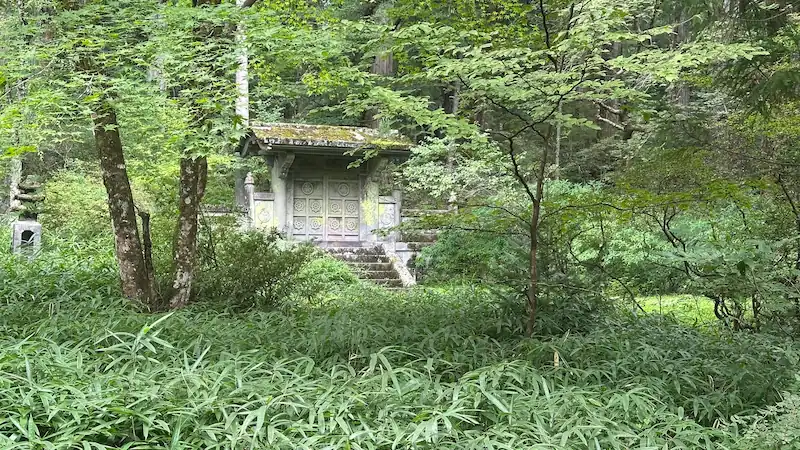
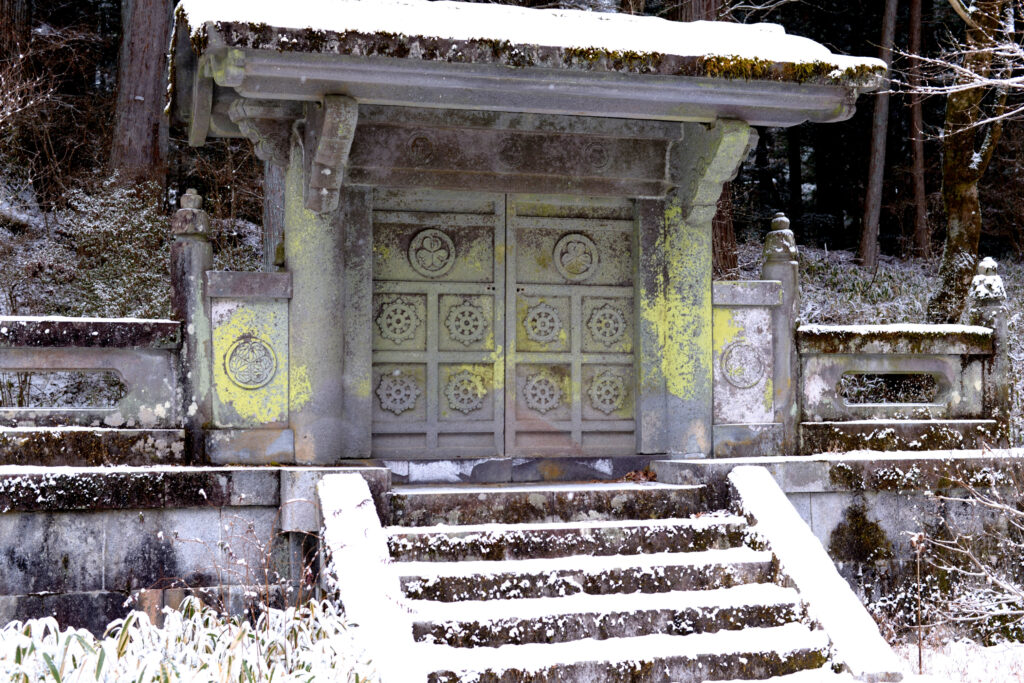
Old Inner Sanctuary Karamon Gate and Old Inner Sanctuary Torii Gate
Remains showing Toshogu's history of change / easy to walk past if you are not looking
The Old Inner Sanctuary Karamon Gate and Old Inner Sanctuary Torii Gate are historic architectural remains that once belonged to Toshogu's Inner Sanctuary. They stand where you can easily walk past without noticing — but they are important physical evidence of how Toshogu has been renewed over four centuries.
📜 Historic Site Data
Construction and Changes
According to the on-site explanation, the structures were first built in wood in 1622 and changed to stone during the Keian era (1648–1652). The Agency for Cultural Affairs database, however, explains that during the 1641 rebuilding, the earlier wooden structures were replaced with stone ones. They were later damaged in the 1683 earthquake and replaced with the current bronze structures
Restoration
The earlier stone Karamon gate and torii gate had been buried beside the Inner Sanctuary. They were later excavated and restored beside the Treasure Museum
Cultural Status
Important Cultural Property
Location
Around the Treasure Museum. Because it sits off the main visitor flow, you need to look for it deliberately
These structures were buried near the Inner Sanctuary and later excavated. The earlier stone gate and torii that preceded the current bronze Karamon and torii were found buried beside the Inner Sanctuary and restored beside the Treasure Museum. They are valuable remains showing how the Toshogu Inner Sanctuary was renewed from its early construction period to the present. They are also worth seeing when thinking about why the cast bronze gate was remade in bronze after the earthquake.
🗺 Map
Hidden Spot
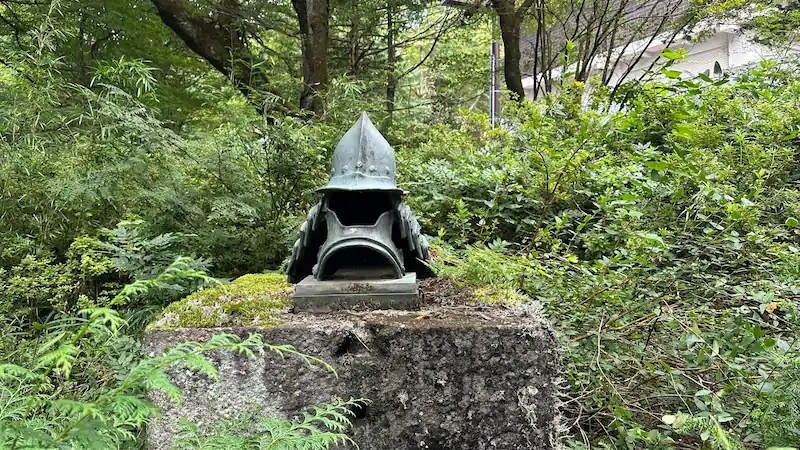
Yamaoka Sohachi Memorial Monument for the Novel Tokugawa Ieyasu
Behind the Treasure Museum / the pleasure of finding something hidden in the greenery
Behind the Treasure Museum stands a monument commemorating Yamaoka Sohachi's historical novel Tokugawa Ieyasu. It is now partly hidden in the greenery, and finding it feels a little like discovering treasure.
All 26 volumes are said to be stored inside the pedestal. This memorial was erected in 1969 to commemorate the completion of Yamaoka Sohachi's historical novel Tokugawa Ieyasu, written over about 18 years from 1950 to 1967. The top of the monument features a design modeled after the helmet of the Nanban-do armor associated with Tokugawa Ieyasu, and the full 26 volumes of Tokugawa Ieyasu are said to be stored inside the pedestal.
What kind of work is Yamaoka Sohachi's Tokugawa Ieyasu? It is a 26-volume historical novel by Yamaoka Sohachi (1907–1978). Centered on the well-known Ieyasu maxim that a person's life is like traveling a long road bearing a heavy burden and must not be rushed, it depicts Sekigahara, the Siege of Osaka, the founding of Edo, and more. It remains one of the major postwar long-form historical novels and is still available in paperback.
🗺 Map
◆
Frequently Asked Questions
Toshogu is a Shinto shrine that enshrines Tokugawa Ieyasu, while Taiyuin is a Buddhist temple mausoleum for Tokugawa Iemitsu. Because Taiyuin was built according to Iemitsu's wish that it should not surpass Toshogu, it feels quiet and solemn, with black, gold, and vermilion appearing deep among the trees, in contrast to Toshogu's brighter and more ornate impression.
During the visit on February 22, 2026, photography was not allowed anywhere inside the museum. The first room led visitors through a film introducing Ieyasu before they moved into the exhibition rooms, where Nanban armor, the Seii Taishogun appointment document, swords, and tea utensils were confirmed. Displays may change — please treat this as a record of that visit.
No. Taiyuin requires a separate admission ticket from Toshogu. The Treasure Museum also requires a separate ticket. Admission systems differ by facility within the Nikko mountain precinct, so check the official websites for the latest fees before visiting.
The main highlights are Nio-mon Gate, Niten-mon Gate, Yasha-mon Gate, Koka-mon Gate, the worship hall, and the Okunoin Treasure Pagoda. Comparing Niten-mon with Toshogu's Yomeimon Gate makes it easier to feel how Iemitsu's mausoleum expresses succession without overturning the sacred hierarchy. The dragon painting on the worship hall ceiling is also one of the highlights.
They are historic remains that once belonged to Toshogu's Inner Sanctuary and have been restored beside the Treasure Museum. The Agency for Cultural Affairs database explains that during the 1641 rebuilding, the earlier wooden structures were replaced with stone ones. They were later damaged in the 1683 earthquake and replaced with the current bronze structures. They are easy to pass by if you are not looking for them.
Tenkai was a high-ranking Tendai Buddhist monk who served Ieyasu, Hidetada, and Iemitsu. In the deification of Ieyasu, he advocated the adoption of Sanno Ichijitsu Shinto and helped shape the form in which Ieyasu was enshrined as Tosho Daigongen. He also played a major role in the revival of Rinnoji Temple at Nikko.
As of February 22, 2026, confirmed exhibits included Nanban armor traditionally said to have been worn at Sekigahara, the Seii Taishogun appointment document, swords, tea utensils, inkstones, and folding screens. The route began with a mini-theater style film introducing Ieyasu through the themes of martial strength, wisdom, and righteousness before visitors moved into the galleries.
It stands behind the Treasure Museum. The monument was erected in 1969 to commemorate the completion of Yamaoka Sohachi's 26-volume historical novel Tokugawa Ieyasu, which he spent about 18 years writing. It is partly hidden in the greenery, so it is easiest to find if you deliberately look for it.





comment